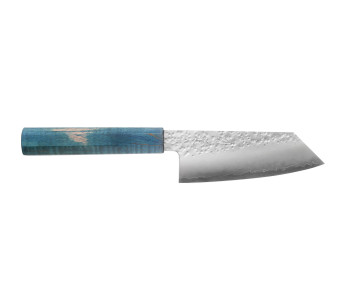
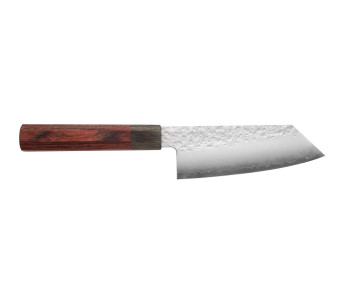
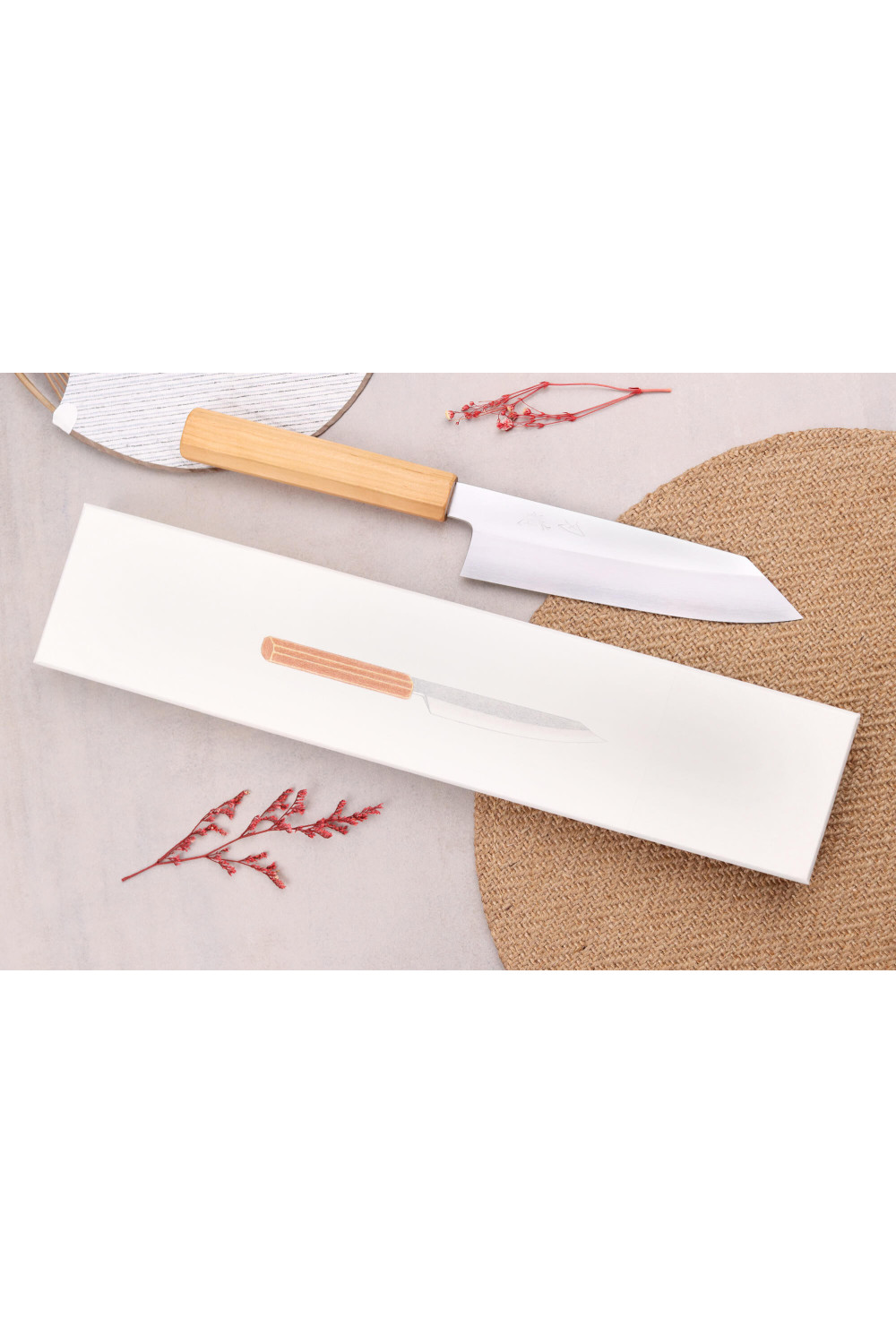
A beautiful blade in Japanese Ginsan steel
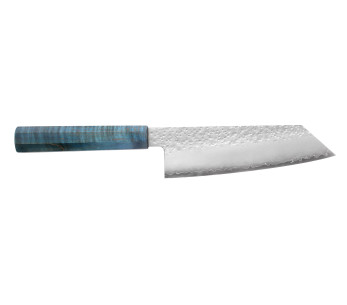
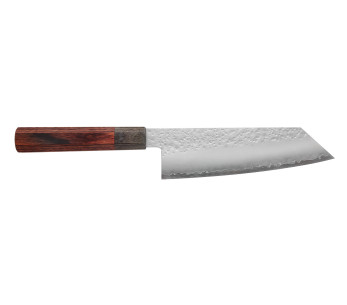
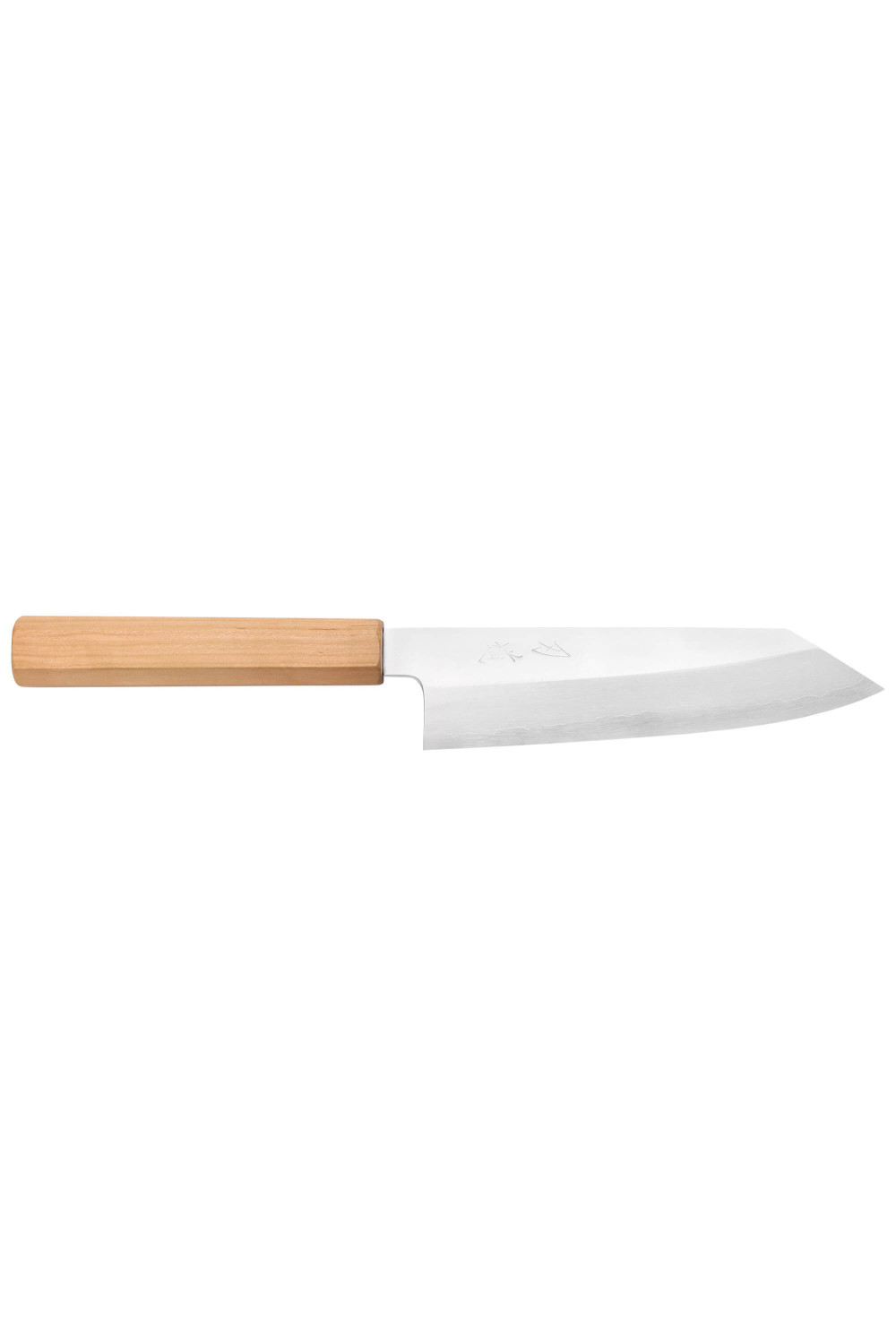
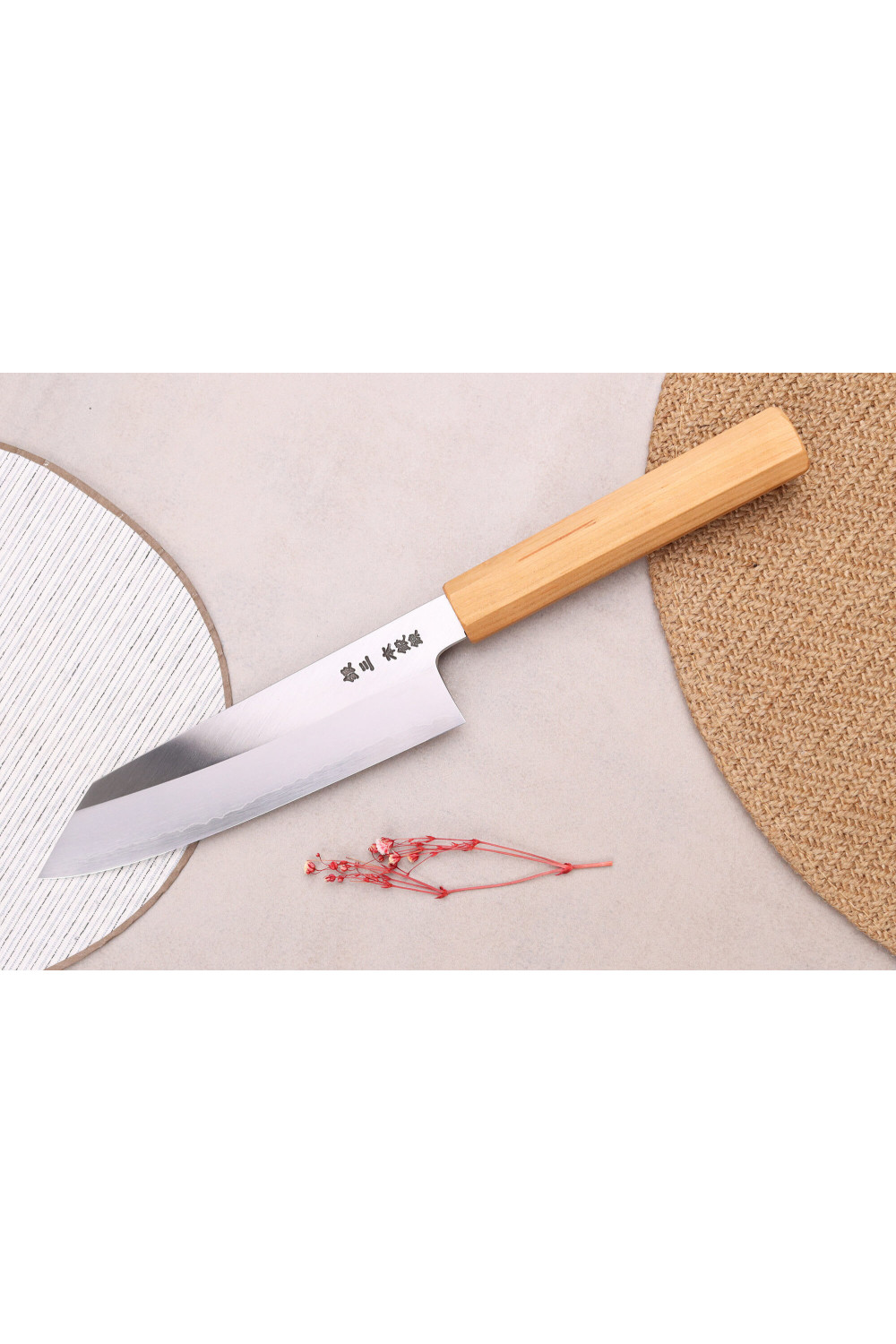
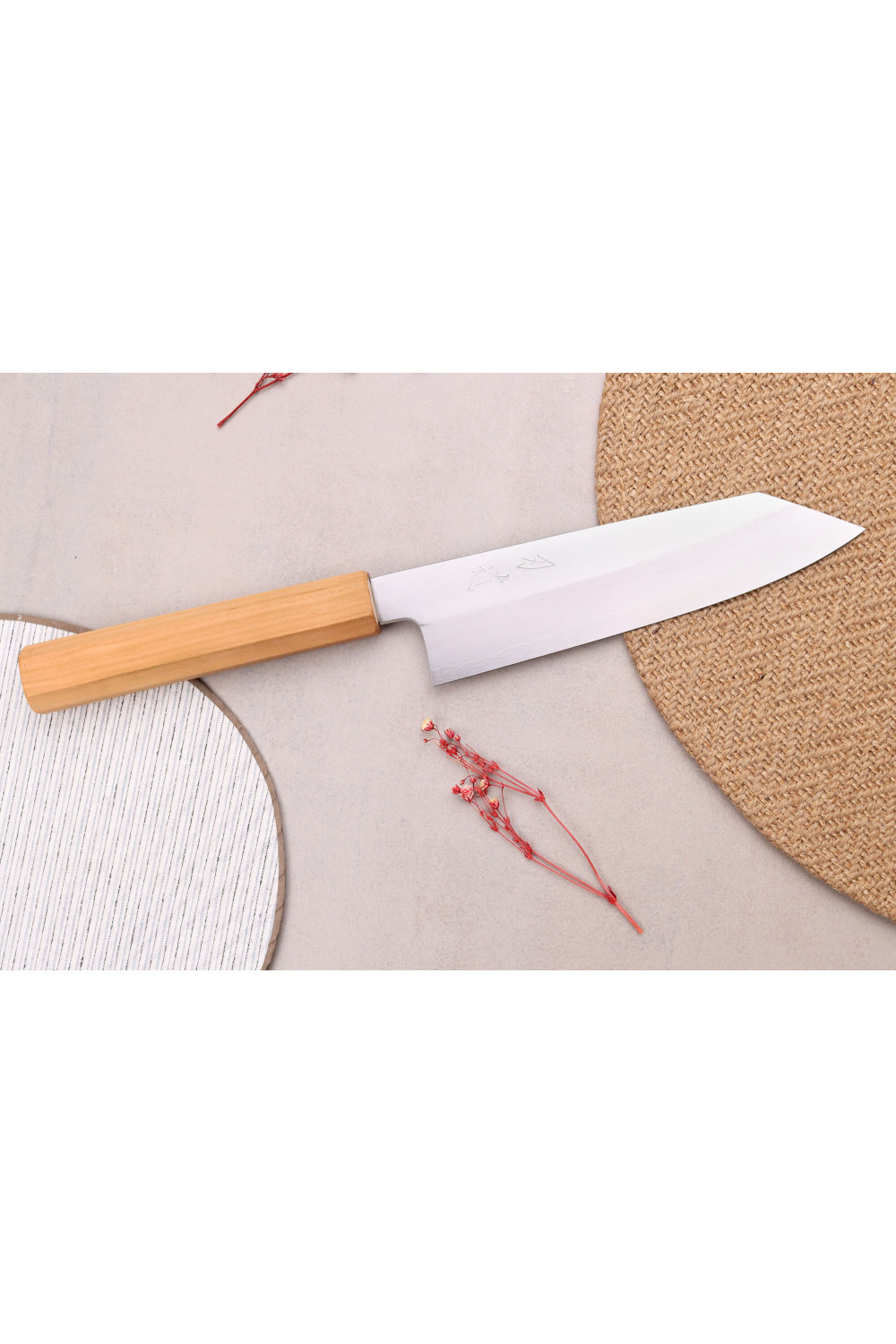
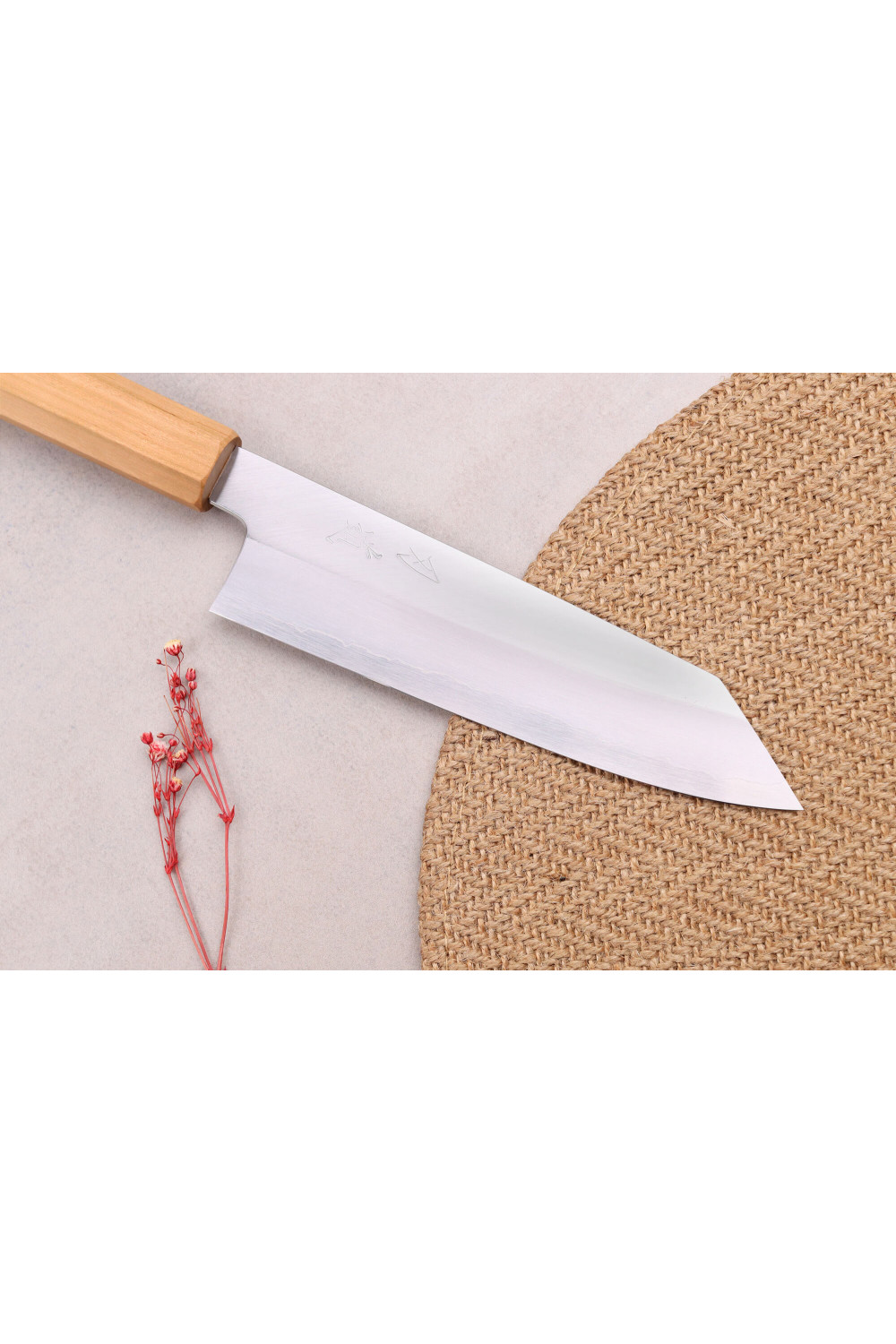
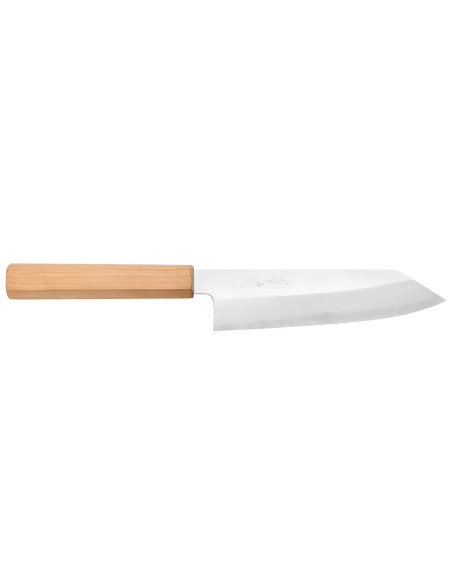
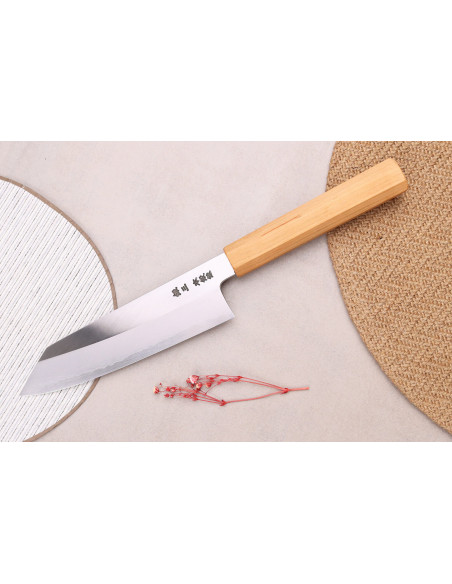
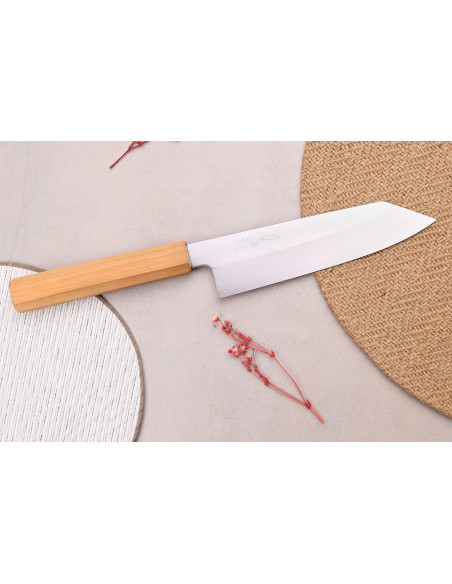
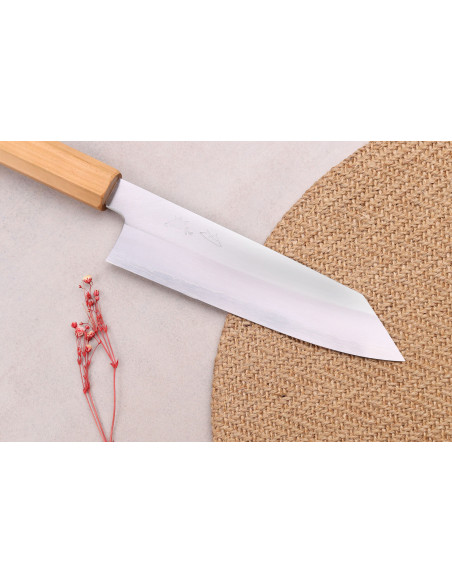
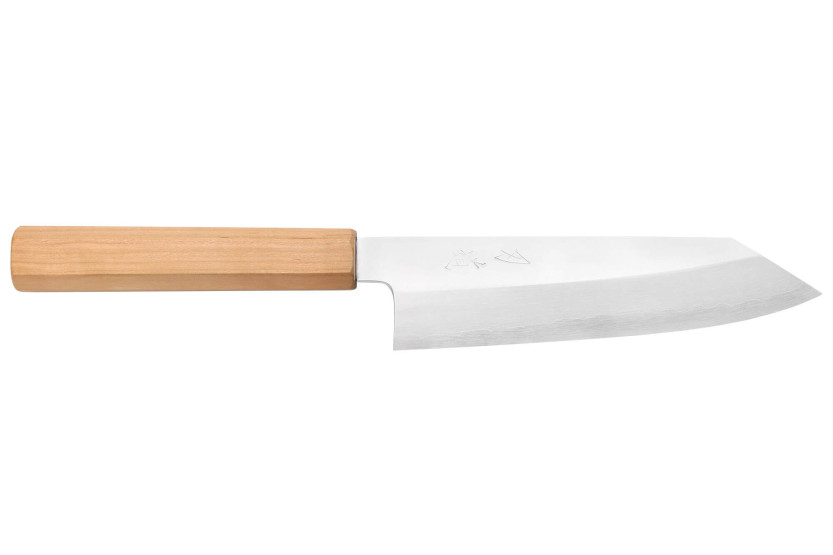
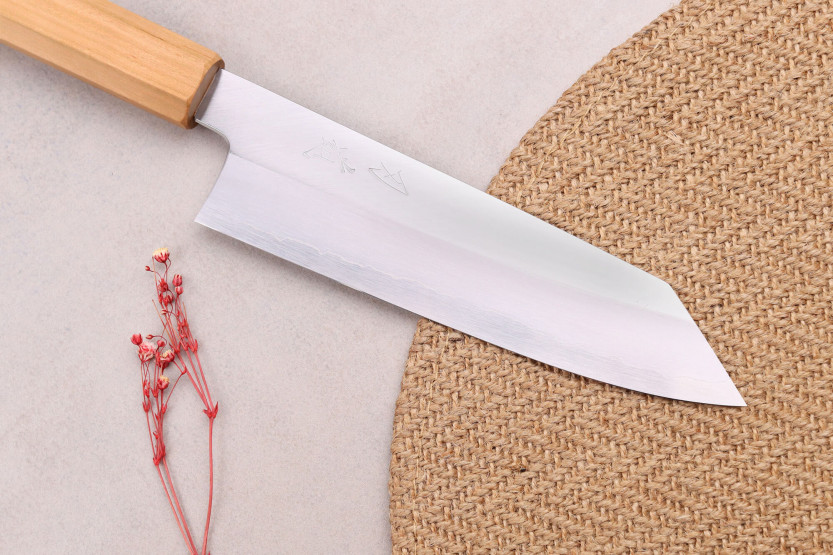
This santoku knife features an 18cm blade with a San Mai structure. This Japanese term means "3 layers" and perfectly reflects the blade's construction. Indeed, the blade is composed of a rigid steel core, enveloped by a layer of softer steel folded on either side. The purpose of this design is to provide optimum balance to the blade while protecting its core.
Here, the blade core is made from Japanese Ginsan steel, also known as G3 or Silver 3. This steel is composed of around 0.95% carbon, giving it greater hardness and rigidity to keep its edge longer. What's more, thanks to its high chromium content (around 13.5%), Ginsan steel is highly resistant to corrosion. The knife thus achieves a hardness of 59/60 HRC, which facilitates blade maintenance. Sharpening with a stone, when necessary, is easy.
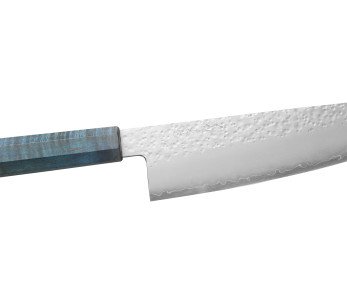
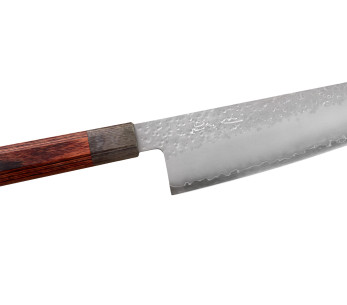
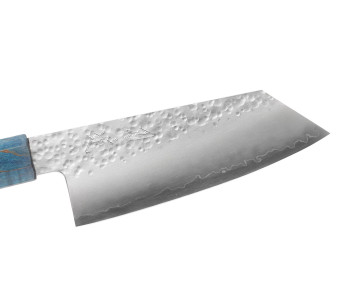
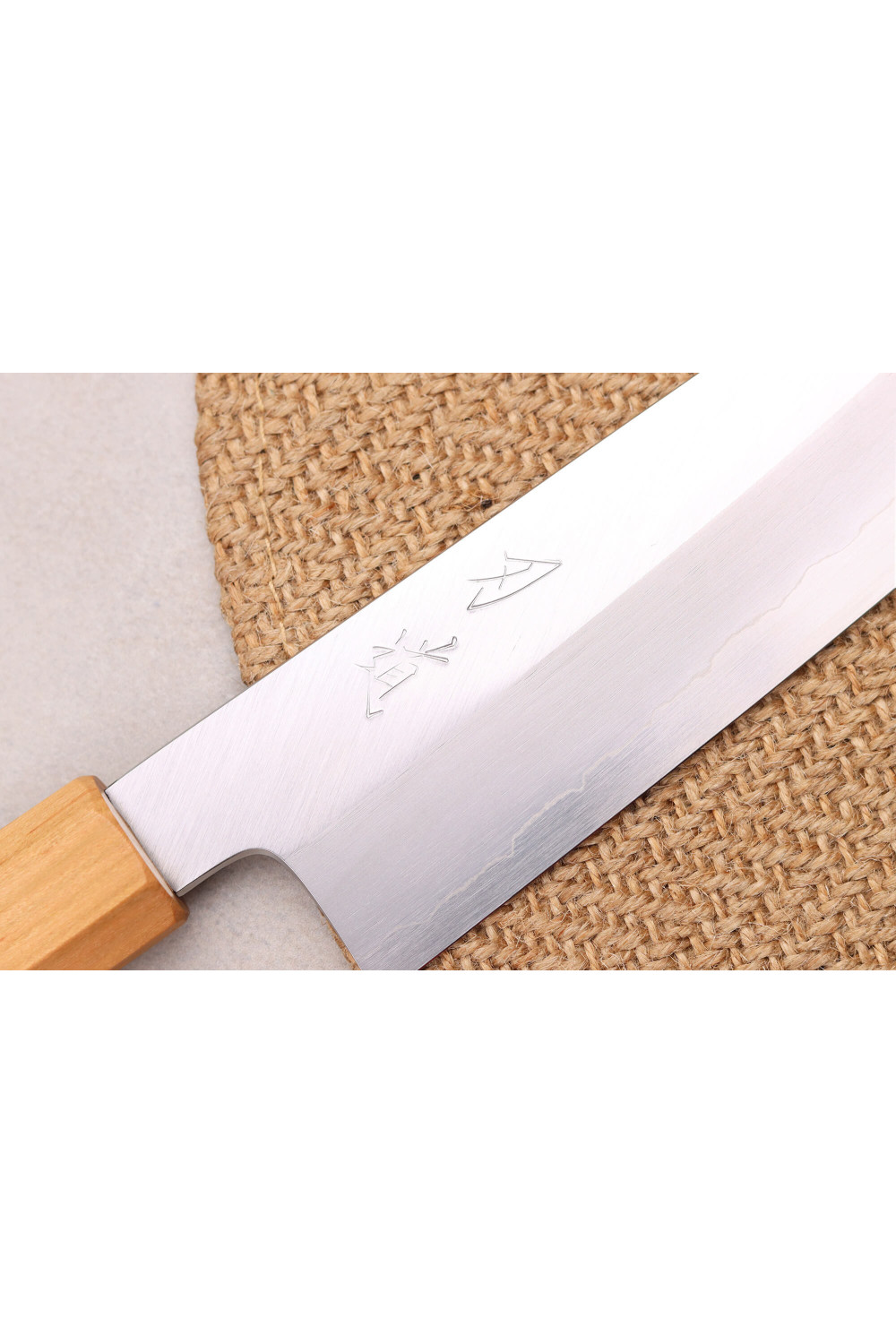
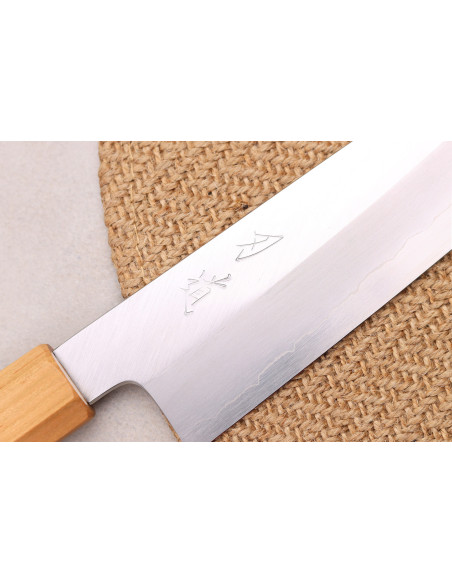
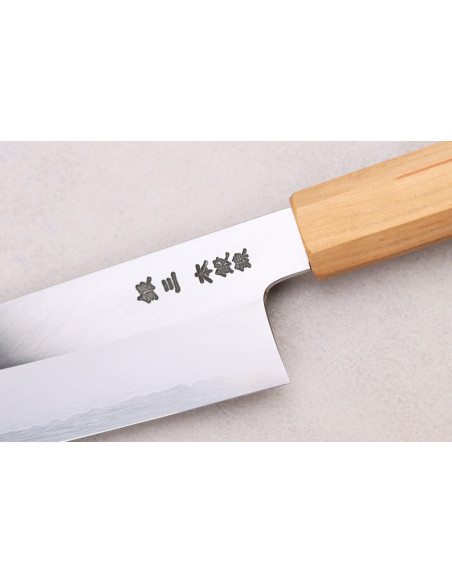
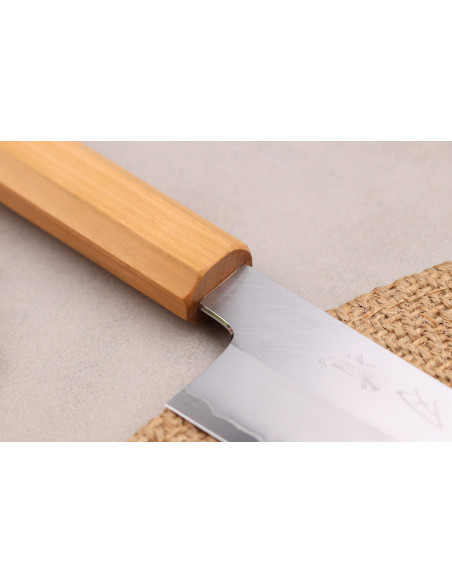
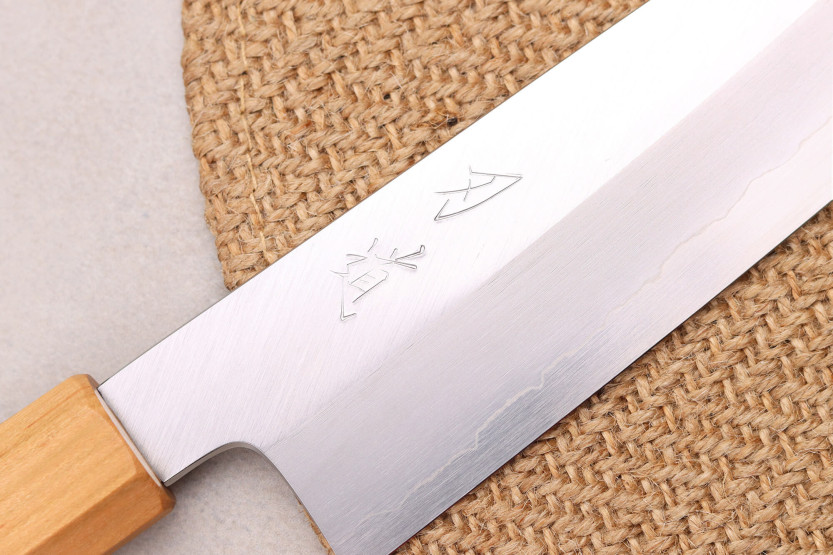
The core is covered bya layer of softer stainless steel, which folds in on either side to create the three layers of steel. This outer layer protects the core, giving it greater flexibility. By this we mean that it is more resistant to impact and breakage during use, not that it becomes flexible per se. What's more, the alternating layers of steel create a random wavy pattern along the edge, giving the knife a unique visual appeal.
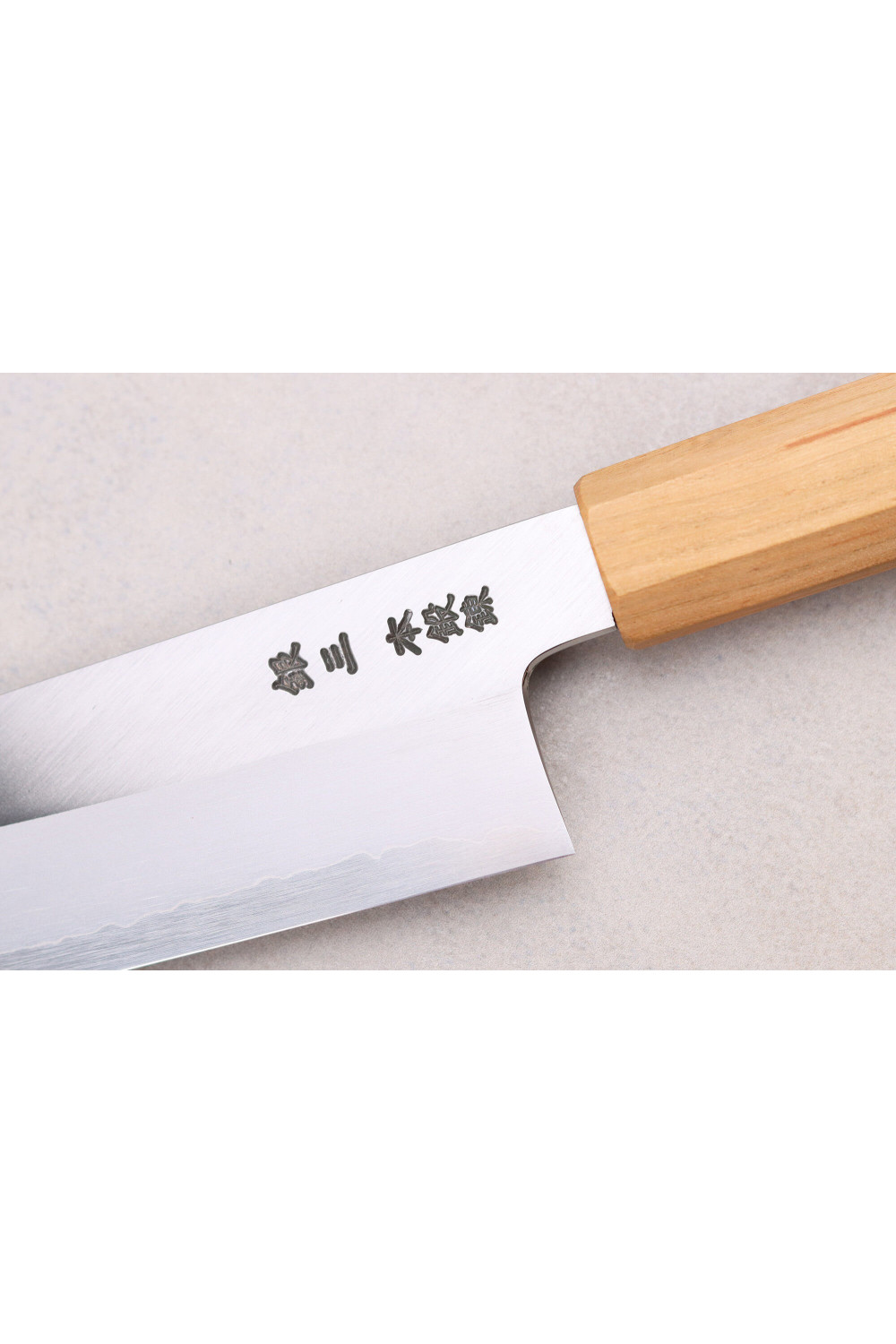
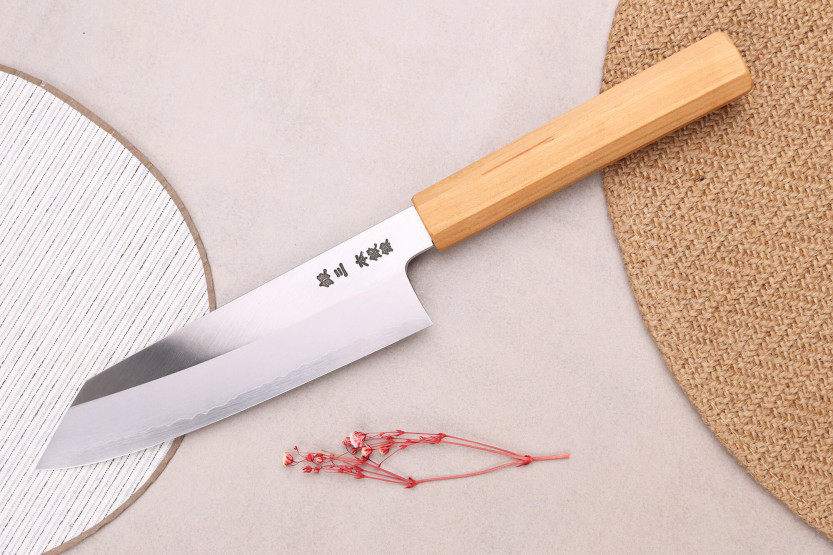
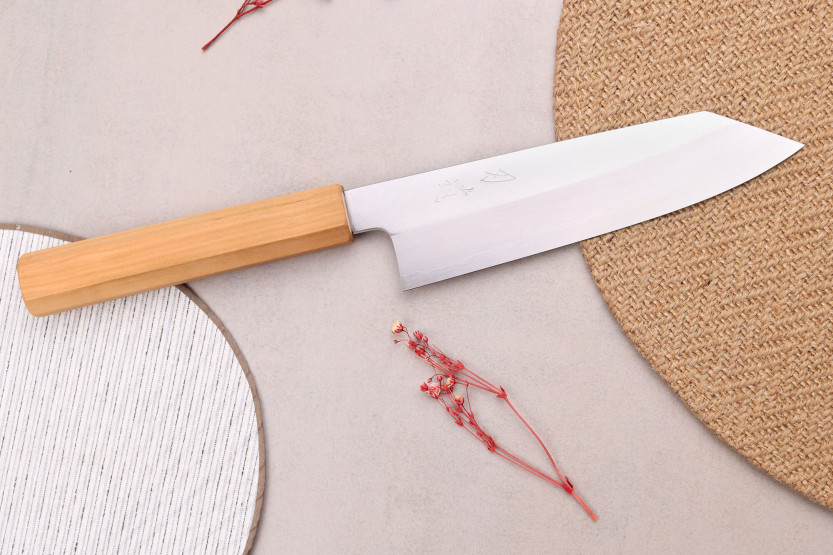
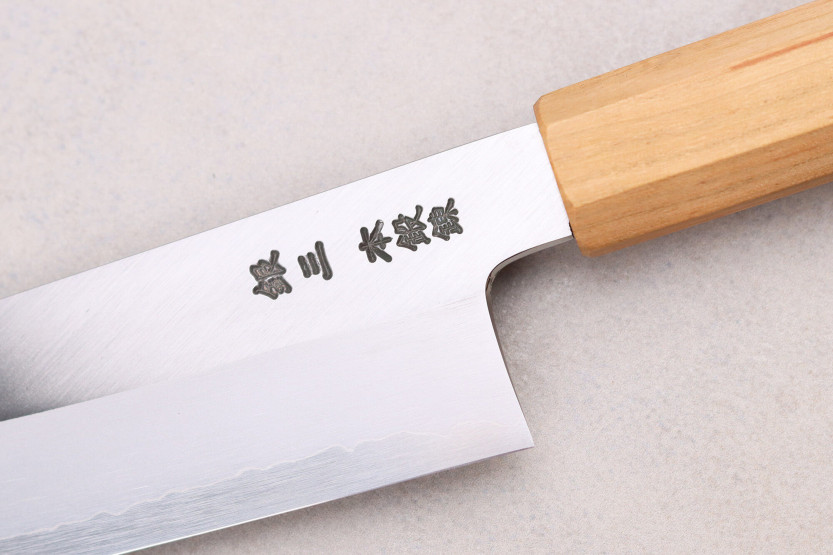
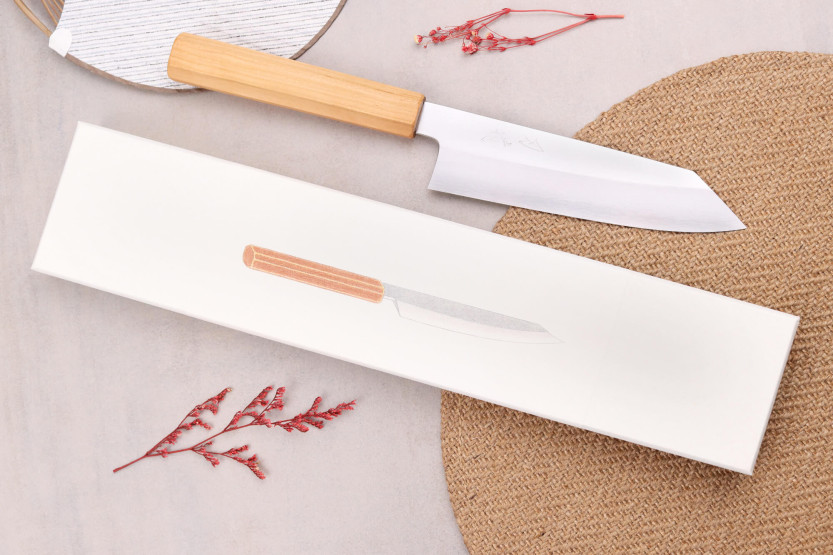
The blade of your santoku features a kiritsuke-shaped tip, giving it exceptional cutting efficiency. This design allows the blade to penetrate food more easily. The blade also features engraved kanji on both sides, and has been finely polished. Your knife possesses authenticity and refined elegance.
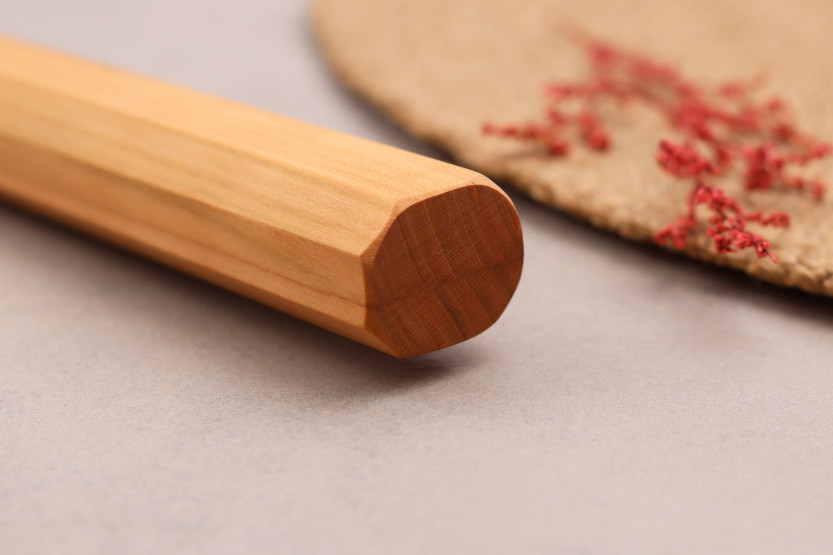
An octagonal handle for all cooks
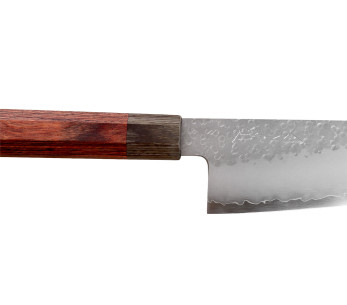
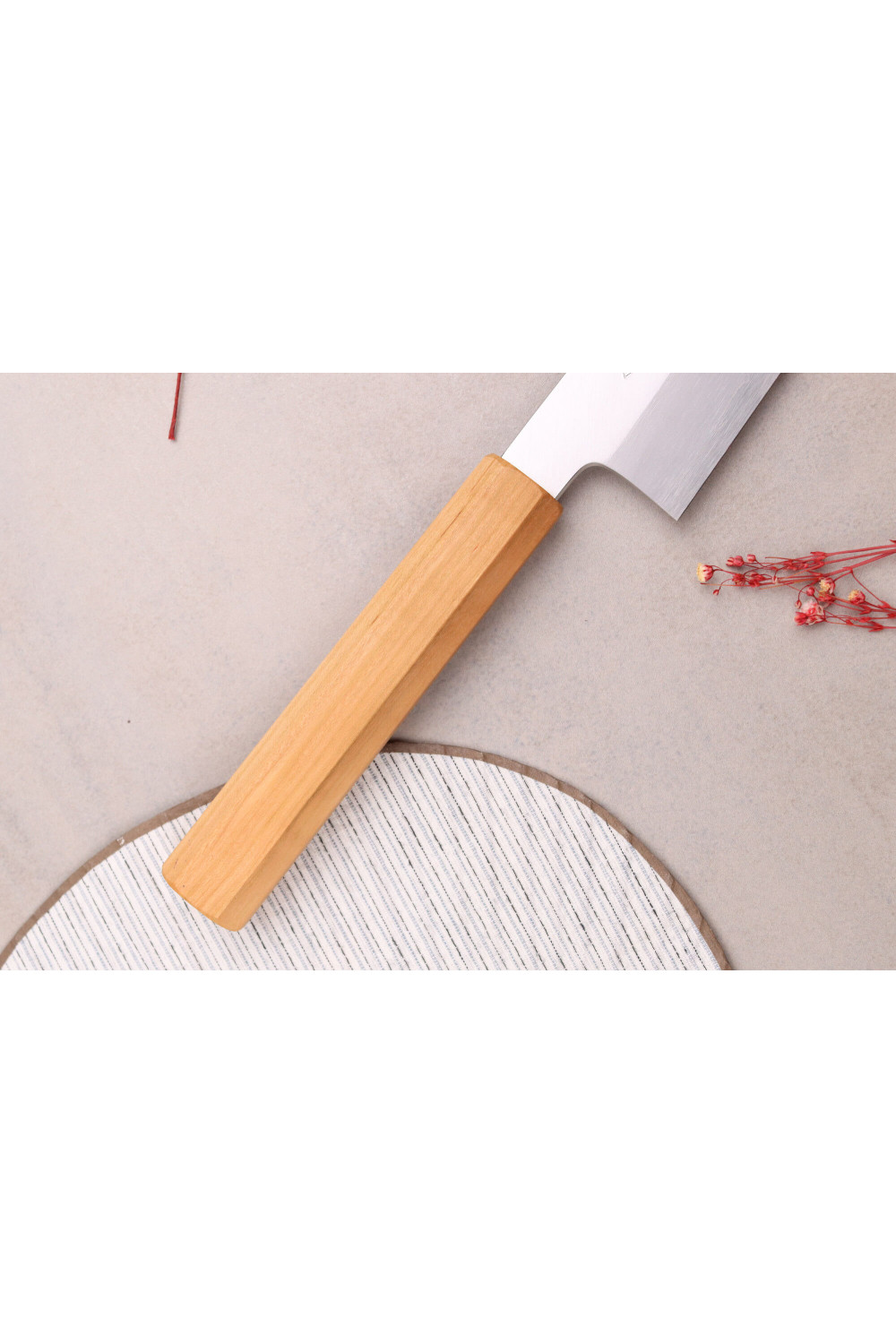
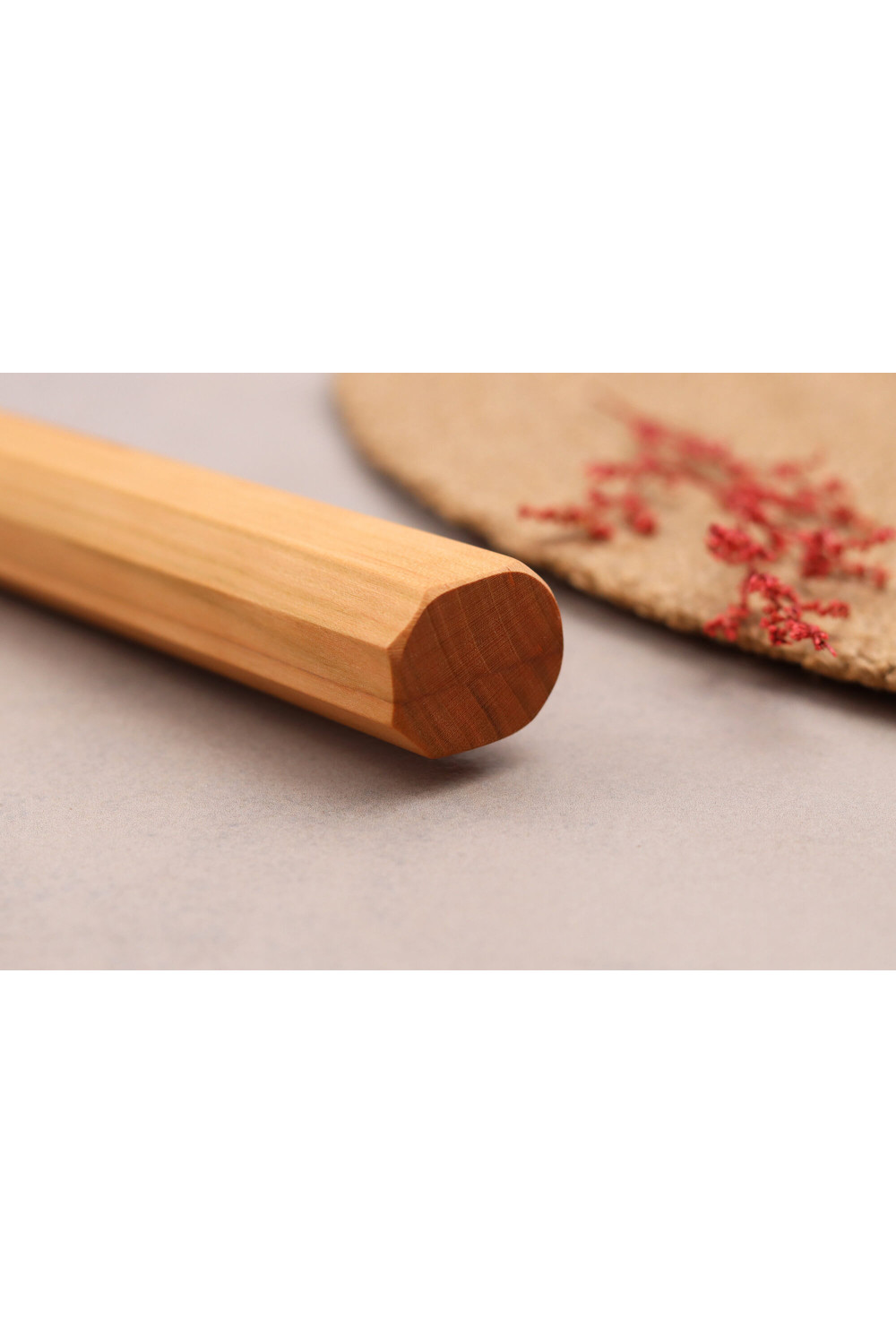
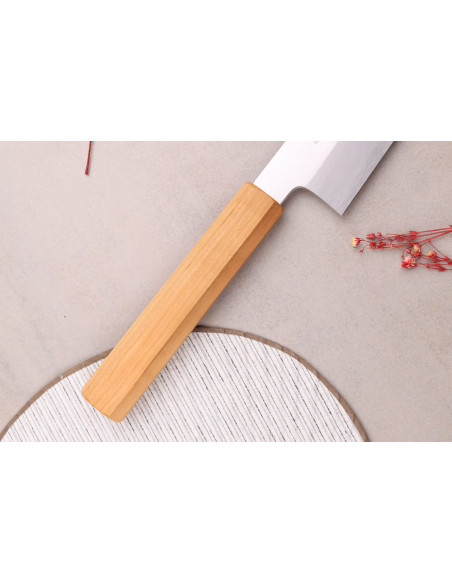
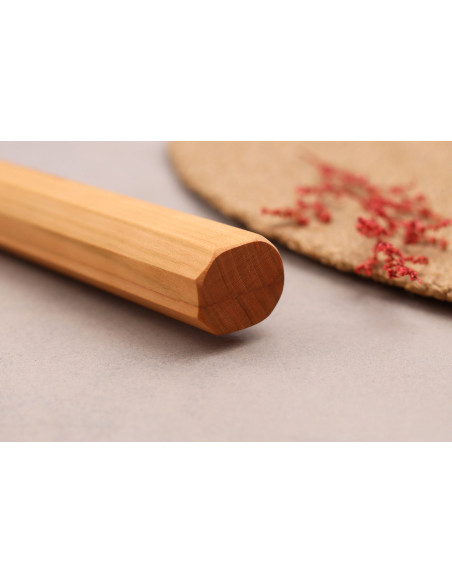
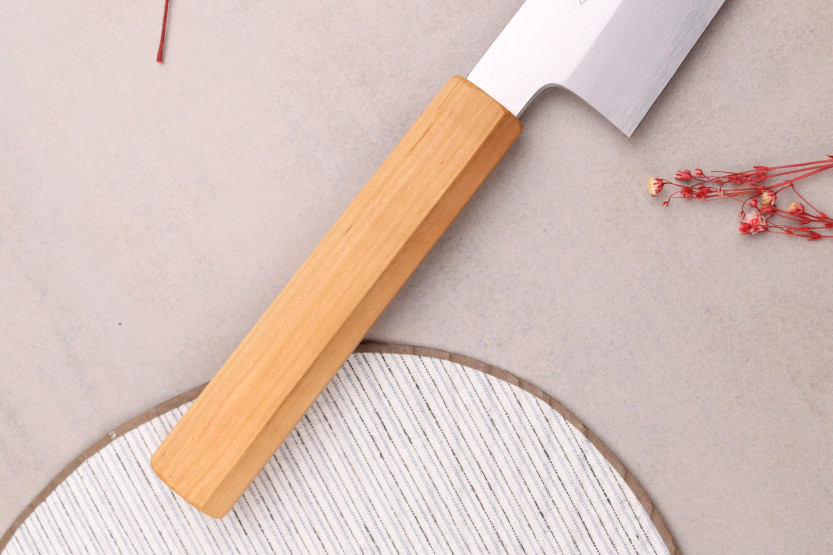
The knife features a handle made from cherry wood, a sacred wood in Japan. The choice of this species is not insignificant, as it symbolizes the beauty of things, ephemeral nature and life. Medium-hard cherry wood is both light and strong, giving your knife long-lasting durability. Its brown hue with red to pinkish highlights is magnified when exposed to light.
This handcrafted Japanese knife features an octagonal handle that is designed to fit all cooks, both right- and left-handed. Its shape hugs your palm perfectly, offering optimum comfort and ease of handling, even during long cutting sessions.
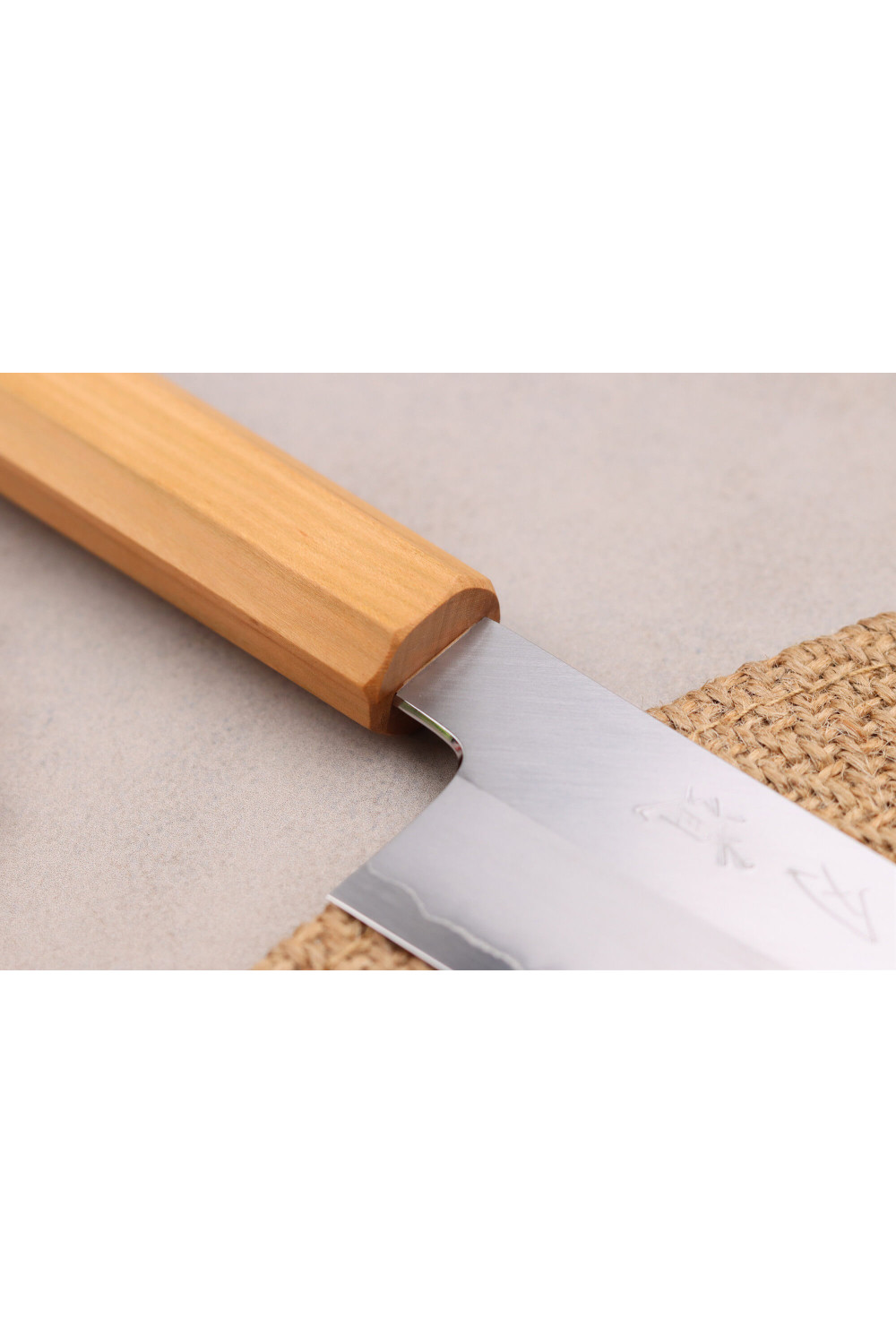
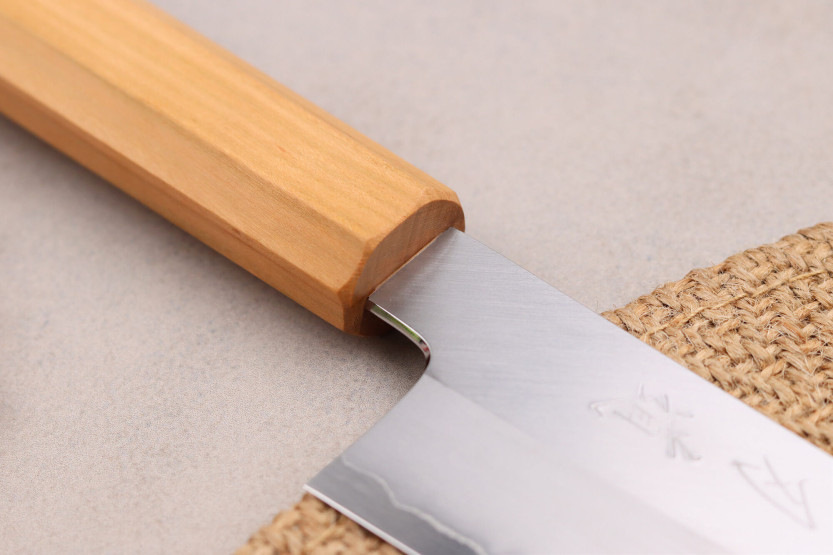
Finally, the space where the blade fits into the handle is filled with wood pulp to make the knife completely watertight. This ensures that water can't seep in and bits of food can't get in, guaranteeing total hygiene.
How to care for your Japanese santoku knife
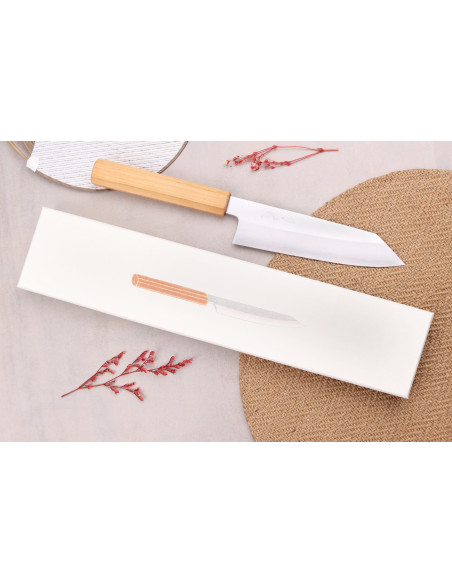
The knife is made from high-quality materials, which means it must be washed by hand.Soaking it in the sink or putting it in the dishwasheris strictlyinadvisable. Once the knife has been cleaned, it is essential to dry it thoroughly and immediately to remove all traces of water. Then you can store it in a dry place, such as its beautiful case. By following this advice, you can ensure optimum care of your knife, while preserving its quality and aesthetic appeal.
Discover Sakai's Hado workshop
Blacksmith Shogo Yamatsuka is on the left; head sharpener Tadataka Maruyama is on the right.
The creation of theHado artisan workshop in Sakai was the result of a collaboration between Sakai Fukui president Ryuichiro Fukui and his sales manager, Tadataka Maruyama. Tadataka Maruyama had long dreamed of becoming a craftsman, and spoke to Ryuichiro who, for his part, wanted to relaunch the production of handcrafted knives. Sakai Fukui was concentrating mainly on industrial production. So Ryuichiro offered Tadataka a training course while he set up an in-house craft workshop. After three years of intensive training, Tadataka was ready to embark on this joint project. In spring 2019, the workshop finally saw the light of day.
Hado (刃道), which means "the road of blades" in Japanese, was chosen to name the workshop because of its significance. The term reflects the craftsmen's ambition to pursue their path to excellence in their art, perfecting themselves every day. In every creation, they put all their tamashi (魂), their soul, into creating magnificent knives offering exceptional cutting performance.
This santoku knife kiritsuke santoku knife was forged by Shogo Yamatsuka, a blacksmith originally from Sakai. He learned his skills from his father, also a blacksmith, and mastered working with Ginsan steel. As an expert in this alloy and a certified Traditional Master Craftsman, Shogo Yamatsuka is the only blacksmith capable of hot-forging Ginsan steel due to its complex handling. After devoting 30 years to perfecting the art of steel forging, known as Hizukuri (檜作), he was honored with the title awarded by Japan's Ministry of Economy, Trade and Industry. Next, the knife passed into the expert hands of Tadataka Maruyama. The workshop's head sharpener ensures that the knife will have exceptional cutting quality, guaranteeing optimum performance with every cut.
Our santoku knives are waiting for you on our website!




 By buying this product you can collect up to