The Hado artisan workshop, located in Sakai, was born of the collaboration between Tadataka Maruyama, former Sales Manager at Sakai Fukui, and Ryuichiro Fukui, President of the company. Driven by his passion for Japanese knives, Tadataka dreamed of becoming a craftsman. He shared this aspiration with Ryuichiro, who was looking to revive craftsmanship within his company, which until then had been focused on industrial production. Seizing this opportunity, Ryuichiro encouraged Tadataka to train as a cutler, with a view to setting up an in-house craft workshop. After three years of intensive apprenticeship, Tadataka took charge of this workshop, entirely dedicated to the creation of exceptional Japanese knives. The Hado workshop officially opened its doors in spring 2019!
The name "Hado", which means "the way of blades", reflects the forge's core values: excellence and continuous improvement. Every Hado knife is crafted with remarkable precision, and stands out for its exceptional cutting performance.
This Japanese kitchen knife was forged by Yoshikazu Tanaka, a certified Traditional Master Craftsman and Sakai icon. Descended from a line of blacksmiths going back four generations, he is renowned for his expertise, combining high-quality materials with respect for Japanese traditions. After forging, the knife was entrusted to Tadataka Maruyama, the workshop's master sharpener, who sharpened it with artisanal precision. By hand, on a grindstone, he fine-tunes the cutting edge to deliver a razor-sharp edge.

Yoshikazu Tanaka is on the left; Tadataka Maruyama is on the right.
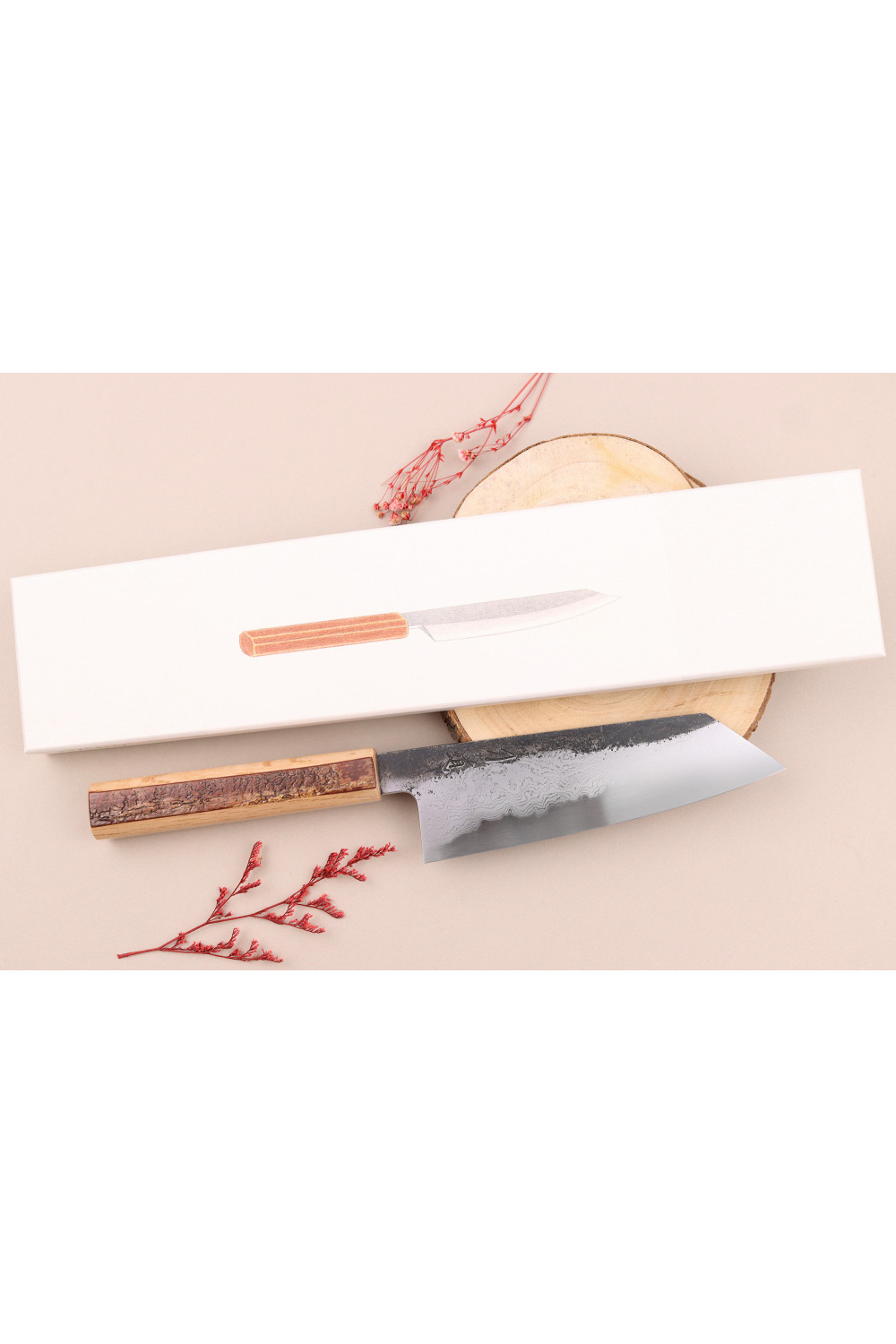
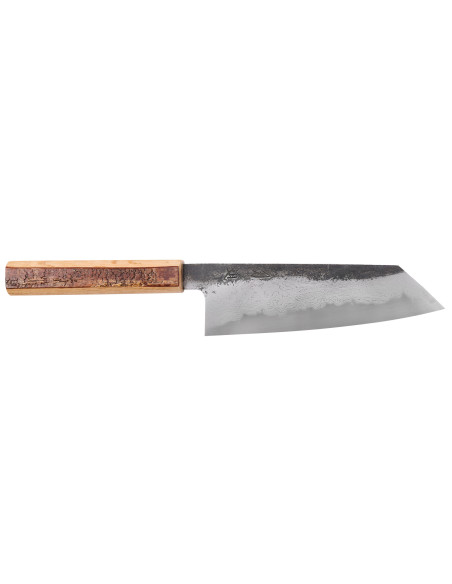
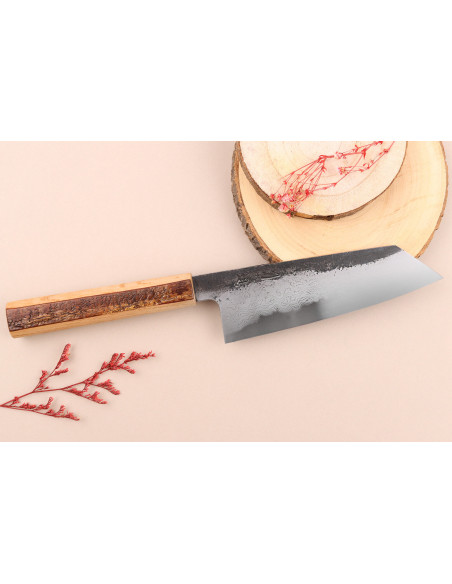
A refined damascus blade for this handcrafted Japanese knife
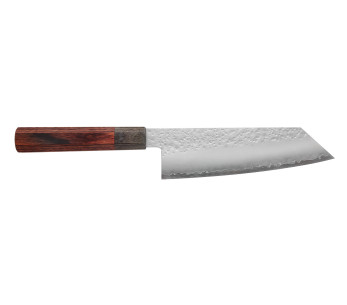
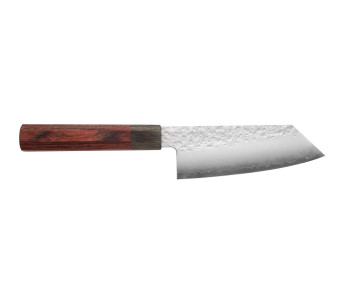
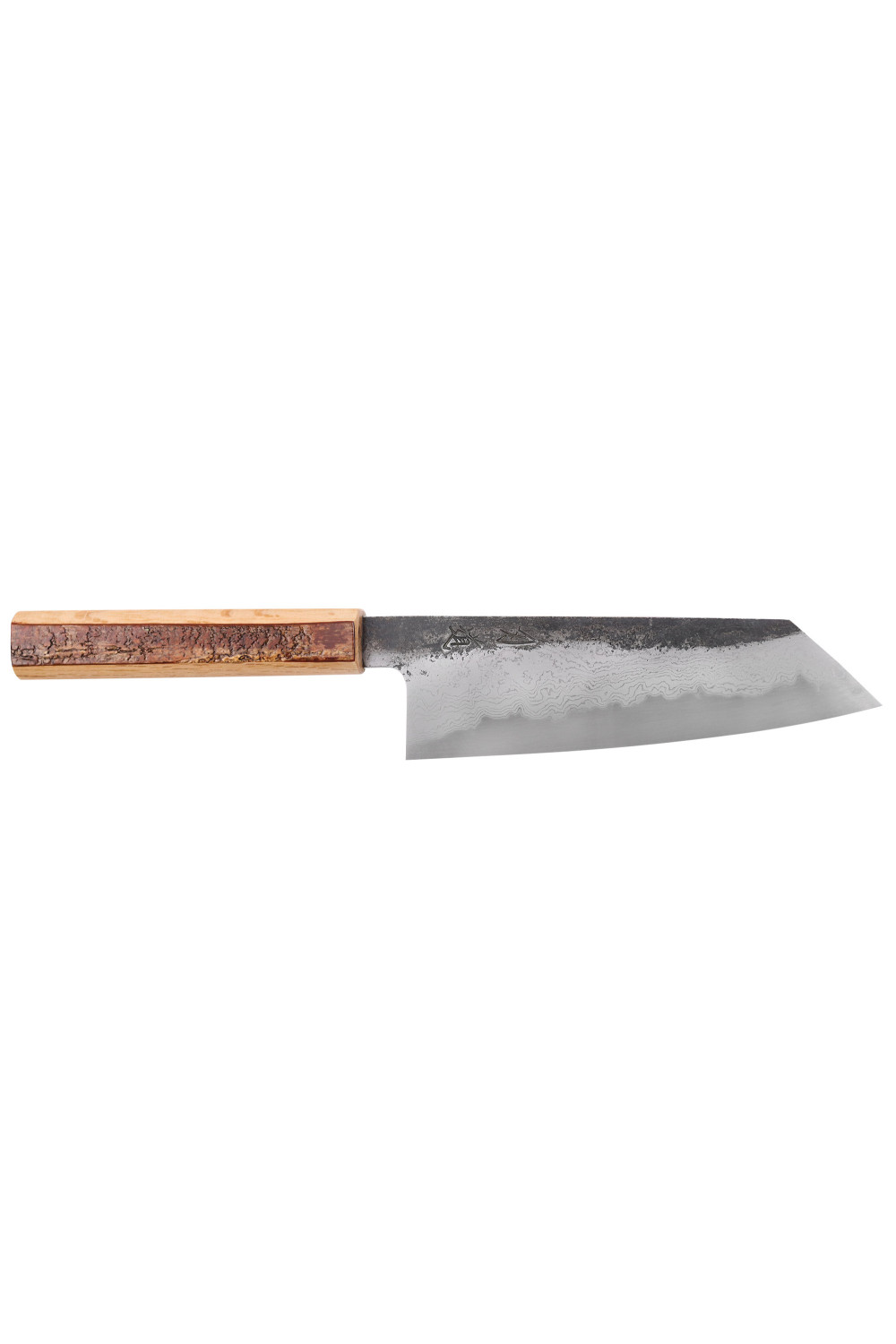
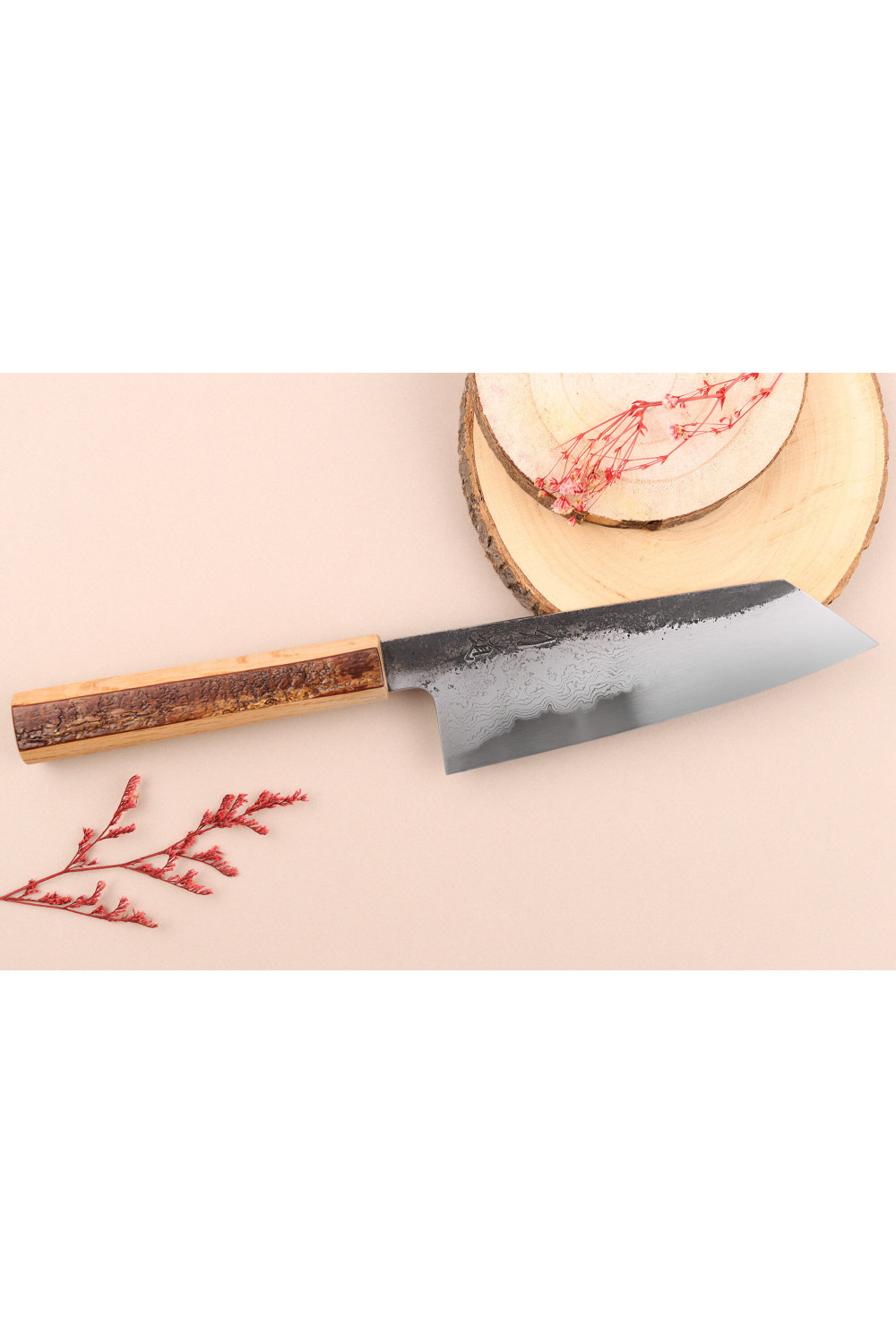
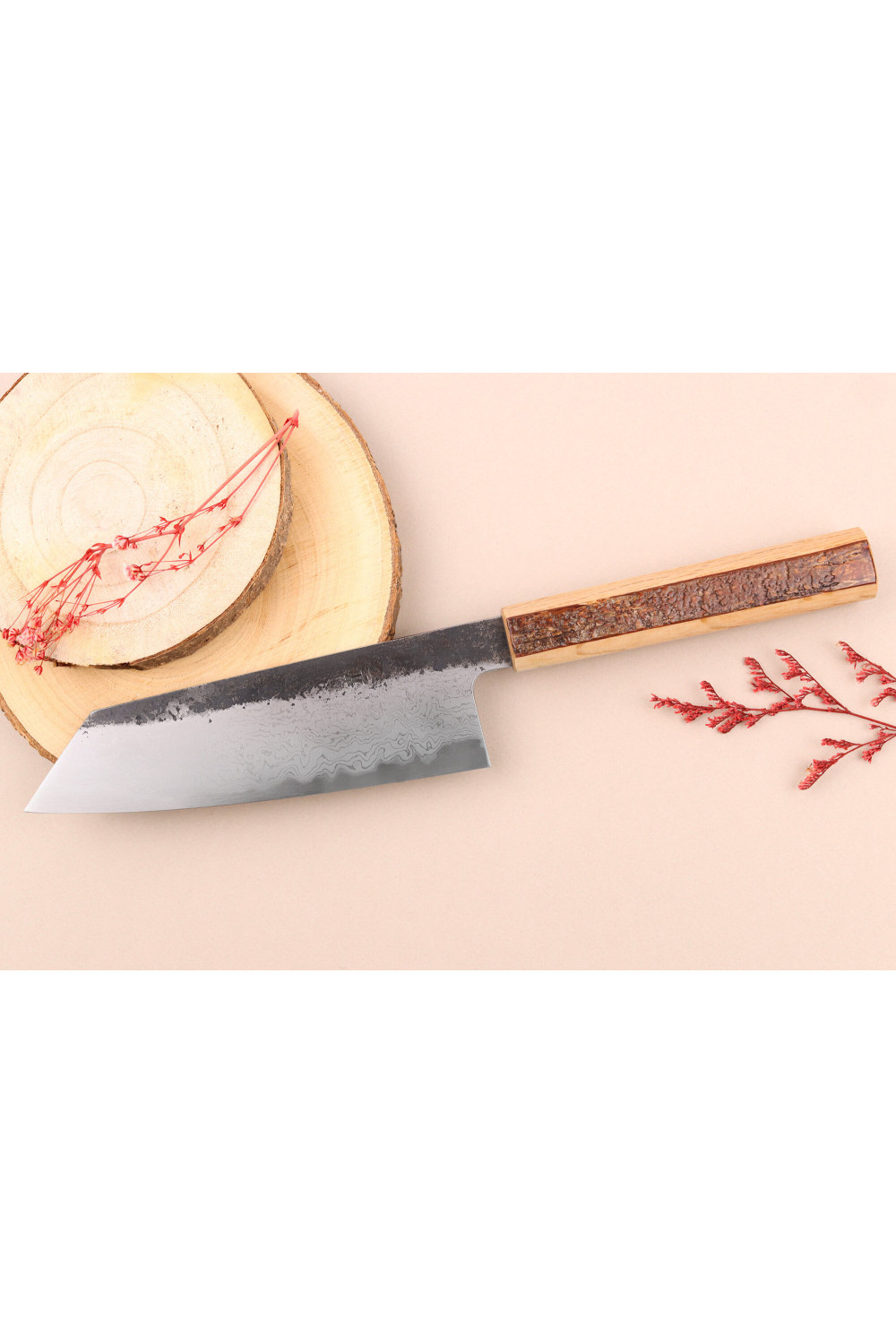
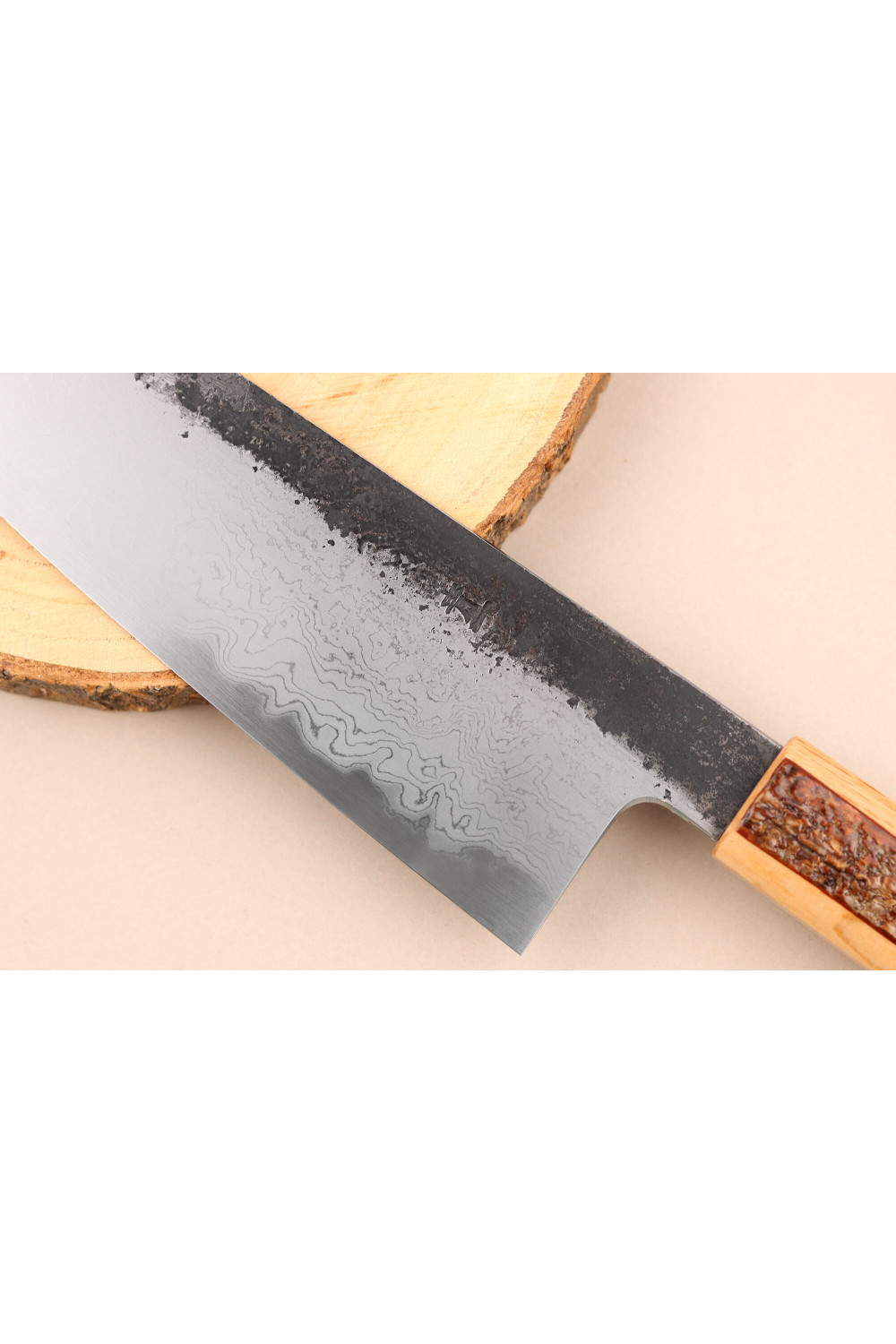
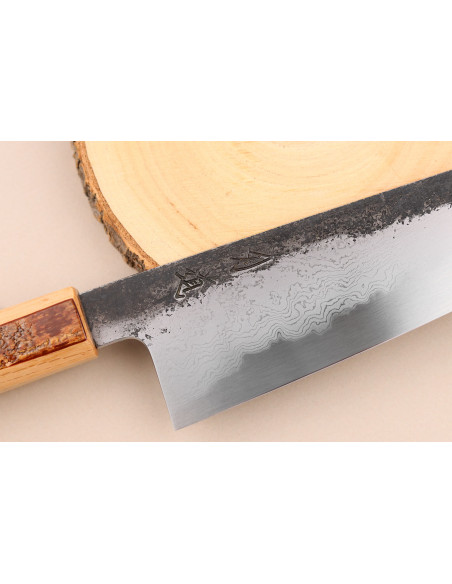
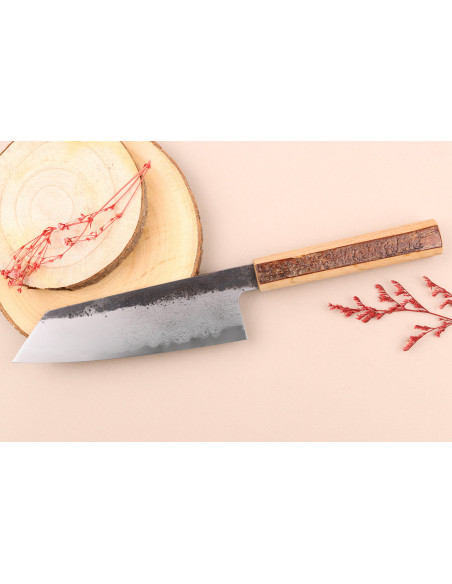
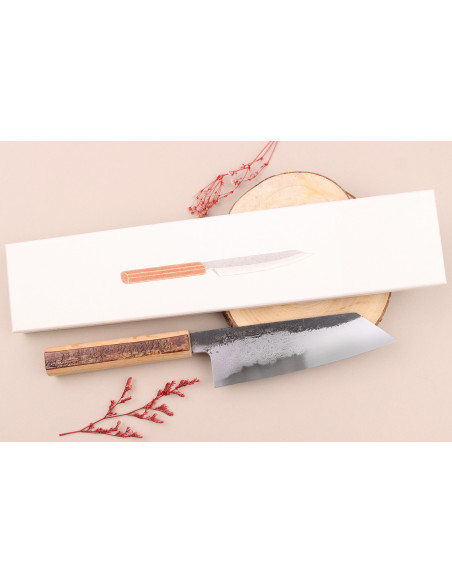
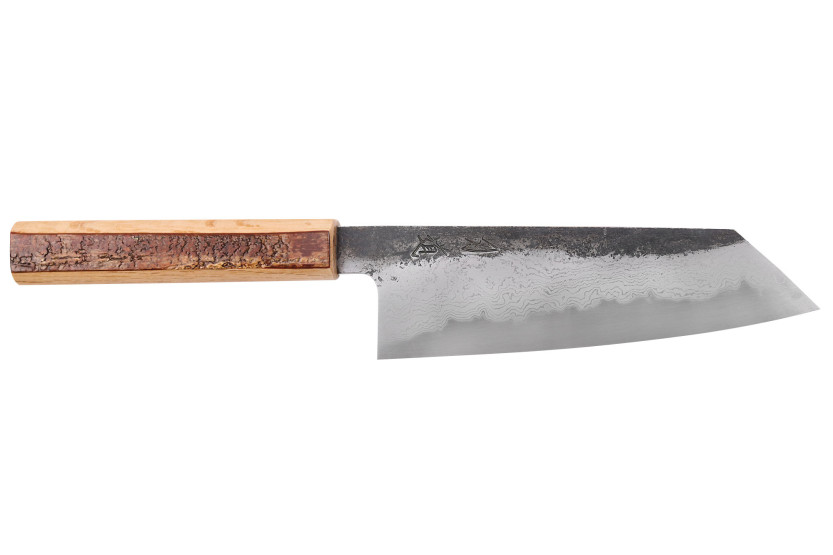
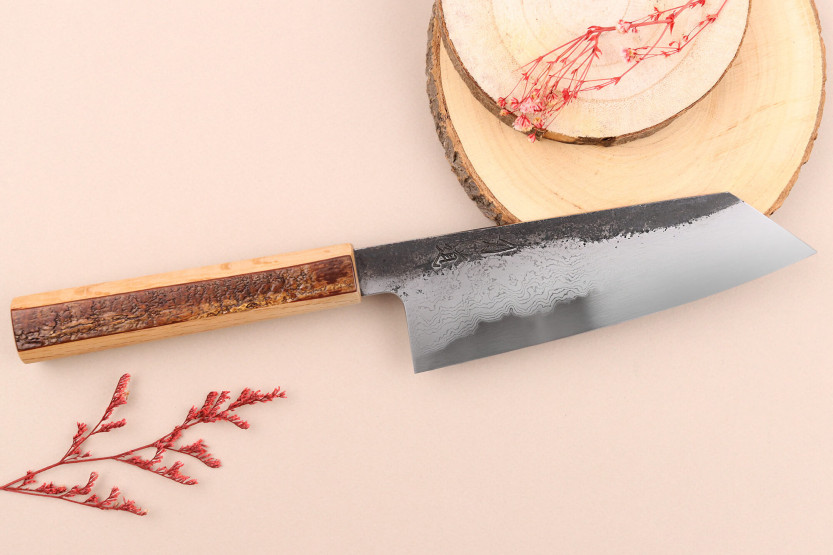
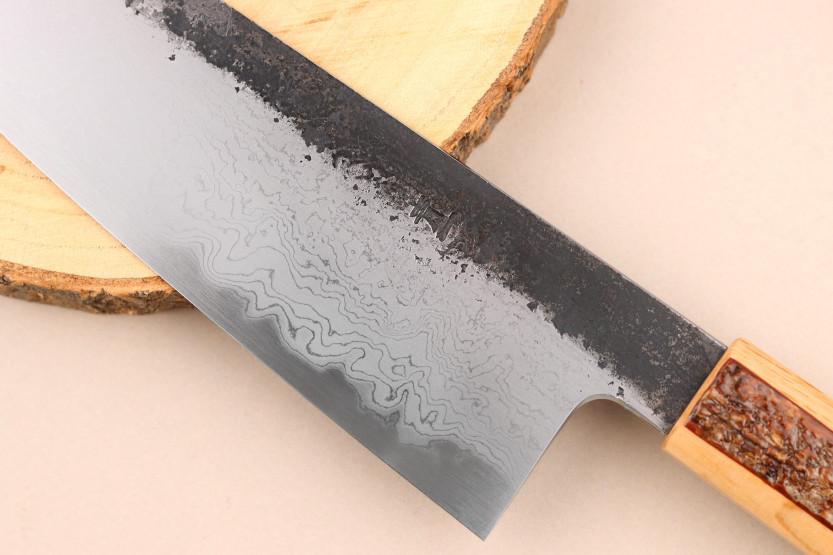
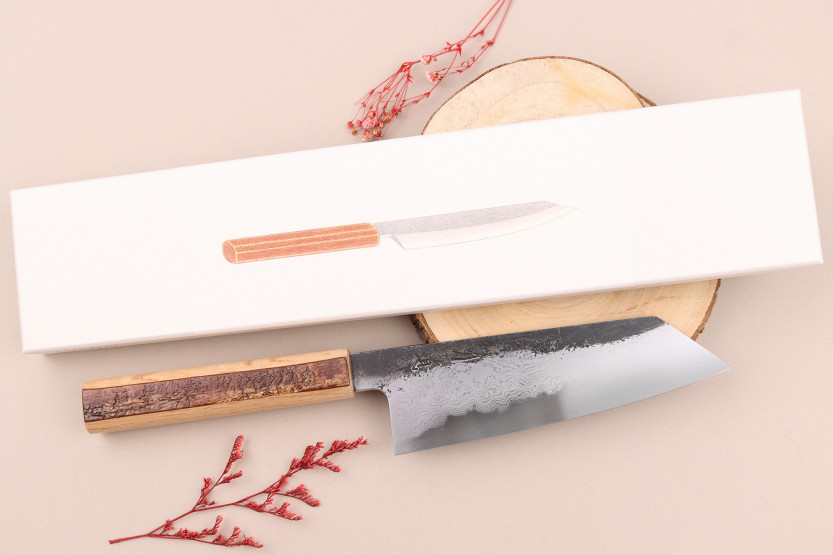
This bunka knife features a damascus blade, produced using a traditional technique of wrapping a rigid steel core in several layers of softer steel. This age-old process ensures an optimal balance between hardness and suppleness, while reinforcing the blade's core protection.
The blade core is made from Japanese Aogami #1 steel, also known as Blue Paper Steel 1, a top-of-the-range alloy produced by the prestigious Hitachi steelworks. With a high carbon content of around 1.3%, this steel achieves a hardness of 63HRC on the Rockwell scale. This level of hardness guarantees excellent edge retention, delivering outstanding cutting performance!
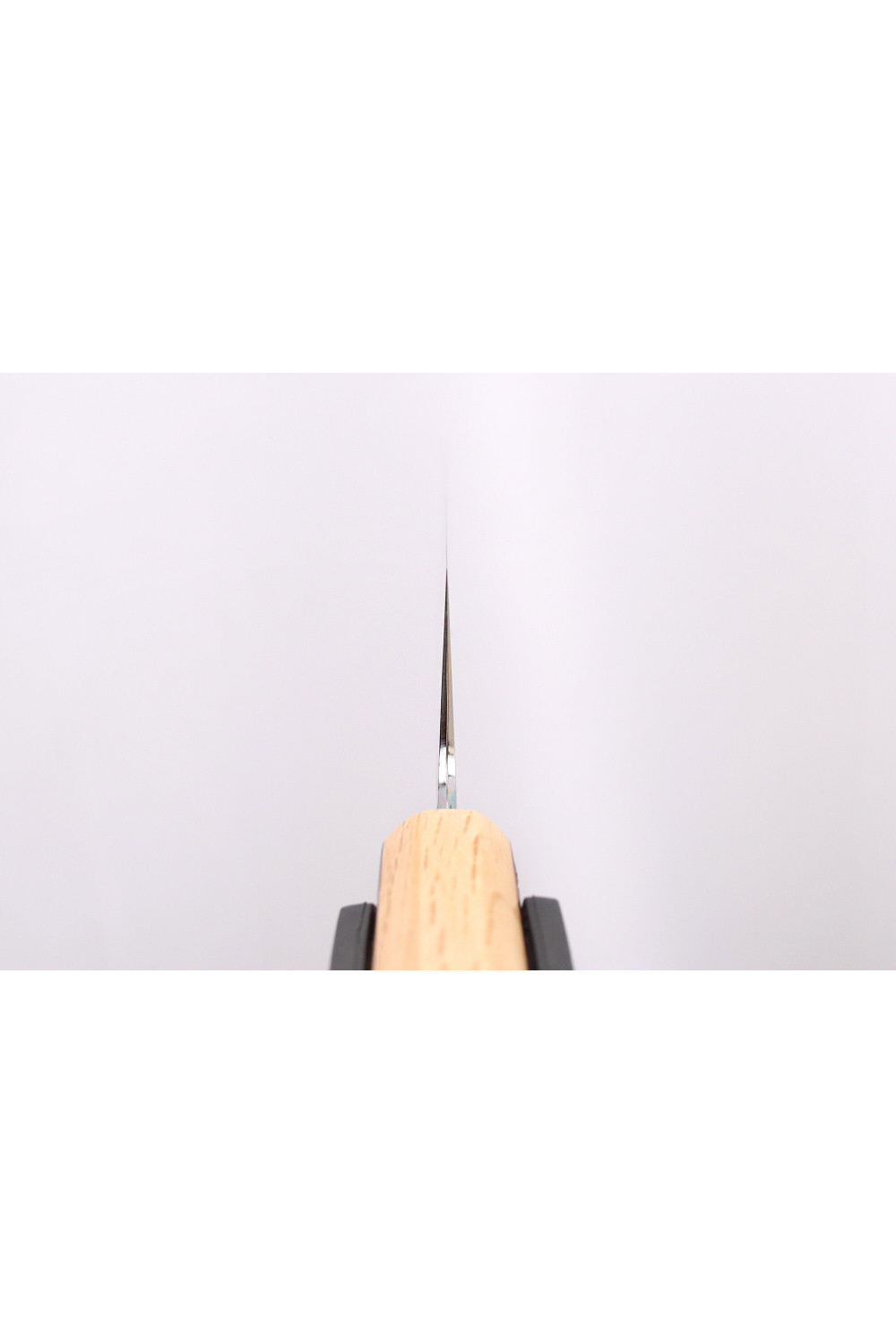
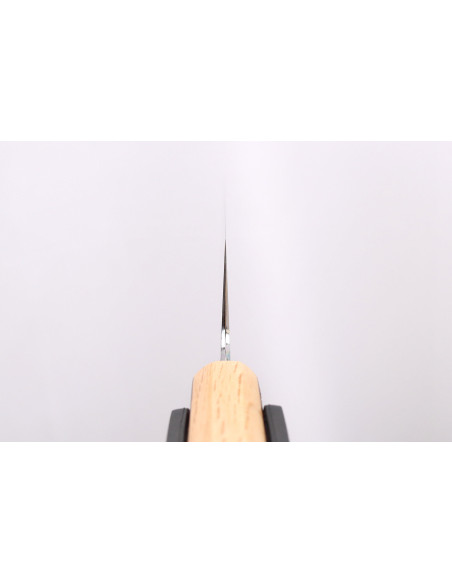
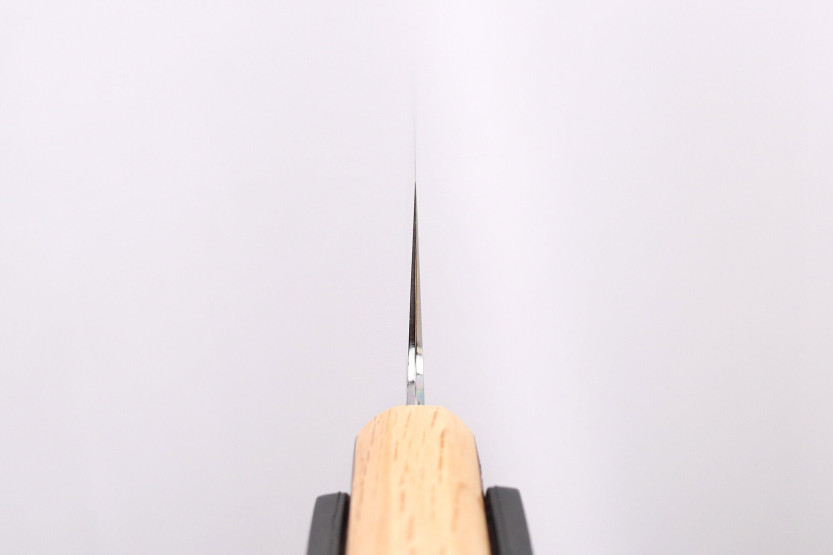
The blade features a thin, flat grind that combines strength, elegance and ease of maintenance. The main advantage of this shape is that it is easy to reproduce during your sharpening sessions, making maintenance particularly practical.
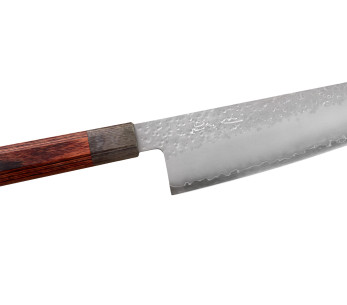
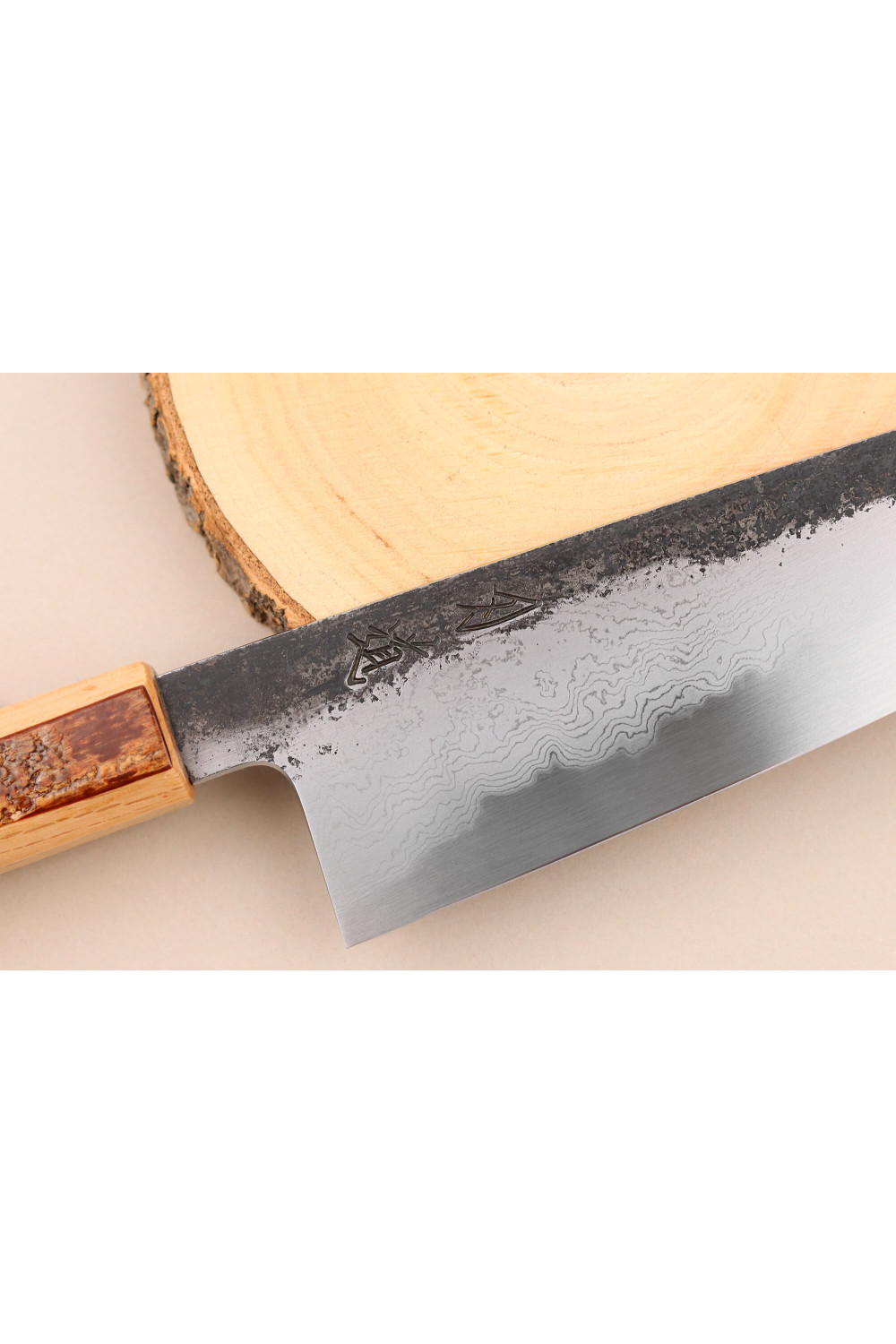
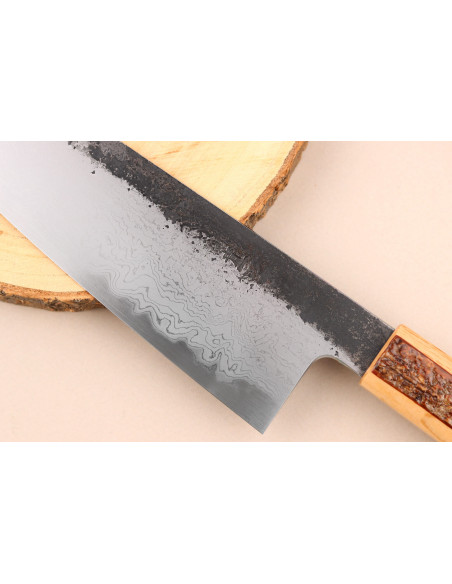
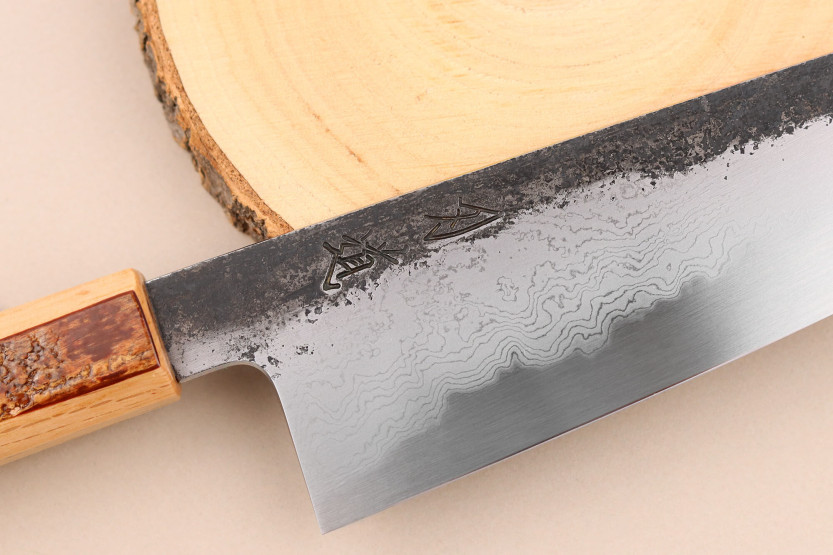
Damascus is complemented by layers of soft iron and soft steel enveloping the core. These layers add a slight suppleness to the blade, reducing the risk of breakage while maintaining high strength. The damascus pattern, visible along the edge, reveals elegant and unique waves, the result of the different superimposed layers of steel, giving each Hado knife a singular character.
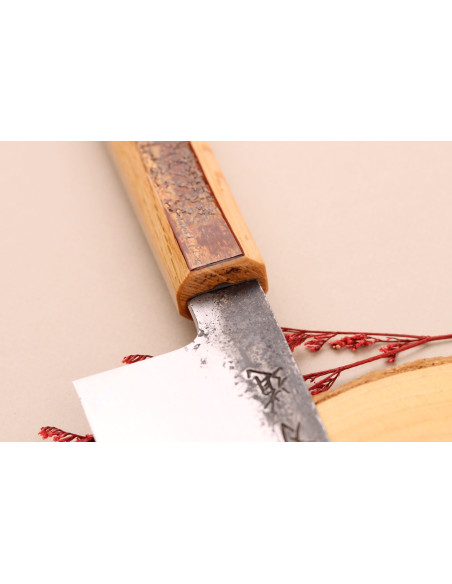
The upper part of the blade has a rough forged finish, giving your Japanese kitchen knife an authentic character. Highly prized by Japanese chefs, this finish enhances the craftsmanship of our knives! The damask pattern has been carefully polished, offering subtle contrast and refined elegance.
This Hado knife belongs to the Sumi range, a name inspired by Japanese ink. Its deep black matte finish evokes the sobriety of this ink.
A Hado knife with an original handle
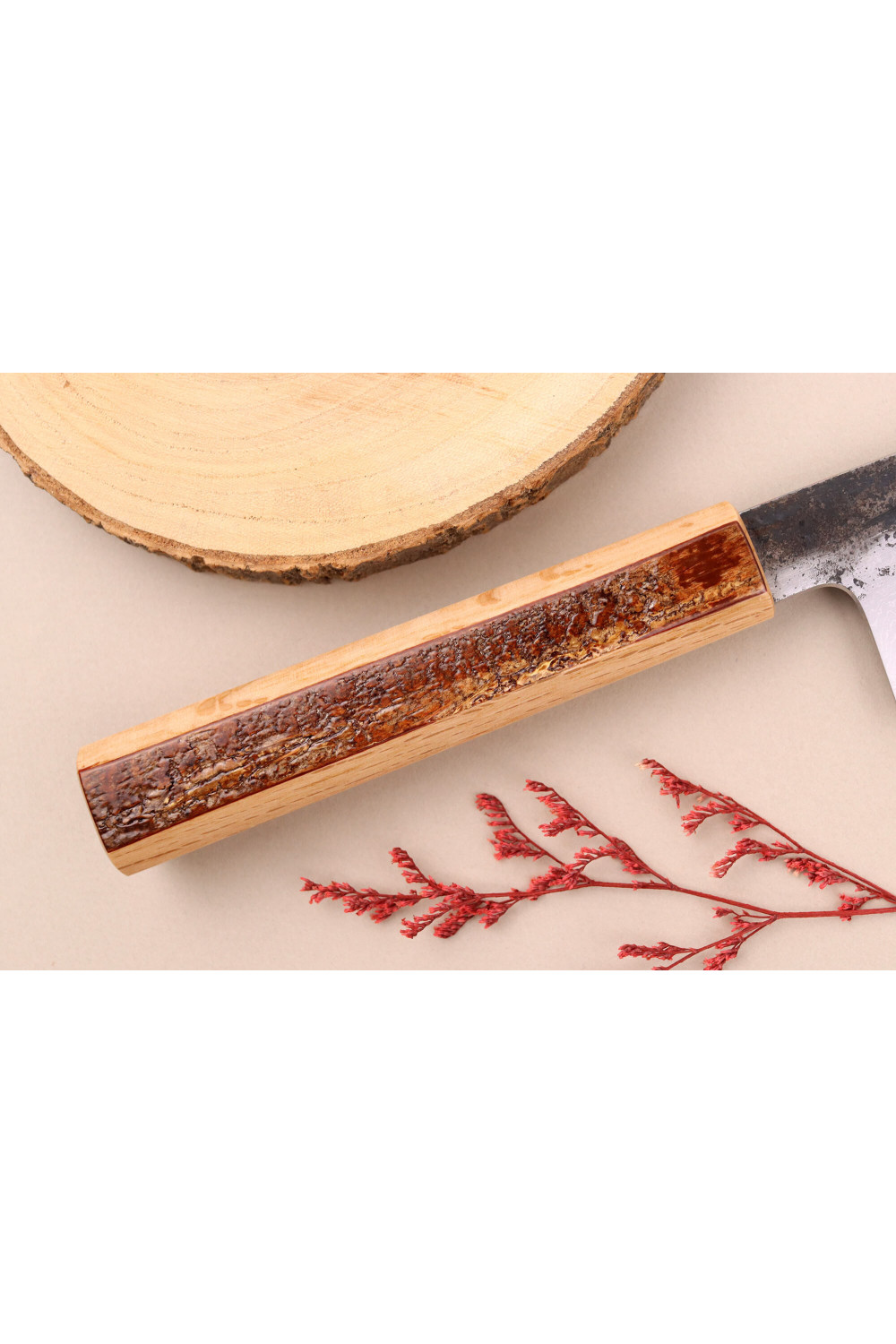
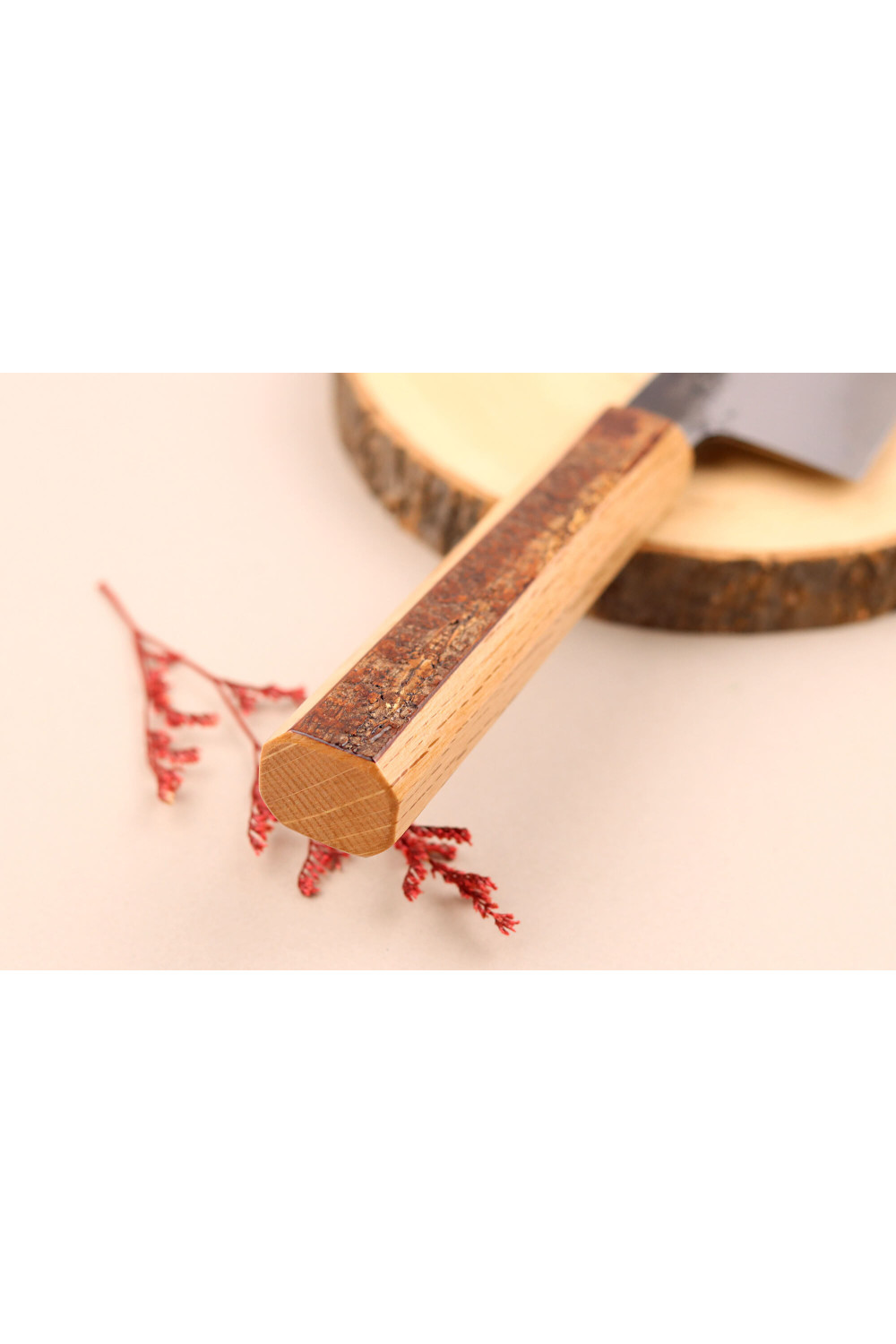
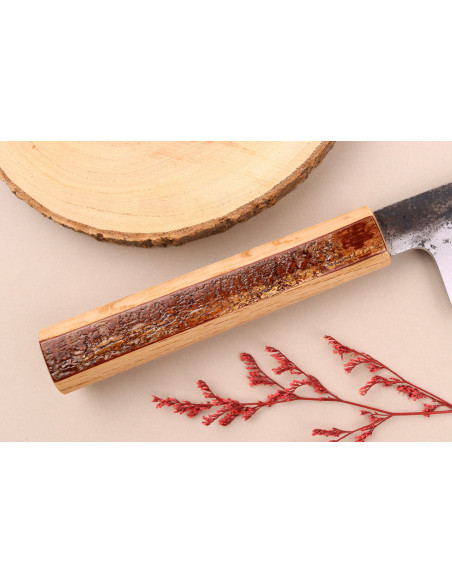
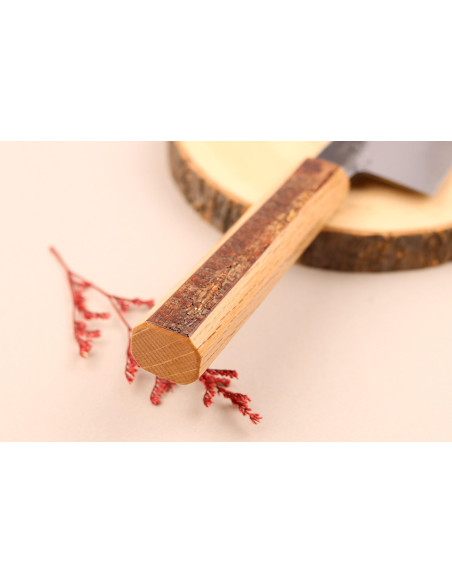
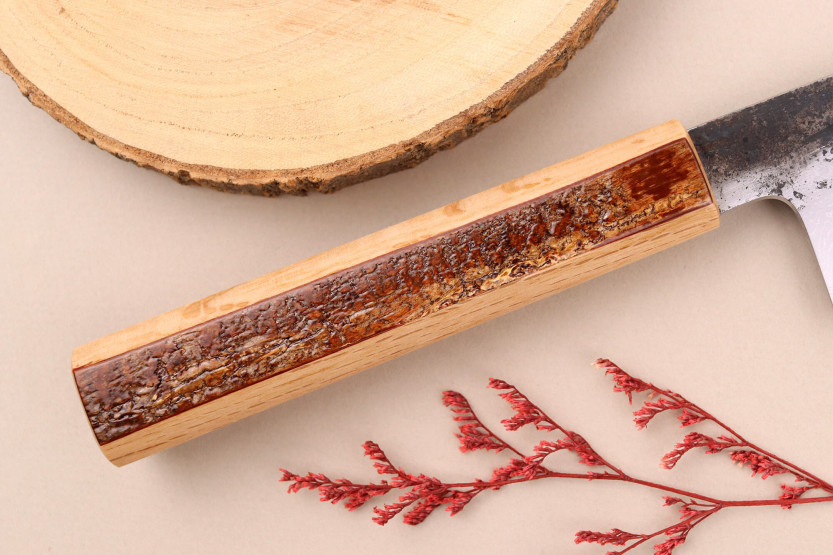
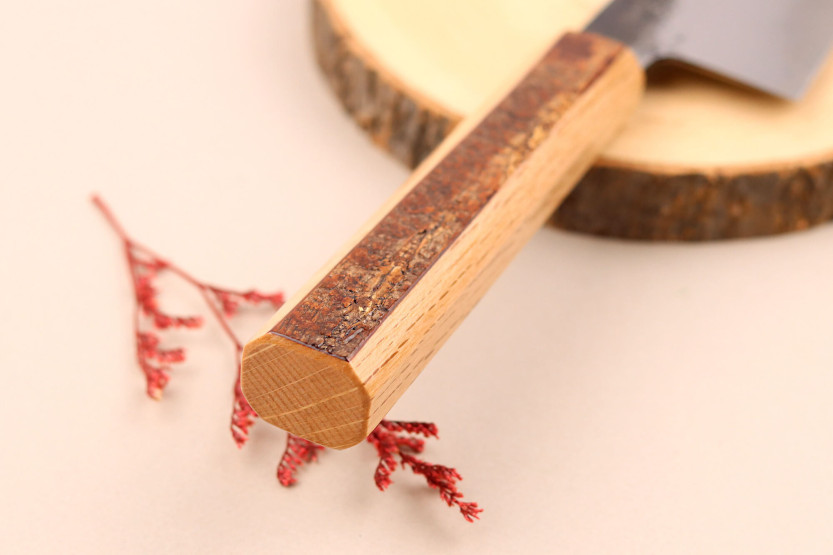
The handle of this damask knife is made from a core of oak wood, known for its strength and durability. This dense wood offers excellent resistance to humidity, impact and deformation caused by condensation, guaranteeing remarkable longevity.
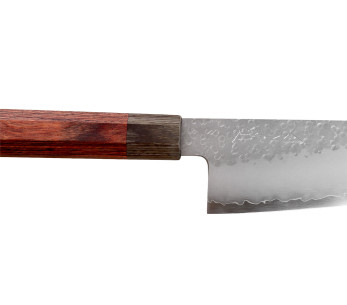
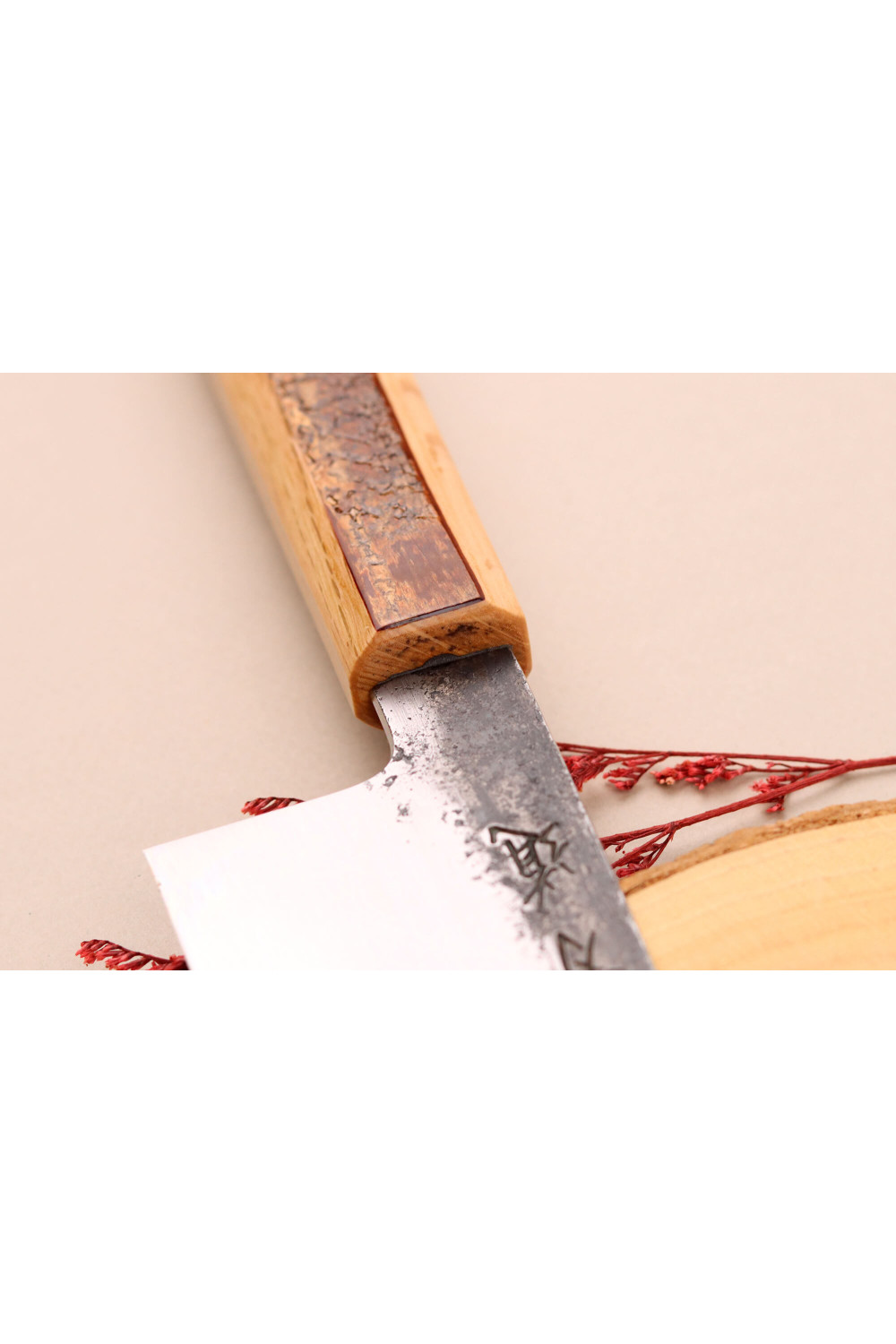
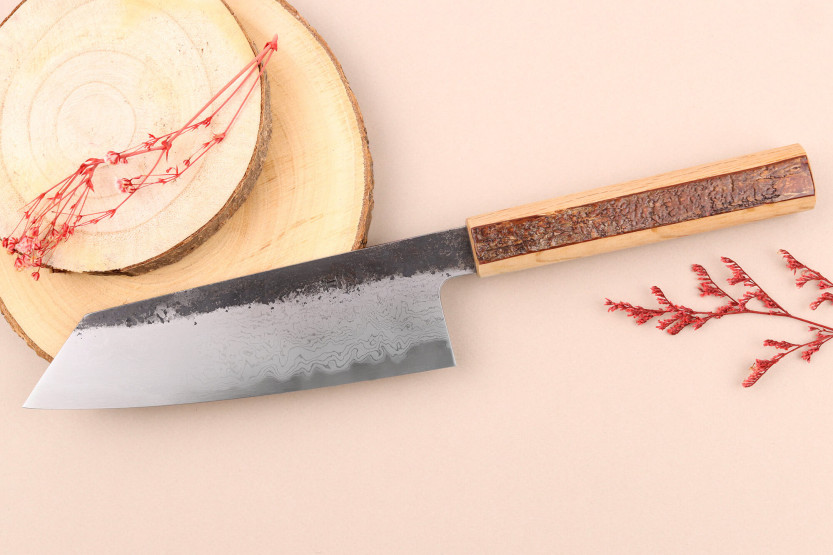
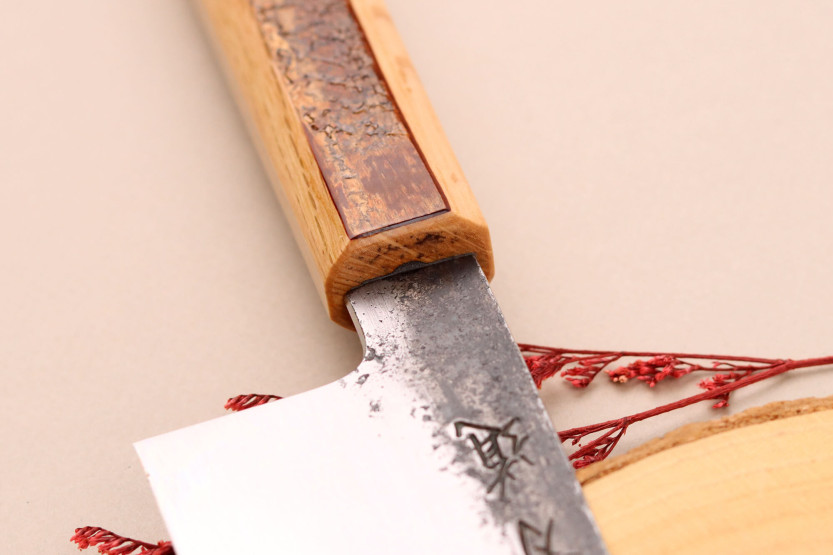
Two sides of the handle are covered withcherry bark, a material emblematic of Japan and the symbol of the famous Sakura, renowned for its timeless beauty. This harmonious marriage between the robustness of oak and the delicacy of cherry gives the handle an authentic, refined aesthetic. What's more, the handle has been varnished to give it a smooth, pleasant-to-the-touch texture, enhancing comfort of use.
The handle is octagonal in shape, offering a comfortable, universal grip for both right- and left-handed users. This ergonomic design guarantees pleasant use, even during long cutting sessions in the kitchen.
To ensure an impeccable finish, wood putty has been applied to the junction between blade and handle, filling any gaps. This prevents the infiltration of water or food residues, ensuring greater durability.
Care and maintenance of a carbon steel Japanese knife
To preserve your damascus knife, it is essential to wash it exclusively by hand, using a sponge and a mild detergent, avoiding wetting the handle. After cleaning, dry immediately to remove all traces of moisture, then store in a dry place. Do not put in the dishwasher or soak in water.
Over time, the blade may change color slightly. This is quite normal and results from the natural reaction of carbon to the acidity of food and ambient humidity. This patina in no way alters the performance of your handcrafted Japanese knife, and even lends it a unique charm associated with its use.
Discover a wide range of damascened Japanese knives on Knifeleader.eu!




 By buying this product you can collect up to