A Hatsukokoro knife made by talented craftsmen
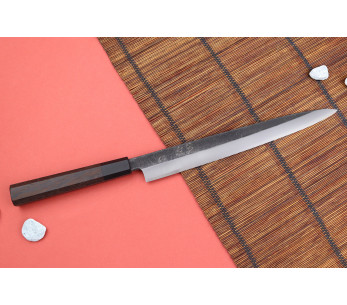
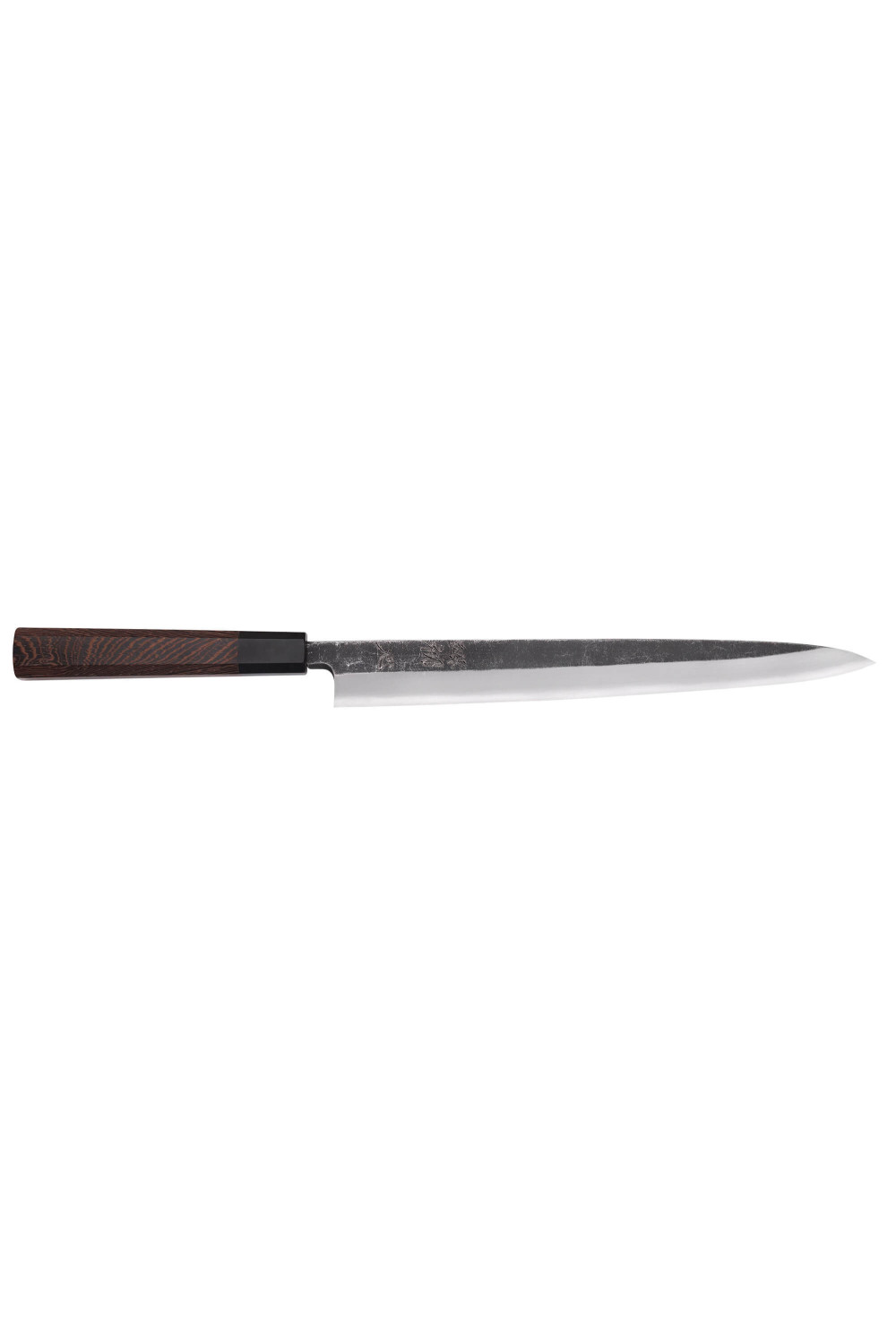
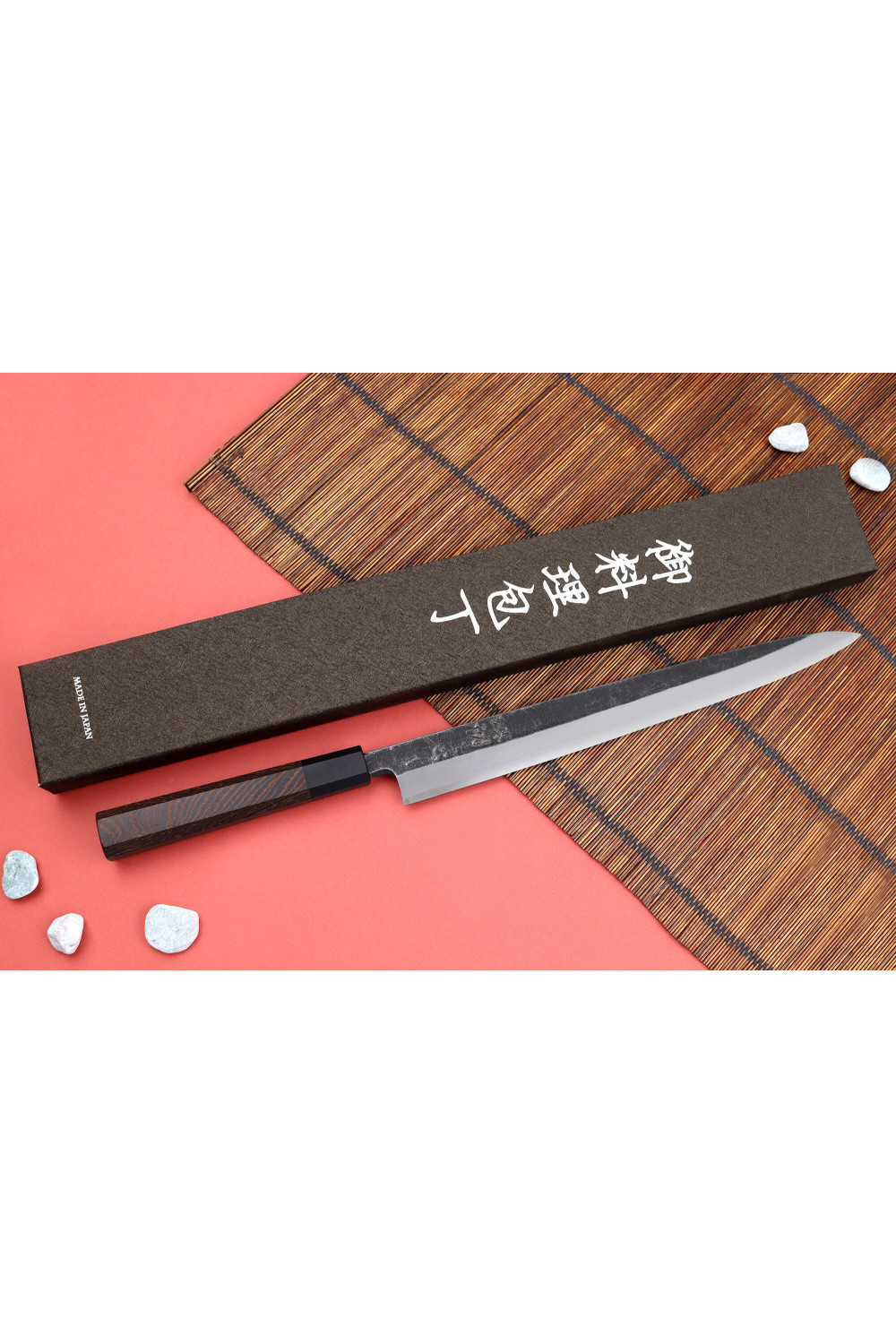
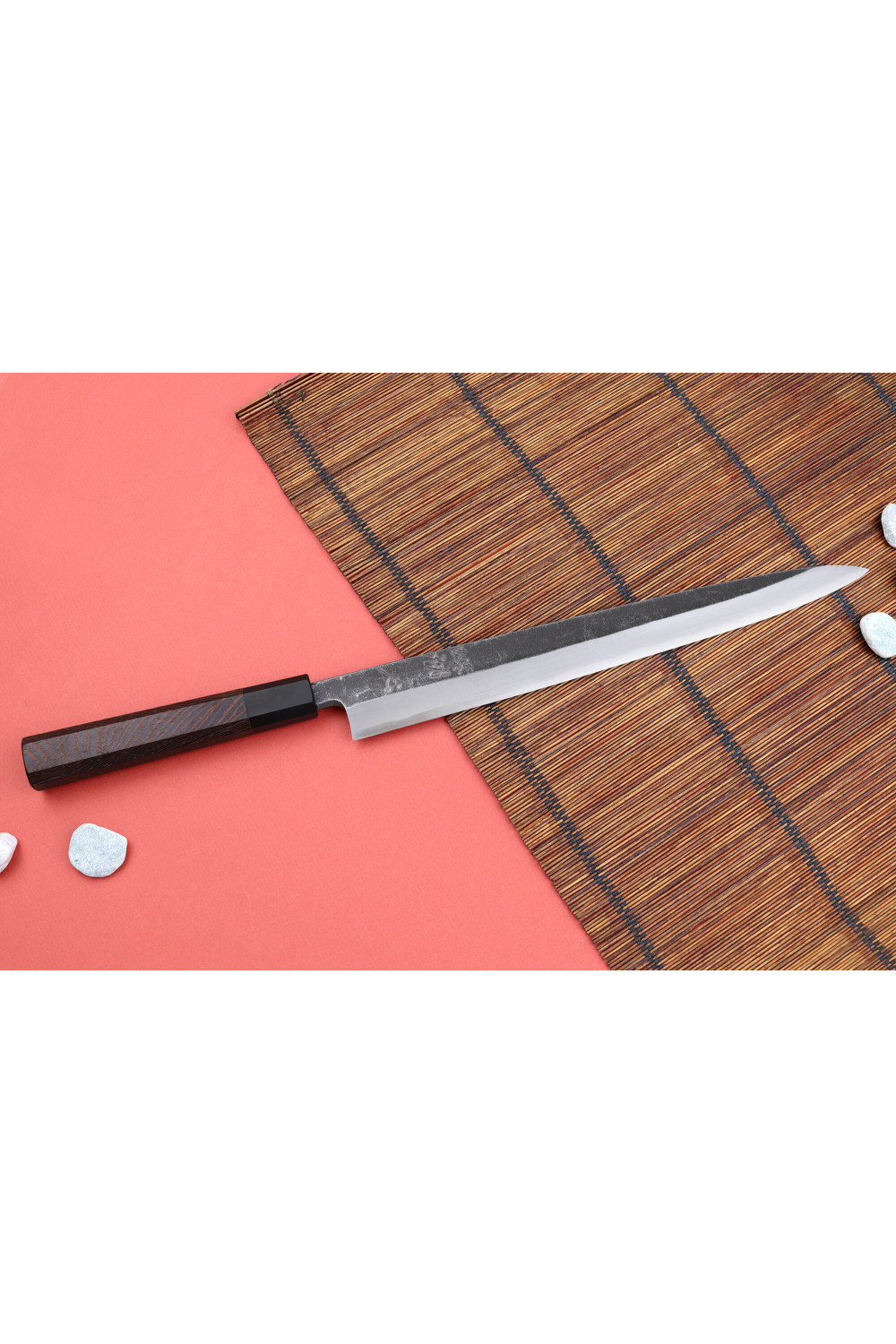
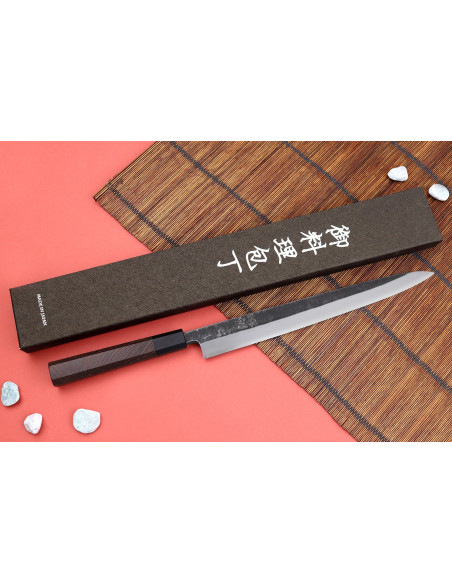
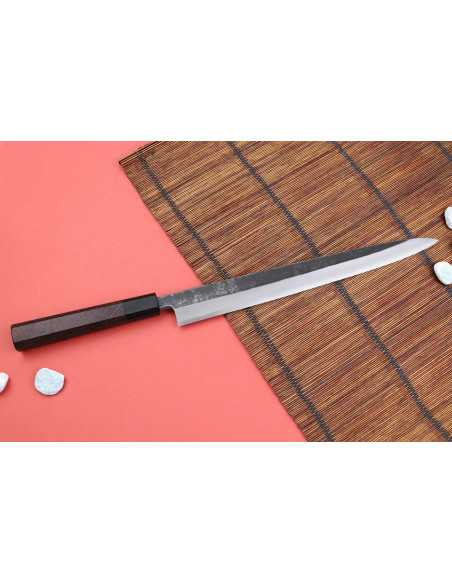
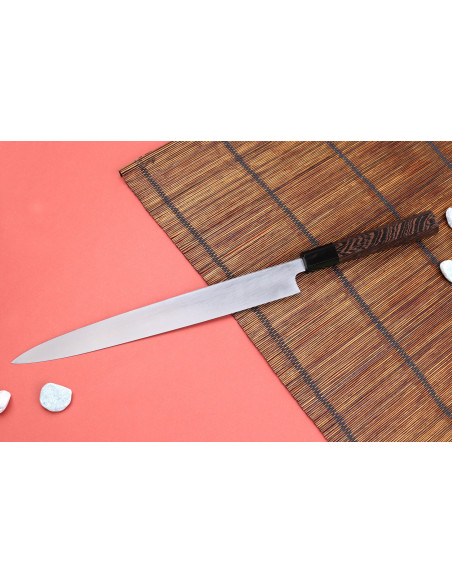
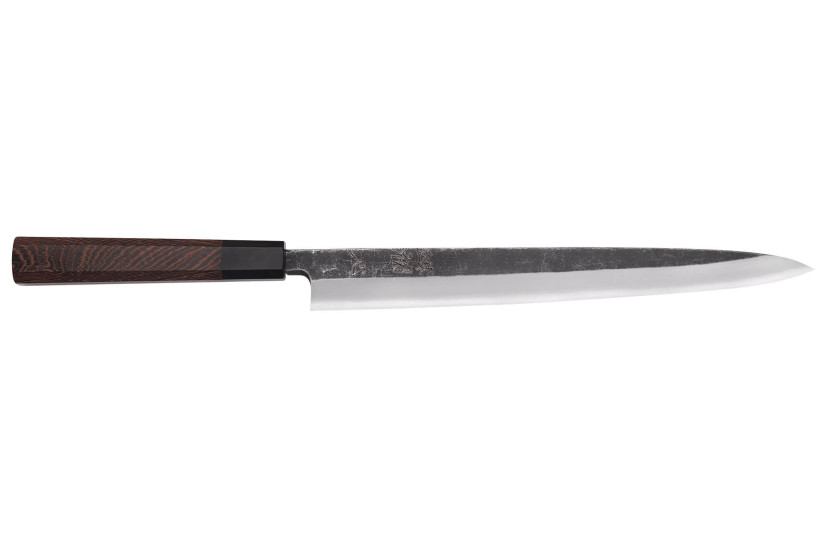
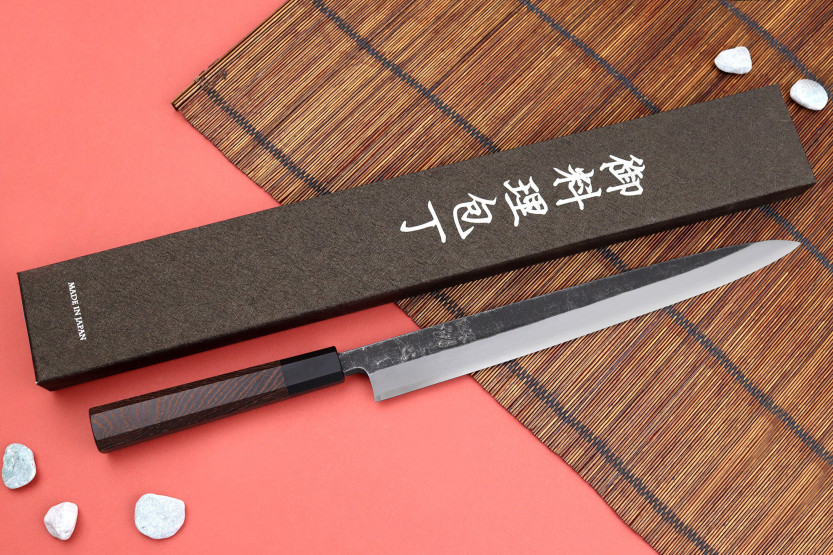
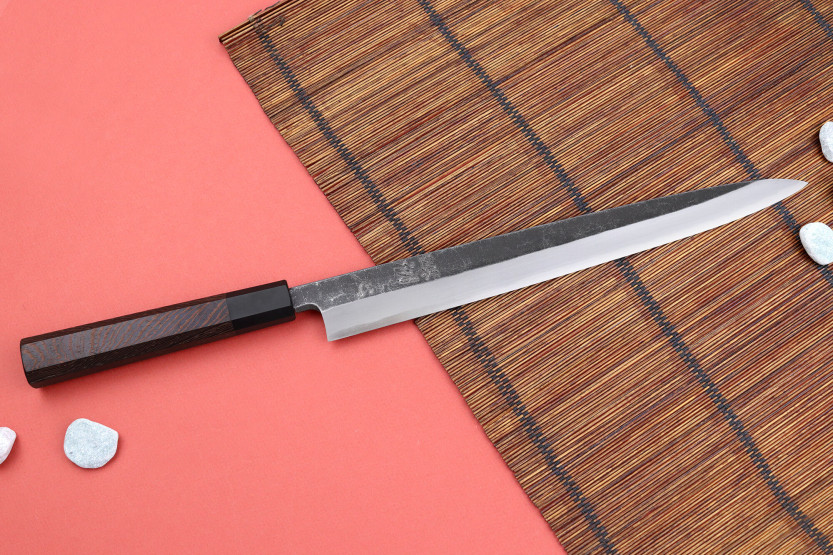
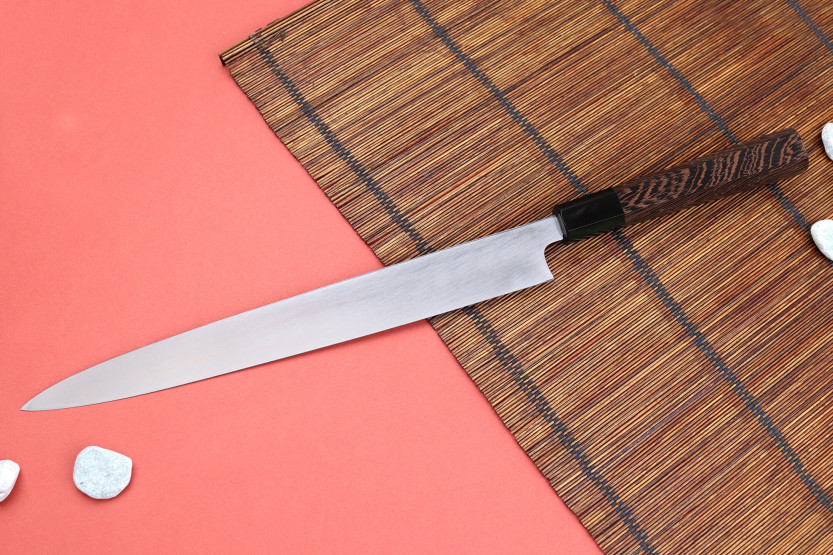
The Japanese brand Hatsukokoro offers you quality kitchen knives made by renowned blacksmiths. This yanagiba knife was designed by craftsman Toru Tamura, with sharpening by Tateo Myojin.
Toru Tamura, who worked in the cutlery industry in Canada, quickly developed a keen interest in this art form while surrounded by top-of-the-range knives. He then chose to return to Japan to perfect his forging techniques. He trained at the Takefu Knife Village, a prestigious place where blacksmiths exchange knowledge and welcome apprentices. It was under the guidance of master blacksmith Hiroshi Kato, renowned for his expertise, that Toru Tamura acquired his skills.
Following his apprenticeship, he began forging his own knives, specializing in asymmetrical-edged blades while respecting traditional methods. He works closely with other experts such as the Myojin family, a benchmark in Japanese knife sharpening. For this yanagiba, it was Tateo Myojin who took charge of the sharpening, highlighting his expertise in asymmetrical blades!
This Japanese knife is the fruit of a collaboration between two master craftsmen, offering an authentic, traditional knife!
The Japanese knife with a remarkable edge
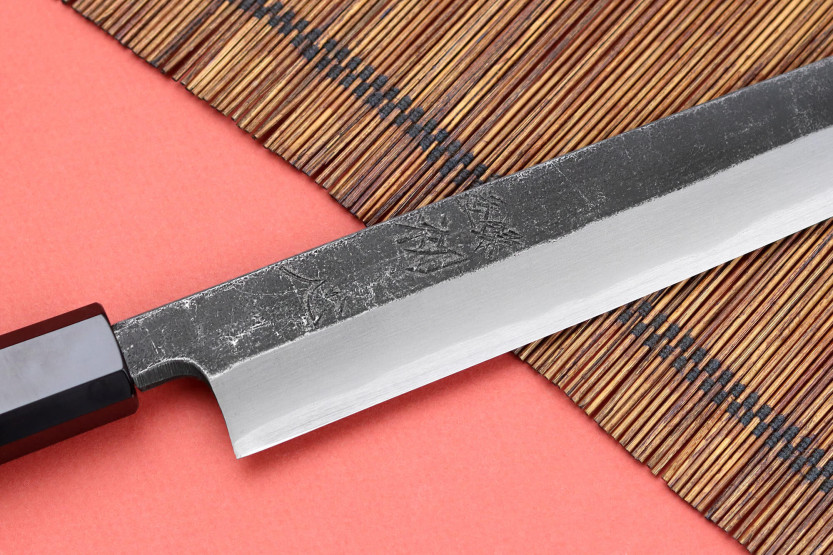
The blade of this yanagiba knife is crafted using the traditional Japanese San Mai technique, meaning "three layers". This method consists of forging a core of hard steel, enveloped by two layers of softer steel that fold around the core. This process provides a balance between hardness and flexibility, while protecting the blade's inner core.
The core of this blade is made of Aogami #2 steel, also known as Blue Paper Steel 2, an alloy developed by renowned steelmaker Hitachi. With a high carbon content of around 1.2%, this steel gives the blade high hardness, which enhances its performance. On the Rockwell scale, this blade achieves a hardness of 62HRC, guaranteeing a remarkable, long-lasting cutting edge.
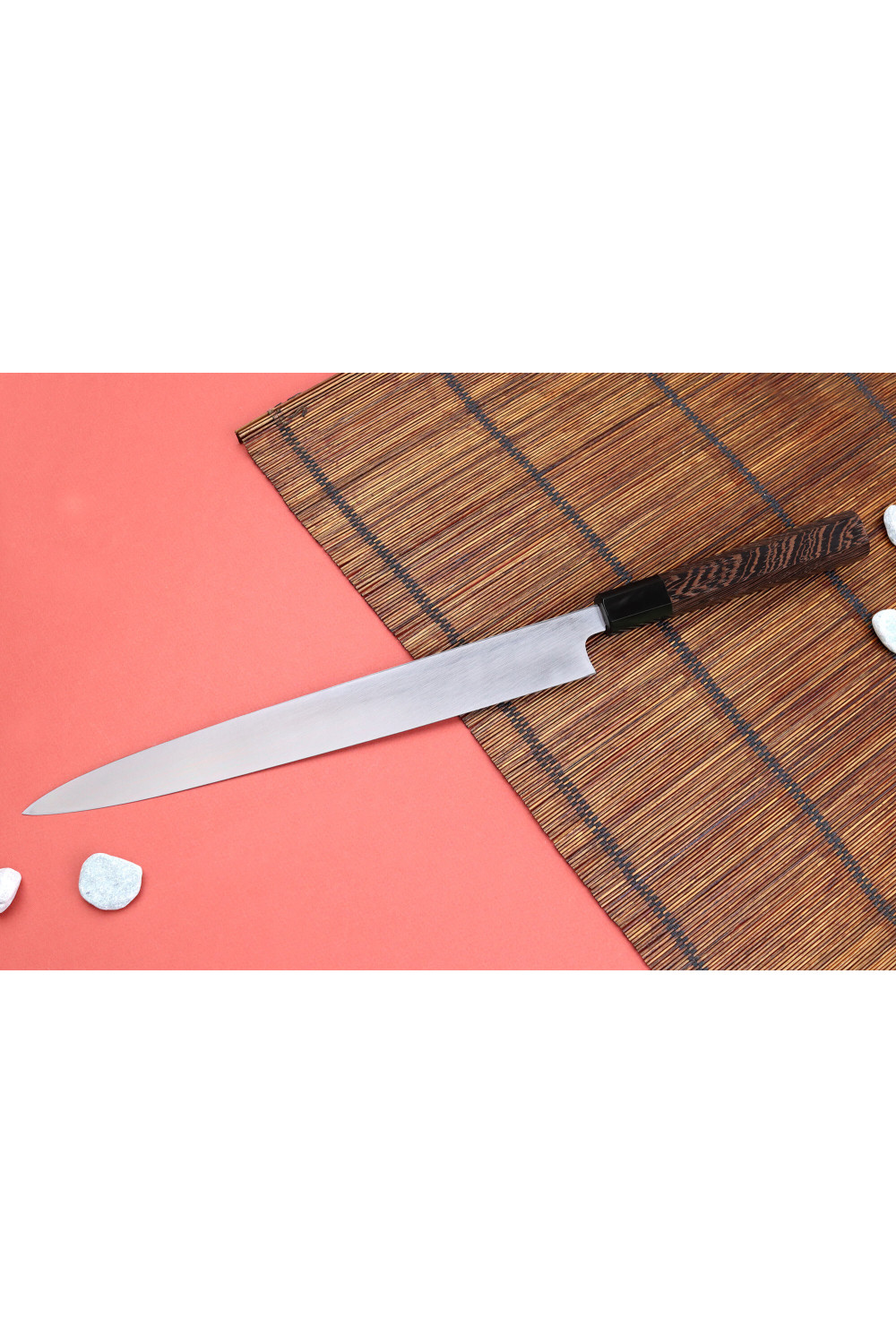
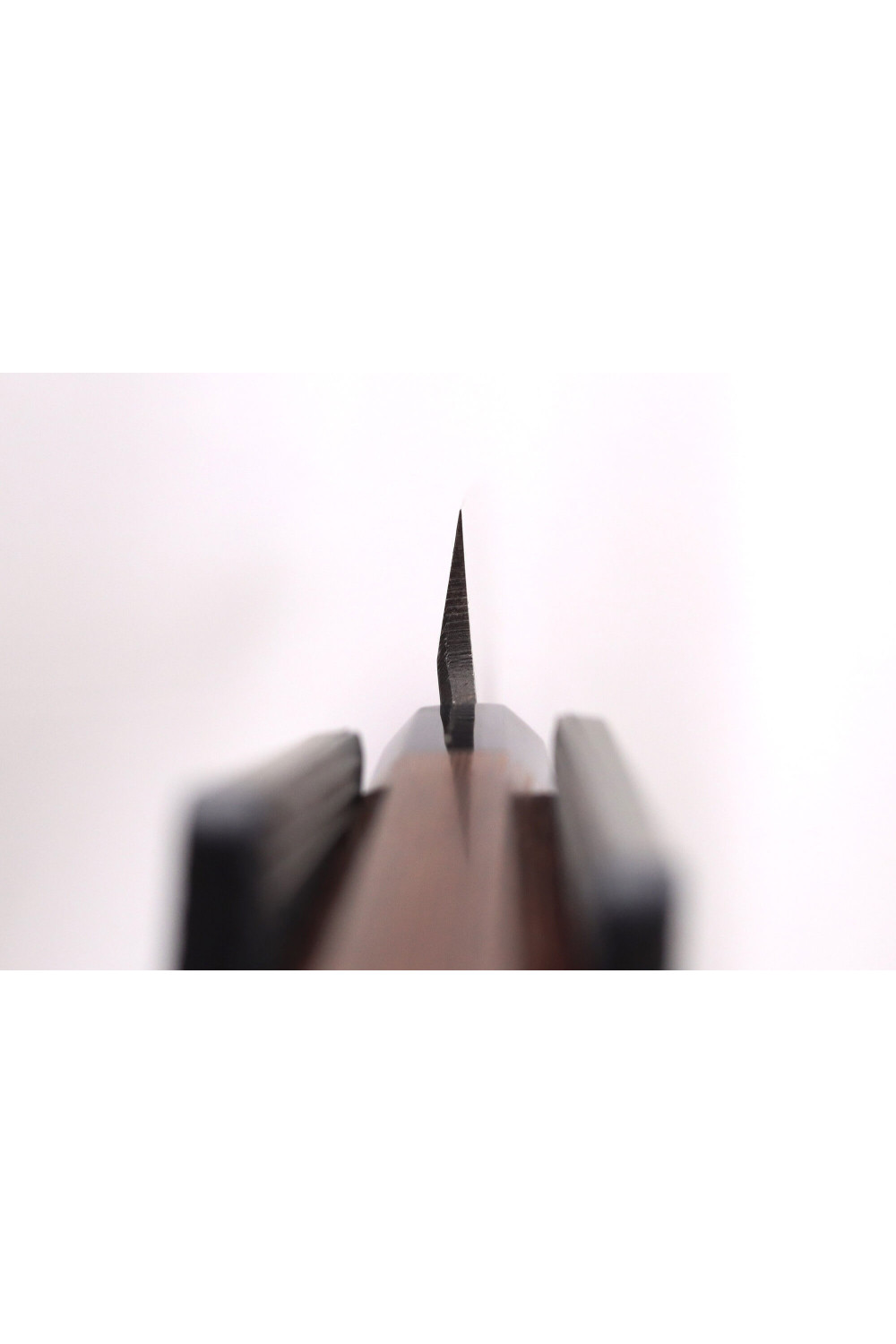
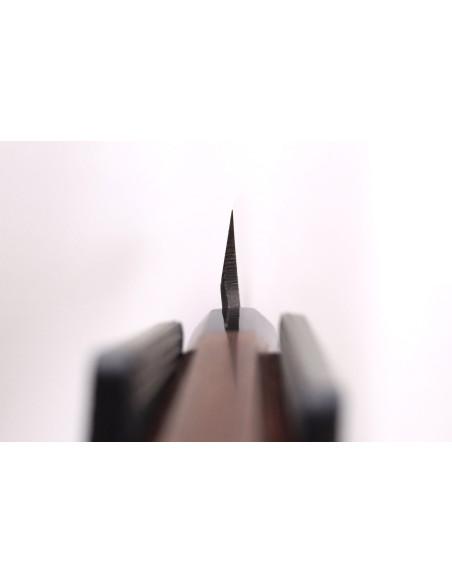
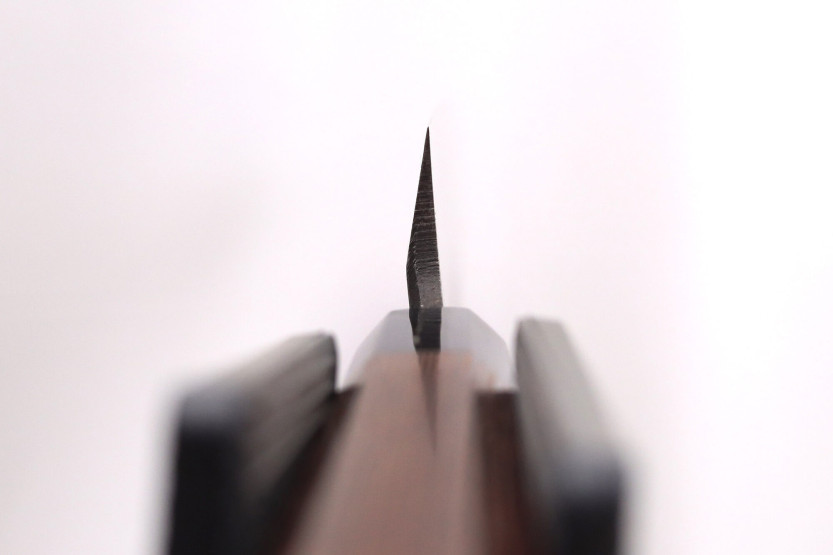
For maintenance, we recommend the use of sharpening stones when the edge needs it. Typical of yanagiba knives, thecutting edge is asymmetrical, meaning that only one side of the blade is sharp. This is particularly suitable for right-handers, making it easier to produce thin, even slices!
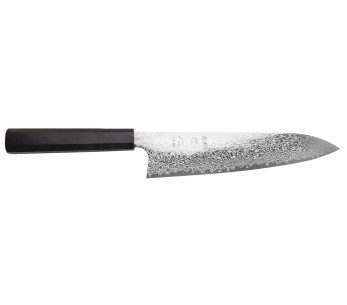
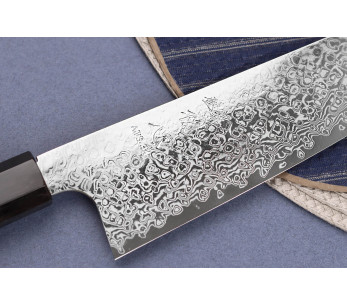
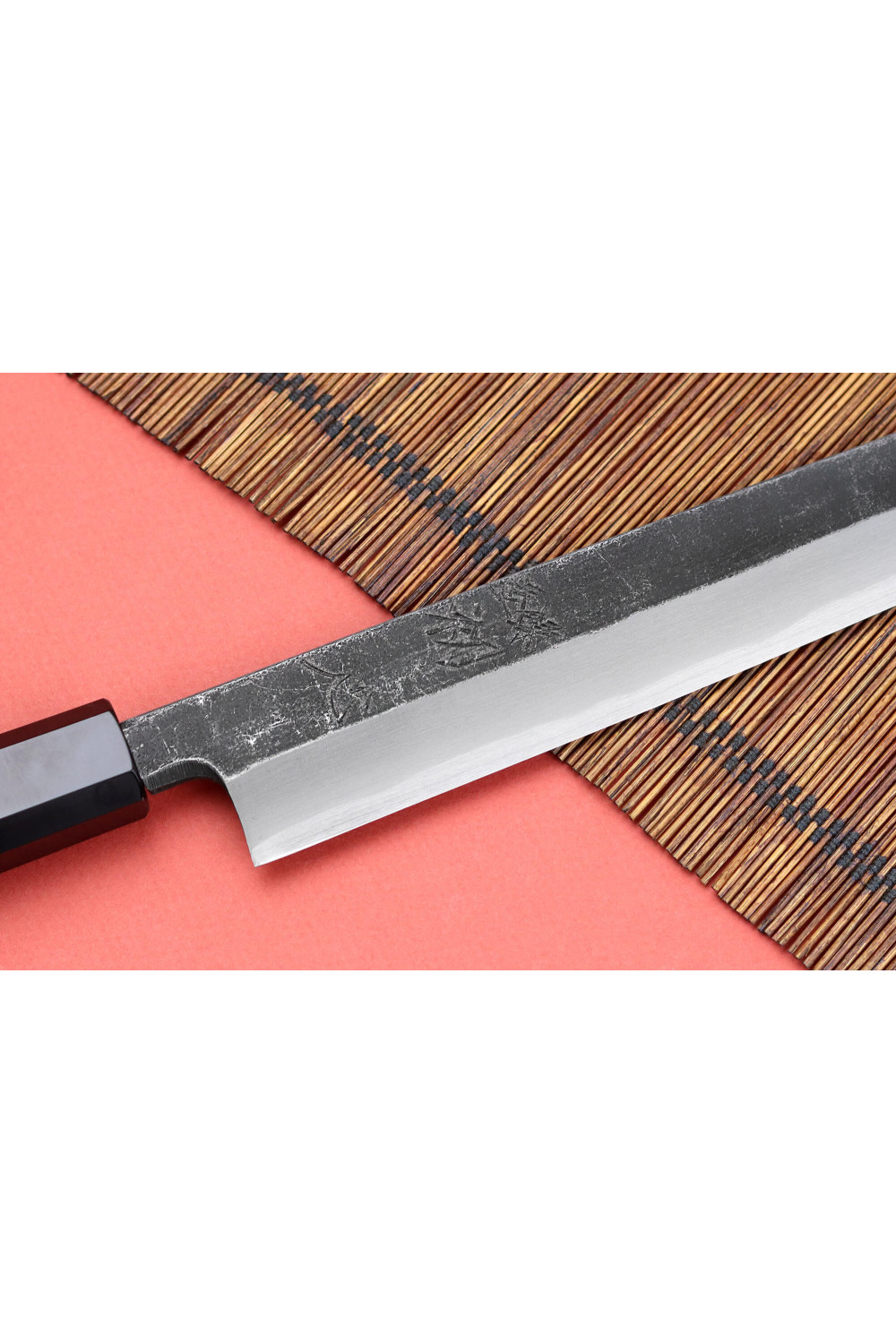
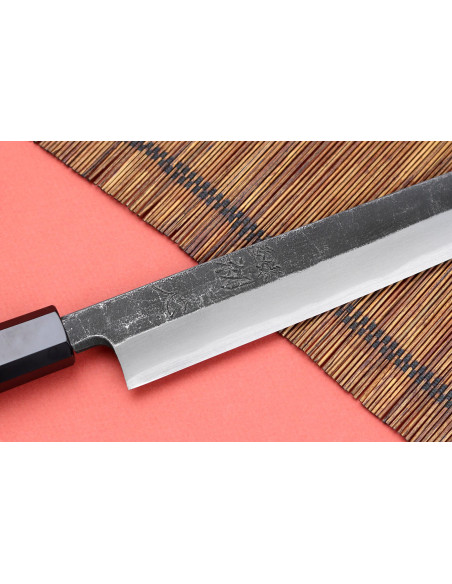
Finally, to complete the San Maï structure, a softer layer of steel envelops the core, offering extra protection while increasing the blade's suppleness, without making it flexible. This feature reduces the risk of breakage. You can also admire the unique patterns formed by the superimposed layers of steel along the edge, creating an elegant natural wave.
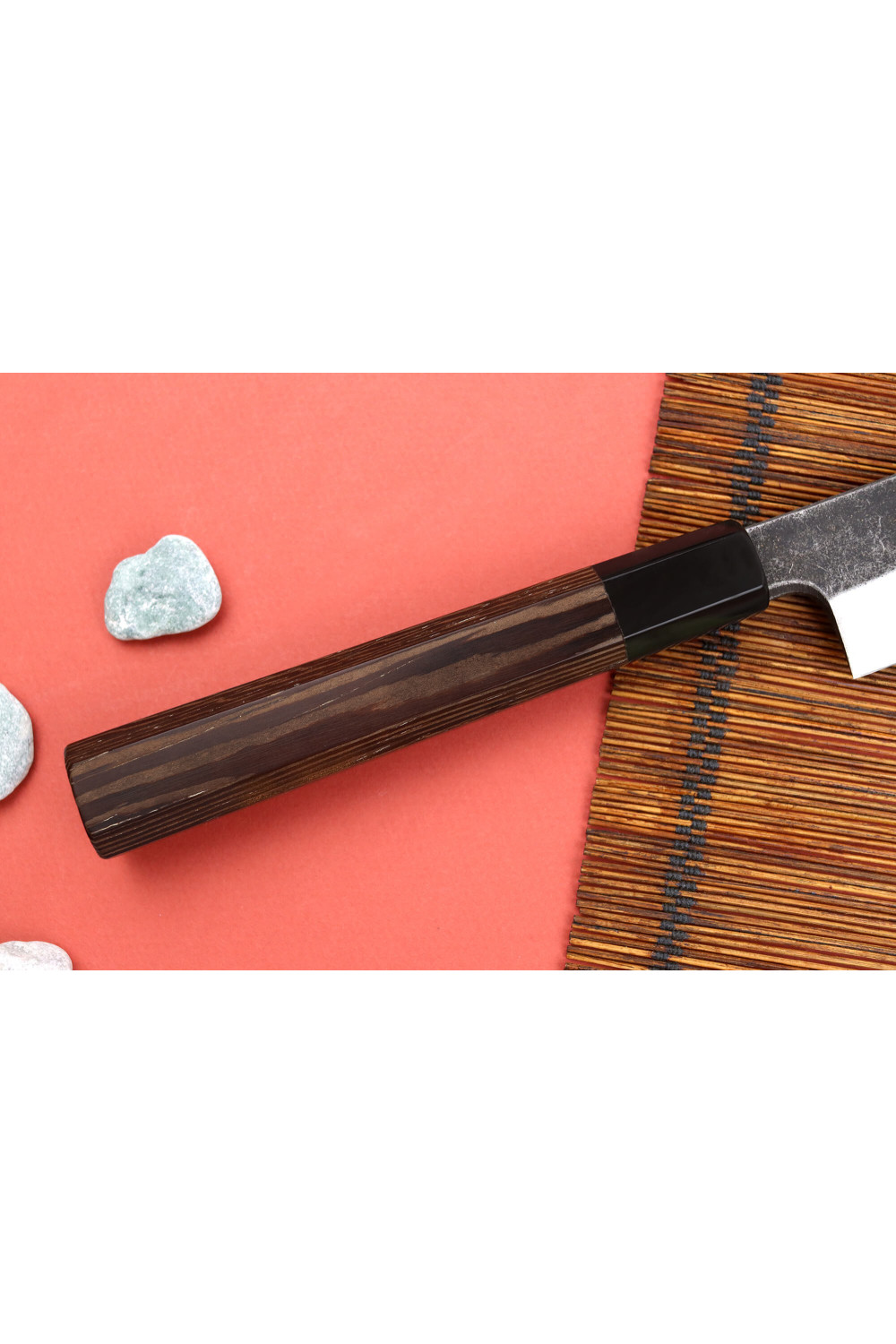
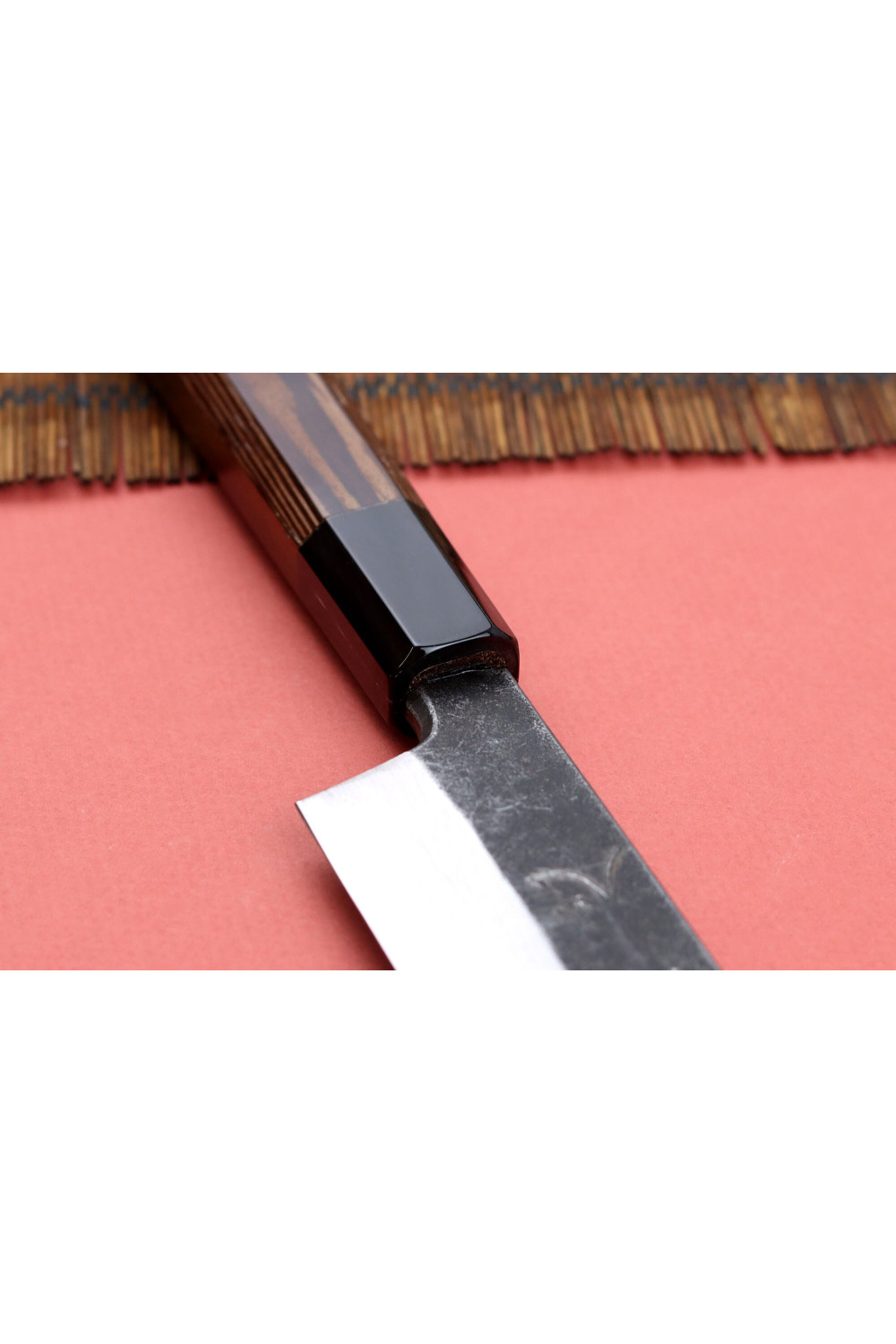
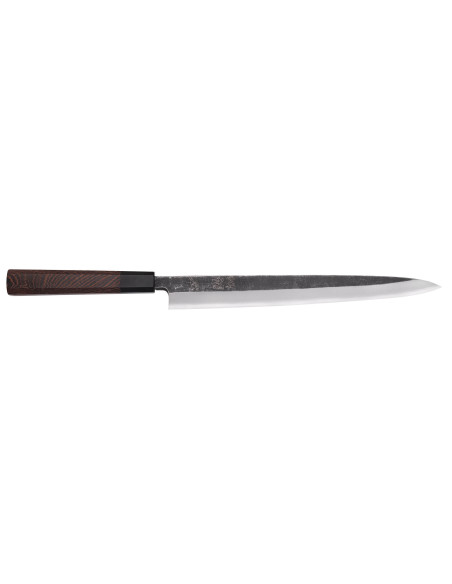
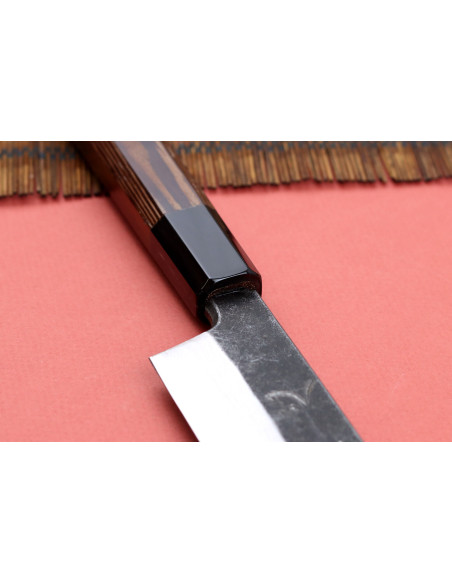
The blade of this Japanese kitchen knife has a rough forged finish, as it has not been polished. Its dark, rustic appearance, highly prized by Japanese chefs, reflects a traditional style. What's more, hand-engraved kanji adorn the blade, adding a unique touch of authenticity!
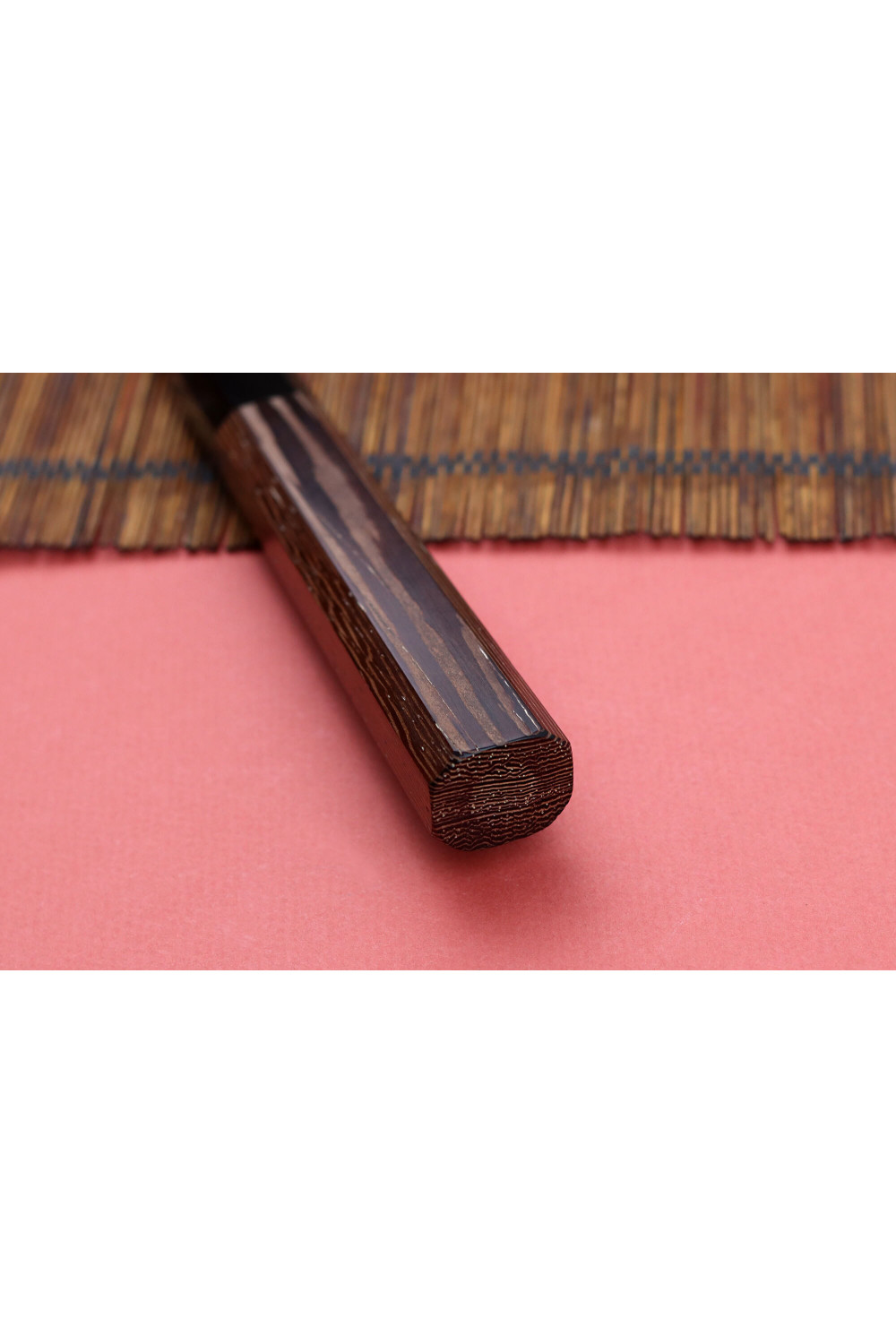
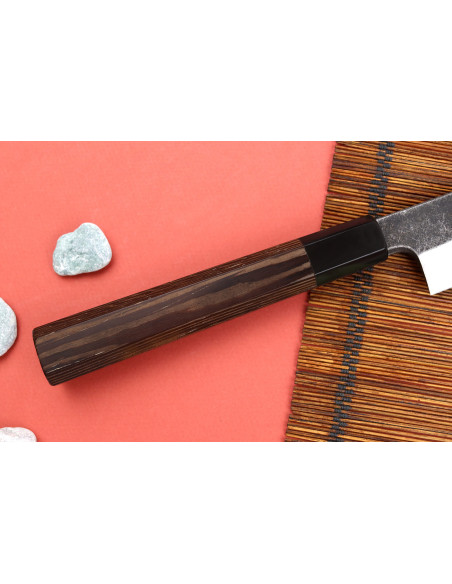
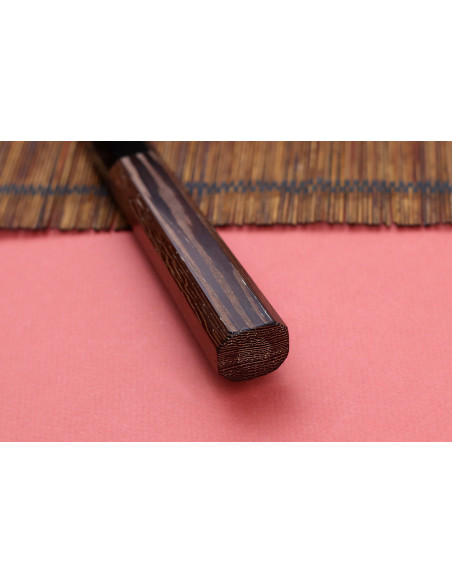
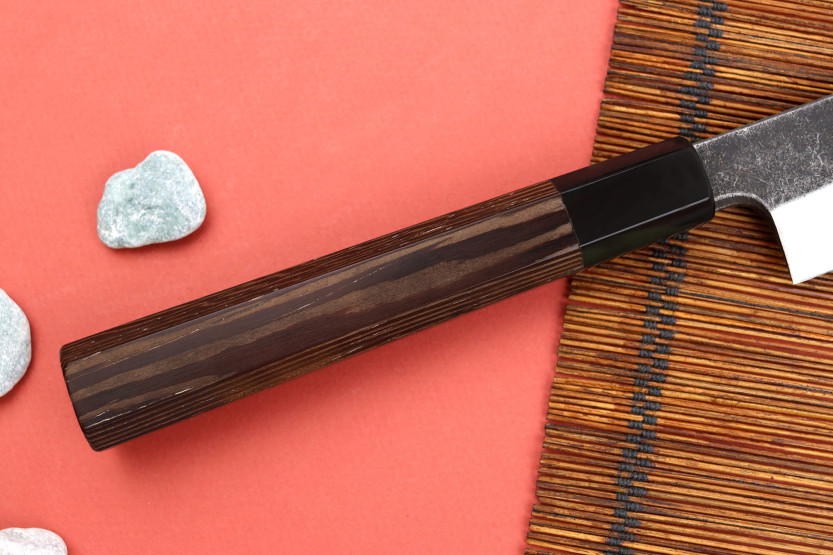
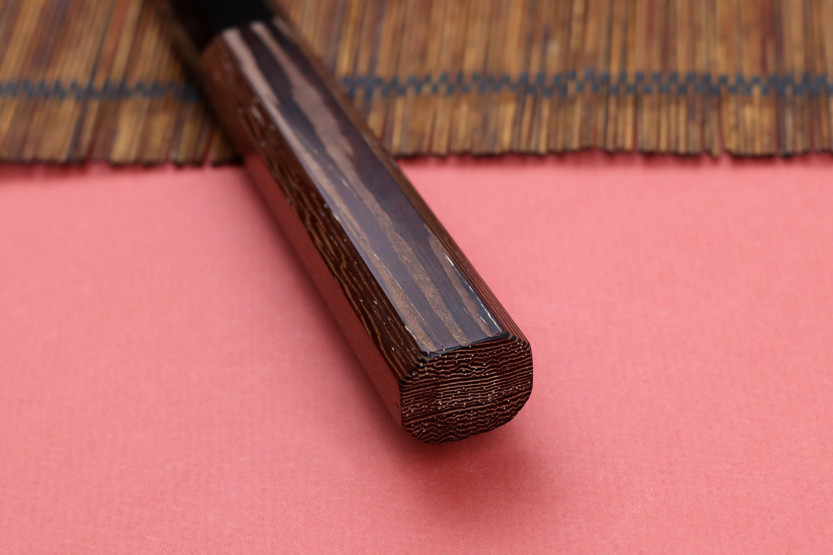
The handle of this knife, made from wenge wood, stands out for its strength and resistance to humidity. This dark-hued tropical wood is renowned for its unique grain. As wood is a natural, living material, each Hatsukokoro knife handle is different, making each piece unique.
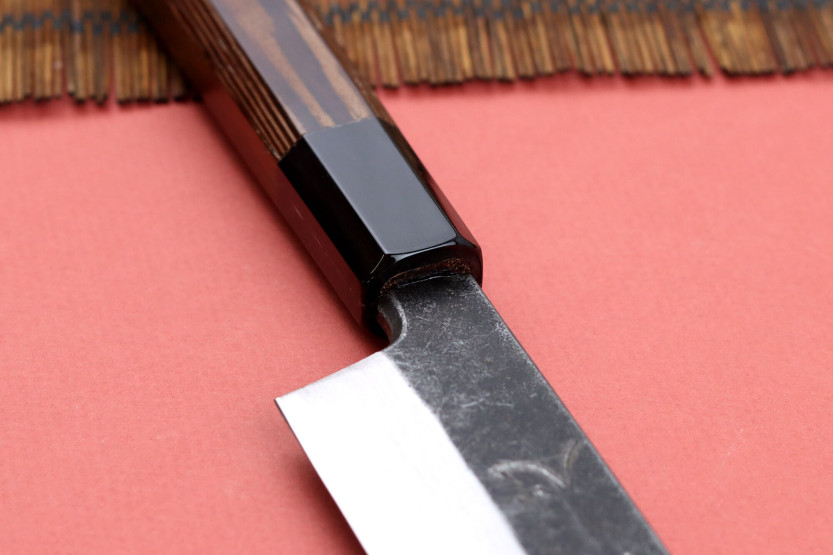
To perfect the handle, a black buffalo horn bolster is placed where the blade meets the wood, guaranteeing optimal balance to this handcrafted Japanese knife.
With its octagonal shape, the Shirasagi knife adapts perfectly to the hands of cooks, offering an ergonomic and comfortable grip, even during prolonged use in the kitchen!
Finally, wood paste is applied where the blade joins the handle to fill any small gaps. This guarantees a perfect seal, preventing the infiltration of water or food residues.
How do I maintain a carbon-enriched knife?
To clean your Japanese kitchen knife, it is essential to wash it exclusively by hand with a soft sponge, avoiding wetting the handle. After cleaning, wipe dry immediately to remove all traces of moisture, then store in a dry place. Never put in the dishwasher or soak in the sink.
Over time, the color of the blade may change slightly, which is perfectly normal. This natural patina results from the reaction of carbon to acidic foods and moisture. This in no way affects the performance of your yanagiba knife!
Discover a wide range of Japanese knives on Knifeleader.eu!




 By buying this product you can collect up to