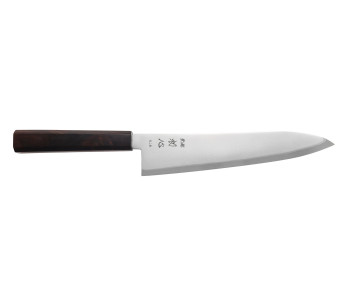
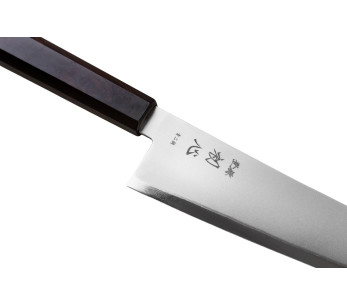
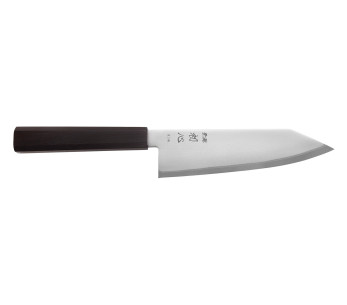
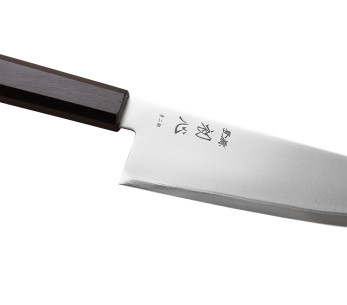
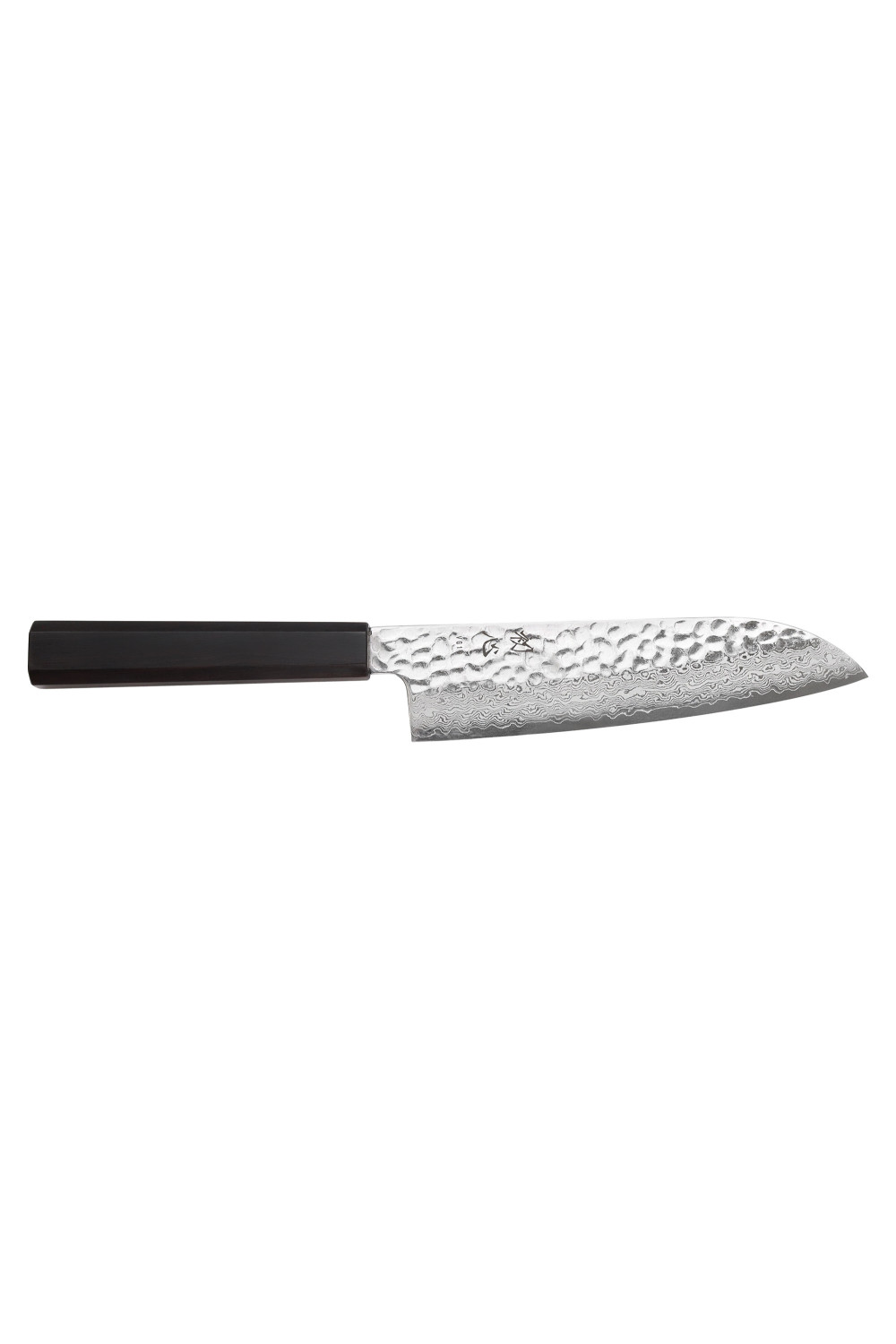
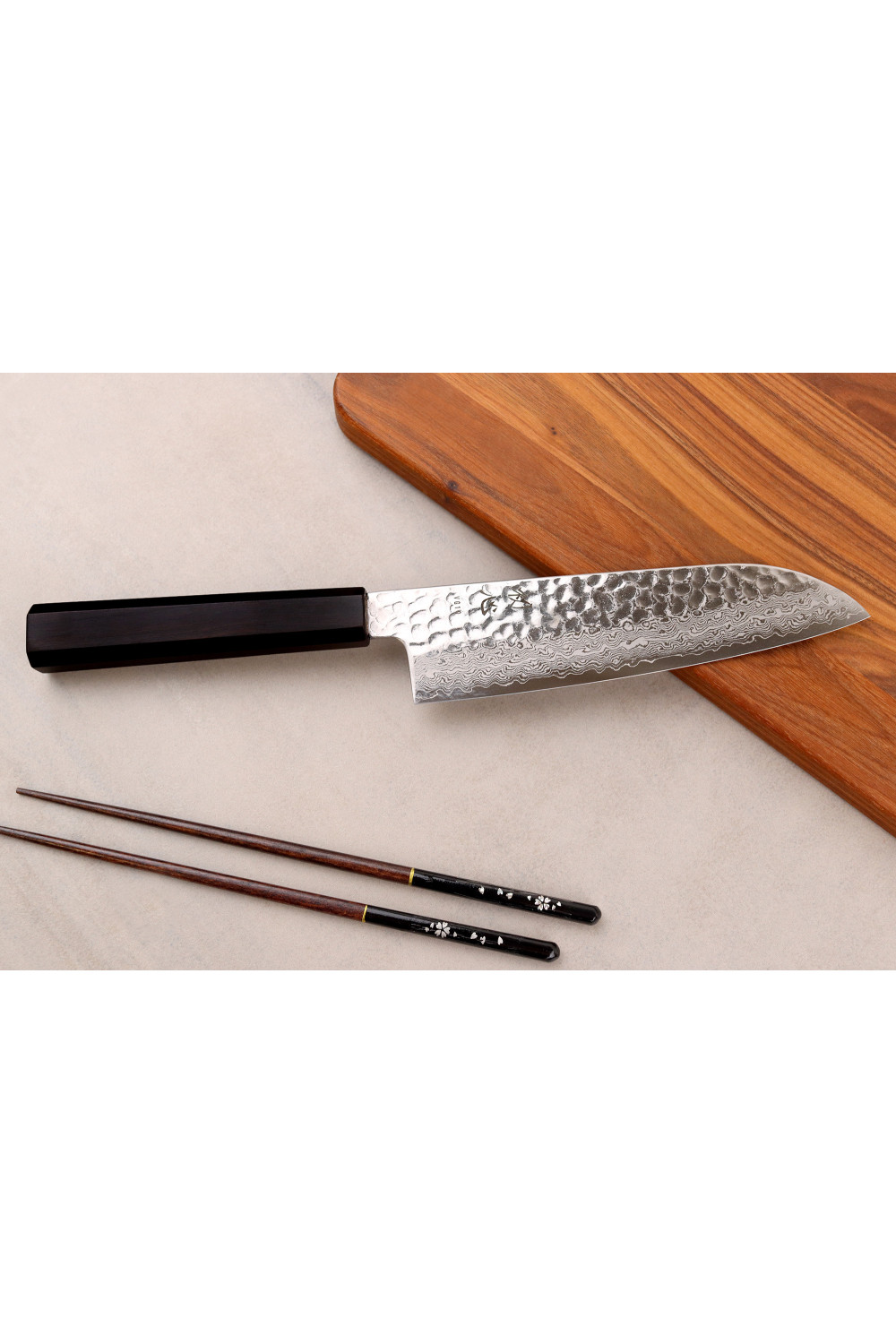
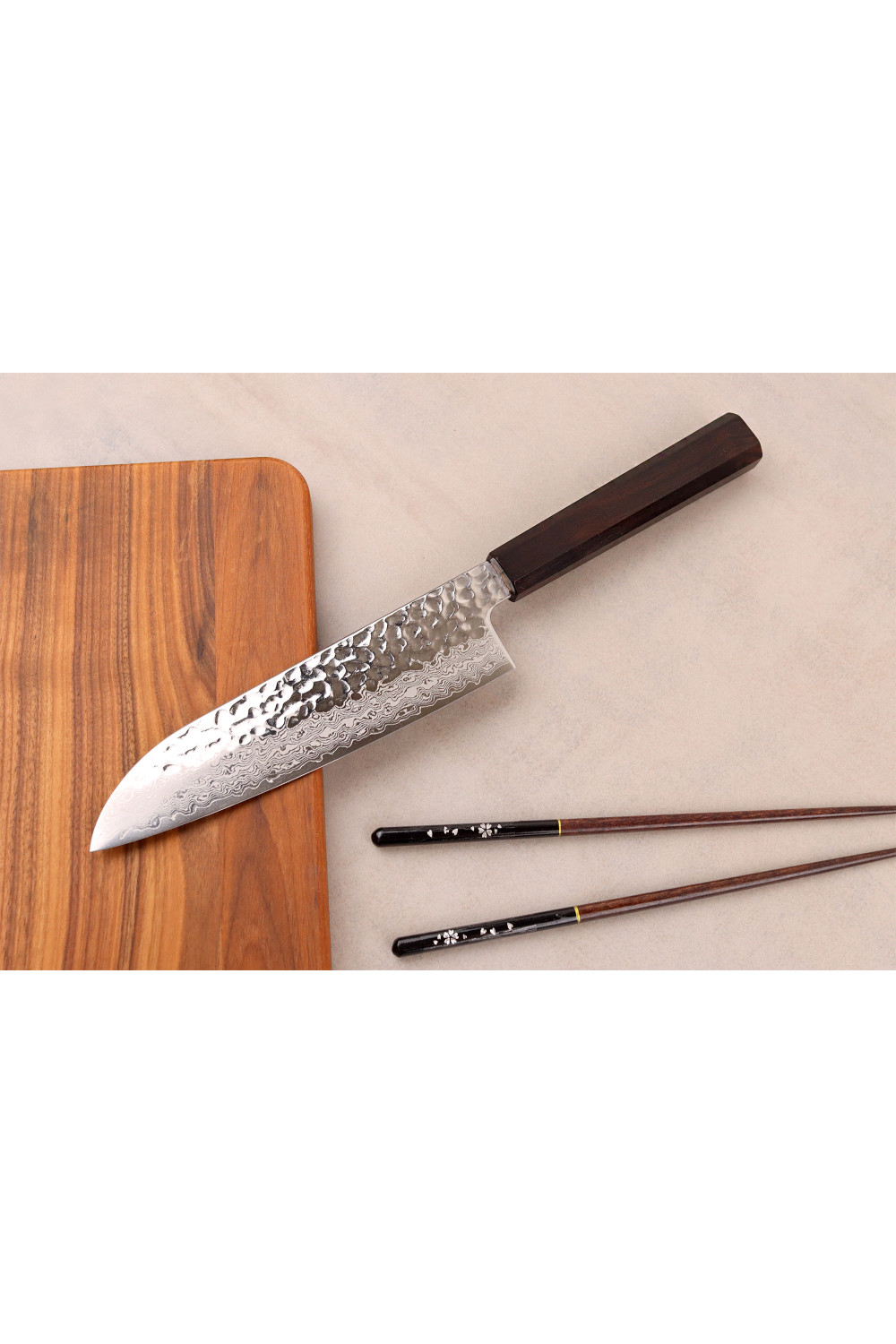
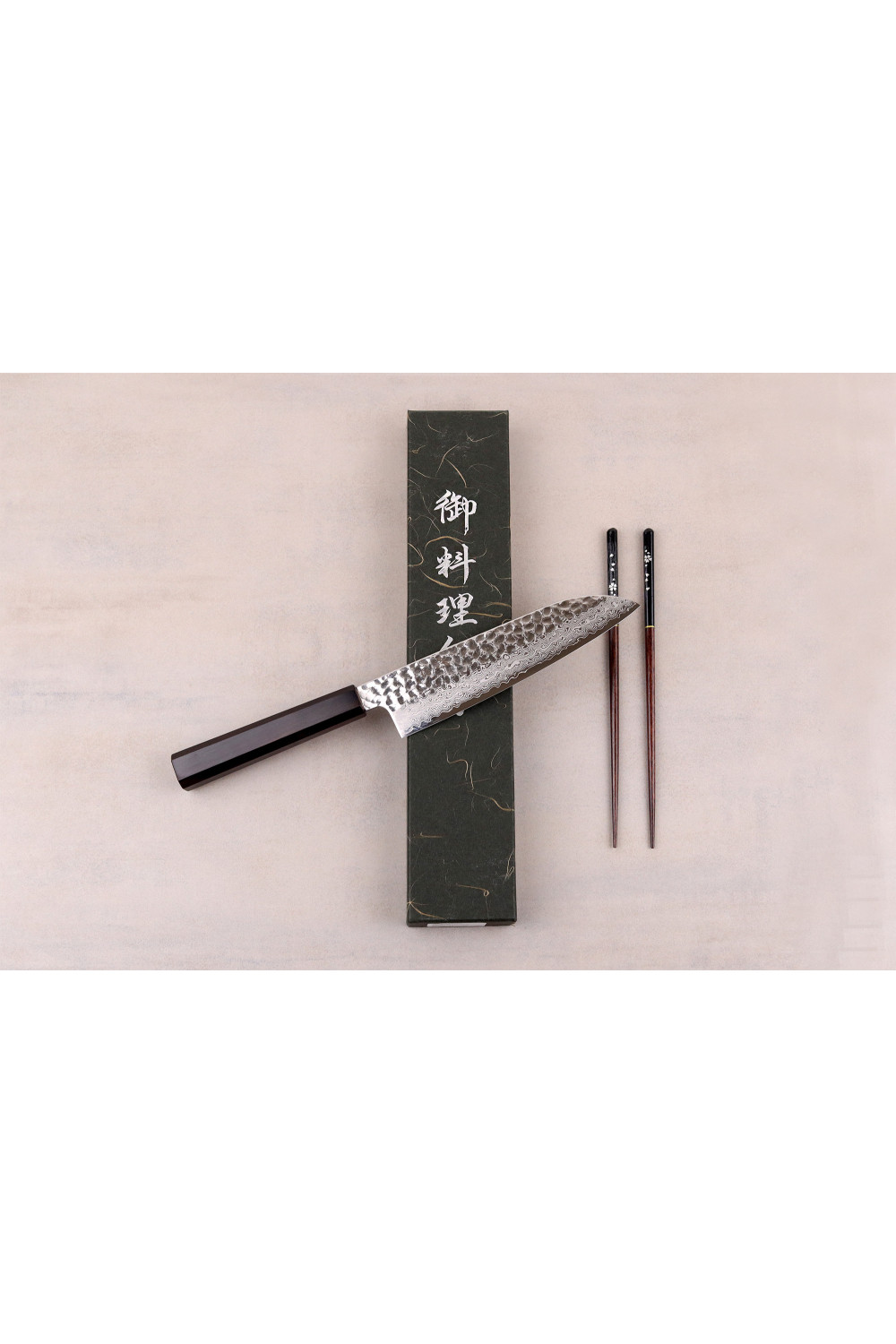
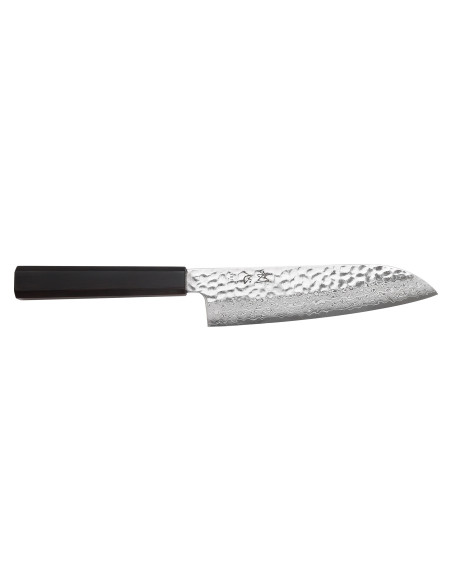
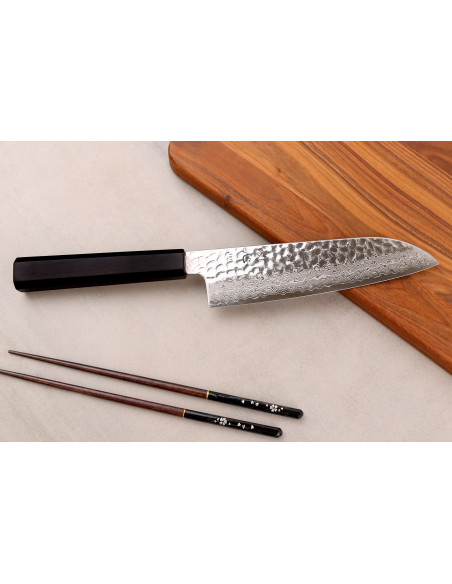
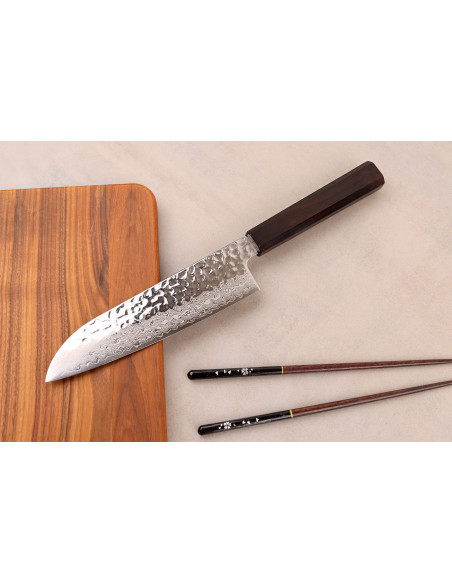
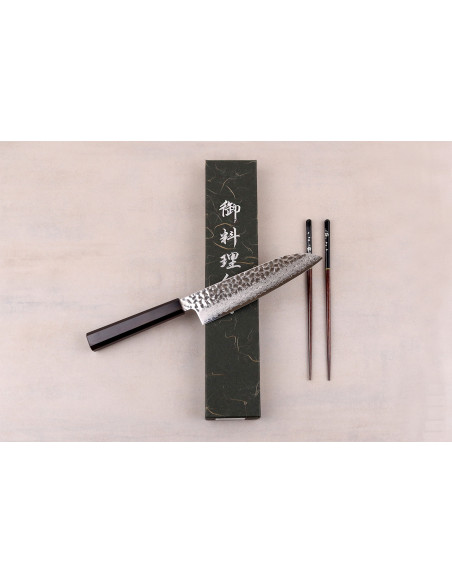
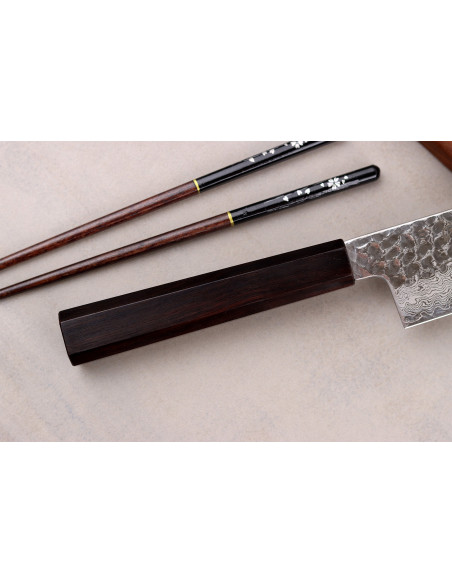
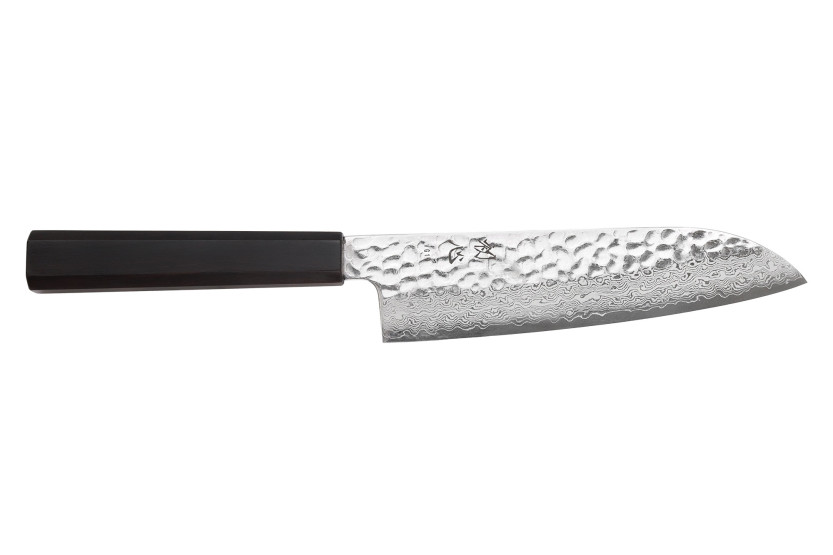
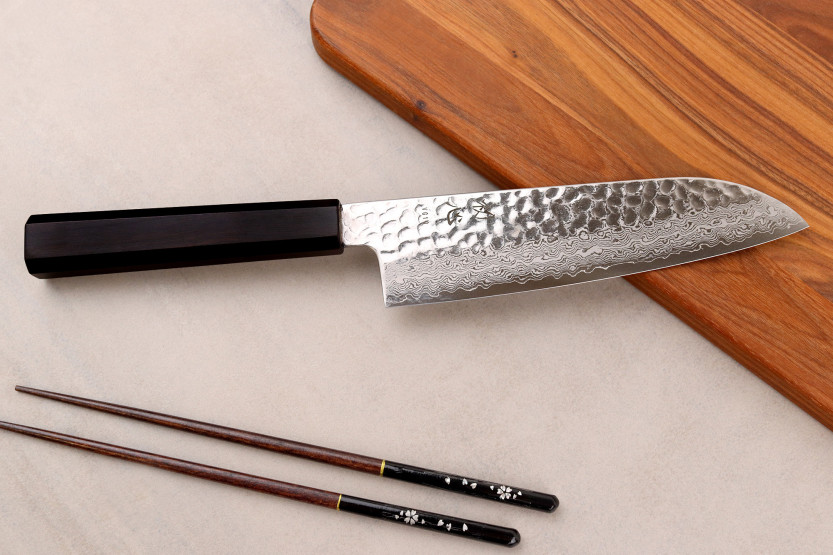
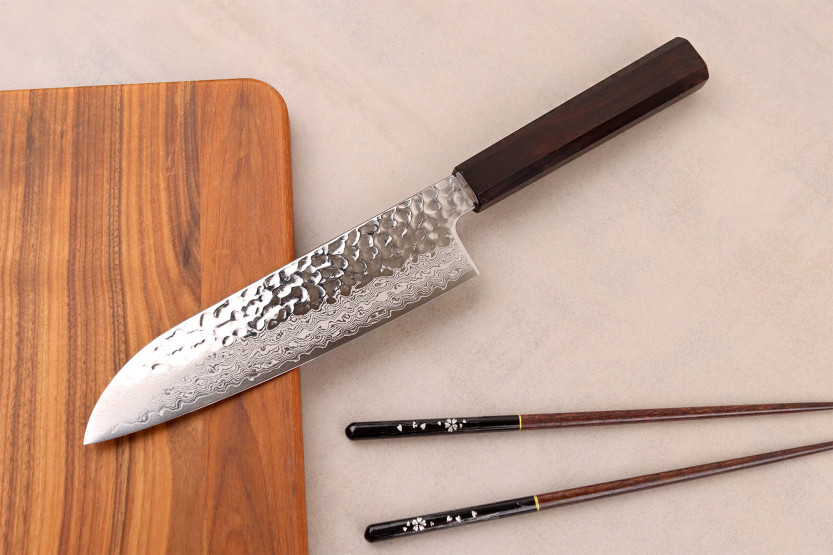
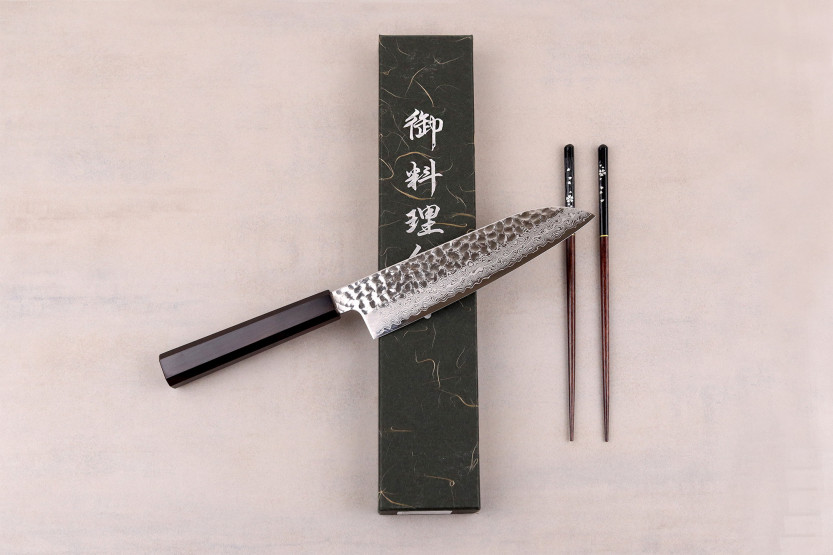
The Hatsukokoro Hayabusa santoku knife features an 18-cm damascene blade, a Tsuchime hammered finish, and an ebony handle. Handcrafted in Japan, it is designed for everyday tasks: slicing, mincing, and chopping vegetables, fish, and meat. Its name means “peregrine falcon”—a reference to speed that reflects a knife designed for clean, precise cuts.
A precise and durable VG10 blade
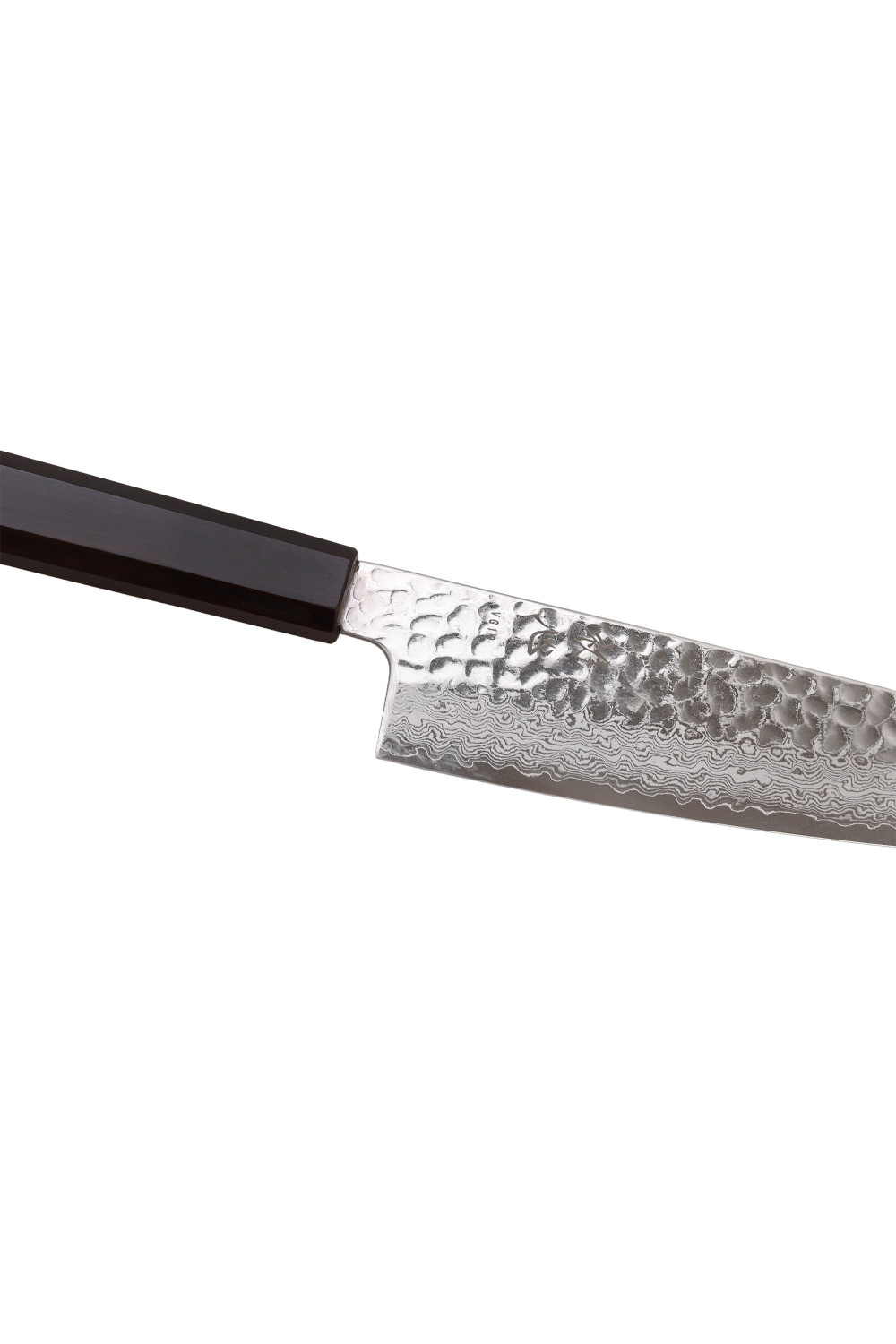
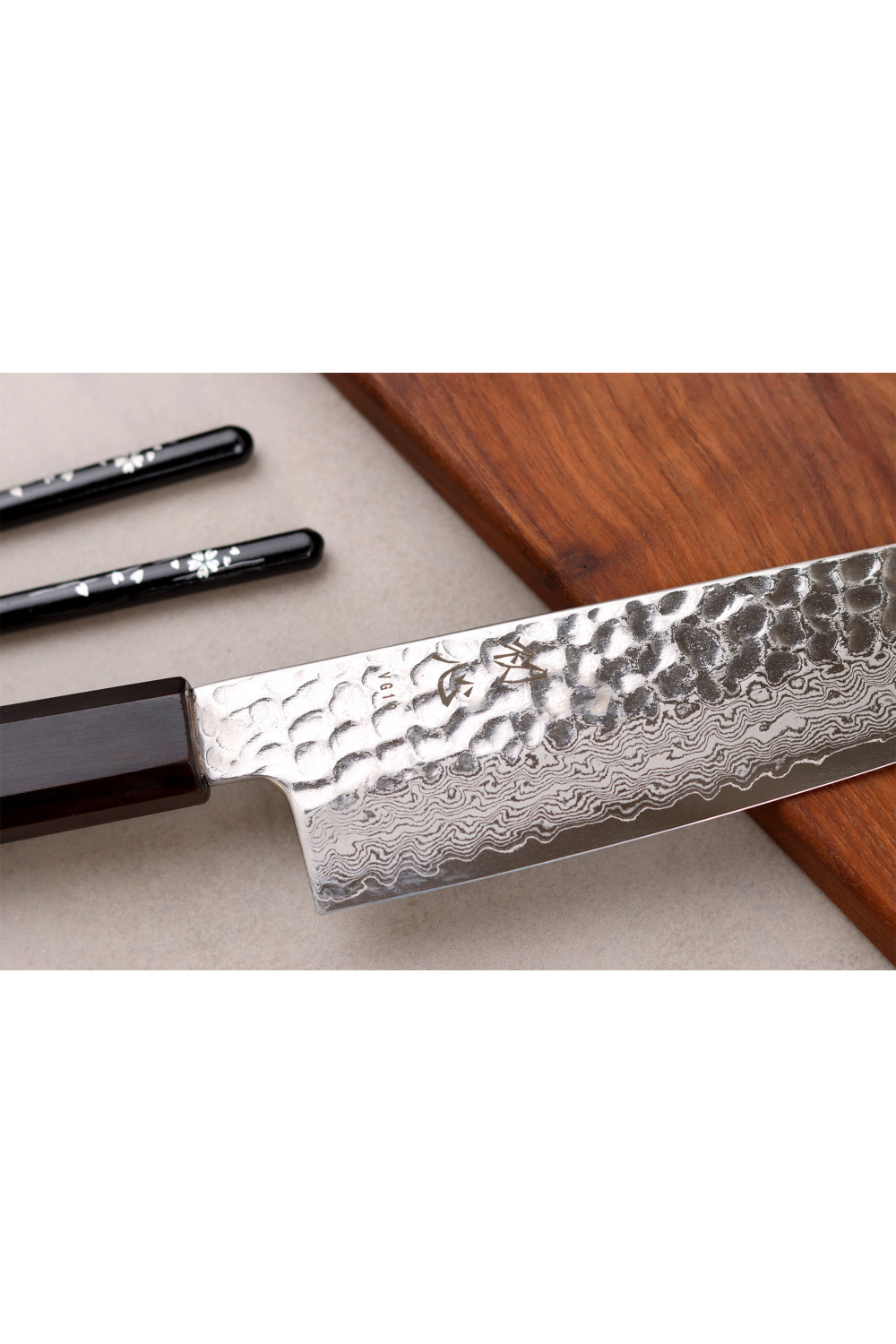
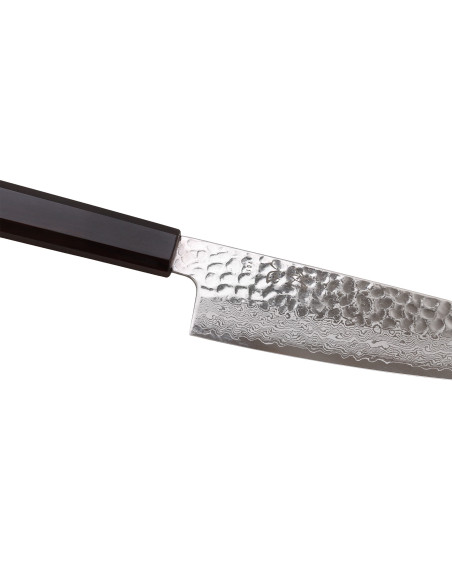
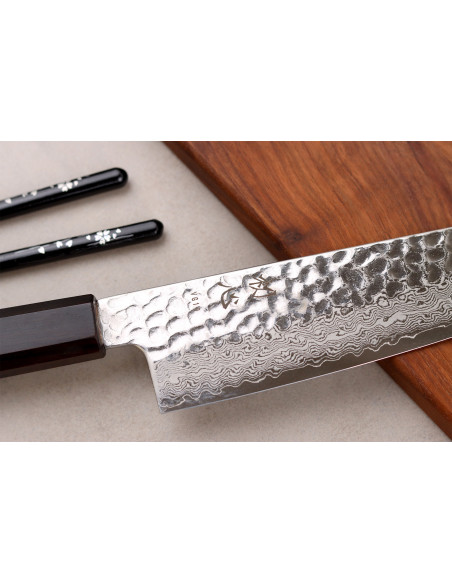
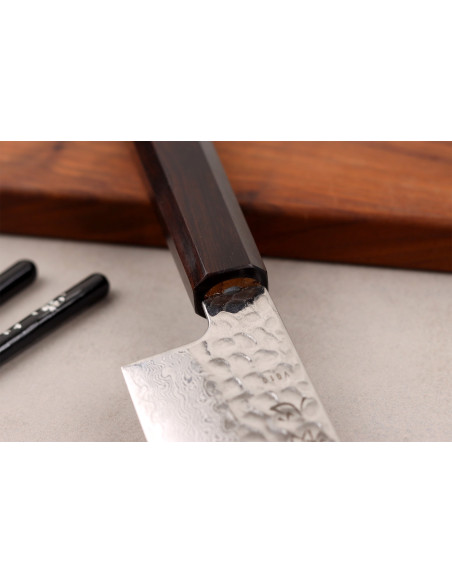
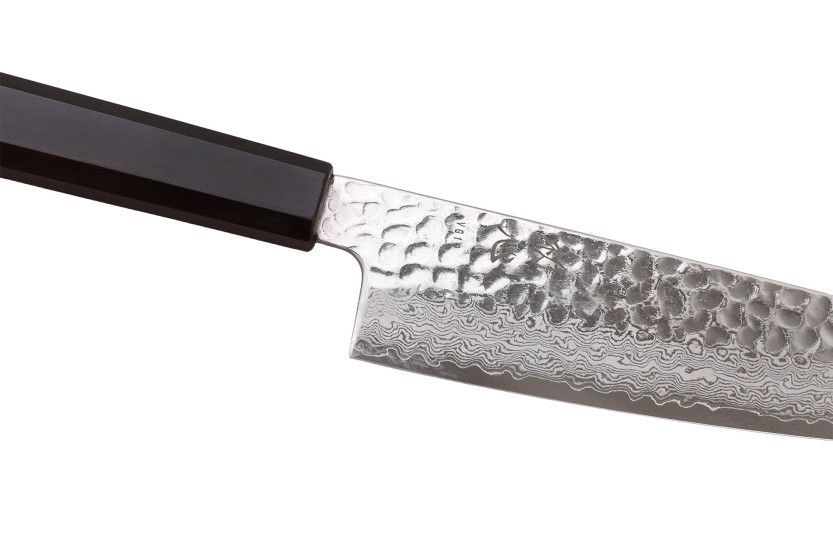
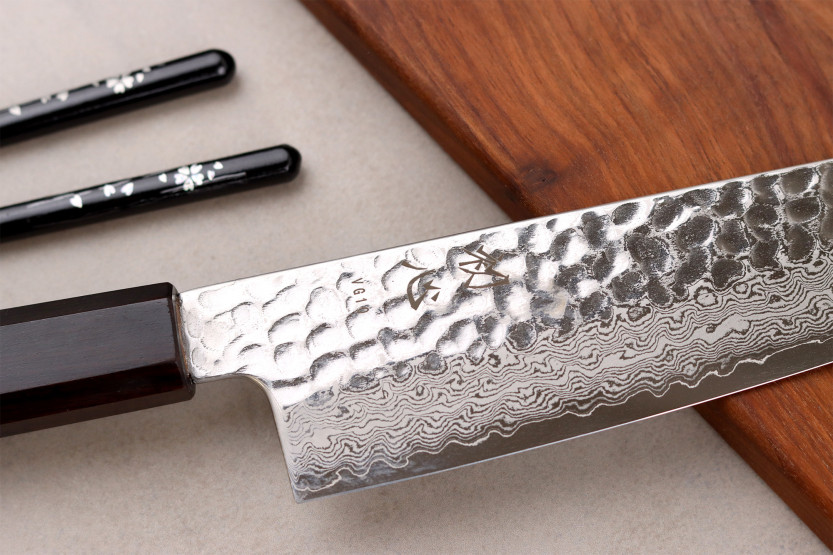
The 18-cm blade is built around a VG10 steel core with a carbon content of approximately 1%. Its hardness of 60 HRC ensures excellent edge retention: the blade stays sharp longer between sharpenings. The damascened blade features visible layers that give it a wavy pattern, while the hard core provides the cutting edge. This combination offers a balance between cutting precision and durability for everyday use.
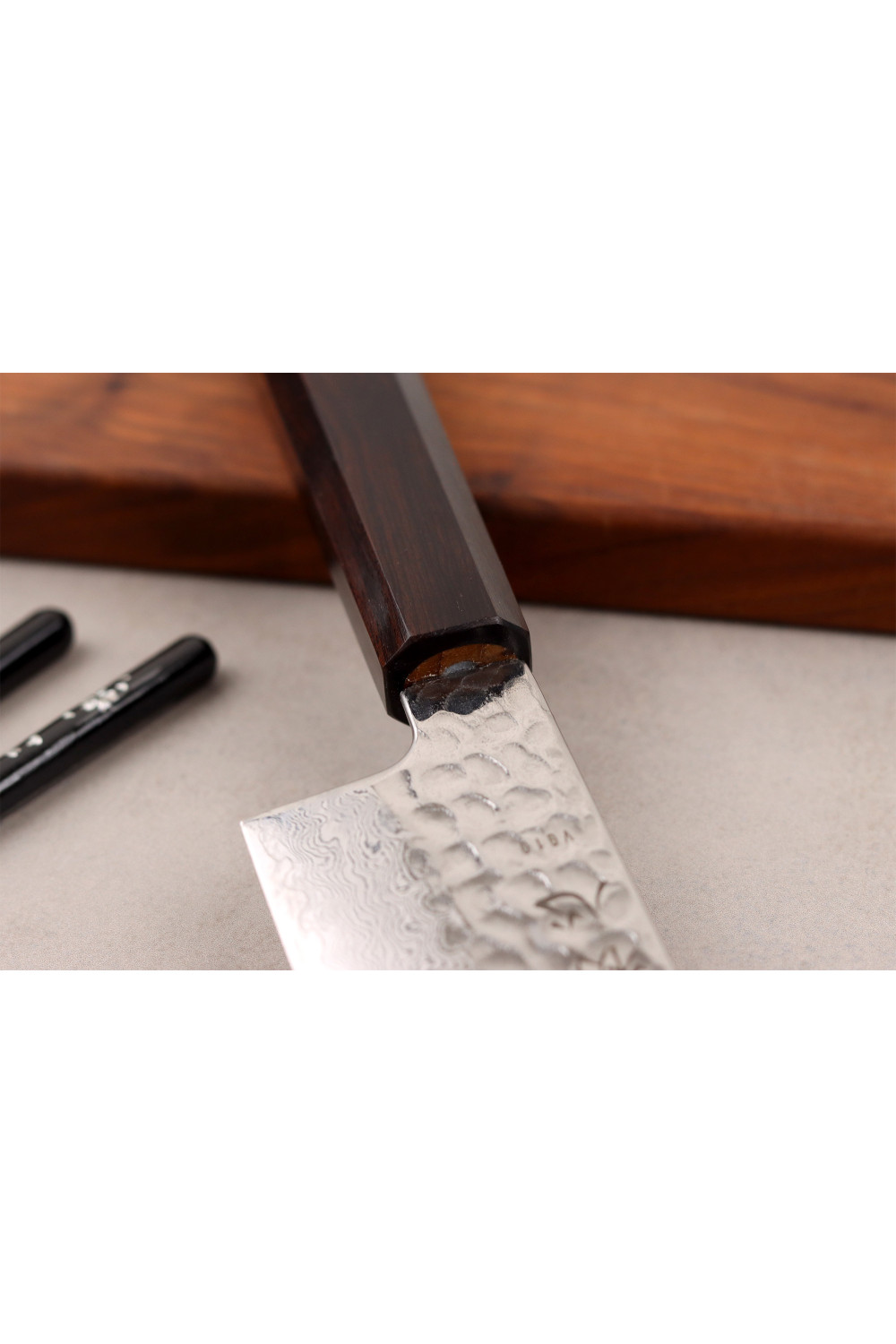
The Tsuchime finish, recognizable by its hammered marks, adds texture to the blade’s surface. This texture can help food release more easily during cutting, depending on its nature and moisture content.
The santoku profile is suitable for a wide variety of tasks: slicing vegetables, cutting fish, or portioning a boneless cut of meat. To preserve the edge, avoid bones, frozen foods, and twisting motions.
An octagonal ebony handle
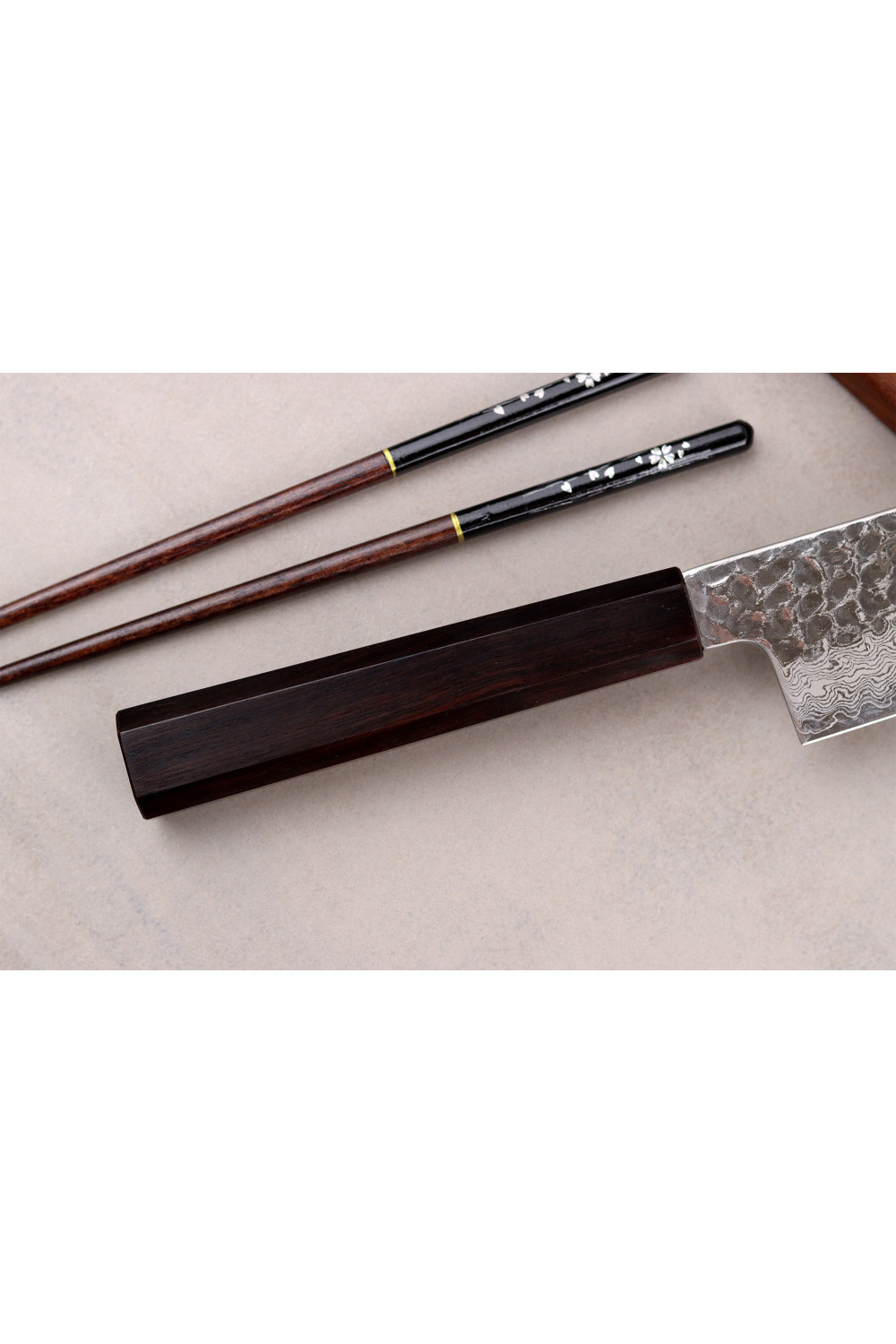
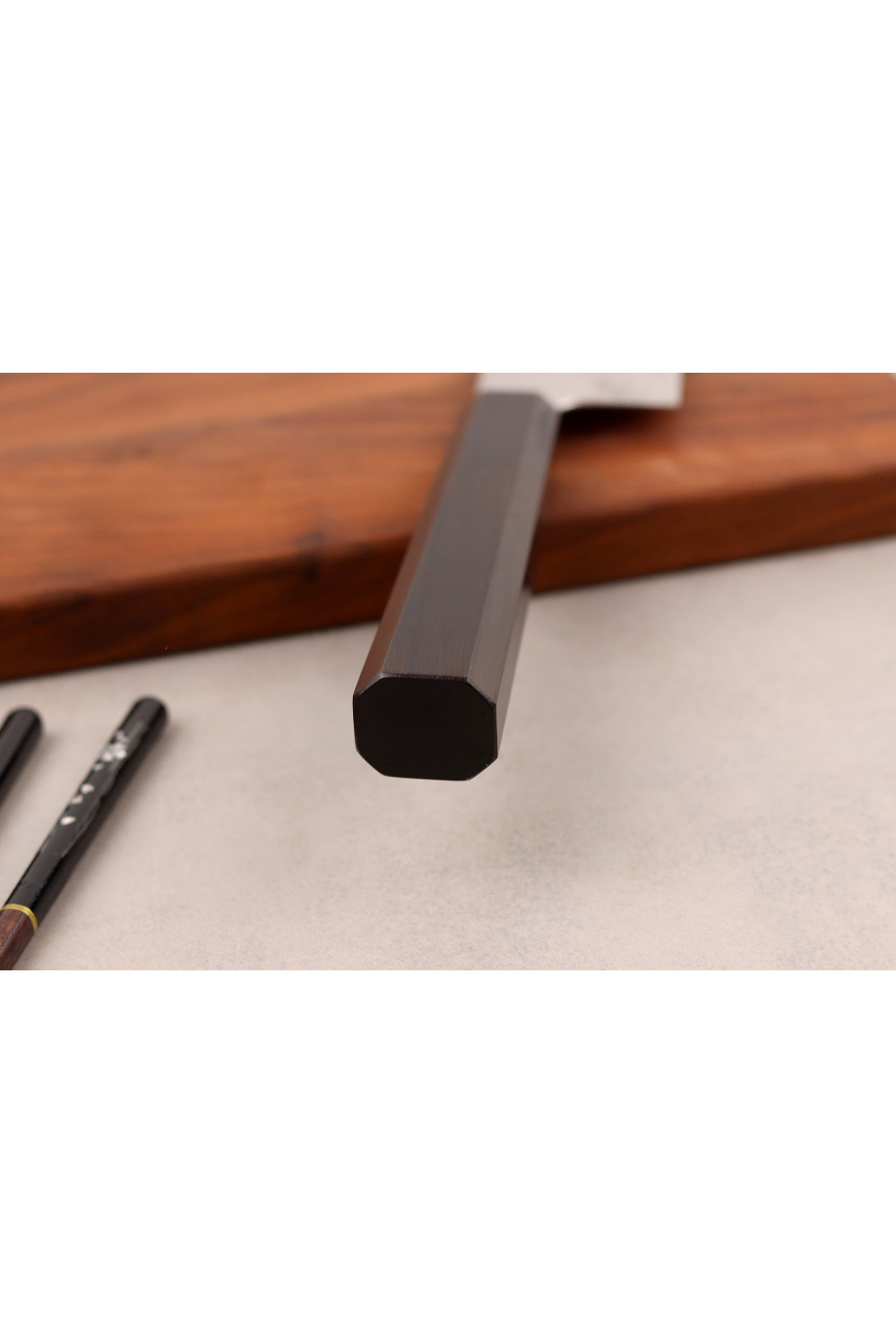
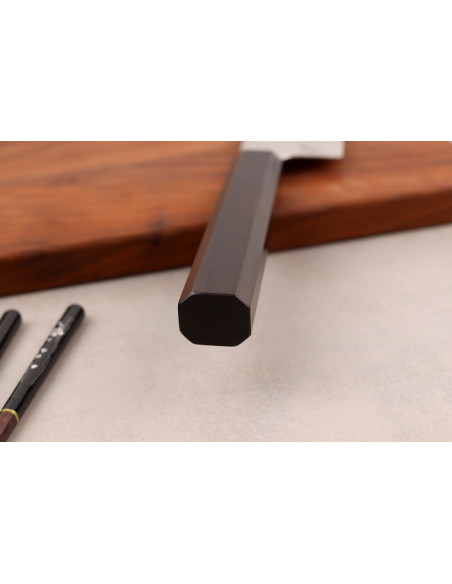
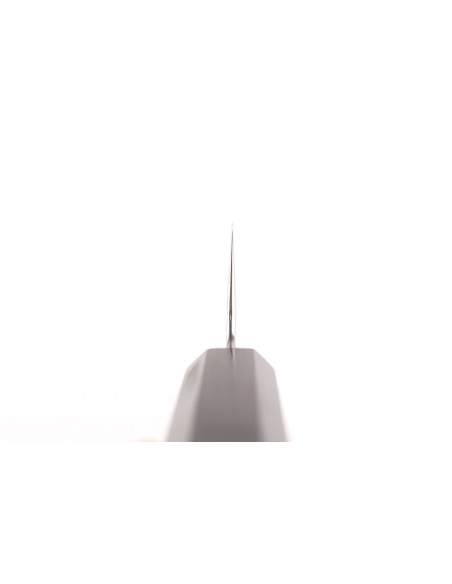
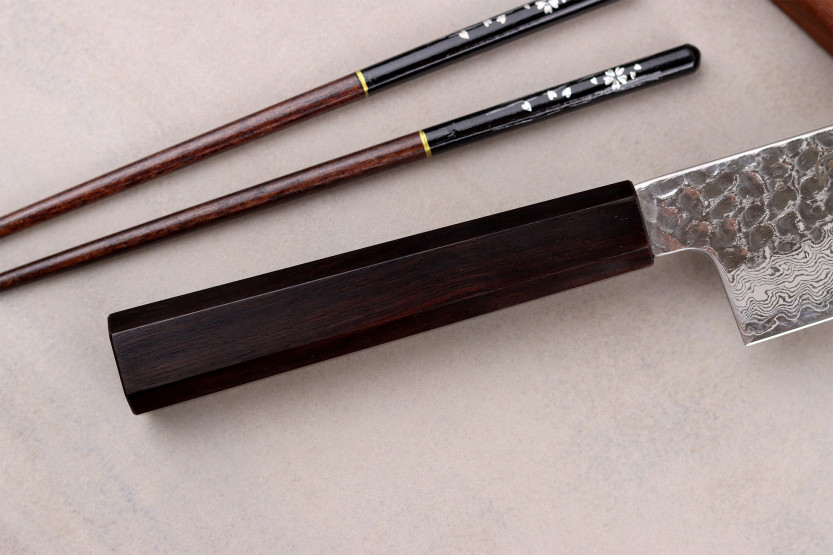
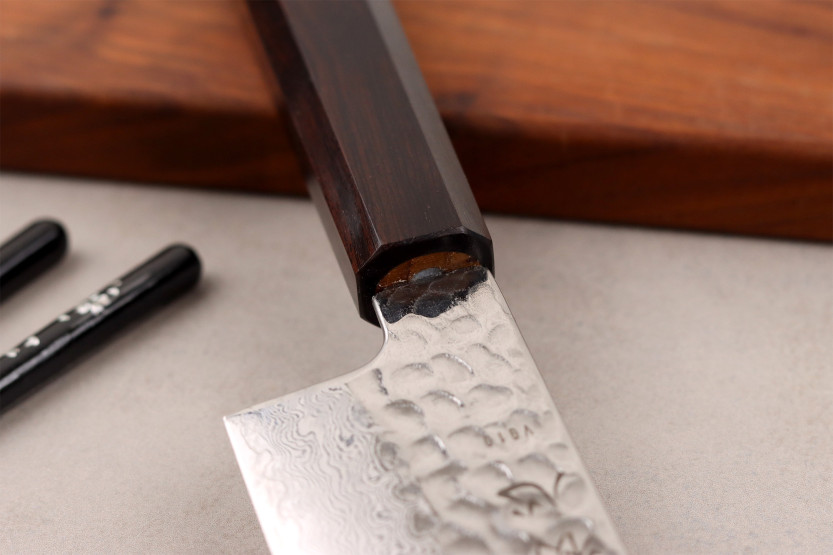
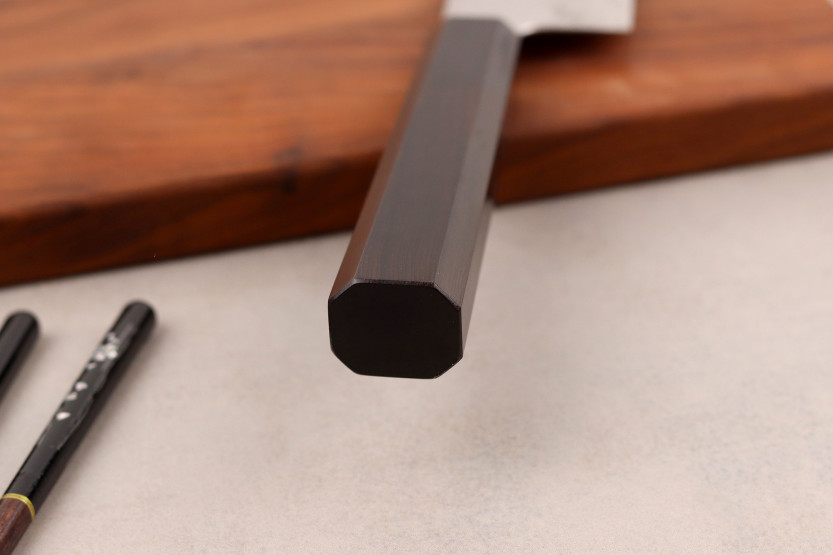
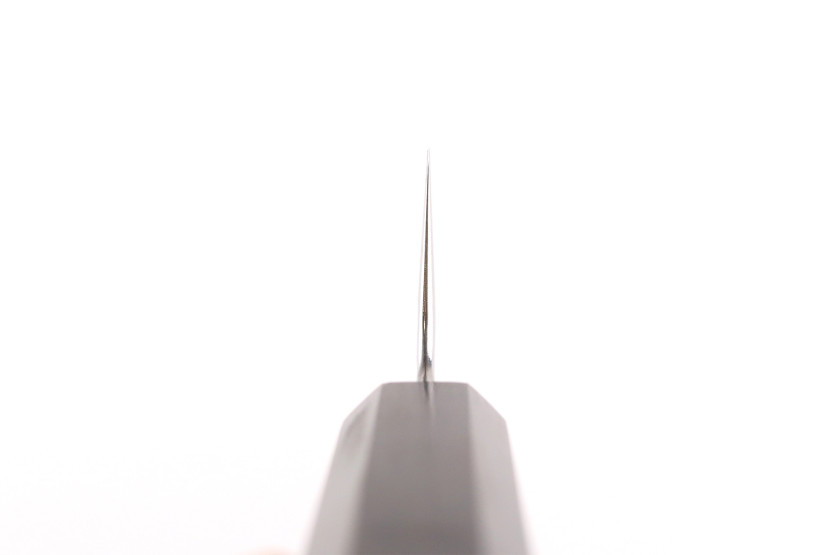
The octagonal handle is made of ebony, a dense and durable wood. The octagonal shape, common on Japanese “wa-style” handles, provides a comfortable grip and a sense of control. It allows for ambidextrous use.
The wood gives the knife a simple yet warm appearance, with its characteristic dark hues. Dense and durable, ebony is well-suited for a handle designed for regular use. The combination of ebony and the damask blade creates a striking contrast.
Features and Benefits
-
- 18 cm damascene blade: offers a versatile length for everyday cutting tasks.
-
- VG10 steel core, approximately 1% carbon: provides an edge suitable for precise cuts.
-
- Hardness of 60 HRC: contributes to good edge retention.
-
- Tsuchime hammered finish: creates a textured surface that can help food release more easily.
-
- Octagonal ebony handle: offers a stable grip and is made of dense, durable wood.
-
- Handcrafted in Japan: reflects Japanese cutlery craftsmanship.
Use and Care
Use the knife on a wooden or synthetic cutting board. Avoid bones, frozen foods, and hard surfaces such as glass or stone. Wash the knife by hand with a soft sponge, then dry it immediately. Do not put it in the dishwasher or let it soak. When the blade loses its sharpness, sharpen it using a whetstone suitable for Japanese knives.
Hatsukokoro and the name Hayabusa
Hatsukokoro works with various Japanese artisans, specialized workshops, and manufacturers. This approach allows us to offer knives in a variety of styles, featuring different types of steel, finishes, and handles.
The name Hayabusa refersto the “peregrine falcon.” While the falcon is particularly renowned for its speed, this knife pays homage to it through the precision and speed it will bring to your cooking.
You can also find all the Hatsukokoro Japanese knives we’ve selected for you on our website!




 By buying this product you can collect up to