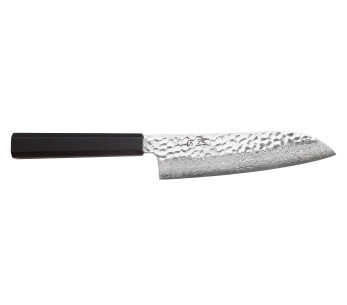
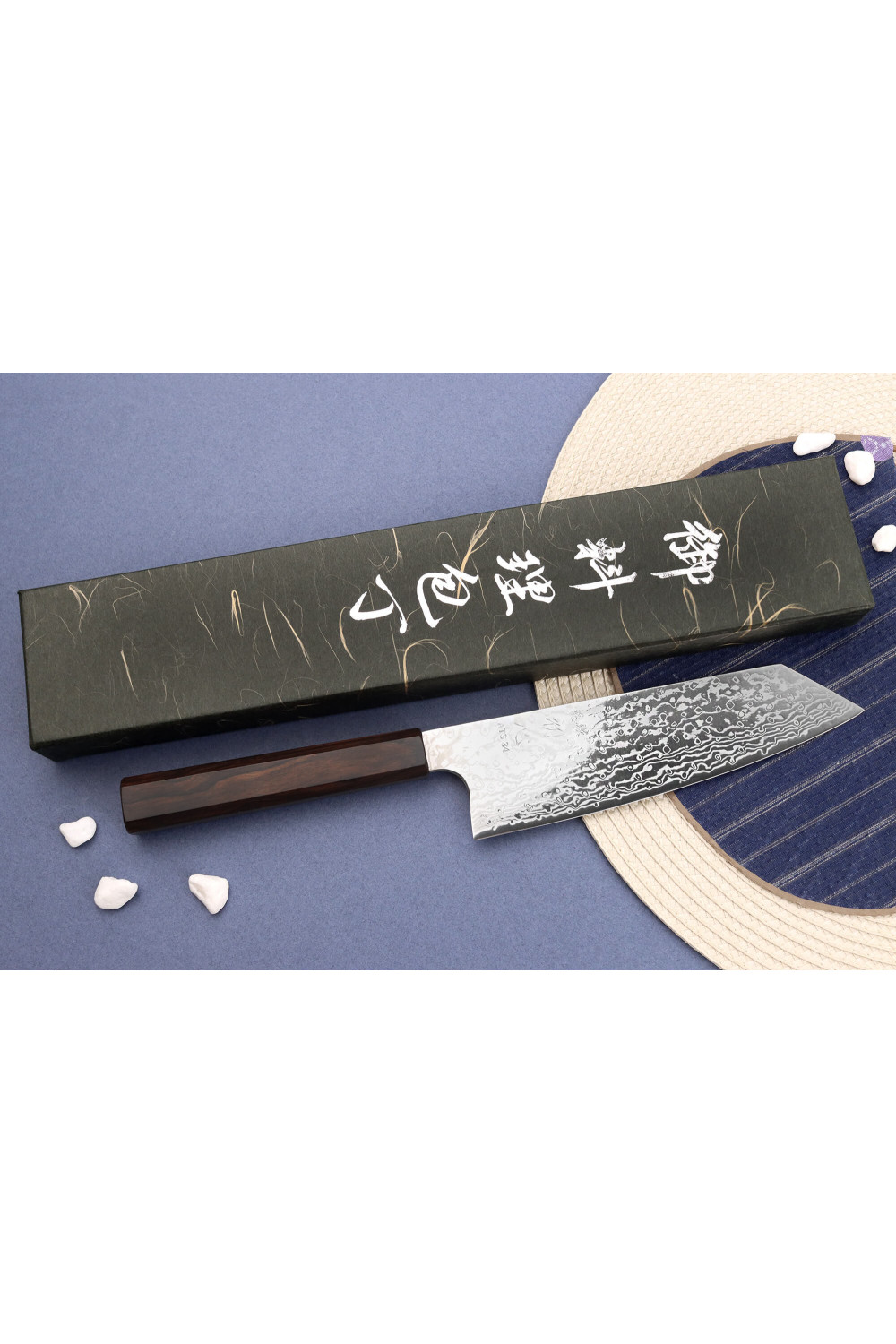
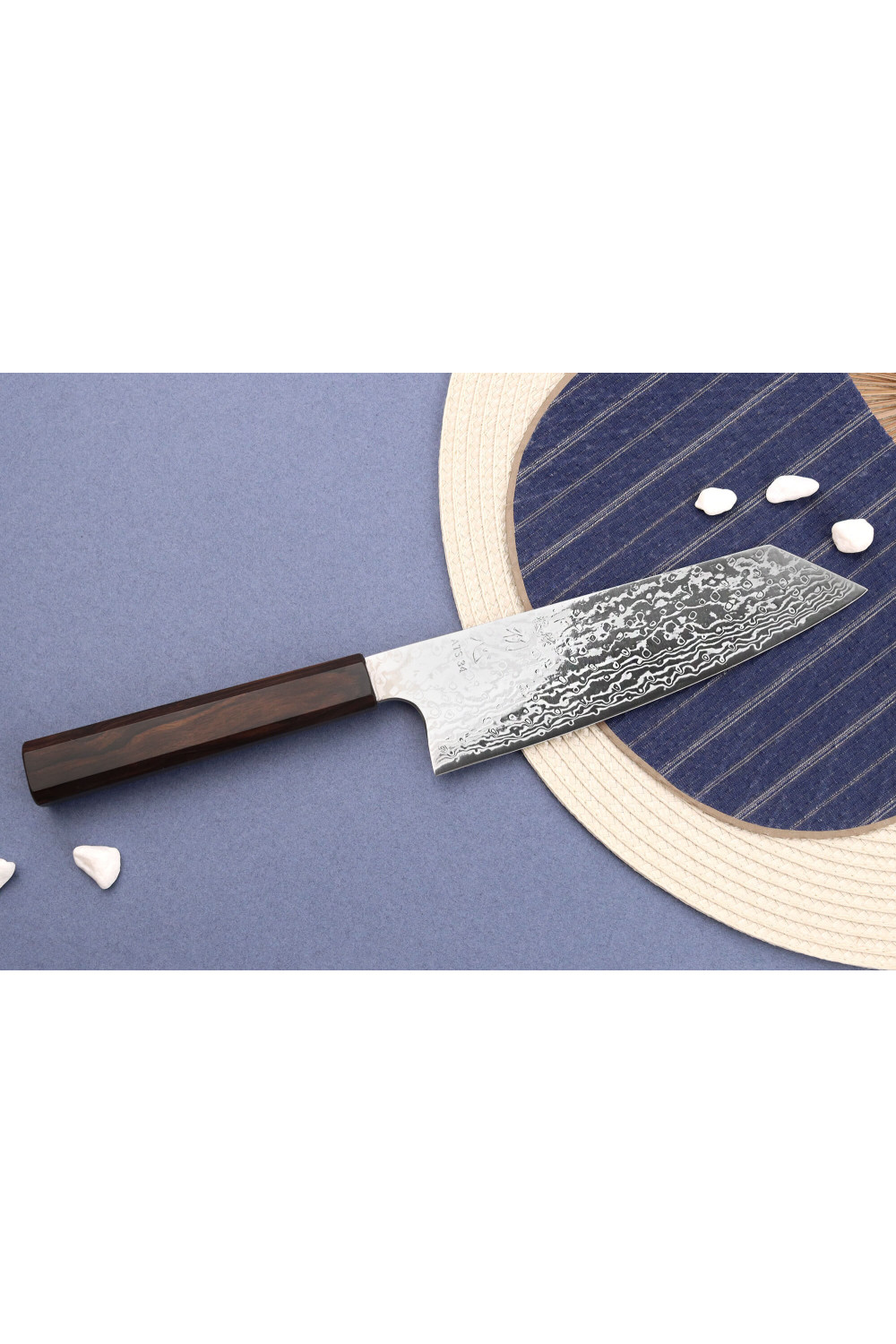
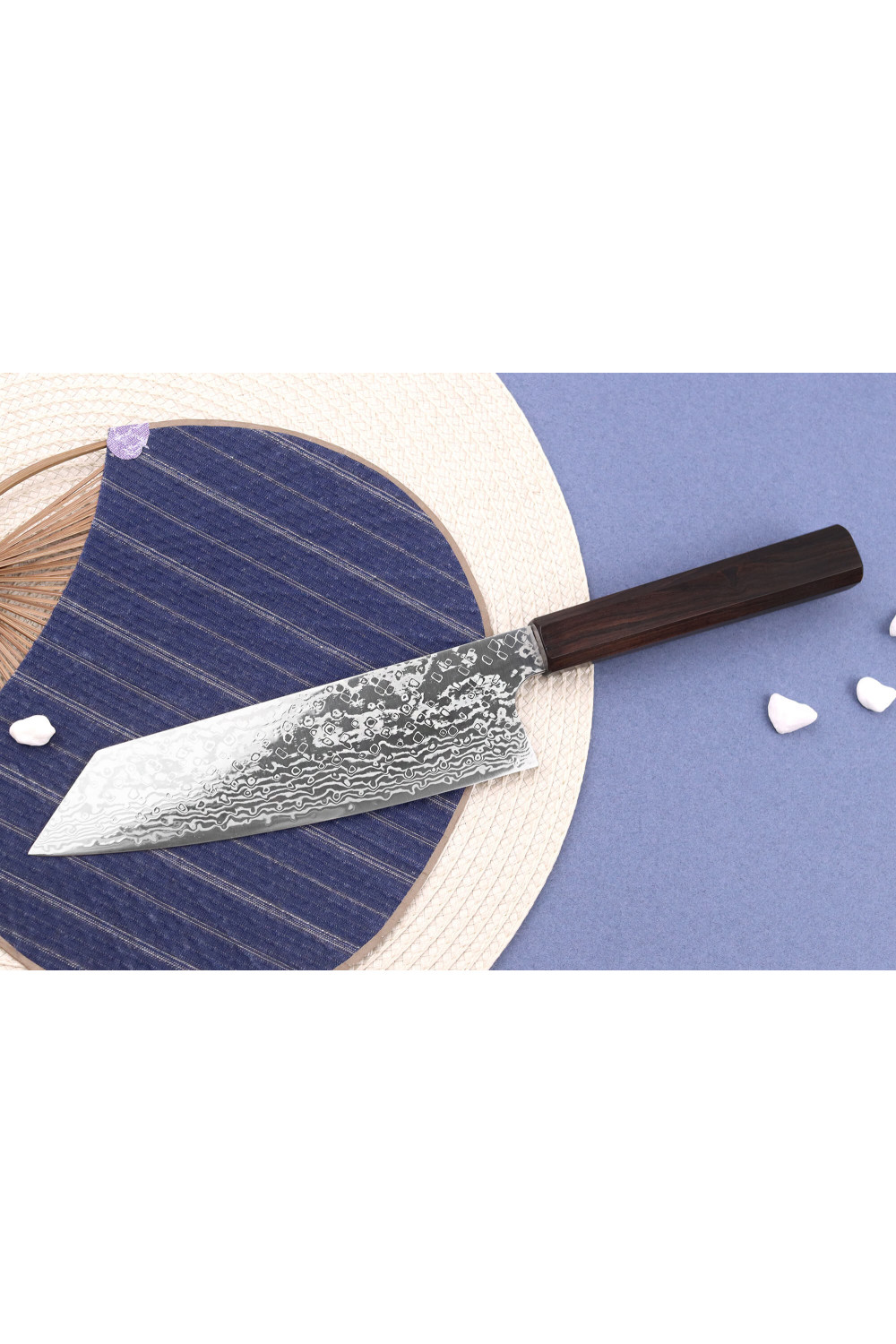
The Hatsukokoro brand is renowned for its high-quality Japanese kitchen knives, crafted in collaboration with expert blacksmiths. This handcrafted Japanese knife was designed by Yauji Yoshihiro at Takefu Knife Village, a place where numerous craftsmen gather to share their experience and know-how.
Born in the 1980s, Yauji Yoshihiro began his apprenticeship at an early age. In 2003, he was trained by renowned Japanese master blacksmith Hideo Kitaoka, who had himself learned within his family before passing on his knowledge to Yauji san. After fifteen years of apprenticeship, Yauji Yoshihiro opened his own workshop in 2019, where he forges and sharpens his own blades!
A high-performance, long-lasting damascus knife
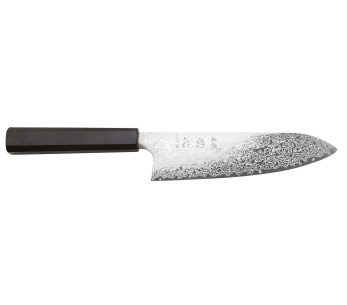
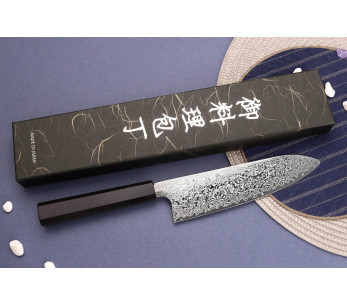
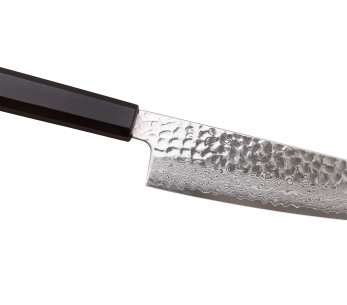
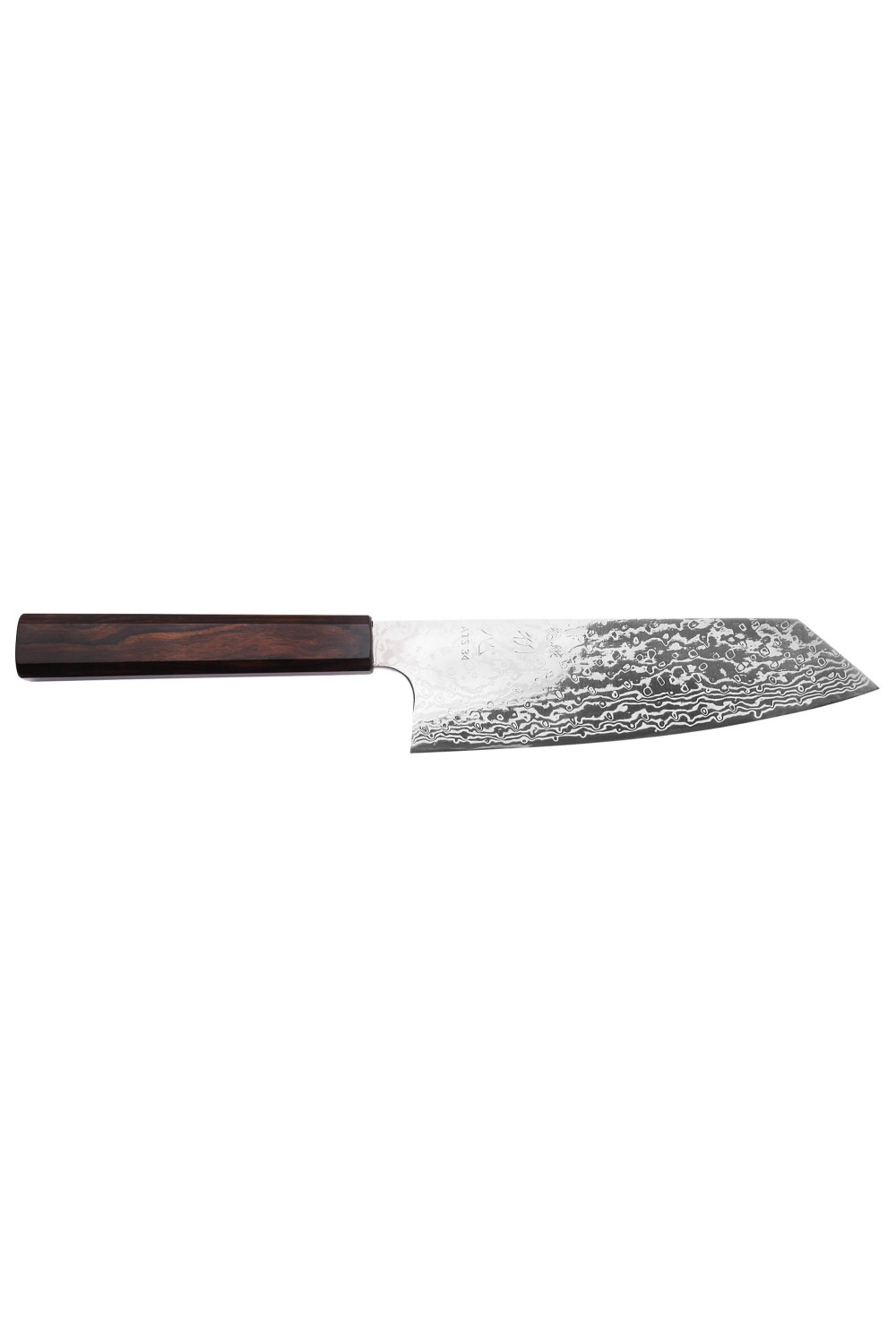
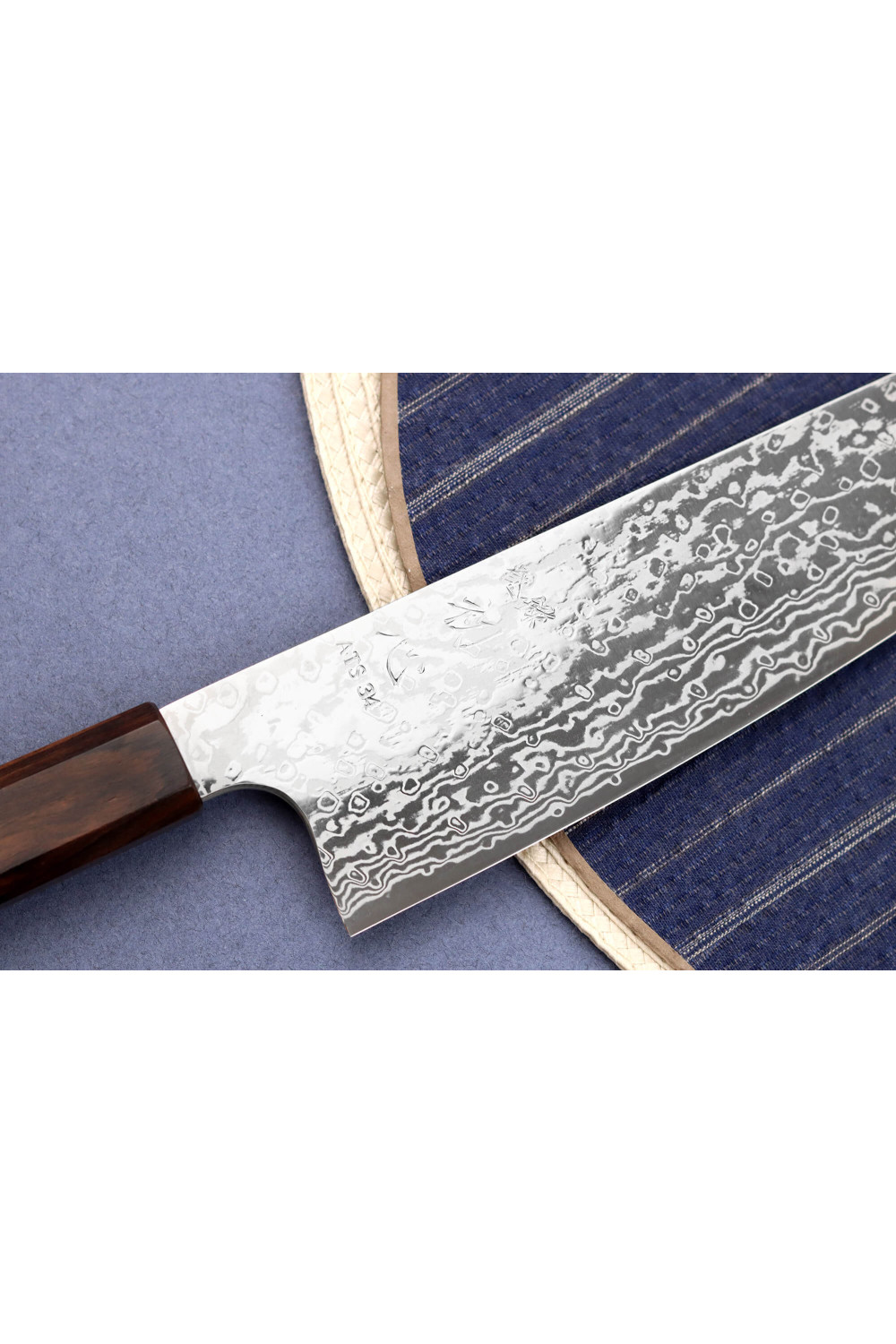
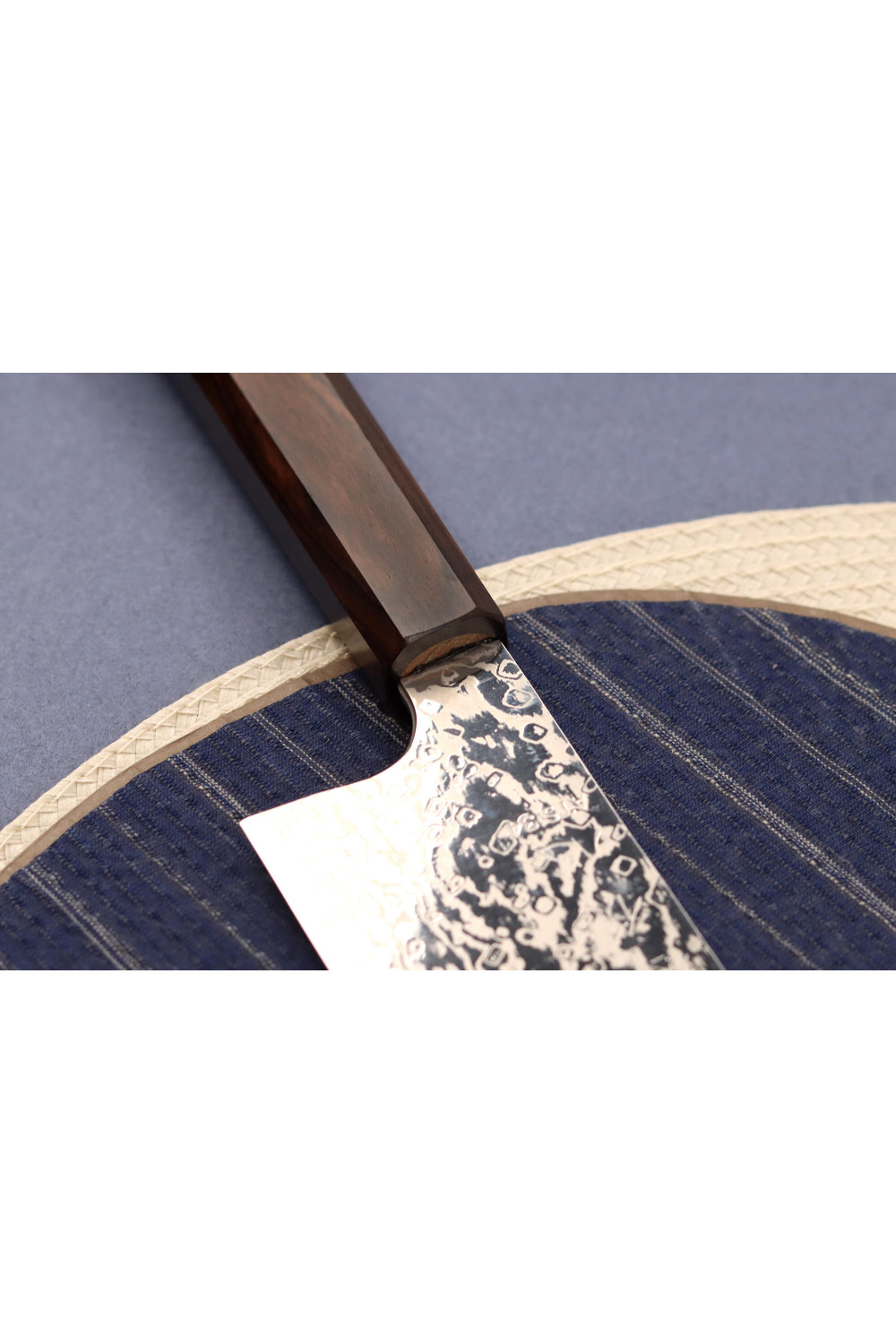
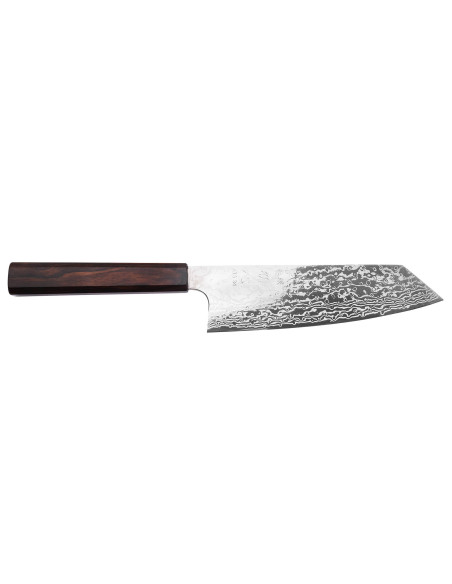
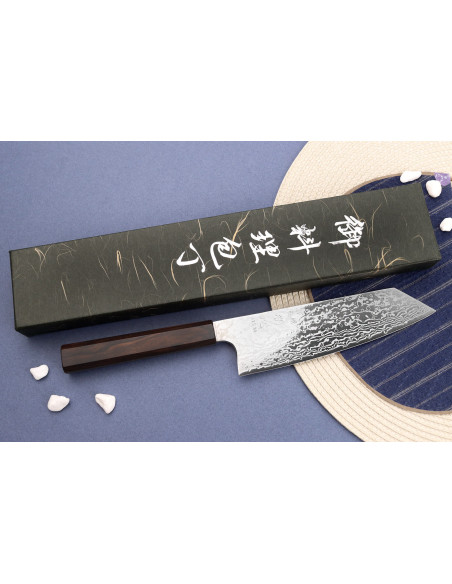
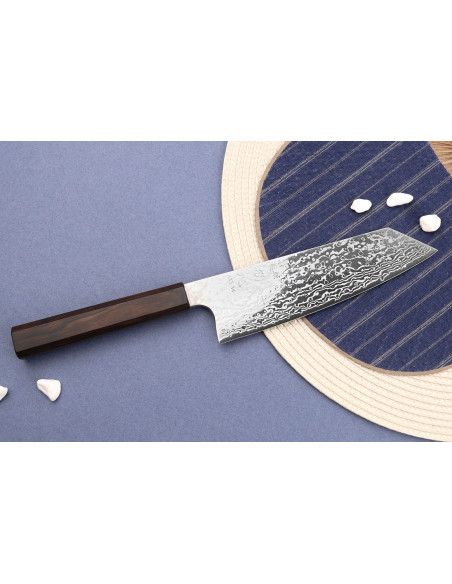
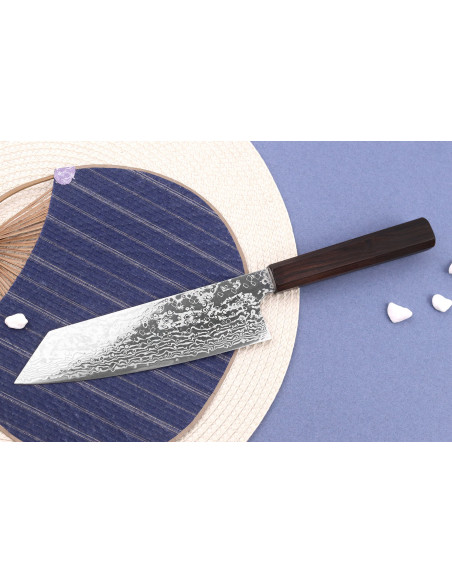
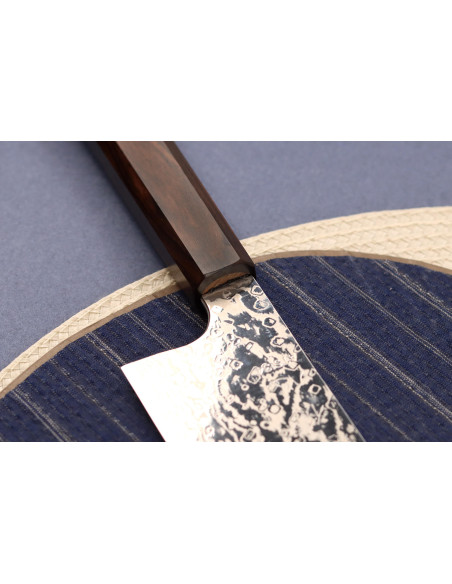
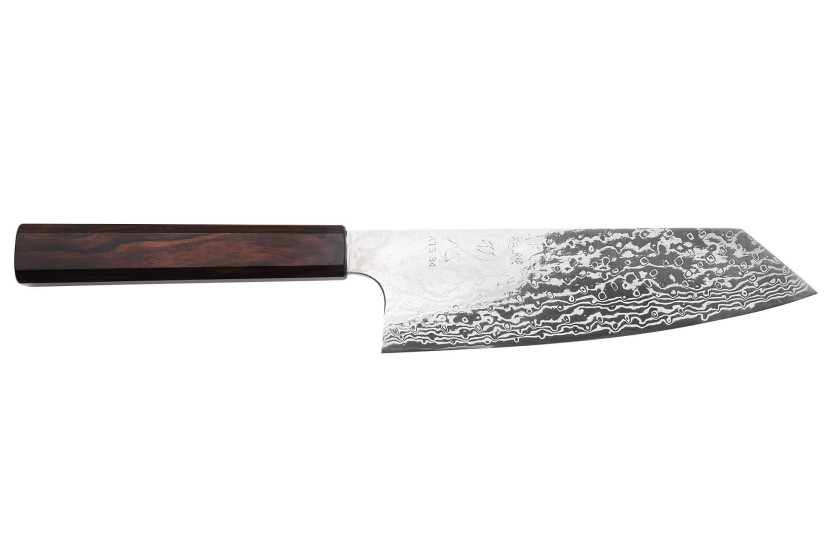
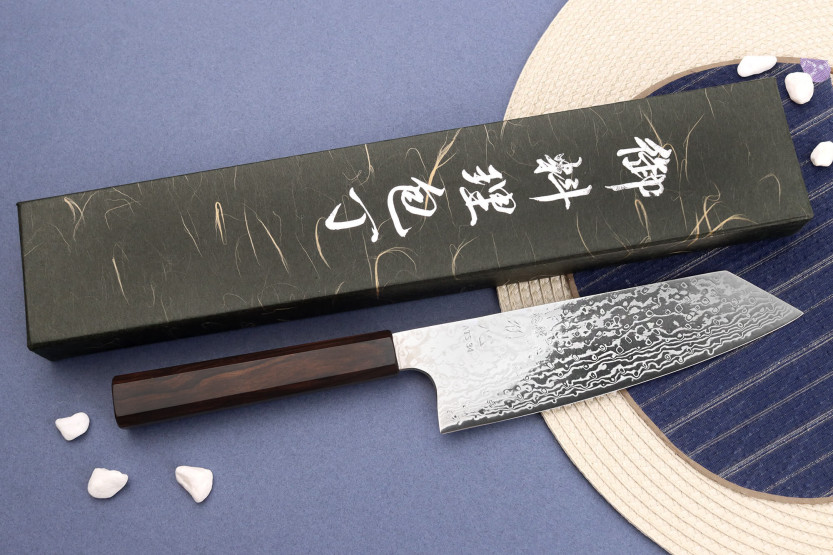
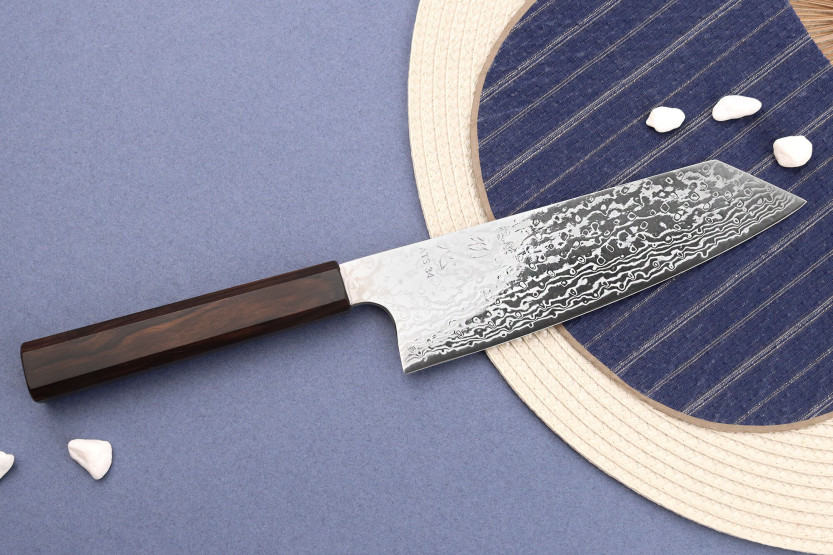
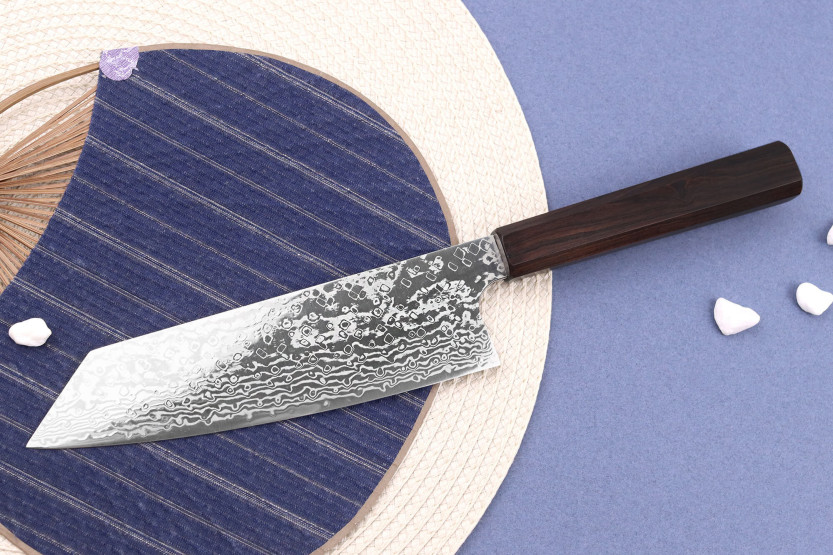
The blade of this bunka knife features a damascus structure, combining a rigid steel core surrounded by several layers of softer steel. This technique balances the hardness of the blade while protecting the core of your Japanese kitchen knife.
The core of the blade is made of ATS-34 Japanese stainless steel, produced by the renowned steelmaker Hitachi. This steel contains around 1% carbon, an element that increases the alloy's hardness. With a hardness of 64HRC on the Rockwell scale, your blade will deliver long-lasting, high-performance cutting performance.
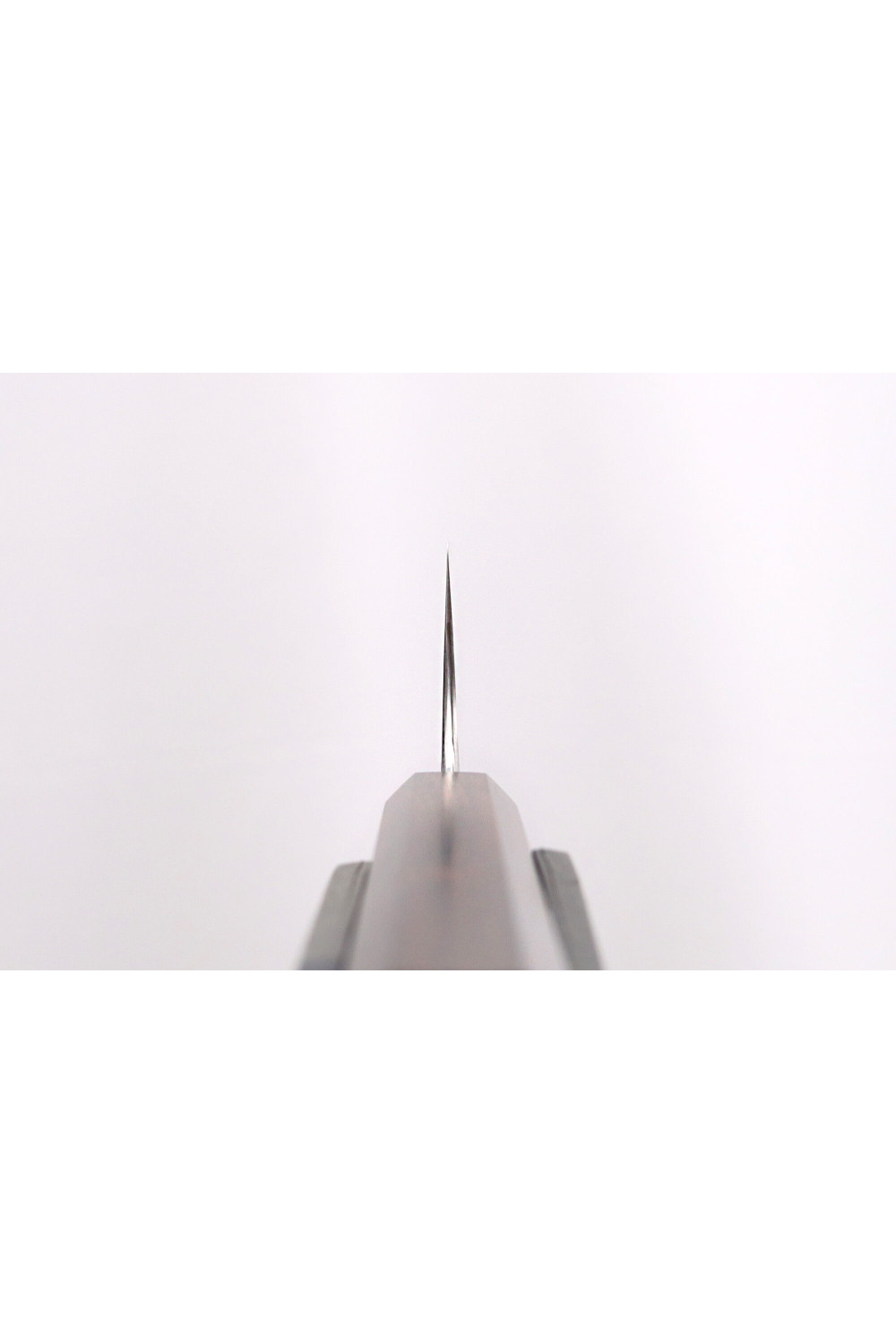
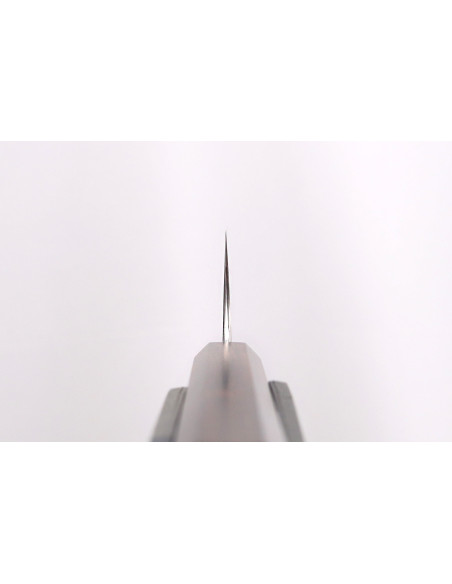
You can maintain your Japanese knife with suitable sharpening stones. What's more, its fine, flat grind is easy to reproduce when sharpening!
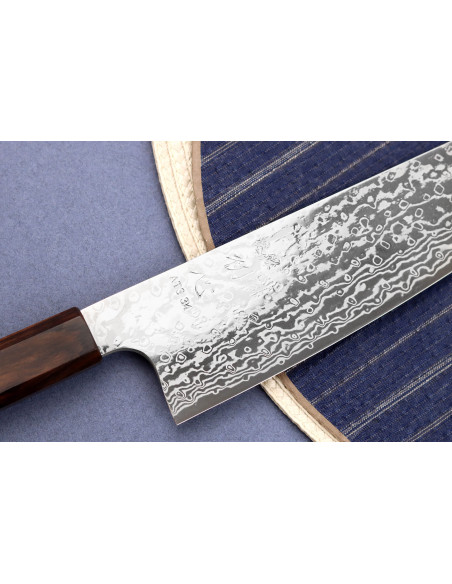
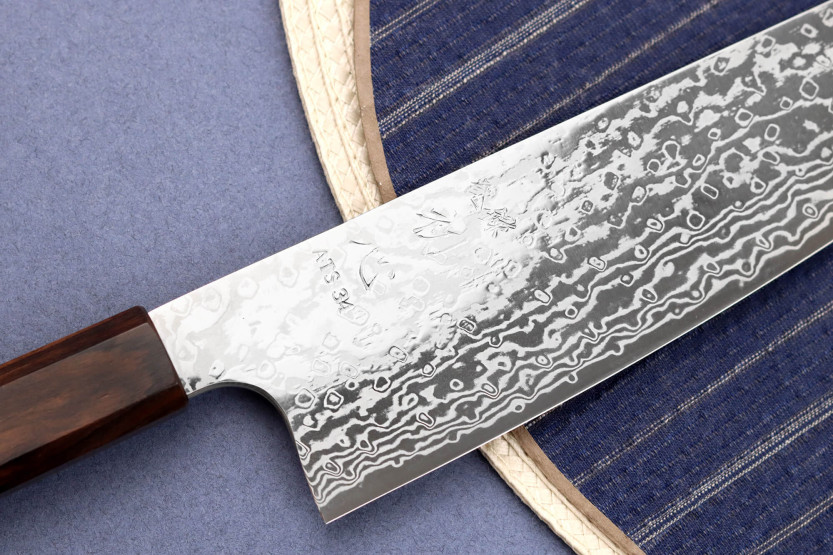
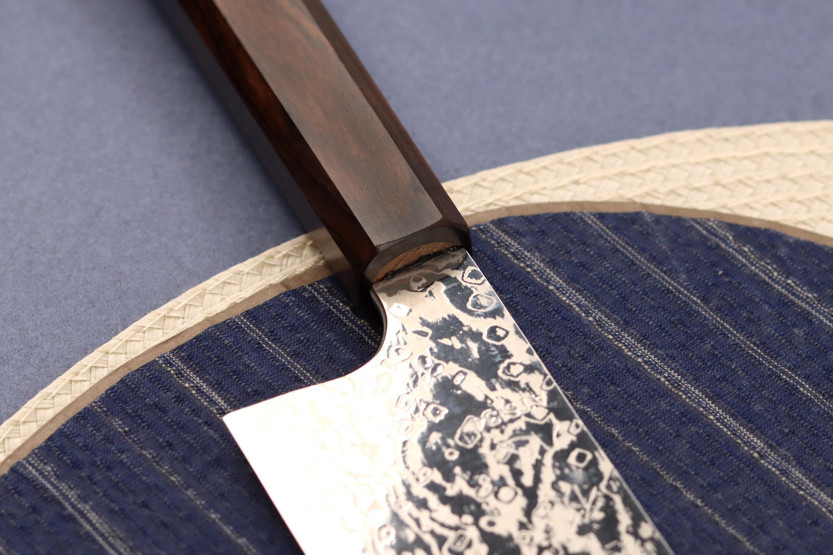
Around the core, several layers of stainless steel and nickel are superimposed to form the damascus. These layers add suppleness to your blade (without making it flexible), improving its resistance to breakage during use. Damascus creates fine, random waves on the surface of the blade, adding a touch of elegance and uniqueness to your Japanese bunka knife.
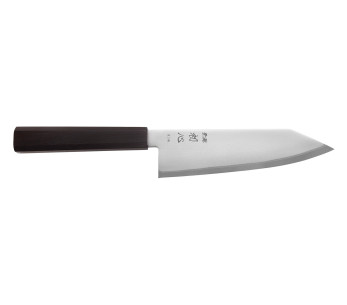
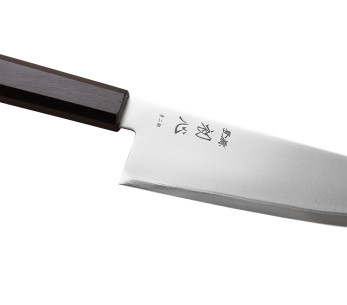
The blade has also been polished to a refined mirror effect, and hand-engraved kanjis add a touch of authenticity to this Hatsukokoro knife!
A Japanese knife with a sturdy handle
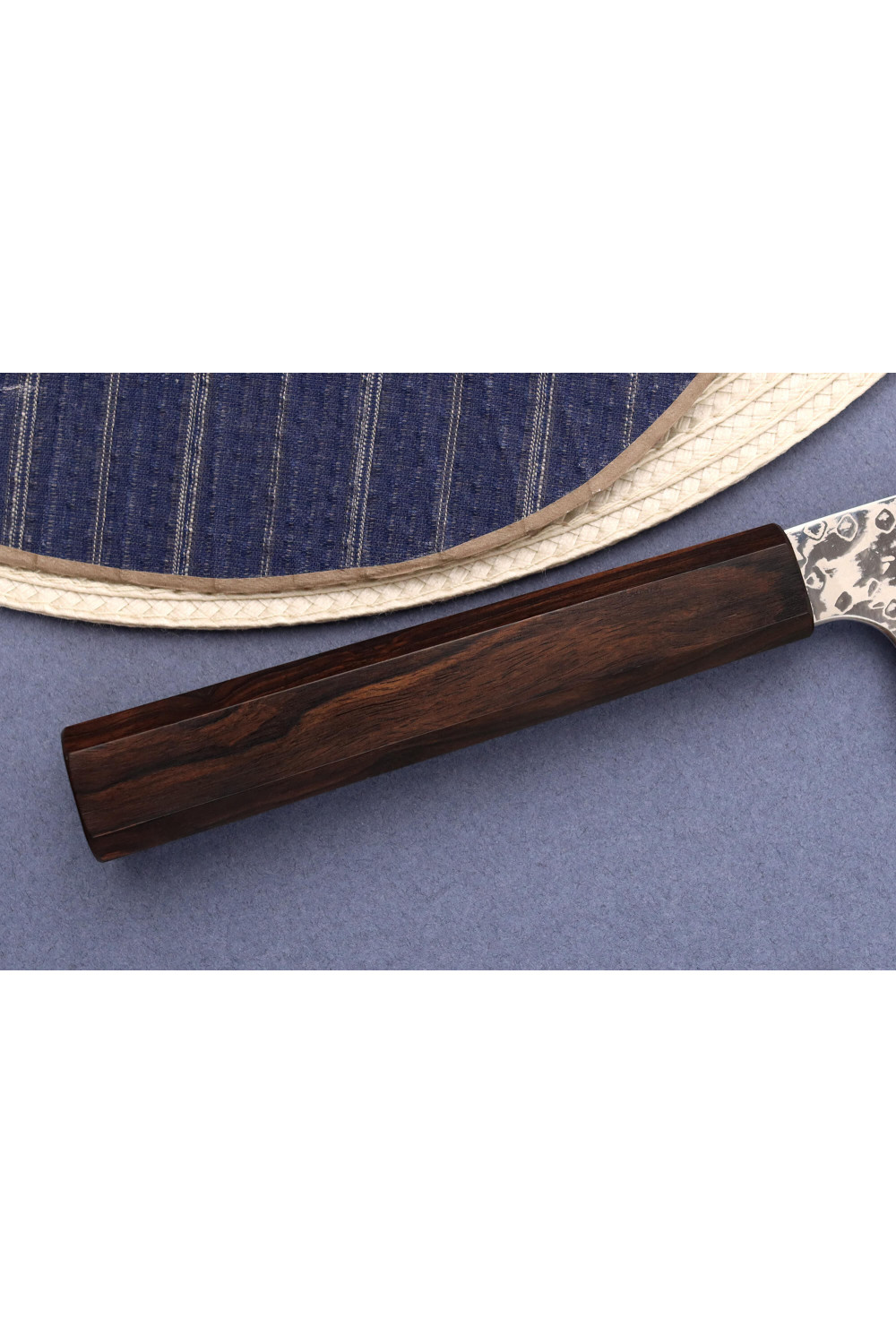
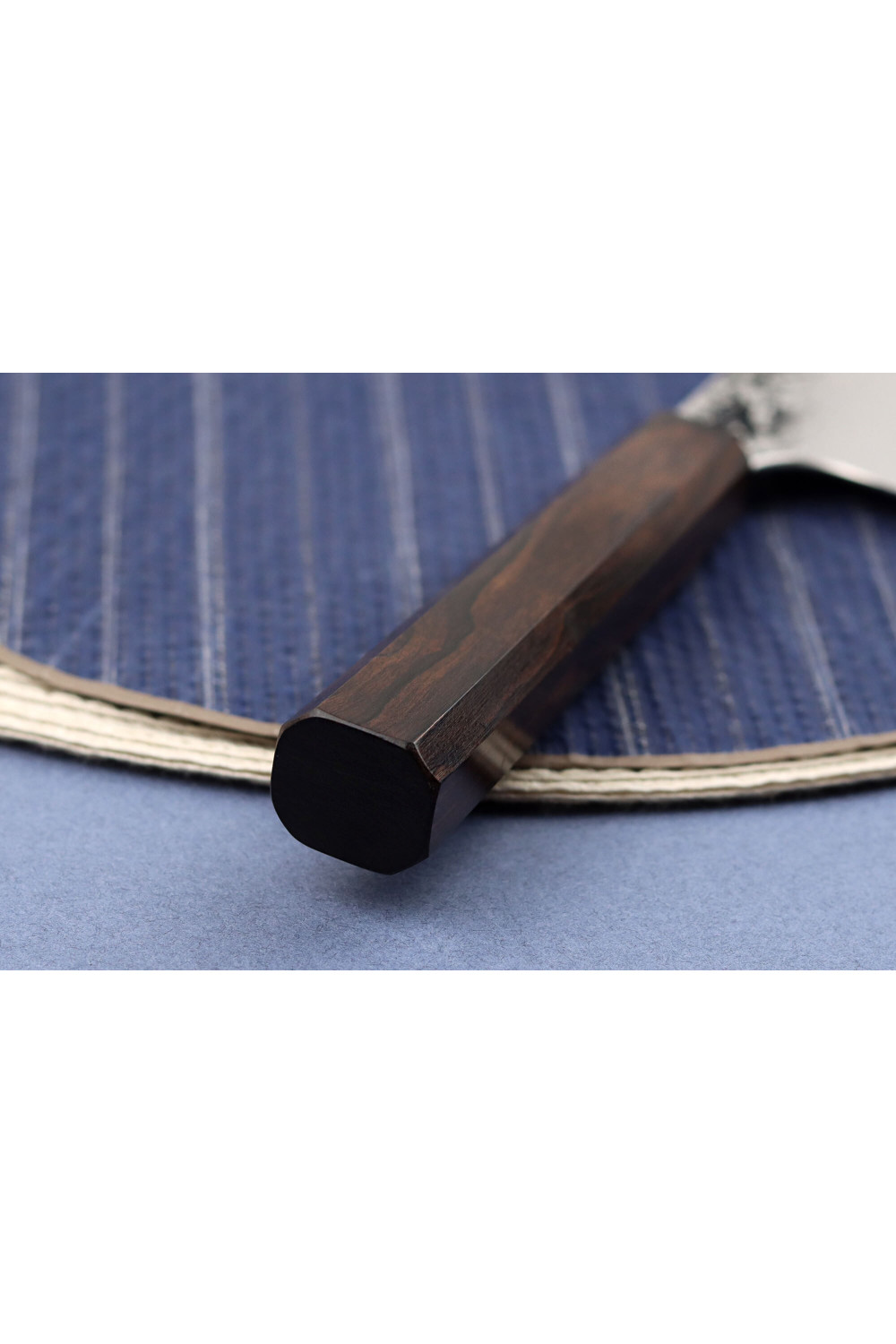
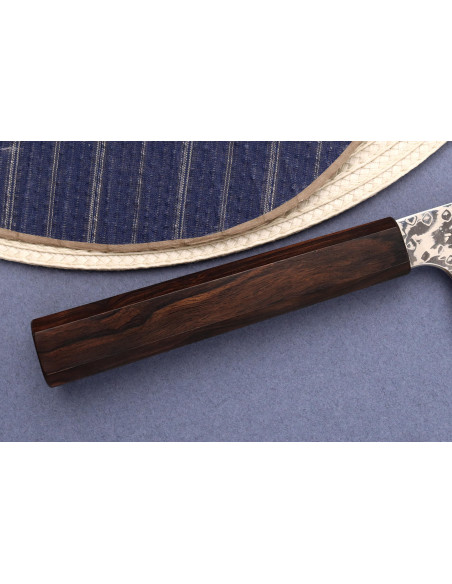
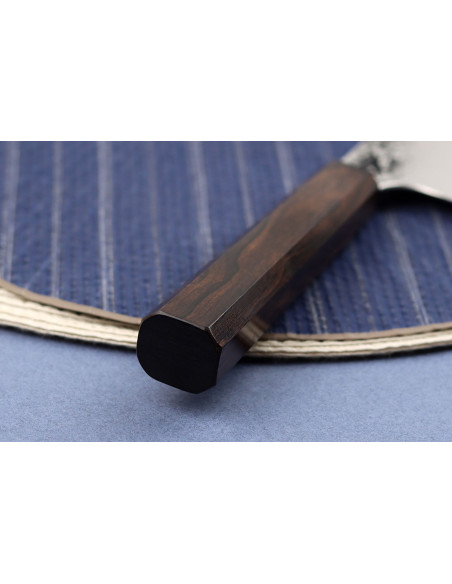
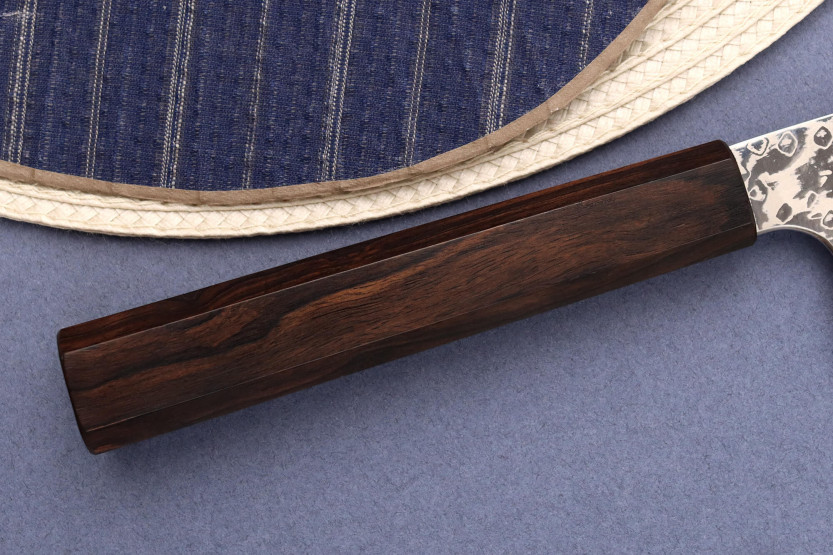
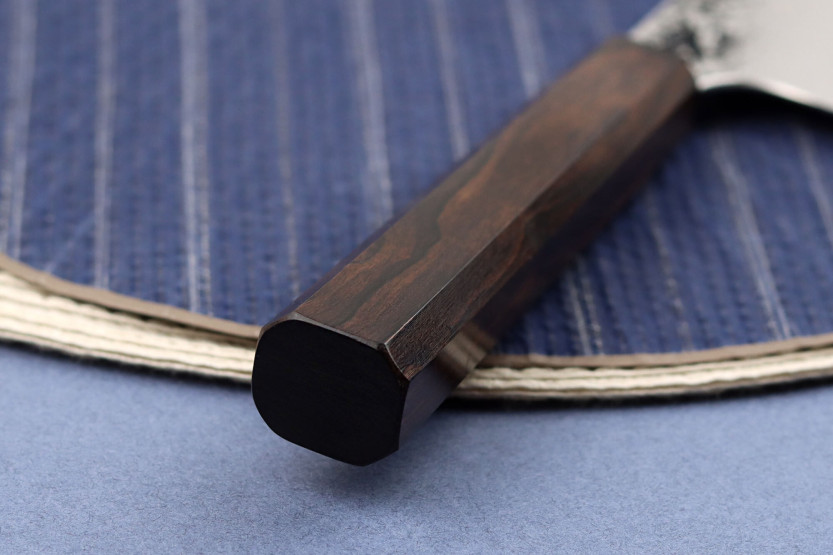
The handle of this damask knife is made entirely of ebony, an exotic wood renowned for its durability and strength. This dense wood resists humidity and warping. Its natural veining and dark hue lend an aesthetic appeal appreciated by many.
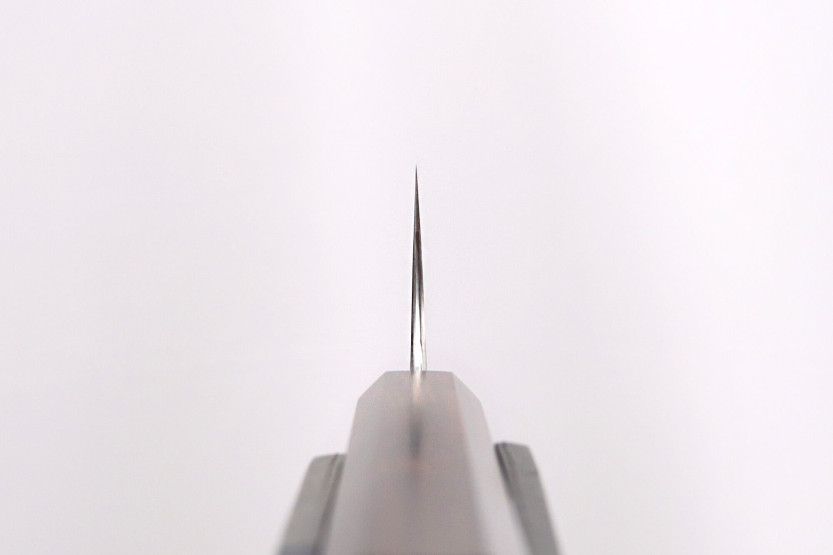
The octagonal shape of the handle provides a comfortable grip for both right- and left-handed users. This design ensures optimum ergonomics, even during long kitchen sessions!
To guarantee a watertight seal between blade and handle, wood paste has been applied, preventing the infiltration of water or food particles.
To care for your Japanese knife, wash only by hand with a soft sponge, avoiding wetting the handle. After cleaning, dry immediately with a clean cloth and store in a dry place. Do not put it in the dishwasher, nor leave it to soak in water.
Discover other Japanese kitchen knives on Knifeleader.eu!




 By buying this product you can collect up to