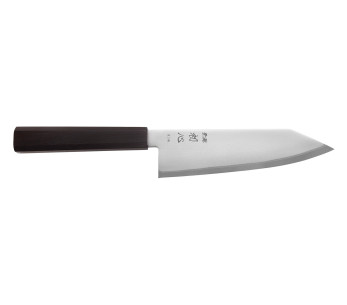
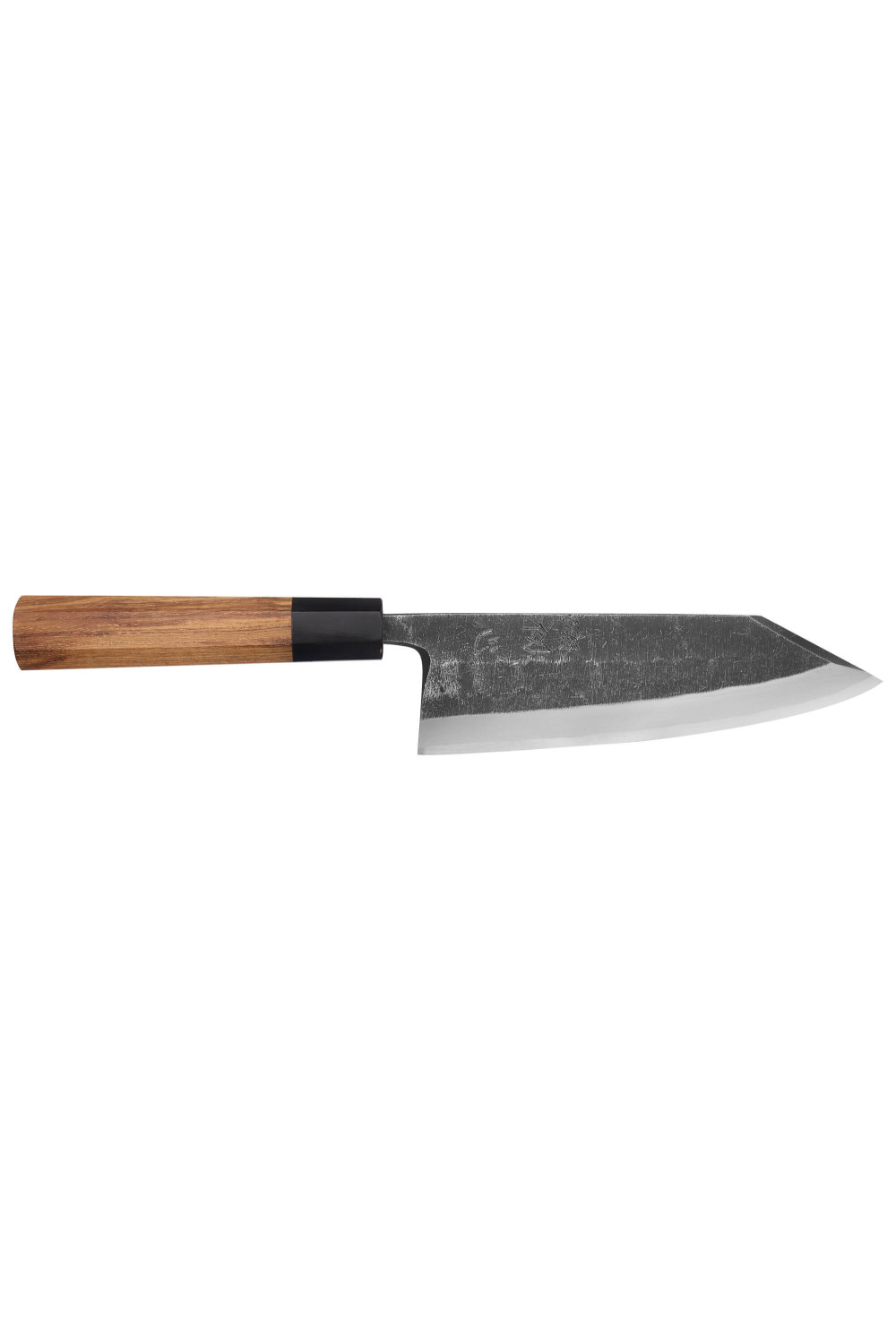
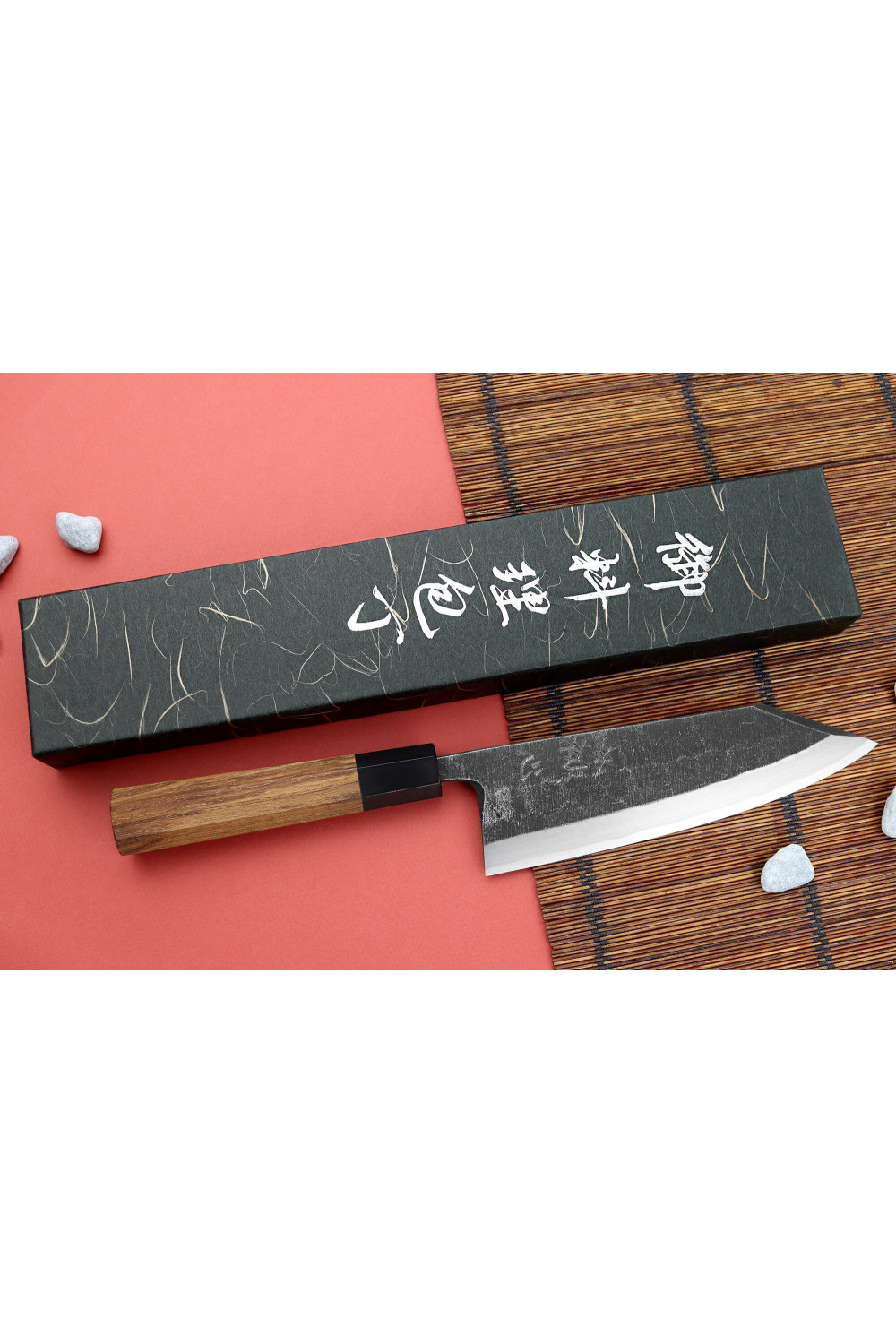
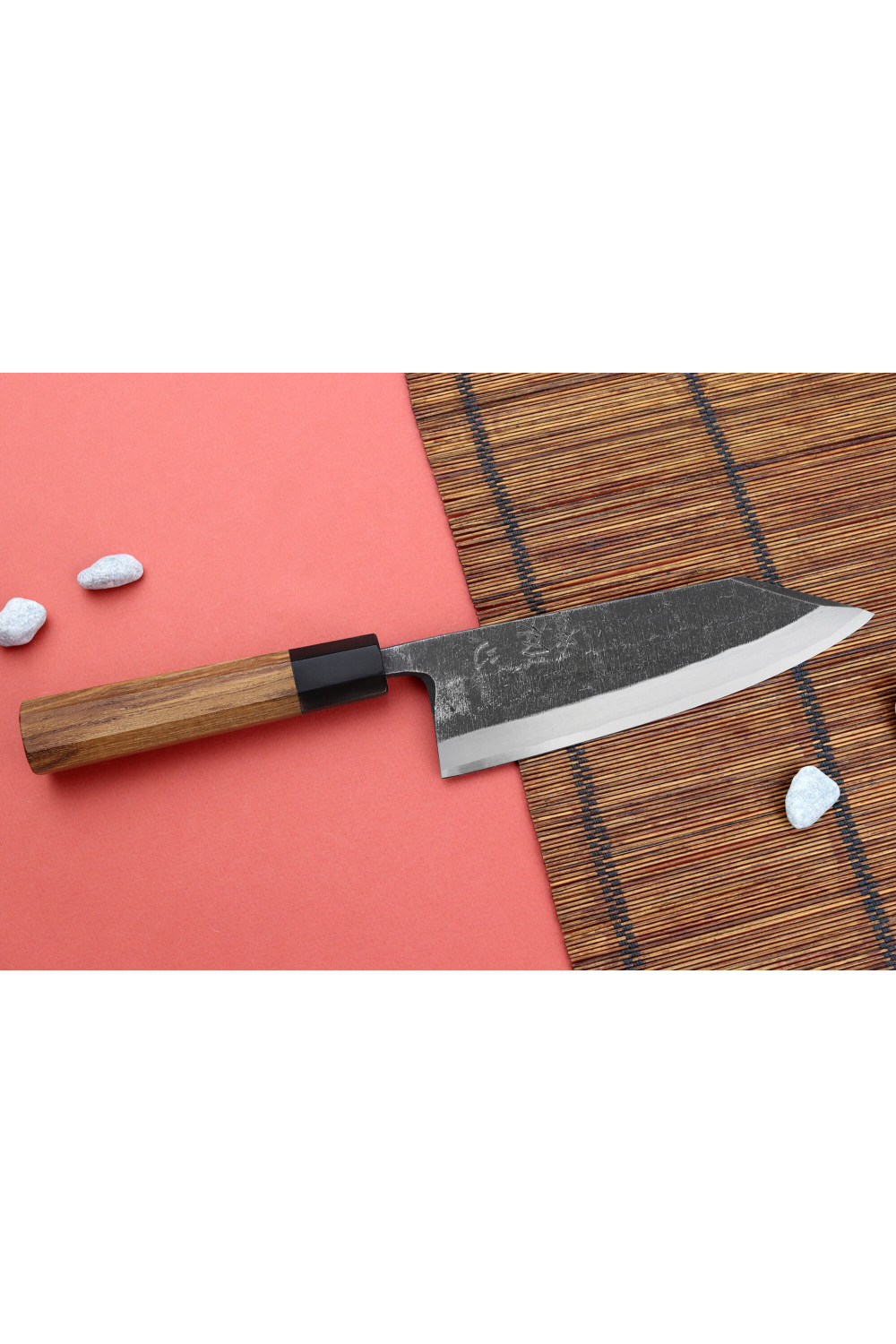
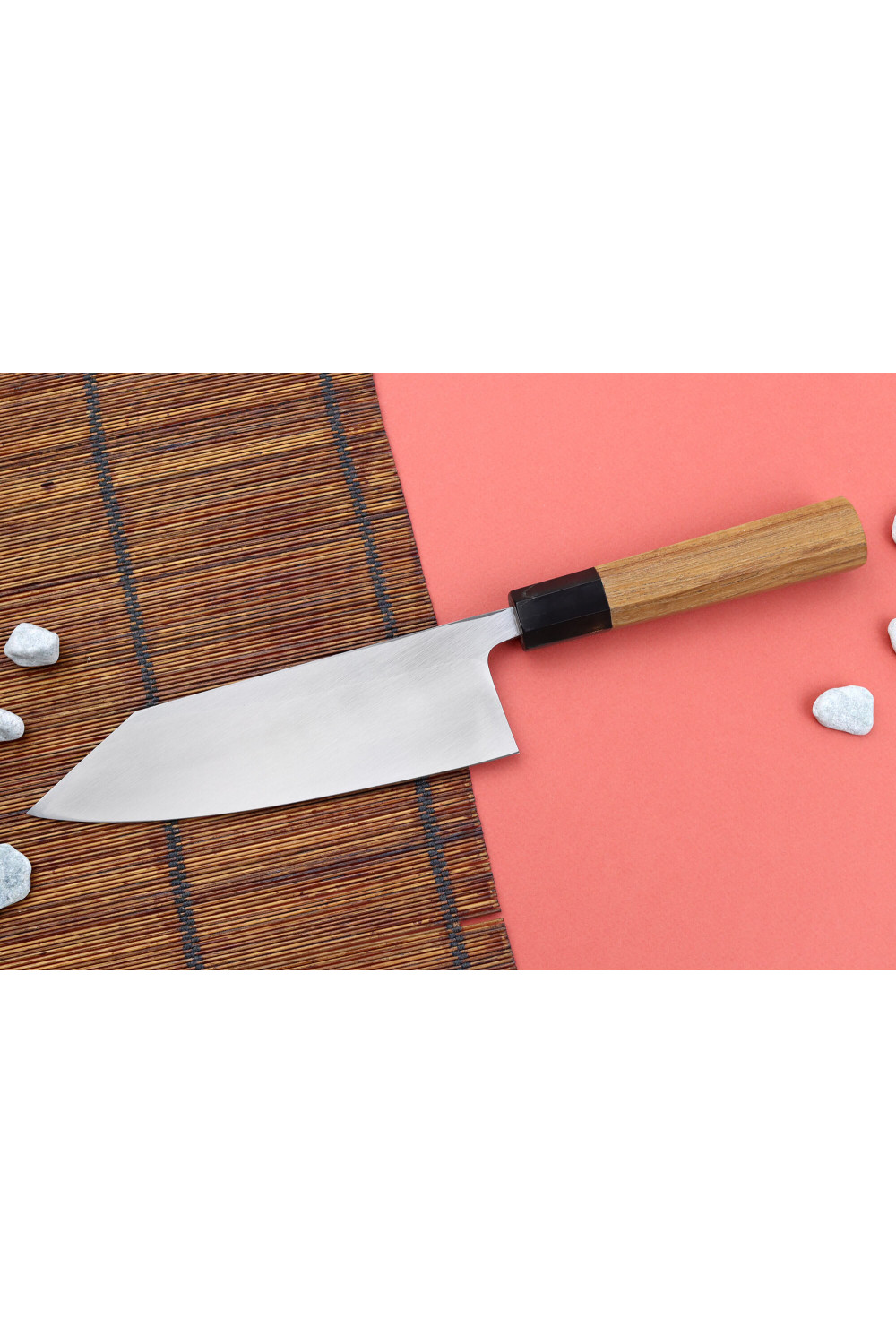
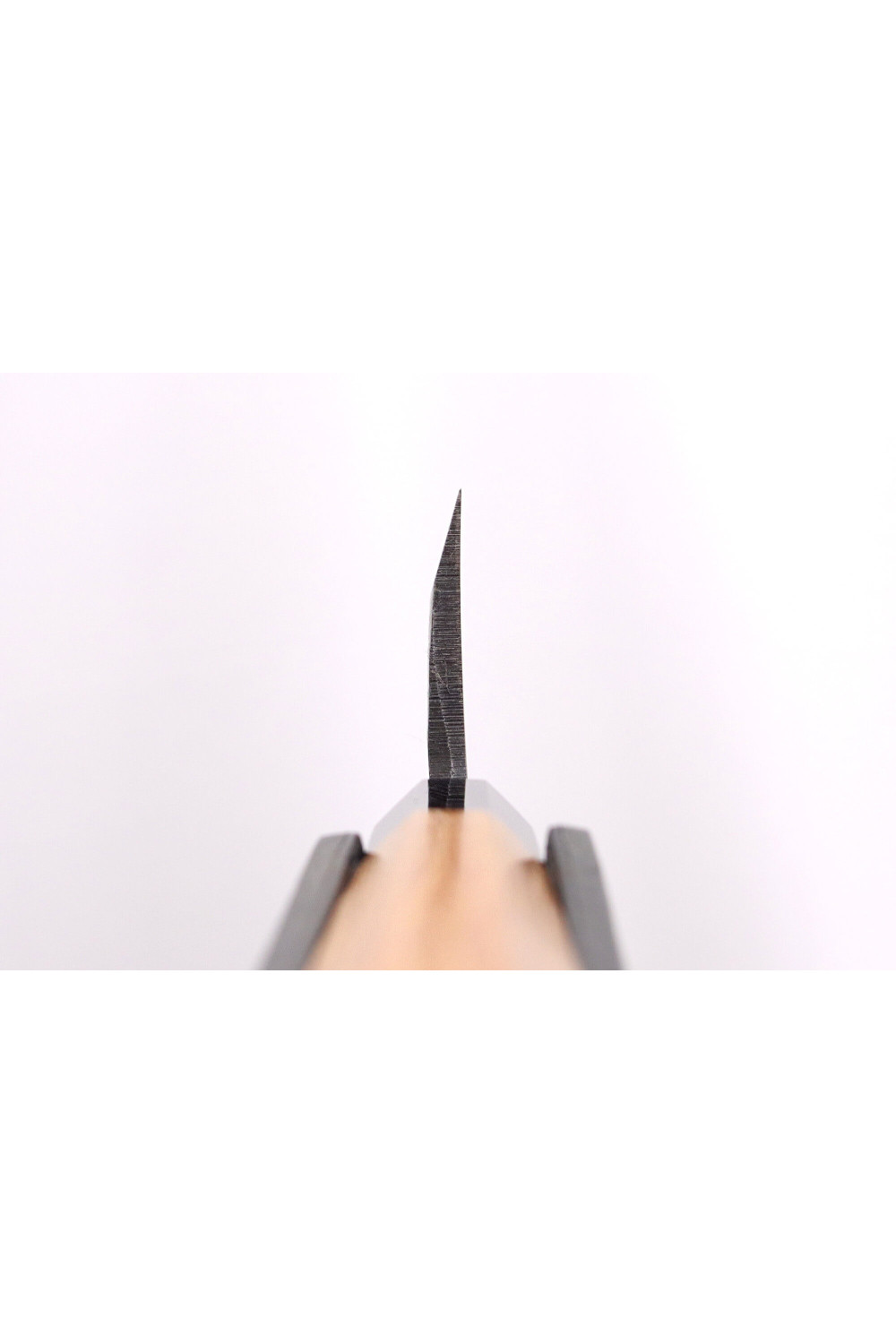
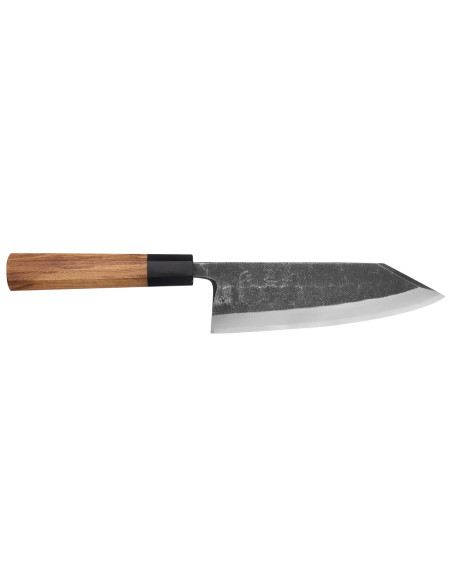
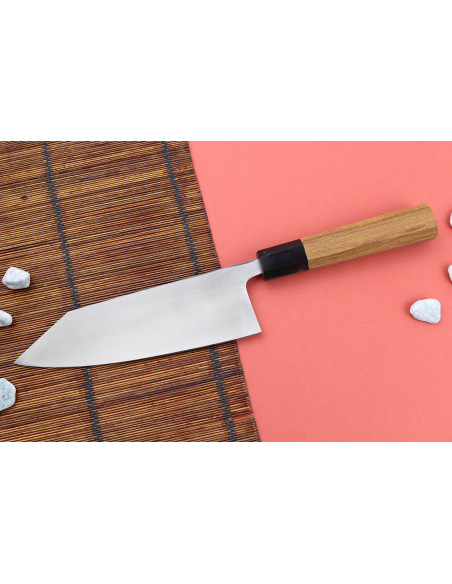
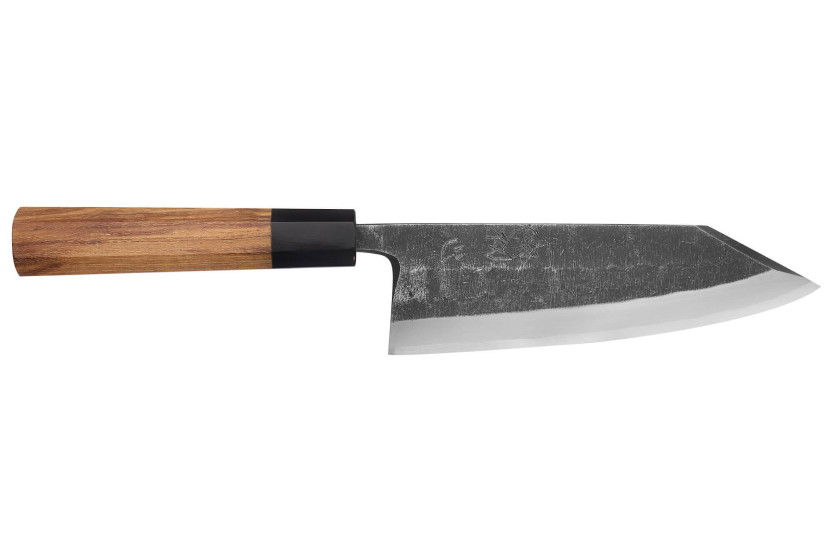
The Japanese brand Hatsukokoro is renowned for its top-quality kitchen knives, crafted by renowned artisans. This deba knife is the fruit of the skills of Toru Tamura, the master blacksmith who forged the blade, and Tateo Myojin, the expert sharpener who precisely honed its cutting edge.
Toru Tamura discovered his passion for cutlery during a work experience in Canada, where he was captivated by the quality of the knives he handled. Determined to learn more, he returned to Japan to train in traditional forging techniques. He joined the famous Takefu Knife Village, a center dedicated to the transmission of artisanal know-how. Under the instruction of master blacksmith Hiroshi Kato, the emblematic Japanese cutler, he perfected his art.
Following his training, Toru Tamura specialized in the manufacture of asymmetrical-edged blades, using ancestral forging methods. In his work, he collaborates closely with other renowned craftsmen, notably the Myojin family, renowned for their expertise in sharpening. For this Japanese kitchen knife, it was Tateo Myojin who carried out the sharpening, guaranteeing a one-sided cutting edge of the highest quality.
A high-performance, robust Japanese craft knife
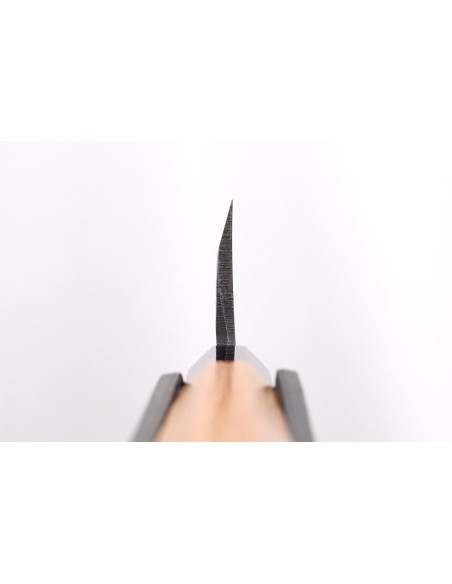
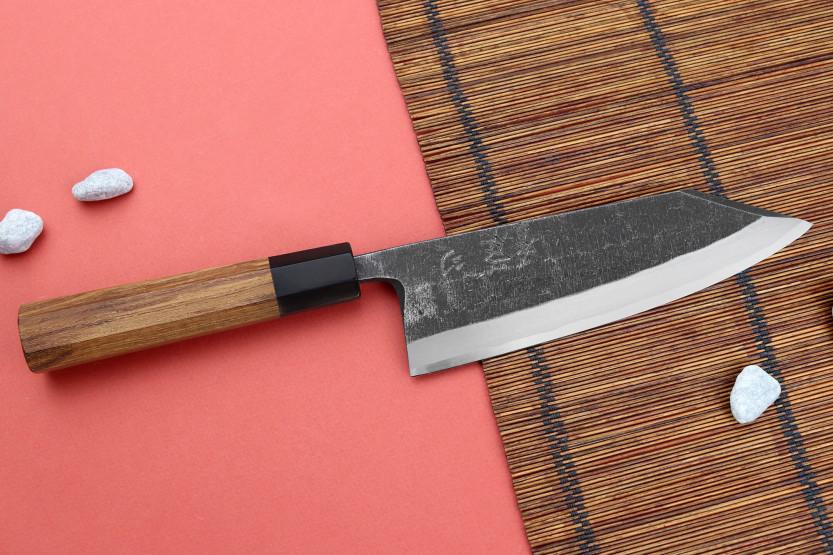
This deba kiritsuke knife features a blade designed using the Japanese San Mai technique, which means "three layers". This process consists of inserting a hard steel core into the heart of a softer, folded-over steel layer. This structure ensures an optimum balance between hardness and flexibility, while effectively protecting the blade's core.
The core of the blade is made of Japanese Aogami #2 steel, also known as Blue Paper Steel 2, a high-quality alloy from the renowned steelmaker Hitachi. Thanks to its high carbon content of around 1.2%, this steel gives the blade a high degree of hardness, reaching 62HRC on the Rockwell scale. This guarantees excellent edge retention and a precise, long-lasting cut!
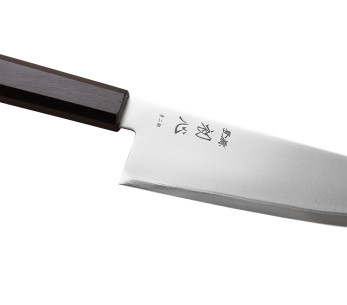
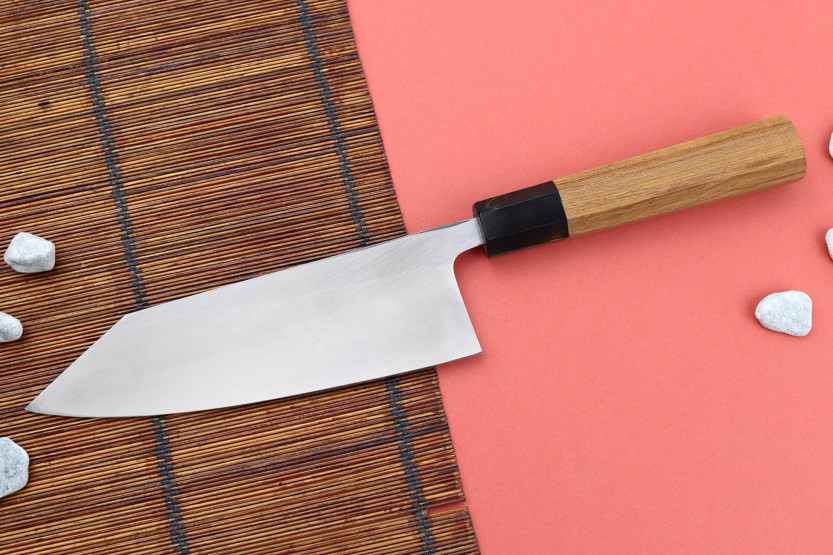
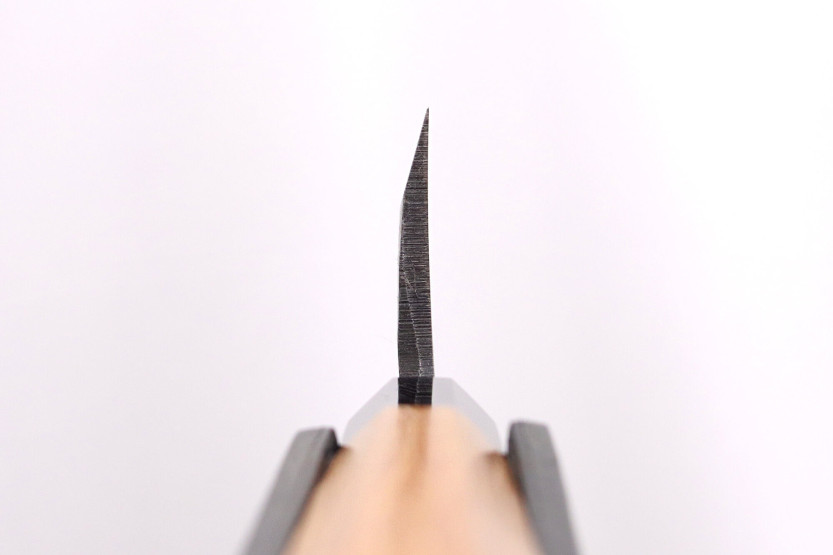
To preserve its sharpness, we recommend the use of suitable sharpening stones. This Japanese knife features the asymmetrical edge characteristic of deba knives, with a one-sided cutting edge specially designed for right-handed use. This configuration enables clean, precise cuts to be made in a single movement.
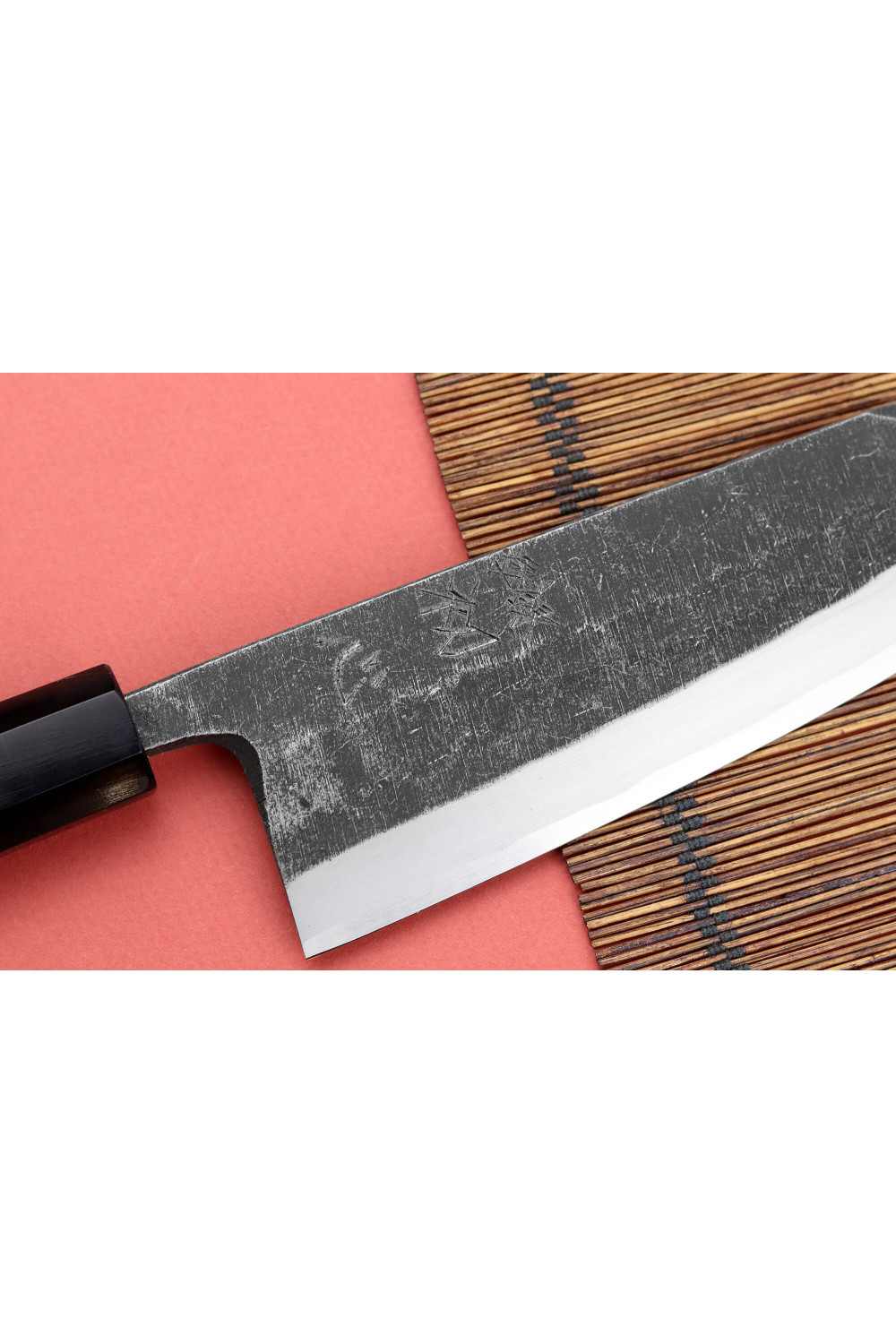
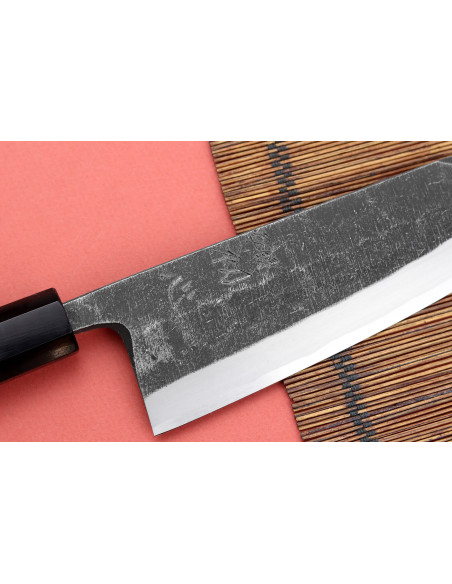
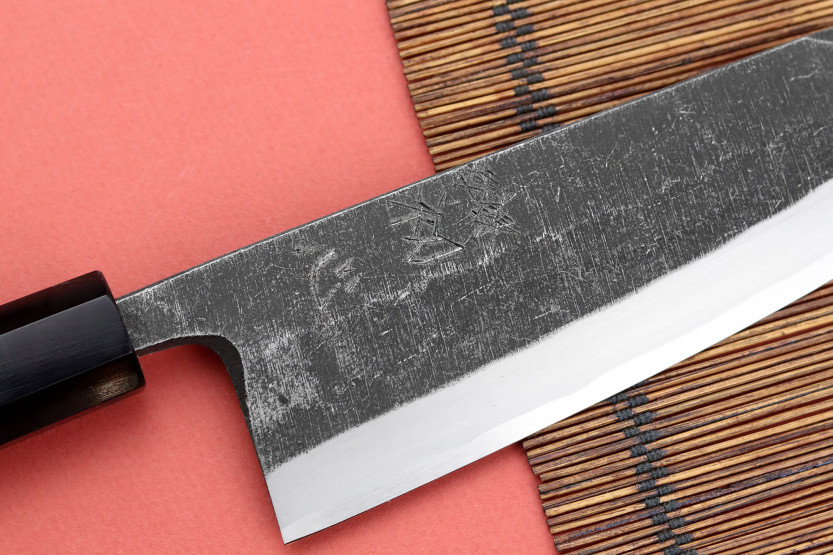
Thanks to the San Maï structure, a softer outer layer of steel reinforces the blade, minimizing the risk of breakage, while maintaining its effectiveness. The superimposition of steels on the cutting edge can be admired, forming a subtle wave with unique patterns.
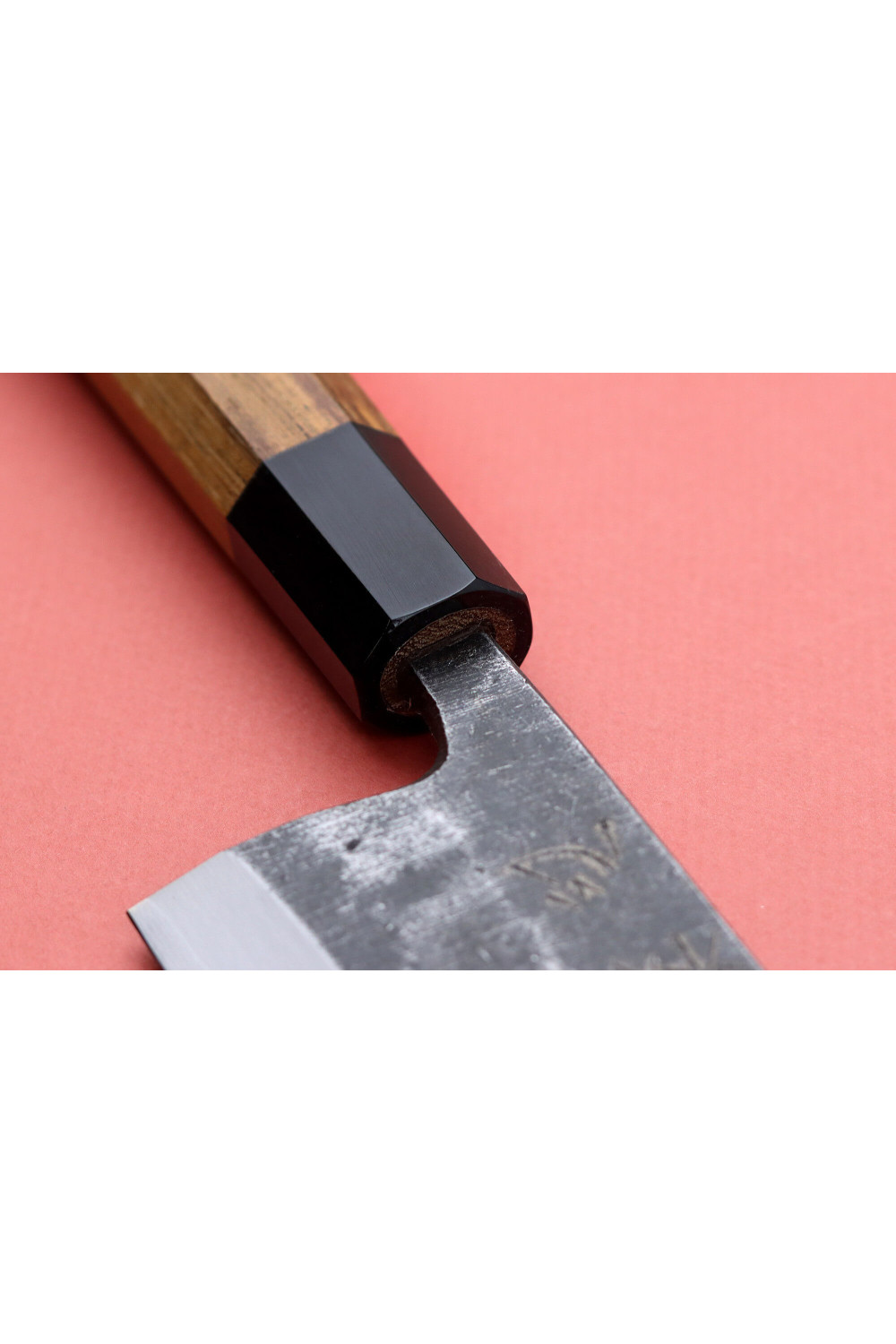
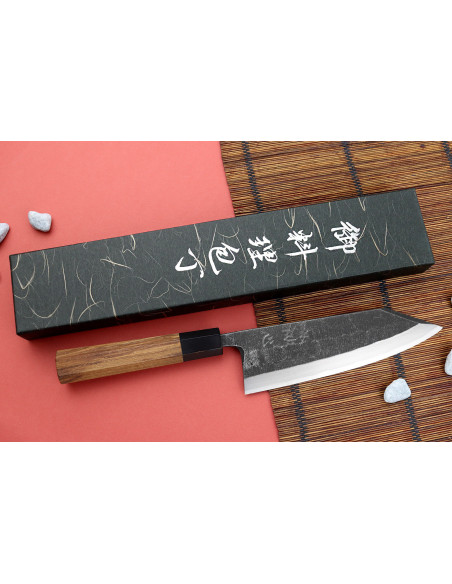
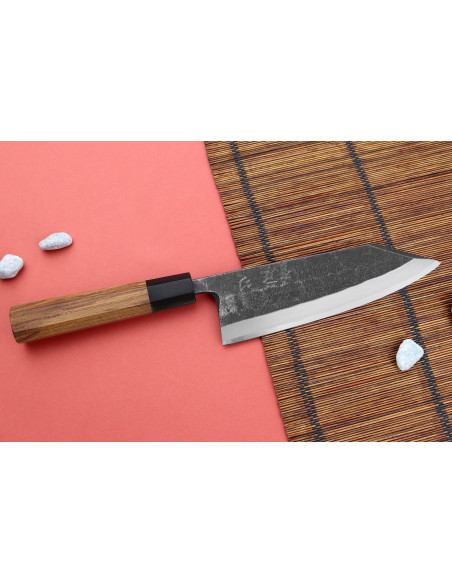
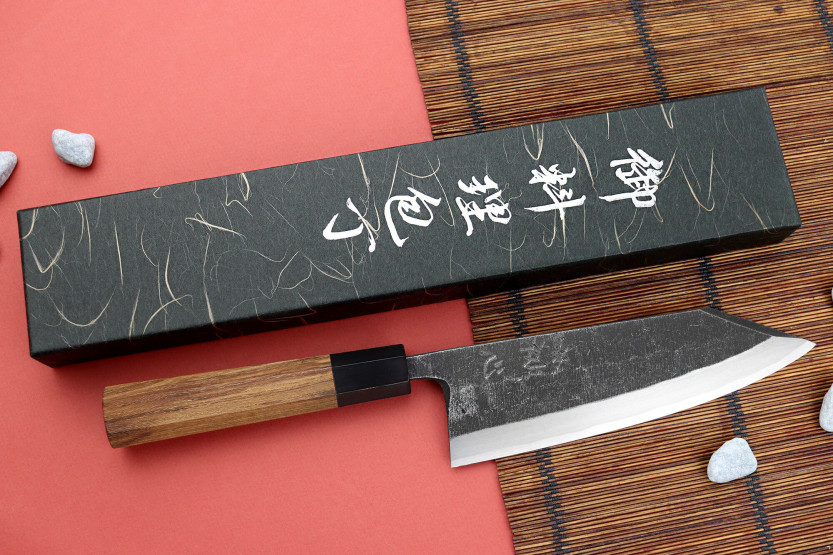
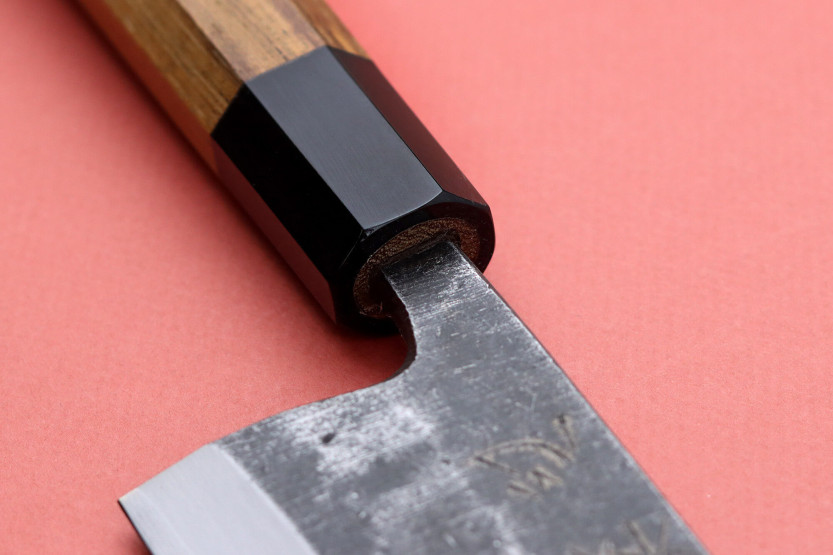
Last but not least, the blade has a rough, unpolished finish, giving it a dark, authentic look. Highly appreciated by Japanese chefs for its traditional style, this handcrafted Japanese knife is also adorned with hand-engraved kanji, adding a touch of authenticity.
The resistant teak handle of your deba knife
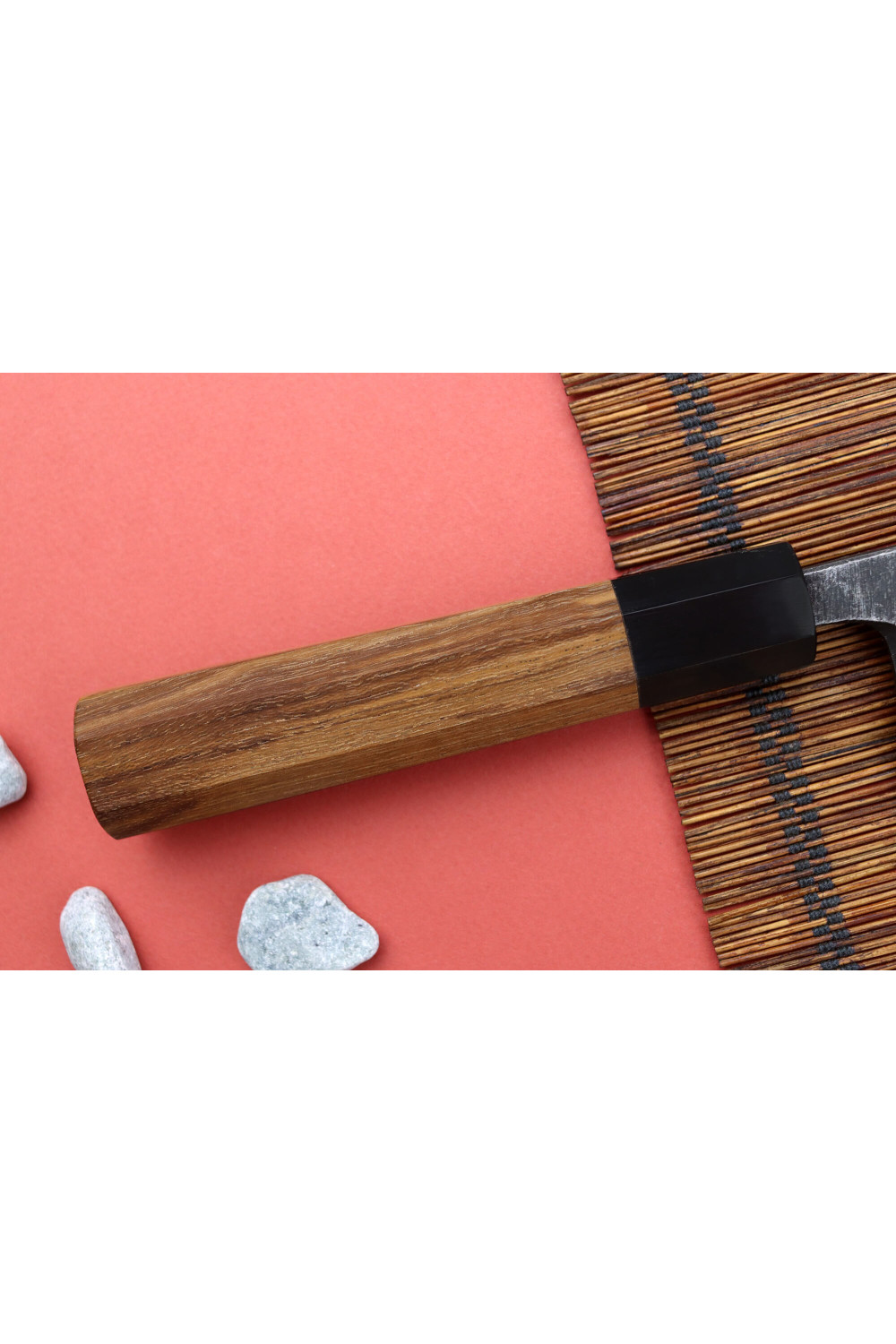
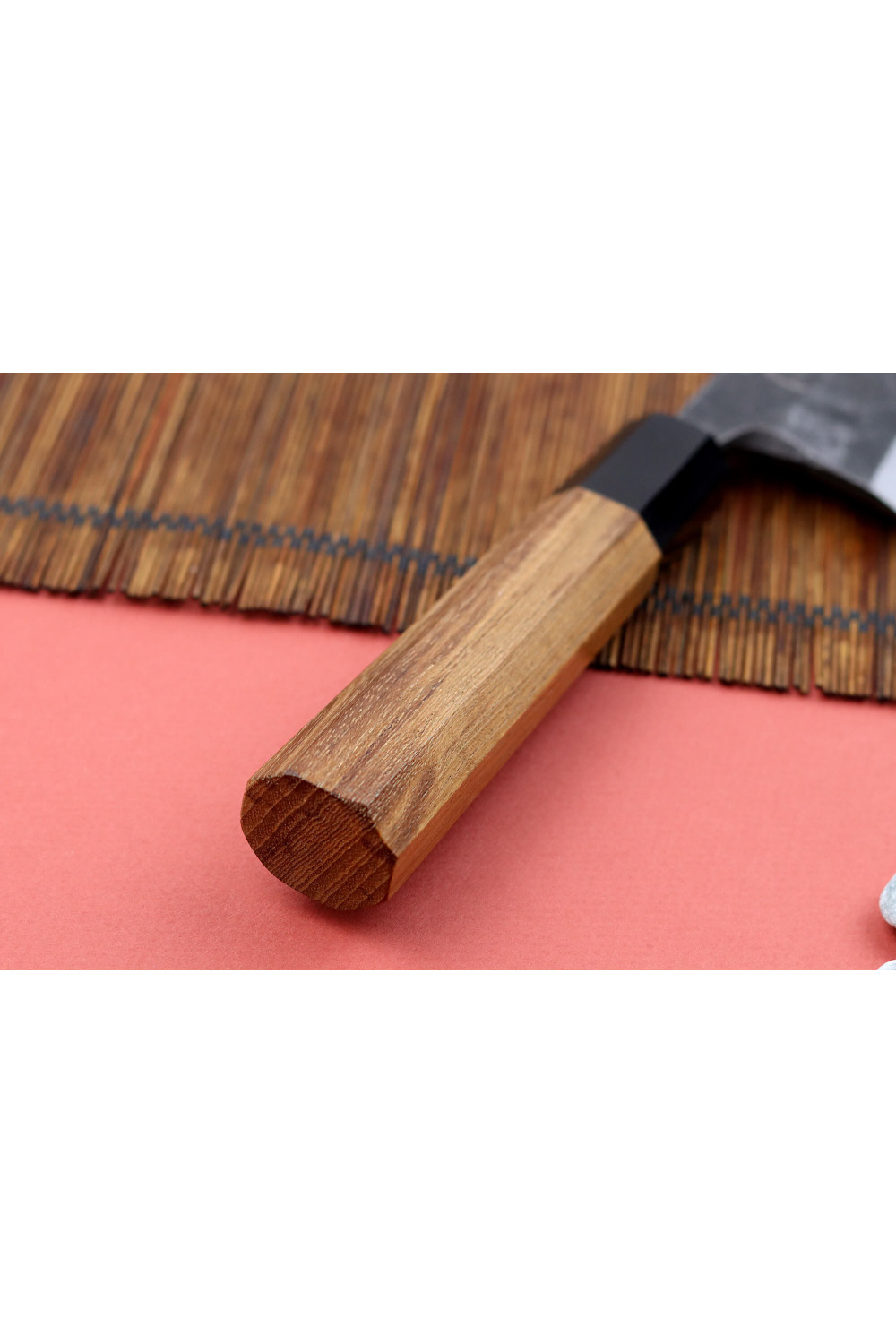
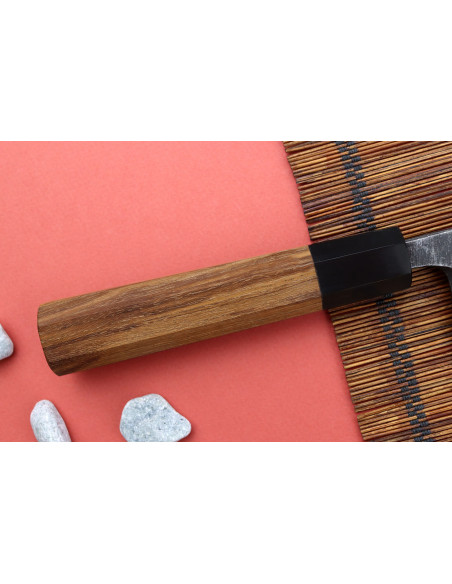
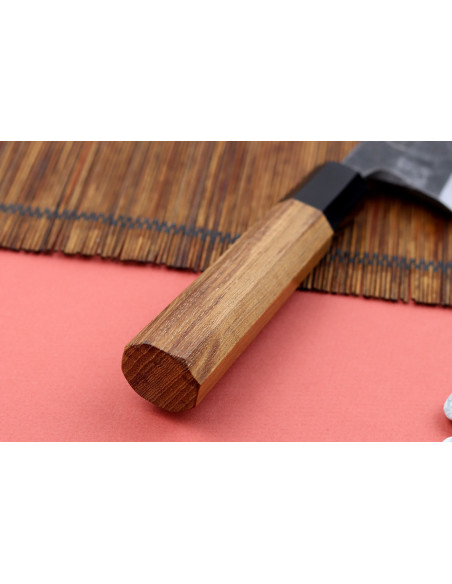
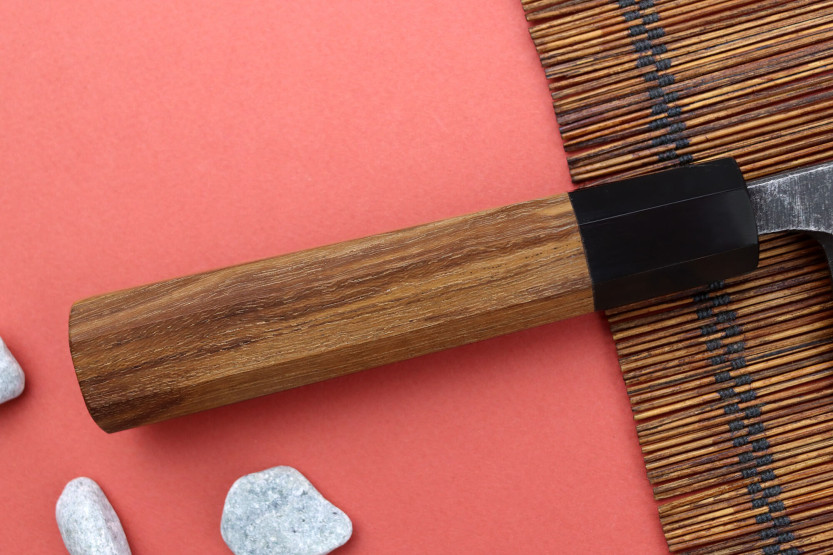
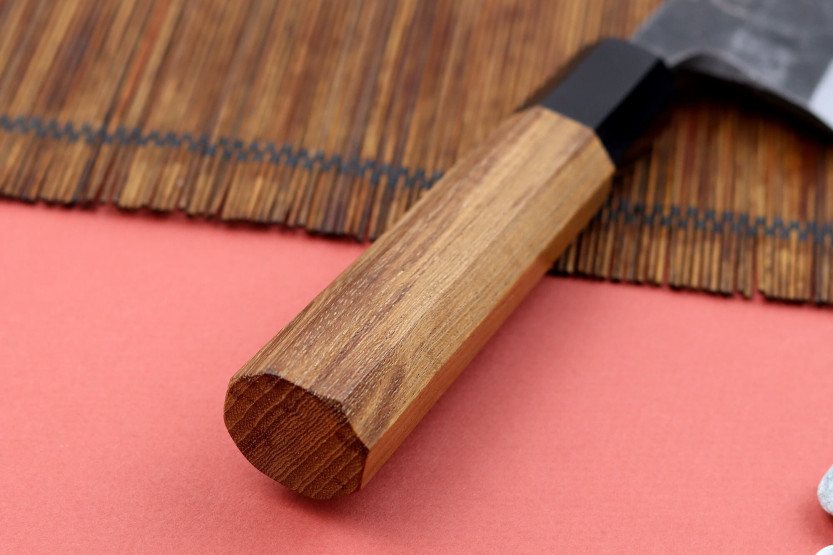
The handle of this Japanese kitchen knife is made from teak wood, an exotic and durable species that is naturally resistant to humidity and temperature variations. Its unique grain gives each Hatsukokoro knife an authentic character, combining elegance and strength.
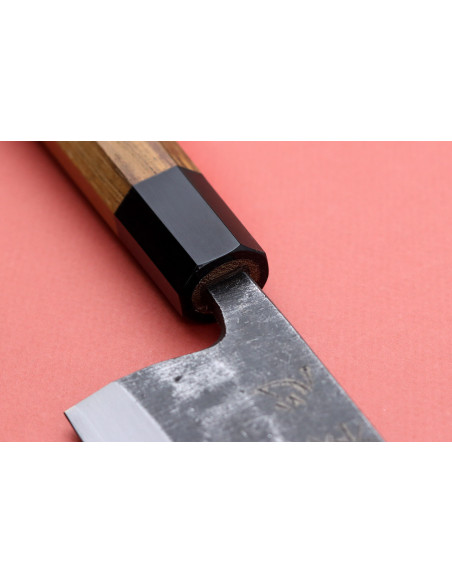
To complete the handle, a black buffalo horn bolster is added. This natural material offers unique variations on each piece!
Thanks to its octagonal shape, this ergonomic handle adapts comfortably to all hands, offering a stable and pleasant grip, even during prolonged use in the kitchen!
To ensure optimum watertightness, wood putty is applied to the junction between blade and handle. This prevents the ingress of water or food particles.
Caring for a handcrafted carbon knife
To best care for your deba knife, wash it only by hand with a soft sponge and a non-aggressive detergent. Take care not to get the handle wet, and dry your Japanese kitchen knife immediately with a clean cloth before storing it in a dry place. The dishwasher is out of the question, as is leaving it to soak in water.
Over time, the blade may develop a natural patina due to exposure to food acids and moisture. This normal carbon reaction in no way affects the performance and durability of your handcrafted knife!
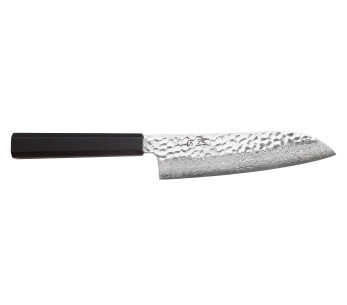
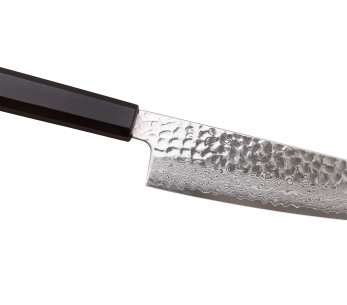
Discover Damascus knives on Knifeleader.eu!




 By buying this product you can collect up to