Masakage Kiri Japanese knives are completely handcrafted by blacksmith Yoshimi Kato san.
The latter works at the Takefu Knife Village, which brings together many blacksmiths who have retained traditional manufacturing methods. Gathered together in one place, they can share their know-how, and it's a coveted spot for apprentice blacksmiths, who can be looked after by a master who will teach them all the steps involved in making knives!
Yoshimi Kato has been a pupil of several famous blacksmiths, including Hiroshi Kato San, who is highly respected in Japan (and is also his father-in-law). The latter is one of Japan's greatest master blacksmiths. He has been creating knives almost every day for almost 50 years, which shows the level of expertise he has achieved (he is now retired and teaches his art to young blacksmiths). He is also one of the founding members of the Takefu Cutlery Village.
Yoshimi has taken over his workshop and continues to create his master's knives, while having launched his own knife lines. Yoshimi Kato San began his apprenticeship in 2013, and is a very talented blacksmith who learns very quickly. He ensures the continuity of Hiroshi Kato San's work, while bringing innovative ideas that all cooks will appreciate!
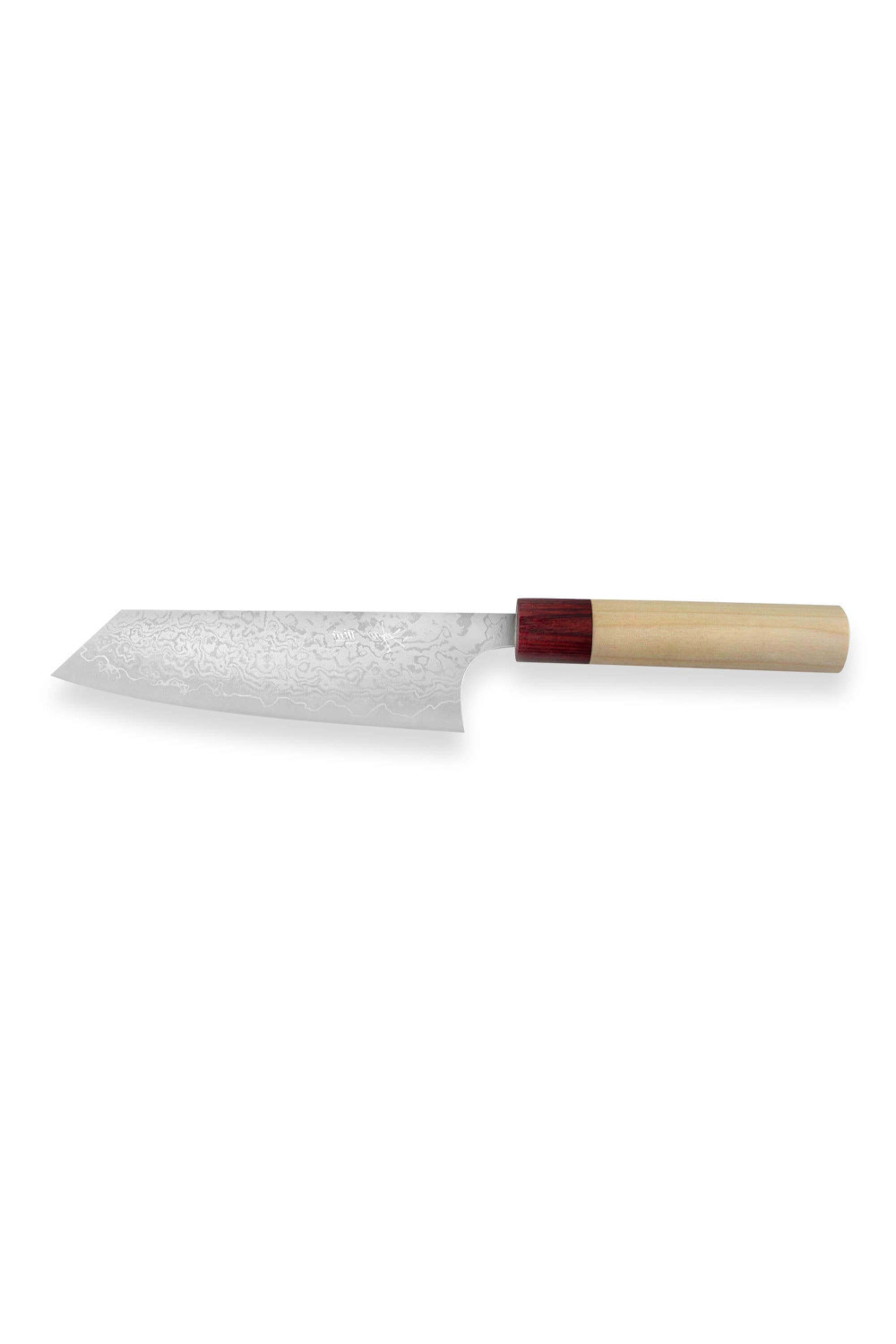
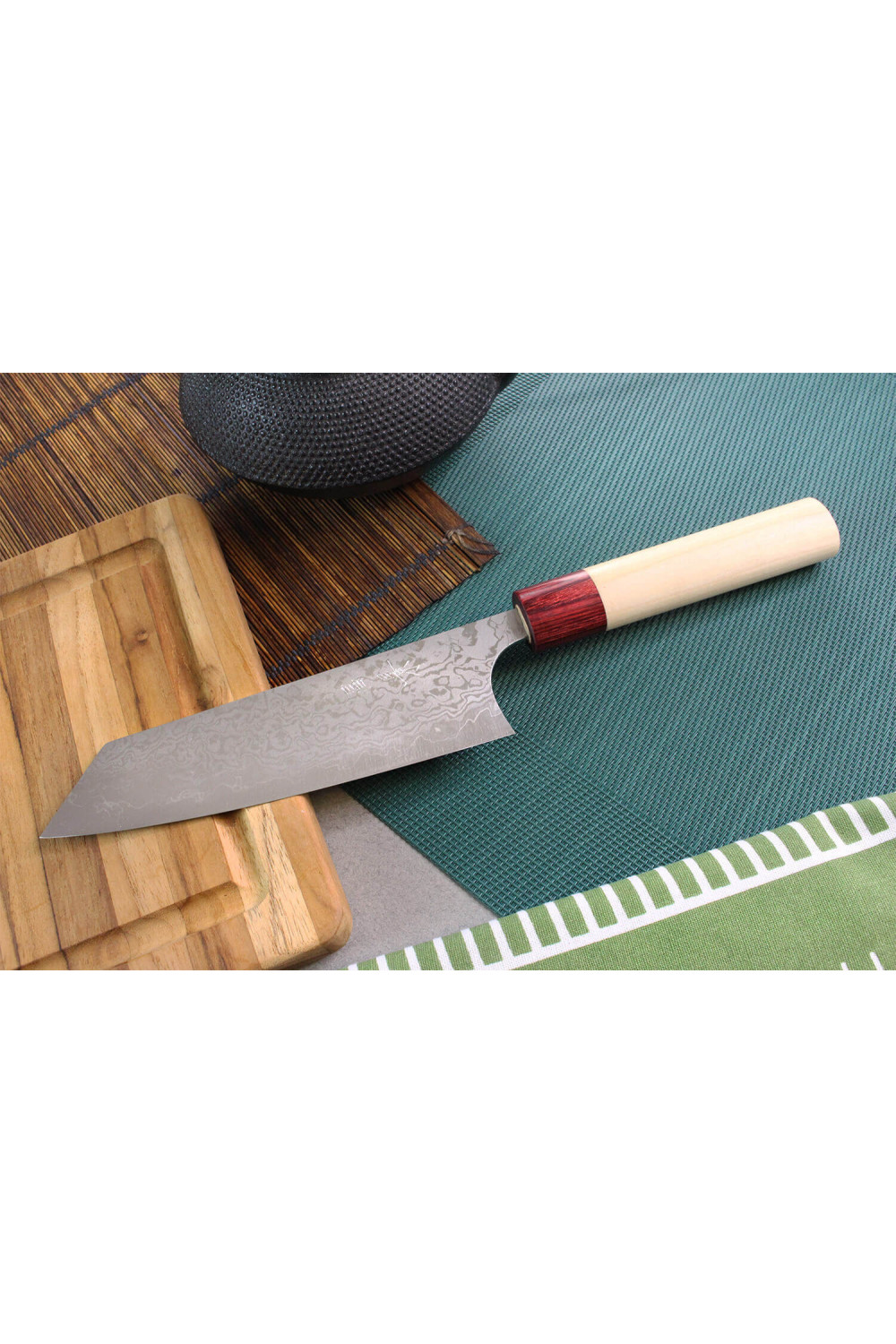
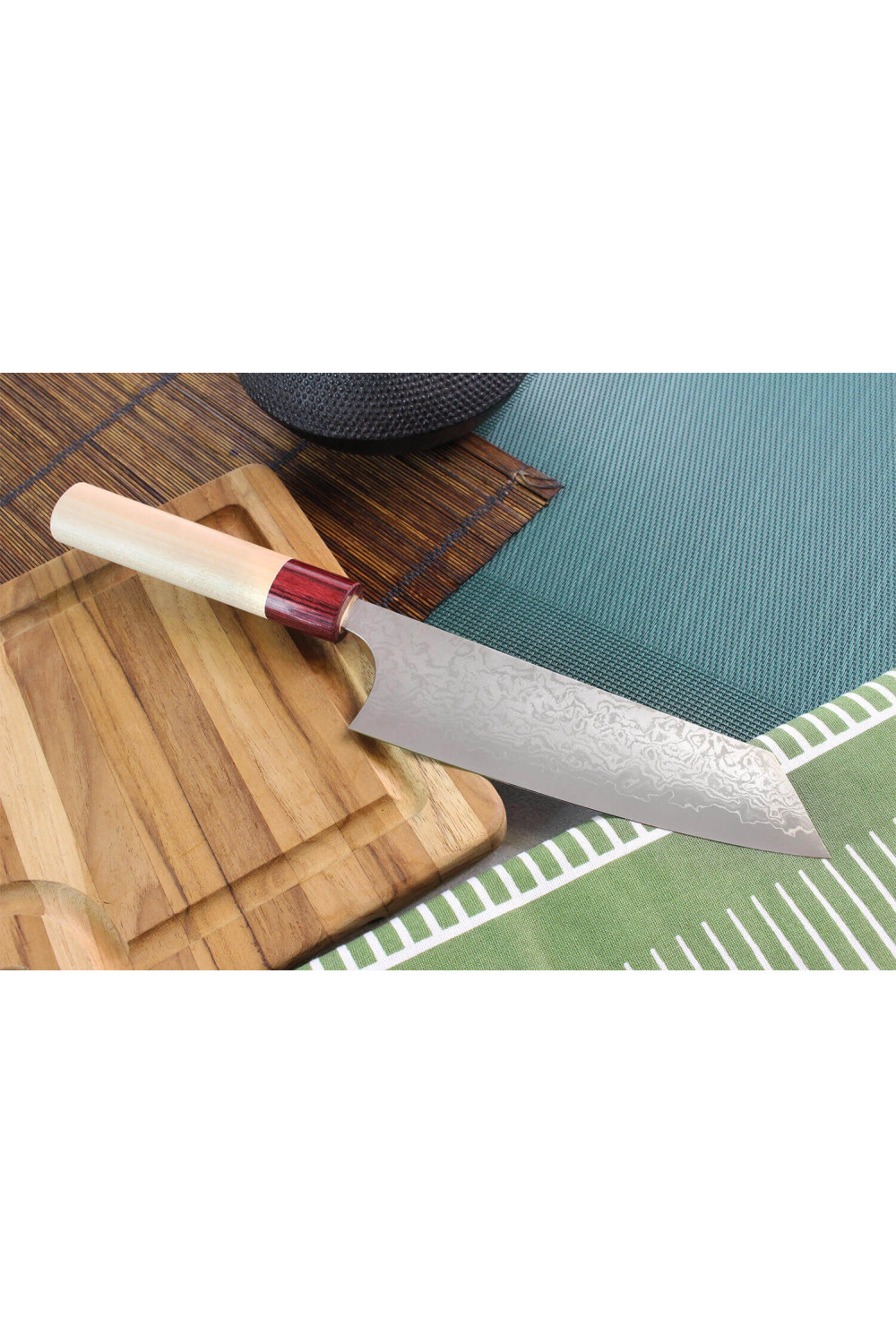
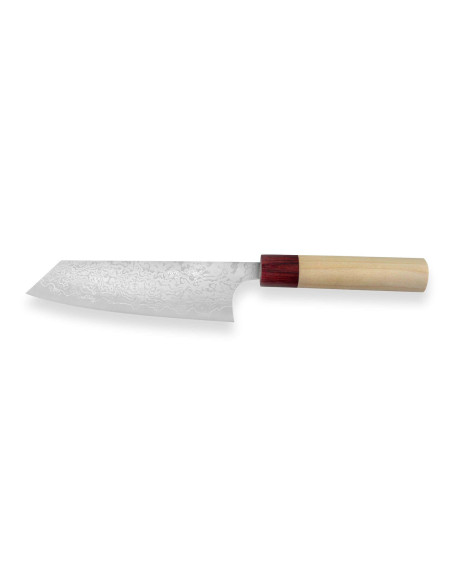
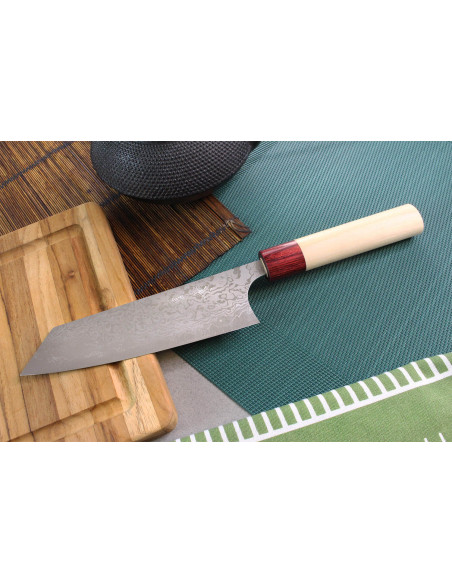
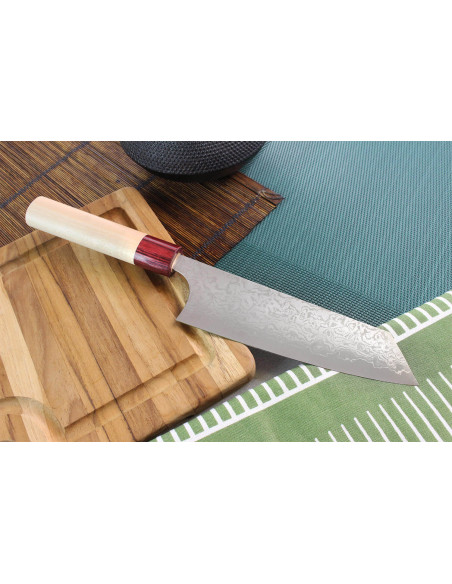
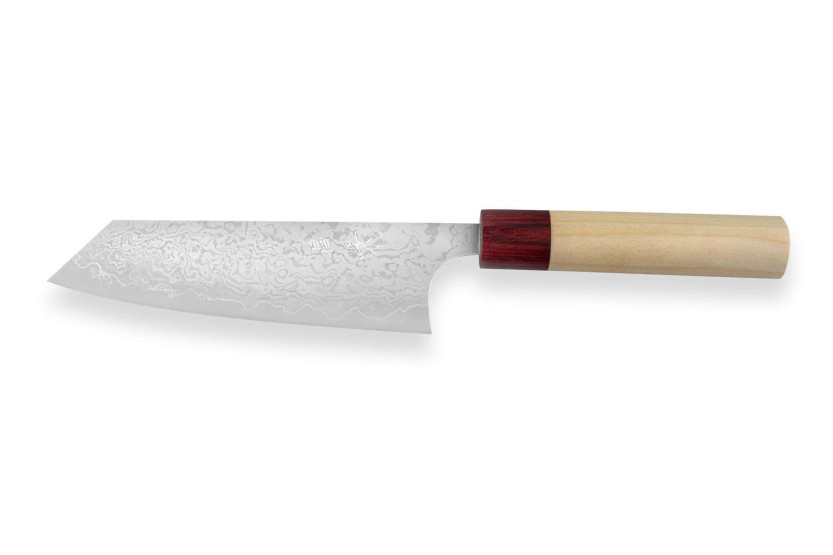
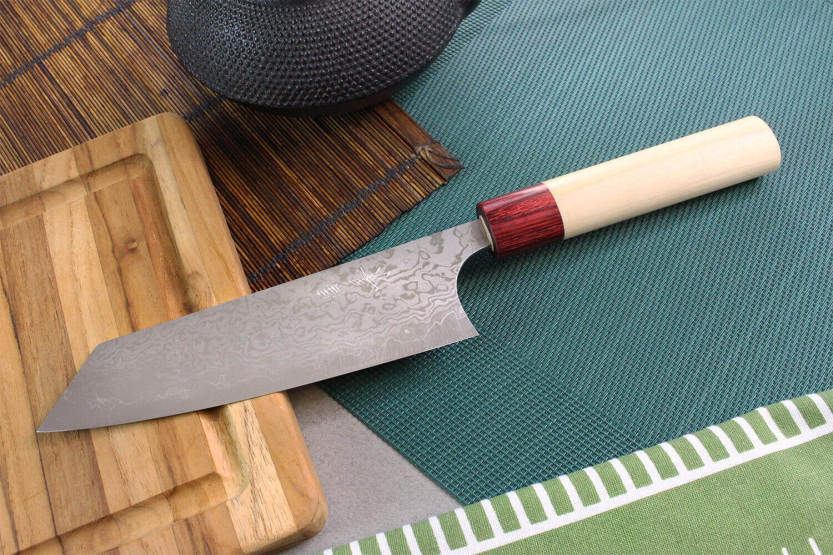
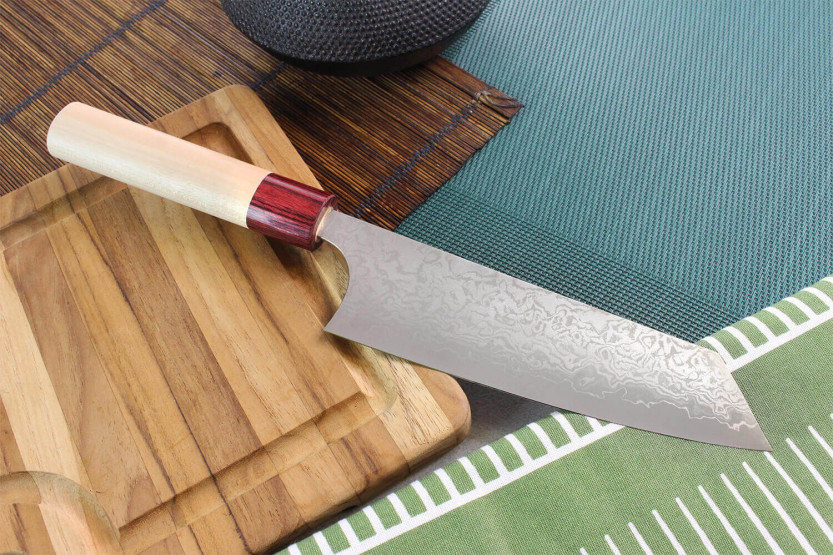
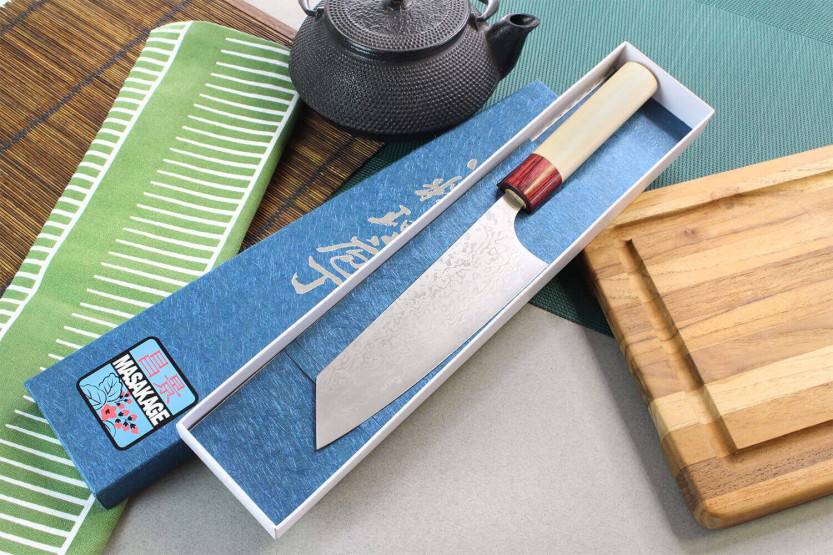
The Masakage Kiri 17cm bunka knife enables you to cut a wide range of foods. The knife is typically Japanese in shape, resembling a sword thanks to its sharp point. It is used in the same way as a santoku.
Blade :
Its forged blade features a core of VG10 Japanese steel, an alloy much appreciated by blacksmiths for its many advantages. VG10 contains 1% carbon, for example, enabling it to achieve a Rockwell hardness of around 60/61 HRC. The result is a rigid wire that can withstand further sharpening, for a razor-sharp edge. VG10 also has the ability to hold its edge longer, so you space out sharpening sessions. Finally, thanks to its high chromium content, it is also more resistant to corrosion than other carbon steels.
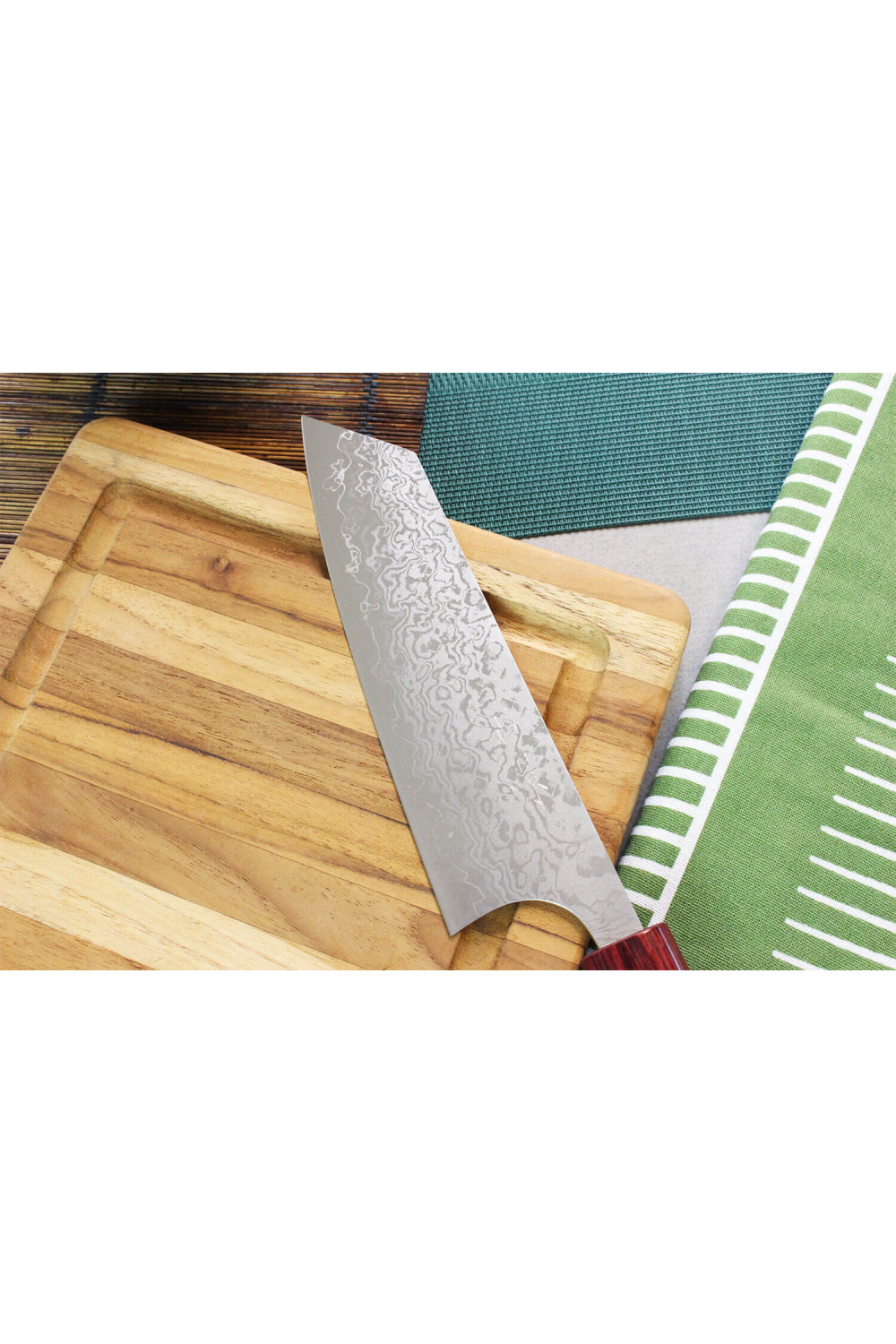
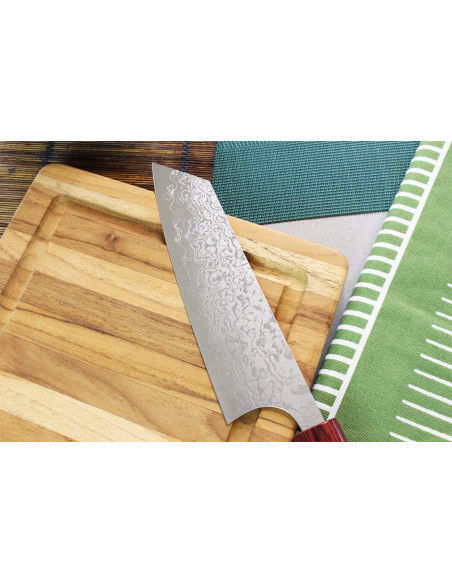
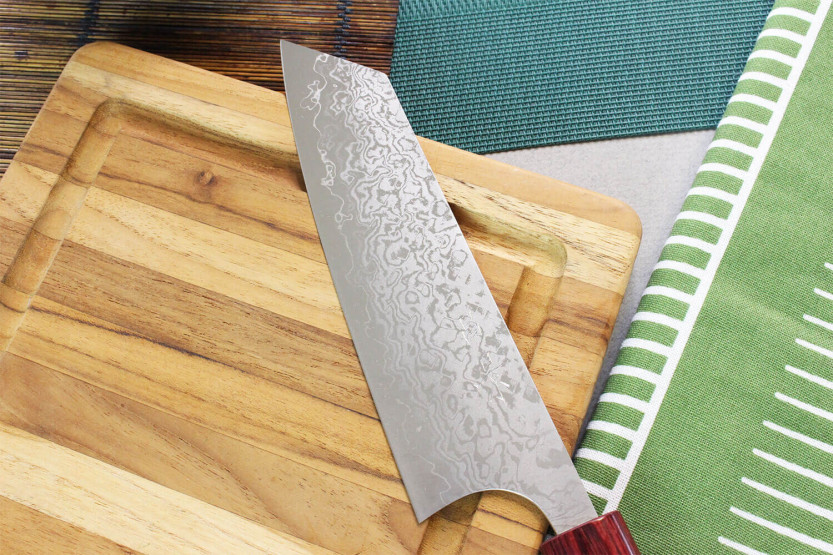
The VG10 core is then surrounded by several superimposed layers of softer steels: this is called damascus. The Masakage Kiri knife has a 49-layer damascus (24 layers folded in 2 on the core + the core, which is counted in the calculation).
In addition to adding character to the knife, damascus makes the blade more "flexible", in the sense that it will be less brittle in use (but not flexible either).
Finish:
Kiri means "fog" in Japanese. It's easy to see why the range is called Kiri, with the damascus creating a sort of scroll-like pattern on the cutting surface, like a light moving fog revealing details of the landscape it hides from time to time.
For added authenticity, the cutting surface is engraved with kanji. They blend in well with the various damask colors and remain discreet.
Handle:
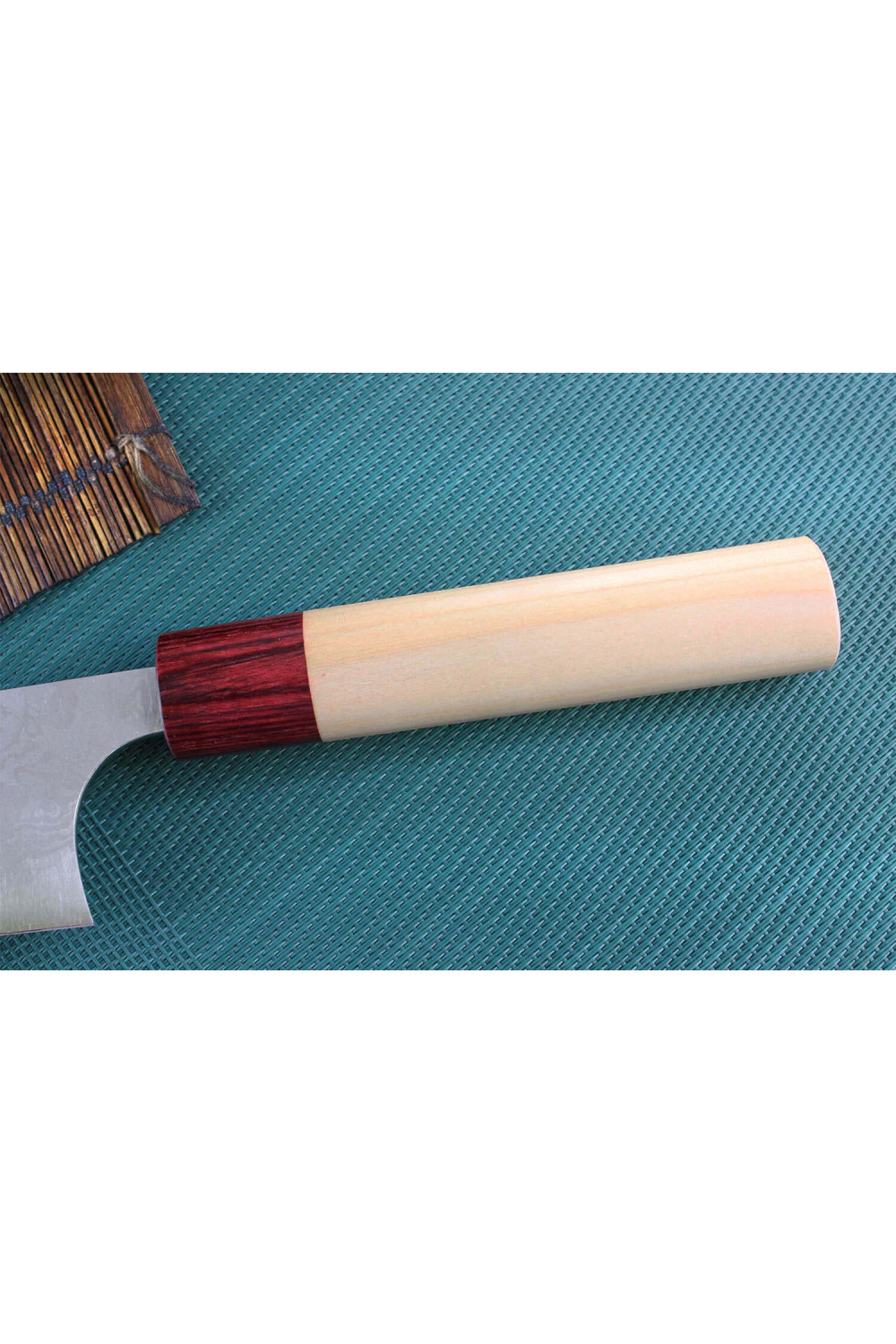
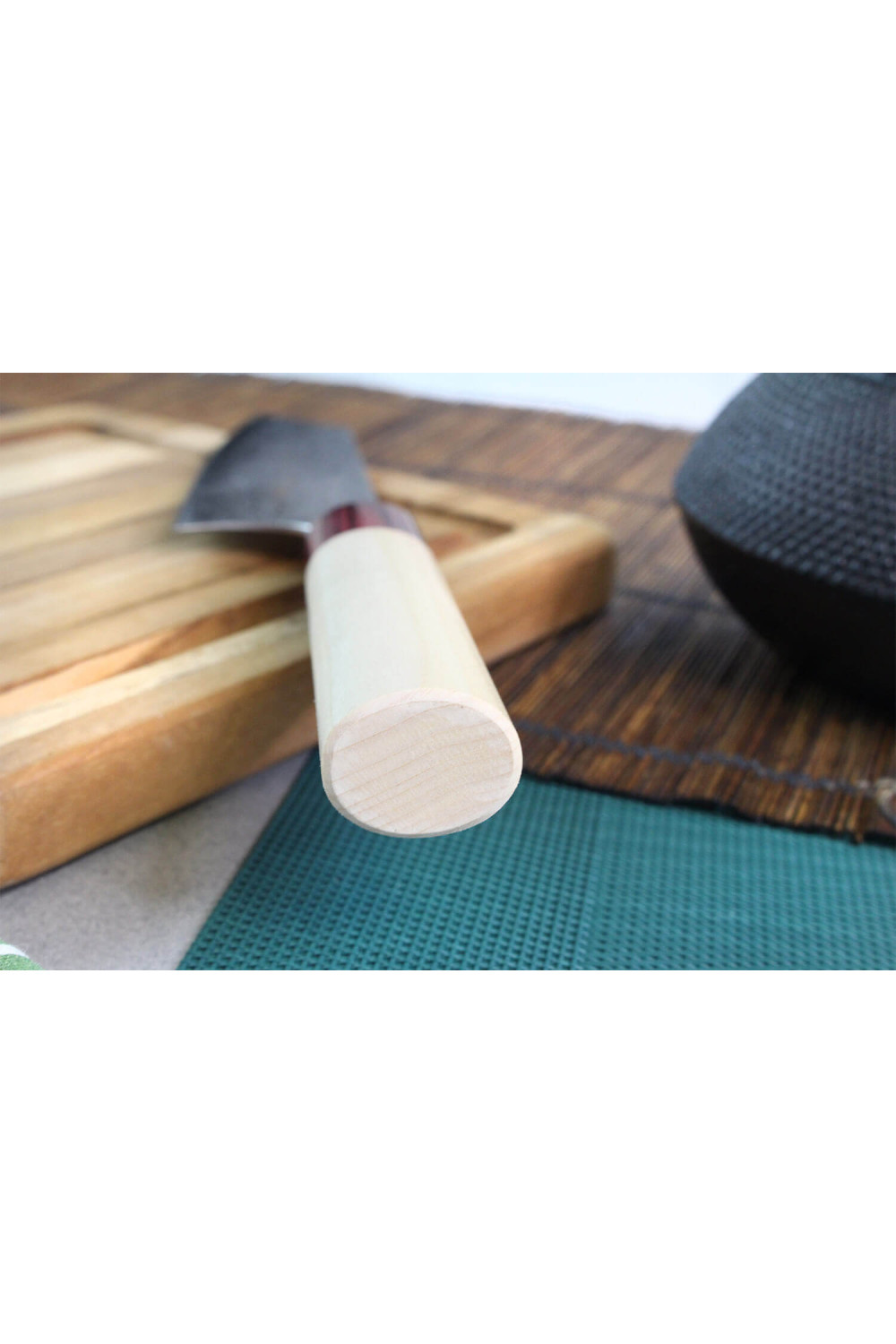
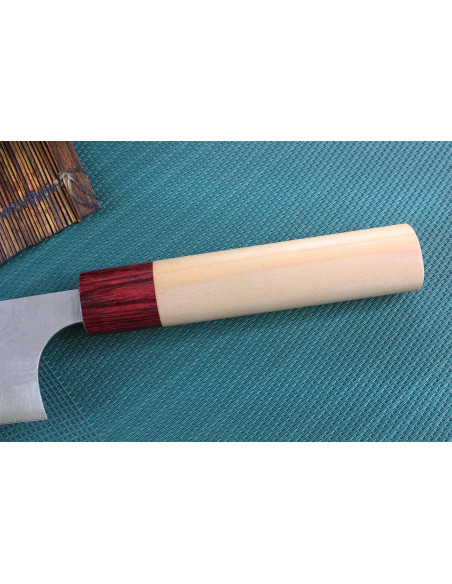
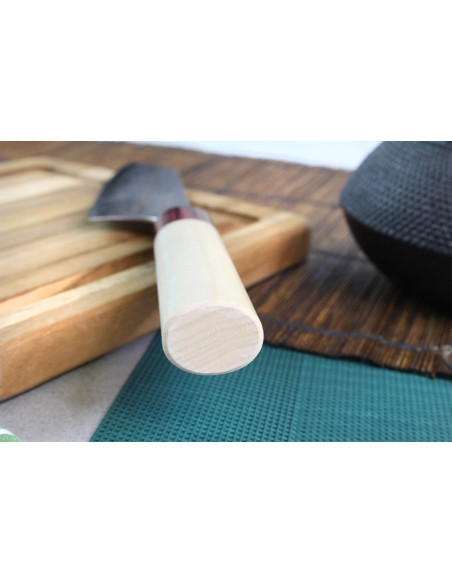
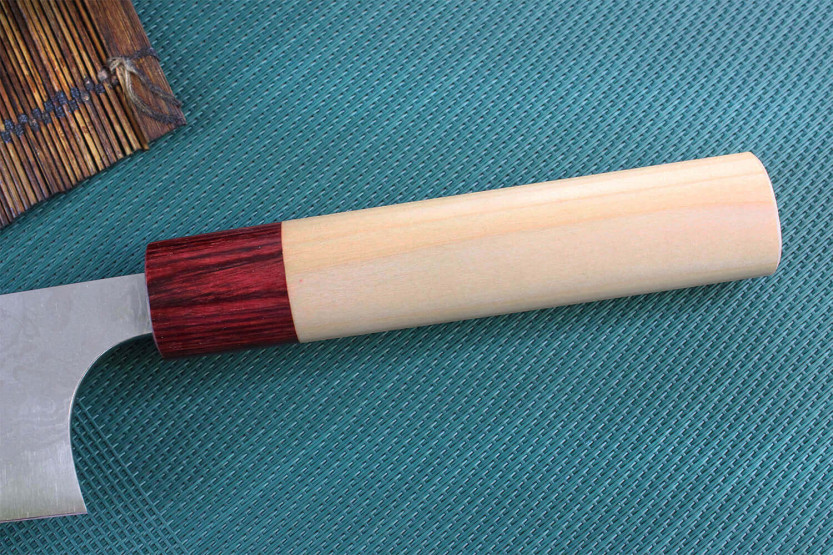
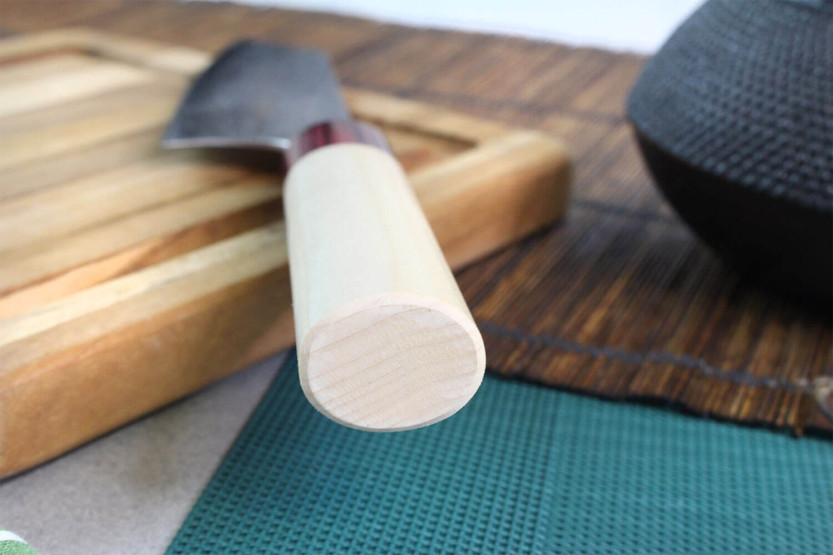
The handle is made of magnolia, a grit wood that's pleasant to the touch and lightweight. Its oval shape is suitable for all cooks. A bolster in red Pakkawood (an antibacterial composite material resistant to humidity and temperature variations) links the blade to the handle, while providing a nice contrast in color.
The junction between the blade and the bolster is filled with a wood paste that seals the whole, preventing small scraps and cleaning water from penetrating the inside of the handle.
Care and maintenance :
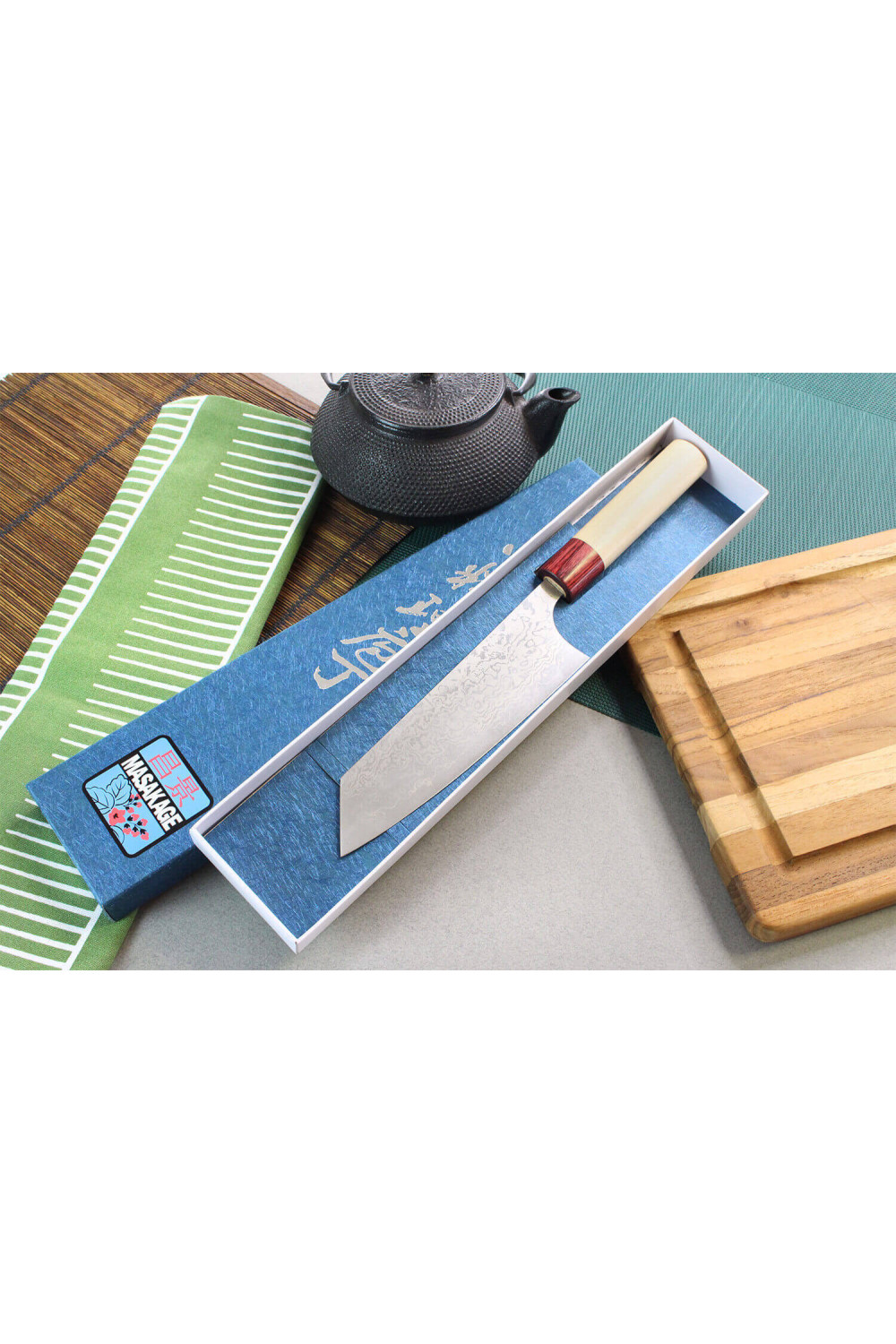
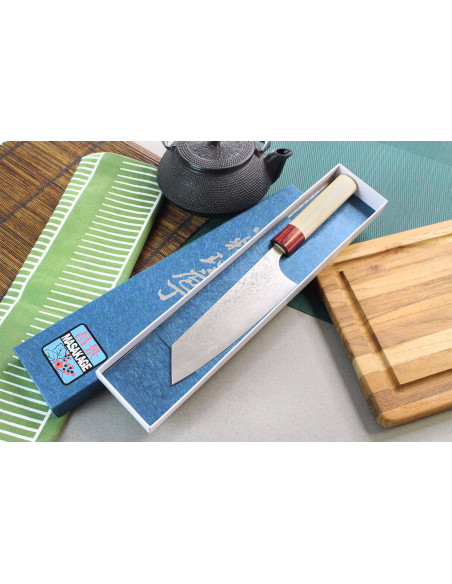
The knife can be maintained by hand. You can use a mild soap and run it under lukewarm water, without using an abrasive sponge. Then wipe with a soft cloth to remove all traces of moisture from the blade and wooden handle. It comes in a sober, traditional blue box.
The rest of the knives in the range are waiting for you here!


 By buying this product you can collect up to