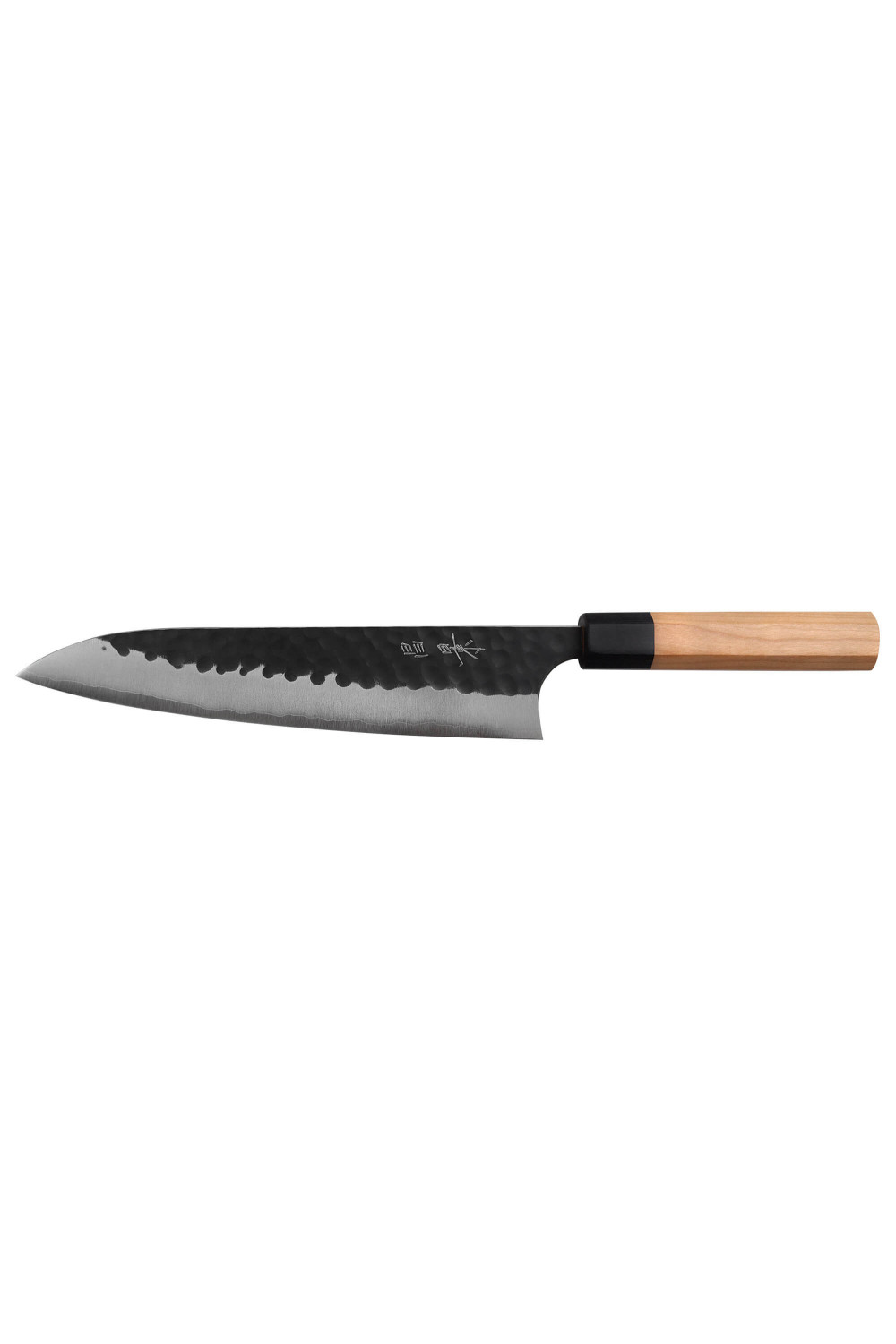
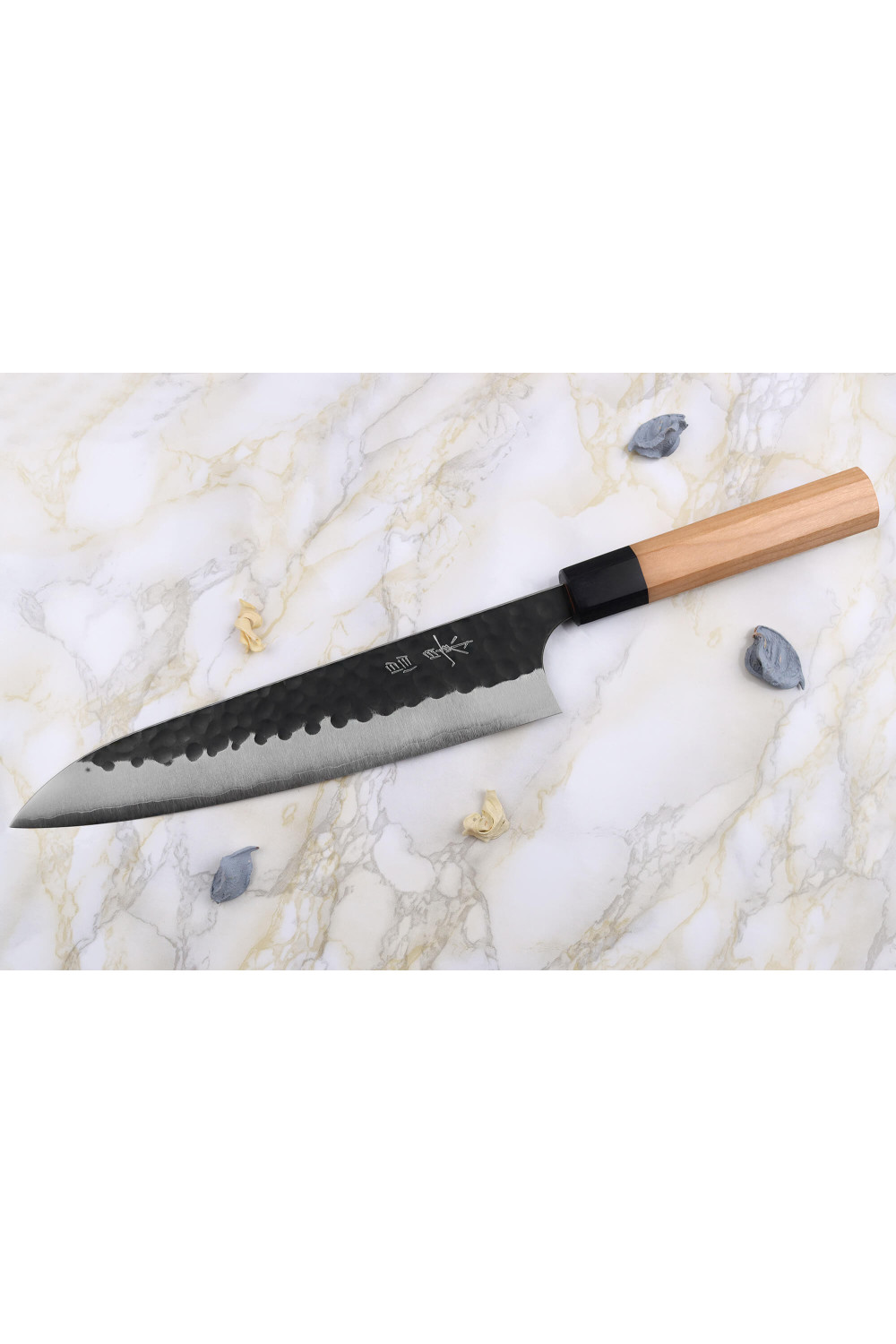
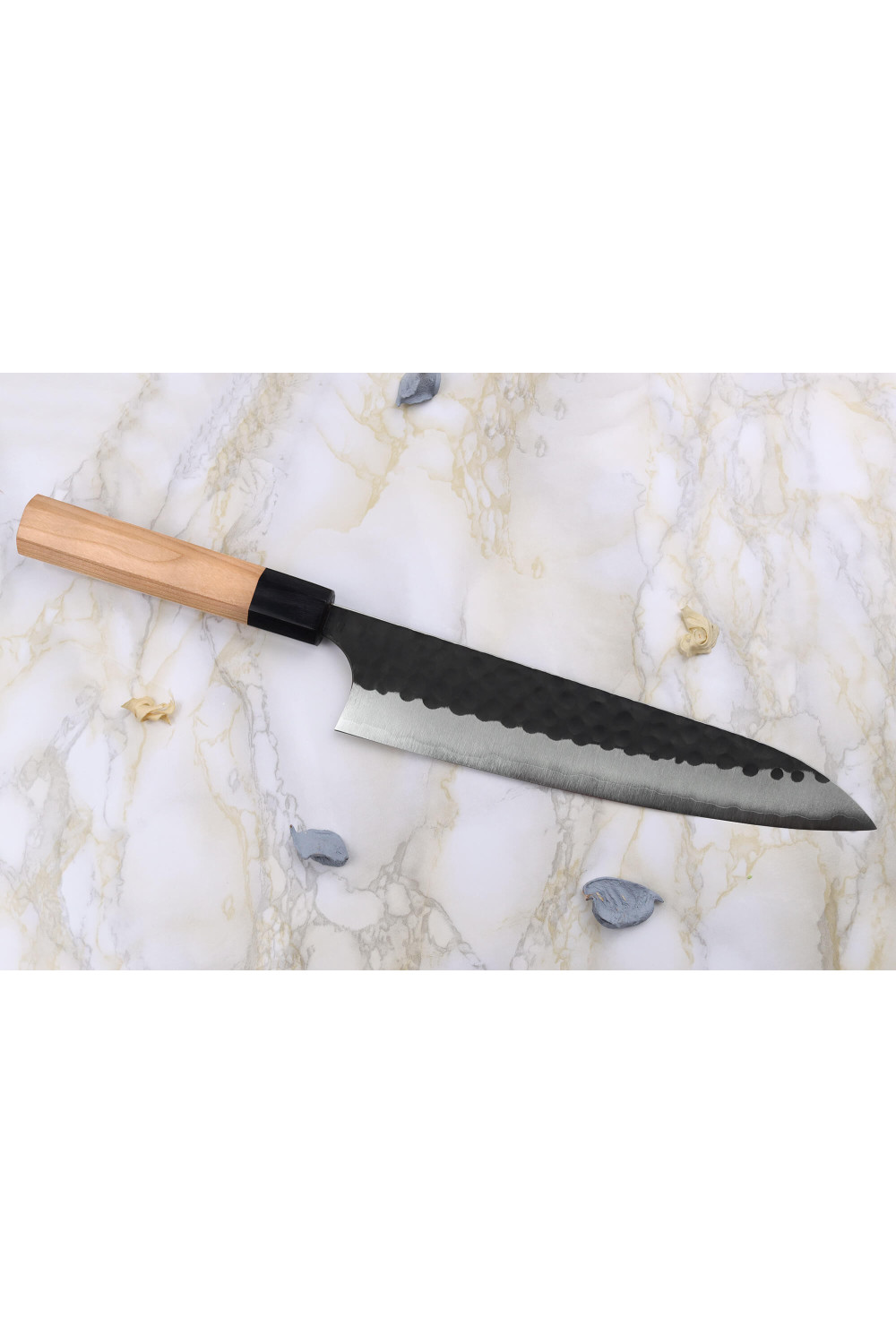
Masakage Koishi knives are handcrafted by the renowned Japanese blacksmith Yoshimi Kato. This renowned craftsman is renowned for his top-quality Japanese kitchen knives with unique designs.
Yoshimi Kato had the opportunity to learn from great masters such as his father-in-law Hiroshi Kato, an internationally respected cutler. Hiroshi Kato is one of the founding members of the renowned Takefu Cutlery Village, a place where blacksmiths share their experience, skills and tools. After his master's retirement, Yoshimi san took over his workshop to continue making his mentor's knives, while developing his own designs.
(Hiroshi san on the left and Yoshimi san on the right)
A high-performance blade for this rough-hewn knife
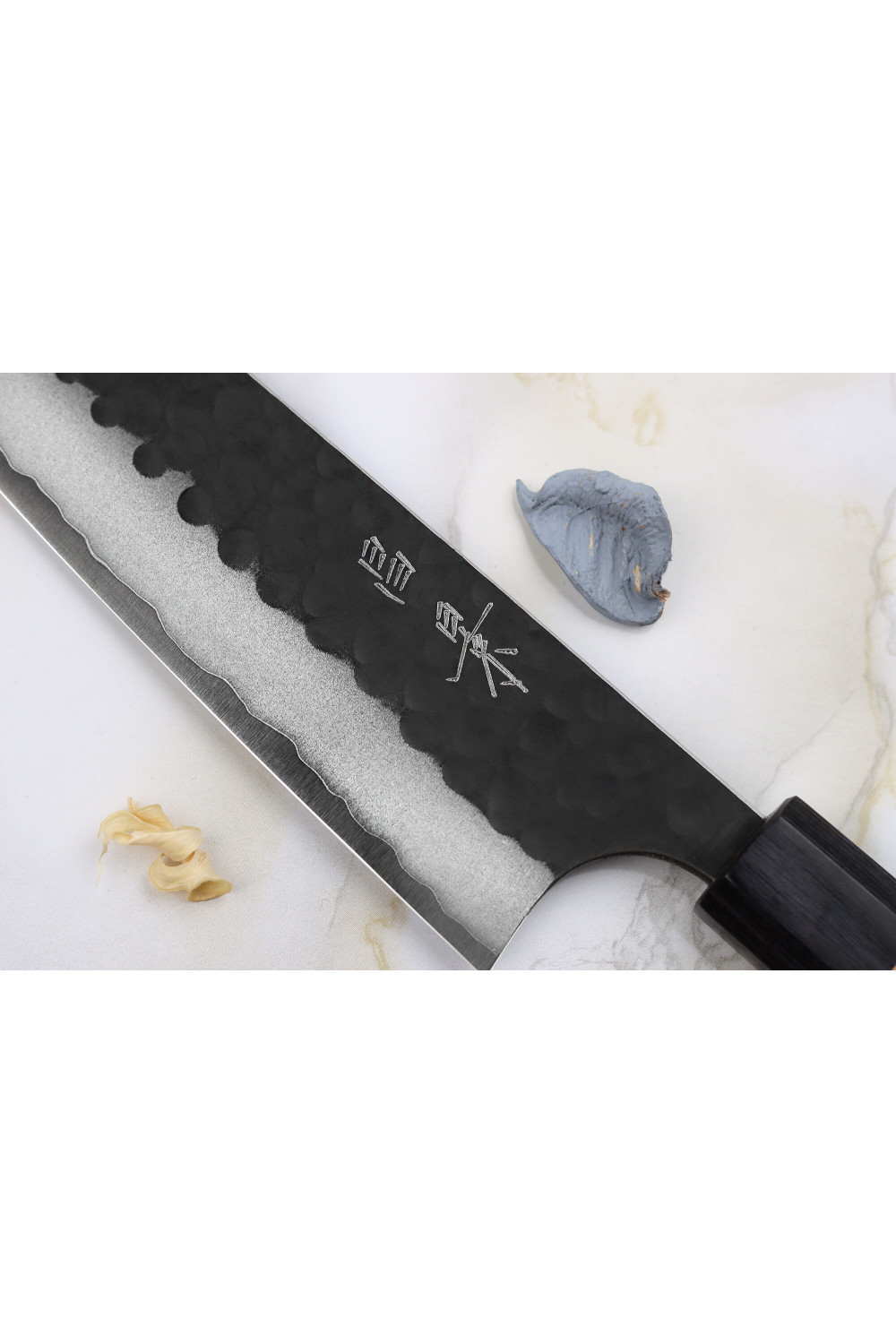
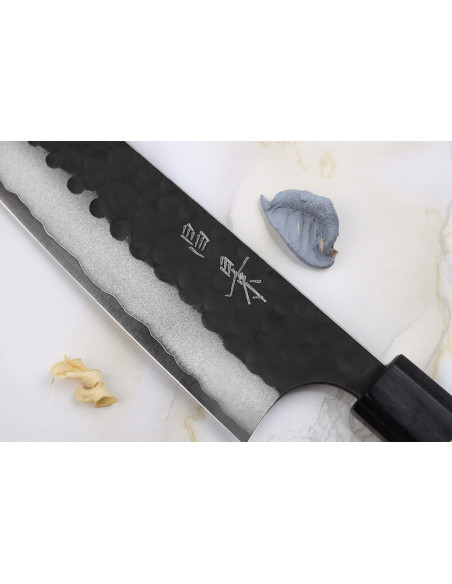
Yoshimi Kato forged this chef's knife using the traditional Japanese technique of the San Maï structure for the blade. This method consists of creating a rigid steel core enveloped by a layer of softer steel, which folds in on itself to cover the core.
The blade core is made fromJapanese Aogami Super steel (also known as Blue Super Steel), manufactured by the renowned steelmaker Hitachi, renowned for the quality of its alloys.
Then, a softer outer layer ofstainless steel covers the core, forming the three layers characteristic of San Mai. This construction offers optimum protection to the core of the blade, while ensuring ideal balance. As a result, the blade becomes softer (but not flexible) without compromising its strength.
Blue Super Steel alloy has a high carbon content of around 1.5%, well above the Western average of around 0.5%. This composition enhances the steel's hardness(65HRC Rockwell), ensuring long edge durability and enhanced performance. A carbon knife is particularly effective on fibrous foods.
Despite its rigidity, Aogami Super steel is easy to maintain with a Sharpening stone, making it a practical choice for cooks!
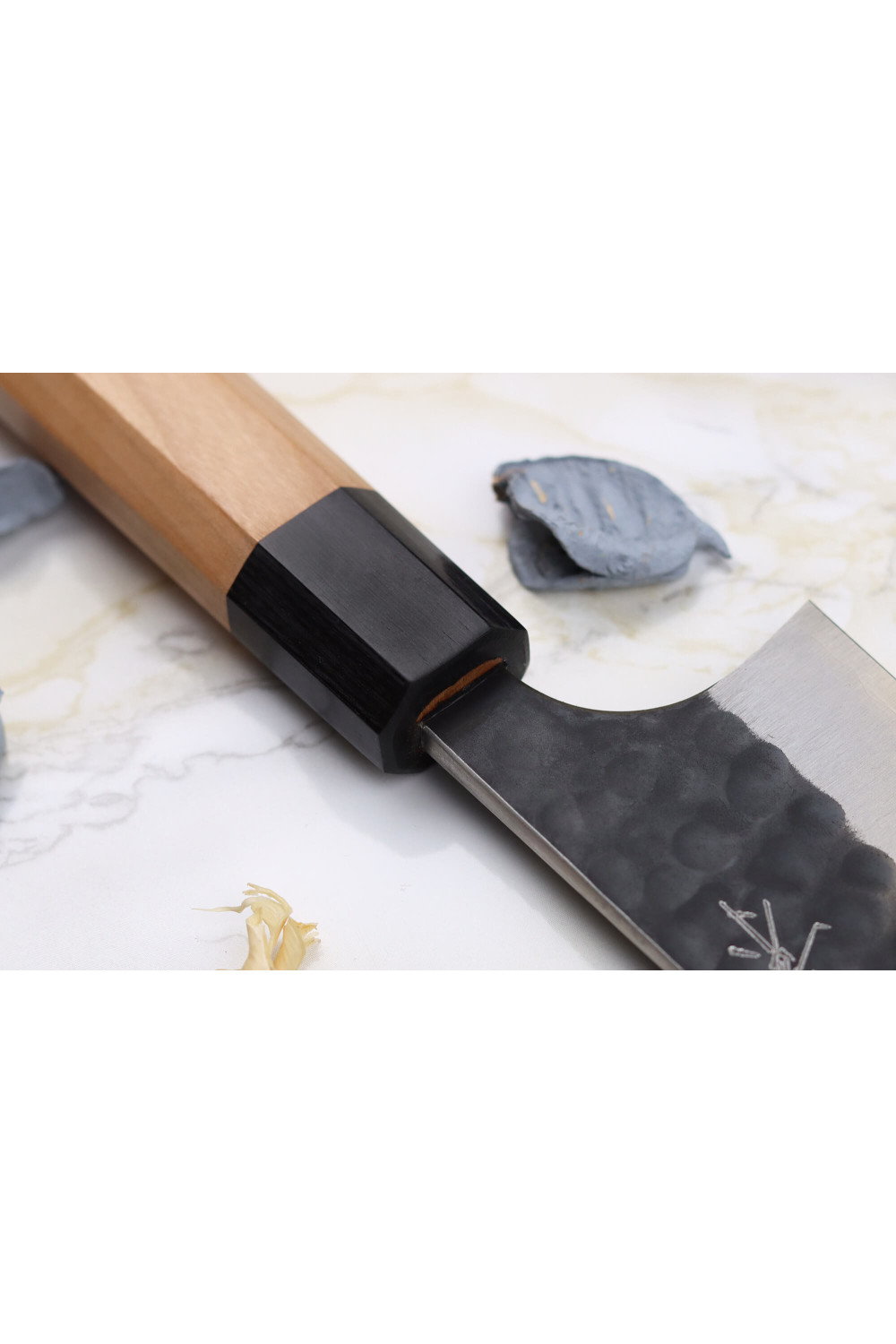
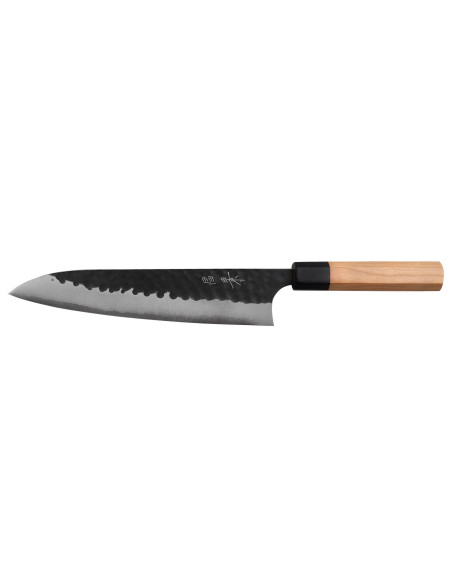
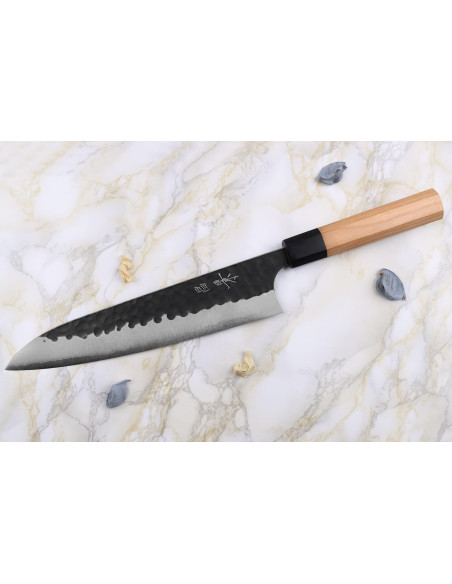
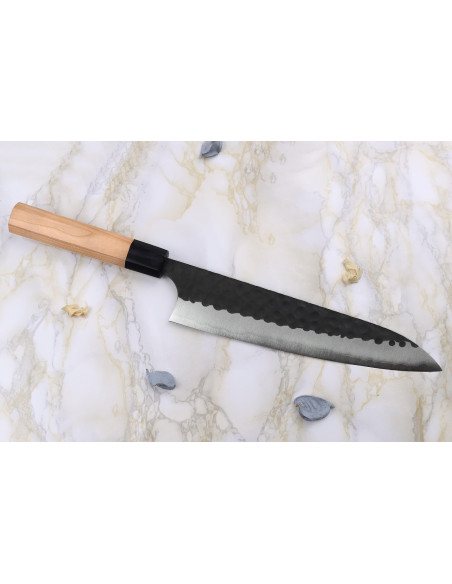
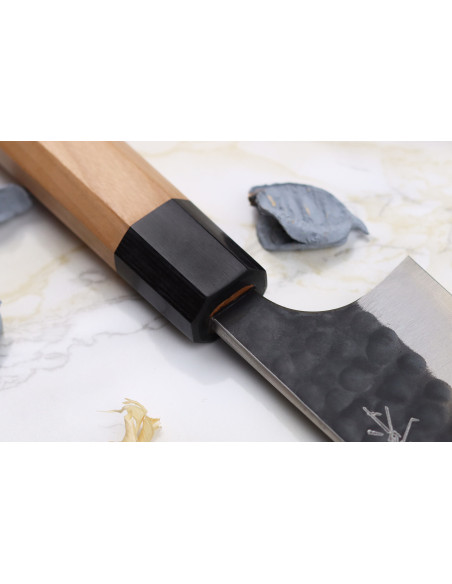
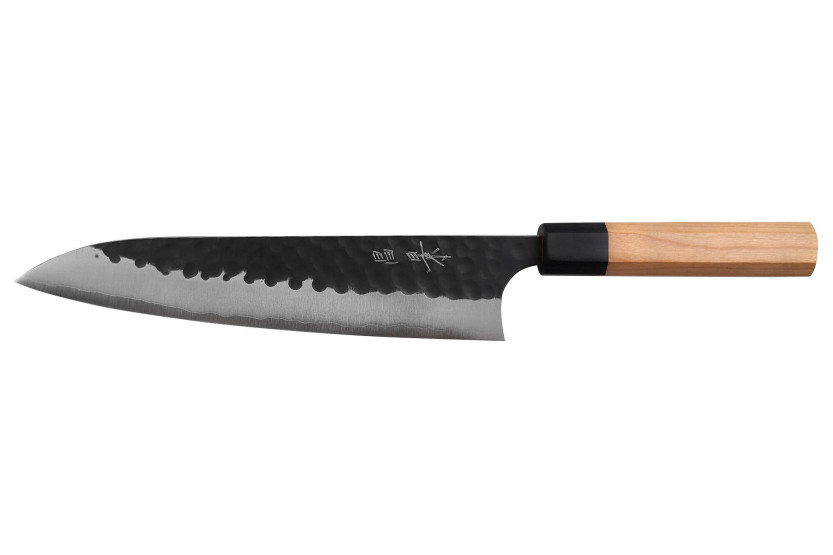
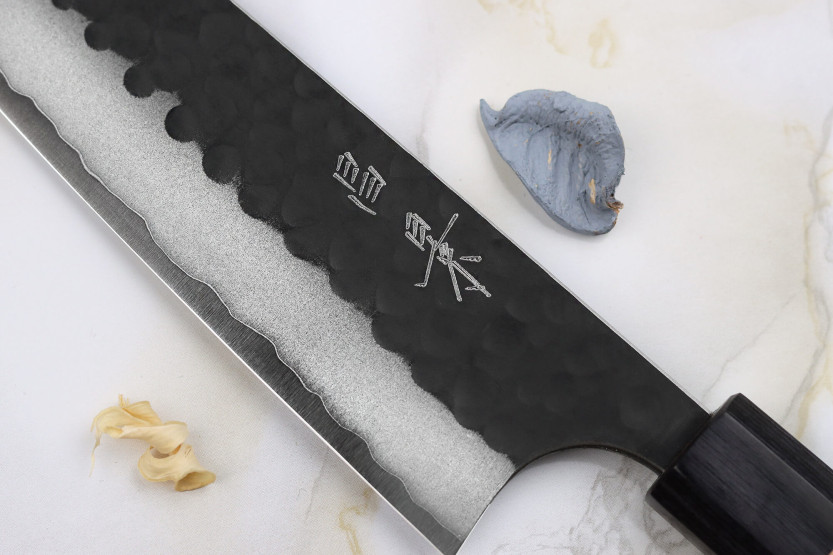
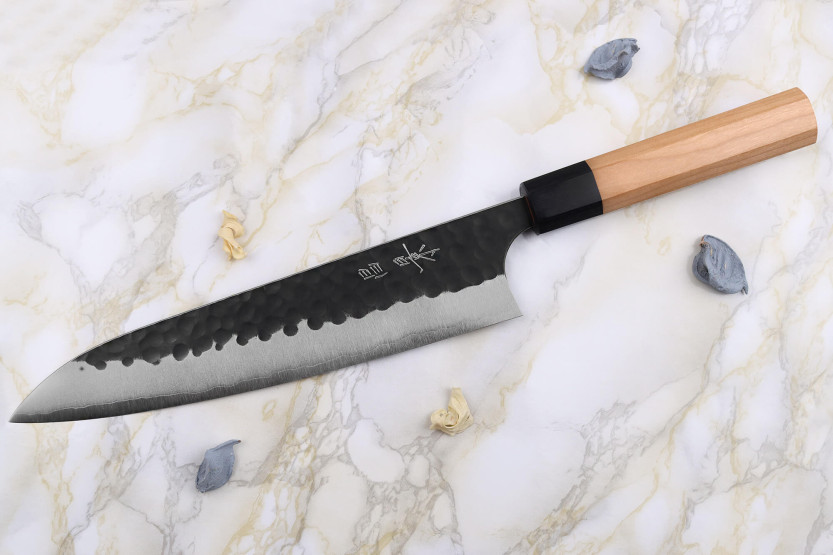
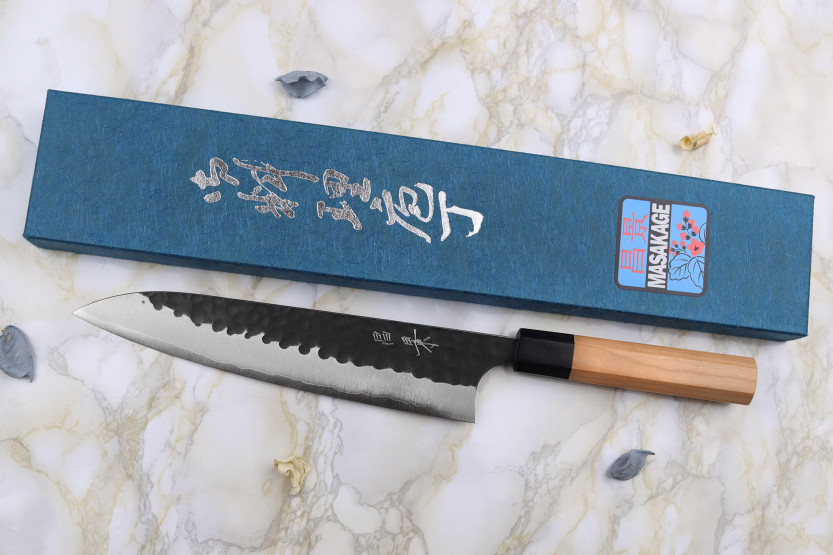
The blade of this gyuto knife has a rough forged finish, giving it an authentic rustic touch. It also features traditional hammering that enriches its dark color and gives it a distinctive character. This range, Koishi, takes its name from the Japanese word for "pebbles", in reference to this original hammering.
A Japanese knife in cherry wood
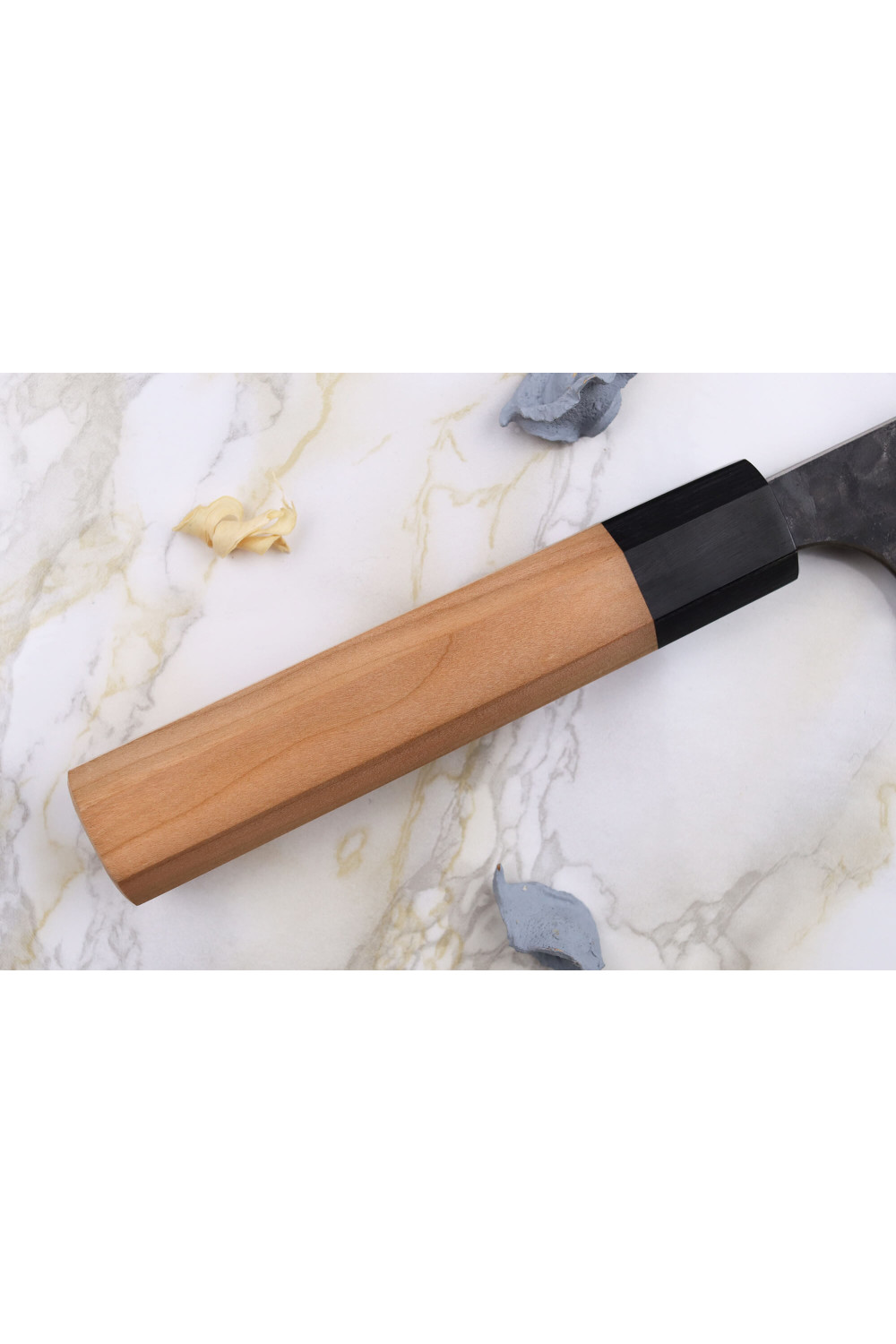
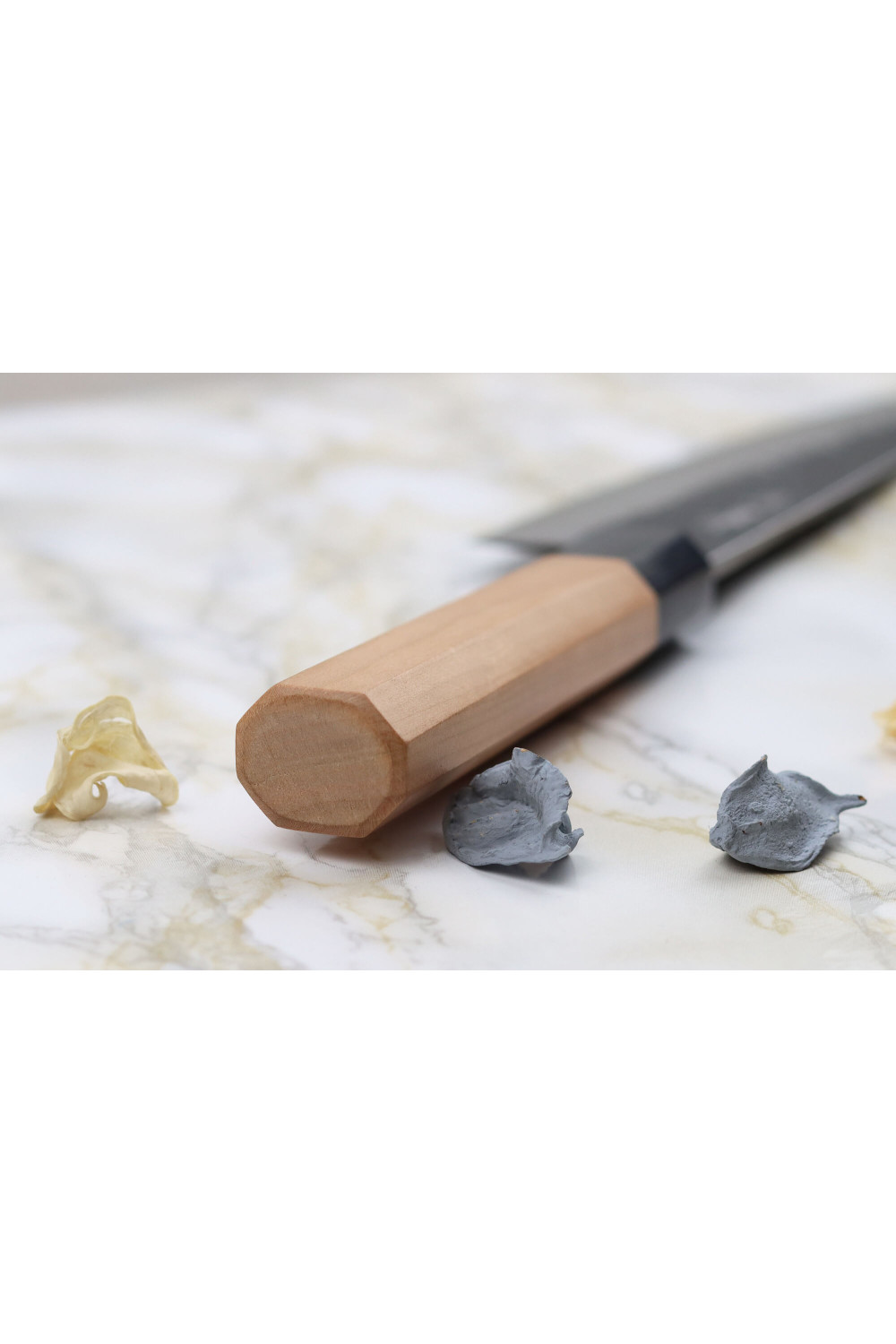
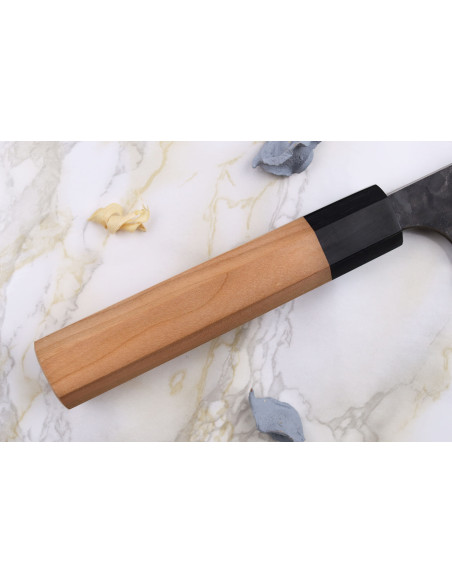
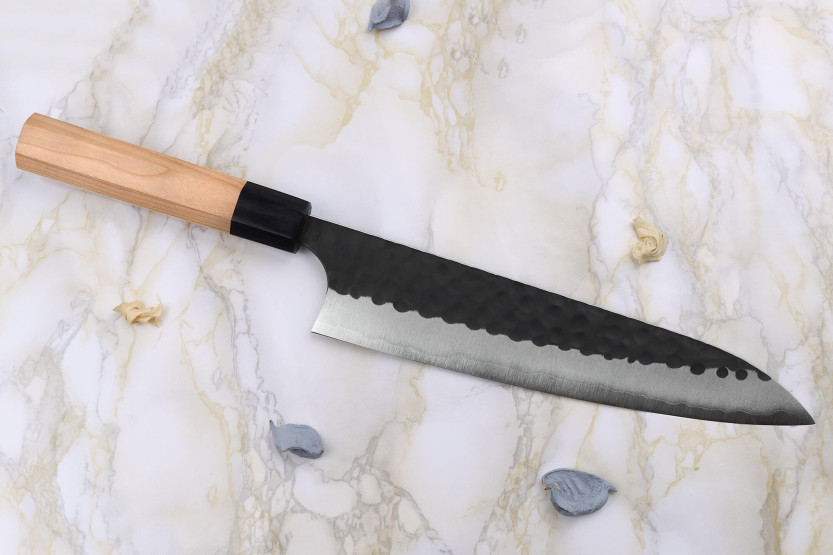
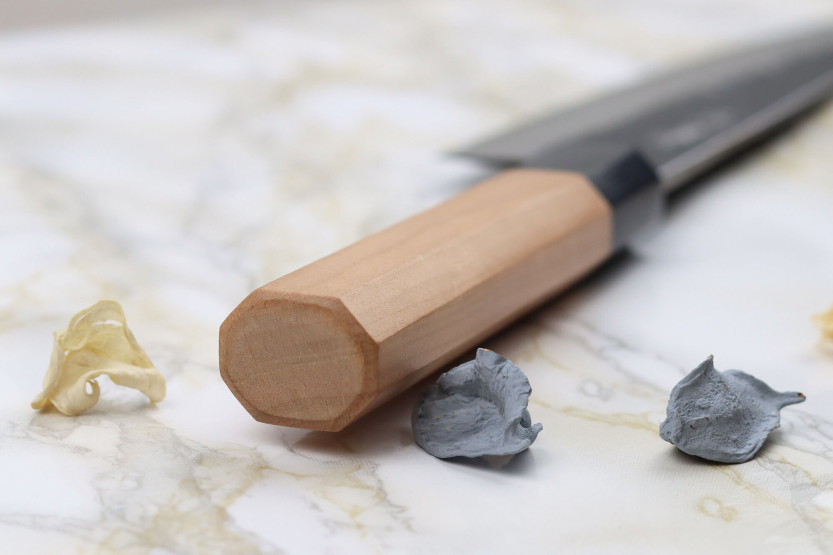
The handle of your handcrafted Japanese knife is made from cherry wood, a species renowned for its durability and aesthetic appeal. This emblematic Japanese wood is a perfect illustration of the Land of the Rising Sun.
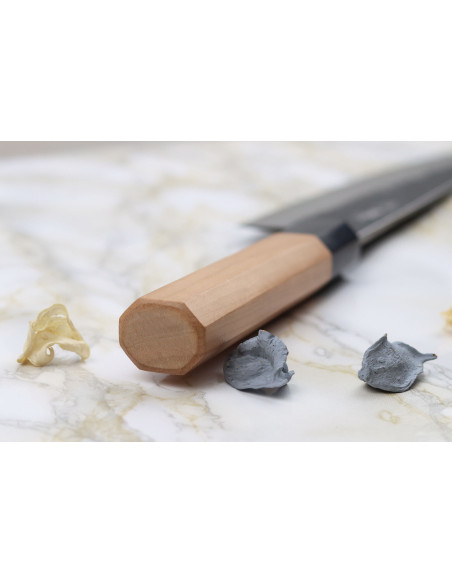
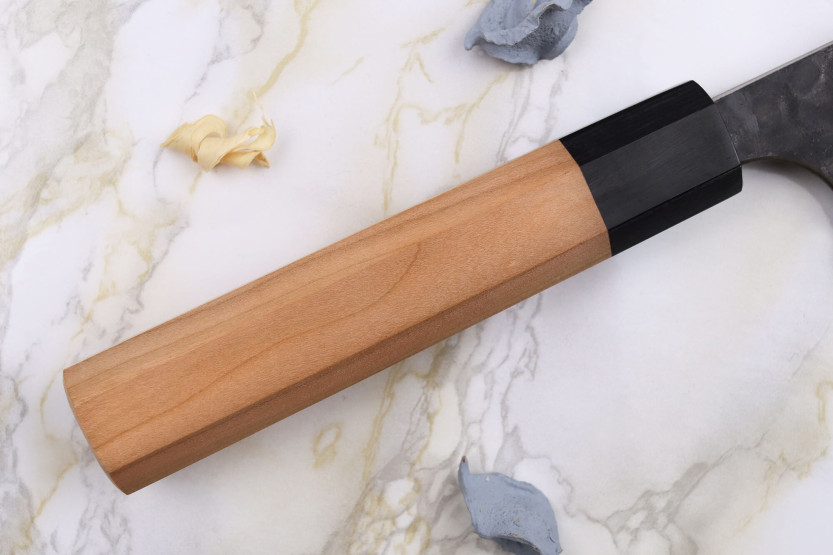
Its octagonal shape is designed to suit all hands, whether left- or right-handed. It gives you an ergonomic grip for comfortable use, even over long periods.
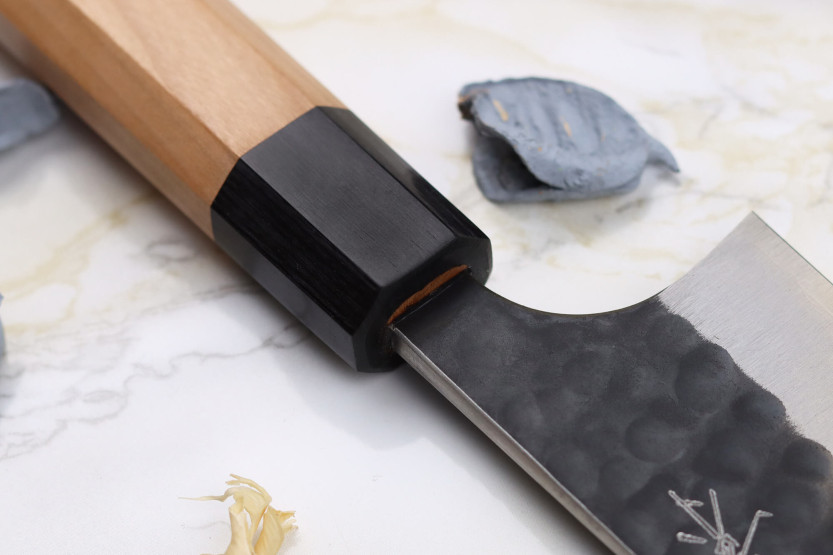
The handle of this Japanese chef's knife is complemented by a black pakka wood bolster, a composite material composed of laminated wood and heat-hardened resin. This material combines strength and natural aesthetics with visible wood grain.
To guarantee a watertight seal and prevent any infiltration of water or small pieces of food, wood paste is carefully added to the junction between the blade and the handle. This ensures optimum watertightness!
How do I maintain a carbon-enriched knife?
To preserve the quality of your handcrafted knife, it should be washed exclusively by hand with a soft sponge, avoiding immersing the handle in water. After cleaning, be sure to dry it immediately to remove any moisture, then store it in a dry place. Do not put it in the dishwasher or soak it in the sink.
Between uses, we recommend wiping the blade with a paper towel to prevent the acidity of food from attacking the steel.
Over time, it is normal for the color of your Japanese knife to vary slightly. This is a natural reaction of carbon to food acids and humidity in the air.
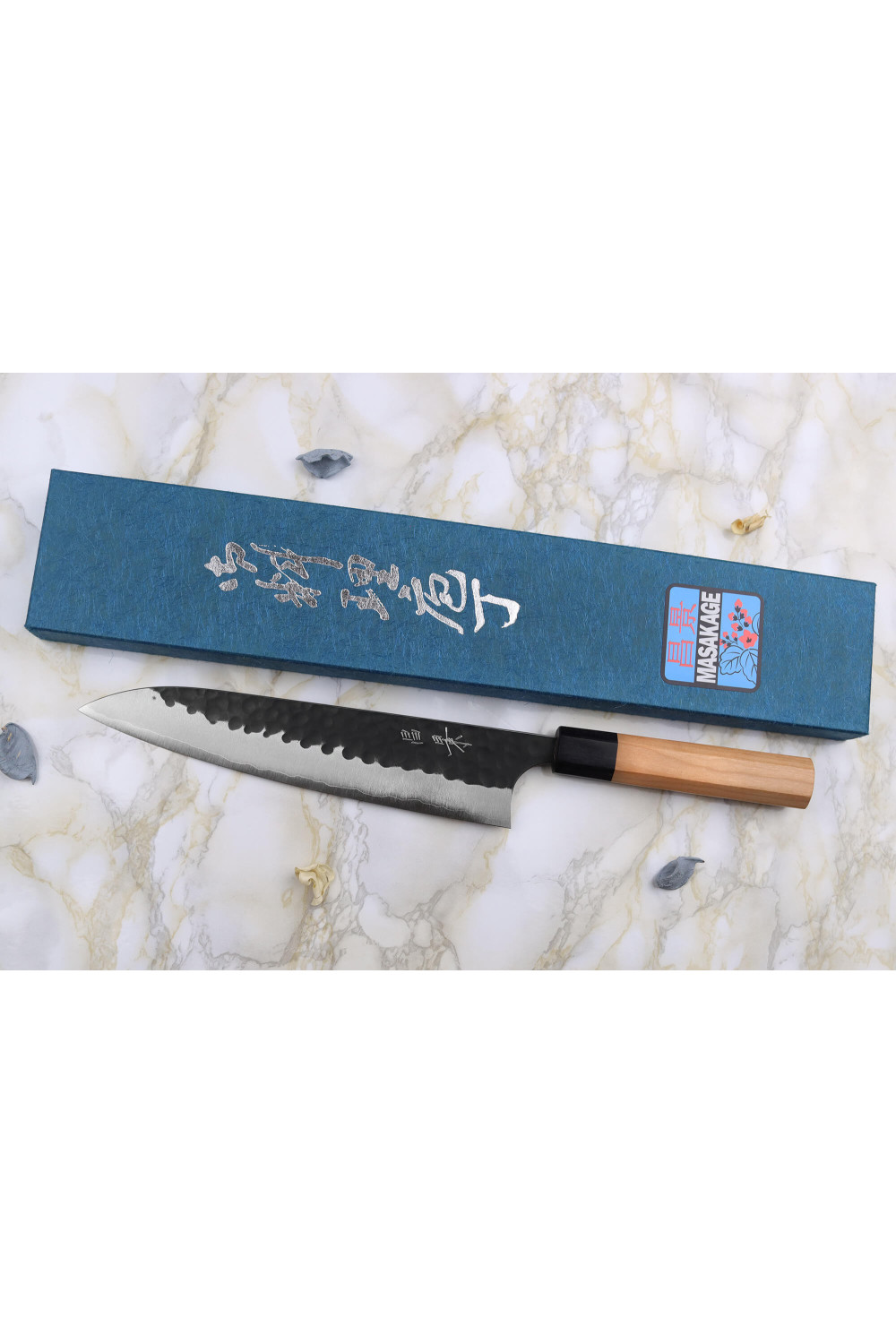
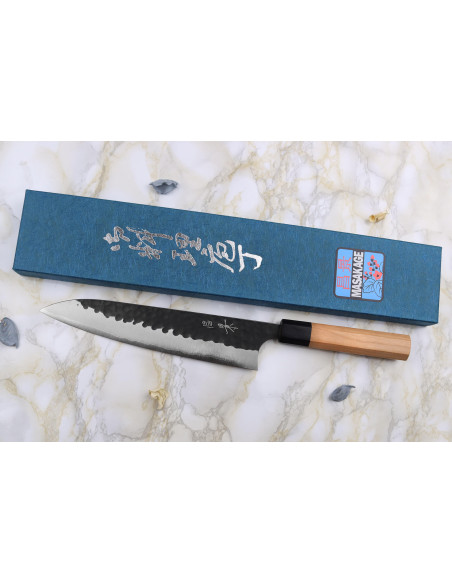
This handcrafted Japanese knife is neatly presented in a sober, traditional blue box.
Discover the rest of the Masakage Koishi knife range on KnifeLeader.eu!




 By buying this product you can collect up to