Masakage Zero knives are handcrafted by the talented Japanese blacksmith Takeshi Saji, renowned for his expertise in Japanese cutlery. His reputation rests on refined, elegant creations, combining ancestral forging techniques with unique, modern designs!

Since the 90s, Takeshi Saji has been certified as a "traditional master craftsman" and works in the famous Takefu Cutlery Village, an emblematic location for knife-making in Japan. This place brings together renowned artisan blacksmiths, who perpetuate the traditions of Japanese cutlery by exchanging experience and materials. It's the ideal place to train the next generation by sharing their unique know-how!

A hammered blade for this Japanese chef's knife
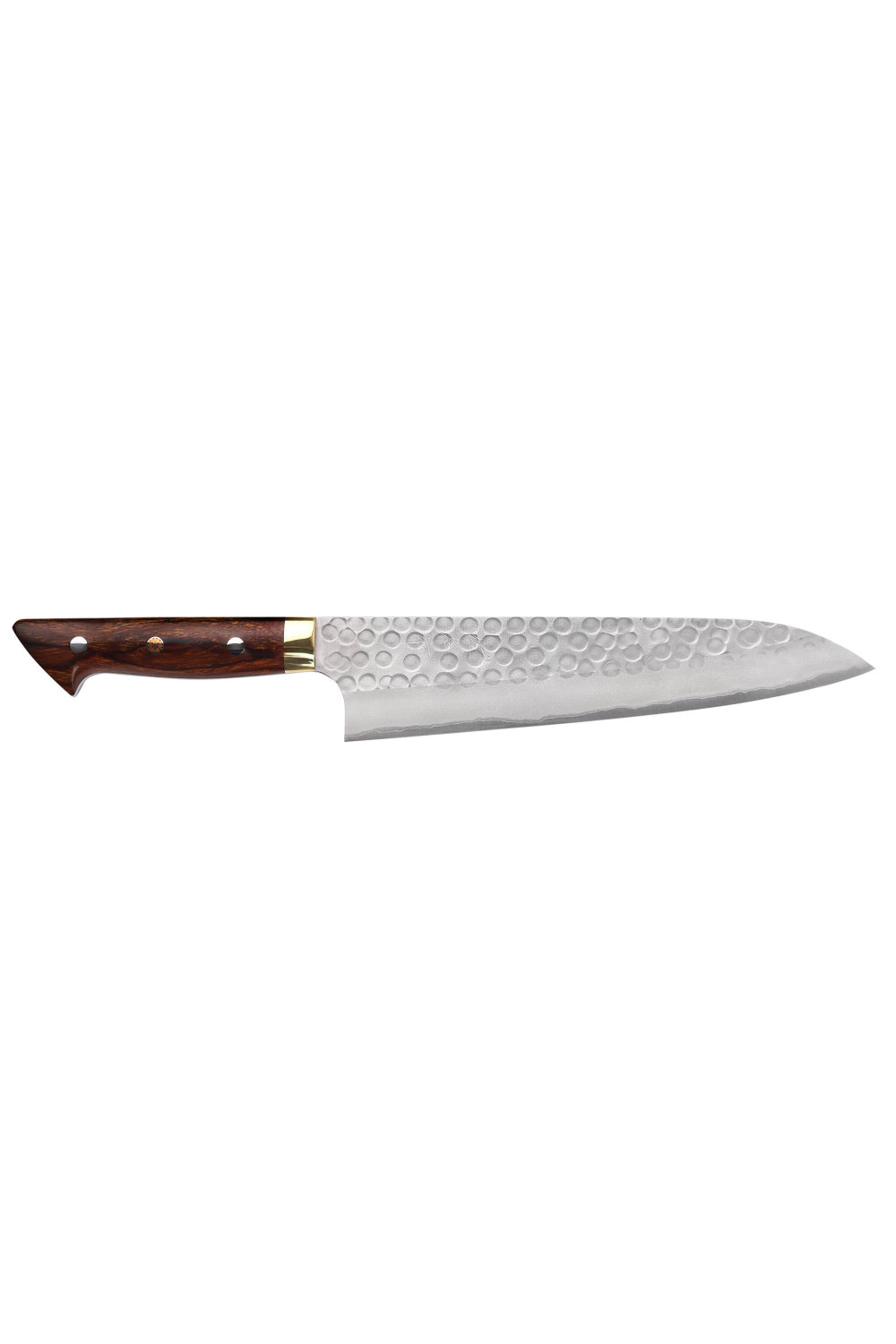
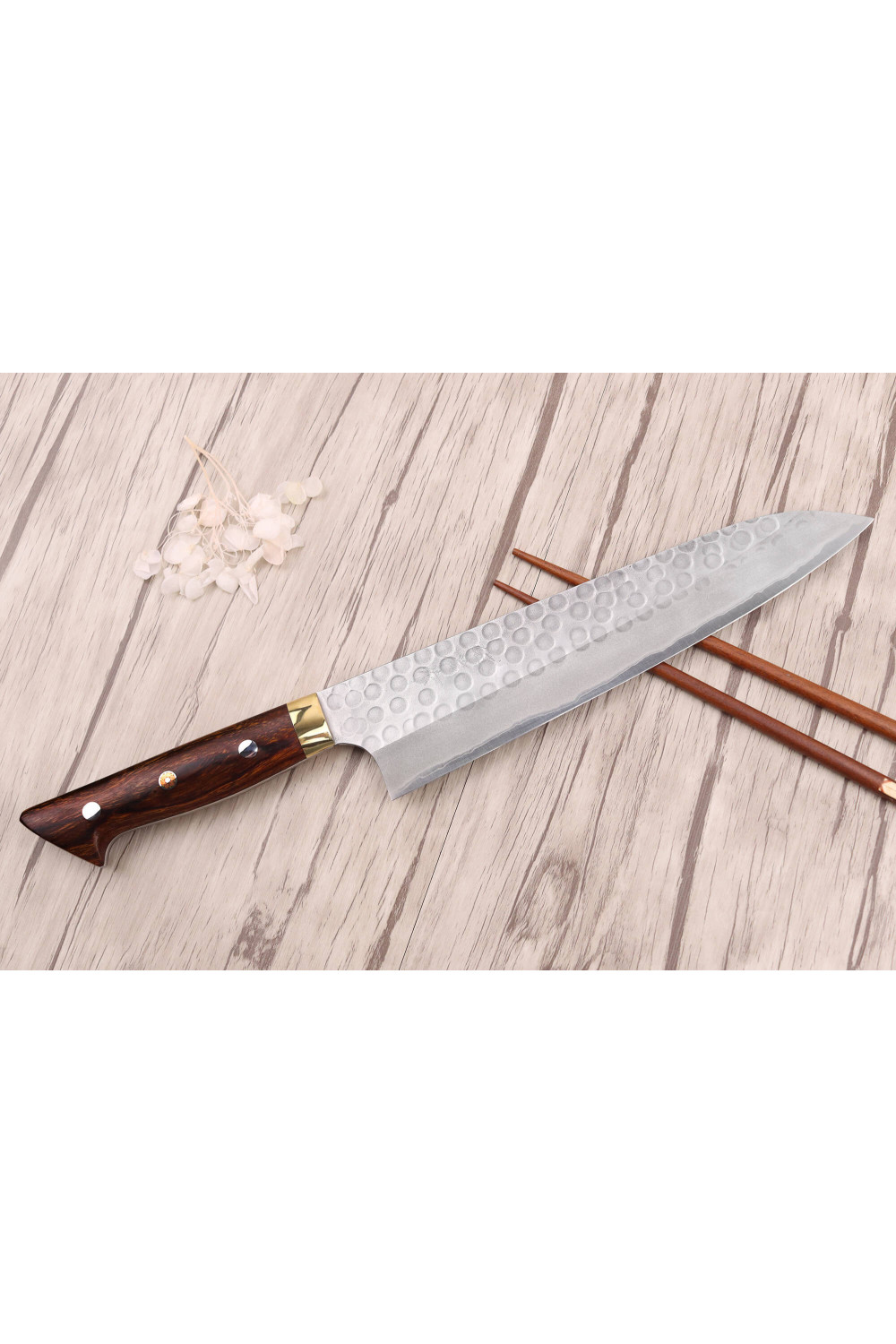
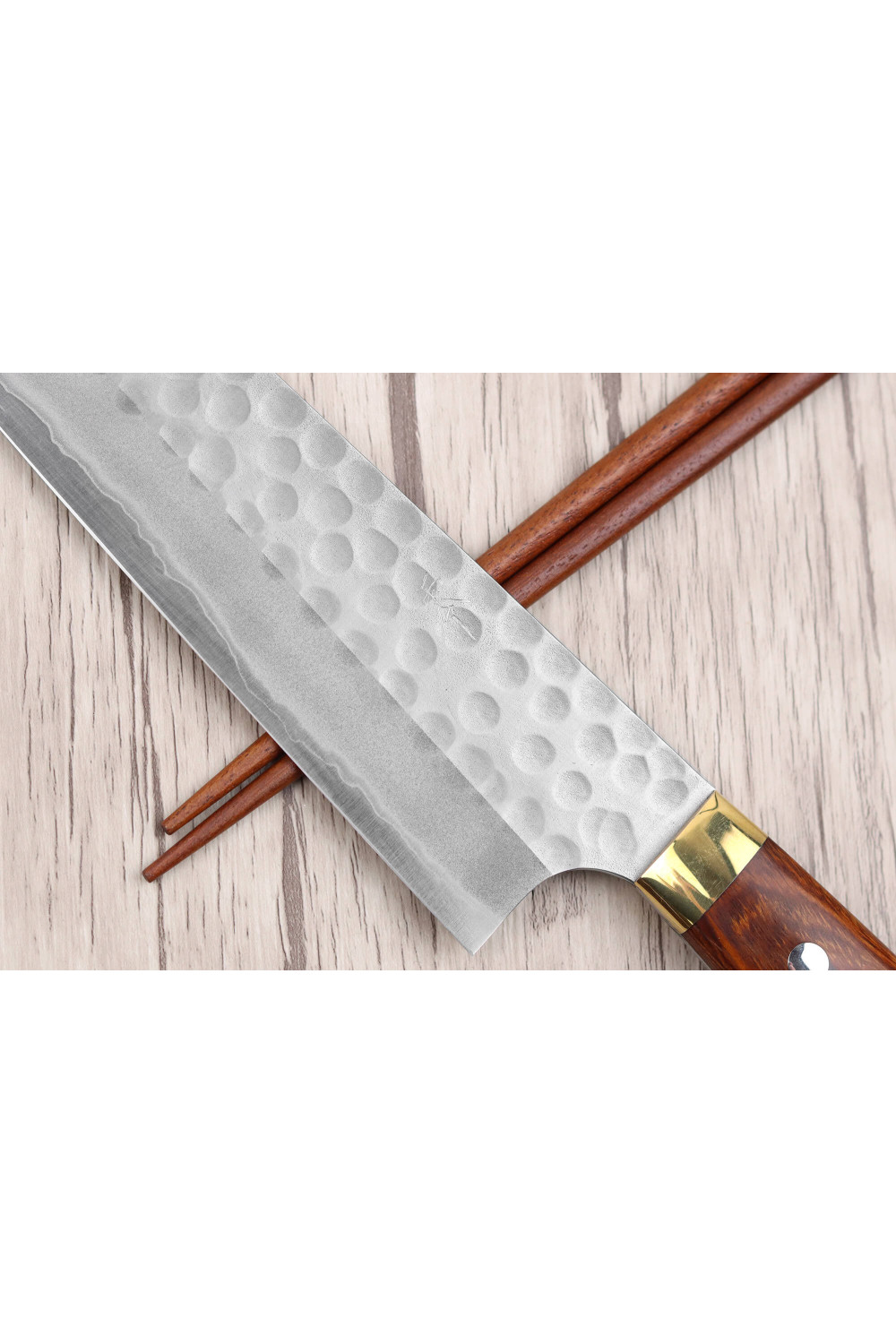
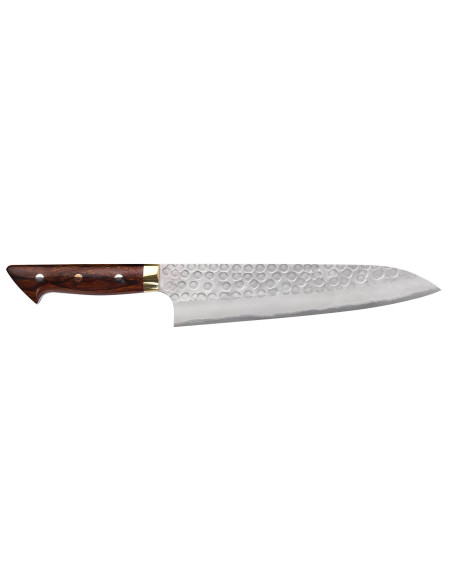
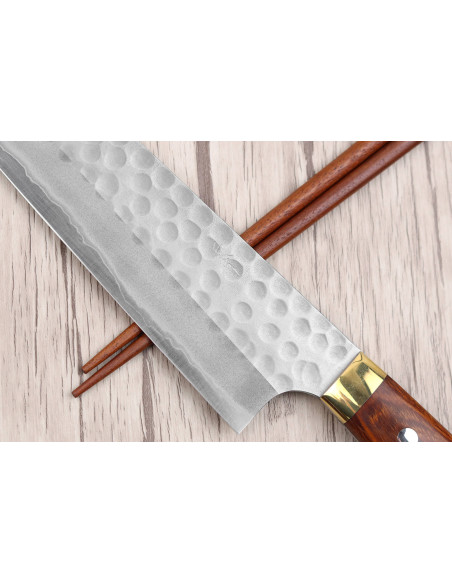
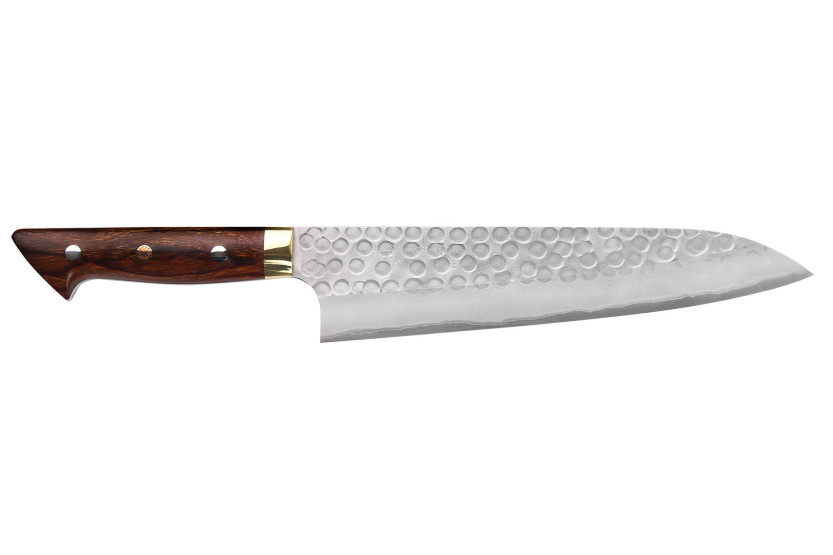
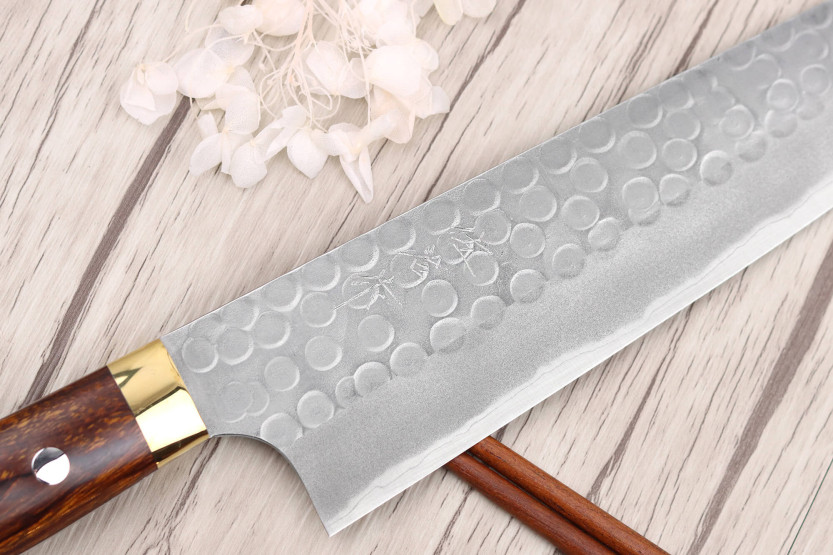
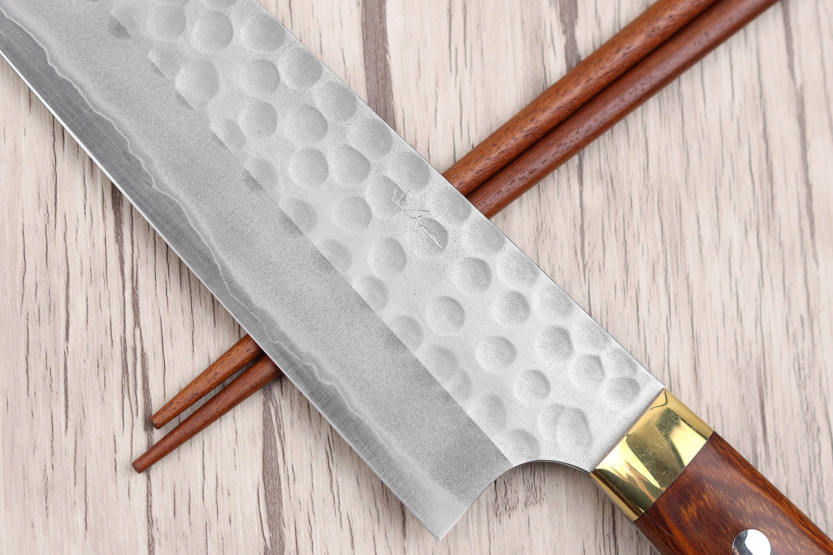
This chef's knife, designed by Takeshi Saji, features a blade in San Maï structure, a traditional Japanese forging technique. The blade features a hard steel core surrounded by a softer layer of steel that folds in for extra protection. For the core of this Japanese kitchen knife, Takeshi Saji has chosenJapanese Aogami Super(Blue Super Steel), produced by the prestigious steelmaker Hitachi, known for its superior alloys.
The Blue Super Steel alloy contains a high carbon content of 1.5%, exceeding the Western average of around 0.5%, which considerably increases the steel's hardness. Hardness reaches 65HRC on the Rockwell scale, giving your handcrafted Japanese knife a long-lasting edge and outstanding cutting performance, particularly suited to fibrous foods.
Despite its high hardness, Aogami Super steel is easy to stone-sharpen, making your Japanese knife easy to maintain!
To complete the San Maï structure, a softer layer of stainless steel envelops the hard core, forming the two outer layers. This process protects the core of the blade while maintaining an optimal balance between flexibility and rigidity.
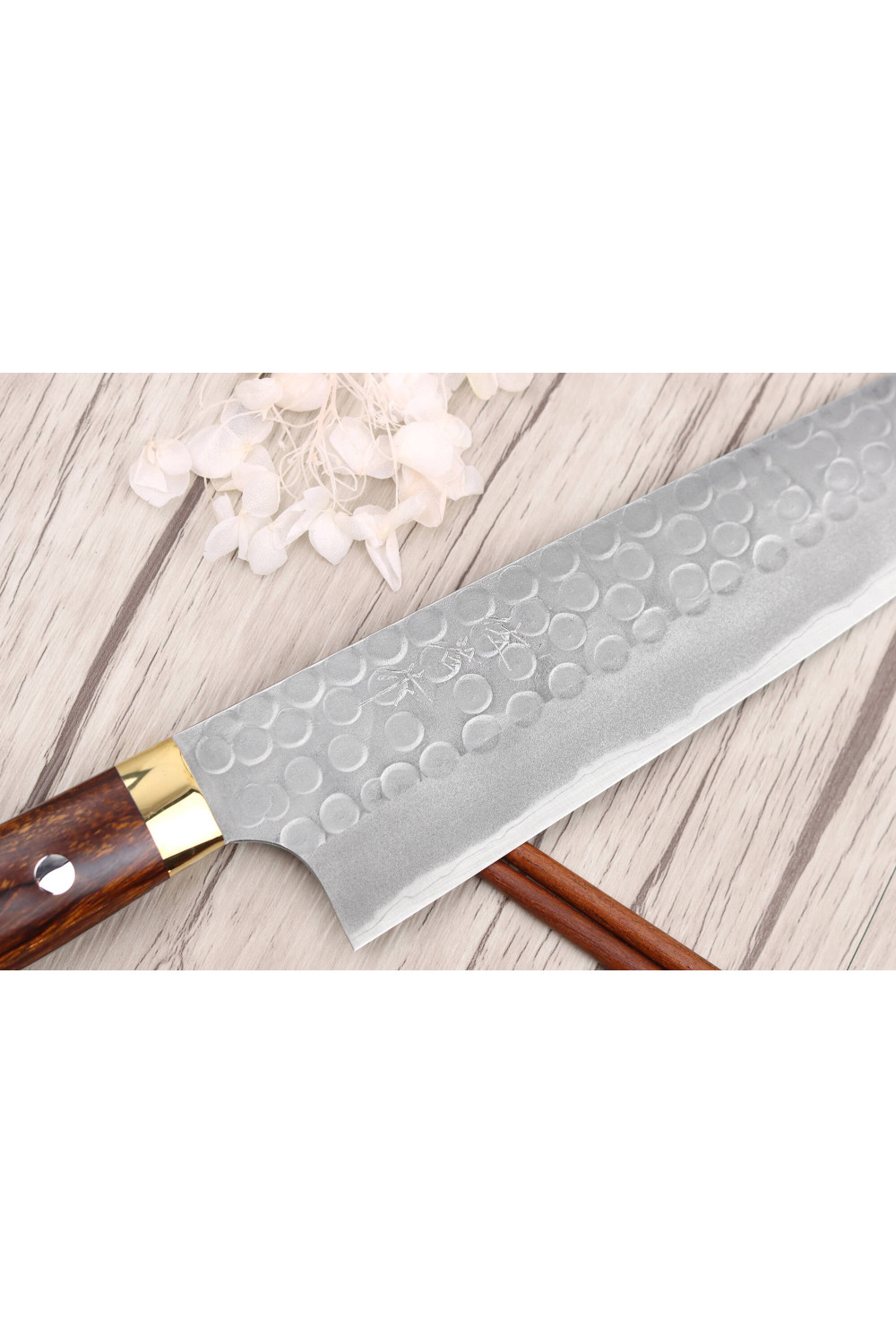
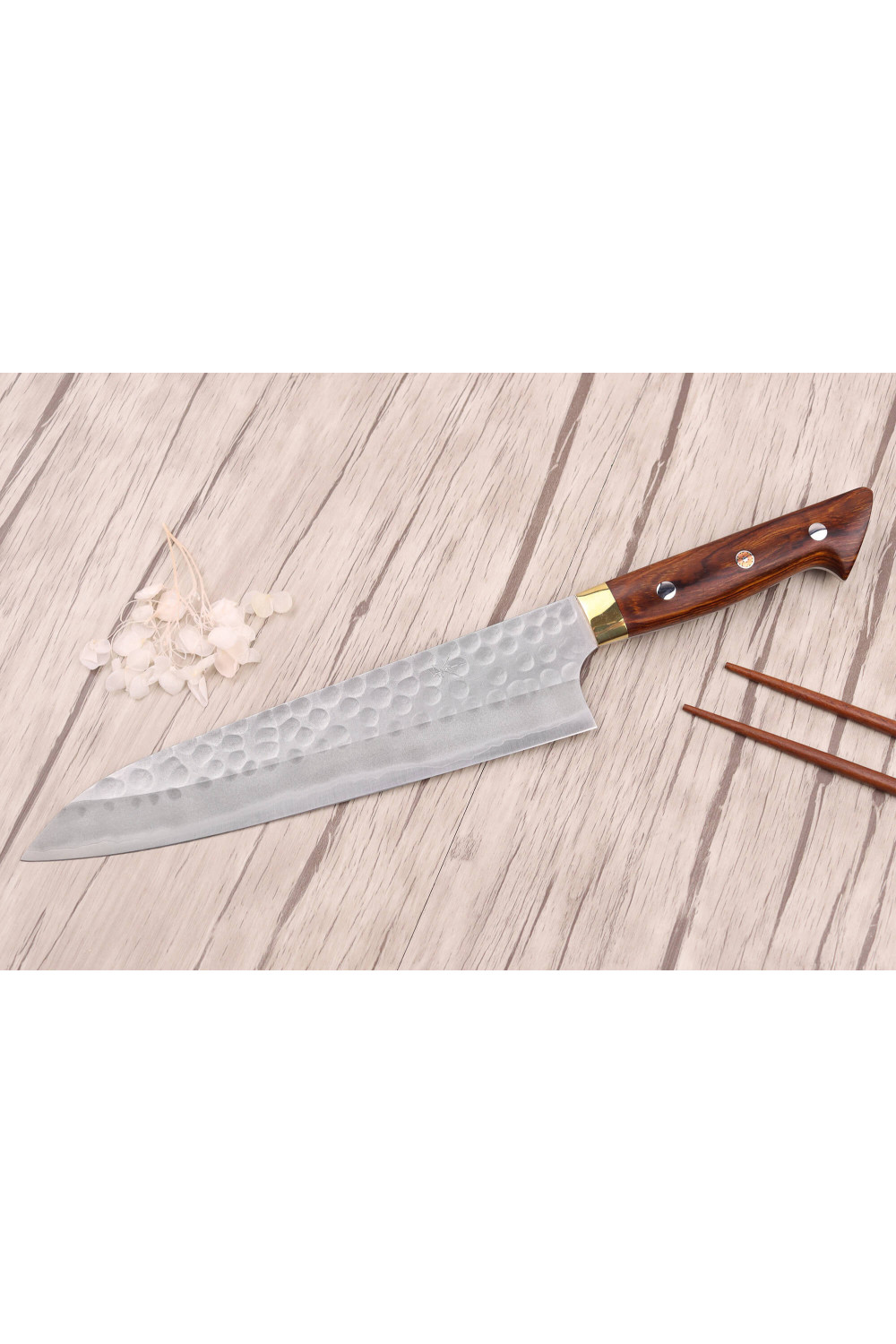
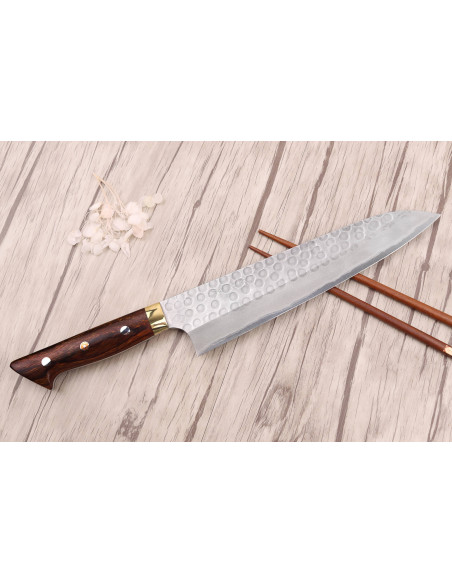
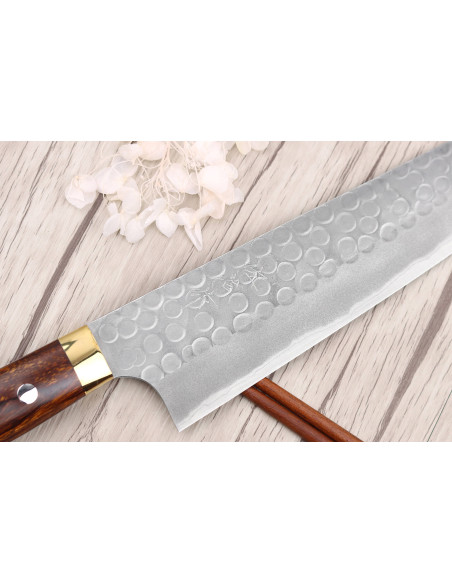
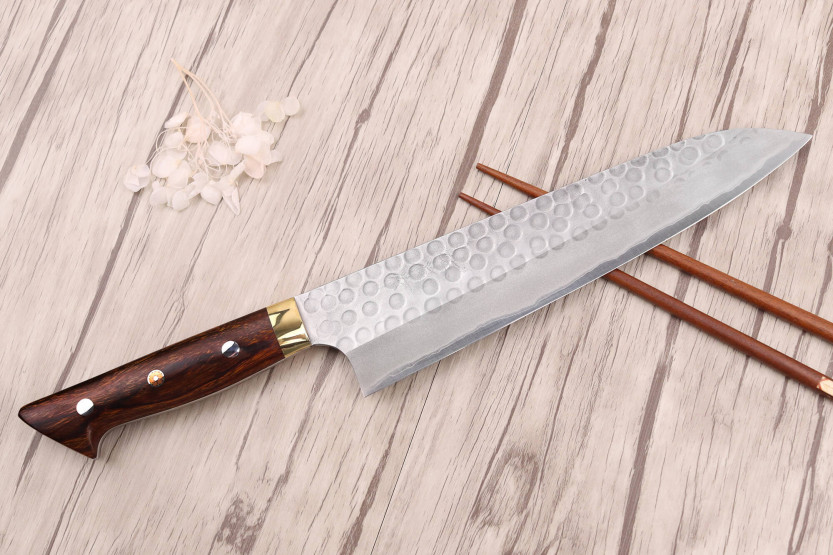
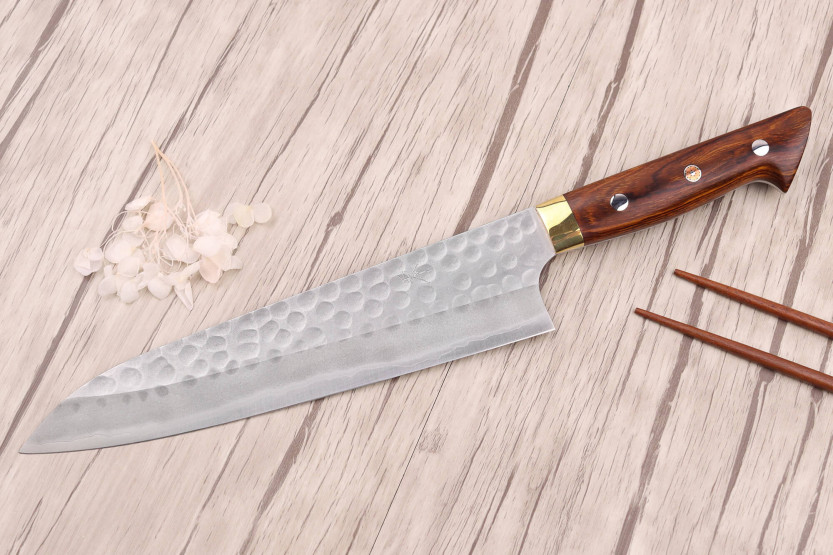
This Japanese knife features an unpolished blade with a dark, rustic finish. It is enhanced by a distinctive round hammering that adds an authentic note to its design.
The Masakage knife with its original handle
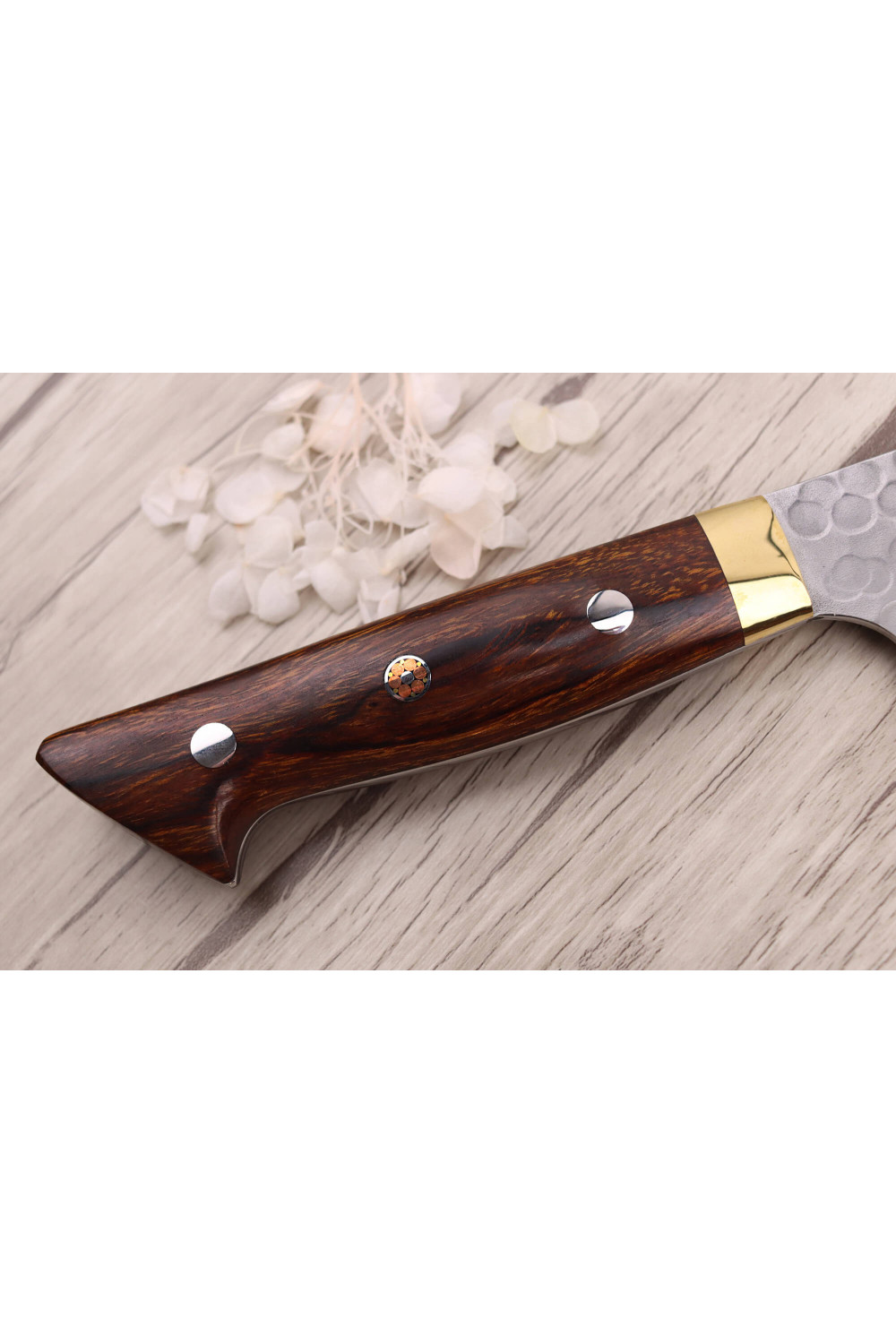
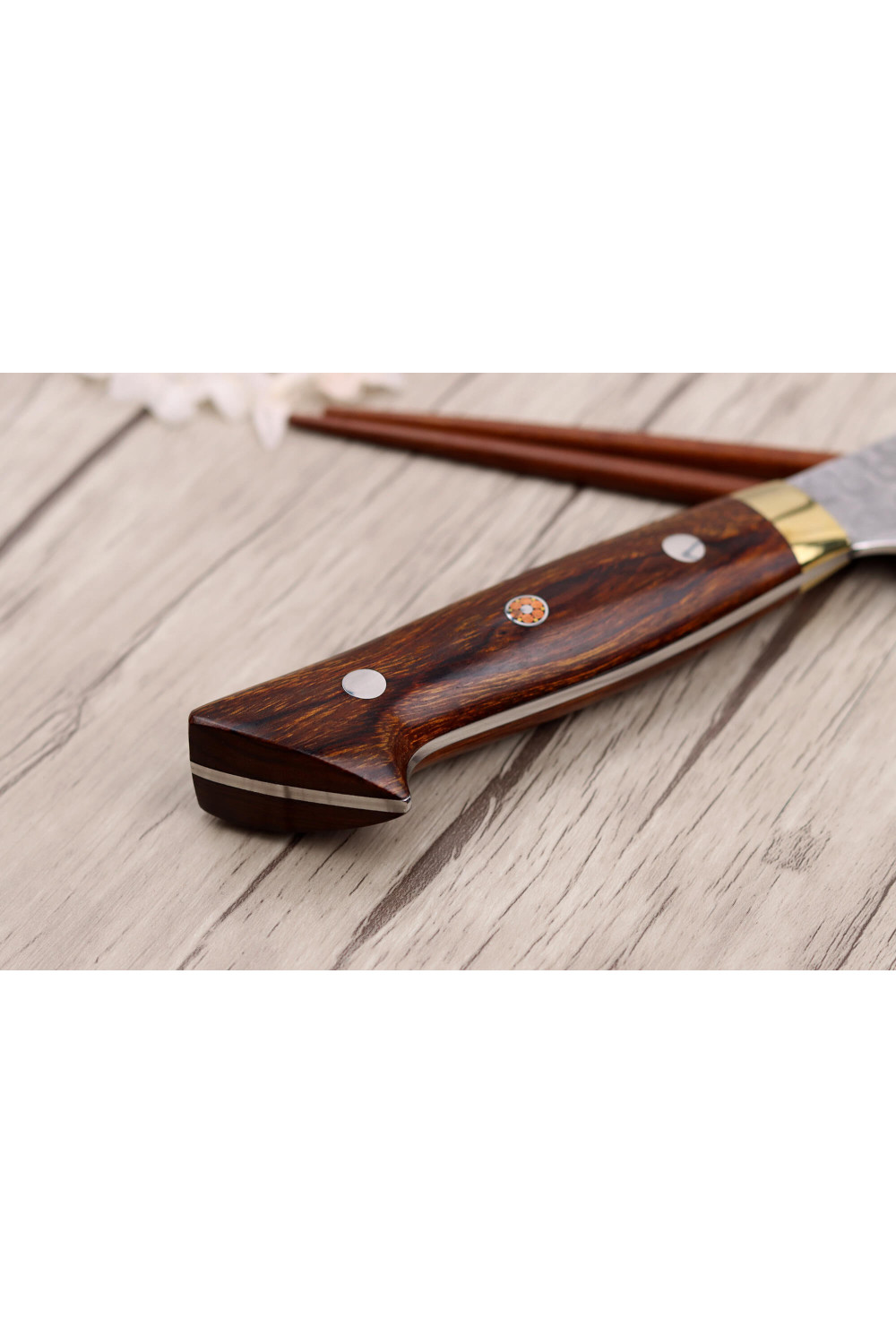
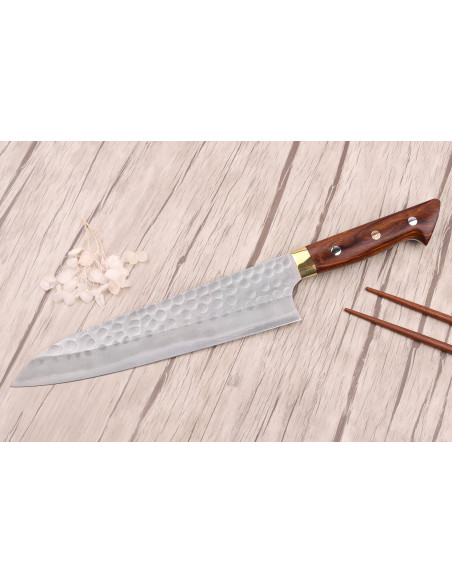
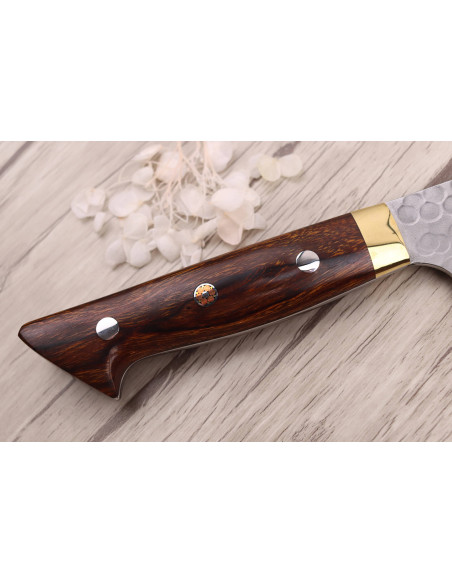
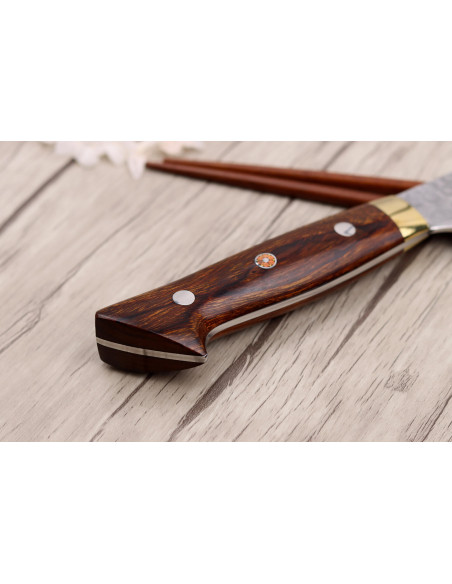
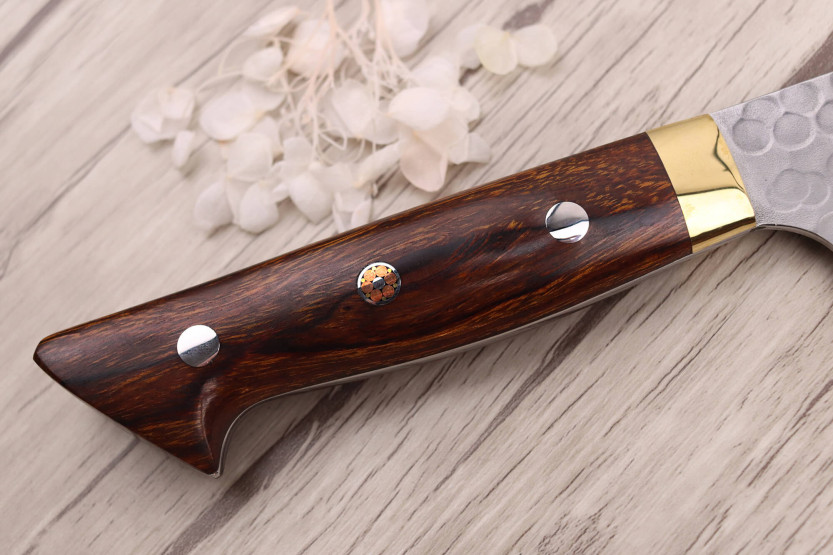
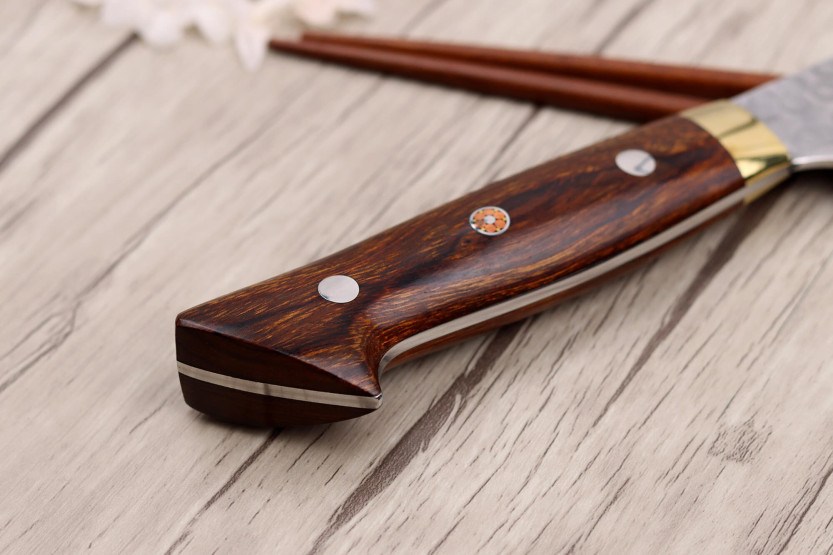
The handle of this Japanese kitchen knife is made of ironwood, a dense, sturdy material appreciated for its warm nuances and natural variations that make each piece unique. The wood features warm hues with delicate lighter touches, for an authentic look.
The full tang blade is firmly anchored in the handle by three rivets, guaranteeing optimum stability. The central rivet is adorned with a mosaic pattern, providing a distinctive and original touch that contrasts elegantly with the rest of the darker wood.
A gilded stainless steel bolster harmoniously links the blade to the handle. Thanks to its ergonomic design given its Western shape, this gyuto knife offers a comfortable and secure grip, suitable for both right-handed and left-handed users!
How to care for a handcrafted Japanese knife
To preserve your carbon knife, wash it exclusively by hand with a soft sponge, avoiding wetting the wood of the handle. After cleaning, dry it immediately to remove all traces of moisture, then store it in a dry place. Never leave your knife to soak in water, and never put it in the dishwasher.
Over time, the color of the blade may change slightly: this is perfectly normal! This natural phenomenon is linked to the reaction of carbon with the acidity of food and ambient humidity. This in no way affects the use of your Japanese chef's knife.
Choose a Masakage Japanese knife on Knifeleader.eu!




 By buying this product you can collect up to