Masakage Yuki Japanese knives are handcrafted by blacksmith Yoshimi Kato: a master craftsman who works at the Takefu Cutlery Village, a place where the most renowned blacksmiths gather. Here, they can share materials, experiences and know-how! It's the ideal place for apprentice blacksmiths to learn the knife-making process from expert cutlery masters.
Yoshimi Kato has followed the teachings of several renowned masters such as Hiroshi Kato, a respected blacksmith in Japan who also happens to be his father-in-law. Hiroshi Kato has spent over 50 years creating quality knives, and is one of Japan's most renowned craftsmen thanks to his experience in traditional methods. One of the founders of the Takefu Cutlery Village, he is now retired, but continues to teach his skills to the next generation of apprentices.
Yoshimi Kato has taken over his workshop to carry on the tradition by continuing to create his master's knives and launching his own knife ranges. He began his apprenticeship in 2013 and quickly revealed himself to be a great blacksmith who learns very quickly. He continues Hiroshi Kato's work, while proposing new ideas appreciated by chefs.
High-quality Shirogami 2 blade
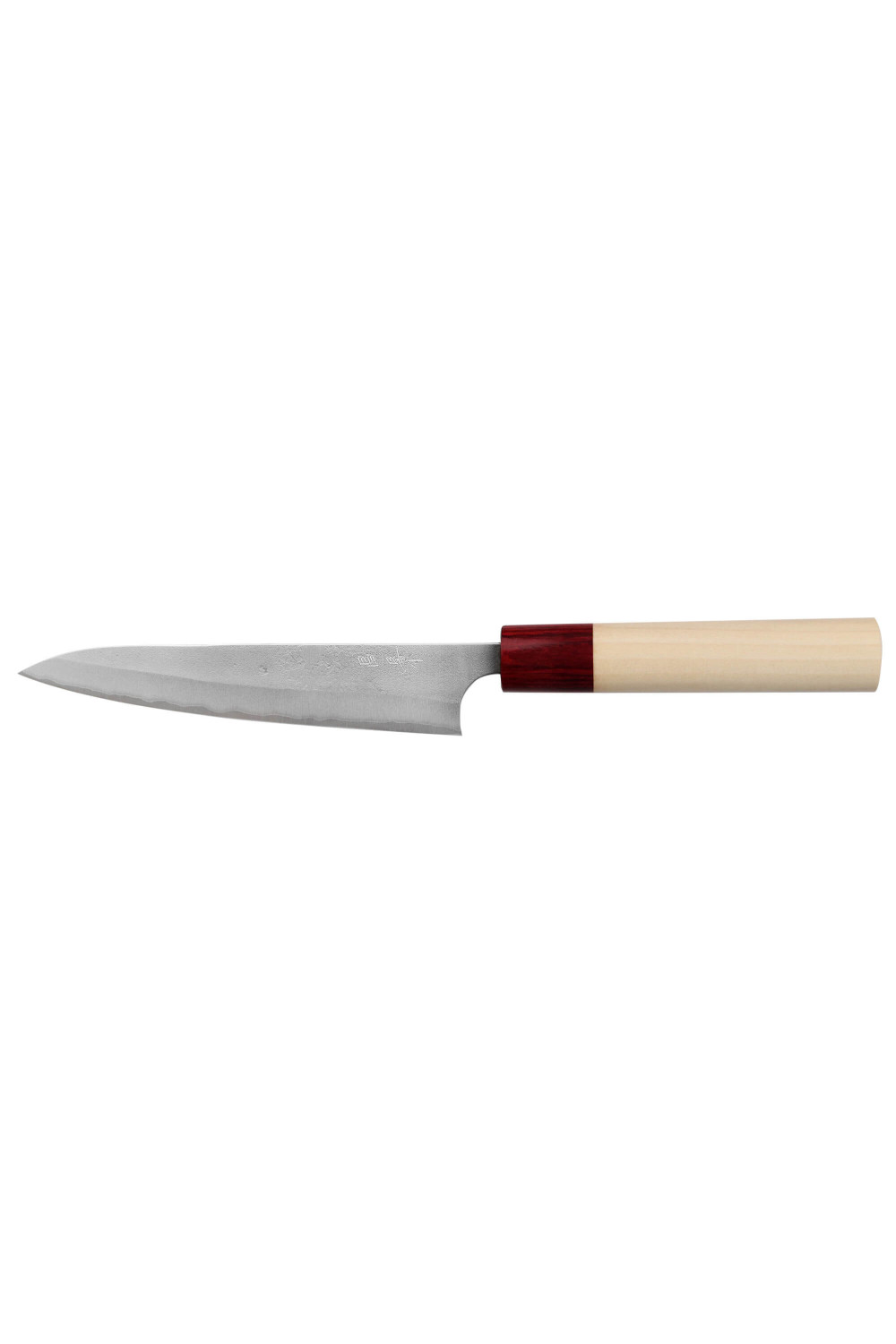
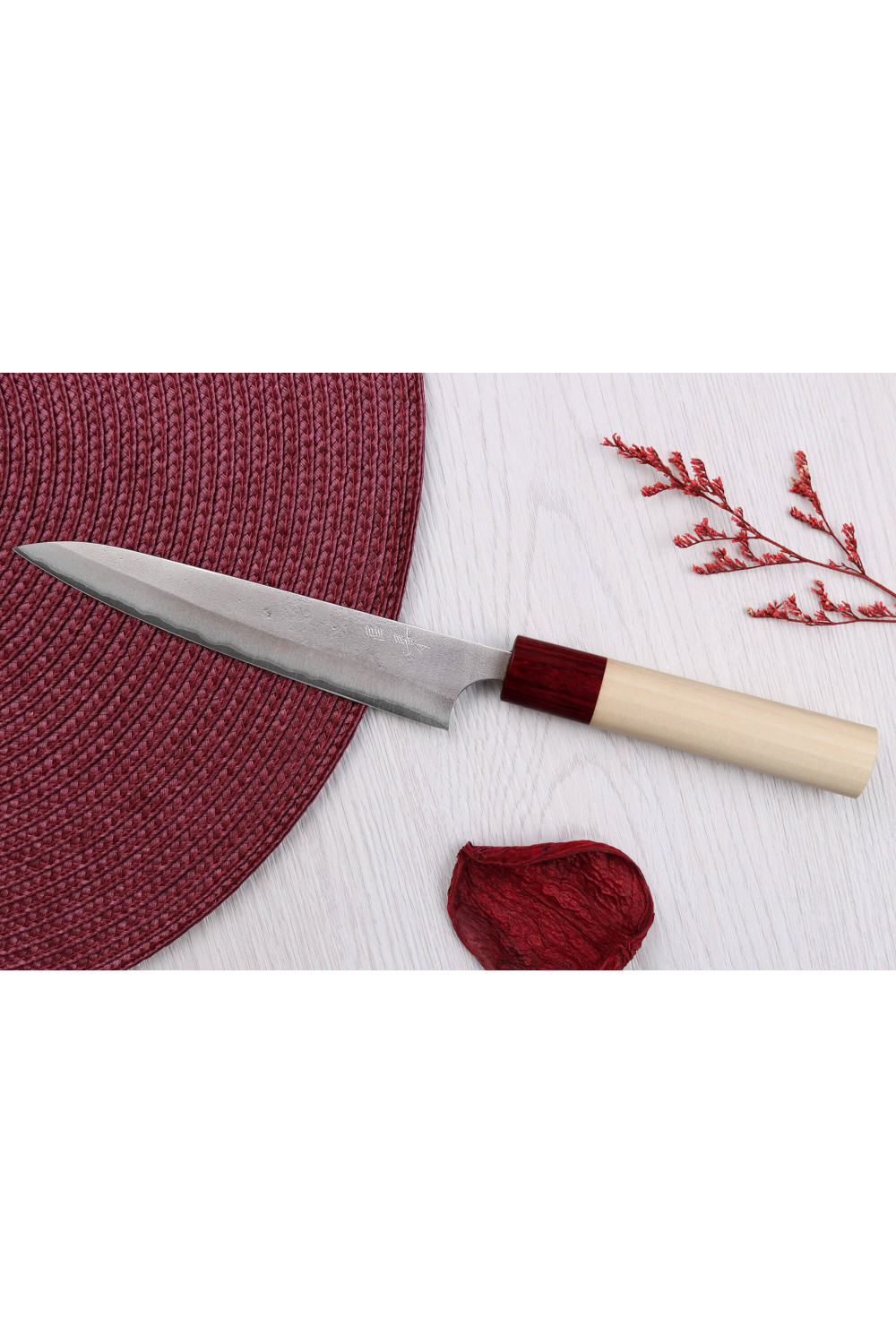
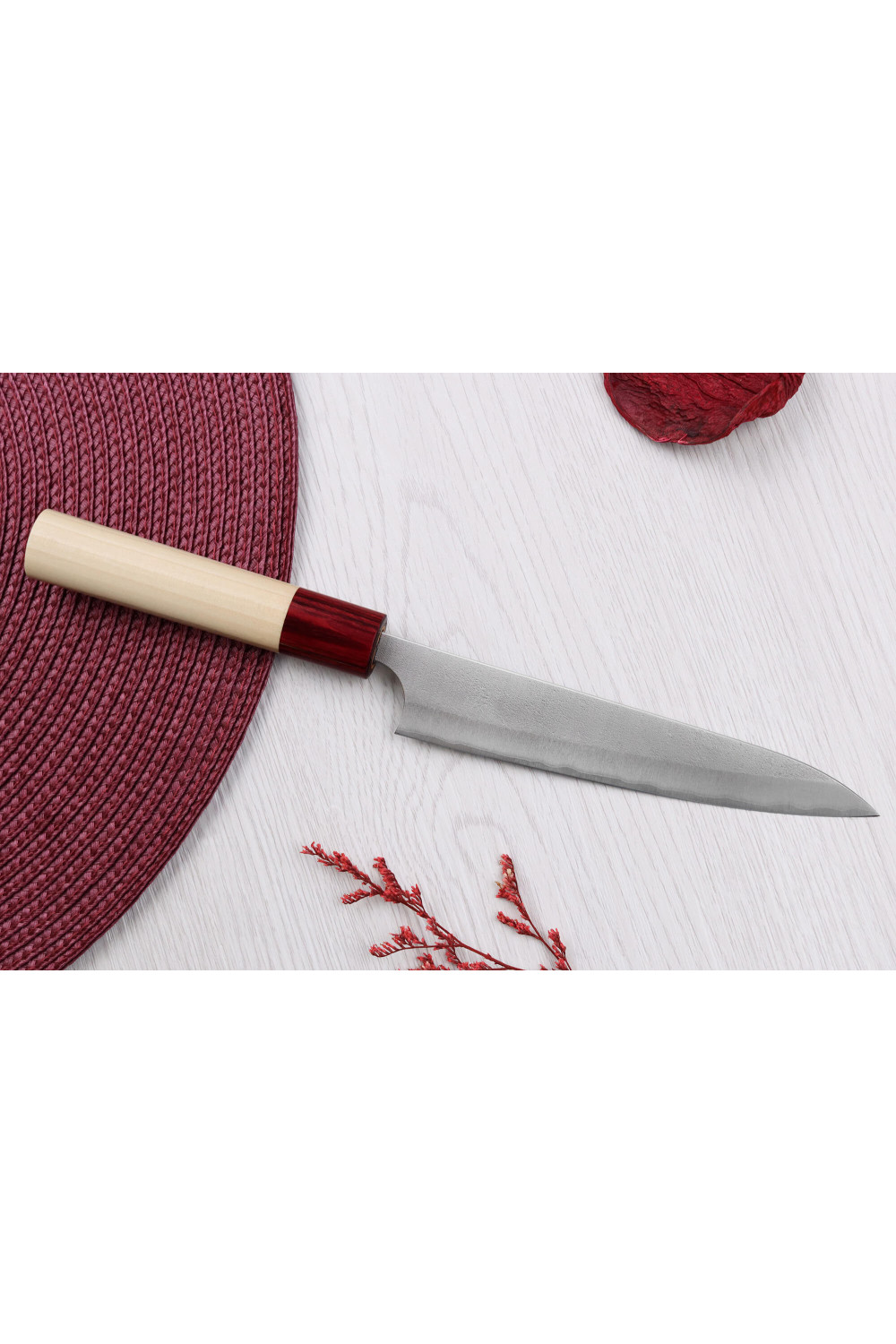
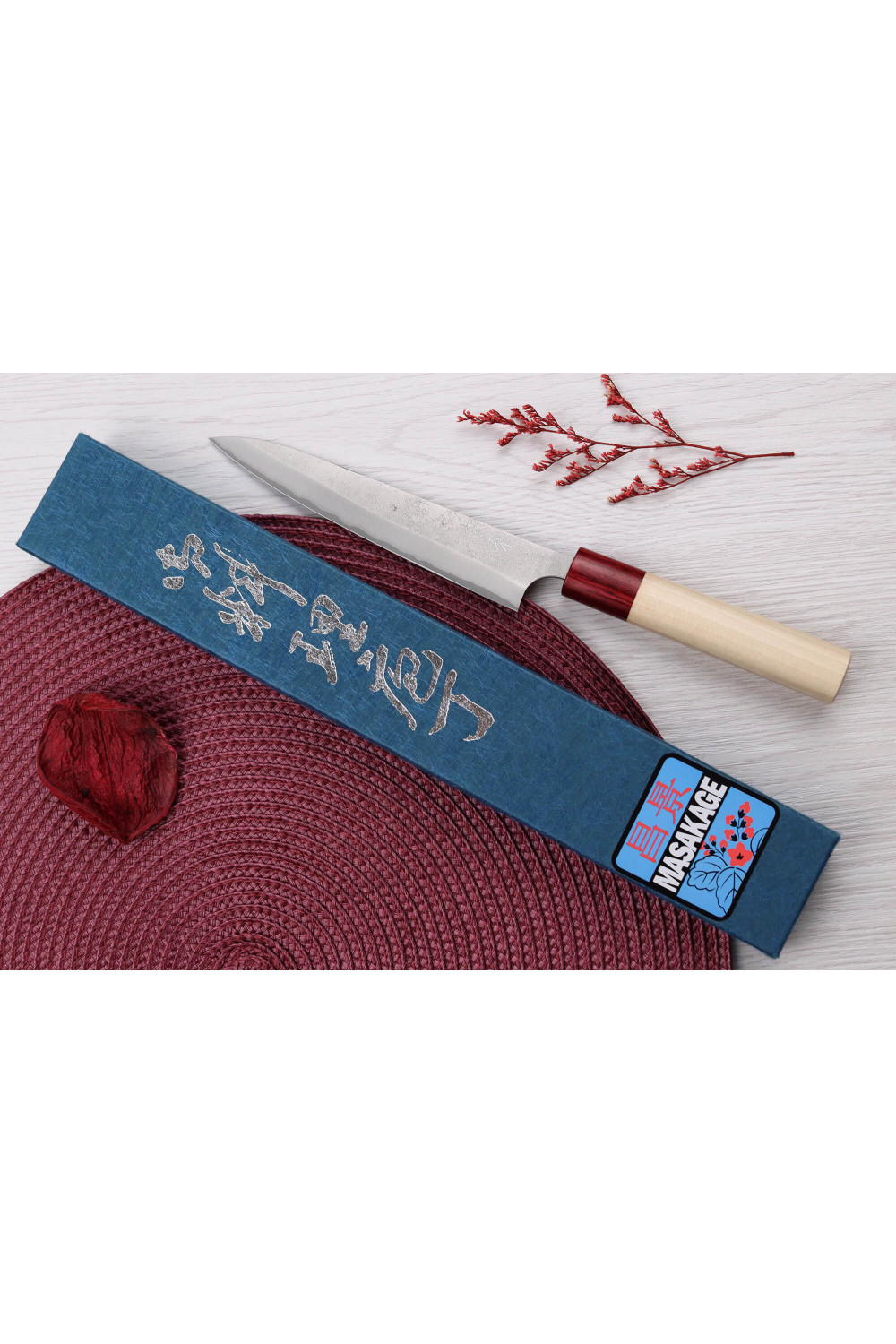
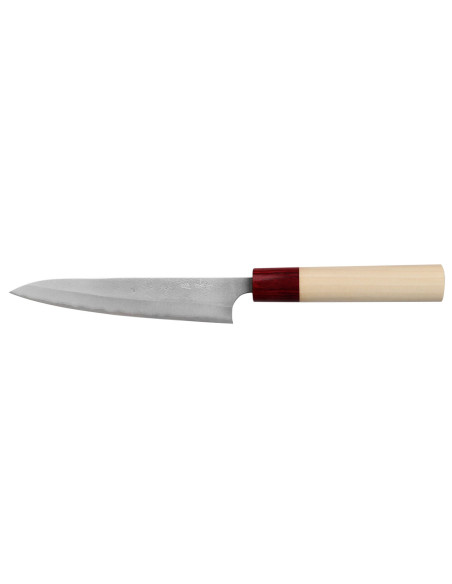
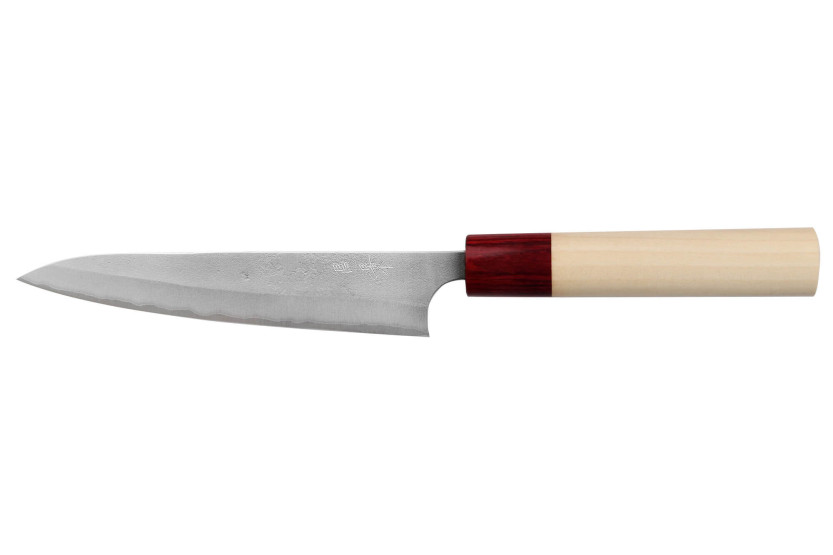
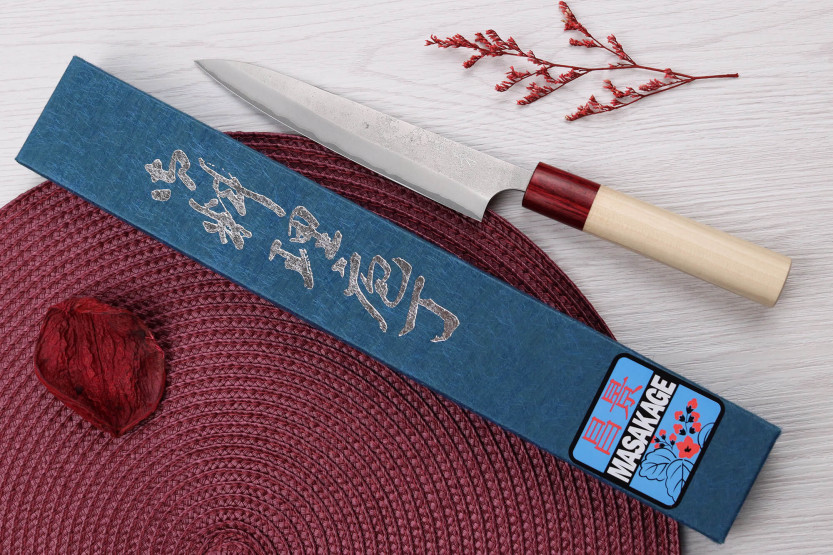
This Universal knife features a 15cm blade with a typically Japanese San Maï (meaning "3 layers") structure. This technique consists of forging a core of rigid steel, which is then covered by a layer of softer steel that folds in on itself. In this way, the core is protected and the blade is optimally balanced for increased strength.
The core of this blade has been created in Japanese Shirogami 2 steel (also known as White Steel 2), an alloy produced by the internationally renowned steelmaker Hitachi. This steel is reputed to be the closest to tamahagane steel, used in the manufacture of traditional Japanese swords.
This alloy has a high carbon content of around 1.3%, the essential element that increases hardness. On the Rockwell scale, this blade has a hardness of 62HRC, providing excellent edge retention and cutting performance. This handcrafted knife does not need to be sharpened often, and when it does, it remains easy to sharpen.
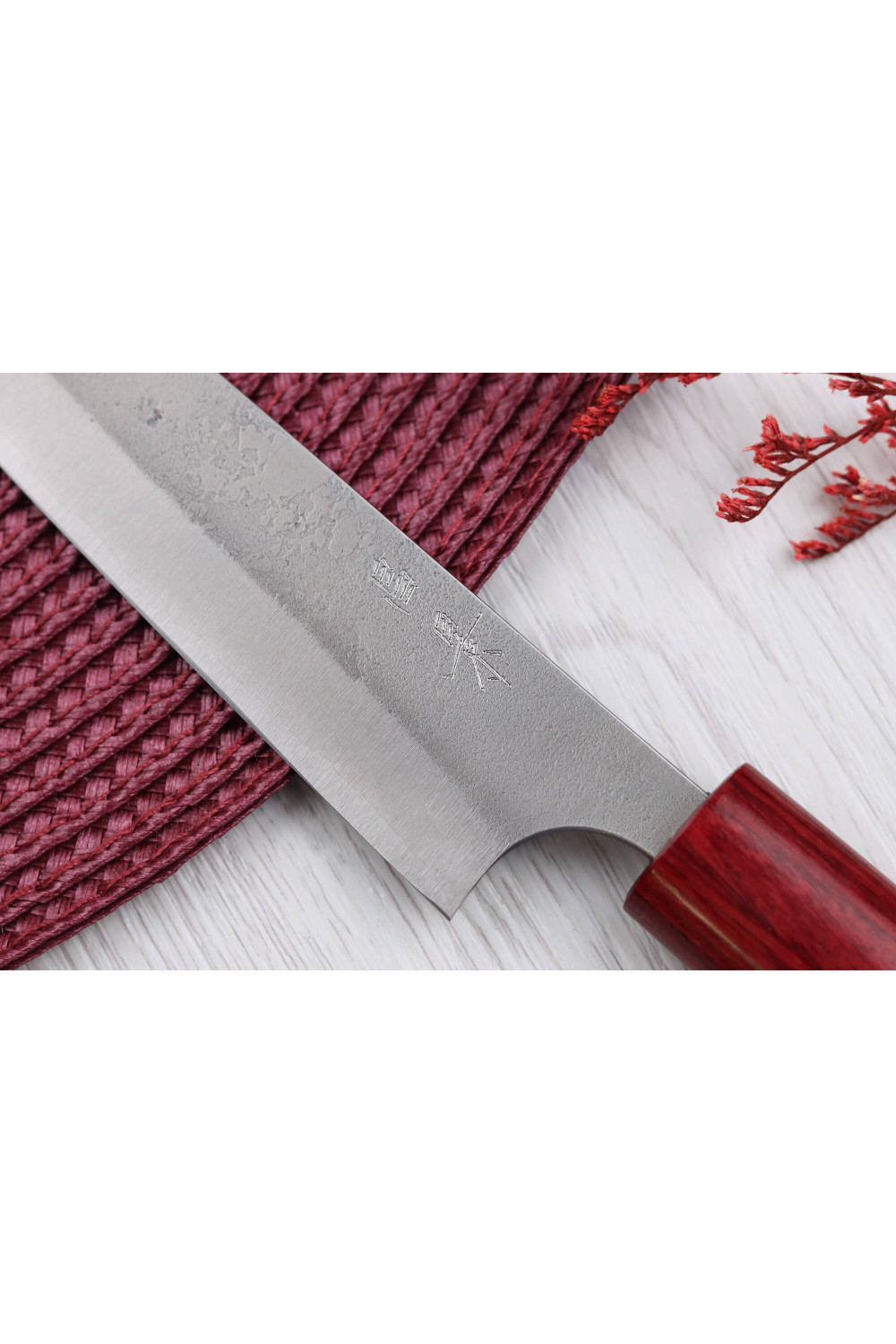
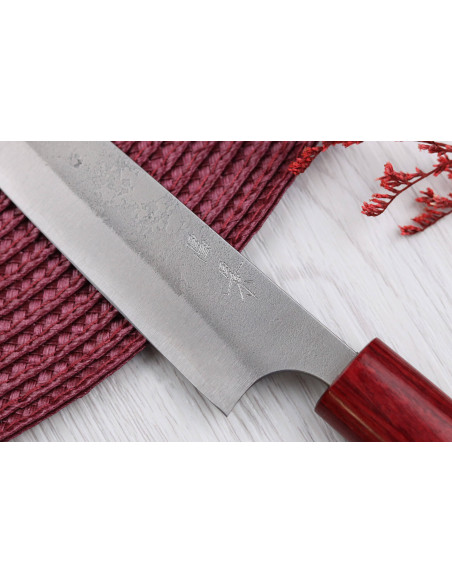
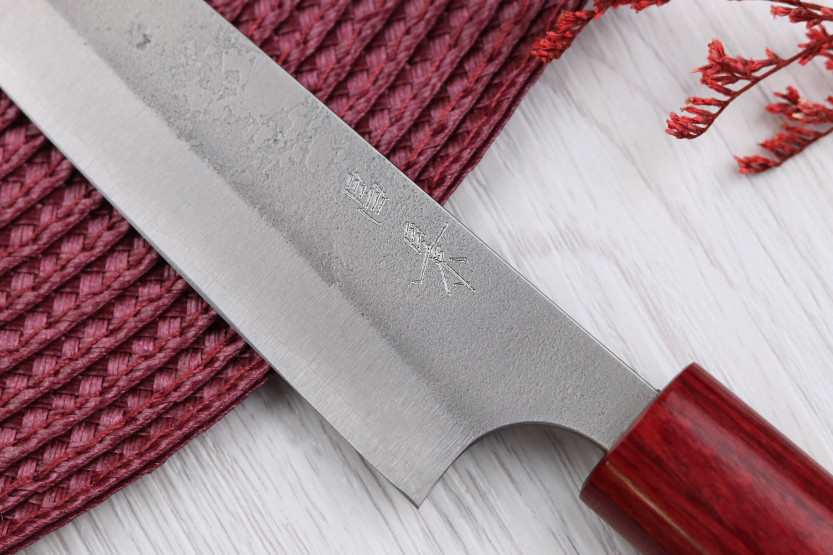
Finally, the core is surrounded by a softer layer of stainless steel, adding protection, "flexibility" and balance. This technique provides greater resistance to impact when cutting. You can see the superimposition of the steels all along the cutting edge, forming a fine wave with unique patterns.
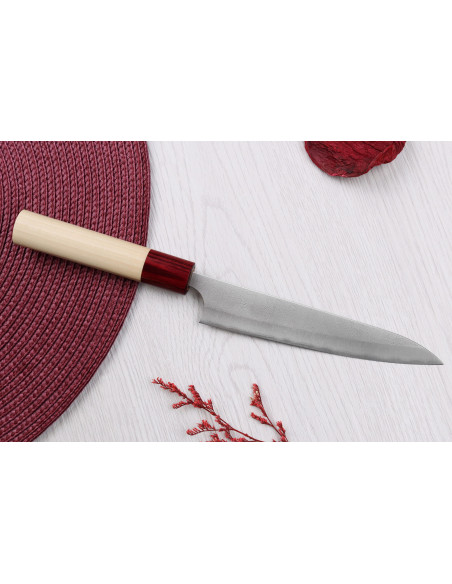
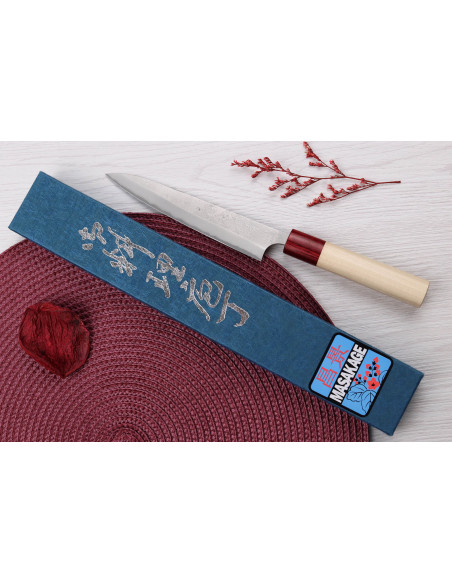
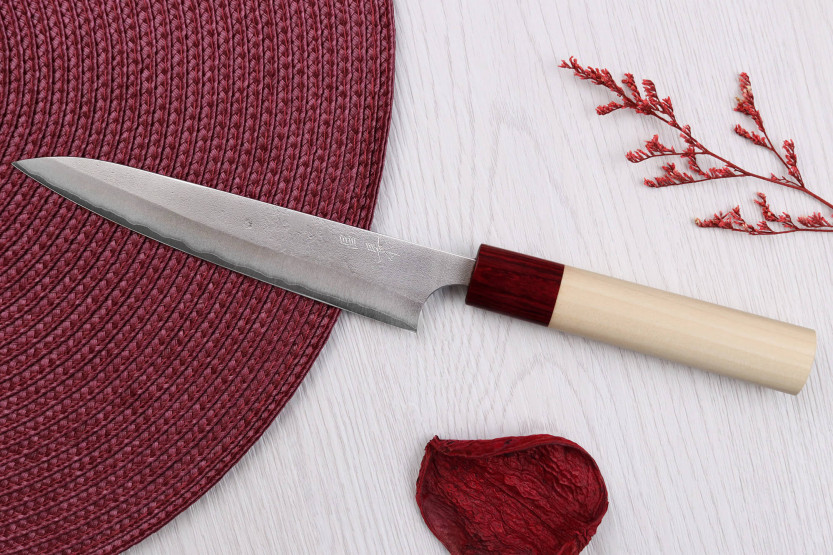
Hand-engraved kanji on the surface of the blade add a touch of authenticity. A nashiji finish appears on the blade, which has not been polished for a more traditional feel. This finish has a frosted appearance that perfectly matches the light wood handle, a visual reference to the range's name "Yuki", which means "snow" in Japanese.
The Japanese knife with an elegant wooden handle
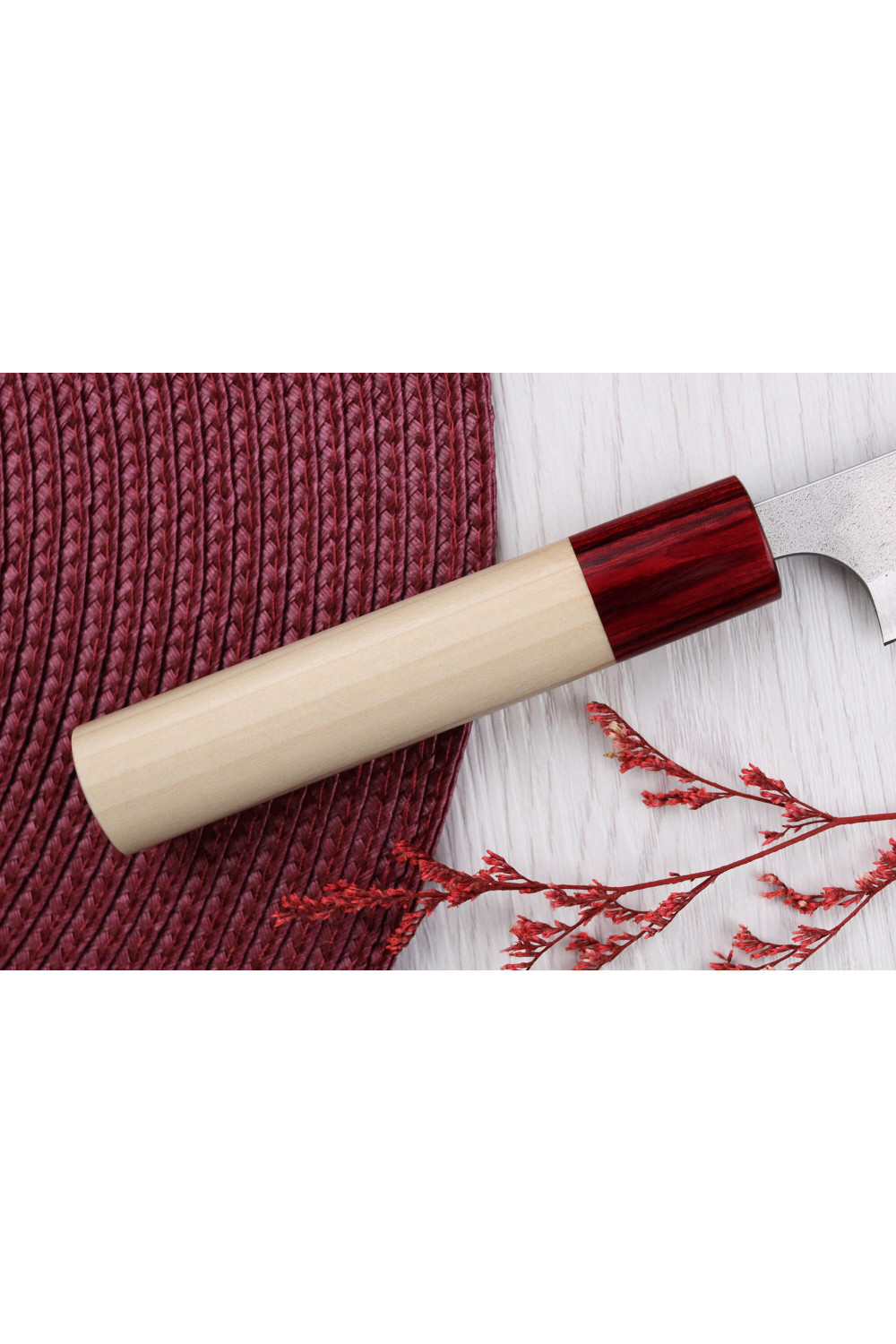
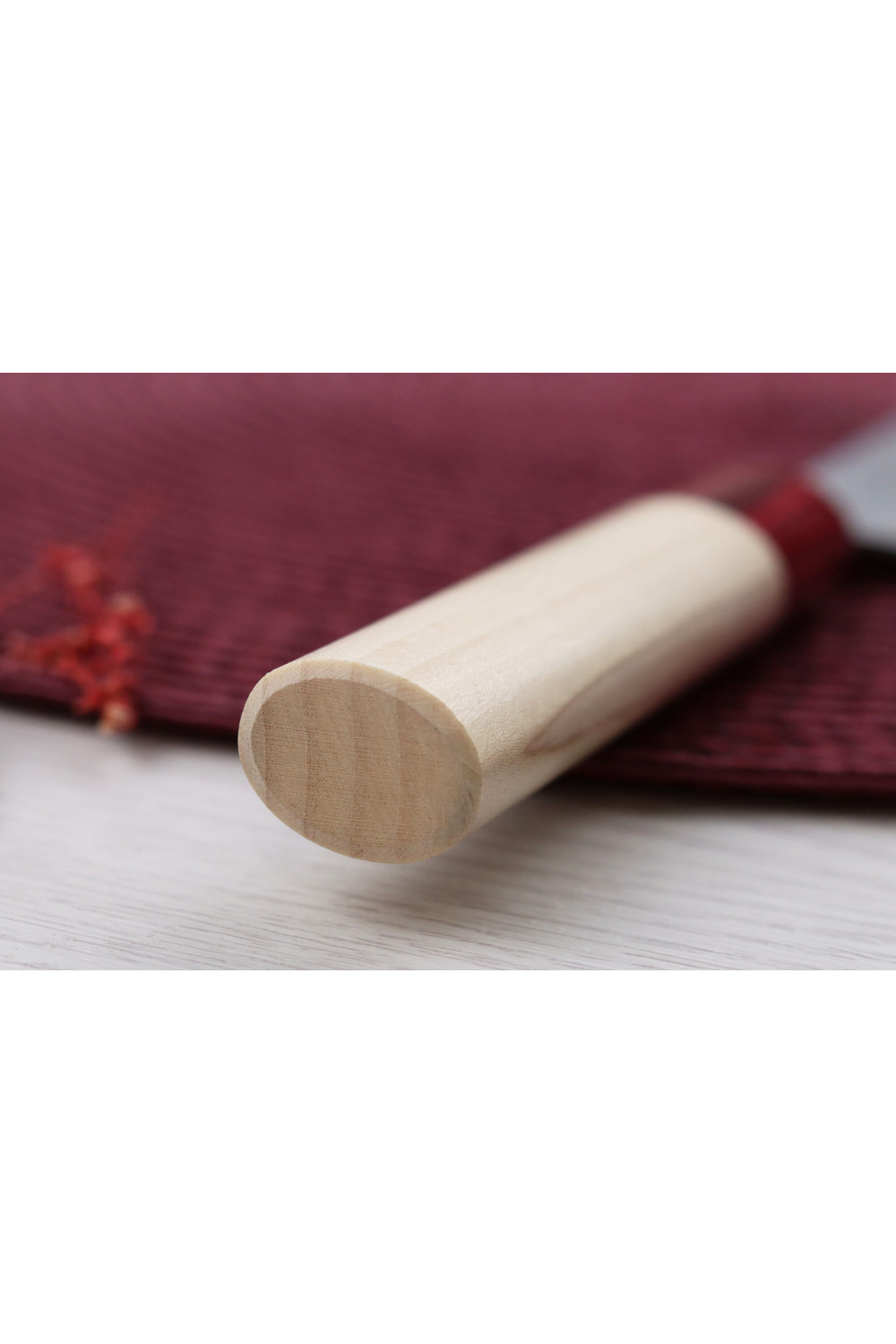
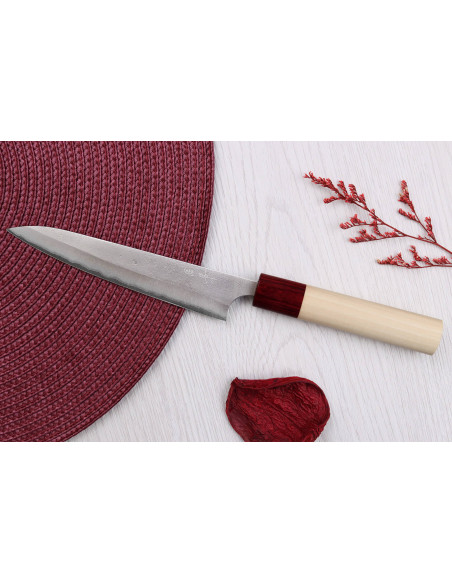
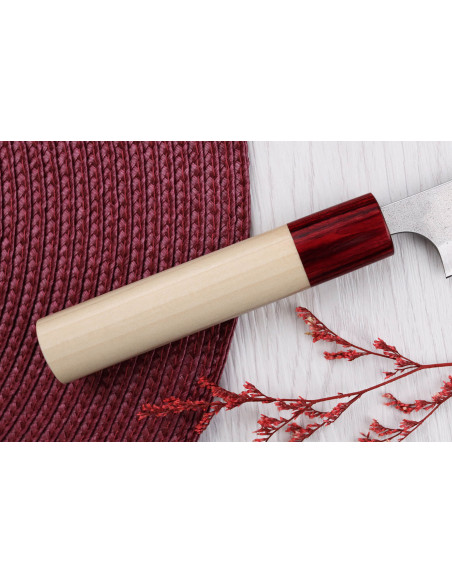
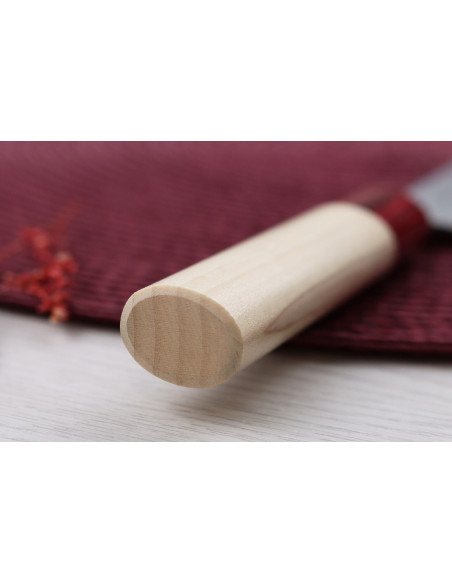
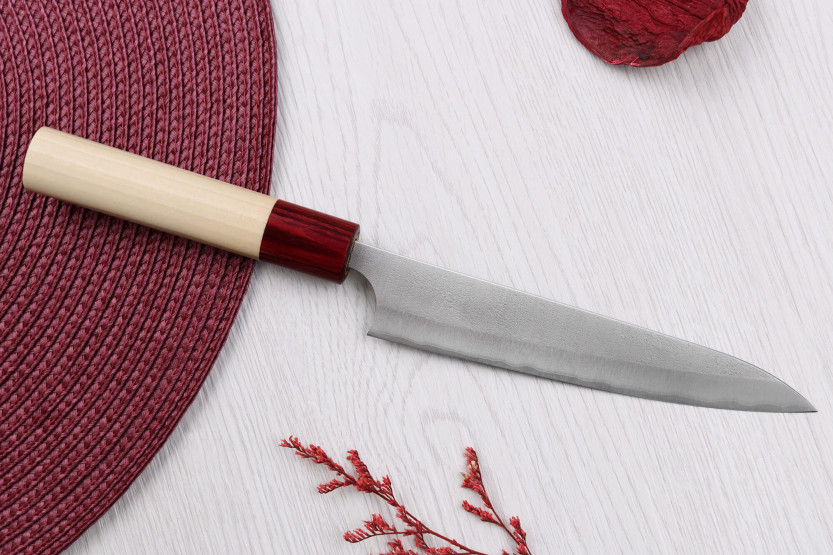
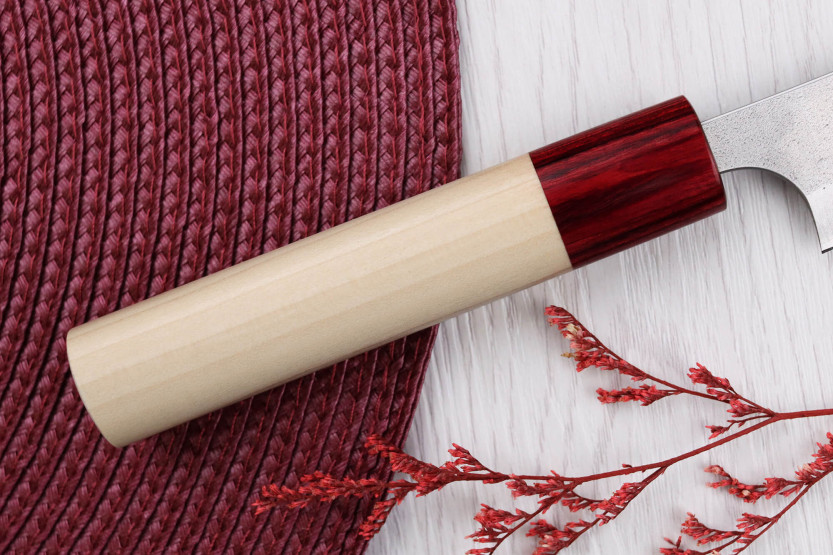
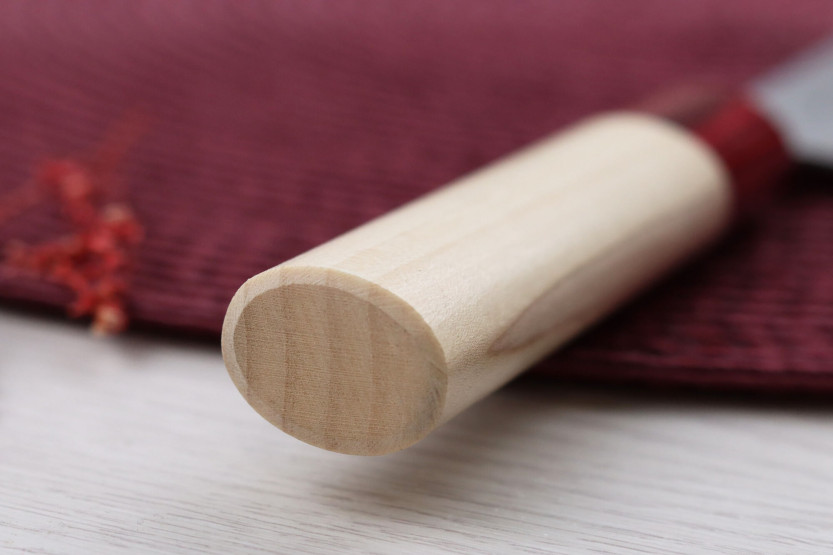
The handle of this handcrafted Japanese knife is made of magnolia wood, a grit species that is soft to the touch and very light. Cut in an oval shape, it's perfect for any cook's hands and offers a comfortable grip.
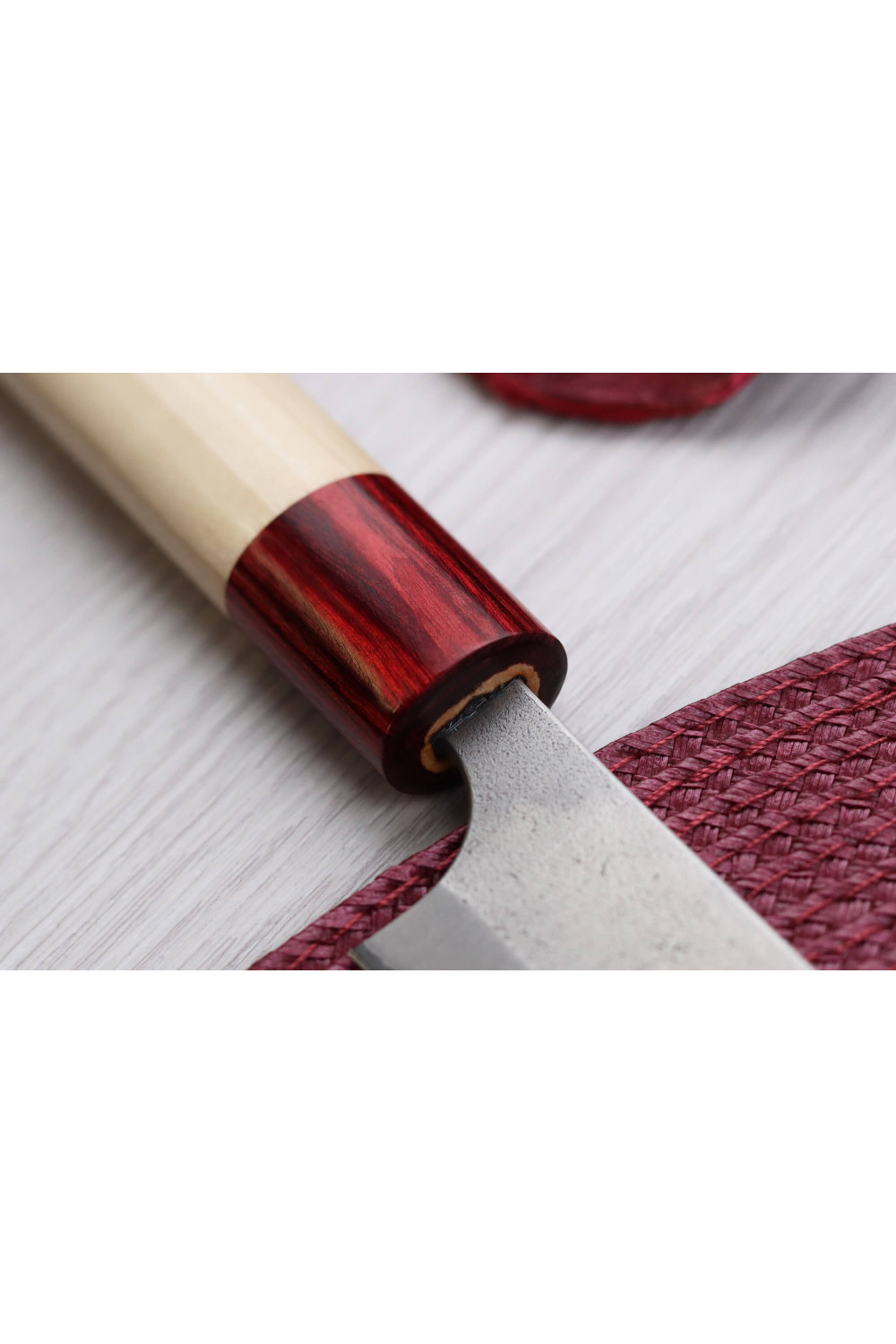
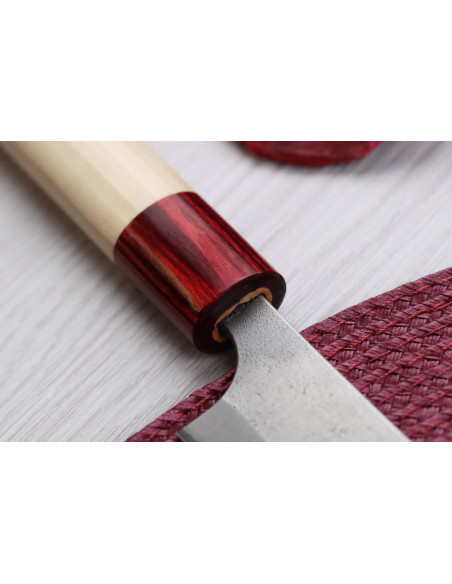
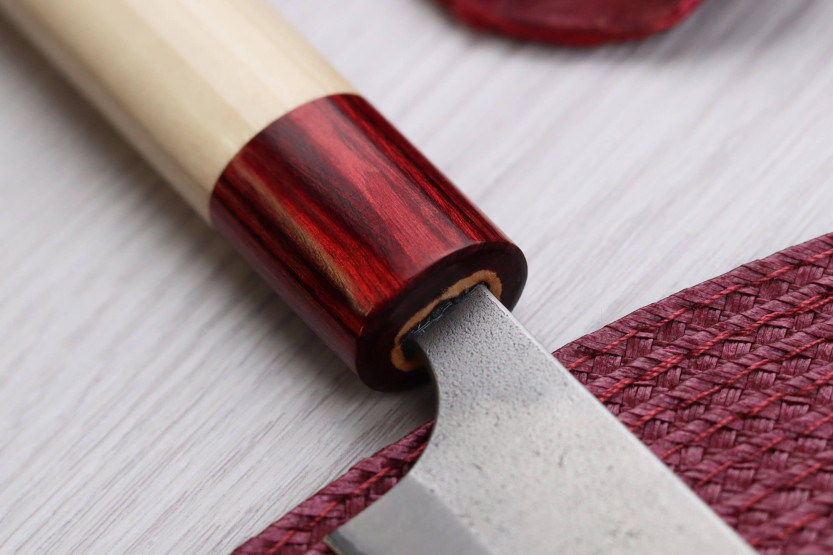
To complete the handle, a red pakkawood bolster is added to link it to the blade. This is a composite material made from laminated wood and resin that has the appearance of real wood, yet with enhanced strength capabilities.
Finally, wood putty is added where the blade joins the handle to fill in the small gaps. This makes it watertight and prevents water infiltration.
Caring for a handcrafted Japanese knife
Your craft knife should be washed only by hand with a non-abrasive sponge and mild detergent, avoiding over-wetting the handle. Once cleaned, wipe dry immediately for storage in a dry place.
Do not use the dishwasher or leave it to soak in the sink!
Over time, the color of the blade may vary slightly, which is normal! This is a natural carbon reaction caused by the acidity of the food you're cutting and the humidity in the air.
Find many knives forged by Yoshimi Kato on KnifeLeader.eu!


 By buying this product you can collect up to