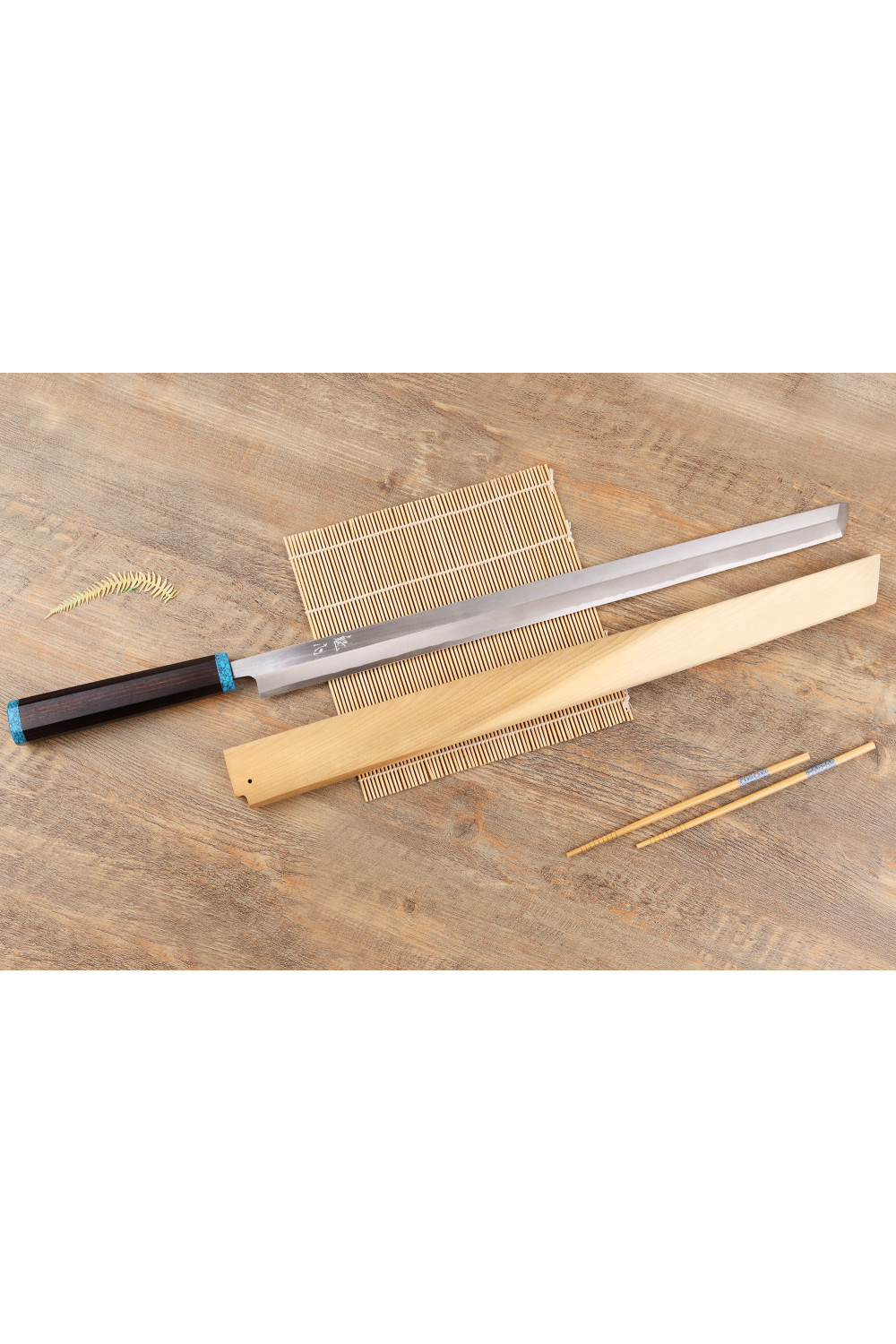
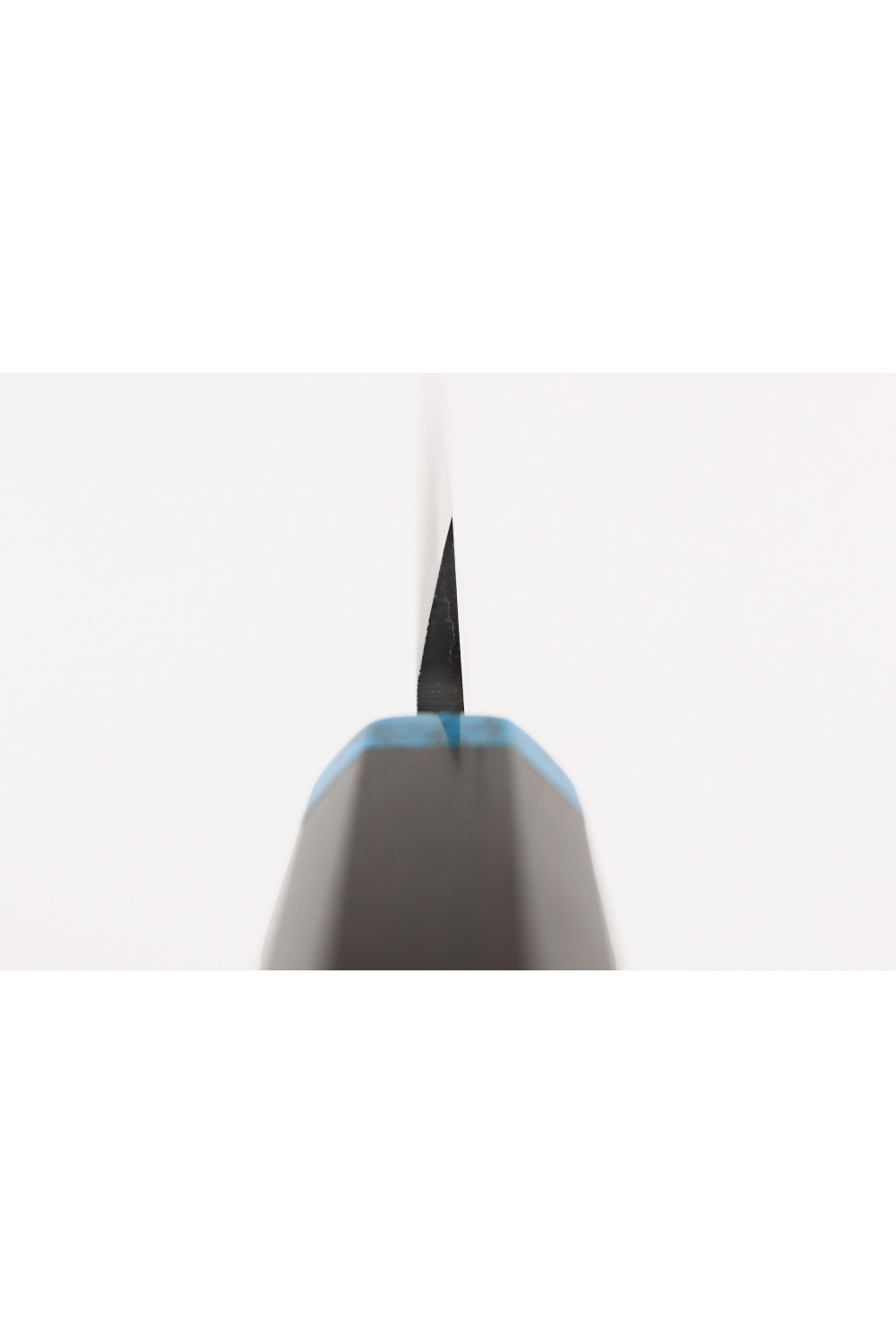
A 54-cm maguro—truly spectacular in size!
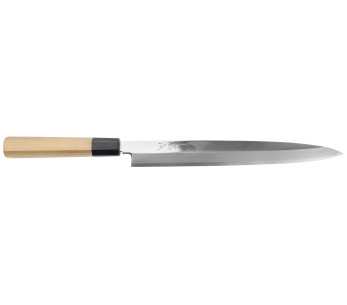
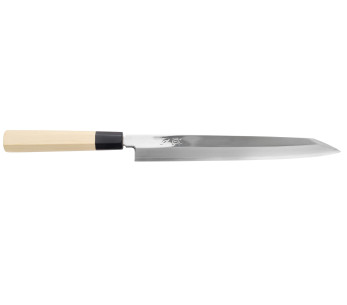
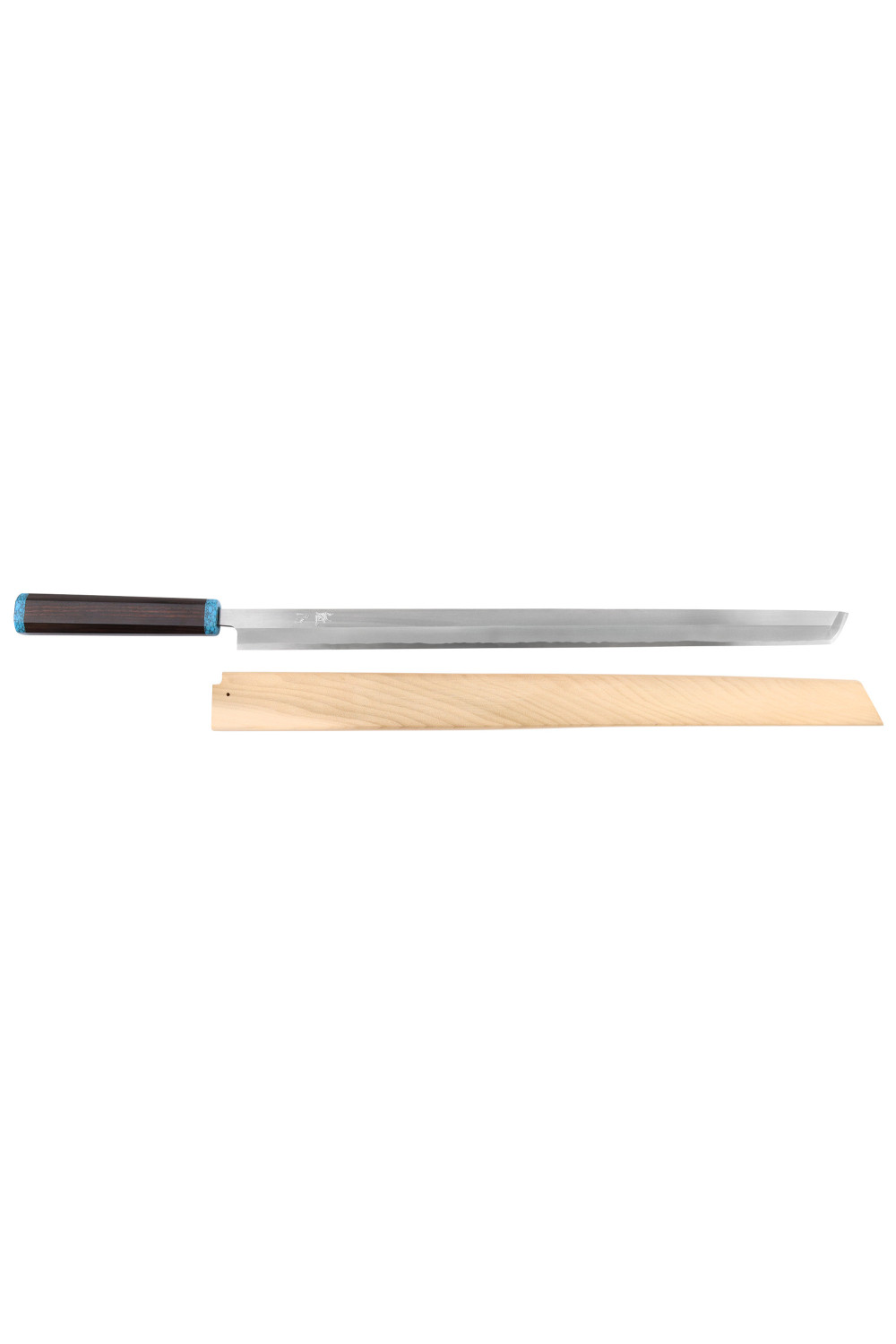
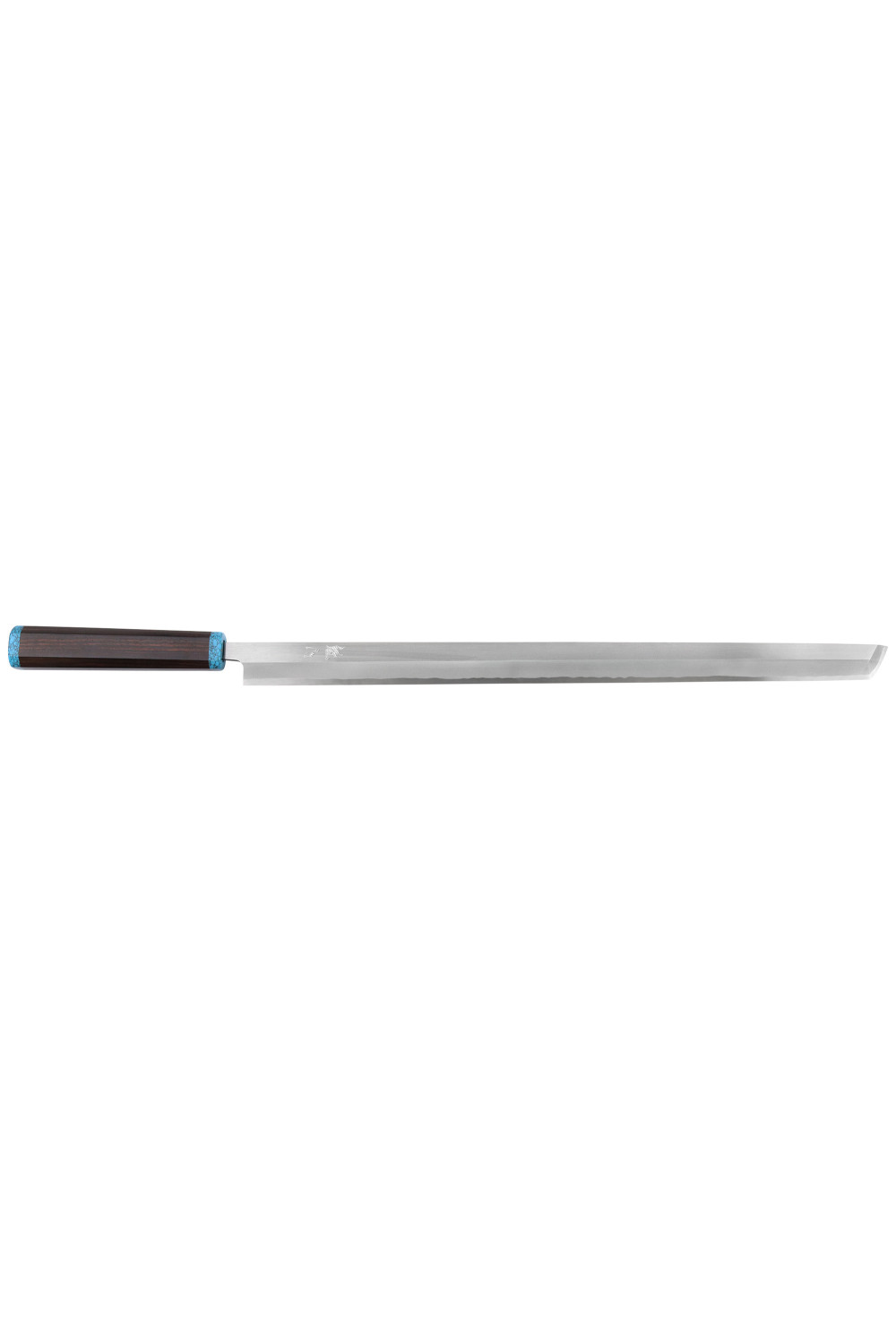
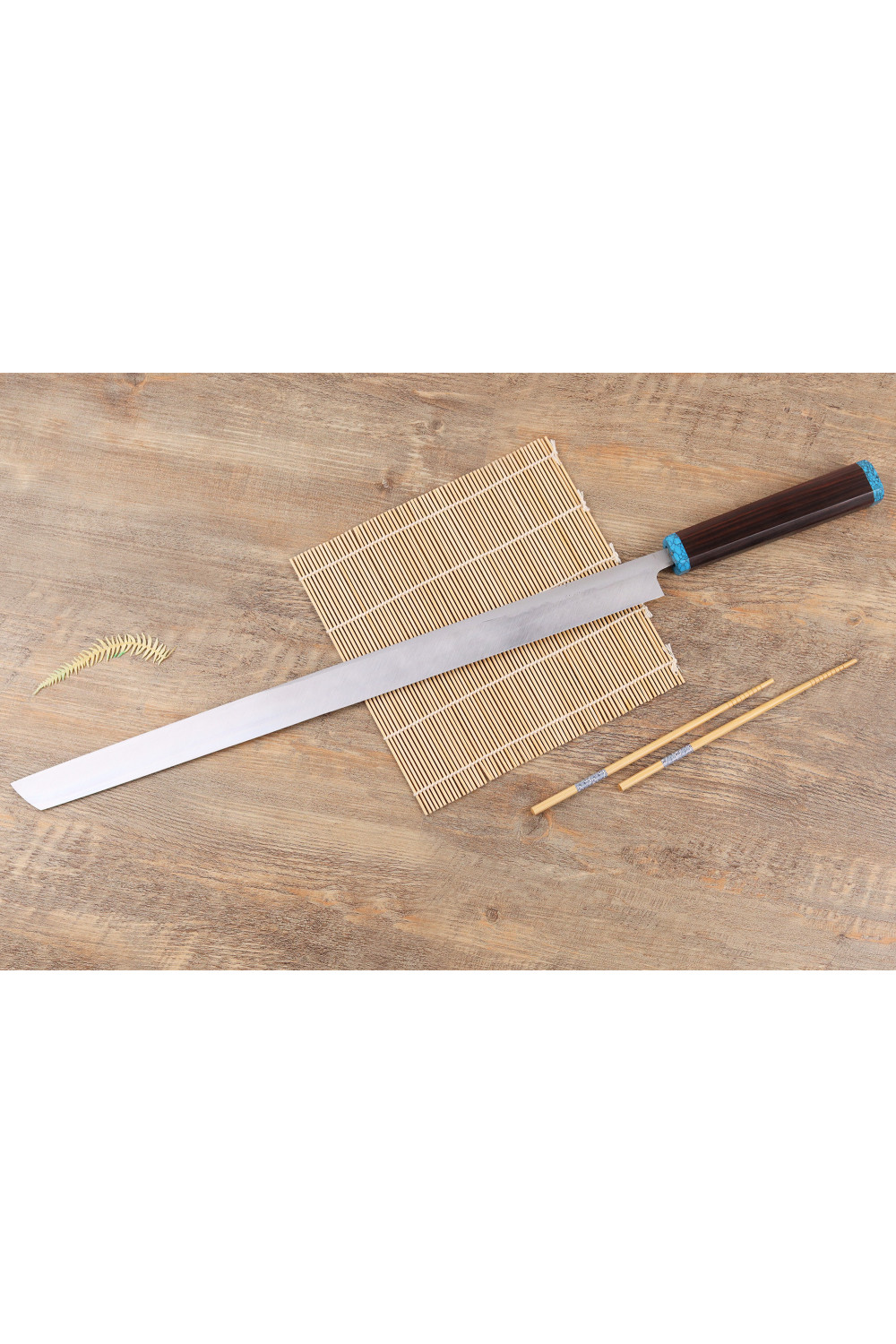
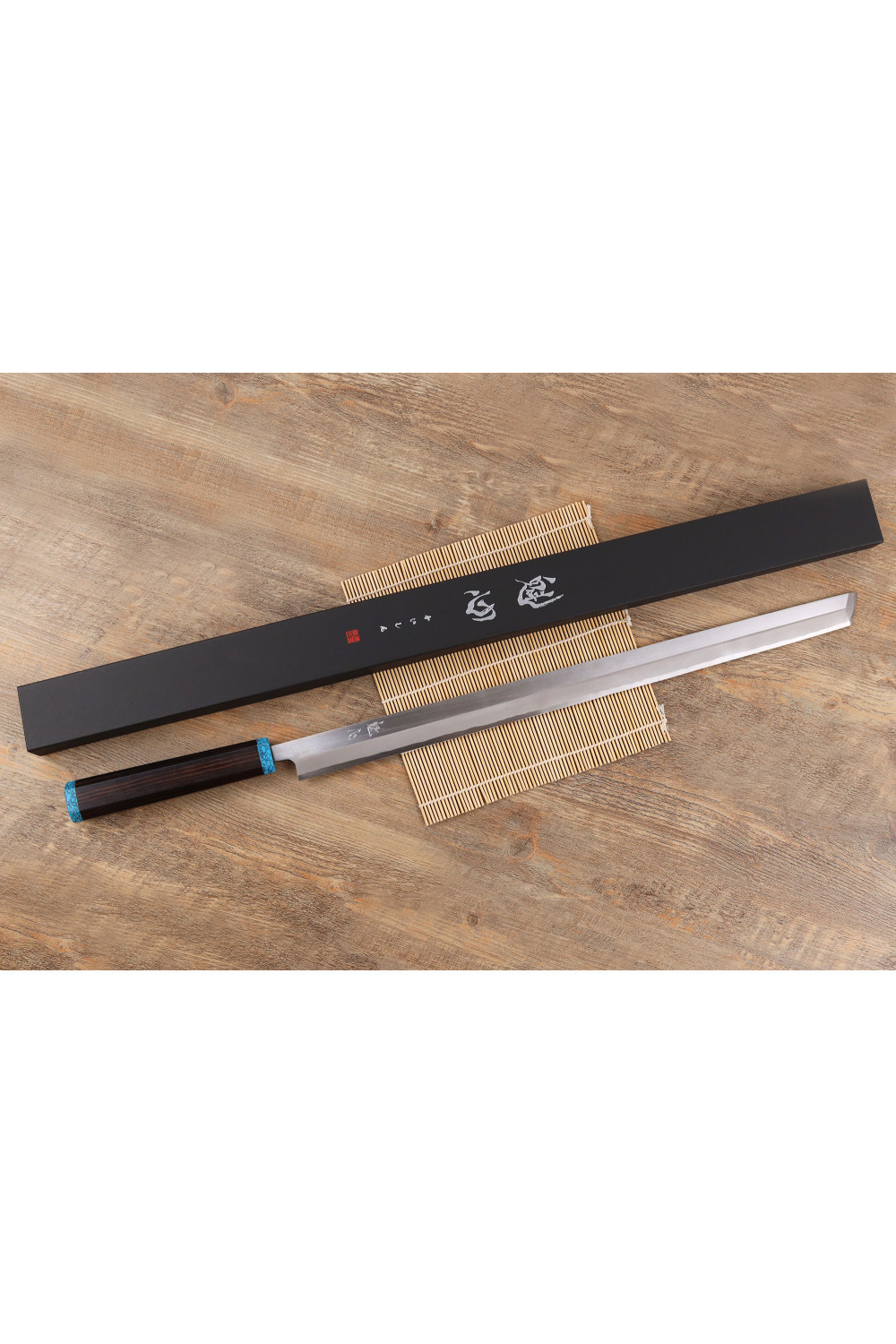
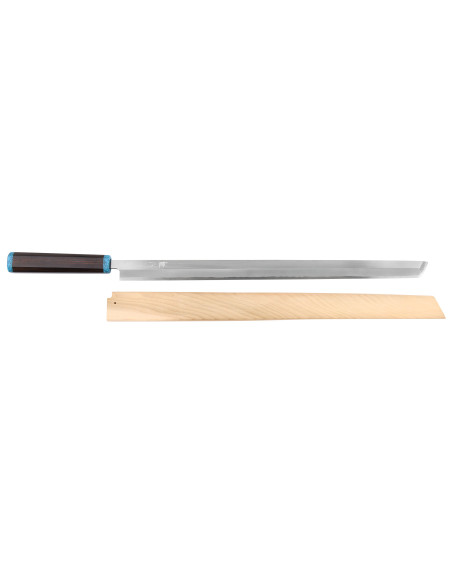
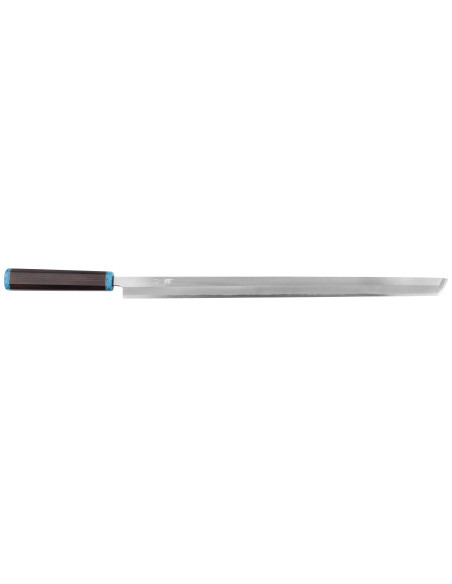
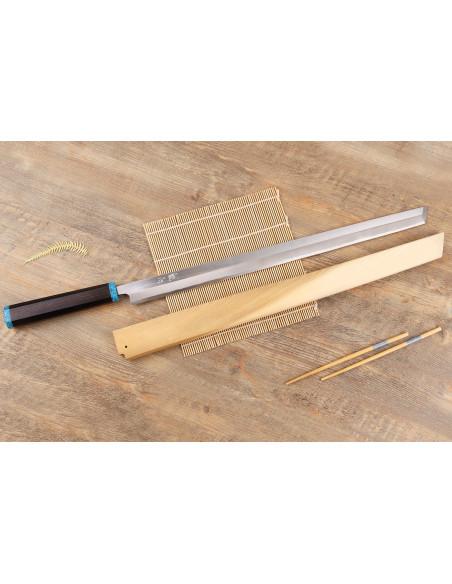
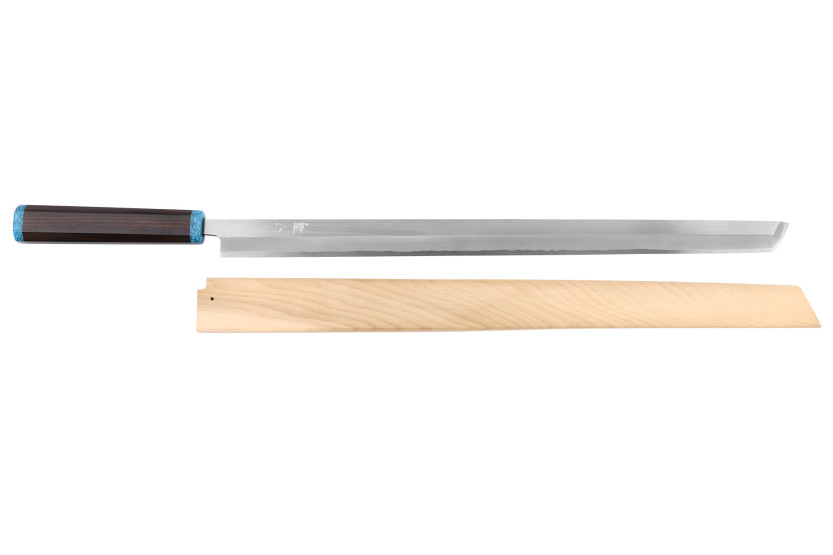
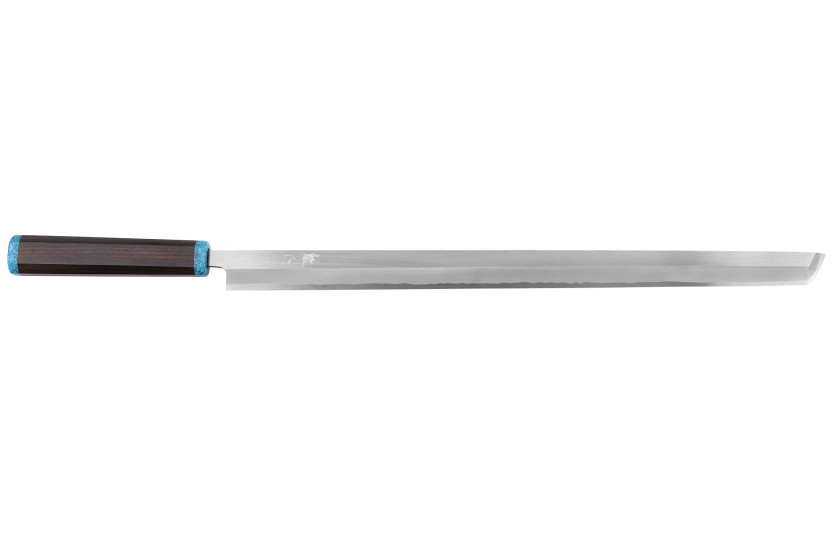
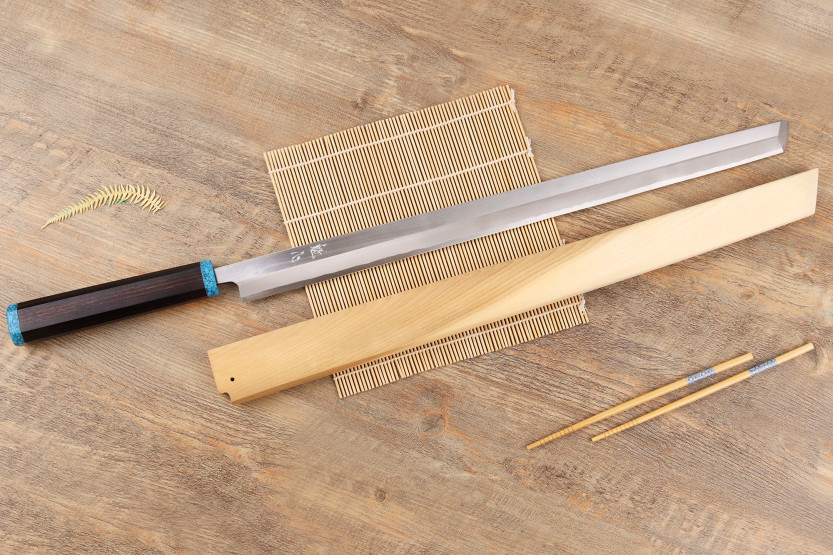
The Nakamura WS2 54-cm handcrafted Japanese maguro tuna knife in ebony with a saya is an impressive piece of traditional Japanese cutlery! Also known as a Maguro bōchō, this type of very large knife is specially designed for cutting up whole tuna and working with large pieces of fish, particularly in Japanese markets and specialty restaurants. Its long 54cm blade allows for wide, precise, and even cuts while preserving the quality of the flesh. Handcrafted in Sakai, this artisanal tuna knife combines Shirogami #2 steel, an elegant Kasumi finish, and an ebony handle enhanced with turquoise accents. Presented with its wooden saya, it is also a remarkable piece for enthusiasts and collectors of Japanese knives!
A Shirogami #2 blade for preparing large cuts of tuna
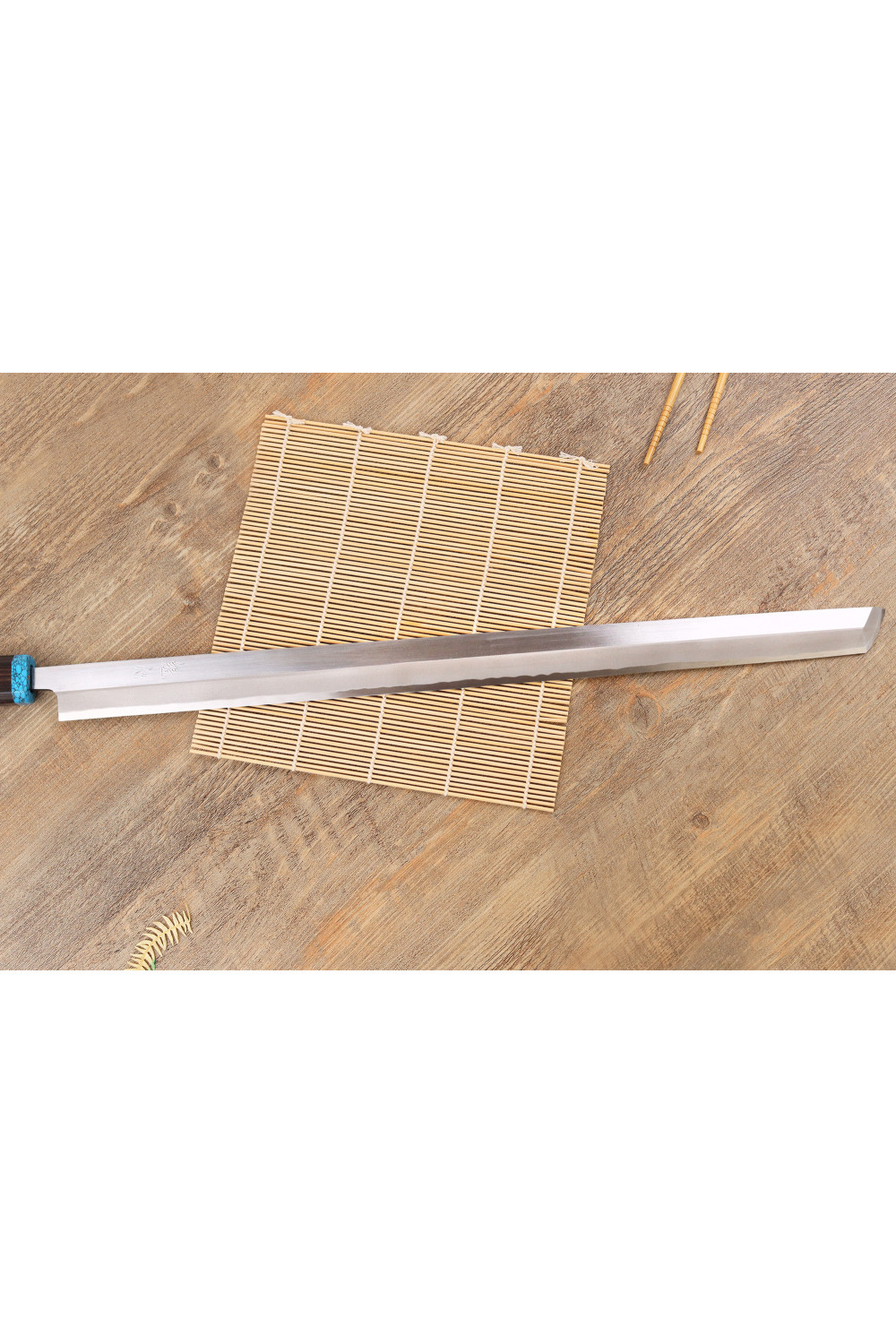
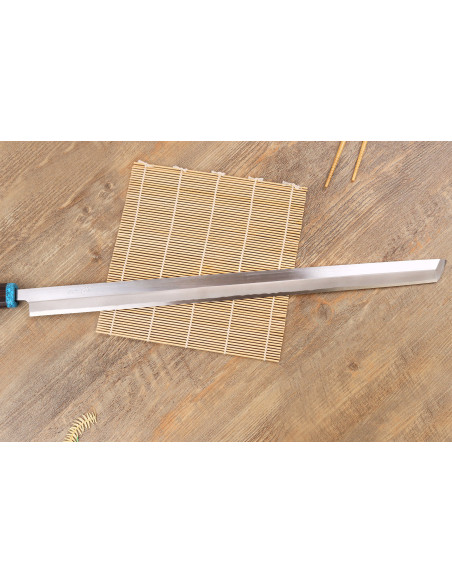
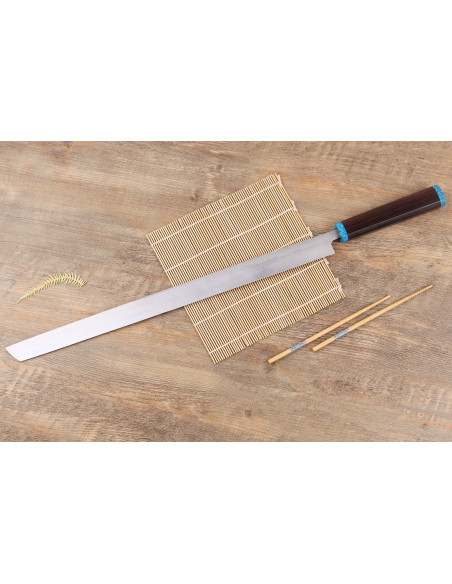
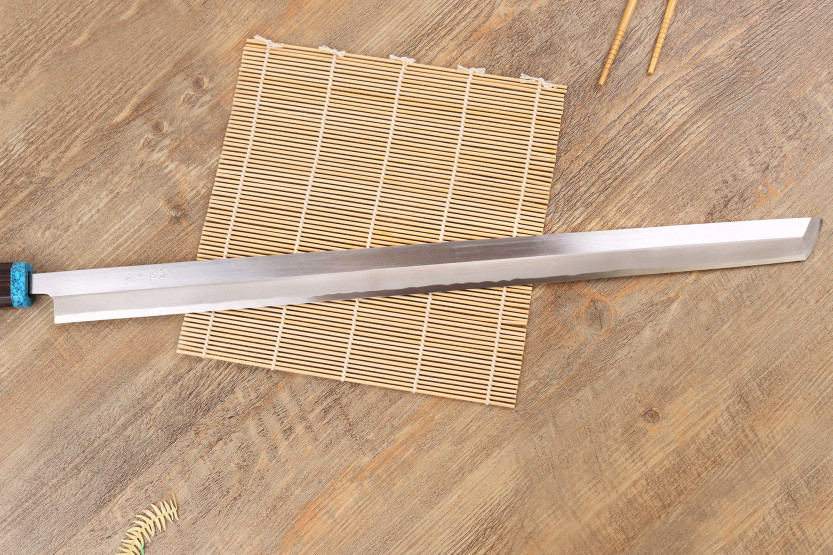
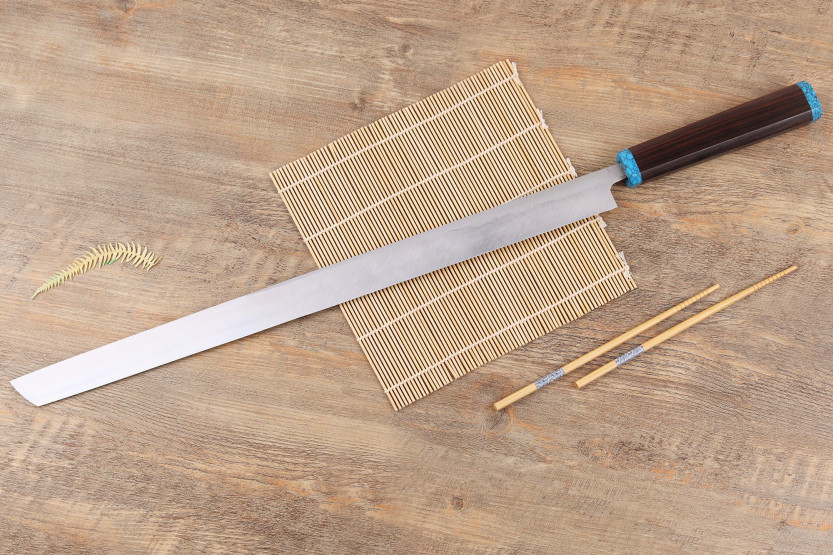
The first distinctive feature of this maguro is its 54-cm length, an unusual size for a home kitchen. This length allows for smooth cutting motions on large portions of fish, with a range of motion that is difficult to achieve using a conventional knife. The maguro follows the tradition of Japanese knives specialized for working with tuna, where the length of the cutting edge is designed to handle the large pieces of fish being prepared.
Its blade features a San Mai construction, consisting of three layers of steel. The central core is forged from Shirogami #2, also known as White Paper Steel #2, a Japanese steel containing approximately 1.2% carbon. It is particularly prized for its ability to be sharpened to a very fine edge and for the clean cut it delivers. Two outer layers of softer steel surround this hard core and contribute to the blade’s construction.
With a Rockwell hardness of 61 HRC, the cutting edge offers excellent edge retention. This characteristic is particularly valuable during long cutting sessions, where the consistency of the cutting edge helps preserve the appearance of the meat. However, since Shirogami #2 is a high-carbon, non-stainless steel, it requires special care when exposed to moisture.
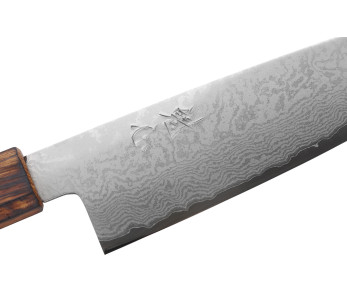
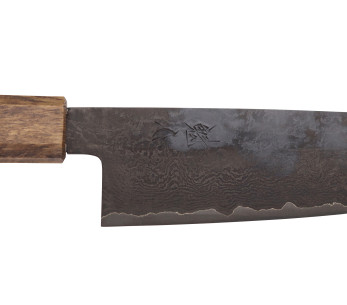
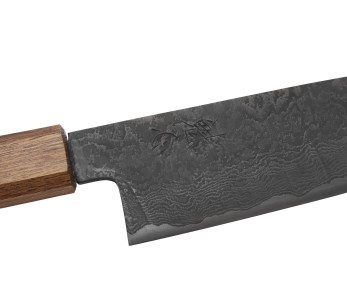
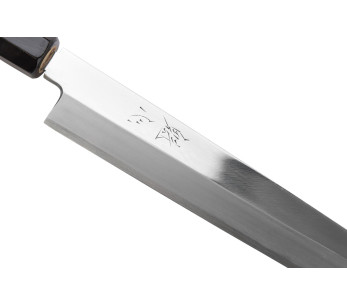
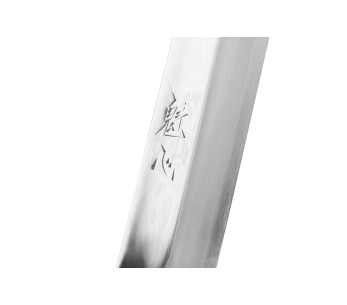
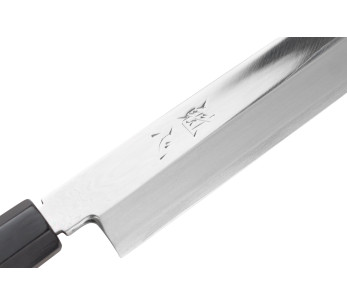
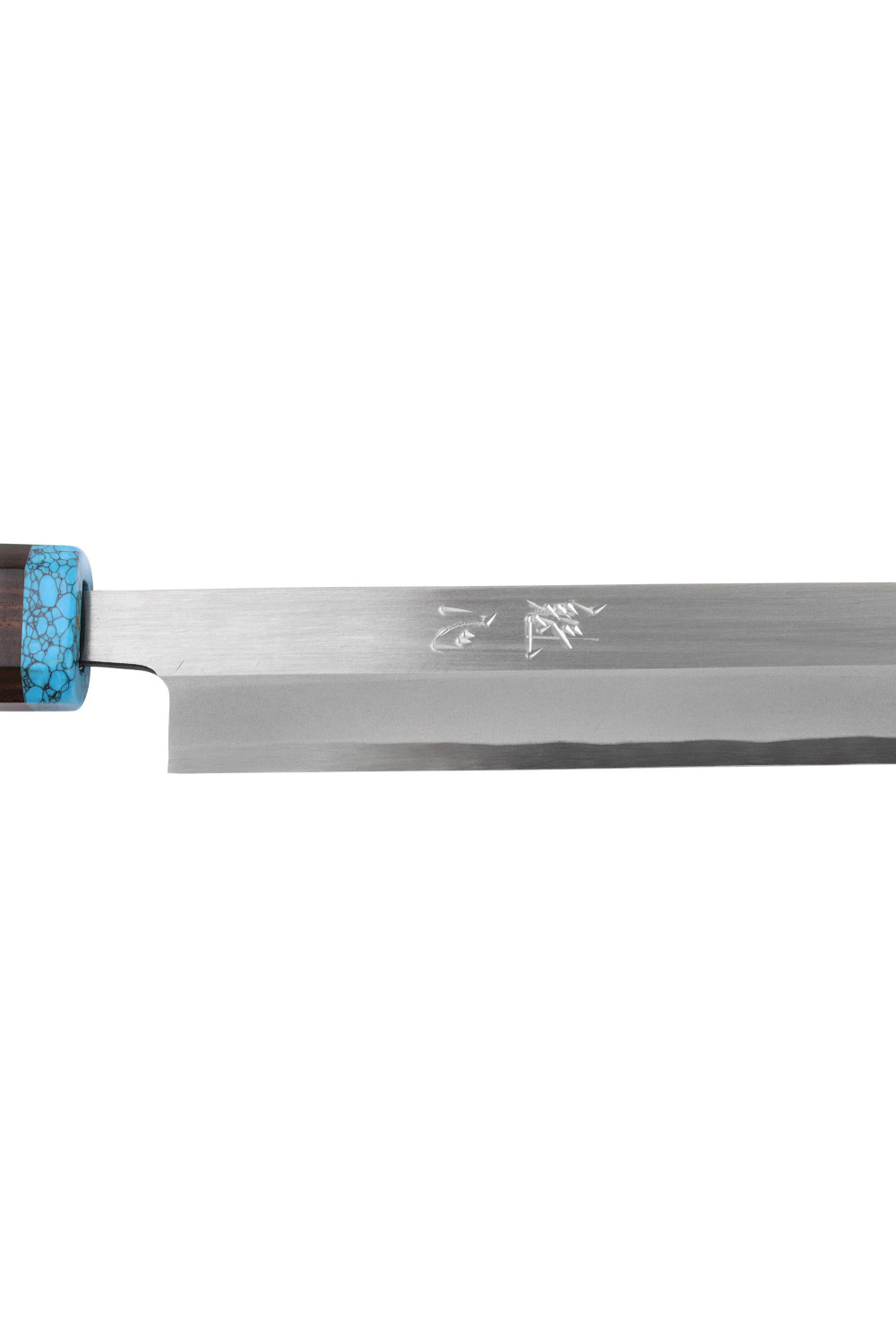
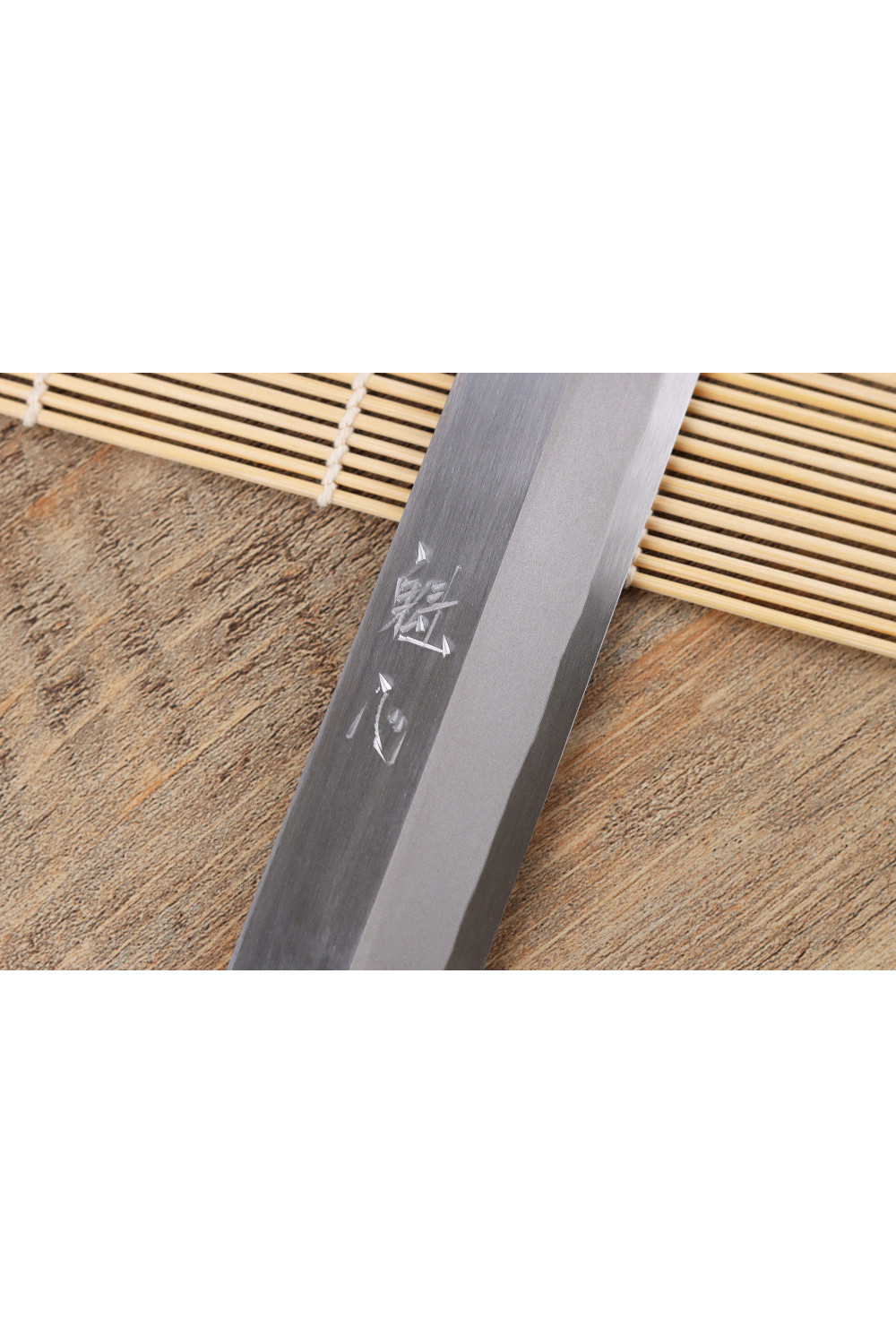
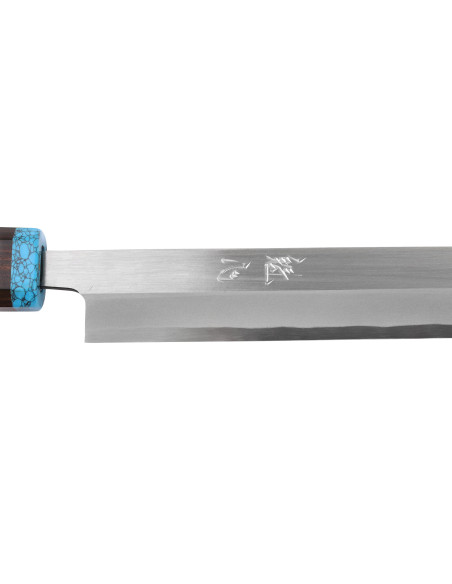
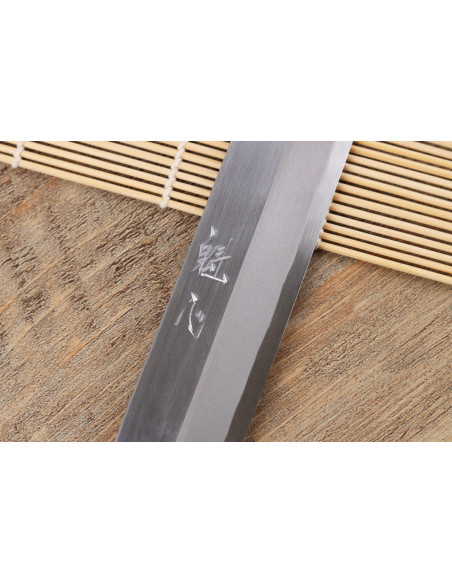
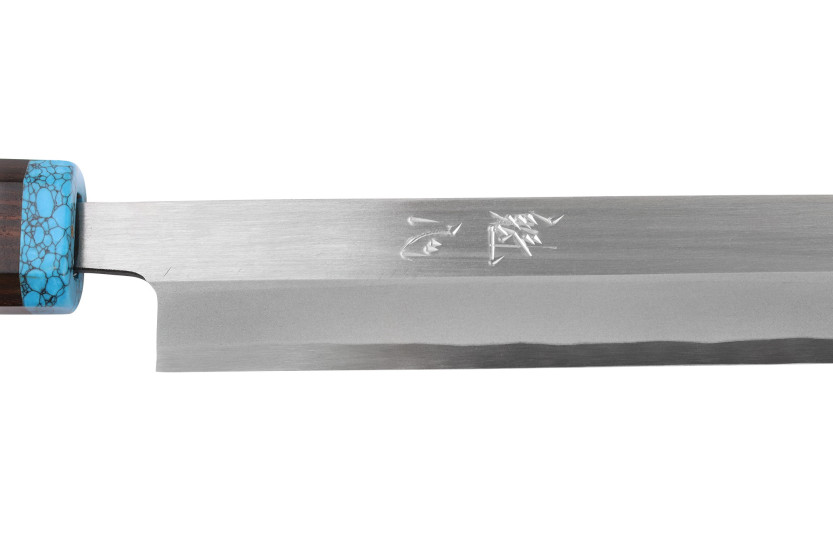
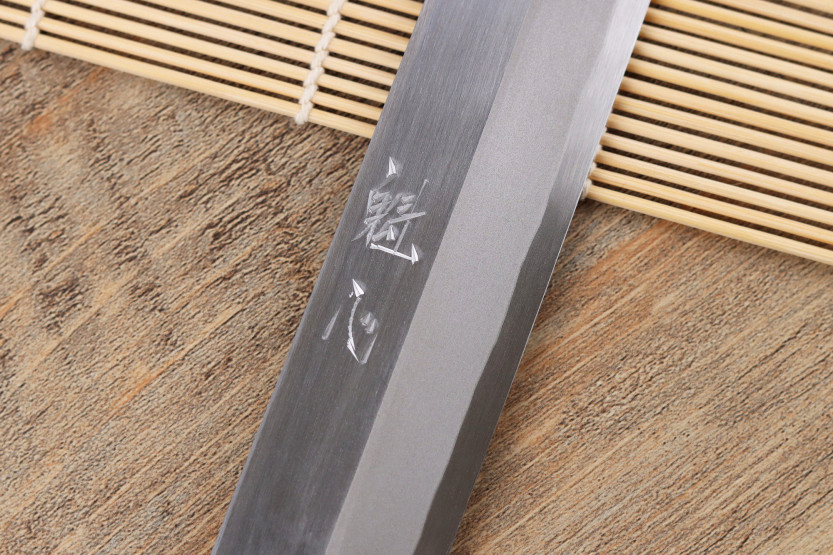
The blade features a satin Kasumi finish, recognizable by its slightly misty appearance, a characteristic of many traditional Japanese knives. It lends a visual softness to this large expanse of steel and highlights the contrast between the different parts of the blade.
Its asymmetrical grind for right-handed users allows for precise control of the cutting edge. This specialized geometry facilitates clean, controlled cuts, particularly useful for delicately preparing portions of fish. Despite its size, this maguro knife remains a precision tool: it should be used without twisting or coming into contact with bony parts.
Ebony and turquoise: precious materials for a one-of-a-kind piece
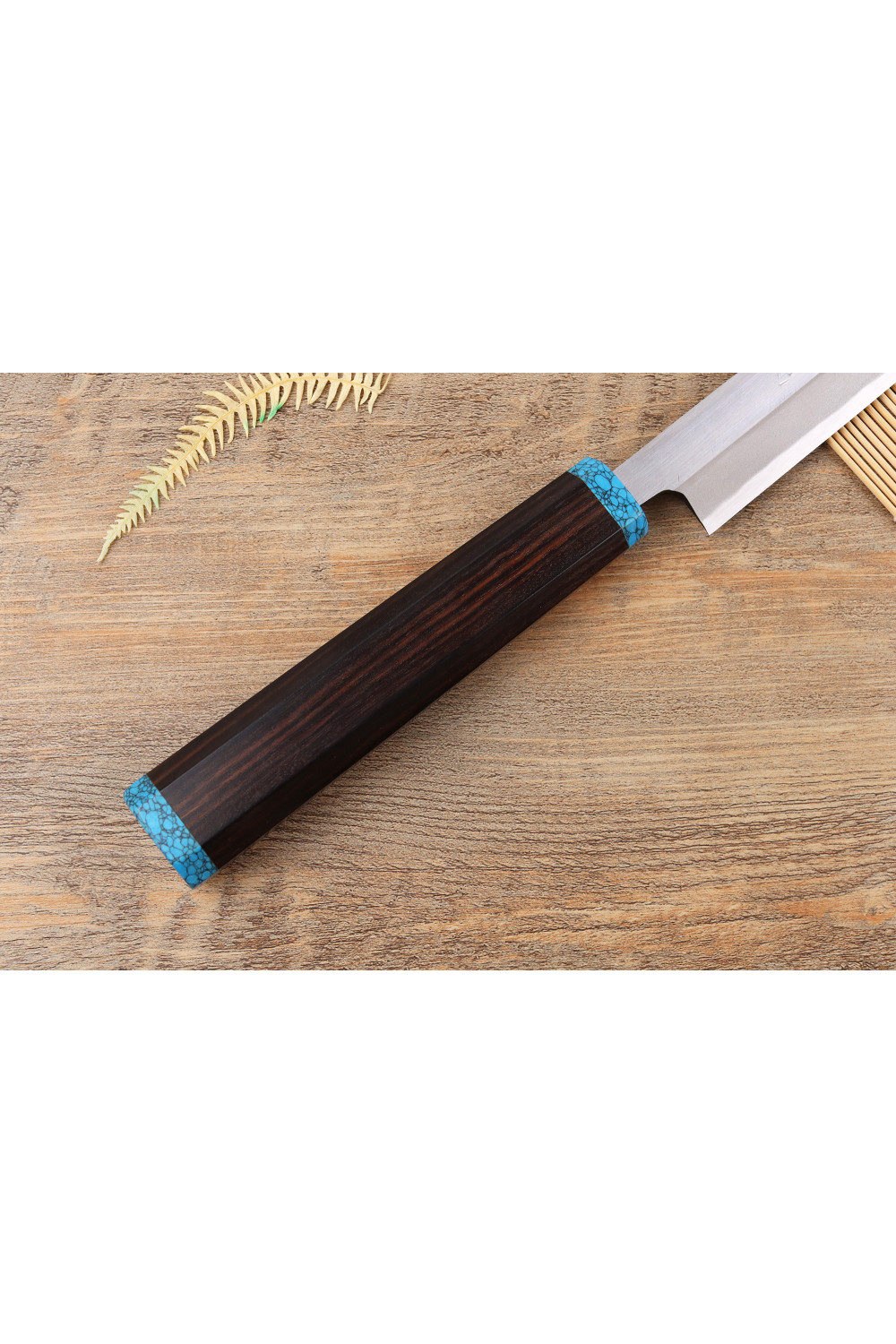
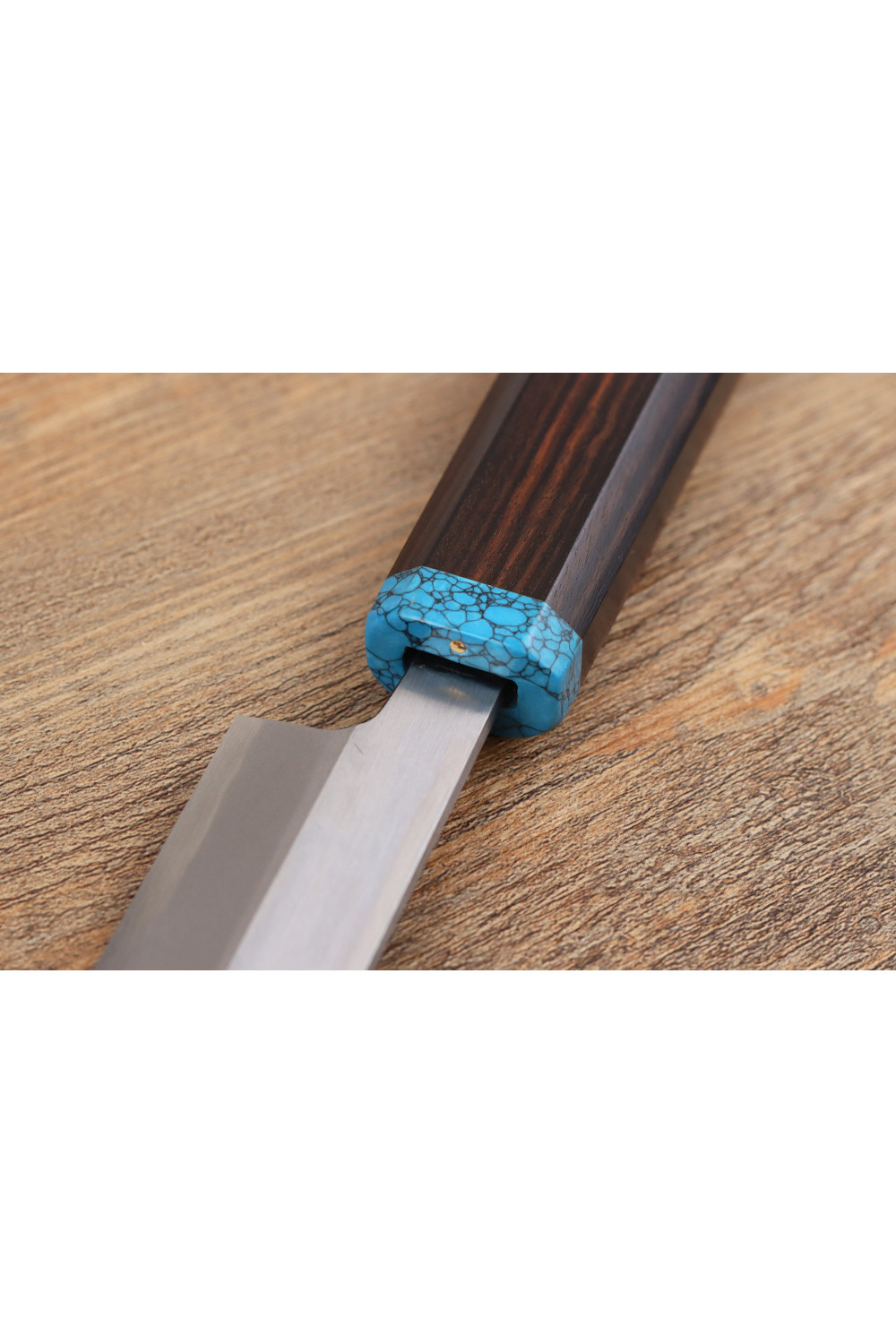
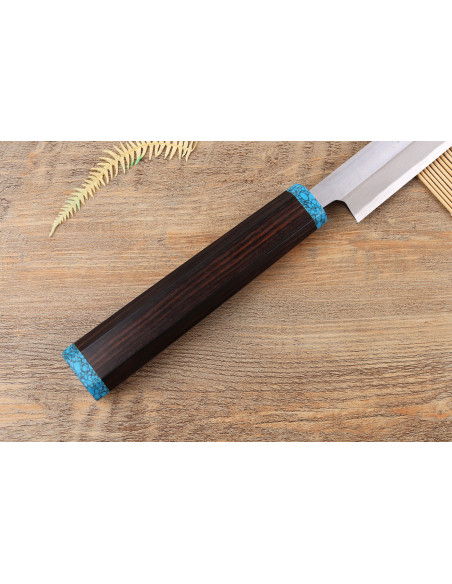
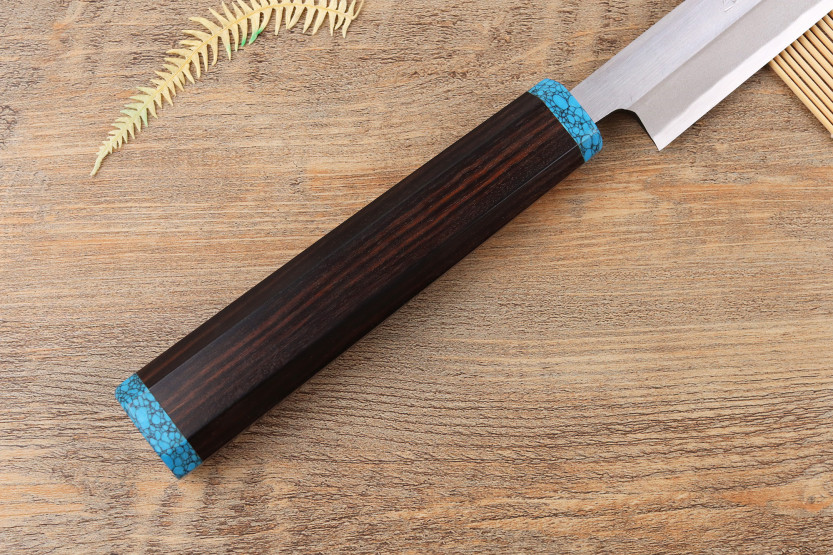
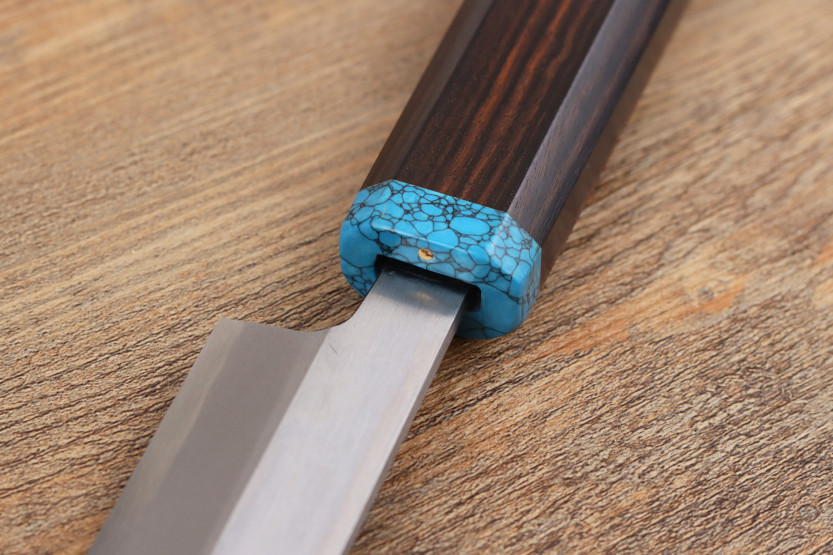
The handle of this knife is crafted from ebony, a wood renowned for its density, hardness, and naturally dark hues. Its deep appearance creates a striking contrast with the satin finish of the steel. The wood’s subtle grain adds a warm touch to this piece with its extraordinary proportions.
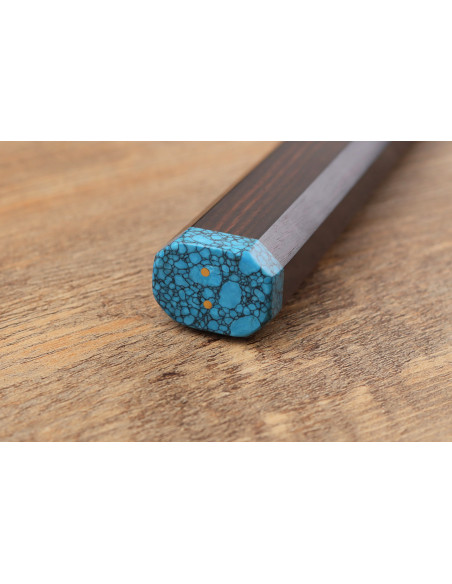
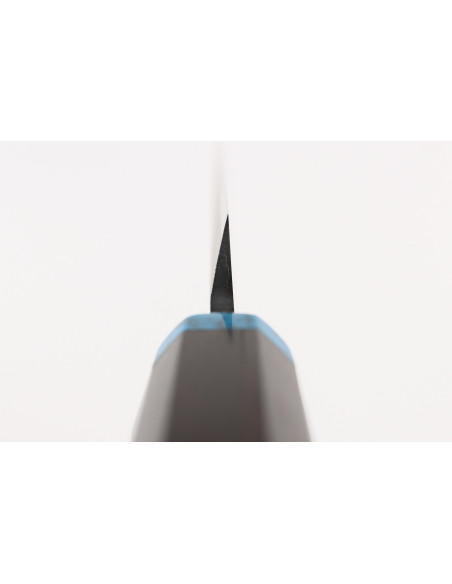
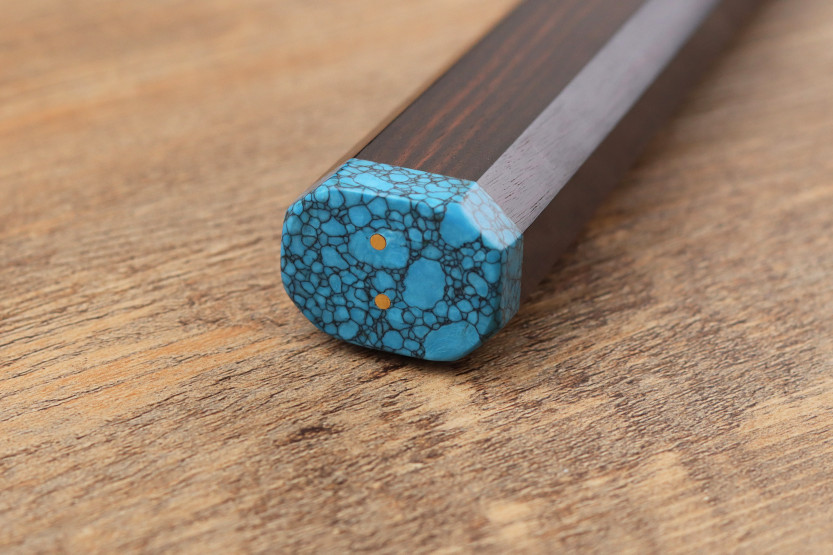
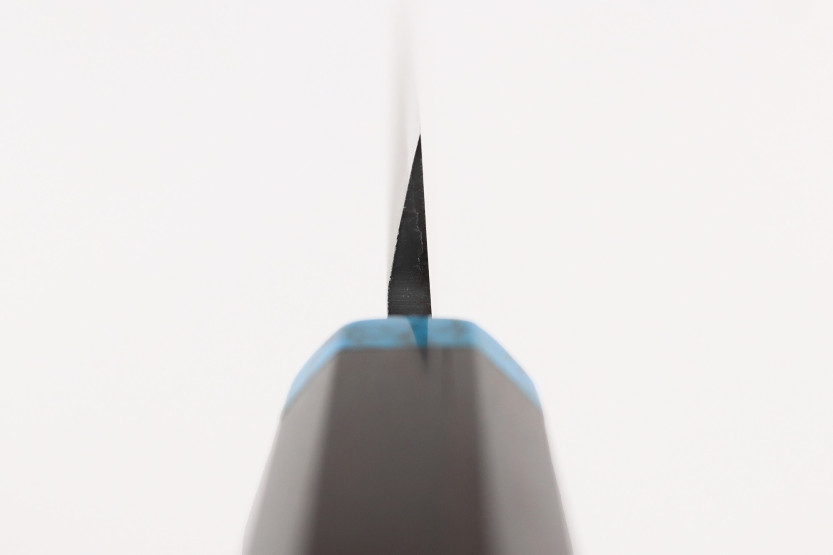
Its octagonal shape features eight facets that serve as reference points for finger placement. This traditional Japanese design makes it easier to guide the knife during cutting motions. With such a long blade, a stable grip and careful handling are essential to maintaining control.
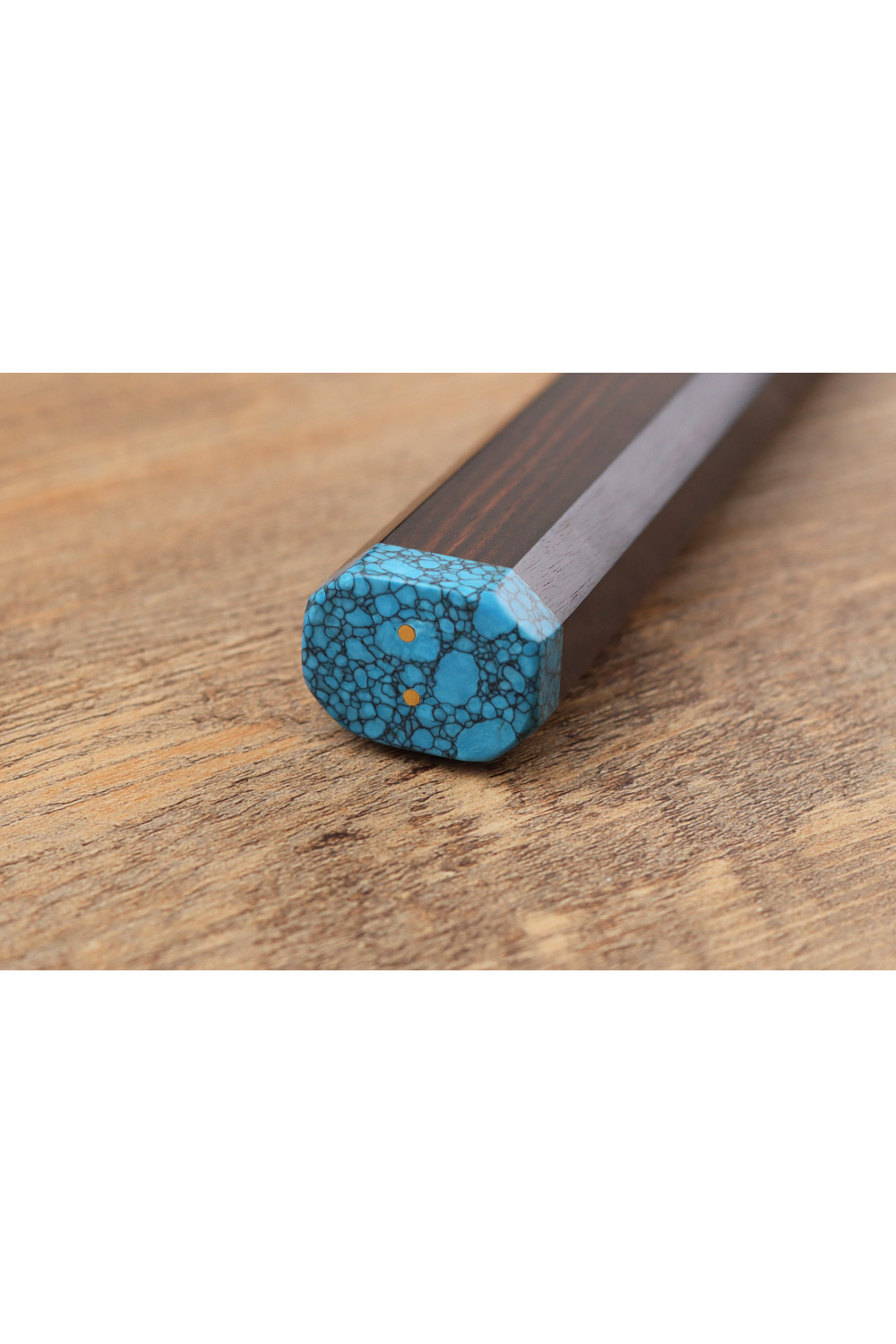
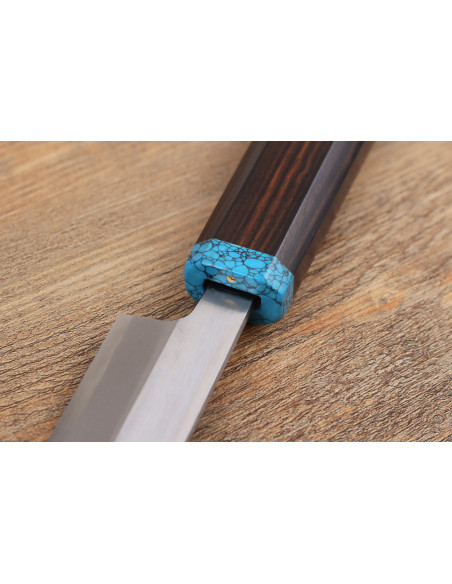
The originality of this model is also evident in its turquoise stone bolster and pommel. These two elements frame the dark wood and introduce an intense blue color that is particularly elegant. The natural variations in the stone contribute to the unique character of each handle.
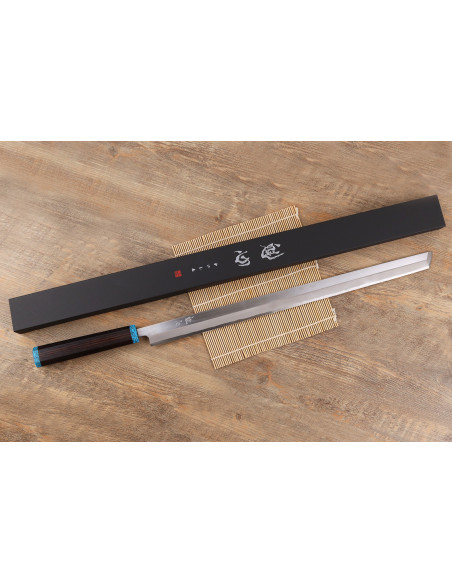
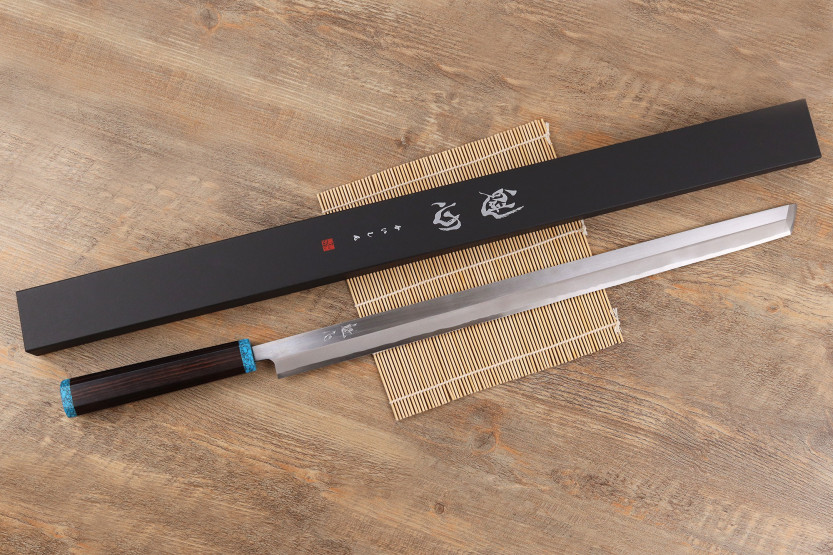
A wooden saya is included to house the blade when not in use. This traditional Japanese sheath protects the cutting edge from accidental contact and makes it easy to store this exceptionally large knife. The blade must be perfectly clean and dry before being inserted into the sheath.
With its ebony, turquoise, and Kasumi finish, this maguro has a striking visual presence. A creation that naturally belongs in a collection of handcrafted Japanese cutlery, while retaining its primary purpose: the specialized cutting of tuna!
Features and Benefits
-
- 54 cm blade: long blade suitable for working with large cuts of tuna
- 3-layer San Mai construction: central core surrounded by softer steel
- Japanese Shirogami #2 steel: approximately 1.2% carbon, exceptionally
- fine edge
- 61 HRC hardness: excellent edge retention
- Kasumi satin finish: traditional
- Japanese
- misty appearance
- Asymmetrical grind for right-handed users: specialized cutting geometry
-
- Octagonal ebony handle: dense wood with dark hues
- Turquoise stone bolster and pommel: elegant decorative finishes
- Inlaid wood saya: protection suited to the long blade
- Handcrafted in Sakai: a piece born of the Japanese cutlery tradition
Caring for a carbon-enriched steel maguro
Shirogami #2 is susceptible to oxidation. While preparing food, wipe the blade regularly, especially after prolonged contact with moist ingredients. A natural patina may develop on exposed areas of the steel: this is normal and should not be confused with rust.
After use, wash the knife by hand only with a non-abrasive sponge, then immediately dry the entire blade with a soft cloth. Do not put it in the dishwasher or leave it soaking in the sink. For extended storage, a very thin layer of food-safe oil can help protect the steel.
Given its 54 cm length, handle and store this knife with particular care. Never use the cutting edge on bones, frozen foods, or hard surfaces. When sharpening on a water stone, be sure to maintain the asymmetrical grind; for a knife of this size, it is best to have it sharpened by a professional.
The Sakai cutlery heritage at Nakamura Hamono
In Japan, the city of Sakai, located in Osaka Prefecture, has a long tradition of blade making. Its history of cutlery production dates back several centuries and is based in particular on a division of labor among blacksmiths, sharpeners, and handle makers. This specialization allows different areas of expertise to come together in the creation of a single knife.
It is within this context that Nakamura Hamono, a Japanese company founded in 2015, operates. It showcases Sakai’s artisanal techniques by offering knives that combine traditional craftsmanship with carefully selected materials.
The maguro bōchō holds a special place in the world of Japanese knives. Historically used for cutting large tuna, particularly in fish markets, it serves a very specific purpose: handling large cuts with a blade long enough to perform broad, smooth strokes. Some traditional models reach impressive sizes and even require two people to handle them.
With its 54-cm blade, this Nakamura model pays homage to that professional heritage. Its handcrafted construction, Shirogami #2 steel, and ebony and turquoise finishes also make it a piece of cutlery intended for discerning collectors.
Discover all handcrafted Japanese knives at Knifeleader.eu!




 By buying this product you can collect up to