The length of the yanagiba, the precision of the kiritsuke!
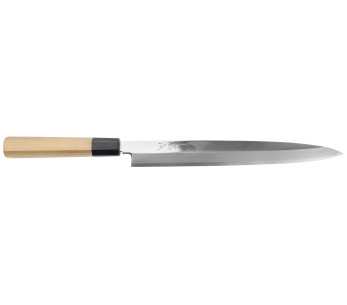
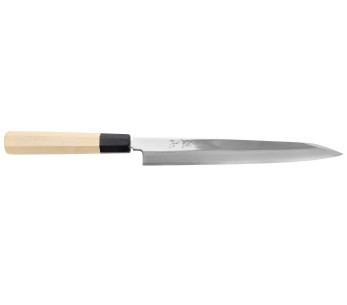
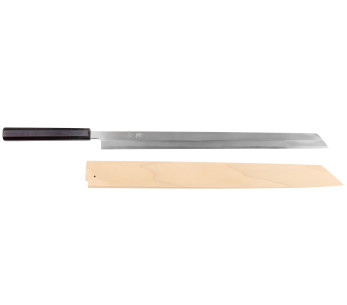
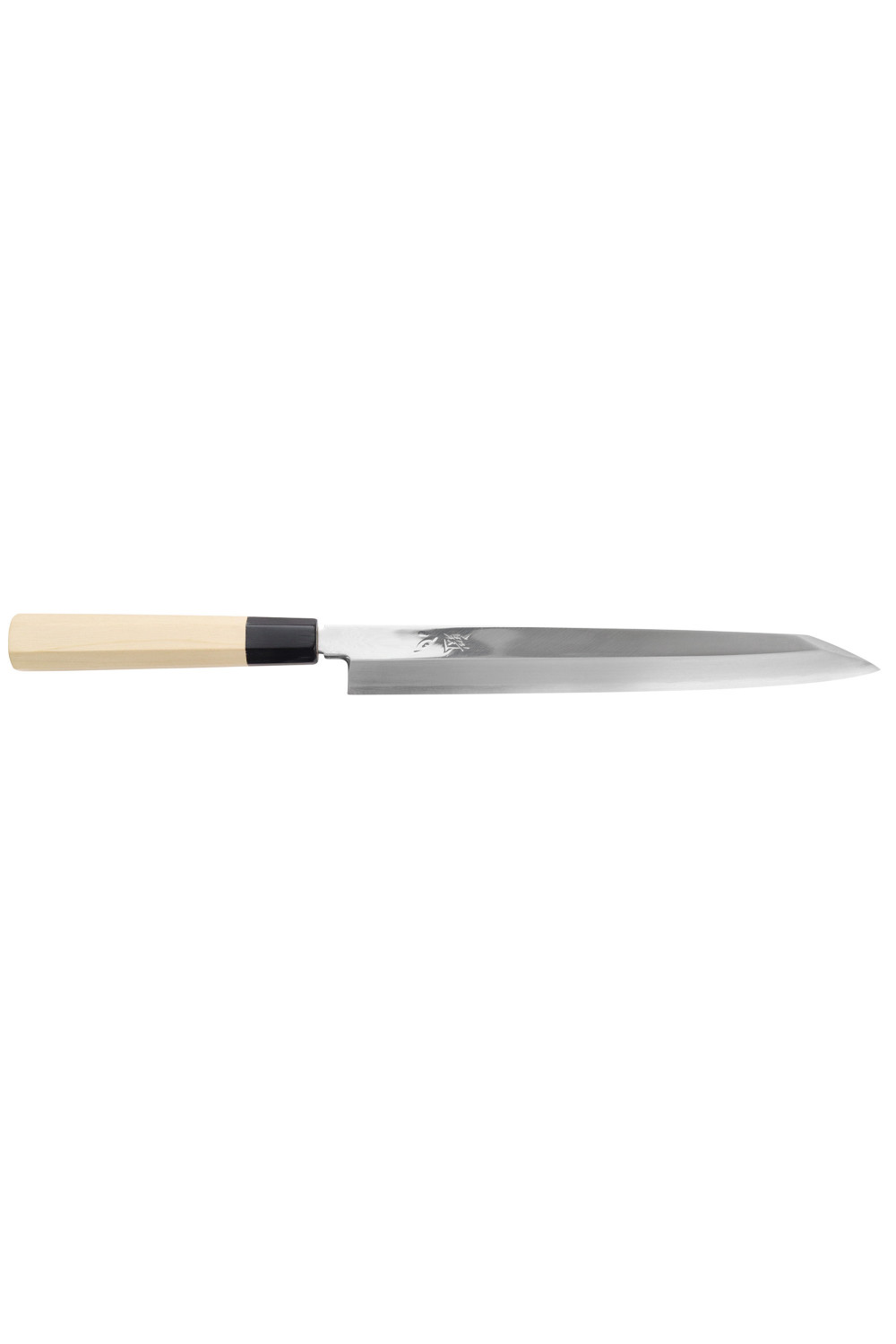
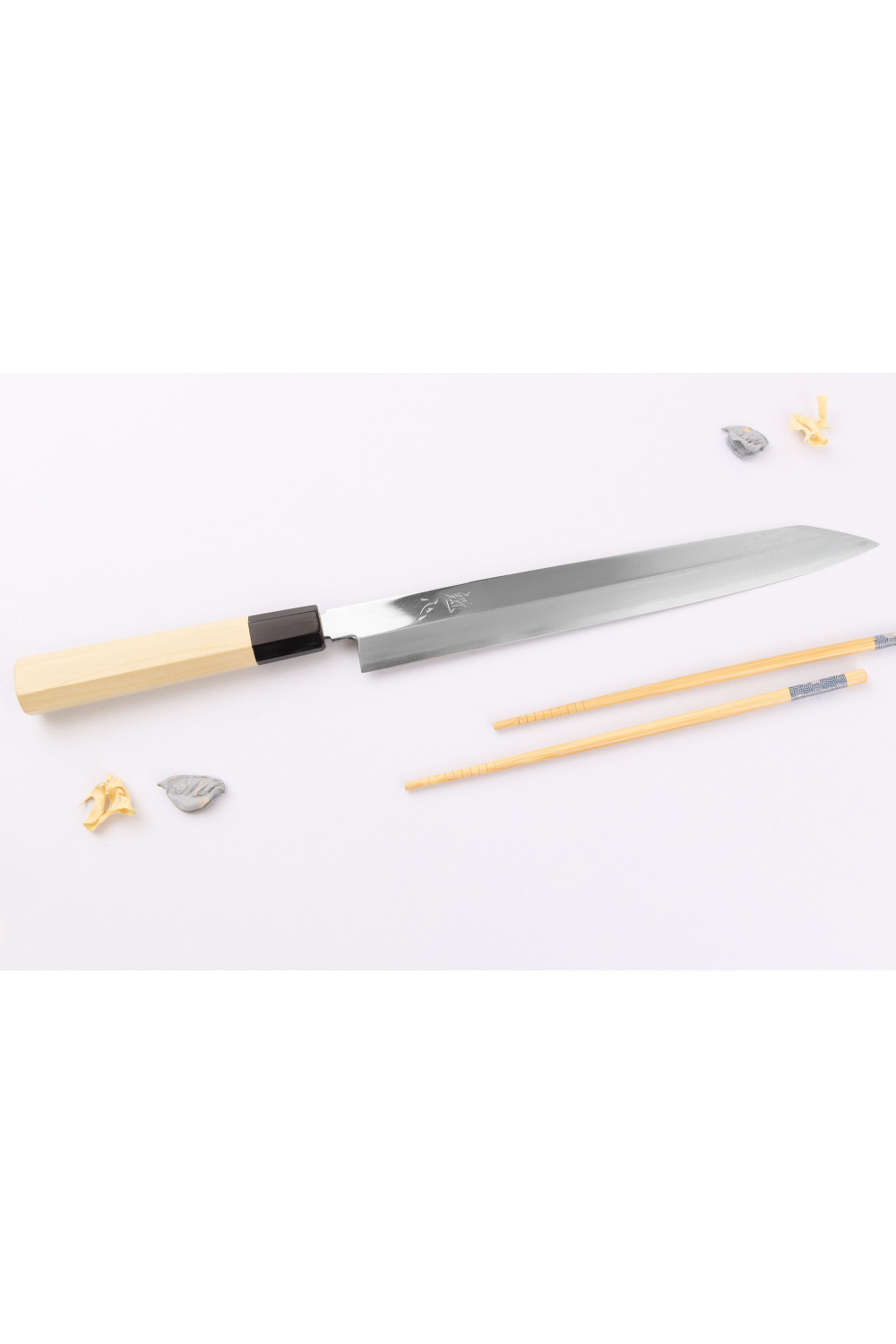
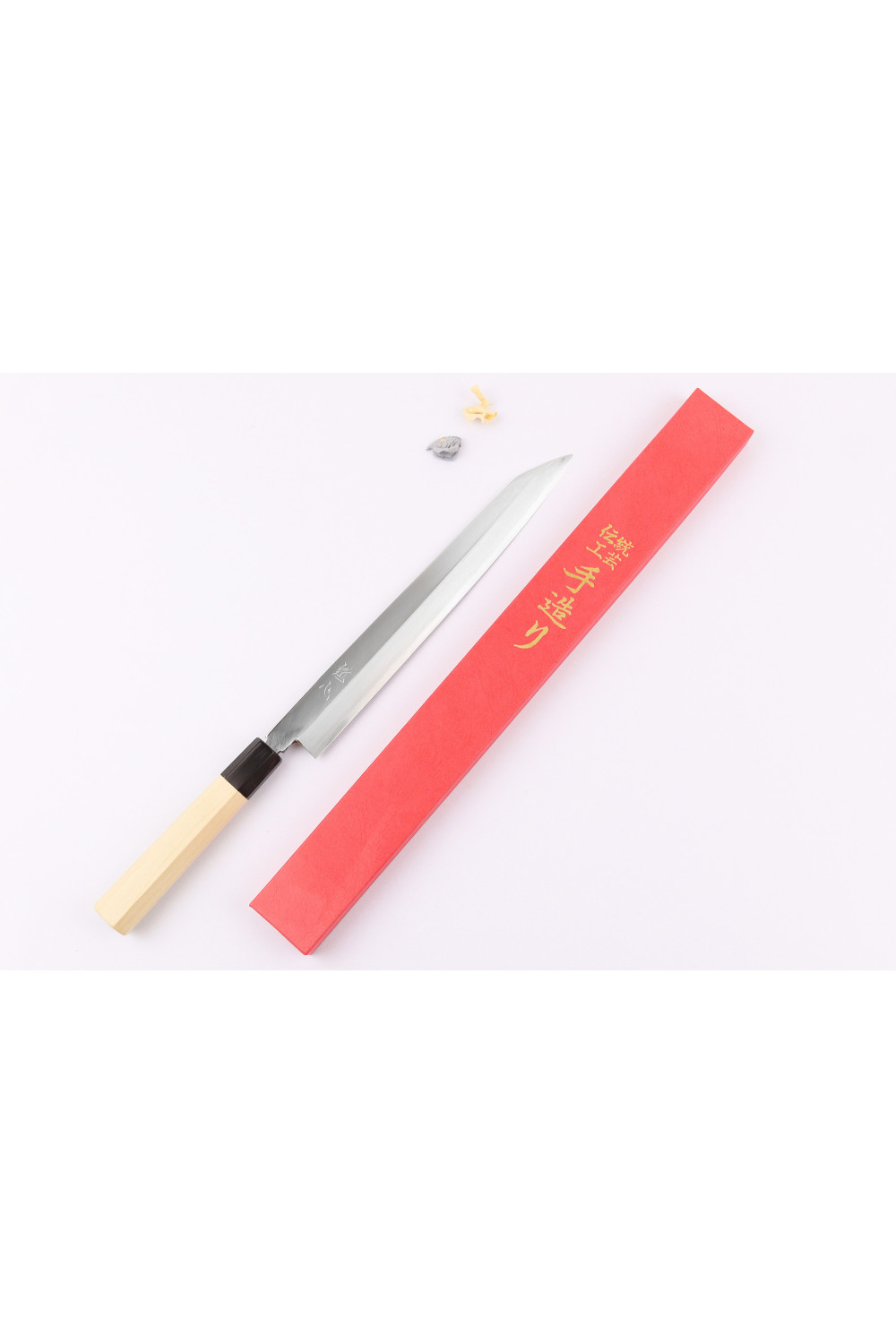
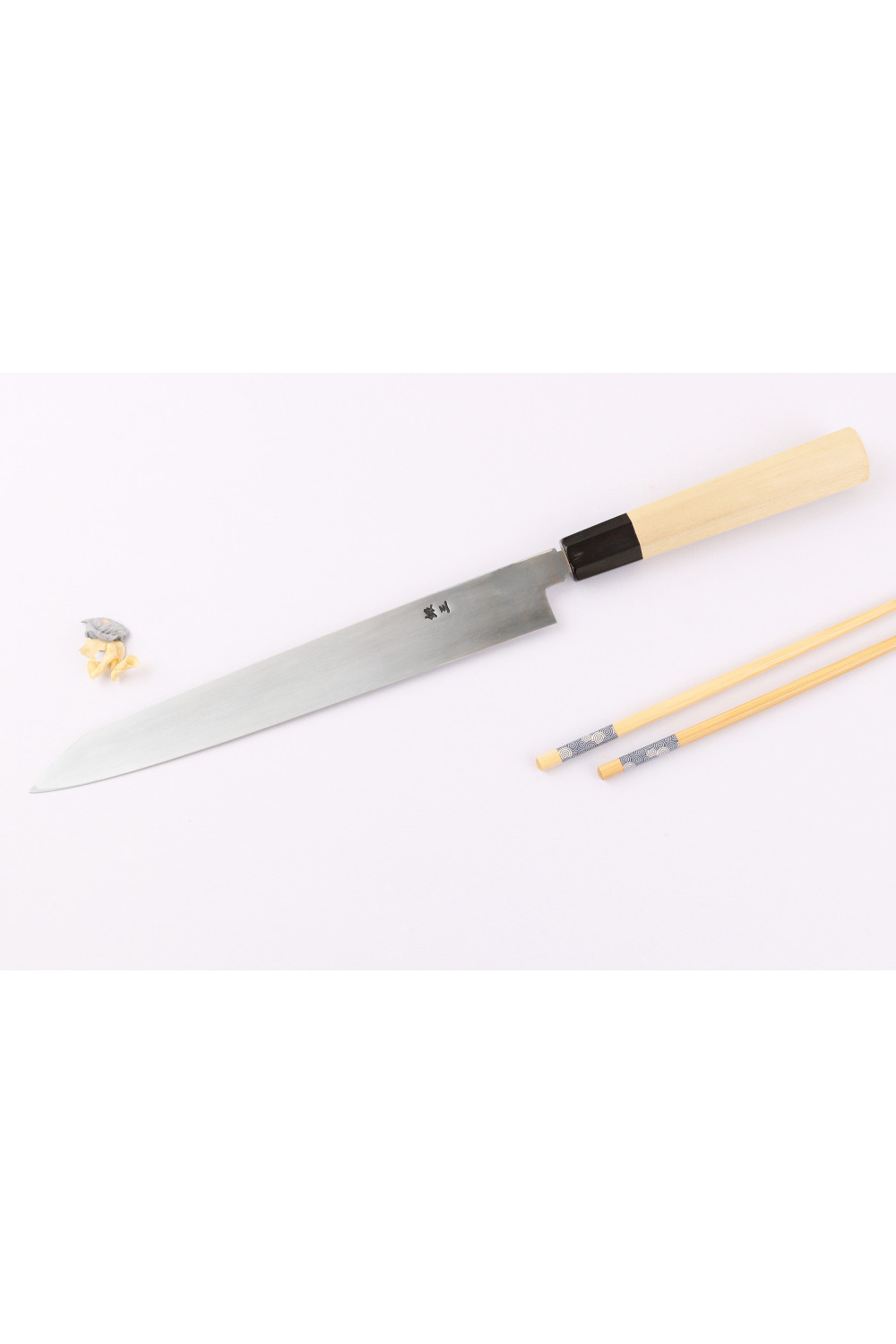
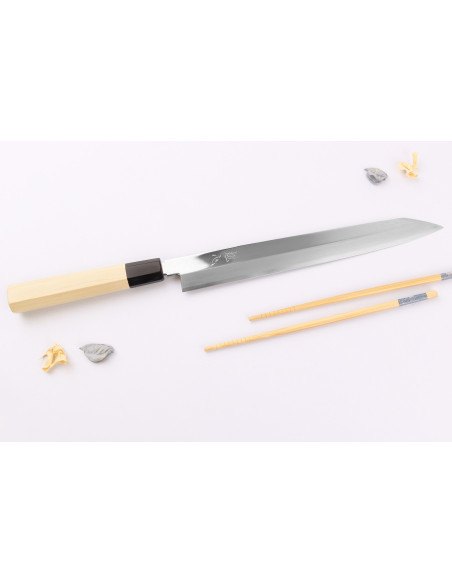
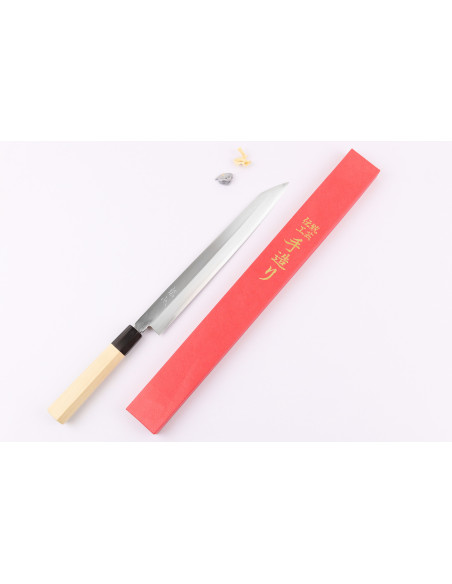
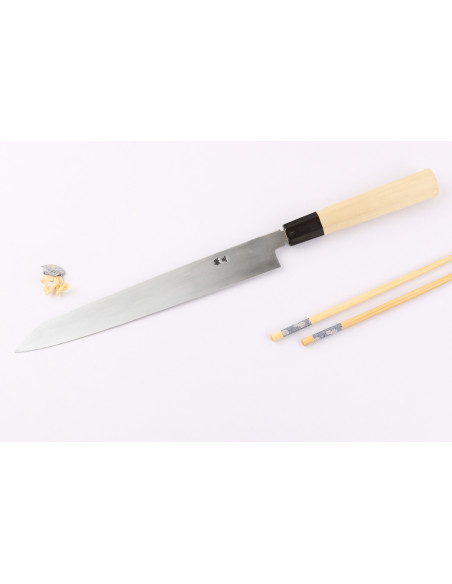
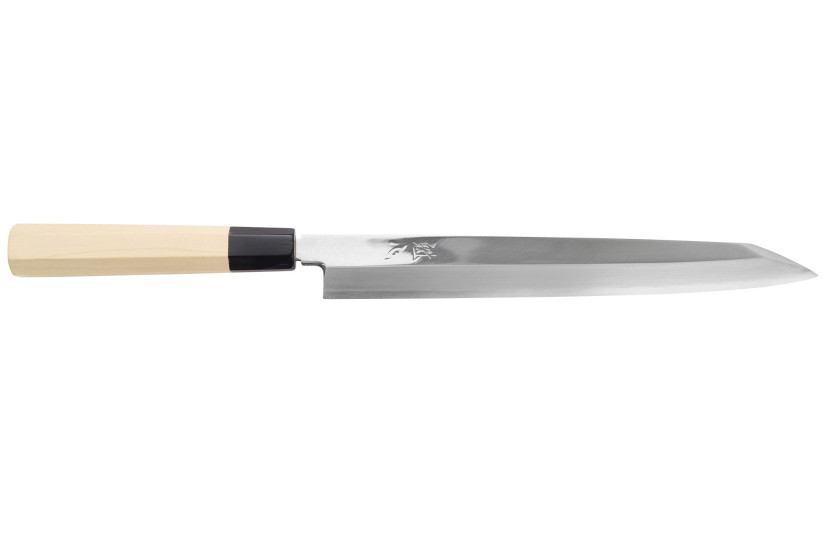
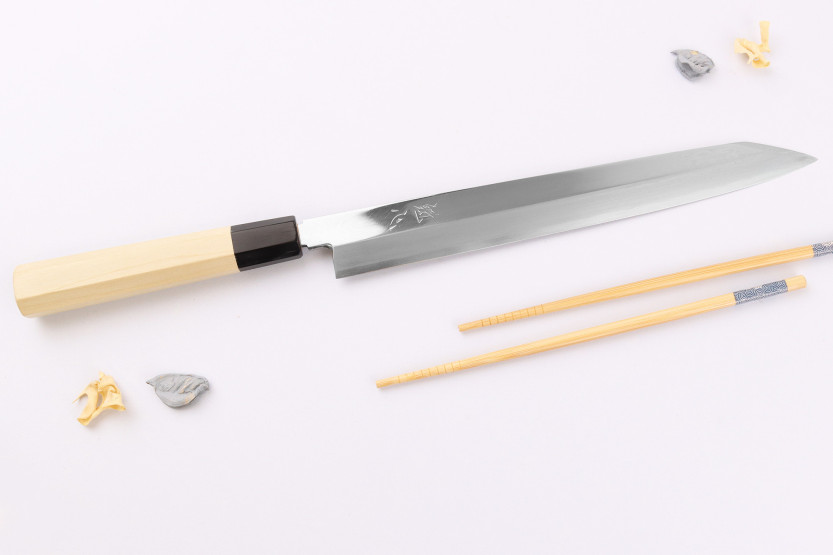
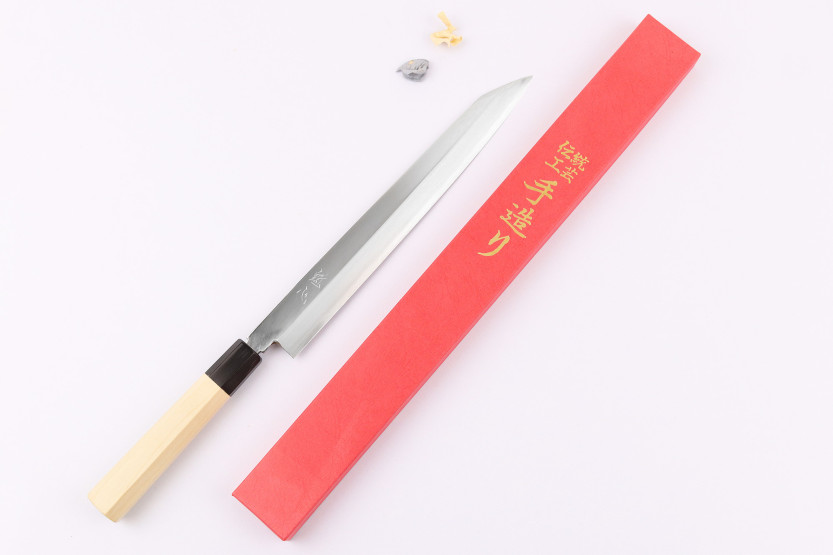
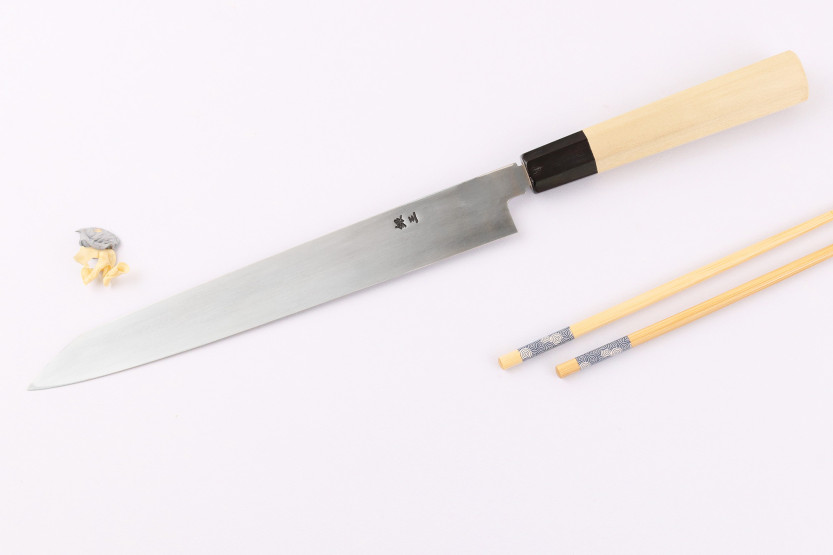
The Nakamura Kaishin Ginsan Mirror 27cm Japanese yanagiba kiritsuke knife invites you to discover the precision of Japanese cuisine! Its slender blade ends in a distinctive kiritsuke tip, giving it a silhouette that is as elegant as it is functional. Designed for delicately preparing fish, this handcrafted knife offers a generous length for cutting beautiful, even slices—especially when preparing sashimi. Its mirror finish reflects the light, while its traditional magnolia handle adds a natural touch to the overall design. A yanagiba kiritsuke knife that combines masterful craftsmanship, carefully selected materials, and Japanese expertise!
A 27-cm blade designed for long, precise cuts
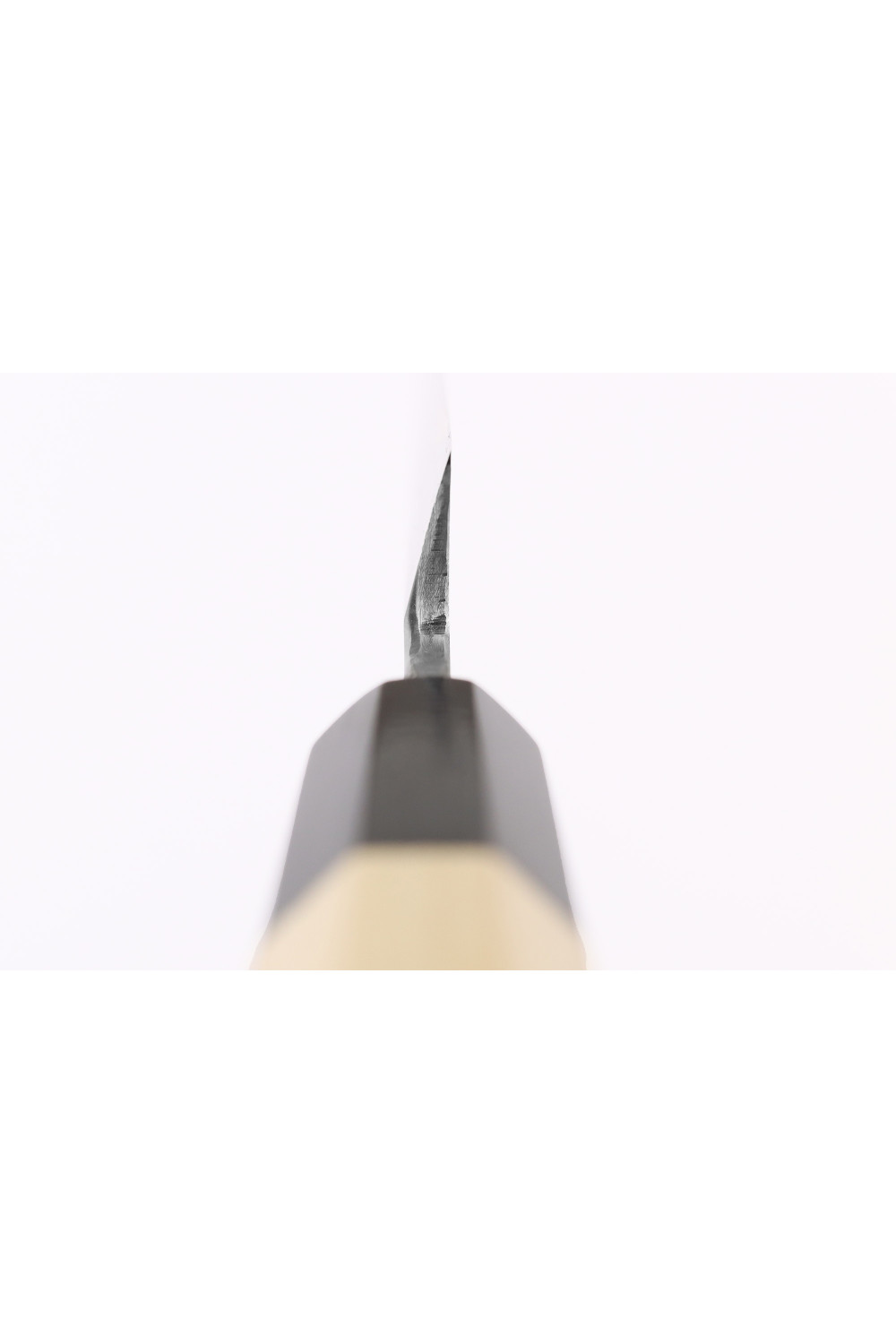
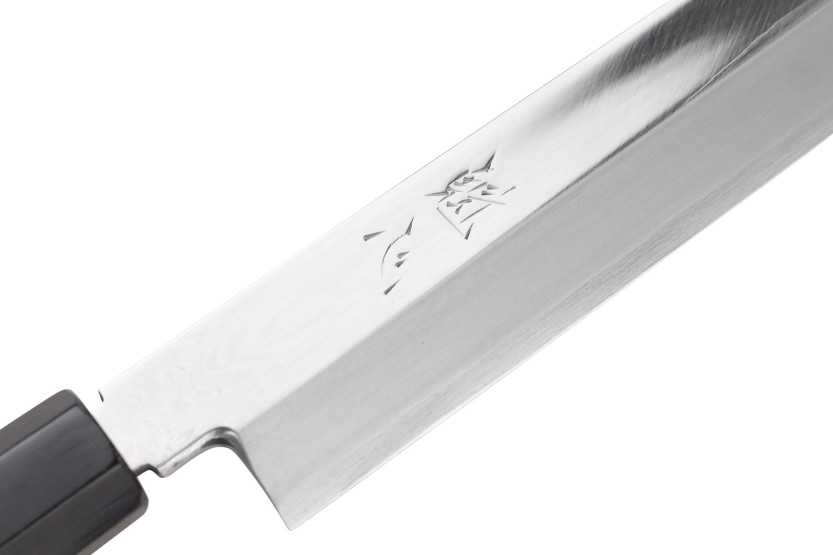
The blade features a San Mai structure, a traditional Japanese construction consisting of three layers of steel stacked on top of one another. Its core is forged from Ginsan steel, also known as Silver 3, a Japanese stainless steel containing approximately 0.95% carbon. This material is prized for its ability to hold a fine edge and for its resistance to oxidation, which is particularly beneficial when preparing fish. The core is flanked by two layers of softer steel, which provide structural support and contribute to the blade’s overall construction.
With a Rockwell hardness of 59/60 HRC, the steel retains a sharp edge over time, while allowing for regular maintenance on a water stone. This hardness is ideal for precision work that requires a clean edge to cut through tender flesh without tearing it.
One of the distinctive features of this model is its 27-centimeter length. This allows for wide, continuous pulling motions, which are particularly well-suited for filleting large fish. In the Japanese tradition, this cutting technique involves pulling the blade toward you in a controlled motion, rather than making repeated sawing motions. This keeps the surface of the fish smoother, which helps preserve its texture and ensures a neat presentation.
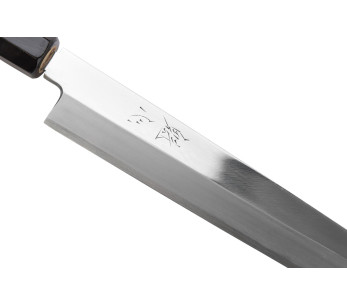
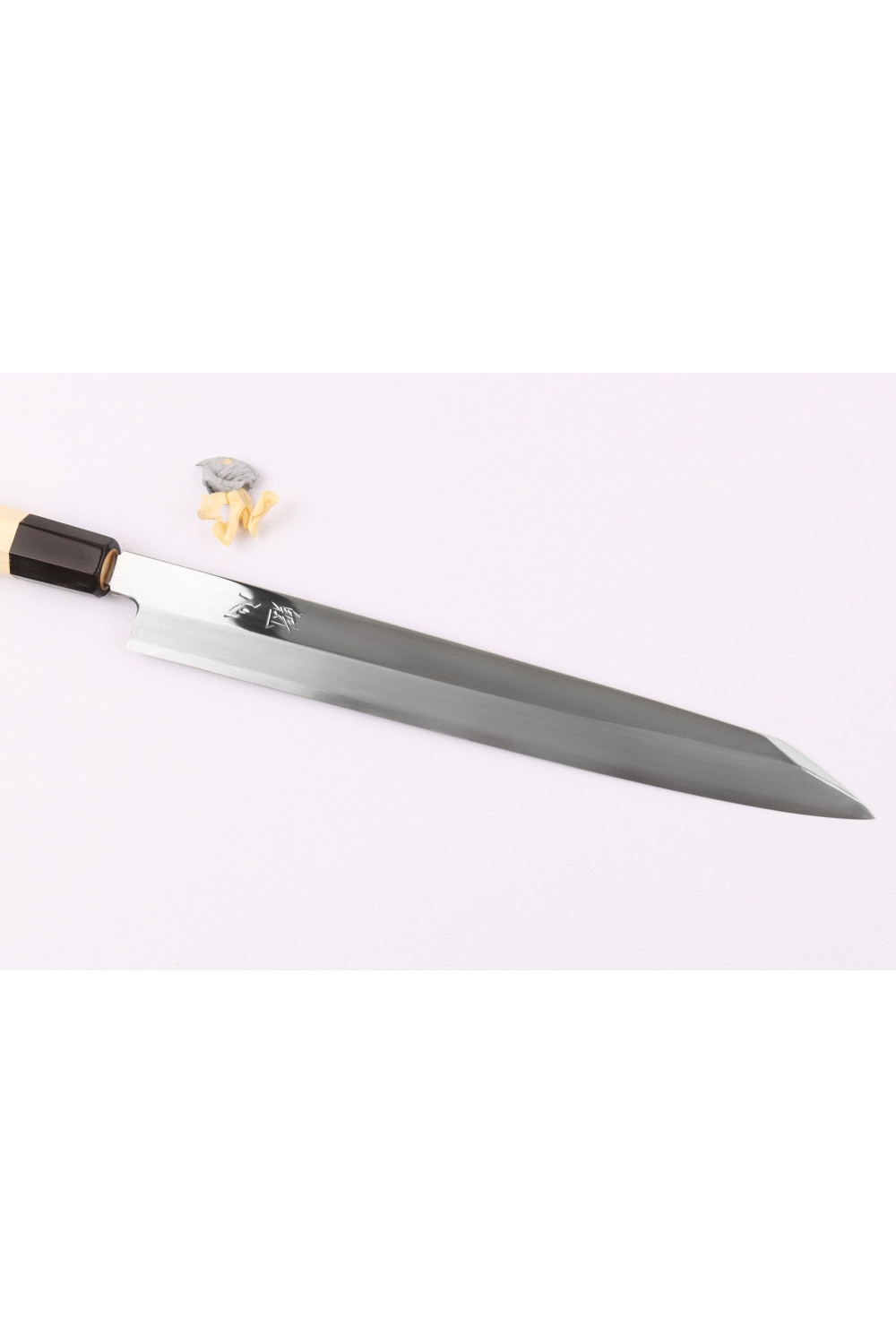
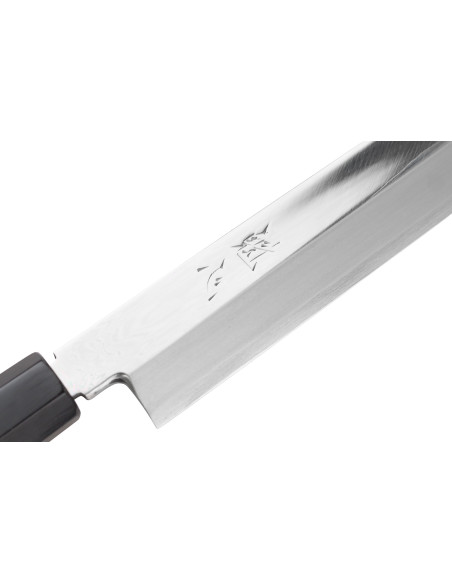
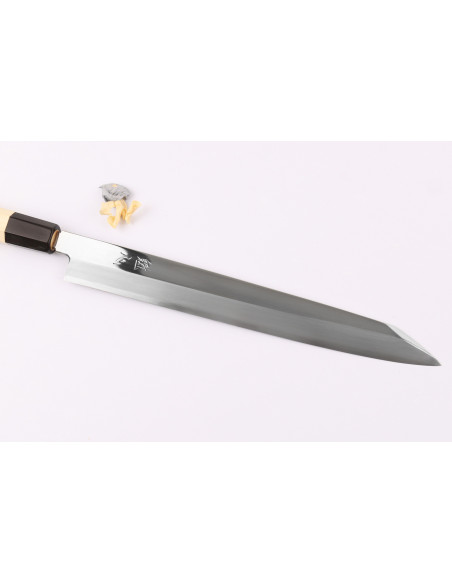
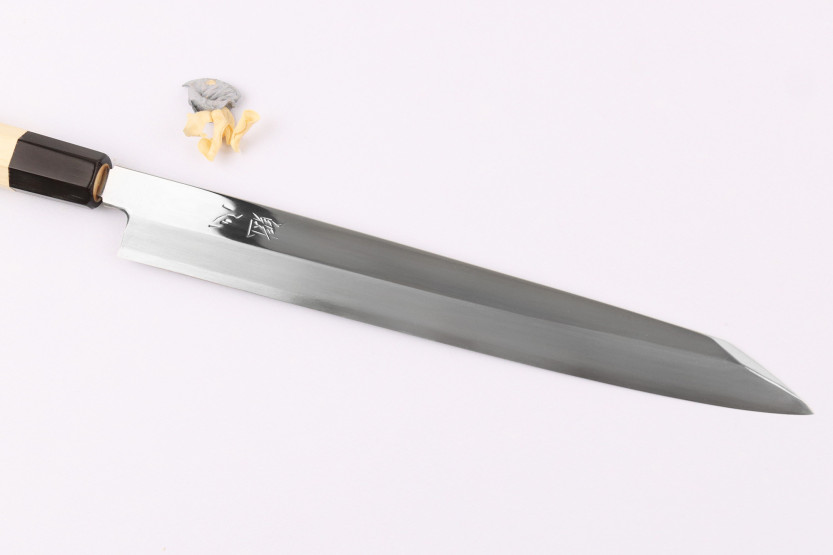
At the tip of the blade, the kiritsuke point forms a sharp angle, recognizable by its truncated profile. It features a fine tip that allows for precise work on specific areas of the fillet, making delicate incisions, or refining the contours of a cut. It complements the capabilities of the traditional yanagiba by providing additional precision for tasks performed with the tip.
The knife also features an asymmetrical grind specially designed for right-handed users. This makes it easier to guide the cut and allows for particularly clean slices, especially for sashimi and nigiri.
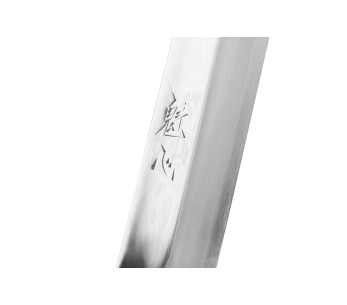
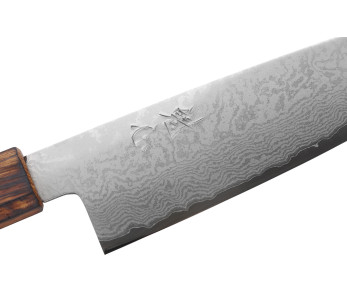
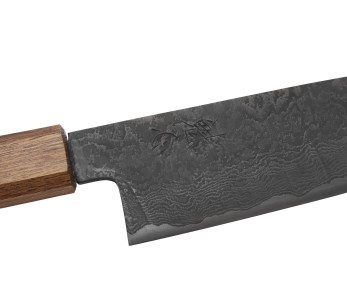
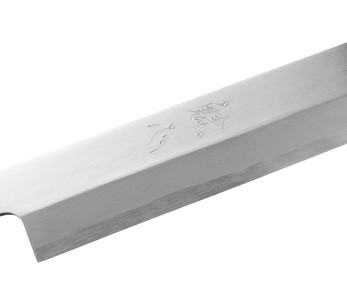
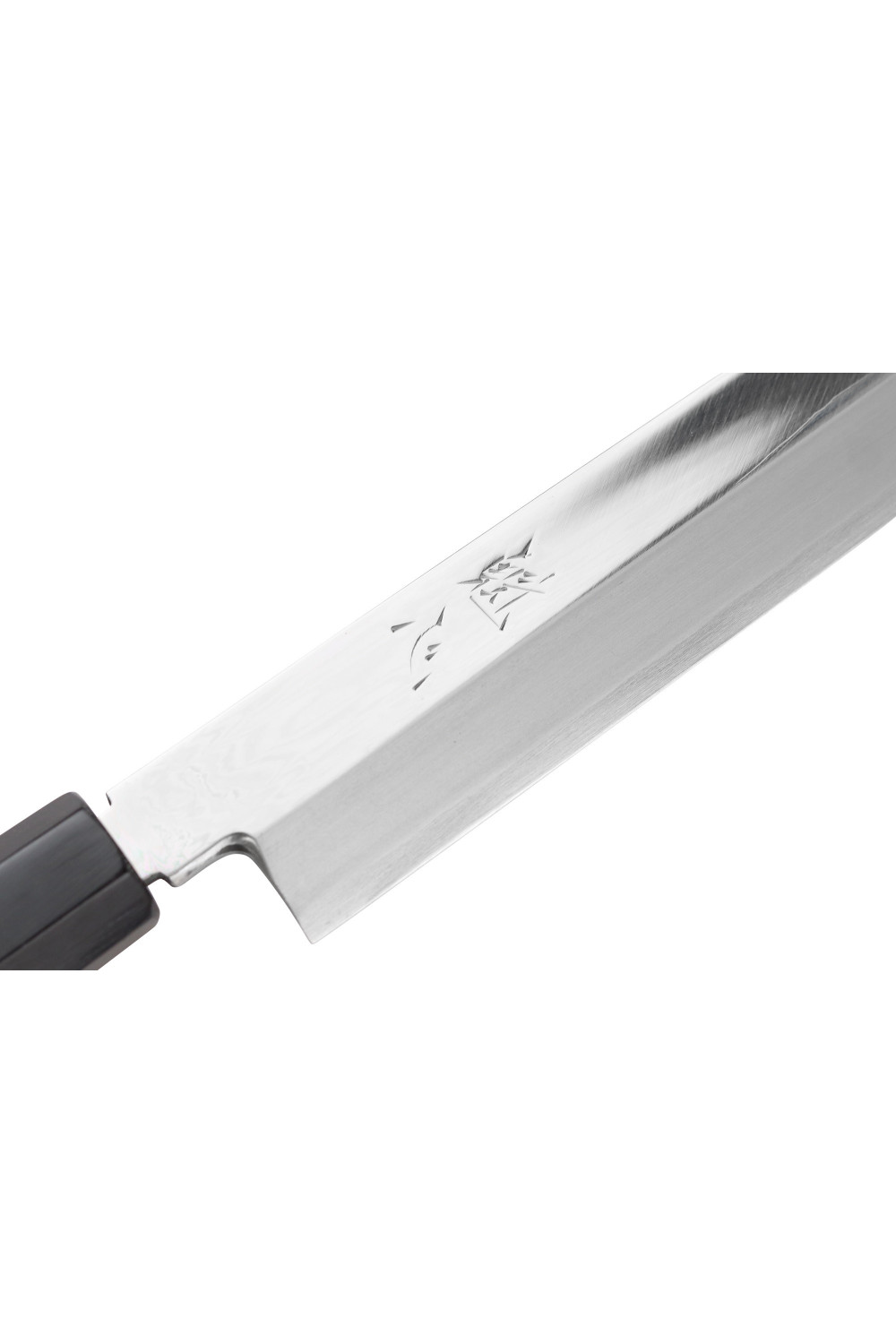
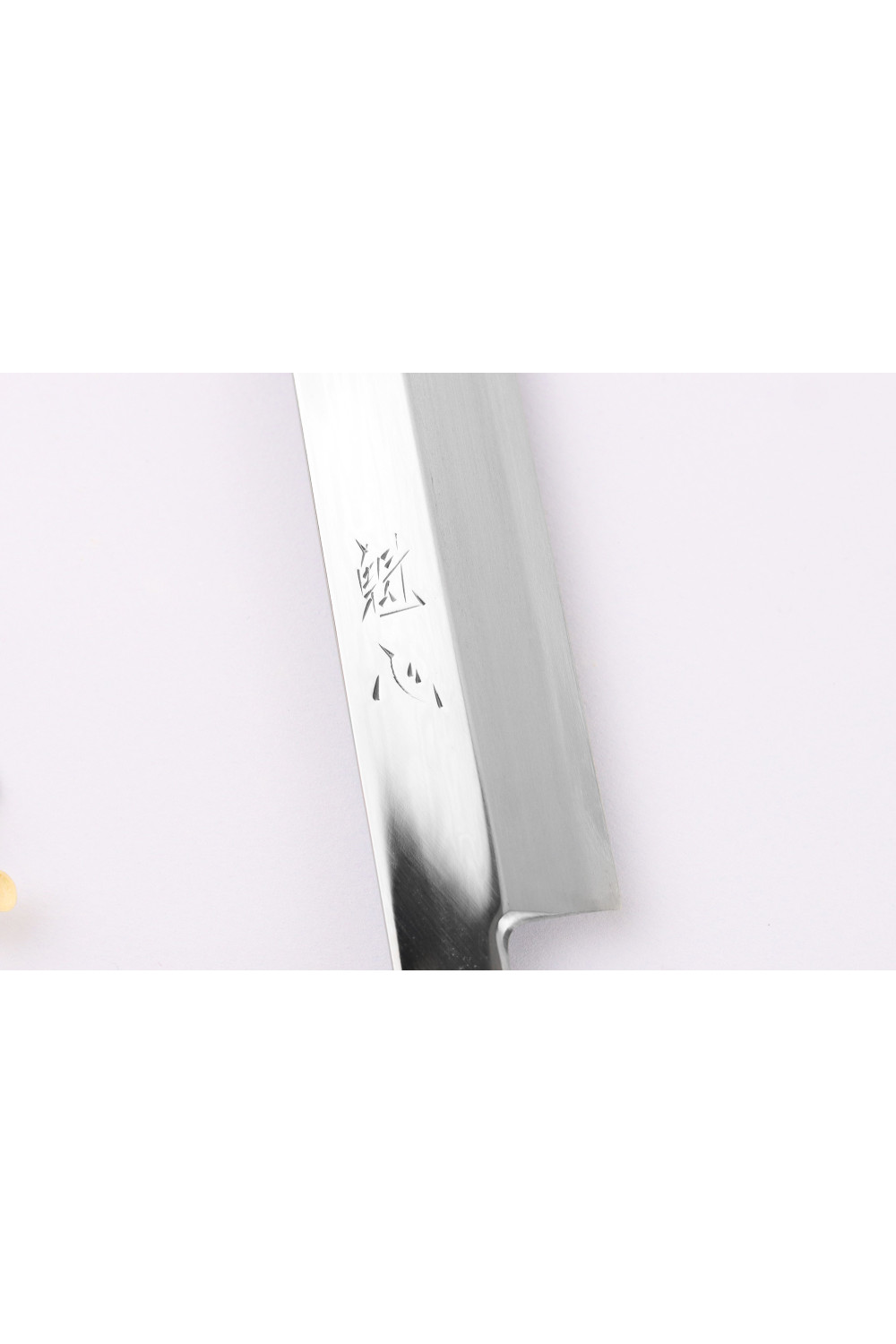
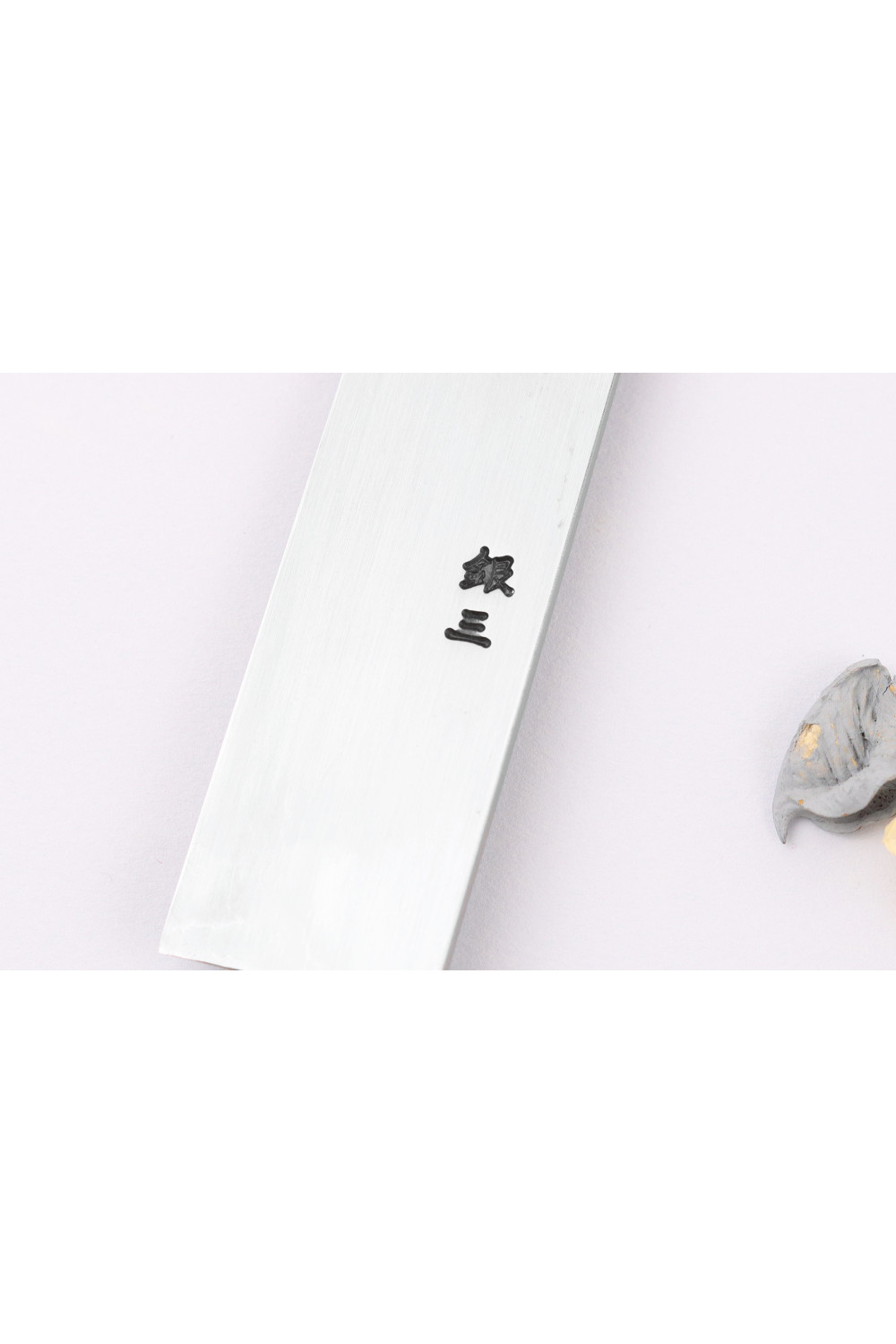
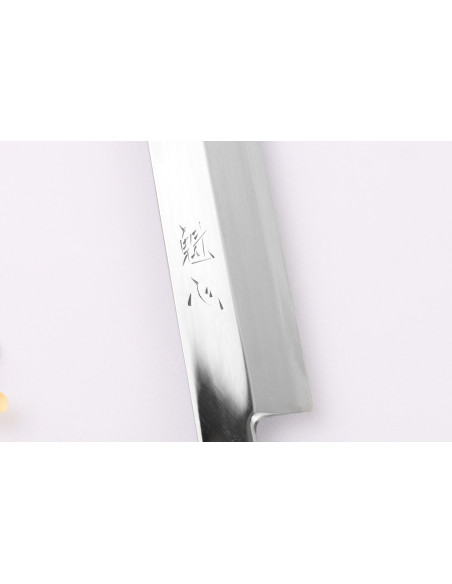
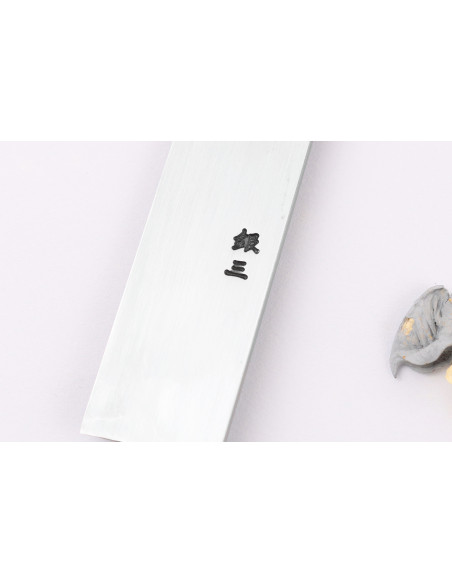
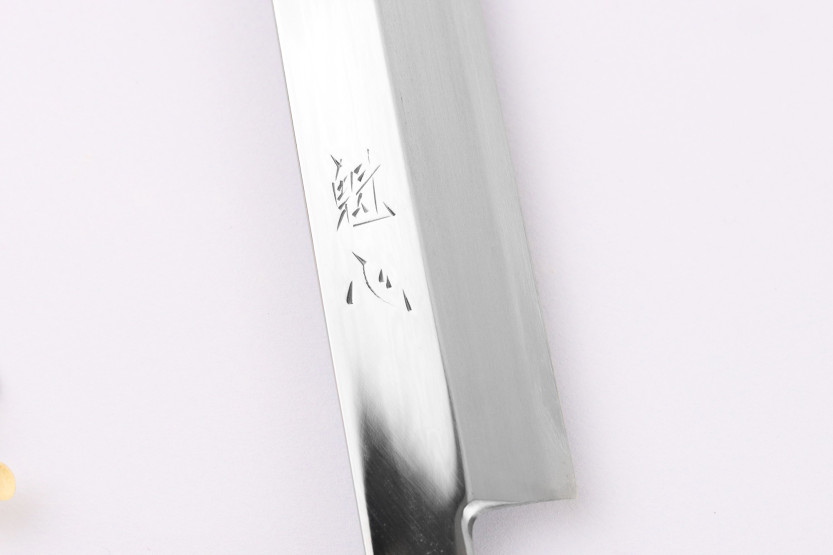
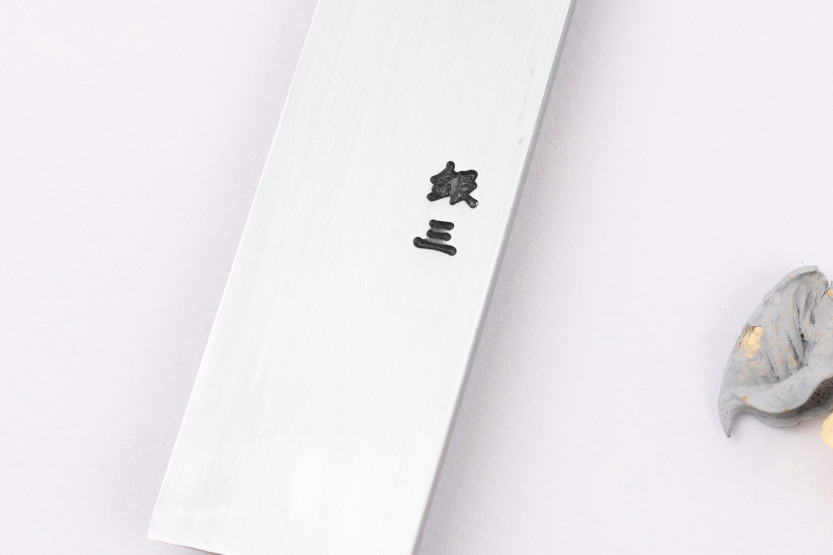
Finally, the blade features a mirror-polished finish, achieved through meticulous polishing. Its glossy surface highlights the knife’s lines and contrasts with the engraved Japanese kanji, which evoke its artisanal origins. Together, these elements create a blade with a refined aesthetic, where every detail complements its culinary purpose.
A magnolia handle designed to complement the chef’s movements
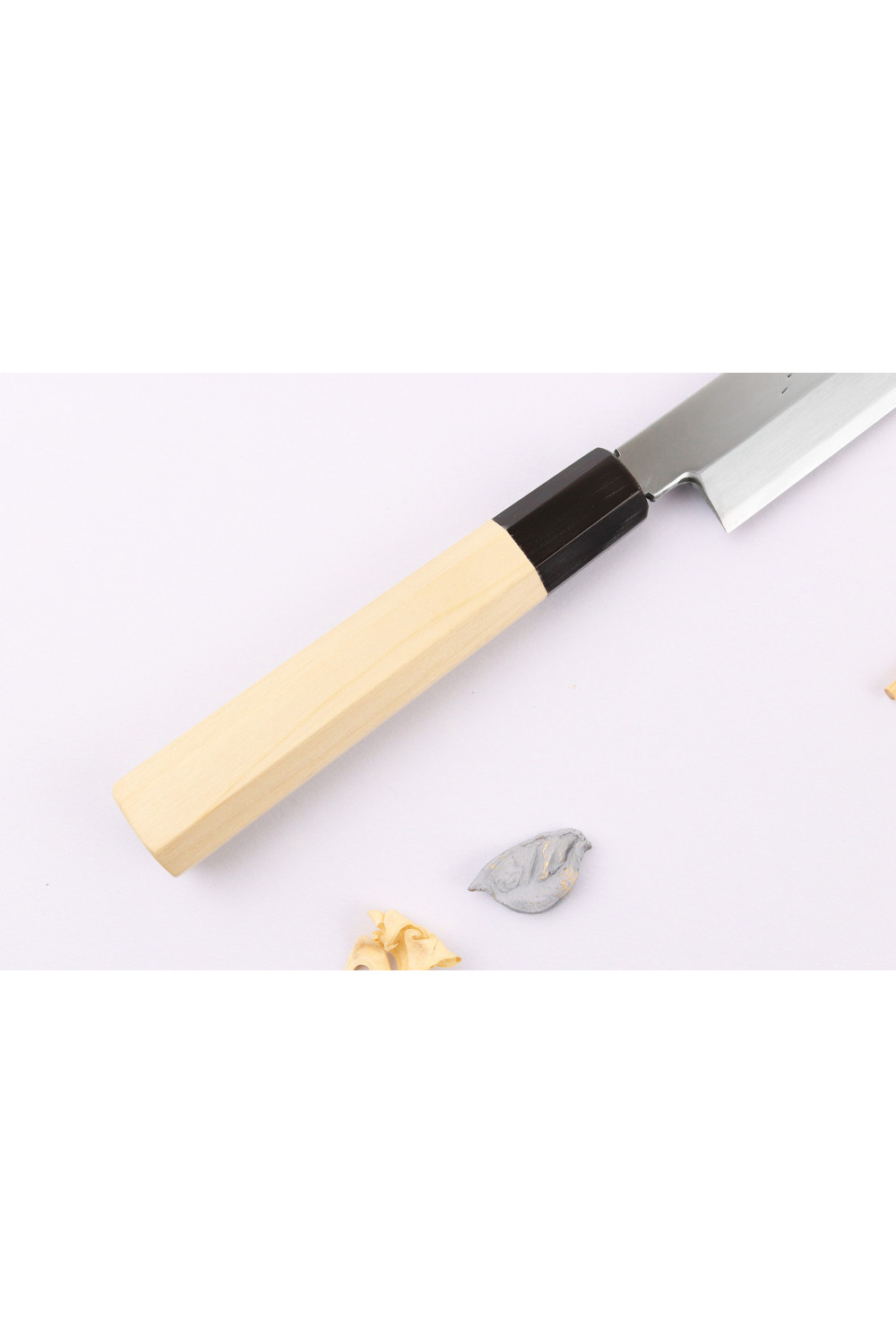
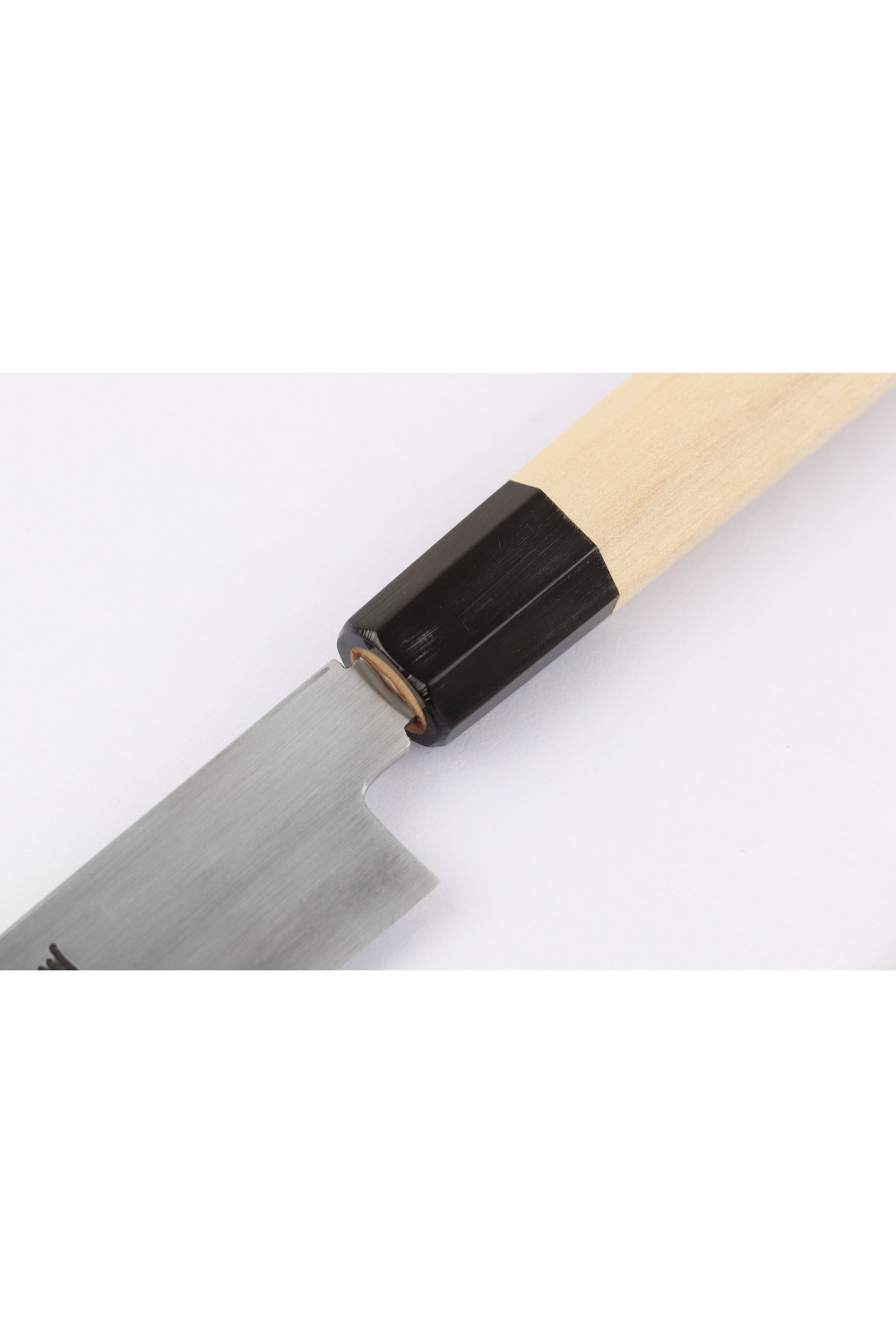
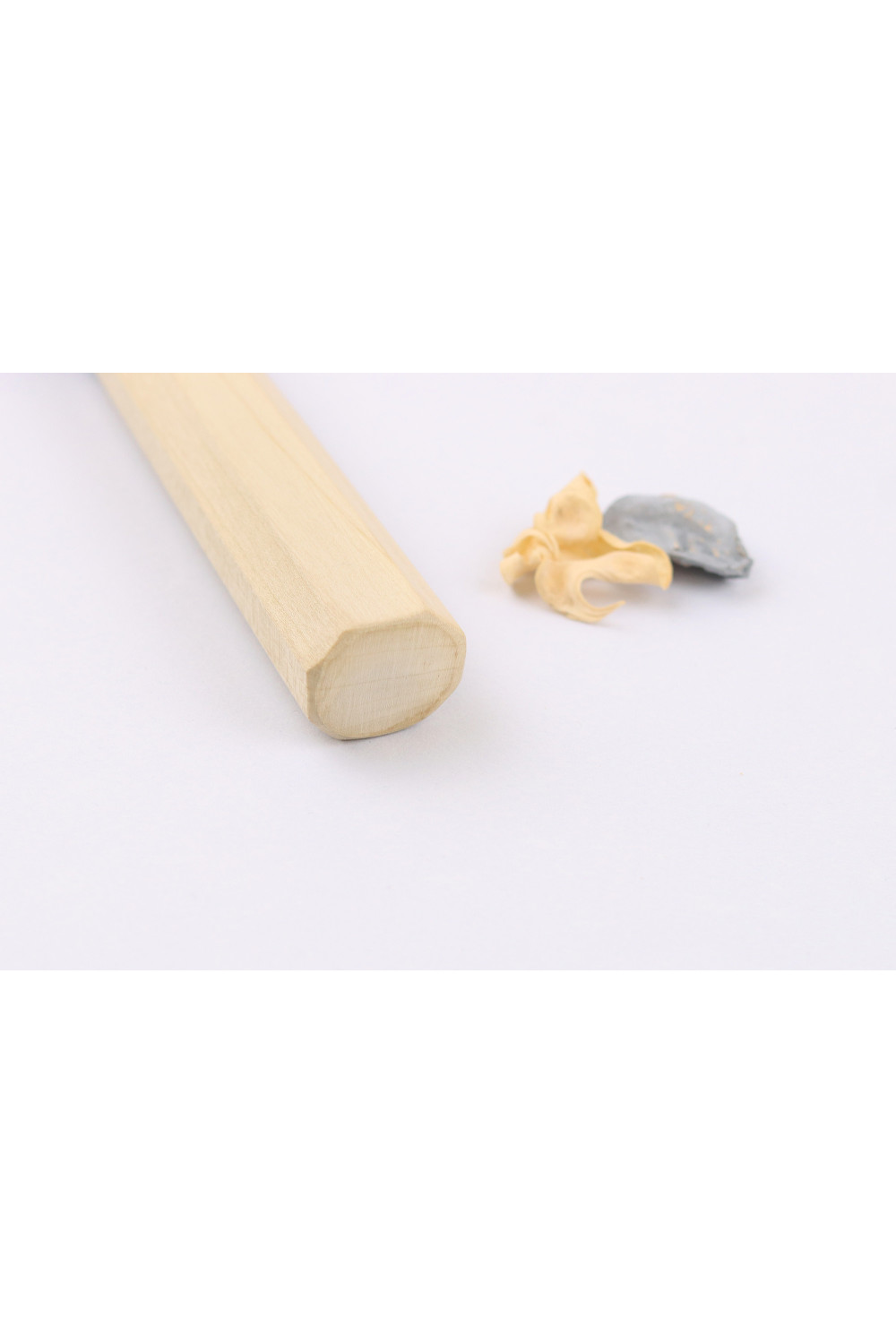
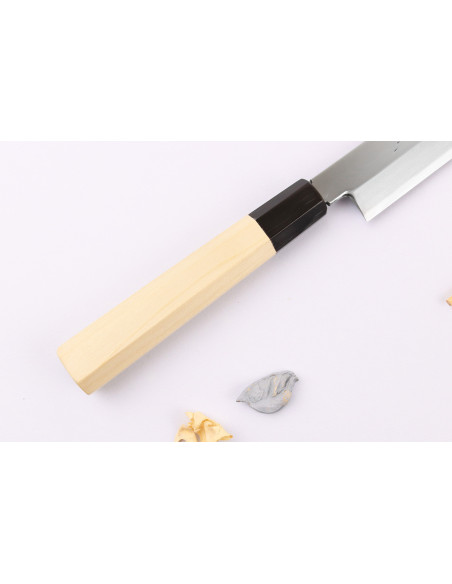
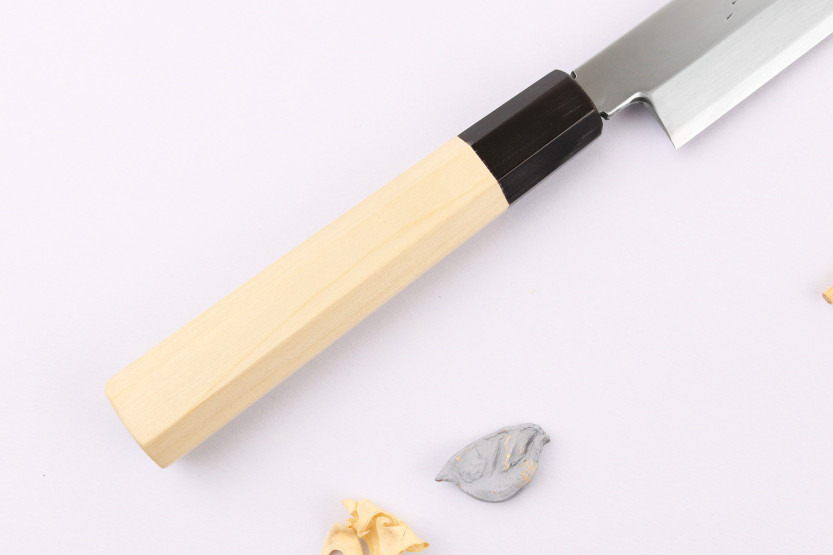
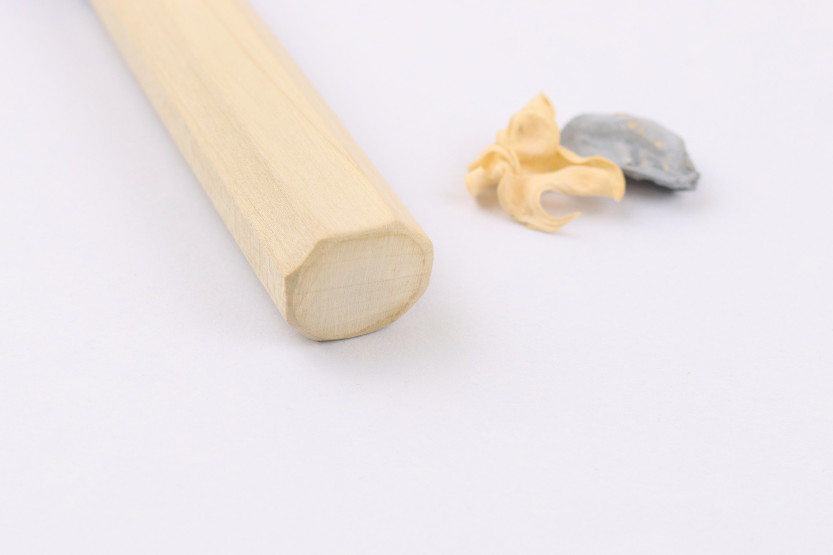
The handle of this yanagiba kiritsuke is crafted from magnolia wood, a type of wood traditionally used in the manufacture of Japanese knives. Its light color and subtle grain add a natural touch to this knife, while allowing the blade to take center stage in its design.
Magnolia has a smooth texture and is relatively lightweight—two qualities that complement the 27-cm blade well. During long cuts, it ensures a comfortable grip and allows the knife to be guided with ease. The wood also feels warm to the touch, contrasting with the cold, shiny surface of the steel.
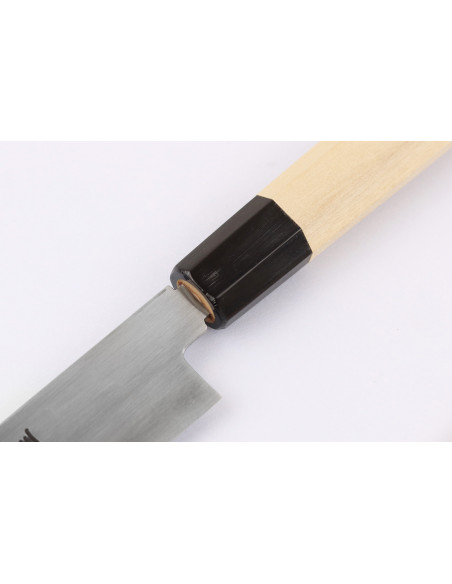
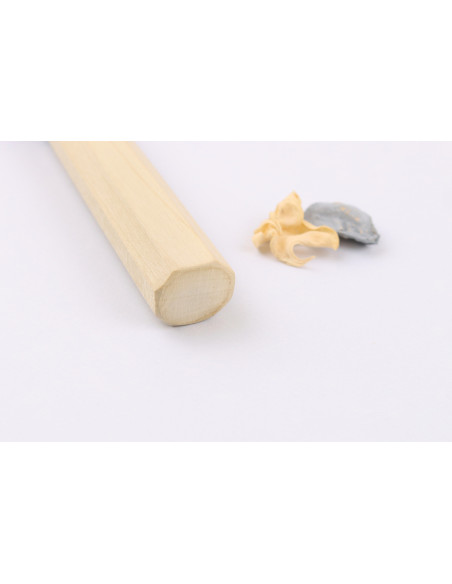
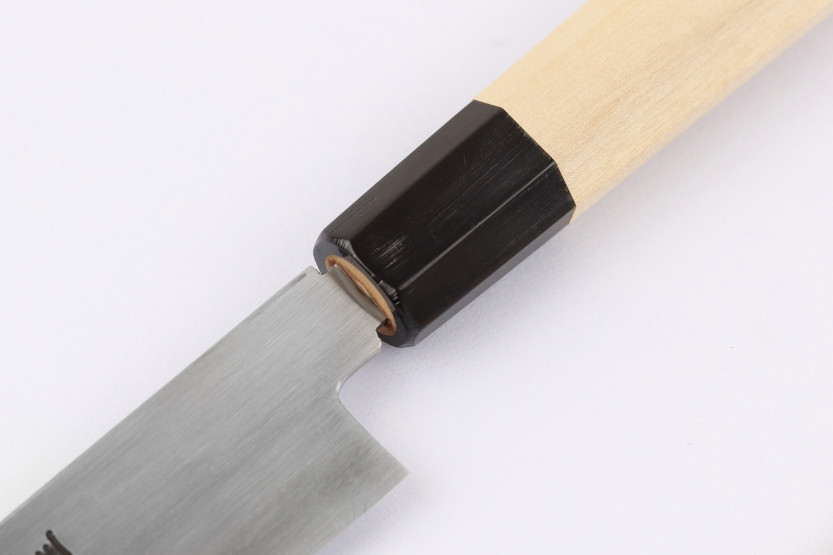
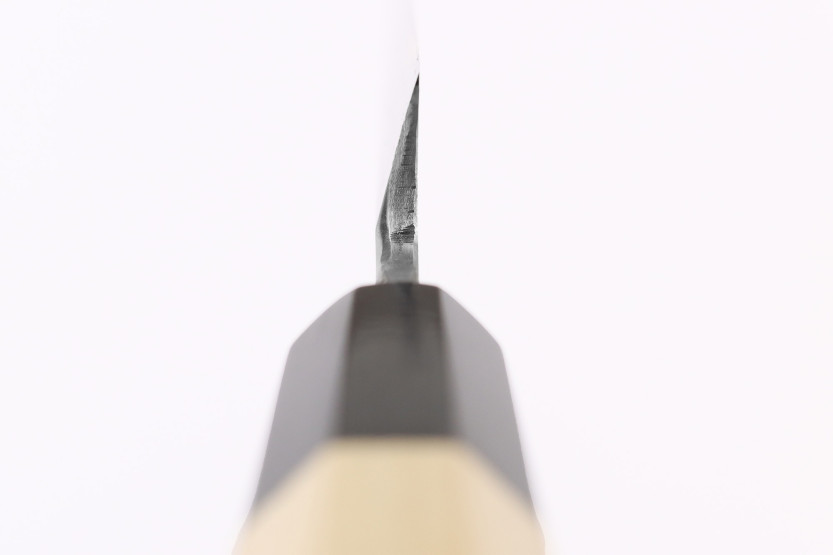
Its octagonal shape is another key element of its design. The eight facets of the handle provide natural guides for the fingers, making it easier to control the blade’s orientation. This geometry helps stabilize movements and maintain good precision when the knife is used along its entire length.
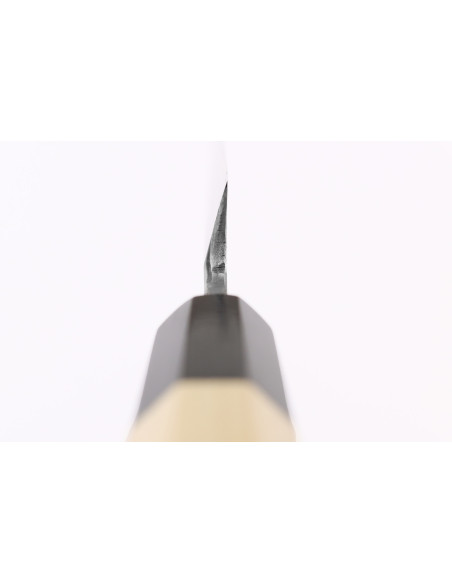
A black buffalo horn bolster completes the design. This natural material adds a dark accent that highlights the transition between the light wood and the steel. Each piece of horn may exhibit slight variations in color, characteristic of its natural origin.
The visual balance between the light magnolia wood, the black horn, and the mirror polish evokes traditional Japanese aesthetics, where materials are chosen as much for their function as for their beauty. A simple and elegant design that perfectly complements the unique silhouette of this yanagiba kiritsuke!
Key Features
-
- 27 cm blade: generous length for cutting large slices of fish
- San Mai construction: central core surrounded by two layers of softer steel
- Japanese Ginsan stainless steel: efficiency and good corrosion resistance
-
- Hardness 59/60 HRC: long-lasting edge retention and easy sharpening
- Kiritsuke tip: angled tip suitable for precise cuts
-
- Asymmetrical grind: cuts tailored for right-handed users
- Mirror-polished finish: highlights the blade’s silhouette
- Engraved Japanese kanji: authentic artisanal details
- Octagonal magnolia handle: lightweight wood and a stable grip
-
- Black buffalo horn bolster: an elegant contrast to the magnolia
wood
- Forged by Shogo Yamatsuka: a craftsman specializing in Ginsan steel
- Sharpened by Tomoyuki Ajioka: an experienced master sharpener from Sakai
Caring for Your Yanagiba Kiritsuke to Preserve Its Precision
To get the most out of this knife, use it primarily for slicing boneless fish fillets. Its long blade and asymmetrical grind are suited to smooth, pulling motions. Avoid twisting motions, cutting through bones, and using the knife on frozen foods, as these could damage the edge or the kiritsuke tip.
Although the Ginsan is stainless, wash your knife by hand after each use with a soft sponge and a mild detergent. Dry the blade and handle thoroughly before storing it. Do not put it in the dishwasher, and avoid using abrasive sponges, which could scratch the mirror finish.
For sharpening, use a Japanese water stone and maintain the asymmetrical geometry of the cutting edge. Improper sharpening could alter the cutting profile of this specialized knife. If you are not confident in maintaining single-bevel blades, consult a professional experienced with traditional Japanese knives.
Nakamura Kaishin: A tradition of craftsmanship carried on by two specialists from Sakai
In the city of Sakai, Japan, cutlery production is based on an artisanal system where forging and sharpening are often entrusted to different specialists. It is in this environment that Nakamura Hamono, a company founded in 2015, has developed its Kaishin line by bringing together artisans whose skills complement one another.
The name Kaishin combines two Japanese characters: Kai (魁), which evokes a pioneering spirit, and Shin (心), which refers to the heart and mind. This name reflects the brand’s commitment to keeping traditional cutlery techniques alive through creations designed for today’s chefs.
Blade production is entrusted to Shogo Yamatsuka, a Japanese blacksmith who learned his craft from his father beginning in 1973. Throughout his career, he has taken a particular interest in Ginsan, a type of steel whose working requires precise control of temperature and shaping. His experience allows him to control the various stages of the forging process to produce blades that meet the exacting standards of Japanese cutlery. He has been honored with the title of Master Traditional Craftsman, a Japanese distinction that highlights his expertise and his contribution to the preservation of traditional craftsmanship. Through his work, he helps pass on a tradition of craftsmanship that has been developed over several generations in the Sakai region.
Once the blade is forged, it passes into the hands of Tomoyuki Ajioka, a master sharpener with approximately fifty years of experience. His role involves shaping and refining the geometry of the cutting edge, taking into account the type of knife and the tasks for which it is intended. He has also passed on his knowledge to numerous apprentices, helping to perpetuate traditional sharpening methods. On this yanagiba knife, his work is particularly important: he must ensure the consistency of the asymmetrical grind along the long blade, while carefully maintaining the sharpness of the cutting edge and the precision of the angular tip. This sharpening work complements that of the blacksmith and gives the knife its cutting qualities.
The collaboration between Shogo Yamatsuka and Tomoyuki Ajioka thus illustrates the richness of Sakai’s cutlery tradition, where each artisan brings their specialty to a single creation. A knife that bears the signature of two complementary crafts!
Find Nakamura Kaishin Ginsan Mirror knives at Knifeleader.eu!




 By buying this product you can collect up to