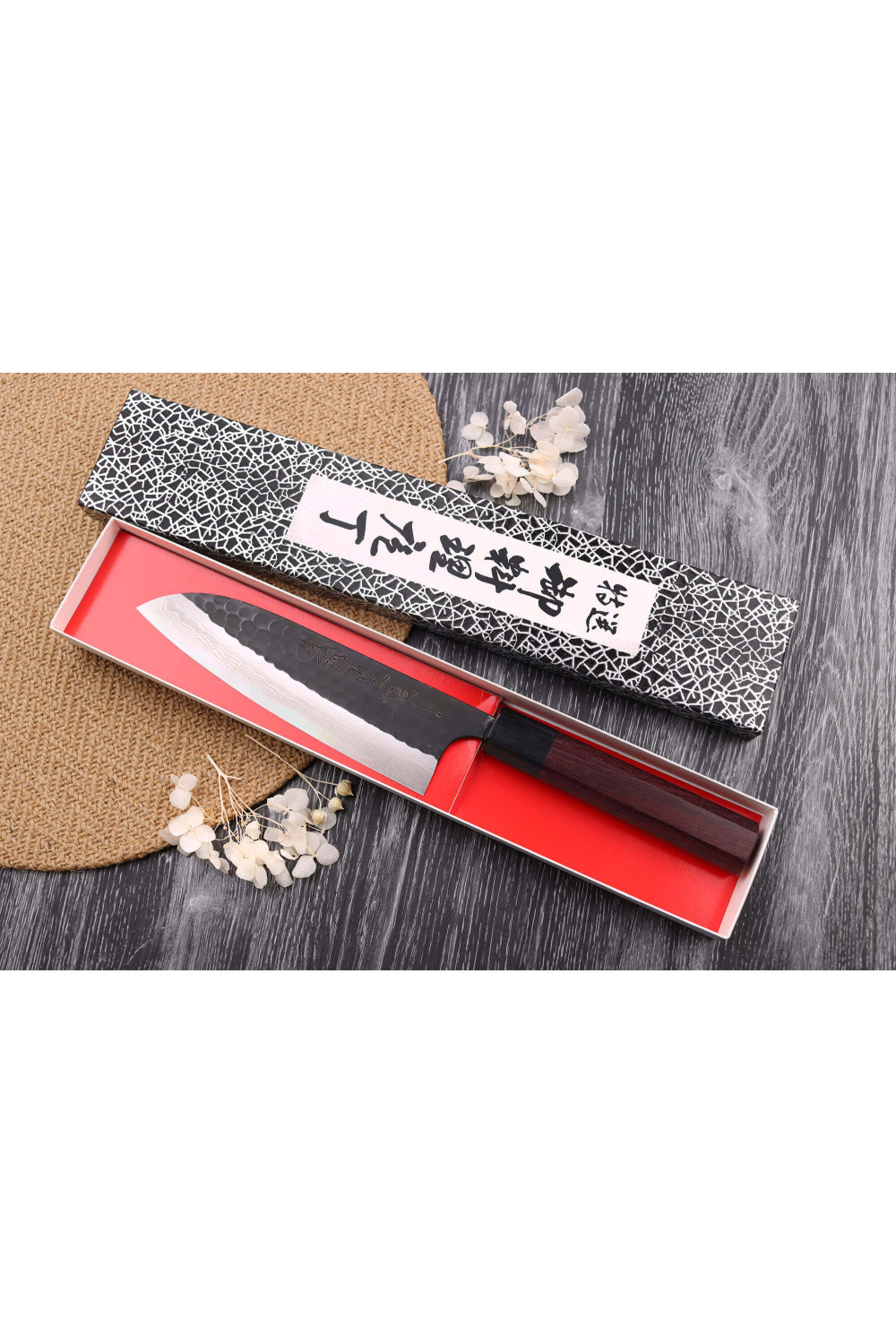
Nao Yamamoto san, young expert blacksmith
This Japanese blacksmith, born in 1979, was a disciple of the late, great Masami Azaï, who taught him traditional Echizen forging techniques. Yamamoto san's knives are appreciated for their simplicity, tradition and functionality. He puts himself in the user's shoes to create ergonomic models that will accompany you over the long term.
In fact, he was certified Master Traditional Craftsman by the Ministry of Commerce in 2020. This prestigious distinction, despite his young age, demonstrates Nao san's expertise, and he's in such demand that knife production can take up to 3 years!
He masters the Nimai-Hiroge technique, which is unique to the Echizen area. This explains why the upper part of the blade is thicker than that of other Japanese models: when the blacksmith uses this technique, he has to forge two blades at the same time (the heat is lost less quickly, which preserves the properties of the carbon in the alloy), hence the thickness. He then refines this double thickness at the edge to ensure a razor-sharp edge.
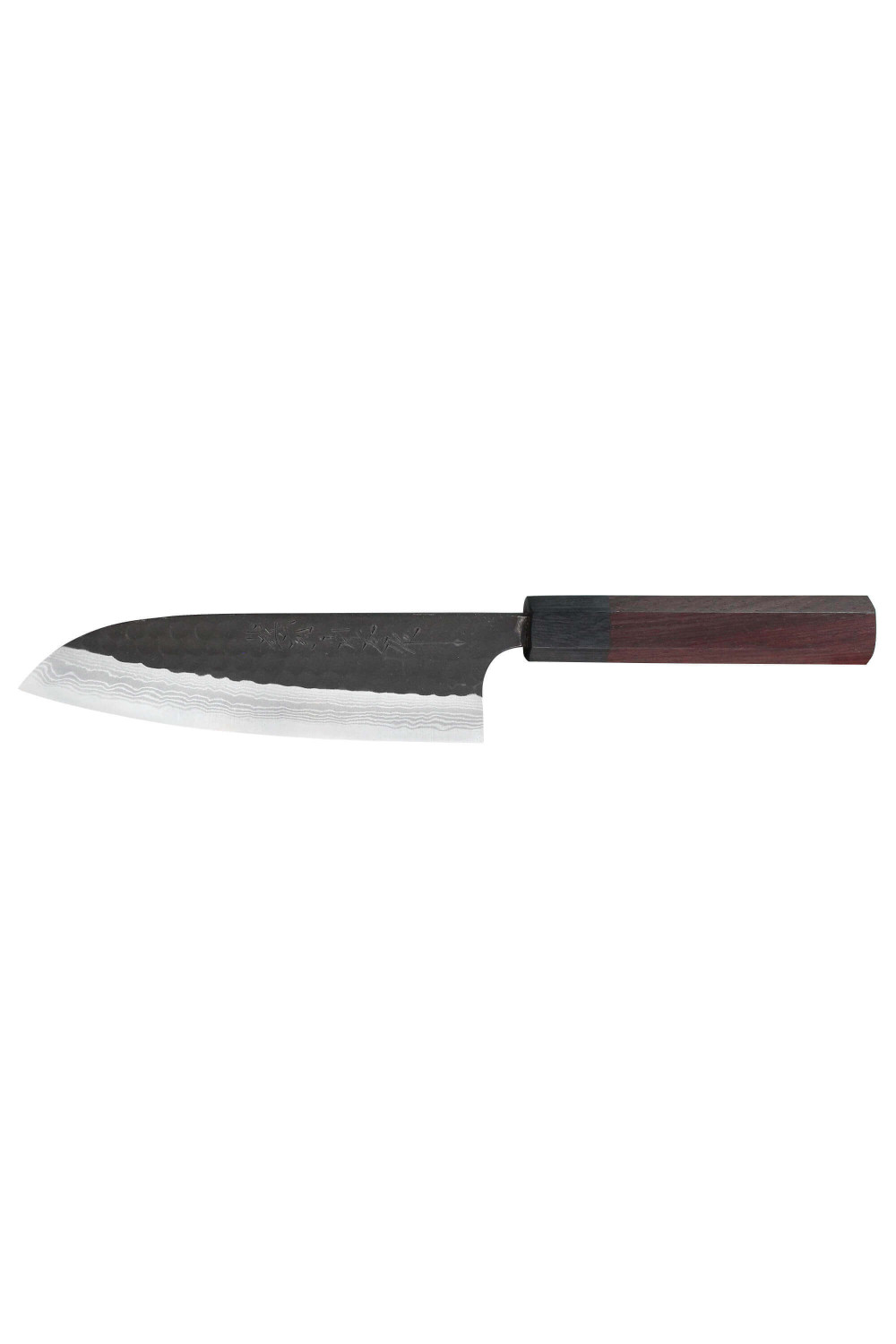
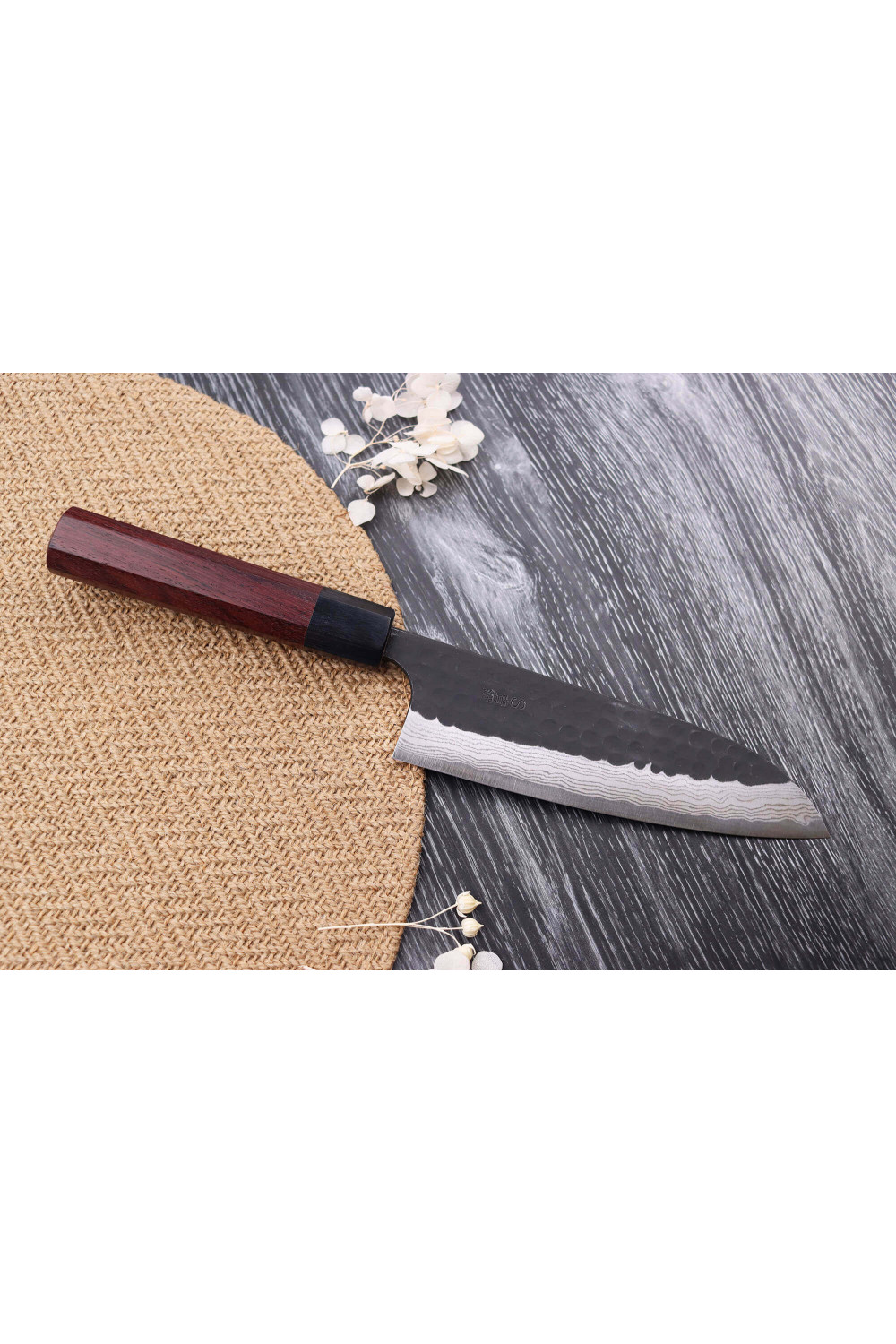
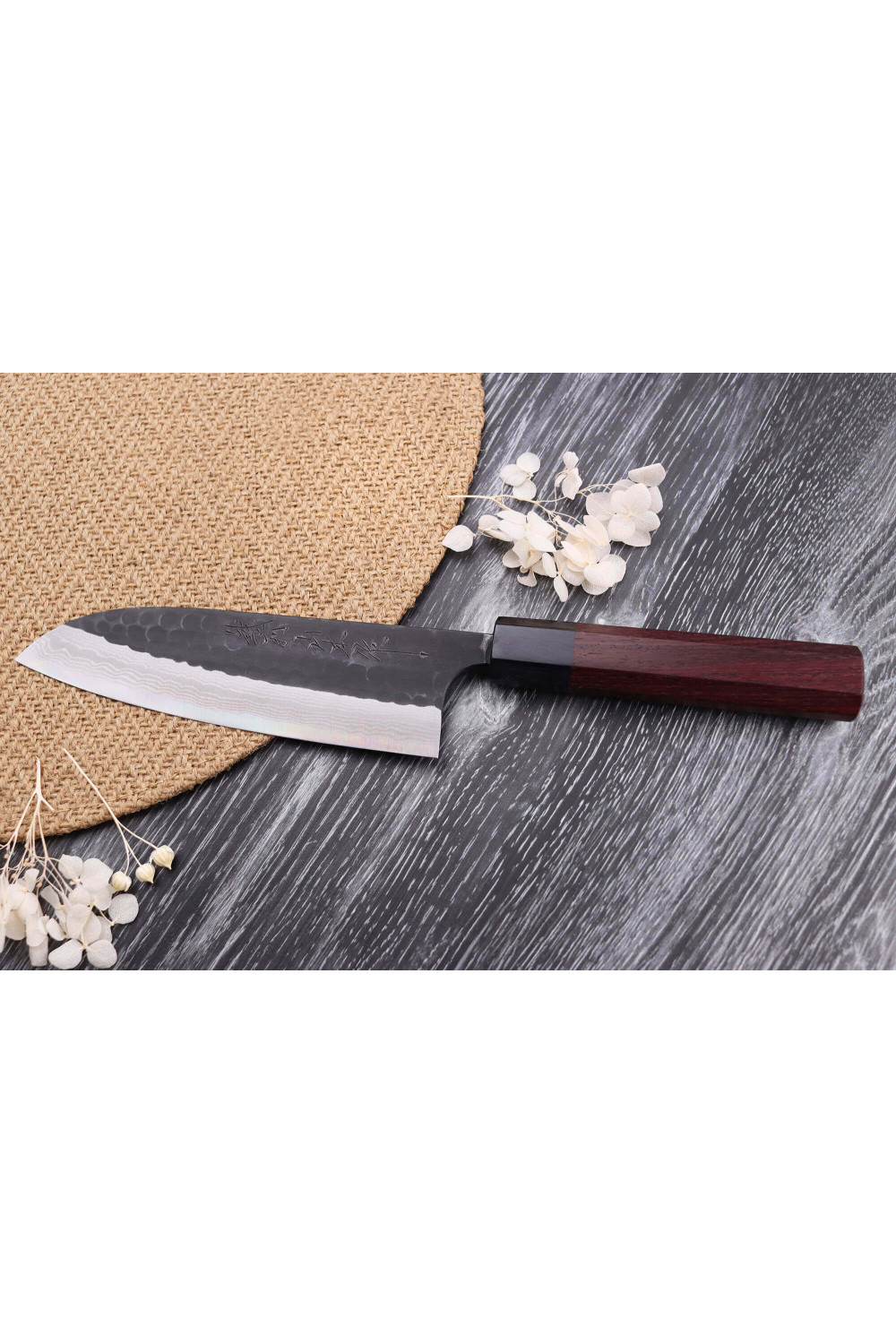
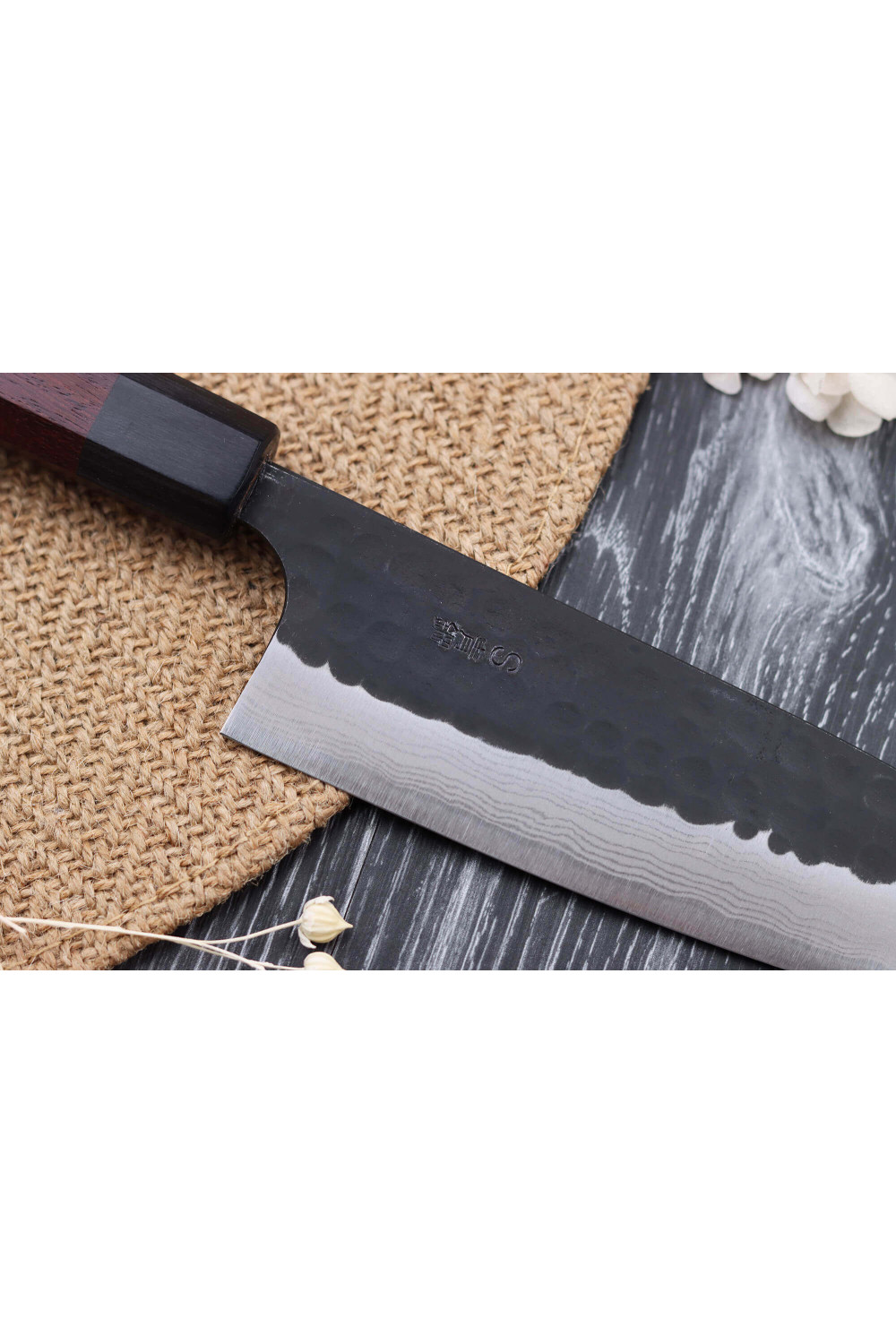
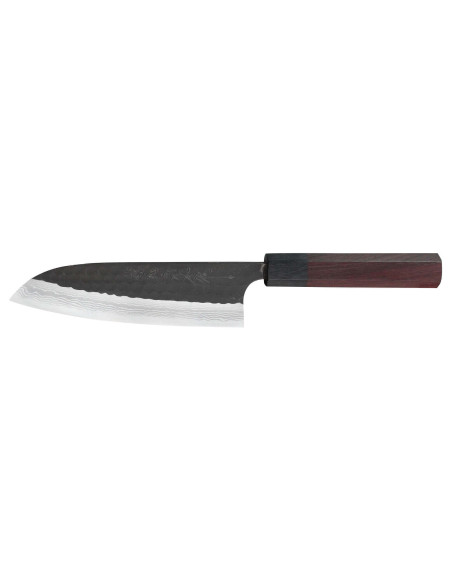
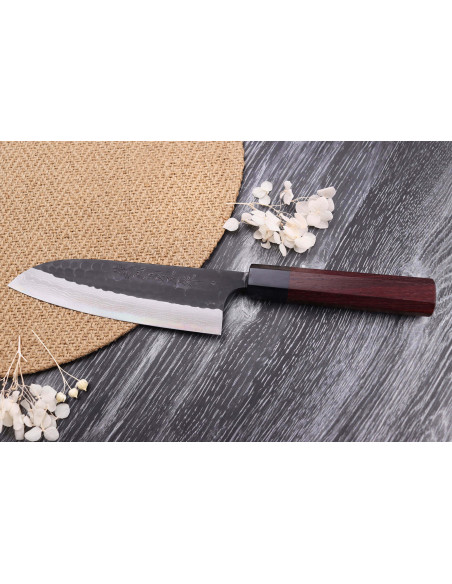
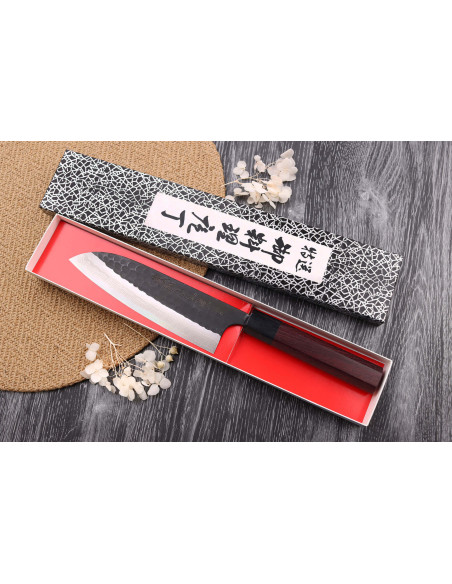
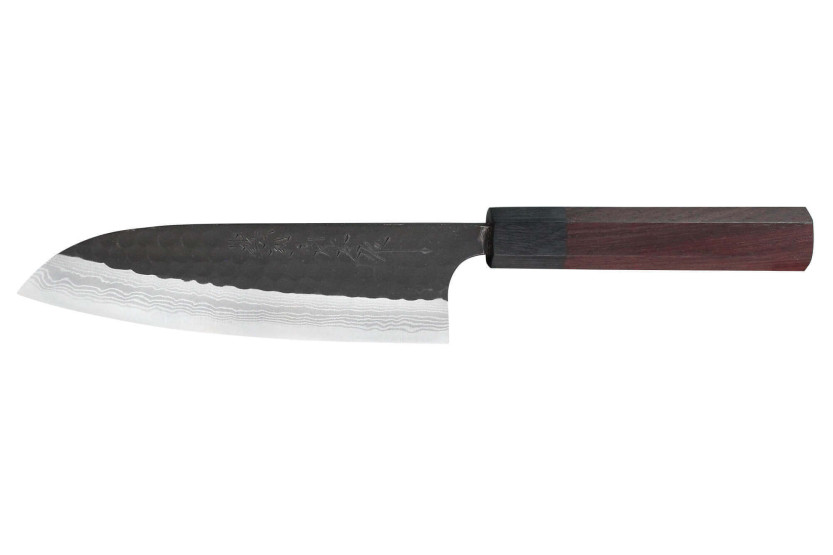
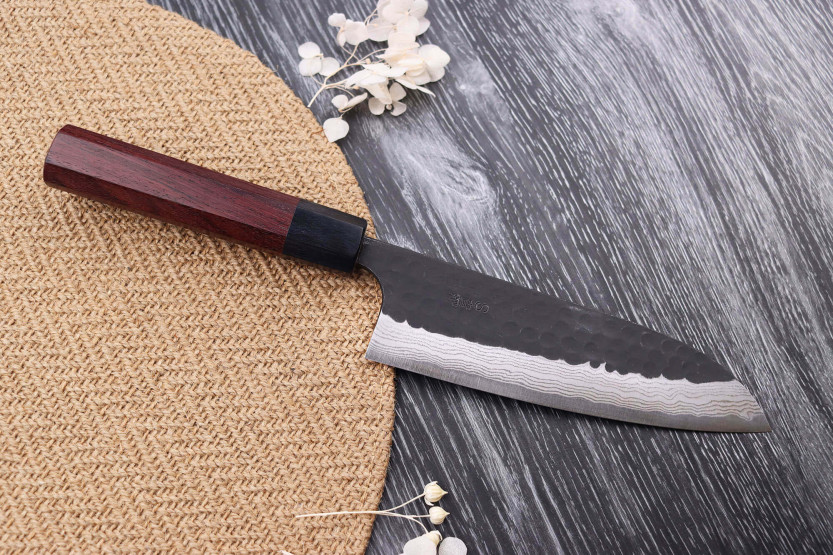
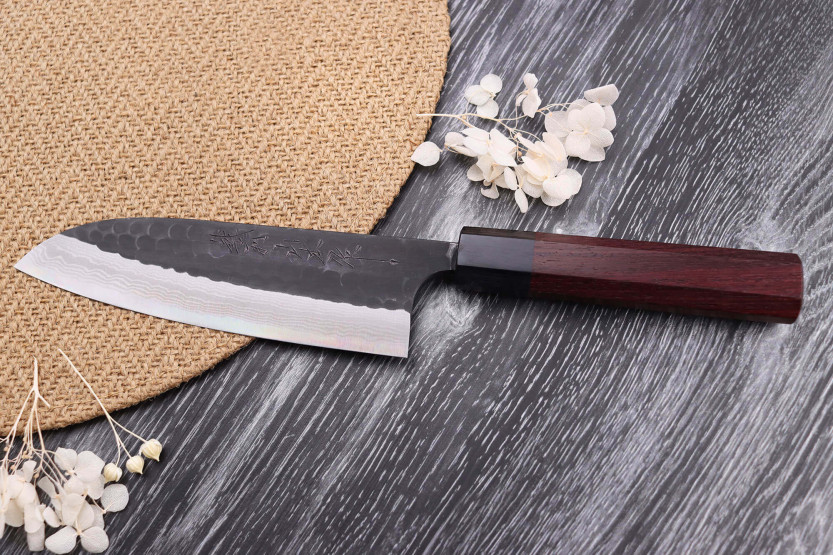
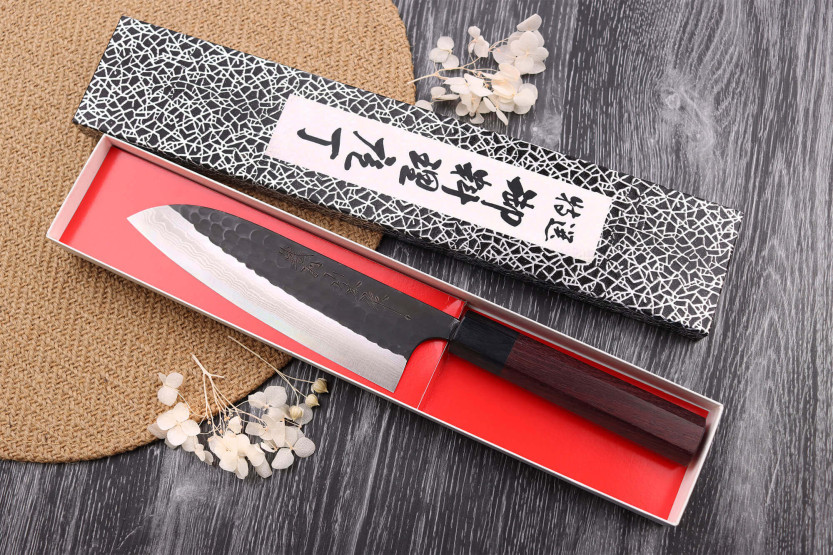
The Nao Yamamoto Damascus ASsantoku knife features a beautiful damascened blade. This particular structure is based on a rigid core surrounded by several layers of softer steel. These outer layers balance the blade (i.e. make it more supple, less brittle) and protect it. The damascened blade is typically Japanese, and Japanese blacksmiths excel in this art!
Nao Yamamoto knife blade composition
Here, Nao san chooses Japanese Aogami Supersteel to form the core of its blade (also known as AS or Blue Paper Steel Super). It's a steel from the Land of the Rising Sun, produced by the world-renowned Hitachi company. It has a high carbon content: up to 1.5% (enabling the blade to reach 65 HRC on the Rockwell scale). Carbon is an essential element for increasing the rigidity of an alloy, bearing in mind that a rigid alloy is one that will hold its edge for many uses. Aogami steel is renowned for being particularly effective on fibrous products.
Blue Paper Steel Super is an expensive alloy that few blacksmiths know how to work. Indeed, if the blacksmith is not an expert in the field, losses are significant and costly. The blacksmith must therefore master this alloy with its particular composition.
This steel is then surrounded by several layers of softer iron, which protect it and balance out its high rigidity. However, this damascus knife is still subject to corrosion and therefore requires meticulous maintenance!
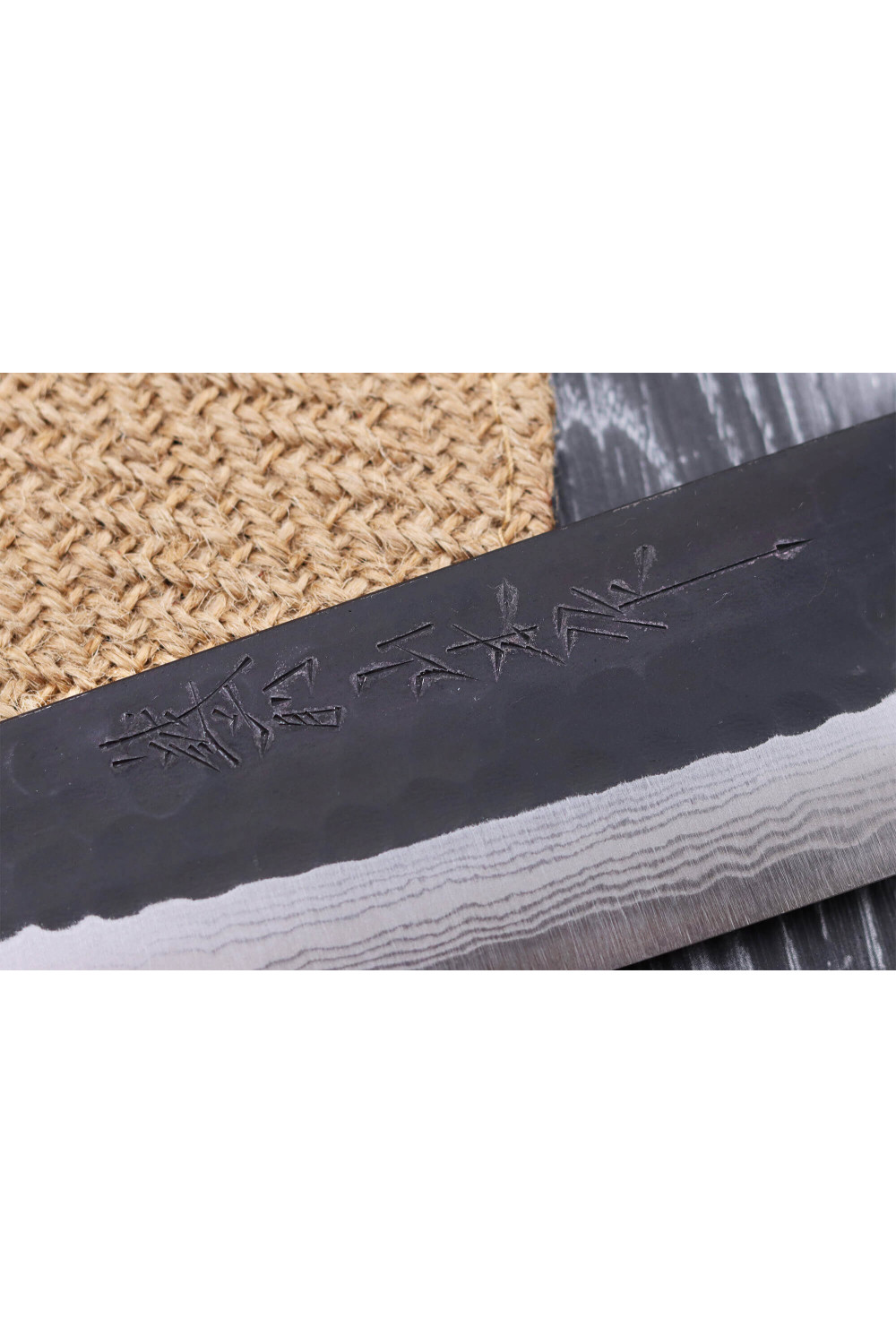
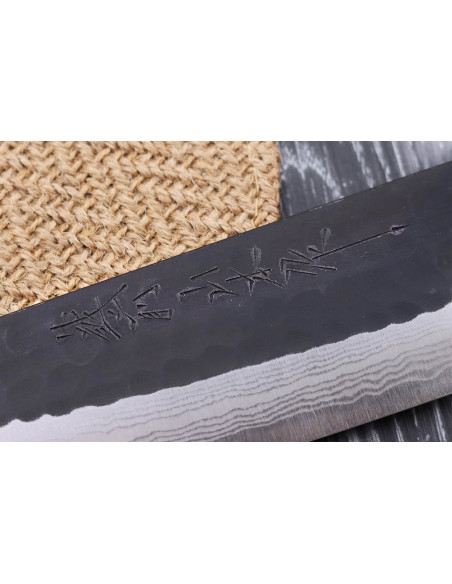
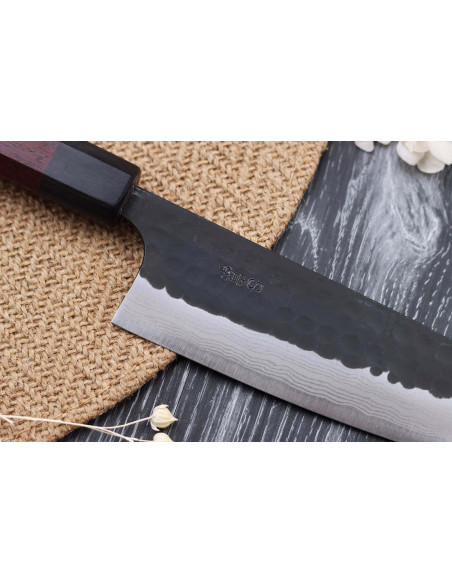
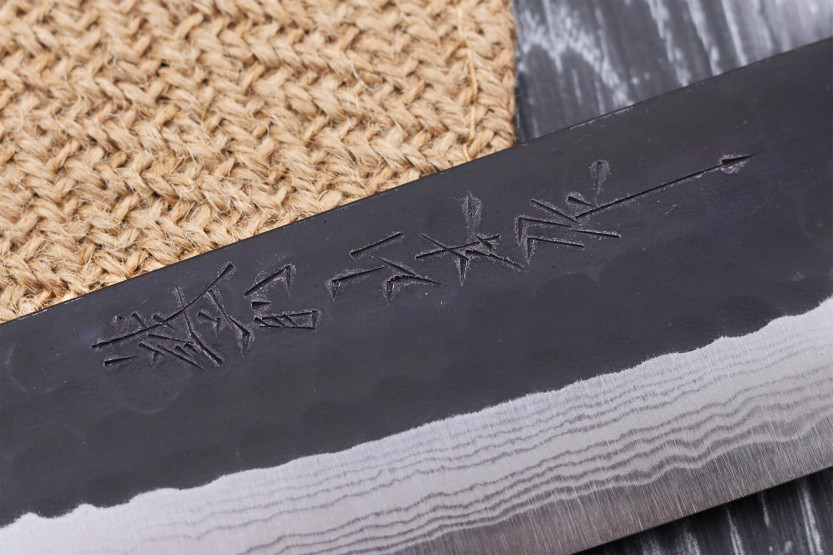
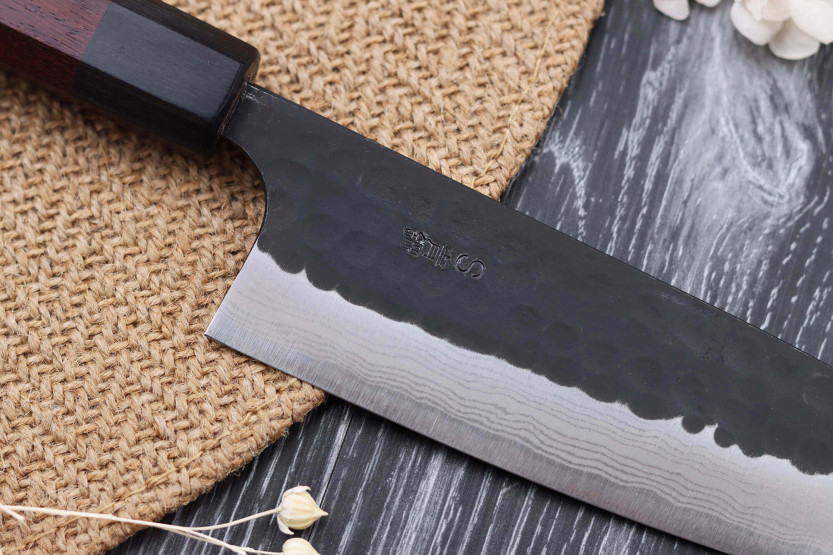
The alternating steels can be seen on the bottom of the cutting surface. This adds visual appeal to the handcrafted knife!
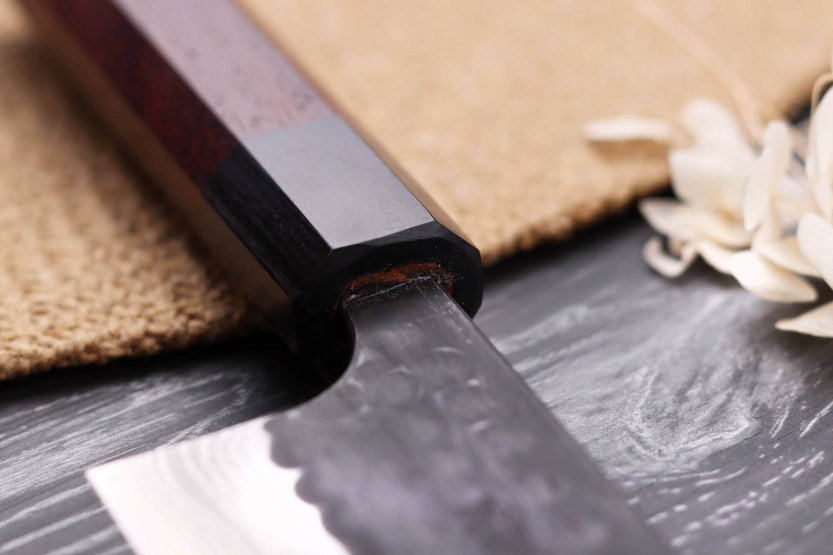
The final appearance of the blade of this Japanese knife gives it a great deal of authenticity. You can appreciate its rough forged finish. This traditional finish makes the blade dark and matte. It's a finish appreciated by Japanese chefs!
Yamamoto san has also hammered the blades. This increases the traditional character tenfold, and improves the non-stick properties of the blade (as hammering acts a little like honeycombing).
A practical handle for easy cutting
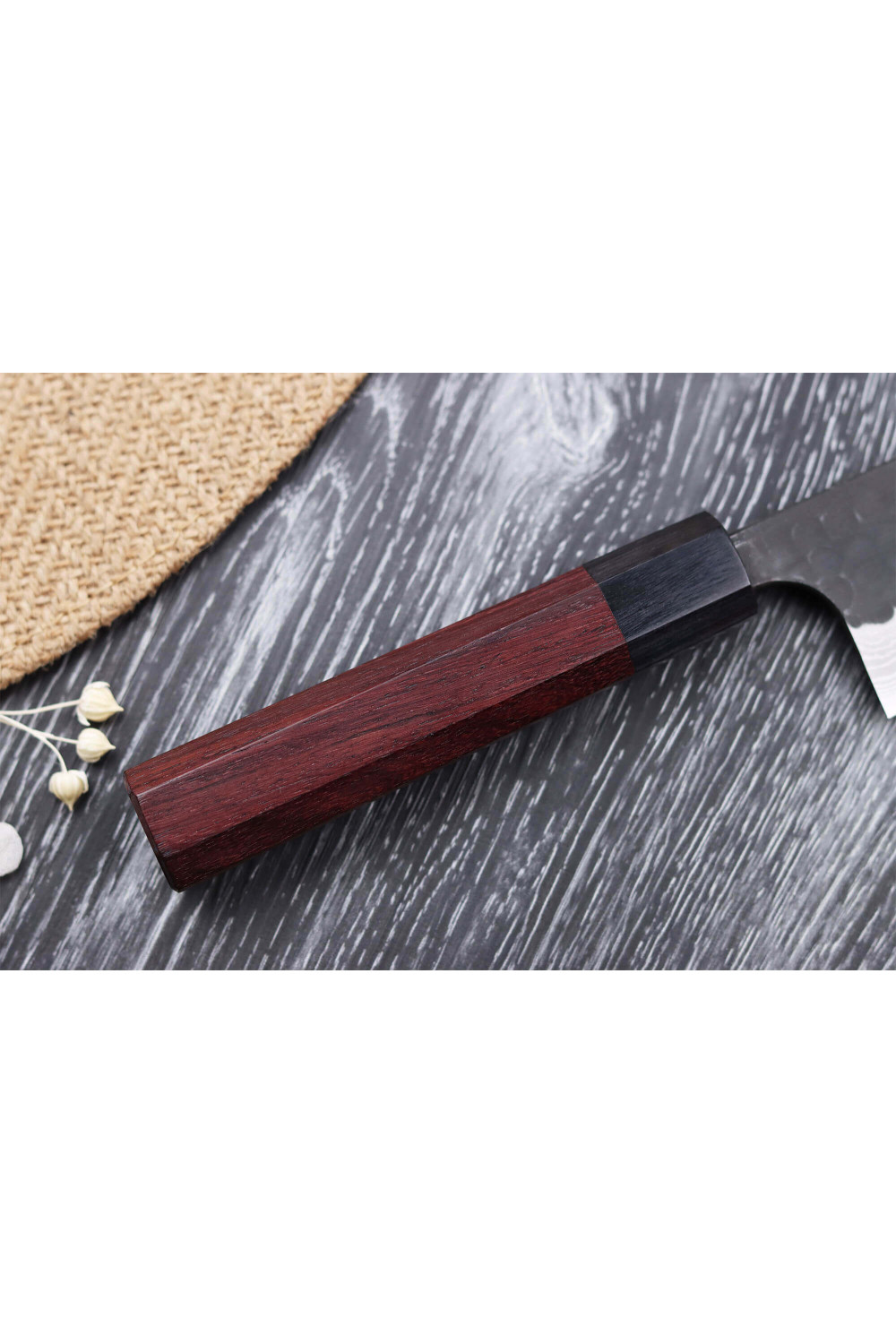
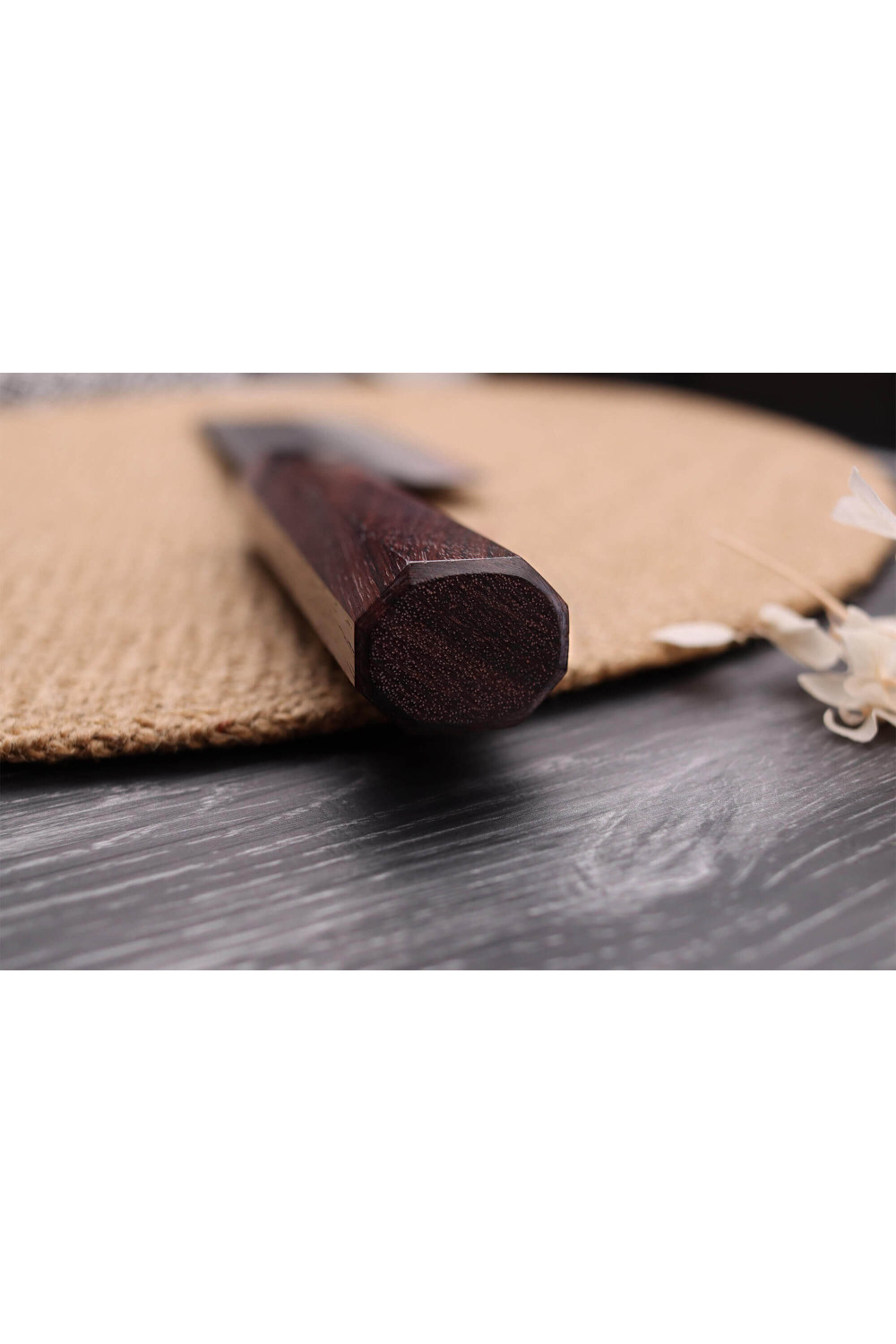
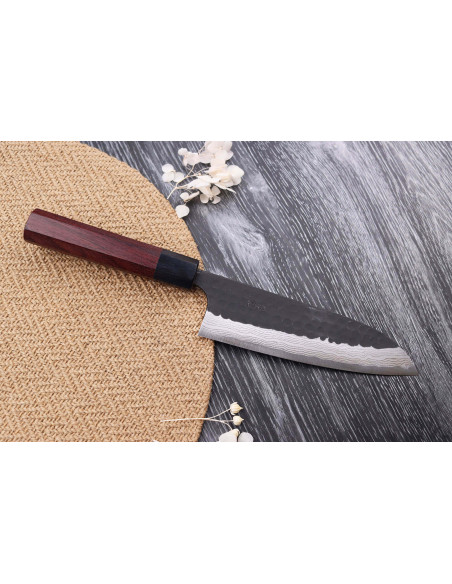
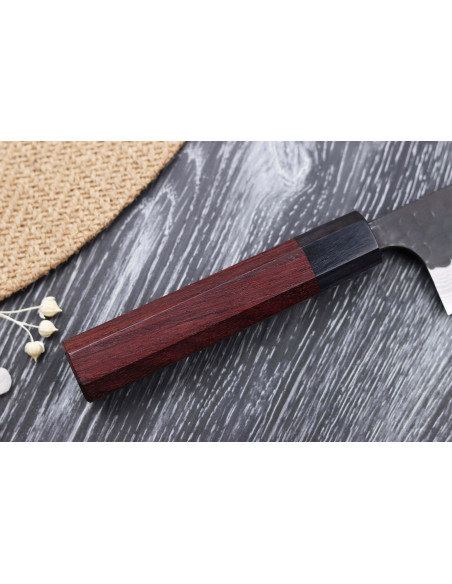
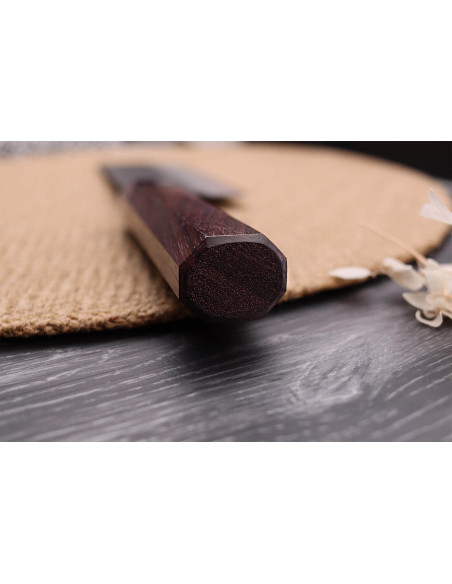
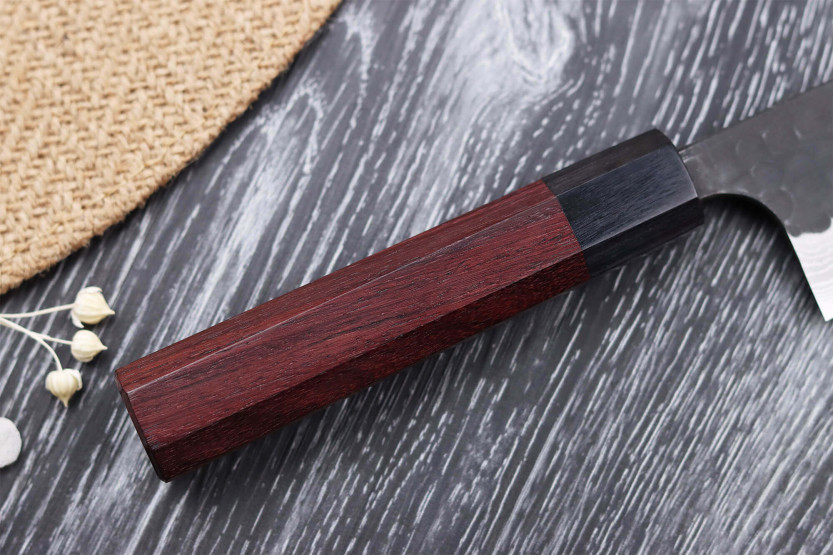
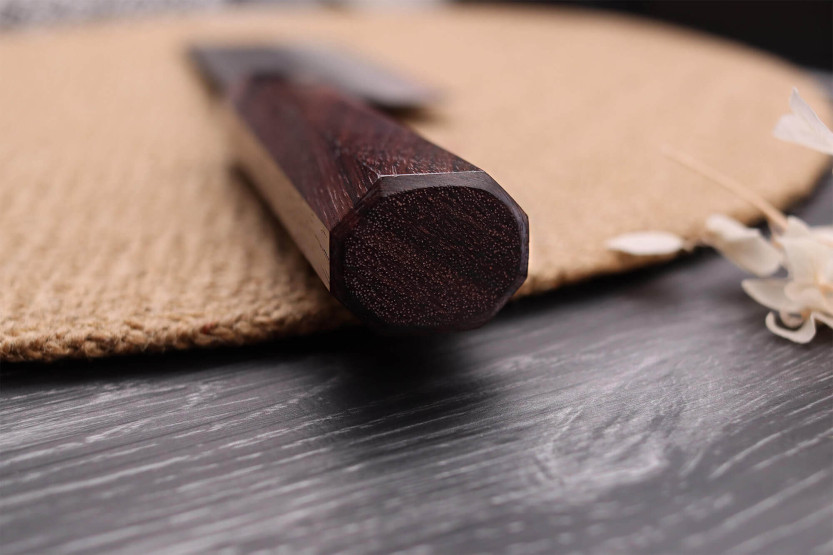
This santoku knife features a rosewood handle. This deep wood between brown and red is dense, making it resistant. Often used to design furniture or decorative objects, it's well suited to the kitchen environment, as it won't warp easily. Octagonal in shape, it is suitable for both right- and left-handed cooks. The grip is pleasant, even if you use it for a while.
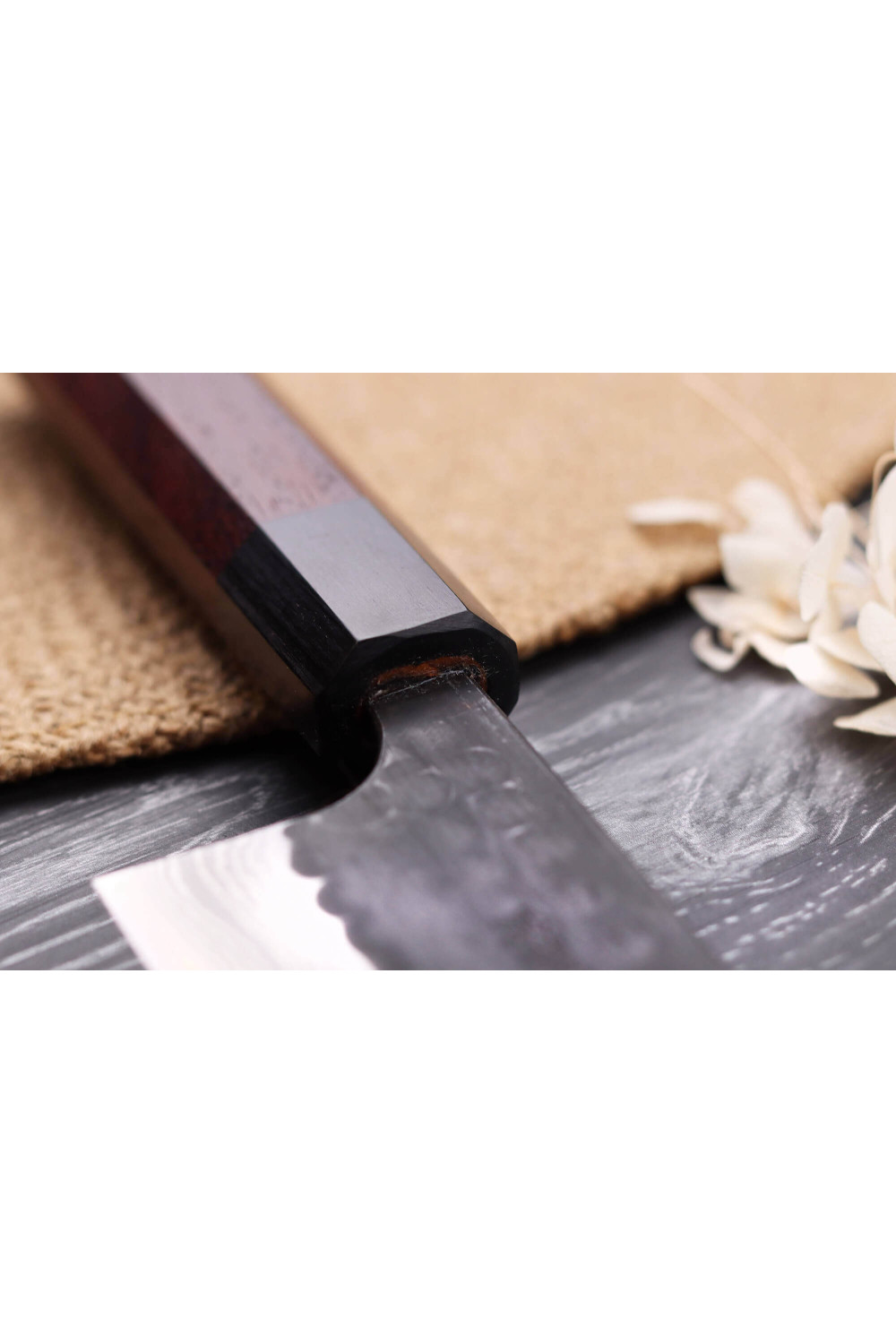
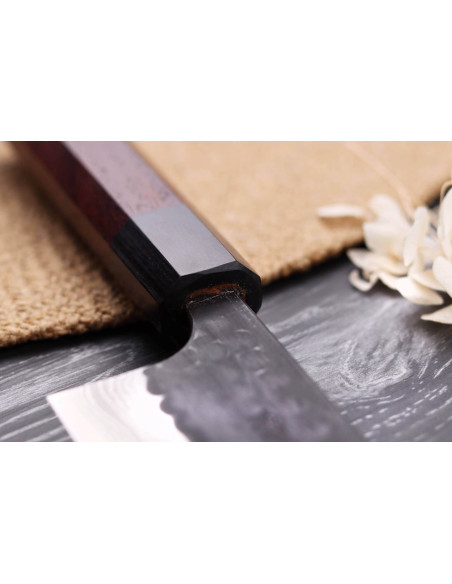
The bolster is made of black pakka wood. Despite its name, Pakka wood (or Pakkawood) is not pure wood. In fact, it's a composite material composed of laminated wood heat-hardened with resin.
Wood pulp is used to fill the gap where the blade joins the handle, to prevent water from seeping in, and to remove small pieces of cut food.
Care: Japanese knives should be washed by hand, using a sponge and mild detergent. Do not put it in the dishwasher, or soak it in your sink. Also, avoid getting the handle wet, even if you wash the knife by hand. Once the knife has been washed, wipe it dry before storing it in a dry place.
As mentioned above, knives are considered oxidizable, so it's important to store them free of moisture. Also, over time, the blade may change color, and this is perfectly normal! In fact, the acidity of food and the humidity in the air can have an impact on Aogami steel, and this is normal.
Our selection of handcrafted Japanese knives is here!




 By buying this product you can collect up to