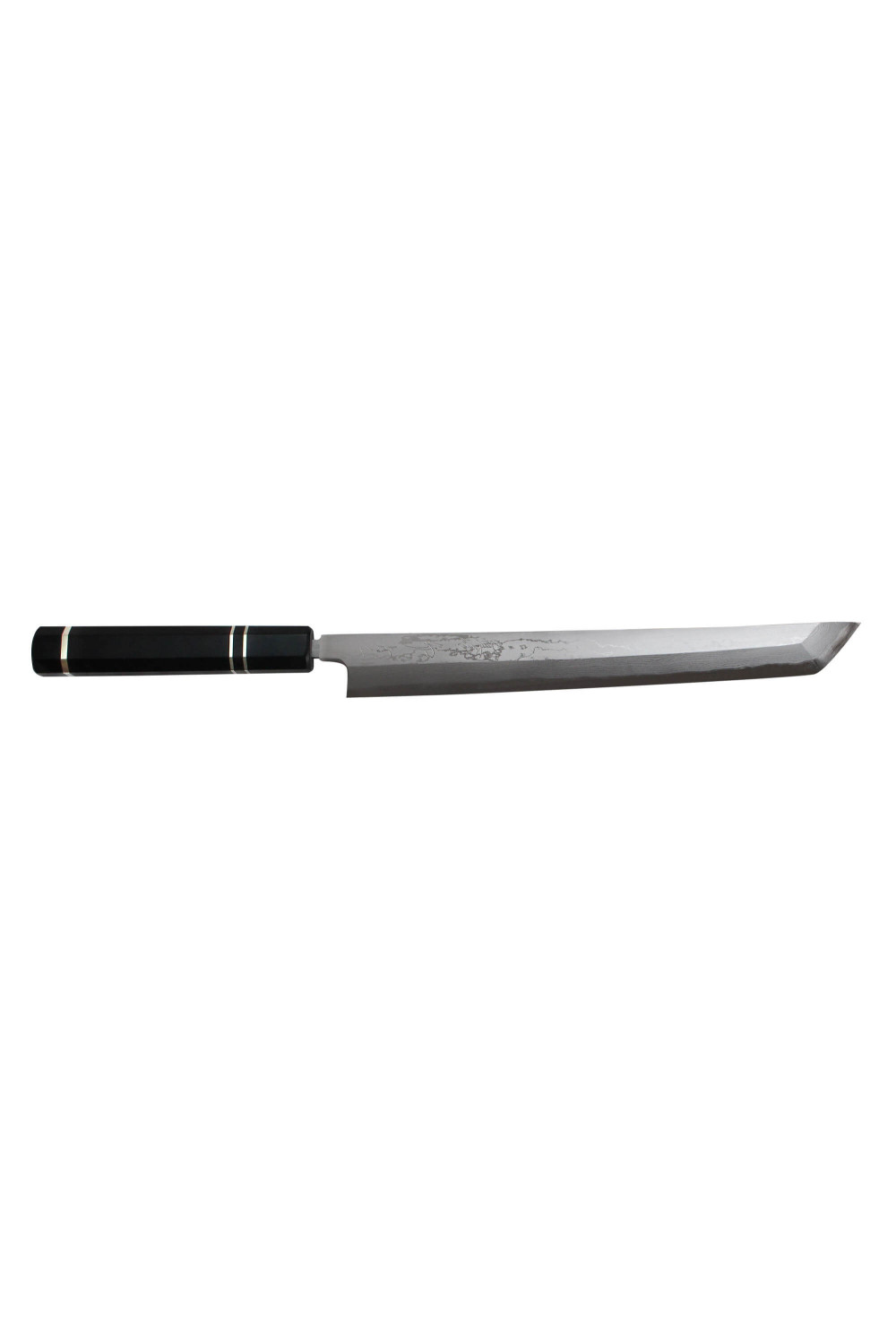
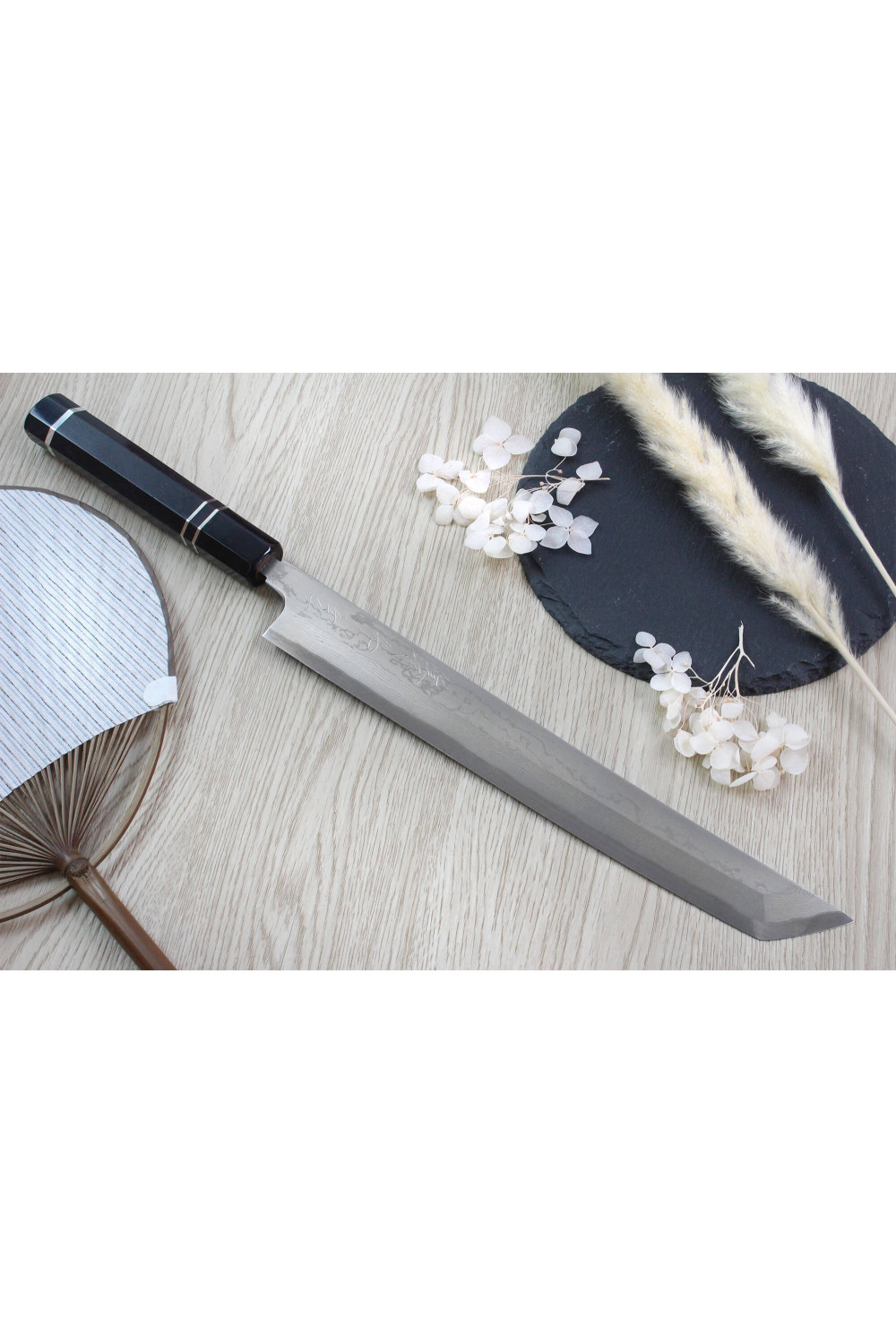
We're delighted to present the sakimaru handmade knife forged by Naoki Mazaki san! This Japanese blacksmith works in his own workshop, alone, in the Niigata province of Japan. He has an unusual story to tell: as a young man, he didn't really know what he wanted to do, so he decided to tour Japan on his motorcycle to find his calling! When he stopped at Sanjo in Niigata province, he was fascinated by the work of the local blacksmiths and decided to become one. He completed his apprenticeship with the Yoshikane brand over a period of 5 years, and then decided to set up on his own, in a more traditional workshop. He now forges his own knives in his workshop, and particularly enjoys working with Shirogami 2 andAogami, on which he likes to leave a traditional finish, for a more rustic feel.
The blacksmith's reputation is such that the average lead time for obtaining a knife from him is 2 years! So it's easy to see how much his expertise is appreciated.
Function of the sakimaru knife
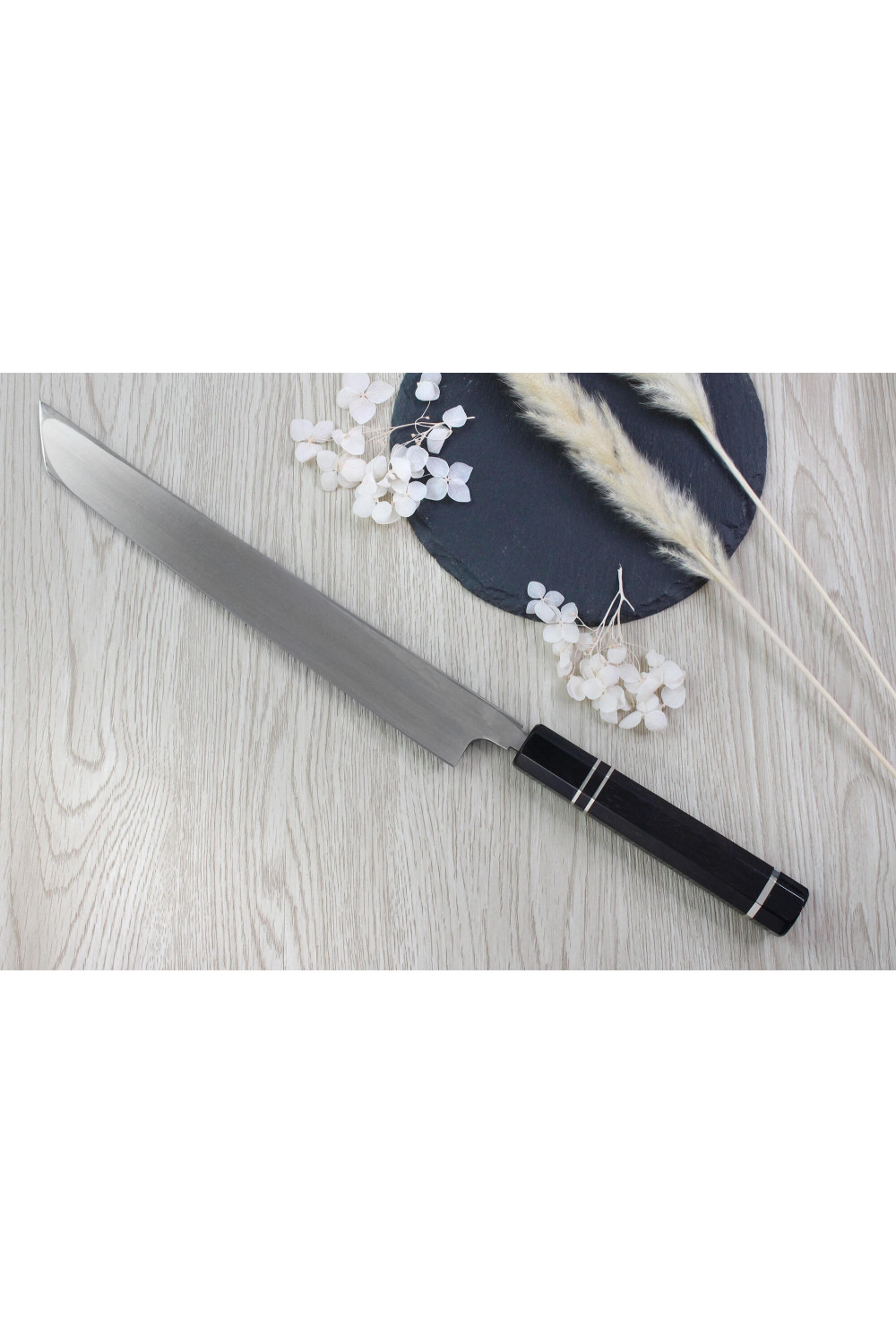
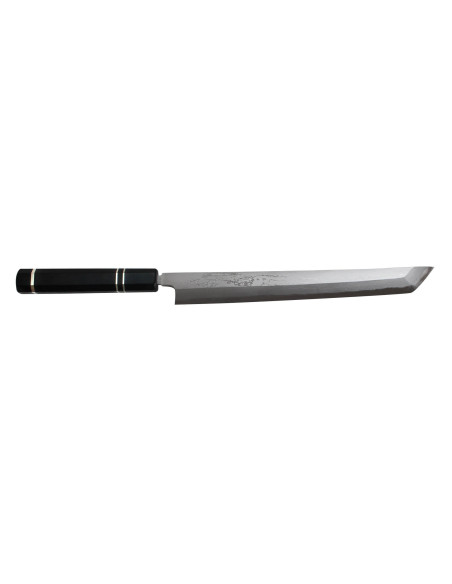
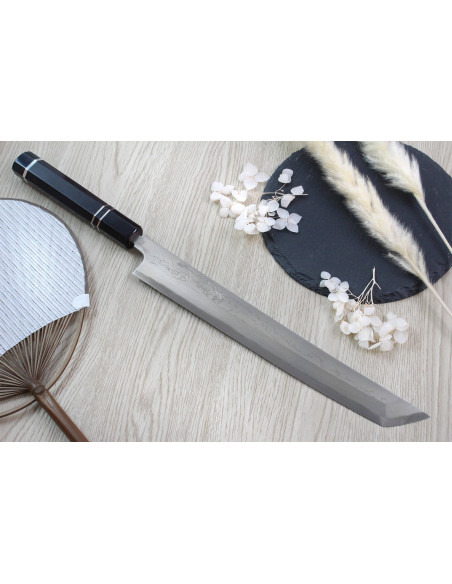
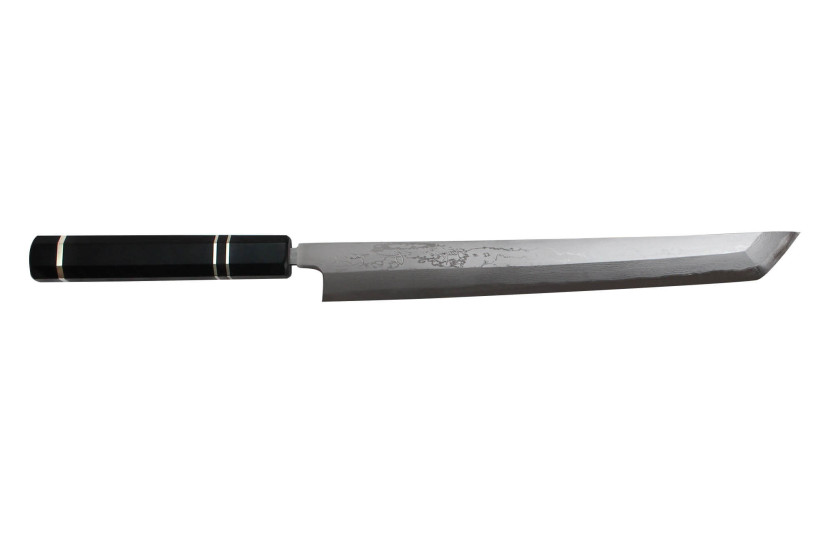
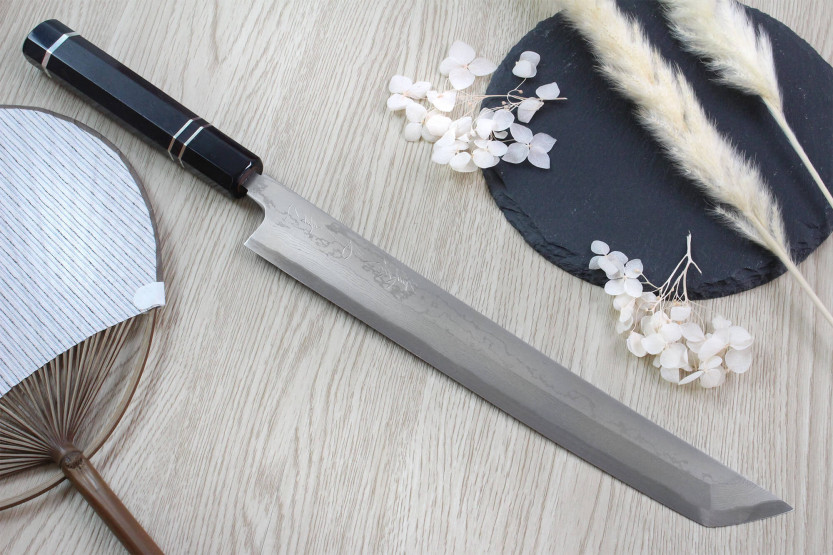
This particular model, with its very traditional look, is designed for cutting fish. It is used, for example, on large pieces of tuna. Its fine, particularly sharp blade cuts easily into the flesh, without damaging it, to produce beautiful slices or chunks. Thanks to its length, the blade is ideal for large cuts.
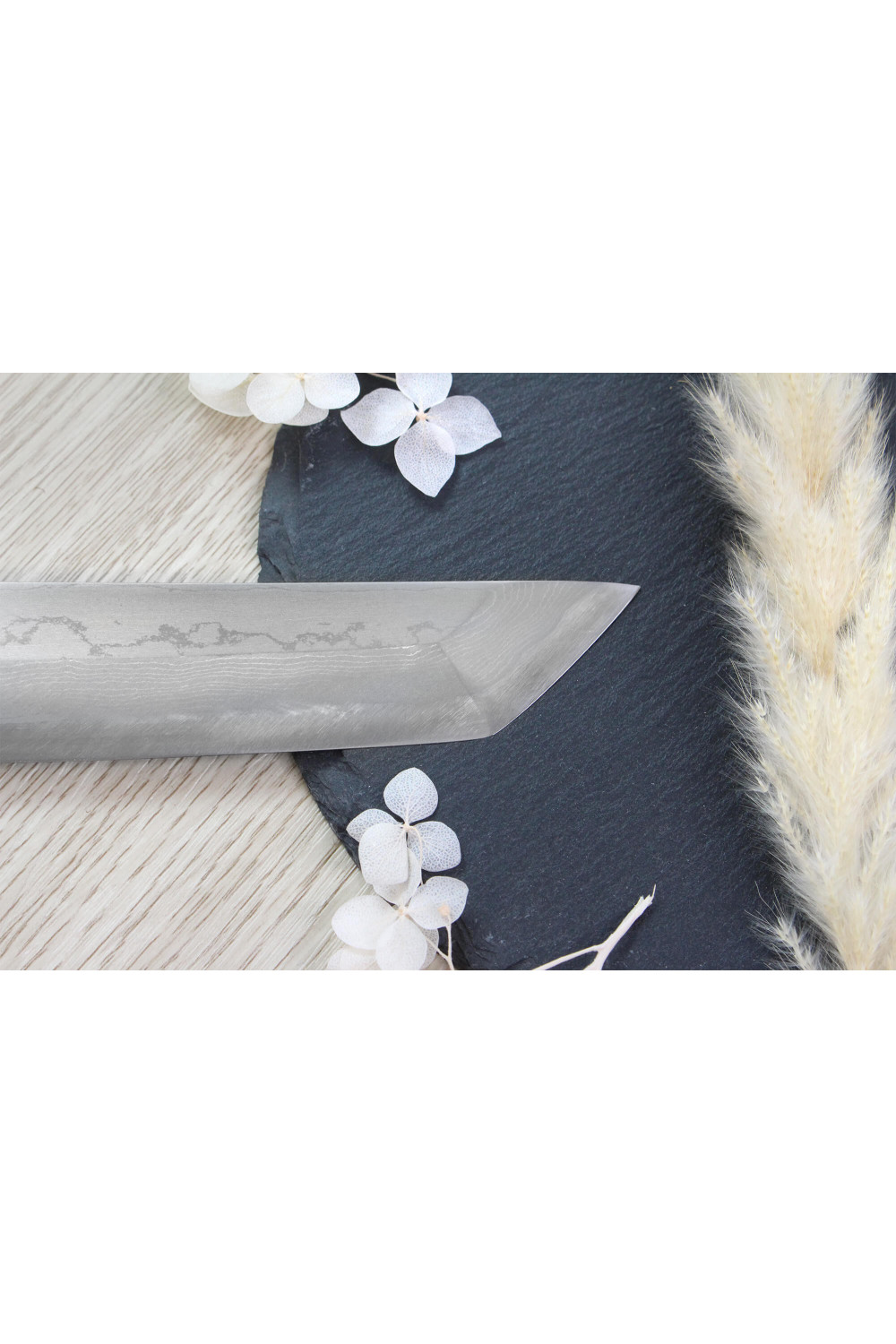
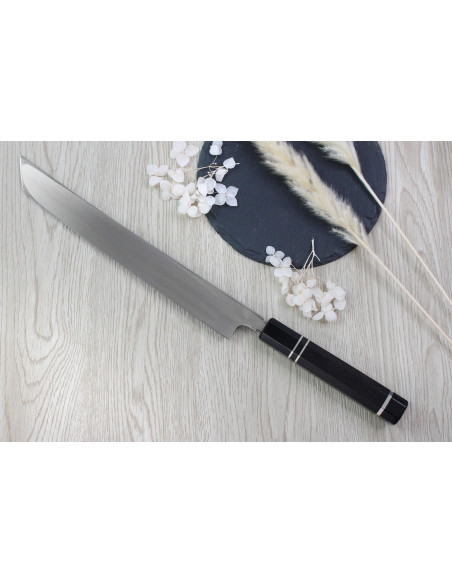
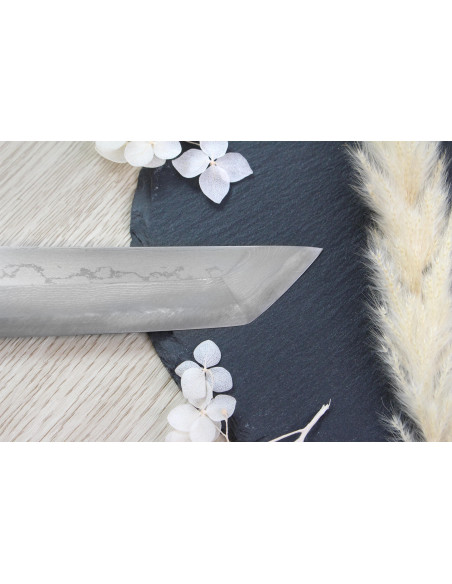
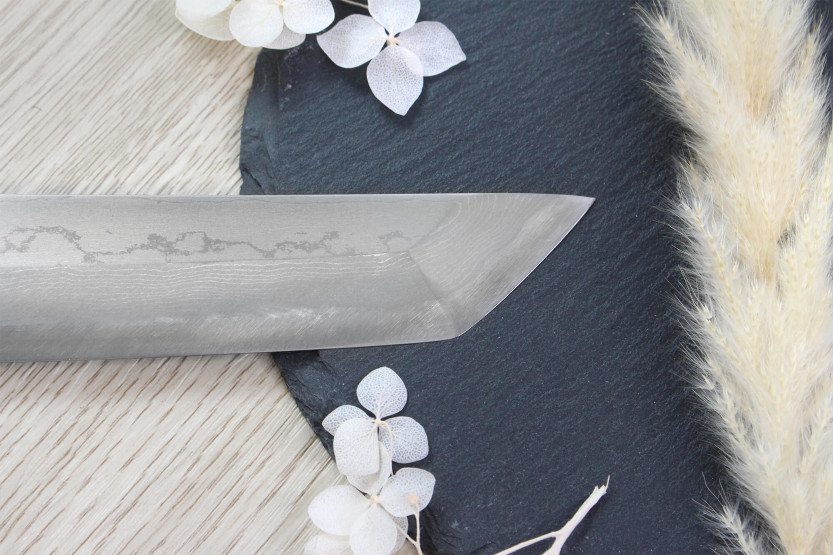
The blade is beveled, so the cutting edge is visible on the right-hand side of the knife (the other side is flat). This ensures smooth, easy insertion into the flesh of the food being cut. This model is therefore suitable for right-handed users.
A true Japanese knife blade
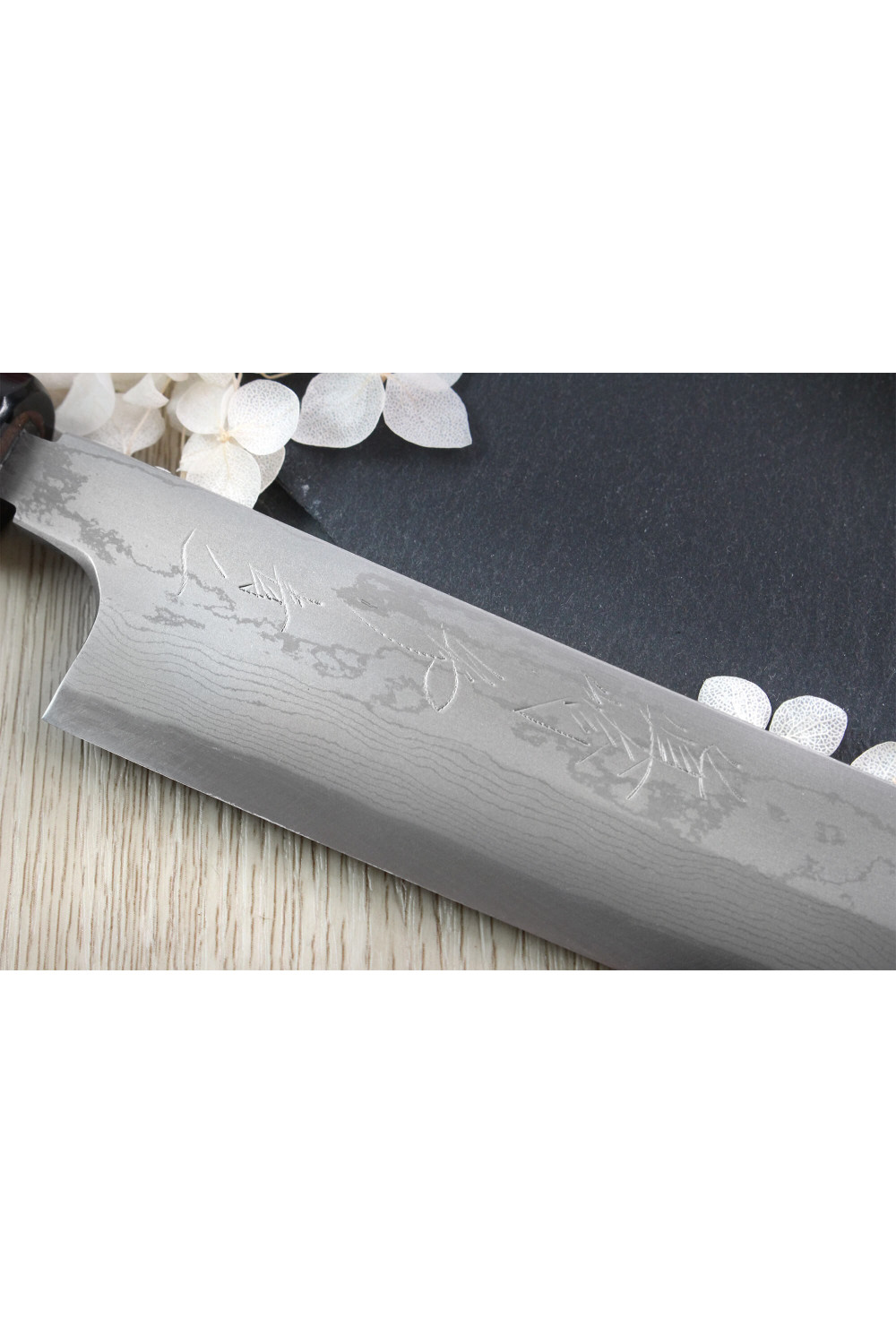
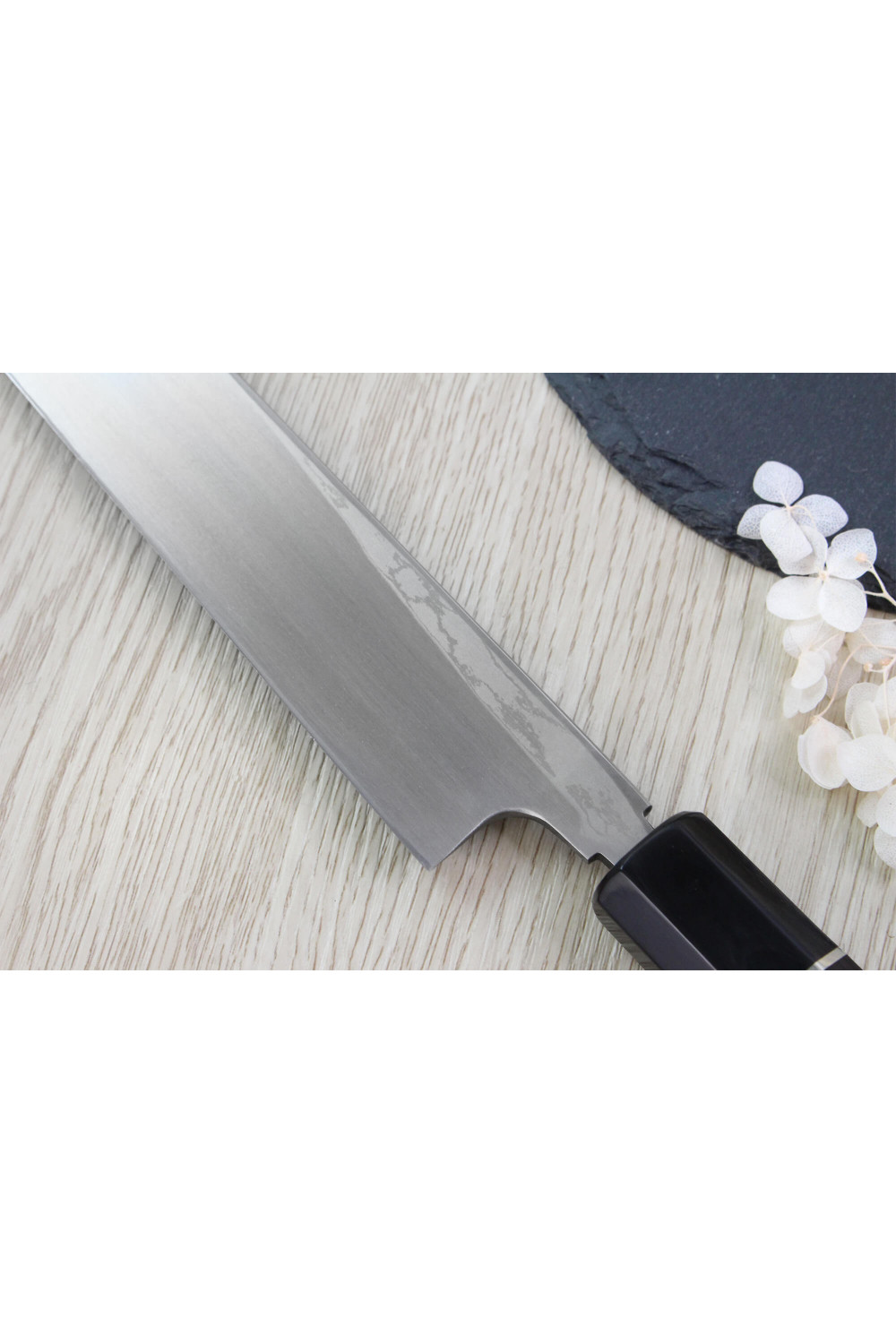
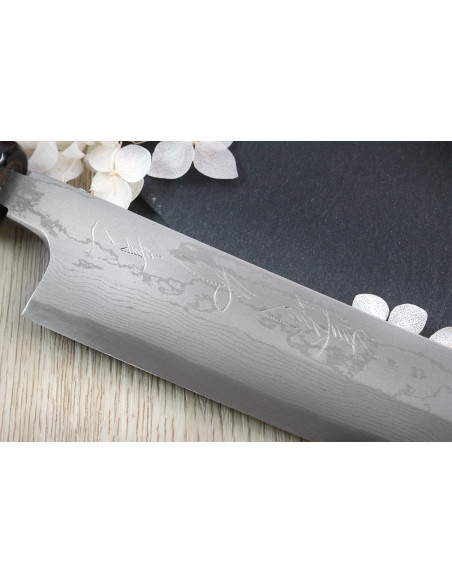
The 27cm blade features a damascus structure. Damascus is a process used to blend different steels into a single blade. There is a core (often more rigid than the rest) and layers of softer steel that surround and protect it. A damascened blade therefore presents an unprecedented visual effect, as all the superimposed layers are visible on the cutting surface. This lends a great deal of character to the knives that benefit from it, as well as giving them greaterbalance and strength.
Here, Mazaki san has chosen Japanese Aogami 2 steel for the center of the knife. This steel is produced by Hitachi, a well-known Japanese steelmaker. It supplies quality steel to blacksmiths, who then work it into their knives. Aogami 2, also known as Blue Steel 2, has a carbon content of around 1.2%, which is essential for blade rigidity, and rigidity means long-lasting edge retention. This considerably reduces the need for sharpening, despite repeated use. This is a steel that can withstand a razor-edge finish, to ensure even more pleasurable cuts.
He then takes two parts of damascus steel and assembles them with the Aogami core to form the final blade. The result is a knife with an Aogami cutting edge sandwiched between damascus steel. The different steels are visible on the cutting surface, with the waves of color they cause. You could say that this knife is a hon-warikomi, i.e. a San Mai created by the blacksmith who finishes the knife himself, in the traditional way.
The blacksmith is an expert in sharpening, and he does it by hand, using various sharpening stones. The result is impeccable.
Its traditional shape gives it great cachet, in the manner of an ancient Japanese sword. As well as its impressive technical features, its authentic visual appeal is equally impressive.
Your knife can be sharpened with a whetstone for proper maintenance.
An elegant, pleasant handle
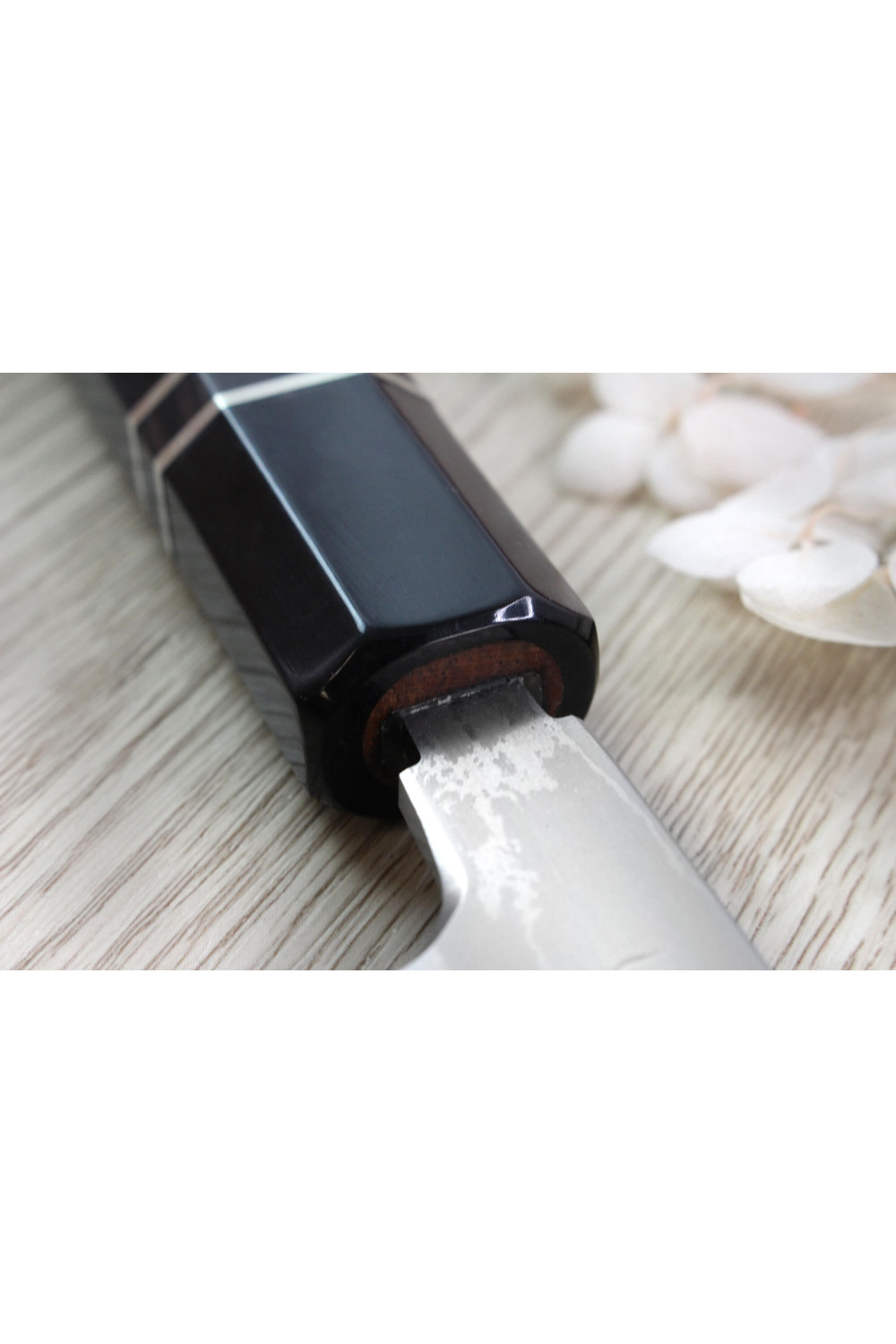
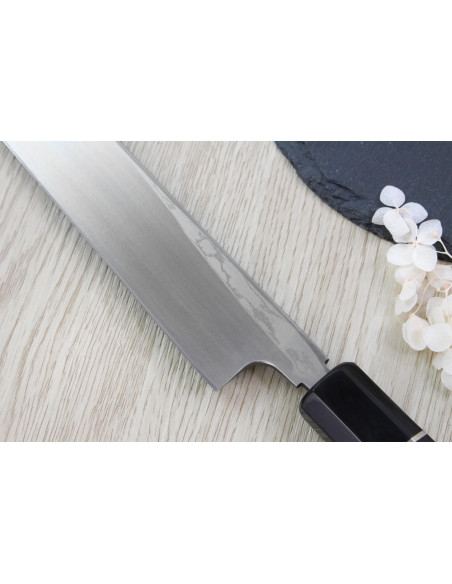
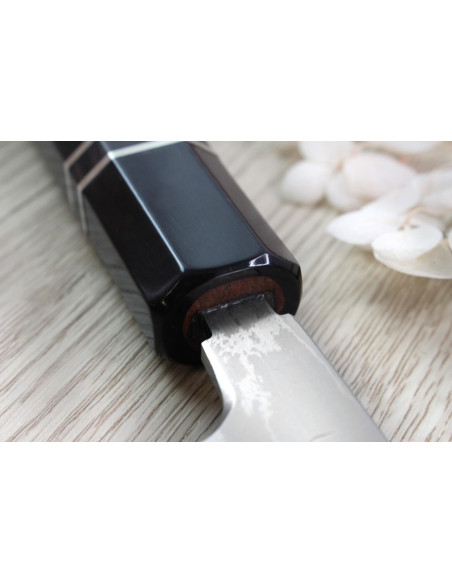
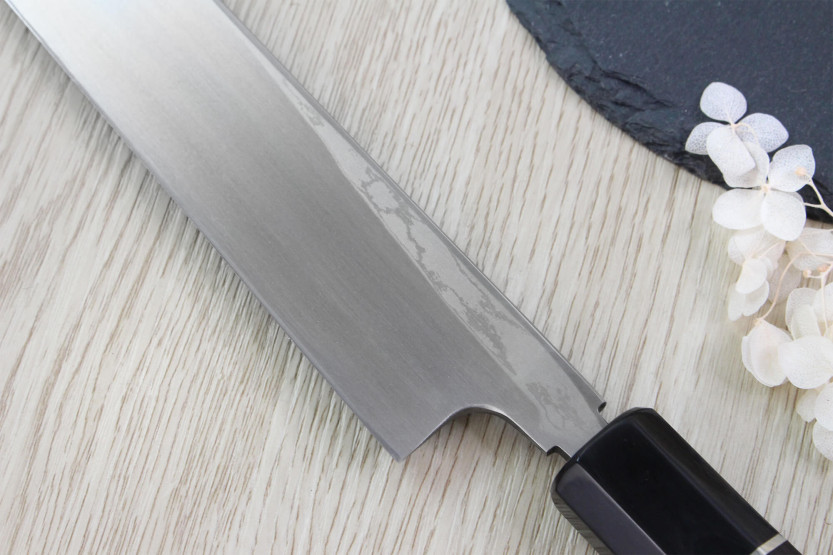
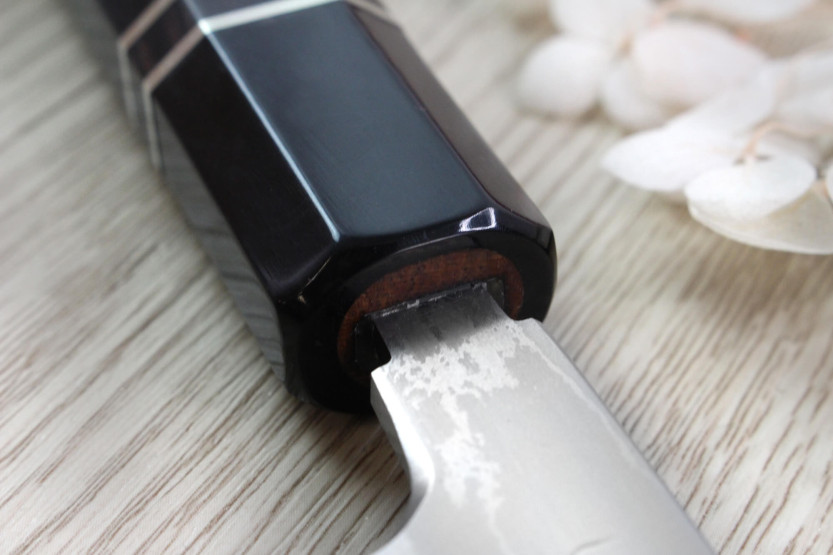
First of all, the blade joins the handle and the machi is visible. What is the machi? Quite simply, it's an extra piece of steel where the blade joins the handle. It may look as if the blade is not properly integrated into the handle, but this is not the case - the gap is deliberate! This is a tradition originating in the town of Sakai, whose aim is to perfect the knife's point of balance, by playing on its center of gravity. This makes the knife more pleasant to use and easier to grip.
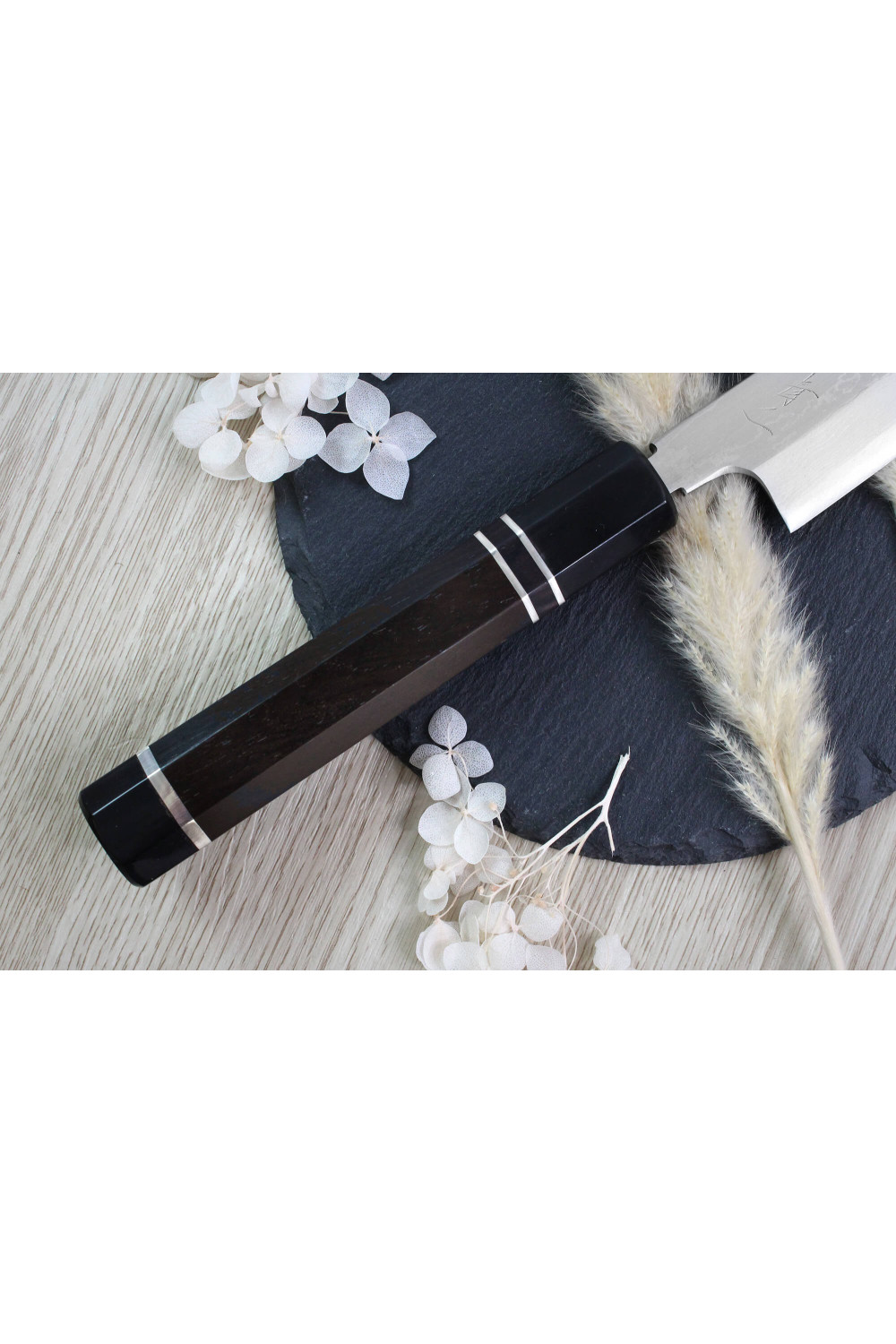
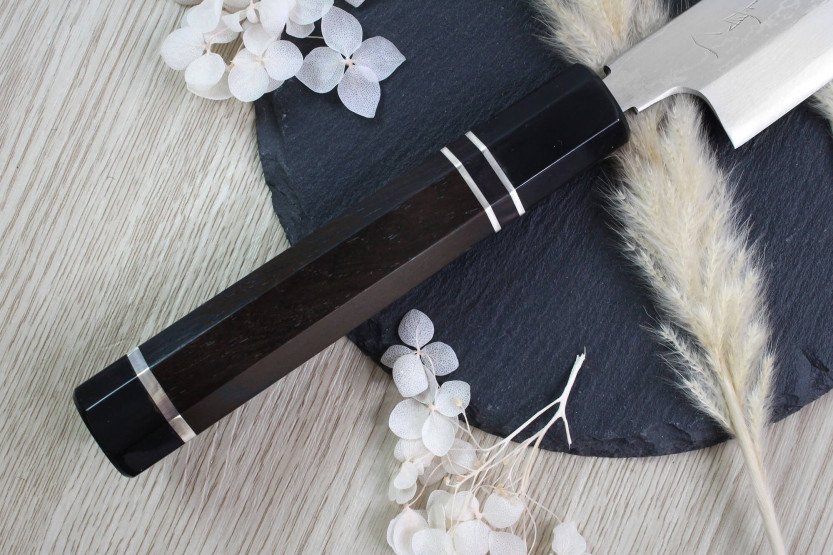
The machi is inserted into a black horn ferrule. As this is a natural material, it is possible to observe fine white veins, depending on the model. This is quite normal.
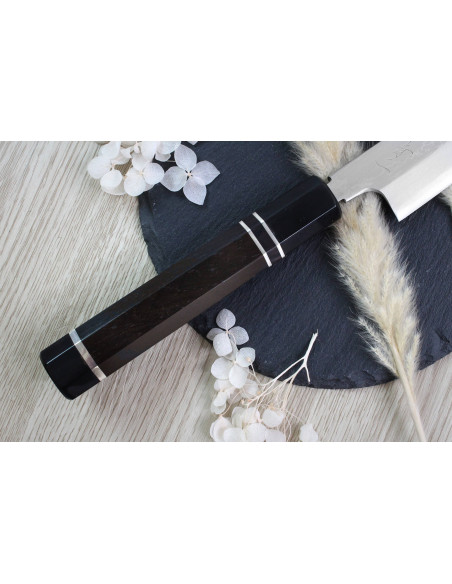
In the center of the knife we have a beautiful dark ebony wood, for even more depth. Ebony is a dense wood, prized for its resistance to warping and its durability. For some, it's even considered precious. Its veins are unique to each model.
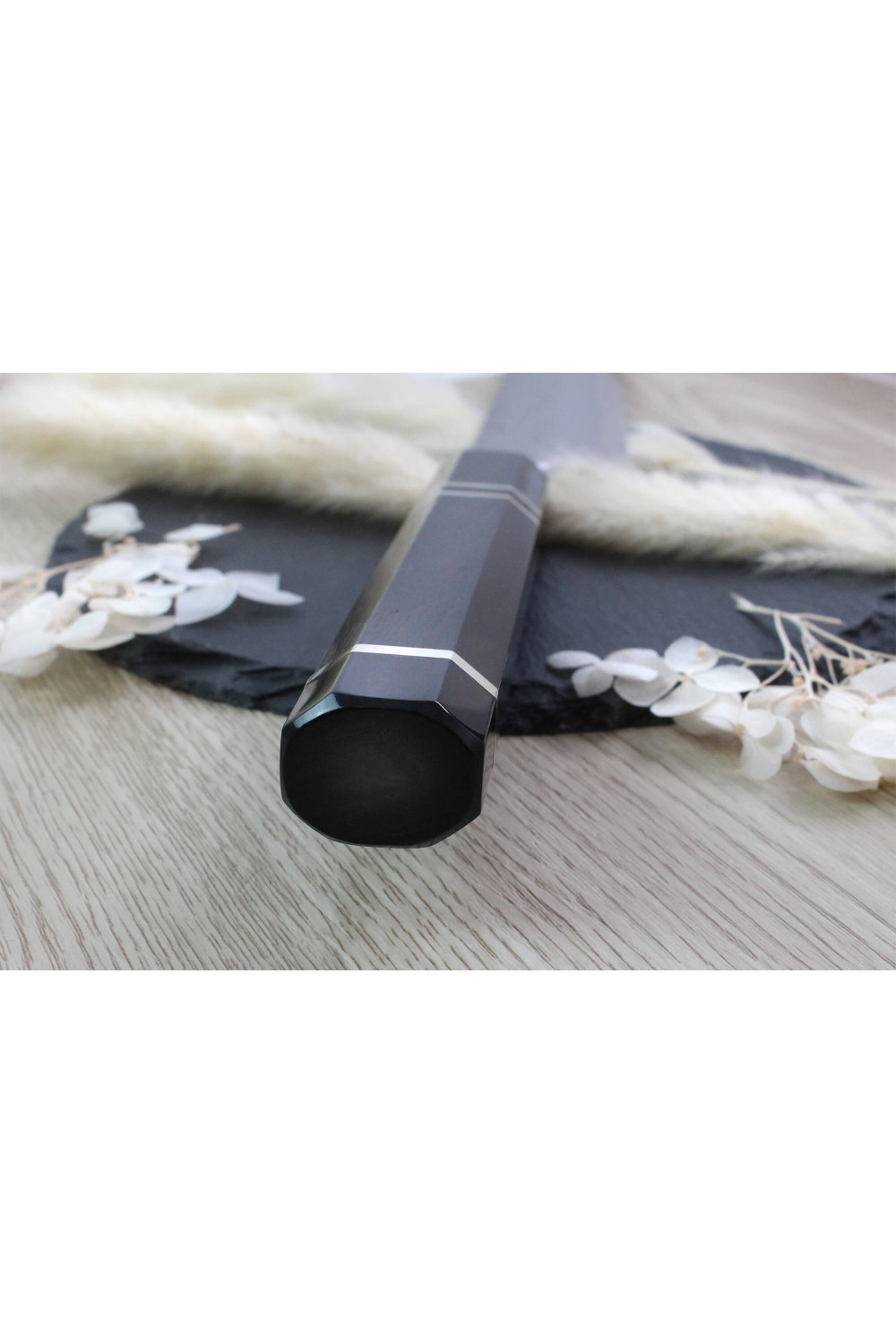
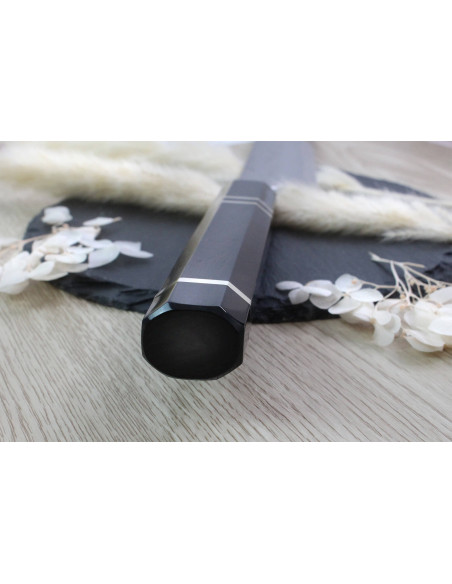
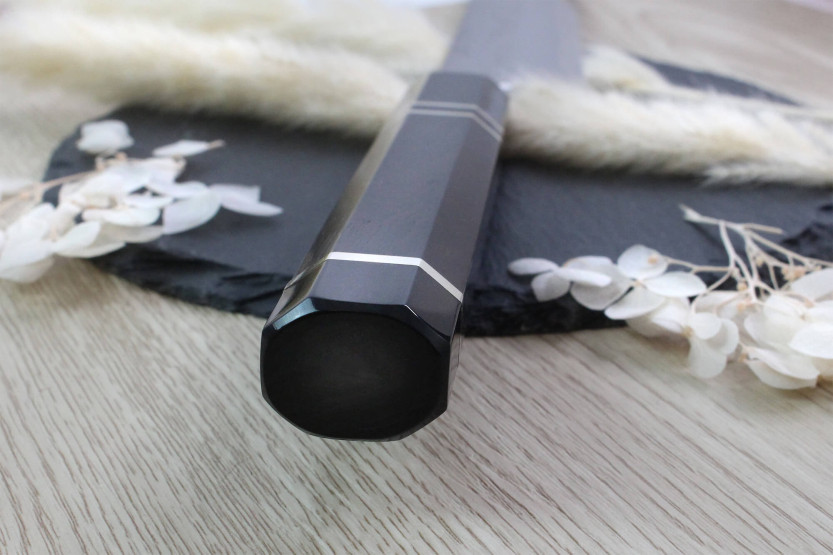
At the end of the handle is a black horn base. The link between the different handle materials is made by fine silver edging, which adds originality to this knife. The final shape is octagonal. The grip is appreciated for its sure control of the knife.
To maintain your knife, you need to follow certain rules. Indeed, as this is a carbon knife, it is important to wash it according to several conditions. First of all, do not use a dishwasher; you should wash it by hand, without soaking it in the sink. As carbon is oxidizable, the blade is more susceptible to corrosion. In fact, it can change color over time, and that's perfectly normal! It depends on the food being cut, its acidity, the humidity in the air...
Once the knife has been washed, wipe it with a soft cloth and store it in a dry place. You can oil the blade with mineral oil from time to time, to protect it.
To maintain your superb Japanese knife, discover our complete selection of Japanese sharpening stones!






 By buying this product you can collect up to