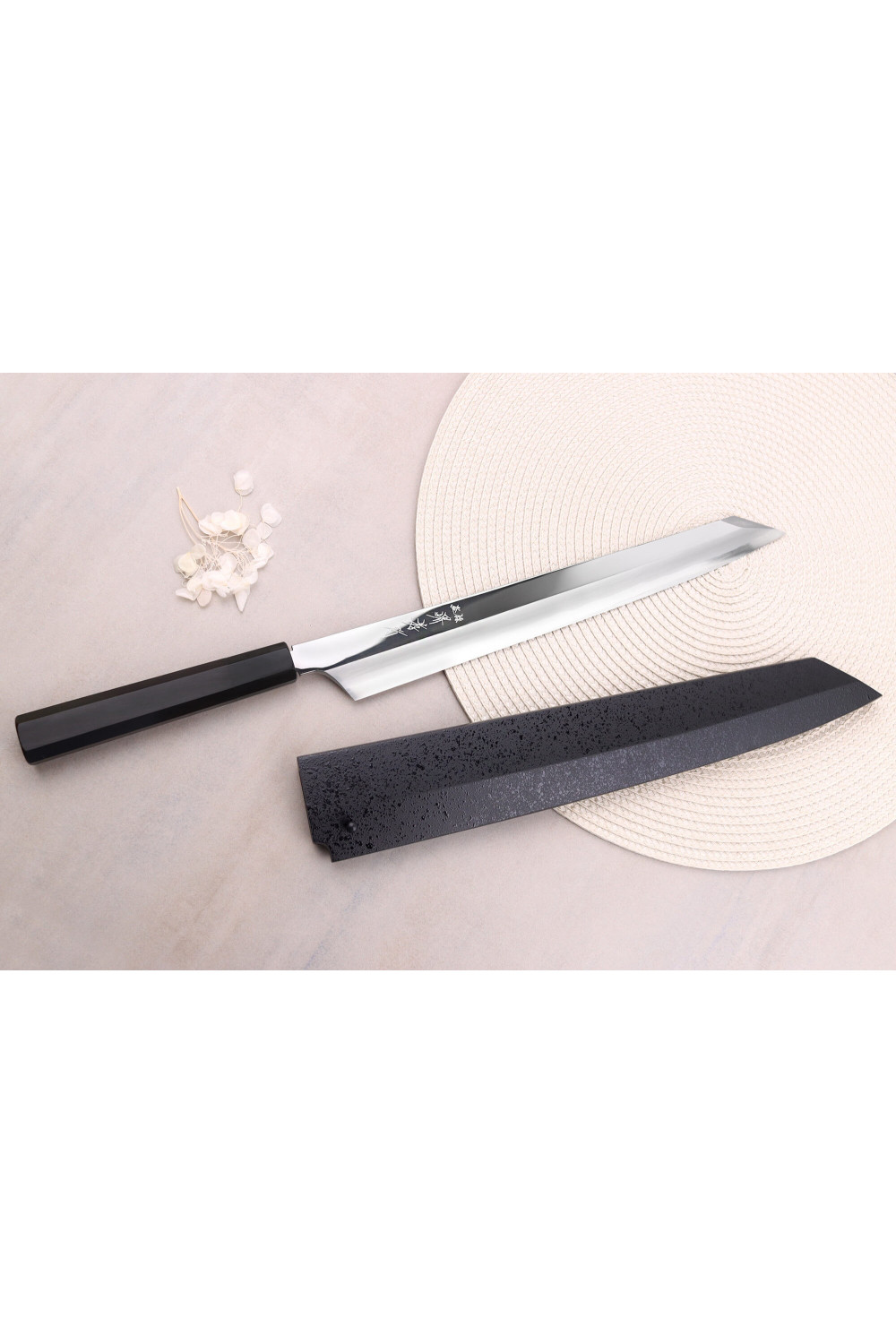
Founded in the 1950s in Sakai, Japan, Sakai Takayuki is a leading name in cutlery. The town of Sakai, renowned for its rich history, has long been a major centre for the manufacture of Japanese knives and samurai katanas. This age-old know-how has been passed down from generation to generation by the Japanese blacksmiths of yesteryear, enabling Sakai Takayuki to perpetuate this craft tradition while integrating modern designs with ancestral techniques.
This exceptional Japanese knife was designed by Itsuo Doi, a renowned craftsman and son of a renowned blacksmith. Known for his unique expertise, his father mastered the art of workingaogami at low temperature, thus preserving the carbon in the steel. Heir to this exceptional know-how, Itsuo Doi has been forging knives for almost 50 years. Its meticulous approach and commitment to respecting every stage of the manufacturing process guarantee blades of superior quality.
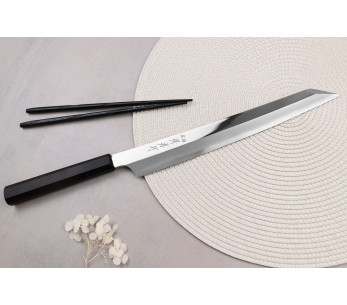
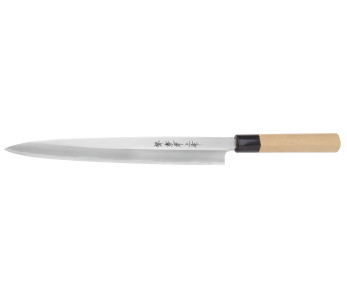
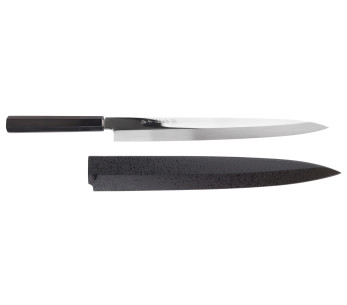
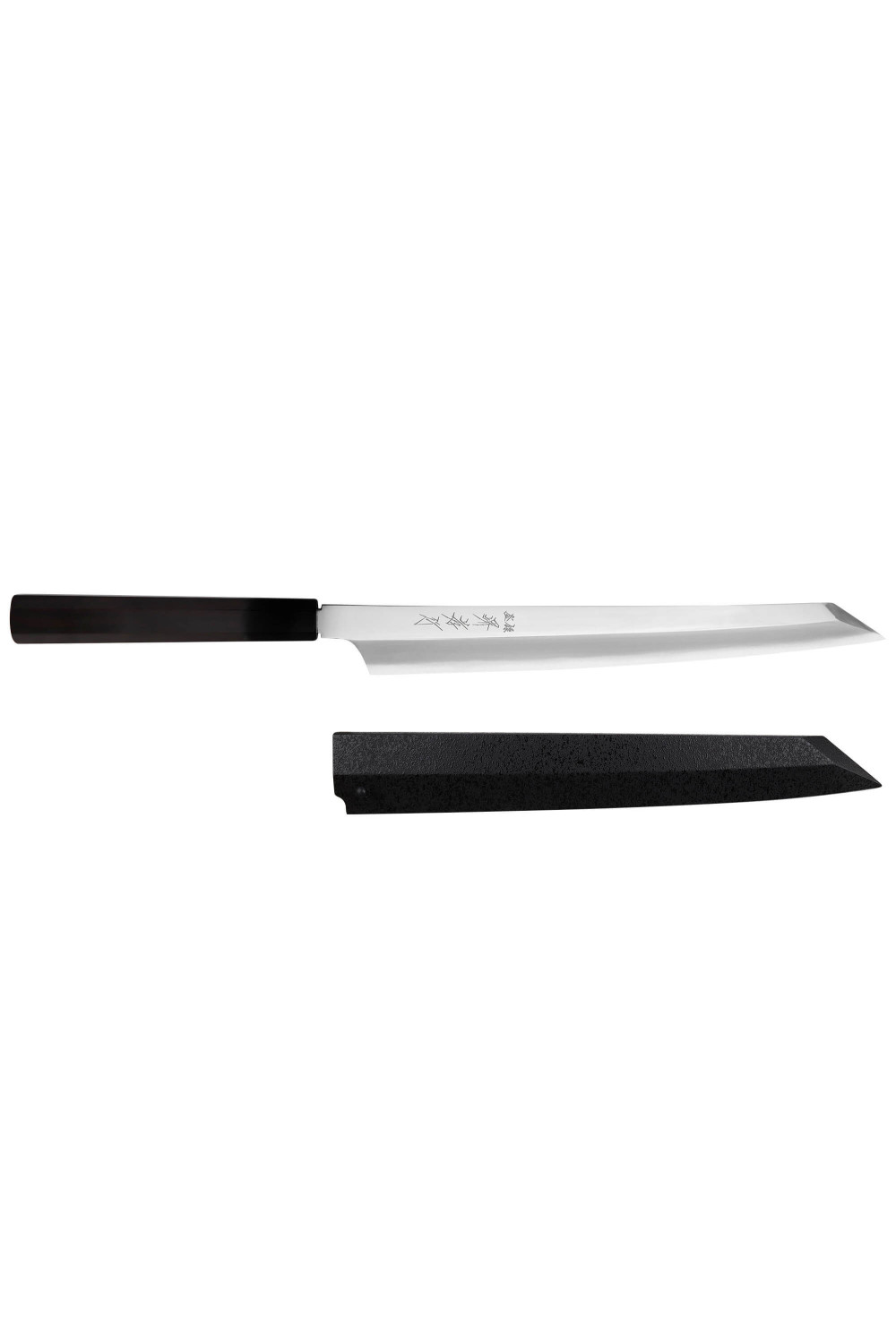
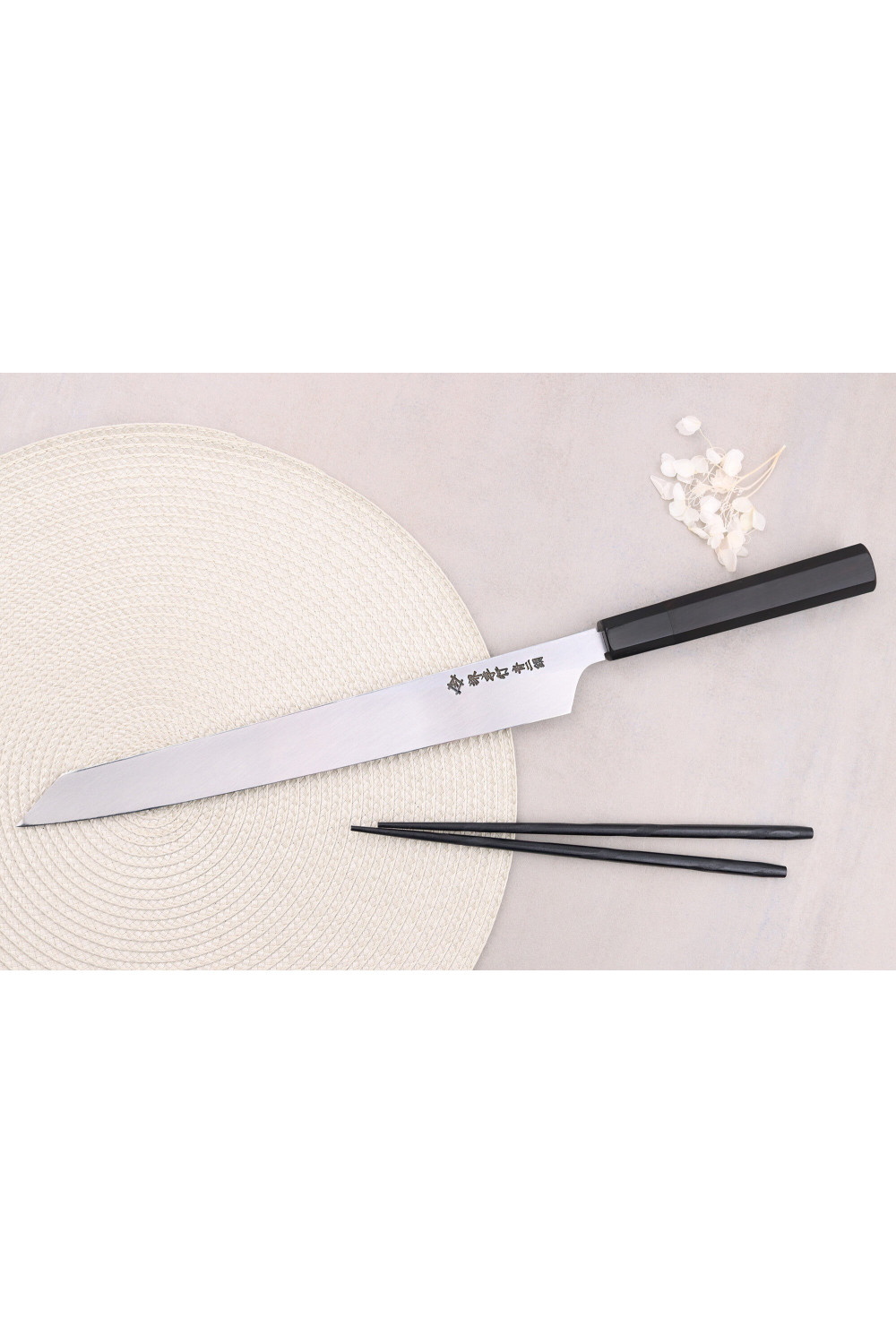
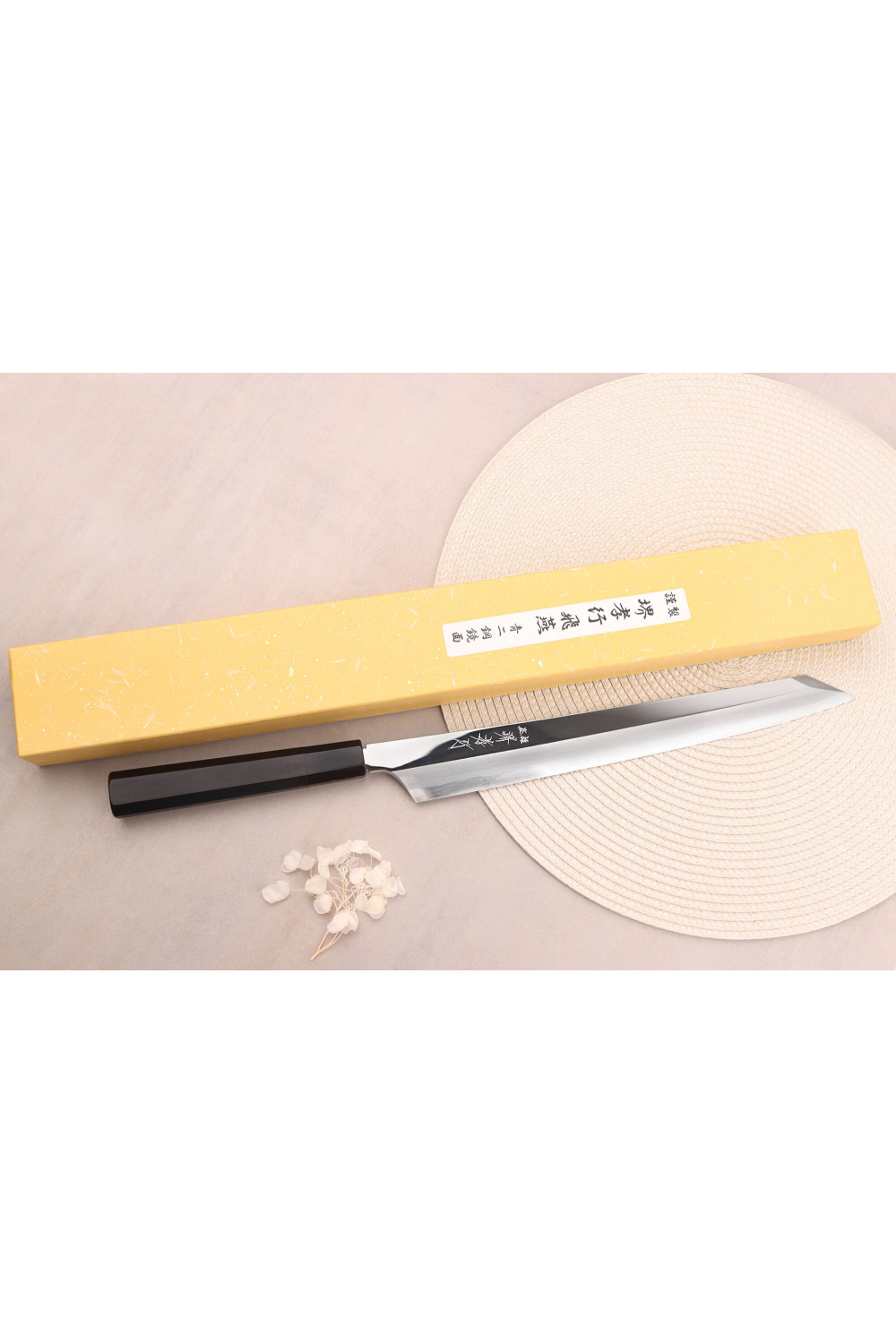
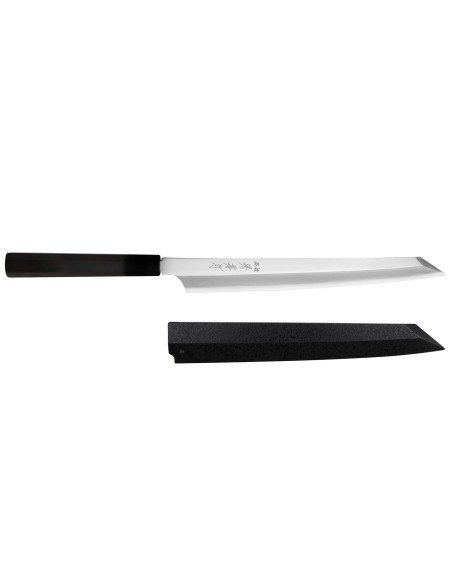
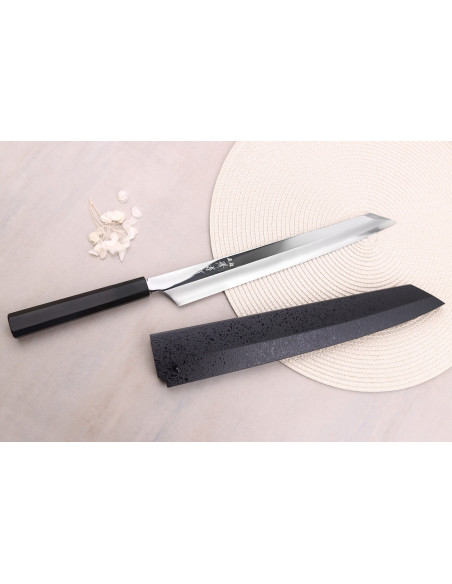
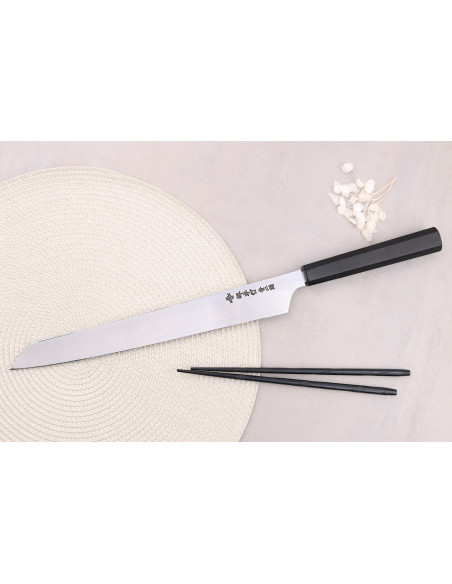
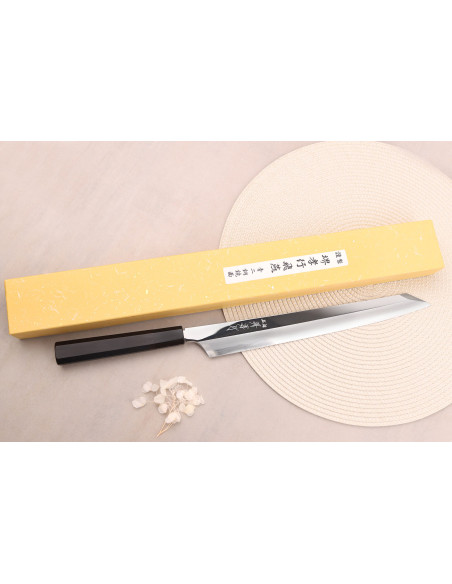
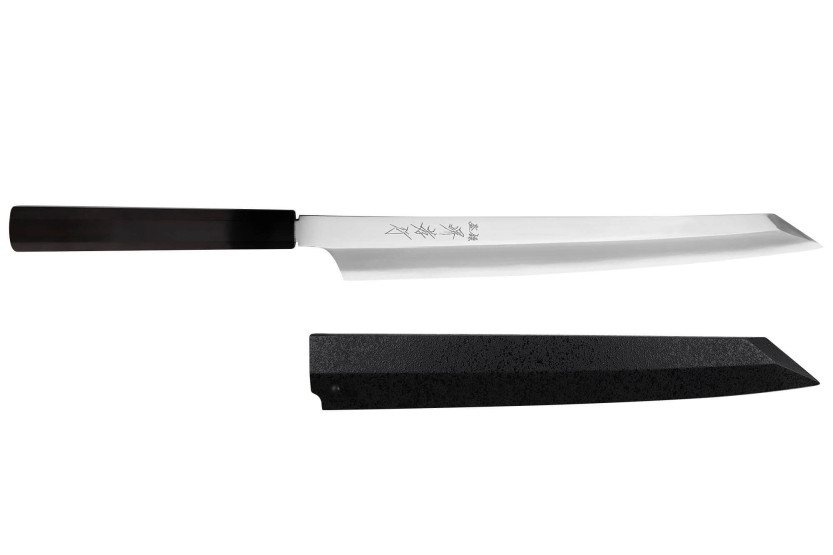
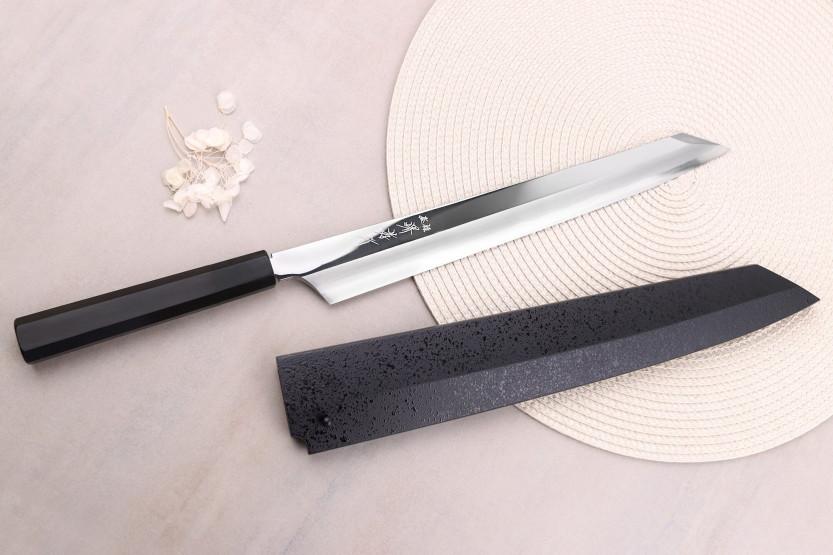
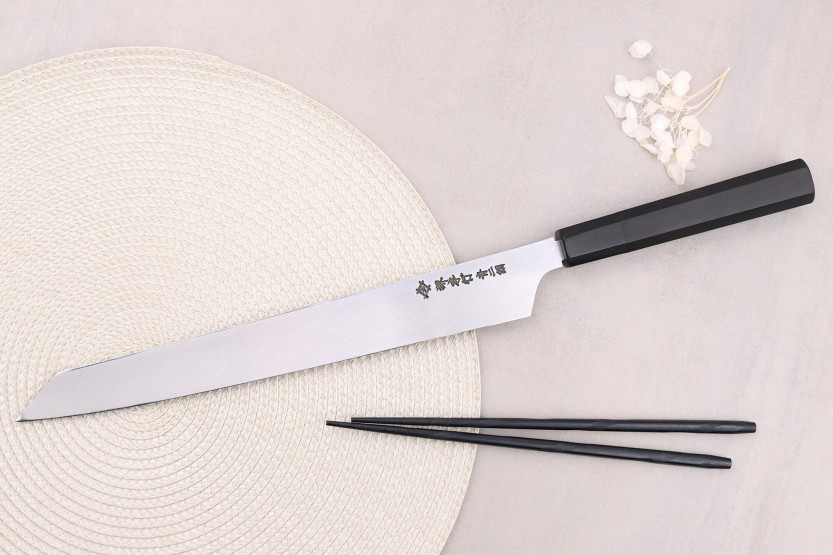
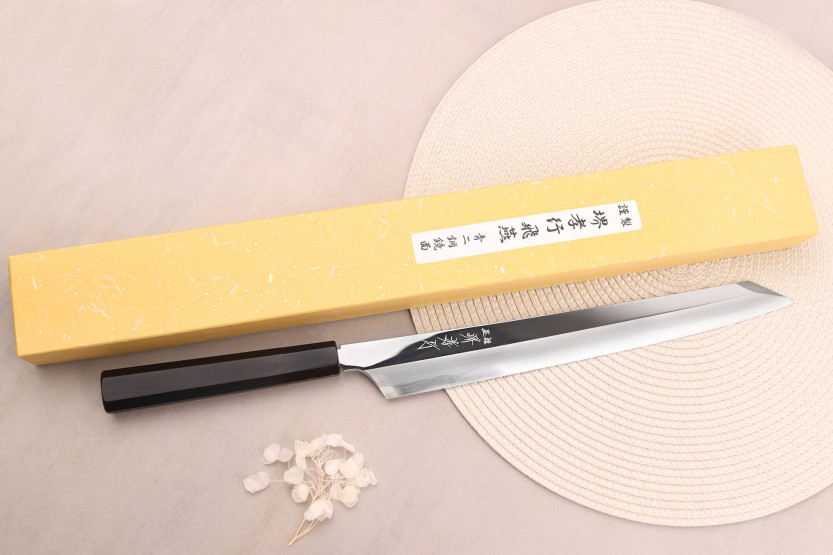
The yanagiba knife is an essential part of Japanese cuisine. Thanks to its long, thin blade, it excels at producing precise, even slices, particularly for the raw fish used in sushi and sashimi. This yanagiba features a kiritsuke tip, offering extra precision for delicate cuts. However, it is important not to use it on hard foods such as frozen foods or bones.
A top-of-the-range Japanese knife with an elegant blade
This handcrafted Japanese knife is designed using the San Maï method, meaning "3 layers". This technique consists of forging a blade with a central core of rigid steel, enveloped by two layers of softer steel folded in on themselves. This process protects the core of the blade while offering optimum flexibility, thus reducing the risk of breakage during use.
The blade core is made fromJapanese Aogami 2 steel (also known as Blue Paper Steel 2), produced by the renowned steelmaker Hitachi. This high-quality alloy contains a high carbon content of around 1.1%, as well as tungsten: elements that considerably increase the steel's hardness. This guarantees outstanding edge durability and precise cutting, while respecting the natural texture of food.
With a hardness of 62HRC on the Rockwell scale, this blade offers excellent edge retention, limiting the frequency of sharpening sessions required. The result is a high-performance knife designed for effortless, clean cutting!
To complete the San Maï structure, two layers of softer steel wrap around the central core. These layers balance the hardness of the steel while offering protection against micro-shocks. Soft steel gives the blade a certain suppleness, without making it flexible: your Japanese kitchen knife remains rigid but easy to handle, offering great precision.
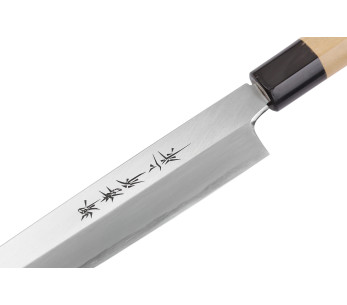
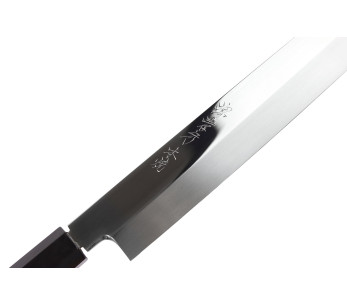
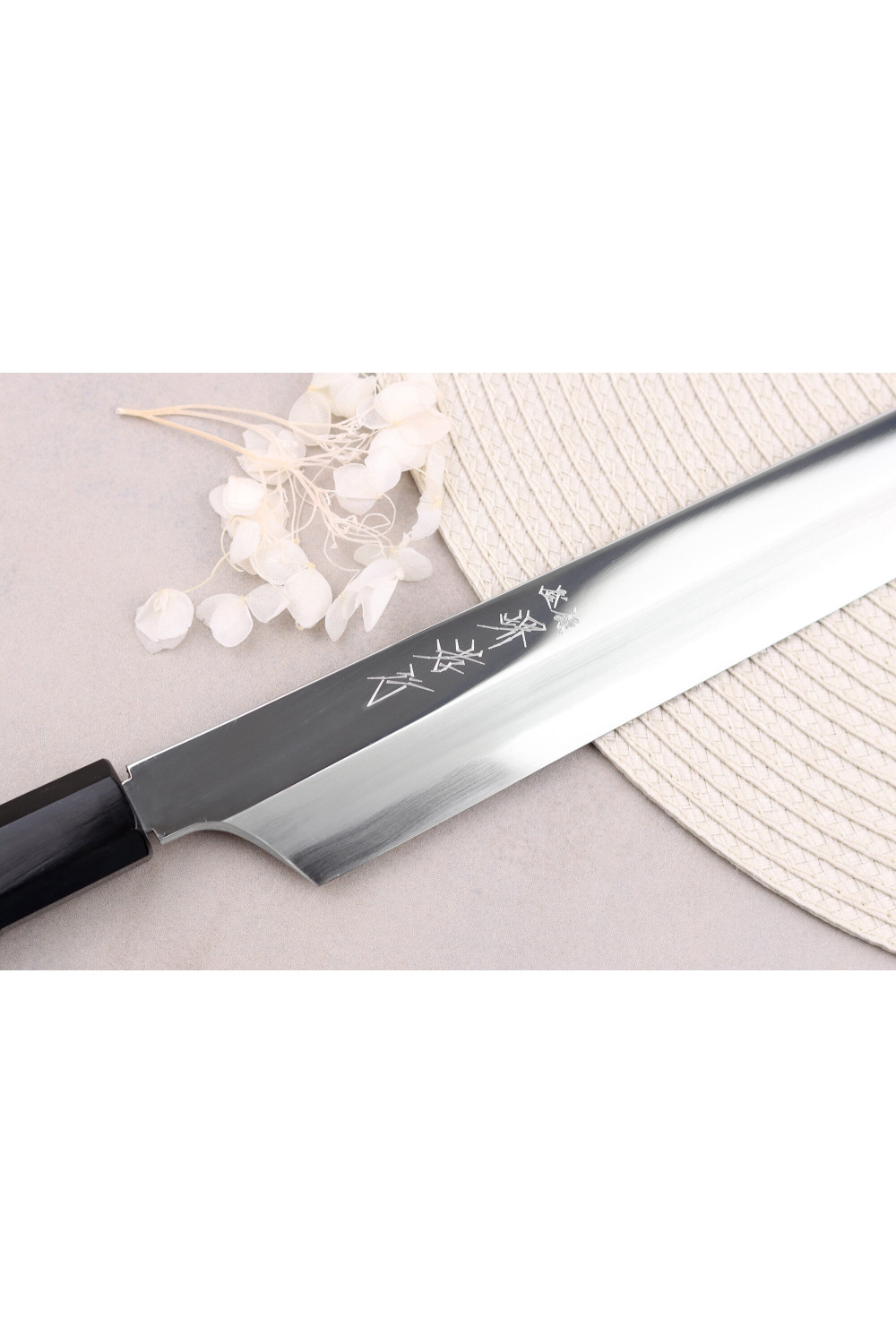
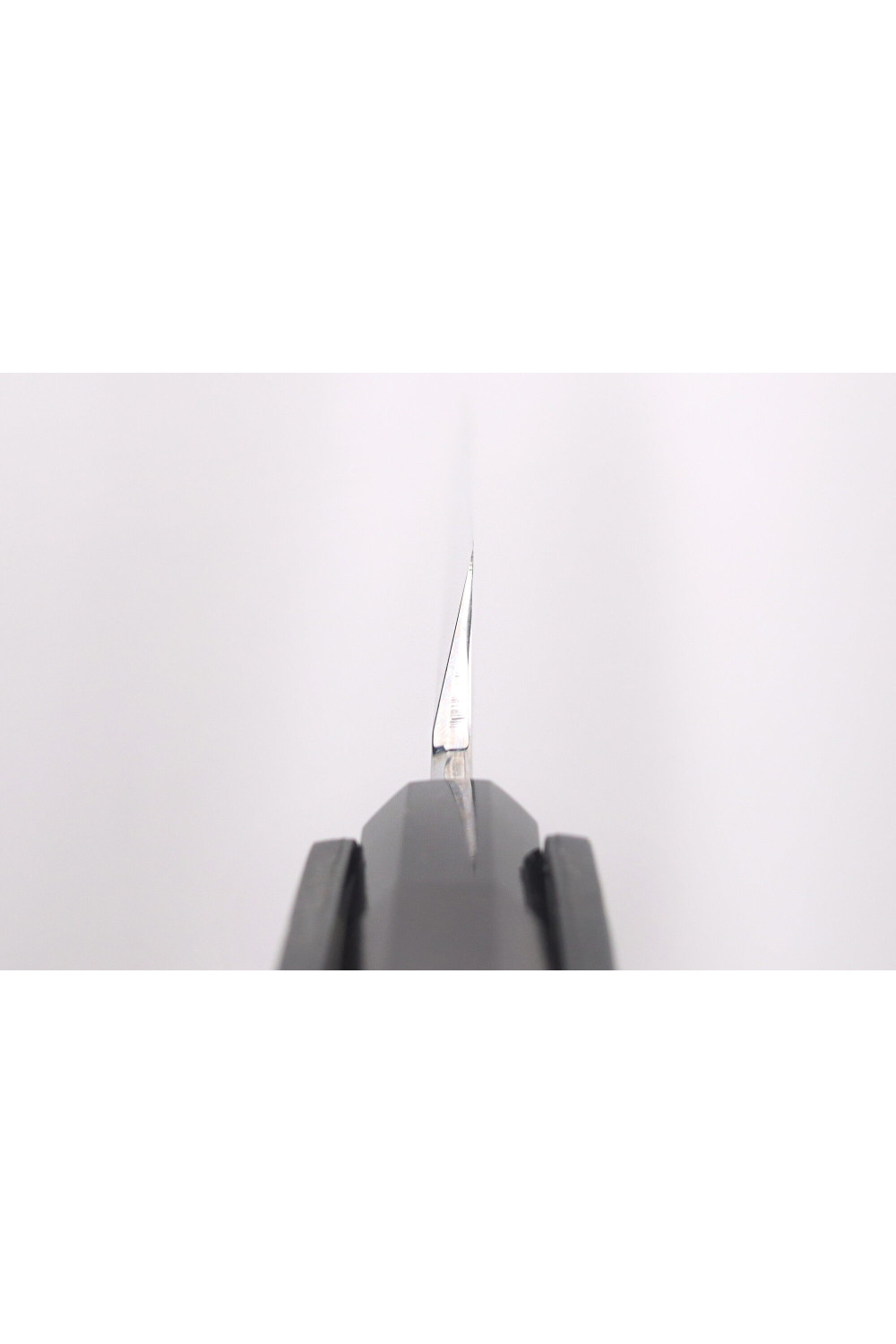
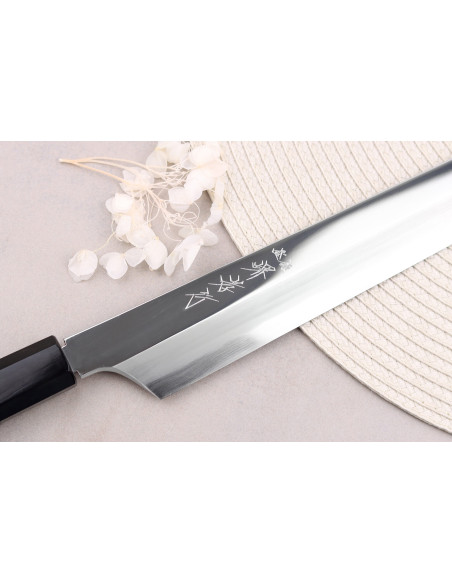
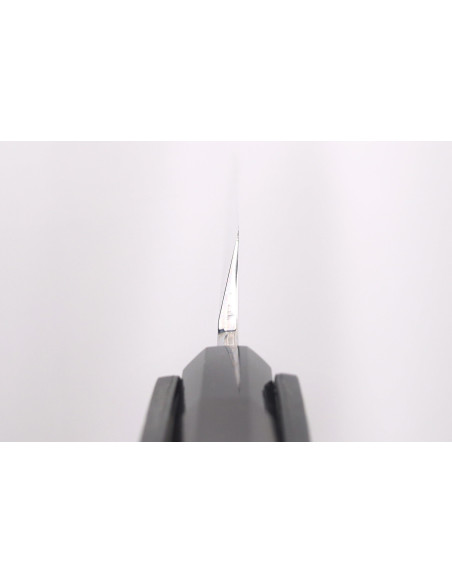
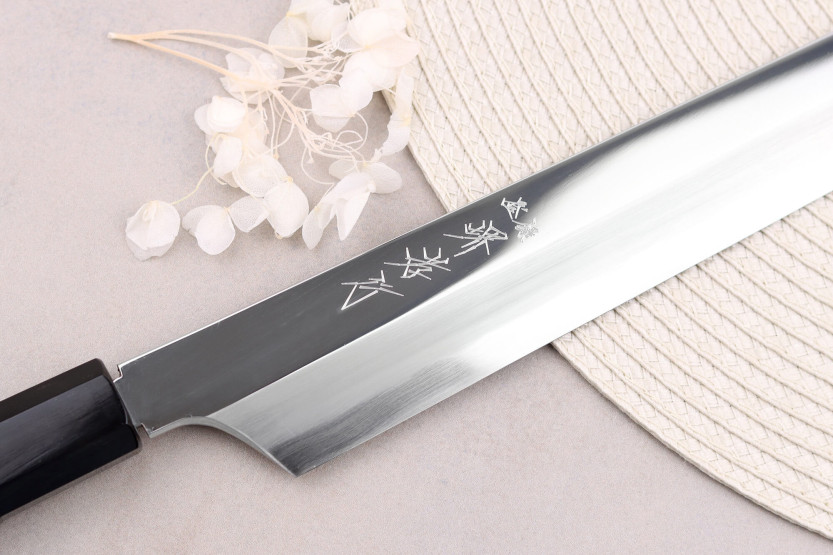
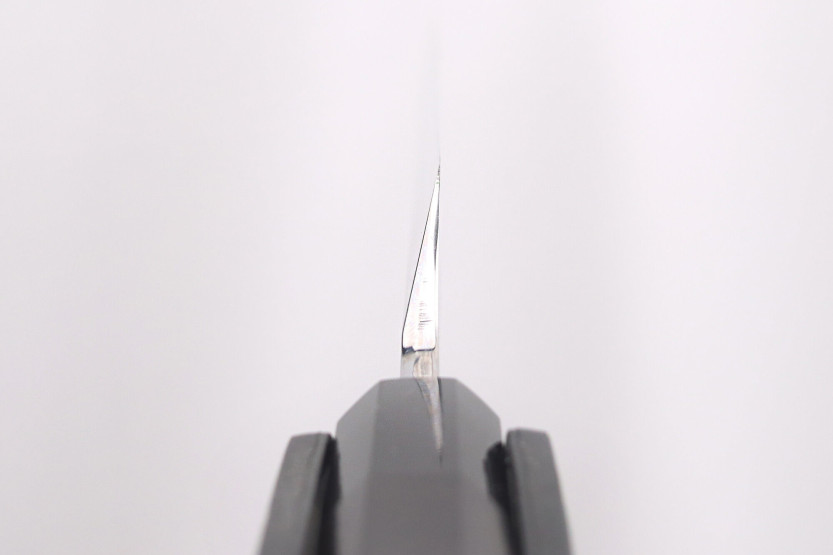
The blade is sharpened on one side only, creating a beveled edge. This asymmetrical cutting edge facilitates the separation of slices when cutting, making gestures more fluid and precise. What's more, the back of the blade has a slightly hollow line, promoting better air circulation and preventing food from sticking to your blade.
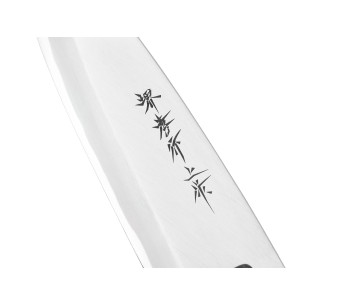
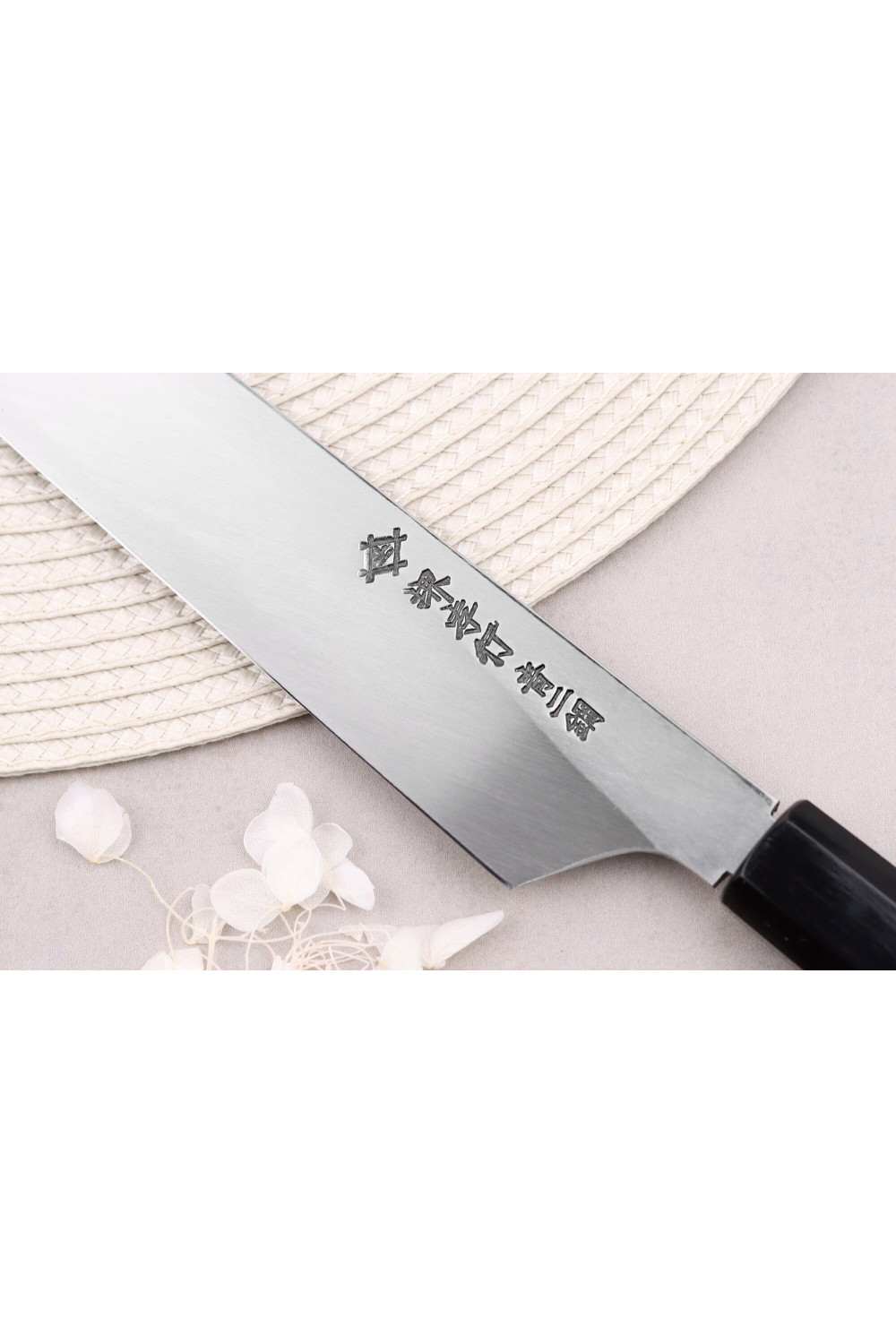
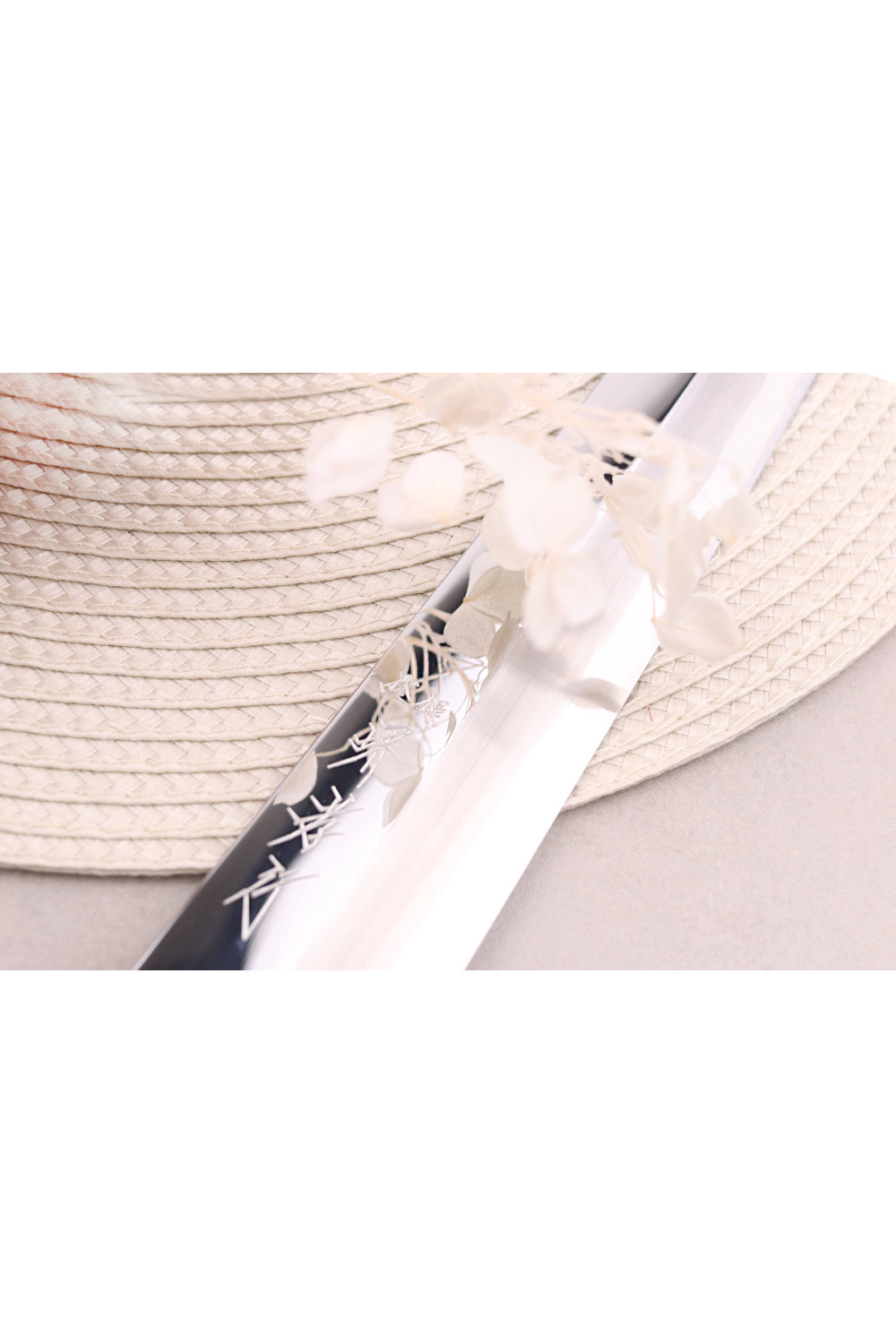
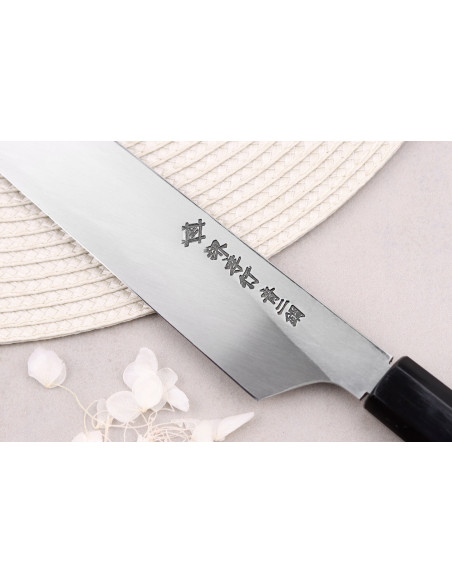
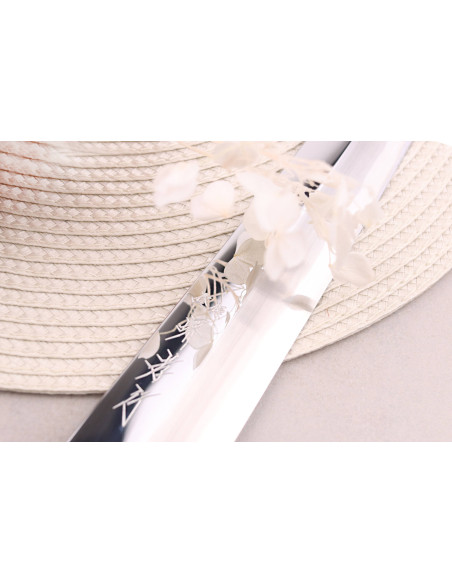
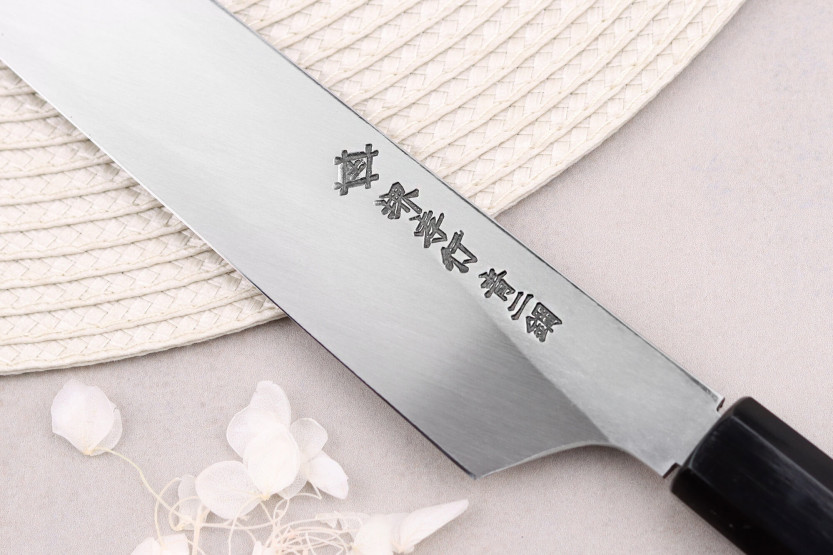
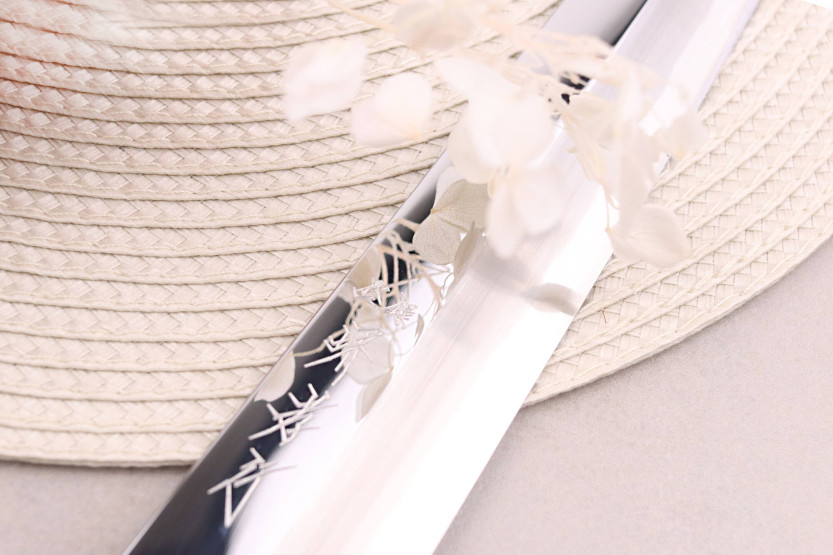
For an aesthetic touch, the surface of the blade has been carefully polished for a refined mirror effect. Finally, hand-engraved kanji enhance the overall look, reinforcing the handcrafted, traditional character of this Japanese knife.
A sturdy, refined handle for your yanagiba knife
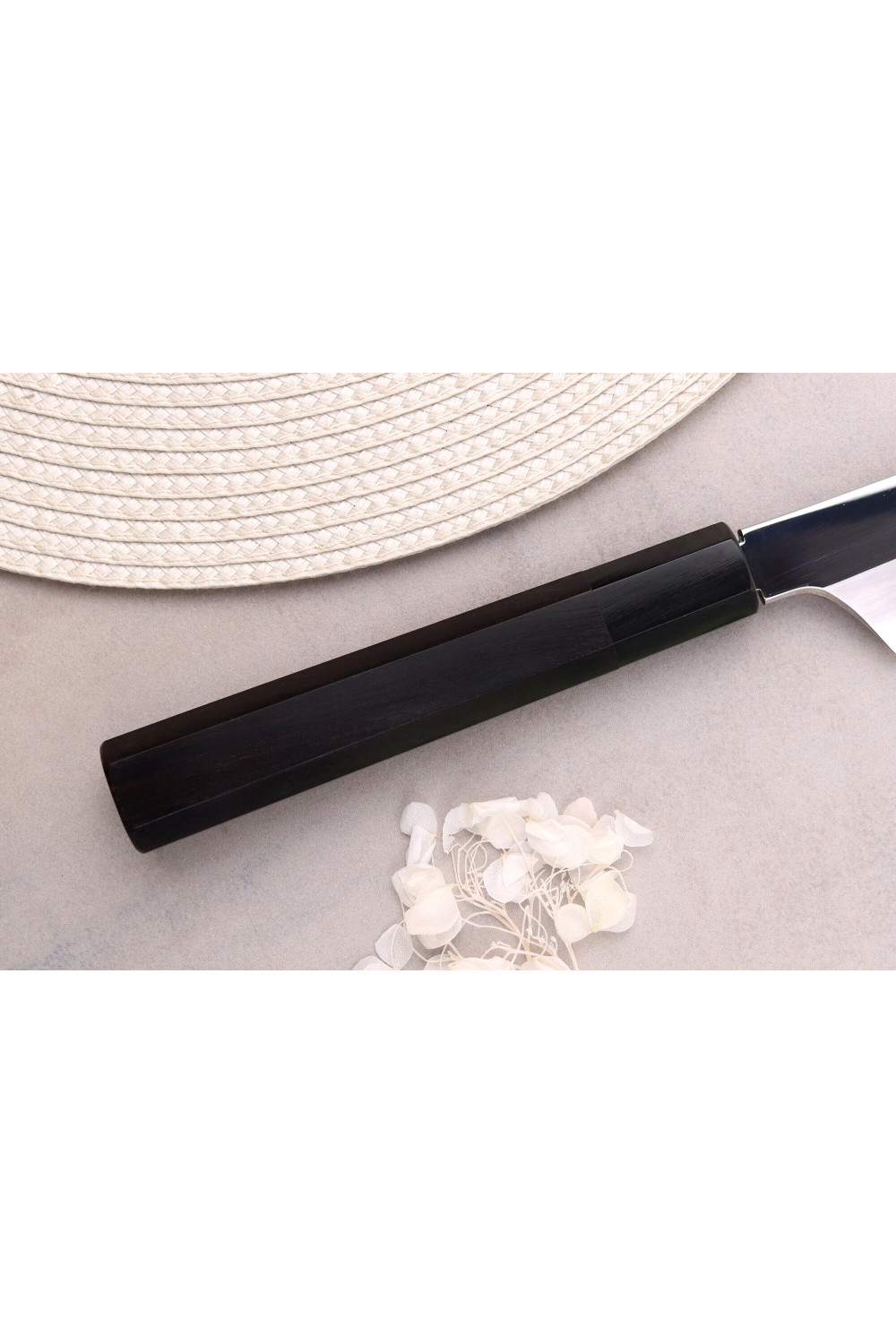
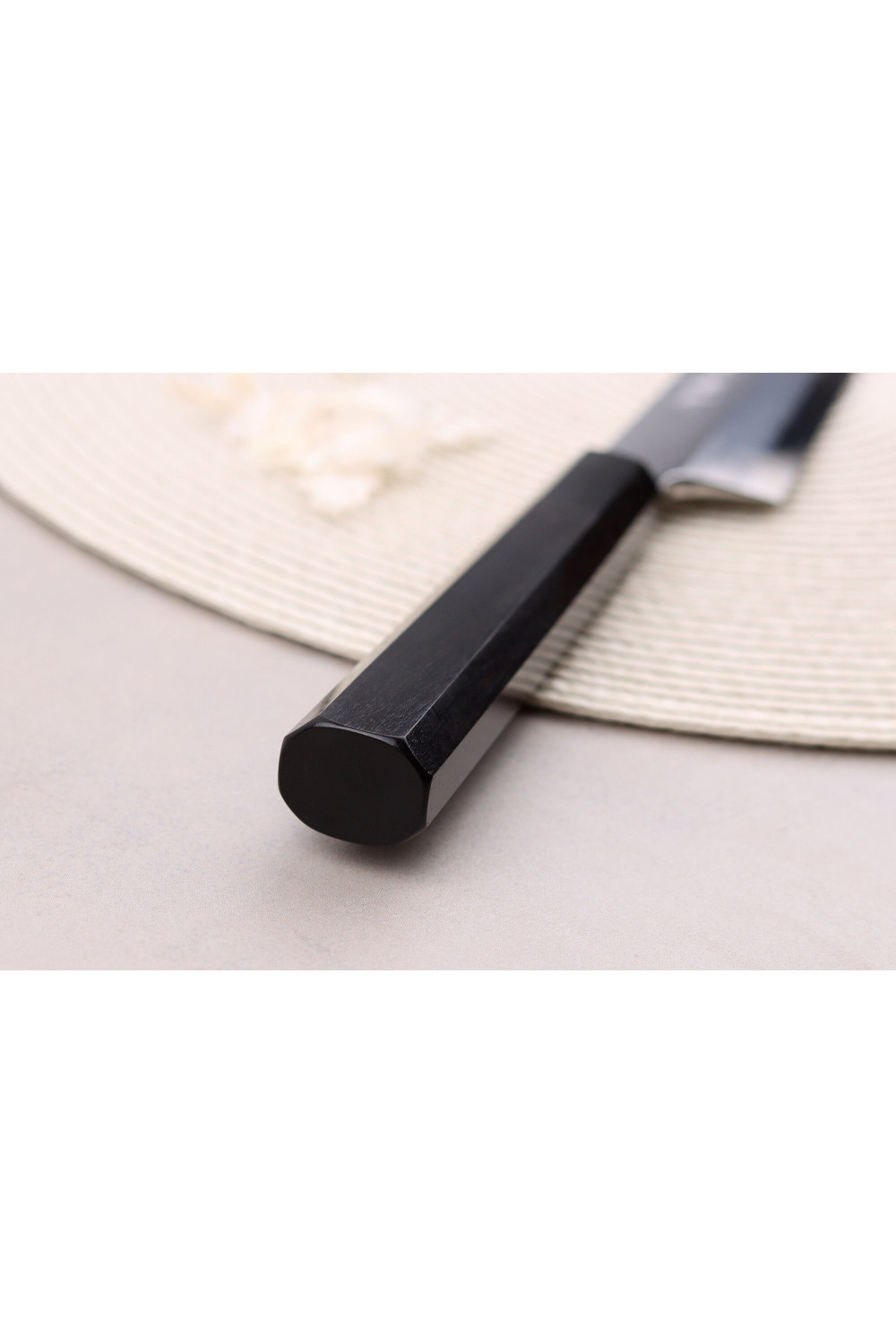
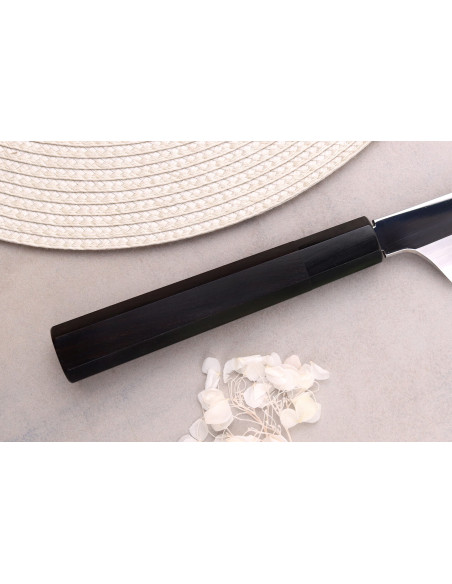
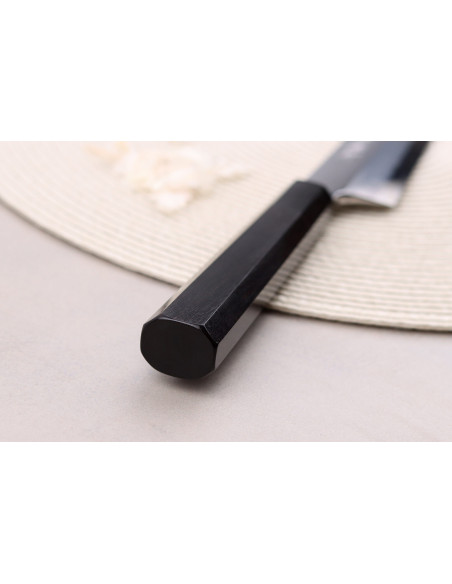
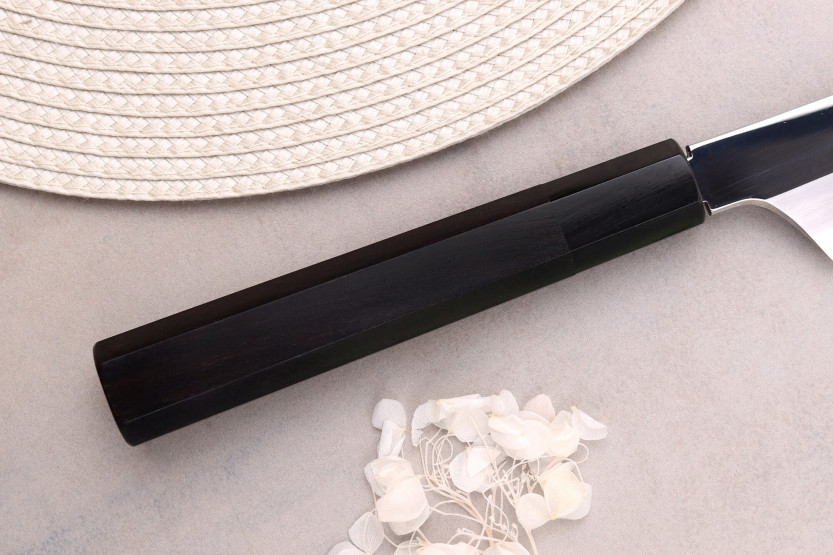
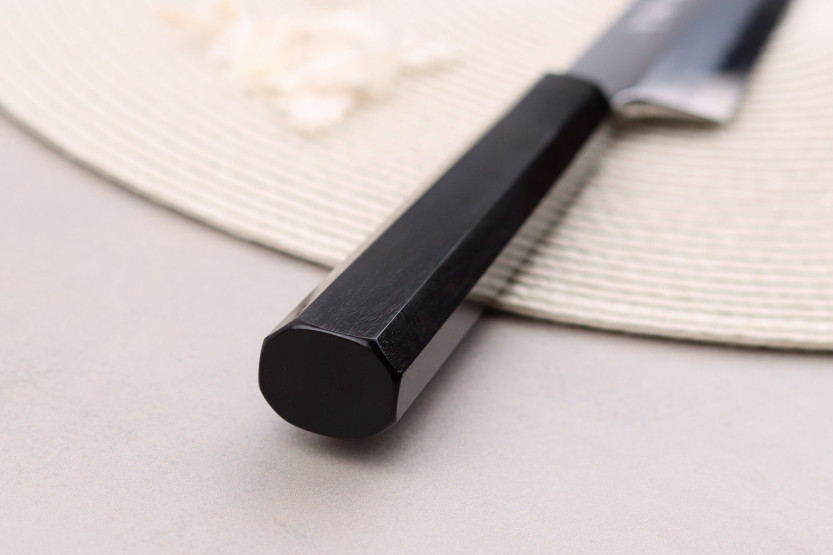
The handle of your Sakai Takayuki knife is made of ebony wood, a noble tropical material appreciated for its dark, almost black color and high density. This precious species offers excellent resistance to cracking, guaranteeing the handle's strength and longevity.
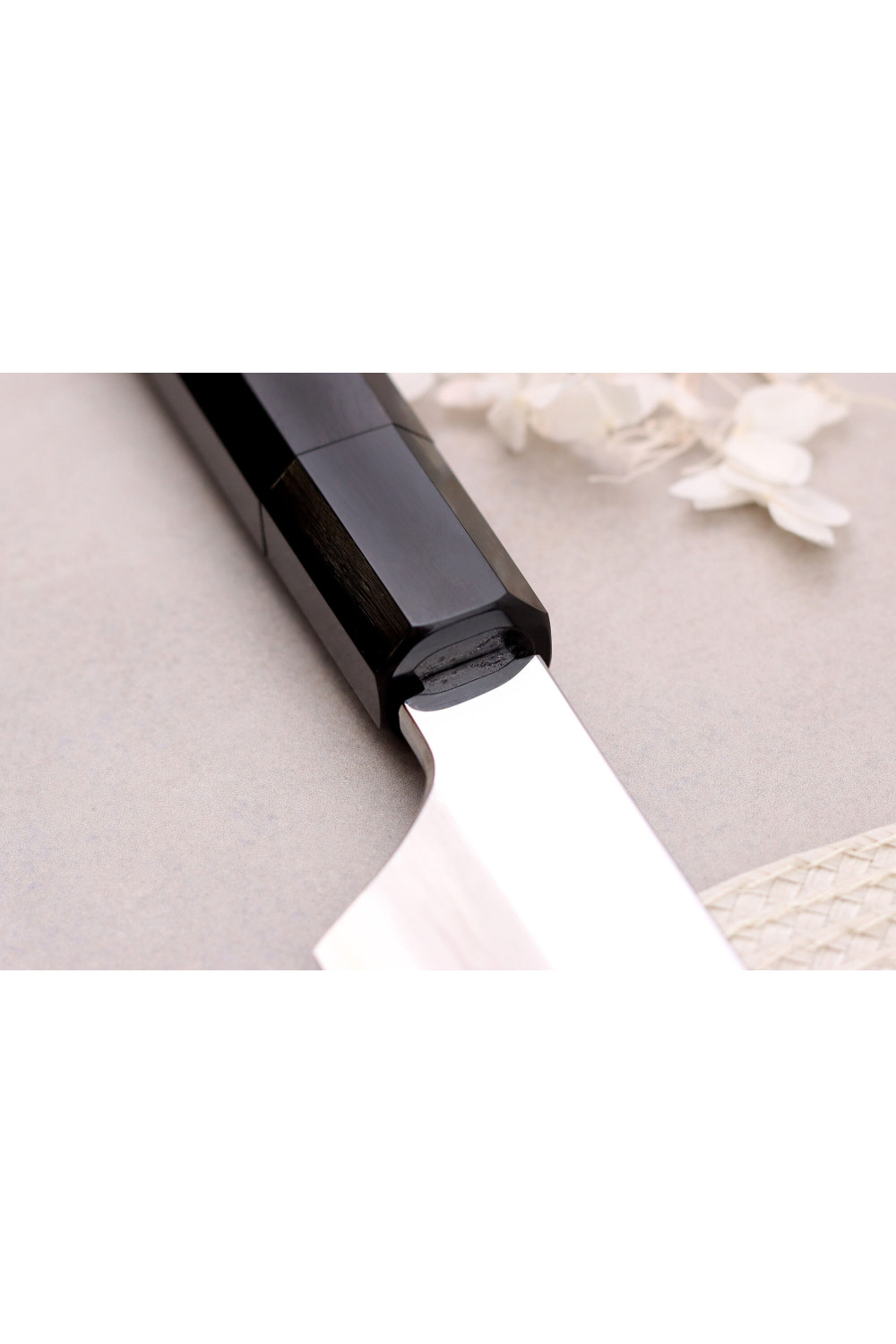
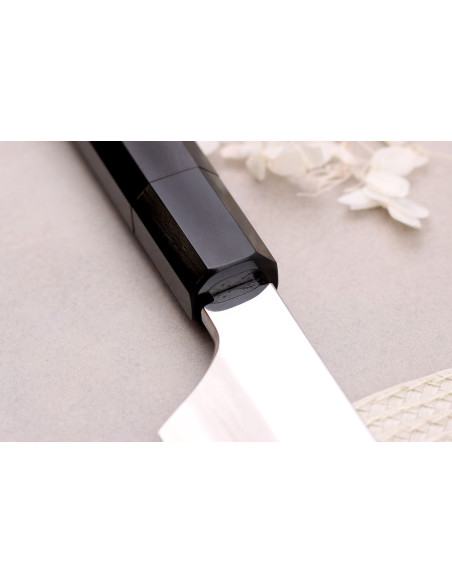
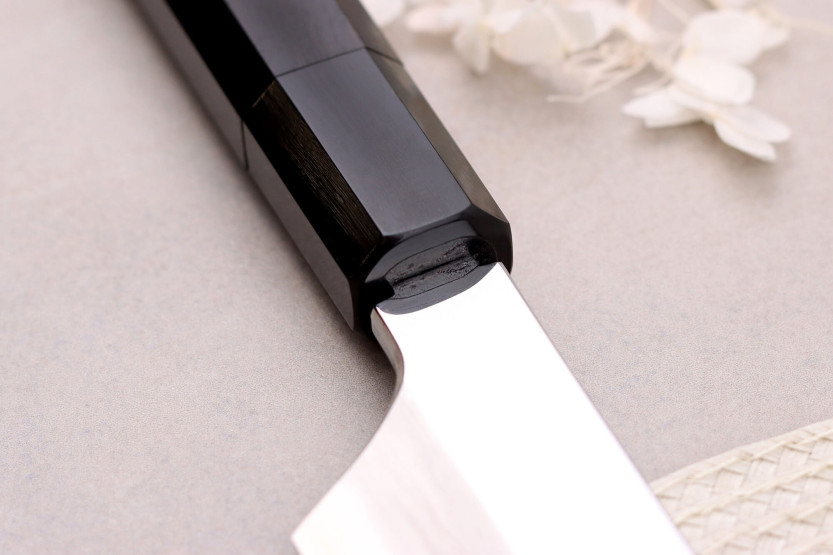
To enhance the design, a black buffalo horn bolster has been added, highlighting the deep hues of the ebony wood. Horn, being a natural material, presents unique variations from one knife to the next, making each piece truly handcrafted and singular!
The handle is shaped in an octagonal form, ideal for an ergonomic grip that adapts to all hands. This design guarantees optimum comfort, even during prolonged use in the kitchen, while ensuring excellent maneuverability.
Wood paste has been applied to the junction between blade and handle. This ensures a watertight seal, filling any small gaps and preventing the ingress of water or food residues.
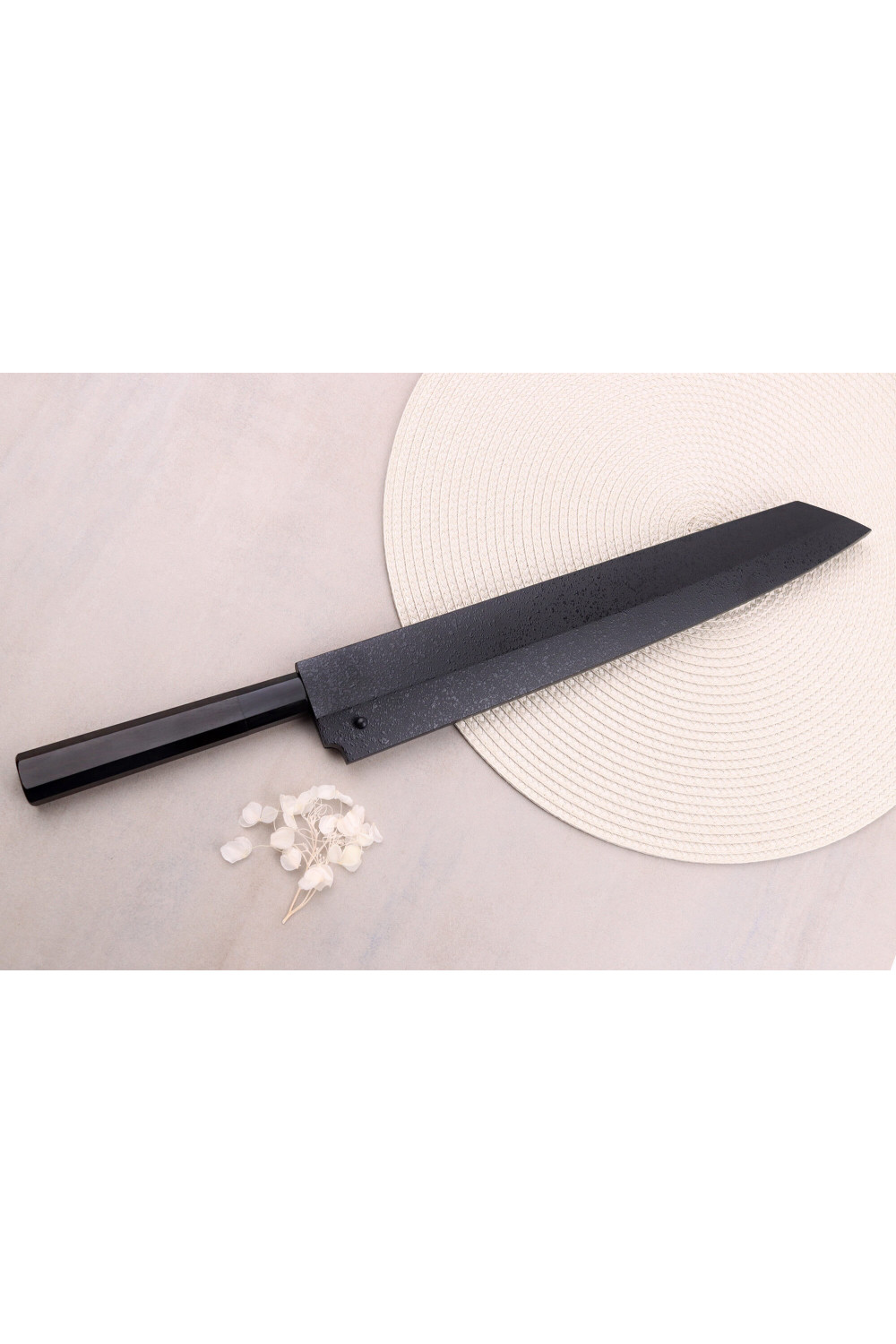
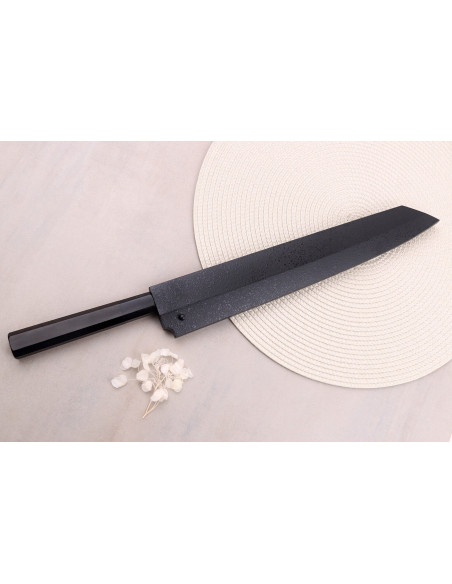
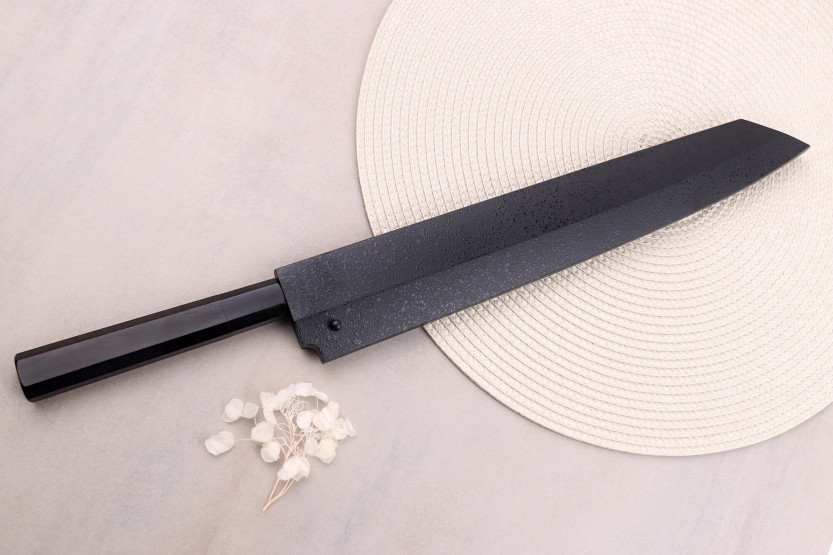
Finally, your handcrafted Japanese knife comes with a protective lacquered wood saya. This elegant sheath hugs the contours of the blade perfectly, offering optimum protection and secure storage while minimizing the risk of injury during handling.
How to care for a carbon Japanese knife
To care for your yanagiba kiritsuke knife, it should be washed only by hand with a sponge and mild detergent, avoiding wetting the handle. Once cleaned, you should dry it immediately with a clean cloth to remove all moisture and store it in a dry place. Do not put in the dishwasher or leave to soak in the sink.
With the passage of time, the color of your blade may vary slightly: this is normal! This is a natural reaction of the carbon to the acidity of the food you're cutting and the humidity in the air.
Discover exceptional Japanese knives on Knifeleader.eu!




 By buying this product you can collect up to