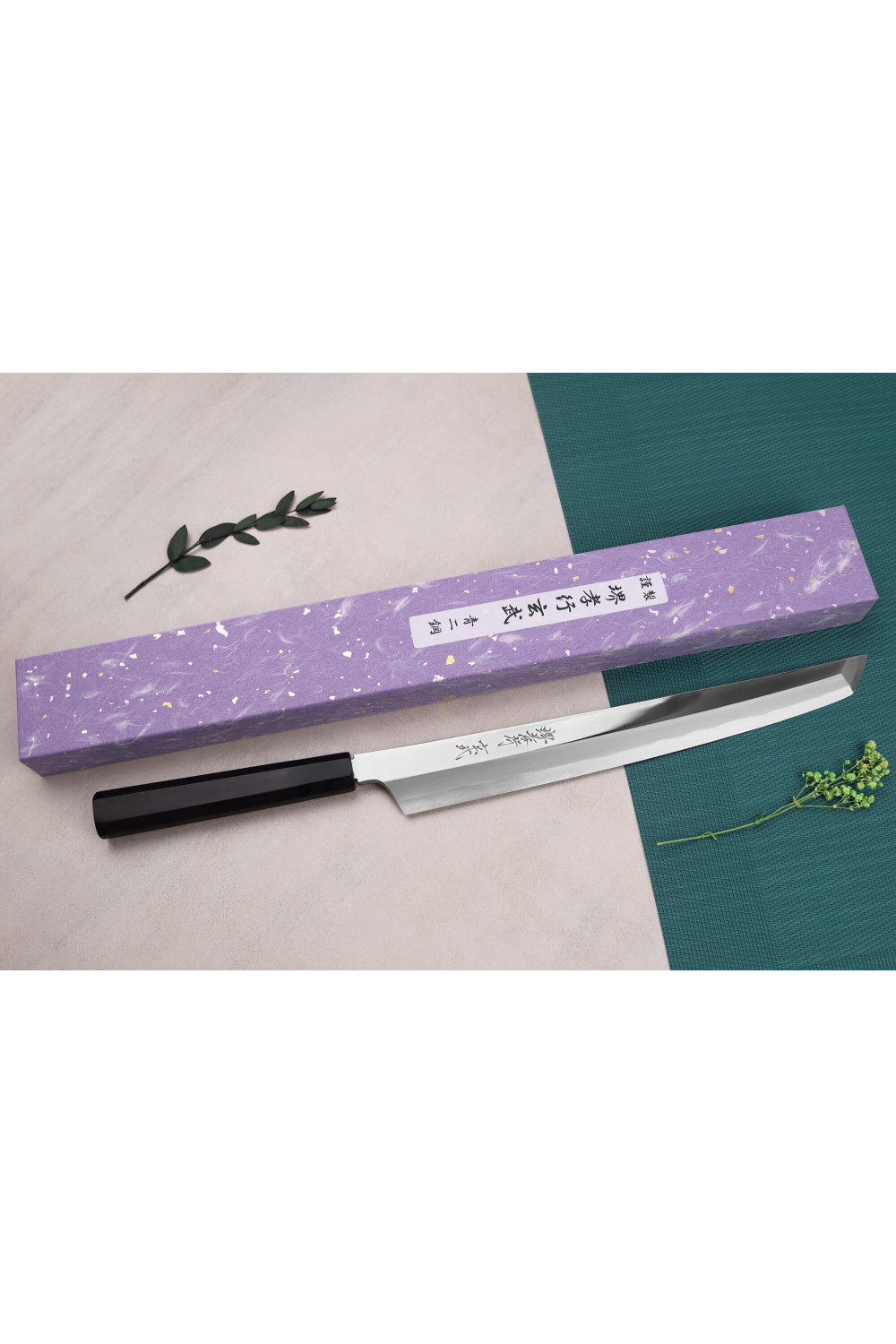
Sakai Takayuki was founded in the 1950s in Sakai, Japan. With considerable expertise in the field of cutlery, the company offers high-quality Japanese knives. The Sakai region has long been a renowned manufacturing area for knives, where many katanas have been made. The region's blacksmiths passed on their skills to subsequent generations, and this know-how has endured to Sakai Takayuki. The company distinguishes itself by creating knives that combine modern designs with ancient methods.
Itsuo Doi, a renowned craftsman, forged this model for the Sakai Takayuki brand. He is the son of a blacksmithing legend, known for his highly technical skills, including the ability to forgeaogami at a lower temperature than that used by other blacksmiths, thus preserving the carbon. Itsuo Doi, having inherited his father's know-how, has been creating knives for almost half a century. As a meticulous blacksmith, he takes care to respect each stage of the forging process to guarantee exceptional results.
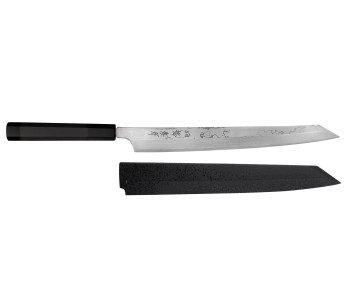
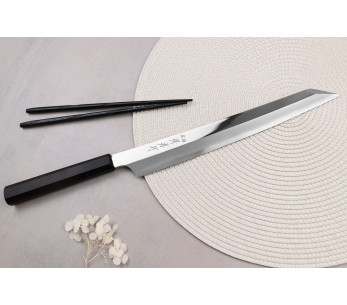
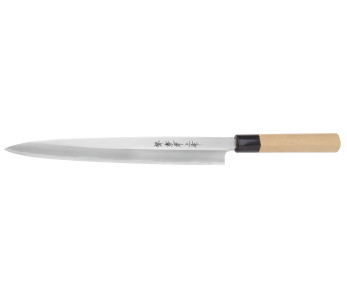
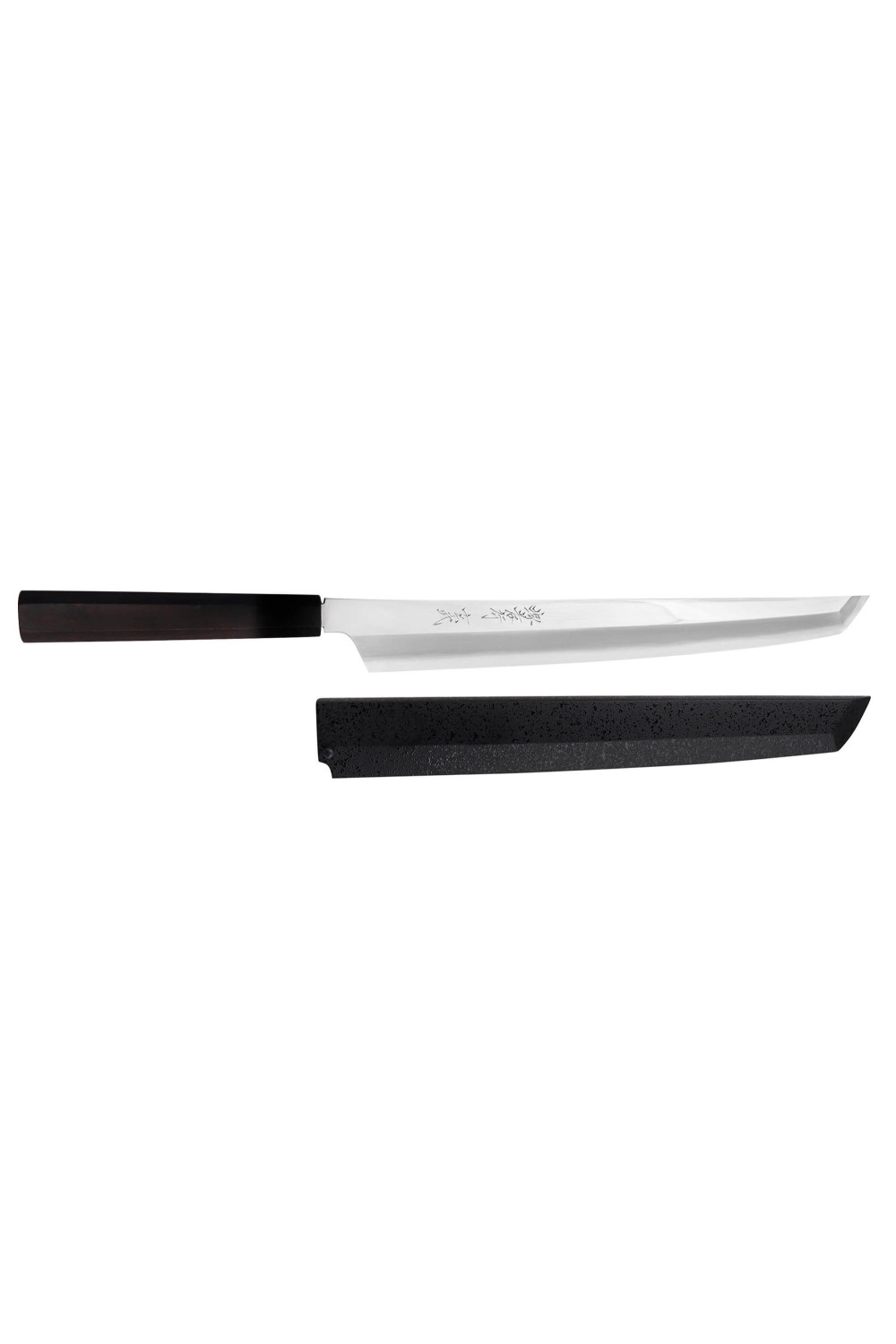
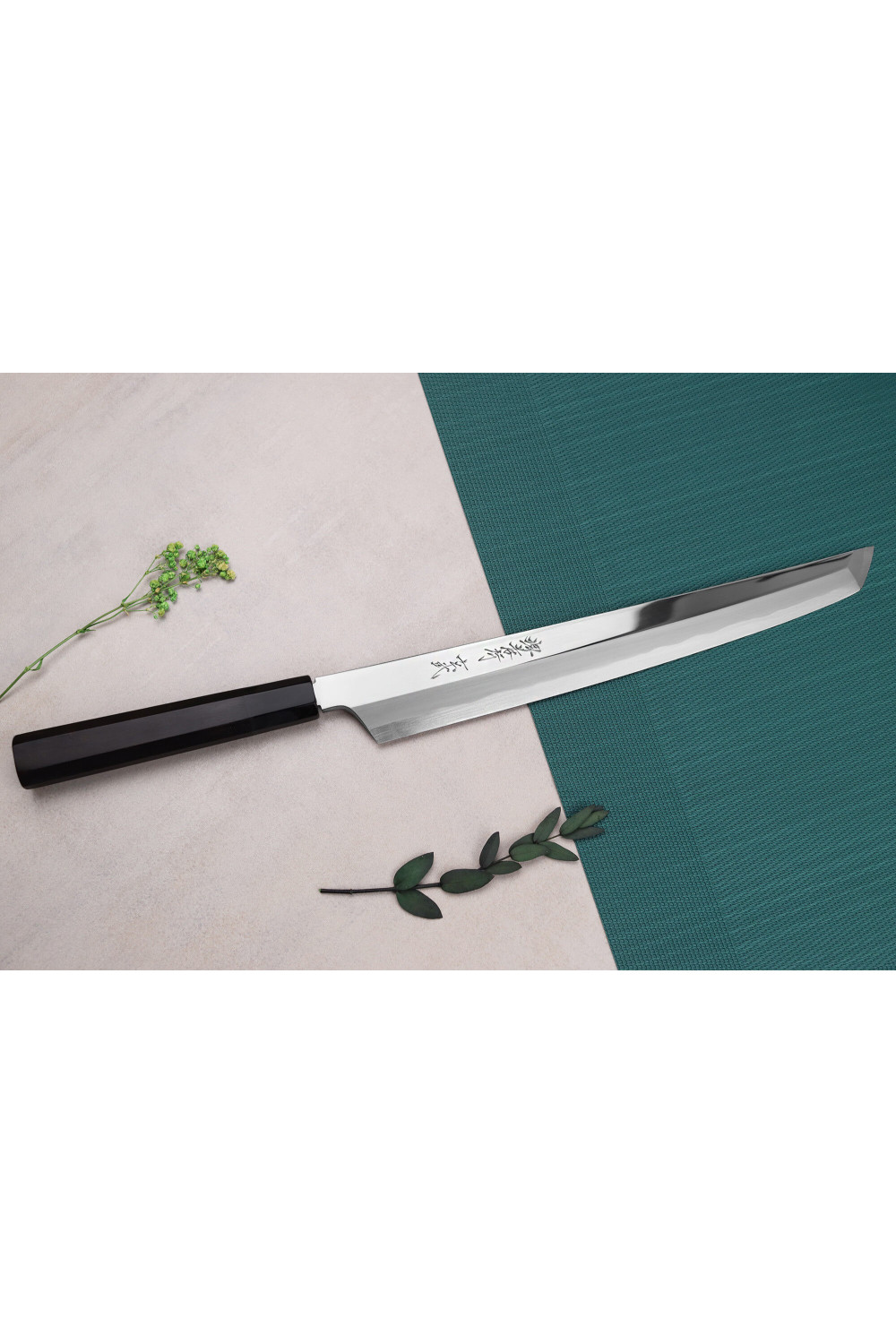
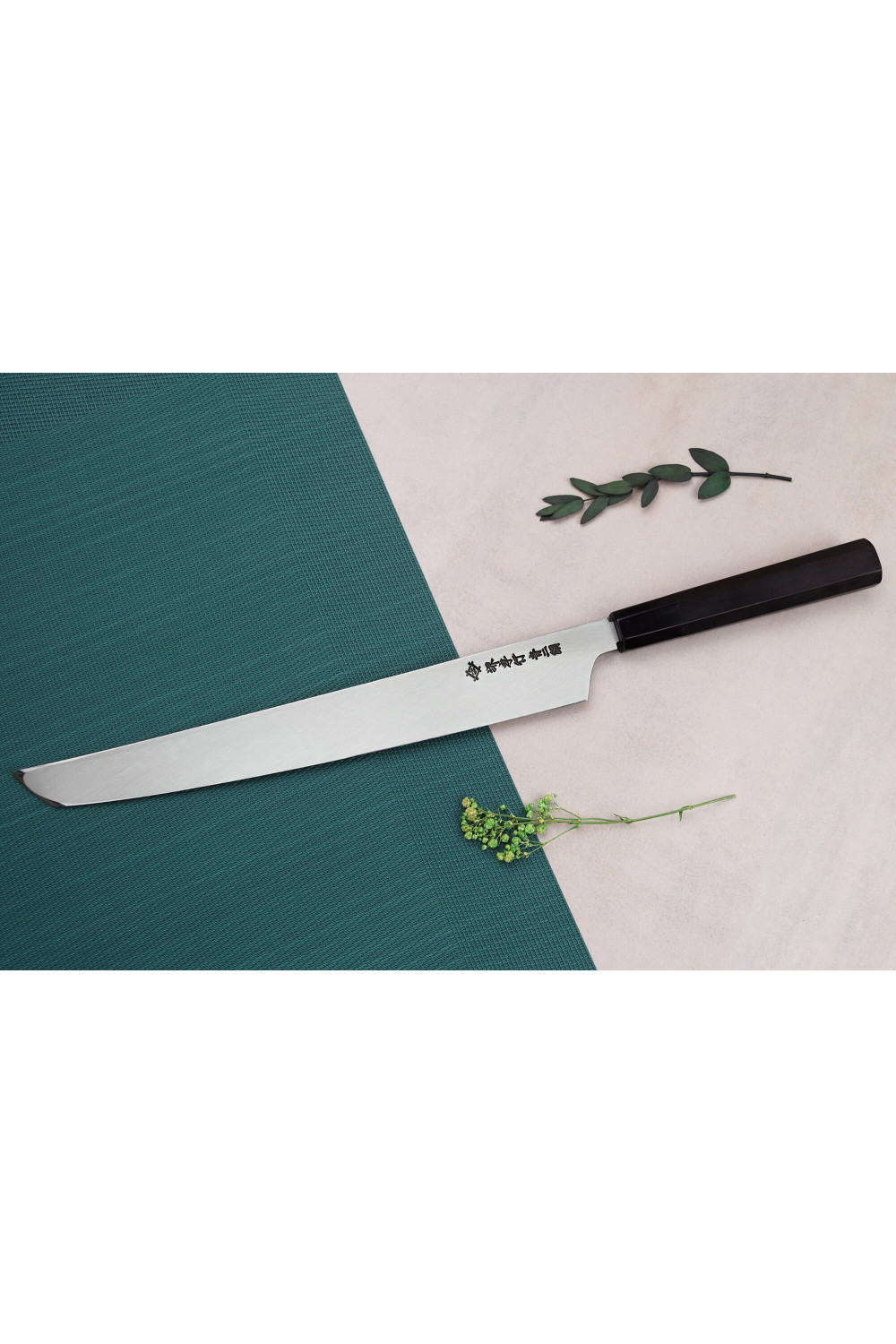
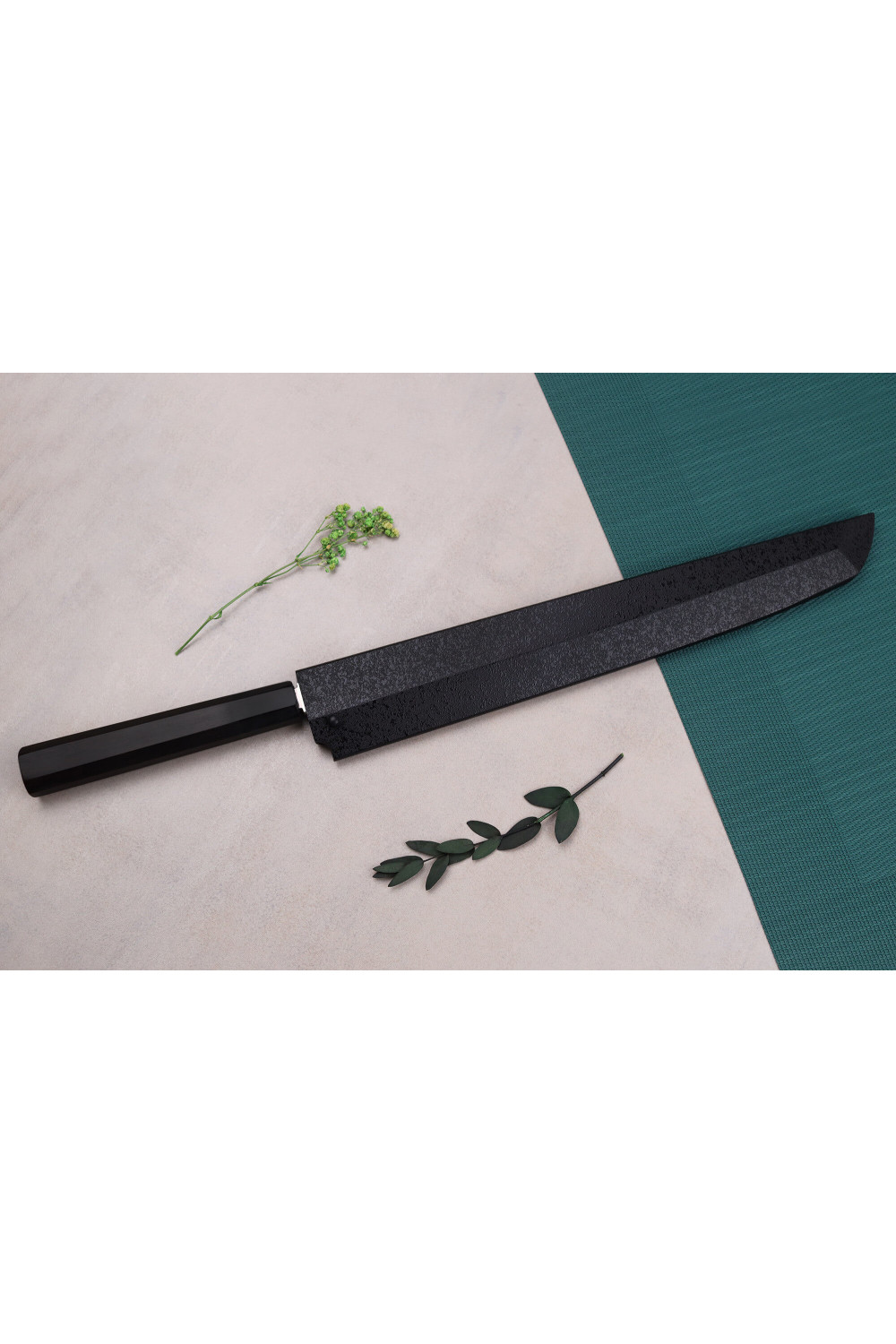
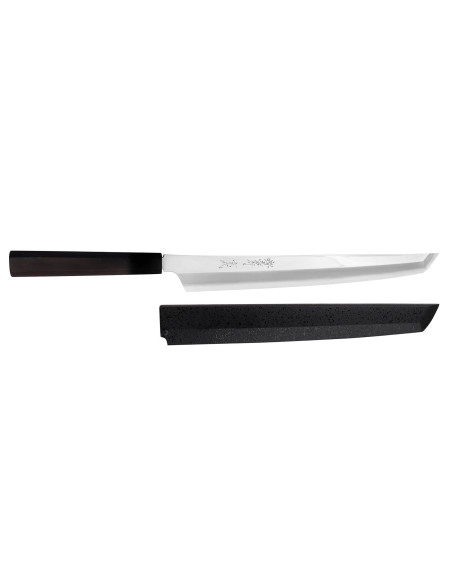
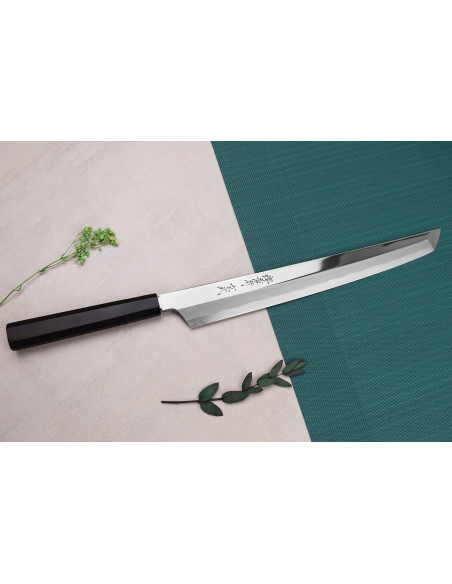
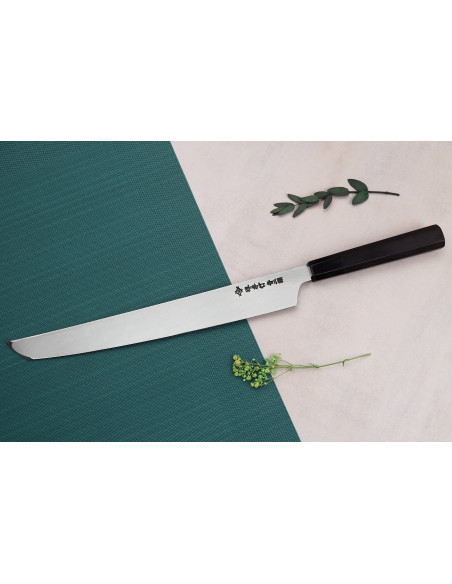
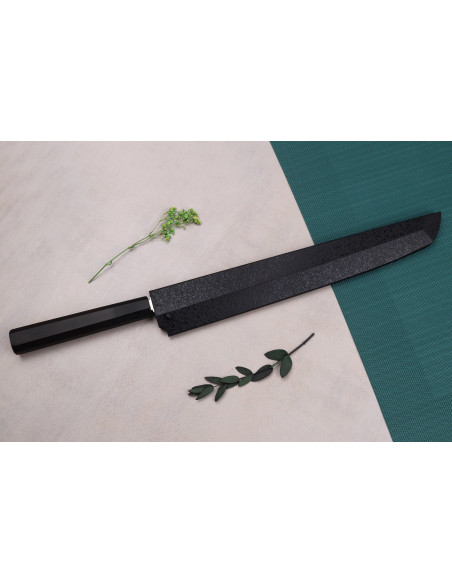
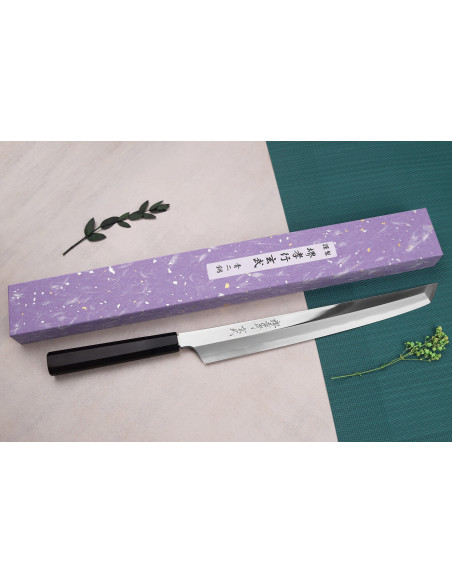
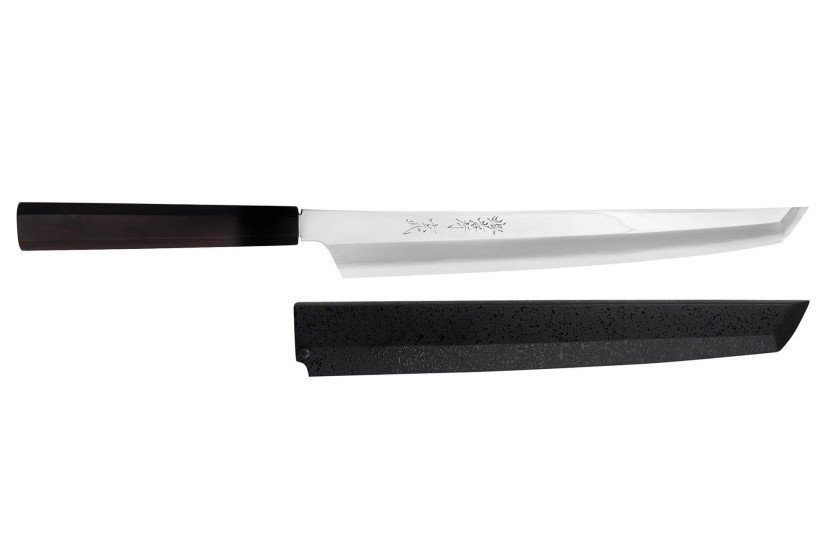
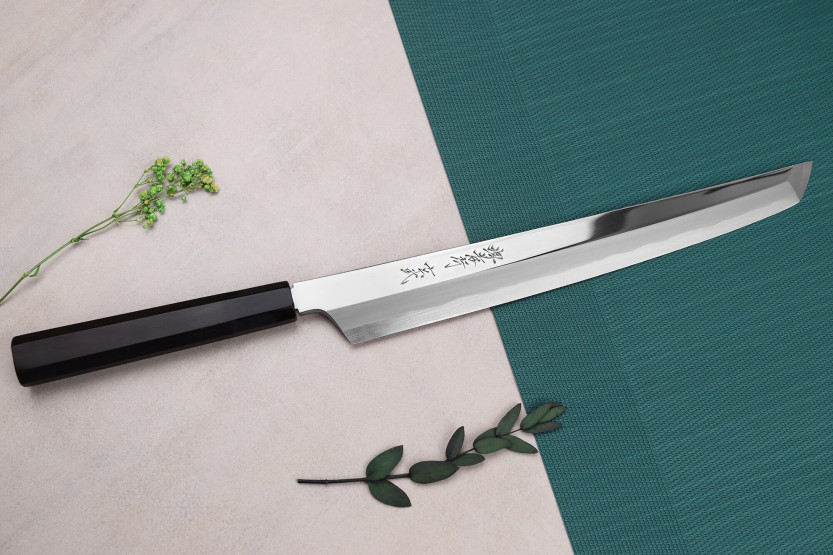
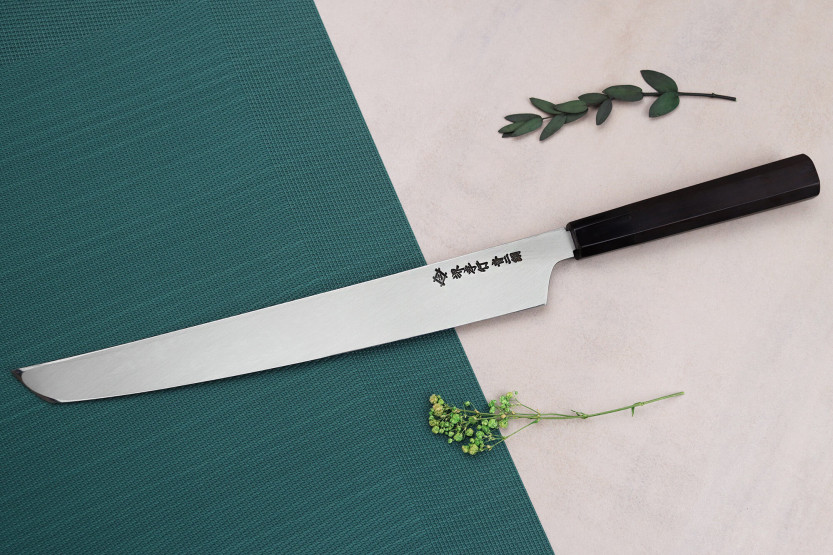
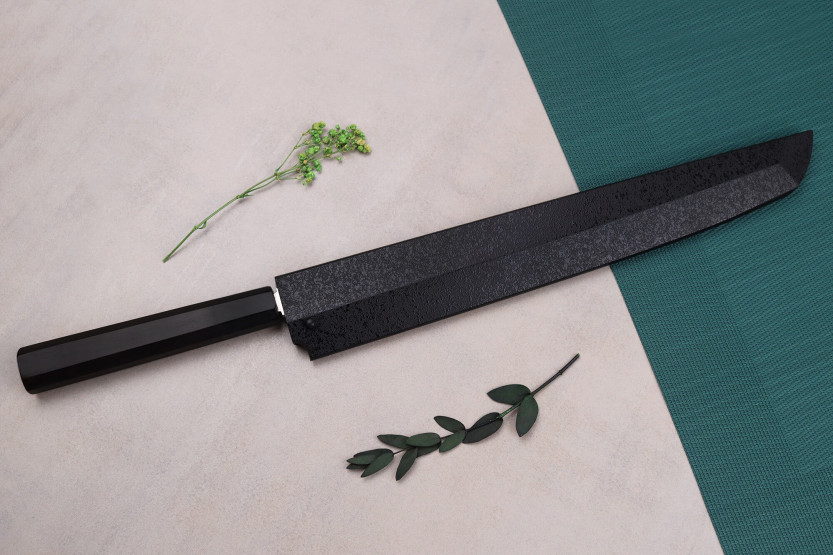
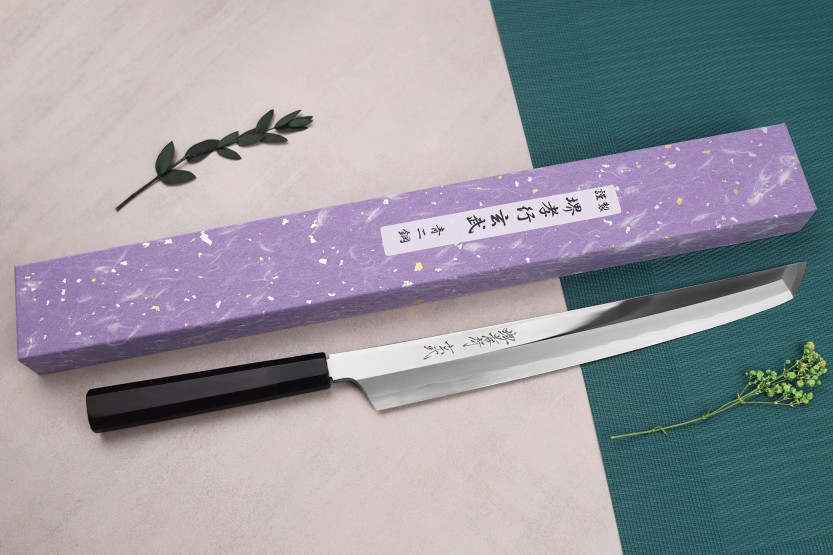
The sakimaru yanagiba knife , with its very traditional design, is specially designed for cutting fish, and is ideal for large pieces of tuna. Its blade enables precise cutting, whether for thin slices or large chunks, thanks to its length, which makes it easy to use on large pieces. Be careful not to use it on excessively hard foods such as bones, frozen foods, etc.
A high-quality blade for an elegant Japanese knife
The blade of this Sakai Takayuki knife has a San Maï structure, consisting of three alternating layers of steel. In the center is a rigid core surrounded by a layer of softer steel added for protection. This structure offers the advantage of combining a rigid, durable cutting edge with a slight suppleness, thanks to the top layer which makes it less brittle in use.
The core of this blade is made ofJapanese Aogami 2 steel (also known as Blue Paper Steel 2) by the prestigious steelmaker Hitachi. This alloy is enriched in carbon by around 1.1% and also contains tungsten. These two elements are essential for maintaining optimum rigidity, giving the blade a sharp, long-lasting edge. This is a top-of-the-range alloy ensuring easy, precise cutting while preserving food texture.
With a hardness of 62HRC on the Rockwell scale, this steel allows you to space out sharpening sessions as your blade has excellent edge retention.
Next, a layer of softer steel surrounds the core on each side, folding in on itself. This layer balances the core's high rigidity while protecting it, ensuring greater blade resistance to the micro-shocks encountered when cutting. Mild steel gives the blade more flexibility, not in terms of flexibility, but rather by improving its handling.
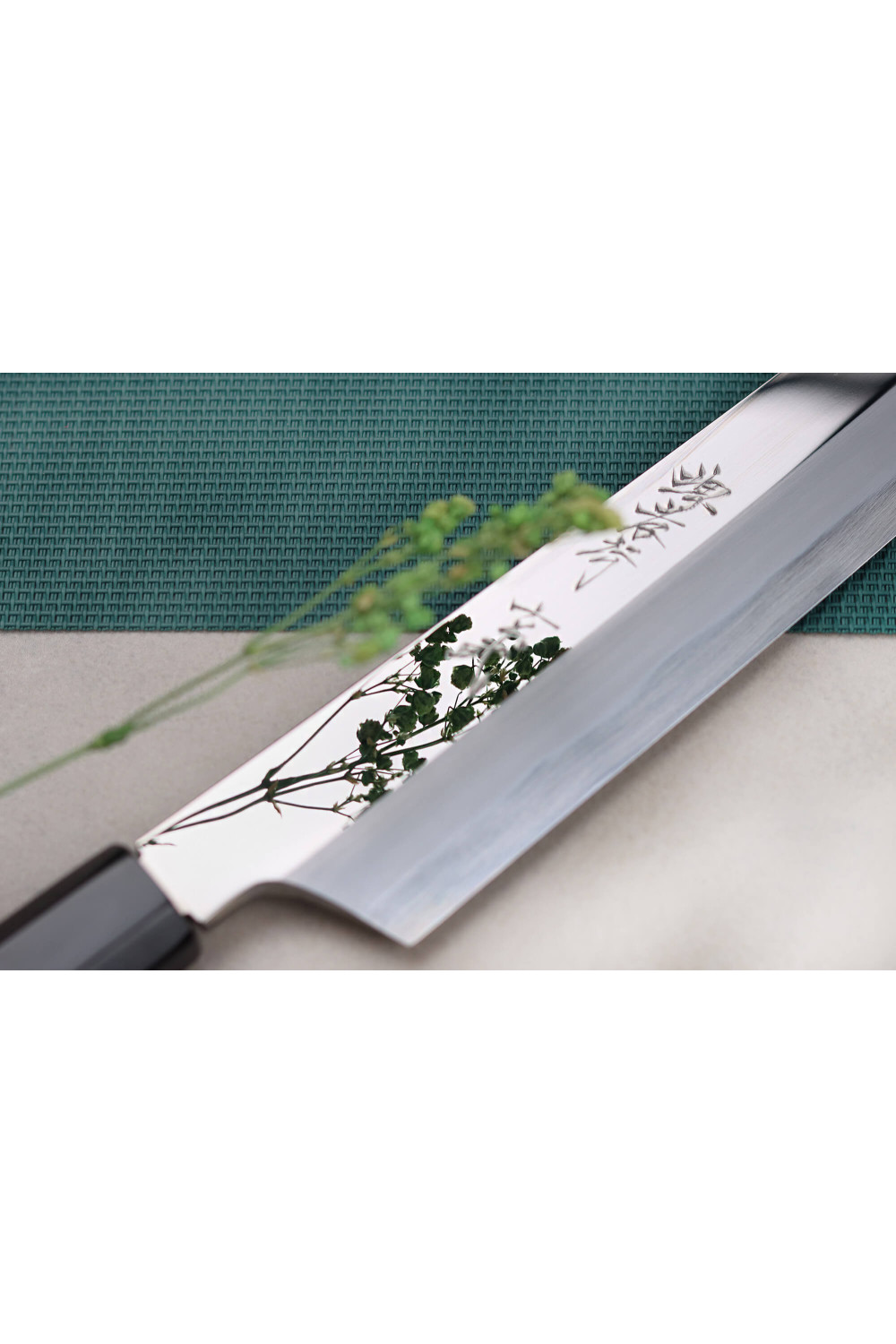
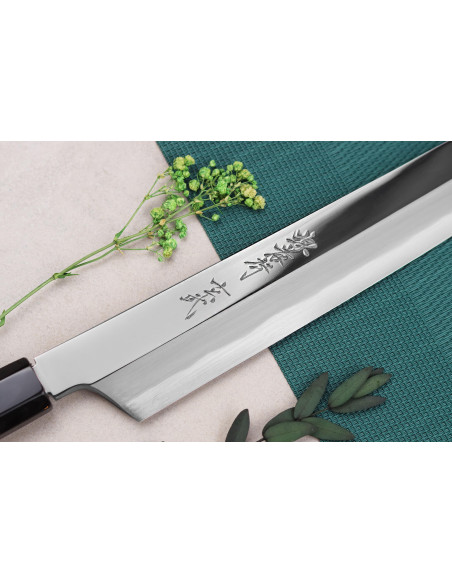
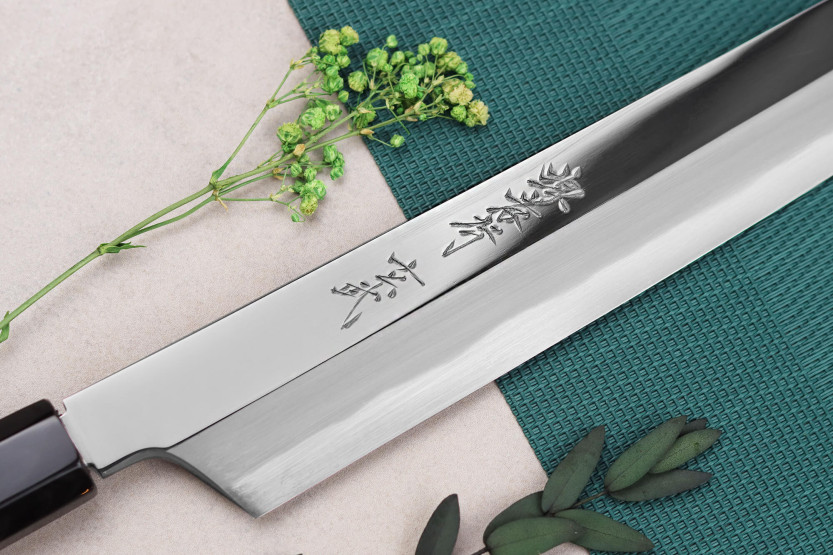
This blade has been sharpened on one side only, giving it a bevelled edge. This design facilitates the spreading of sliced food. What's more, the back of the blade has a hollow cutting edge that promotes air circulation, preventing food from sticking to the sides.
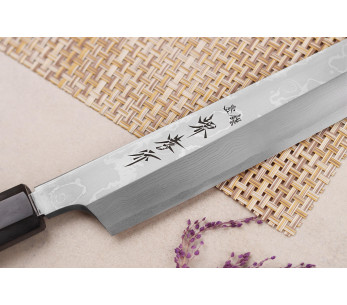
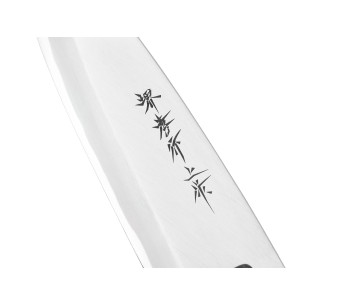
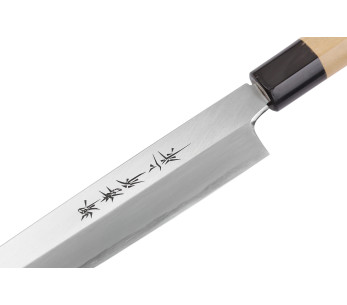
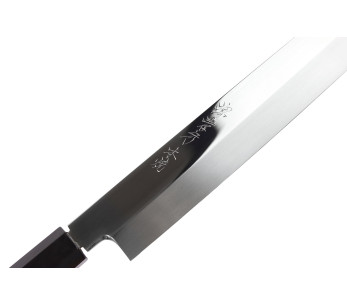
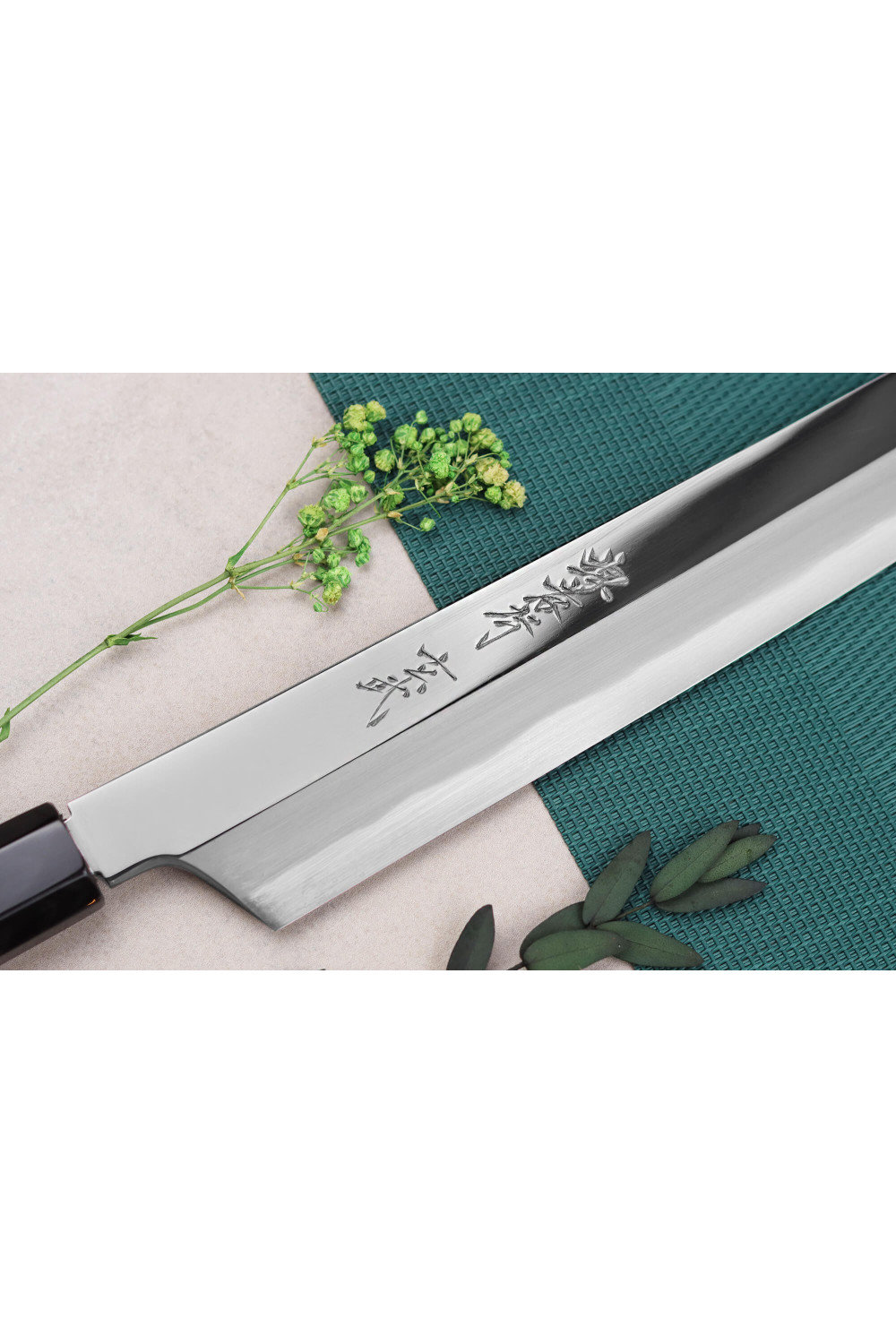
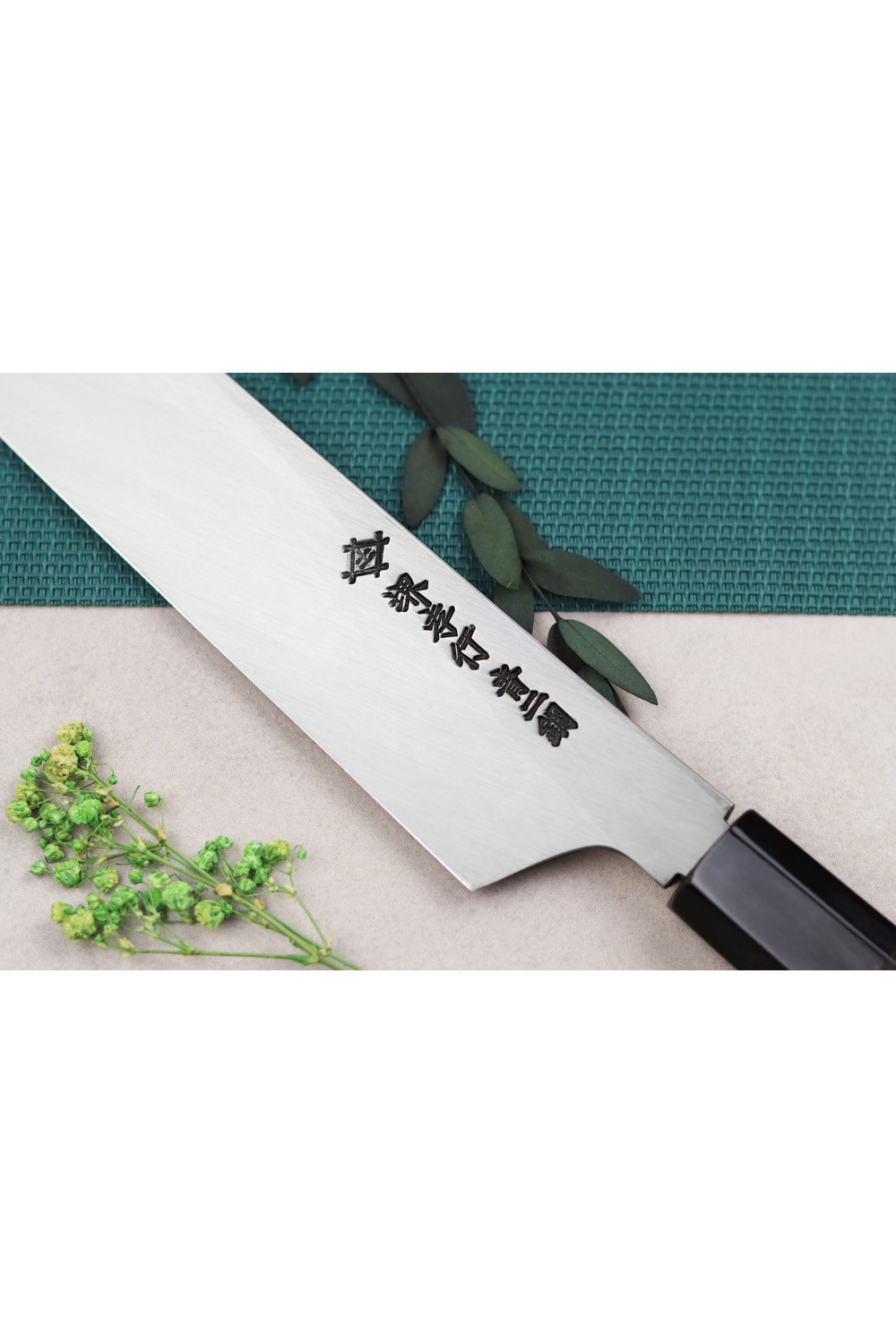
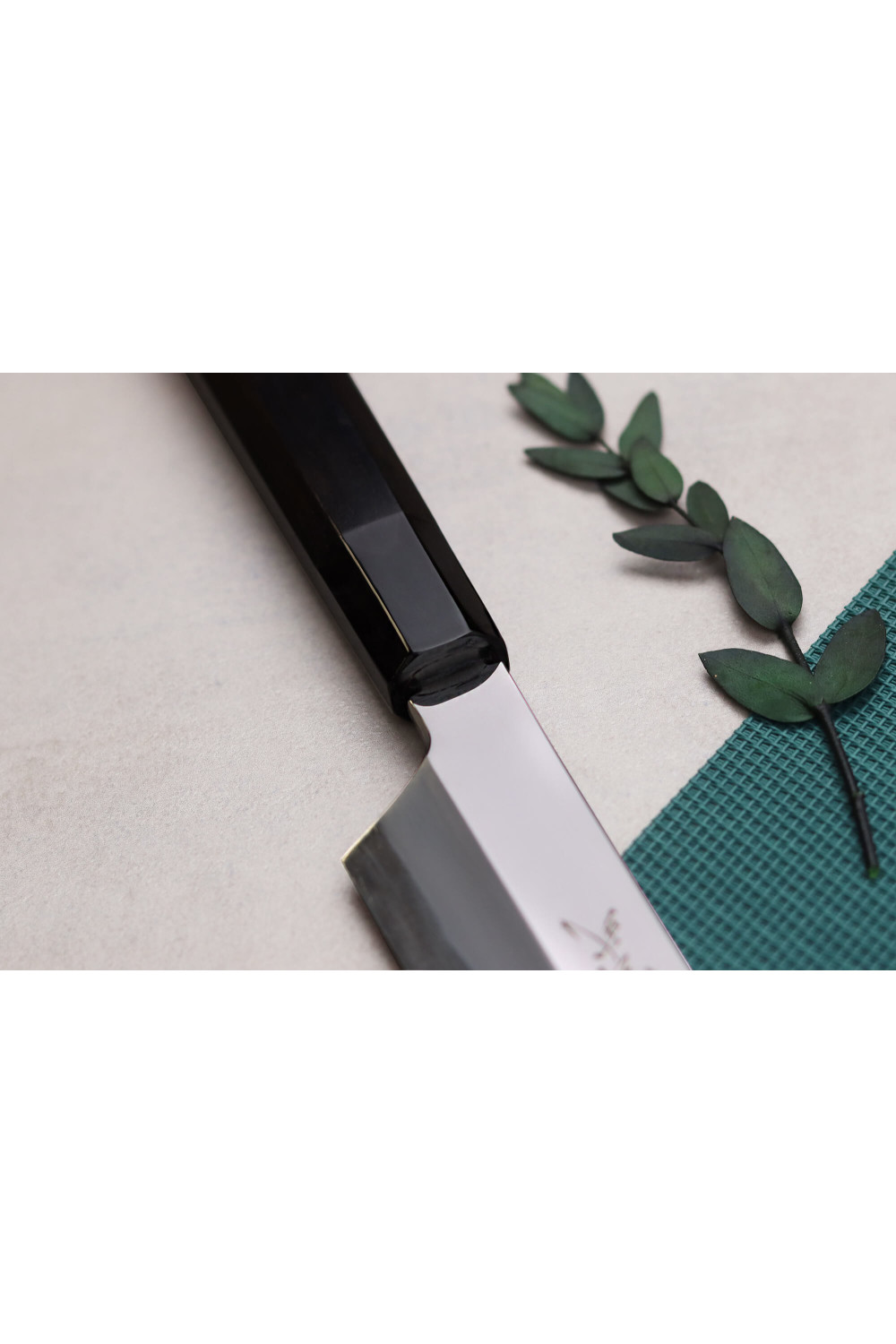
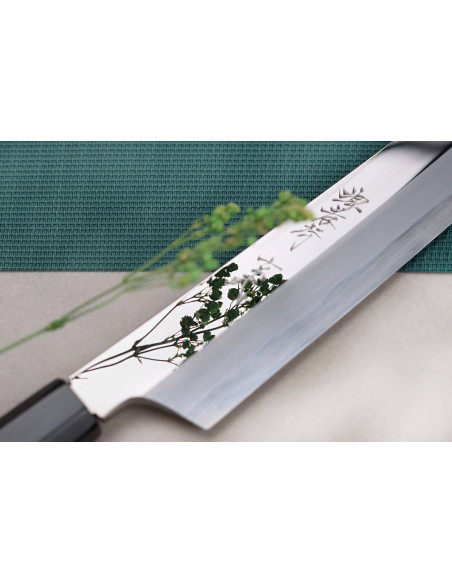
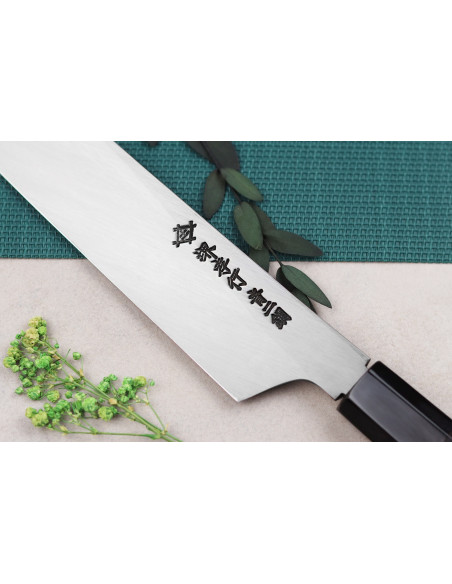
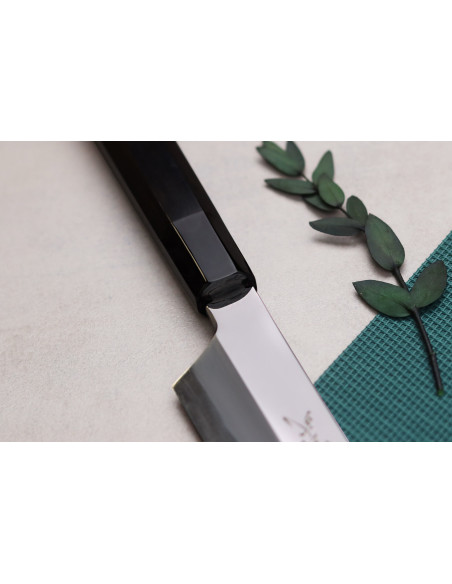
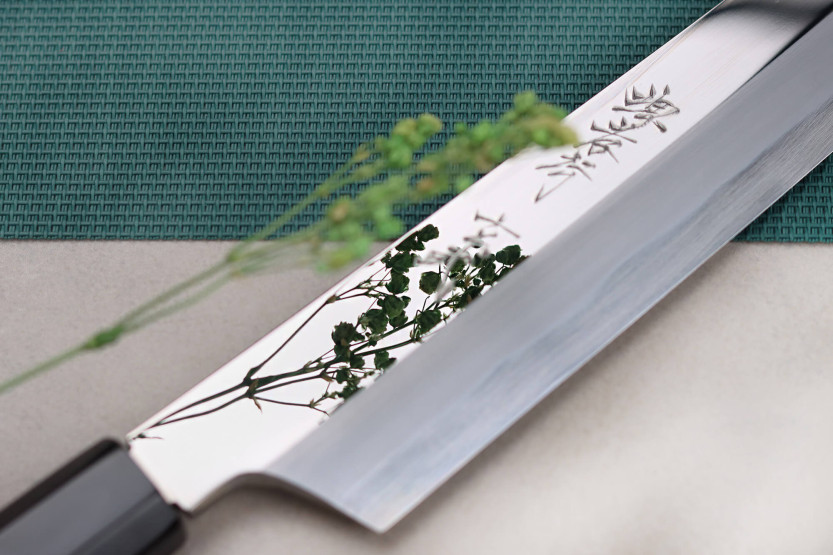
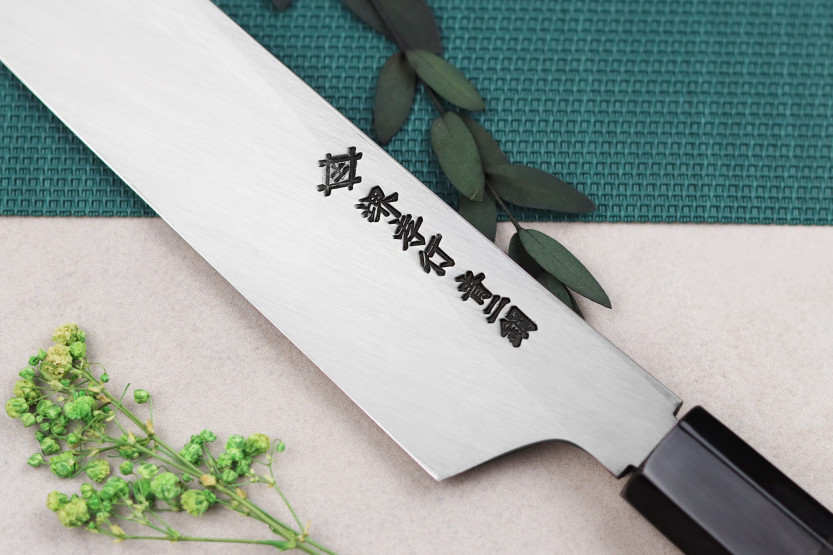
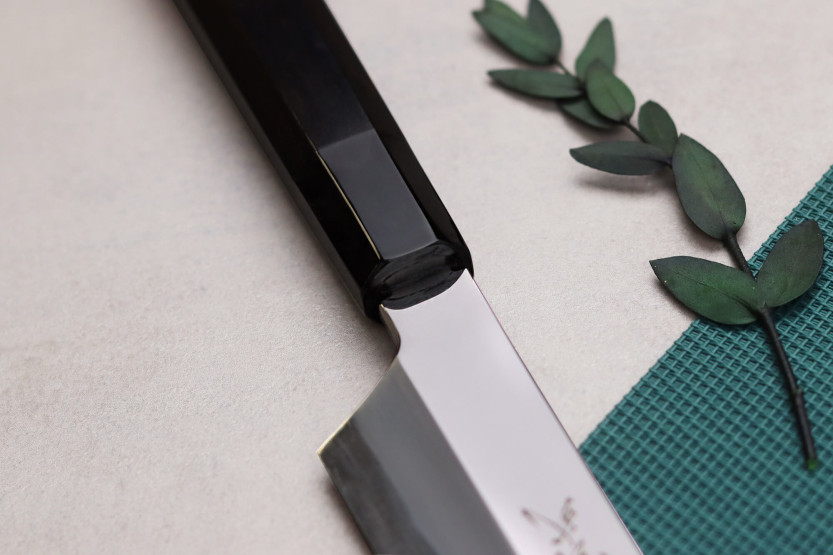
Finally, the surface of the blade has been polished for an elegant mirror effect. Hand-engraved kanjis add a touch of authenticity to your handcrafted Japanese knife.
An ebony handle with character
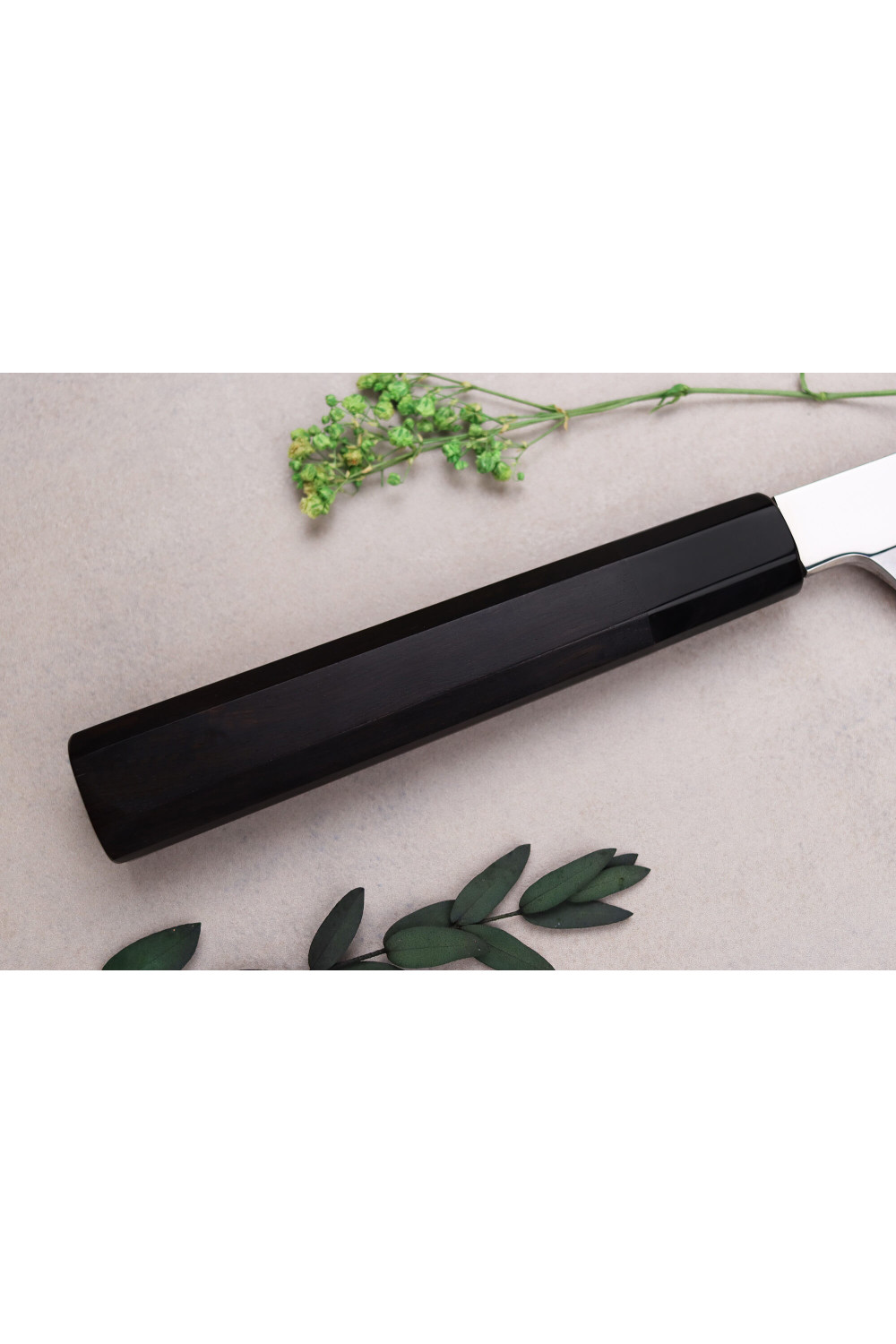
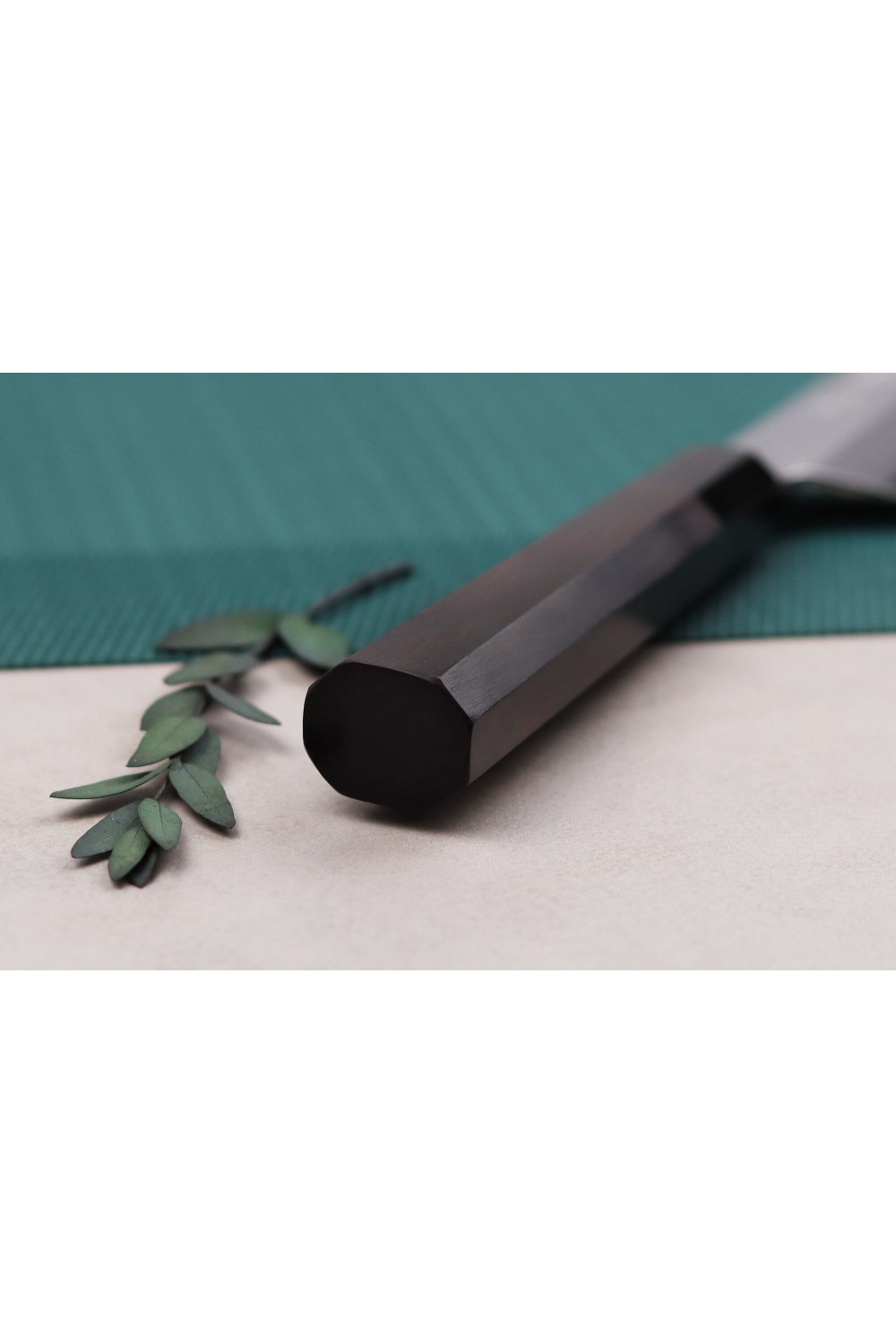
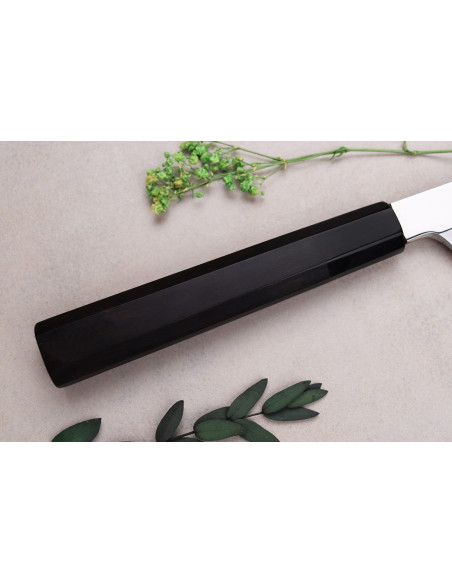
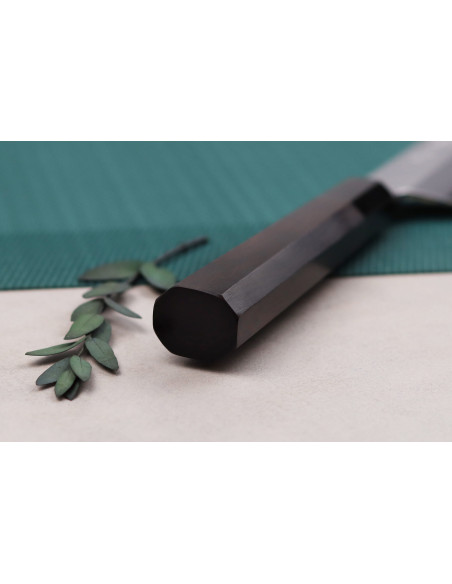
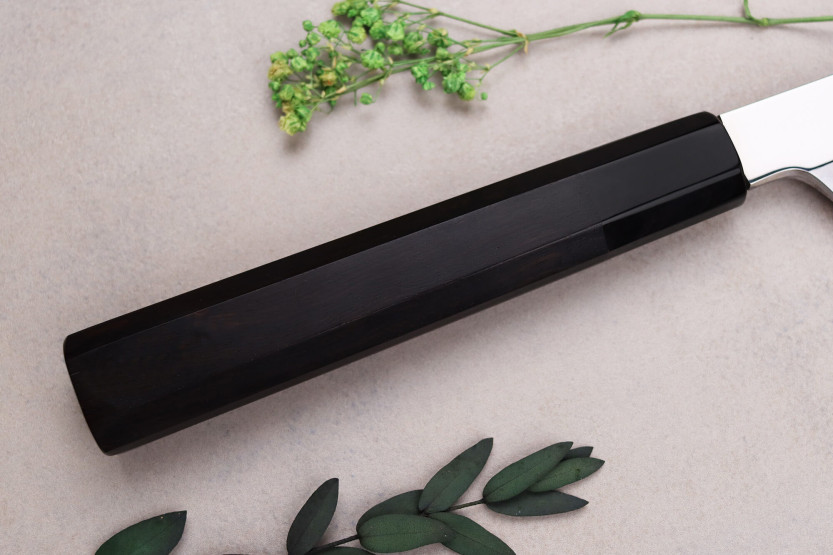
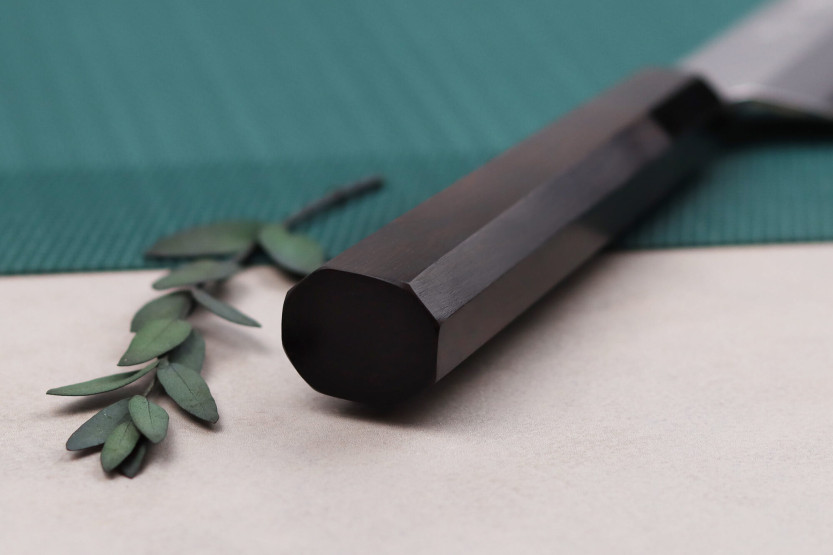
The handle of this handcrafted knife is made of ebony, a precious tropical wood recognizable by its dark brown, almost black color. Renowned for its density, ebony offers great resistance to the risk of cracking, as well as durability, making it ideal for regular or even daily use in the kitchen.
The deep, warm nuances of ebony are delicately enhanced by a bolster made from black buffalo horn. As a living material, horn can vary aesthetically from one knife to the next, making your Japanese knife unique!
The handle is octagonal in shape for optimum grip and comfort, especially when cutting for long periods. This shape also helps reduce the fatigue associated with long cutting sessions.
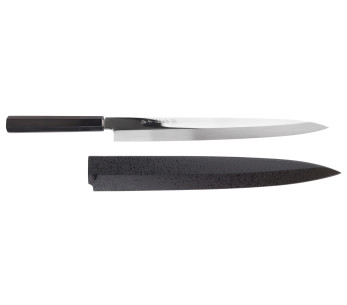
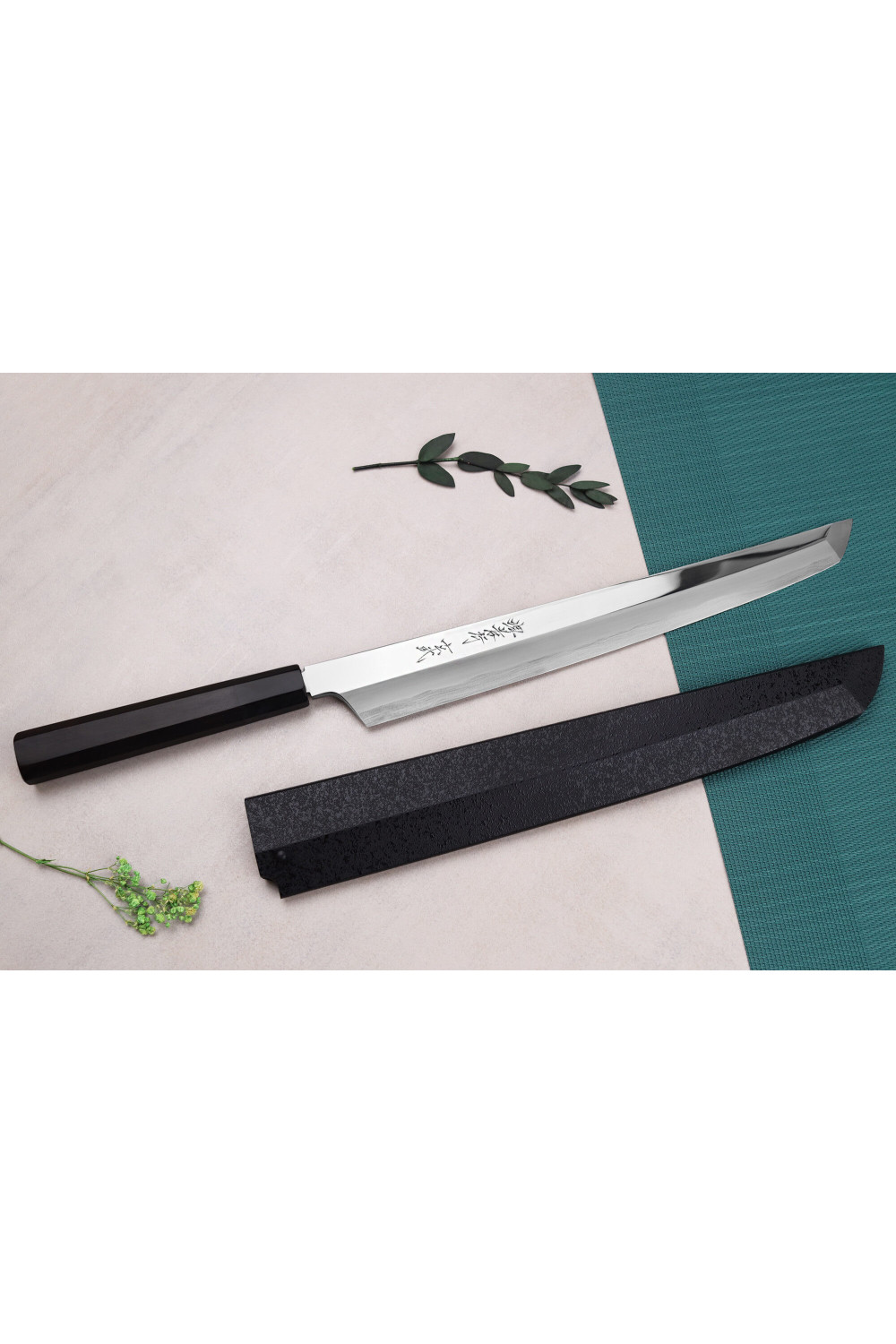
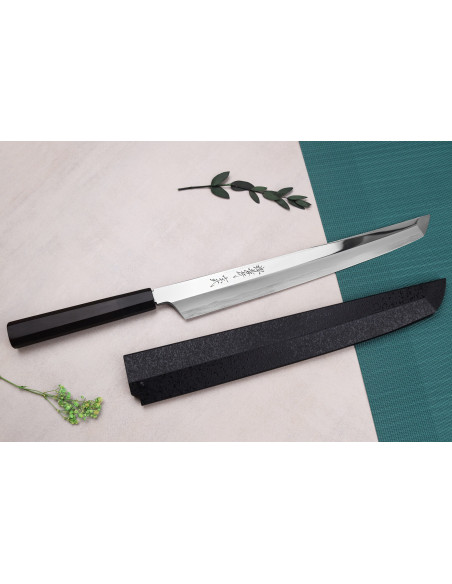
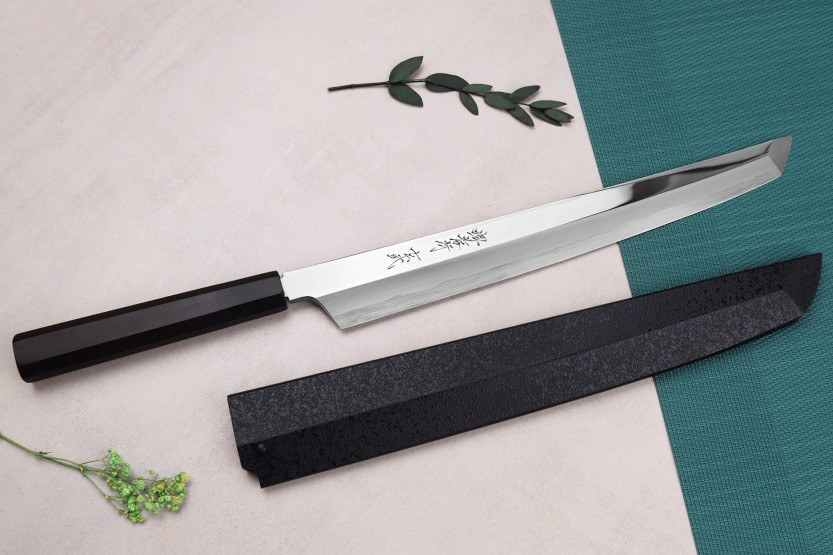
This handcrafted Japanese knife comes with a protective saya! This lacquered sheath adjusts perfectly to the curves of the blade, ensuring optimum protection and avoiding the risk of injury.
How do I care for a carbon knife?
To care for your Sakai Takayuki knife, wash only by hand with a non-abrasive sponge and mild detergent, avoiding wetting the handle. Once washed, wipe immediately with a clean cloth to remove all traces of moisture and store in a dry place. Do not use the dishwasher or leave it to soak in the sink!
With the passage of time, the color of the blade may vary slightly: this is normal! This is a natural reaction of the carbon, caused by the acidity of the food being cut or the humidity in the air.
Discover many Sakai Takayuki Japanese knives on KnifeLeader.eu!




 By buying this product you can collect up to