Founded in Japan in 1933, Sukenari is renowned for its production of high-quality knives. The company has a team of master blacksmiths who are experts in cutlery and capable of producing Honyaki knives. These knives are renowned for their excellence and require a high level of forging expertise. In this way, Sukenari perpetuates the ancestral know-how of the blacksmiths who made the famous samurai katanas. Today, Sukenari is a manufacturer of handcrafted kitchen knives that skilfully blend traditional and modern designs.
A handcrafted Japanese knife with a high-performance blade
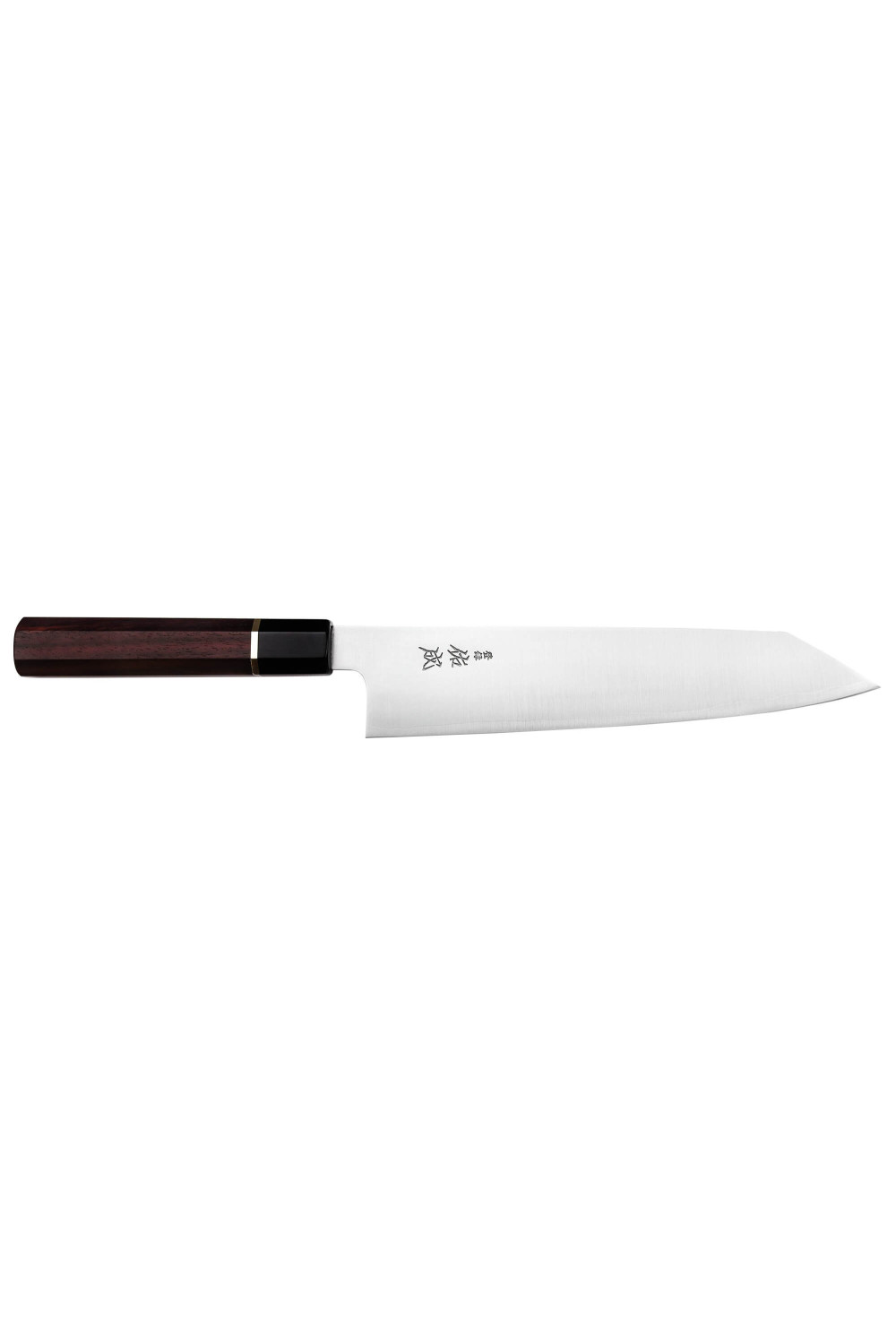
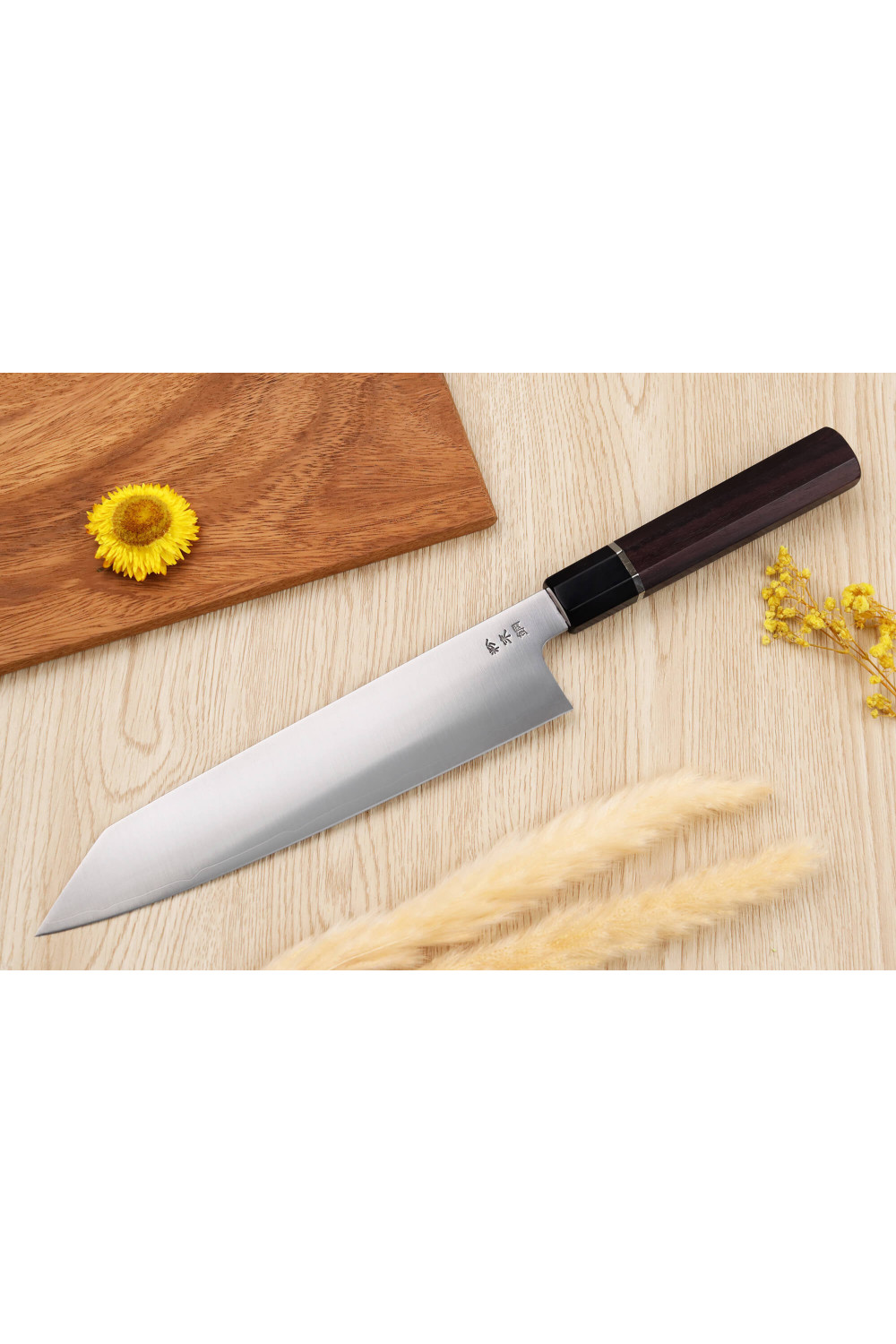
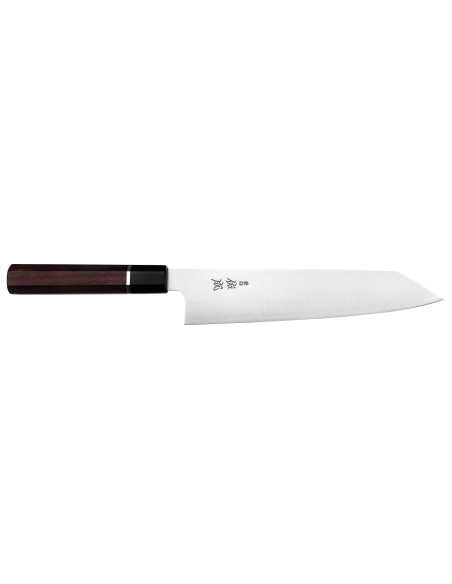
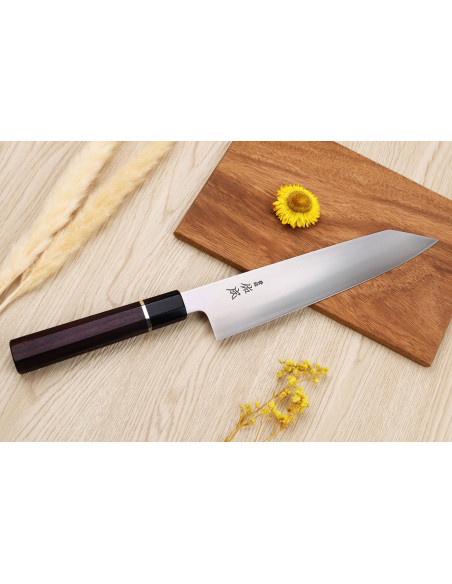
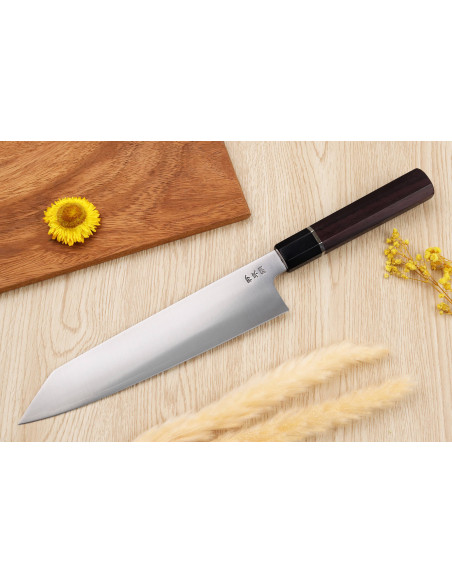
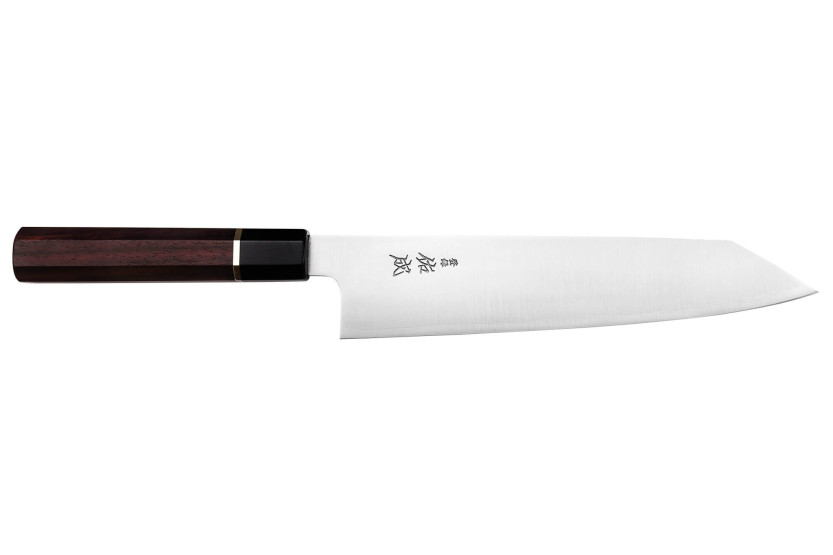
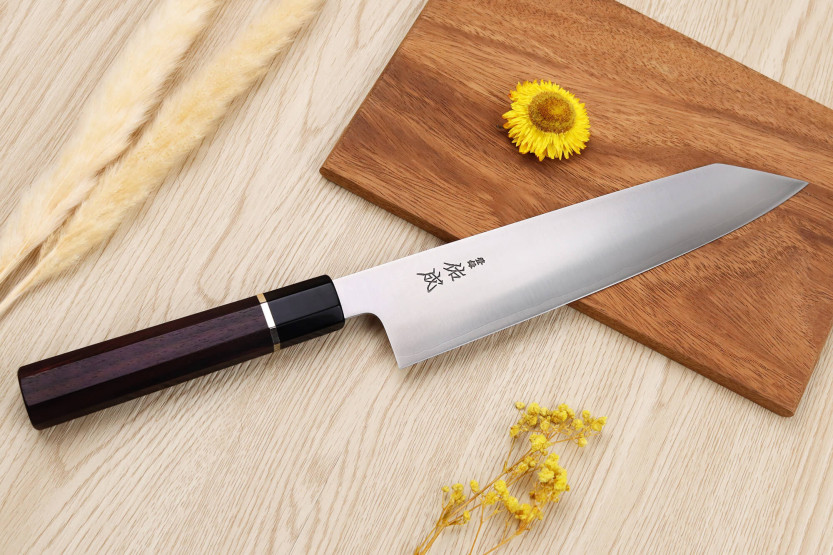
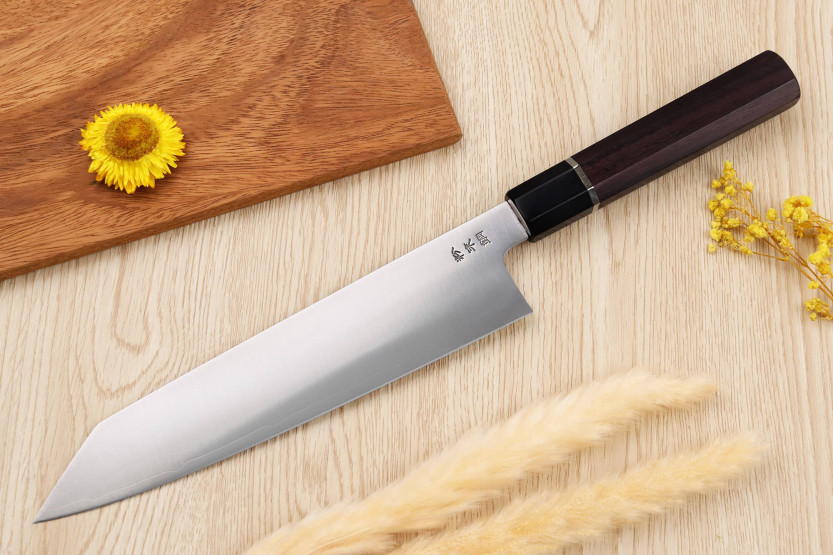
This gyuto kiritsuke knife features a 24cm blade with a Japanese San Maï structure. The Japanese expression "San Maï" literally means "three layers", and this technique involves creating a hard steel core, enveloped by a softer layer of steel. This process is designed to protect the steel core while ensuring optimum blade balance.
The blade core is made fromJapanese SG2 powder steel, produced by Takefu Special Steel. This alloy features a high carbon content of around 1.3%, giving it high hardness and enhanced durability. With a hardness of 63HRC on the Rockwell scale, this Sukenari knife boasts an effective, long-lasting edge, which is retained even with spaced-out sharpening sessions.
What's more, SG2 steel contains around 15% chromium, enhancing its resistance to oxidation. However, due to its high carbon content, it is essential to take meticulous care of the blade to avoid corrosion.
Another advantage of SG2 steel is its homogeneous micro-structure. As a result, the blade of your knife is resistant to micro-cracks and wear.
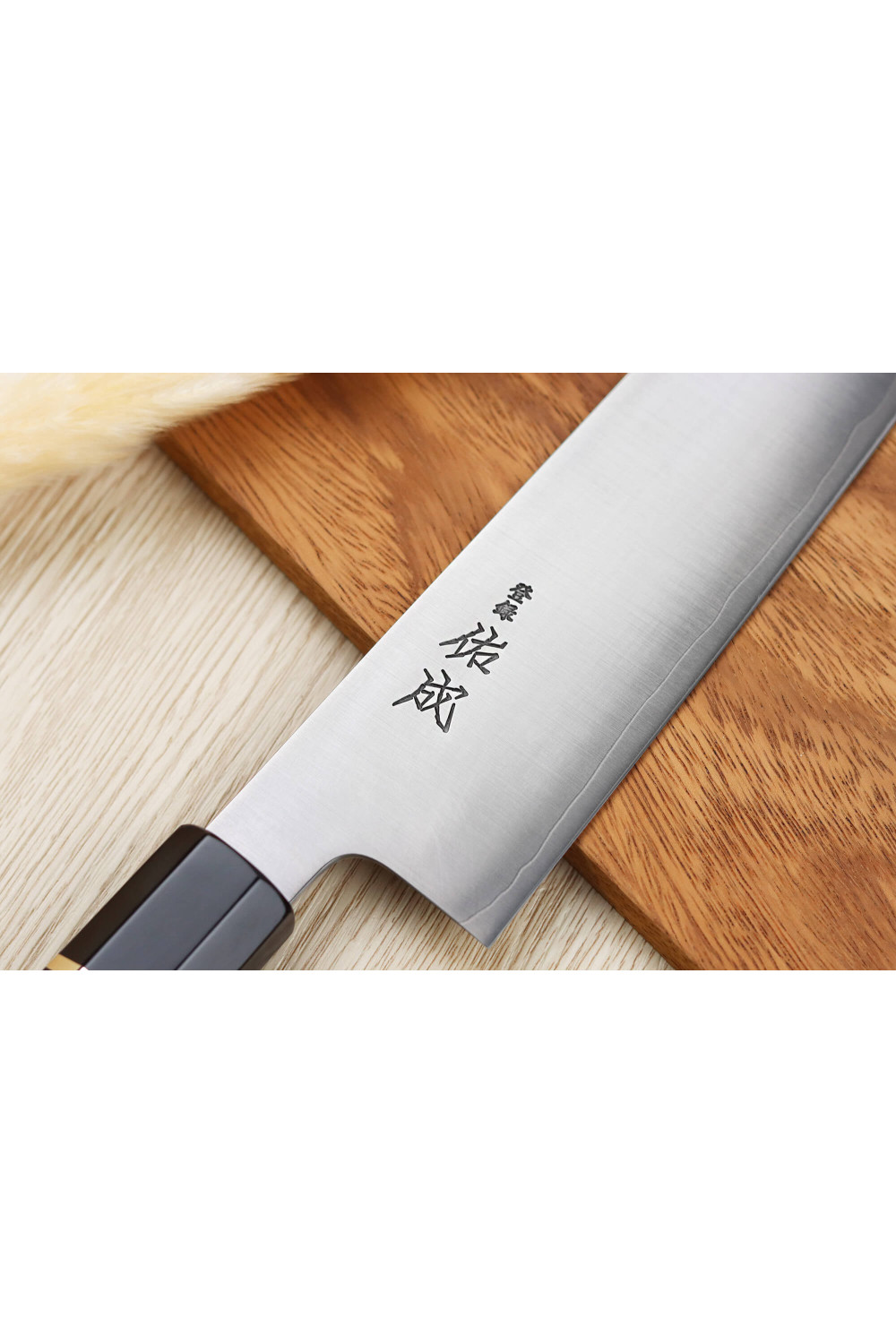
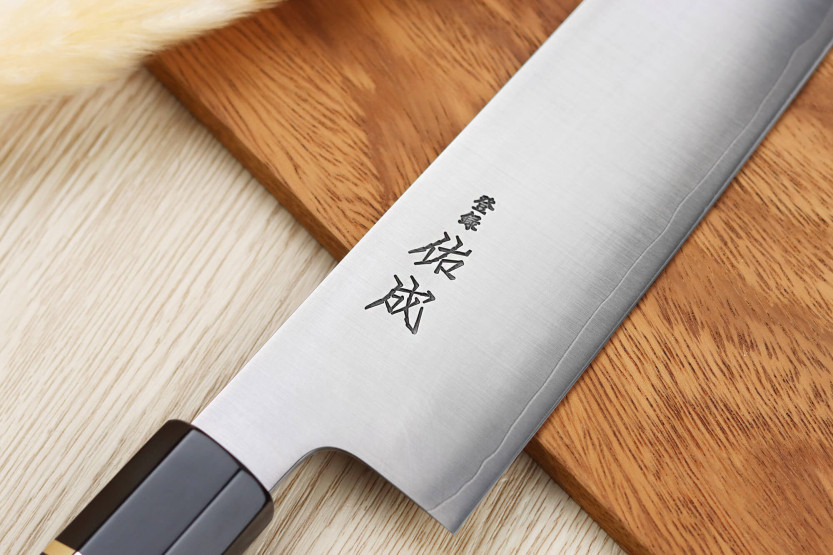
The SG2 steel core is then enveloped by a layer ofsofter steel and folded on either side, forming the 3 layers of San Maï. This outer layer lends flexibility to the core, making it less breakable in use, while still being protected. The various superimposed layers of steel are visible on the underside of the blade, creating an attractive random wave near the cutting edge.
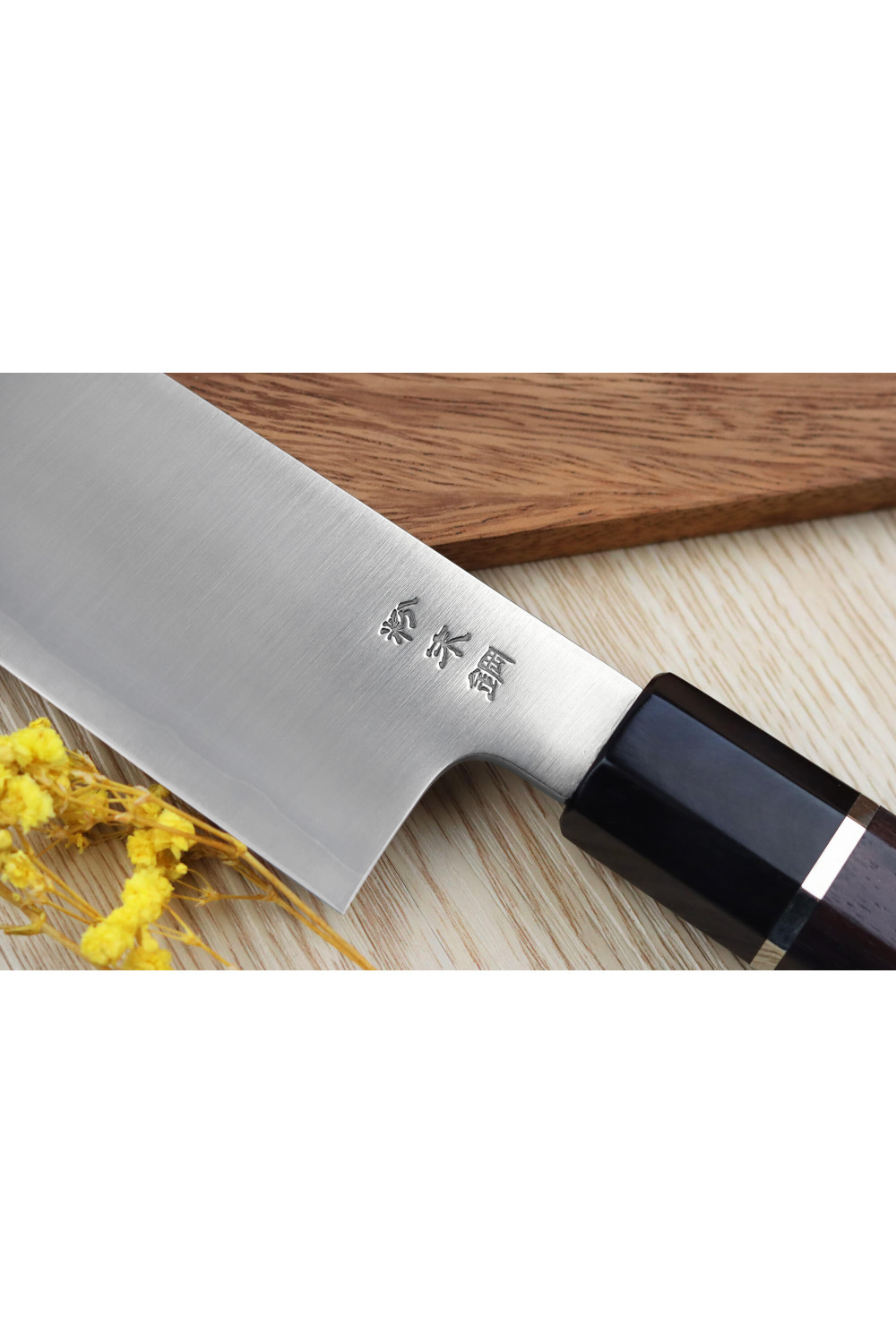
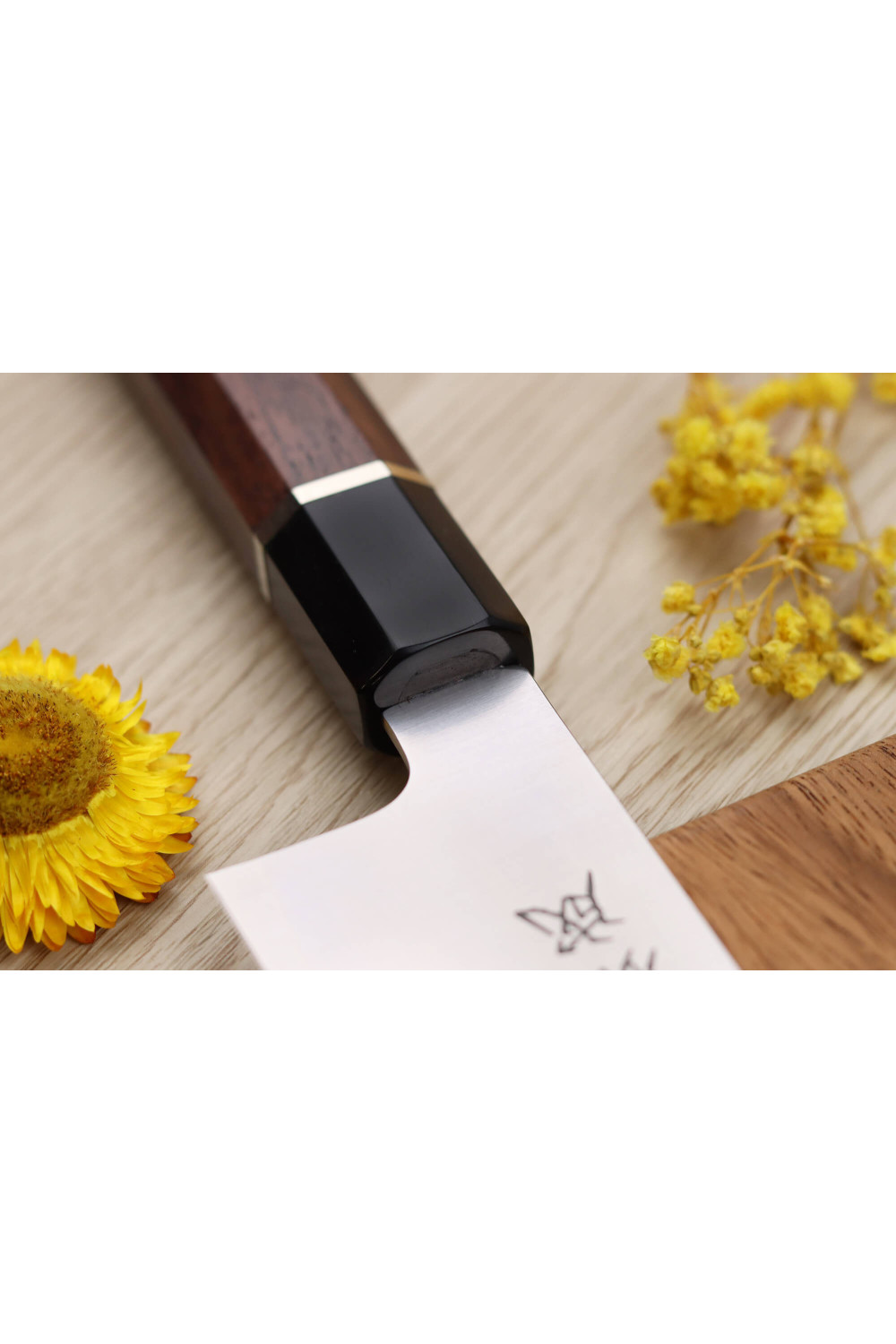
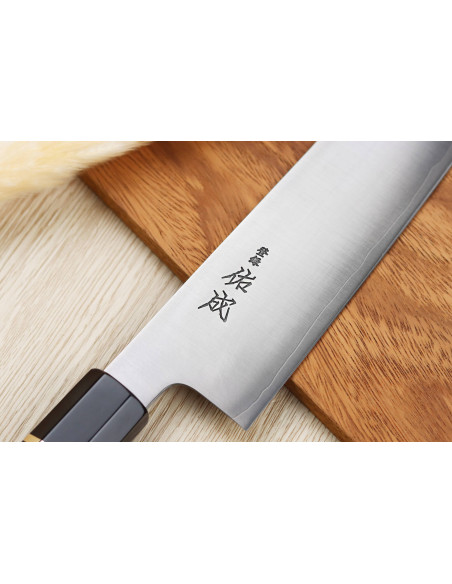
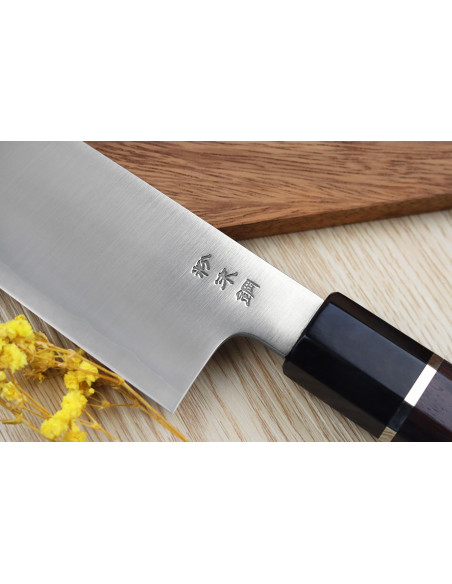
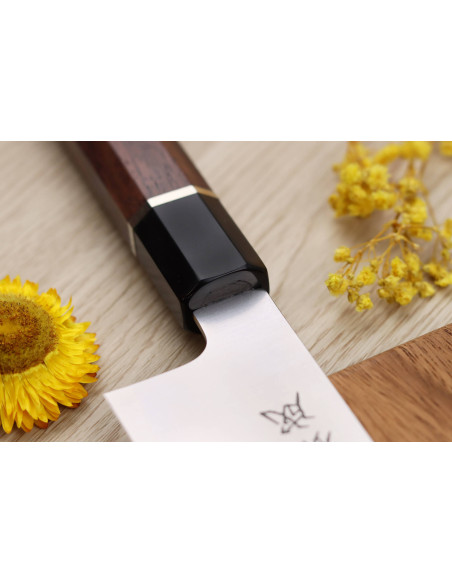
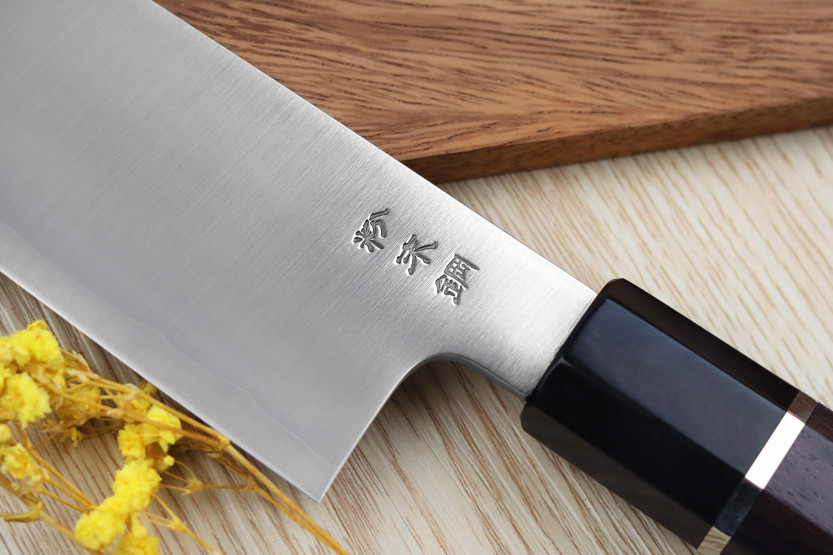
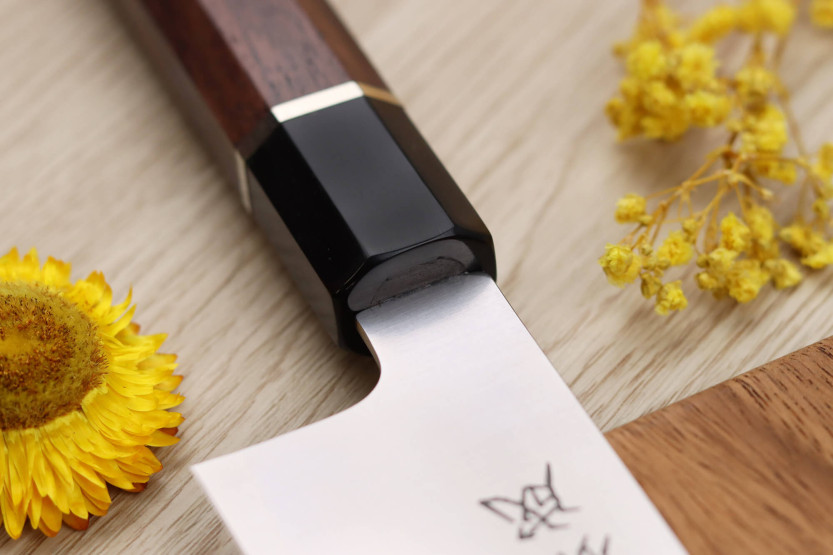
As for the blade, it has been polished to give it an elegant appearance. In addition, authentic Japanese kanji have been hand-engraved on the blade, adding a unique touch of character to this knife.
A Japanese chef's knife with an elegant handle
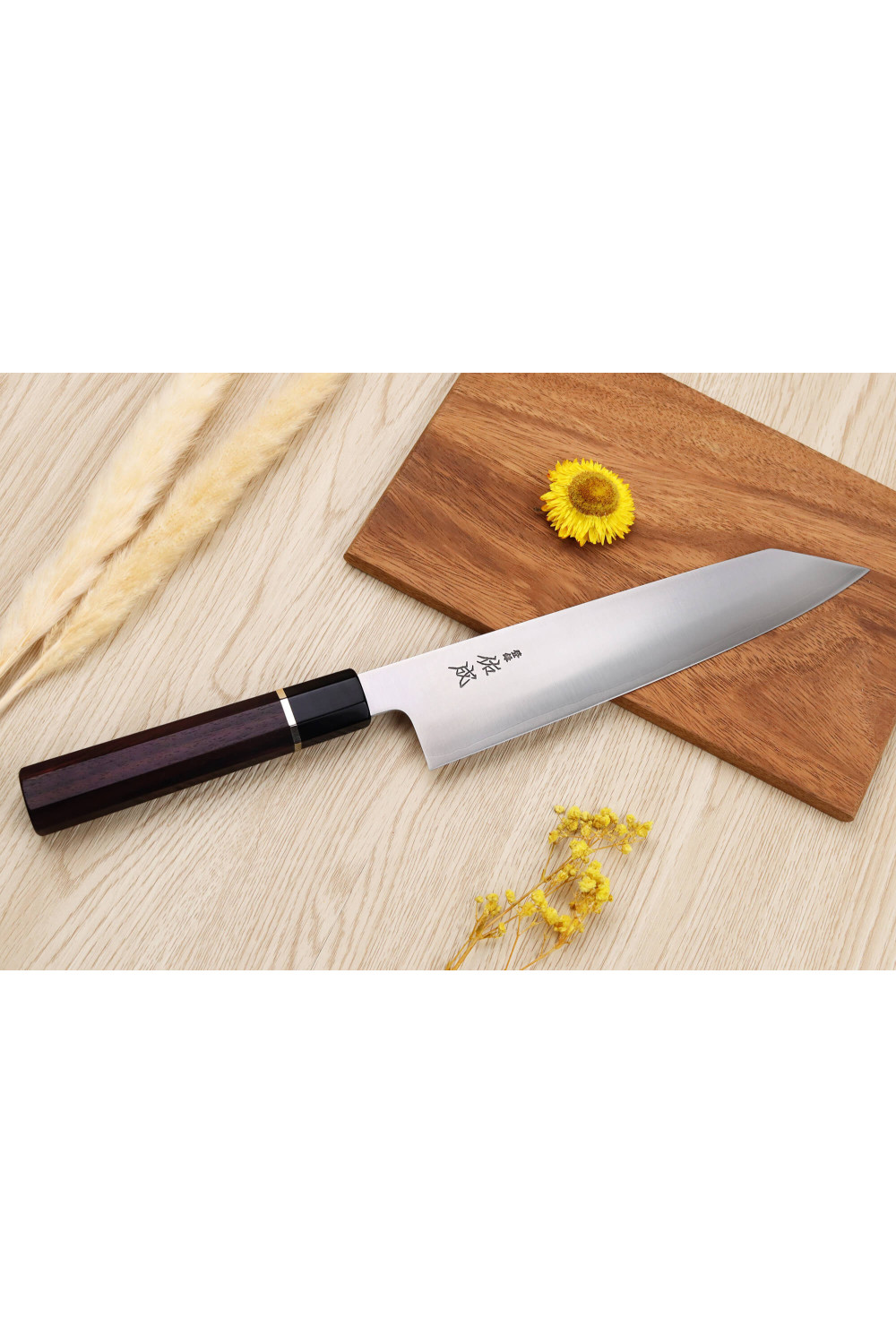
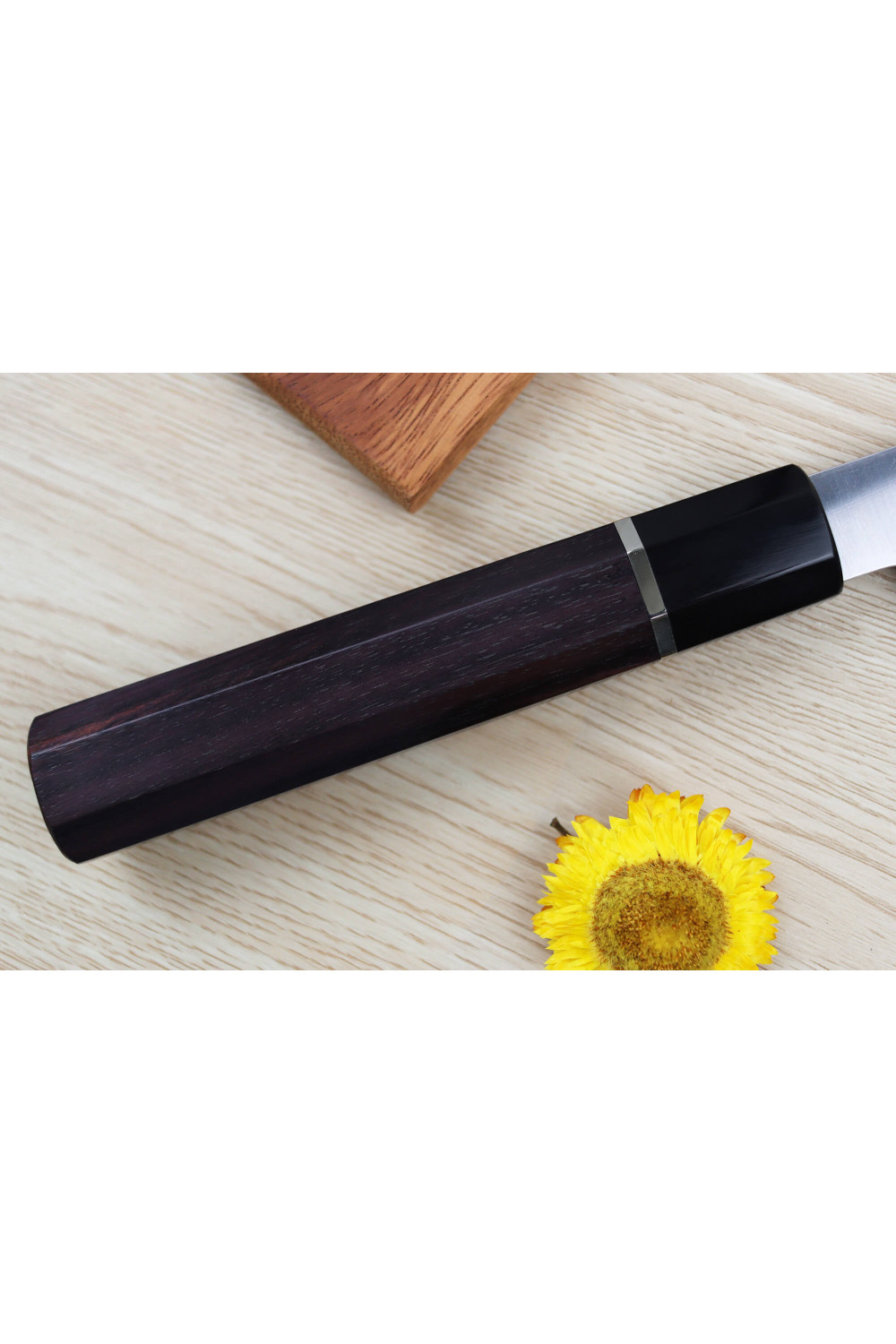
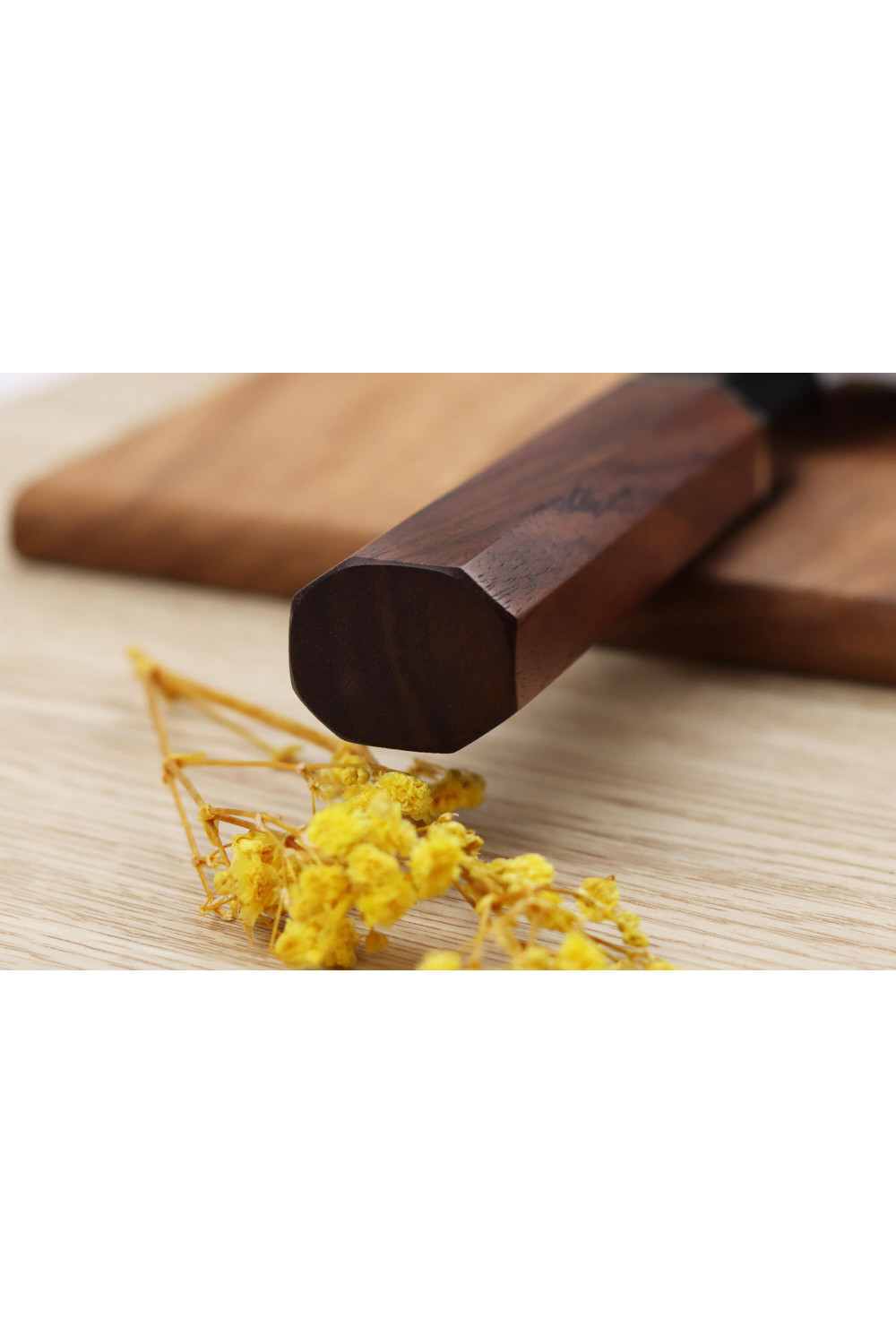
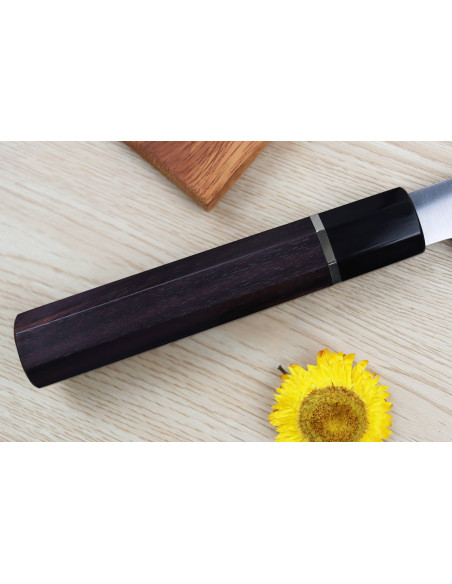
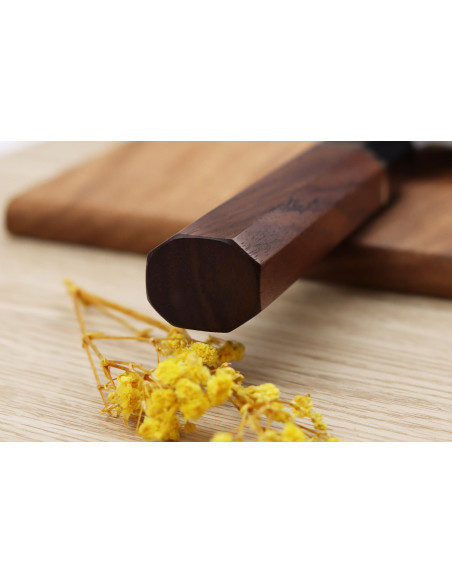
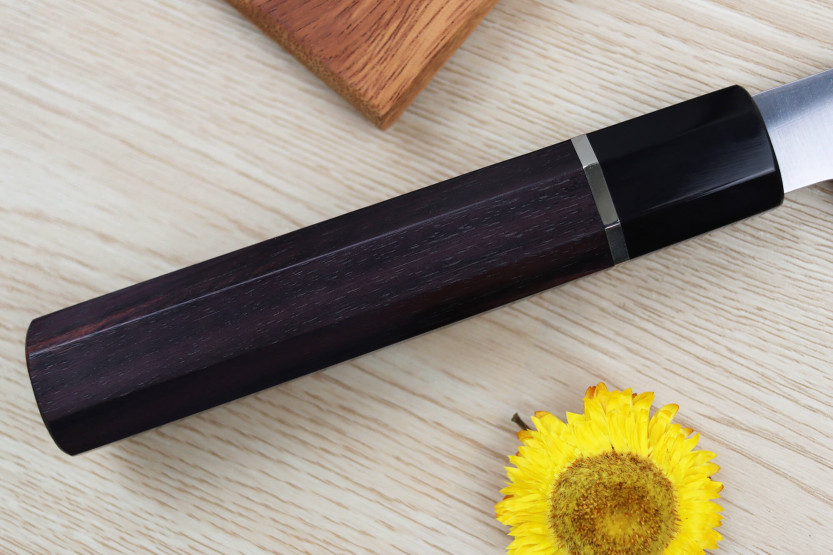
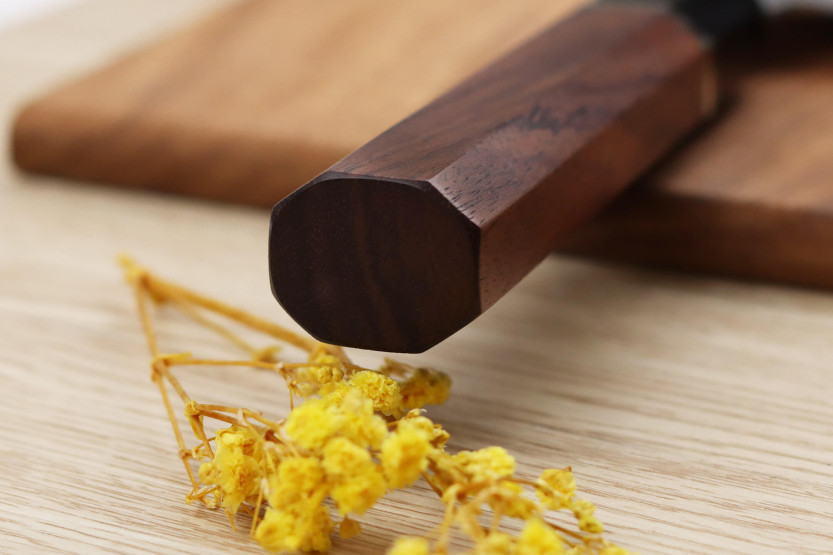
The handle of this Japanese chef's knife is made of rosewood, a material that is strong, shock-resistant and moisture-resistant. Each handle is unique with its brown nuances and dark veining, adding a touch of authenticity and originality to your Japanese knife.
To add character and style to the handle, it also comes with a black buffalo horn Bolster, renowned for its strength. A silver ring is inserted between the Bolster and the handle, adding an extra touch of elegance to this Japanese knife.
The handle is octagonal in shape, offering an ergonomic grip and optimal handling for both right- and left-handed users. It's very comfortable to hold, even when cutting for long periods.
To keep the knife watertight, wood putty has been applied to the junction between blade and handle, filling any small gaps and preventing water or food from seeping through.
Care and maintenance of a handcrafted Japanese knife
Since your handcrafted Japanese knife is made from high-quality materials, it's important to take good care of it! Never put it in the dishwasher, or let it soak in the sink. Hand-washing is essential to preserve its quality.
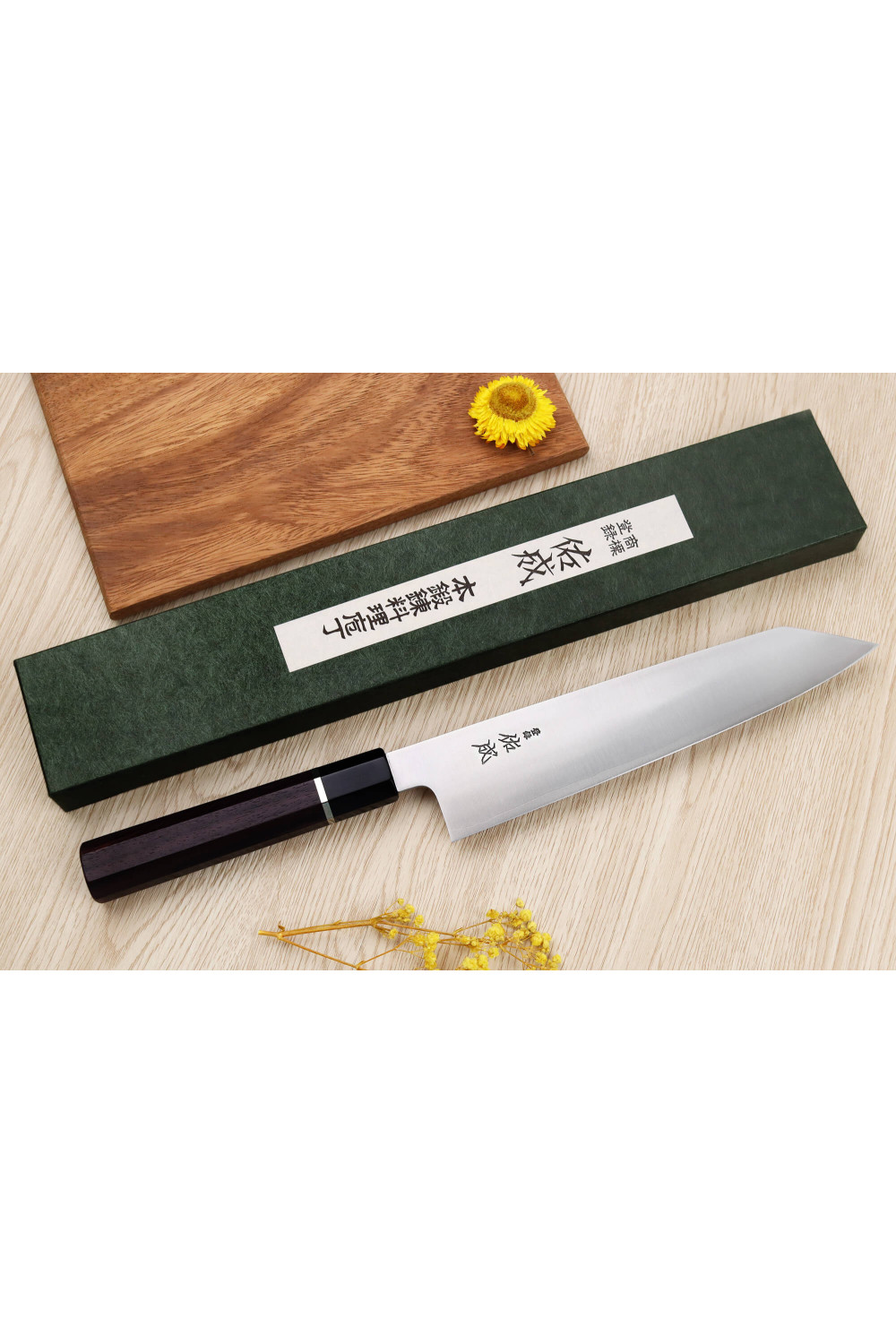
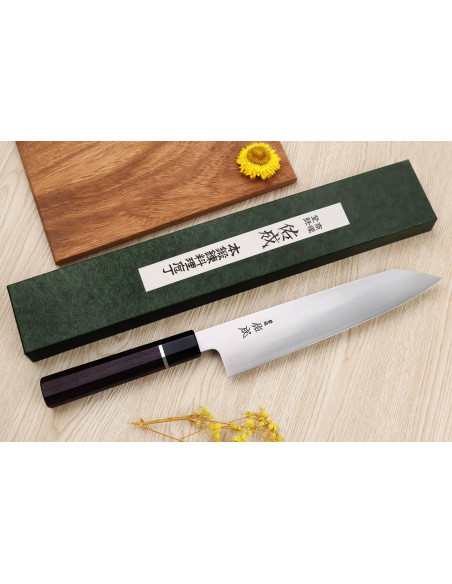
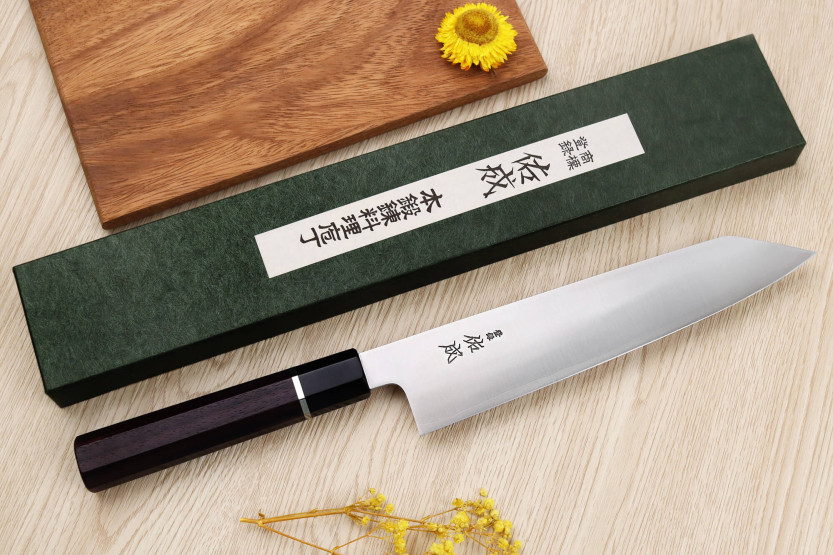
To care for your knife, use a mild detergent and a non-abrasive sponge with lukewarm water to clean it, taking care not to get the handle wet. After washing, be sure to dry your knife thoroughly to remove all traces of moisture. Then store it in a dry place, such as its box, to preserve it in the best possible condition.
Over time, the color of the blade may change slightly: this is normal! This reaction of the carbon is caused by the acidity of the food you're cutting and the humidity in the air.
Find a wide range of Japanese knives on KnifeLeader.eu!




 By buying this product you can collect up to