The Hado artisan workshop, based in Sakai, is the fruit of a collaboration between Tadataka Maruyama, then Sales Manager at Sakai Fukui, and Ryuichiro Fukui, President of the company. Driven by his passion for Japanese knives, Tadataka had always dreamed of becoming a craftsman. When he shared his project with Ryuichiro, the latter, keen to reintroduce craftsmanship into his company, which had until then focused on industrial production, saw a tremendous opportunity. He encouraged Tadataka to train as a cutler and set up an in-house craft workshop. After three years of rigorous apprenticeship, Tadataka took over the management of this workshop, entirely dedicated to the manufacture of exceptional Japanese knives. The Hado workshop officially opened its doors in spring 2019!
The name "Hado", meaning "the way of blades", embodies the very essence of this forge, combining the pursuit of excellence with perpetual improvement. Hado knives are forged with unrivalled precision and offer unrivalled cutting performance.
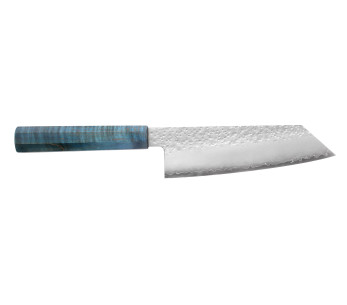
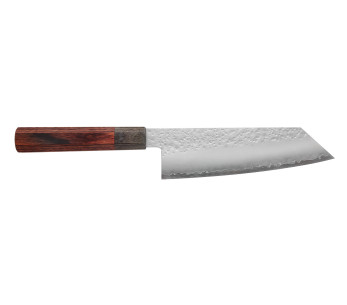
This bunka knife was forged by Yoshikazu Tanaka, a certified Traditional Master Craftsman and a leading figure in Sakai. Coming from a line of blacksmiths going back four generations, he is renowned for his exceptional craftsmanship, combining superior materials with a design respectful of Japanese traditions. Once forged, your knife is entrusted to Tadataka Maruyama, the workshop's master sharpener, who sharpens it with meticulous care. Working by hand on a grindstone, he fine-tunes the edge to guarantee incomparable sharpness!

Yoshikazu Tanaka is on the left and Tadataka Maruyama is on the right.
A damask knife of refined design
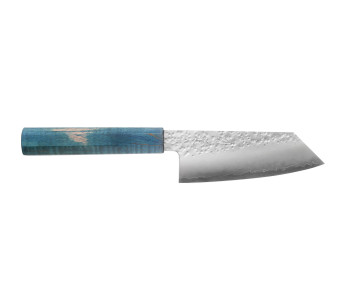
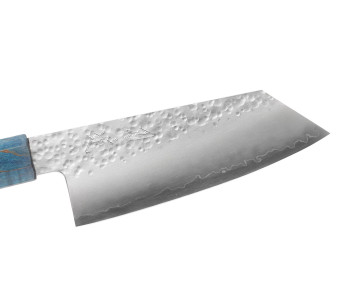
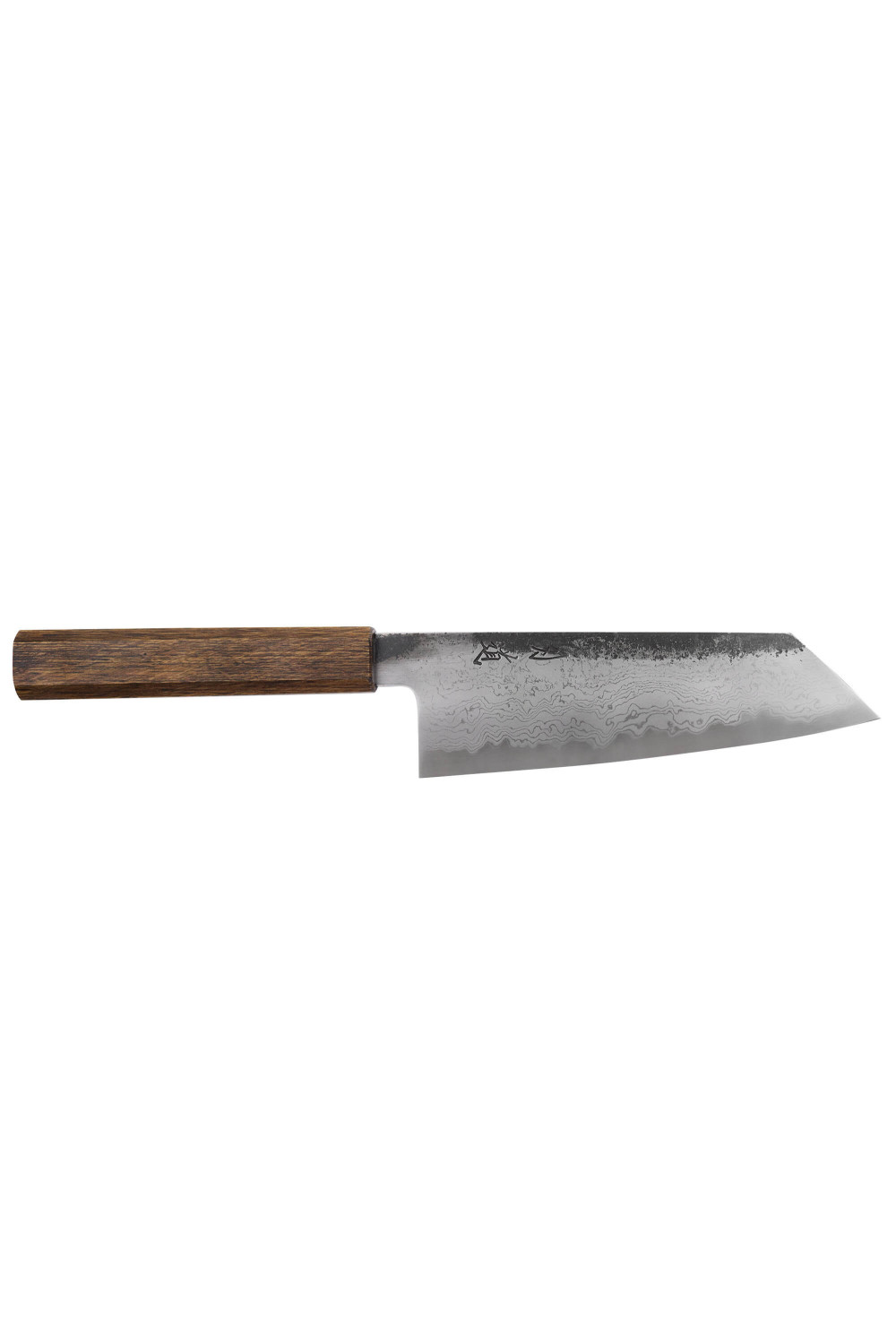
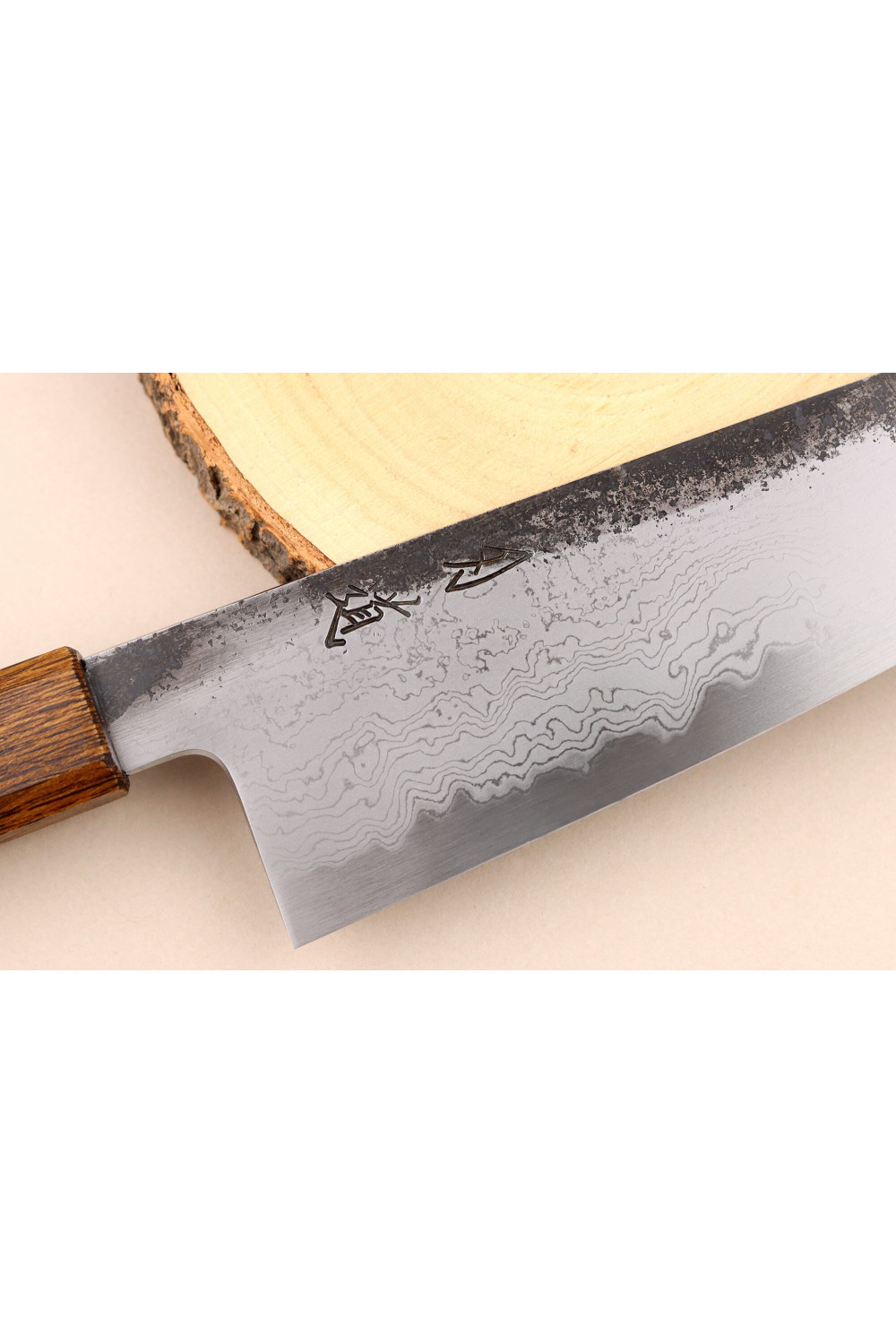
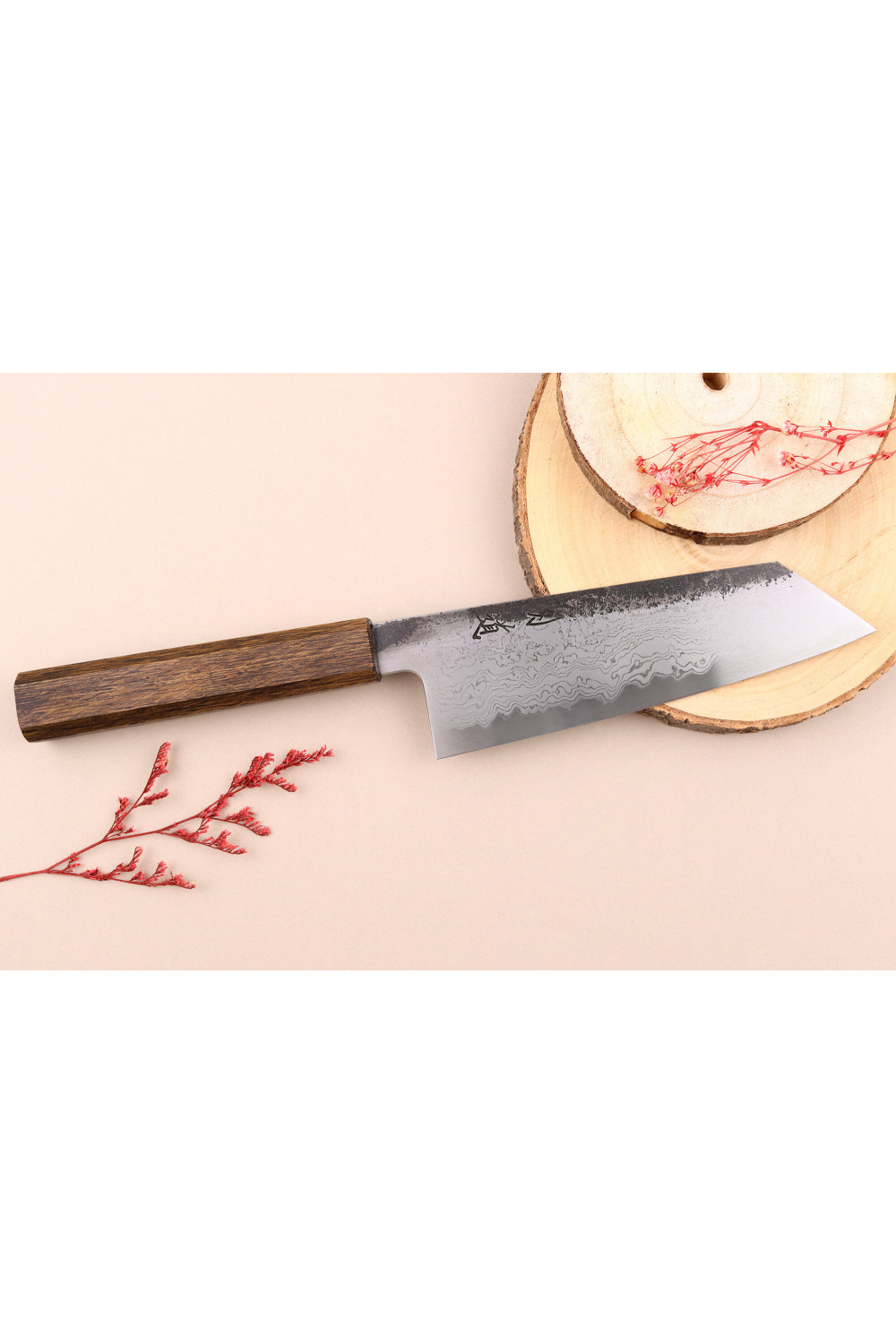
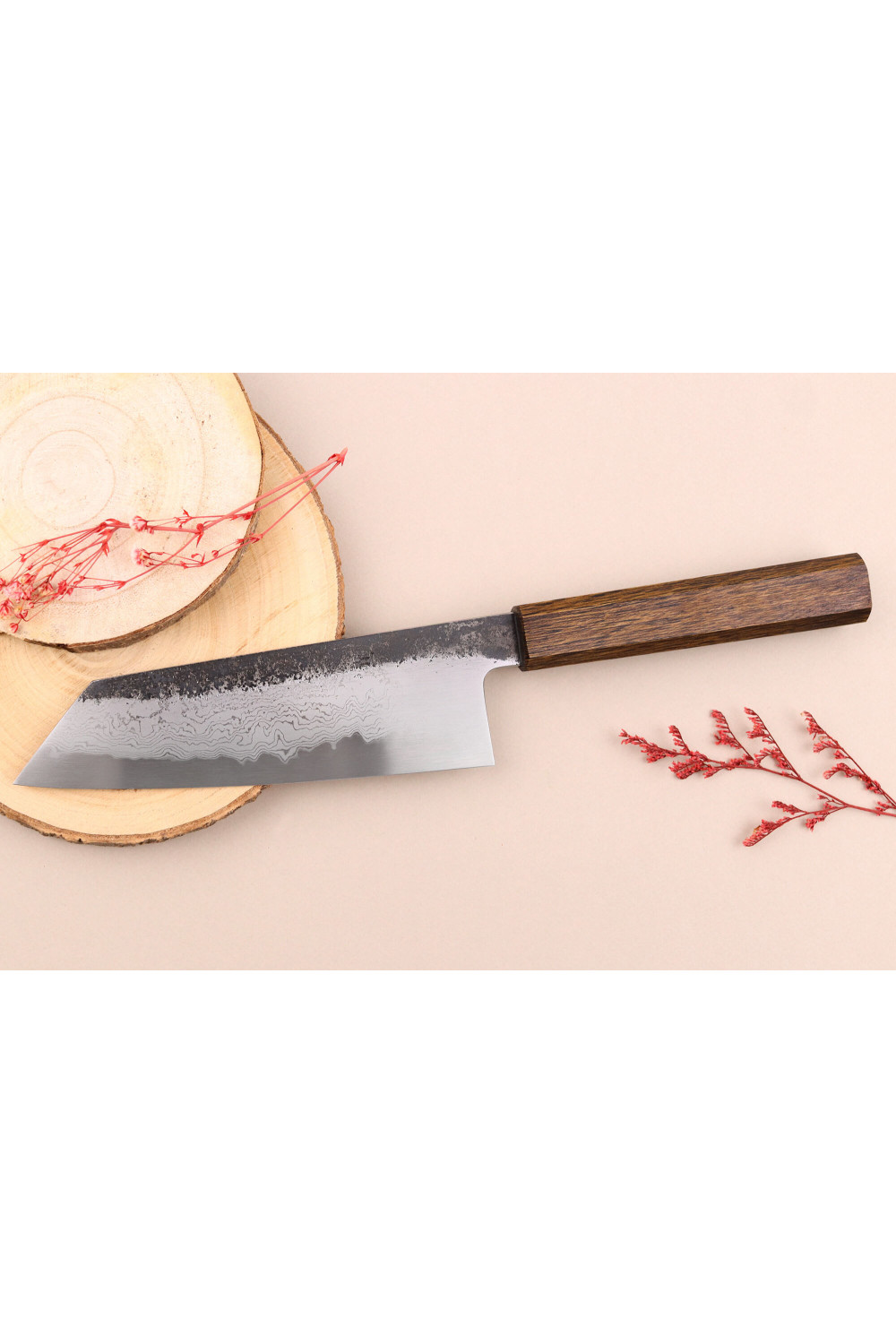
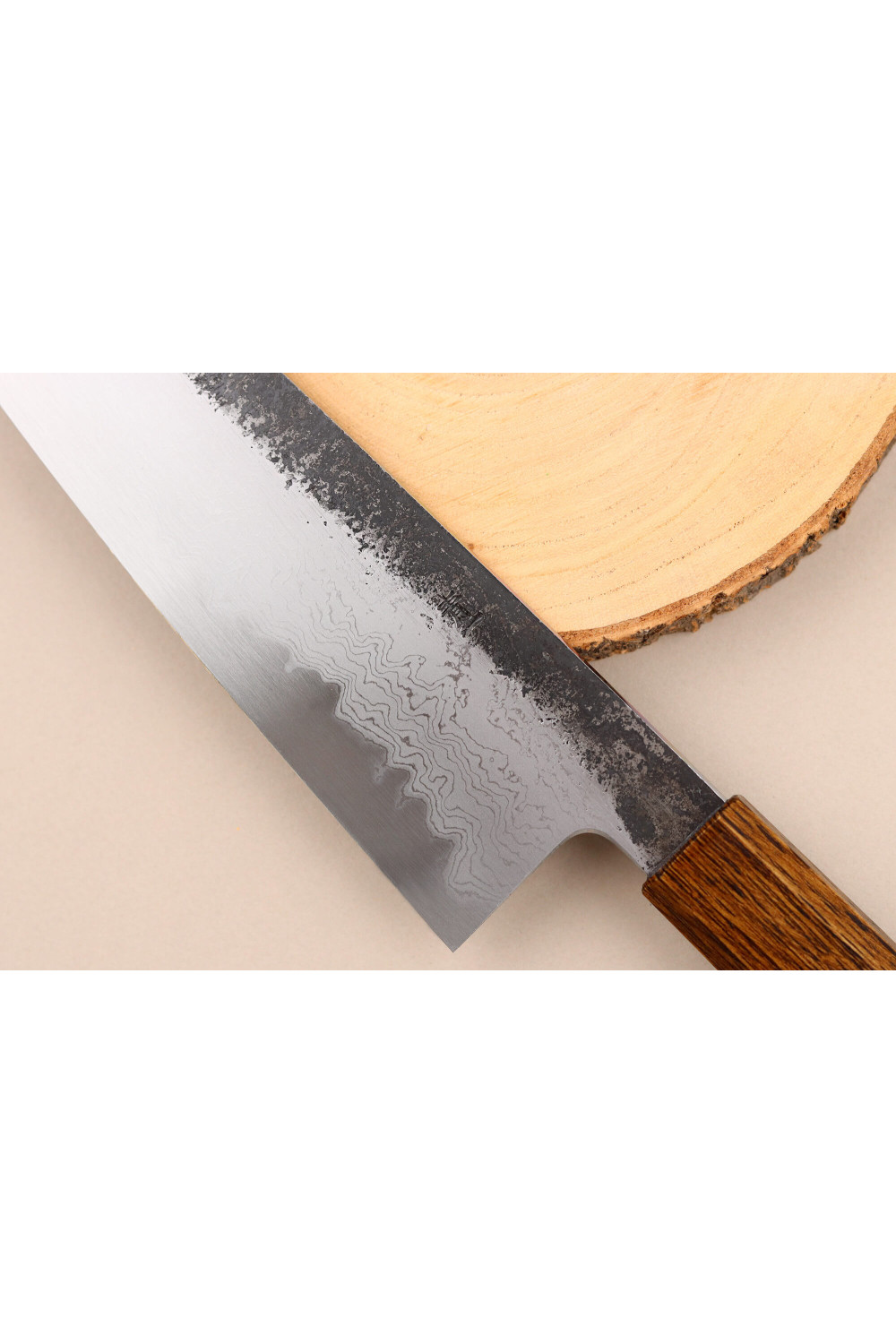
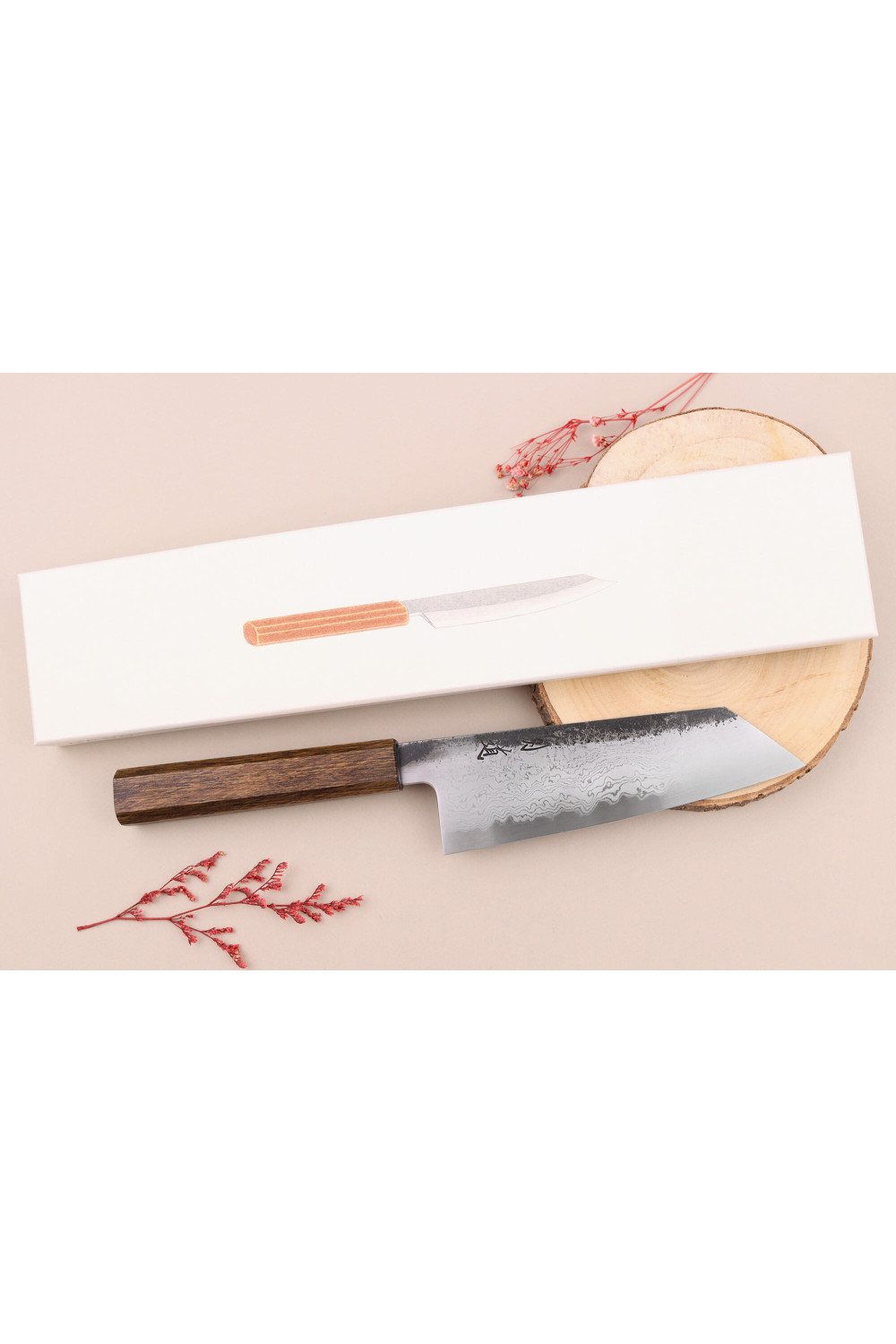
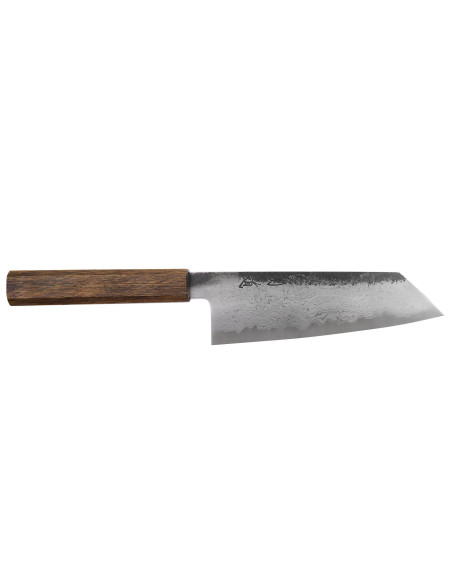
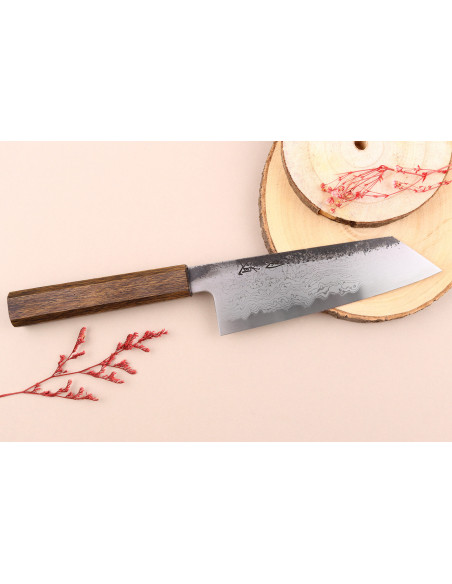
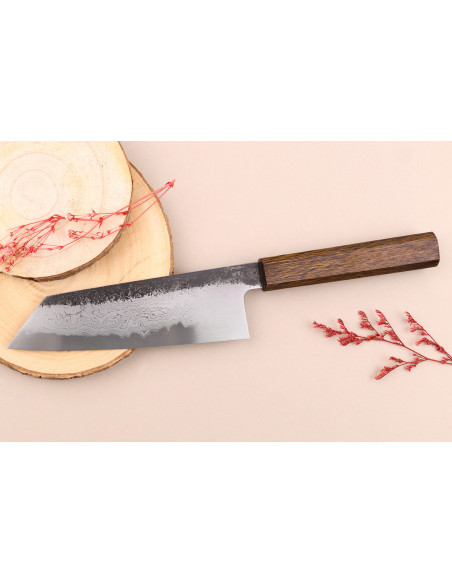
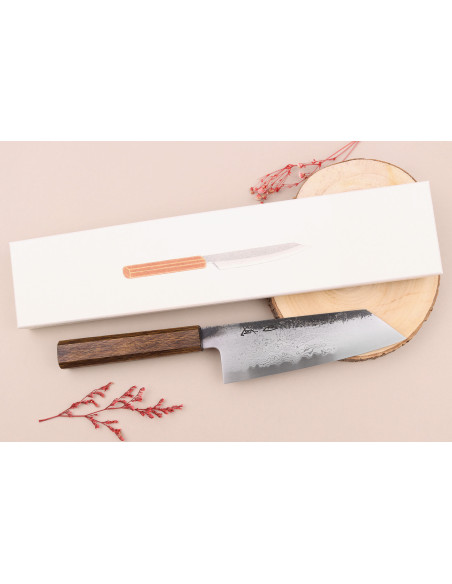
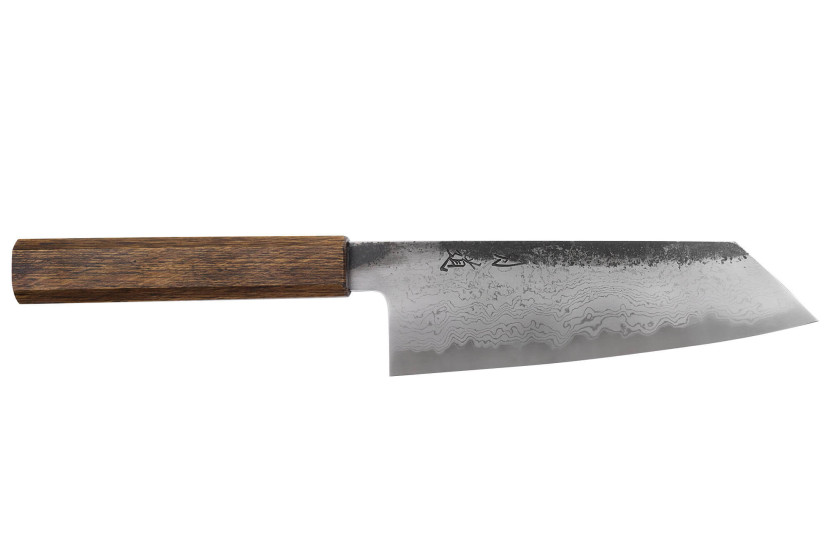
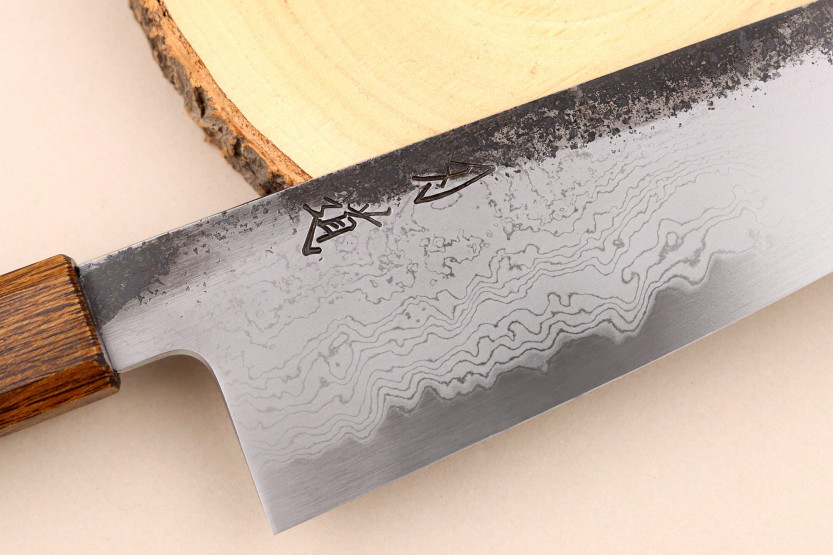
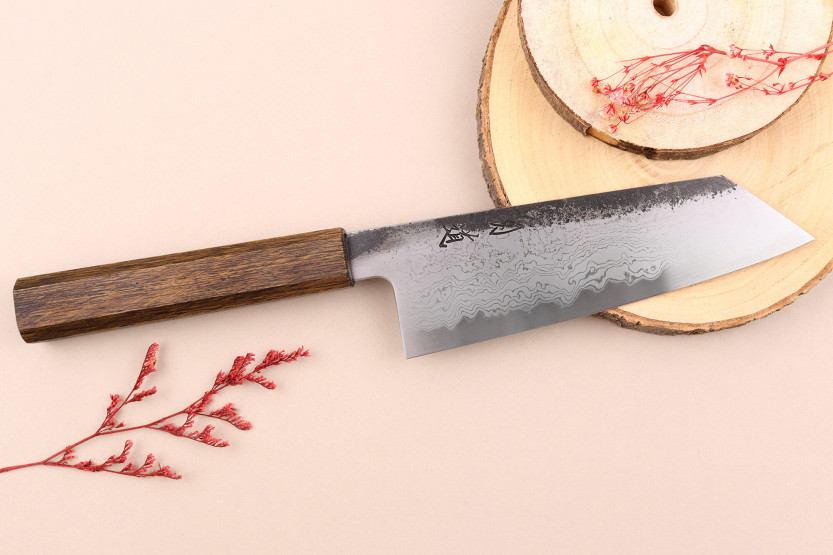
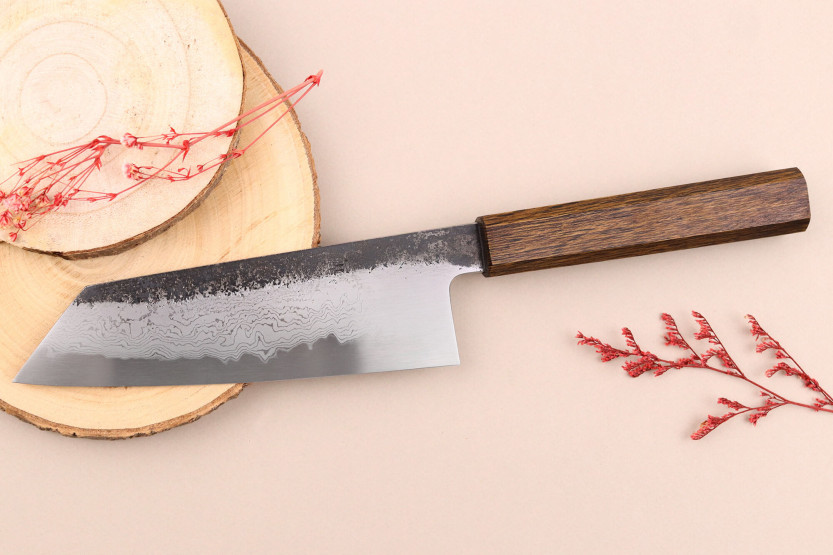
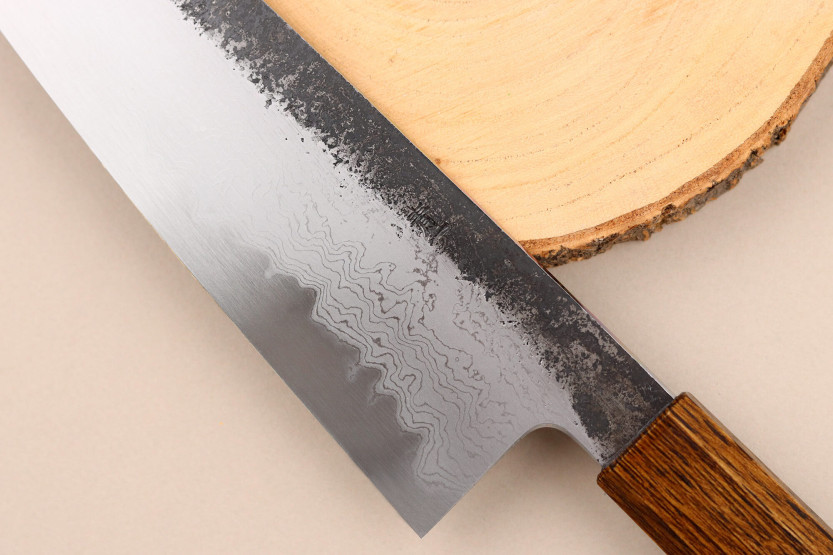
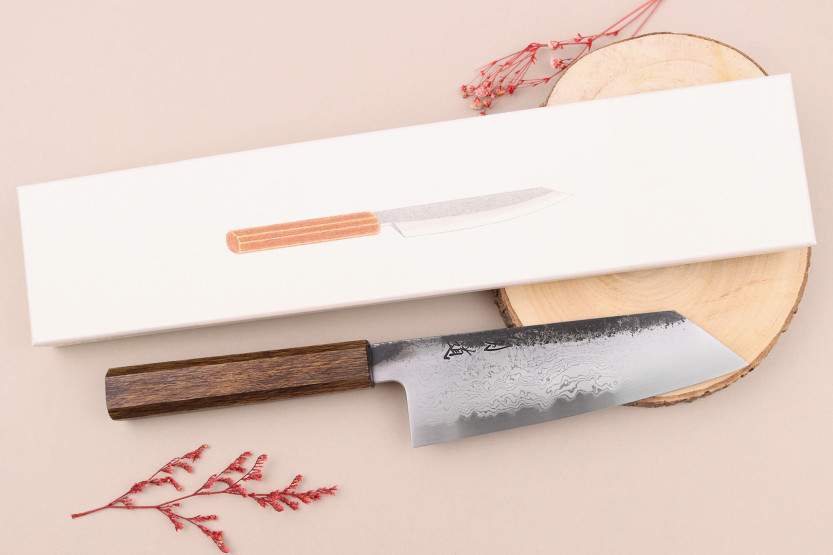
This Japanese bunka knife features a damascened blade, produced using a traditional technique that consists of forging a hard steel core, then wrapping it in several layers of softer steel. This process guarantees a perfect balance between hardness and strength, while protecting the core of the blade, making it more durable.
The blade core is made from Japanese Aogami #1 steel, also known as Blue Paper Steel 1, a high-end alloy produced by the renowned steelmaker Hitachi. This steel contains around 1.3% carbon, a high percentage that increases the blade's hardness. The result: your blade achieves a high hardness of 63HRC on the Rockwell scale, offering outstanding edge retention for optimum cutting performance!
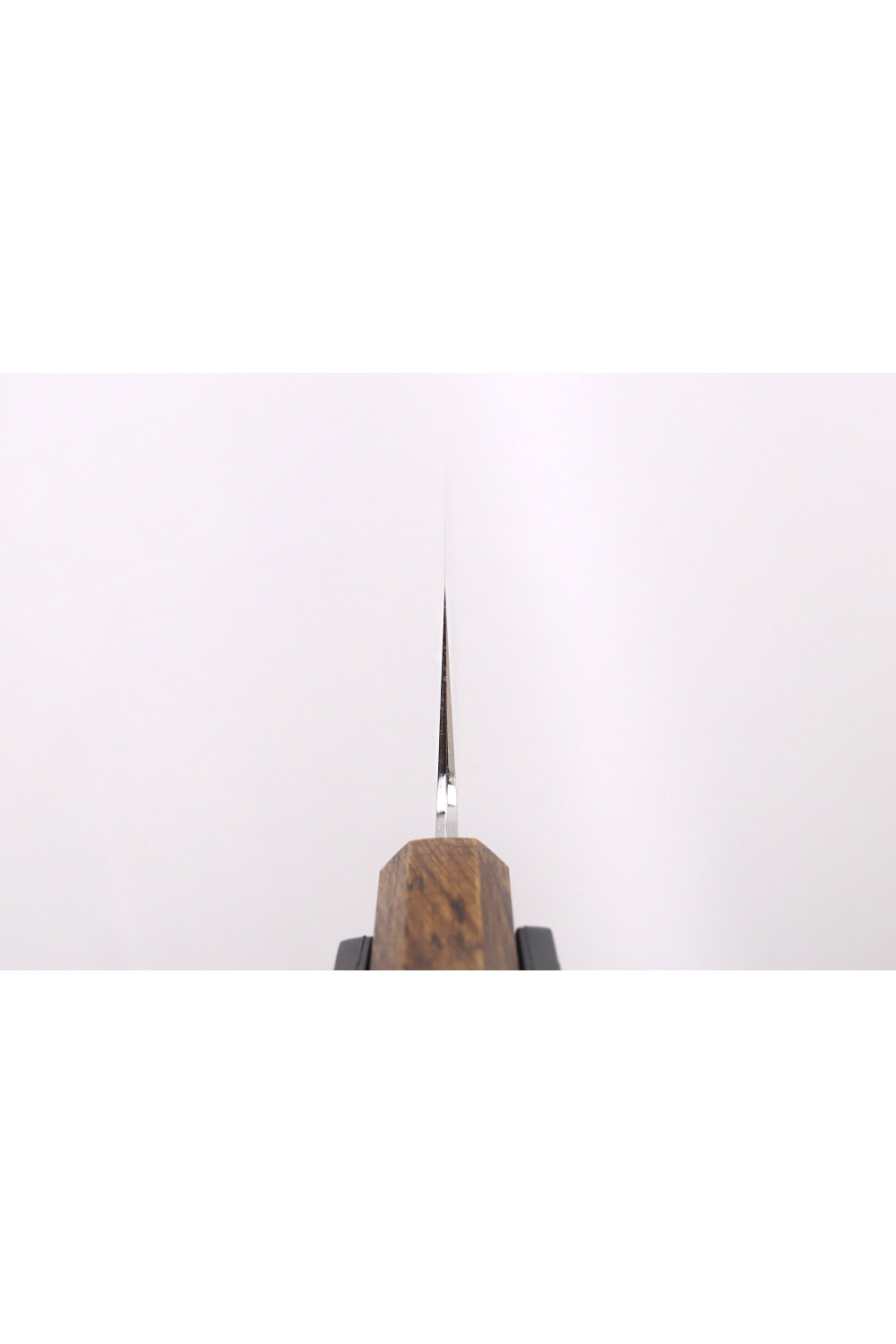
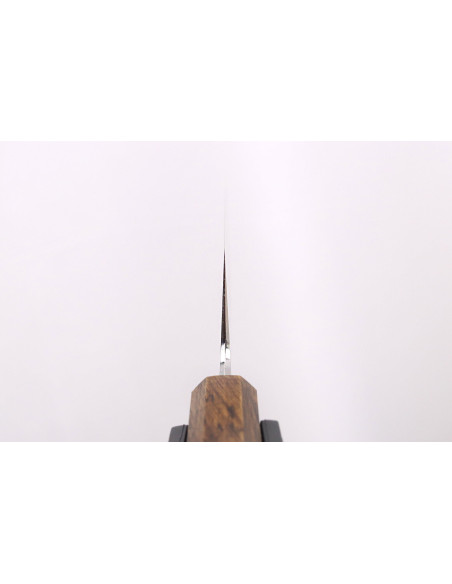
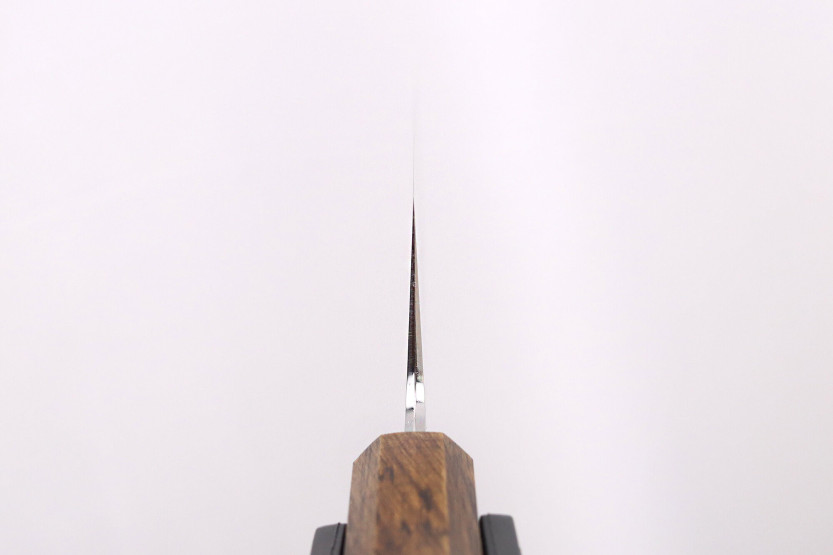
This blade features a fine, flat grind. This type of grind is appreciated for its robustness and elegant aesthetics. It also offers a practical advantage: its shape is easy to reproduce during your sharpening sessions, simplifying maintenance.
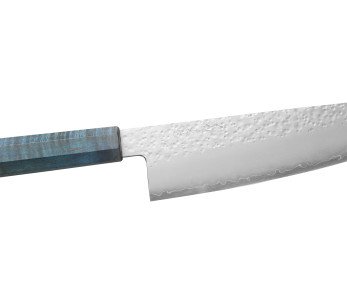
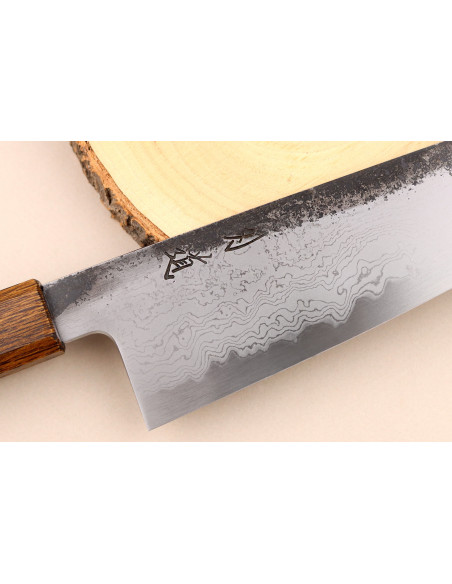
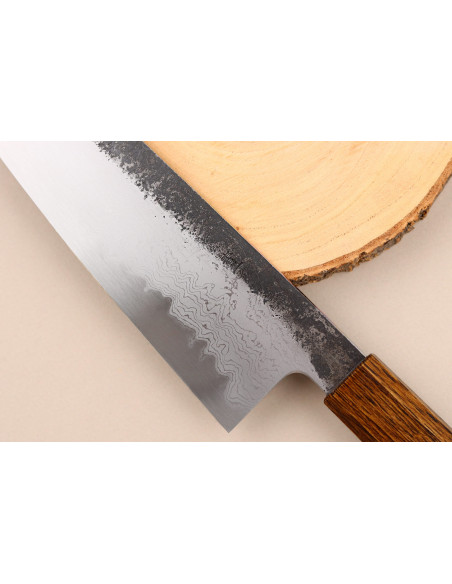
The damascus pattern is achieved by adding multiple layers of soft iron and softer steel, which balance the hardness of the core. This mixture gives the blade a slight suppleness (without becoming flexible), sufficient to prevent it from becoming brittle with use, while maintaining its rigidity. The fine undulations visible on the blade, created by these successive layers, offer a unique and refined design that enhances the appearance of your Japanese kitchen knife.
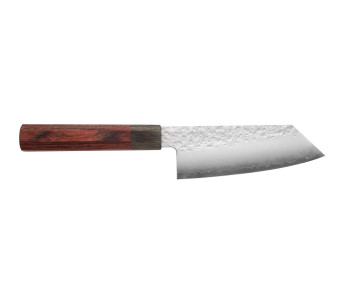
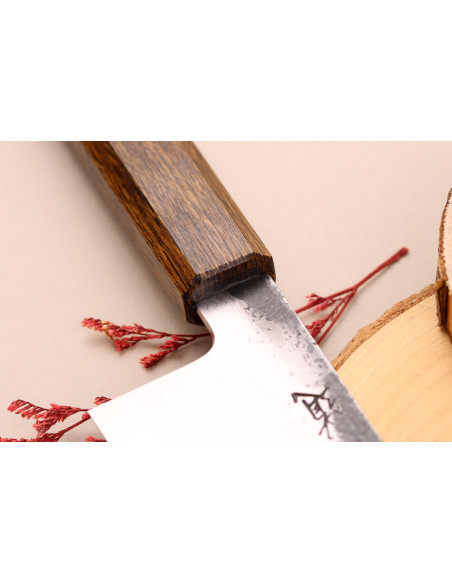
The upper part of the blade features a rough forged finish, which lends an authentic character to this handcrafted Japanese knife. In contrast, the damascened lower part has been carefully polished, adding a touch of refined elegance to the whole.
This Hado knife belongs to the Sumi range, a name inspired by traditional Japanese ink. Its design is inspired by this ink, with a deep black hue and matte finish that evoke its sobriety and finesse.
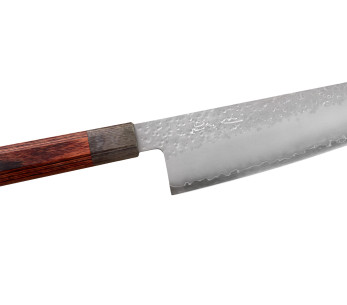
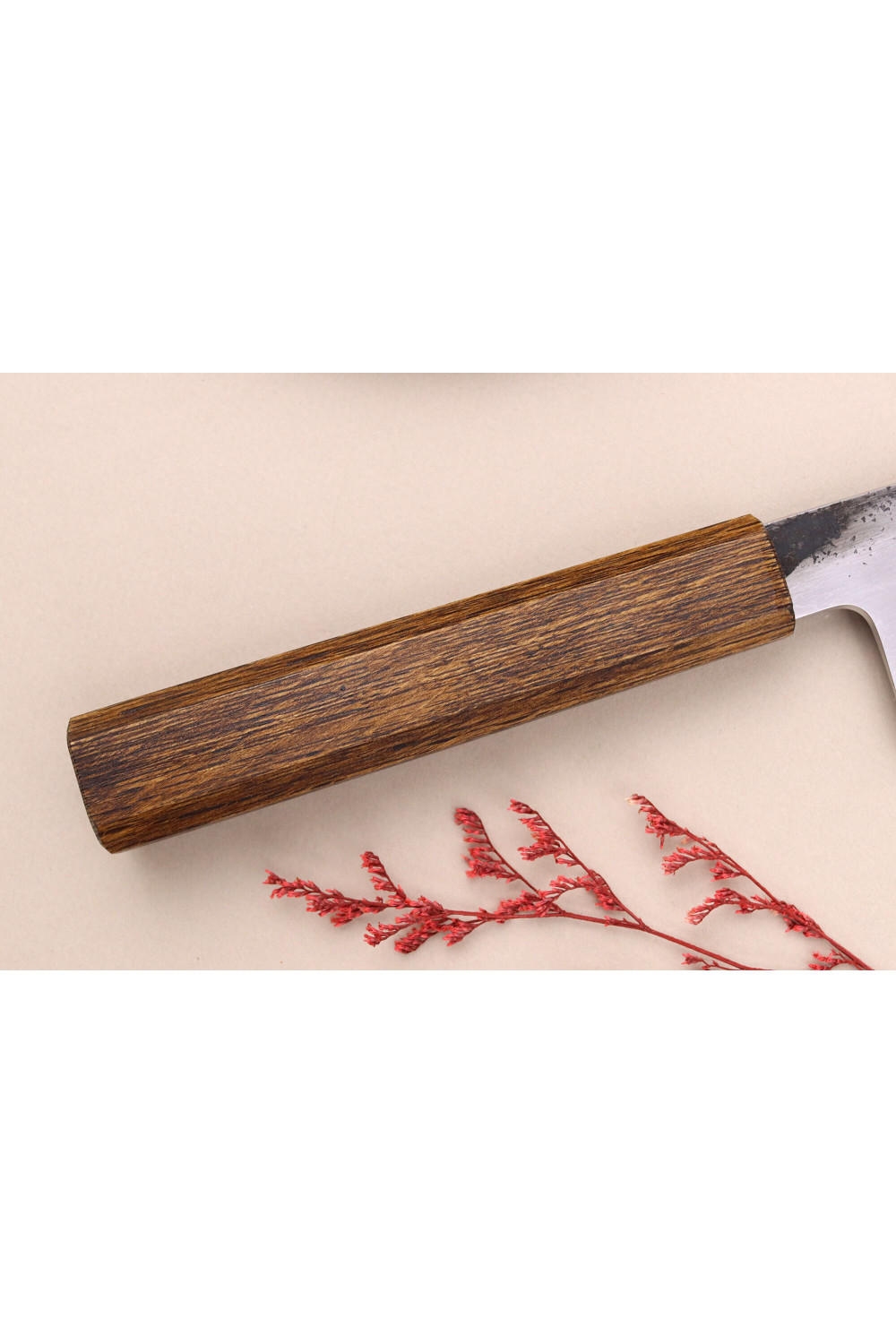
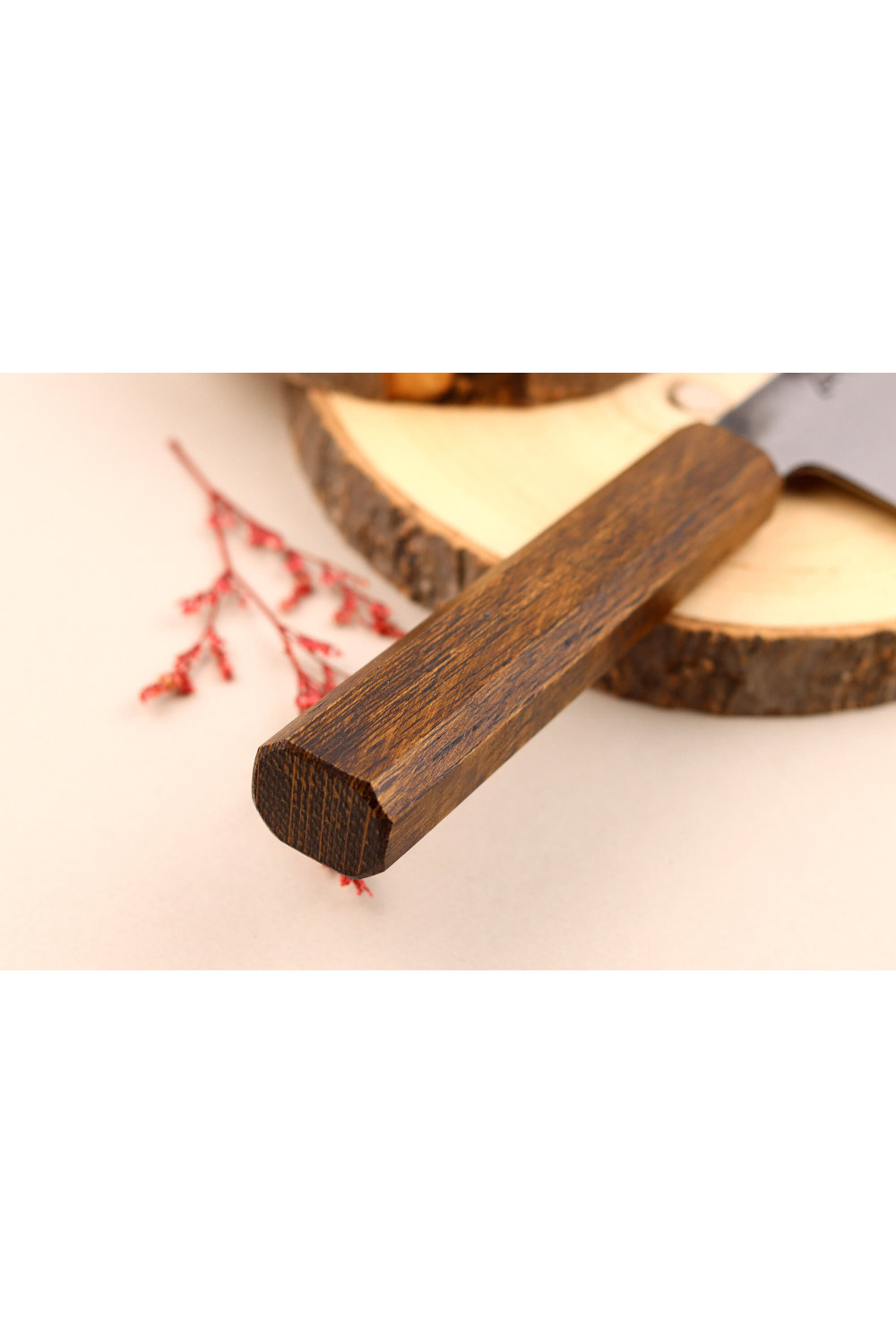
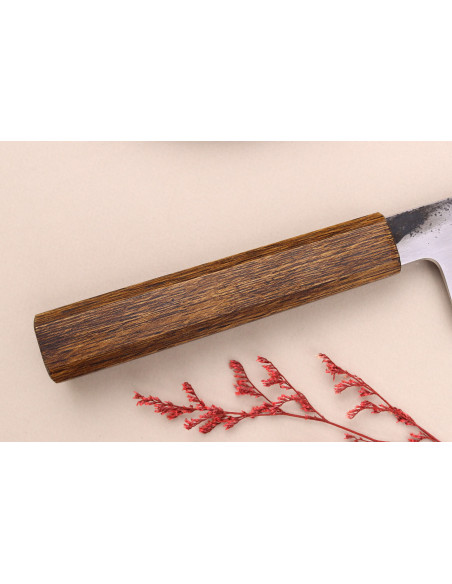
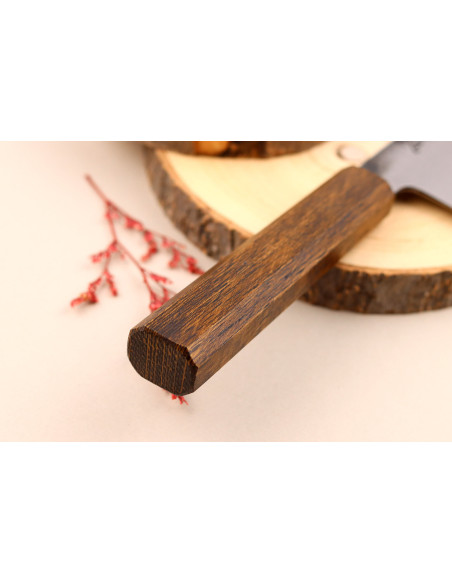
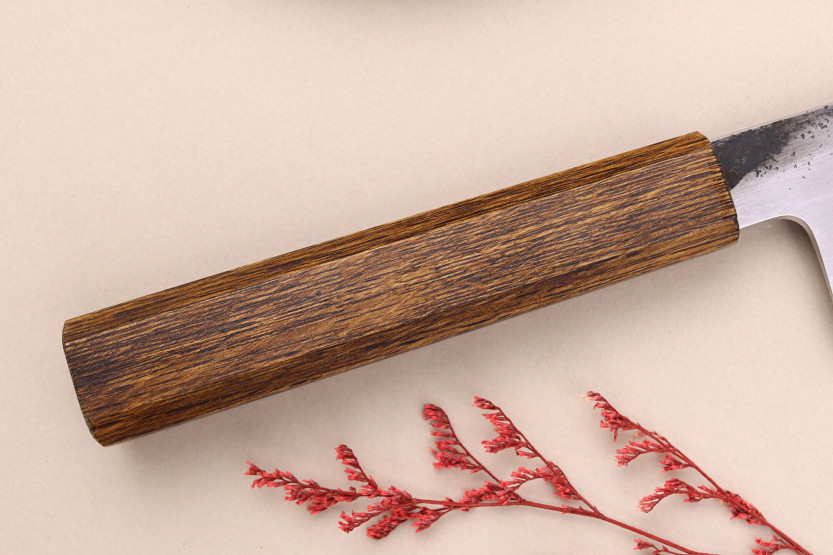
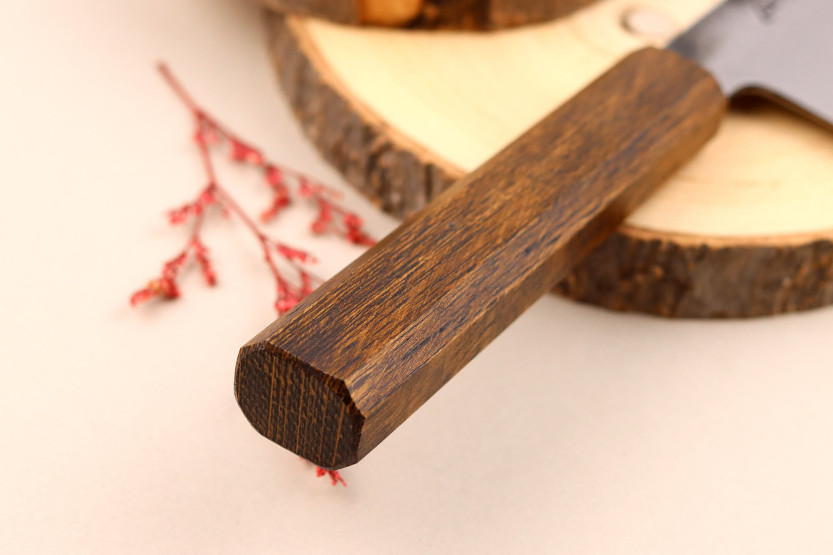
The handle of this damask knife is made from oak wood, a natural species renowned for its strength and durability. Thanks to its high density, this wood is highly resistant to humidity, impact and deformation caused by condensation. The brown nuances and dark grain, unique to each handle, add a distinctive charm to the knives in the Hado Sumi B1D range.
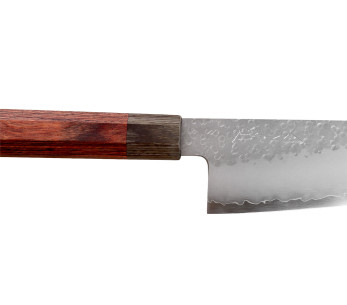
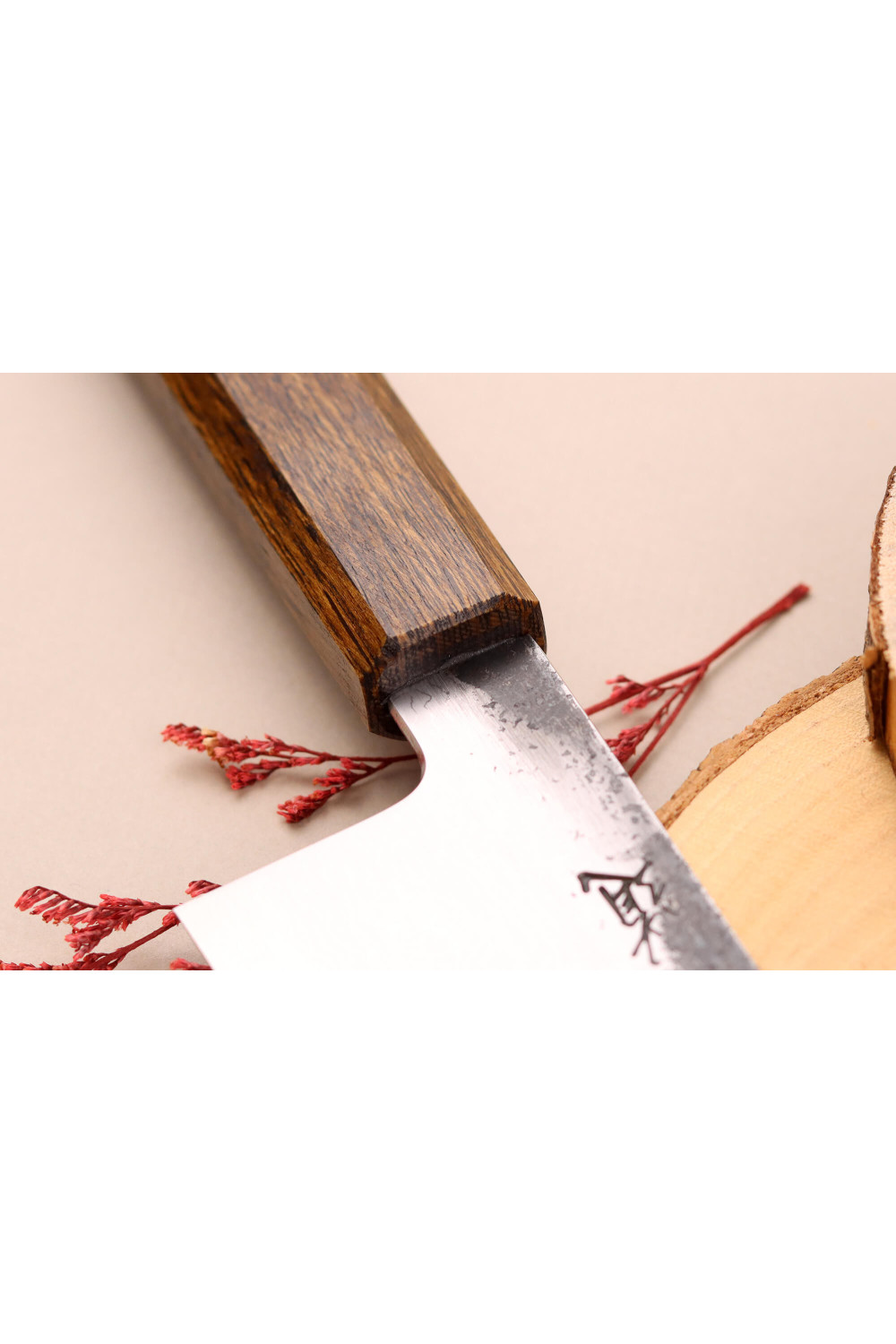
Its octagonal shape has been designed to fit comfortably in the hands of all users, whether right- or left-handed. This ergonomic design guarantees a stable and pleasant grip, even during prolonged use in the kitchen.
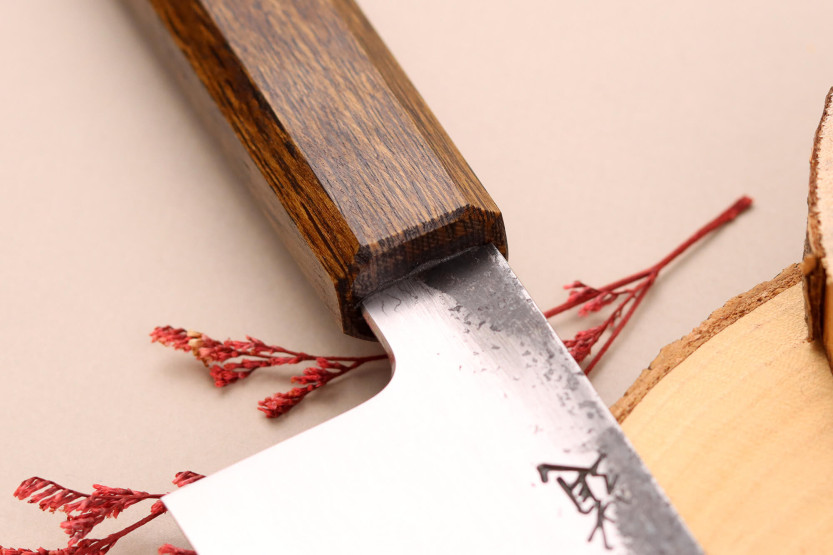
Finally, wood putty has been applied to the intersection between blade and handle to seal any gaps. This finish ensures optimum watertightness, preventing water or food residues from seeping through.
How to care for a handcrafted Japanese knife?
To preserve the quality of your handcrafted Japanese knife, it's essential to wash it by hand only, using a soft sponge and a mild detergent, taking care not to get the handle wet. Once cleaned, dry immediately to remove all traces of moisture and store in a dry place. Absolutely avoid putting it in the dishwasher or soaking it in the sink.
Over time, it is normal for the color of the blade to change slightly. This natural patina results from the reaction of carbon to the acidity of food and ambient humidity. Rest assured, this in no way alters the performance of your damask knife!
Discover a wide range of Japanese damask knives on Knifeleader.eu!




 By buying this product you can collect up to