The Hado artisan workshop, based in Sakai, is the result of a collaboration between Tadataka Maruyama, then Sales Manager at Sakai Fukui, and Ryuichiro Fukui, President of the company. Passionate about Japanese knives, Tadataka aspired to become a craftsman. He shared this ambition with Ryuichiro, who at the time was keen to reintroduce craftsmanship to his company, which until then had focused on industrial production. Seizing this opportunity, Ryuichiro encouraged Tadataka to train as a cutler and set up an in-house artisan workshop. After three years of rigorous apprenticeship, Tadataka took charge of this workshop, dedicated to the manufacture of exceptional Japanese knives. As a result, the Hado workshop saw the light of day in spring 2019!
The name "Hado", meaning "the way of blades", perfectly illustrates the essential values of this forge: the quest for excellence and constant improvement. Each Hado knife is forged with the utmost precision, and stands out for its remarkable cutting performance.
This Japanese kitchen knife was forged by Yoshikazu Tanaka, a certified Traditional Master Craftsman and an emblematic figure at Sakai. Descended from a line of blacksmiths going back four generations, he is renowned for his expertise, blending top-of-the-range materials with respect for Japanese traditions. After forging, this Japanese knife was entrusted to Tadataka Maruyama, the workshop's master sharpener, who sharpened it with meticulous care. Working by hand on a grindstone, he perfected the edge to guarantee incomparable sharpness!

Yoshikazu Tanaka is on the left and Tadataka Maruyama is on the right.
A Japanese damascus knife with an elegant blade
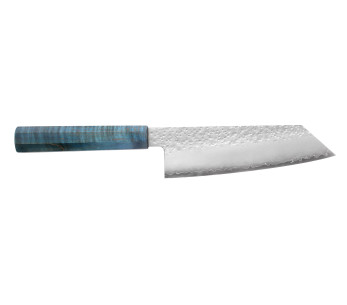
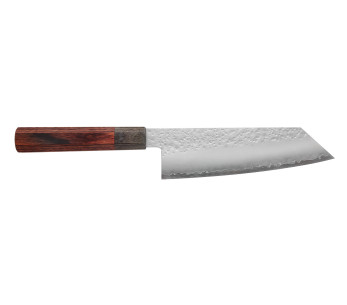
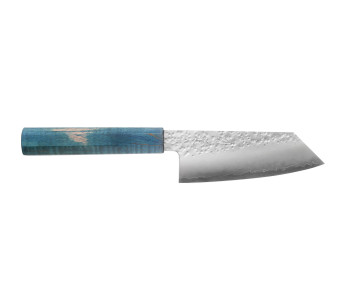
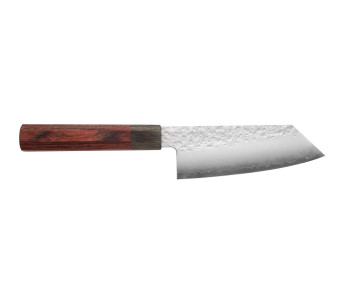
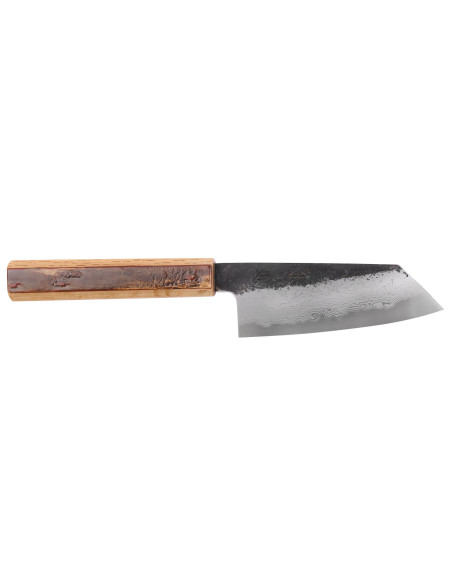
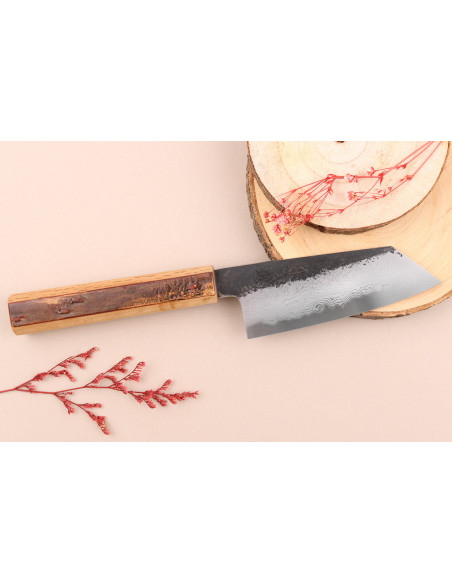
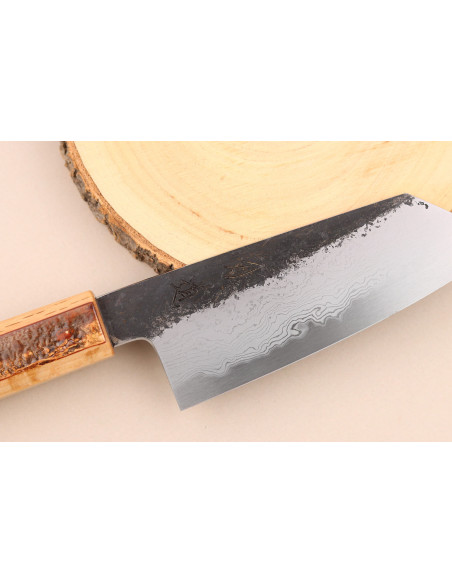
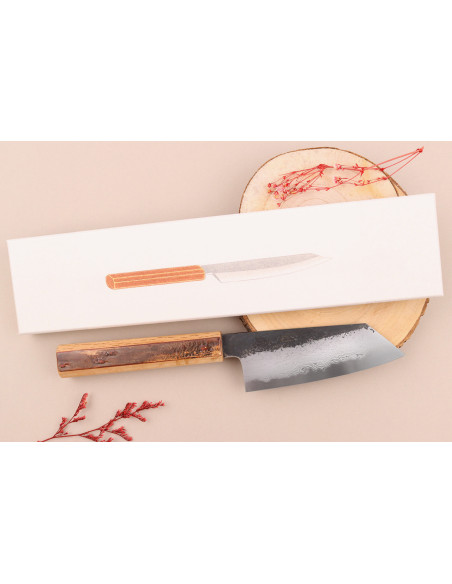
This ko bunka knife features a damascus blade, a technique that consists of forging a rigid steel core which is then surrounded by several layers of softer steel. This ancestral method balances the hardness of your handcrafted Japanese knife, while providing additional protection to the core of the blade.
The heart of your blade is made from Japanese Aogami #1 steel (also known as Blue Paper Steel 1), a quality alloy produced by the famous Hitachi steelworks. It has a high carbon content of around 1.3%, which is the element that increases a steel's hardness. As a result, your blade has a hardness of 63HRC on the Rockwell scale, ensuring excellent edge retention for a high-performance cutting edge.
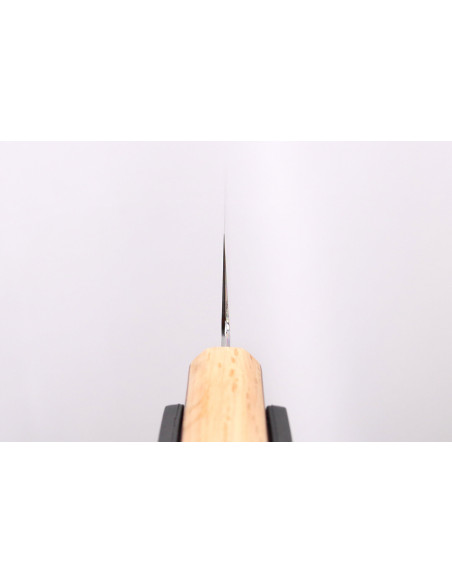
This blade is made with a fine, flat grind. It's robust, aesthetically pleasing and, above all, easy to reproduce during your sharpening sessions!
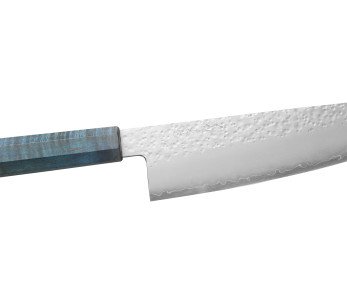
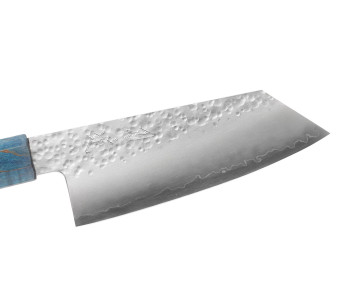
To complete the damascus finish, layers of soft iron and flexible steel are added around the core. They add suppleness (without becoming flexible) to your blade, minimizing the risk of breakage during use. In fact, you can see the different steels superimposed all along the cutting edge, forming fine waves with unique, random patterns!
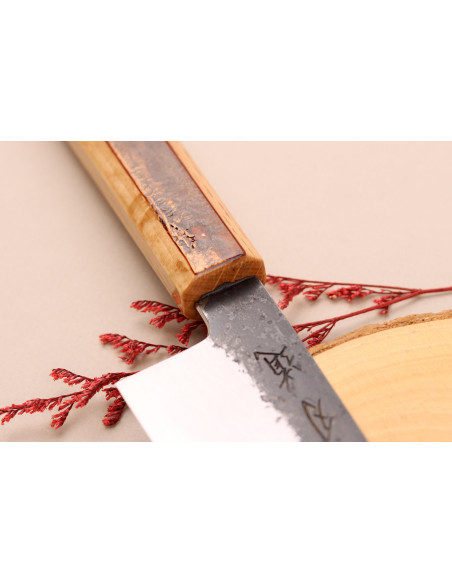
The upper part of your blade features a rough forged finish that gives character to your Japanese kitchen knife, much appreciated by Japanese chefs! The damask patterns have been polished to add contrast and an extra touch of elegance.
This Hado knife is part of the Sumi range, a term evoking Japanese ink. This bunka knife is reminiscent of that ink, with its deep, matte black hue.
An original handle in traditional wood
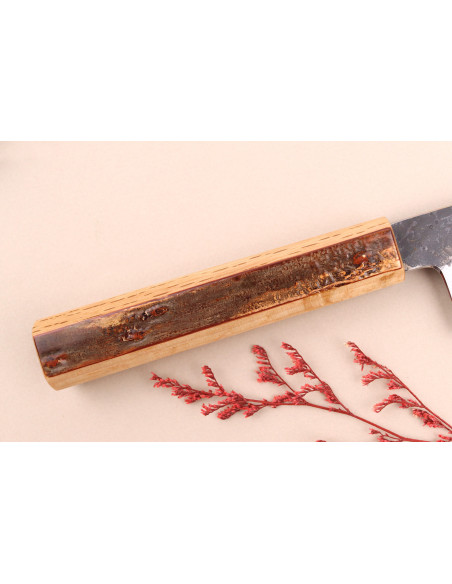
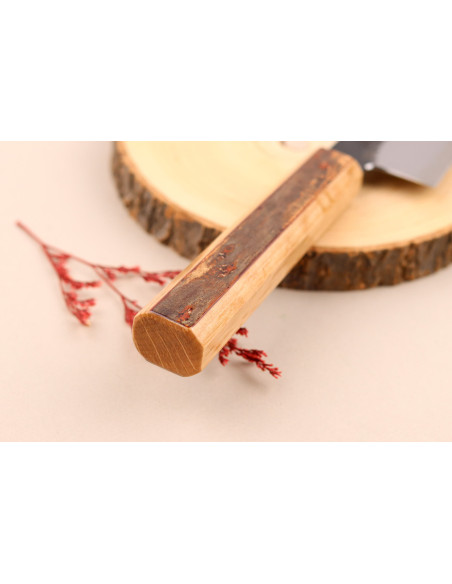
The handle of your damascus knife is designed with a core of oak wood, a durable and solid species. It's famous for its high density, which makes it highly resistant to humidity, impact and deformation due to condensation.
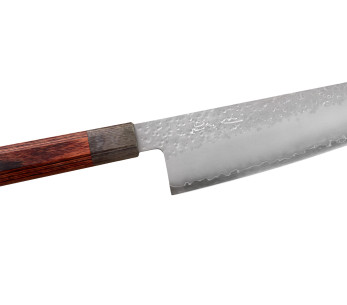
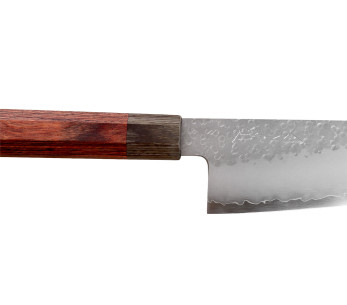
On two sides of the handle,cherry bark covers the oak. Cherry is the wood that perfectly represents Japan and its famous Sakuras, appreciated for their great beauty. This handle combines the robustness of oak with the elegance and authenticity of cherry! This handle has also been varnished to give you a soft, even feel.
It's octagonal in shape to fit the hands of all cooks, right- or left-handed! It guarantees an ergonomic grip for comfortable use, especially during long cutting sessions in the kitchen.
Finally, wood paste has been added where the blade joins the handle to fill the small gaps. This prevents water or small food items from seeping through.
Caring for a Japanese carbon knife
To care for your damask knife, it's important to wash it only by hand with a sponge and a mild detergent, avoiding wetting the handle. Once cleaned, you should dry it immediately to remove all moisture and store it in a dry place. Do not put in the dishwasher or leave to soak in the sink.
Over time, the color of your blade may change slightly: this is normal! This is a natural carbon reaction caused by the acidity of the food you're cutting and the humidity in the air. This in no way affects the usability of your handcrafted Japanese knife!
Find the rest of the Sumi B1D range on Knifeleader.eu!







 By buying this product you can collect up to