The Hado artisan workshop, located in Sakai, was born of the collaboration between Tadataka Maruyama, then Sales Manager at Sakai Fukui, and Ryuichiro Fukui, President of the company. Passionate about craftsmanship and surrounded by Japanese knives, Tadataka had long nurtured the dream of becoming a craftsman. His ambition resonated with Ryuichiro, who wanted to reintroduce artisanal production to a company that had previously specialized in industrial manufacturing. Ryuichiro encouraged Tadataka to train as a cutler, while at the same time establishing an in-house craft workshop. After three years of intensive apprenticeship, Tadataka took charge of the workshop with the mission of creating exceptional Japanese knives. And so, Hado opened its doors in spring 2019!
The name Hado translates as "the way of the blades" and reflects the core values of the atelier. It symbolizes the craftsmen's commitment to excellence in blade-making while striving for continuous progress. Each Hado knife is forged with remarkable precision and offers outstanding cutting performance.
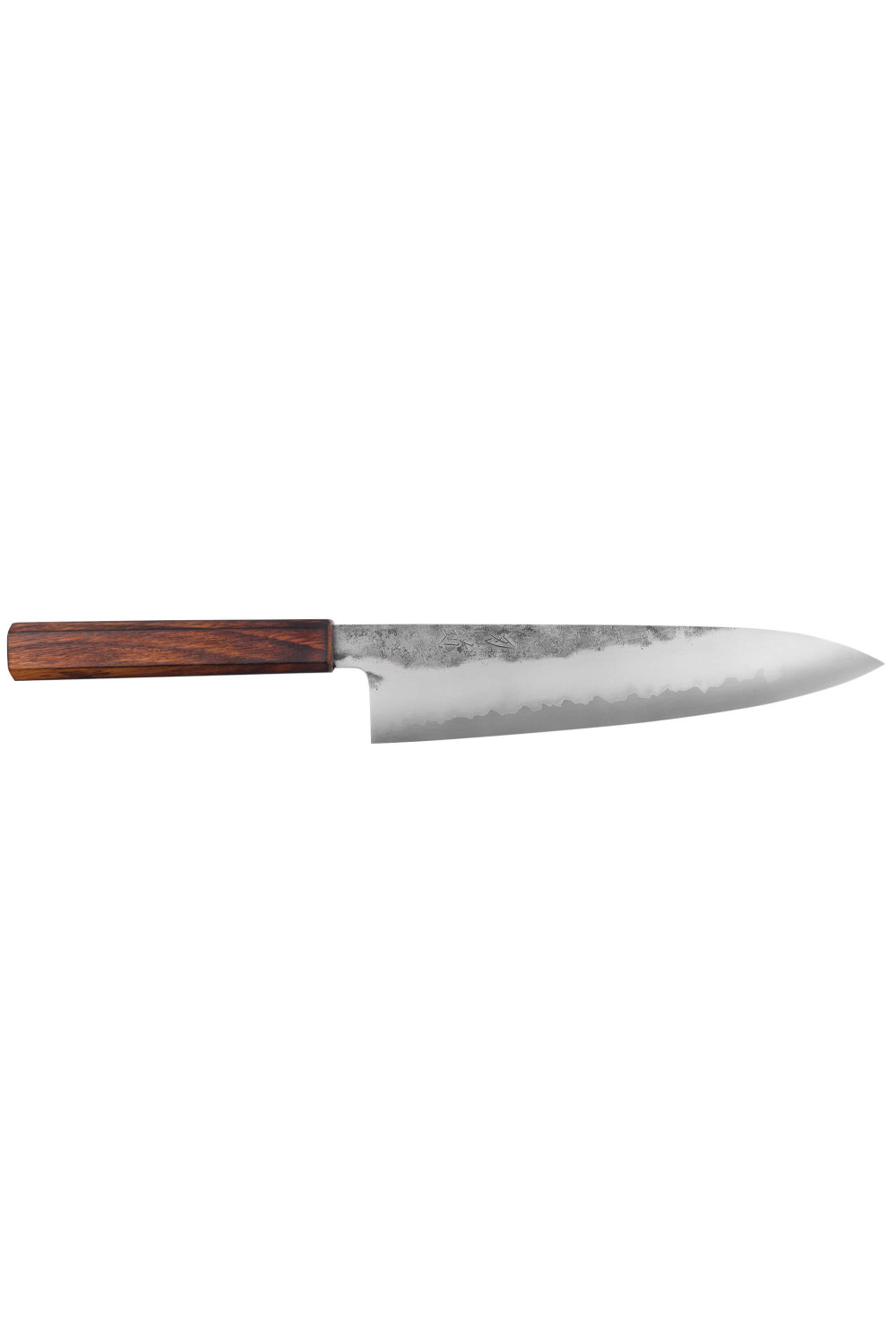
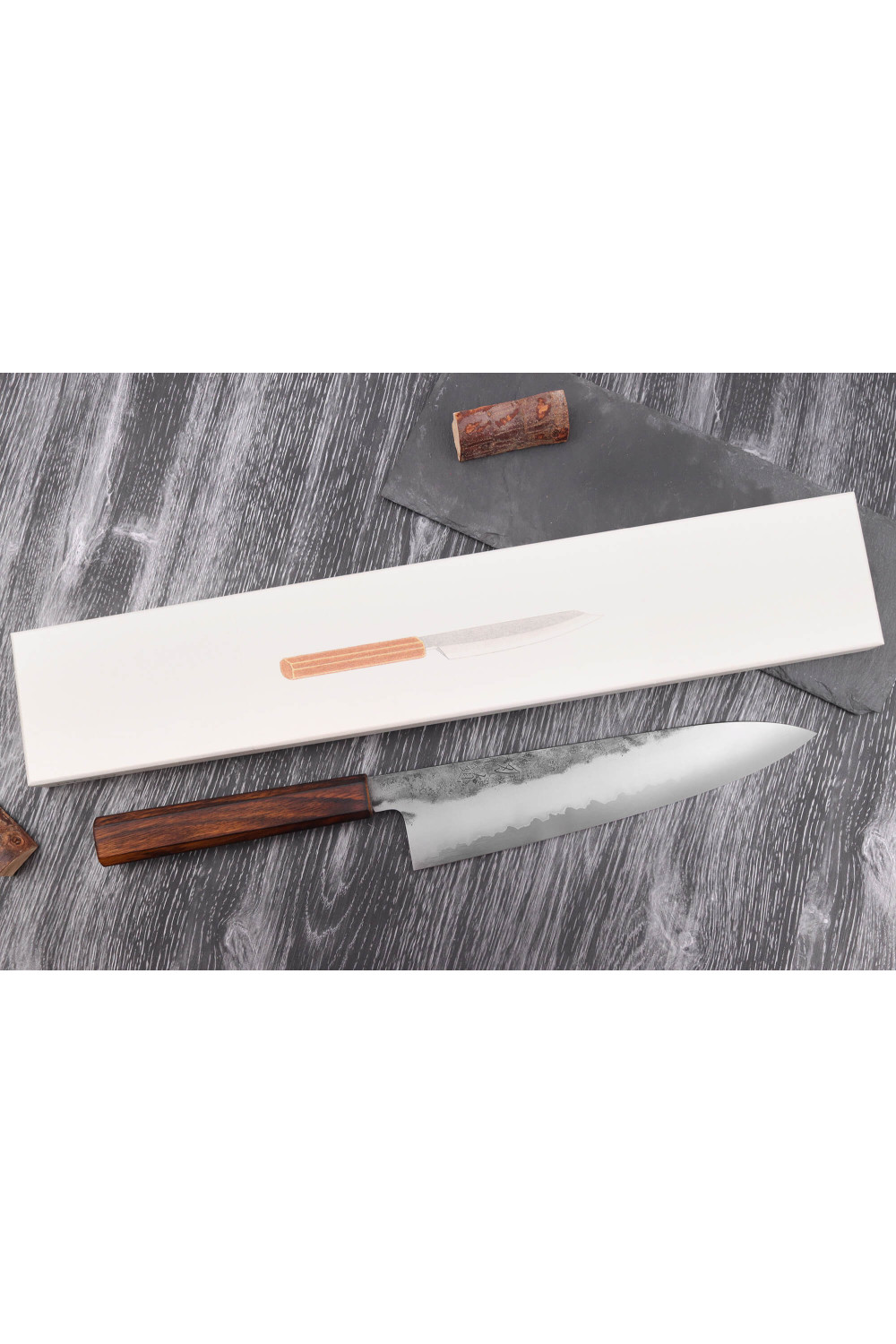
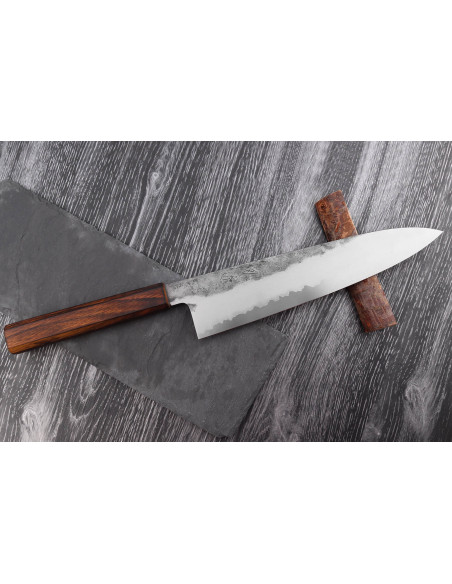
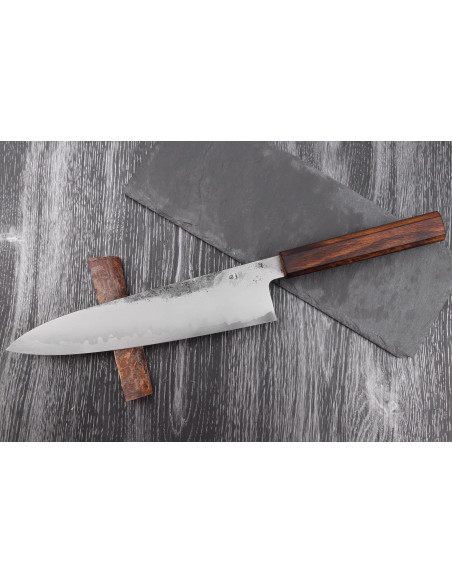
This chef's knife is the creation of Yoshikazu Tanaka, a certified Traditional Master Craftsman and Sakai icon. Representing the fourth generation of a line of blacksmiths, he is renowned for his talent in combining quality materials with a design respectful of Japanese traditions. After forging, the knife was entrusted to the expert hands of Tadataka Maruyama, the workshop's master sharpener. Tadataka carefully sharpened the knife, perfecting its edge by hand on a grinding wheel, to guarantee unrivalled sharpness.

Yoshikazu Tanaka is on the left and Tadataka is on the right.
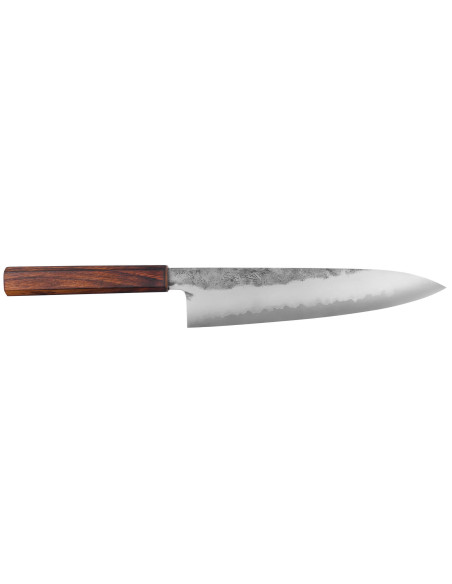
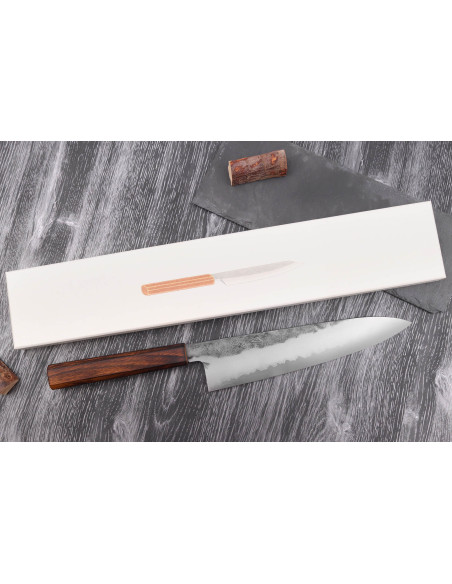
The top-of-the-range gyuto knife for high-performance cutting
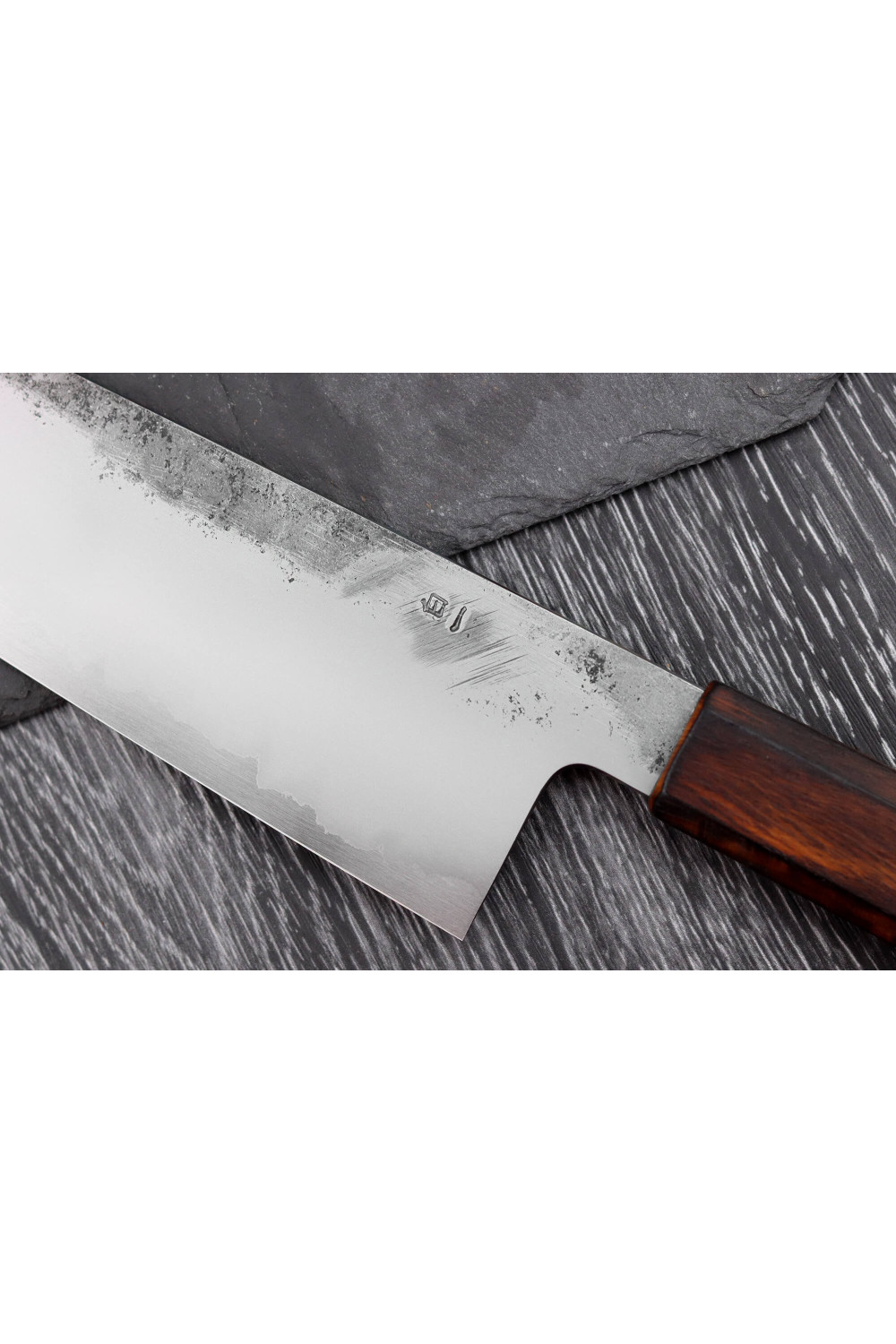
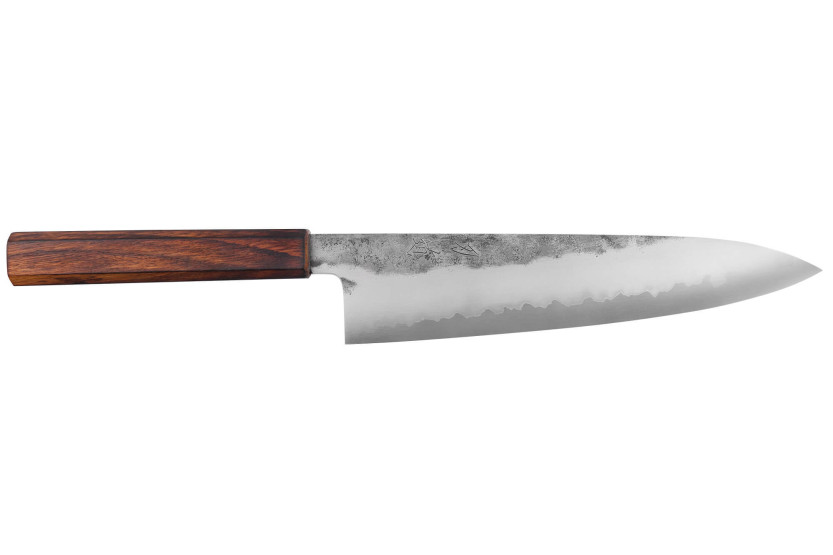
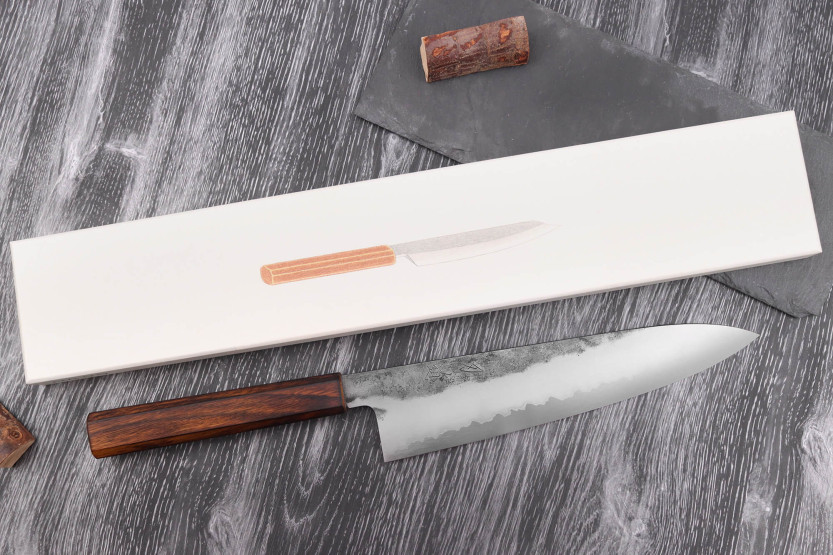
This Japanese chef's knife features a blade designed using the traditional San Maï method, which means "three layers" in Japanese. This technique consists of forging a core of rigid steel, then wrapping it in a layer of softer, folded-over steel. This process ensures optimum balance for the blade, while effectively protecting the core.
The core of your blade is made from Shirogami #1 steel, also known as White Paper Steel 1, from Hitachi's renowned steel mills. This high-carbon steel, with a carbon content of around 1.3%, gives the blade a high level of hardness, reaching 62HRC on the Rockwell scale. This level of hardness guarantees outstanding edge retention and optimum cutting performance.
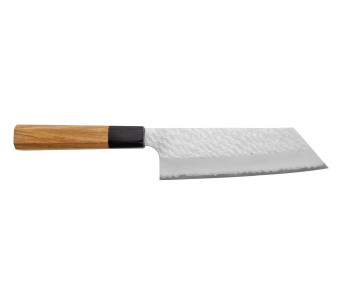
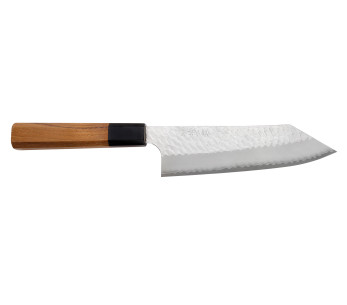
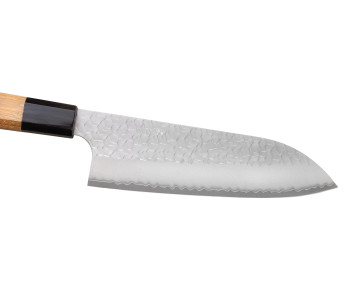
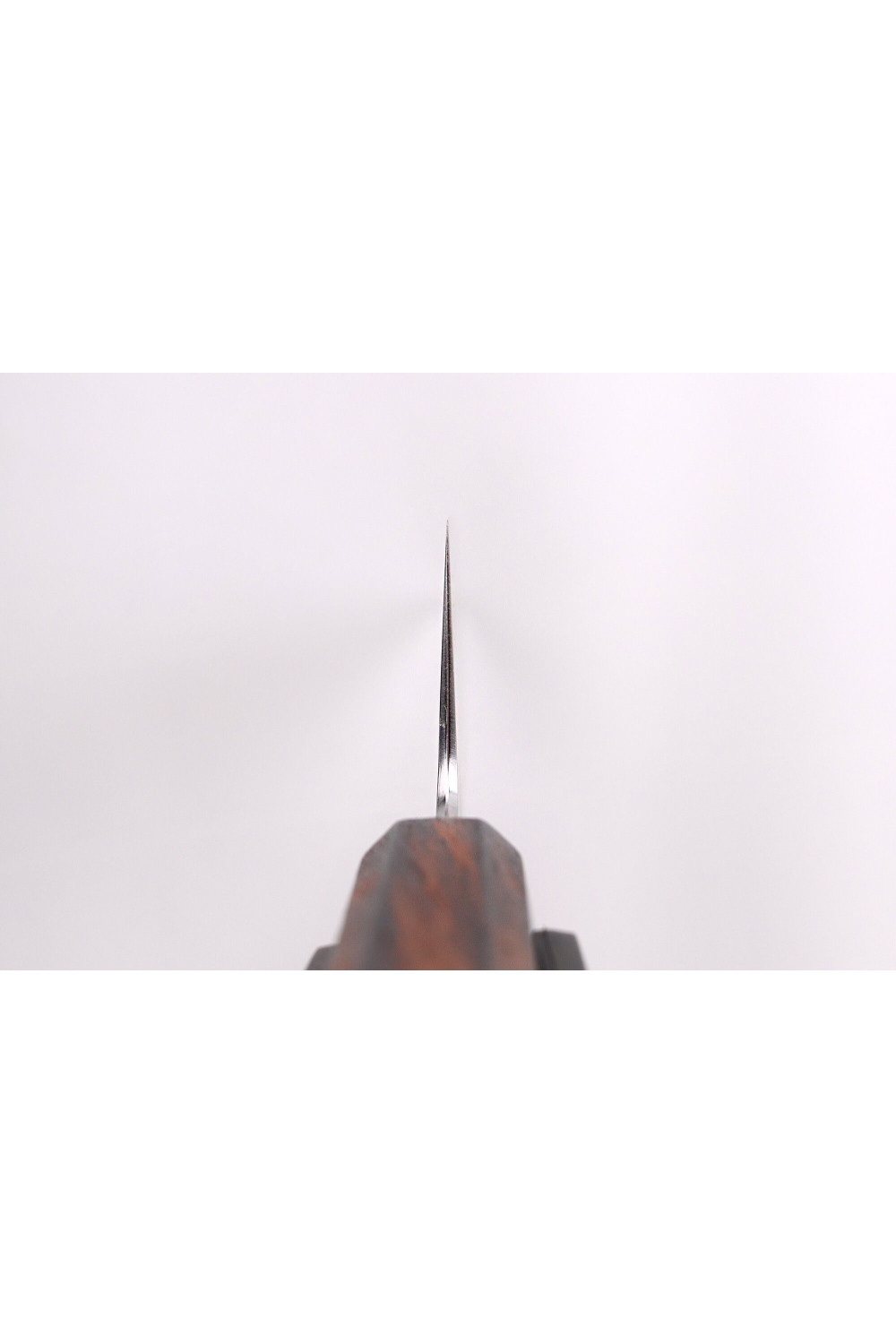
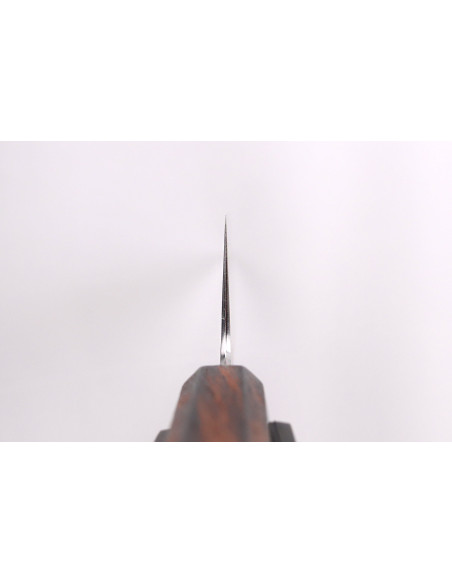
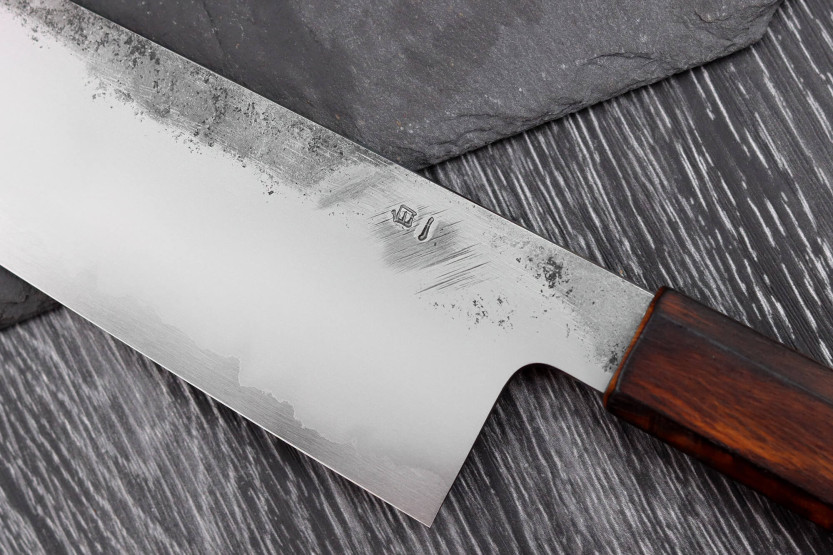
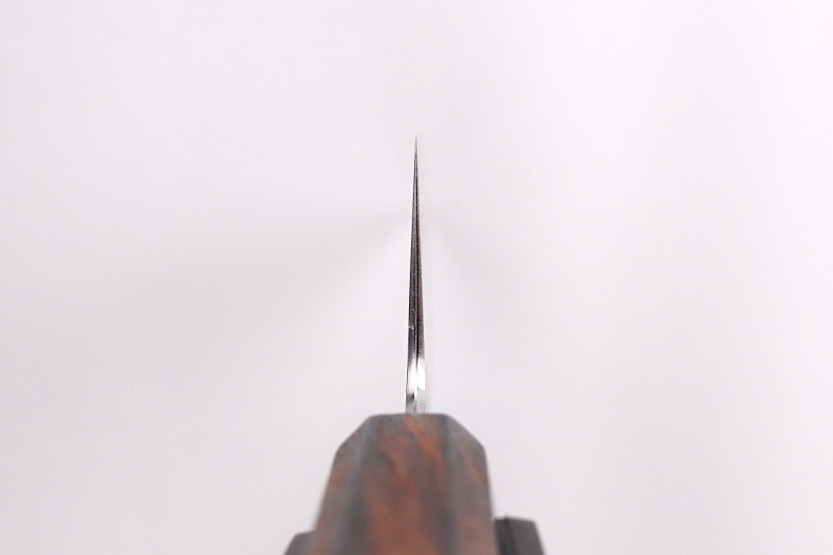
The blade features a fine, flat grind, giving it both strength and elegance. This type of grind is also practical, as it facilitates sharpening during your maintenance sessions!
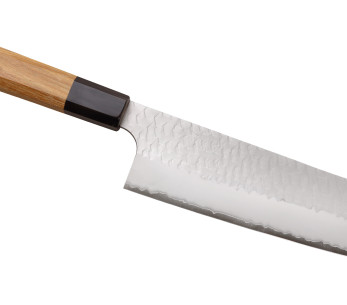
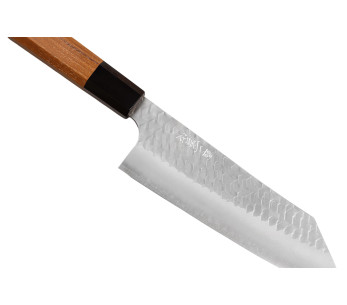
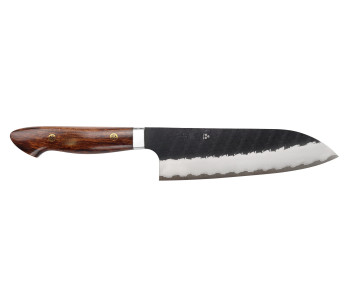
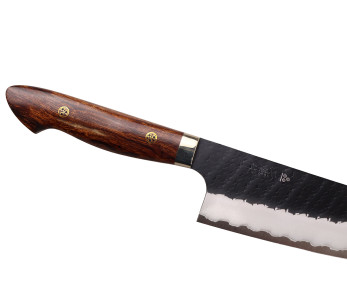
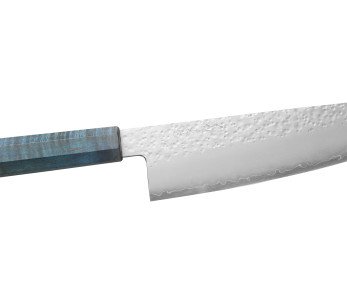
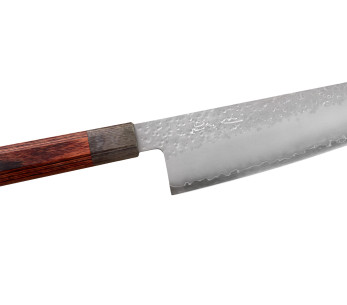
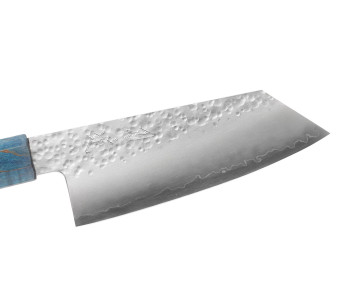
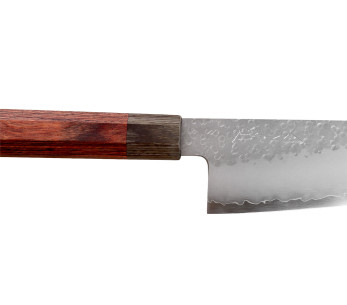
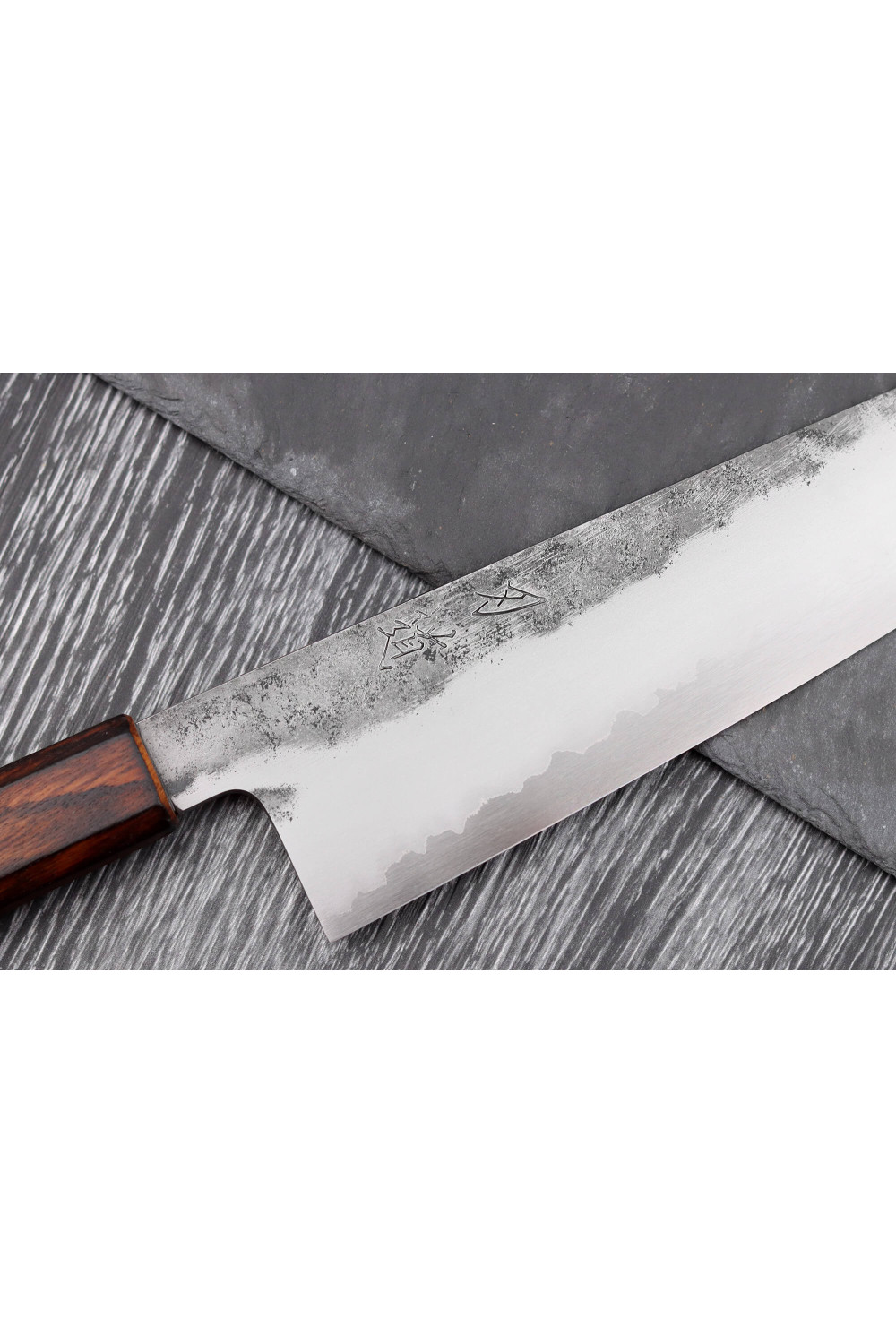
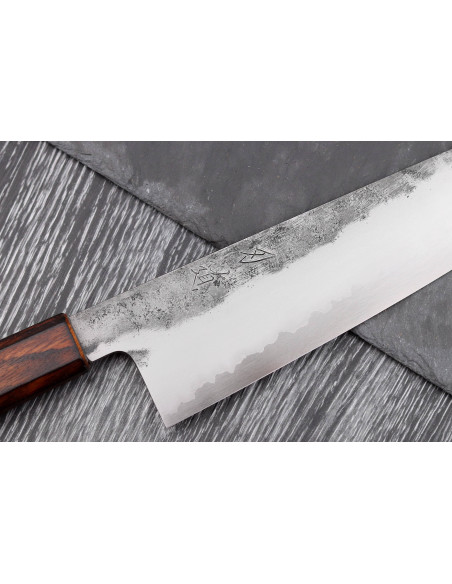
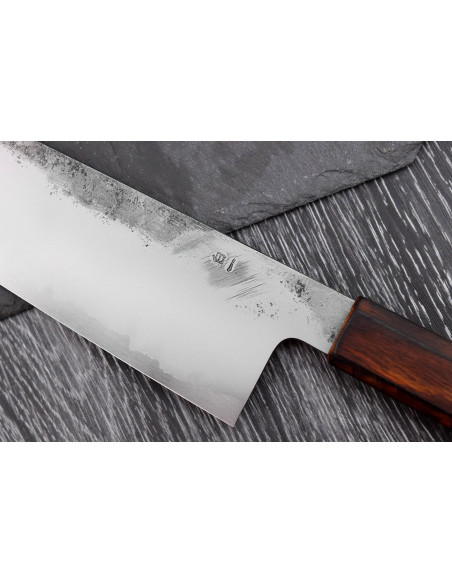
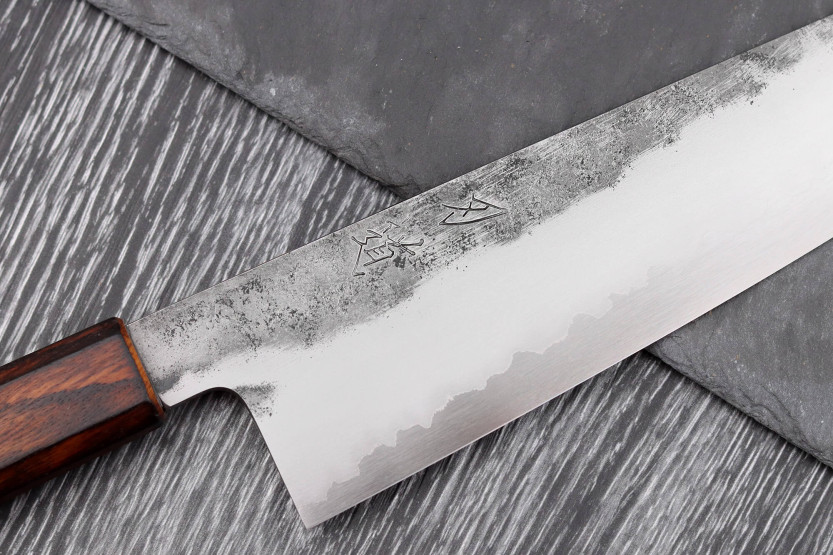
To complete the San Maï structure, a softer layer of stainless steel surrounds the core. This layer gives the blade a slight suppleness (without making it flexible), reducing the risk of breakage while preserving its rigidity. The superposition of steels is visible along the edge, forming a subtle wave with unique, random patterns, making each Hado knife truly singular and elegant.
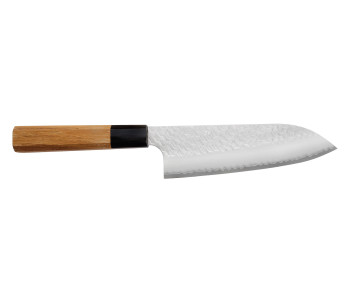
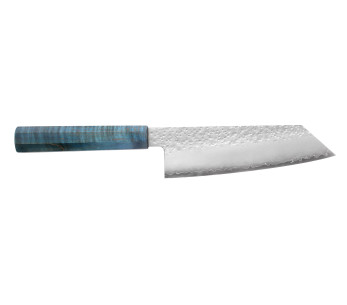
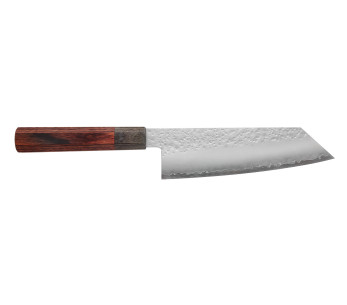
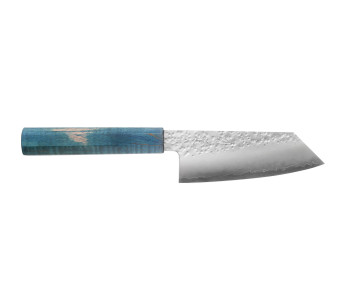
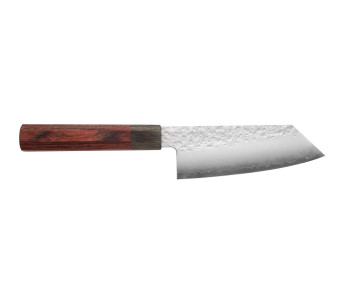
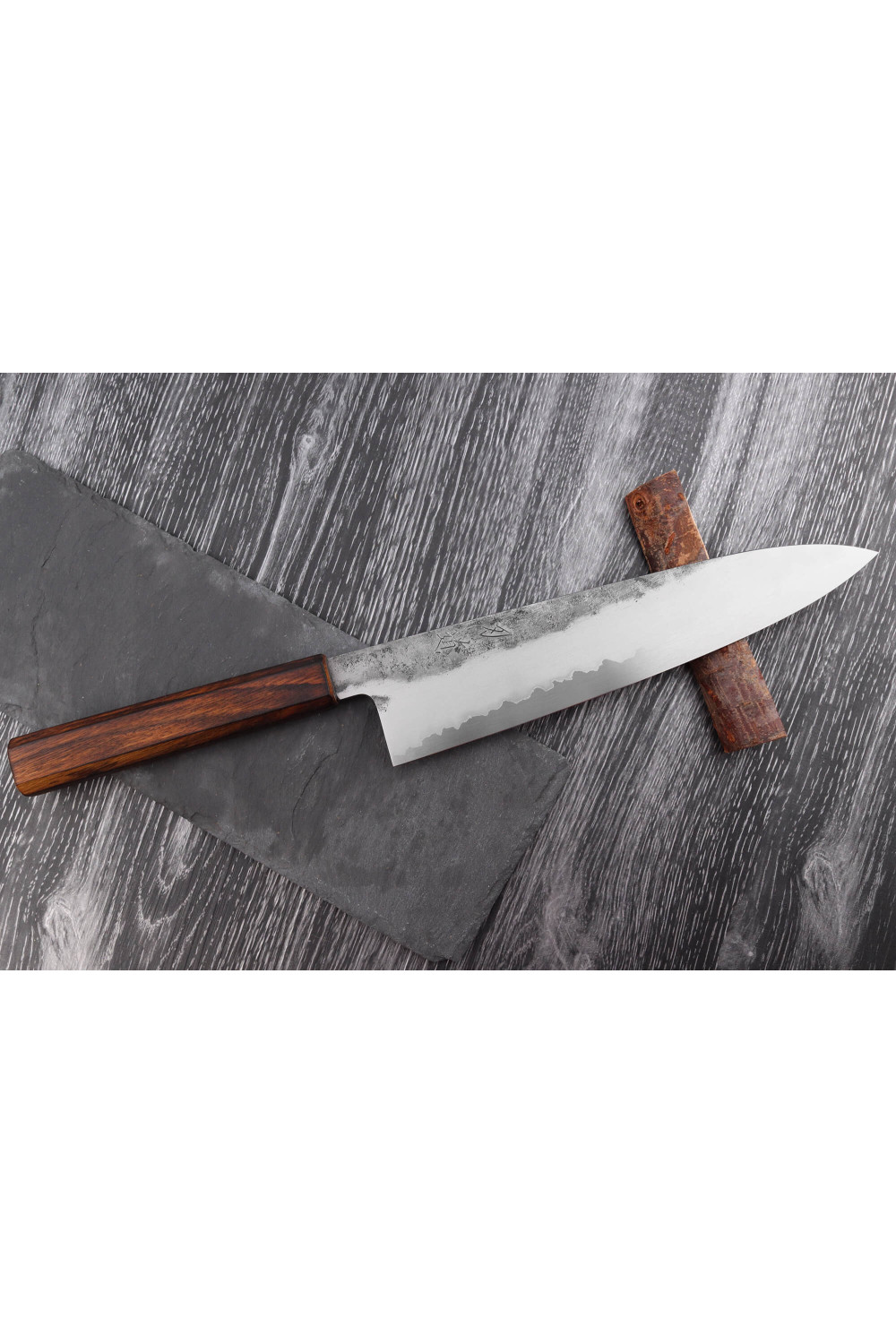
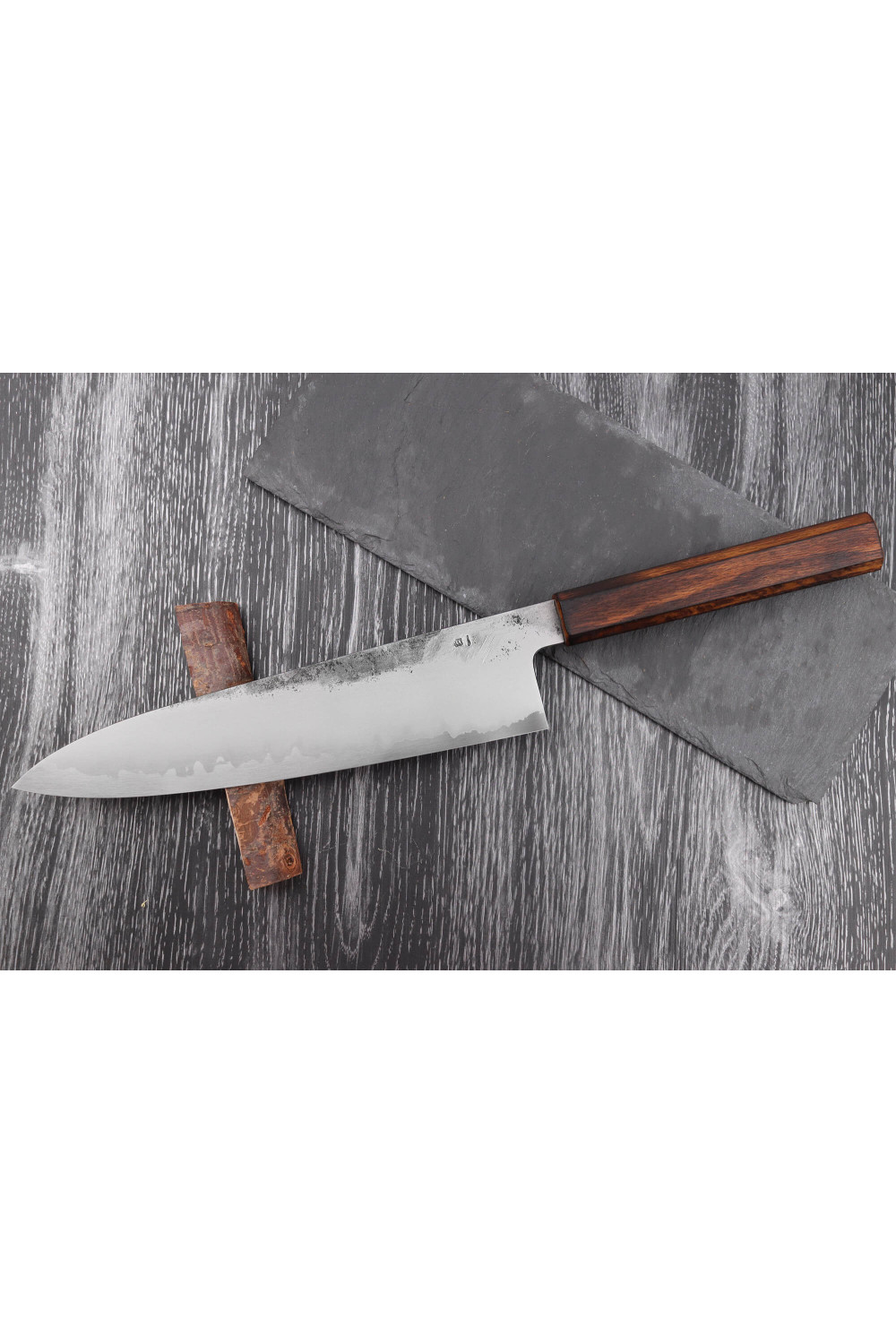
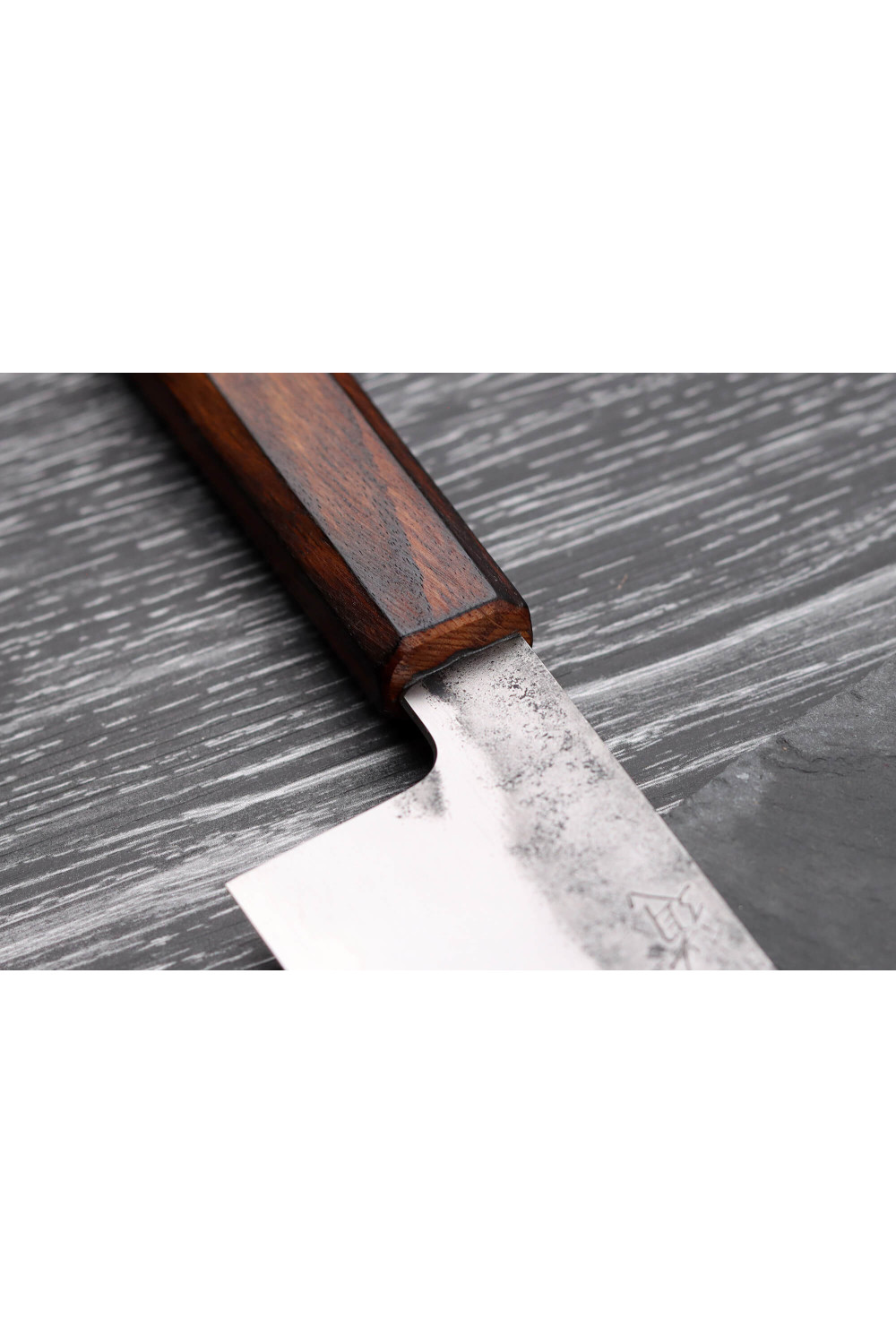
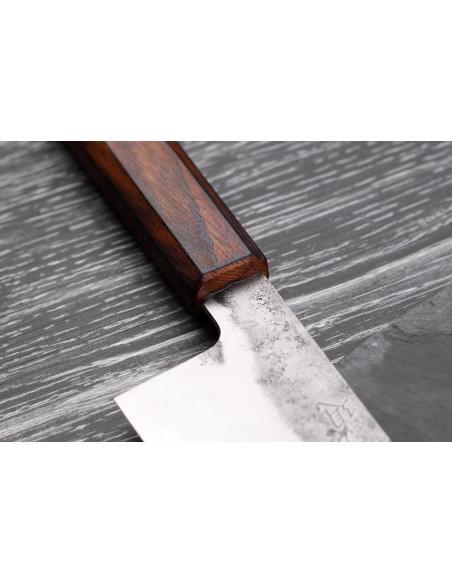
The blade of this Japanese knife has been meticulously polished on the underside, providing a refined finish. The upper part, meanwhile, features a nashiji finish, which adds a unique touch to this gyuto knife and inspires the name of the range. Indeed, Kirisame, meaning "fine rain", evokes the subtle aspect that Yoshikazu Tanaka wanted to give this blade.
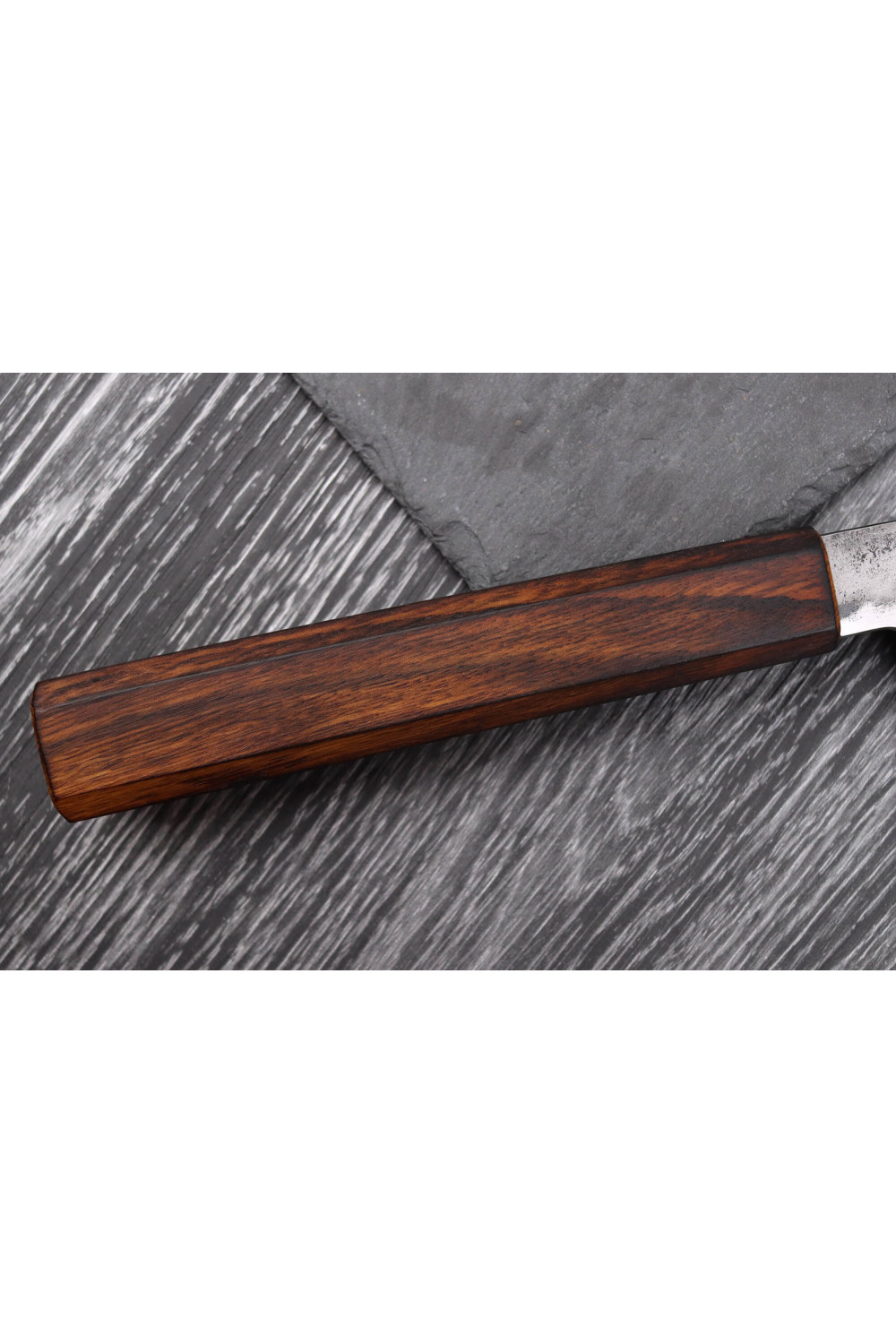
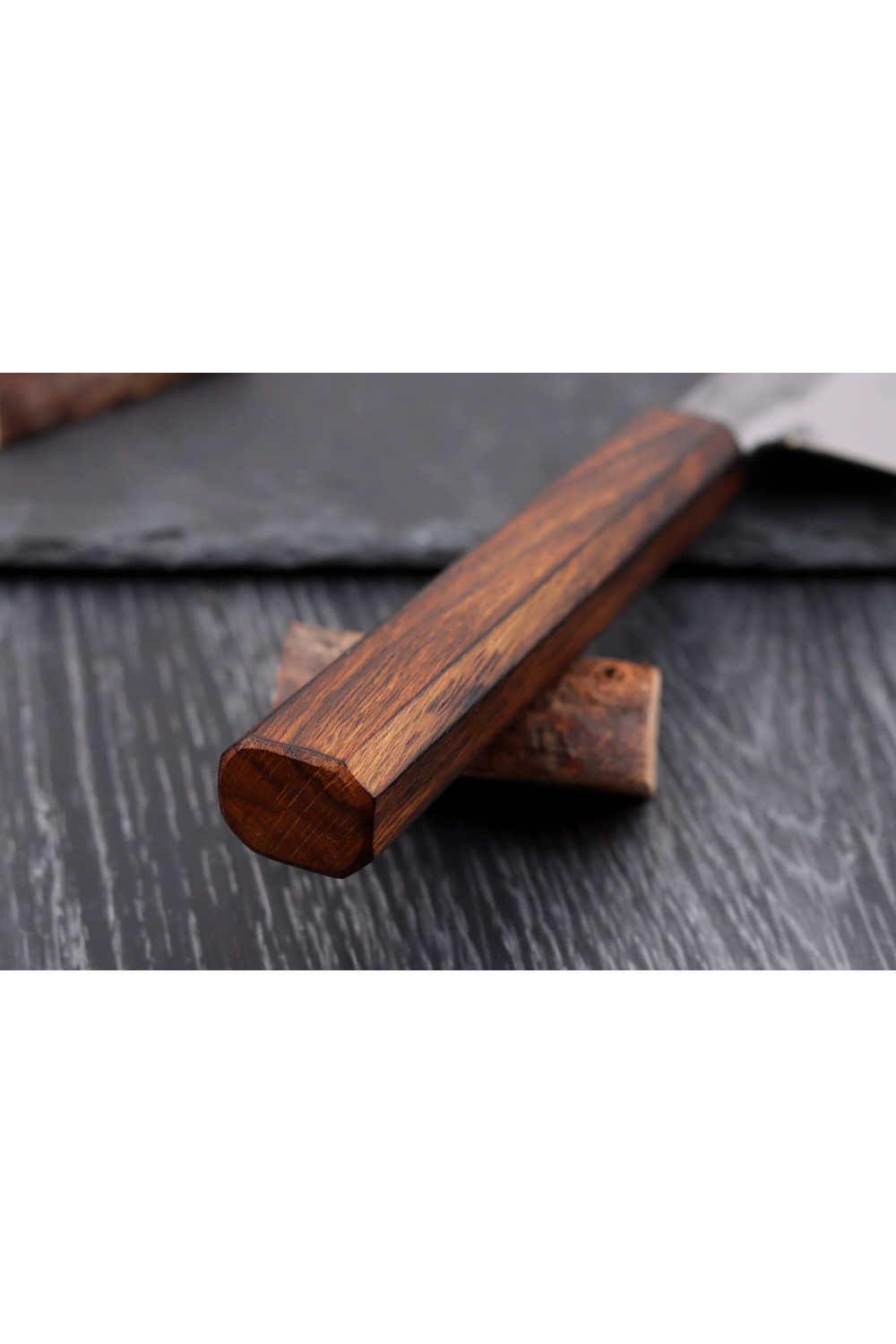
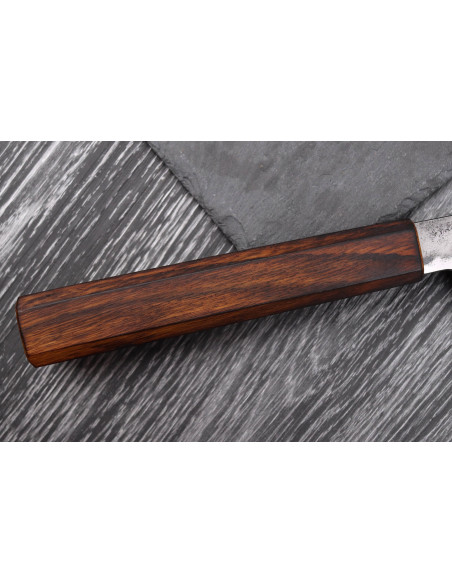
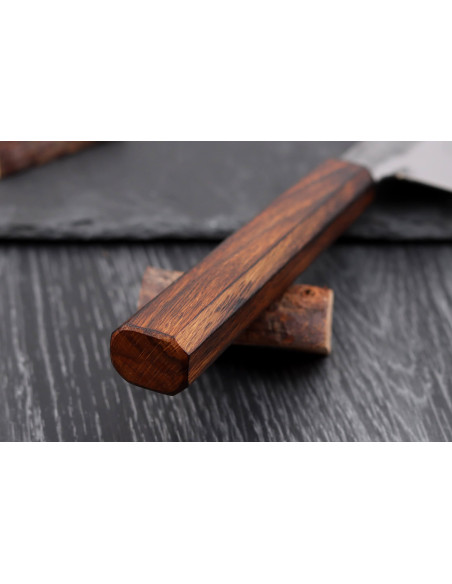
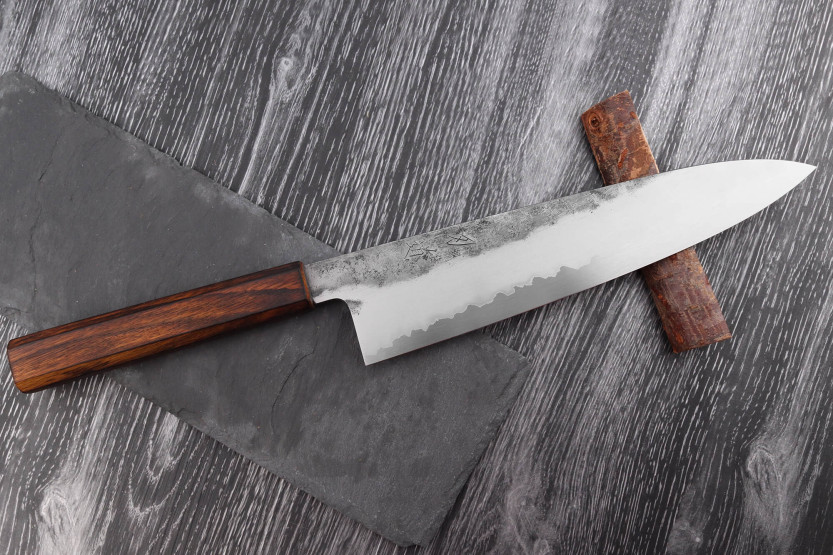
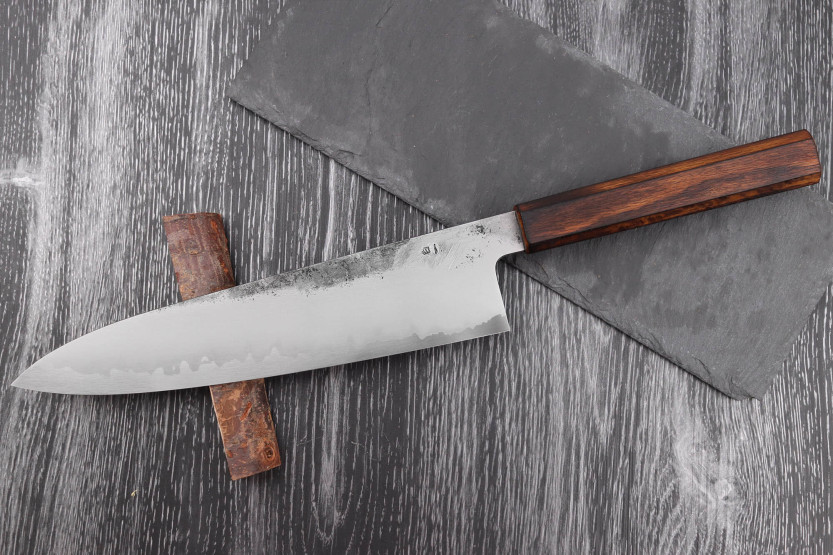
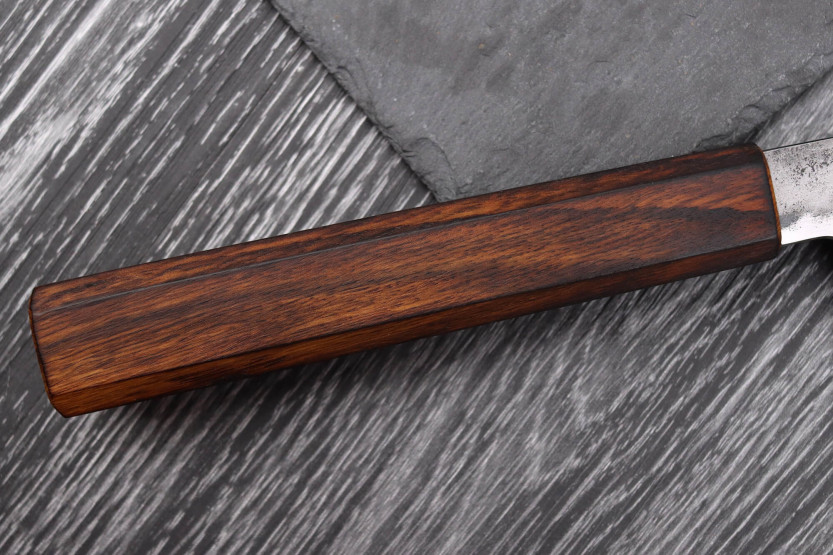
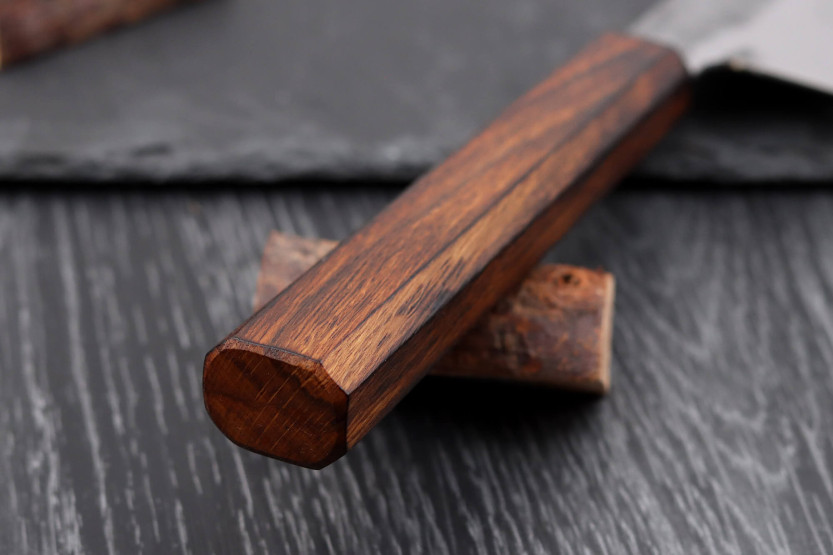
The handle of this handcrafted Japanese knife is made of oak wood, renowned for its strength and durability. Thanks to its high density, it effectively resists humidity, impact and deformation due to condensation. The wood has been carefully burned, then lacquered, to give it added character and improve its resistance.
With its octagonal shape, the handle adapts easily to the hands of both right- and left-handers, ensuring a comfortable, ergonomic grip, even during prolonged use in the kitchen!
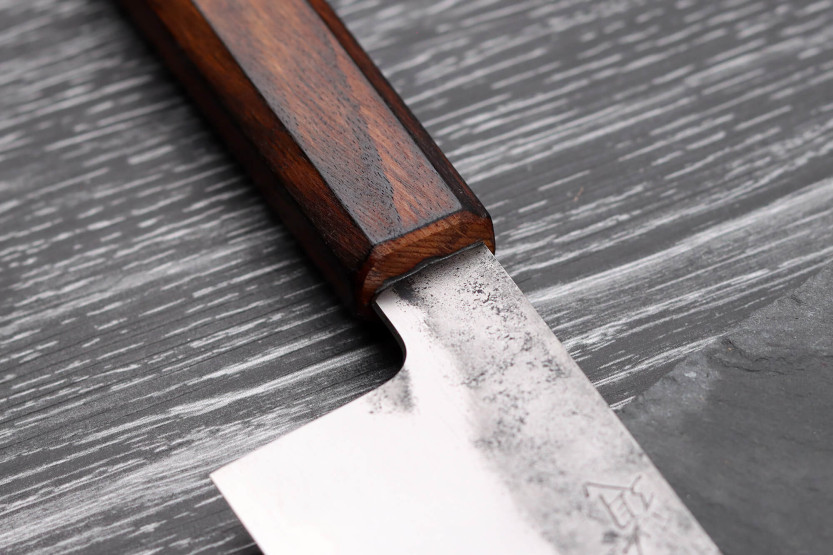
To complete the look, wood paste has been applied to the junction between blade and handle. This fills the gaps, preventing any water or food residues from seeping through.
Care and maintenance of a high-quality, handcrafted Japanese knife
To preserve your Hado Kirisame knife, it is essential to clean it by hand only, using a soft sponge and a non-aggressive detergent. Avoid prolonged contact with water on the handle. After washing, dry the knife thoroughly with a clean cloth to remove all traces of moisture, then store it in a dry place. Do not put in the dishwasher or soak in the sink.
Over time, the blade may develop a slight variation in color, which is perfectly normal. This patina is a natural reaction of carbon steel to the acidity of food and ambient humidity. It in no way alters the performance or durability of your Japanese knife!
Discover other Hado Japanese knives on Knifeleader.eu!




 By buying this product you can collect up to