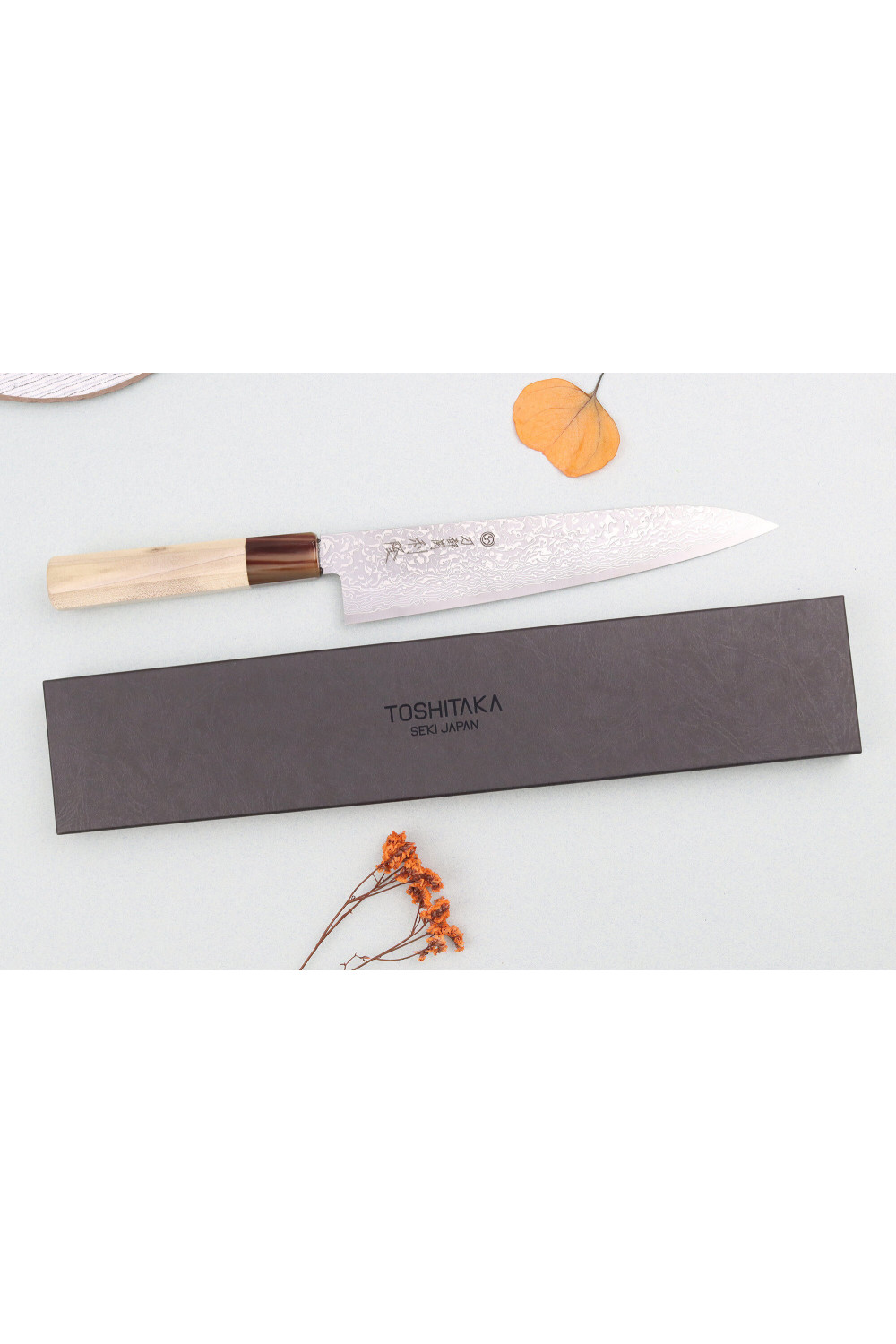
Toshitaka 's know-how
Toshitaka is a small Japanese cutlery company based in Seki. It was founded by Toshio Tamada, a craftsman who has devoted 79 years of his life to knife-making. Originally called Cutlery Tamada, it changed its name to Toshitaka in 2004, when current president Takafumi Tamada decided to produce knives on a larger scale. "Toshitaka" is a contraction of Toshio and Takafumi.
The cutlery works with skilled craftsmen to perpetuate history and tradition. Our aim is to offer you knives with long-lasting sharpness, spending as much time as necessary on each stage of production. The blade of each knife is heat-treated to increase its cutting capacity. As tempering and hardening tend to deform the blades, they are then straightened and their thickness adjusted to give them the best possible sharpness.

A high-quality Japanese blade
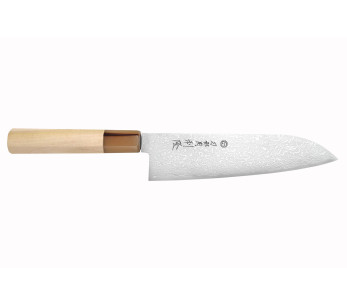
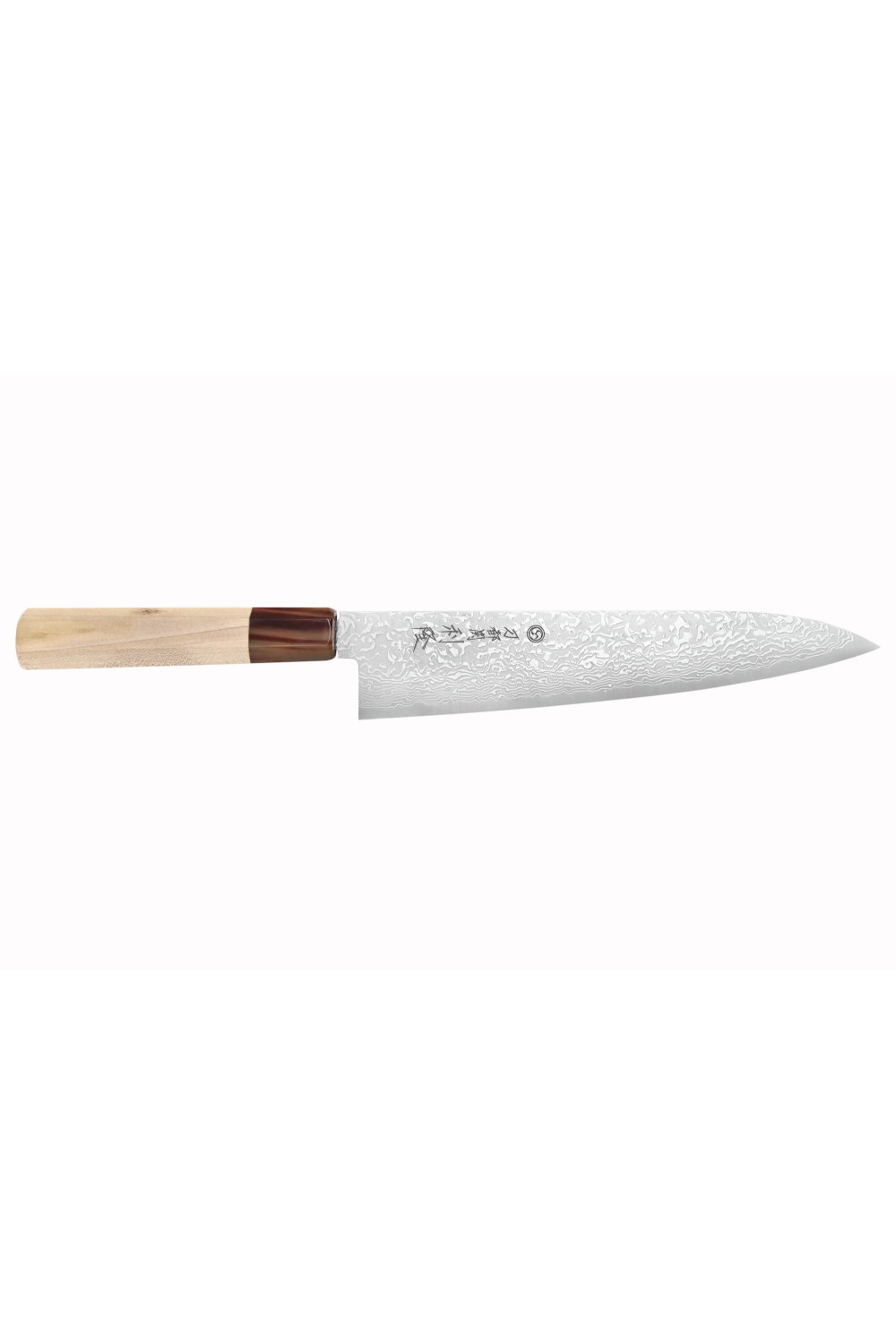
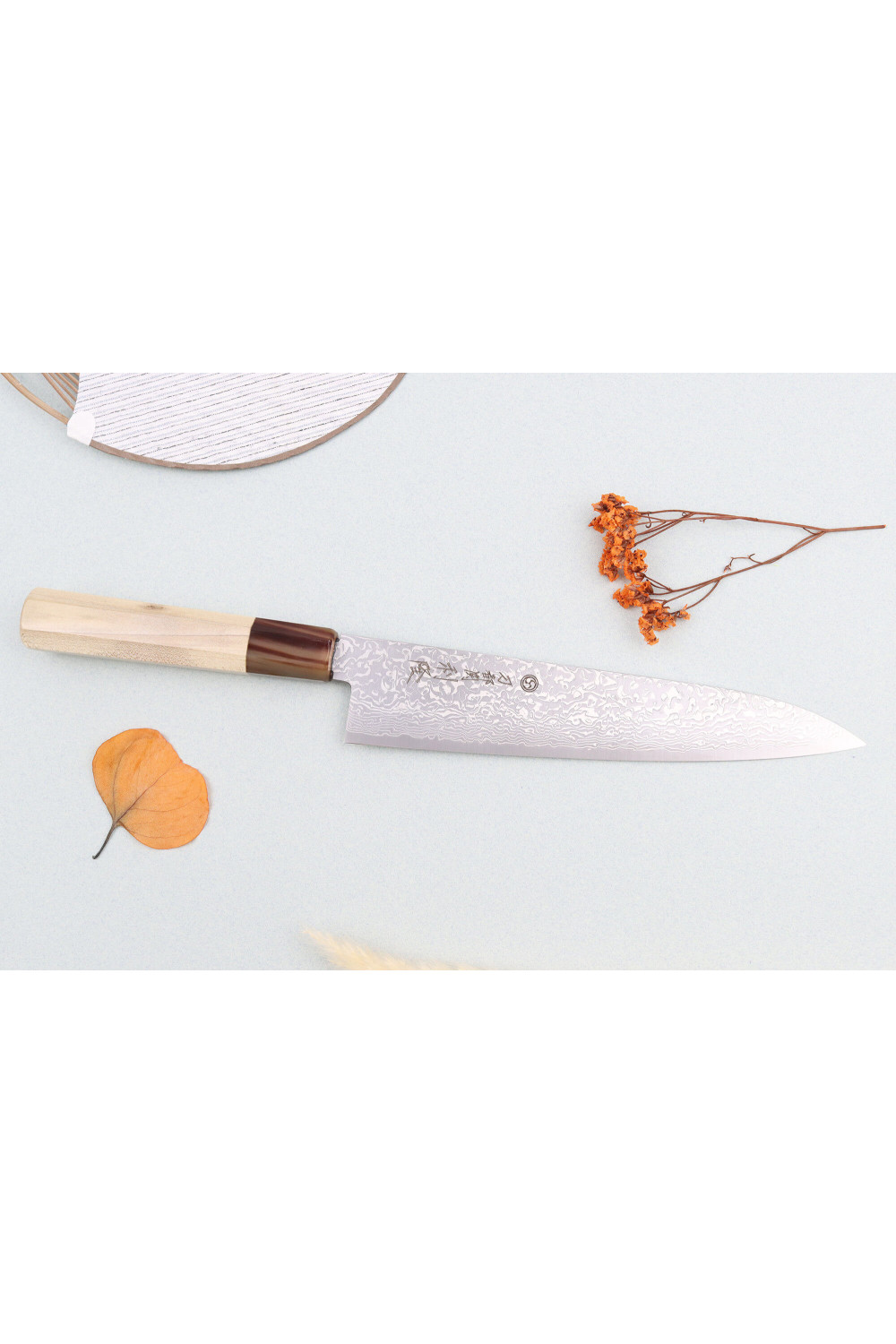
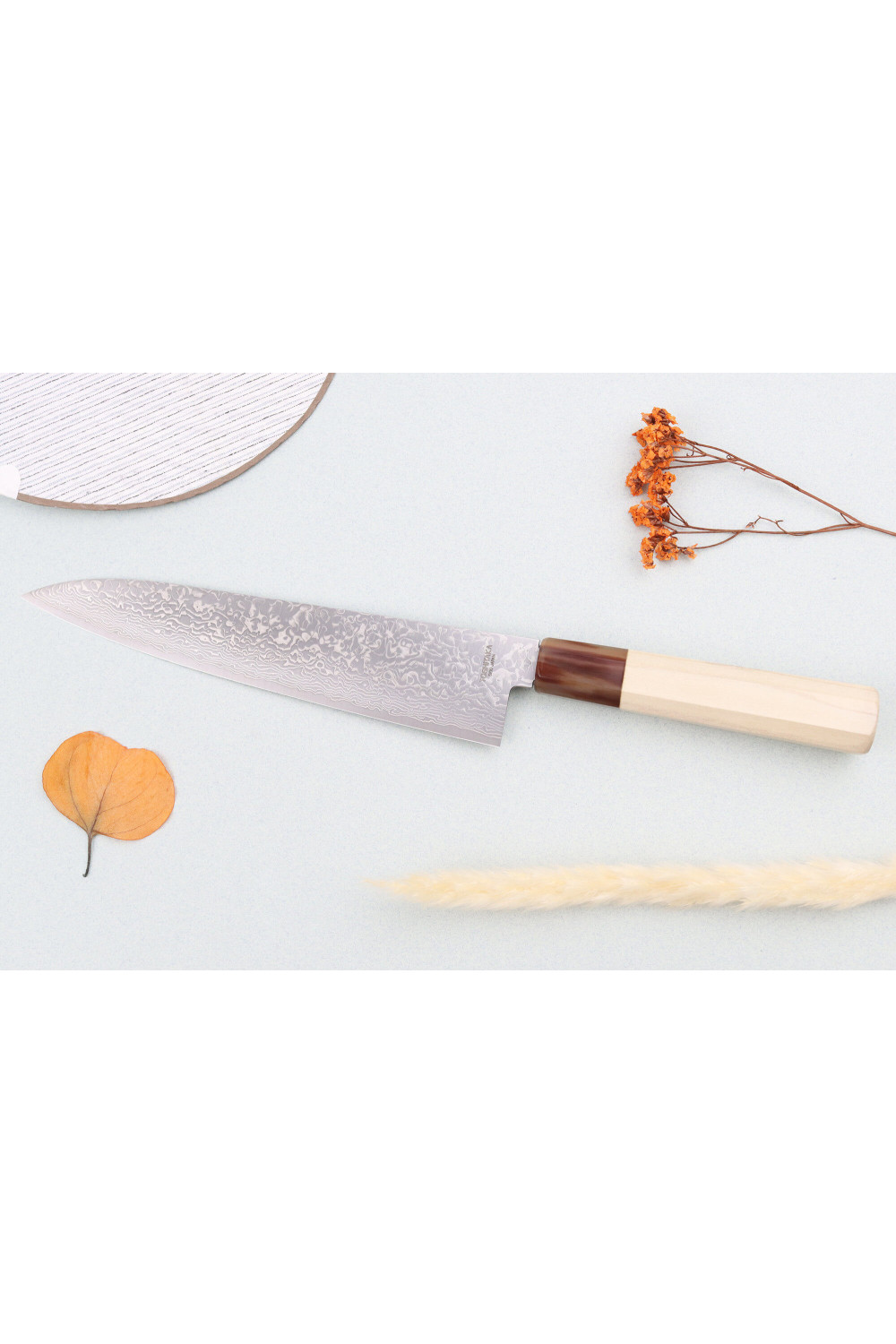
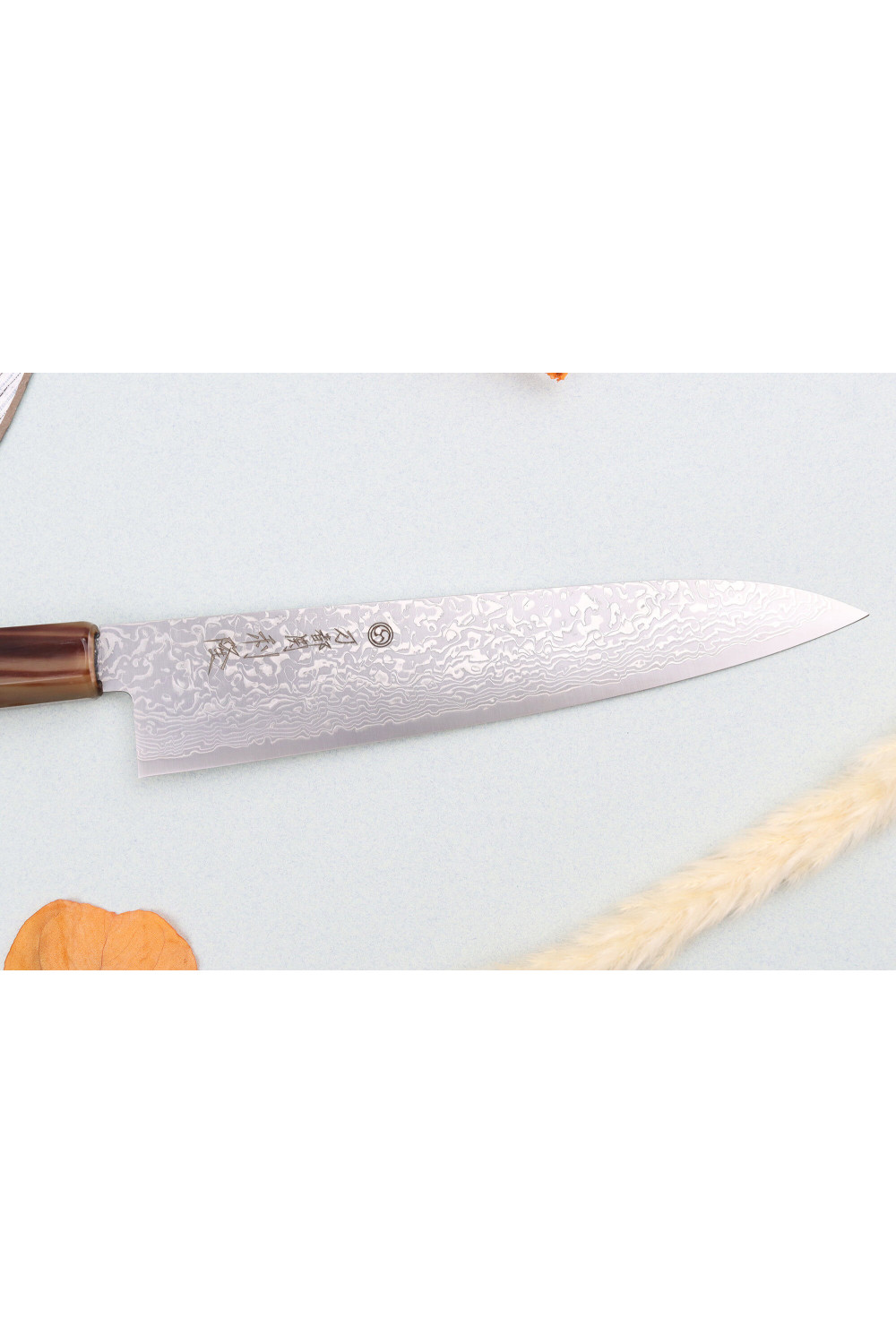
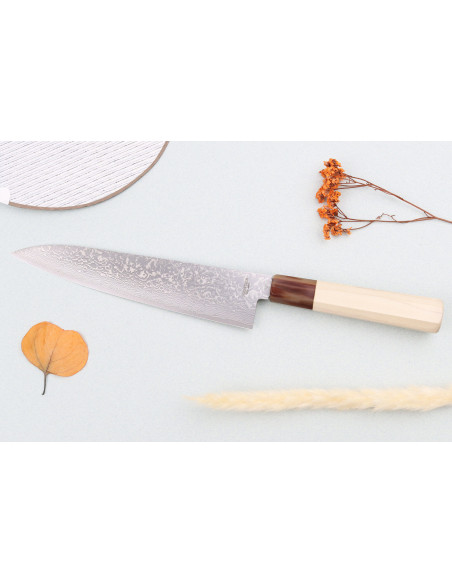
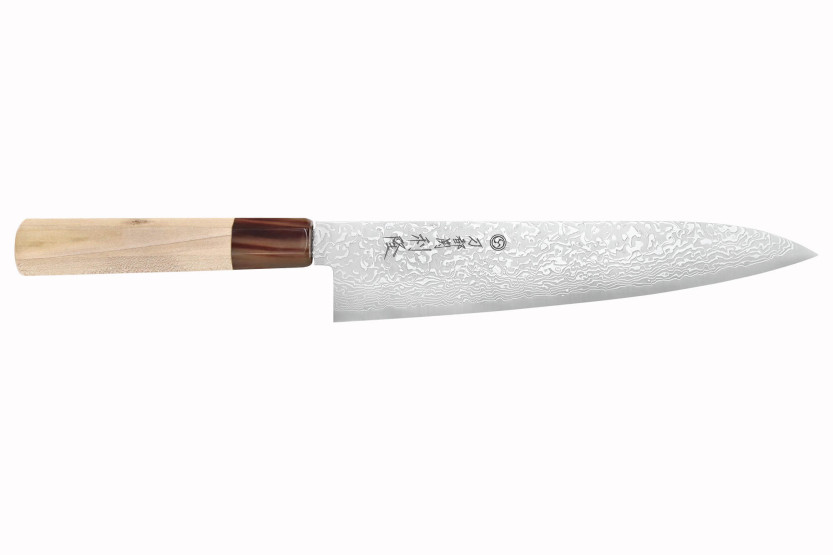
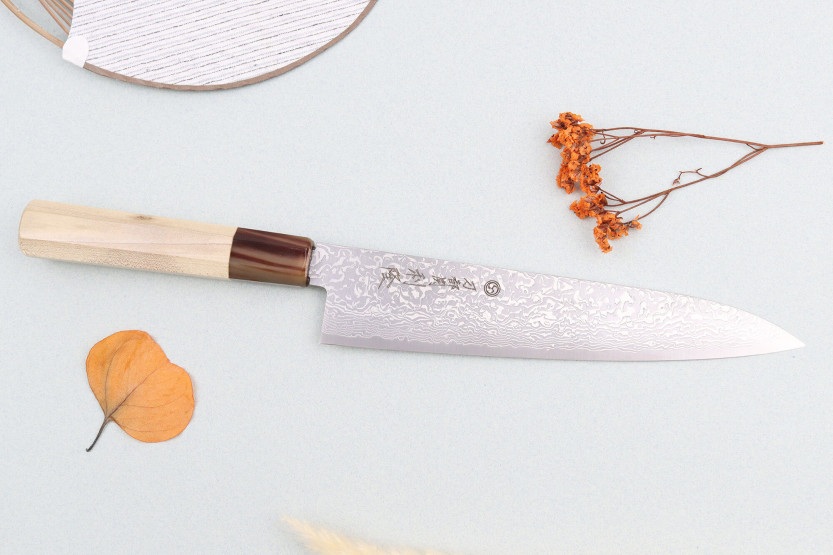
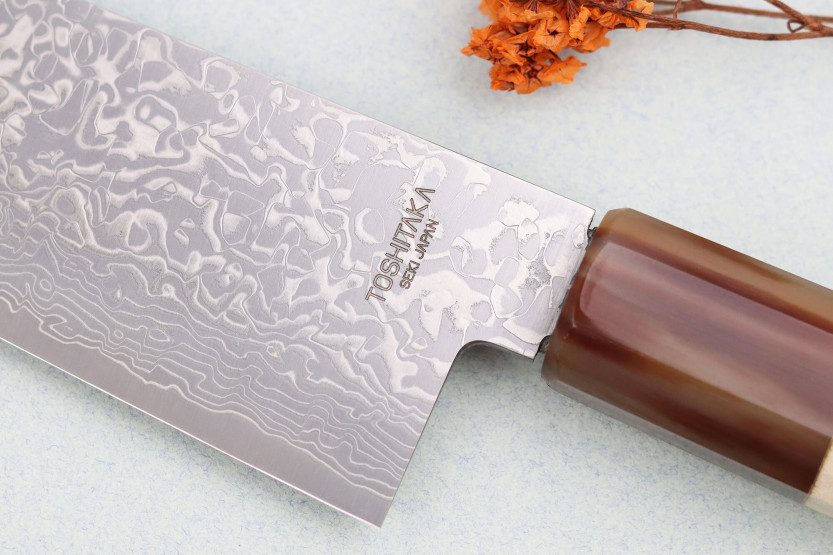
This Japanese chef's knife features a 21cm blade with a damascened structure. This technique consists of forging a core of hard steel, then wrapping it in several layers of softer steel to create a perfect balance. These top layers also provide better protection for the blade's core.
The blade has a core of Japanese SG2 steel, a powdered steel manufactured by the renowned Takefu Special Steel. It is rich in carbon, containing almost 1.3%. This is the key element for increasing the hardness of an alloy, and high hardness guarantees better edge retention. With a hardness of 63 HRC on the Rockwell scale, this blade boasts exceptional cutting performance and increased durability of its cutting edge, allowing you to space out your Toshitaka knife's sharpening sessions.
SG2 steel also contains around 15% chromium, an element that enhances its resistance to corrosion. Nevertheless, the blade of this chef's knife remains sensitive to oxidation and requires careful maintenance on your part. Microscopically, SG2 steel has a "pure" composition, with evenly distributed micro-carbides, guaranteeing excellent balance.
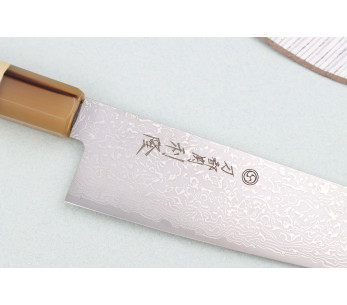
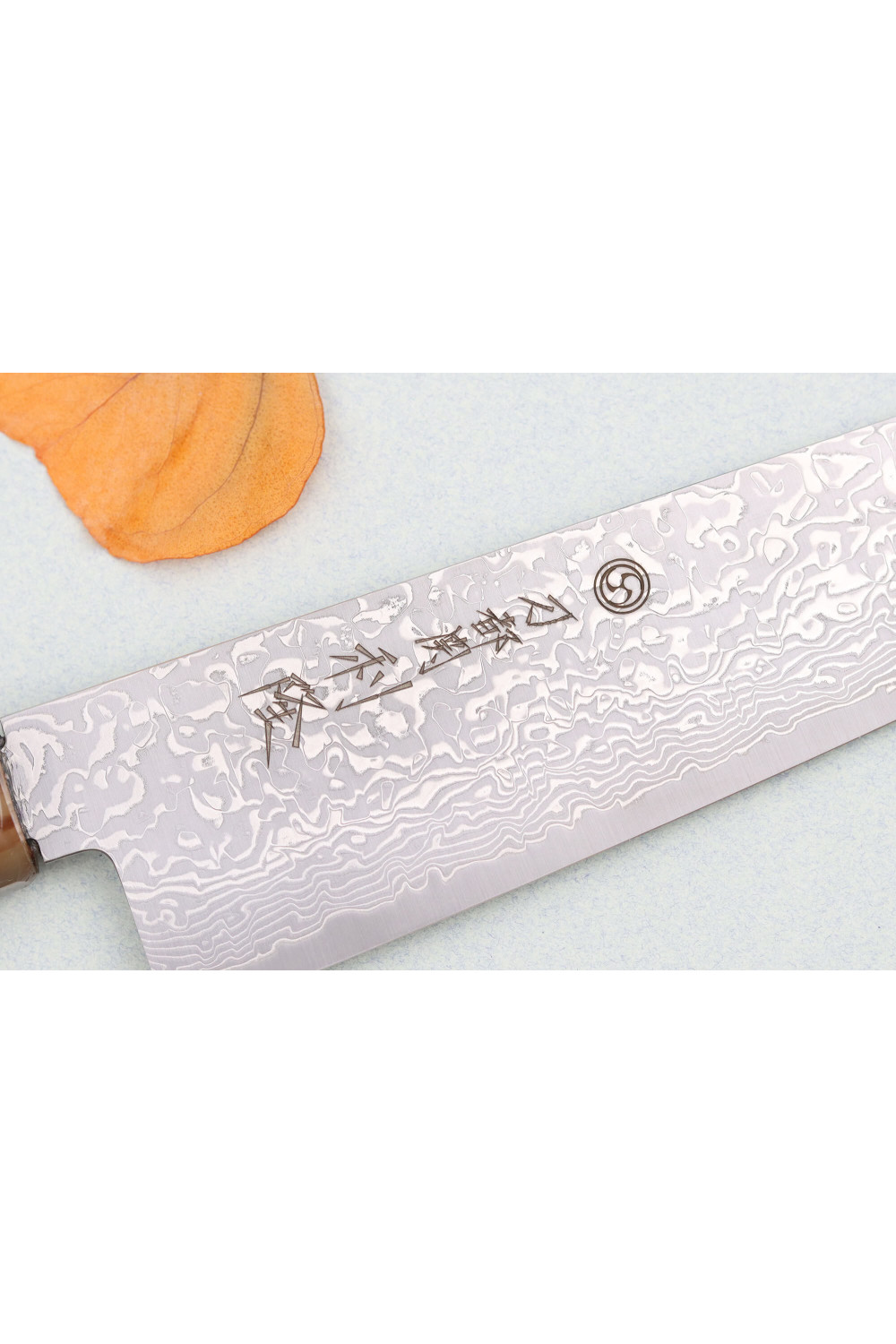
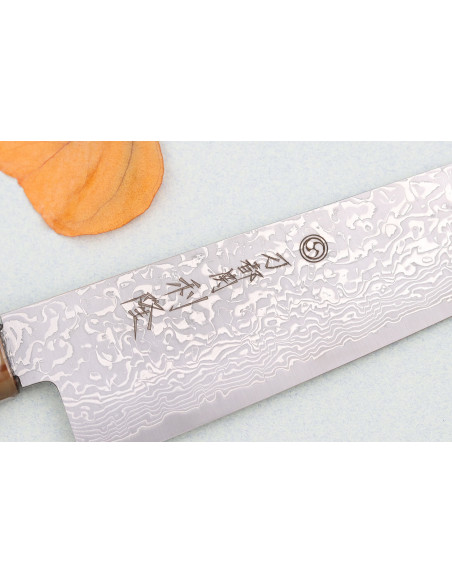
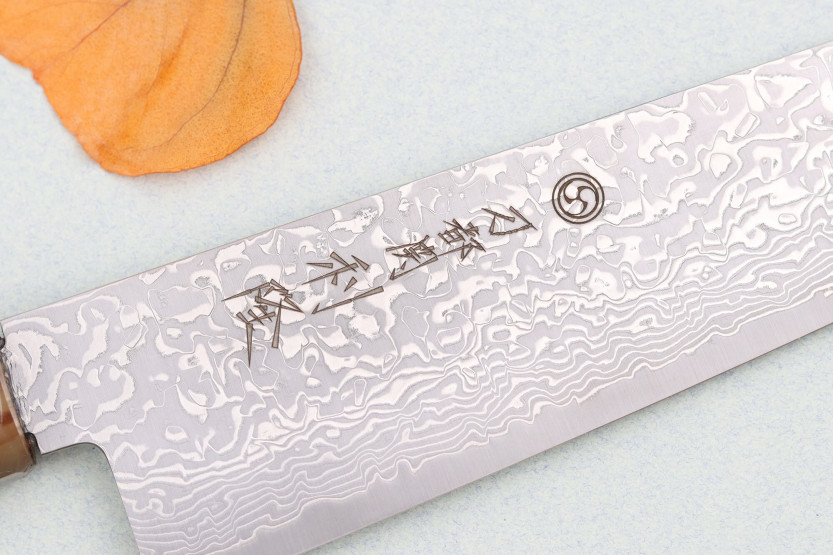
Several layers ofsoft and hard steels then alternate and cover the core of the SG2 steel blade to protect it: the damascus effect is created. The alternating layers of steel create a unique pattern on the blade surface, inspired by Suminagashi. This is an ancestral Japanese art of working black ink on paper to give it a marbled appearance.
The blade has been polished and then engraved with kanji to reinforce its elegant, traditional look. Finally, it has been hand-sharpened on a grindstone for an ultra-high-performance cutting edge.
Octagonal magnolia handle
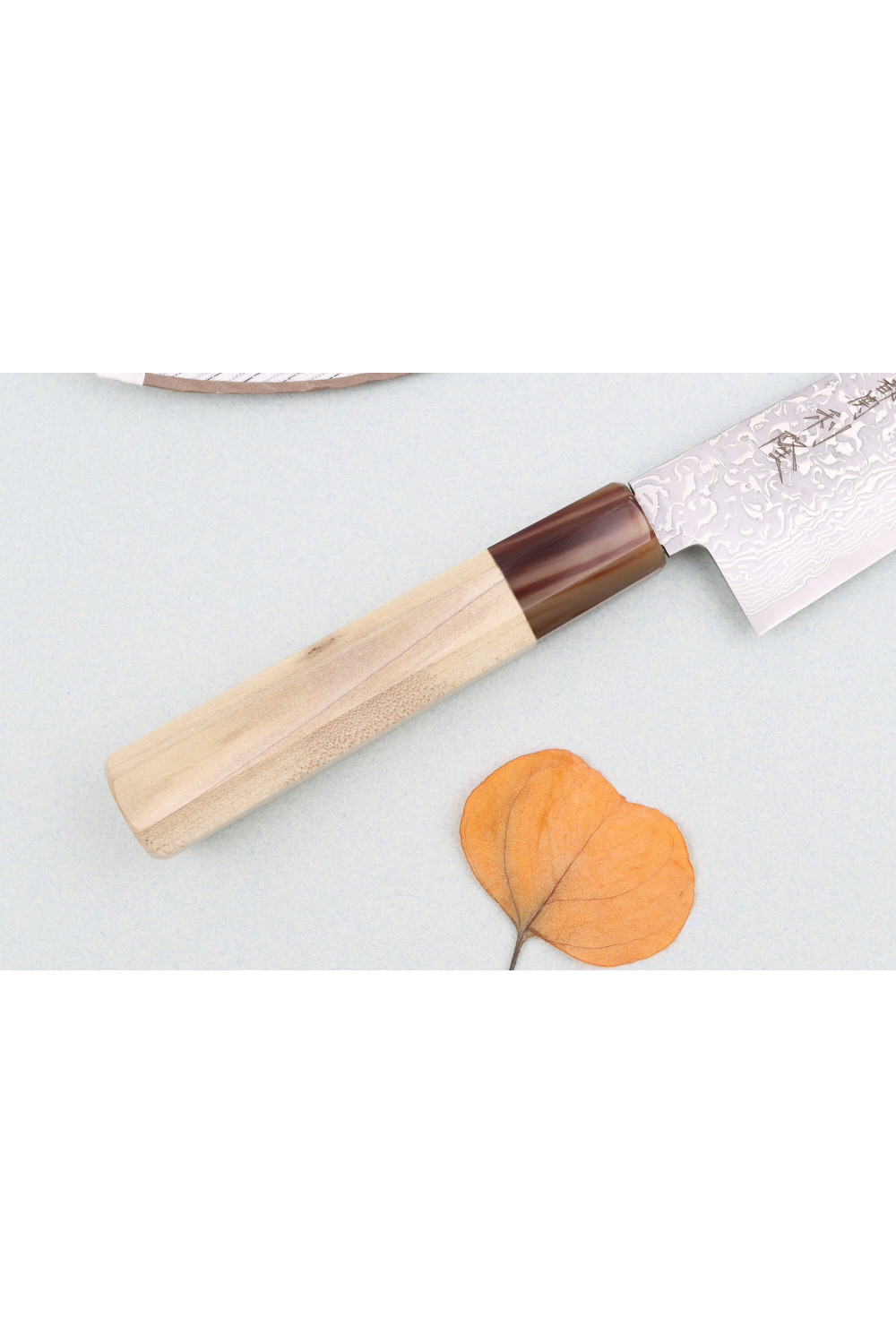
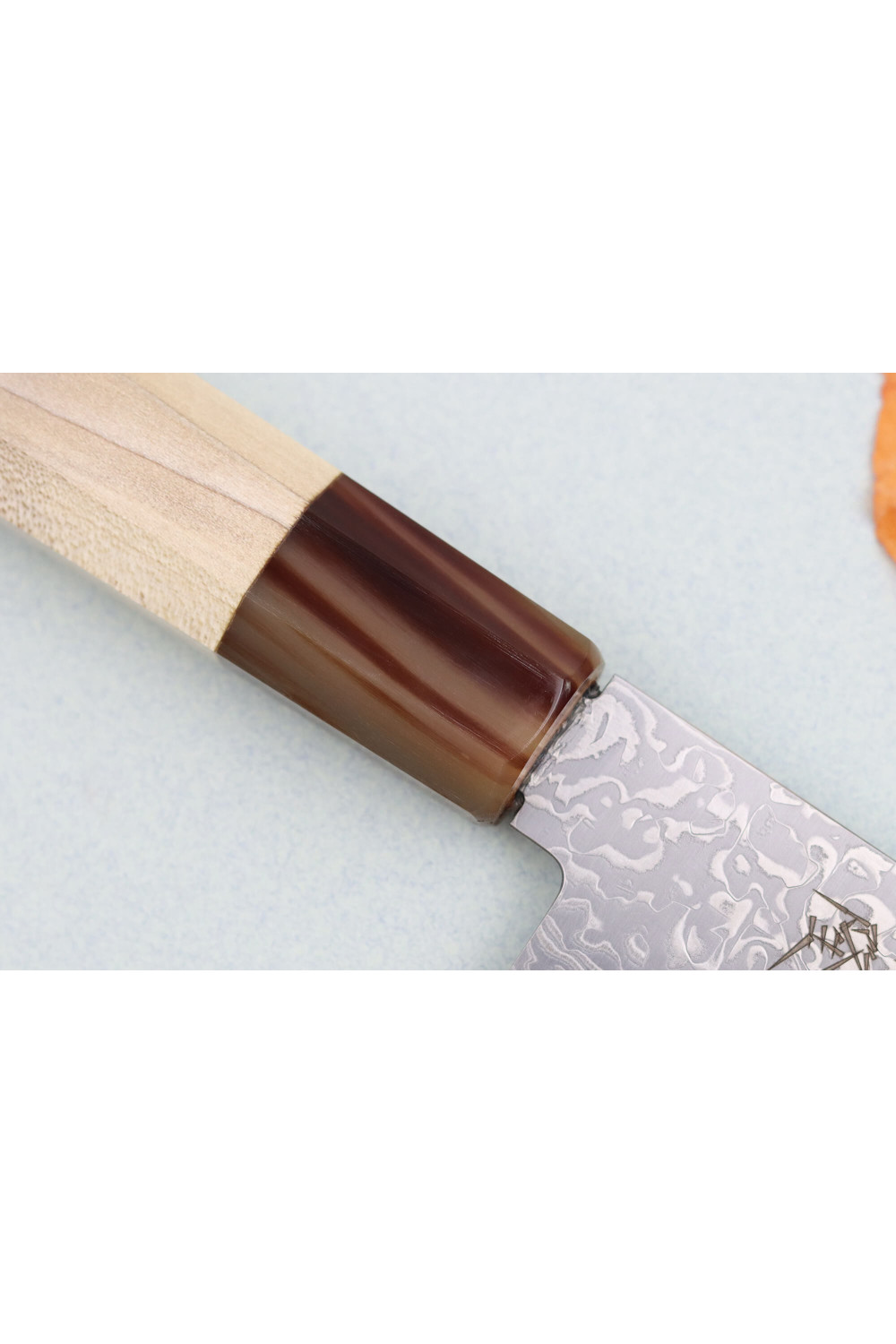
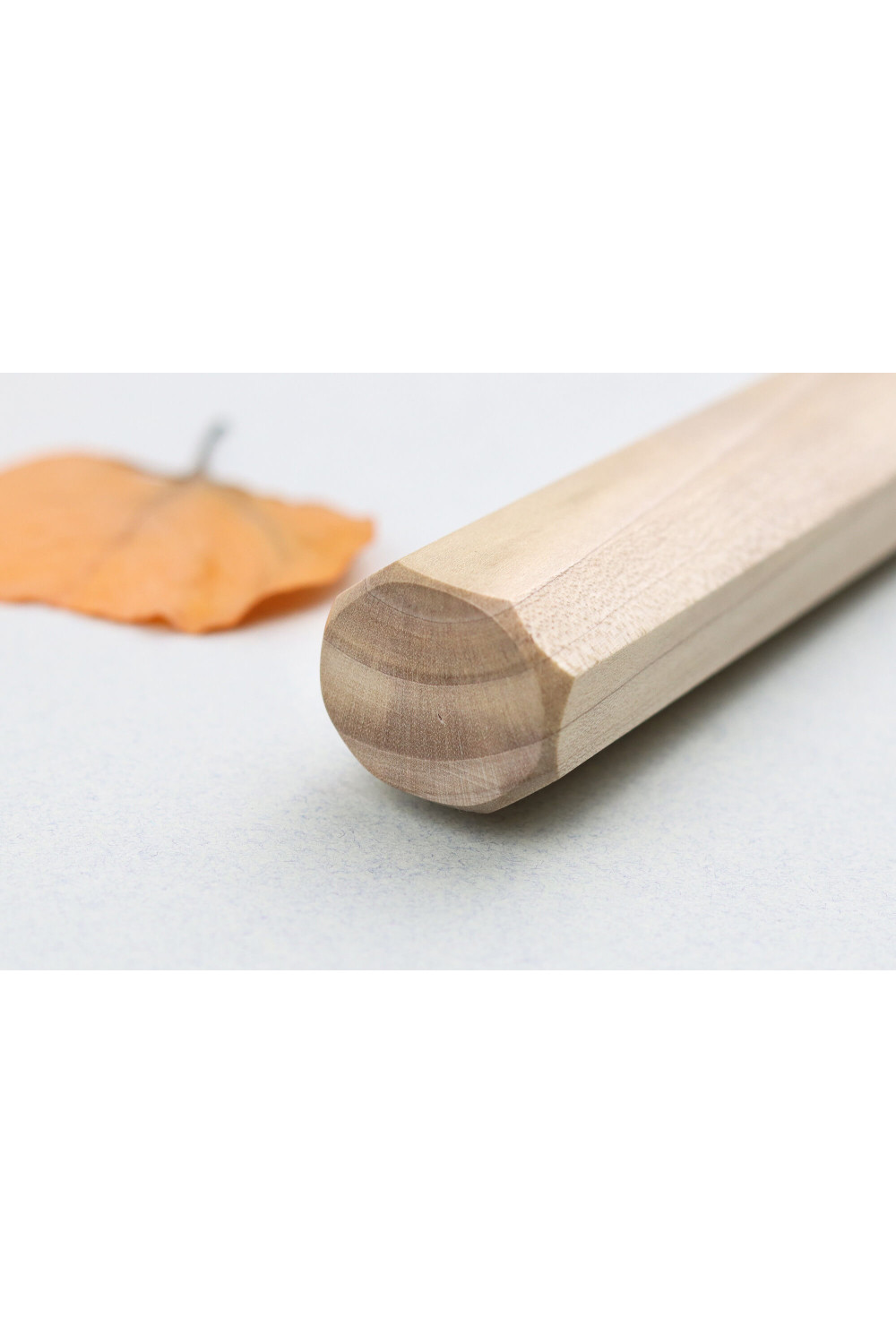
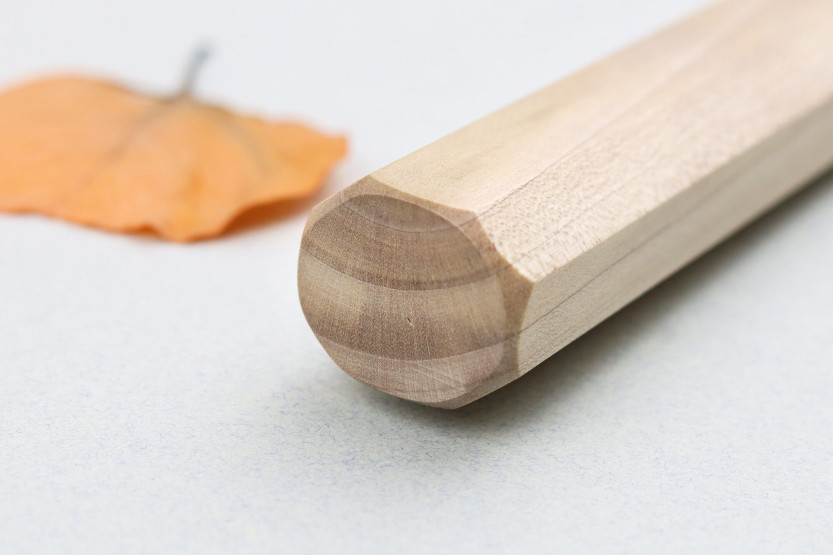
This Japanese damascus knife features a handle made from magnolia wood, a noble wood distinguished by its light, cream-like hue. This species is appreciated for its lightness, soft touch and resistance to humidity. Traditionally, this wood was used to make scabbards for Japanese swords.
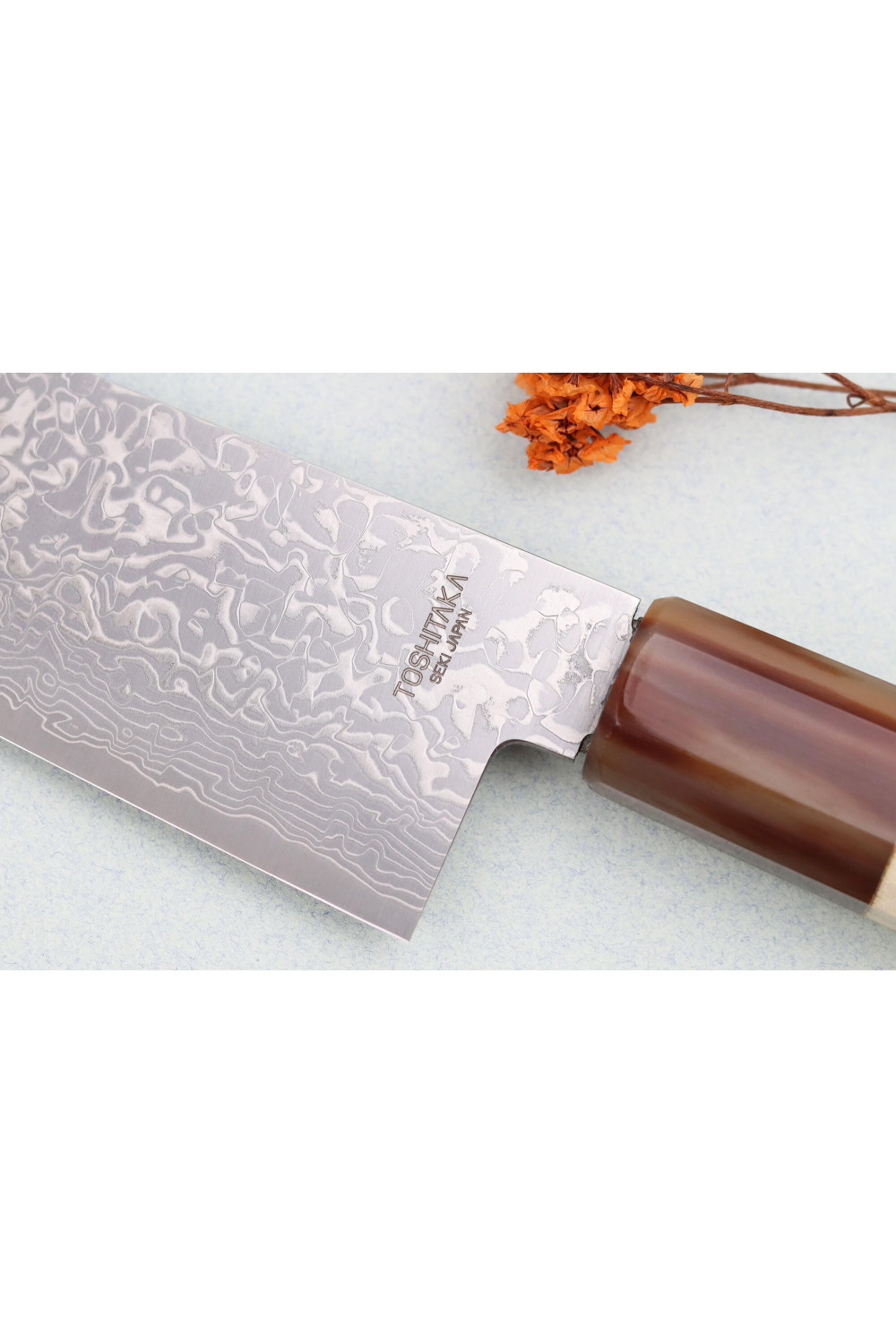
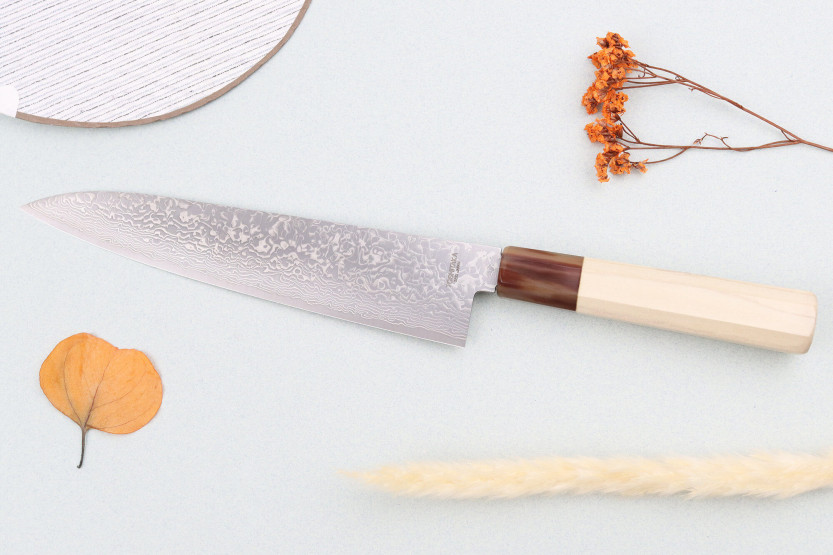
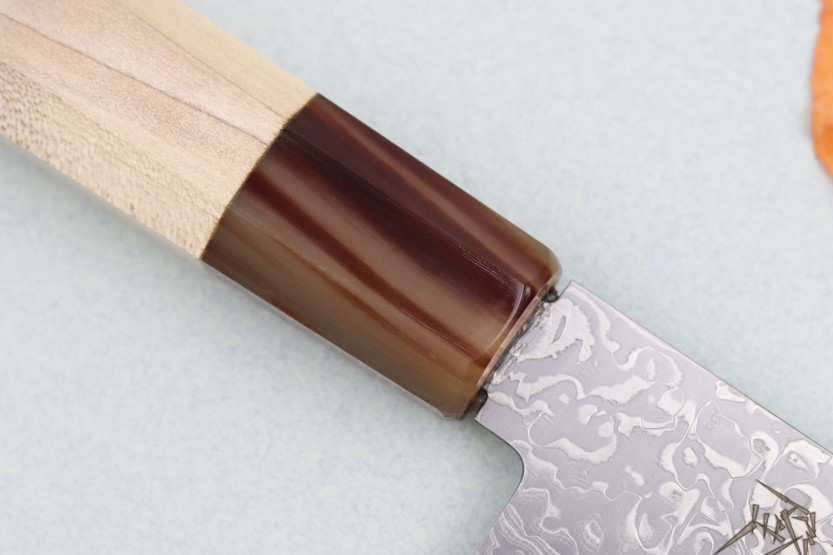
A white buffalo horn bolster completes the handle, linking it to the knife blade. In addition to giving the knife optimum balance, it adds a highly aesthetic touch. As wood and horn are living materials, their appearance can vary from one knife to another.
The octagonal handle is ergonomically designed for both right- and left-handed users. Its comfortable grip ensures optimum maneuverability, even during prolonged cutting.
Finally, wood filler has been added where the blade fits into the handle to fill any small gaps. This guarantees total watertightness and prevents water from seeping inside.
Note also that the machi is visible on this knife. This is an extra section of steel at the bolster. This may give the impression that the blade is not properly inserted in the handle, but the gap is actually deliberate.
How do I care for my Japanese chef's knife?
This Japanese knife should be cleaned exclusively by hand with a non-abrasive sponge and mild soap, avoiding wetting the handle. After washing, dry the knife immediately and store it in a dry place to avoid any traces of moisture. The knife must not be put in the dishwasher or left to soak in the sink.
Toshitaka knives are waiting for you on Knifeleader.eu!










 By buying this product you can collect up to