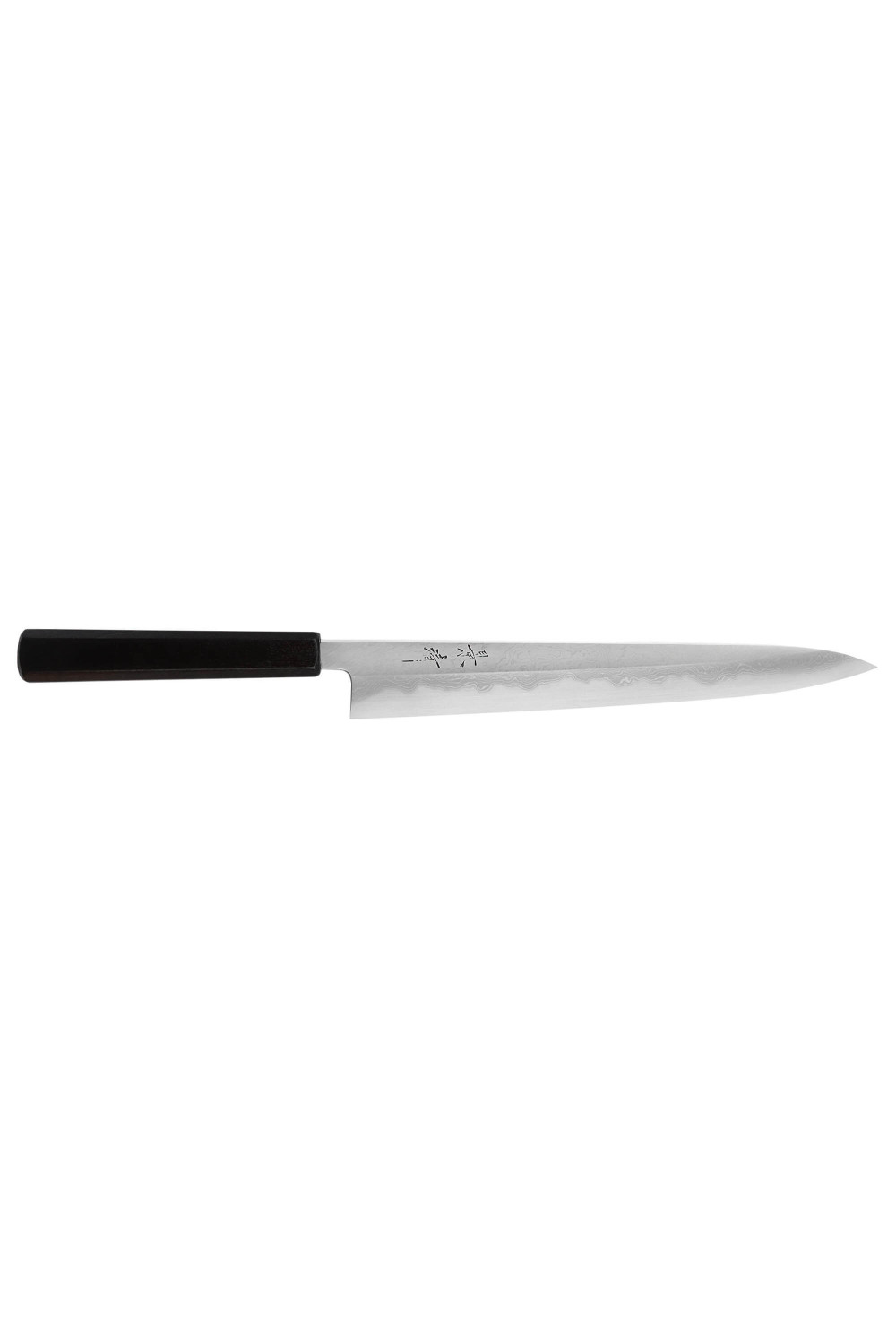
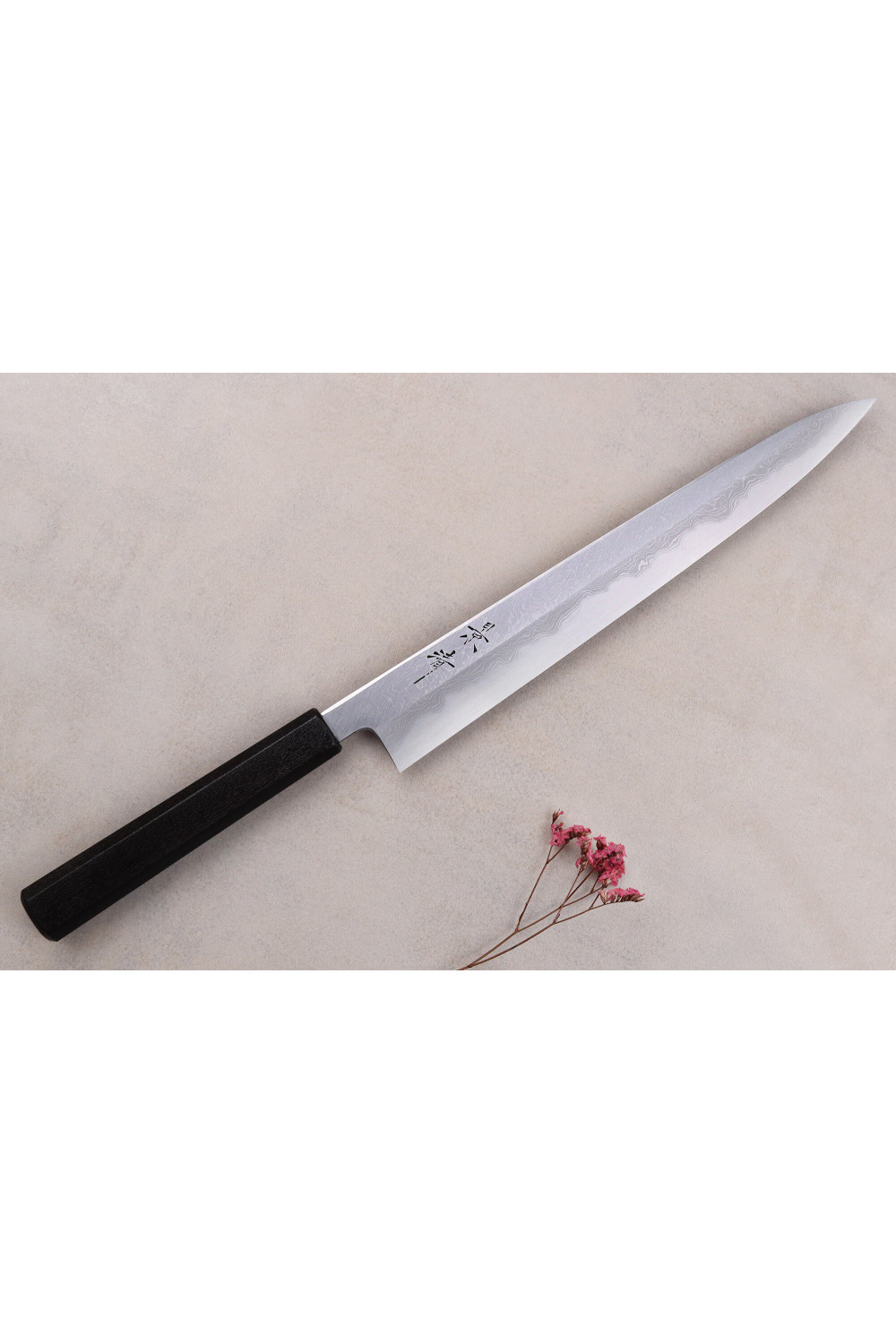
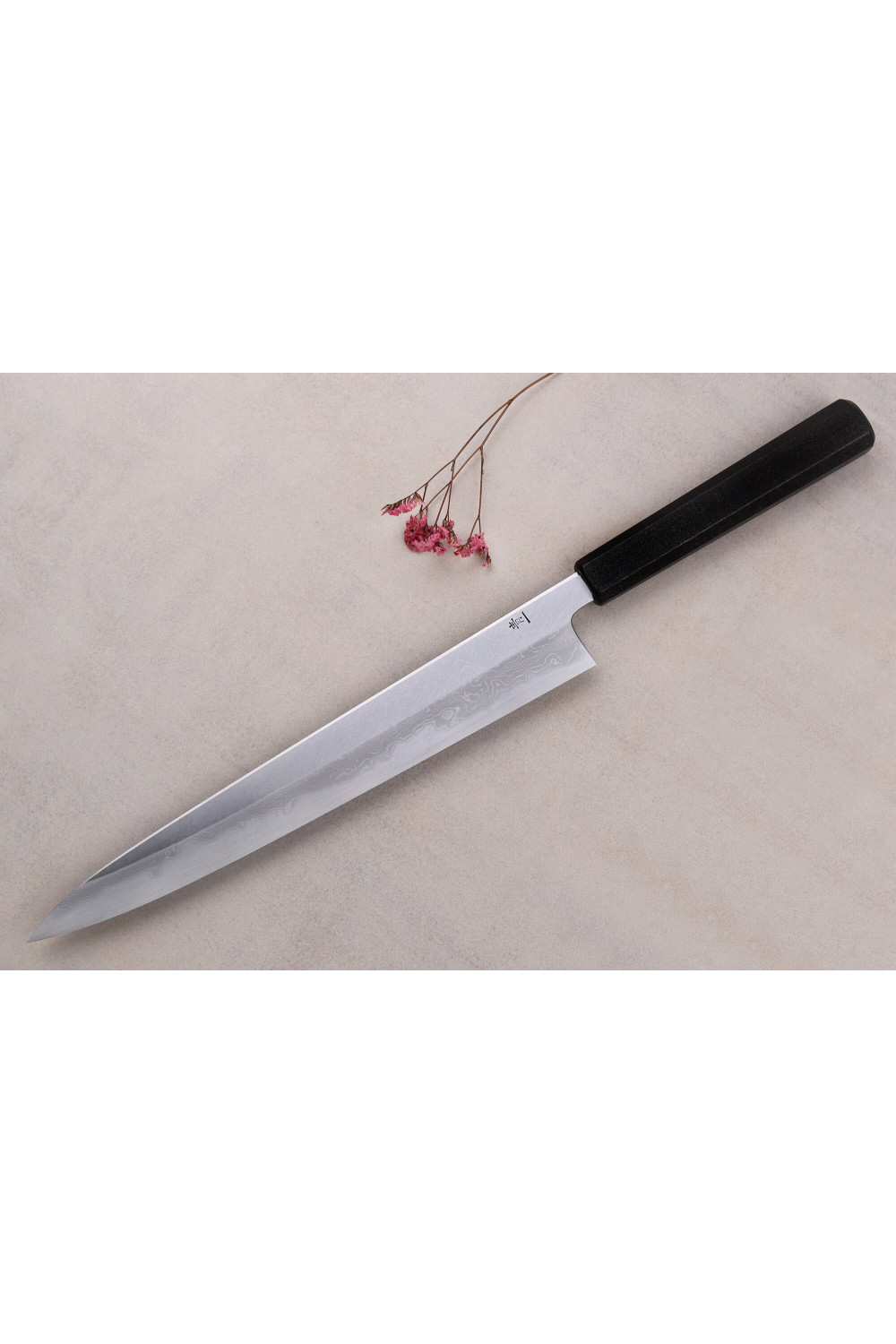
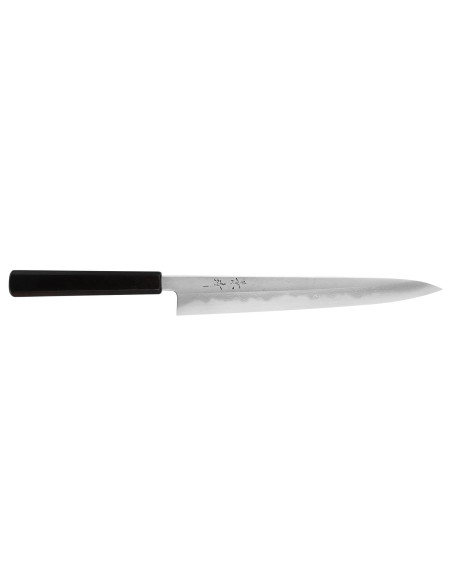
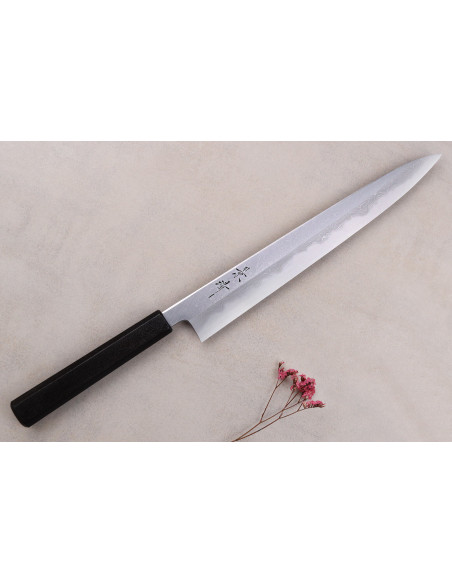
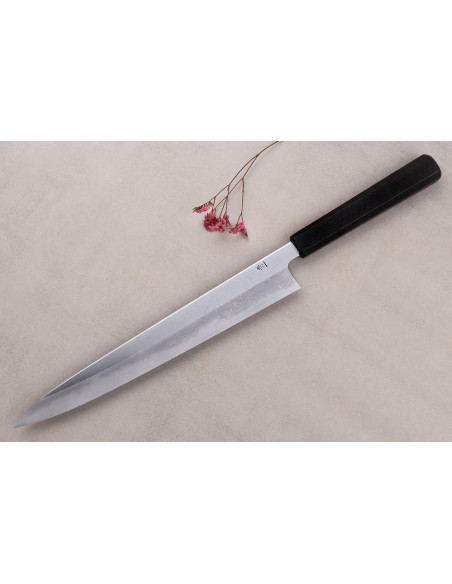
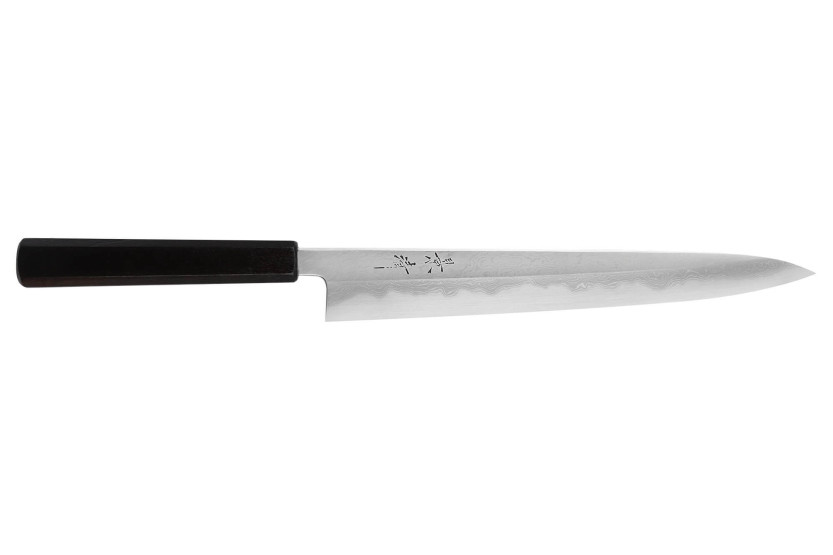
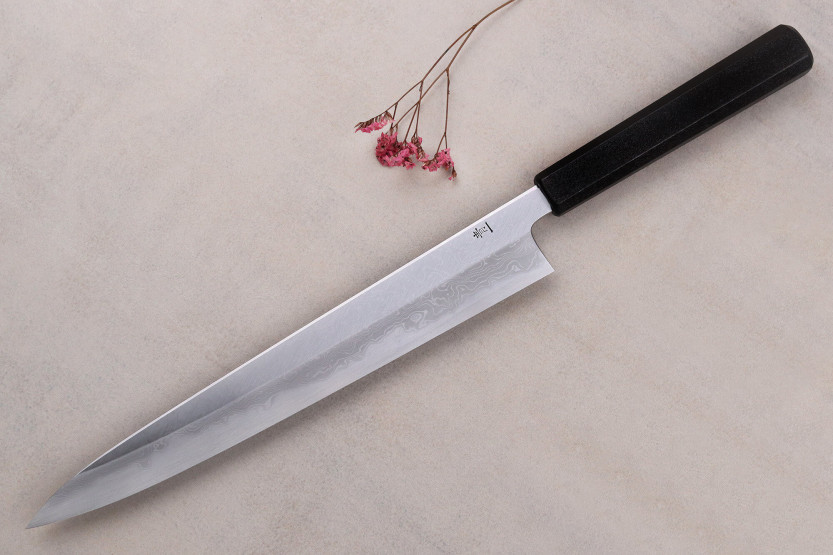
The Yoshikazu Tanaka sujihiki knife, handcrafted in Sakai, is a favorite among chefs. Tanaka san, one of the region's most renowned master blacksmiths, excels in creating Japanese knives of exceptional quality, with a traditional style appreciated by professional chefs.
A handcrafted Japanese knife with a high quality cutting edge
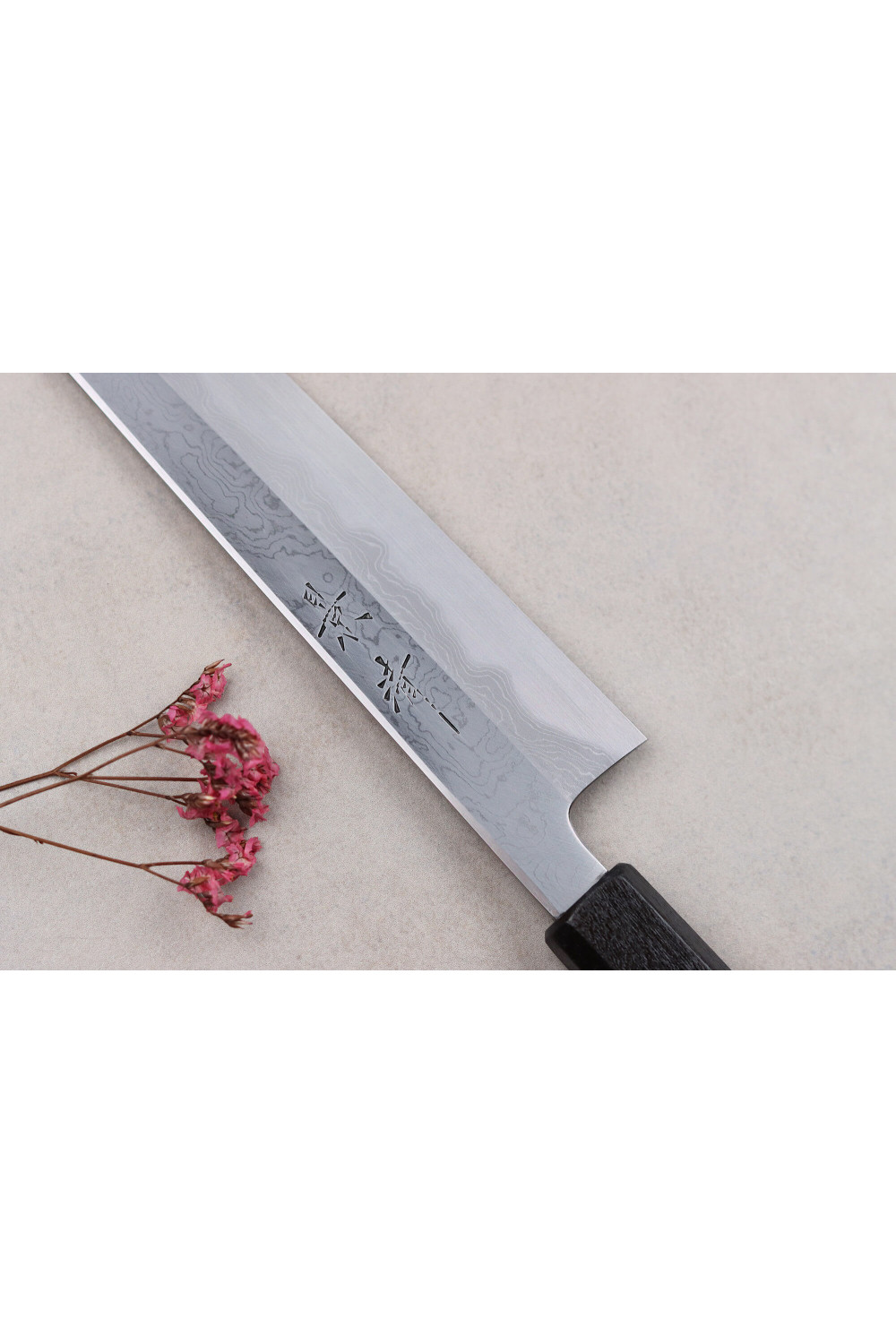
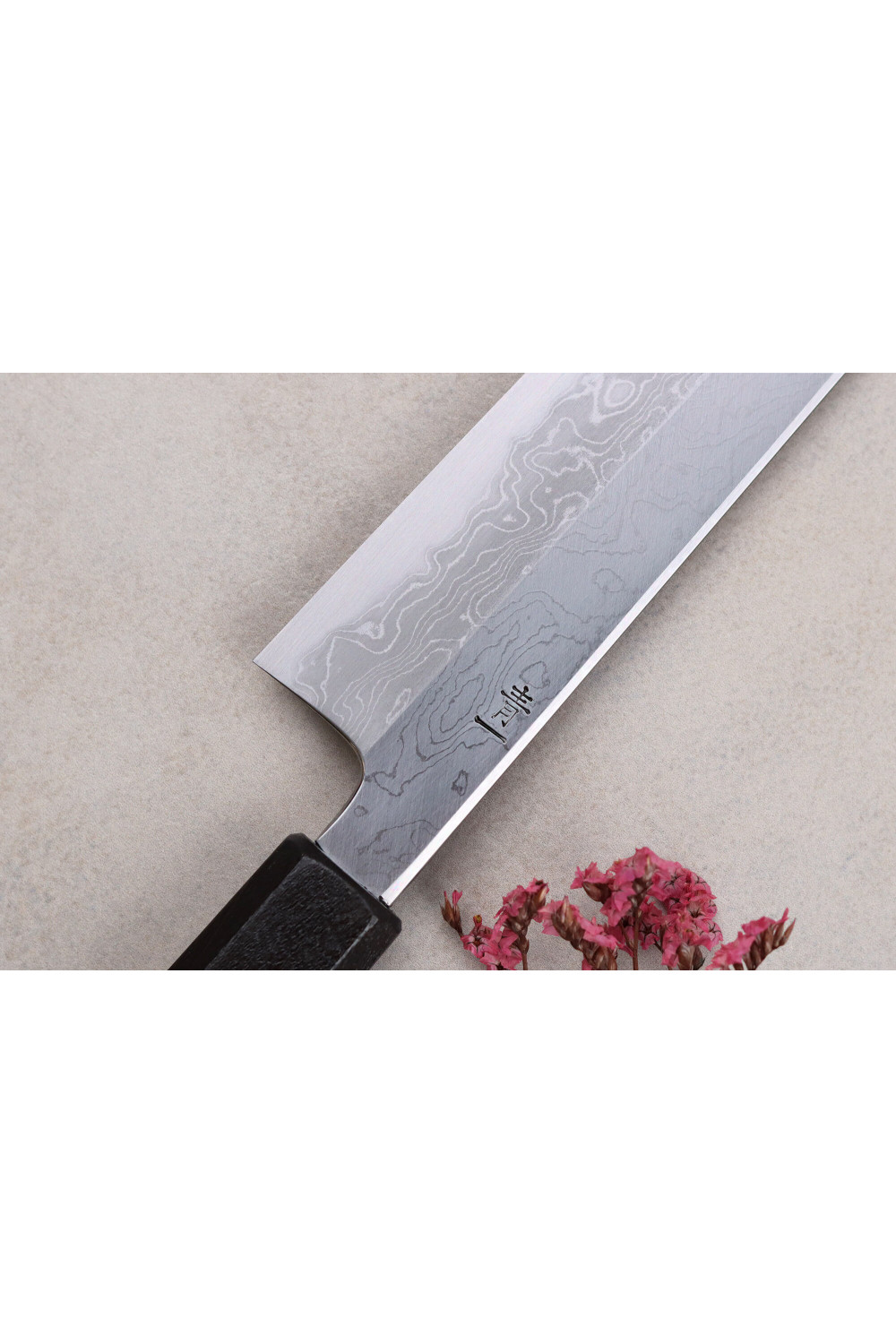
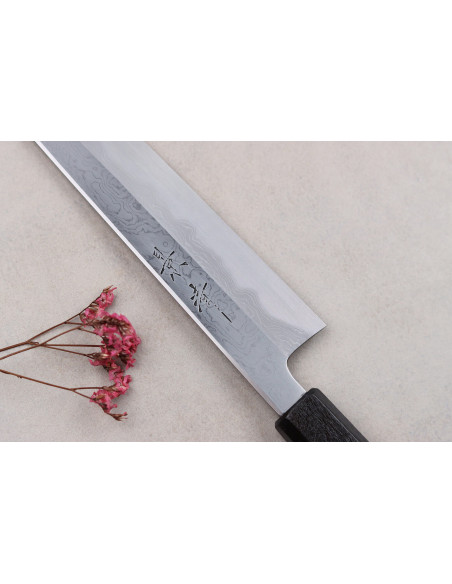
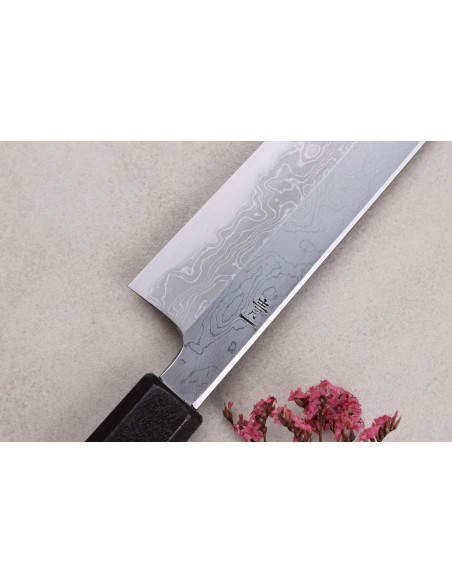
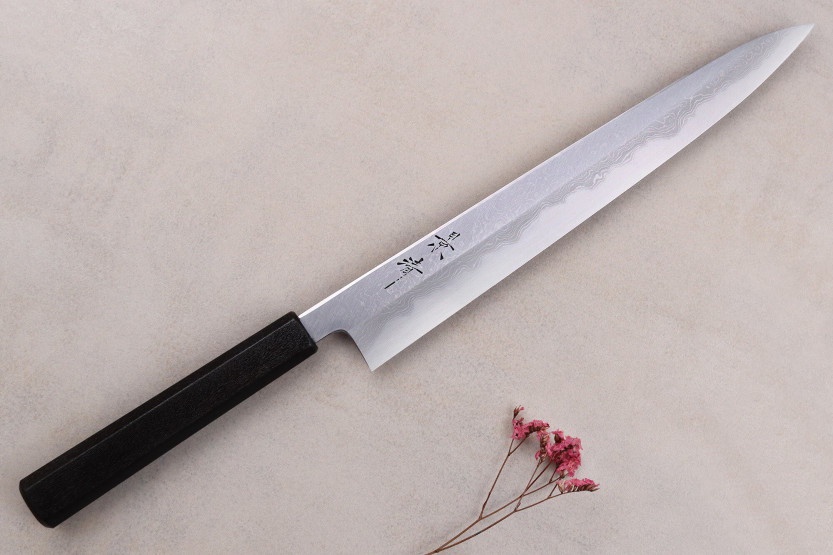
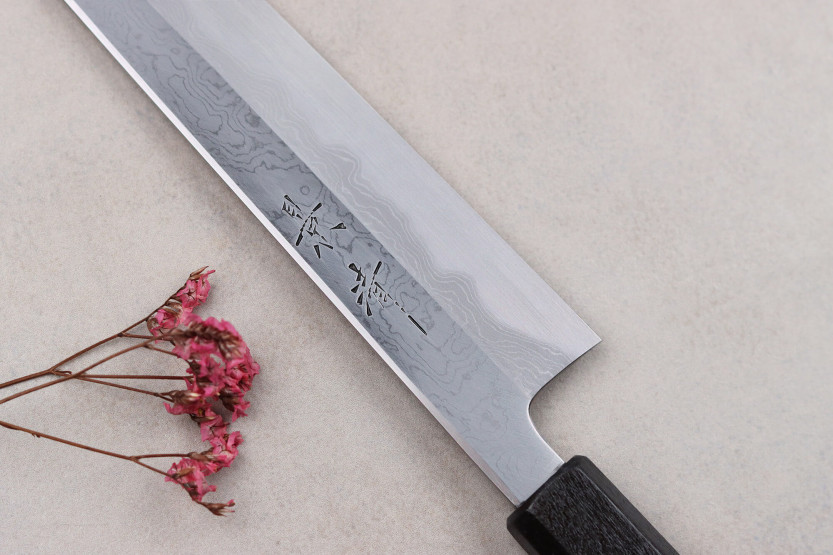
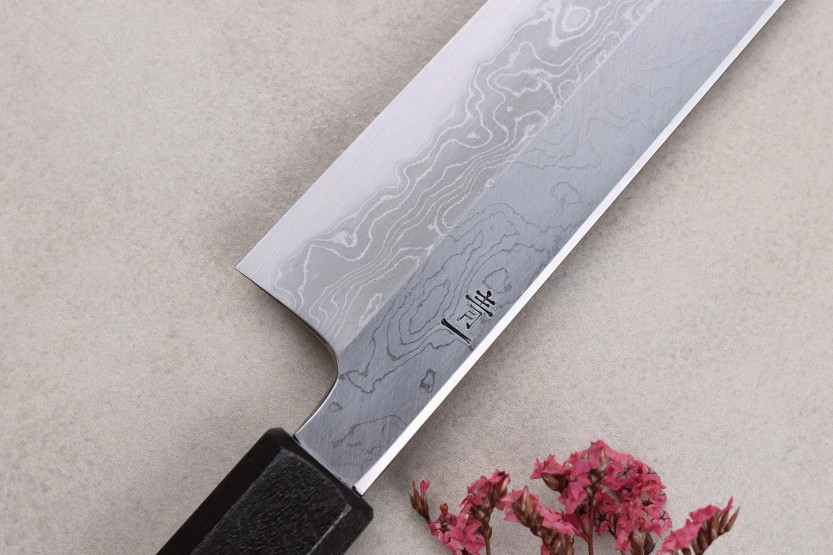
The blade of this knife is damascened, with a structure composed of a rigid core wrapped in numerous layers of iron steel. This feature gives your damascus knife a robust edge, guaranteeing long-lasting cutting capacity. What's more, the multiple layers of steel on top ensure a balanced cutting surface.
The various layers of steel play an essential role in bringing a certain "flexibility" to the heart of the knife, reducing its fragility during use.
Beyond its functional aspect, damascus also offers an aesthetic advantage! It adds personality to your blade, for a unique visual appearance.
At the heart of damascus, the core is made of Japanese Aogami 1 steel (known as Blue Steel 1) from the world-renowned Hitachi steelworks. Enriched with approximately 1.4% carbon, an essential element in conferring rigidity and strength to the alloy, Aogami 1 steel achieves a hardness of 63HRC Rockwell. This exceeds the average for Western knives, which generally oscillates between 55 and 58 HRC. The tungsten present in this steel also contributes to the blade's high hardness.
This rigidity is important for edge retention. Thanks to slower deformation when cutting, rigidity increases edge longevity over time.
The high-quality Aogami 1 steel is carefully surrounded by layers of iron steel. As a result, your knife no longer needs frequent sharpening. What's more, despite its high hardness, the blade remains easy to sharpen, offering practicality when it becomes necessary.
An ergonomic wooden handle for everyone
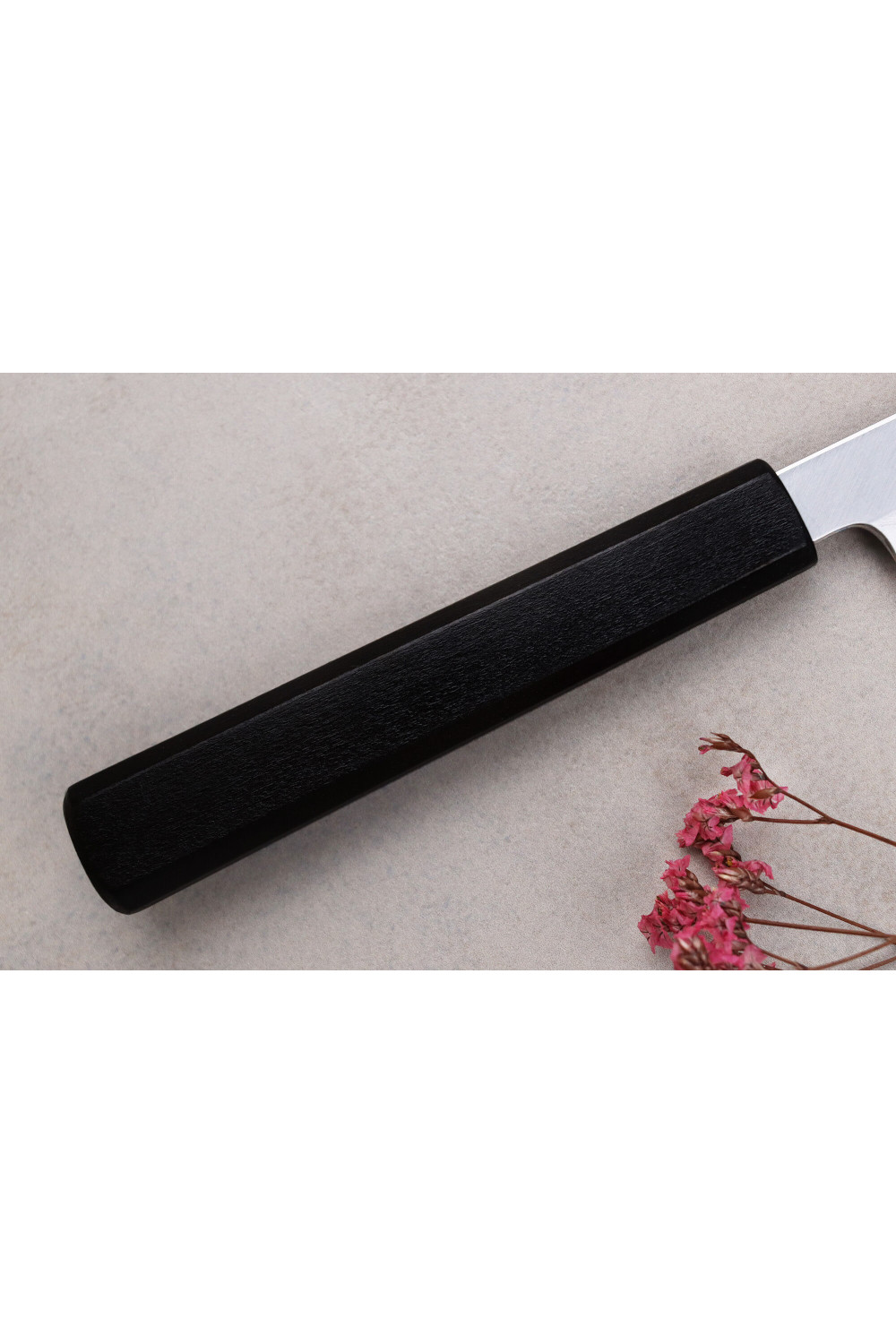
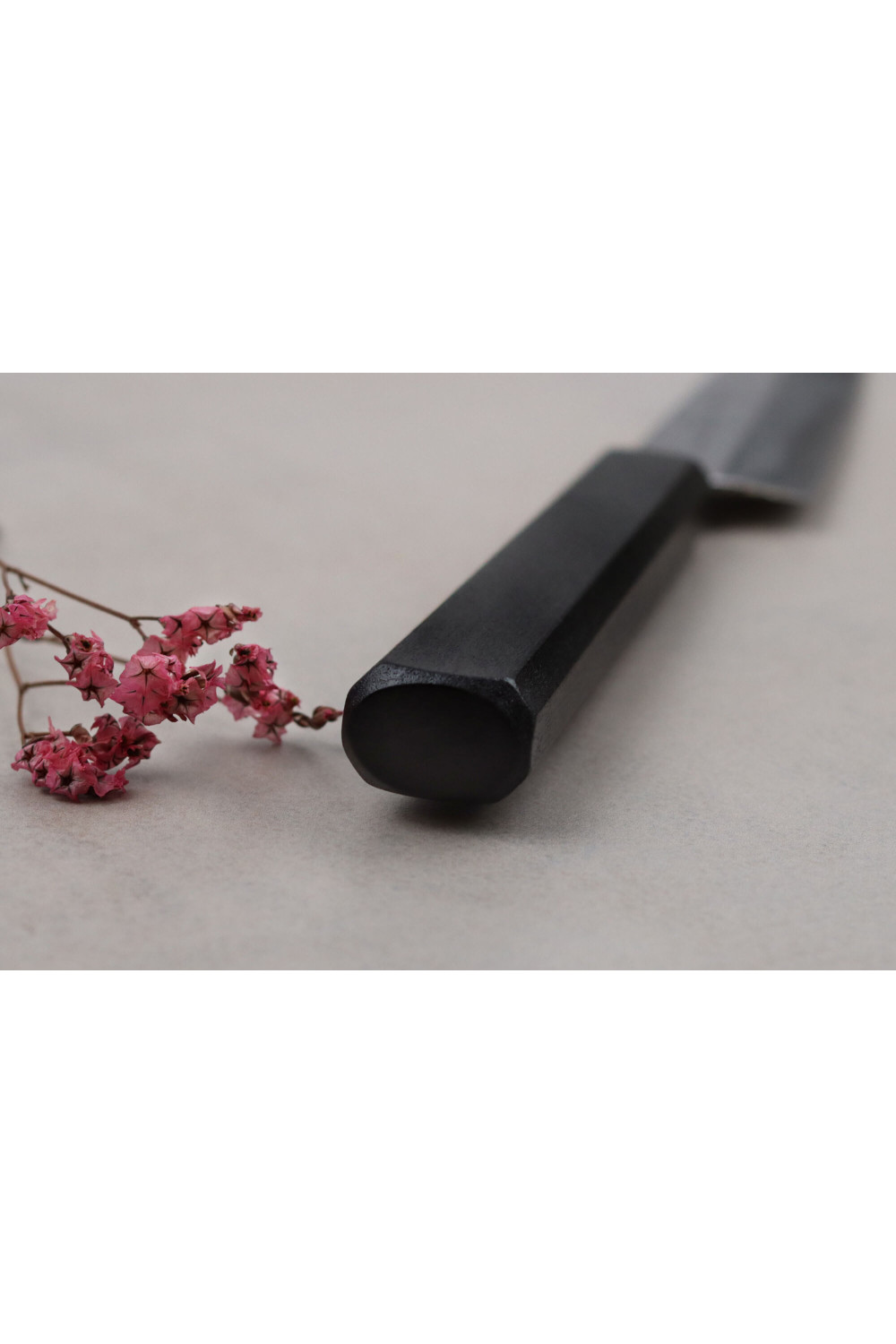
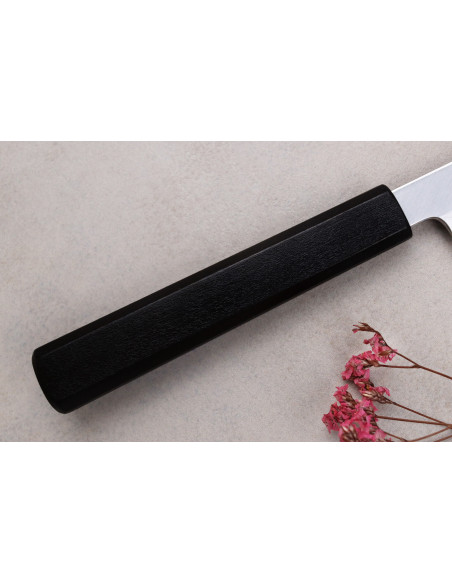
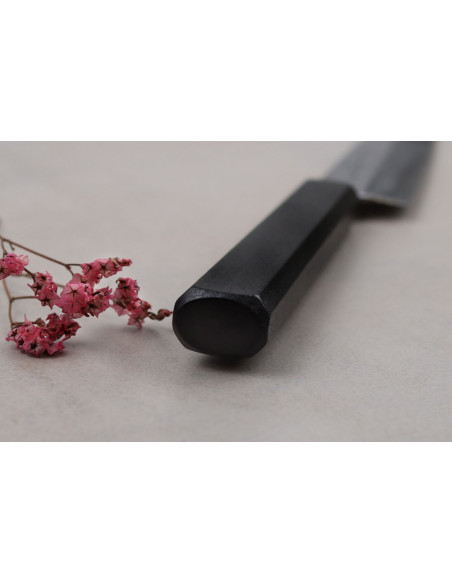
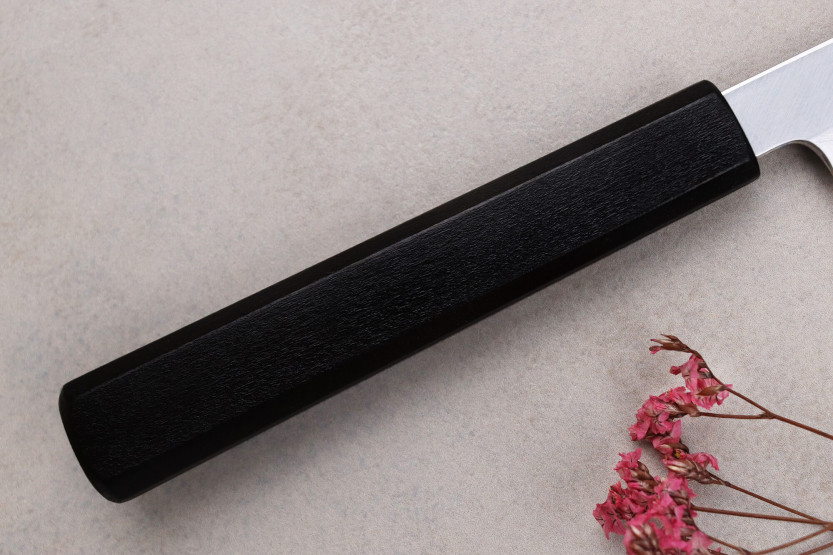
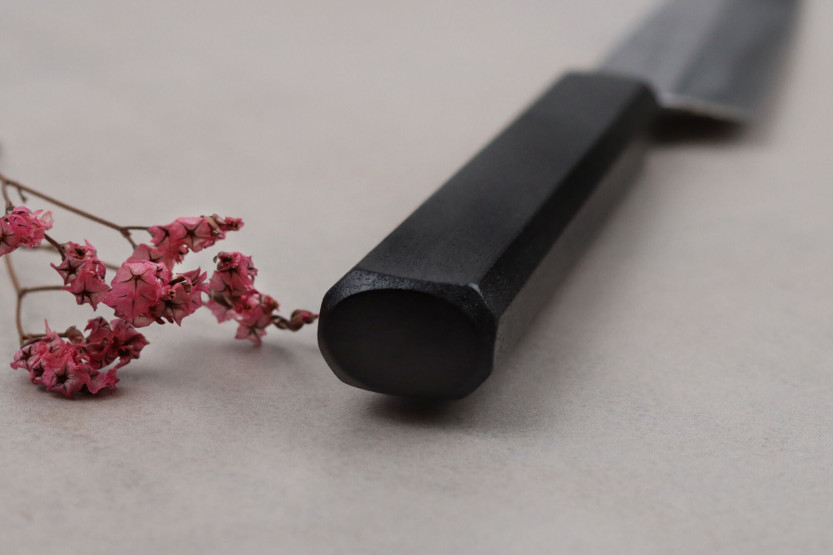
The handle of this Japanese kitchen knife is crafted from magnolia wood, a robust yet lightweight species. This material is then traditionally lacquered by an expert craftsman in Nagano Prefecture, acquiring a deep black hue that envelops it completely. This lacquer makes the handle resistant to humidity and antibacterial.
The octagonal shape of the handle adapts to the hands of all cooks, right- and left-handed alike. Its ergonomic design allows the palm of the hand to adjust perfectly to the handle, which remains light enough for comfortable handling. What's more, it tapers slightly at the bolster, improving grip.
The blade is securely fixed to the handle with wood paste, visible when looking at the edge of your damascus knife. This prevents food from seeping into the handle, ensuring optimum durability and hygiene.
How do I care for a handcrafted damask knife?
This Kagekiyo knife requires exclusively manual maintenance. Do not put it in the dishwasher, nor leave it to soak in the sink.
To clean it, use a sponge with a mild detergent, taking care to wash it gently. After washing, wipe dry immediately for storage, leaving no trace of moisture and preserving its quality over time.
It is crucial to note that Aogami steel, due to its high carbon content, is subject to oxidation. Even with meticulous care, the color of your knife may change over time. This variation is normal, and is caused by the acidity of the food being cut or the humidity in the air.
To maintain your knife, find all our sharpening stones on KnifeLeader.eu!




 By buying this product you can collect up to