Mutsumi Hinoura, the blacksmith trained by his father, Tsukasa Hinoura
Mutsumi Hinoura is a young blacksmith who works with his father, the renowned Tsukasa Hinoura. They work in their family workshop in Sanjo, a town in Japan renowned for the exceptional quality of its knives and tools. Mutsumi san represents the 4th generation of his family and began his blacksmith apprenticeship in 2001, following in his father's footsteps. For almost two decades, he has worked hard to perfect his craft, blending traditional techniques with modern innovations to bring you blades of exceptional quality.
The Hinoura family's ancestral tradition of blade forging dates back to the Meiji era, at the beginning of the 20th century, and continued through to Mutsumi. Traditional forging techniques have been passed down from generation to generation, and have earned Hinoura family knives a worldwide reputation for their traditional craftsmanship and high-quality heat treatment.
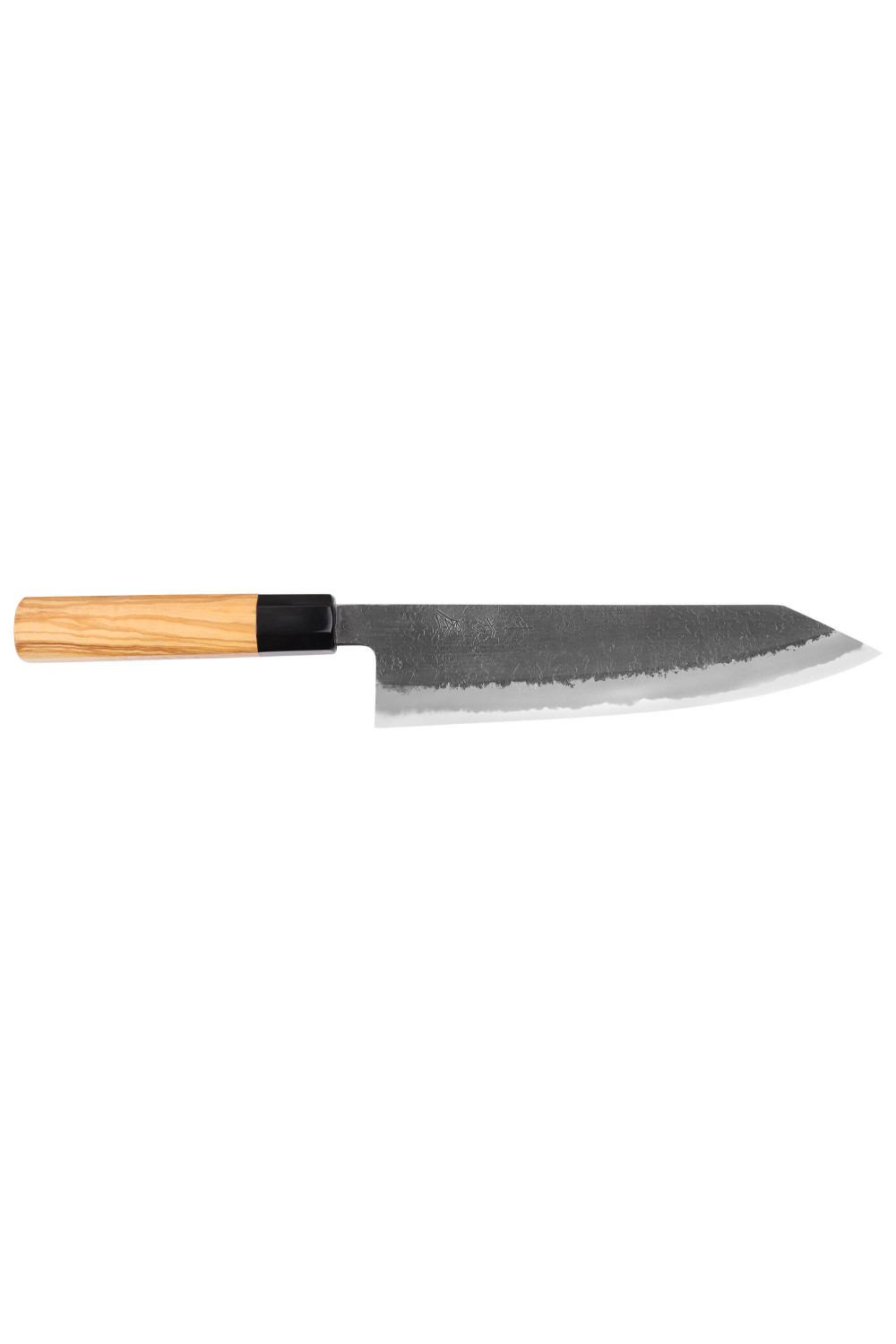
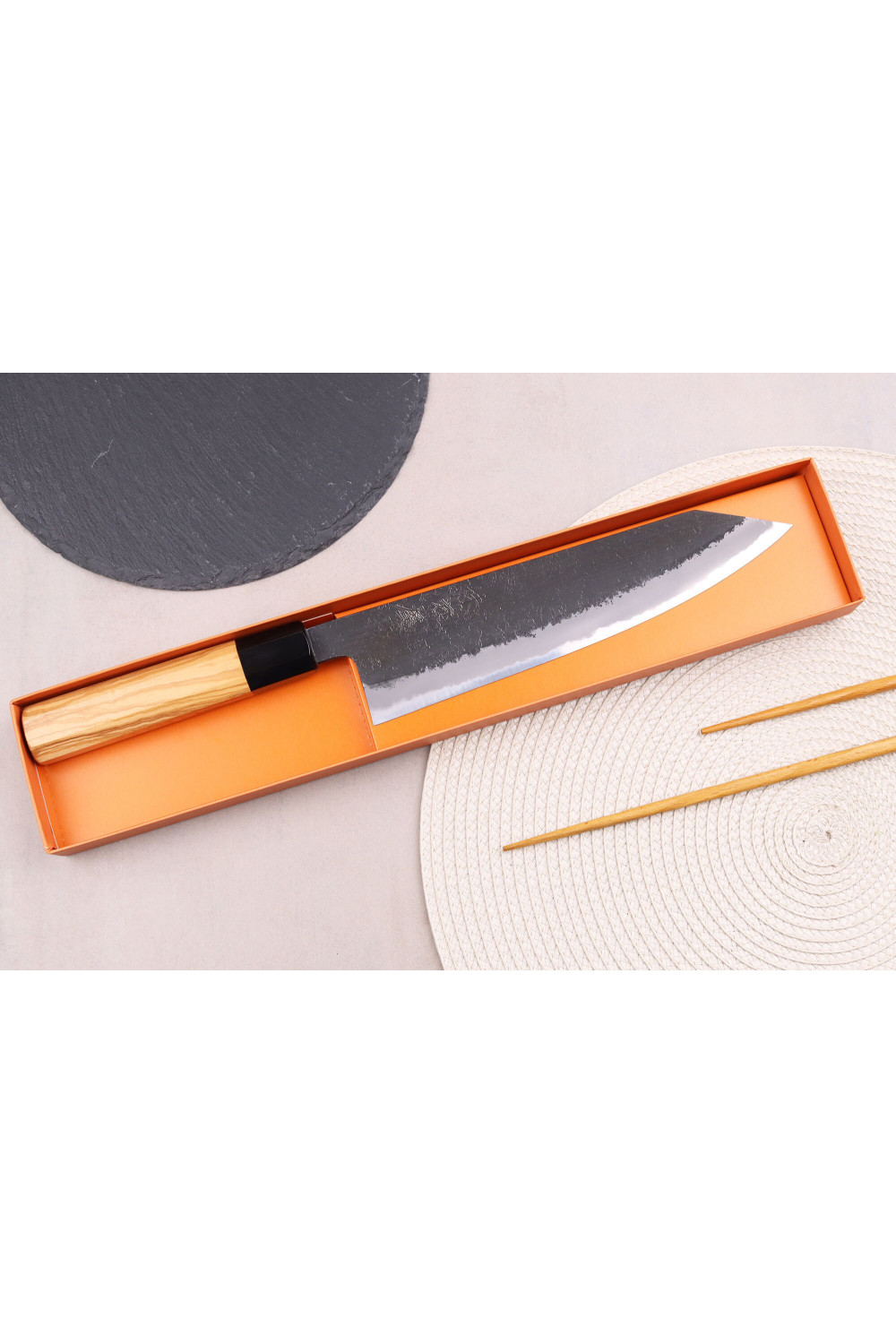
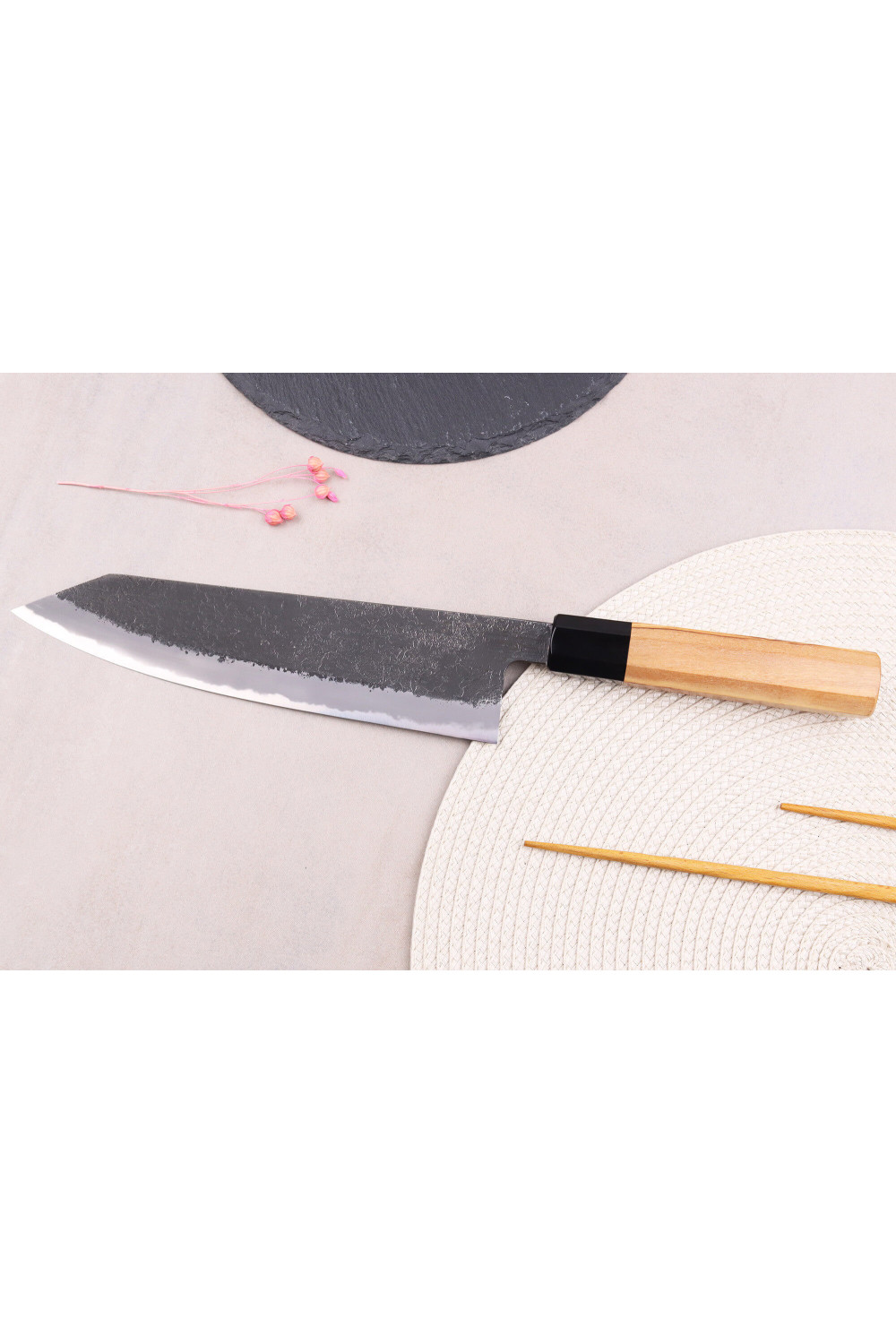
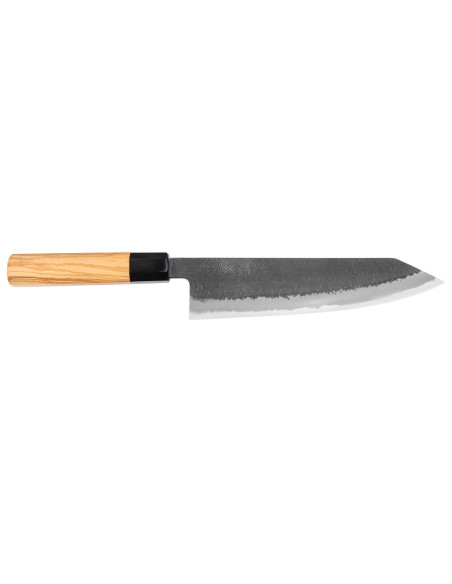
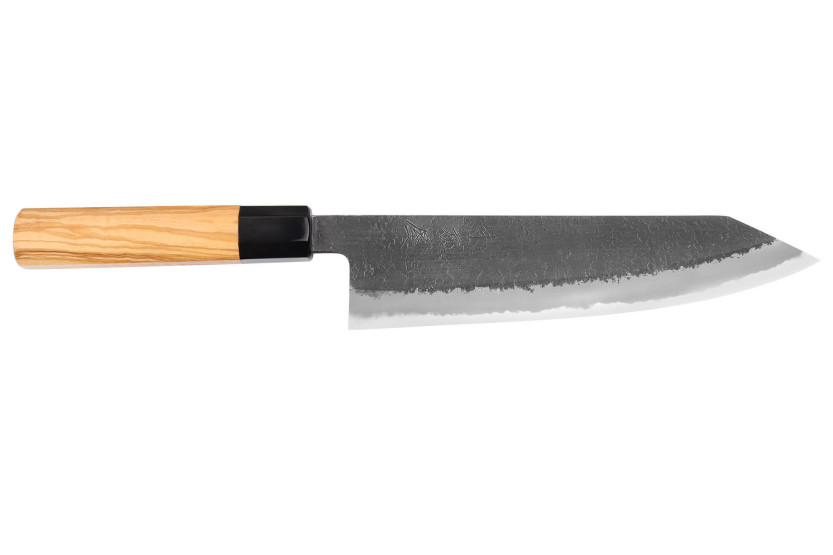
Ajikataya brand knives are distinguished by their sober-looking blades, which have benefited from Mutsumi's meticulous craftsmanship. The blades are hot-forged, with a thick base that tapers progressively towards the tip.
An elegant olive wood handle
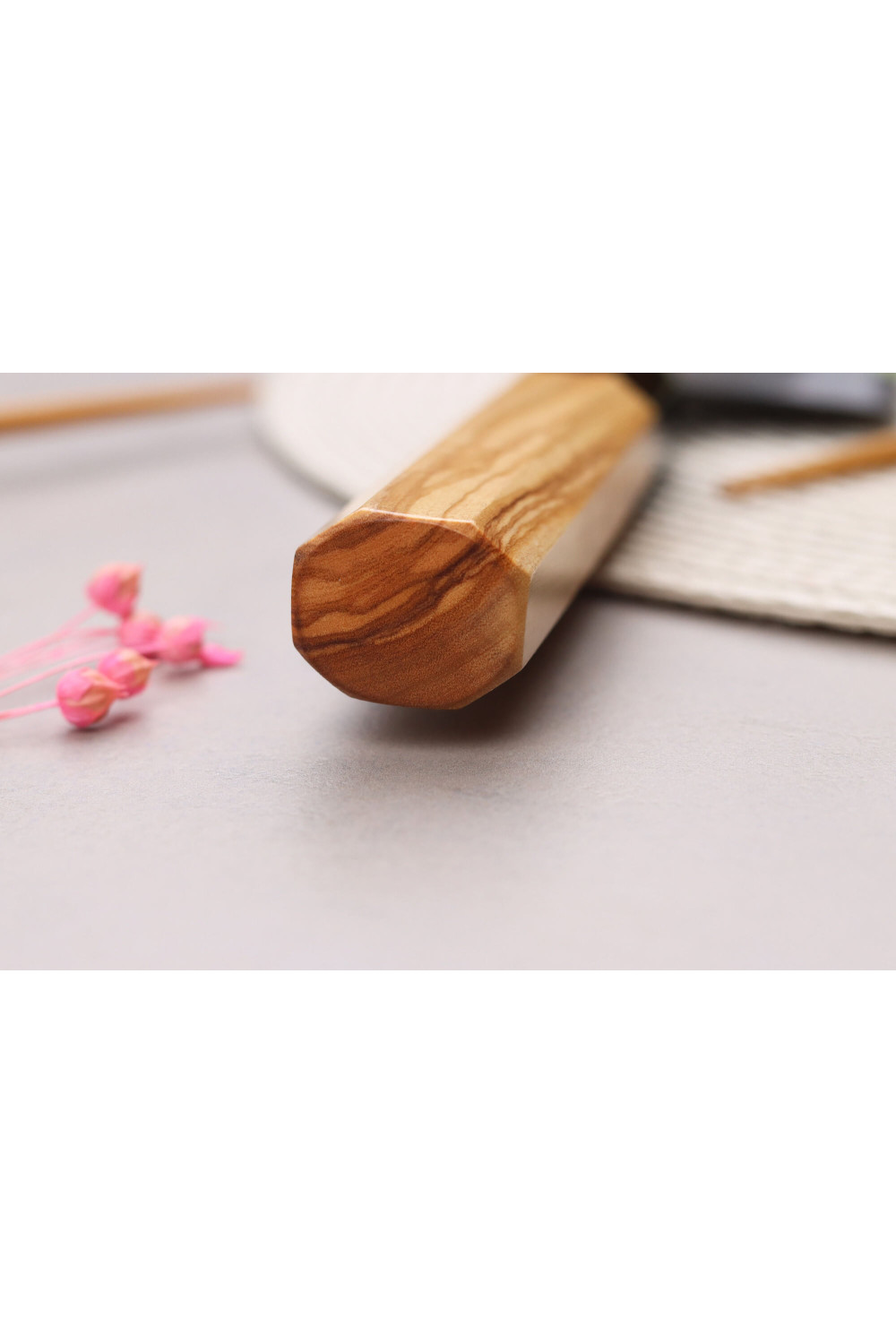
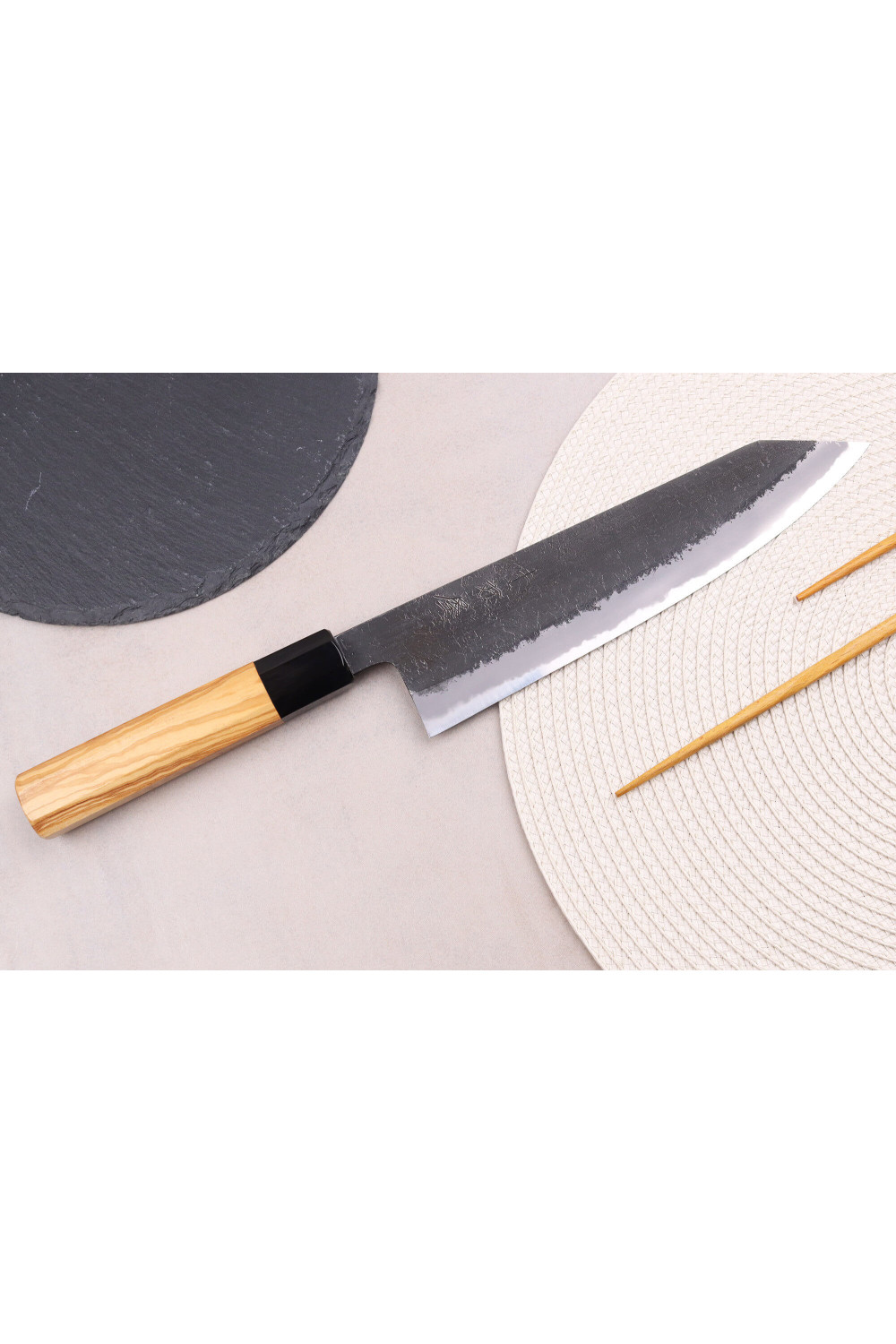
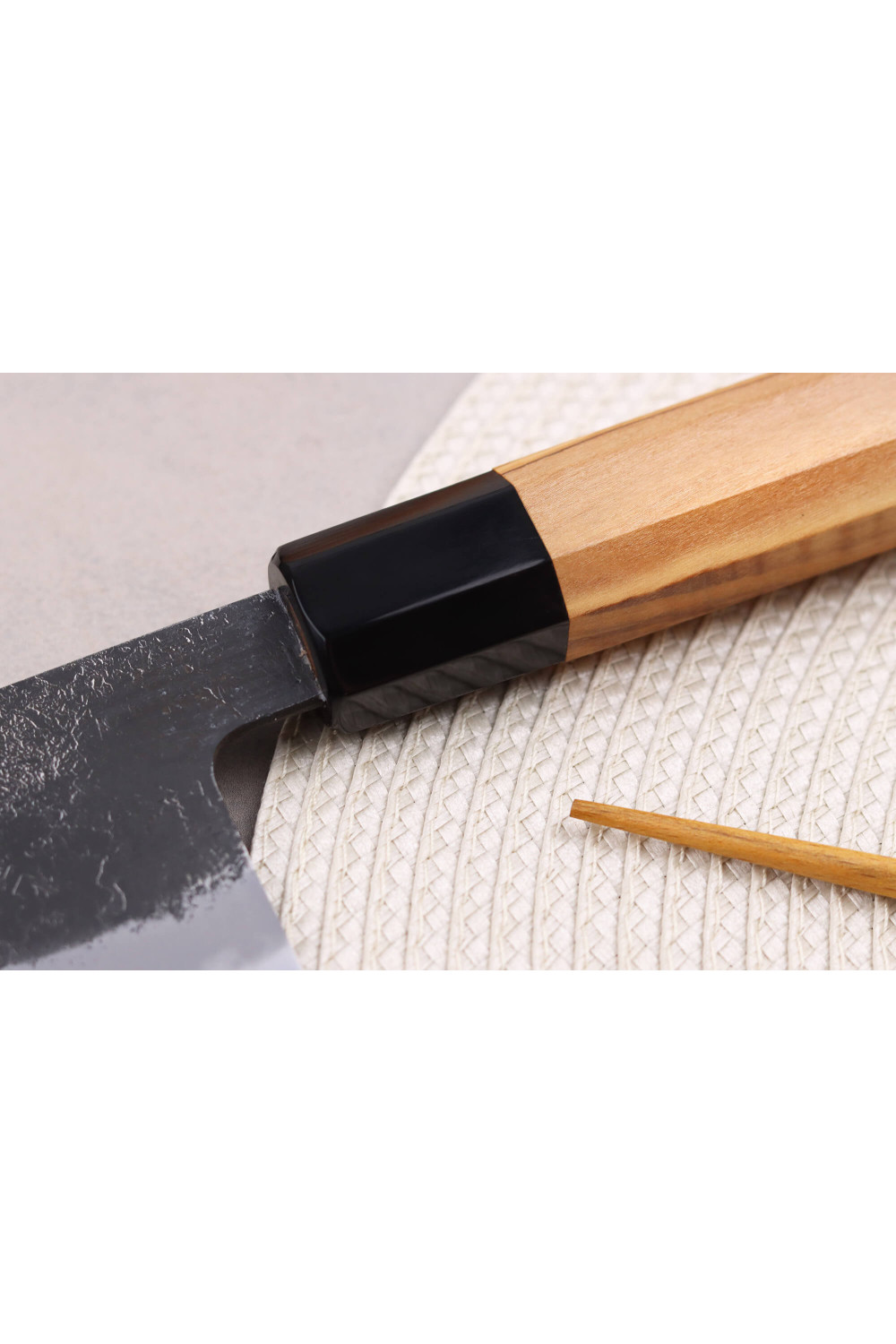
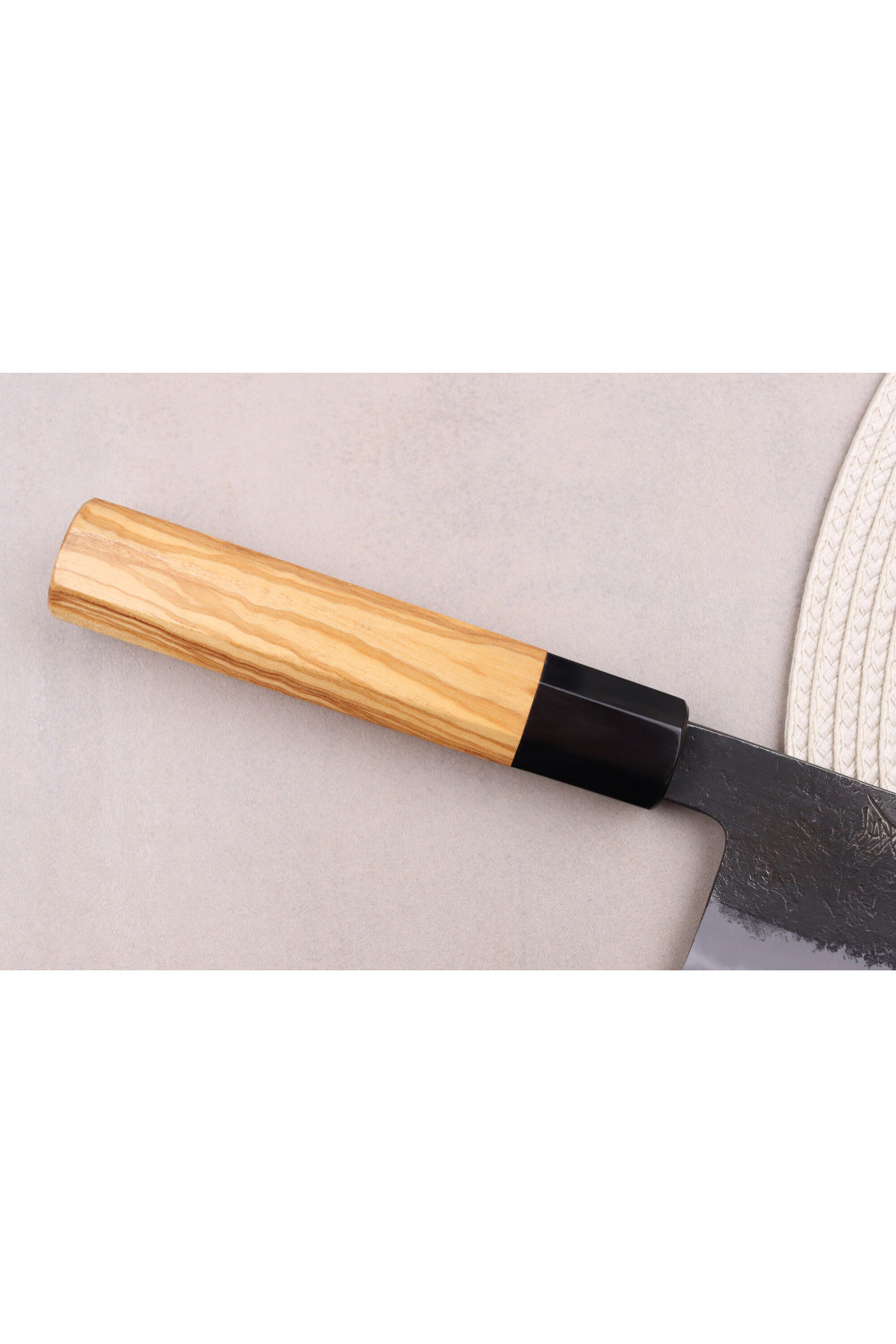
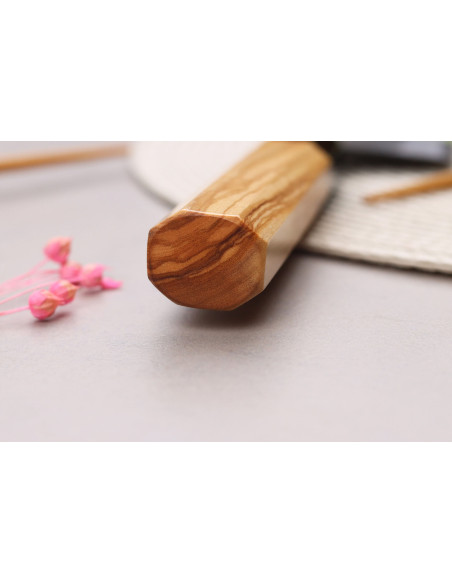
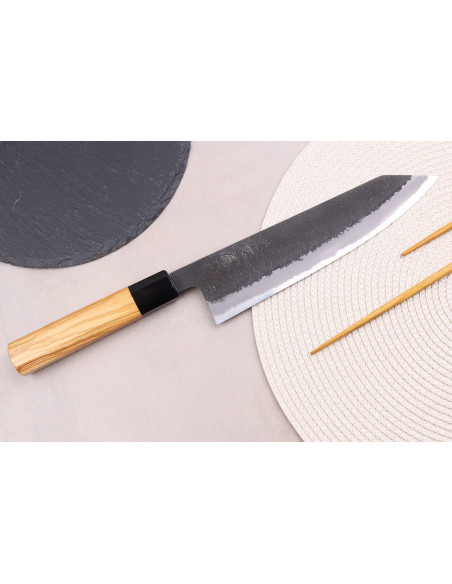
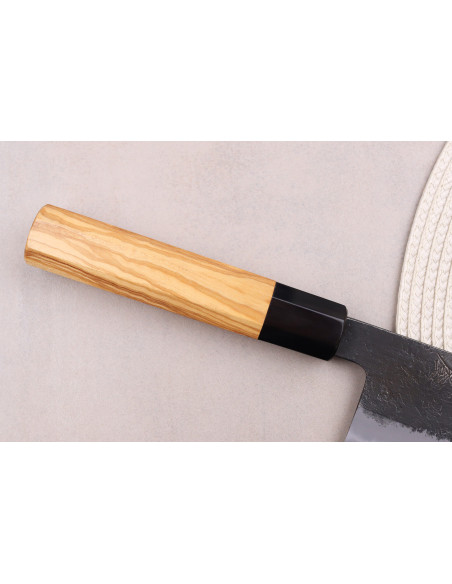
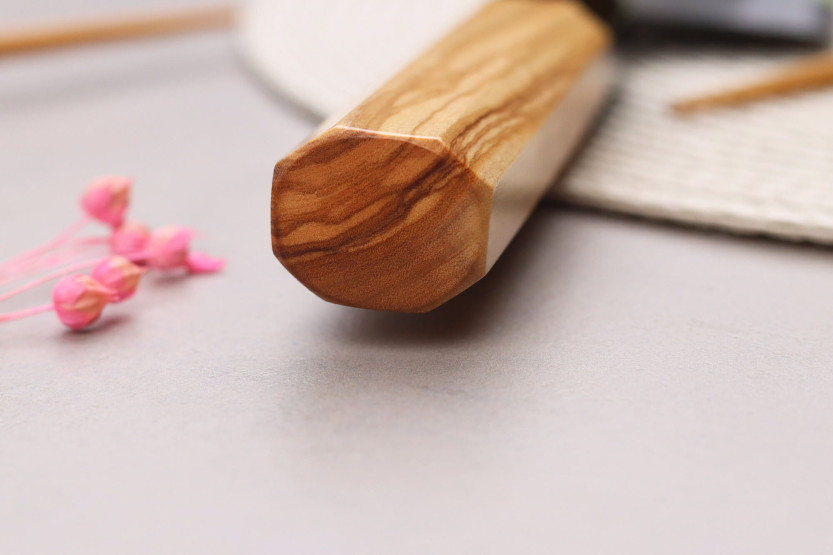
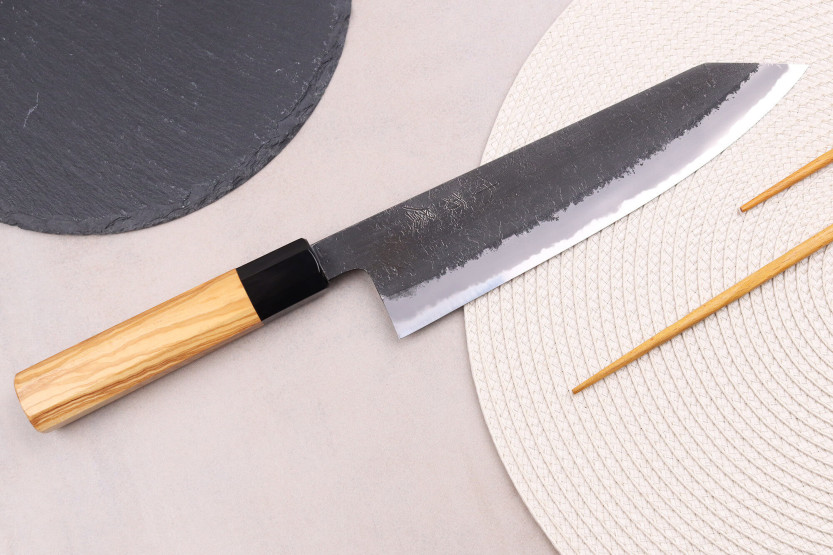
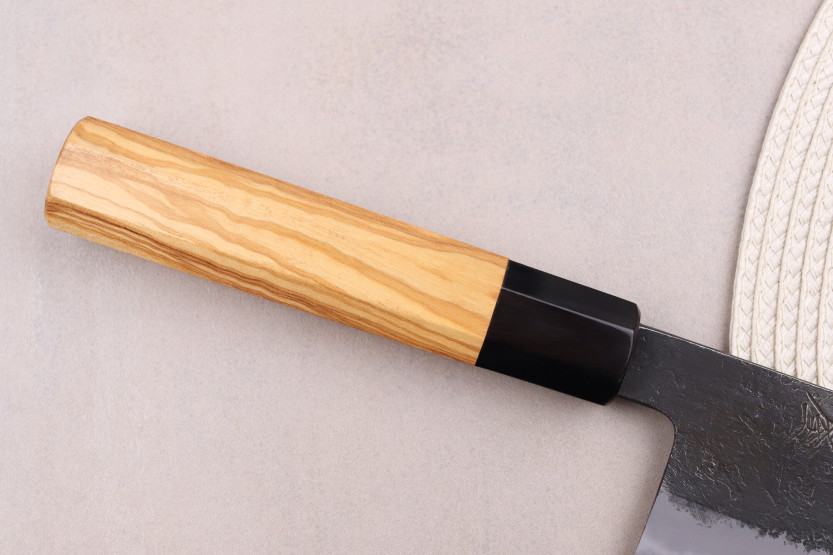
This Japanese knife kitchen Japanese knife features an octagonal-shaped handle, ensuring optimum grip for both right- and left-handed cooks. Its ergonomic shape offers comfort and maneuverability, two qualities appreciated during intensive cutting.
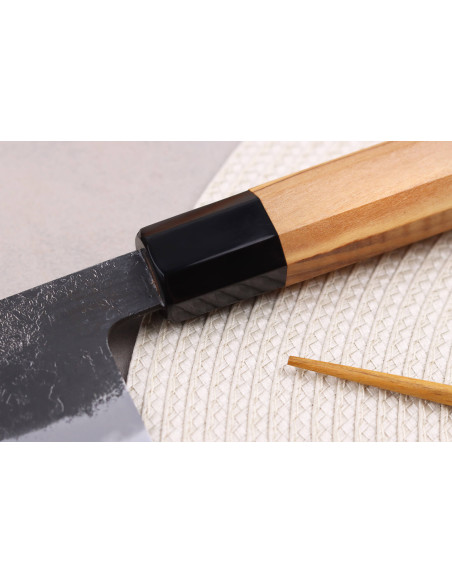
The handle is made from long-lasting olive wood. This dense species is resistant to bacteria and humidity, which prevents it from warping due to condensation. Olive wood is also distinguished by its attractive golden hue, which highlights a unique contrasting grain pattern, adding even more elegance to the knife.
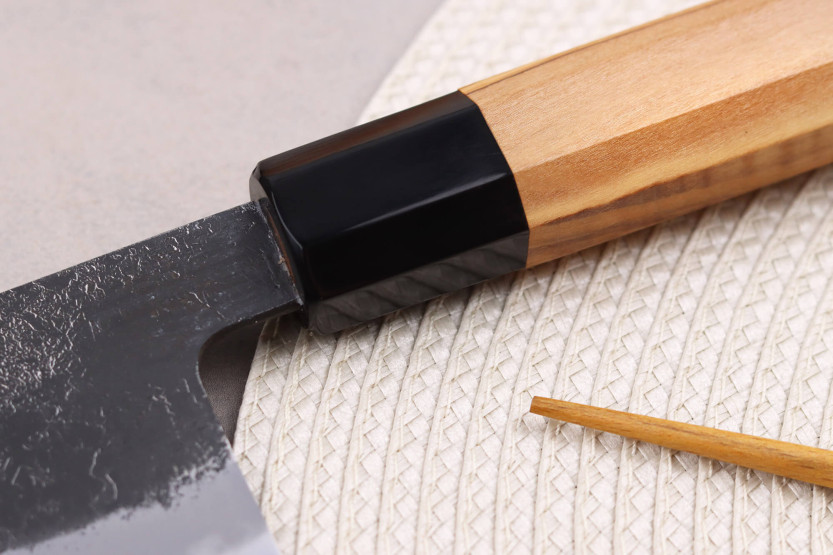
Last but not least, the handle features a black buffalo hornBolster that provides the link with the blade. As horn is a natural material, its appearance may vary slightly from one knife to another.
A top-of-the-range blade in Shirogami #2 steel
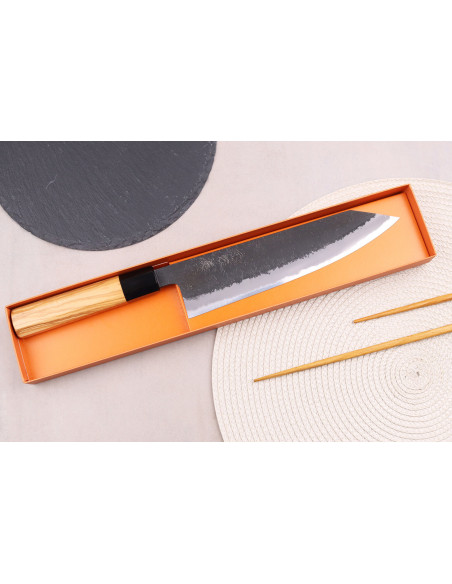
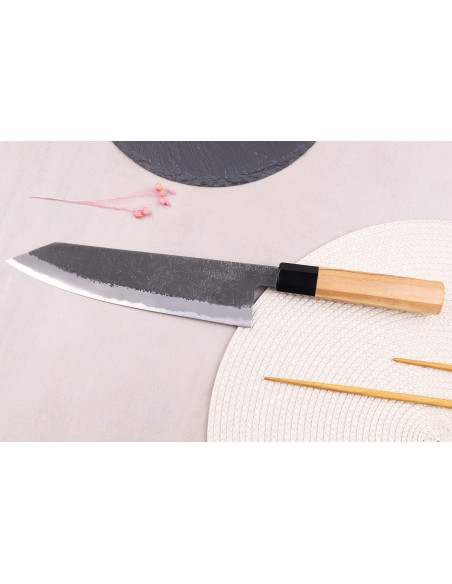
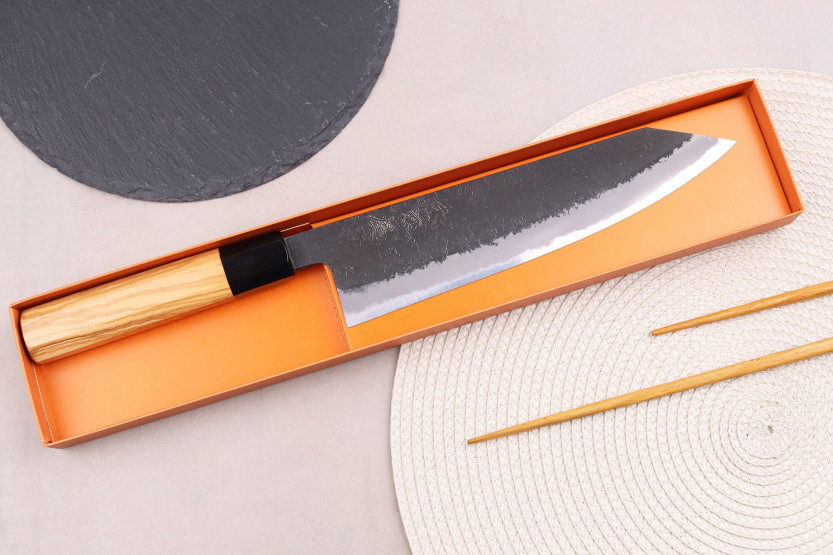
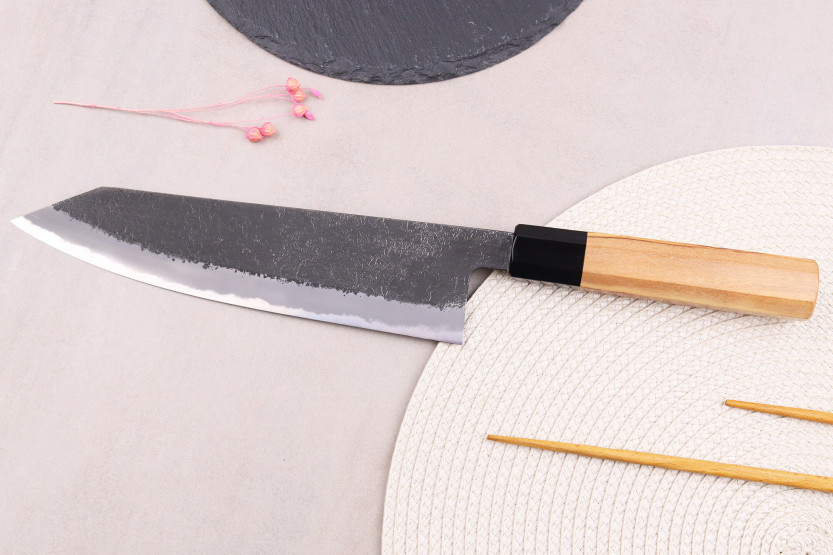
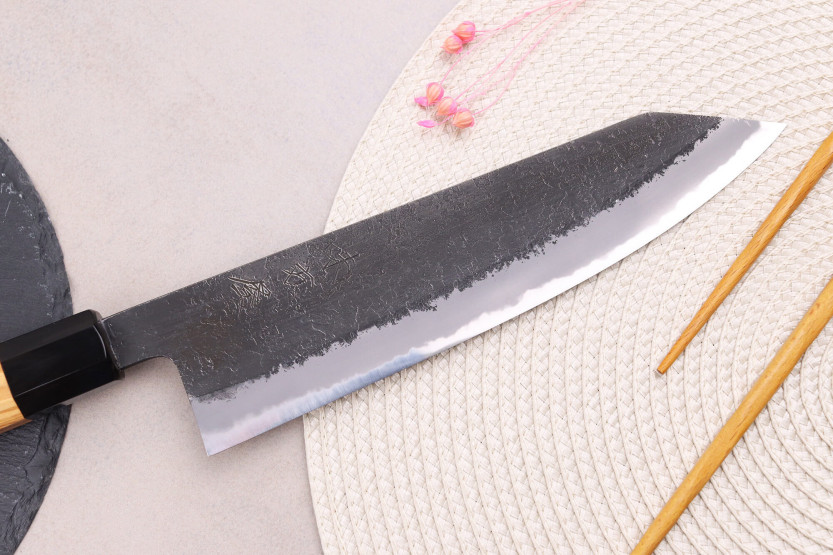
Your kiritsuke is equipped with a 21cm blade designed with a San Maï structure. This term, which translates as "three layers", describes precisely how the blade is constructed. It features a core of rigid steel, surrounded by a layer of softer steel, forming a protective sandwich structure for effective protection and optimum balance.
The heart of the blade is made ofShirogami #2 steel. This top-of-the-range Japanese steel, also known as White Paper Steel #2, is manufactured by Hitachi, the world-famous steelmaker. Its name literally means "white paper" and refers to the way the steel is packaged during production.
The alloy is characterized by a high carbon content of around 1.3%. Carbon plays an essential role in increasing the blade's hardness, giving it superior efficiency and durability. With a hardness of 62 HRC, the knife's blade retains its sharpness for a long time, offering exceptional cutting performance.
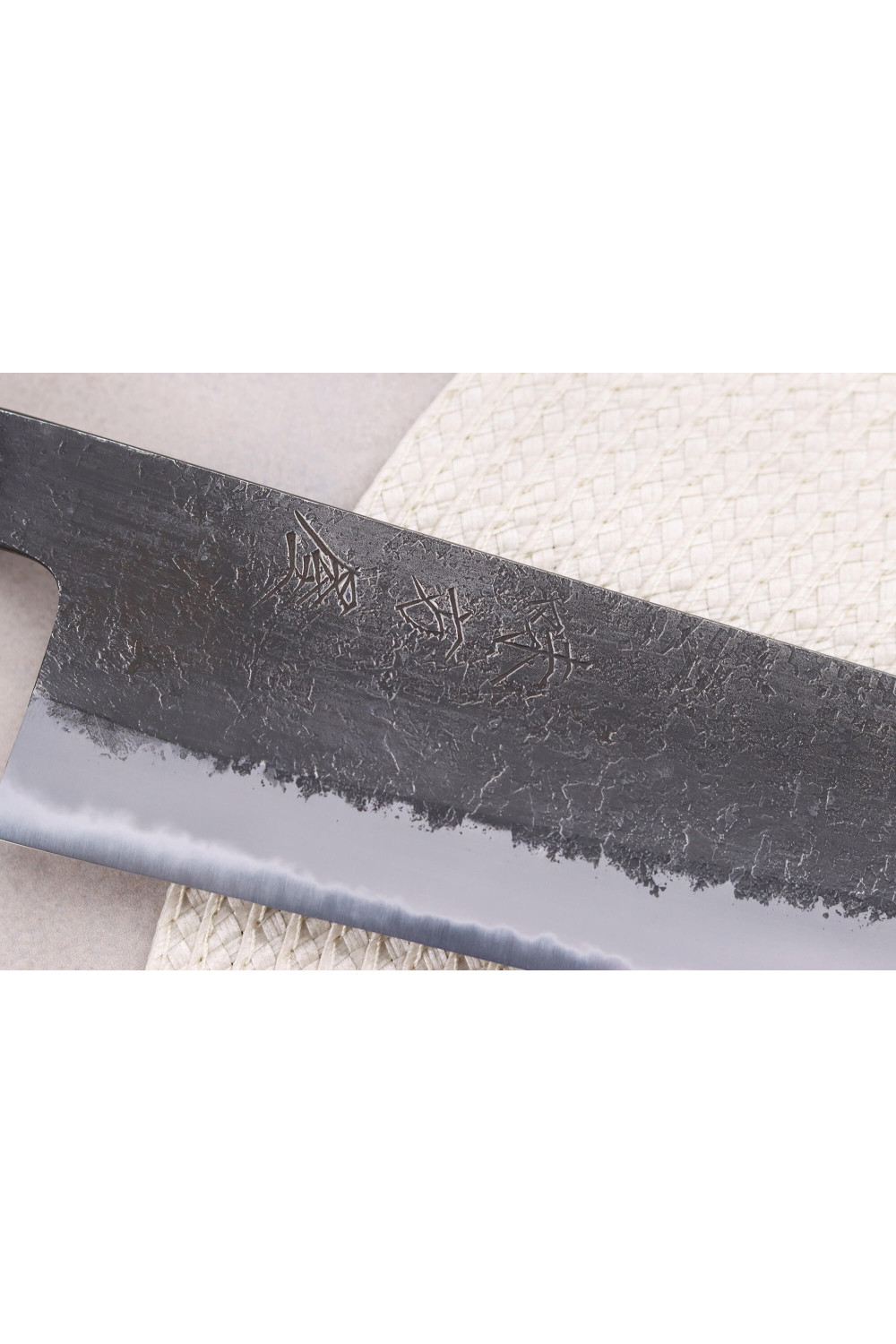
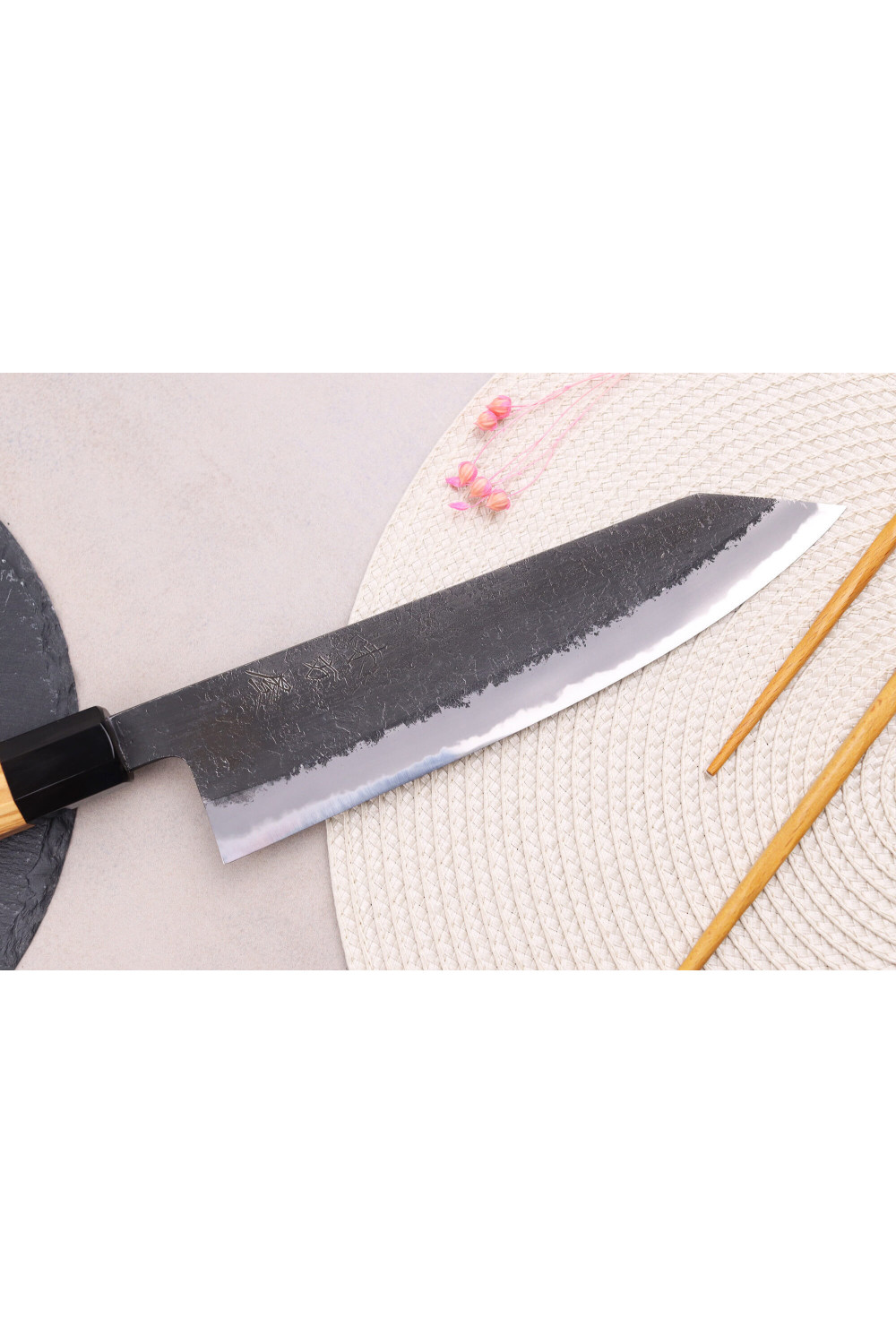
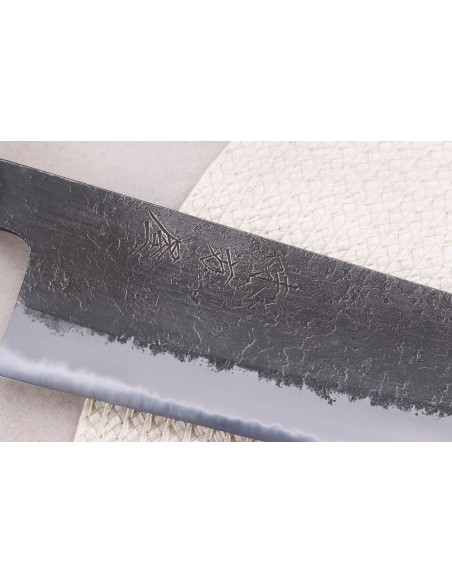
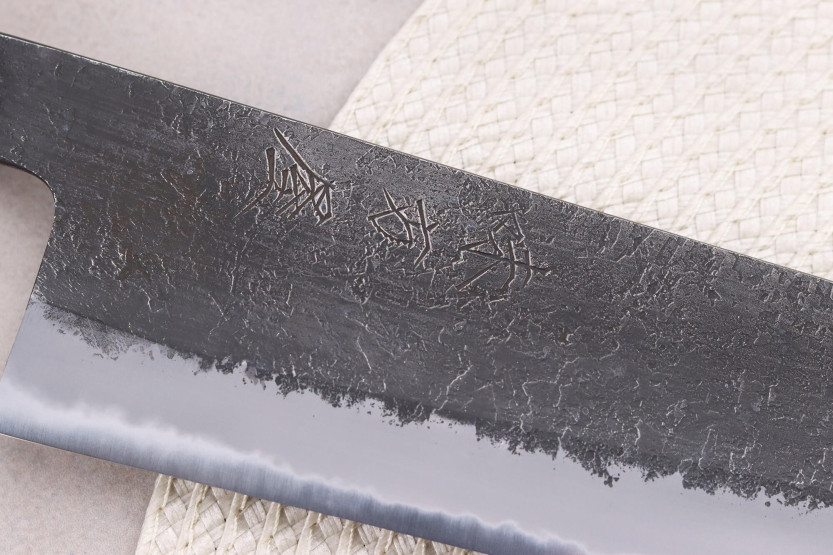
The core of the blade is then wrapped in a layer of softer iron that folds in on either side, forming the San Maï structure. This design gives flexibility to the core while protecting it. As a result, it is more resistant to impact and therefore to breakage during cutting. The superimposed layers of steel form a random line that runs the length of the cutting edge, adding to the blade's unique aesthetic.
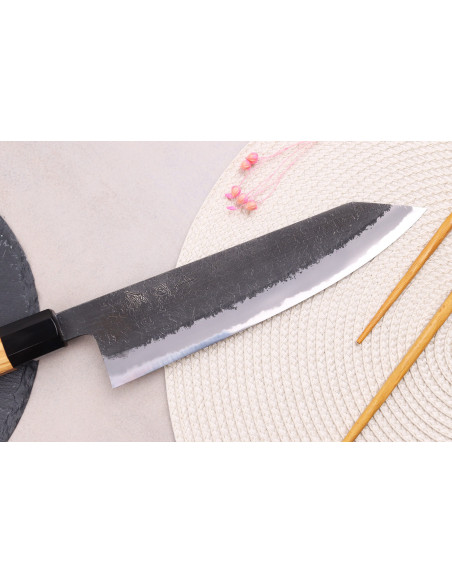
Finally, the blade features a traditional Black Nashiji finish, giving it a rustic, authentic look. This finish gives the impression that the blade has not been polished, as it retains its black color, reminiscent of a rough forged finish. Delicately engraved kanji on the blade reinforce its authenticity.
Caring for this handcrafted kiritsuke
To care for your knife with its carbon-containing blade, wash it exclusively by hand, using a non-abrasive sponge and mild soap, taking care not to get the handle wet. After cleaning, carefully dry the knife with a clean cloth to remove all traces of moisture, and store it in a dry place. Do not clean in the dishwasher or soak in the sink.
The blade may change color slightly over time. This is normal and is due to the natural reaction of carbon to the acidity of certain foods or to moisture in the air. To preserve the quality of your blade, we advise you to keep a sheet of paper towel close by to clean the blade between cuts. We also recommend applying a little mineral oil to the blade from time to time to protect it.
KnifeLeader.eu offers you a great selection of kiritsuke knives!




 By buying this product you can collect up to