Learn more about blacksmith Mutsumi Hinoura
Mutsumi Hinoura is a Japanese blacksmith who works with his father, the renowned Tsukasa Hinoura. Their family workshop is located in Sanjo, Japan, a town renowned for its top-quality knives and tools. Mutsumi san represents the 4th generation of his family to forge blades, and began his apprenticeship with his father in 2001. He has trained for almost 20 years to create blades that blend traditional methods with modern performance.
The Hinoura family began forging knives during the Meiji era, at the beginning of the 20th century, and traditional forging techniques have been passed down ever since. Hinoura knives are world-renowned for their traditional craftsmanship and heat treatment. These are top-of-the-range hand-forged knives, where attention to detail is paramount for the blacksmiths.
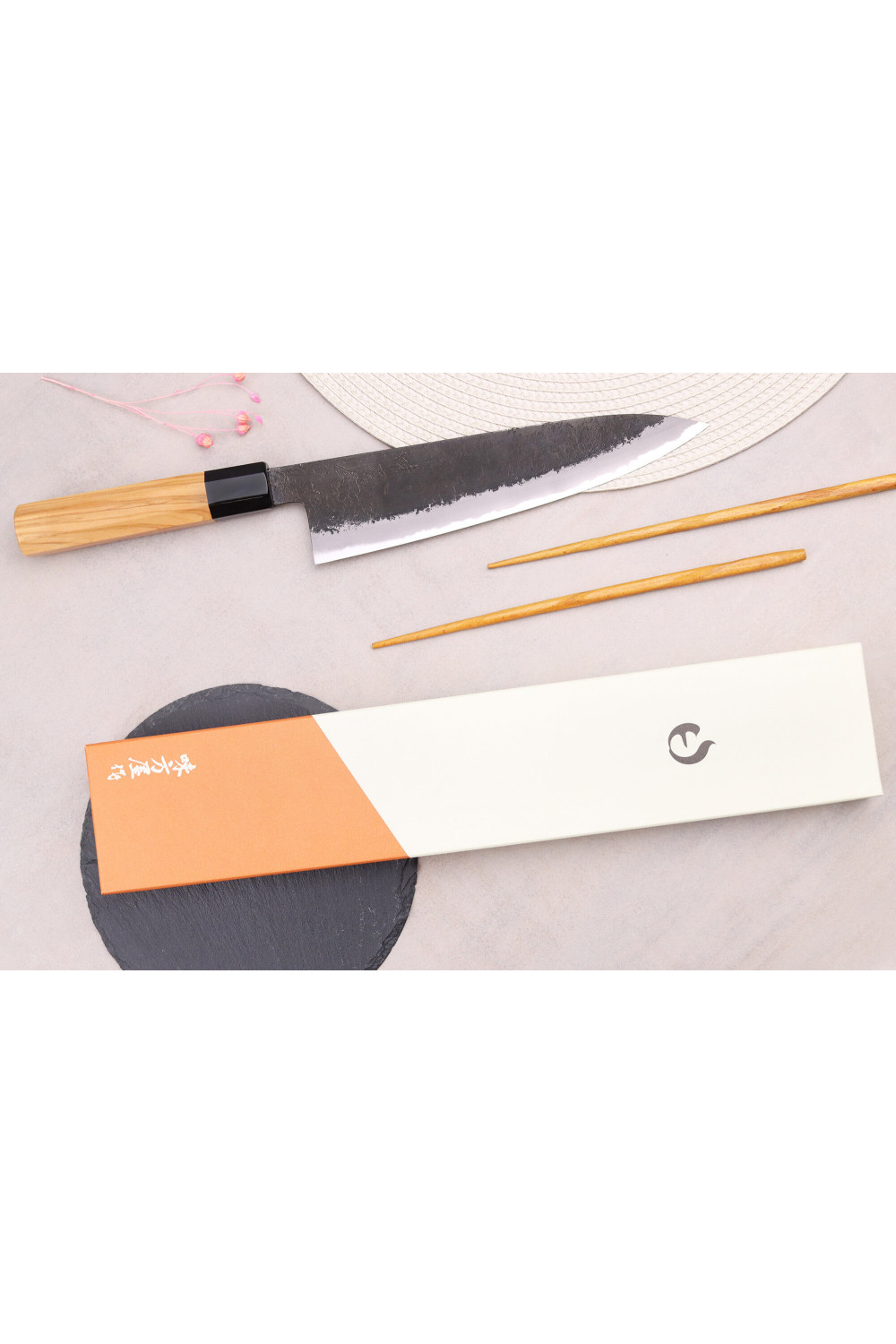
The Ajikataya brand of knives features simple-looking blades, but Mutsumi's precise workmanship. They are hot-forged and feature a thick blade base that becomes progressively thinner as it reaches the tip.
A superb blade in Shirogami #2 steel
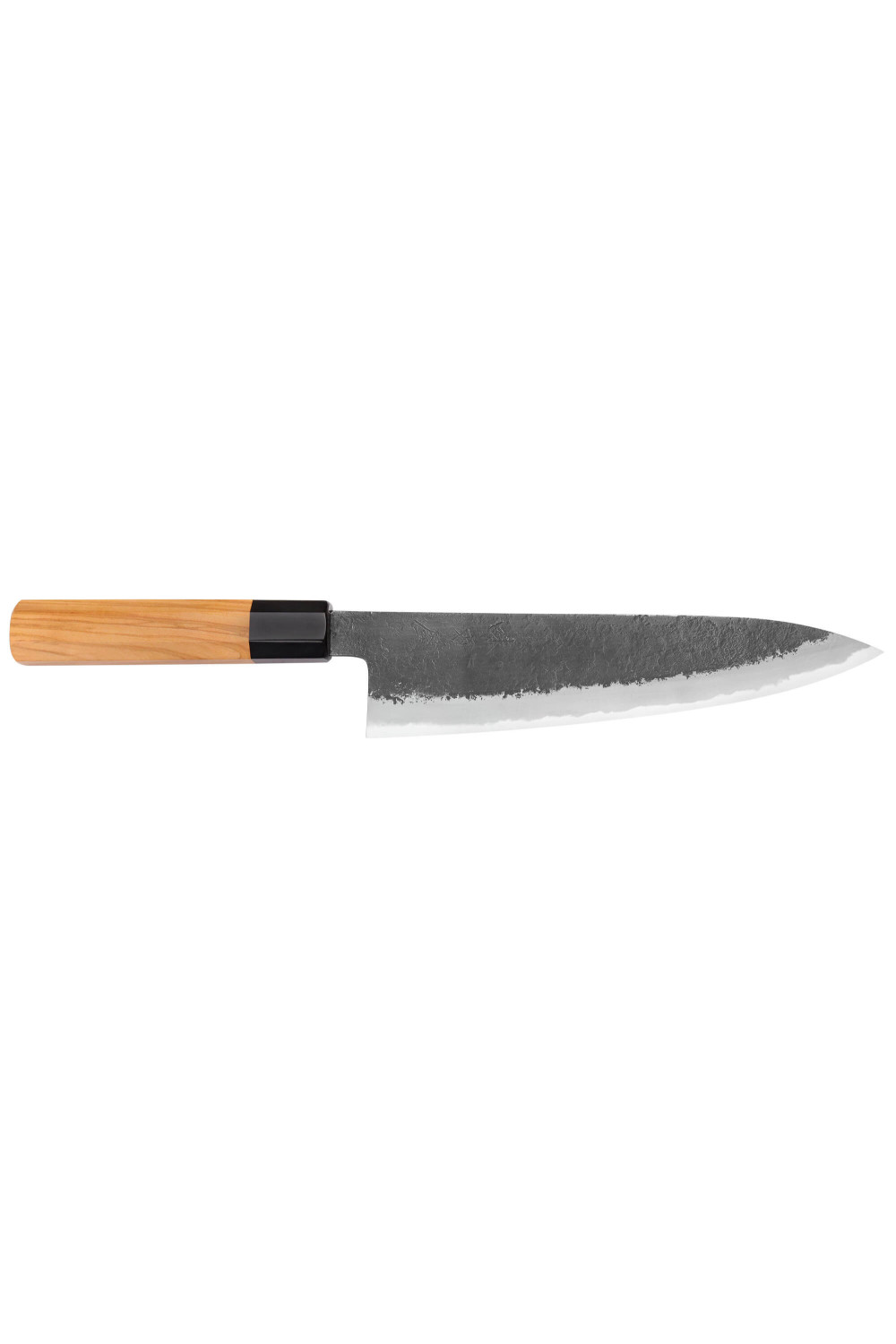
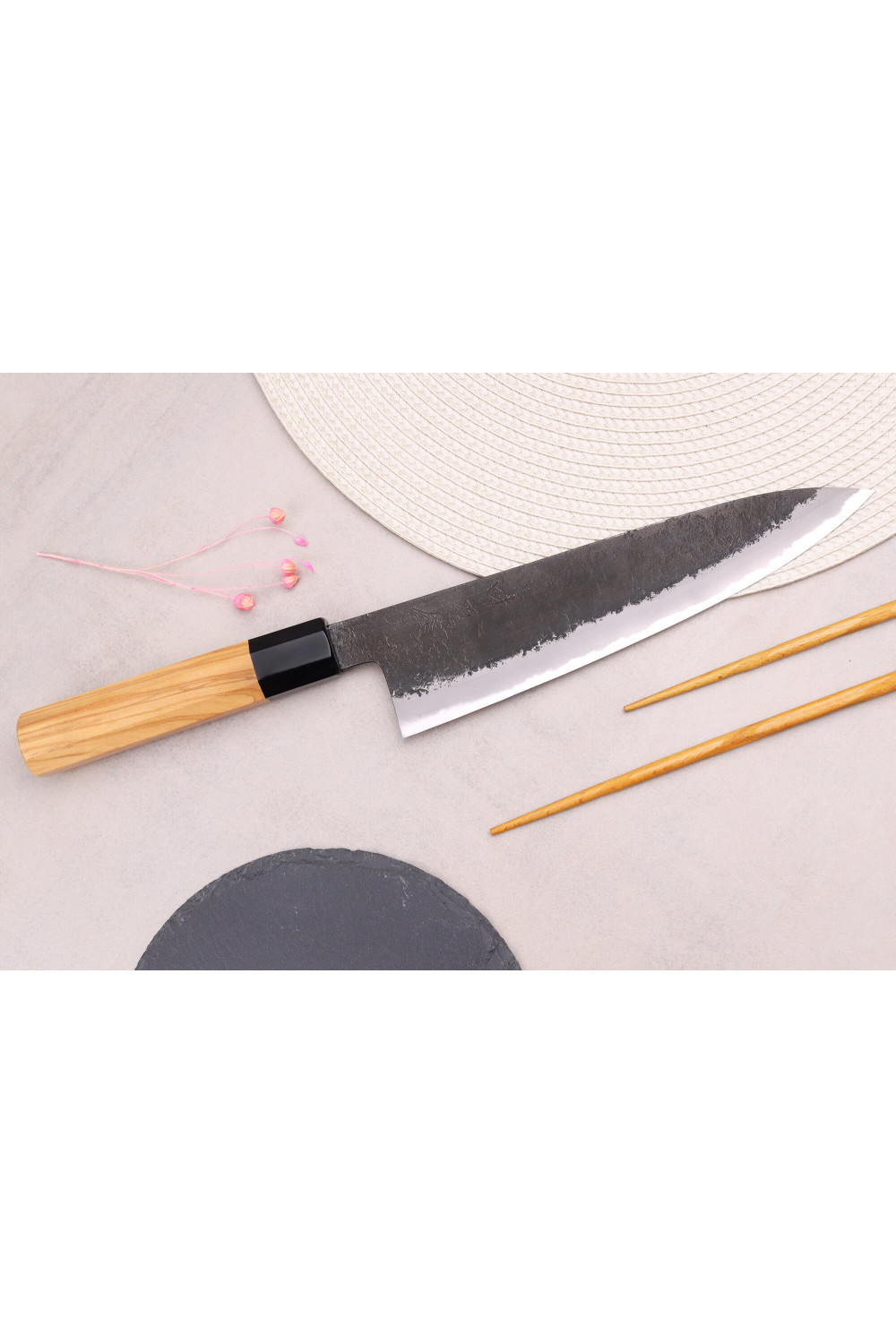
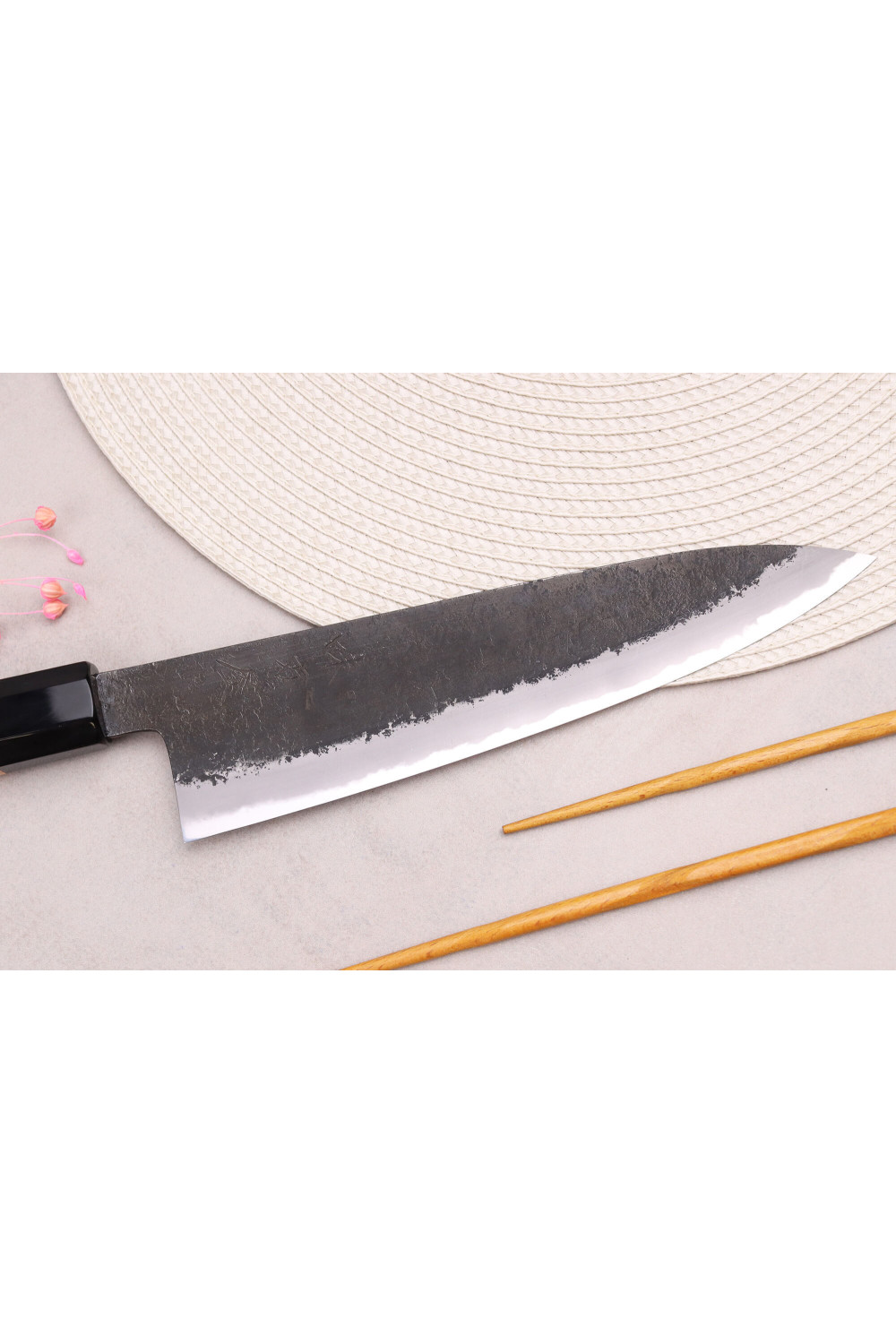
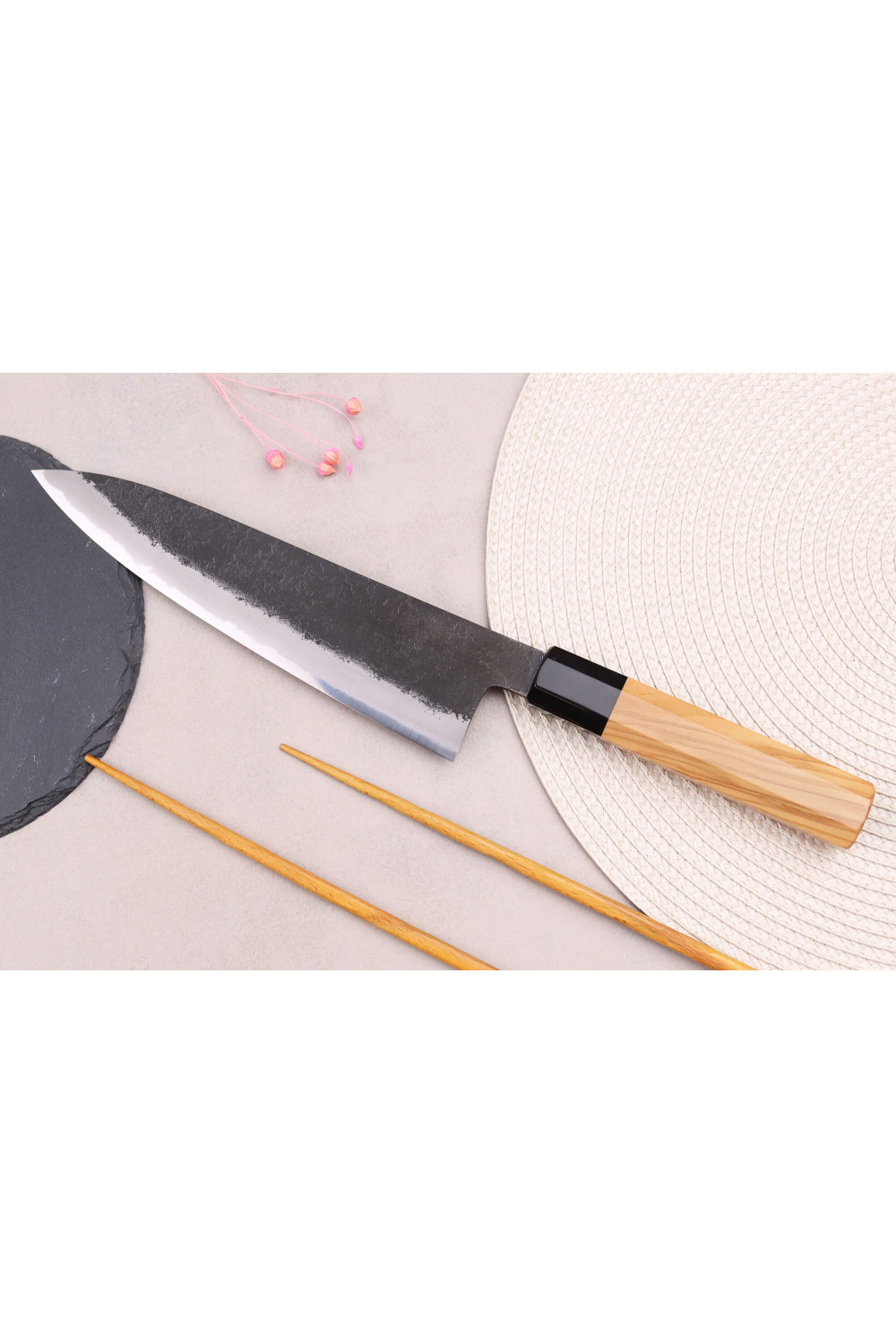
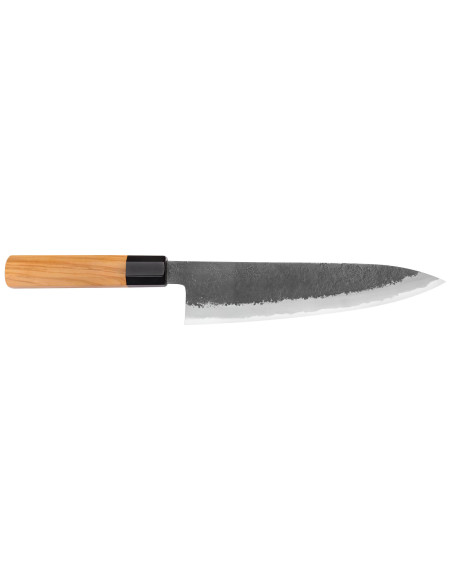
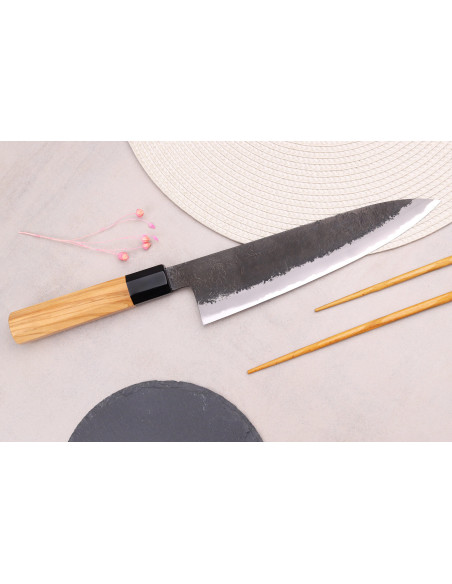
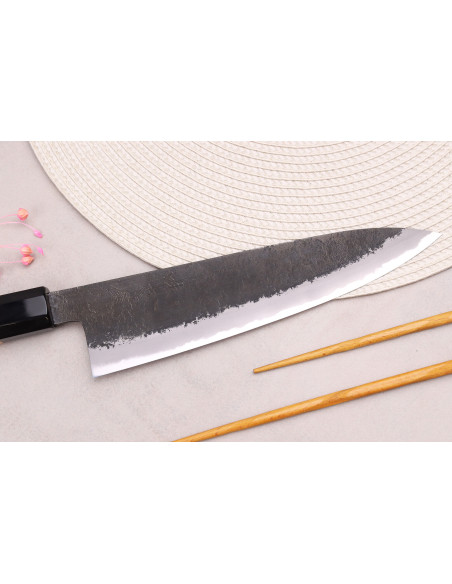
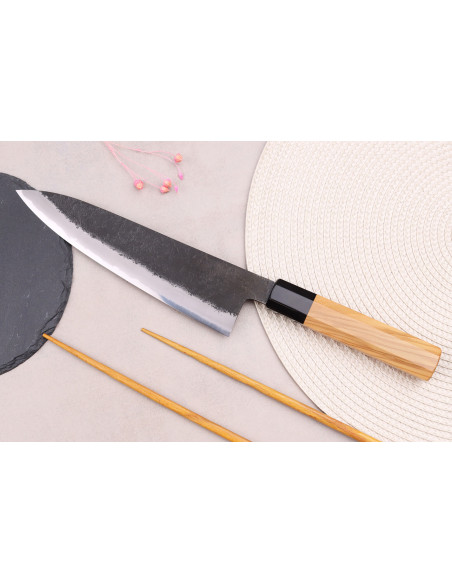
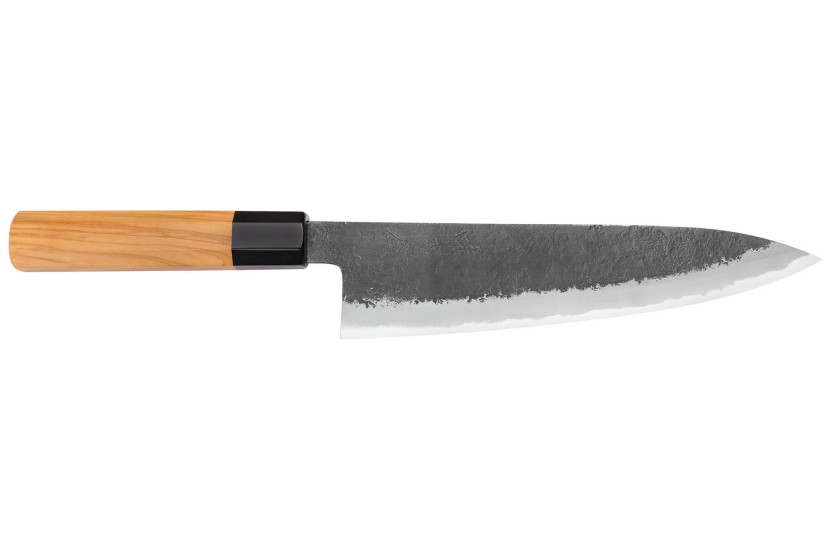
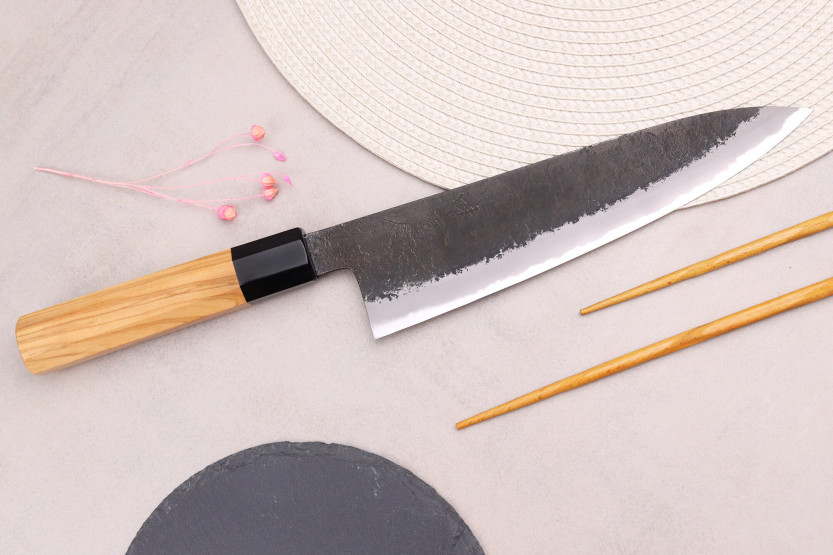
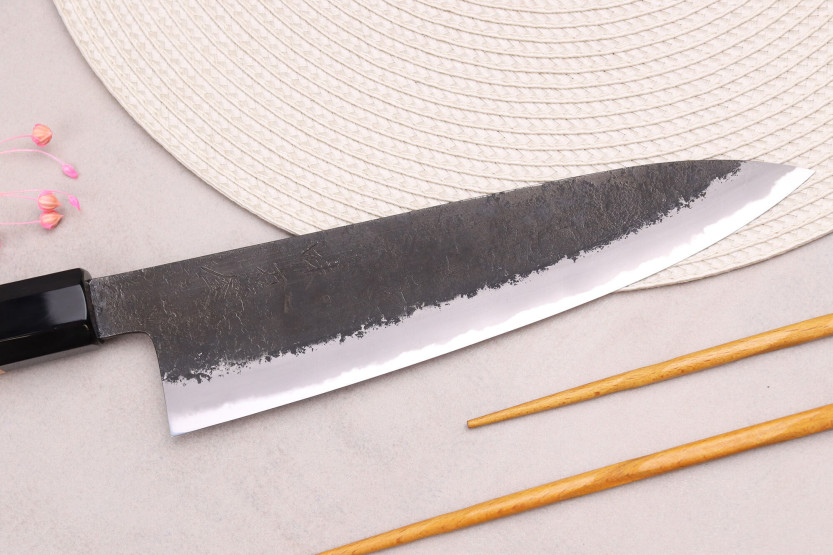
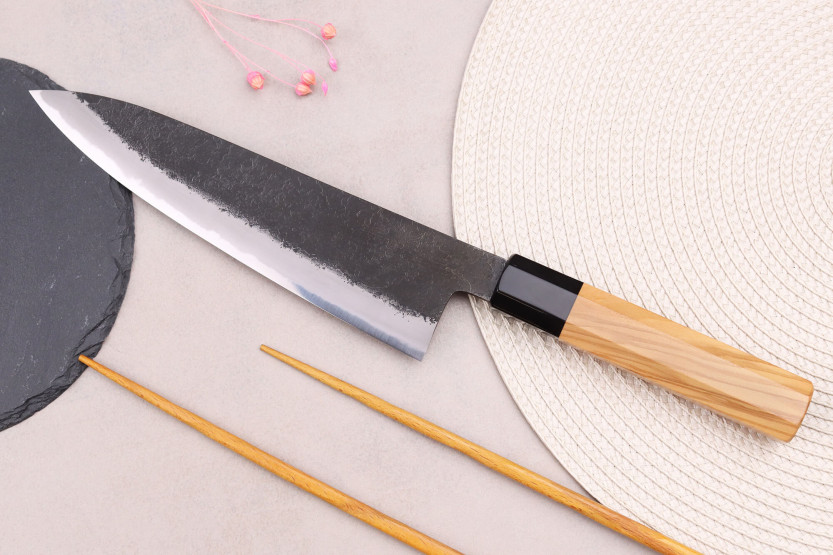
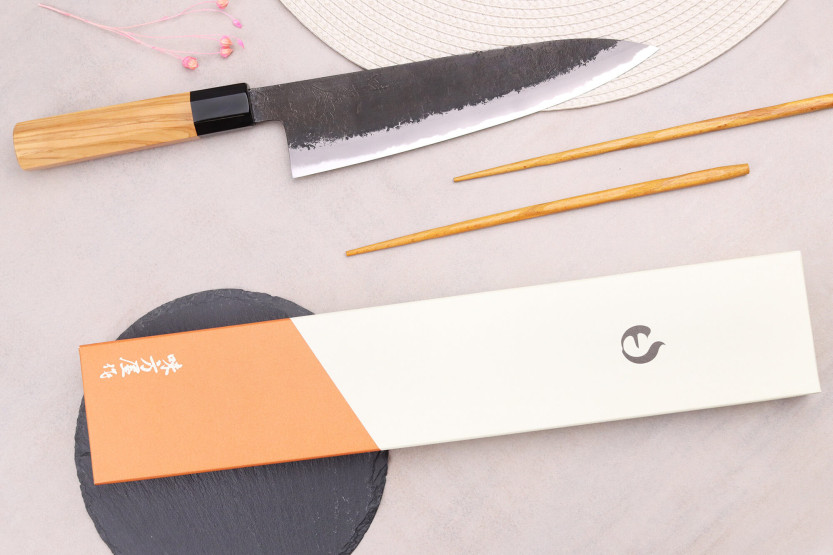
This Japanese chef's knife has a 21cm blade with a San Maï structure. These terms mean "3 layers" and indicate how the blade is constructed. It contains a core made of rigid steel, which is then enveloped by a layer of slightly softer steel folded into a sandwich, designed to protect it and give it optimum balance.
Shirogami 2 steel (also known as White Paper Steel #2) has been selected for the heart of this knife. This is a top-of-the-range Japanese steel produced by the internationally renowned steelmaker Hitachi. The name of this steel, which literally means "white paper", refers to the way it is conditioned during production.
Shirogami #2 steel has a high carbon content of around 1.3%. Carbon is the essential element for increasing a blade's hardness, making it both more efficient and more durable. The blade here achieves a hardness of 62 HRC, giving you a kitchen knife with outstanding cutting performance and excellent edge retention.
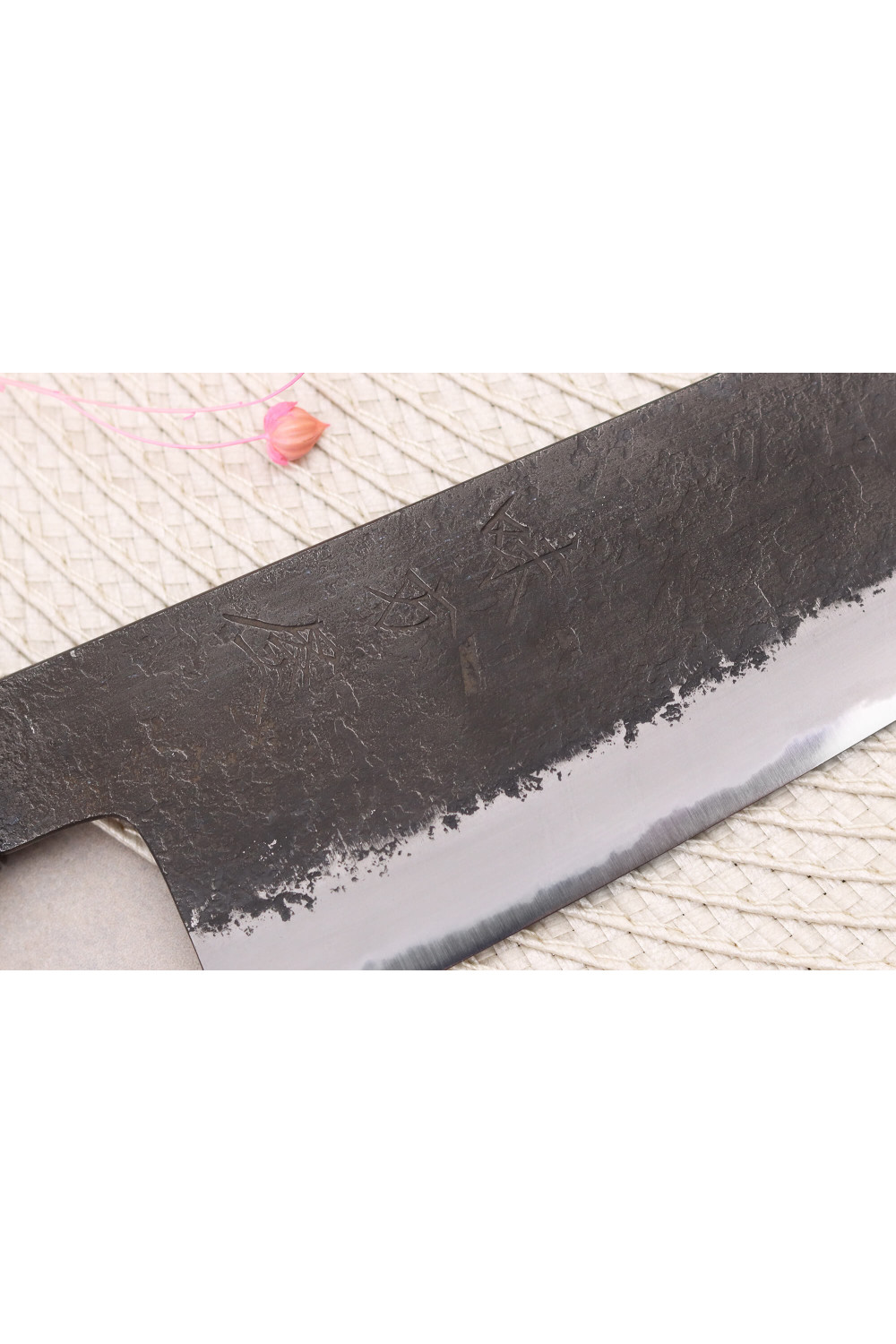
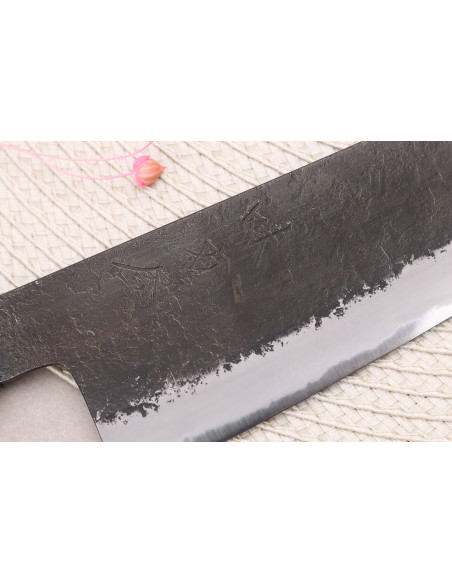
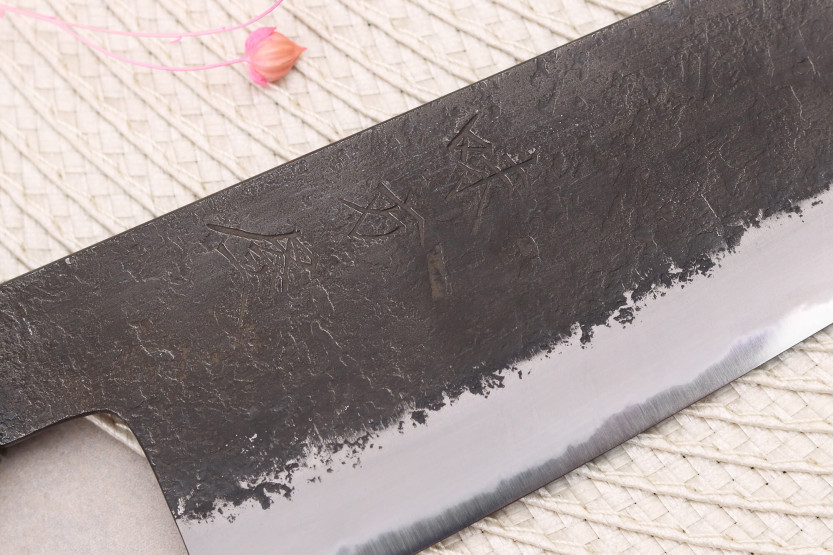
Next, the core is surrounded bya layer of softer iron, which forms the San Maï structure by folding in on either side. This design gives flexibility to the core while preserving it. It makes the knife less vulnerable to impact, making it more resistant to breakage during use. The superimposition of steel layers creates a random wavy line visible along the edge.
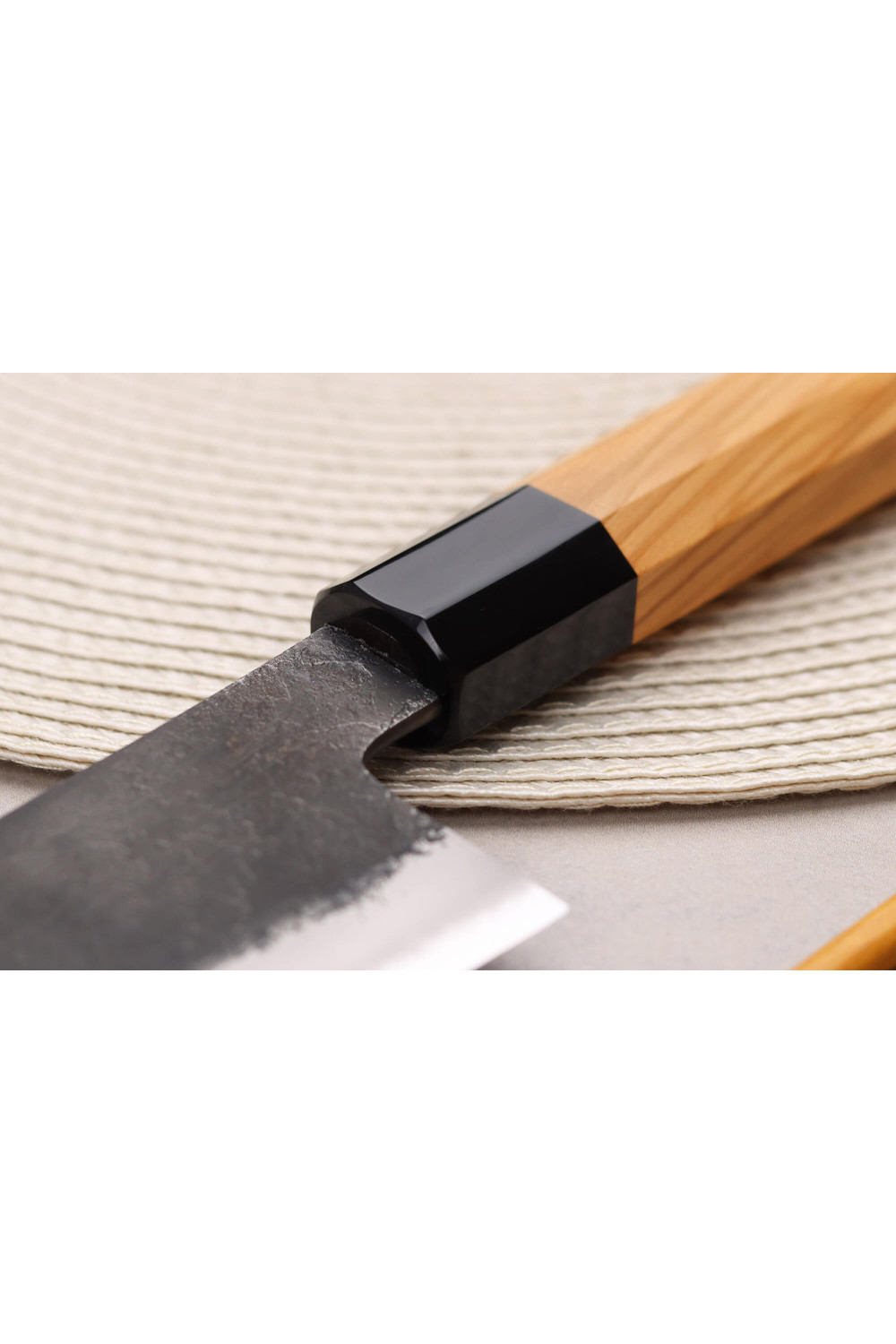
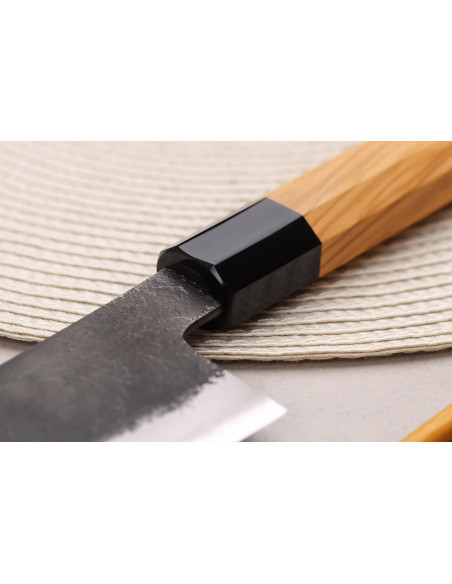
Finally, the blade features an attractive Black Nashiji finish, giving it a rustic, authentic look. It suggests that the blade has not been polished and has retained its black color, reminiscent of a brute forge finish. Fine kanji have also been engraved on the blade, reinforcing its authenticity.
An elegant olive wood handle
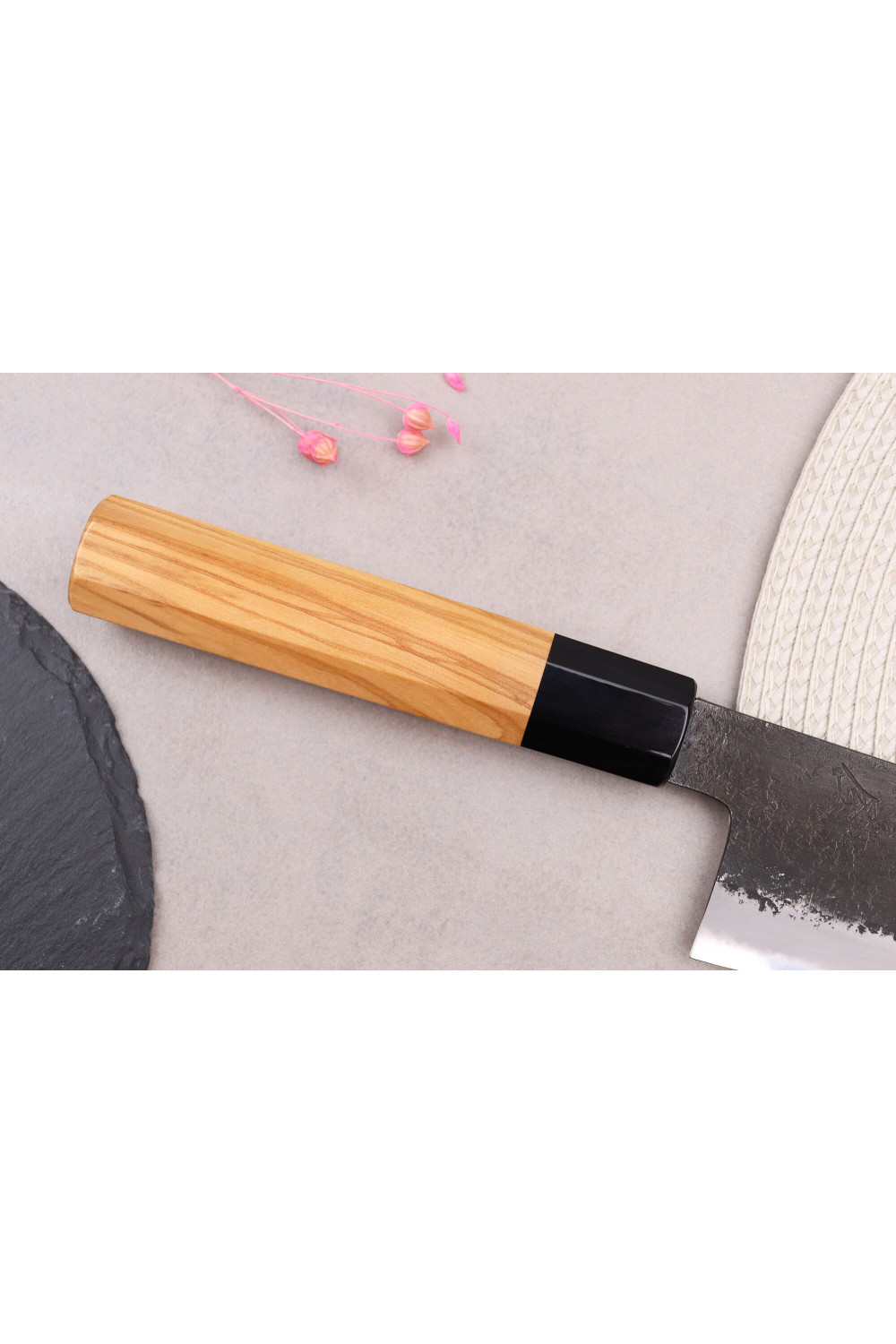
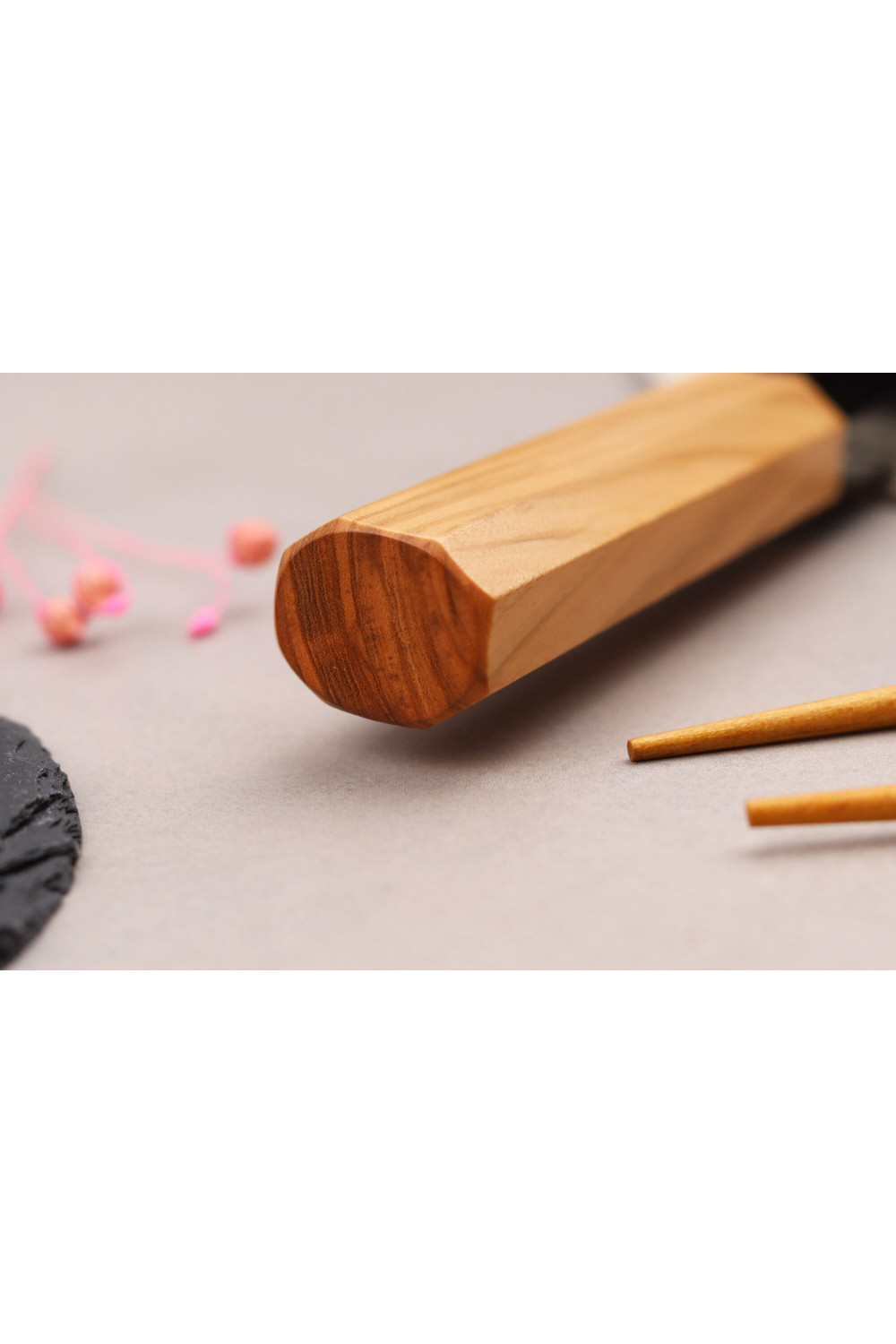
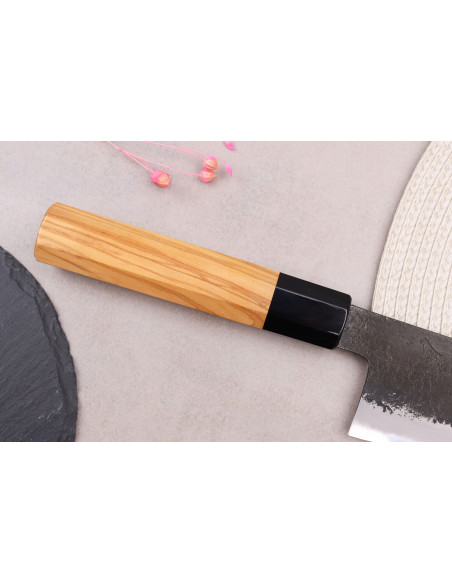
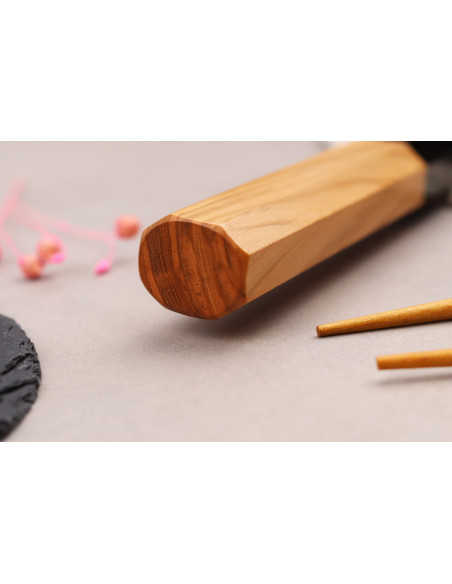
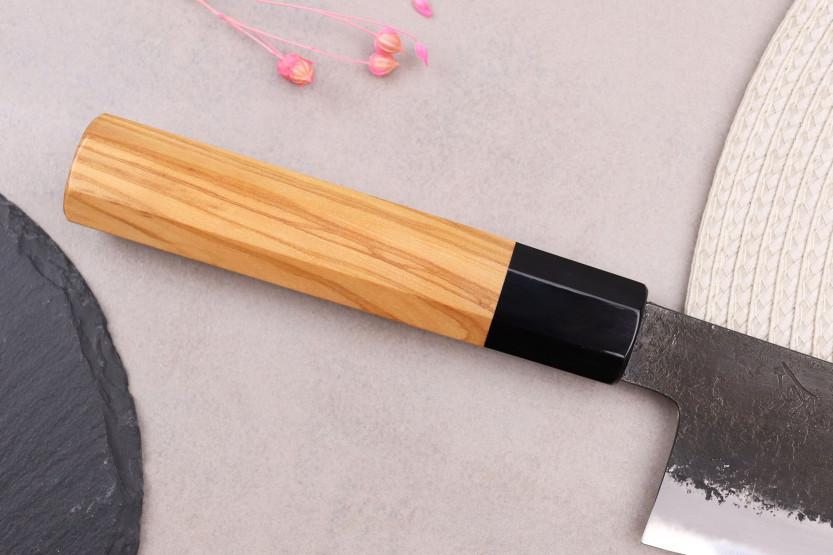
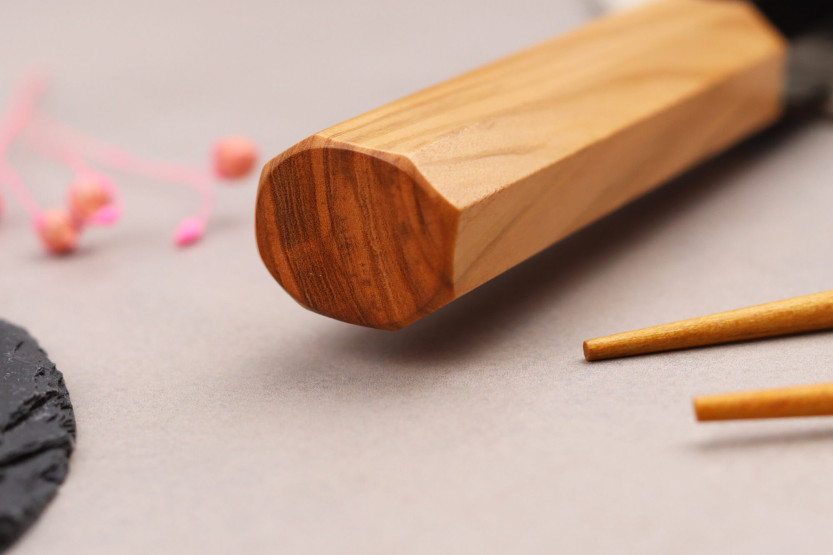
Your Japanese kitchen knife features a handle made from olive wood, a robust species known for its exceptional durability. This dense, antibacterial wood is highly resistant to humidity and deformation in the event of condensation. Olive is also a wood with a superb golden hue highlighted by a unique, contrasting grain.
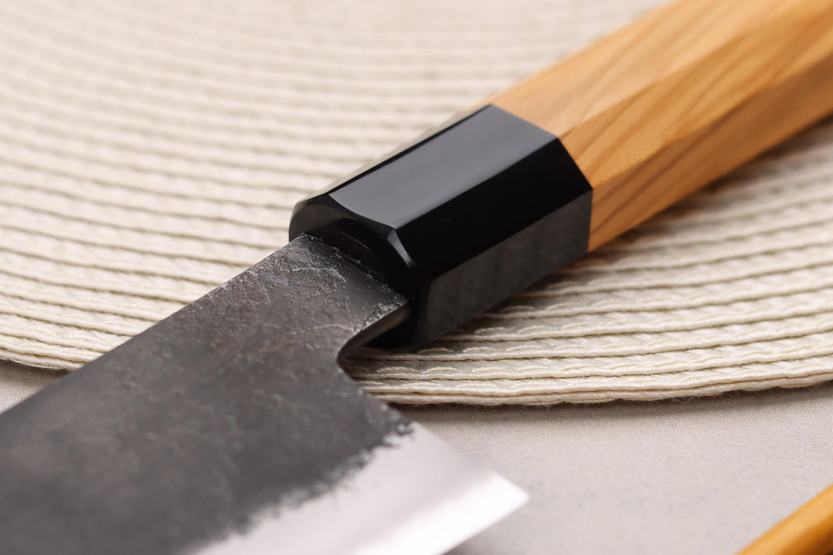
The olive wood is complemented by a black buffalo horn bolster linking the blade to the bolster. As horn is a natural material, its appearance may vary slightly from one knife to another.
The octagonal shape of the handle is perfect for both right- and left-handed cooks. The ergonomic grip guarantees easy handling, which is also appreciated during long cutting sessions.
Taking good care of my handcrafted Japanese knife
To preserve your carbon knife, it should be washed exclusively by hand using a non-abrasive sponge and mild detergent, and taking care not to get the handle wet. After washing, wipe thoroughly with a clean cloth to remove all traces of moisture before storing in a dry place. Never put your knife in the dishwasher or leave it to soak in the sink.
Over time, you may also notice a slight change in the color of the blade, which is normal. This is due to carbon, which reacts naturally to moisture in the air or to the acidity of certain foods. To preserve the quality of your blade, we recommend you keep a paper towel handy to wipe the blade between cuts. For maximum protection, oil the blade regularly with mineral oil.
Find Mutsumi Hinoura forged knives on our site!




 By buying this product you can collect up to