The blade:
The blade consists of 3 alternating layers of steel. This Japanese technique of superimposing alloys is calledSan Maï, which means "3 layers" in Japanese.
Firstly, the core is made from Japanese Blue Super Steel(Aogami Super in Japanese), produced by Hitachi steelworks. The steel is named after the paper in which Hitachi packages it, which is blue.
This high-quality alloy is highly enriched in carbon, followed by chromium and tungsten. In detail, its carbon content is around 1.4/1.5%, a very high level compared to the average of between 0.5 and 1% for Western and Japanese blades combined.
The unique characteristics of Blue Super steel enable it to achieve an extreme strength of 64-65 HRC, one of the highest hardness levels found in cutlery. This alloy is renowned for its ability to deliver a very fine cutting edge, for exceptional cutting quality.
The second advantage of this level of hardness is that the cutting edge lasts longer. Indeed, harder steel wears less, so the edge stays sharper for longer, and the need for sharpening is much less frequent (if you use it as a private individual, you won't need to sharpen it more than 2 or 3 times a year).
In addition, the Aogami Super used for this range is highly prized by the Japanese for its ease of sharpening. In fact, despite its long-lasting cutting edge, it is very quick to sharpen and takes very little time to do so.
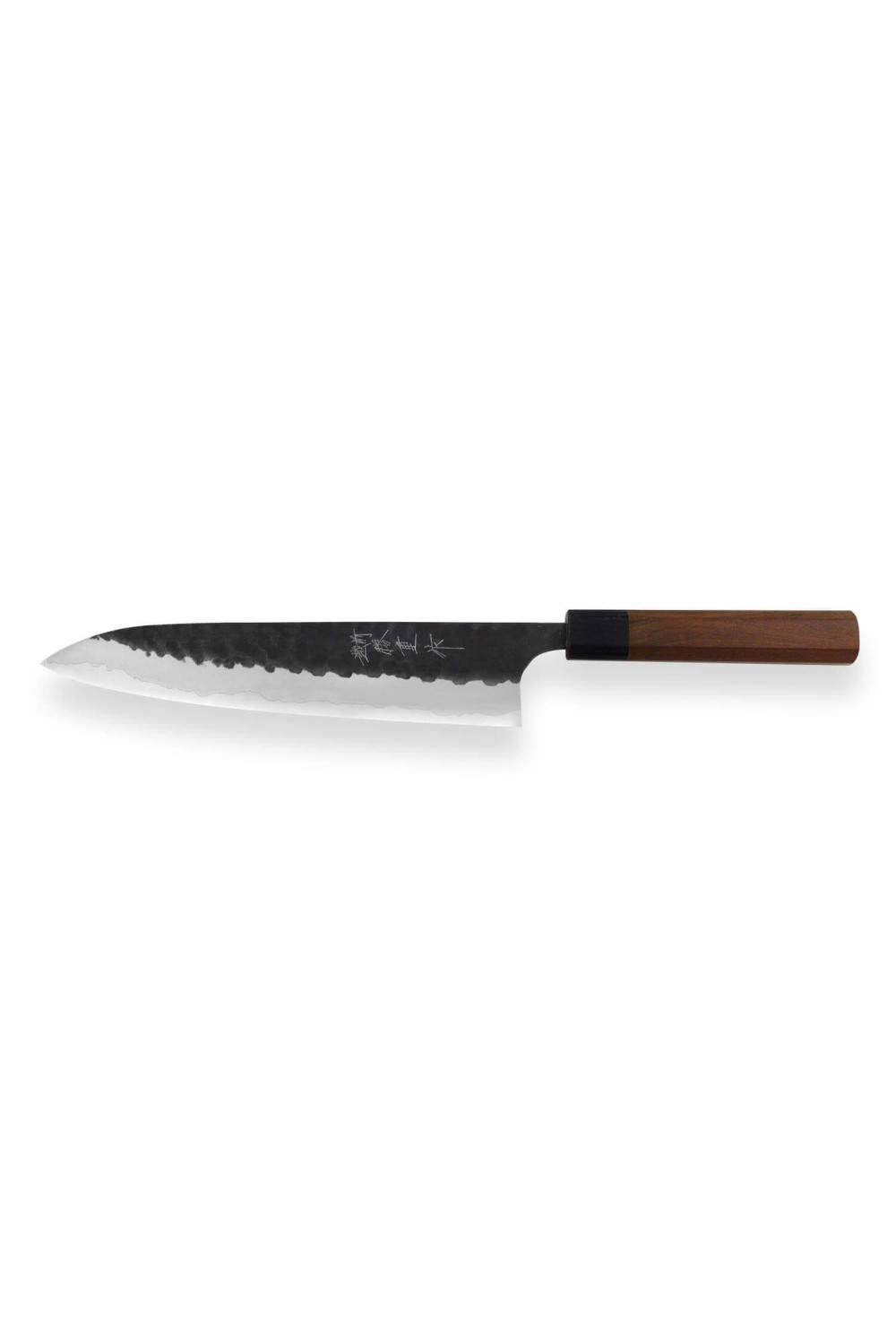
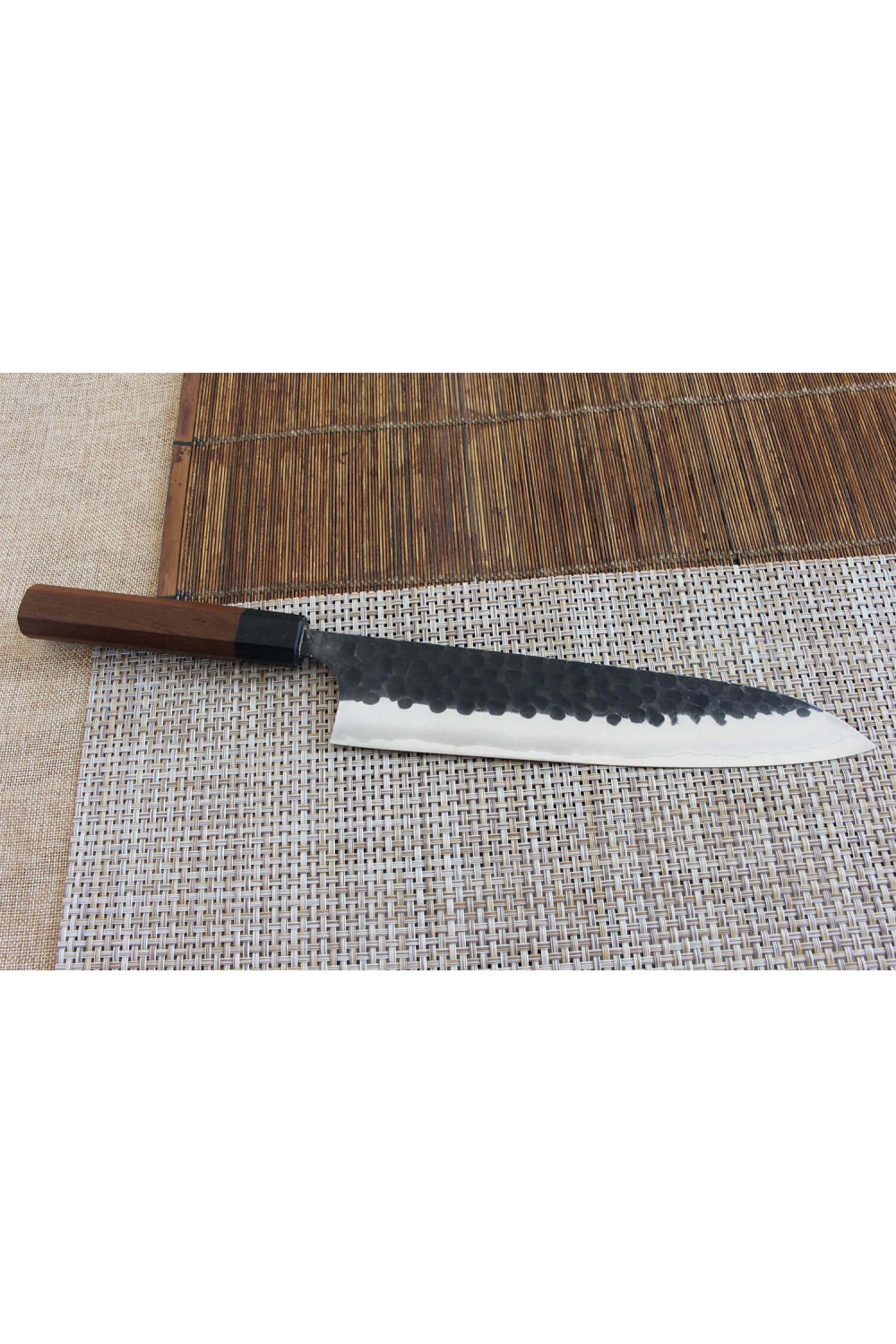
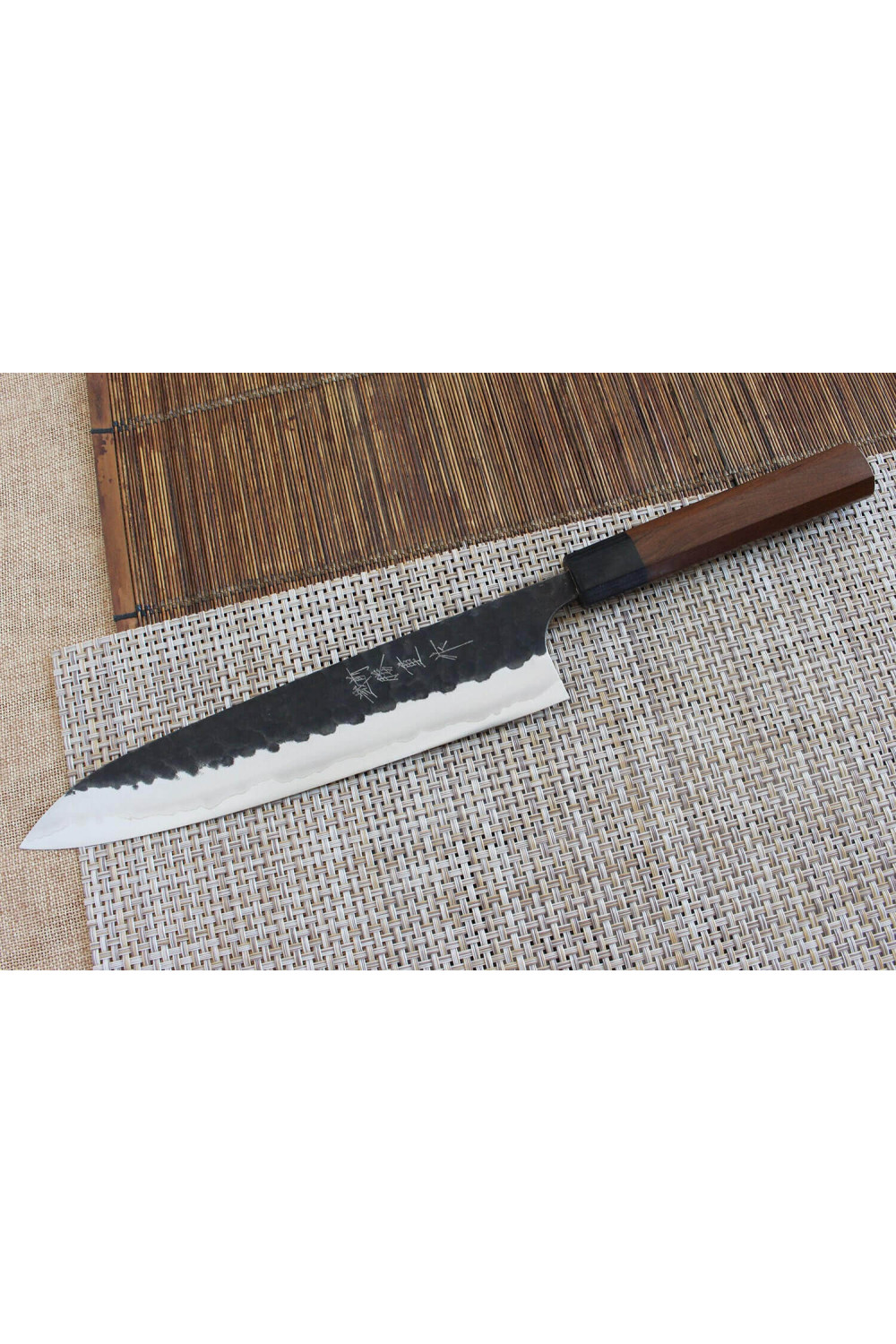
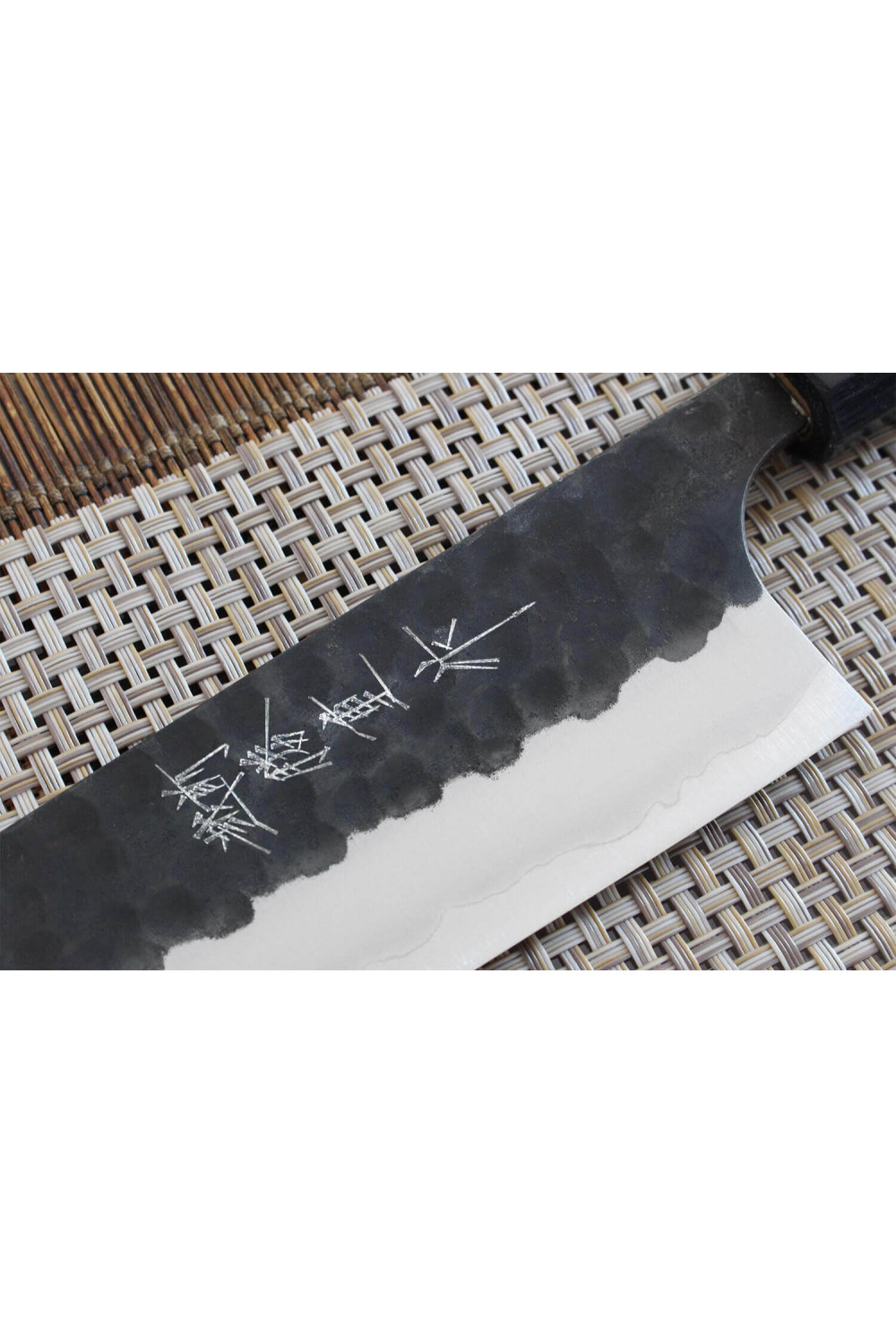
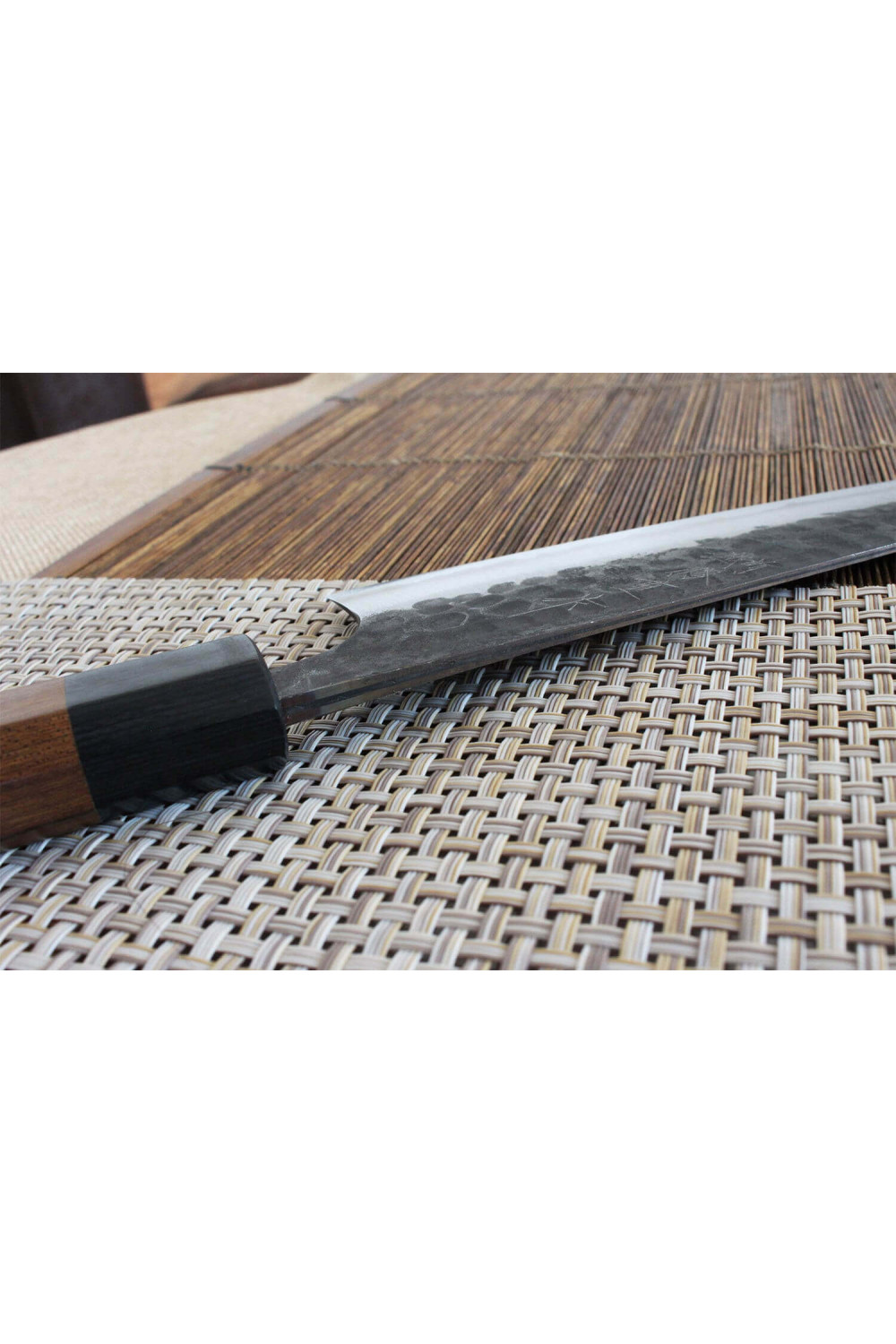
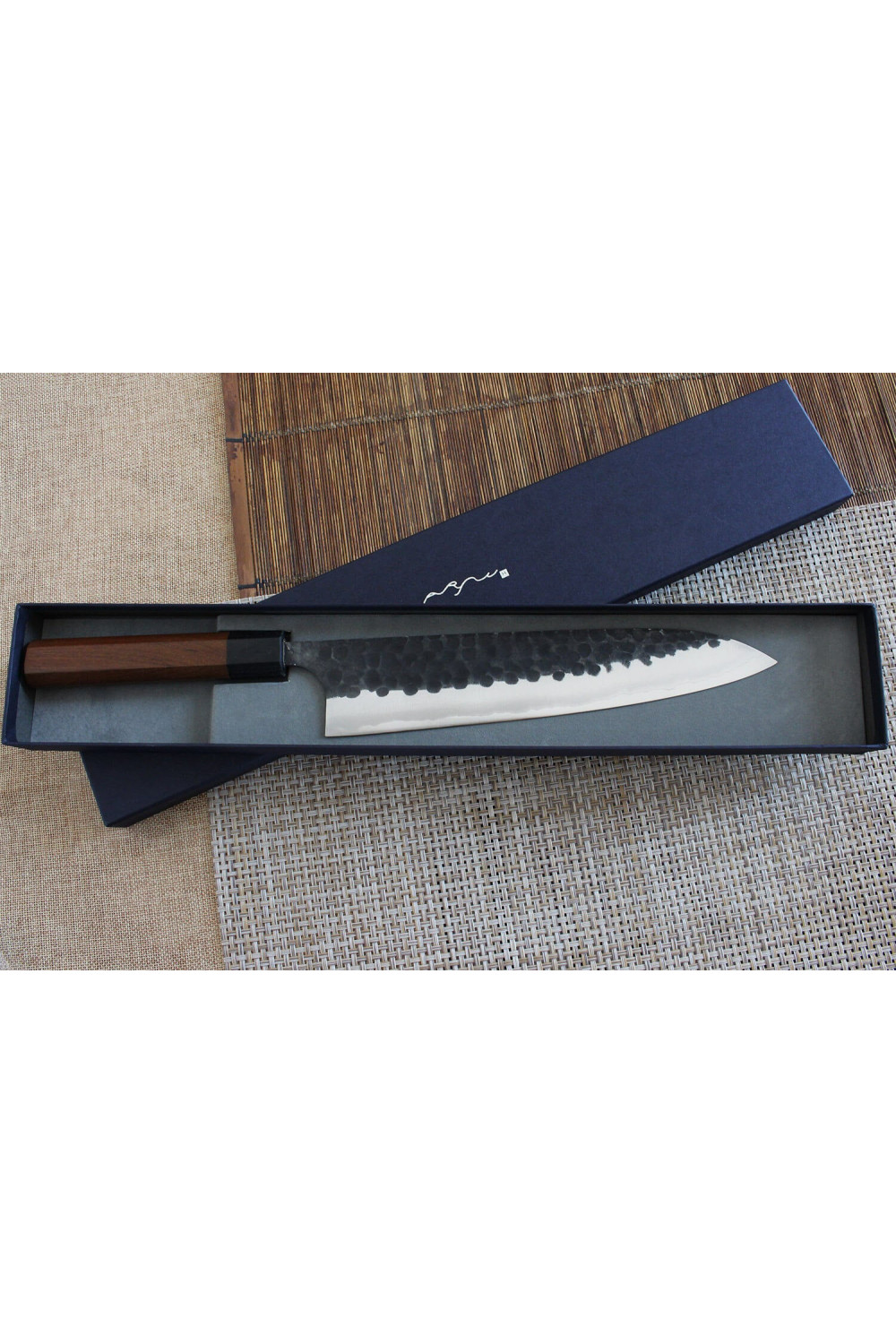
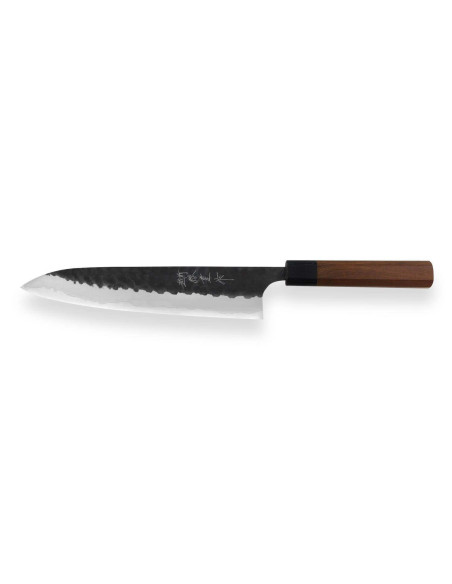
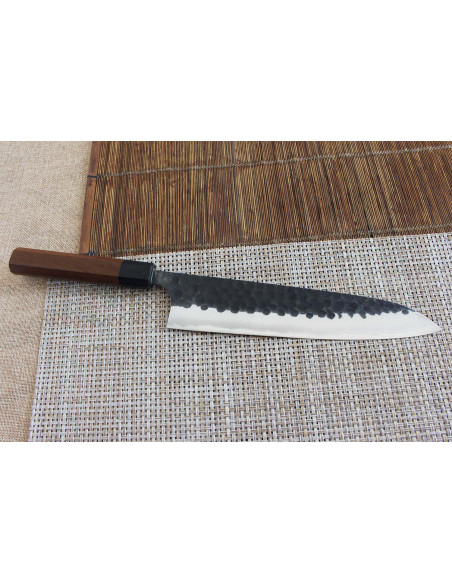
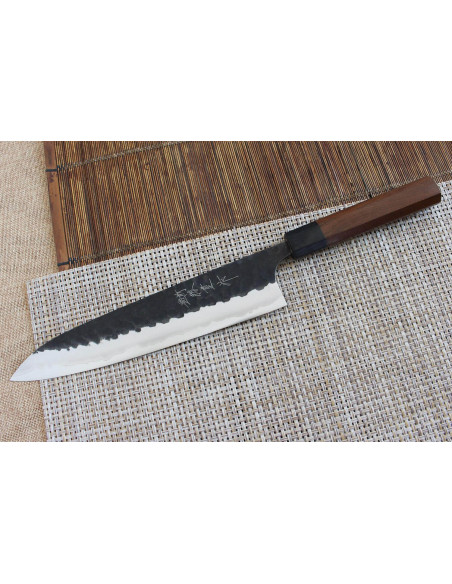
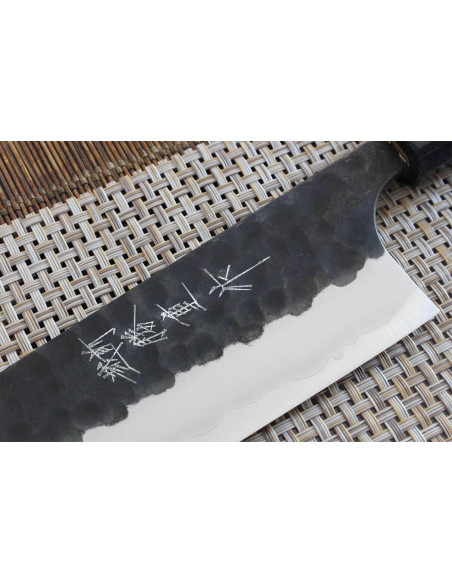
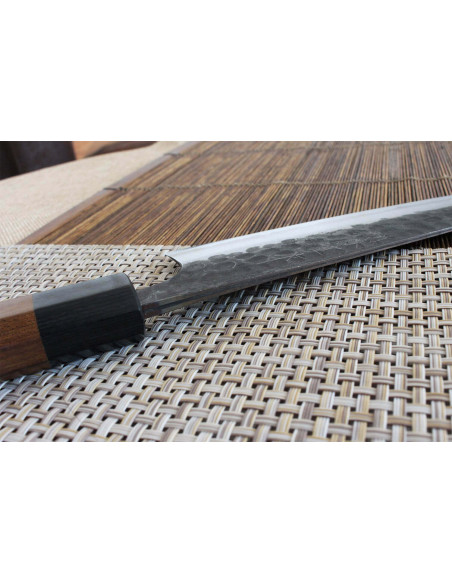
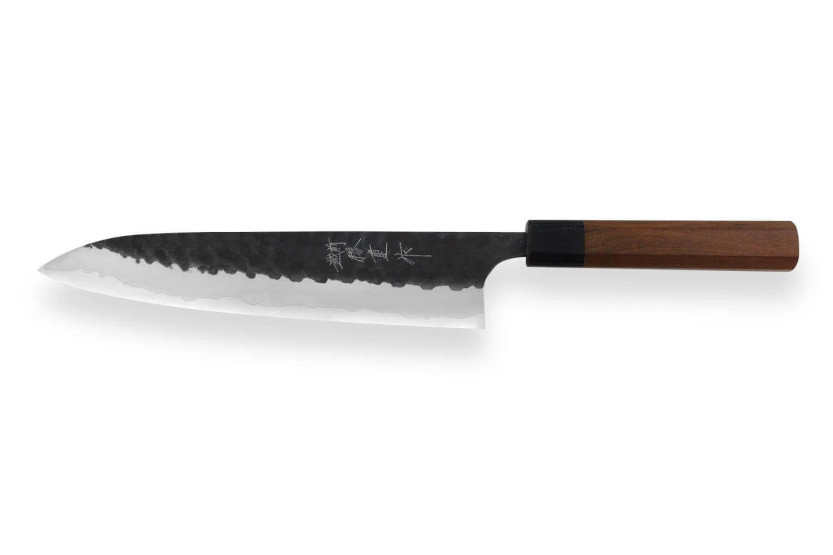
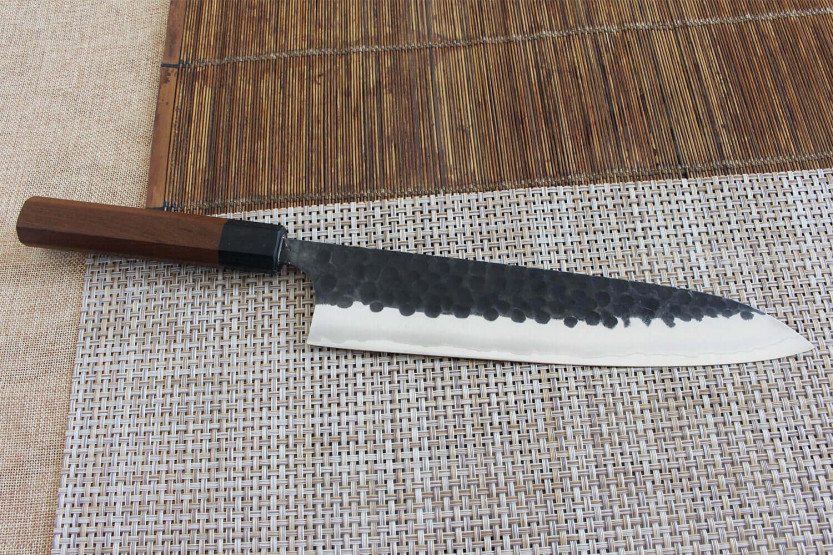
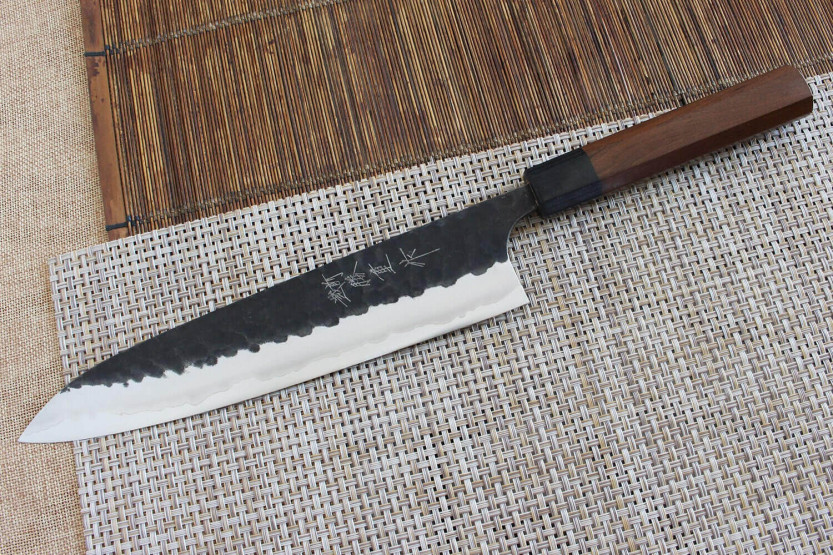
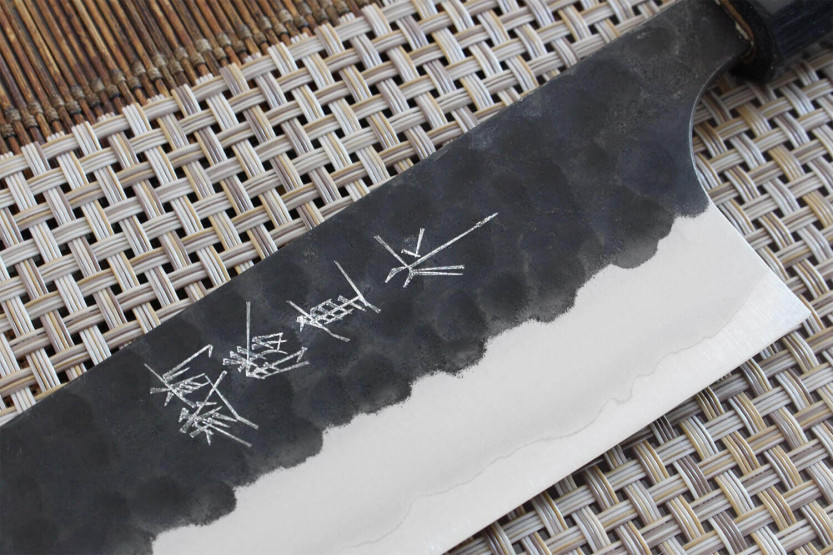
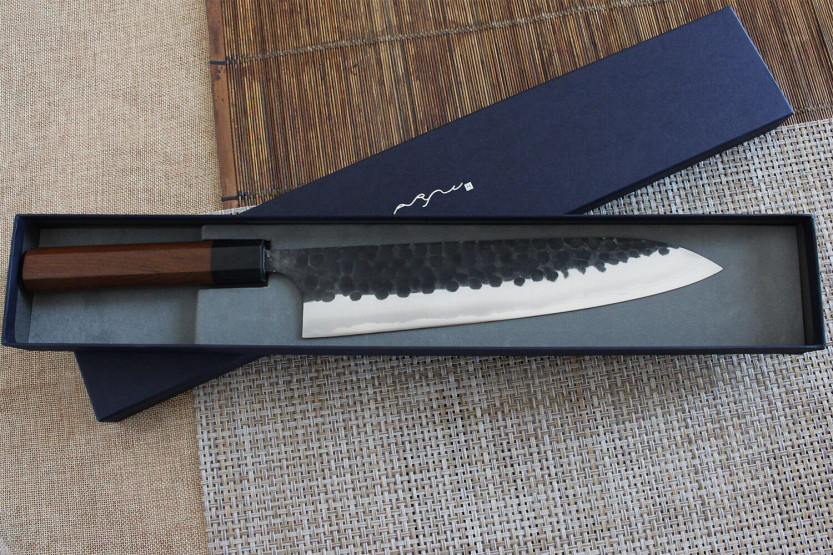
The Blue Super core is then surrounded by a layer ofmild stainless steel that sandwiches it, protecting the blade from oxidation and making it "softer" (not flexible, but less brittle). It is this stainless layer that features the Tsuchime finish over its entire surface. Tsuchime means "hammering", and you can see that it is unique on each piece.
The blade is hand-sharpened on a water stone, on both sides at very sharp angles. You can feel its effectiveness from the very first cut.
Finally, the knife has a rough forged finish, as you can see from its dark appearance. Traditional Kanjis are also engraved on its surface, for even greater authenticity.
Handle:
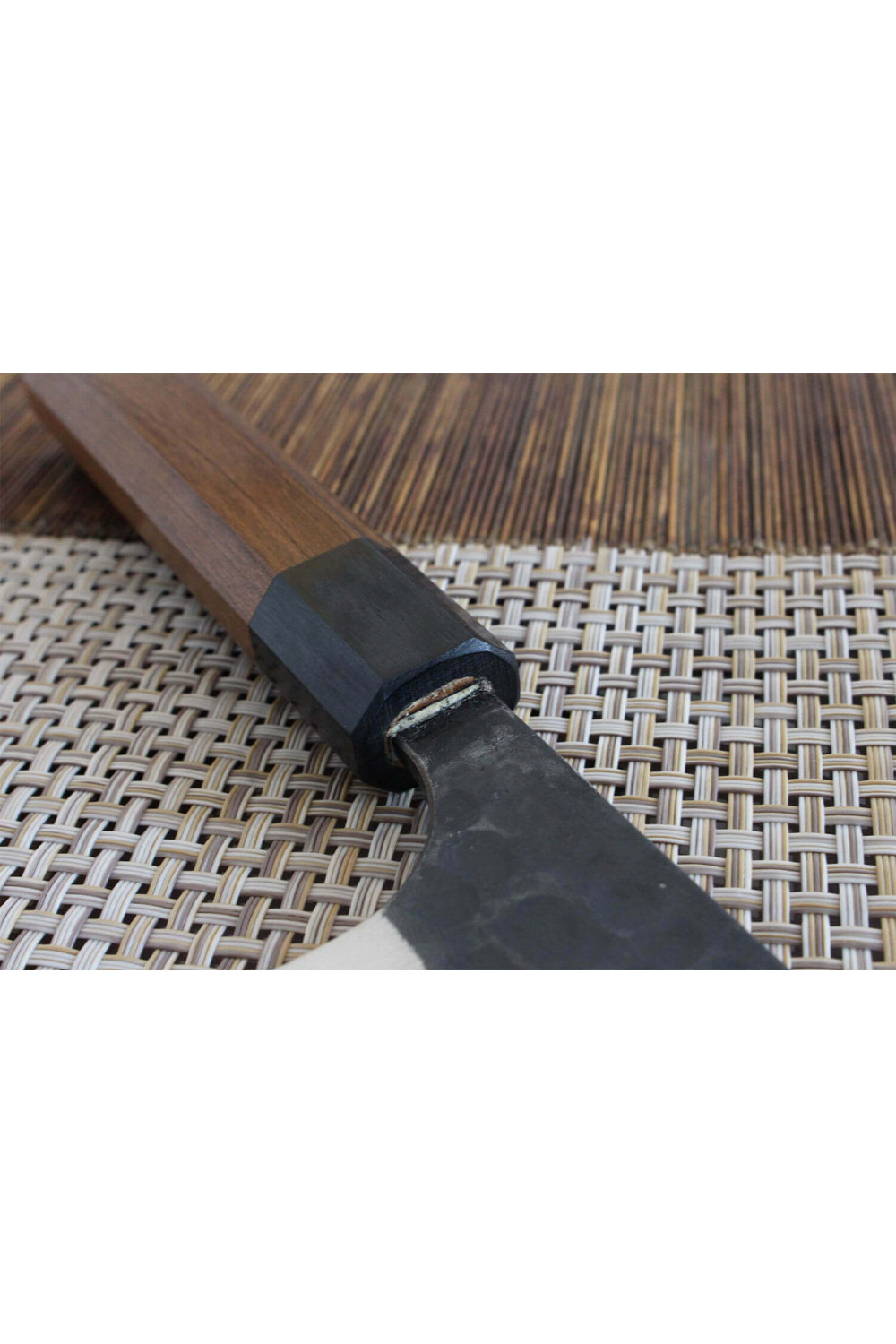
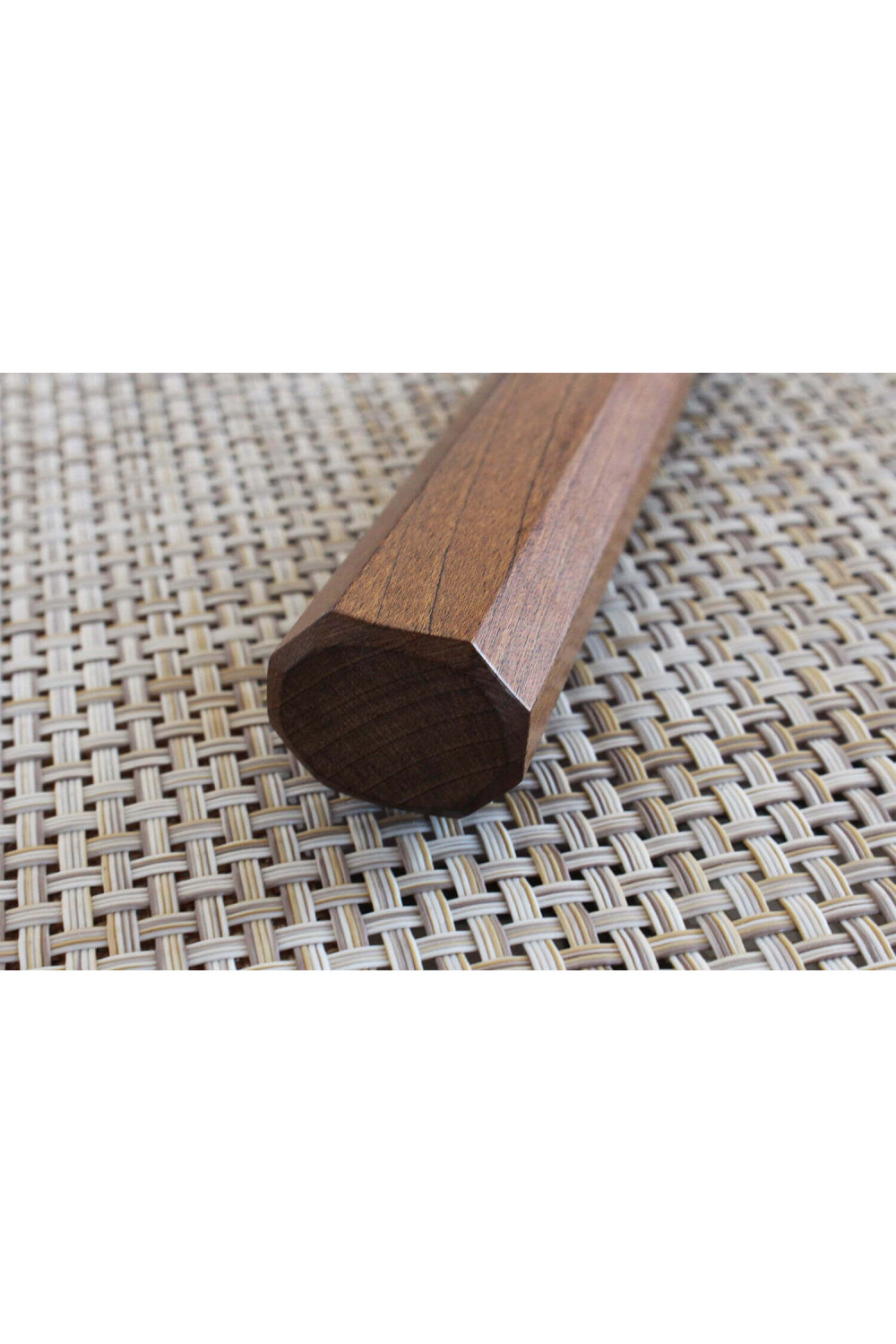
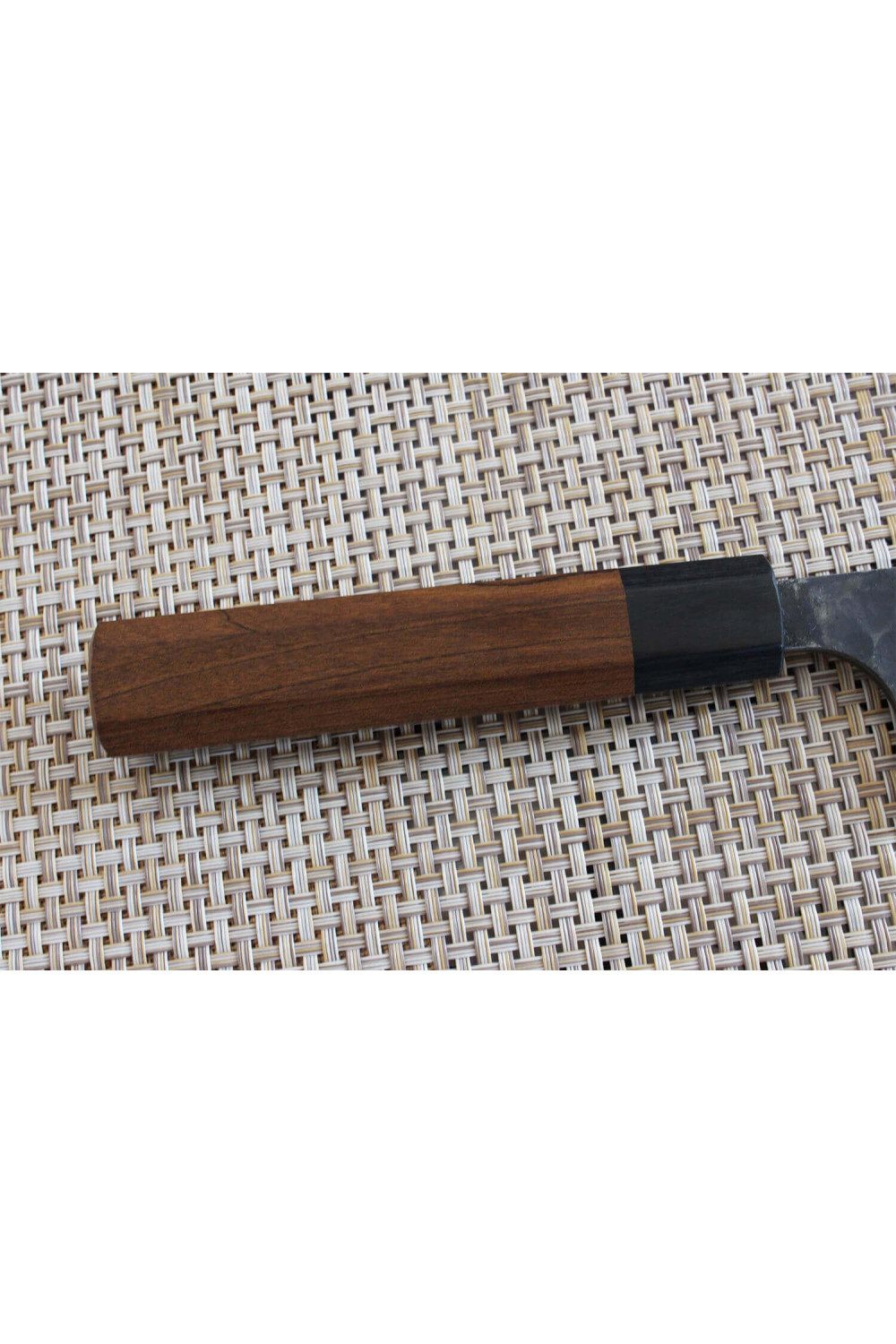
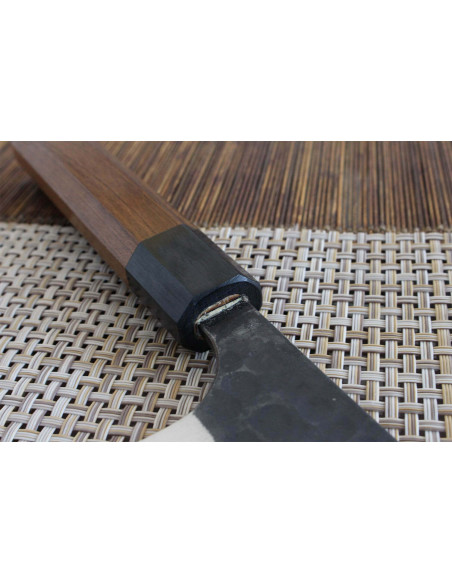
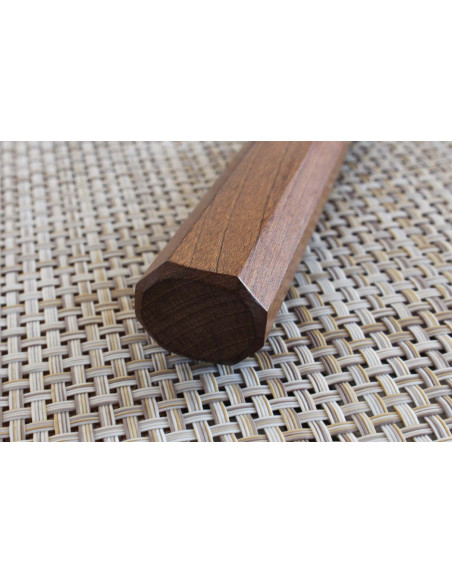
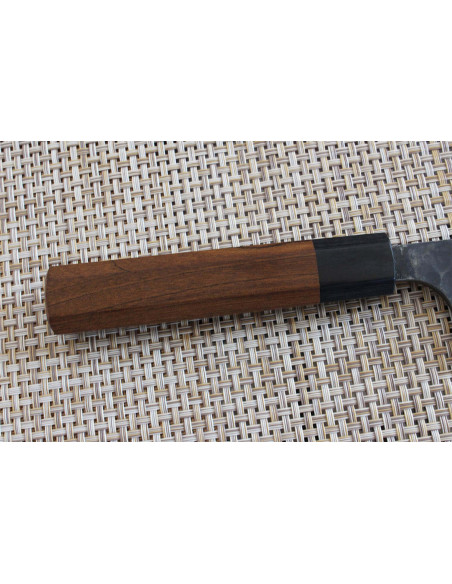
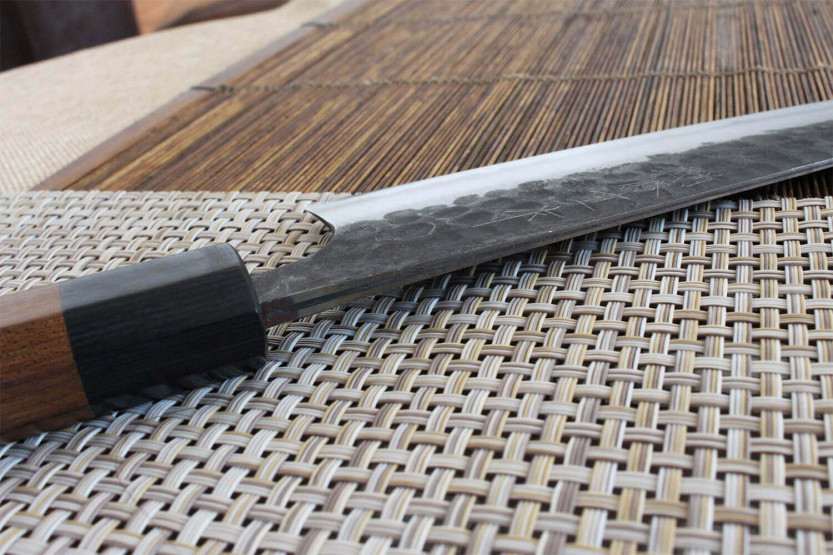
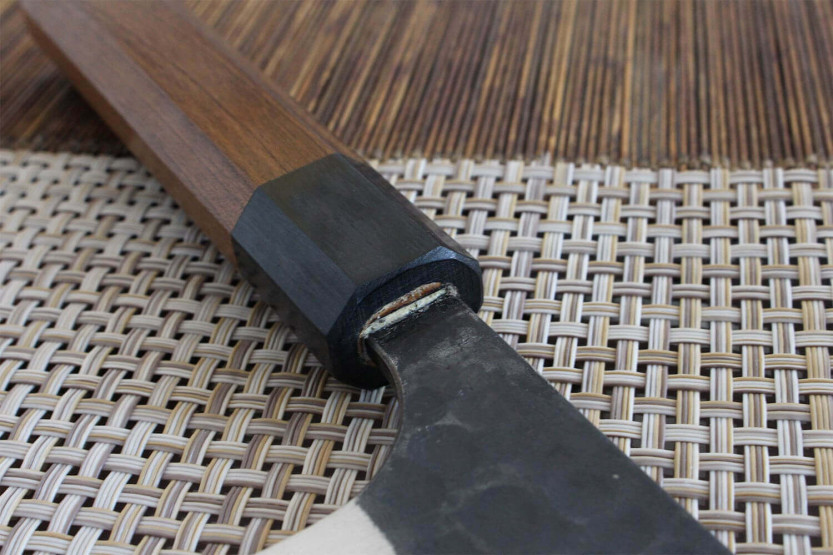
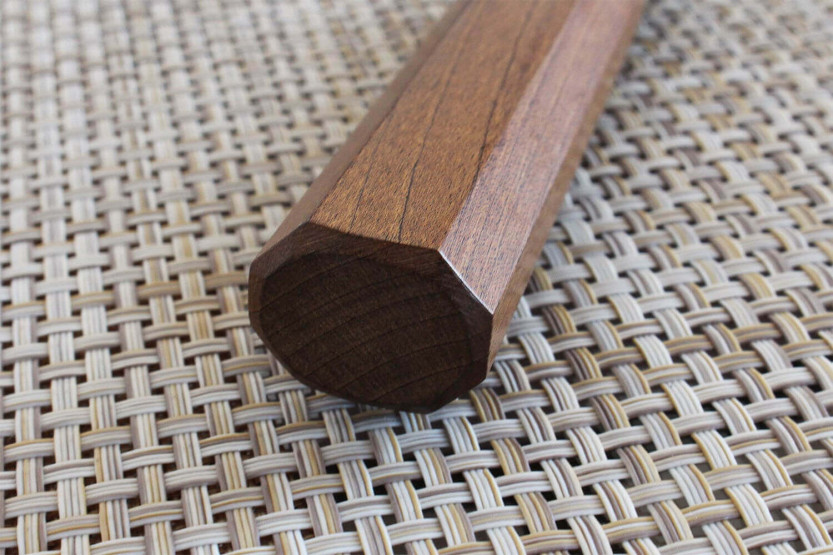
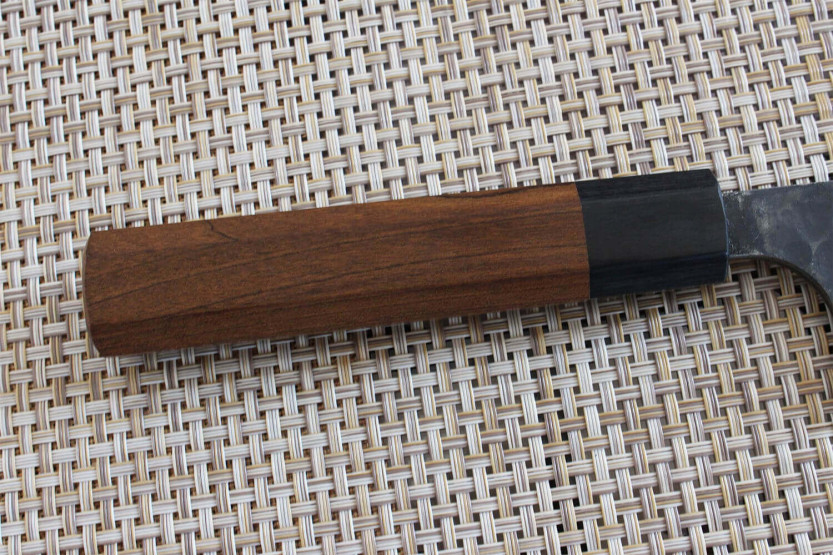
The handle is made of dark maple wood. This superb wood is renowned for its hardness, and therefore, its sturdiness. Its octagonal shape is perfect for both right- and left-handed chefs. It is complemented by a bolster in black Pakkawood, a composite material much appreciated in the kitchen. It is resistant to temperature variations and humidity. These are important advantages for use in the kitchen. In addition, the junction between blade and bolster is filled with a wood paste that makes the whole thing watertight, and prevents small scraps and cleaning water from penetrating inside the handle.
Model:
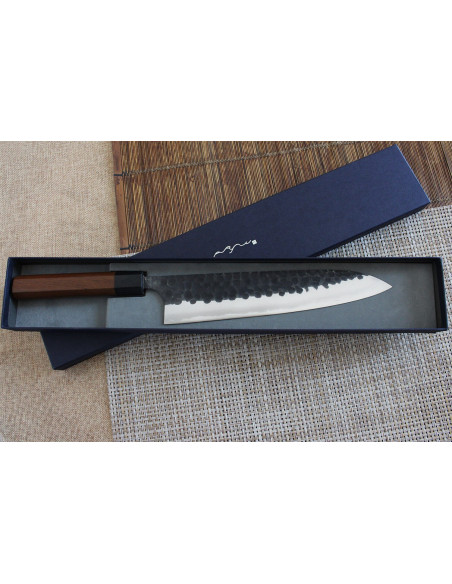
The 24cm chef's knife is multi-purpose. It can be used for slicing, chopping and mincing various types of food, such as meat (boneless), vegetables and fresh herbs. Its imposing size is recommended for seasoned chefs.
Information on how to care for your knife :
Thanks to the stainless steel outer layers, the blade is better protected against oxidation than a knife made of pure carbon steel. However, the nature of the blade core is oxidizable, and your knife should be maintained in accordance with our recommendations.
It's perfectly normal for steel to turn dark blue over time, despite proper care. This is not dangerous. Aogami Super steel is very reactive, so it is imperative to dry it with a cloth immediately after each use and washing. Store in a dry place after use.
To care for this knife, simply wash the blade by hand after each use with your dishwashing detergent and a soft sponge. Wipe dry immediately after washing to limit discoloration and prevent marks from appearing.
Do not wash in the dishwasher, soak in water or let air-dry (even with stainless steel knives).
Find out more about blacksmithing:
Anryu AS knives are entirely handcrafted. They are made by master blacksmith Takumi Ikeda, nephew of master blacksmith Katsushige Anryu san. Takumi works at the Takefu Knife Village, home to a multitude of traditional blacksmiths. Gathered in the same place, they can share their know-how with each other. That's why it's such a popular area for apprentice blacksmiths, who can be taken in hand by a master who will teach them everything they need to know.
Anryu san on the left and Ikeda, his nephew, on the right
Katsushige Anryu san has been forging pedant knives for over 50 years. He began his apprenticeship in the 60s, working with his father, himself a blacksmith, to continue the family tradition (Katsushige Anryu currently represents the 4th generation). He is also one of the founding members of the above-mentioned Takefu Cutlery Village.
It was on the strength of this traditional blacksmith's long experience that he trained his nephew to follow in his footsteps. Indeed, Katsushige wanted to retire. Japanese tradition dictates that the eldest son should inherit the business. However, Anryu san had only daughters. That's why he turned to his nephew Takumi.
In the early 2000s, he began training Takumi Ikeda, an atypical blacksmith with a passion for rugby. His training lasted around fifteen years, before he took over the forge in 2021. Takumi continues the meticulous work taught by his uncle.
Takumi Ikeda now offers you exceptional knives that will delight the most uncompromising of cooks.
Discover Anryu AS knives and others on our website!




 By buying this product you can collect up to