Discover Kagekiyo kitchen knives with our team! These exceptional knives are worthy representatives of Japan. They successfully blend ancestral knife-making tradition with the latest technologies.
Knife information :
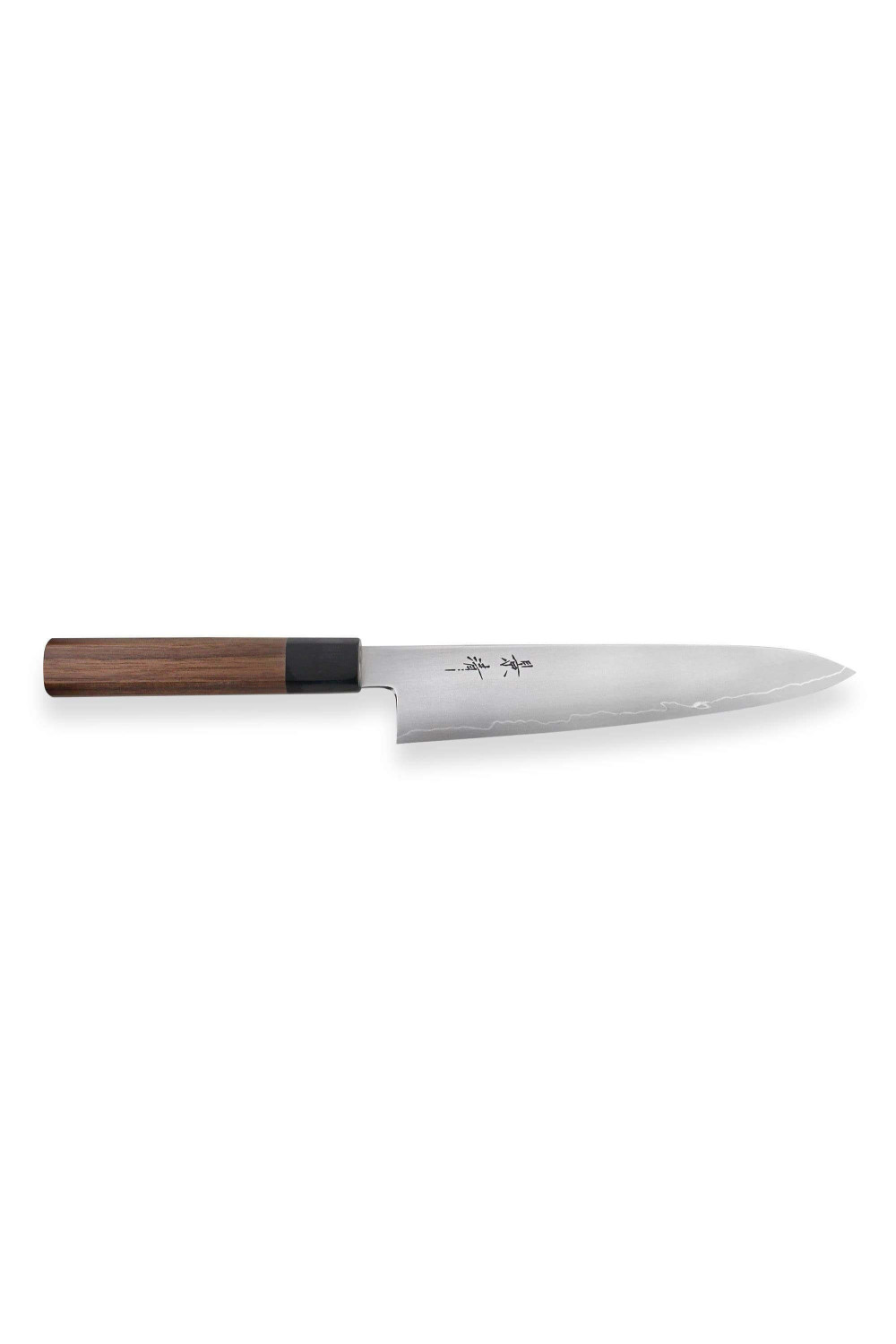
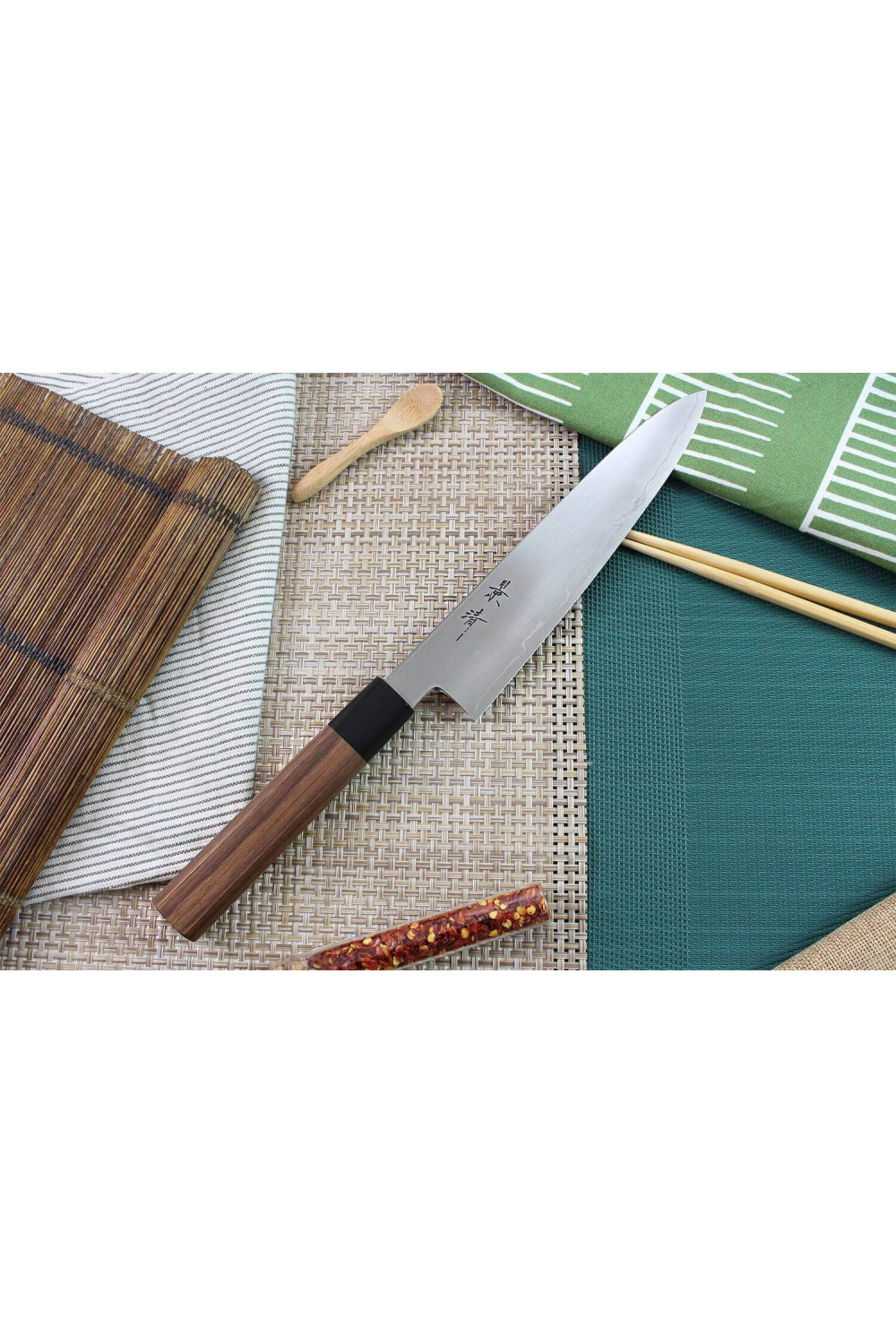
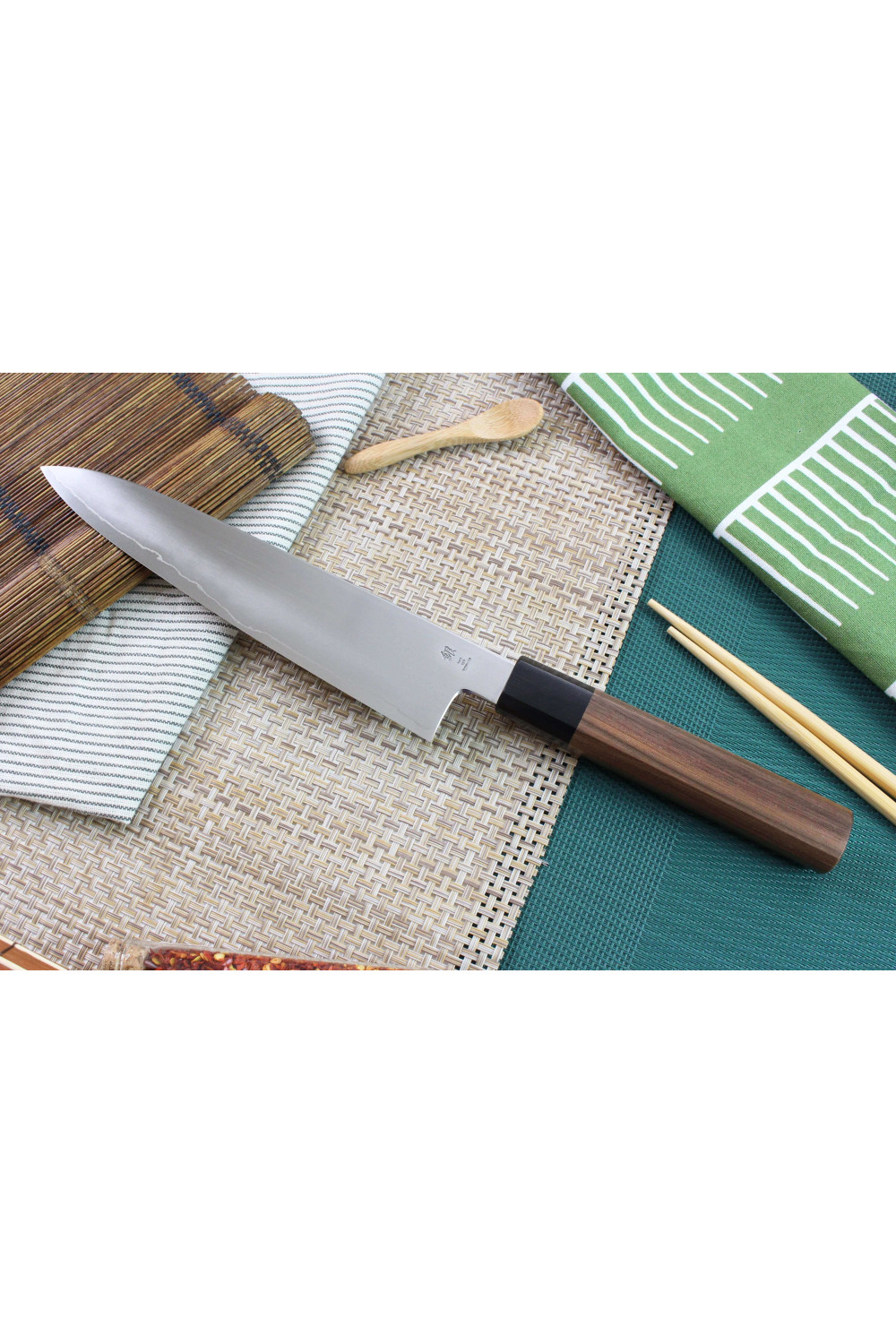
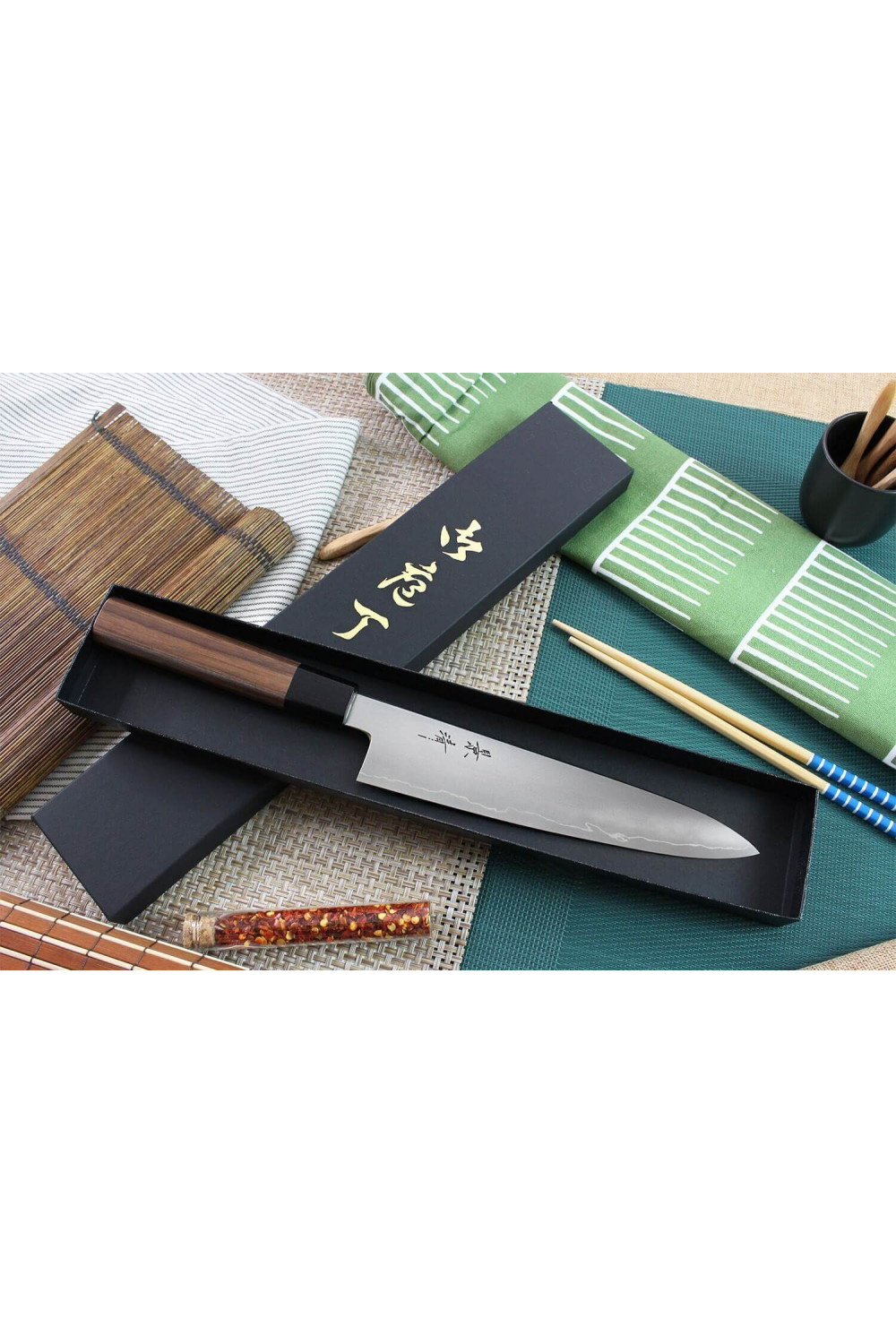
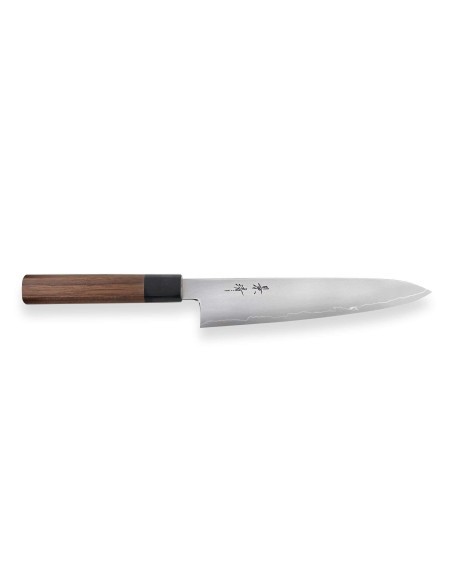
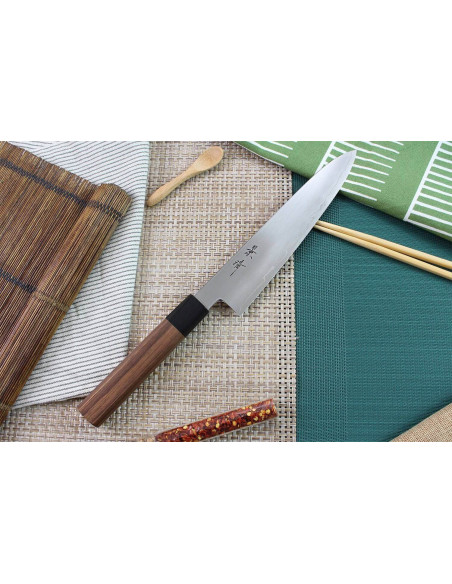
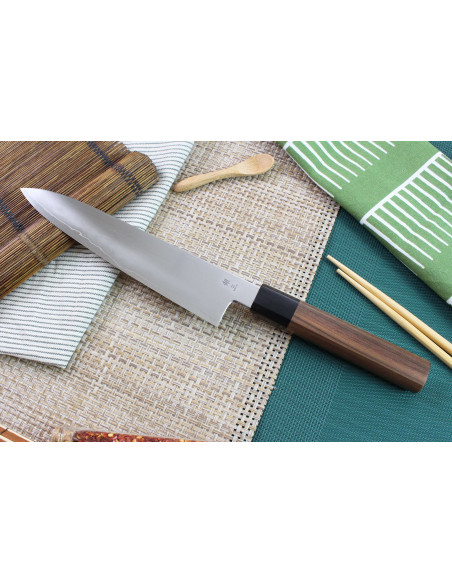
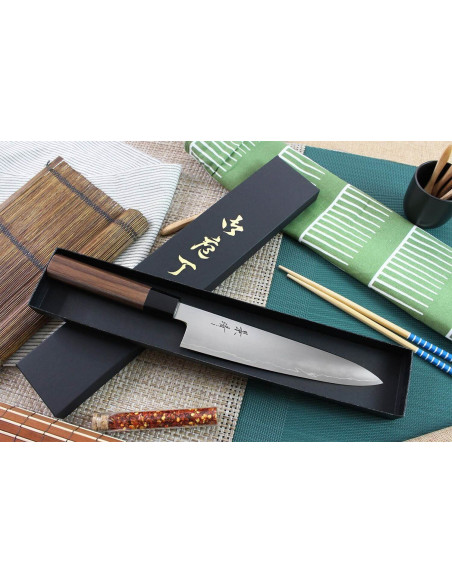
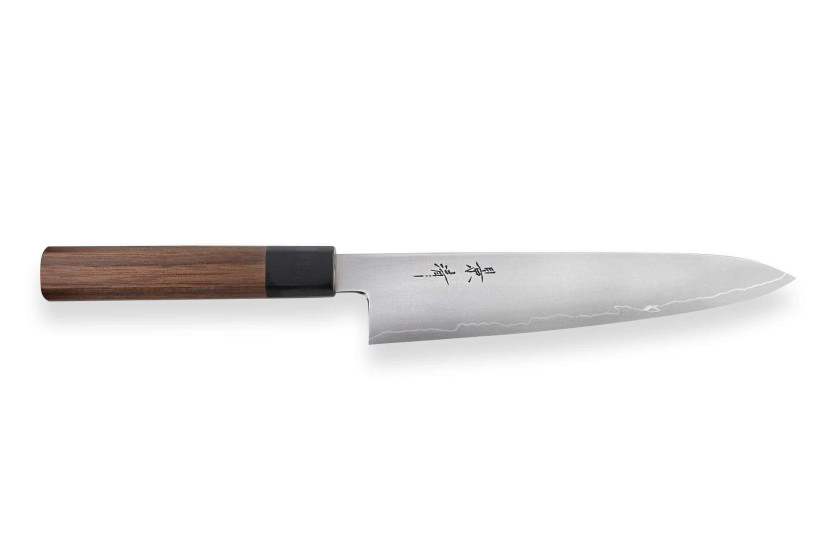
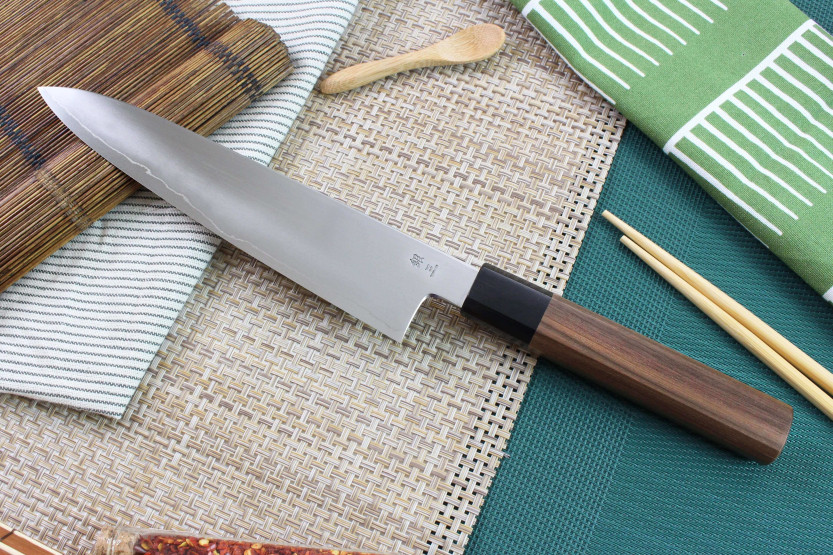
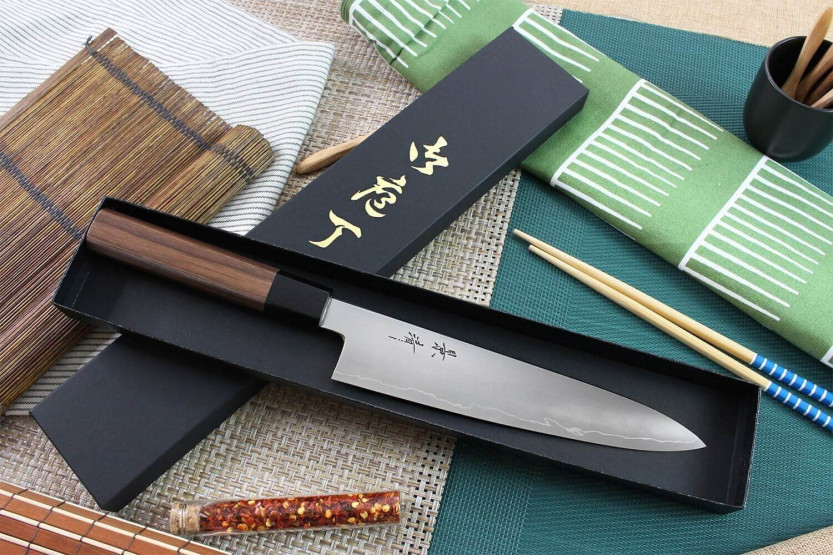
This Kagekiyo Kurumi 21cm chef's knife is a multifunctional model, which can be used to cut, chop, mince...The choice is yours! It's a must-have in the kitchen, and a great option if you're just starting out, as it can be used for a wide range of cuts.
Its blade is built on a San Mai structure, i.e. it has a core topped by a layer of softer steel to protect it. Here, the core is made of Ginsan (Silver 3) stainless steel. It contains 0.95% carbon and 13% chromium. The carbon present in the blade makes it stiffer (59/60 HRC on the Rockwell scale) than standard steel knives, and rigidity is important to keep a straight, well-marked edge over time. This has a direct impact on the cutting edge, which can be sharpened more thoroughly, and will need less maintenance (you space out the sharpening sessions). Thanks to chromium, it is more resistant to oxidation, an asset in the kitchen.
Ginsan stainless steel is one of the finest steels on the market today. It has all the qualities of a carbon steel knife (rigidity, edge retention, ease of sharpening) without its main drawback, namely the risk of oxidation in contact with humidity.
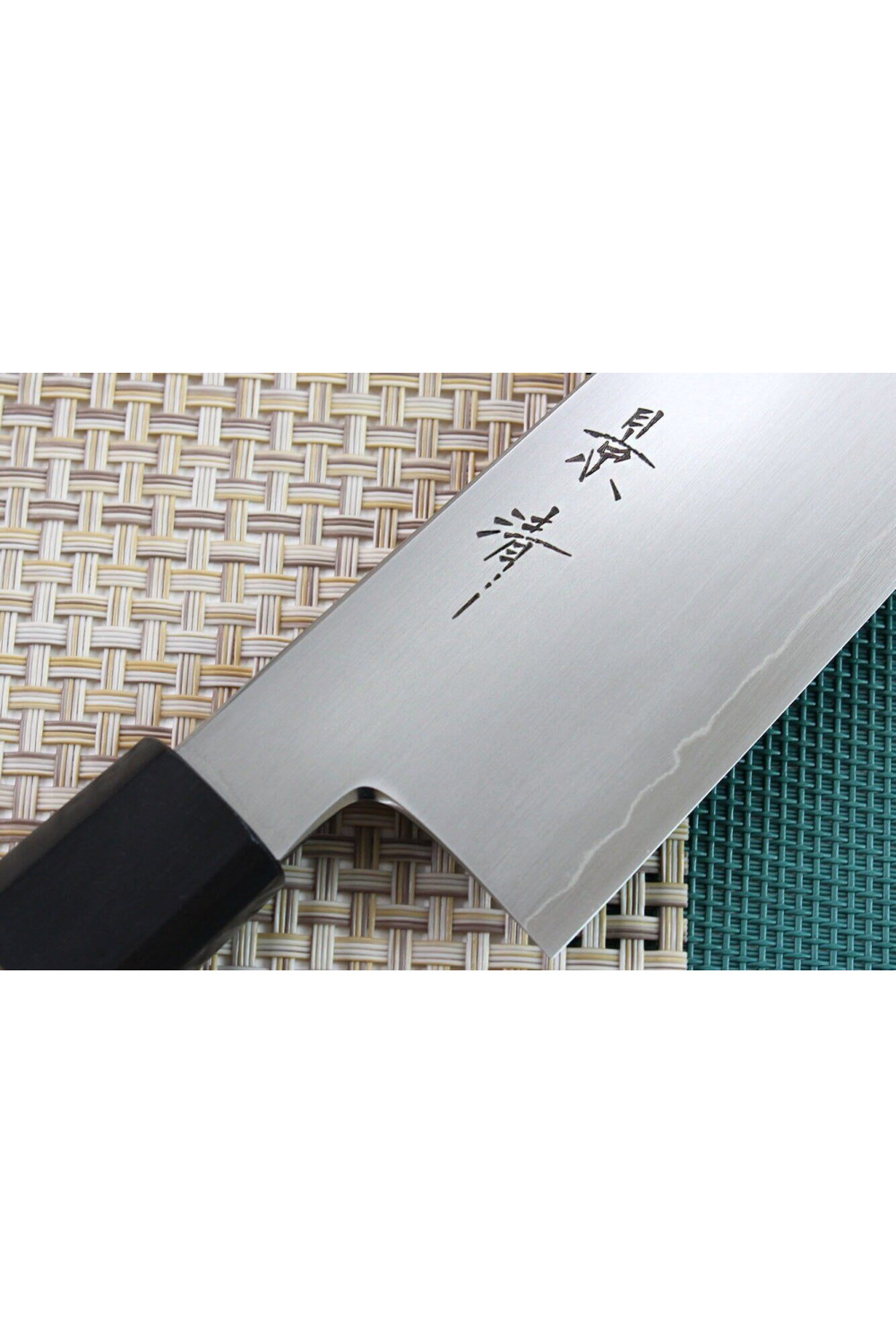
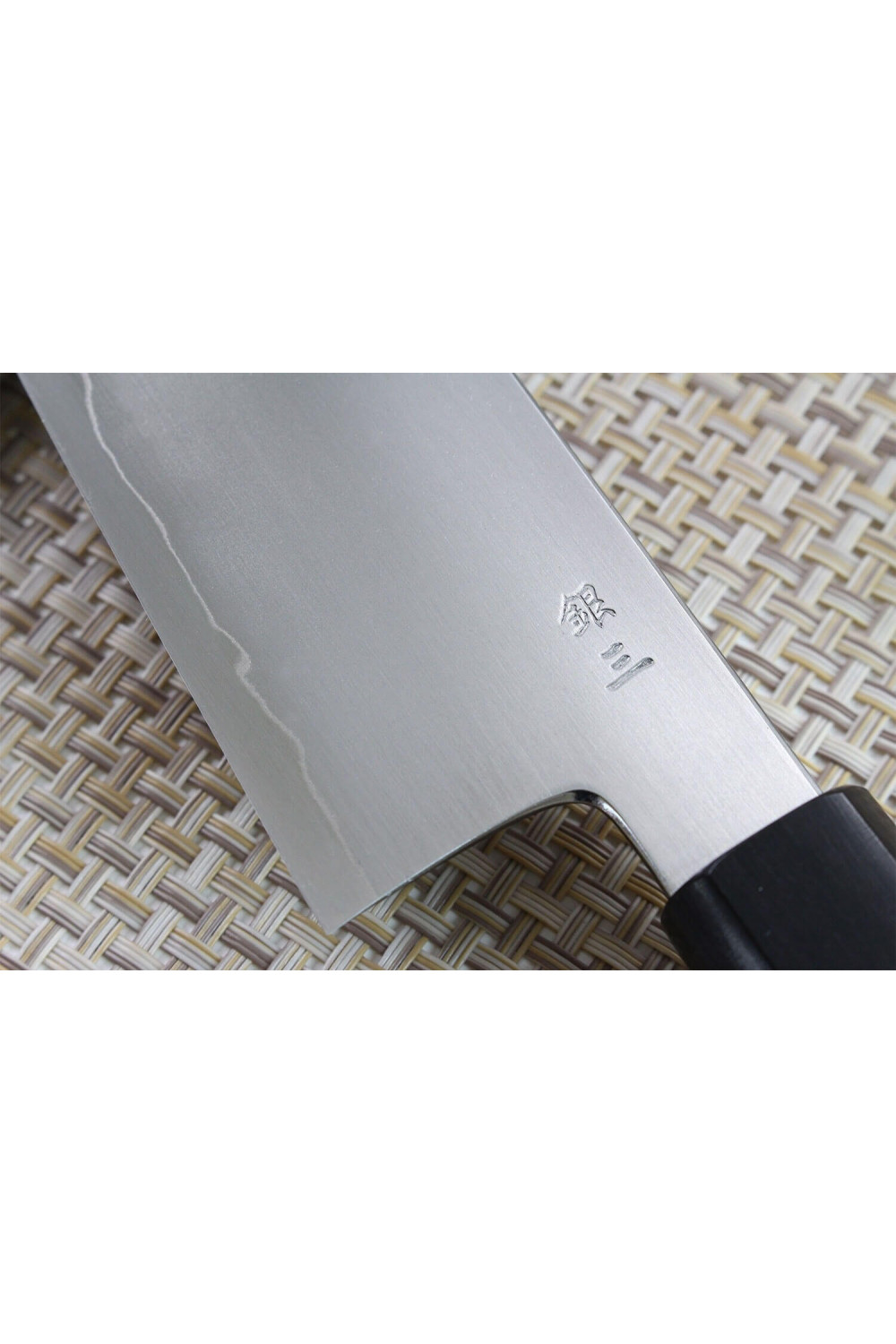
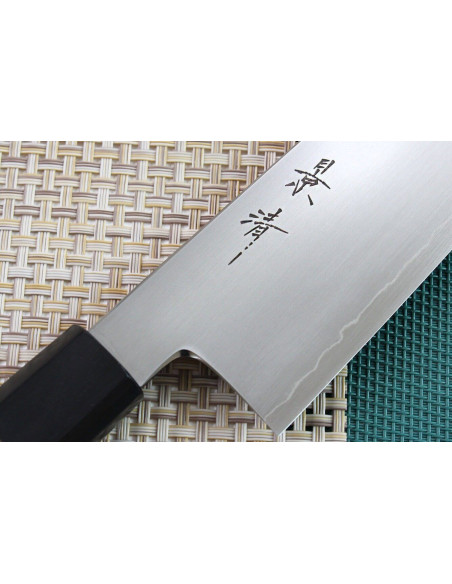
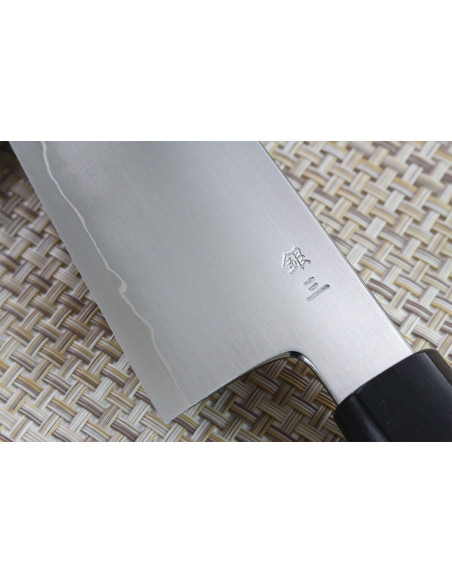
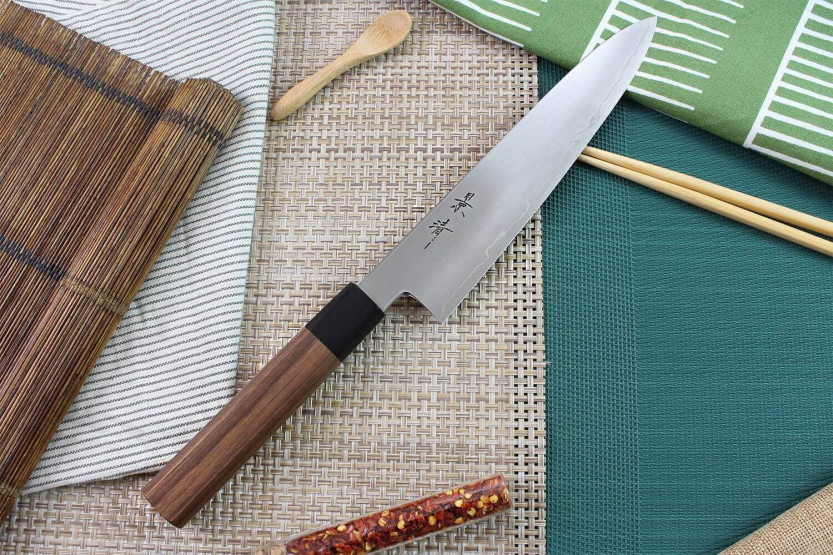
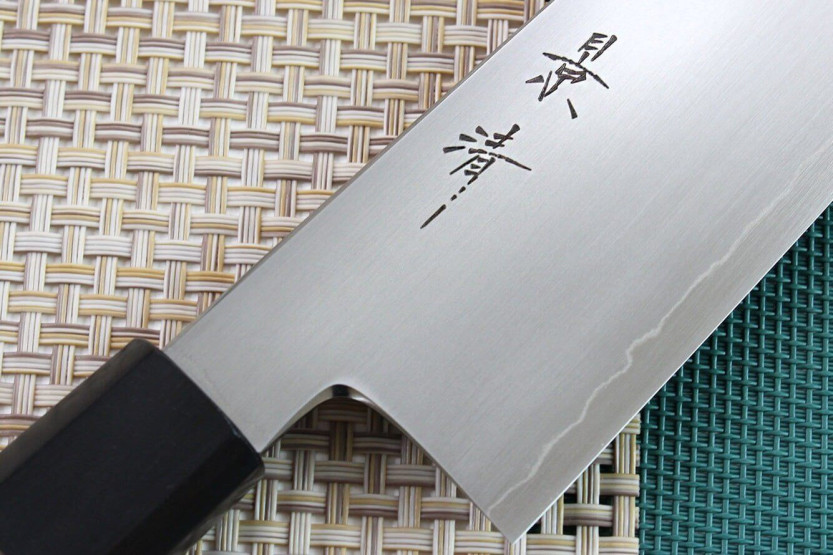
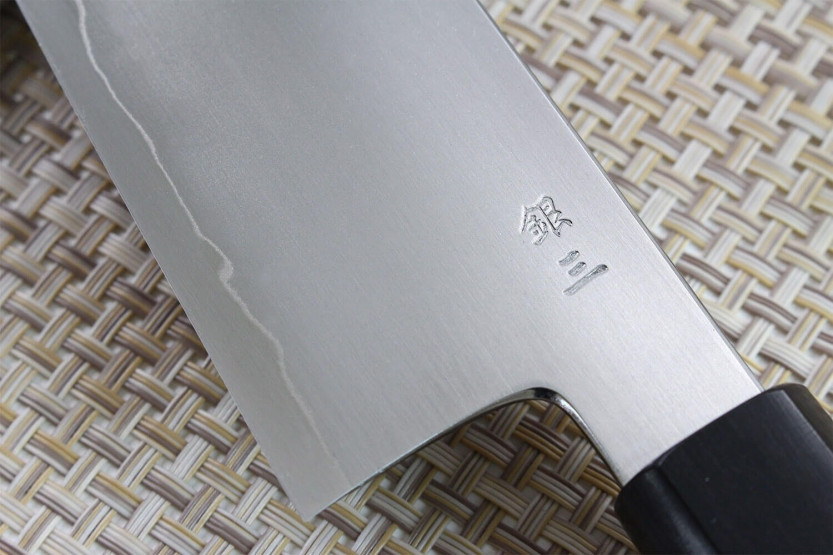
The brand logo is visible on the blade, and the latter benefits from a traditional finish, achieved with a special sharpening technique, where stones of different grit are used in succession. This technique brings out a wave on the steel, which appears more polished (visible on the bottom of the blade).
The top edge and base of the blade have been polished to make them more pleasant to the touch. Some cooks take their knife very high up on the handle, and can even put their index finger on the back of the knife. Polished edges are therefore much more comfortable to use.
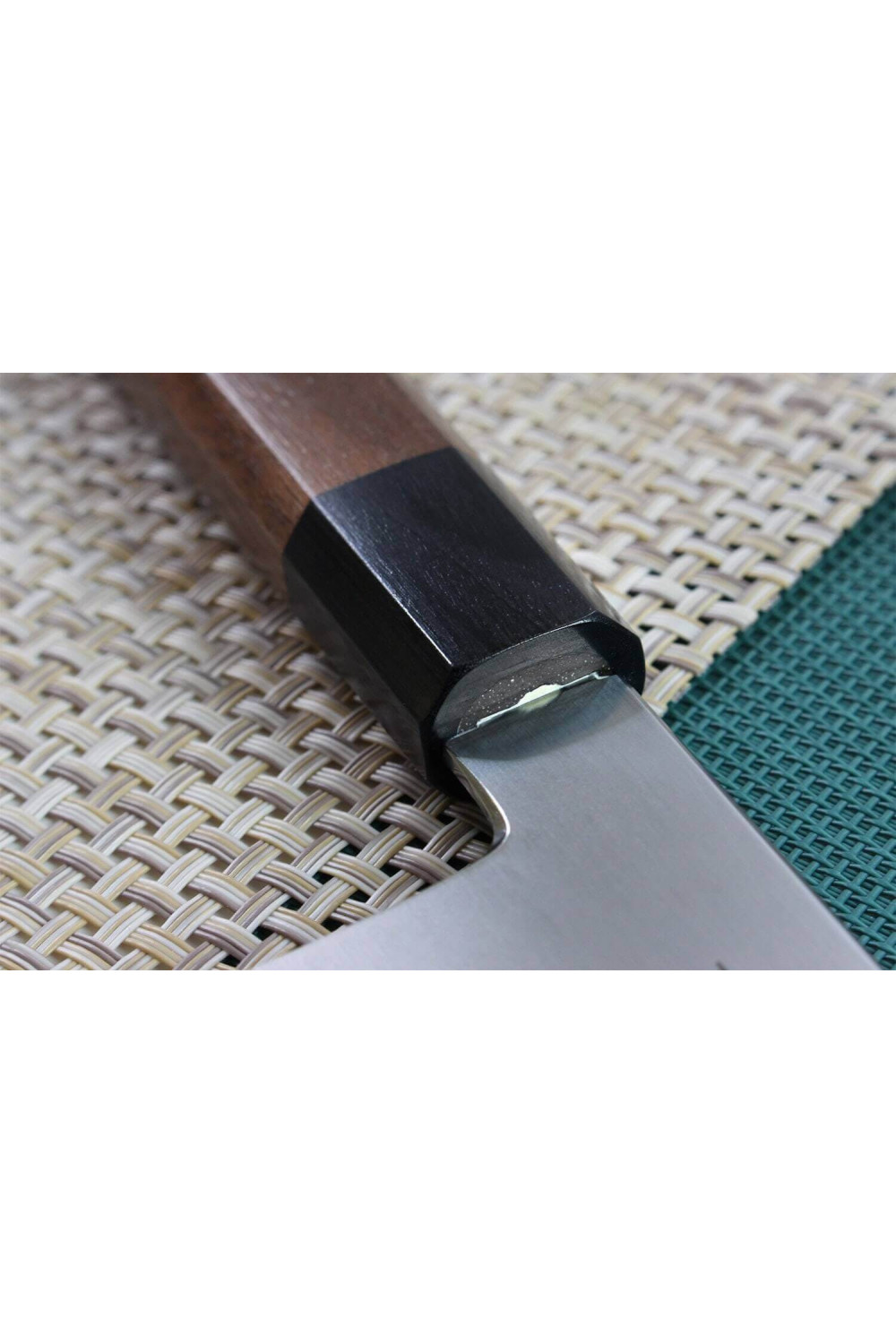
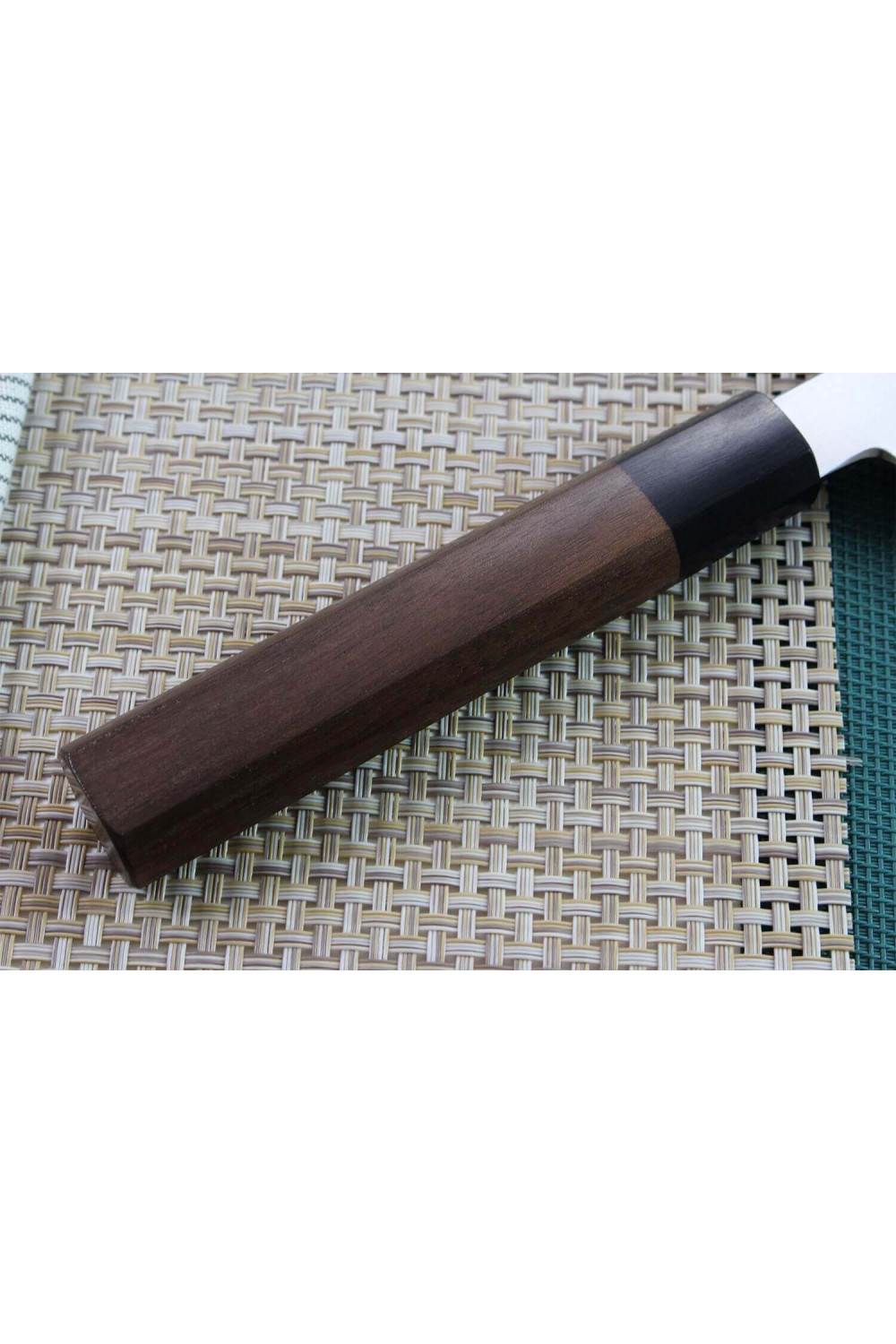
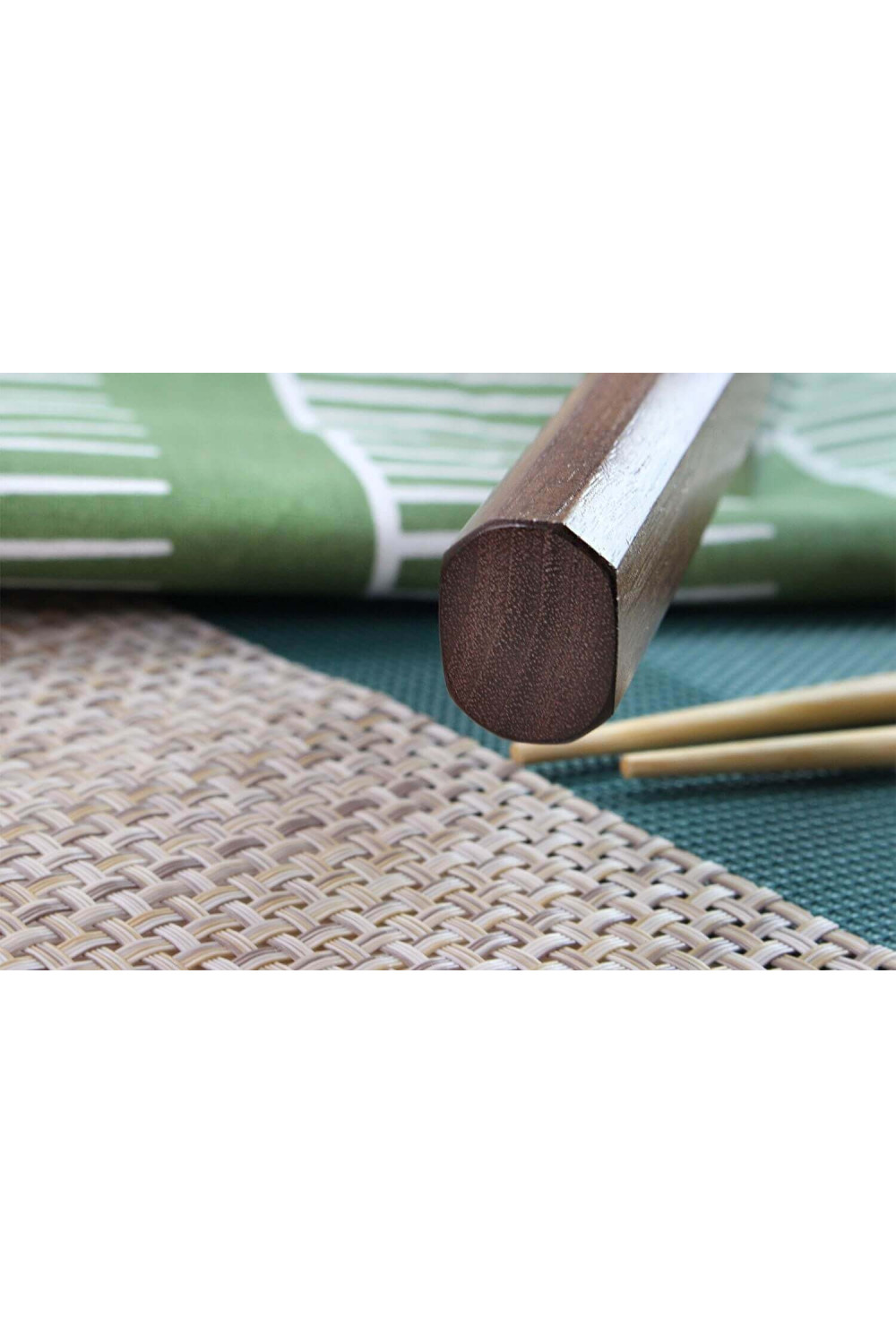
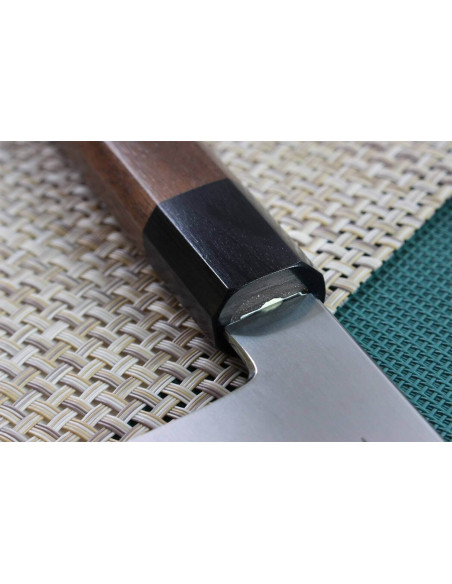
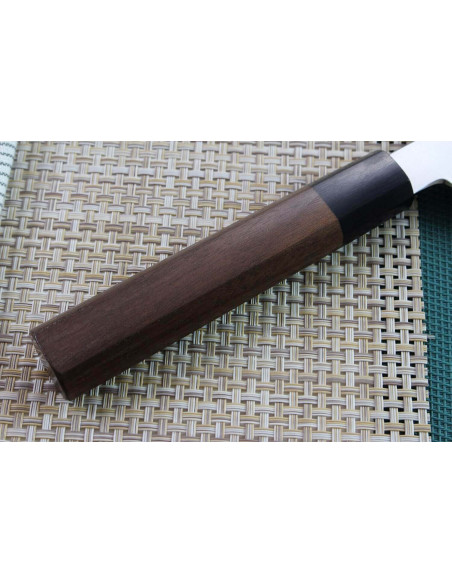
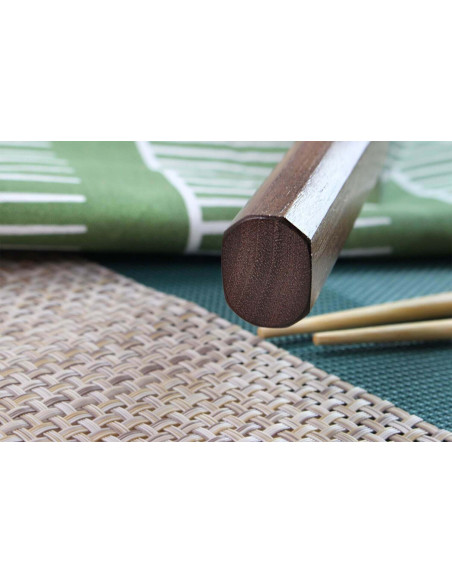
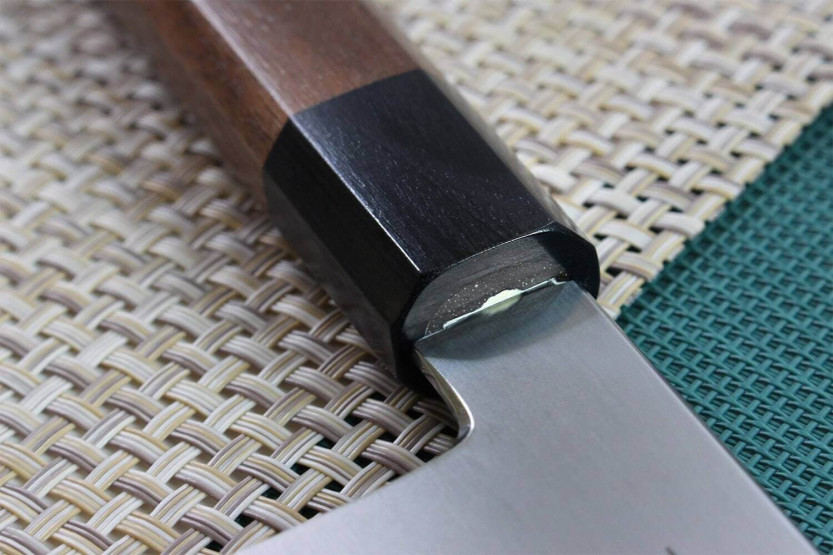
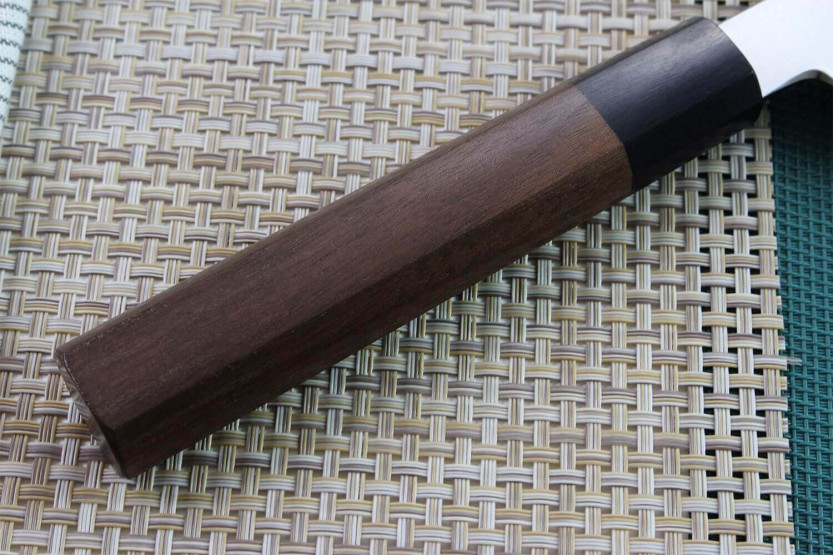
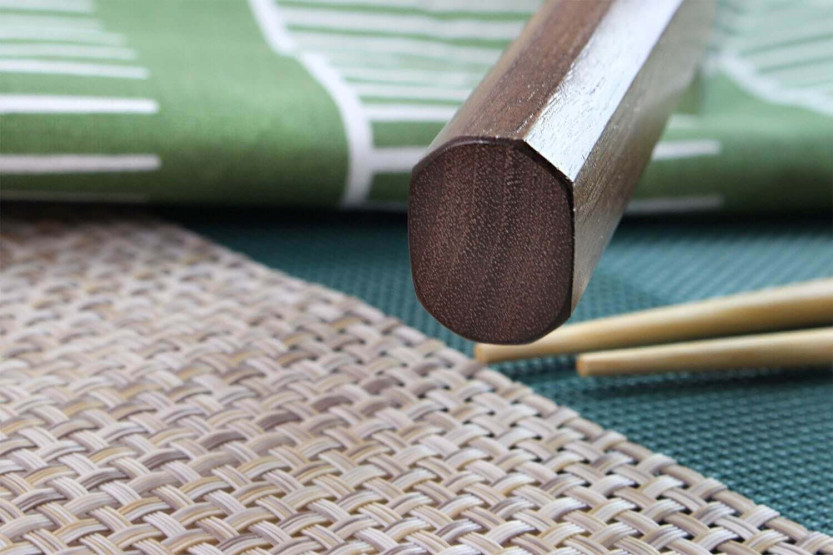
The knife's handle is made from walnut wood, a beautiful, dark and rigid species. The piece of wood chosen for the handle is octagonal in shape, allowing both right- and left-handed cooks to use it with great comfort. It is sanded to ensure a pleasant feel. A black Pakkawood bolster completes the design, linking the wood to the blade. Finally, the junction between the blade and the bolster is filled with a wood paste that makes the whole thing watertight, and prevents small scraps and cleaning water from penetrating the inside of the handle.
The knife can be maintained by hand. You can use a mild soap and run it under water, without using an abrasive sponge. Then wipe with a soft cloth to remove all traces of moisture from the blade and handle. The blade is supplied with a protective oil coating: to remove it, wipe with a cloth dipped in vegetable oil, then wash in the traditional way.
Find out more about manufacturing :
A family story
The knives are called Kagekiyo, after the commander Akushichibe"Fujiwara" Kagekiyo, who lived during the Heian era, around the 10th century. They are made by the Baba family, whose business has been in operation for over a century. It is the 3rd generation that is currently taking over the handcrafted factory, the know-how being passed on between the different members of the family.
One of the family members, Baba Ichiji, received a medal from the Emperor: theOrder of the Rising Sun, in recognition of his active participation in the cutlery industry. He was also awarded the Yellow Ribbon Medal, a distinction given to those who persevere in their chosen field and become role models for others.
Here, the Baba family called on young blacksmith Satoshi Nakagawa san to design the knives in the range. Despite his youth, he is renowned for his quality knives and excellent craftsmanship. At the age of 18, he became a pupil of master blacksmith Kenichi Shiraki san for over 15 years, and now has his own production workshop. He quickly assimilated the techniques he had learned during his apprenticeship, and now knows how to forge traditional carbon knives, as well as using the Suminagashi and Honyaki techniques! Finally, he can forge stainless steel knives such as VG10 or Ginsan for this particular range. So he's got many strings to his bow!
Principles that inspire
They follow the principle of Monozukuri, a Japanese concept that refers to the art of making things with passion and in the best possible way. They also follow the principles of Kaizen, which lead to constant improvement of oneself or the things one does. One example is the use of electron microscopes to study the molecular structure of steel and improve all its facets.
For even more choice, discover Kagekiyo's other knife ranges!




 By buying this product you can collect up to