Kagekiyo knives combine the tradition of the Land of the Rising Sun with cutting-edge technology, offering the right tools for every chef!
The Baba family, at the head of this family-run business, has been perpetuating this knife-making heritage for over a century. A prominent member of this family, Baba Ichiji, was honored by the Emperor with theOrder of the Rising Sun, in recognition of his commitment to the cutlery industry. His contribution was also recognized with the Yellow Ribbon Medal, which rewards perseverance in a field and becoming a role model for others. Currently run by the third generation of the Baba family, this manufacturer perpetuates know-how handed down from generation to generation.
To create the knives in this Kagekiyo range, the Baba family called on the talented blacksmith Satoshi Nakagawa san. Despite his youth, Nakagawa san is renowned for the exceptional quality of his kitchen knives and his remarkable craftsmanship. At the age of 18, he became a student of master blacksmith Kenichi Shiraki san, a collaboration that lasted for over 15 years. Today, Satoshi Nakagawa has his own production workshop. Thanks to his experience, he has mastered the art of forging traditional carbon steel knives, as well as Suminagashi and Honyaki techniques. His versatility extends to forging stainless steel knives, using alloys such as VG10 or Ginsan for this particular range. He is a multi-talented craftsman with exceptional expertise!
Kagekiyo knives take their name from Commander Akushichibe"Fujiwara" Kagekiyo, a key figure in the Heian era, around the 10th century.
Embodying excellence and high-end craftsmanship, these Japanese knives reflect the Monozukuri concept, which celebrates the art of creating objects with passion and unsurpassed quality. They also follow the principles of Kaizen, geared towards continuous improvement of both themselves and the objects they make. Their commitment to excellence is illustrated by the use of electron microscopes to study the molecular structure of steel in order to improve all its facets.
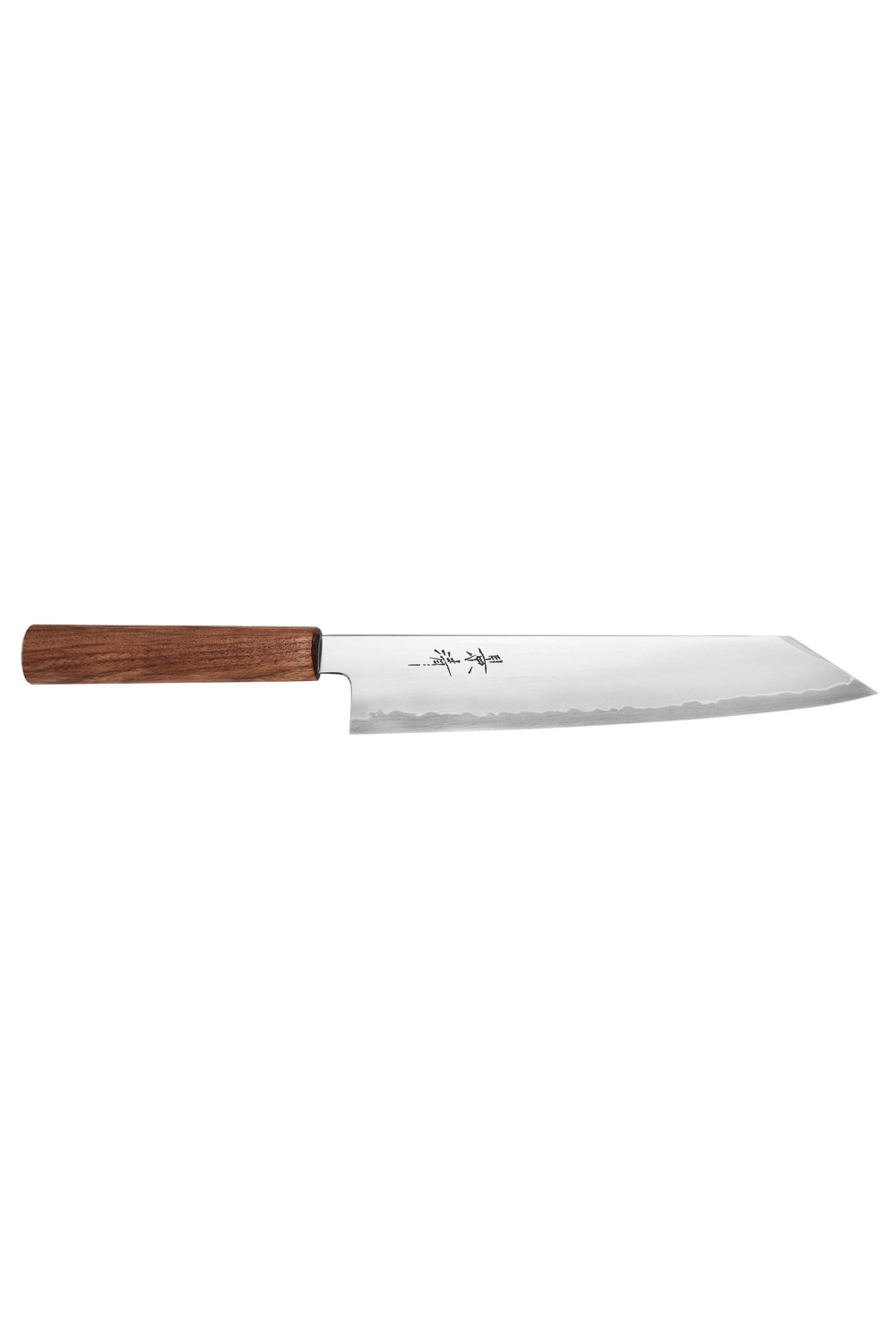
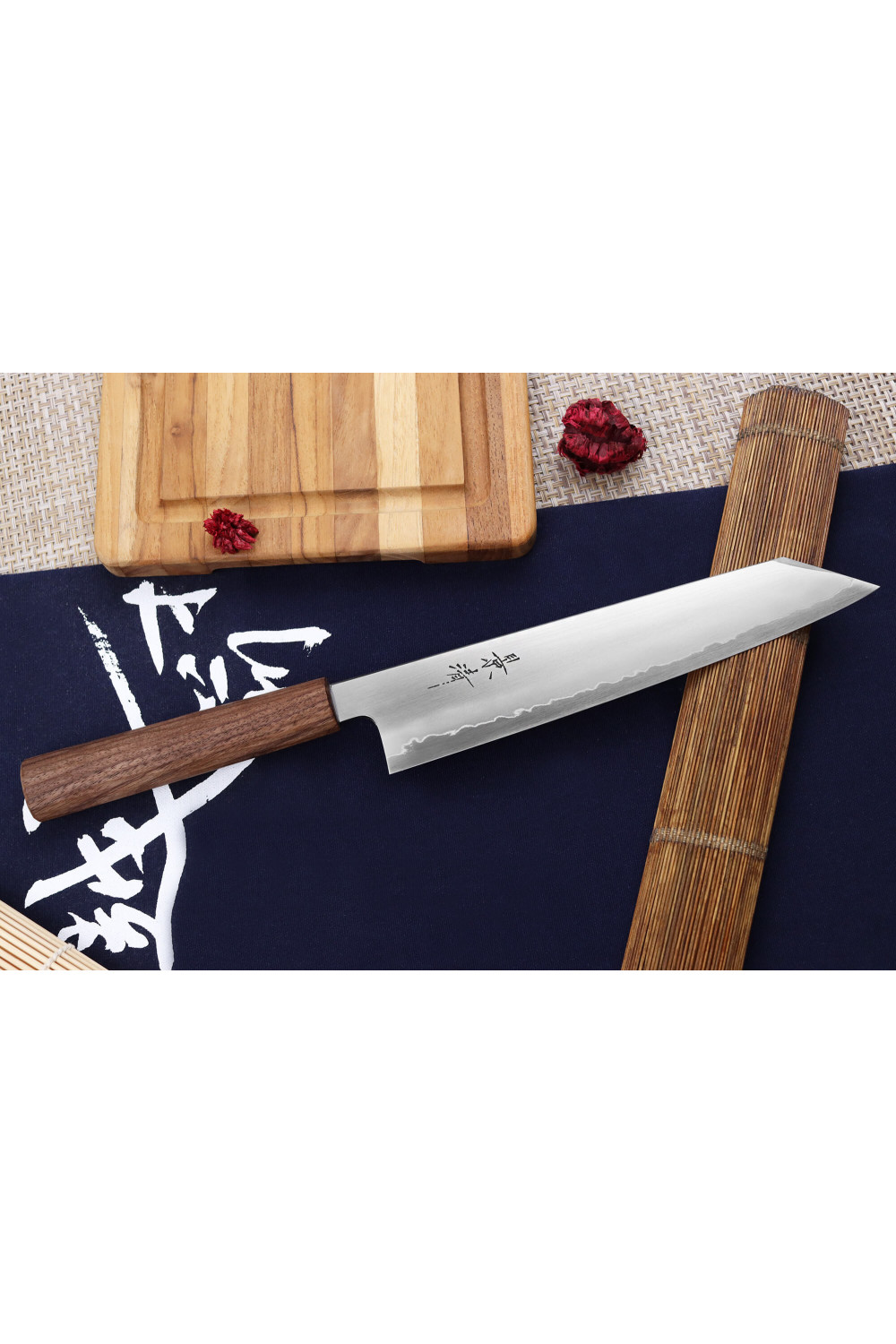
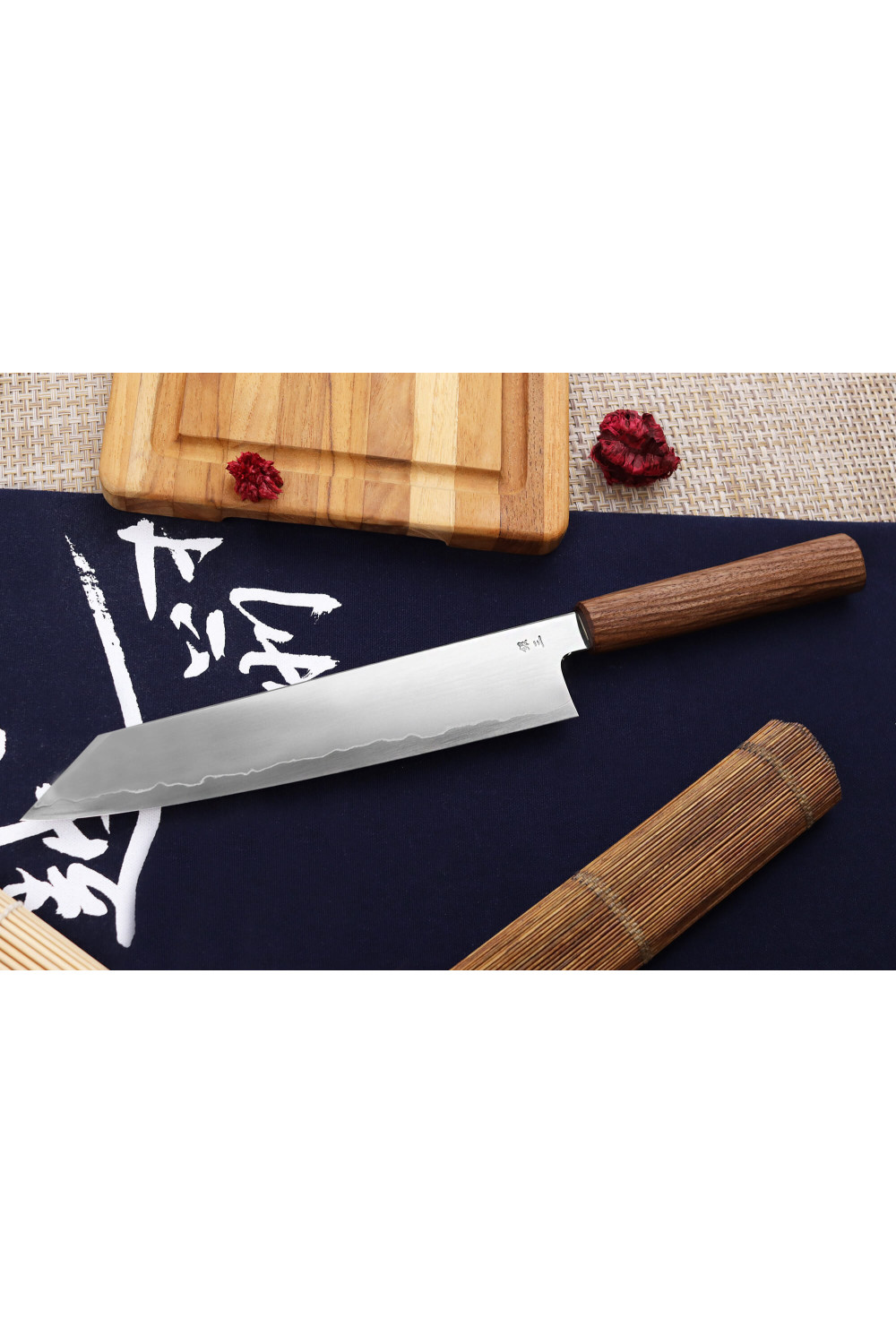
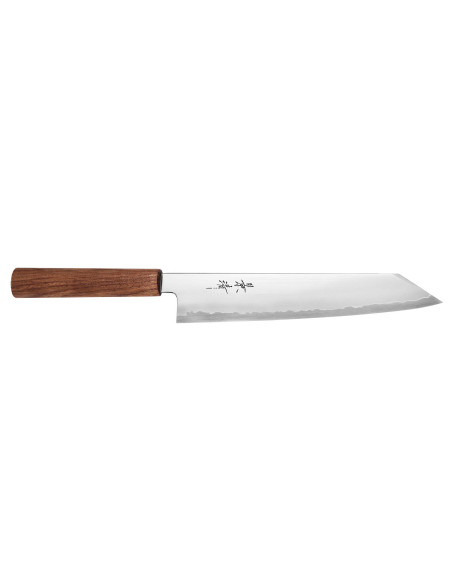
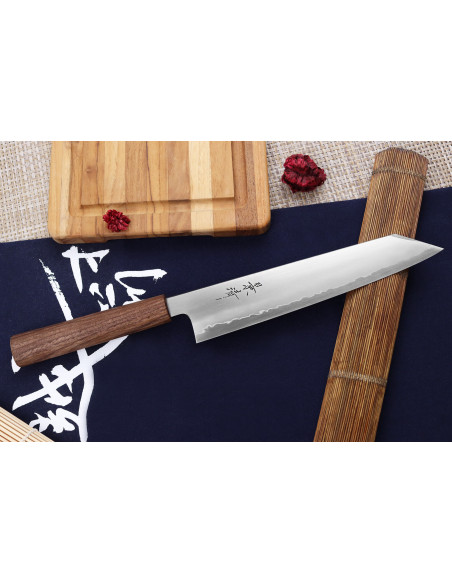
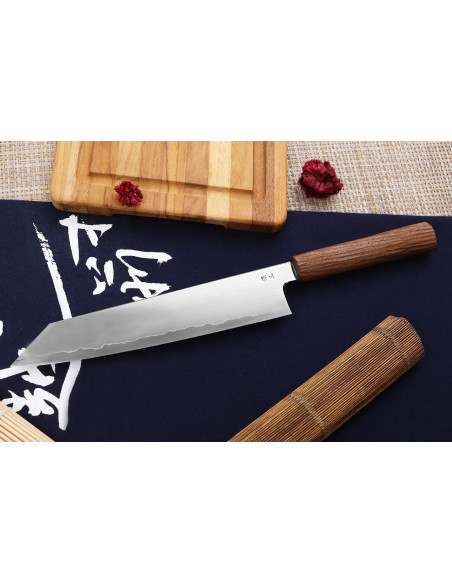
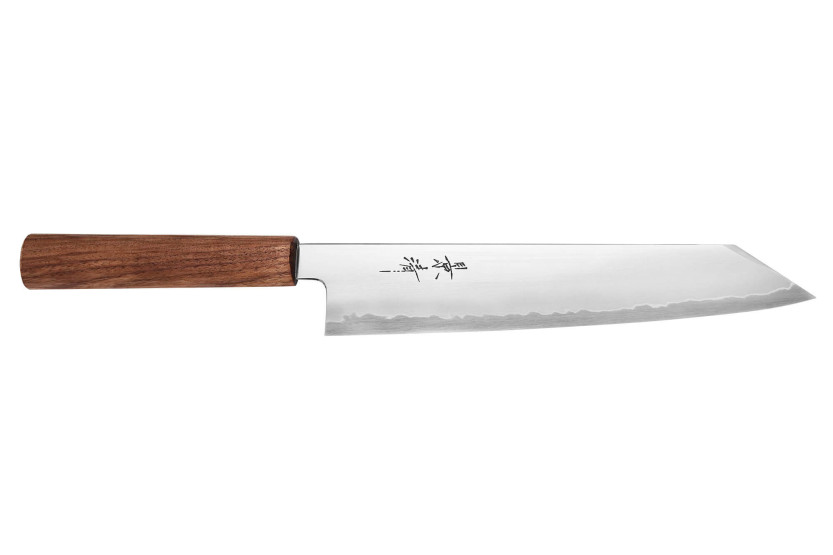
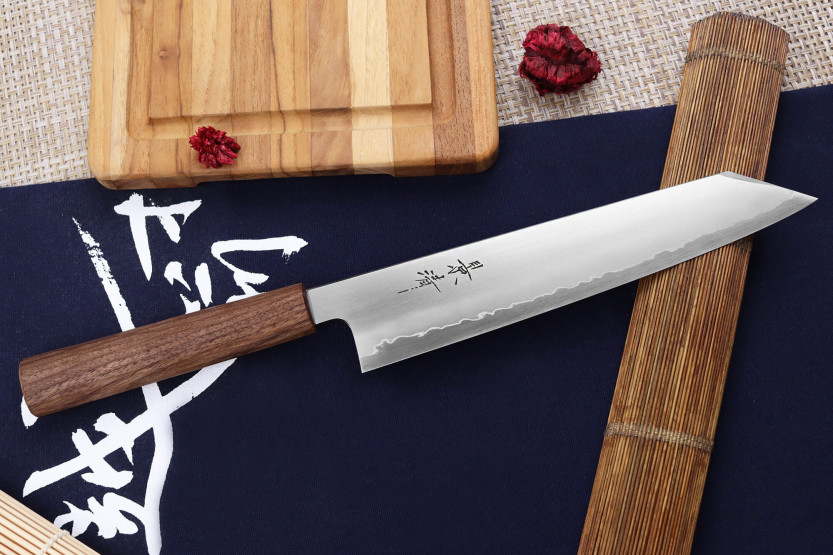
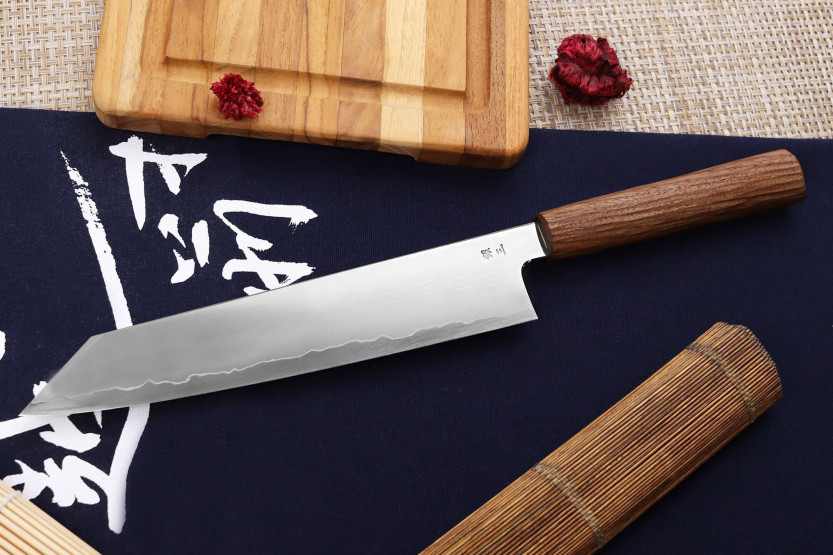
This Kiritsuke knife is a versatile model designed for a variety of cutting applications. It is perfect for chopping, mincing or mincing different types of food. Its distinctive point allows you to work with greater precision! As a multifunctional knife, it's an excellent choice for beginners.
A high-performance blade in Ginsan steel
The blade of this knife is built according to a San Maï structure, which means that it features a core surrounded by a softer outer layer that protects it by folding in on itself. Here, the core is made of Ginsan (Silver 3) stainless steel, with a carbon content of 0.95% and 13% chromium, among others. The presence of carbon makes the blade stiffer(59/60 HRC on the Rockwell scale) than standard steel knives, favoring a straight, long-lasting edge. This edge can be sharpened more thoroughly, requiring less maintenance with spaced sharpening sessions. Chrome also makes the blade more resistant to oxidation, making it an advantageous choice in the kitchen. Ginsan stainless steel is one of the finest steels currently available, offering the advantages of a carbon knife without the risk of oxidation.
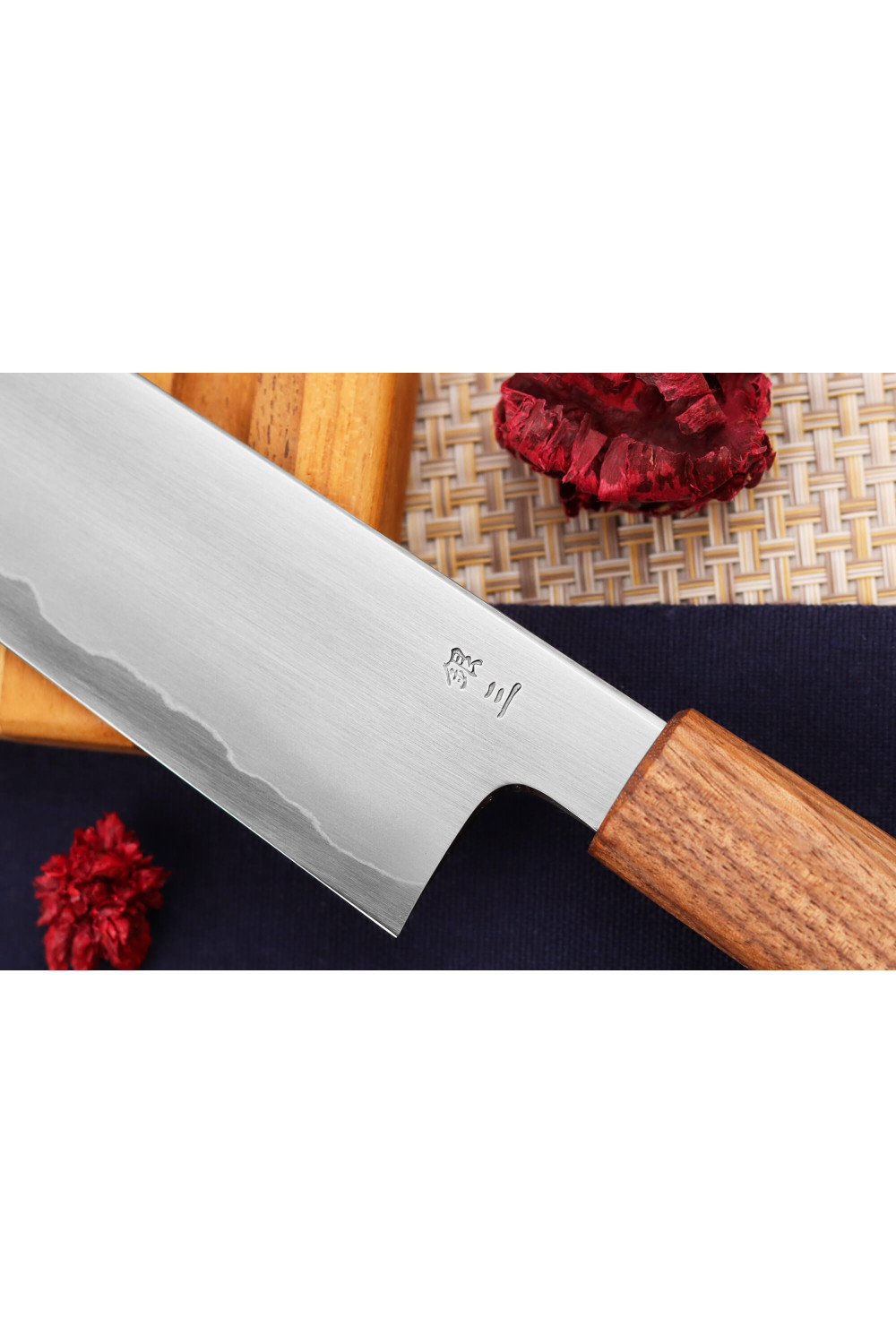
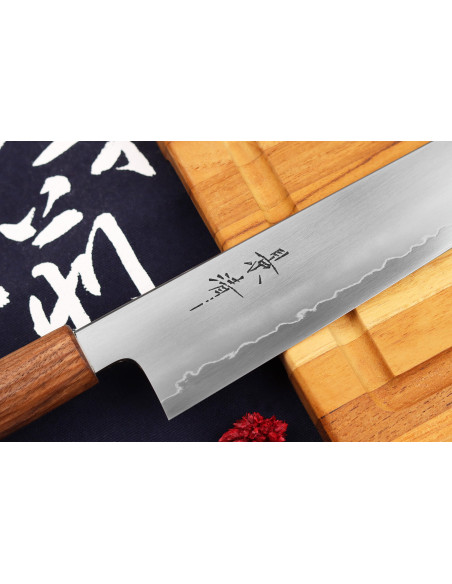
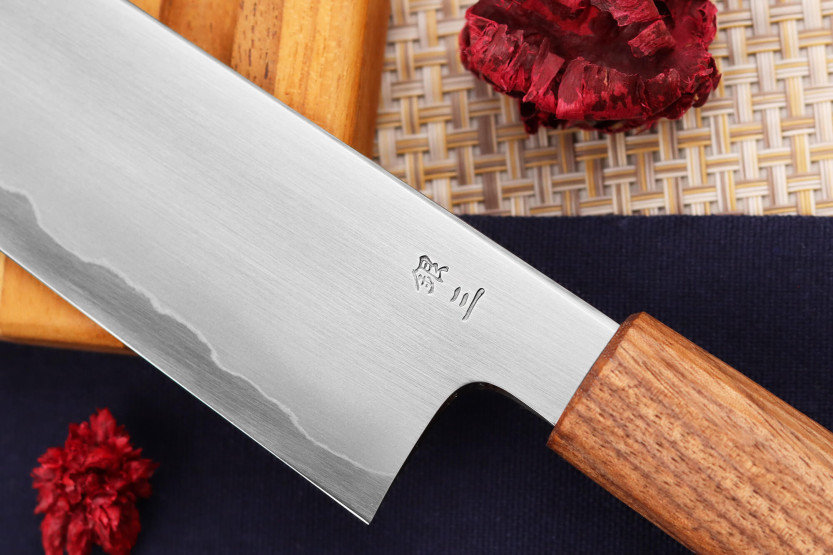
For optimum comfort, the top edge and the surface at the base of the blade have been polished. Indeed, many cooks hold their knives high up on the handle, or even rest their index finger on the back of the knife. As a result, the polished edges offer improved ergonomics during use.
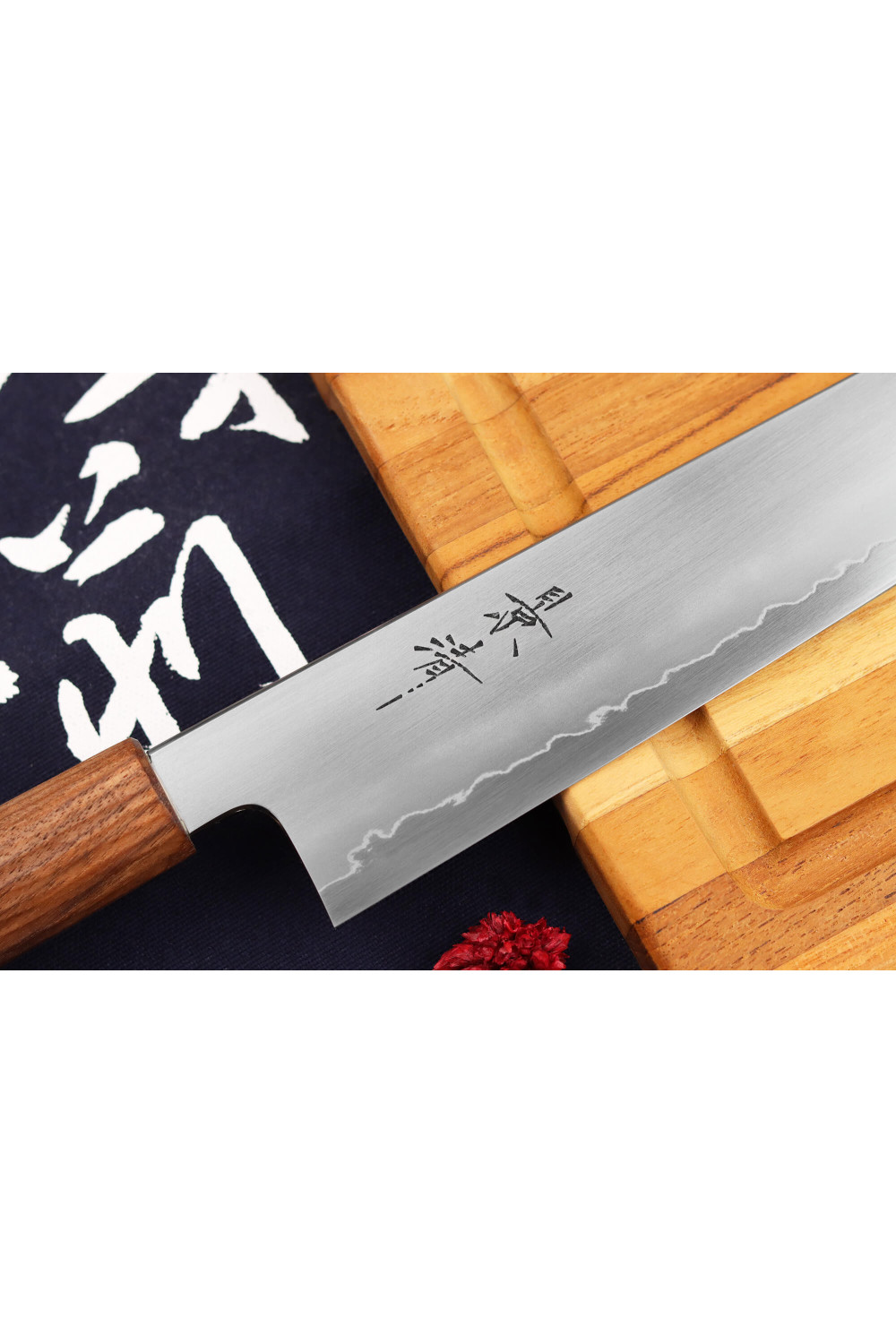
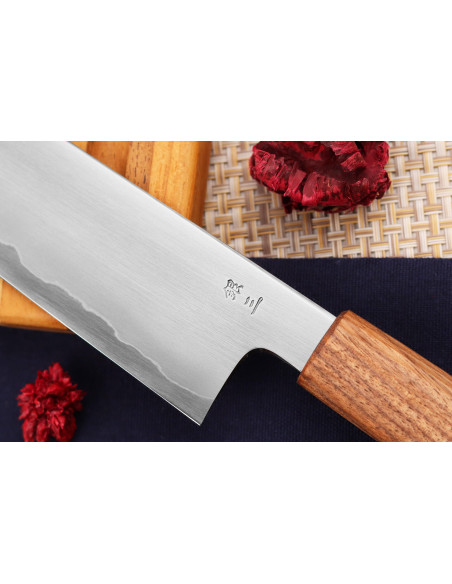
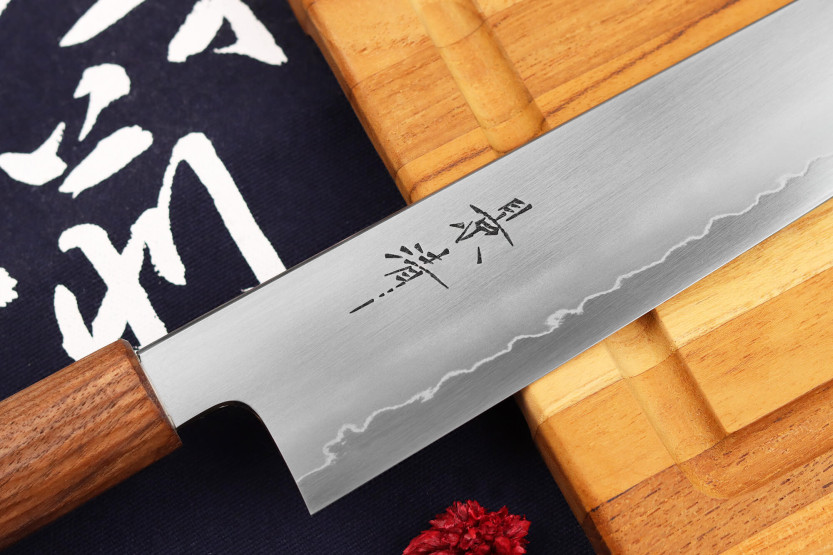
The brand logo is clearly visible on the cutting surface! The cutting surface is traditionally finished with sharpening stones of different grit to perfect your knife's edge. The result is a distinct wave on the steel, creating a more polished appearance (visible on the bottom of the blade).
A wooden handle for all hands
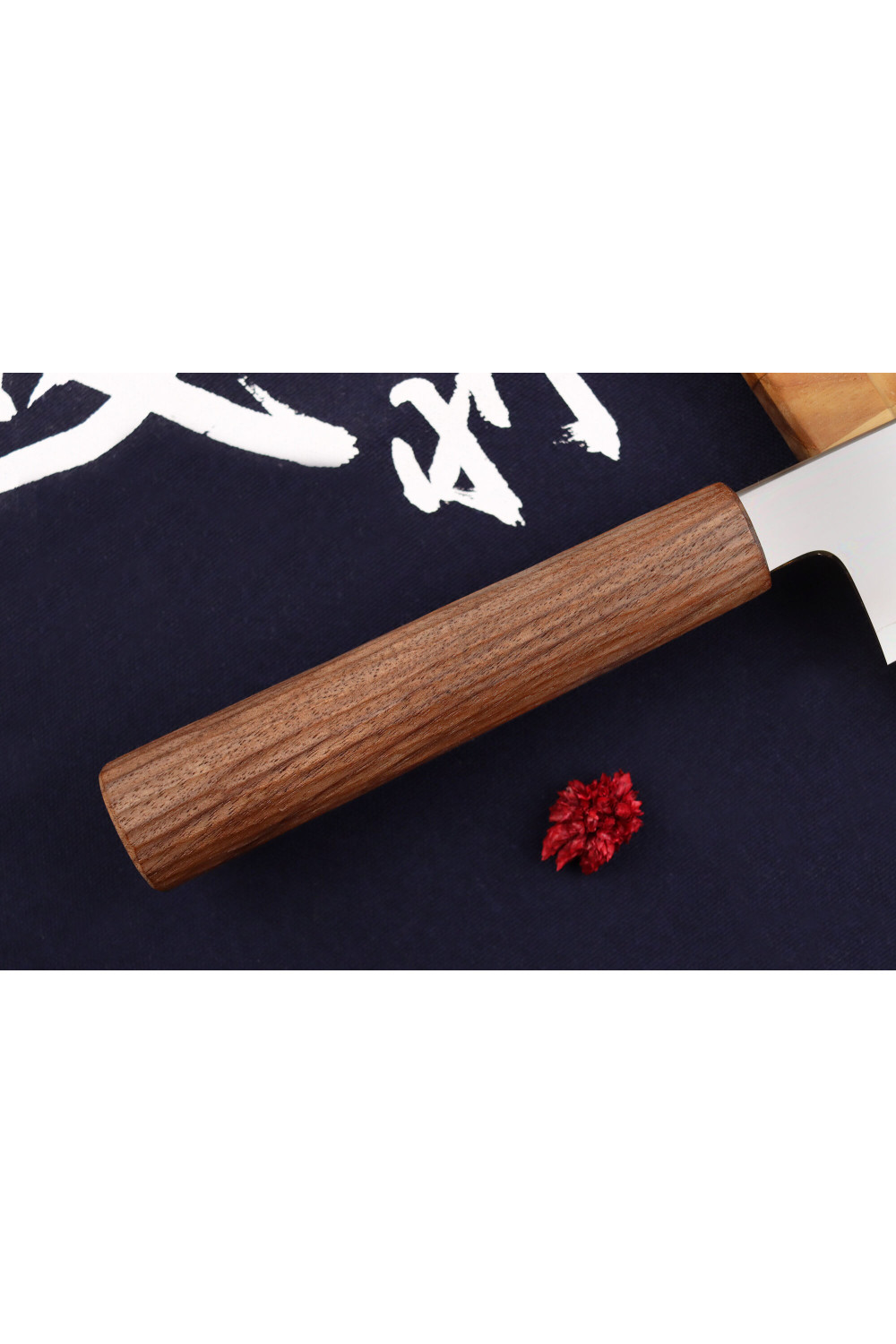
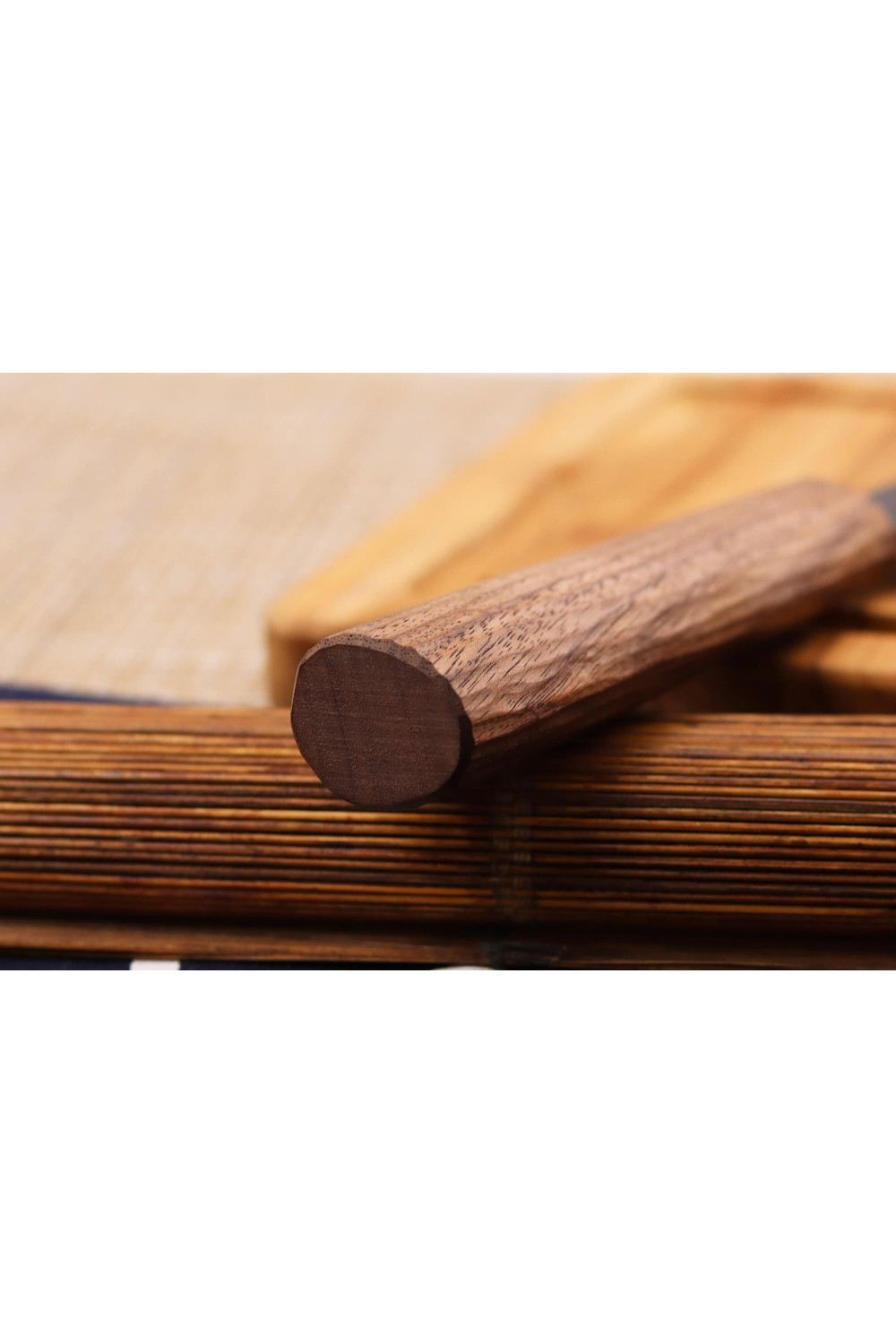
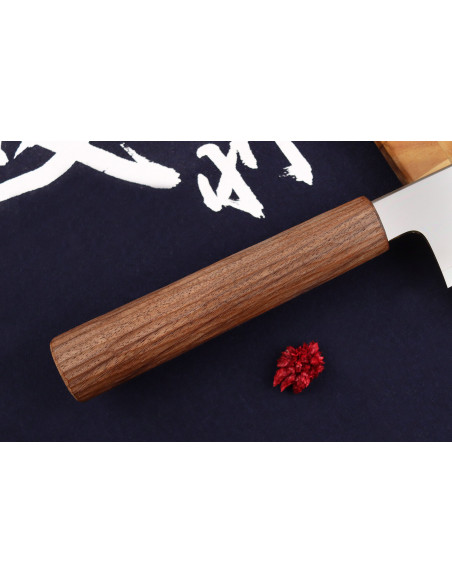
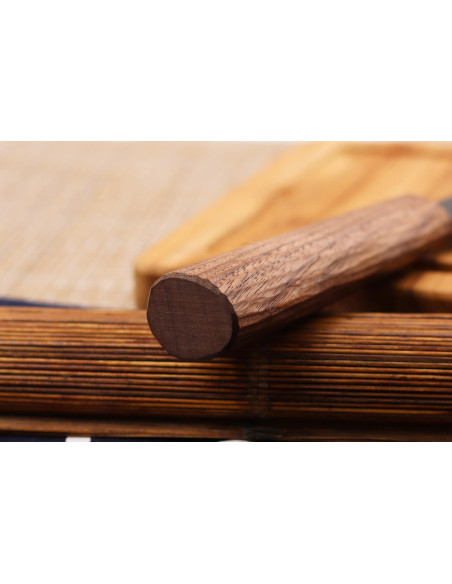
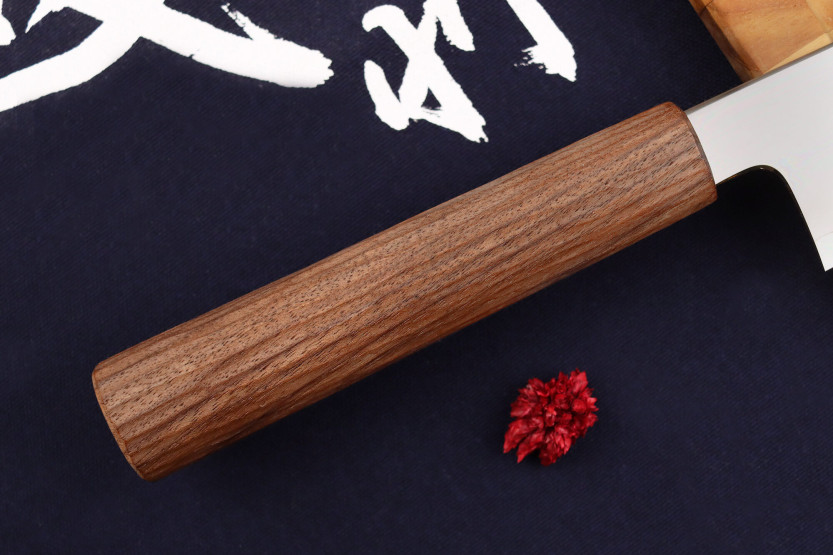
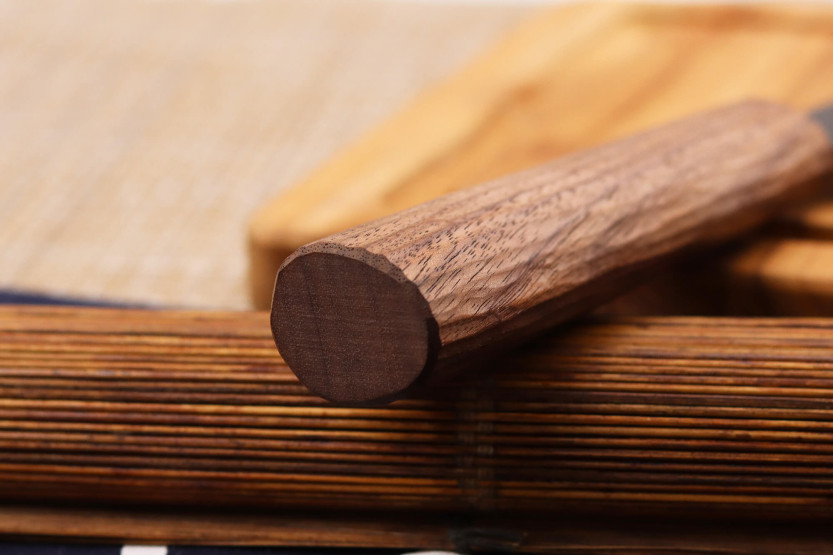
The handle is handcrafted by Sasakura Gaku san, an expert in the field. Made from dark walnut wood, the handle features unique markings left by the wooden knife used by Sasakura. The handle is carved into a long oval shape, ideal for large hands. After this process, the handle is carefully sanded to ensure a soft texture and a pleasant grip. Practical, it's designed to suit both right-handed and left-handed chefs!
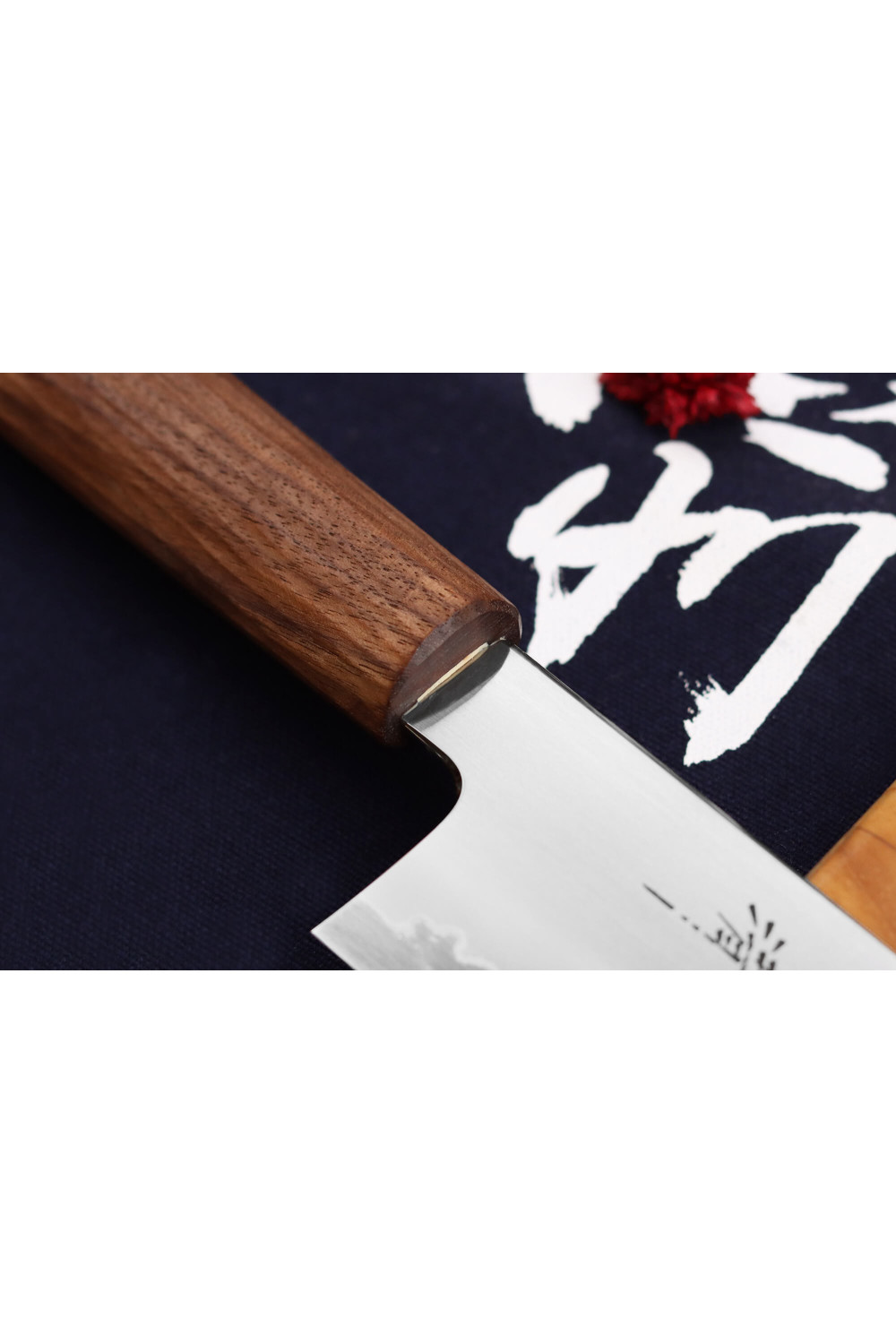
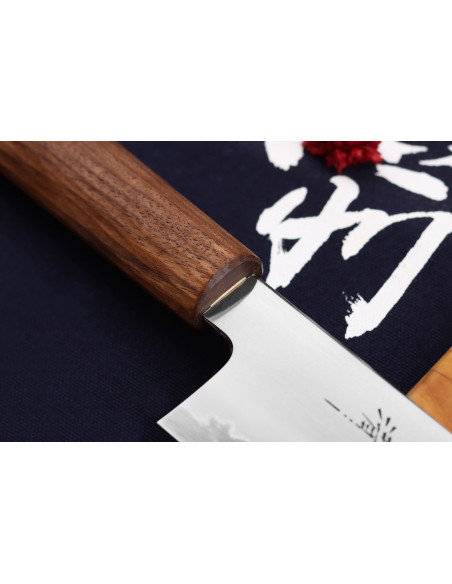
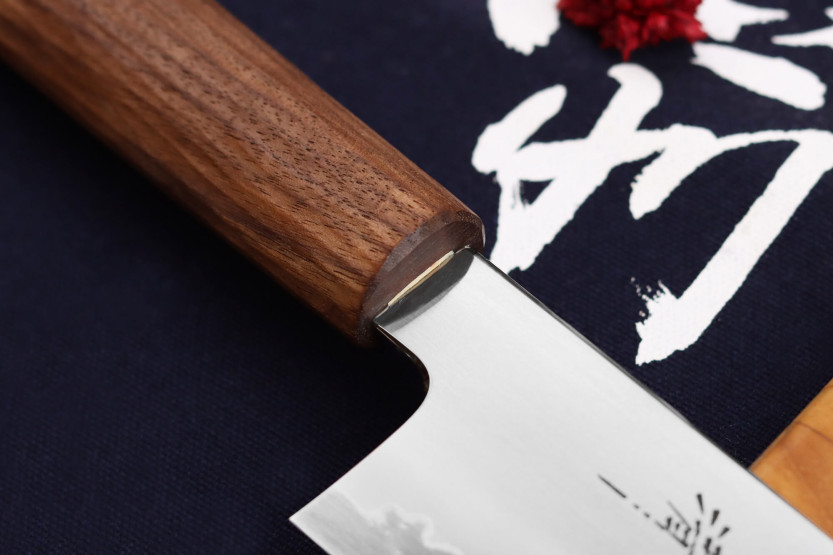
The junction between blade and Bolster is filled with wood paste, ensuring a watertight seal and preventing debris and cleaning water from penetrating the wood.
Maintenance of this handcrafted Japanese knife is done by hand. Simply wash it with mild soap under hot water with a non-abrasive sponge, avoiding wetting the handle. Then wipe with a soft cloth to remove all traces of moisture from the blade and handle, and store in a dry place.
The knife blade is coated with a protective oil. To remove it, simply wipe with a cloth soaked in vegetable oil, then wash as usual.
Discover many Kagekiyo knives on KnifeLeader.eu!




 By buying this product you can collect up to