Sakai is a Japanese town that is regarded as the cradle of the country's cutlery industry, as some of its forges have been in operation for centuries. Decades of craftsmanship have been passed down from generation to generation. Sakai Kikumori by Kawamura Hamono is located here. Its credo is to offer a complete range of products, using both the country's best blacksmiths and the area's small workshops. This is why the brand is so highly regarded by professionals. Indeed, the name Sakai Kikumori is synonymous with prestige.
To develop its series of kikuzuki kuro knives, the factory called on the illustrious blacksmith Yoshikazu Tanaka san, a renowned figure in the field. His expertise has been recognized by the Japanese government. He forges knives of unrivalled quality: the tempering he performs is of the highest quality, which has a major impact on the blade's durability. It won't warp, even when you sharpen it.
The all-purpose knife: practical for everyday use
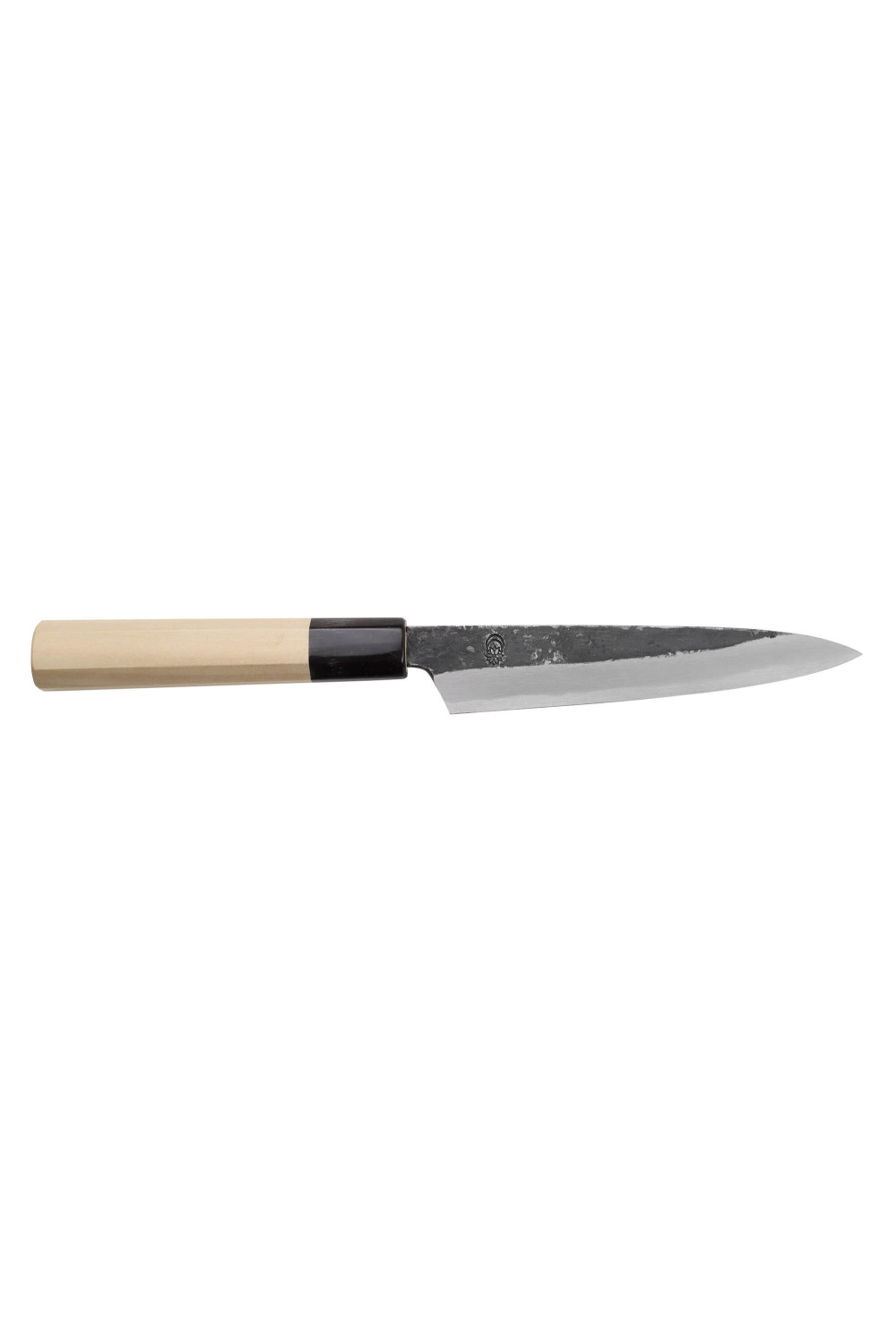
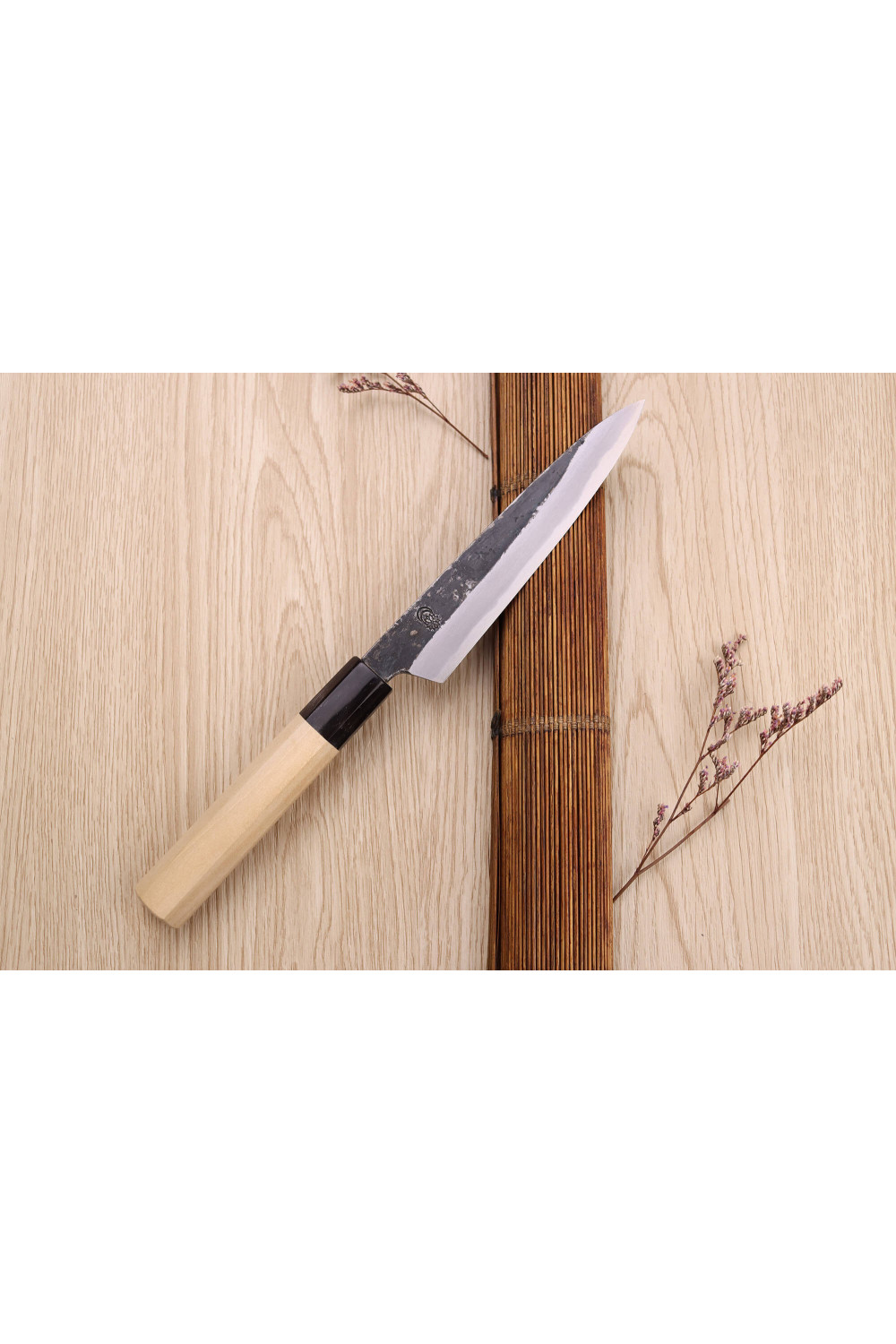
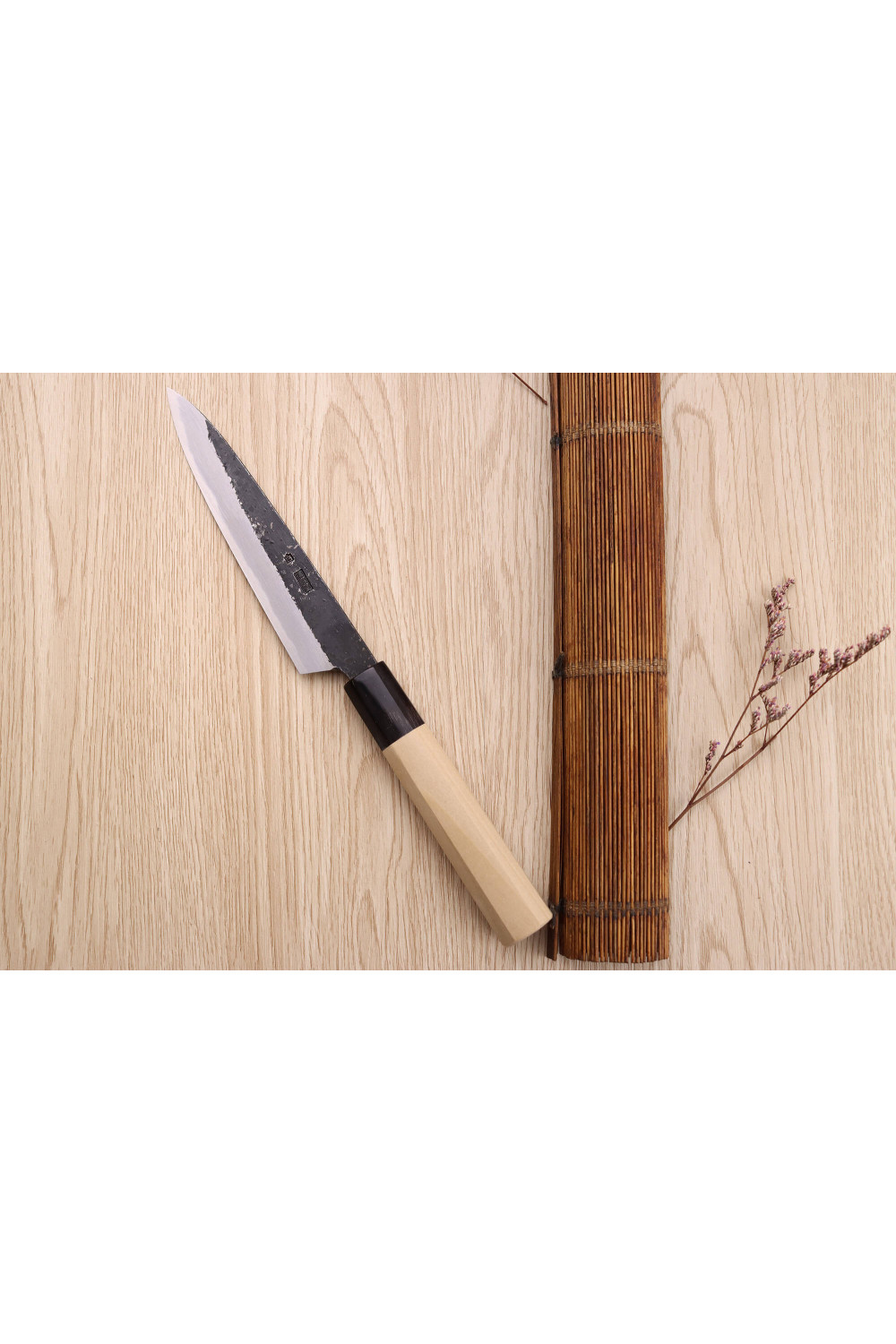
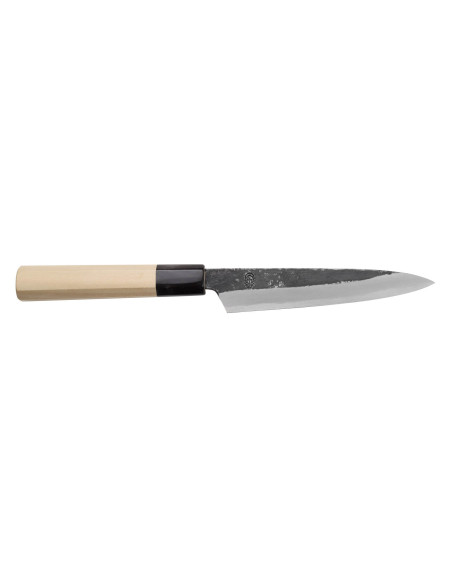
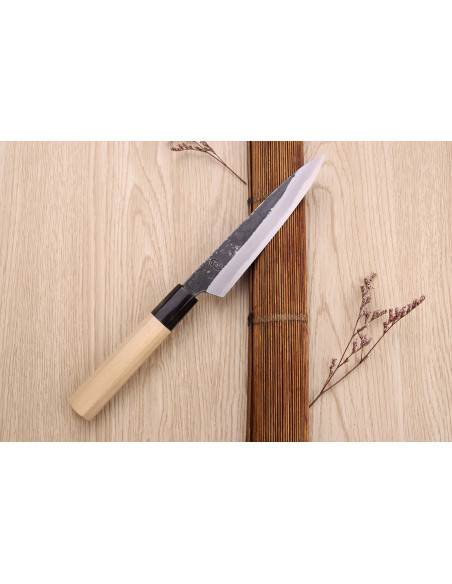
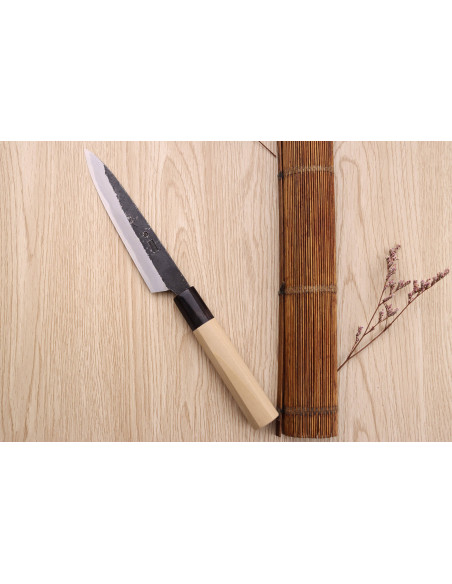
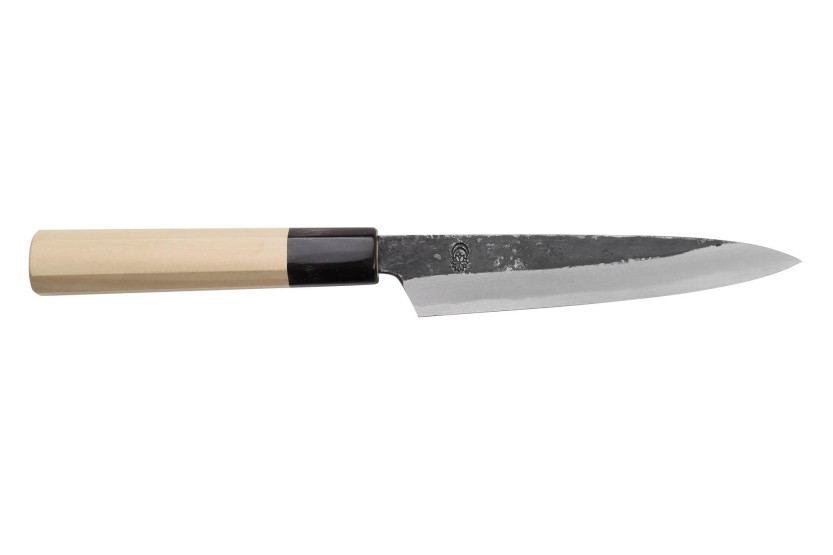
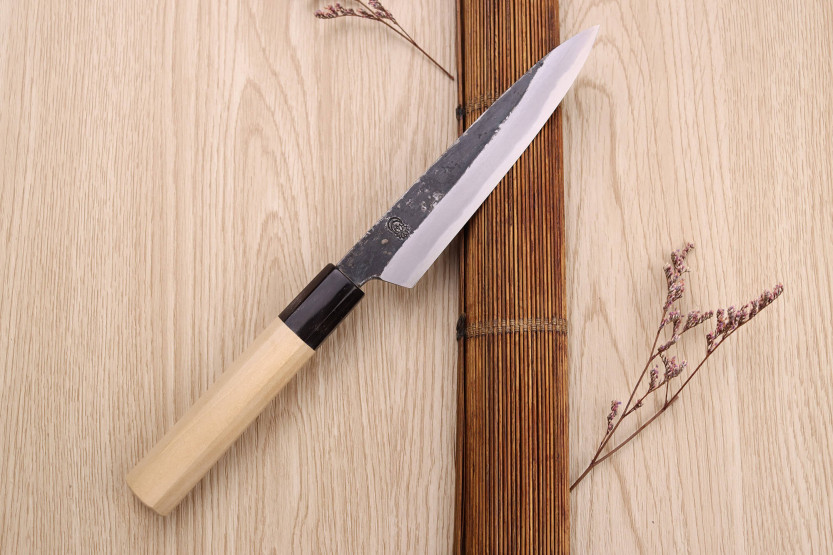
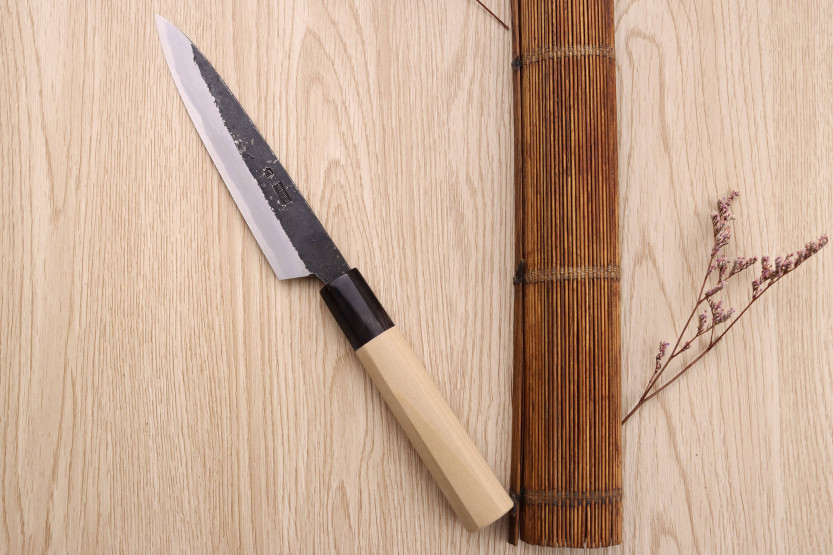
This Sakai Kikumori Kikuzuki Kuro 15cm all-purpose knife is highly appreciated for its maneuverability and its ability to multiply cuts. Its medium size and fine blade enable you to cut fruits and vegetables, as well as mince meat (which contains no bones). It's easy to find a job for it.
Quality materials to forge your Japanese knife
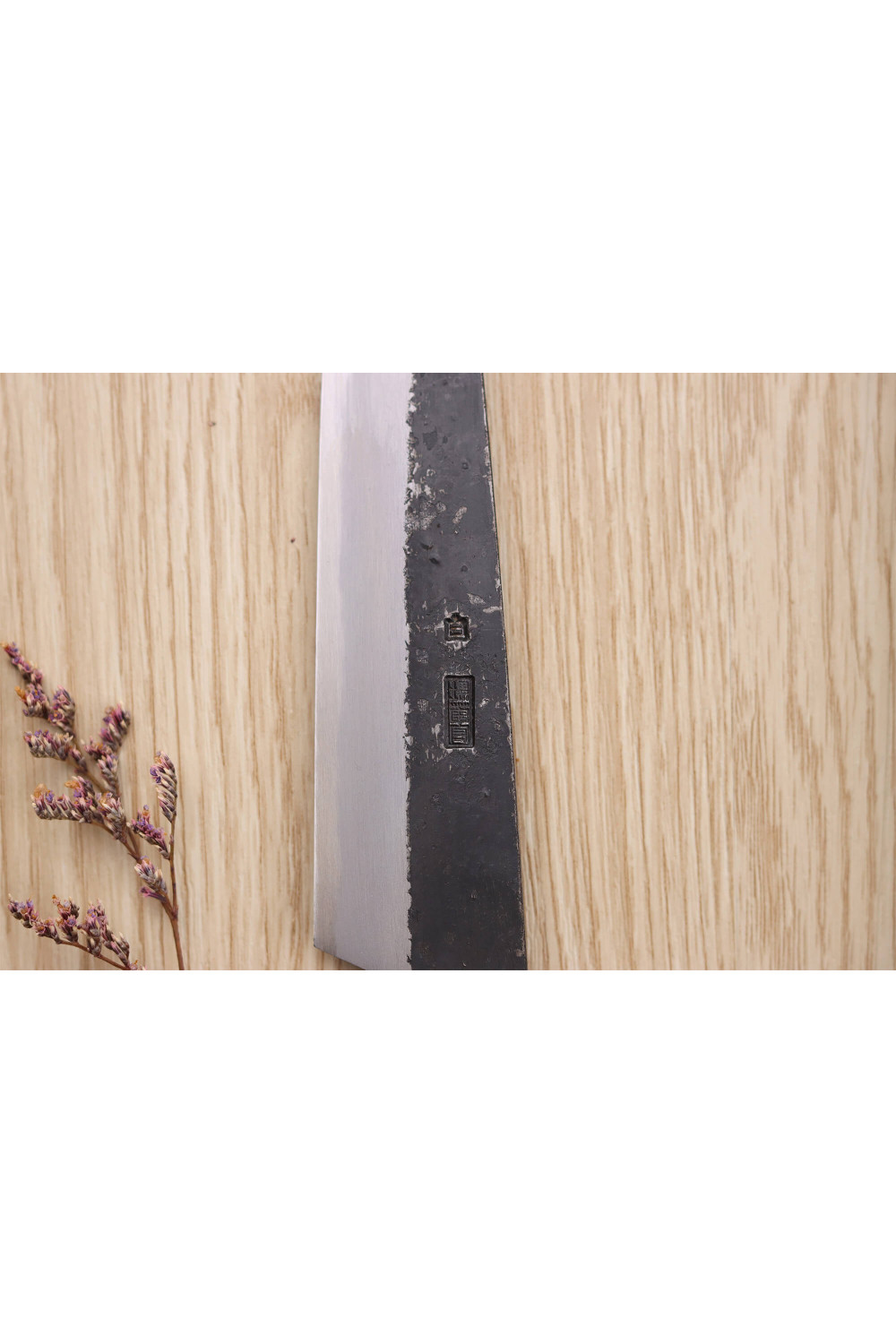
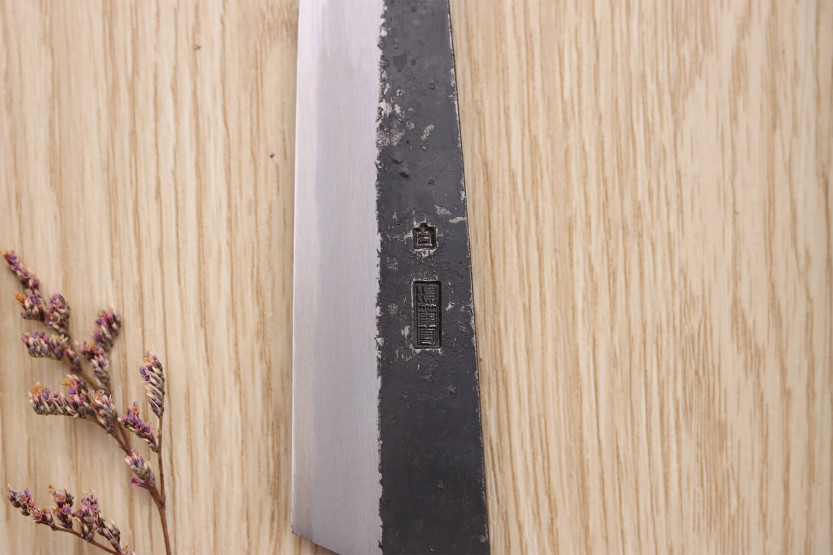
The blade of your handcrafted knife is based on a structure known as San Maï, which means "3 layers" in Japanese. This type of blade features a hard core surrounded by a layer of softer steel that bends in two (hence the 3 layers).
Your sakai kikumori knife features a Shirogami 2 core (also known as White Steel 2). This is a Japanese steel of extreme finesse, developed by the Hitachi steelworks in Japan (the latter are renowned and work with many of the country's blacksmiths). In Japan, knives made from such an alloy are highly appreciated by chefs with traditional values, since they are produced directly there and worked by the best blacksmiths. This is a real guarantee of quality.
This alloy is one of the purest steels on the market, enriched with iron ore and carbon (the latter at around 1.2%). These two elements are essential for increasing the alloy's rigidity, since a stiffer blade can be sharpened more precisely to a razor-sharp finish. Your knife reaches 61 HRC on the Rockwell scale.
This steel remains easy to sharpen when the need arises, thanks to its purity (despite a high level of hardness that might suggest otherwise).
In structural terms, the purity of the steel has another advantage: its homogeneity makes it more resistant (for example, there's less risk of chipping when you use it).
On top of the Shirogami 2 is a layer of softer steel that gives itbalance and protection.
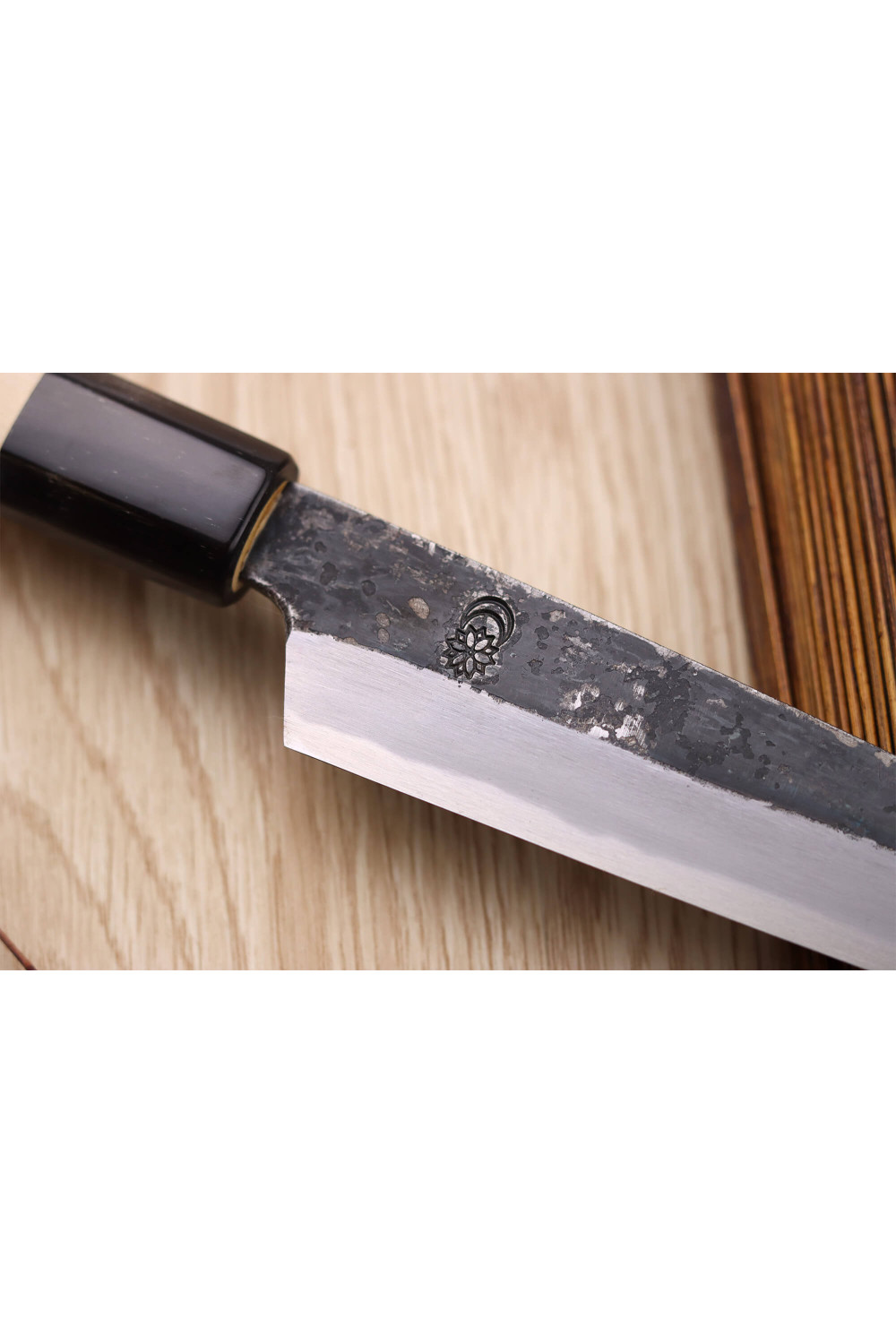
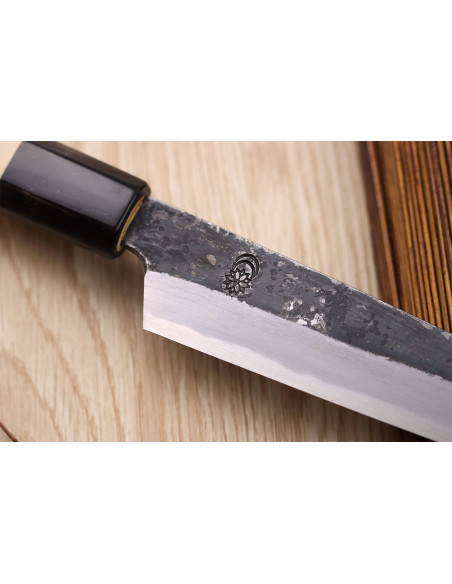
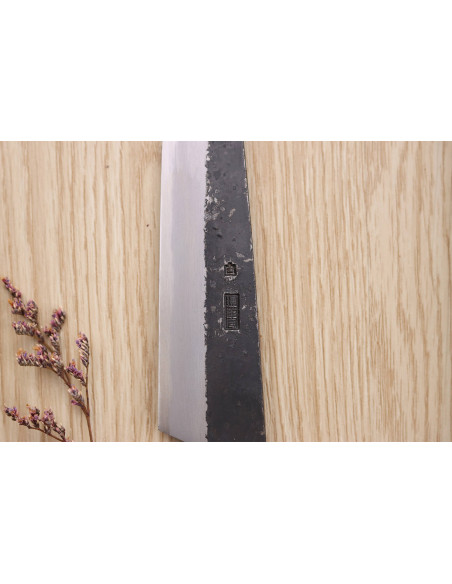
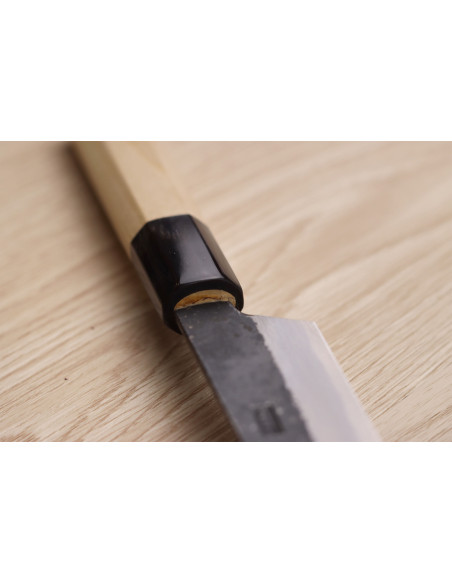
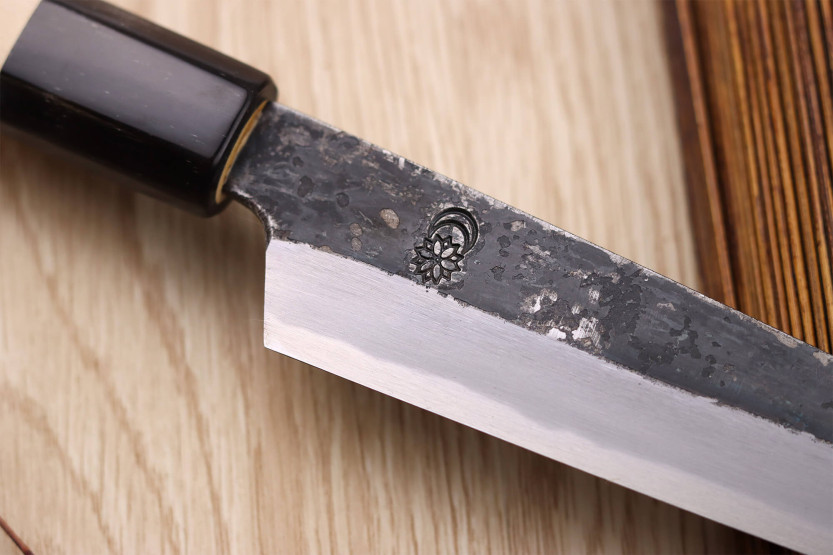
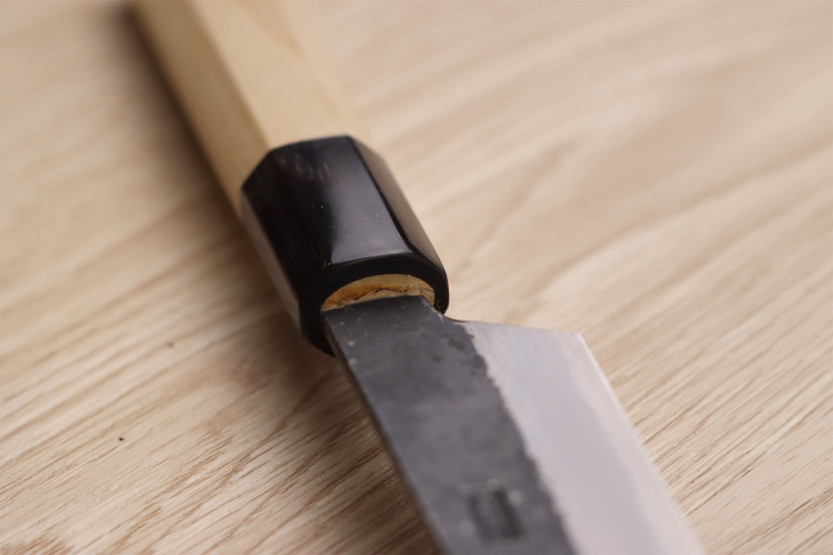
Finally, cooks appreciate the traditional finish created by the rough-forged finish. The blade is not polished, which creates its rustic appearance (dark and textured).
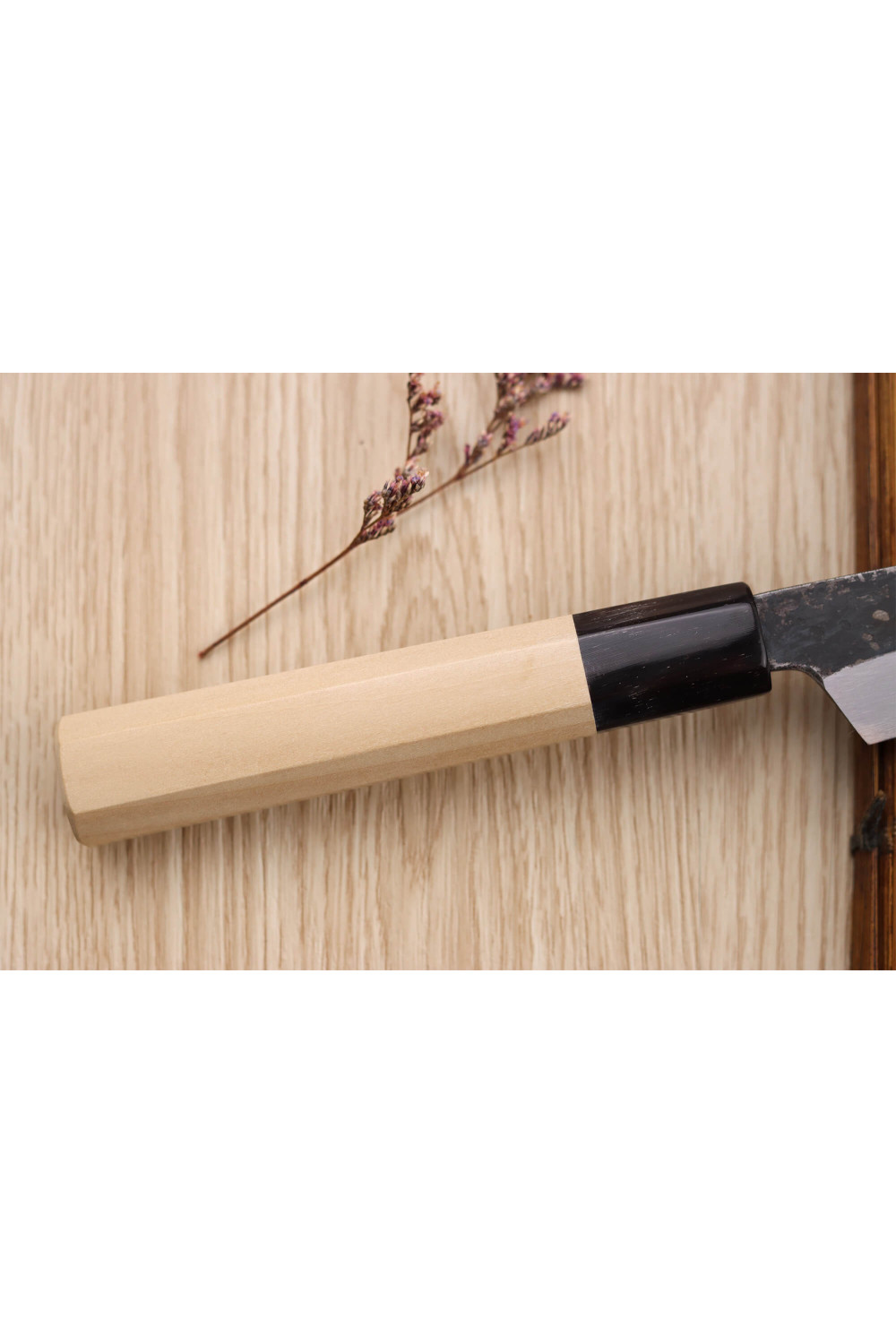
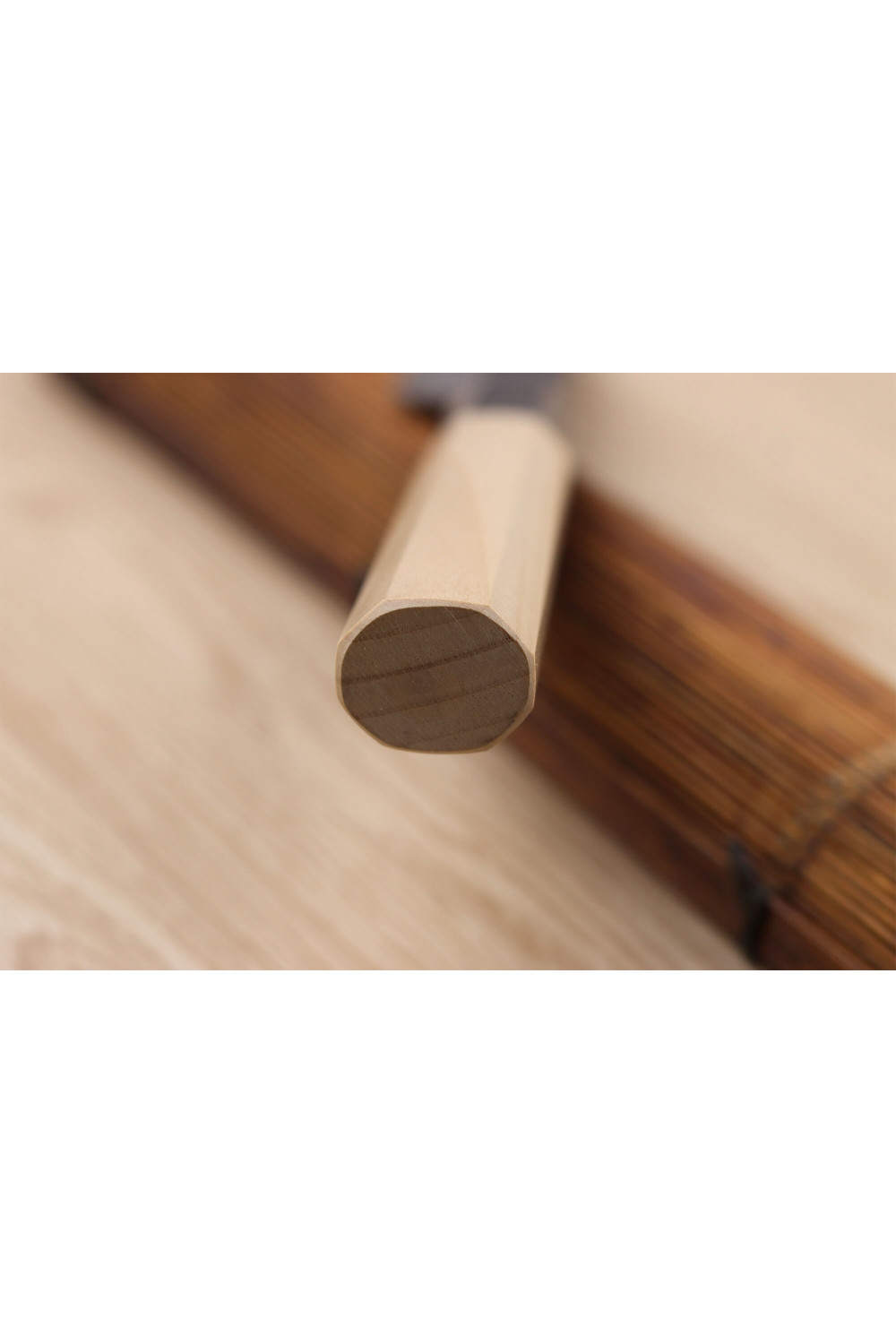
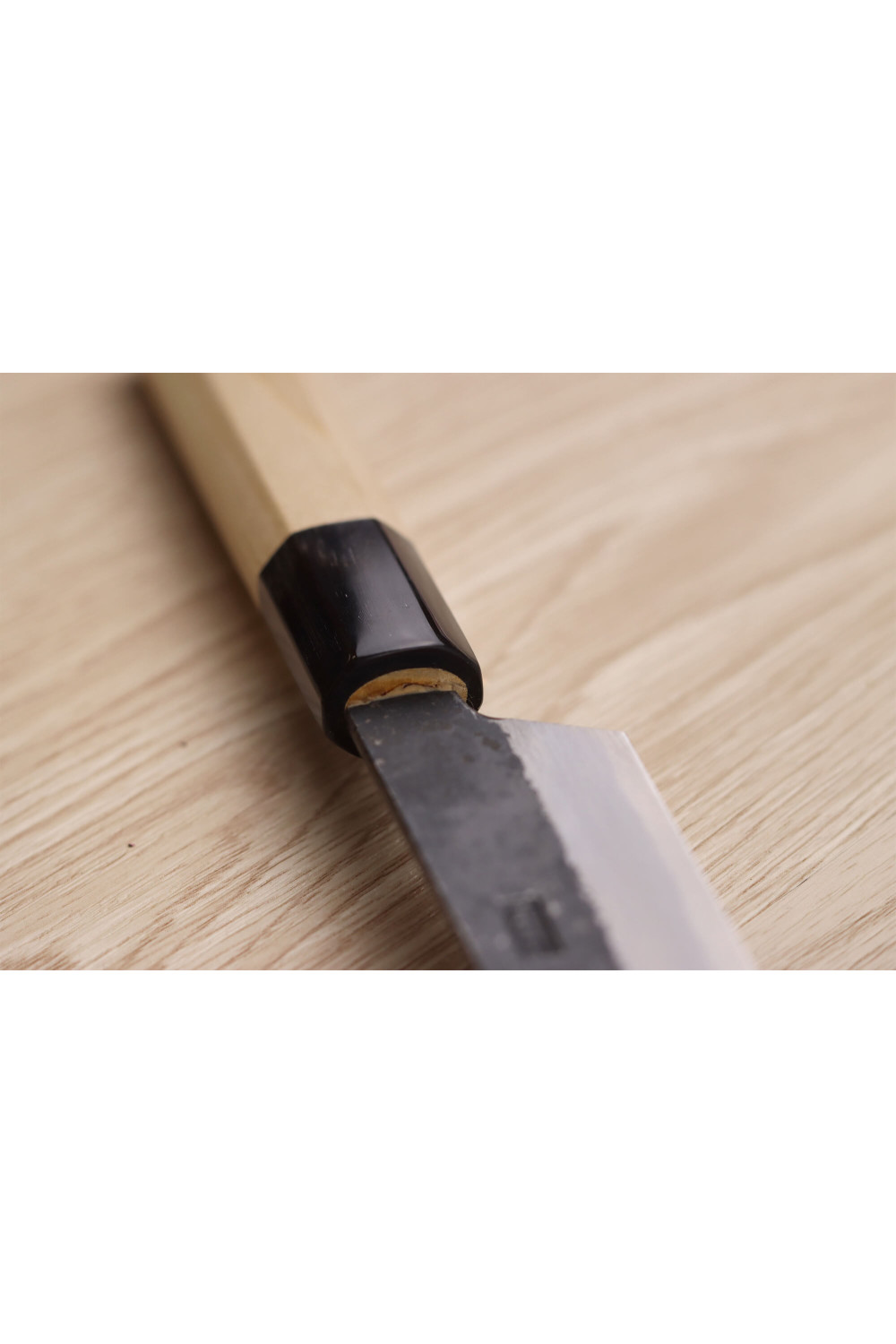
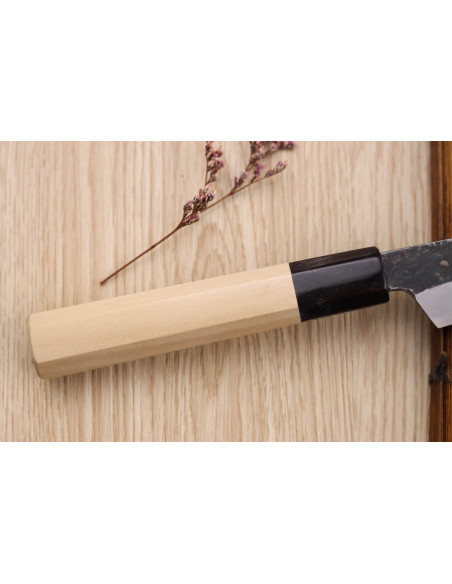
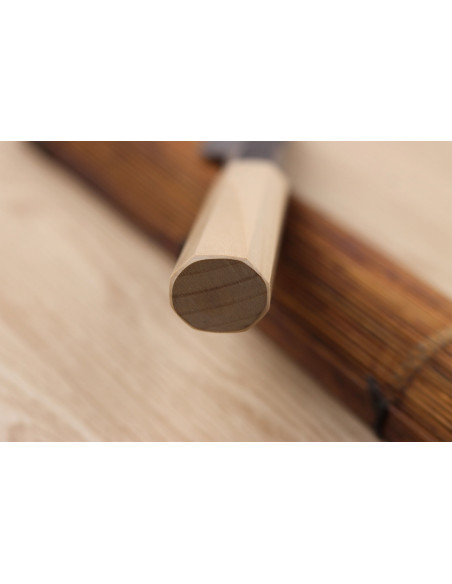
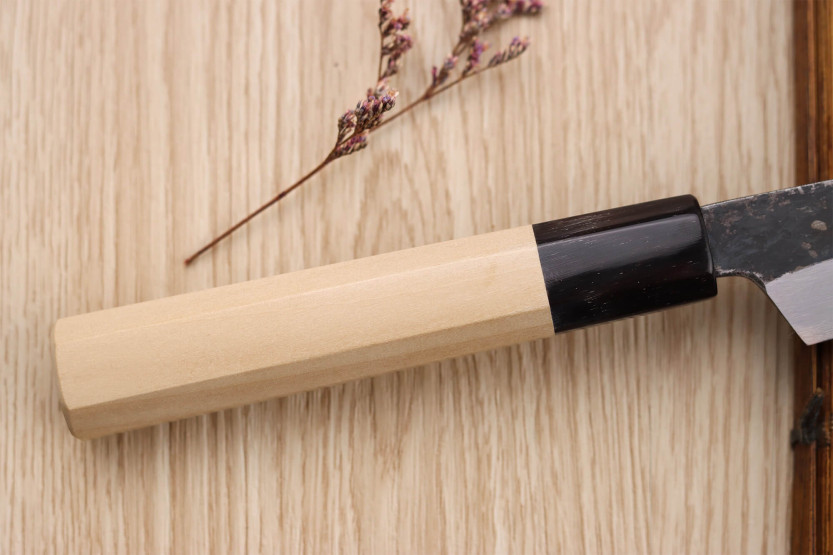
The handle is made of light magnolia wood. This precious wood immediately gives it a very traditional look. It's a pleasant wood to work with and a pleasure to use, thanks in particular to its lightness. It's also soft and resistant to humidity, making it an ideal material for kitchen use.
The ferrule that extends the blade is made of black buffalo horn. As this is a natural material, the color may vary slightly, and fine white streaks may be visible on some pieces.
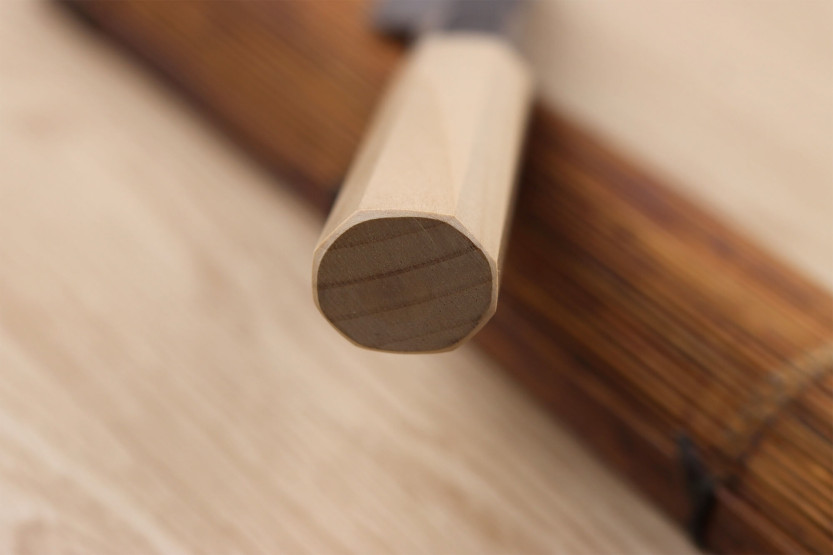
The handle is octagonal, making it suitable for both right- and left-handed cooks.
Finally, wood putty fills the space where the blade fits into the handle. This makes it watertight and hygienic, to prevent small pieces of cutlery from slipping inside.
Tips for caring for your sakai kikumori knife
This knife features a carbon-enriched blade. A high carbon content increases the risk of corrosion. To maintain your knife at its best, wash it by hand. To do this, use a mild soap and a sponge that is not too abrasive. Don't get the handle too wet.
Once the knife has been washed, wipe it dry so that no traces of moisture remain on its surface. Then store it in a dry place.
It's important to note, however, that despite special care, the carbon blade may change color over time, as its alloy reacts in a normal way (to the acidity of the food being cut, for example). For best protection, you can oil it regularly.
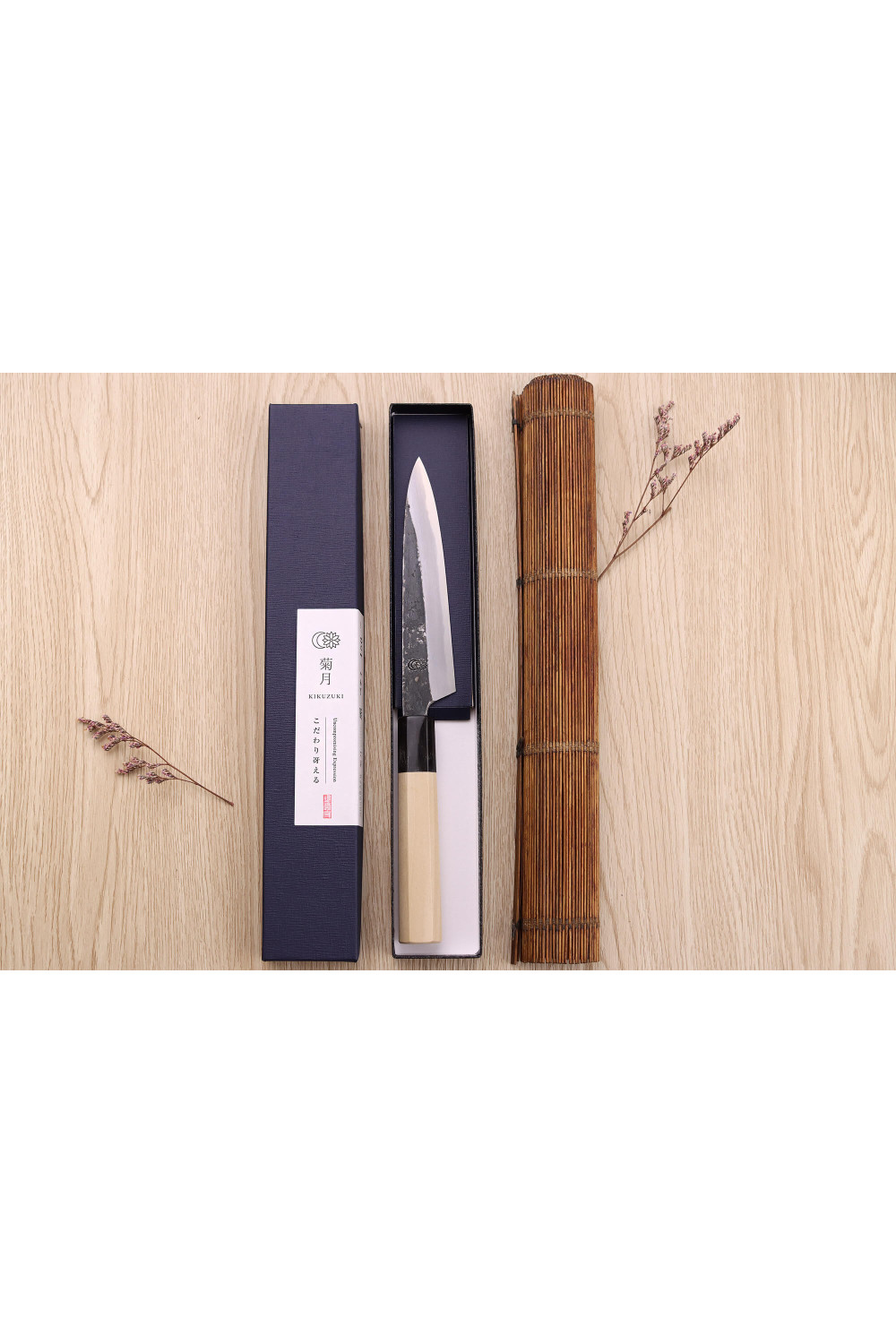
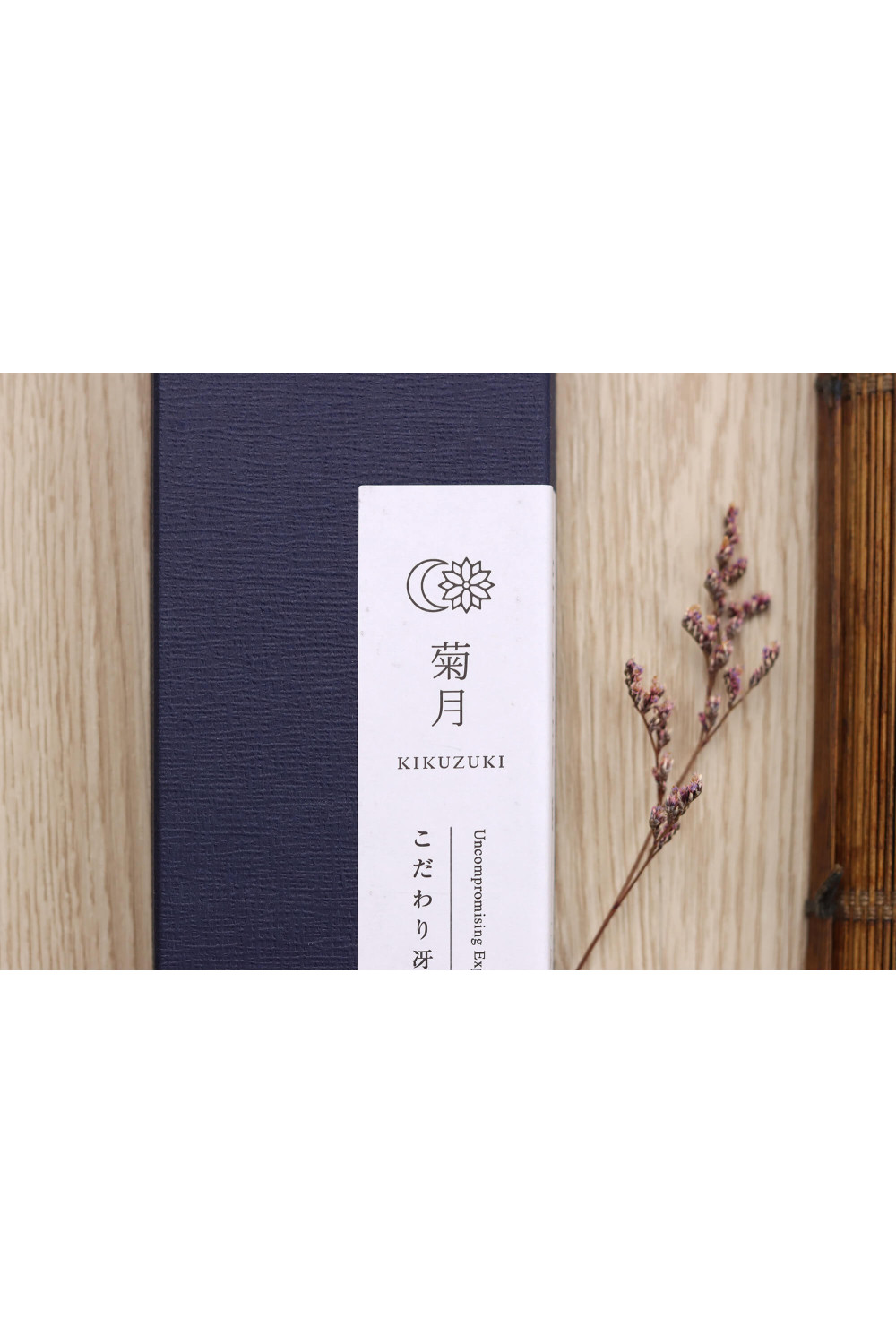
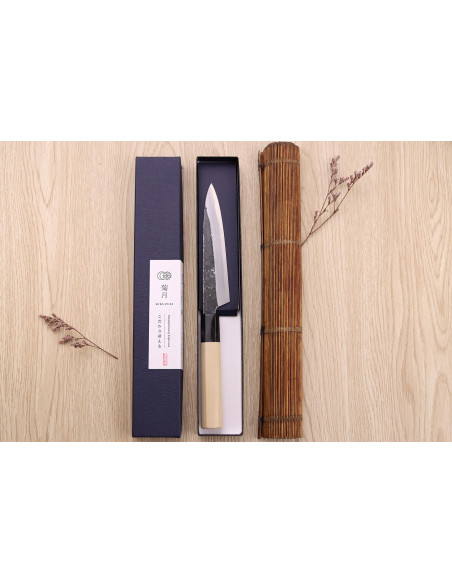
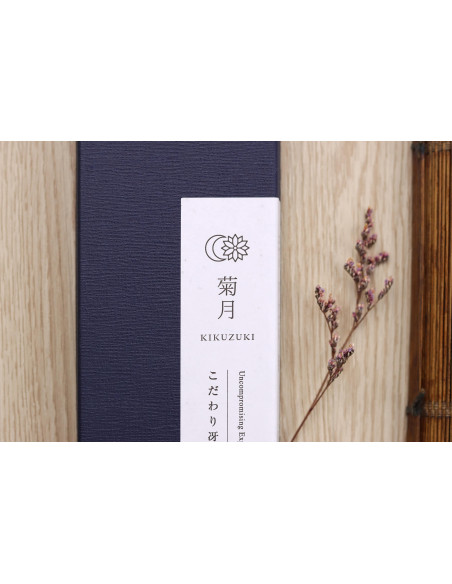
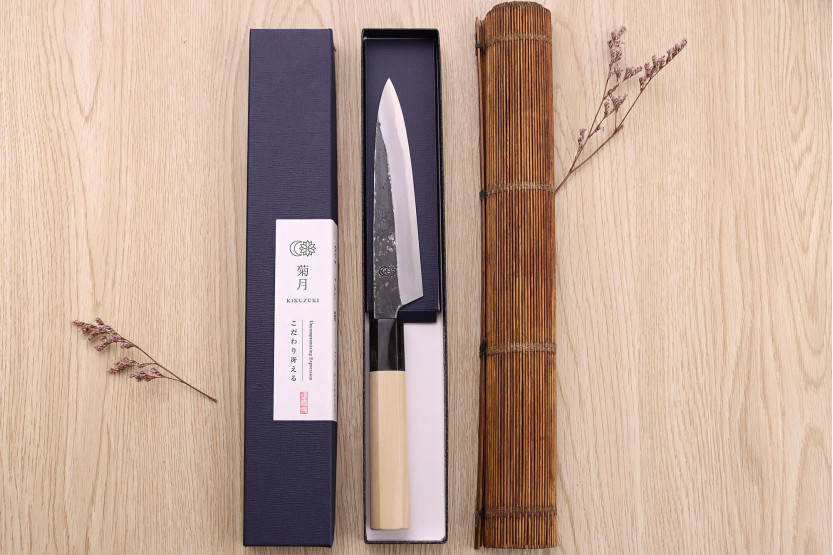
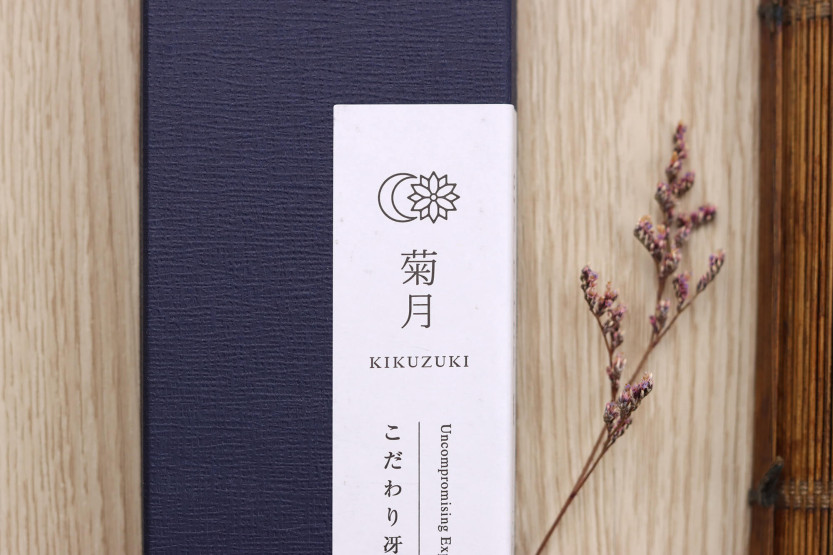
Your Japanese knife is delivered in a deep blue cardboard box.
Find all Sakai Kikumori Japanese knives on our website!




 By buying this product you can collect up to