A highly effective San Maï blade
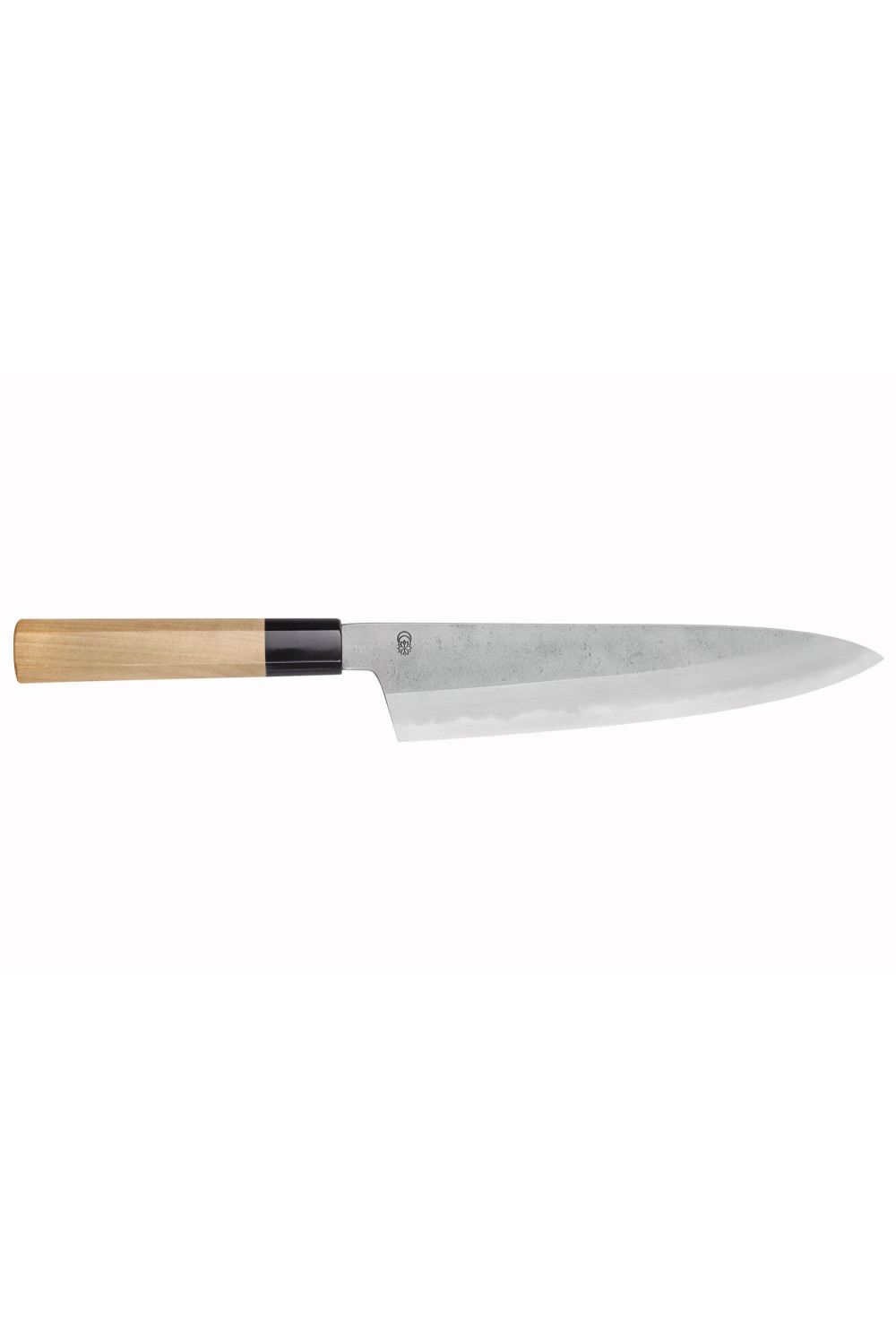
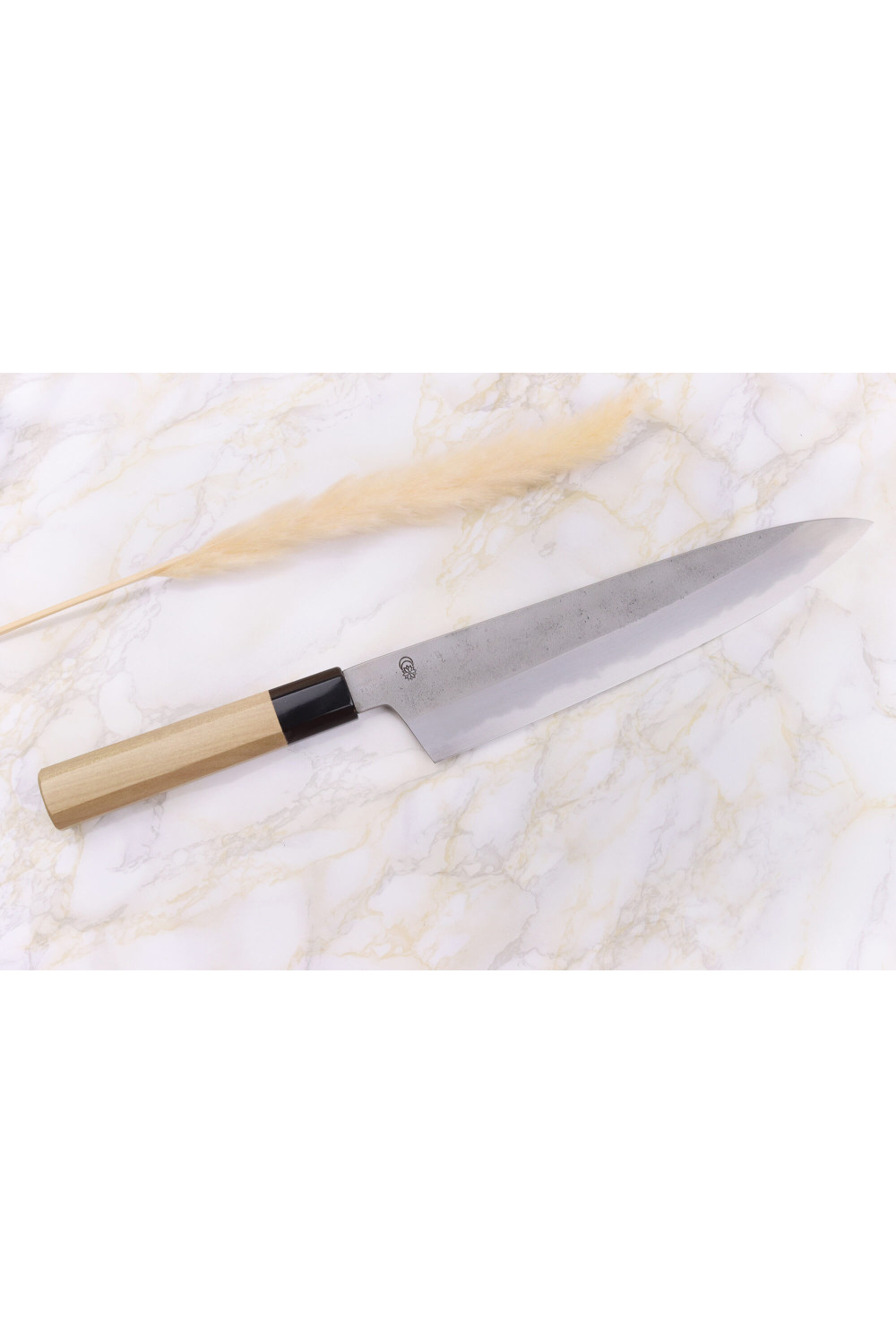
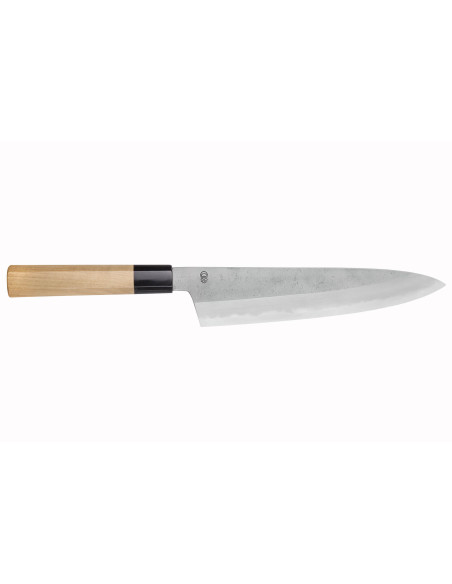
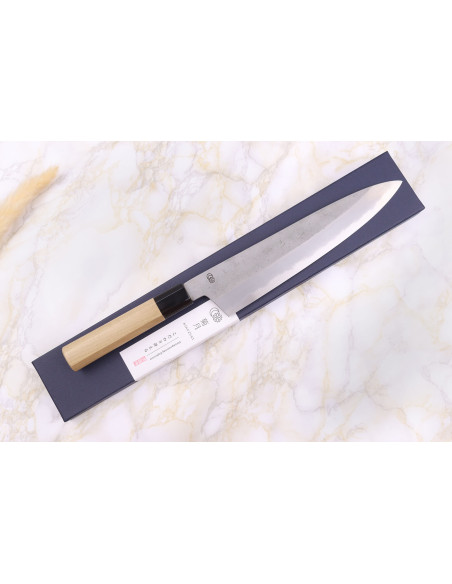
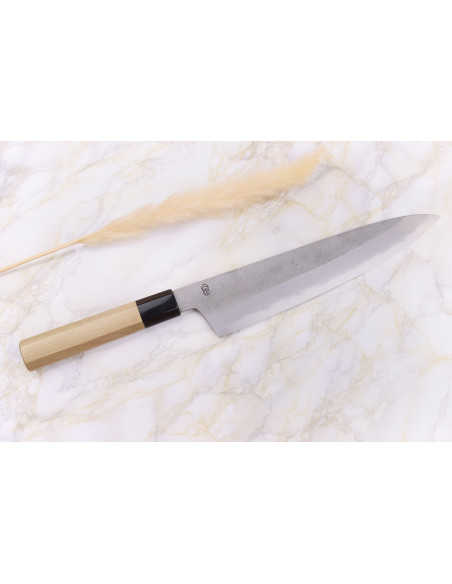
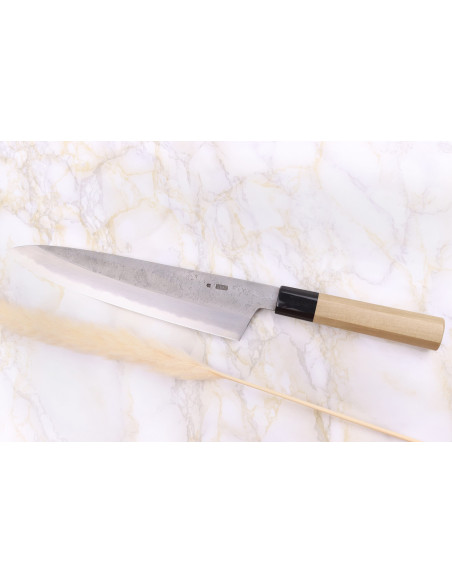
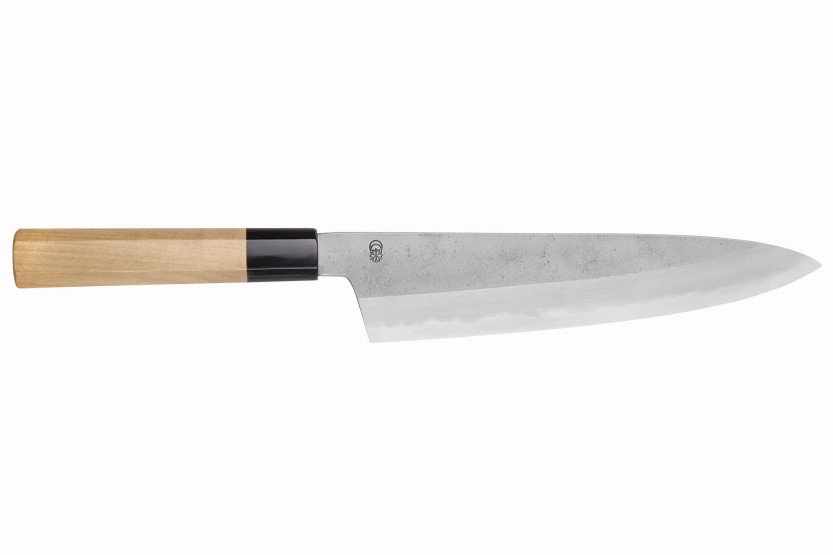
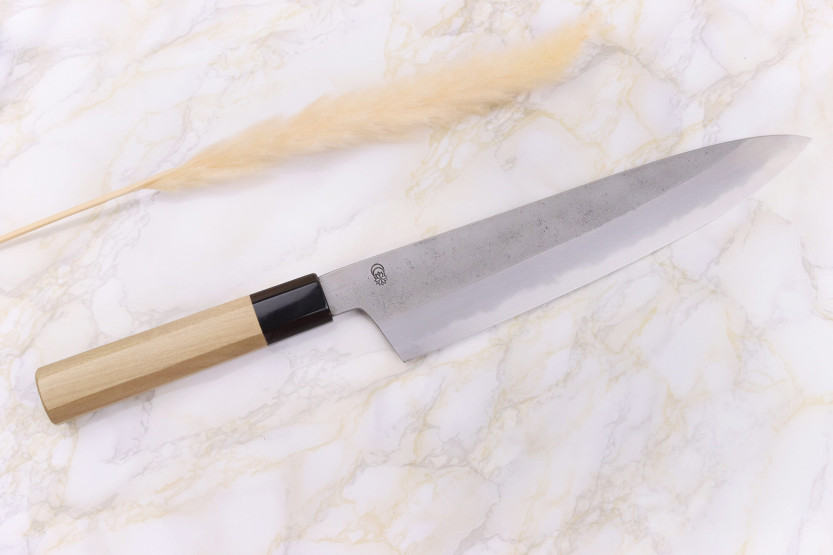
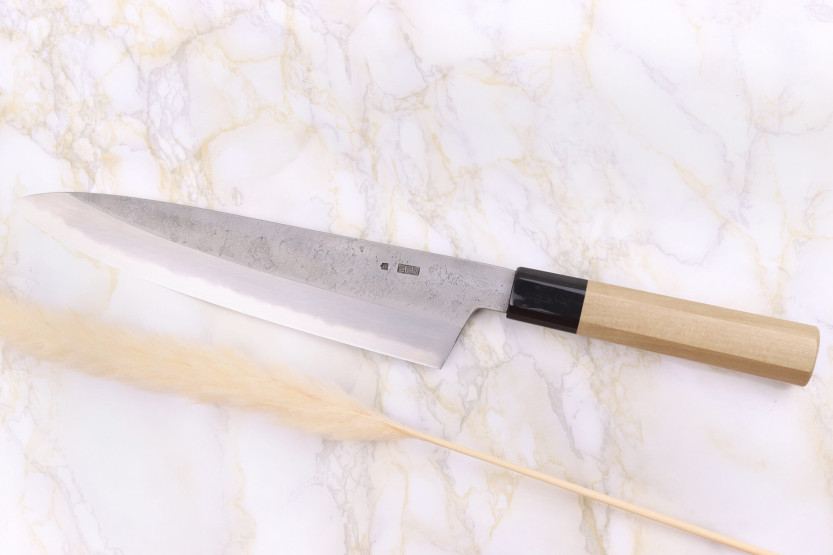
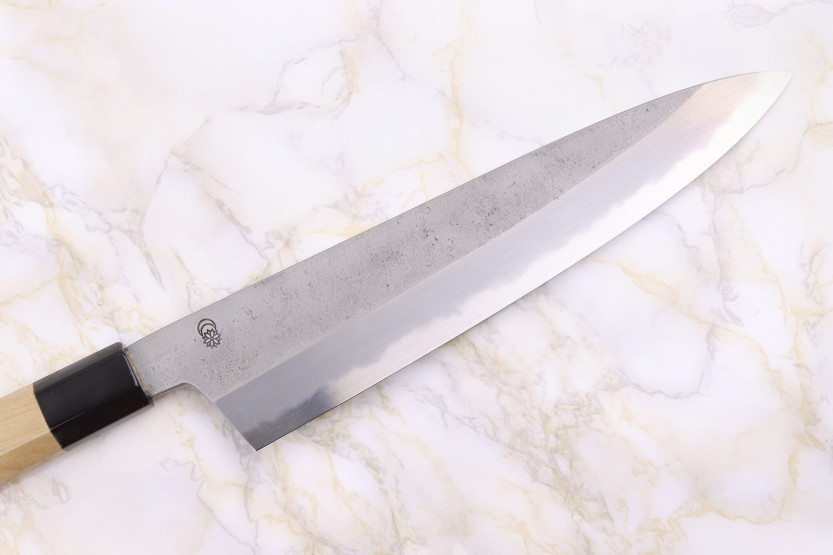
This 24cm Japanese chef knife is a highly versatile kitchen knife for a wide range of cuts. You can slice, mince, chop and mince with ease. It is one of the most indispensable knives in the kitchen, as it can be used on vegetables, meat, fruit, fish and fresh herbs.
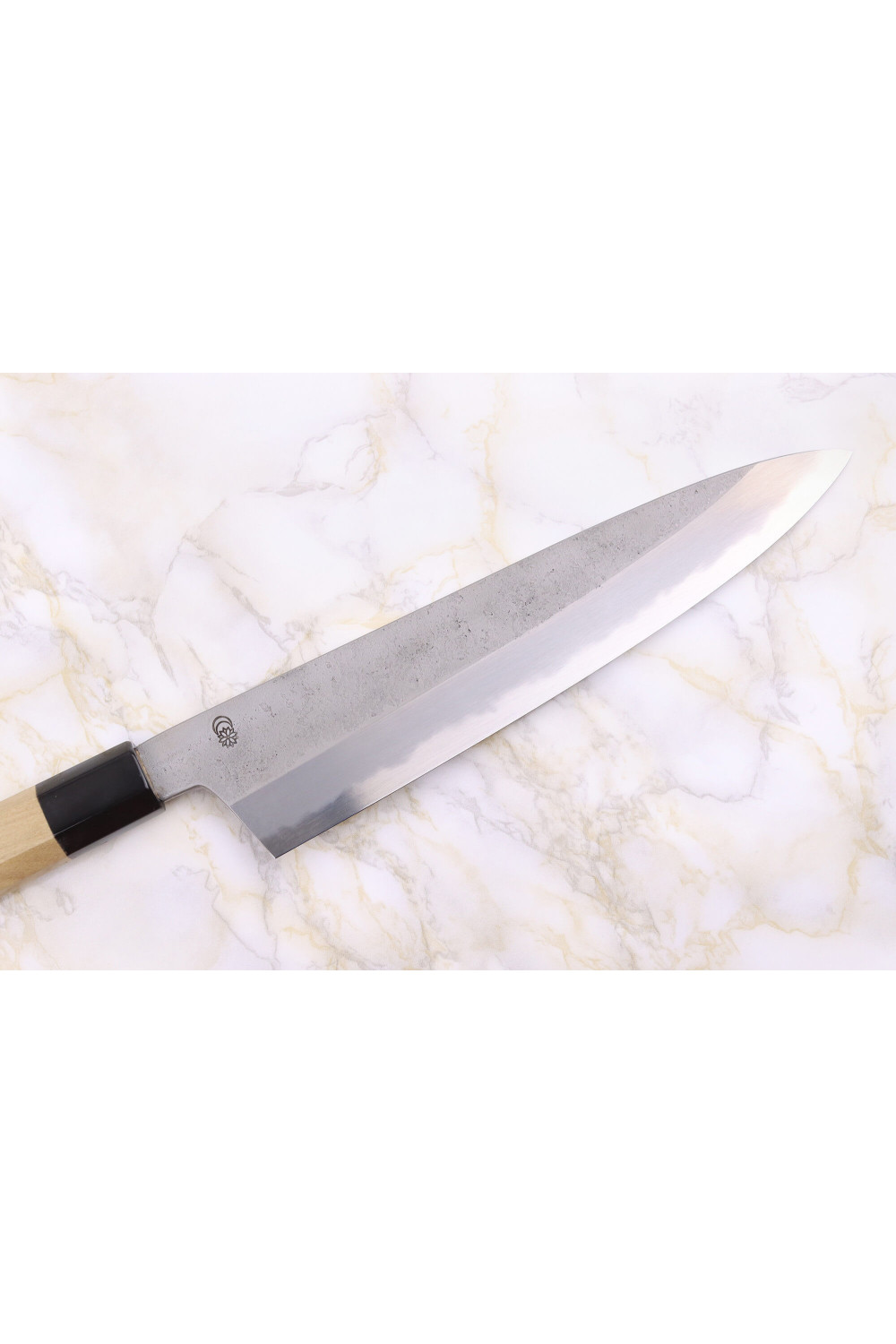
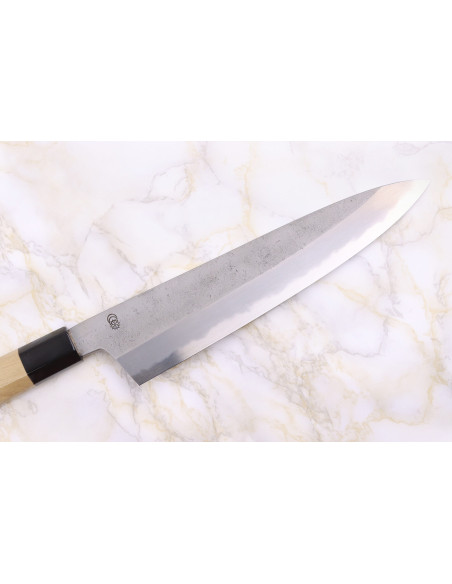
The Sakai Kikumori Kikuzuki Rin knife features a blade made using the traditional Japanese San Mai technique, meaning "three layers". This method consists of forging a core of hard steel, then wrapping a layer of softer steel around the core for strength and flexibility.
The core of the blade is made from Shirogami 2 steel, also known as White Steel 2, a Japanese alloy manufactured by the famous Hitachi steelworks, which supply many master blacksmiths.
Shirogami is enriched with iron and has a high carbon content, around 1.2%. These elements give the alloy a high degree of hardness, reaching almost 61 HRC on the Rockwell scale. Thanks to this increased rigidity, the blade can be sharpened with exceptional precision, while retaining its cutting edge for a long time.
What's more, this alloy is one of the purest available on the market, making it easy to sharpen, even if its hardness is above average. At the microscopic level, steel's purity offers another advantage: its high degree of homogeneity enhances its strength and reduces the risk of chipping.
To balance and protect the White Steel 2 core, it is wrapped ina layer of softer steel. This creates the three-layer structure of the San Mai.
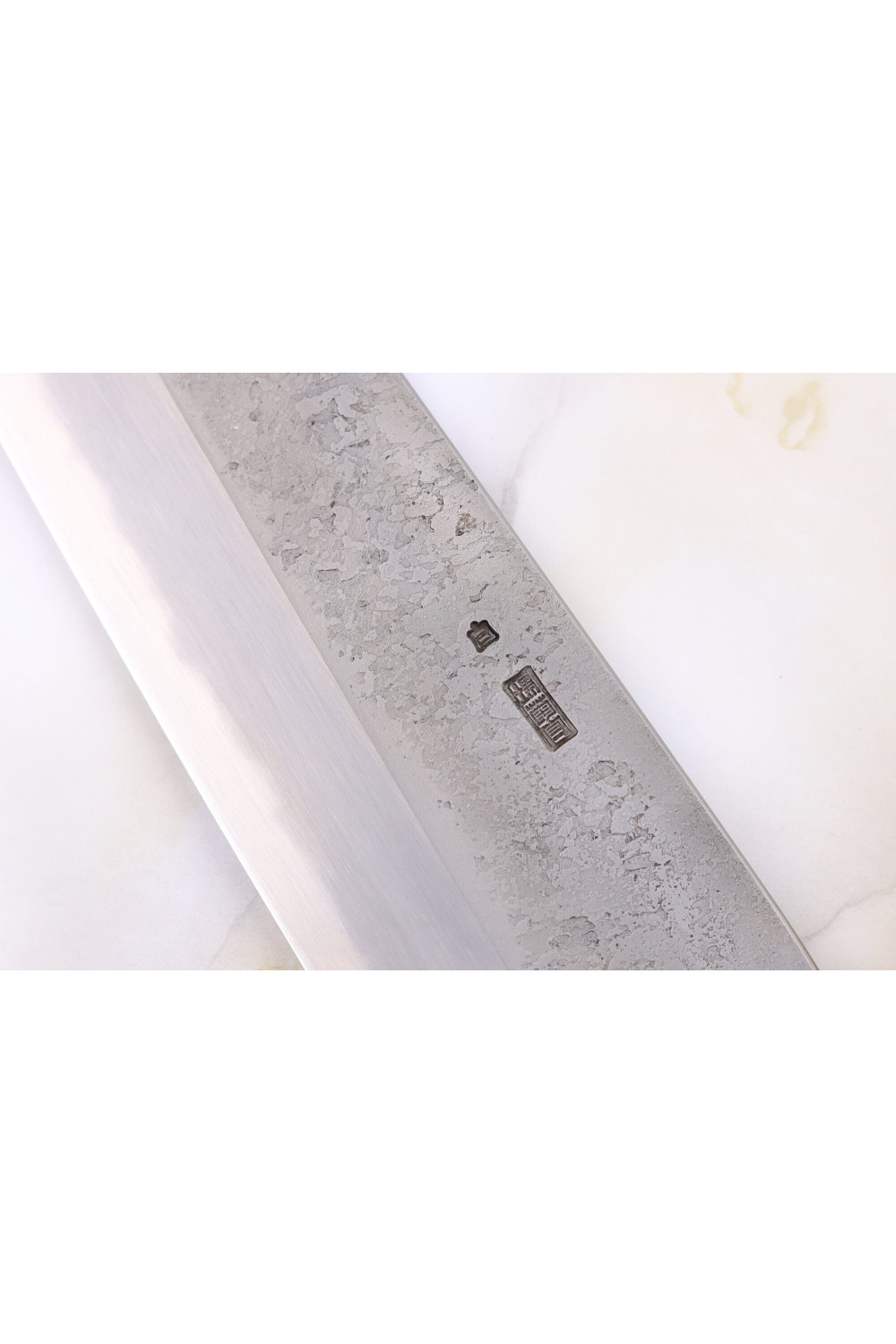
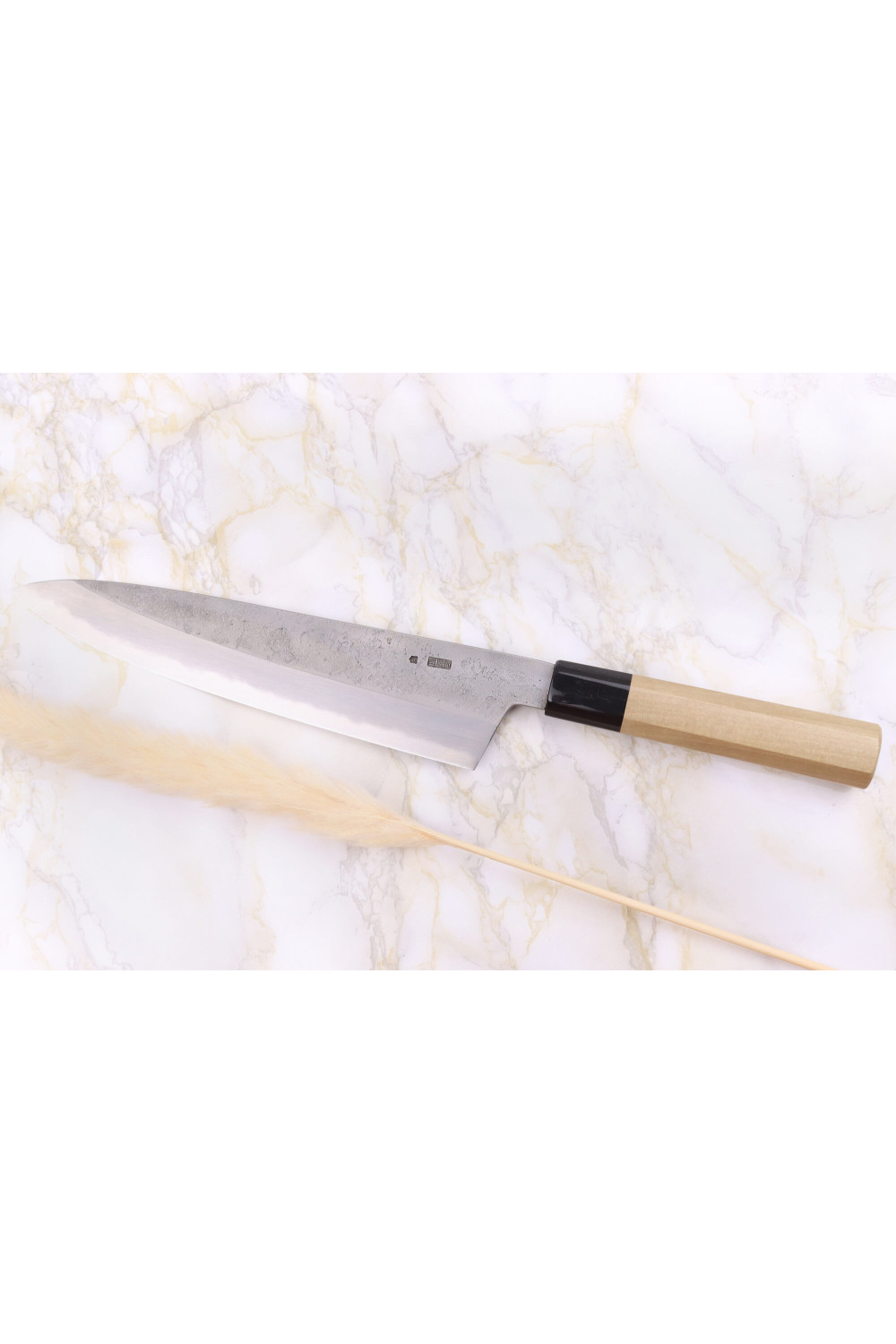
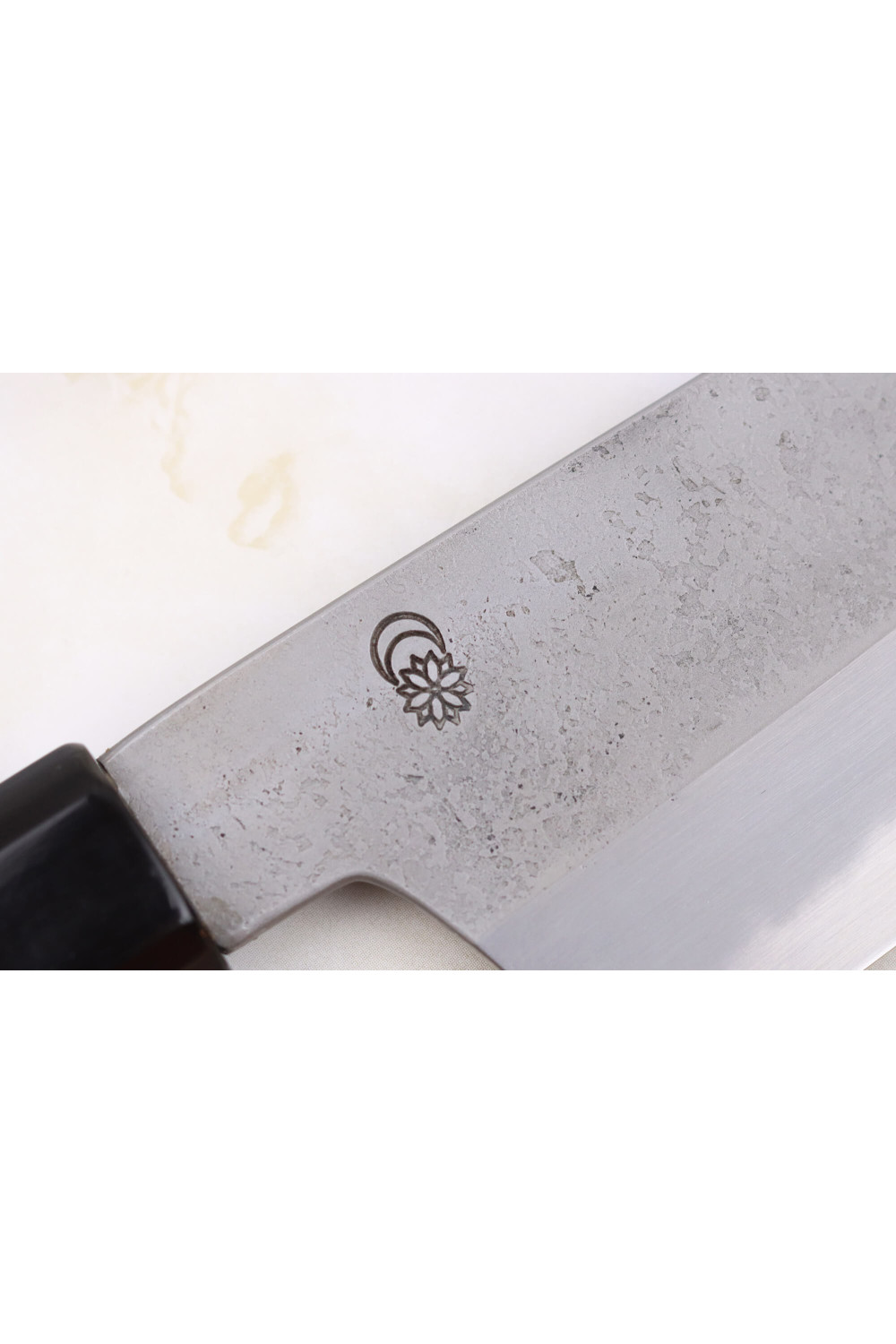
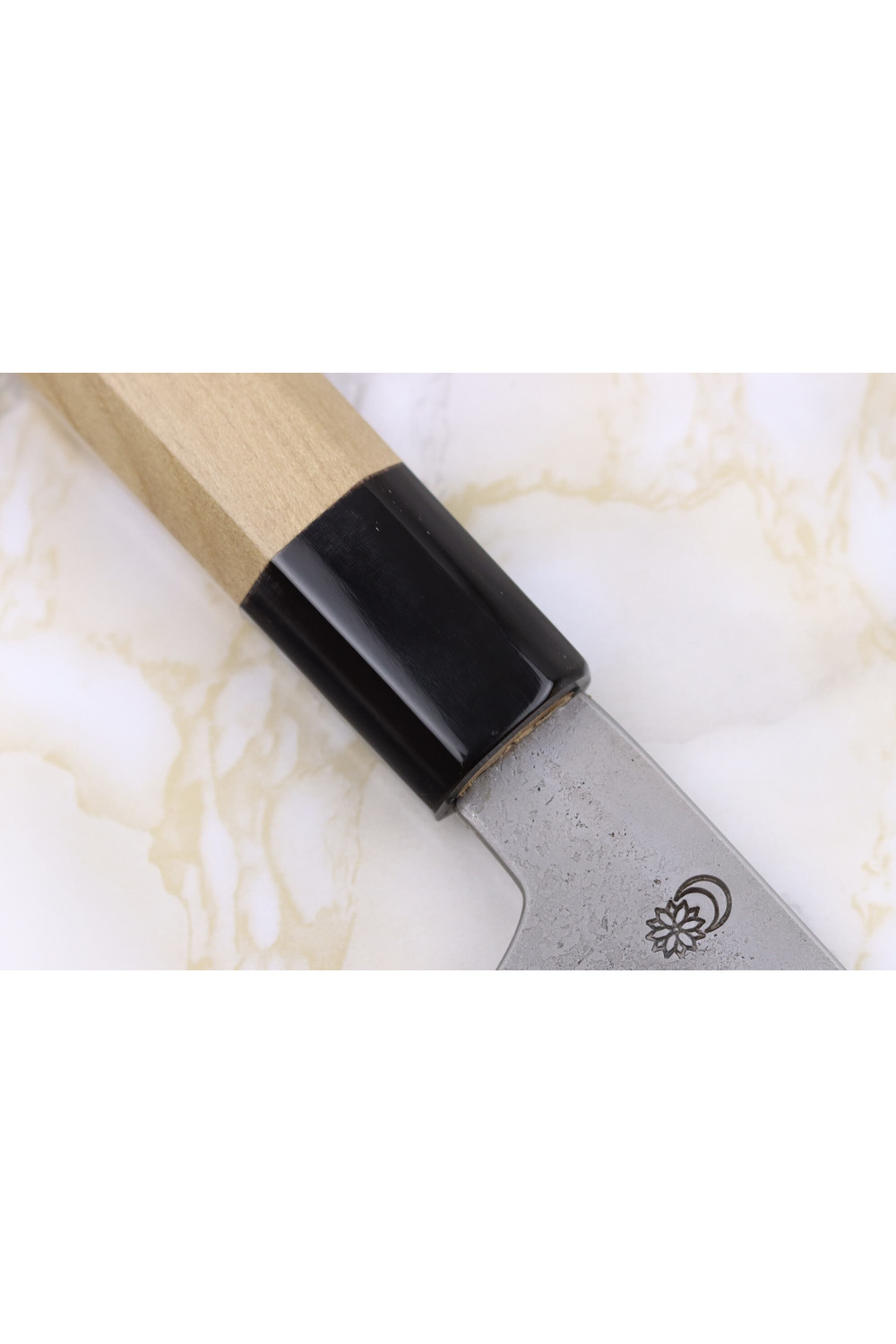
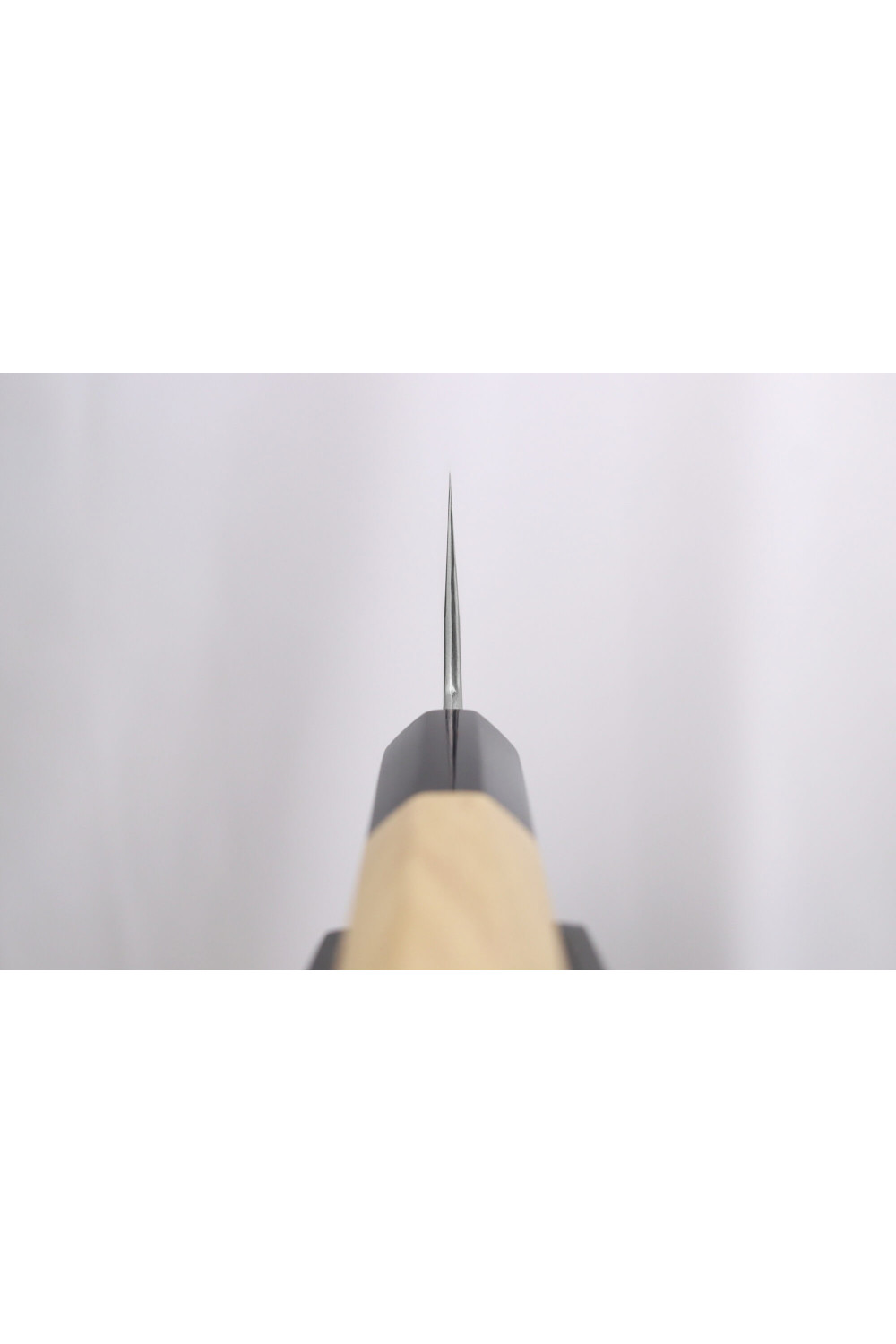
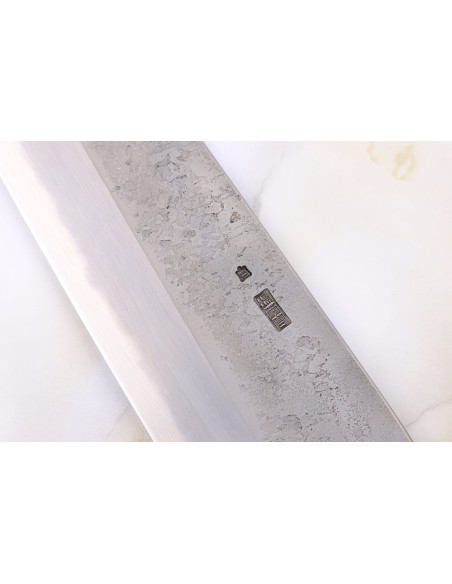
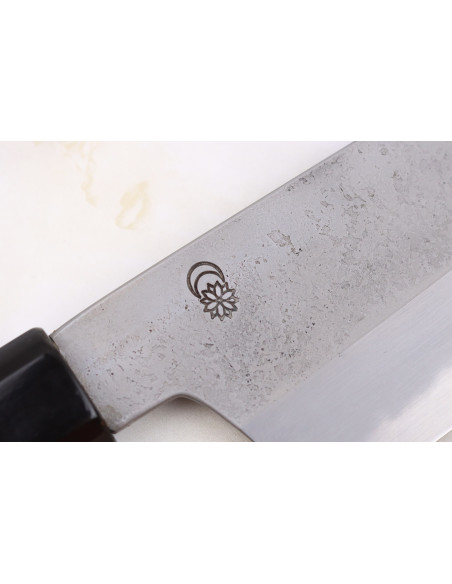
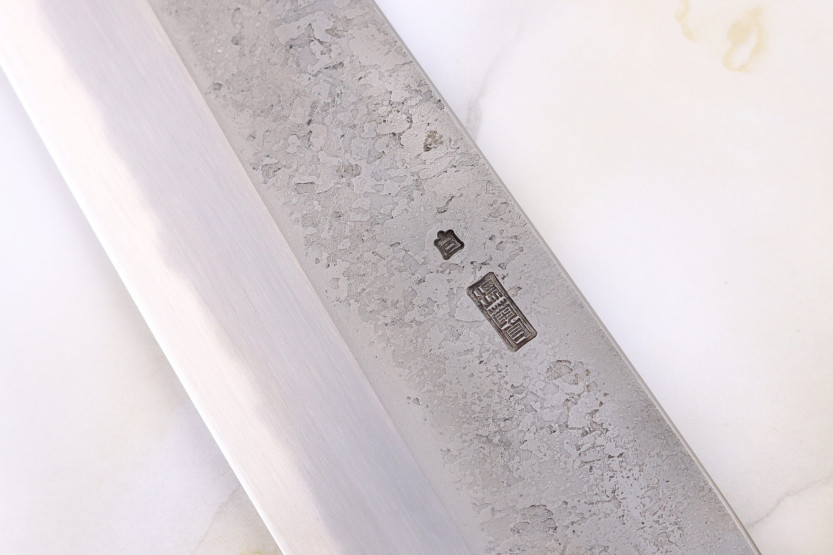
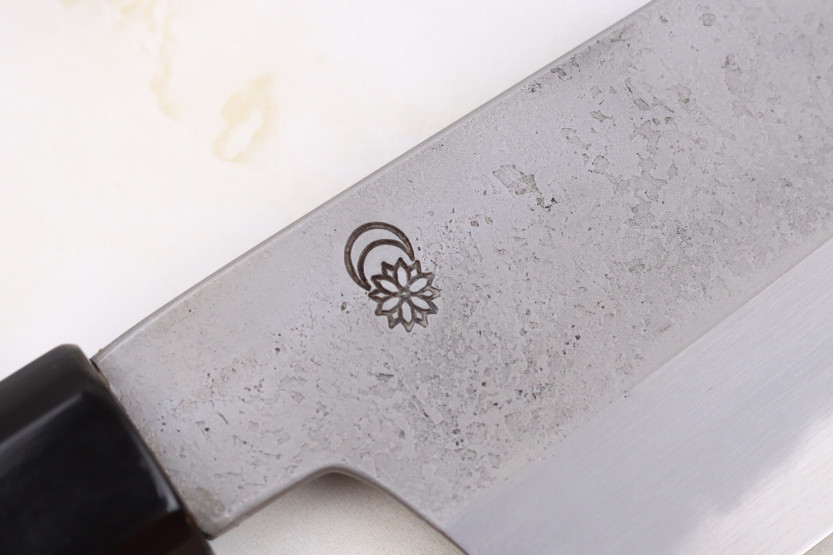
Finally, the blade features a magnificent Nashiji finish. This Japanese technique gives the blade a matt, rustic appearance, reinforcing its authenticity. The blade also features a thick, flat edge worked to the middle of its height: this sabre grind edge increases its robustness while providing an attractive finish.
A handcrafted knife with an ergonomic handle
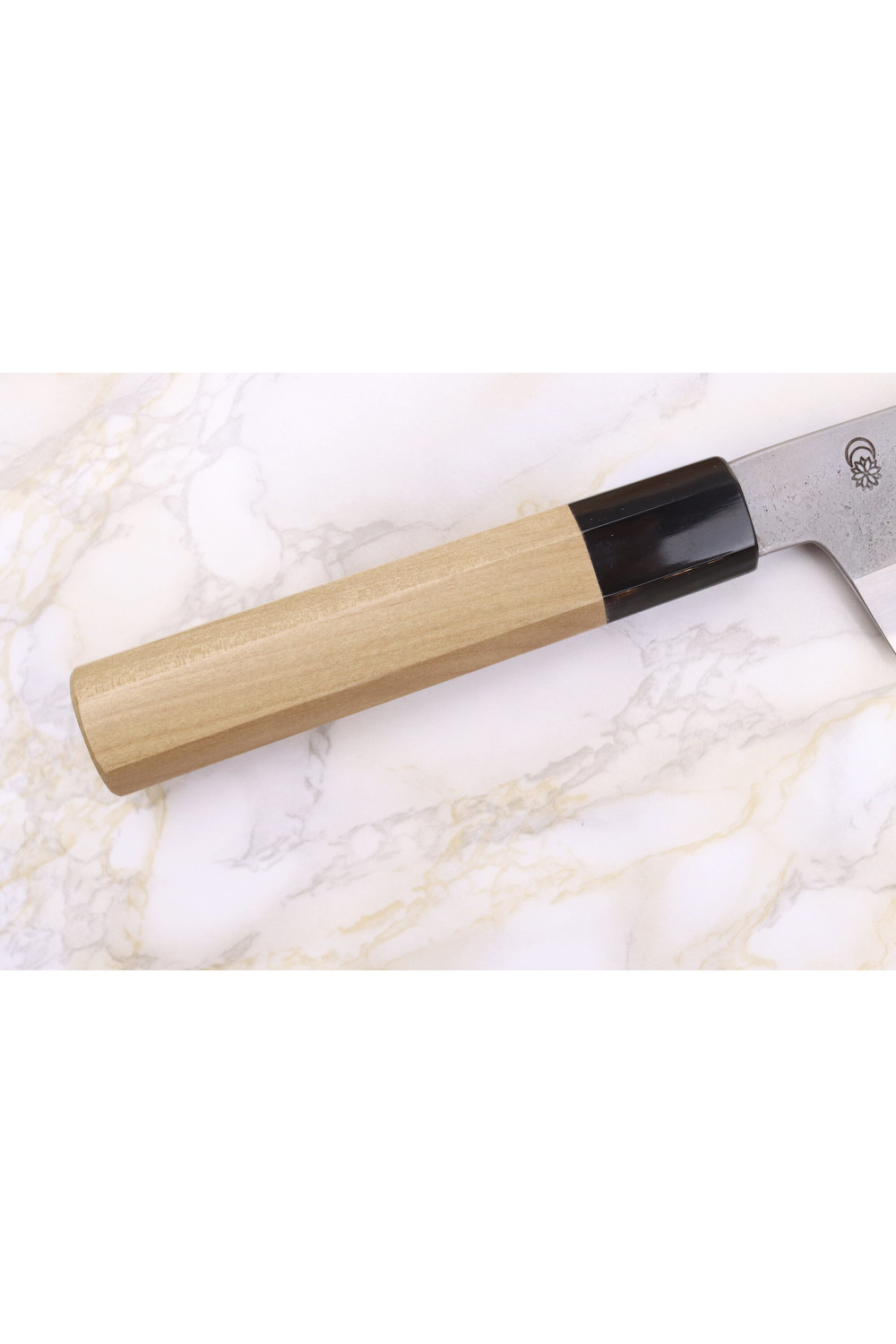
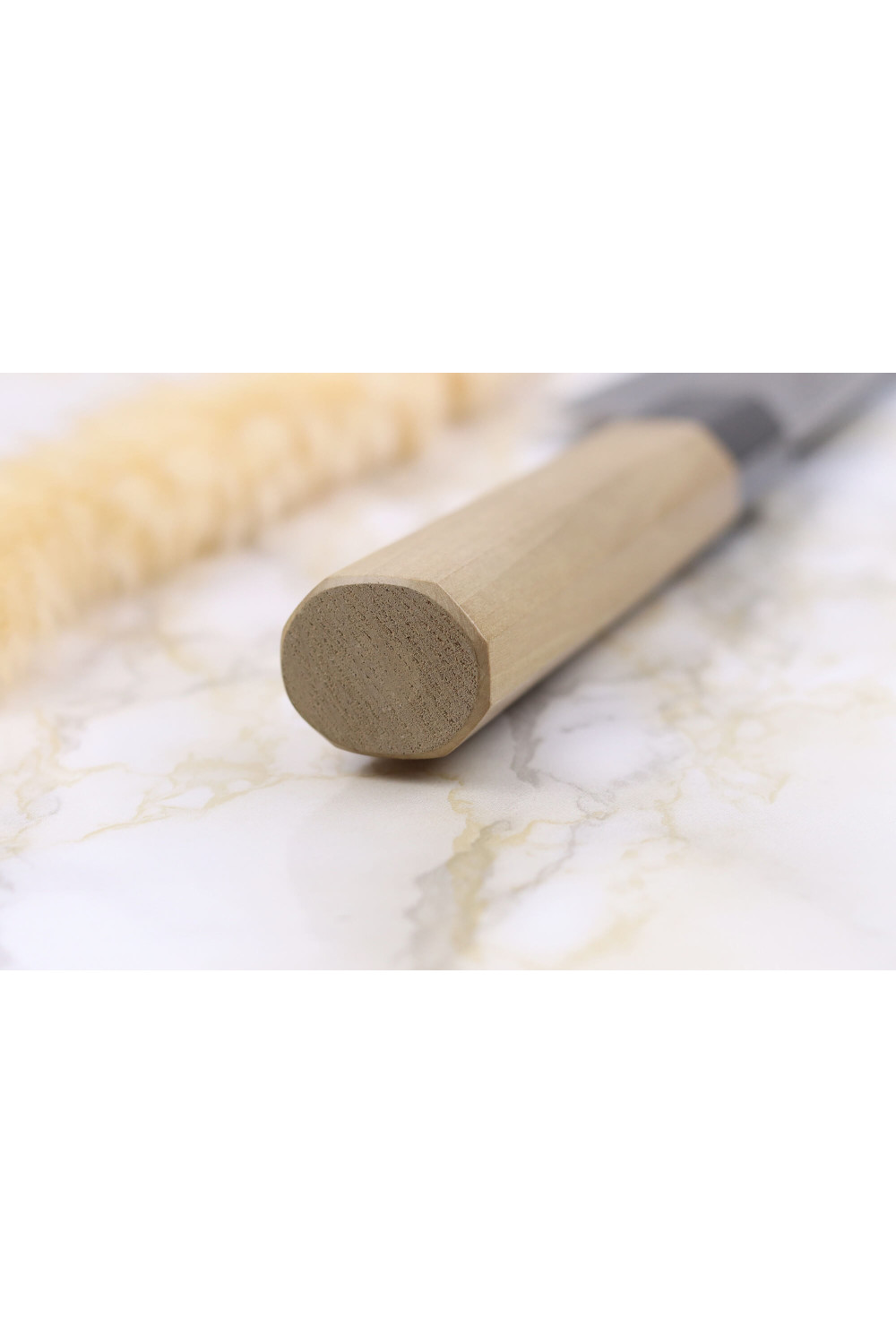
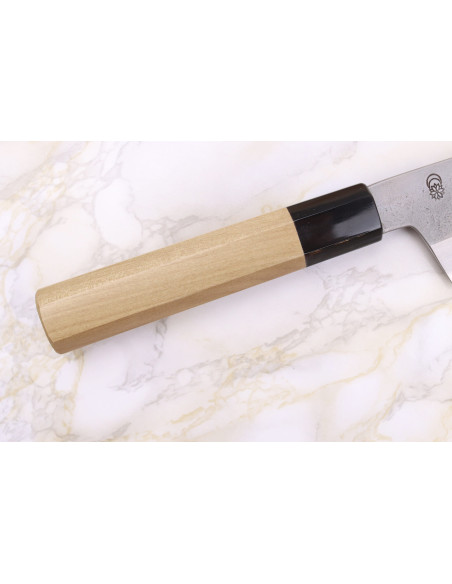
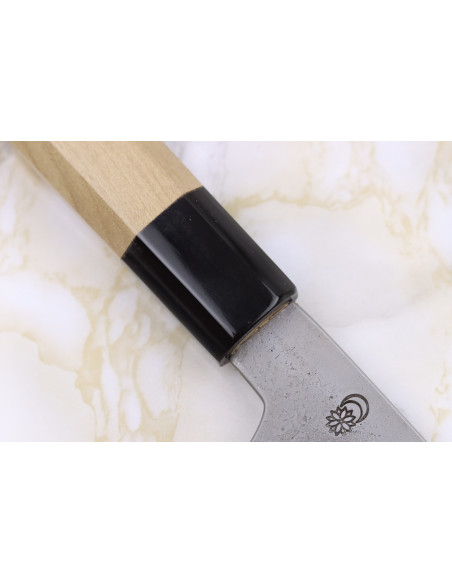
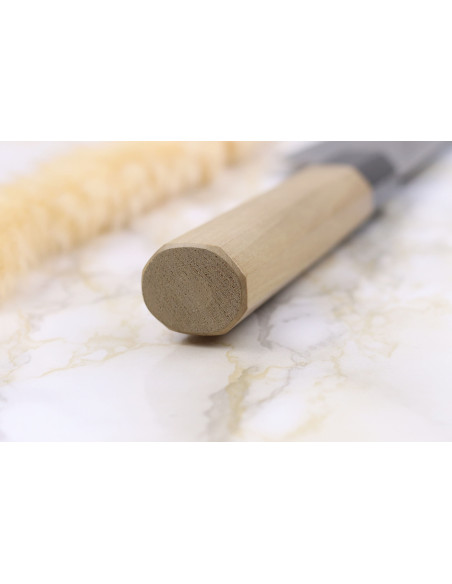
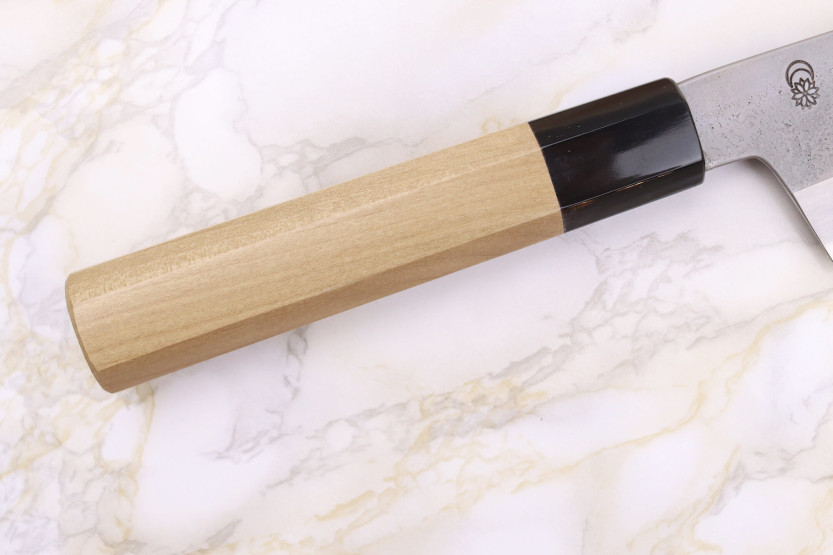
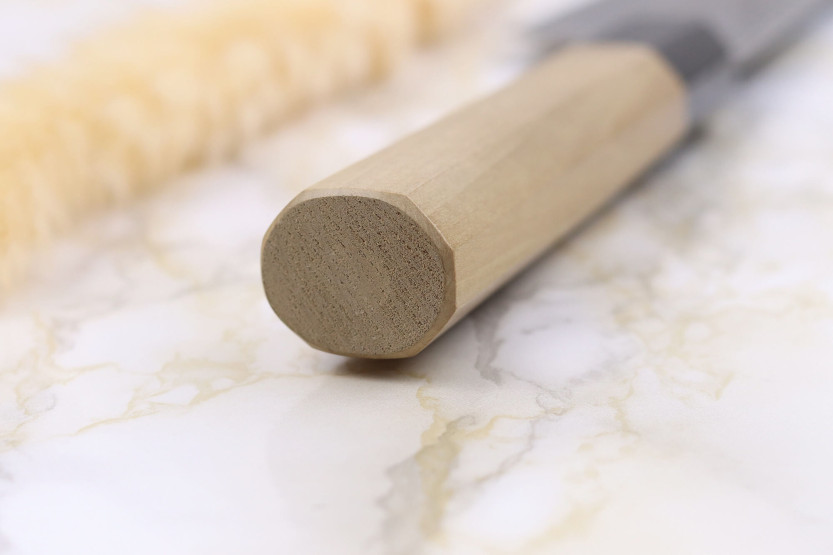
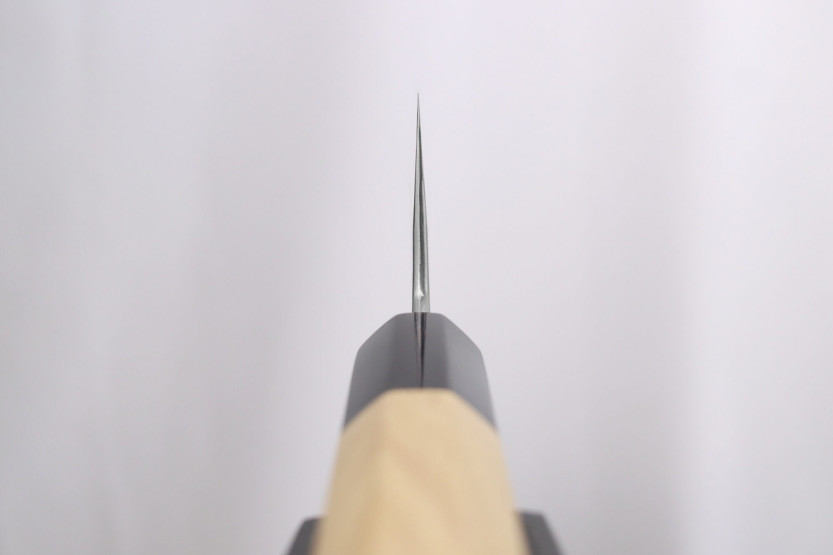
Your gyuto knife is made from light magnolia wood, giving it a resolutely traditional aesthetic. This wood is appreciated by craftsmen for its easy handling and by cooks for its soft, smooth feel and light weight. What's more, its resistance to humidity makes it an ideal choice for use in the kitchen.
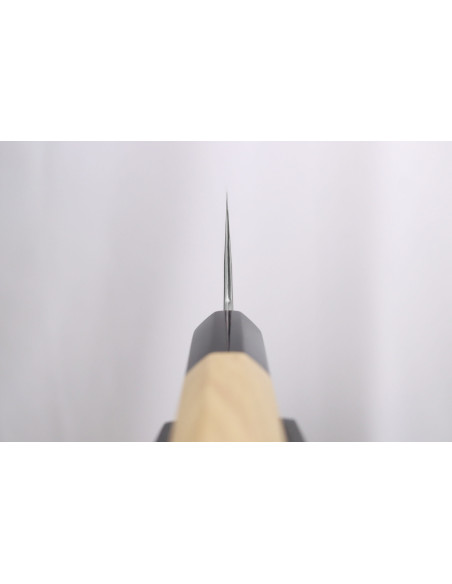
The wood is carved in an octagonal shape that accentuates the knife's traditional appearance. This ergonomic design is conceived to guarantee comfort and maneuverability, two features particularly appreciated during long sessions in the kitchen.
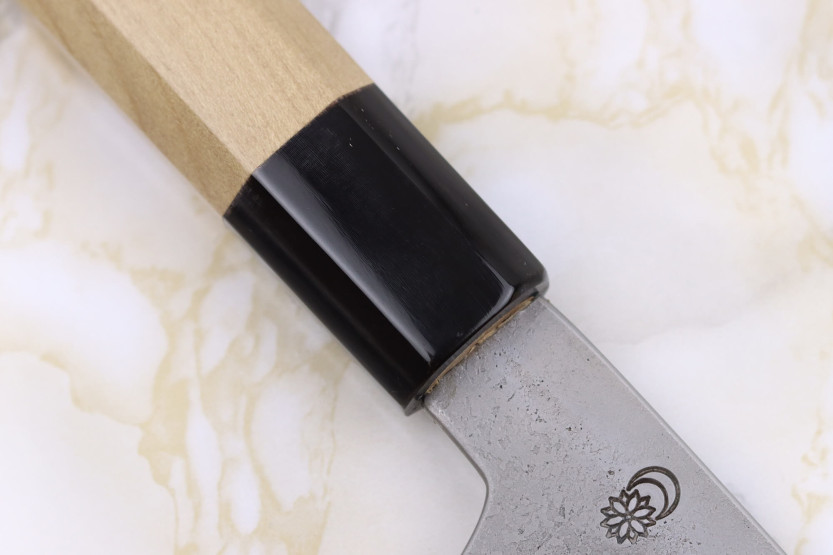
The handle and blade are joined by a black buffalo horn ferrule. The appearance of this living material may vary slightly from one model to another, and some pieces may even feature very fine white striations, making each knife unique.
To ensure that the handle is watertight, and to prevent the ingress of water or small pieces of food, wood paste has been added to fill the space between the blade and the handle.
Care and maintenance
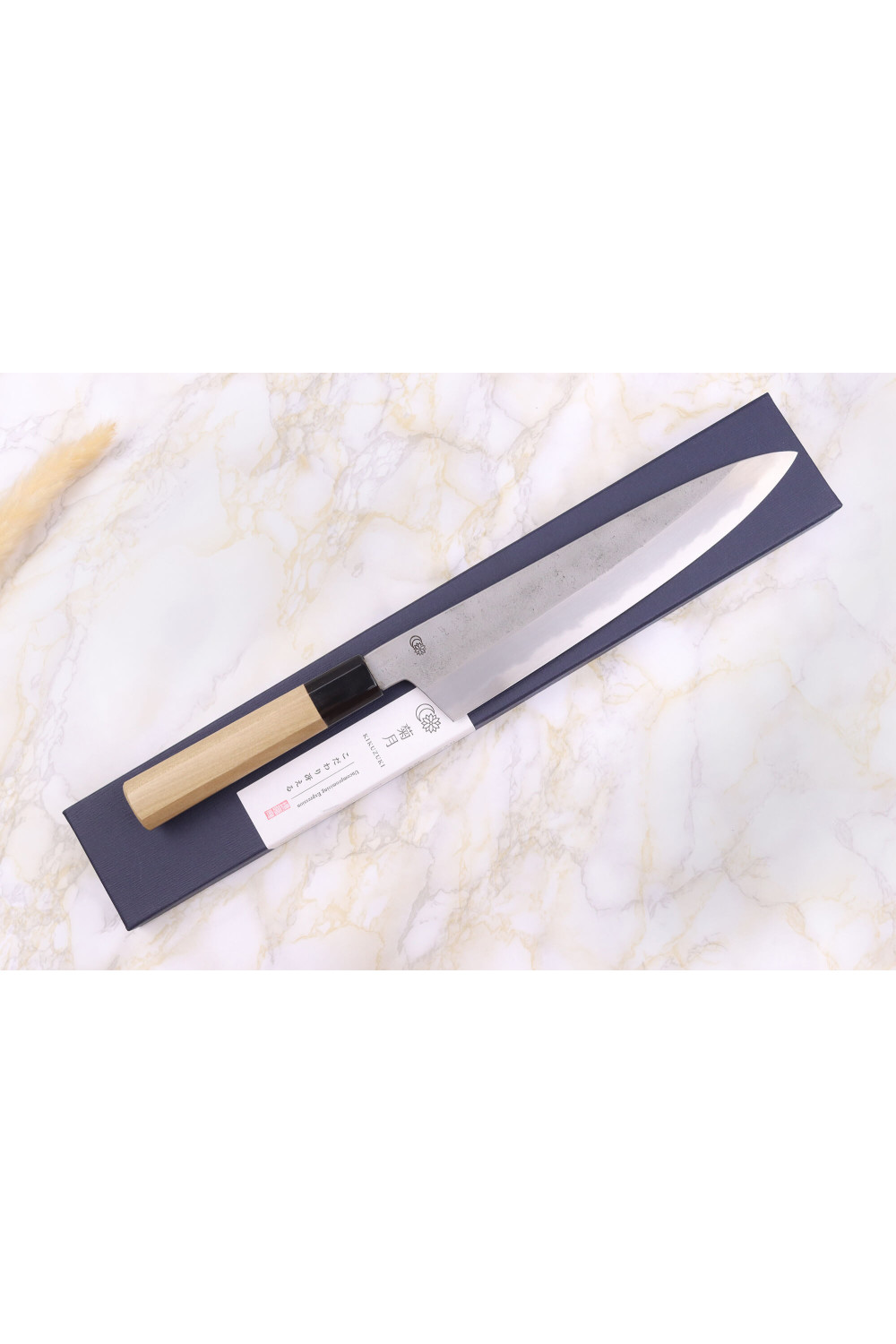
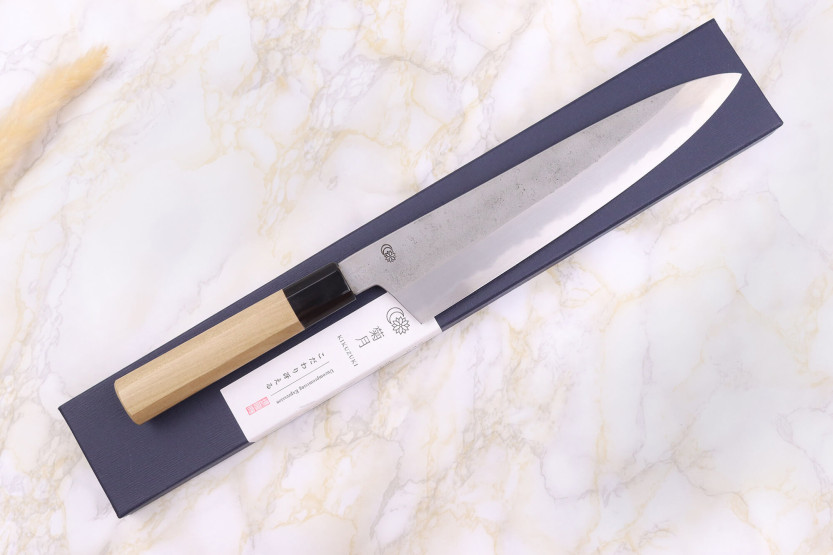
As the blade of this knife is enriched with carbon, it is more prone to corrosion. It is therefore important to wash your knife exclusively by hand, without putting it in the dishwasher or soaking it in the sink. Use a mild soap and a non-abrasive sponge to wash it, taking care not to get the handle wet. Next, wipe the blade with a soft cloth to remove all traces of water, then store the knife in a dry place, such as its box.
The high carbon content makes the alloy sensitive, and despite careful maintenance, your blade may change color slightly over time. This is quite normal, as steel reacts naturally to ambient humidity and the acidity of food. Regular oiling is recommended to maintain its appearance.
The work of Yoshikazu Tanaka and Sakai Kikumori
Sakai Kikumori by Kawamura Hamono is an artisanal manufacturer based in the town of Sakai, Japan. It offers a range of knives forged by renowned craftsmen as well as by smaller local workshops. This diversity enables us to cater for all tastes, preferences and budgets.
To design its Kikuzuki Rin range, the factory worked with renowned blacksmith Yoshikazu Tanaka, a key figure in the cutlery world.
Tanaka san's expertise has been recognized by the Japanese government. The quality of his work on knives is remarkable: the tempering he performs on the blades considerably increases their durability, protecting them from deformation even when sharpened on a stone.
Knifeleader offers you a wide selection of gyuto knives!


 By buying this product you can collect up to