The Sakai Kikumori craft factory
Sakai Kikumori by Kawamura Hamono is an artisanal knife factory based in Sakai, Japan. It offers a wide range of knives forged by renowned craftsmen, as well as by smaller local workshops, providing diversity to suit all tastes, budgets and preferences.
To create its Kikuzuki Rin range, the factory called on renowned blacksmith Yoshikazu Tanaka, a key figure in the cutlery world.
The Japanese government has recognized Tanaka san's expertise. He performs exceptional work on knives: he applies a temper that considerably enhances their durability. This protects them from deformation, even when sharpening on stone.
The choice of high-quality materials
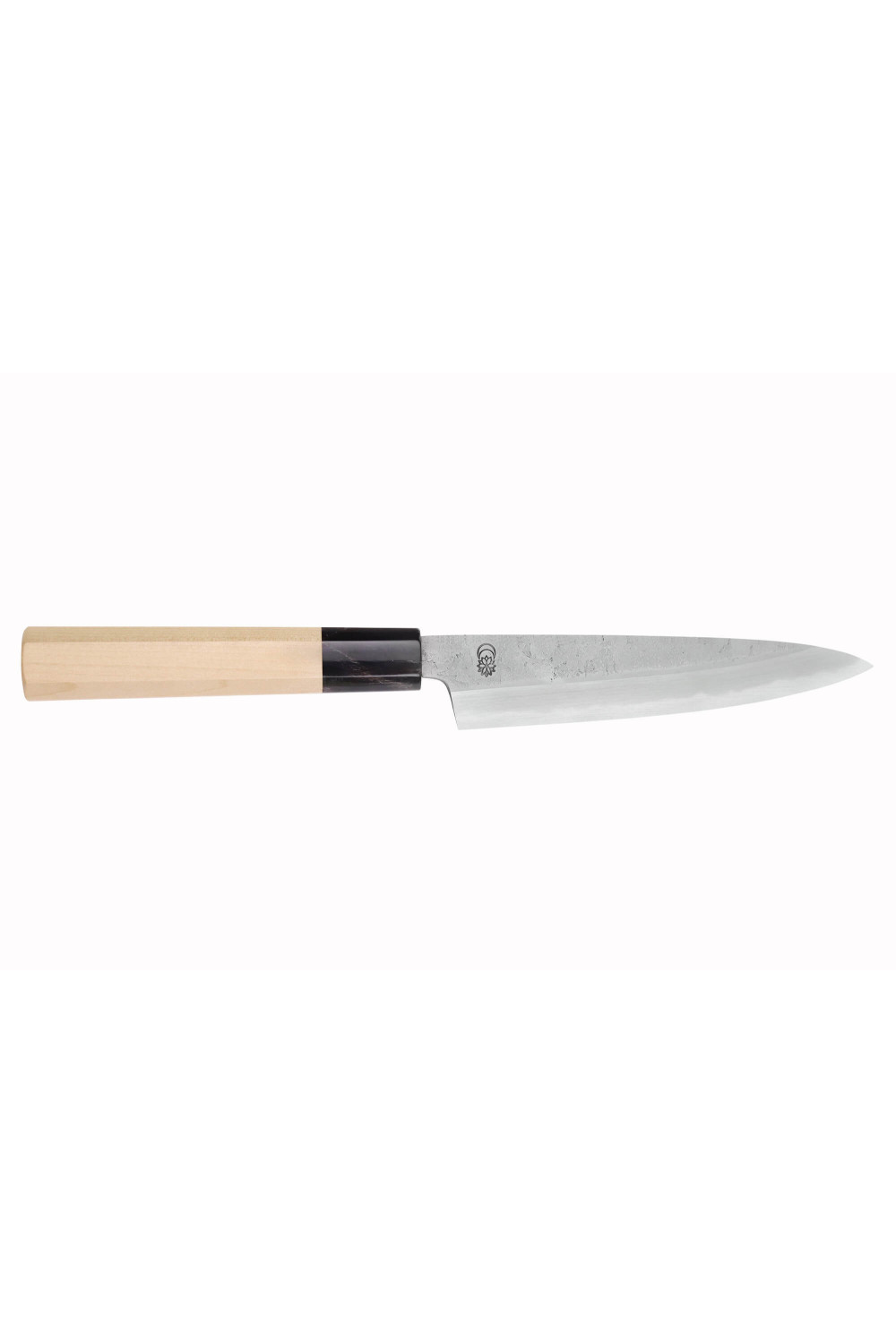
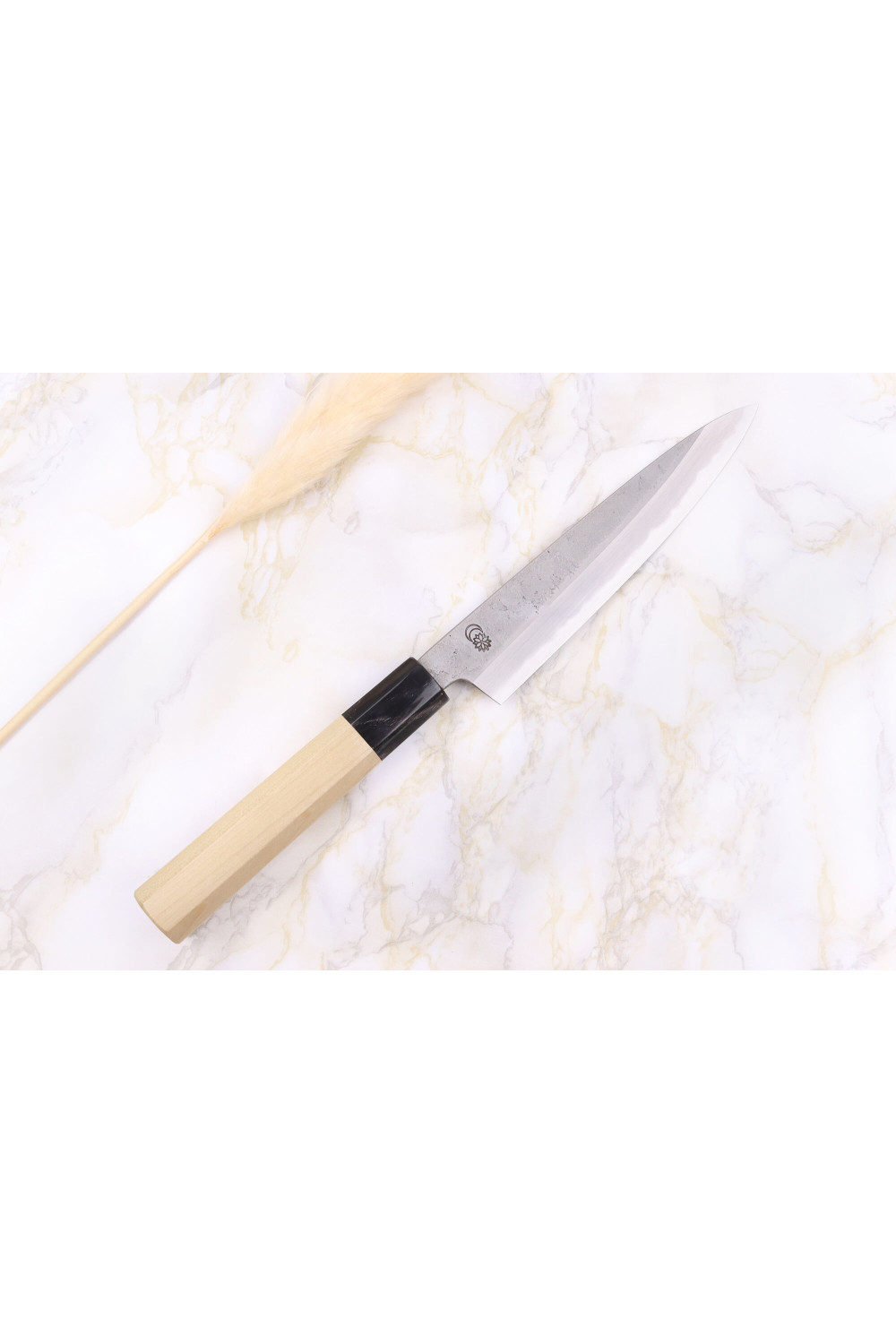
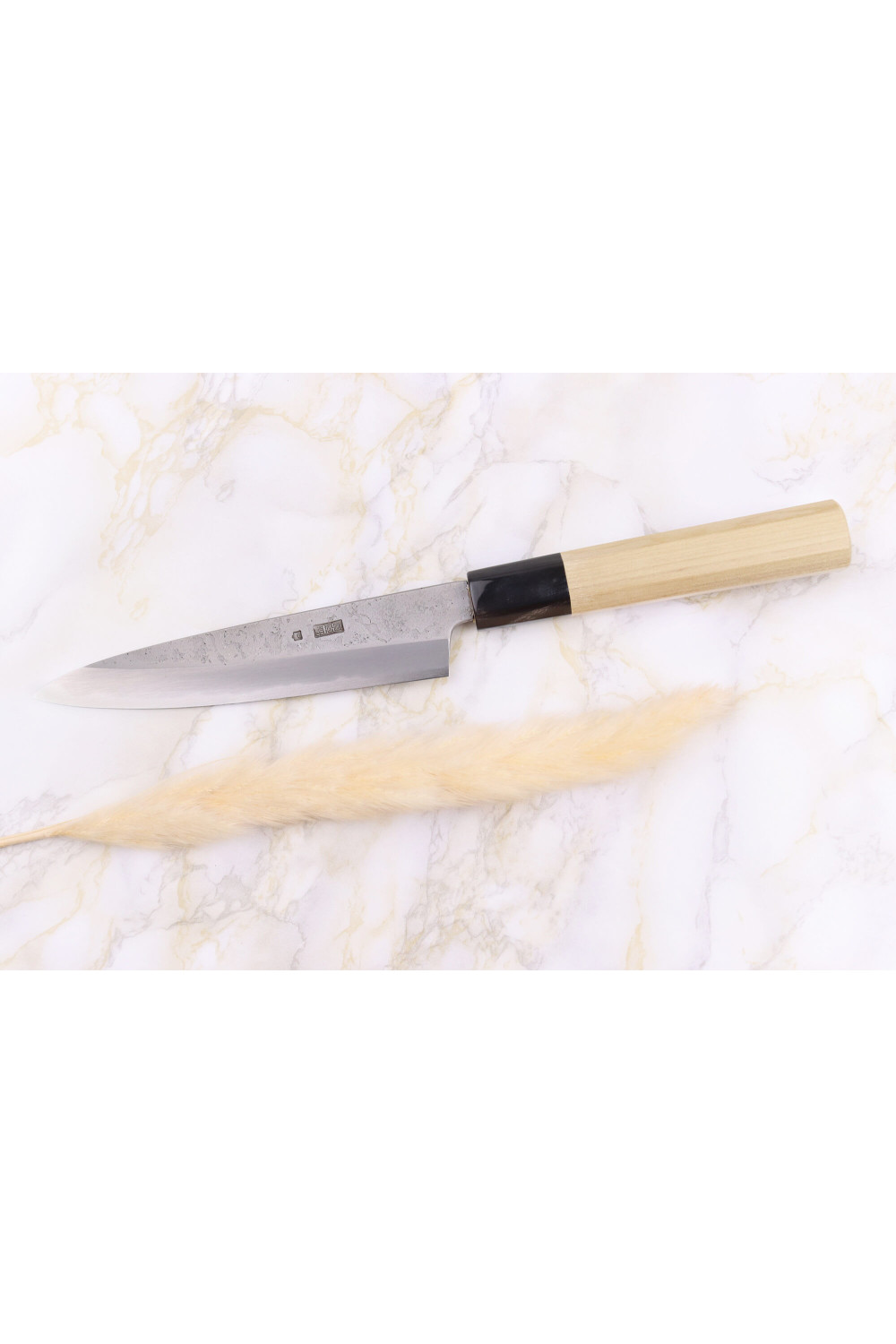
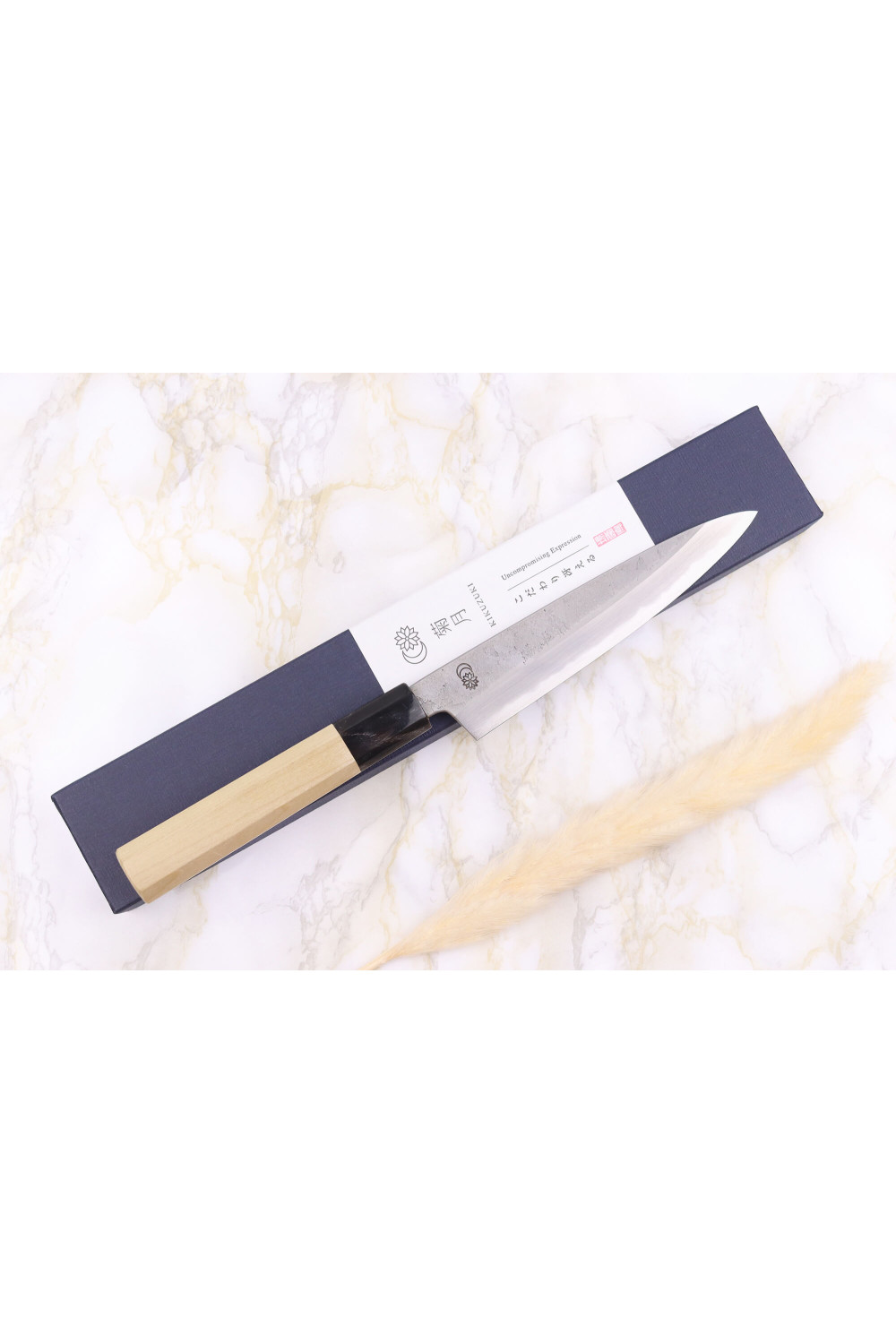
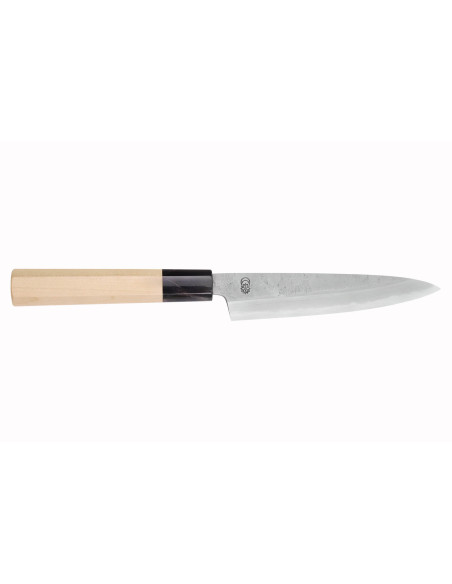
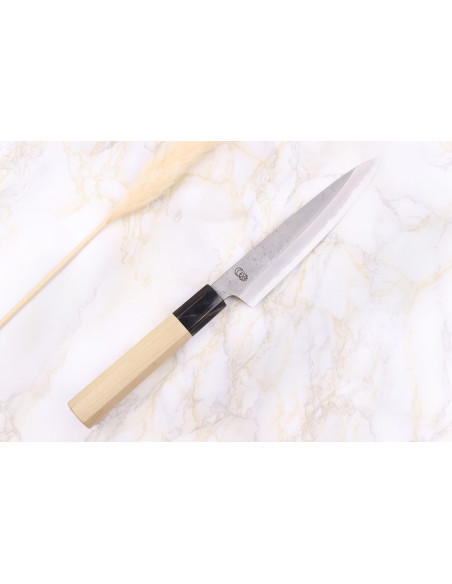
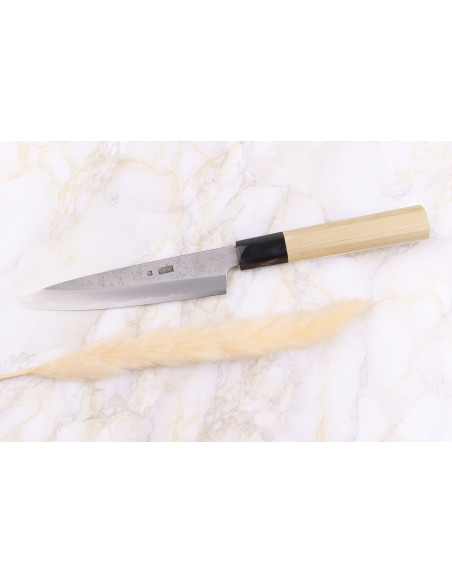
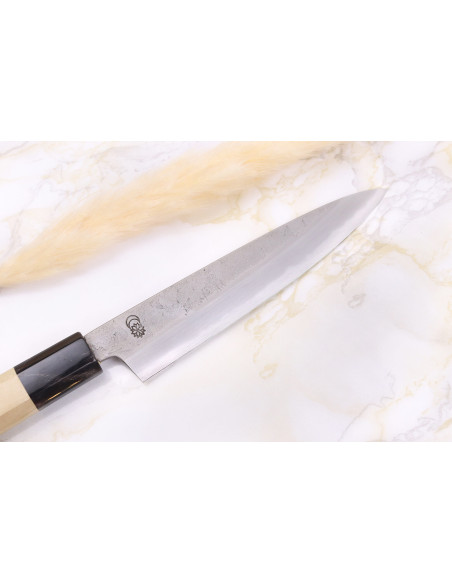
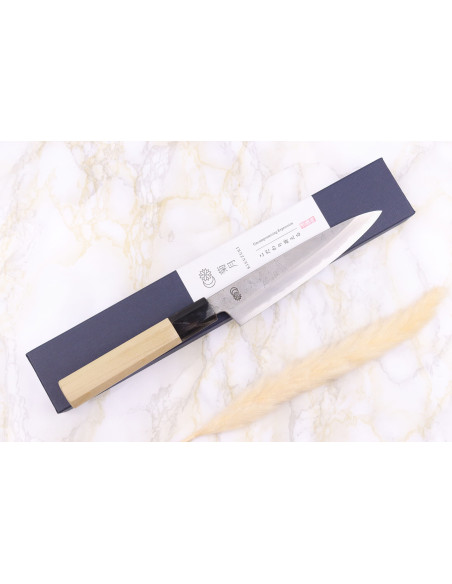
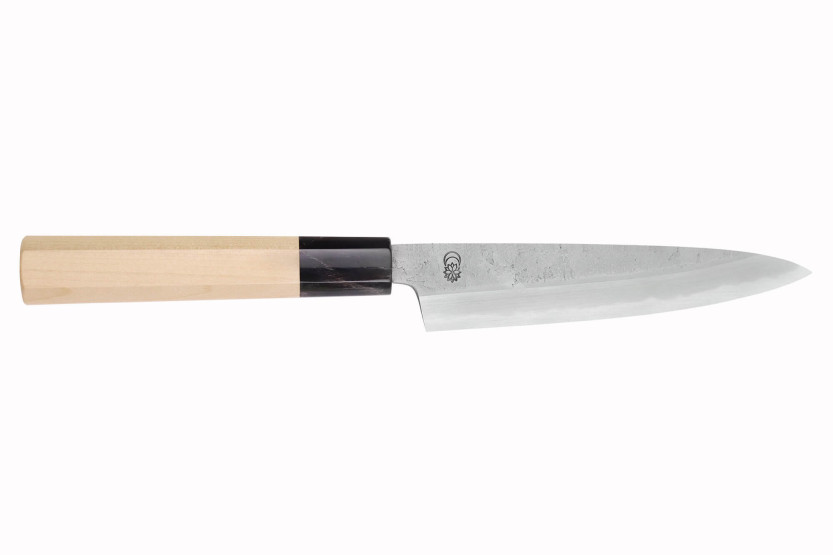
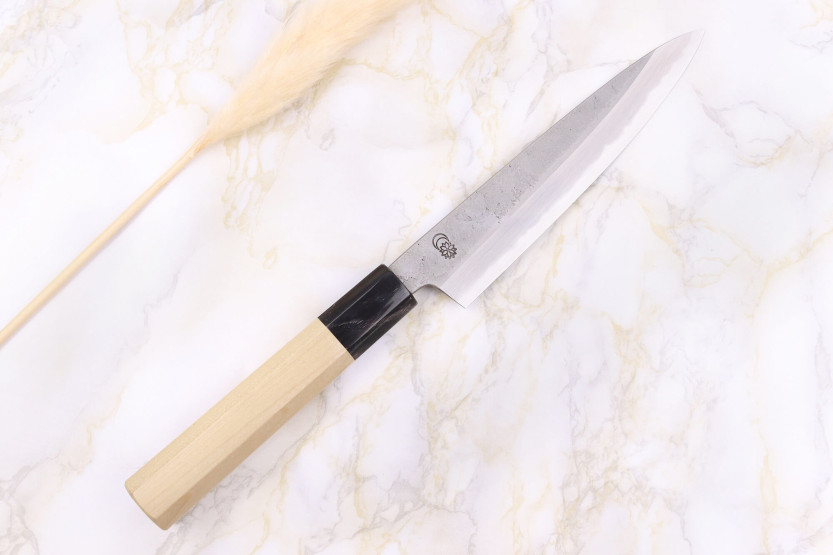
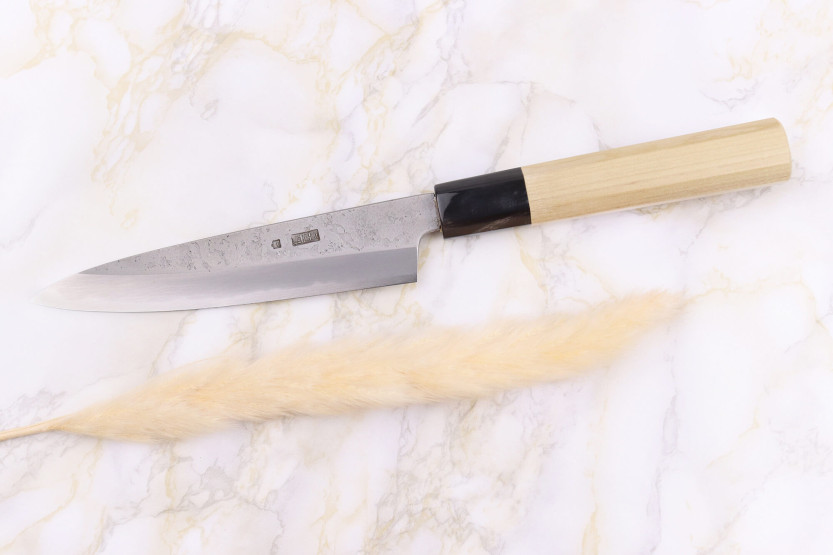
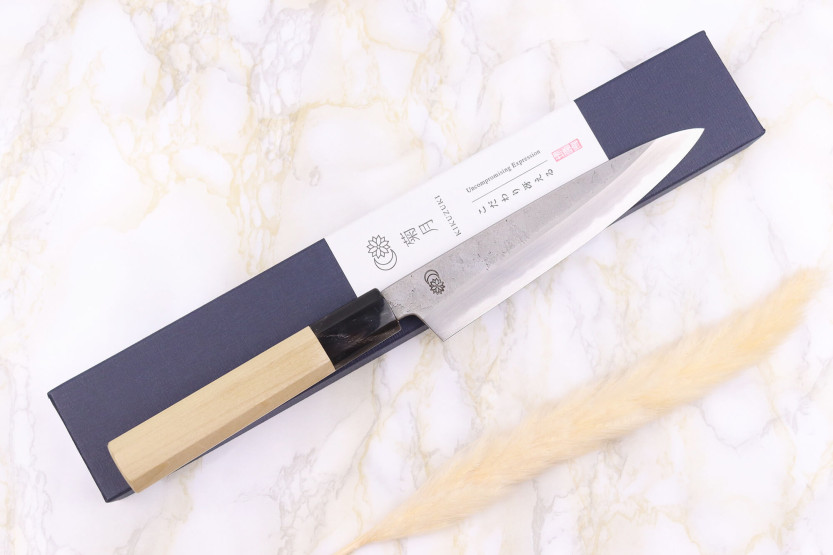
The Kikuzuki Rin 15cm utility knife is a versatile, medium-sized knife for slicing, peeling and dicing fruit and vegetables, as well as chopping and mincing fresh herbs. You can also use it to prepare succulent meat or fish tartars by cutting them into cubes.
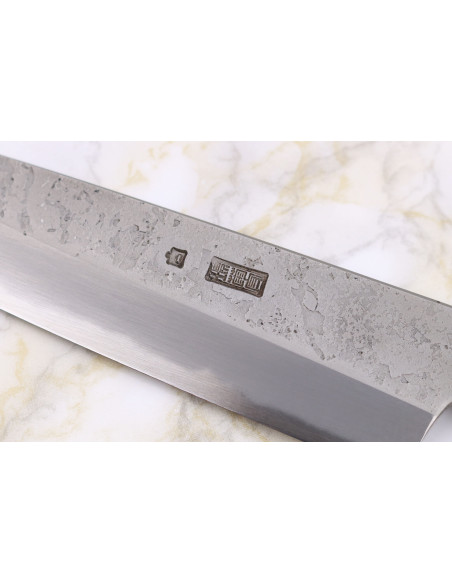
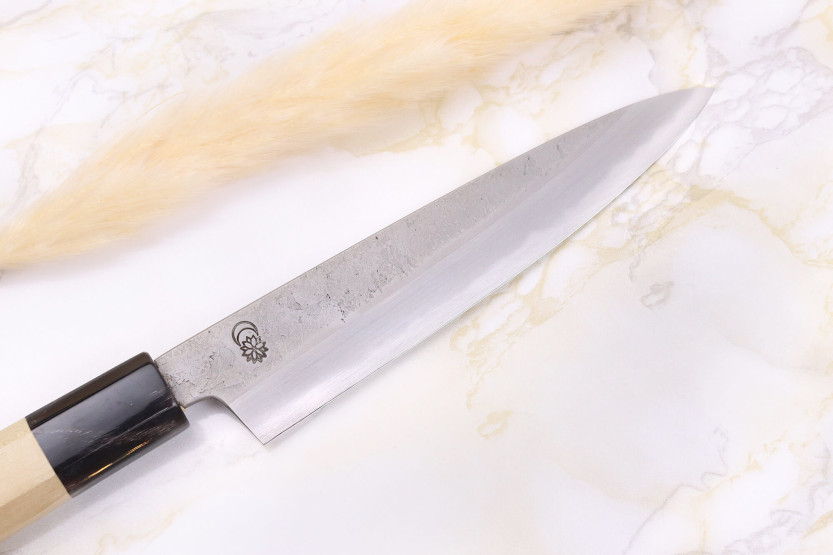
This knife features a blade designed according to the traditional Japanese San Mai structure, which means "three layers". This method consists of forging a core of rigid steel, then wrapping it in a layer of softer steel, folded around the core to provide both strength and flexibility.
The blade's core is made of Shirogami 2 steel, also known as White Steel 2. This Japanese alloy is produced by the internationally renowned Hitachi steelworks, which supply many master blacksmiths.
Shirogami steel is enriched with iron and contains almost 1.2% carbon, elements that give the alloy a high level of hardness. It reaches around 61 HRC on the Rockwell scale, enabling the blade to be sharpened with exceptional precision while maintaining its edge for a long time.
What's more, this alloy is one of the purest on the market, making it easy to sharpen, despite its higher-than-average hardness. On a microscopic scale, the purity of steel offers another advantage: its greater homogeneity enhances strength and reduces the risk of breakage.
The White Steel 2 core is then surrounded by a layer ofsofter steel to protect and balance it. The result is the San Maï, composed of 3 layers.
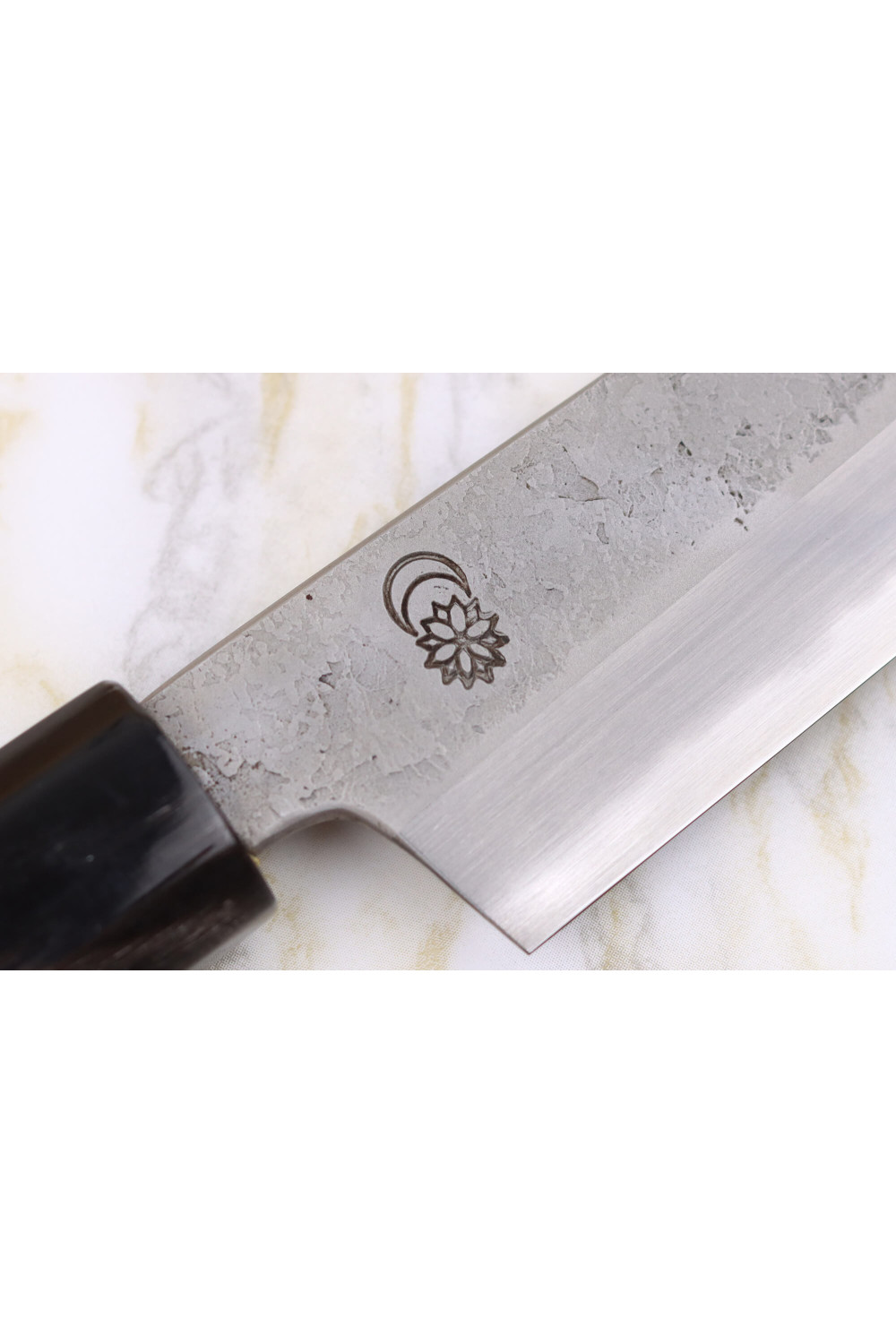
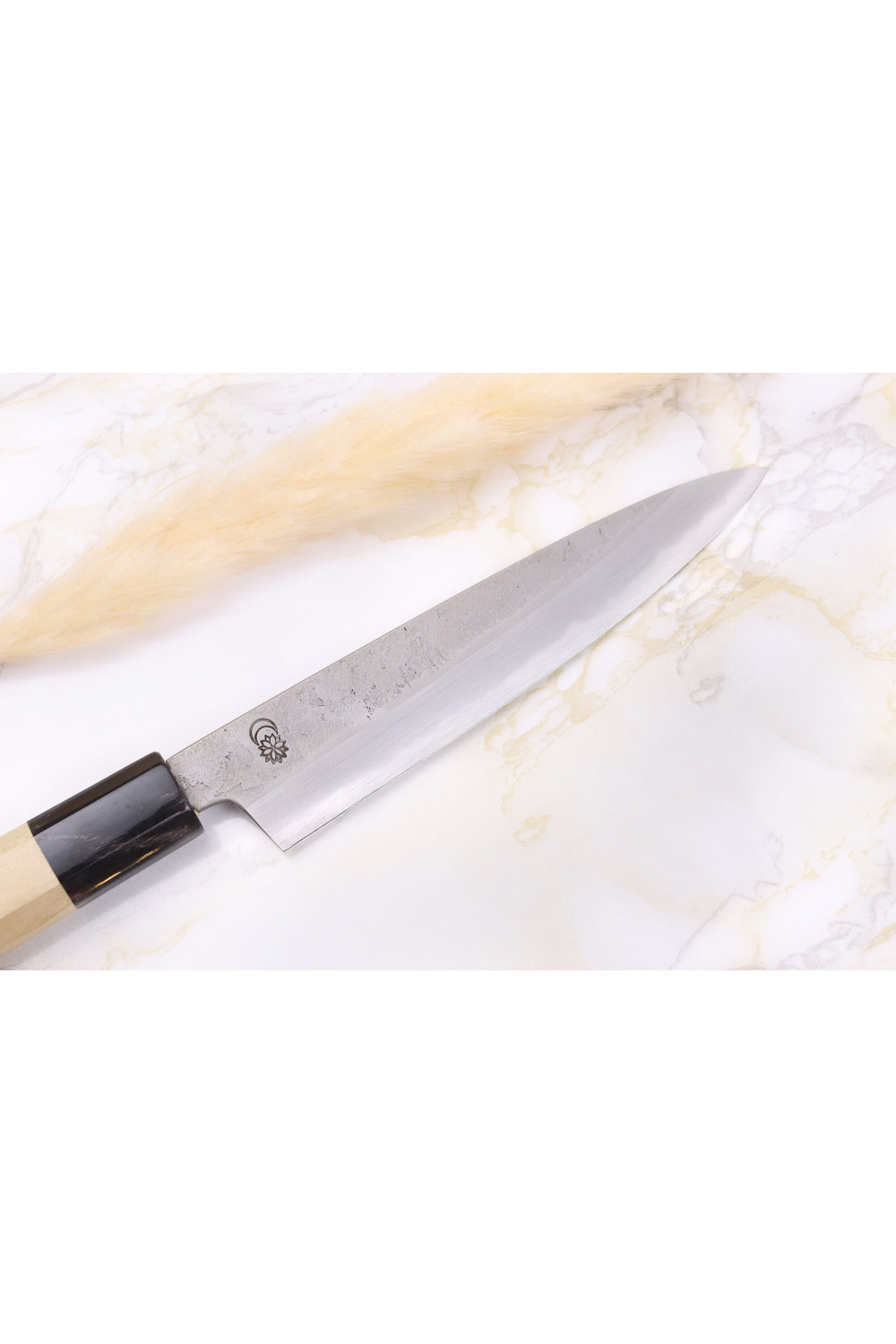
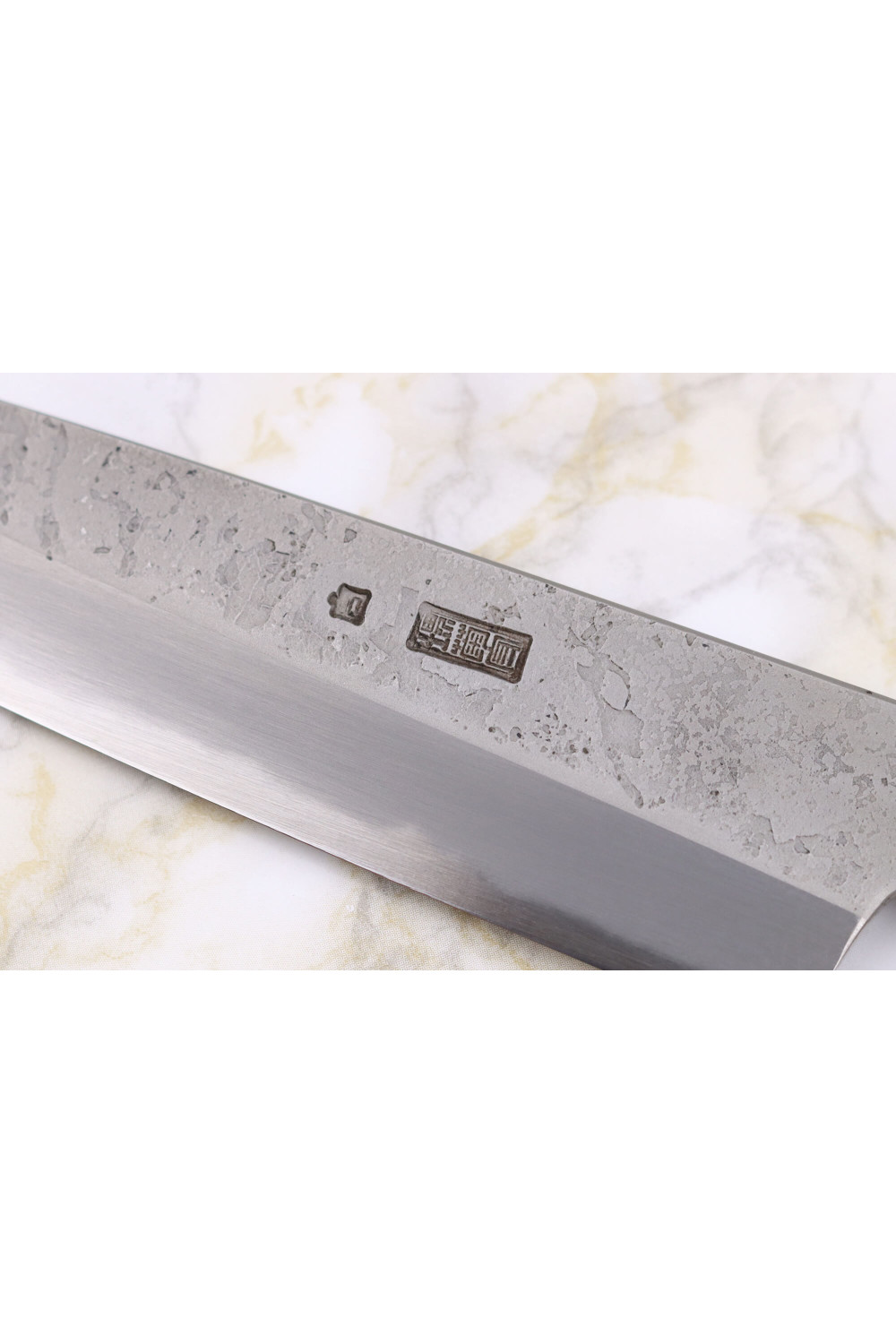
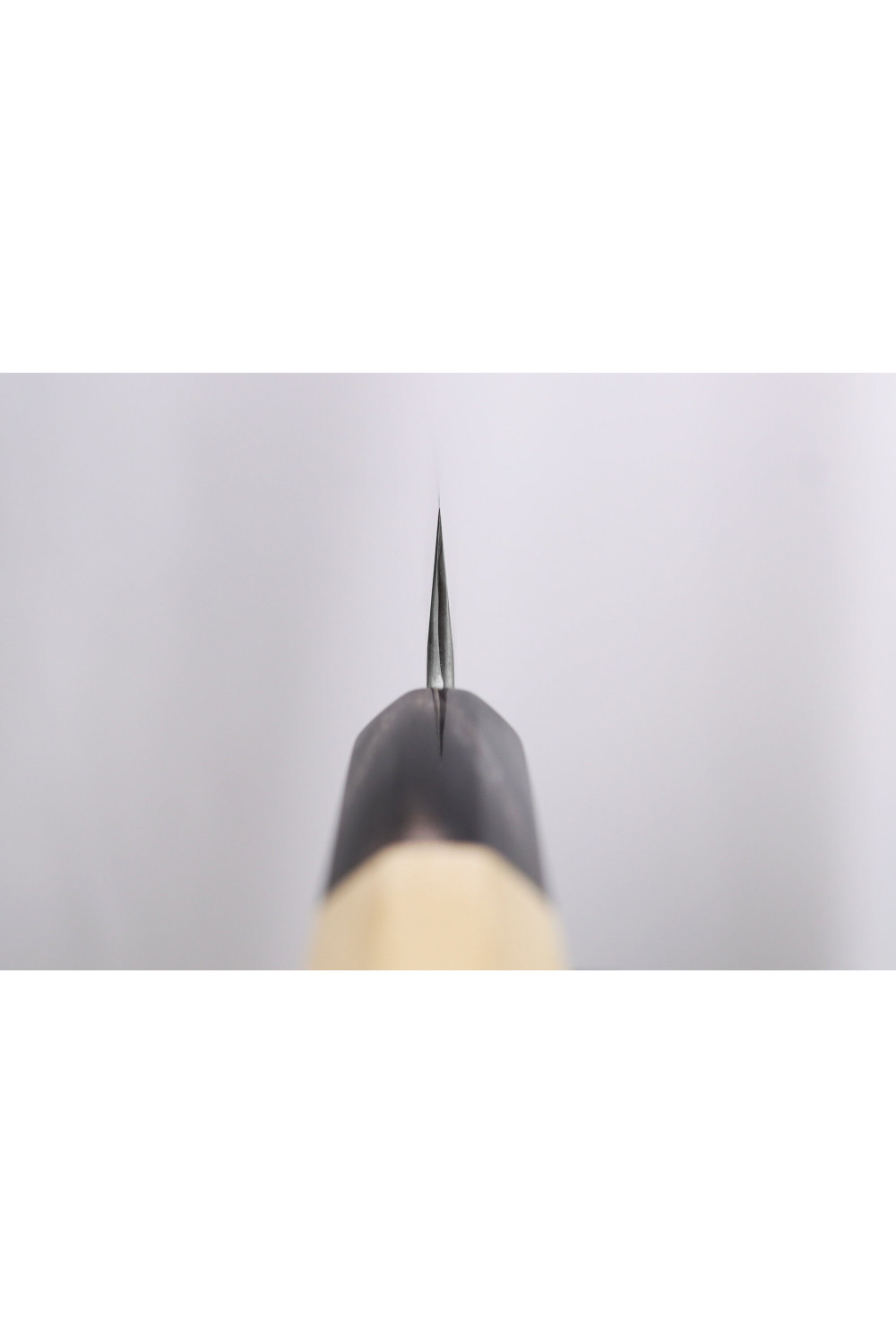
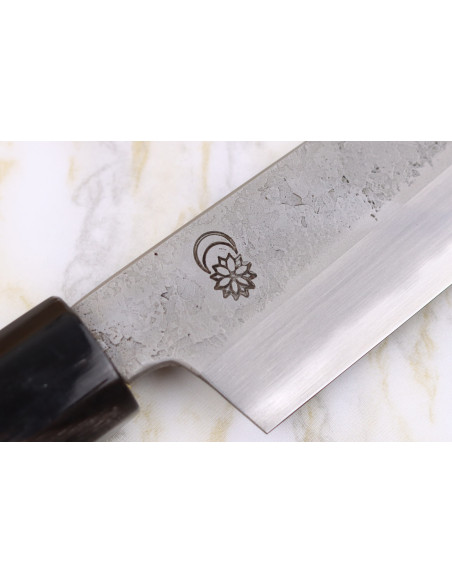
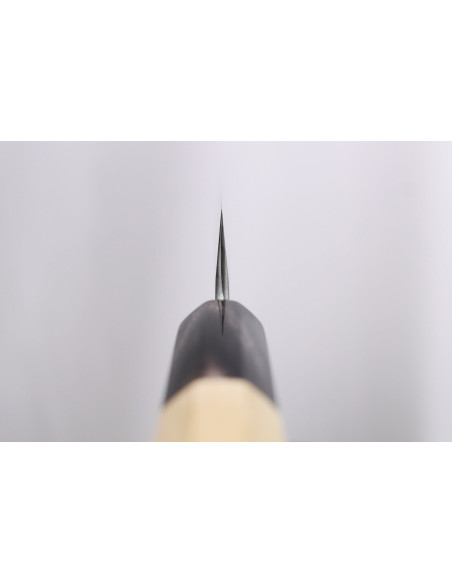
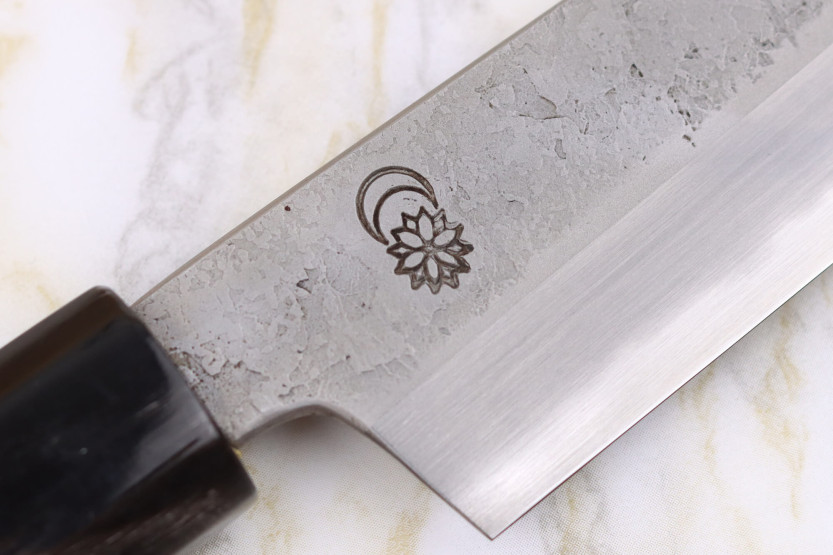
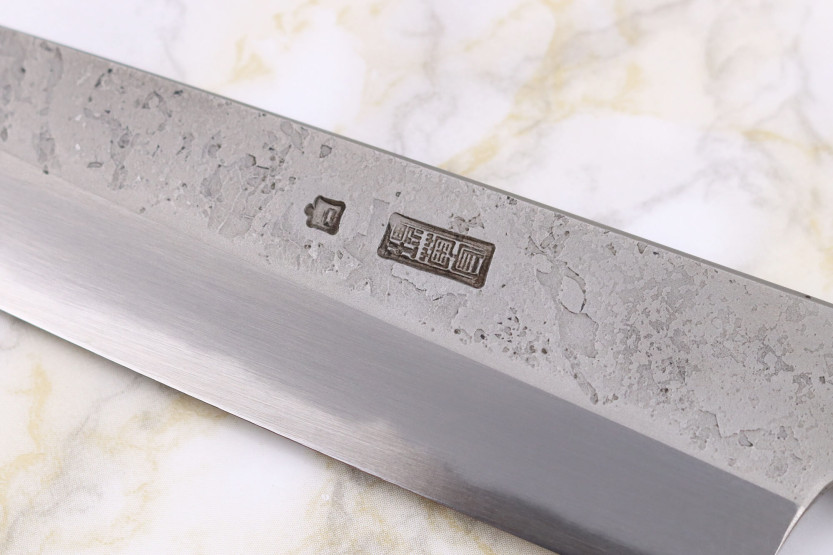
The blade features an authentic Nashiji finish. It has not been polished, giving it a matt, rustic appearance. It also features a thick, flat cutting edge, worked to half-height. This saber grind not only reinforces its sturdiness, but also gives it an elegant finish.
The traditional octagonal handle
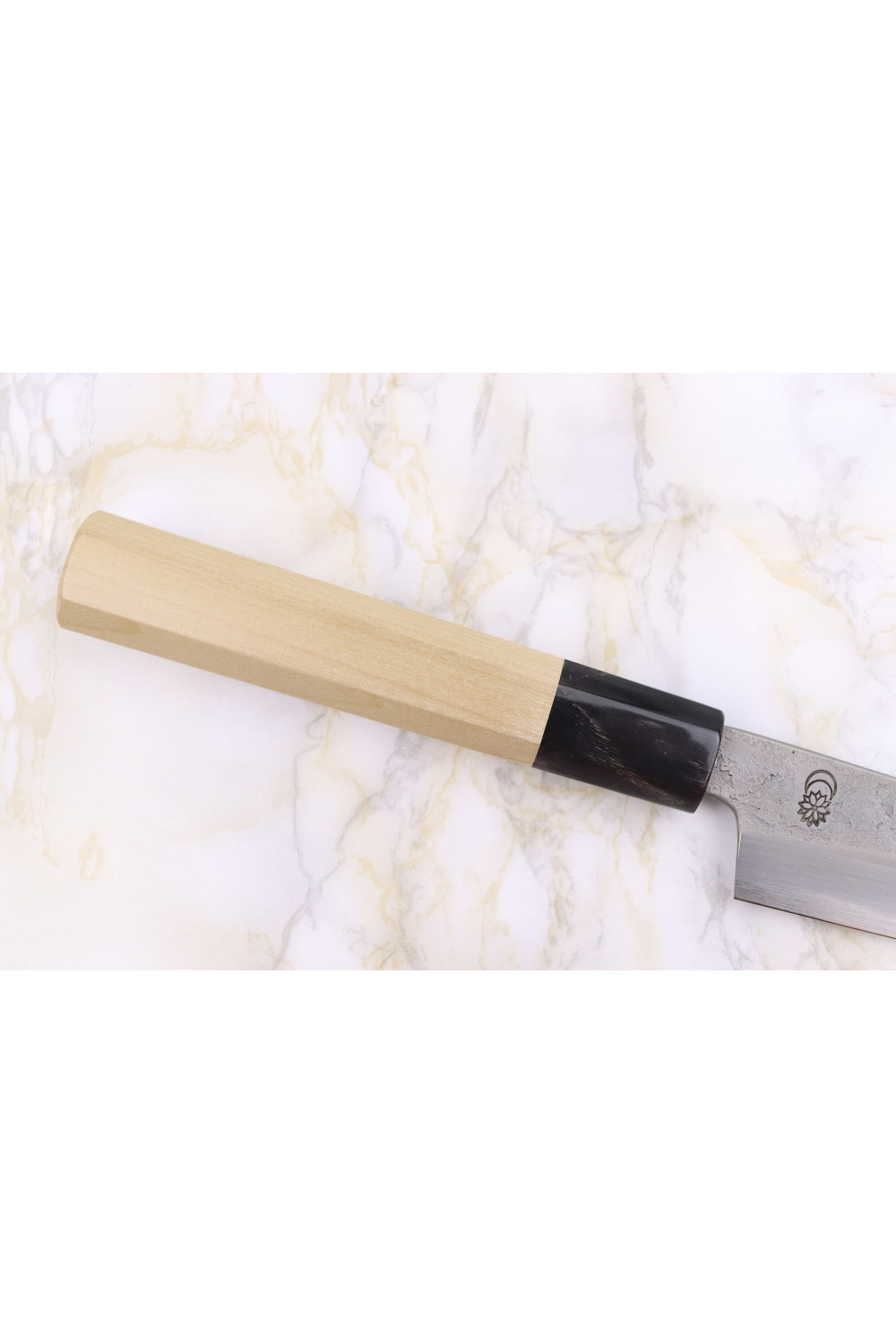
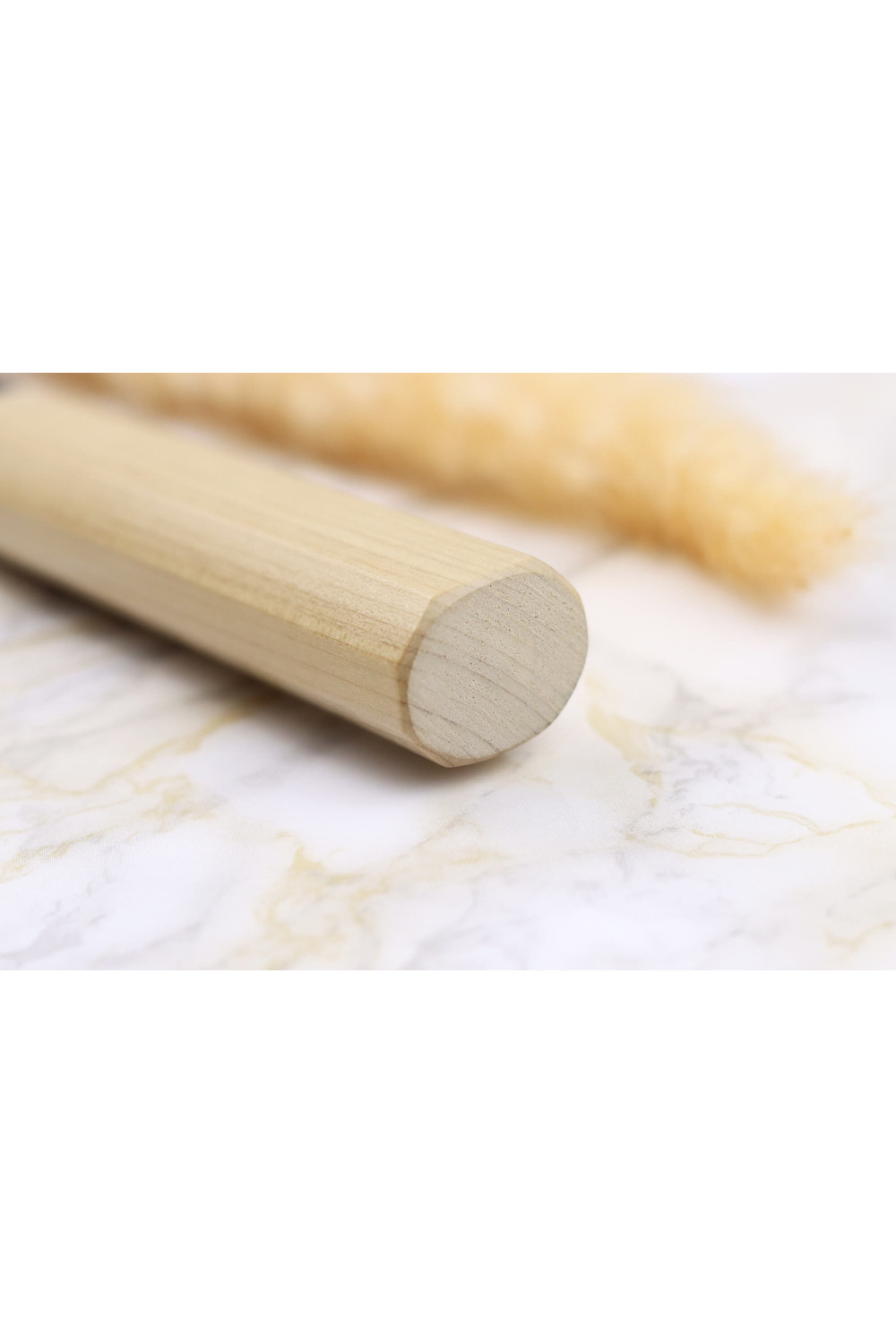
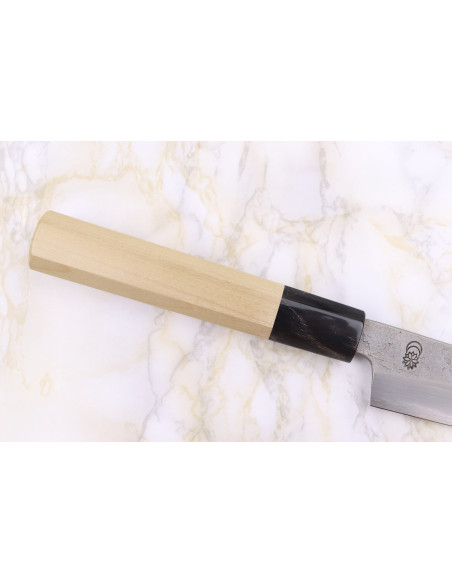
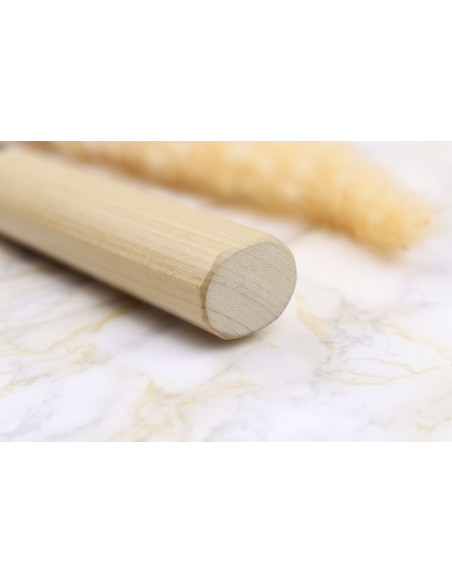
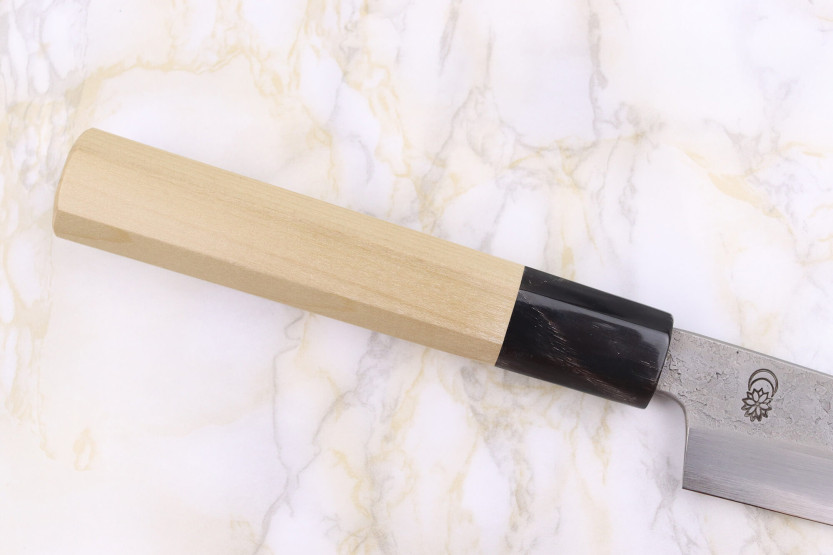
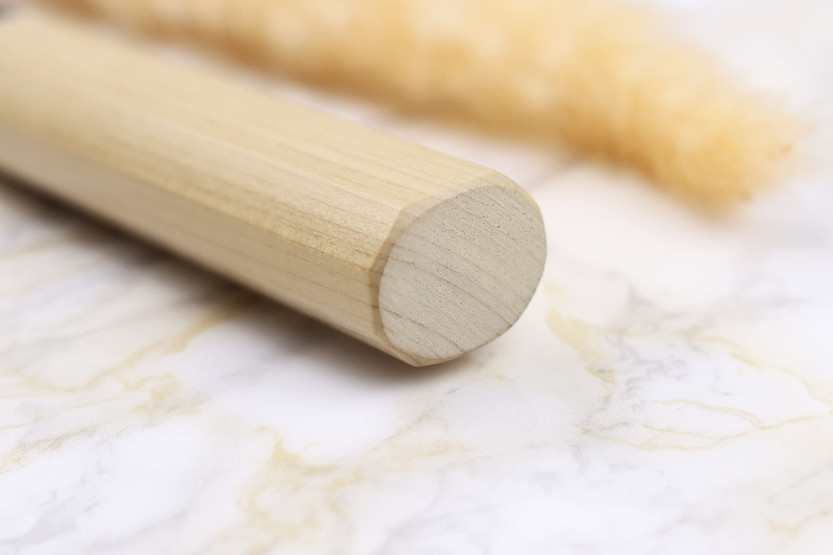
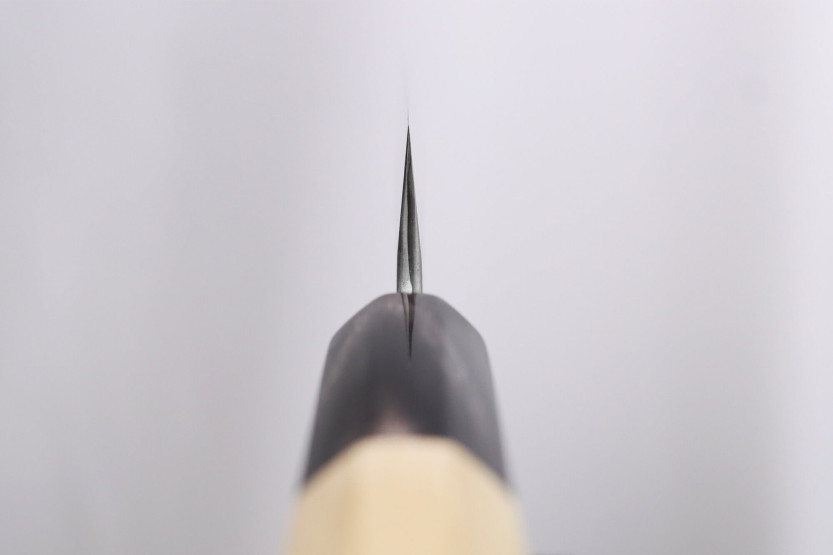
The Sakai Kikumori artisan knife features a traditionally shaped octagonal handle. This design provides ergonomics, comfort and maneuverability, qualities particularly appreciated during long kitchen sessions.
The handle is made from light magnolia wood, giving it an even more authentic aesthetic. This species is prized by craftsmen for its ease of working, and by chefs for its lightness and soft, smooth feel. What's more, it's a moisture-resistant wood, perfect for use in the kitchen.
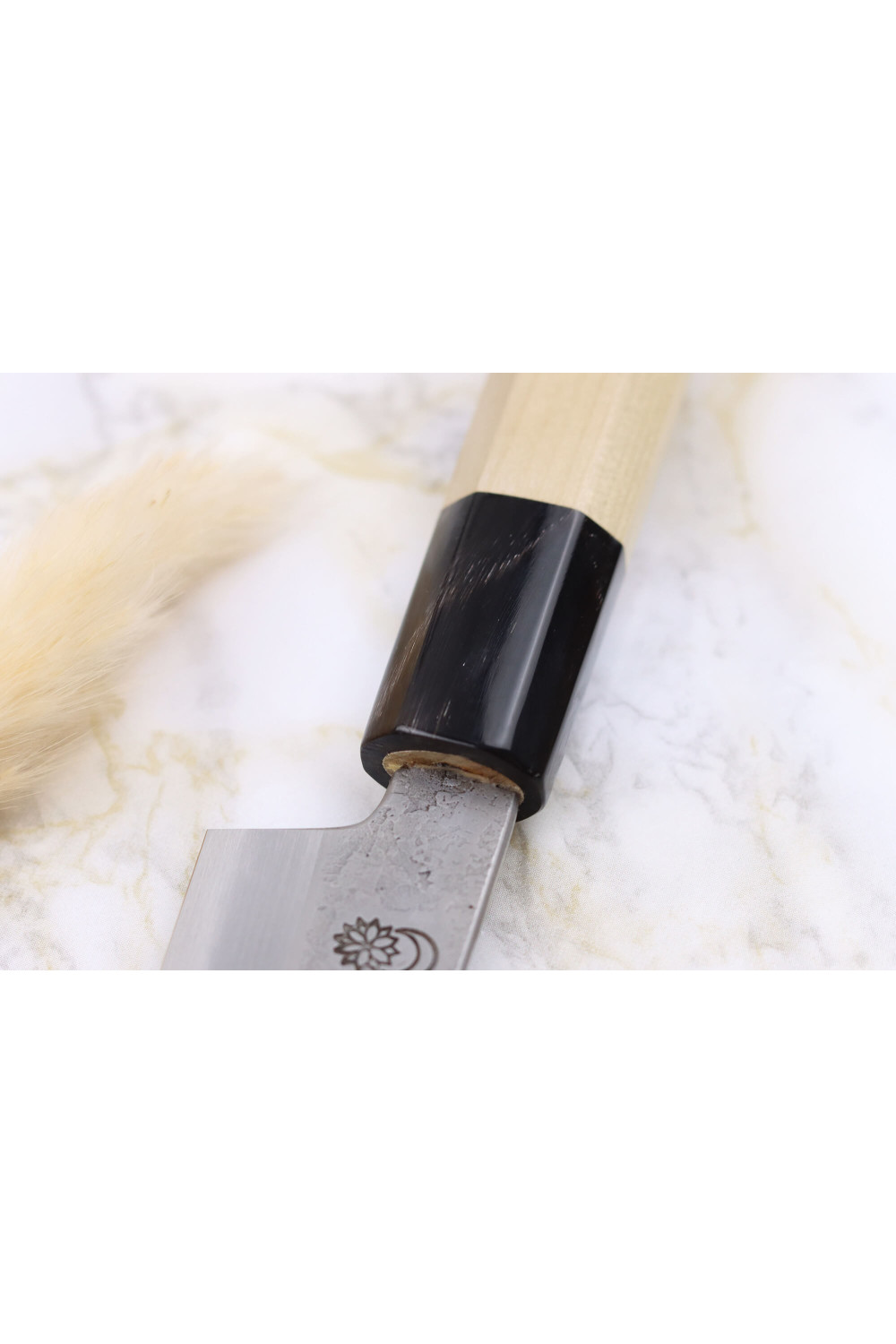
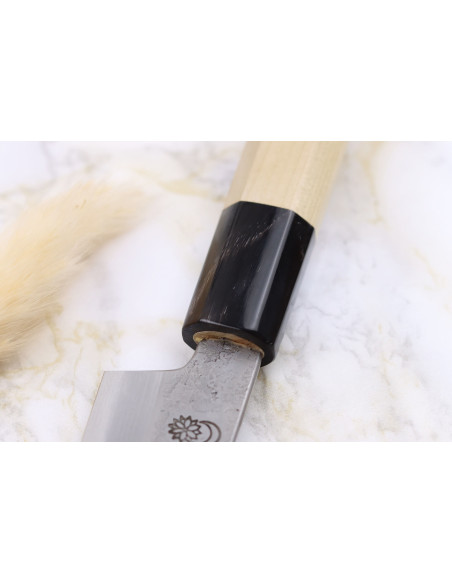
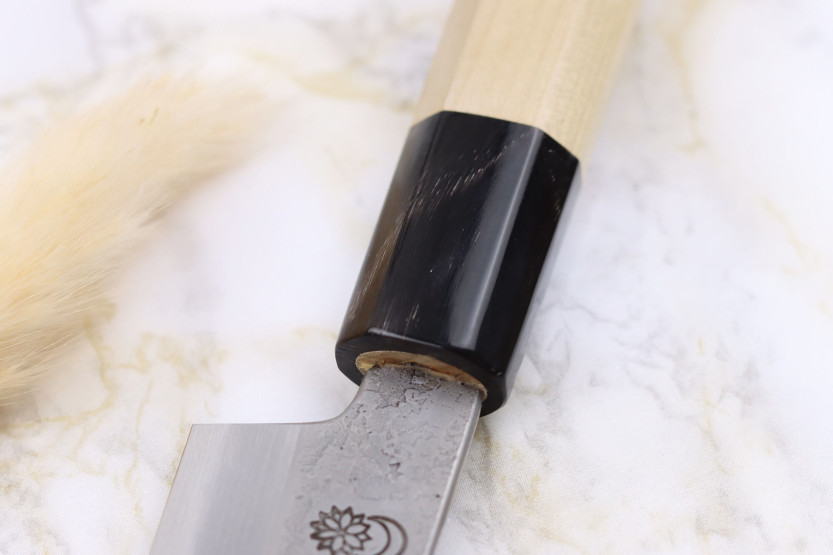
A black buffalo horn ferrule links the handle to the knife blade. As horn is a natural material, its appearance may vary slightly from one model to another, and some ferrules may even feature fine white striations, making each knife unique.
Finally, wood pulp has been added where the blade fits into the handle. This ensures that the knife is perfectly watertight, preventing the ingress of water or small pieces of food.
Caring for this Japanese kitchen knife
As the knife blade is enriched with carbon, it is more susceptible to corrosion. It is therefore essential to wash it exclusively by hand, without putting it in the dishwasher or leaving it to soak in the sink. Use a mild soap and a non-abrasive sponge to clean it, avoiding wetting the handle. Next, wipe the blade with a soft cloth to remove all traces of moisture, then store the knife in a dry place, as in its box.
The high carbon content of the alloy makes it sensitive. Even with ideal care, your blade may show slight color changes over time. This is quite normal, as steel reacts naturally to the acidity of food and ambient humidity. We recommend regular oiling to preserve its appearance.
Kikuzuki Rin knives can be found on Knifeleader.eu!




 By buying this product you can collect up to