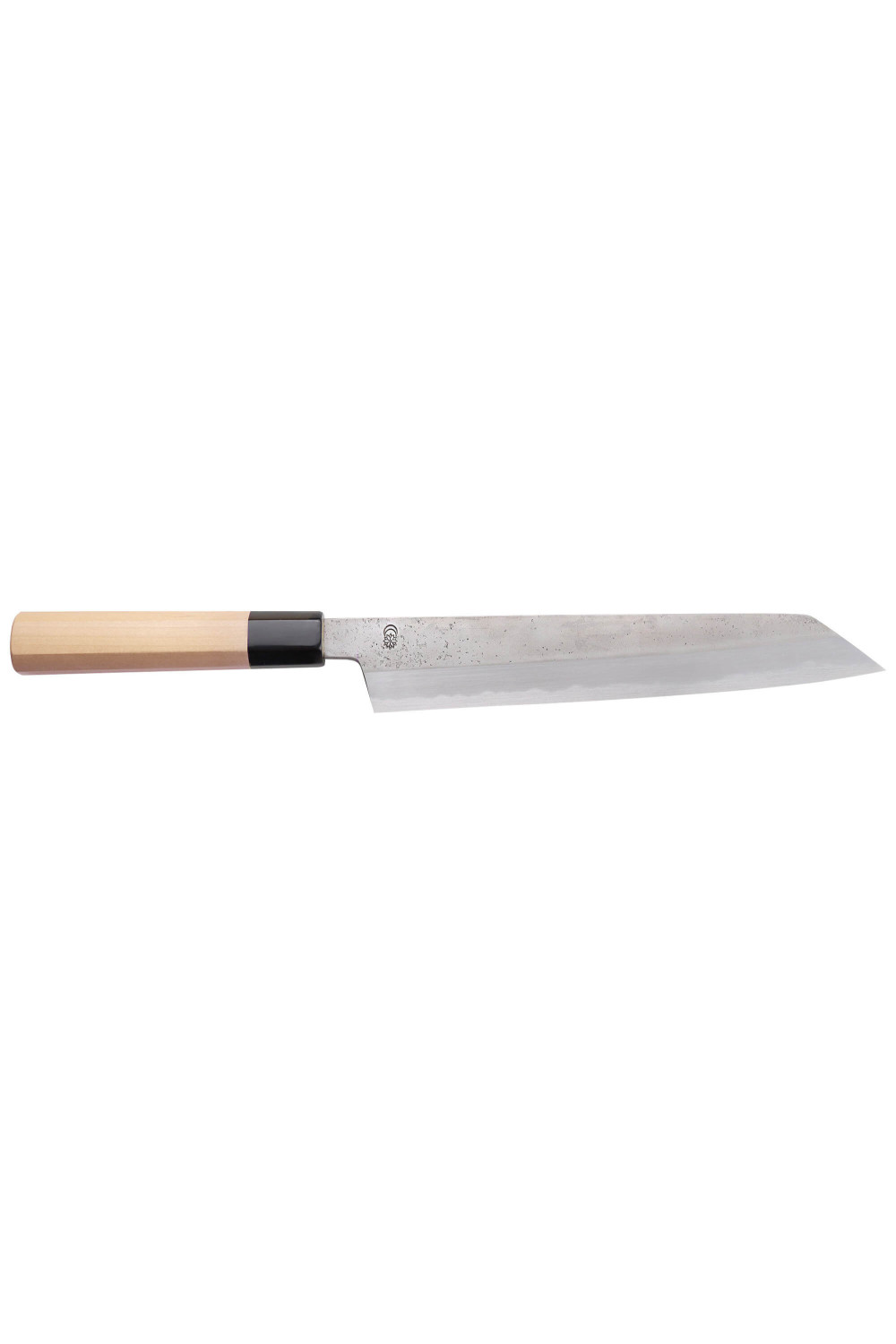
The kiritsuke chef's knife, a real asset in the kitchen
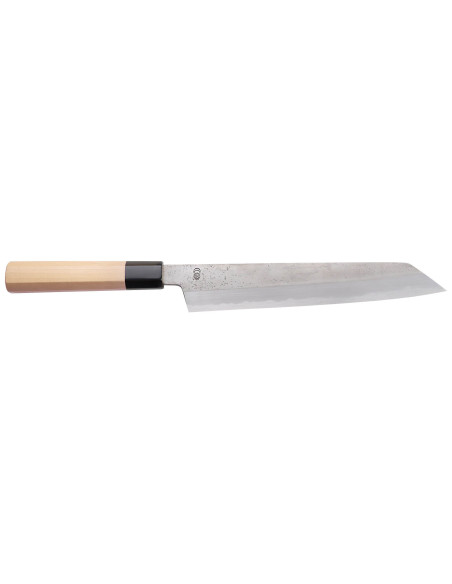
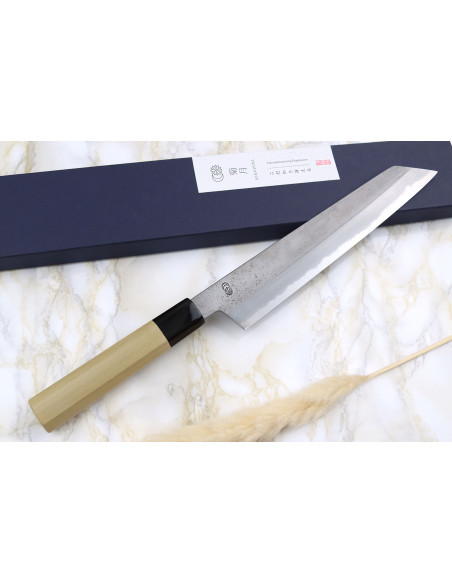
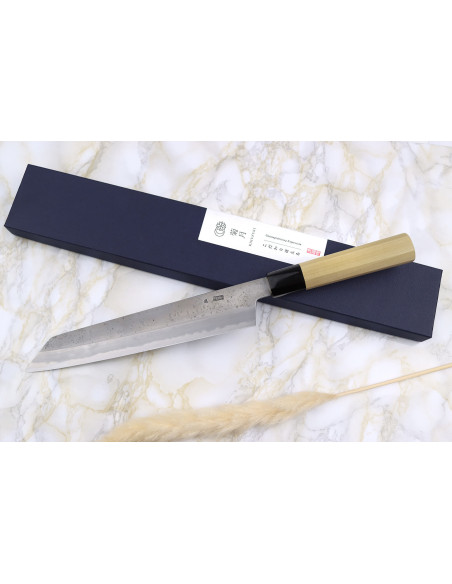
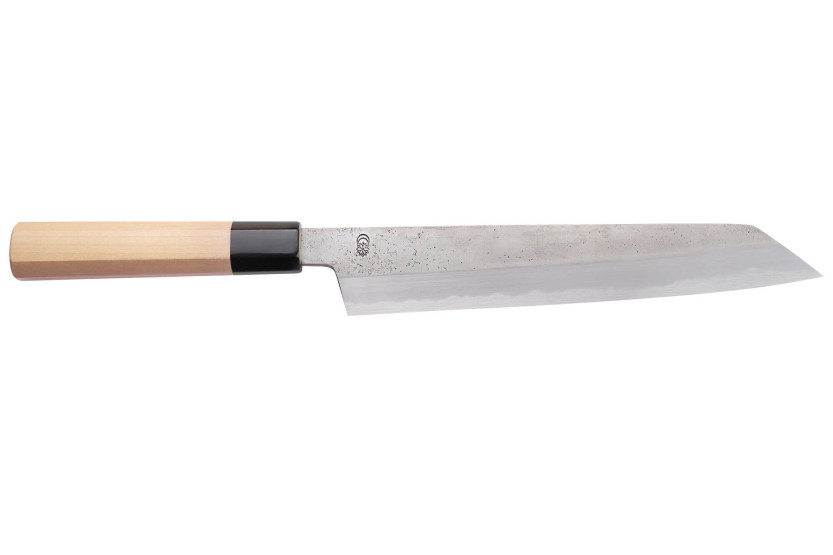
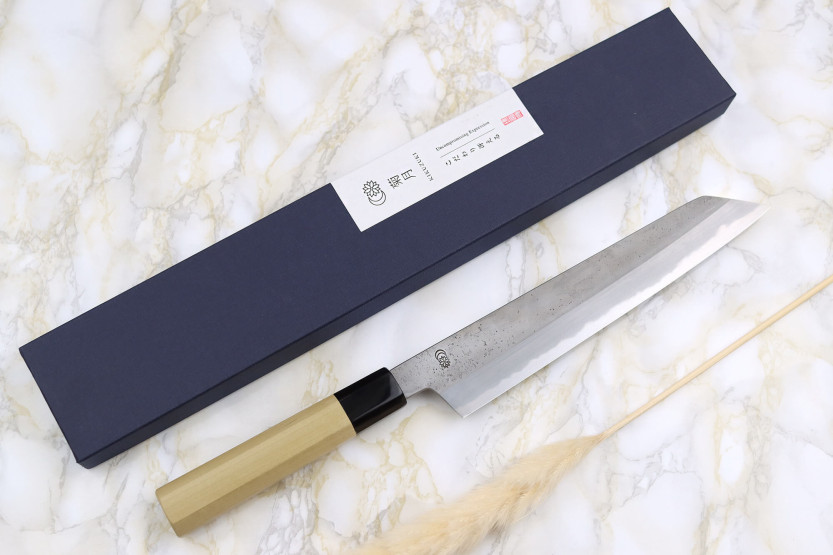
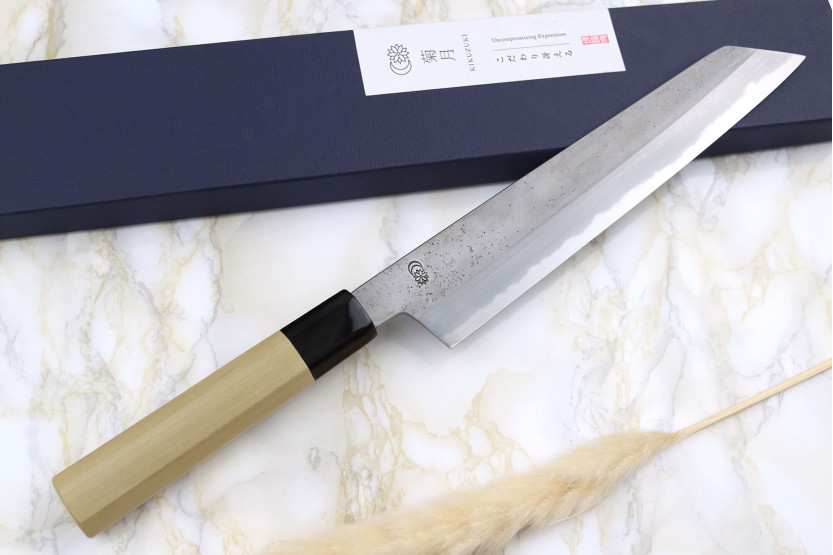
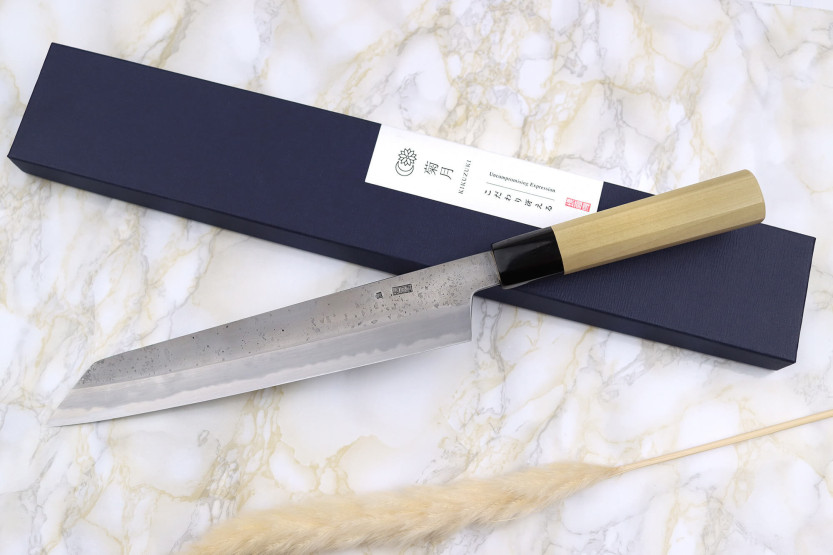
This Sakai Kikumori Kikuzuki Rin 24cm kiritsuke chef's knife is a versatile knife that will enable you to vary the cuts you make. You can use it to slice your favorite fruits and vegetables, as well as mince pieces of meat (in which there are no bones). It can also be used to chop herbs such as parsley or chives. Its 24cm blade makes it ideal for large food items, and its kiritsuke shape adds a welcome touch of authenticity! This is what gives it the distinctive shape of a traditional sword.
Don't forget that a kitchen knife is not designed to cut anything too hard, such as frozen foods, squash, bones...at the risk of damaging its cutting edge.
A Japanese knife made from top-of-the-range materials
Your sakai kikumori kikuzuki rin knife is built according to the typically Japanese San Maï structure, which means "3 layers" in Japanese. To achieve this, the blacksmith chooses a blade core made of rigid steel, and places a layer of softer steel, folded around it, on top of the core.
For the core, we chose Shirogami 2 (also known as White Steel 2). This alloy is Japanese, and is manufactured by the renowned Hitachi steelworks, which supply many blacksmiths. As shirogami 2 is a local steel, it's very popular with traditional cooks!
It contains a high proportion of iron ore and carbon (the latter at around 1.2%). The rigidity of the alloy is directly and positively impacted by these elements (the blade reaches 61 HRC), since a stiffer blade can be sharpened more precisely and holds its edge longer. Moreover, it is considered one of the purest steels on the cutlery market. This means it remains pleasant to sharpen, even though it is stiffer than average.
In structural terms, the purity of steel has another advantage: its homogeneity makes it more resistant (less likely to chip).
To balance and protect it, a layer of softer steel surrounds the White Steel 2 core. The San Maï is now complete: all 3 layers are present.
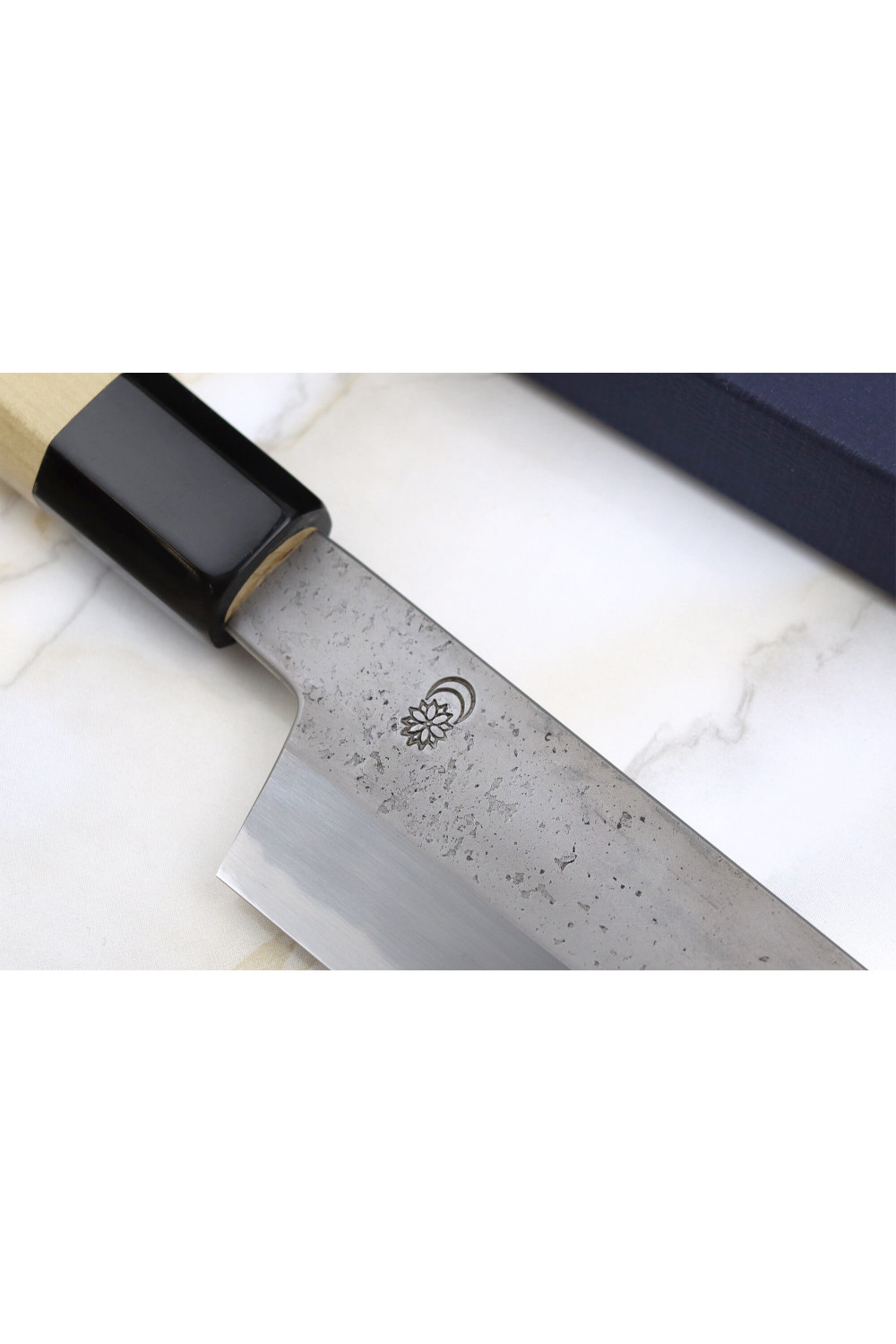
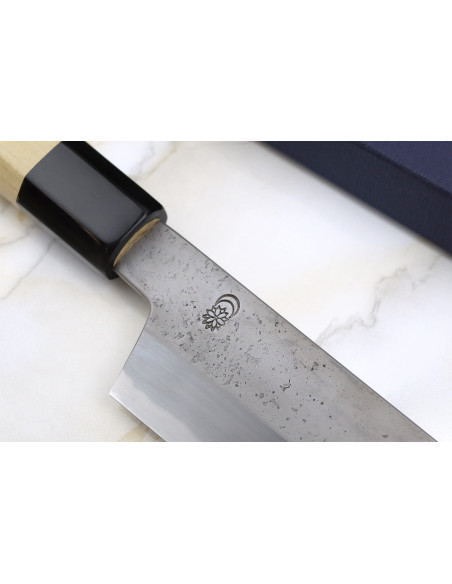
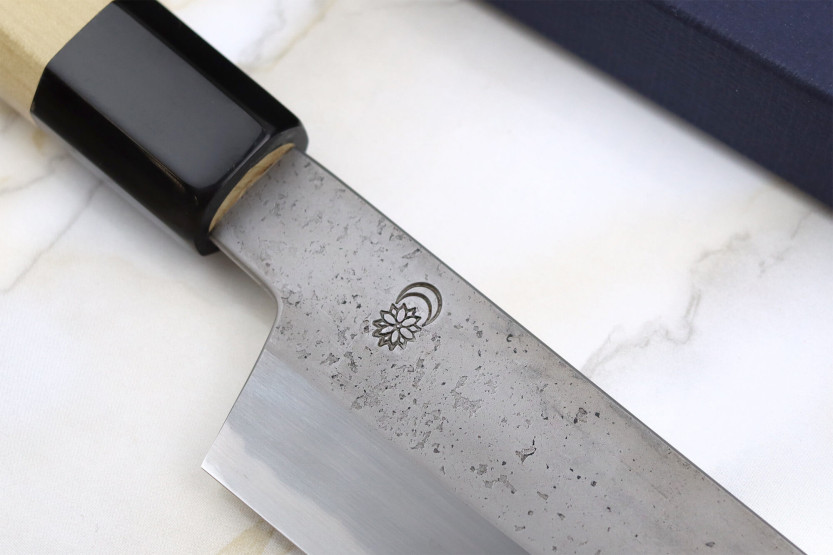
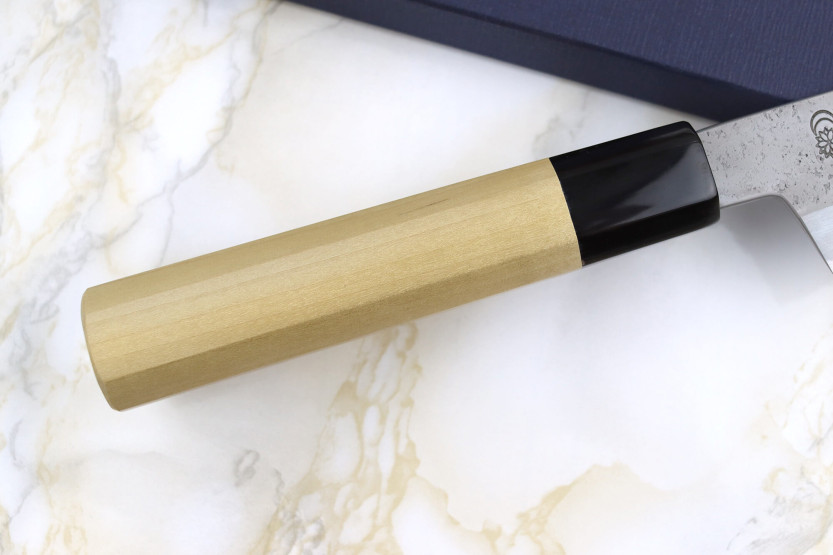
The final touch is the beautiful Nashiji finish! This is a Japanese technique that leaves a rustic matte finish on the blade. This gives it a lot of character.
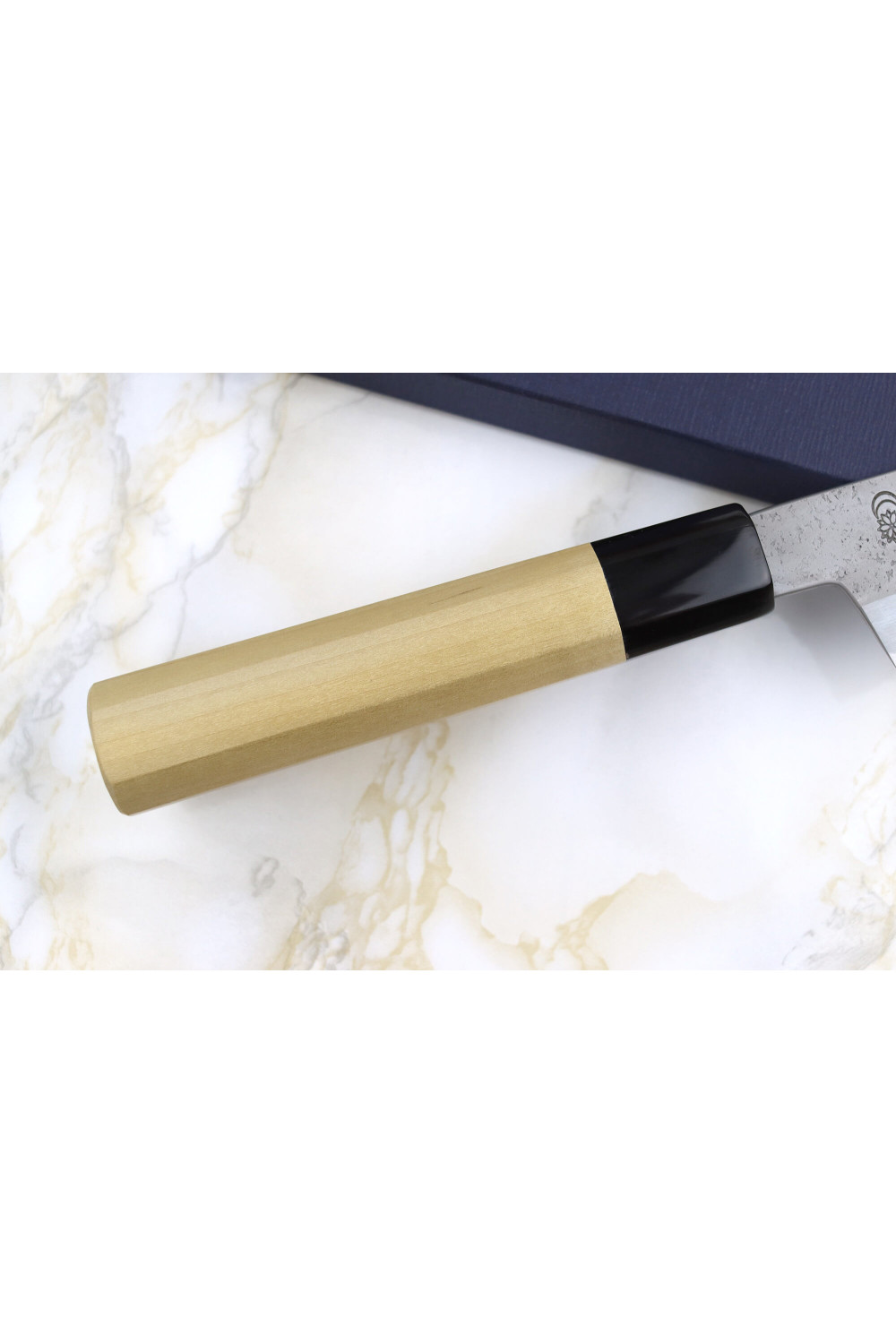
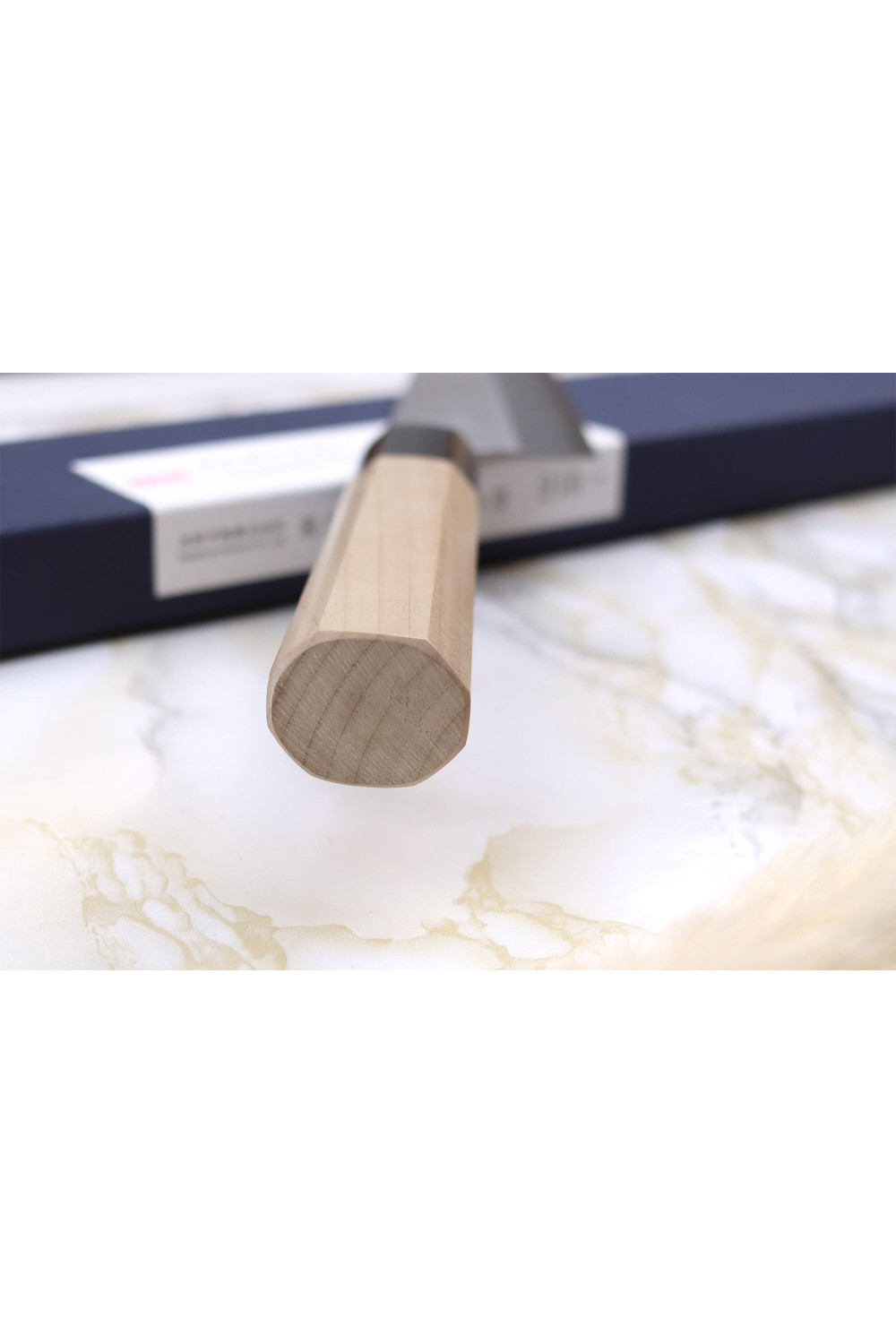
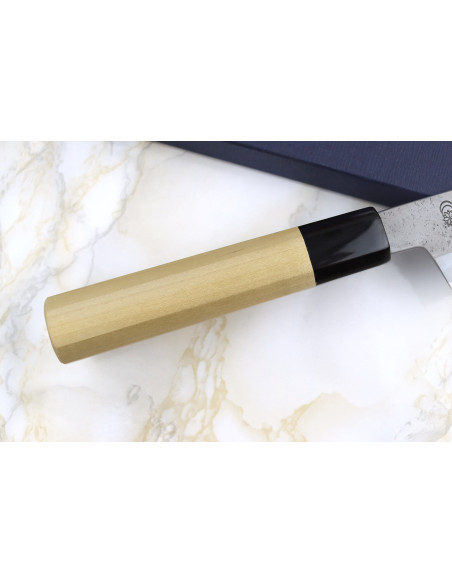
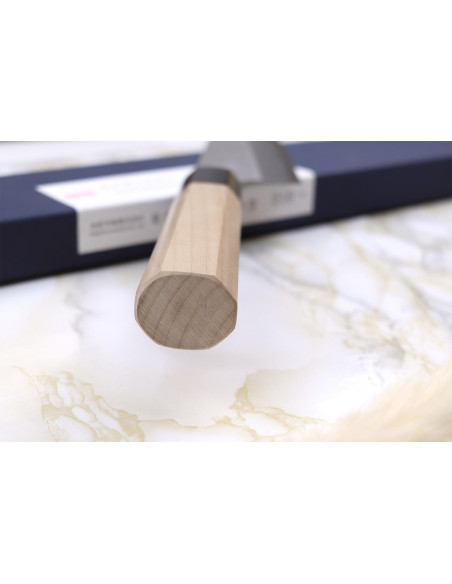
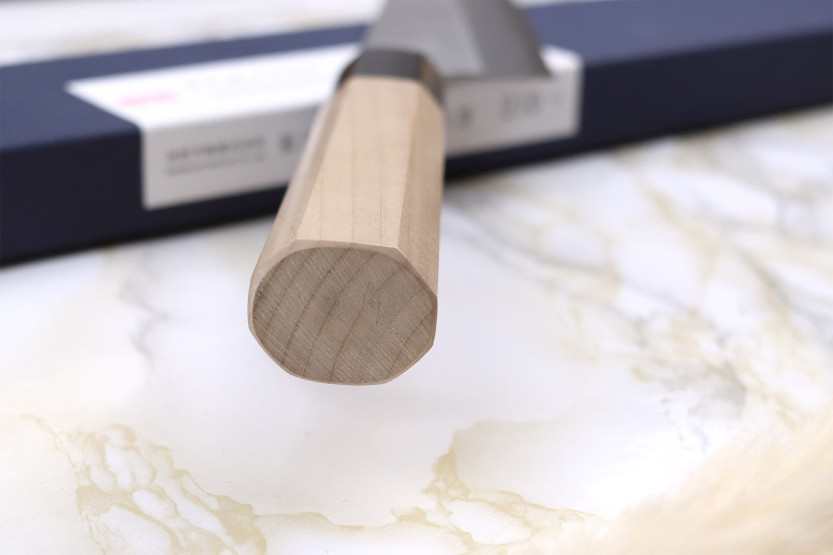
The handle has a very traditional look, as it is made of light magnolia. This wood is as pleasant to work with for the craftsman as it is for the cook, thanks in particular to its lightness and soft, polished feel. This wood is more apt to resist humidity, making it a material of choice for use in the culinary environment. Octagonal in shape, it's perfect for all cooks!
The ferrule is made of black buffalo horn. As this is a naturally occurring material, its appearance may vary from piece to piece, and fine white streaks may be visible.
To seal the handle and prevent small pieces of food from getting into it, wood paste has been inserted into the space where the blade fits into the handle. This makes it watertight and more hygienic, to prevent small pieces of cut food from slipping inside.
As the blade has a very high carbon content, it is susceptible to corrosion. It is therefore important to maintain your knife by hand, and not to soak it in the sink or put it through the dishwasher. When you go to wash it, use a mild soap and a sponge that is not too abrasive. Don't get the handle too wet (it's still made of wood, even if magnolia is hard-wearing). Then wipe dry with a soft cloth.
Before storing your clean knife, make sure there are no traces of moisture on its surface.
Carbon makes the alloy reactive, and careful care will not prevent your blade from changing color over time. This is quite normal, and is due to the acidity of the foods encountered, or even simply due to the humidity in the air. To best protect your blade, you can oil it regularly.
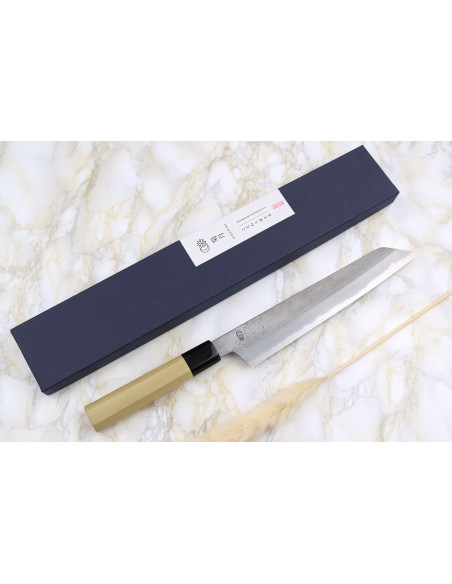
Your Japanese knife comes in a deep blue cardboard box.
Learn more about the manufacturing process
The Sakai Kikumori artisan factory by Kawamura Hamono, located as its name suggests in the town of Sakai, offers knives forged by both illustrious blacksmiths and small local workshops. There's something for every taste, affinity and budget.
To develop the beautiful Rin kikuzuki knives, the factory called on the illustrious blacksmith Yoshikazu Tanaka san, a renowned figure in the cutlery world.
His expertise has been recognized by the Japanese government in the past. His work on knives is of exemplary quality: the tempering he performs has a major impact on the blade's durability. It won't warp, even when you run it over the Sharpening stone.
Want to buy more? Discover all Sakai Kikumori Japanese knife ranges!




 By buying this product you can collect up to