To develop its Rin series of kikuzuki knives, the Sakai Kikumori factory called on renowned blacksmith Yoshikazu Tanaka san.
His expertise has been recognized by the Japanese government in the past. The work he does on the knives is of exemplary quality: the tempering he performs has a major impact on the blade's durability. It won't warp, even when you run it over the Sharpening stone.
The Sakai Kikumori artisan factory by Kawamura Hamono, located as its name suggests in the town of Sakai, offers a mix of knives forged by illustrious blacksmiths (such as Tanaka san mentioned above) and others by small local workshops. The offer is therefore varied, and will appeal to all cooks! There's something for every taste, affinity and budget.
The chef's knife: the knife most used every day
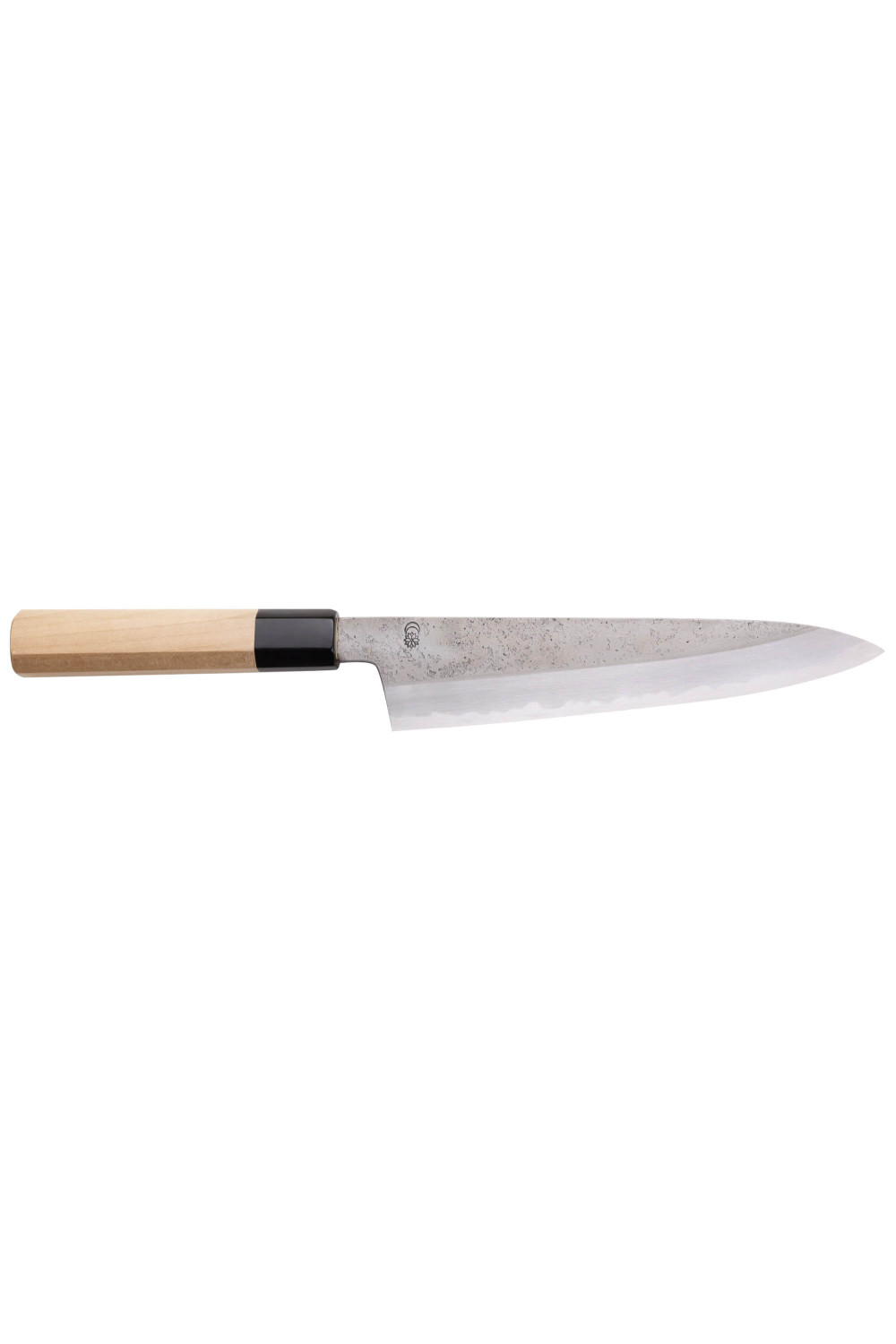
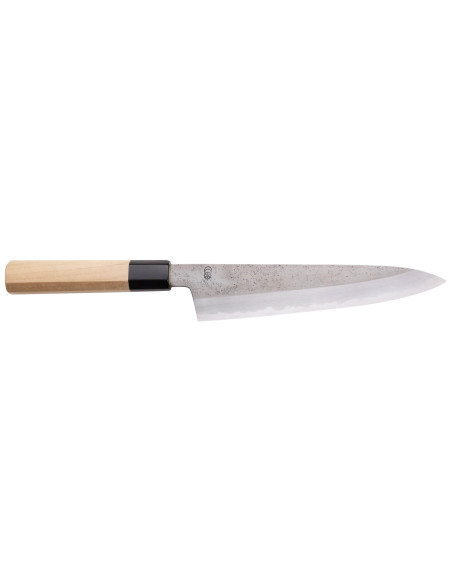
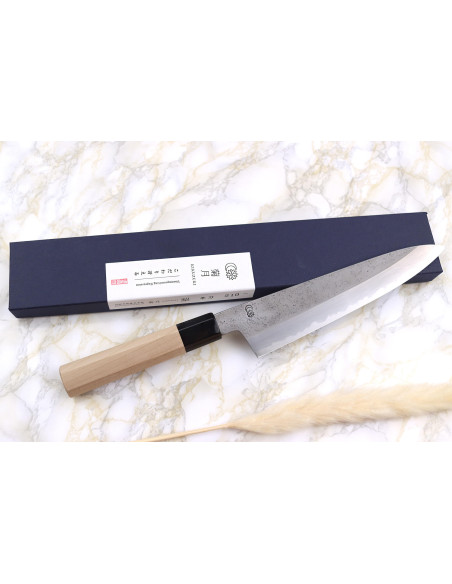
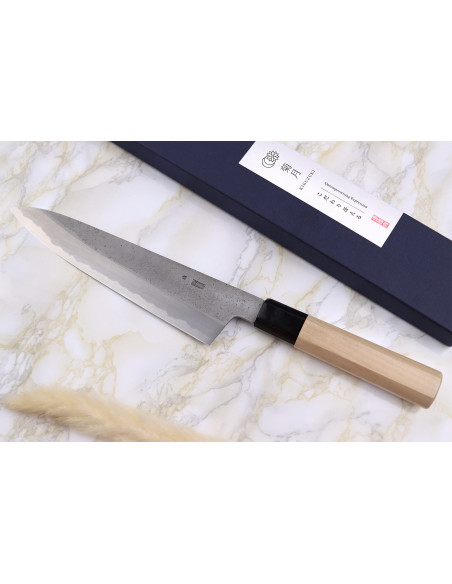
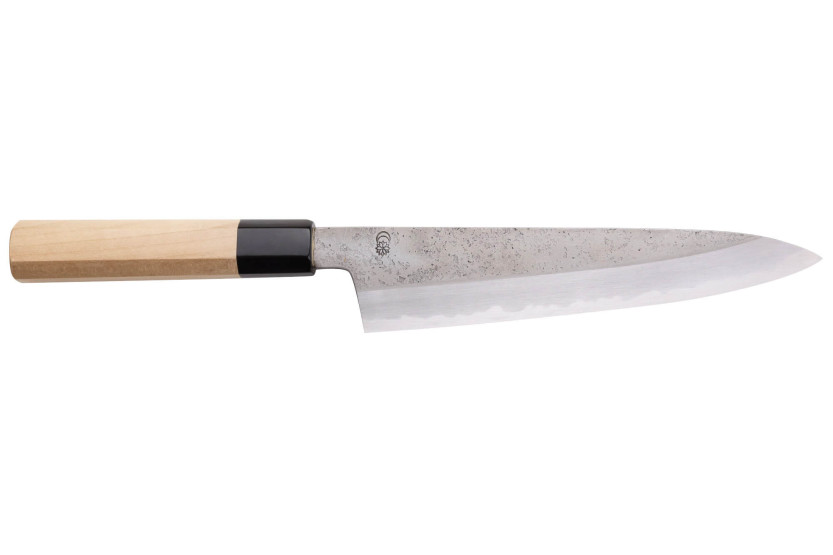
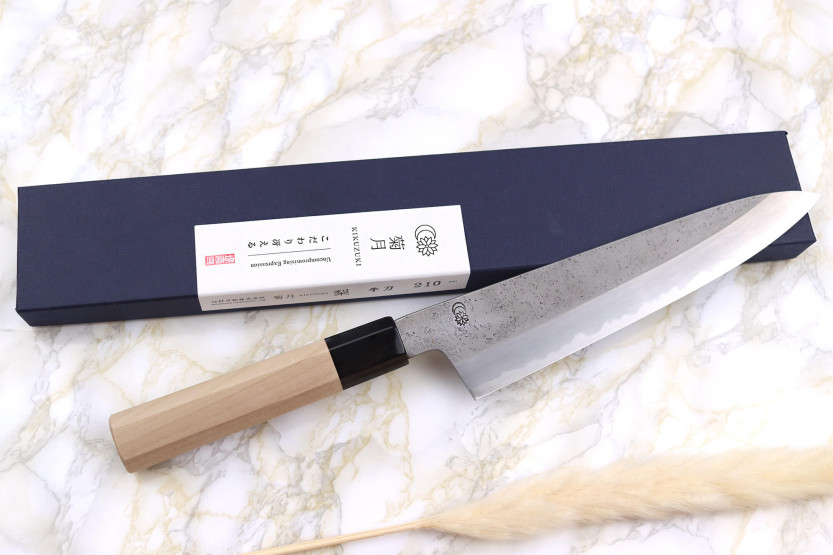
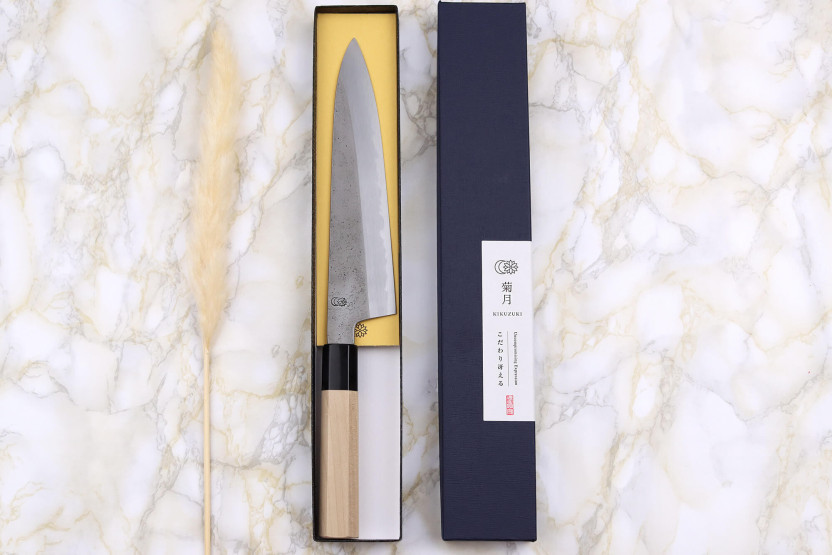
This Sakai Kikumori Kikuzuki Rin 21cm chef's knife is THE knife par excellence. It's ideal for mincing meat (as long as it doesn't contain bones or other hard parts), slicing vegetables and chopping fresh herbs. It's a multifunctional knife that can help you with all your recipes!
Your kikuzuki rin Japanese knife features a San Maï blade, which means "3 layers" in Japanese. It's based on a hard core surrounded by a layer of softer, bent steel (hence the 3 layers in total).
This handcrafted knife features a Shirogami 2 core (also known as White Steel 2). This is an extremely fine Japanese steel, manufactured by the Hitachi steelworks in Japan. The steel produced by this world-renowned company equips many blacksmiths.
Shirogami 2 is a local steel, making it popular with traditional cooks. It's a real guarantee of quality.
This alloy is one of the purest steels on the market, enriched with iron ore and carbon (the latter at around 1.2%). The rigidity of the alloy is directly positively impacted by the above-mentioned elements (the blade reaches 61 HRC), since a stiffer blade can be sharpened more precisely and holds its edge longer.
Despite its good hardness, this knife's edge remains easy to maintain, thanks to its purity.
In structural terms, steel purity has another advantage: its homogeneity makes it more resistant (less likely to chip).
To balance and protect it, a layer of softer steel surrounds the core produced by Hitachi. The San Mai is now complete.
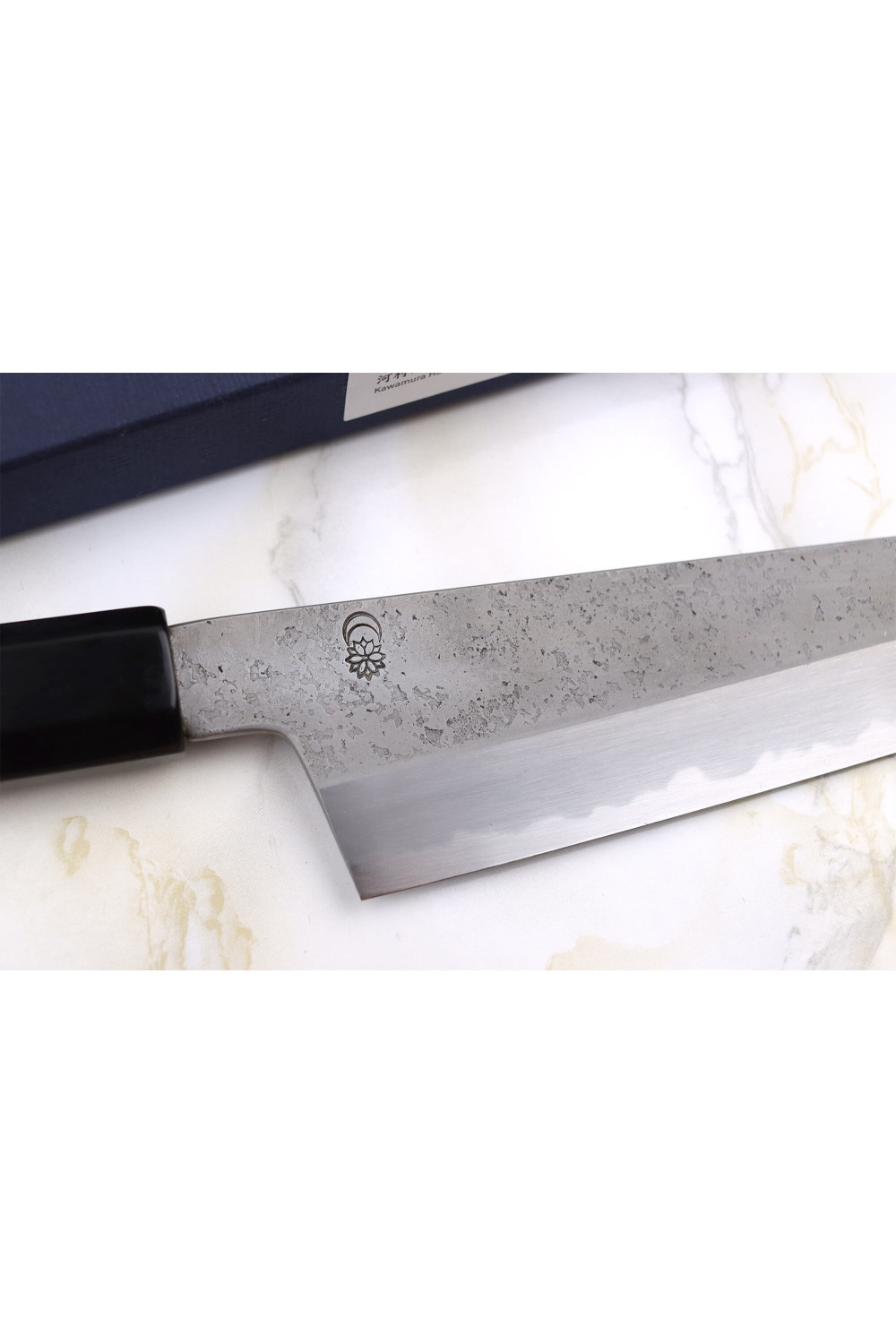
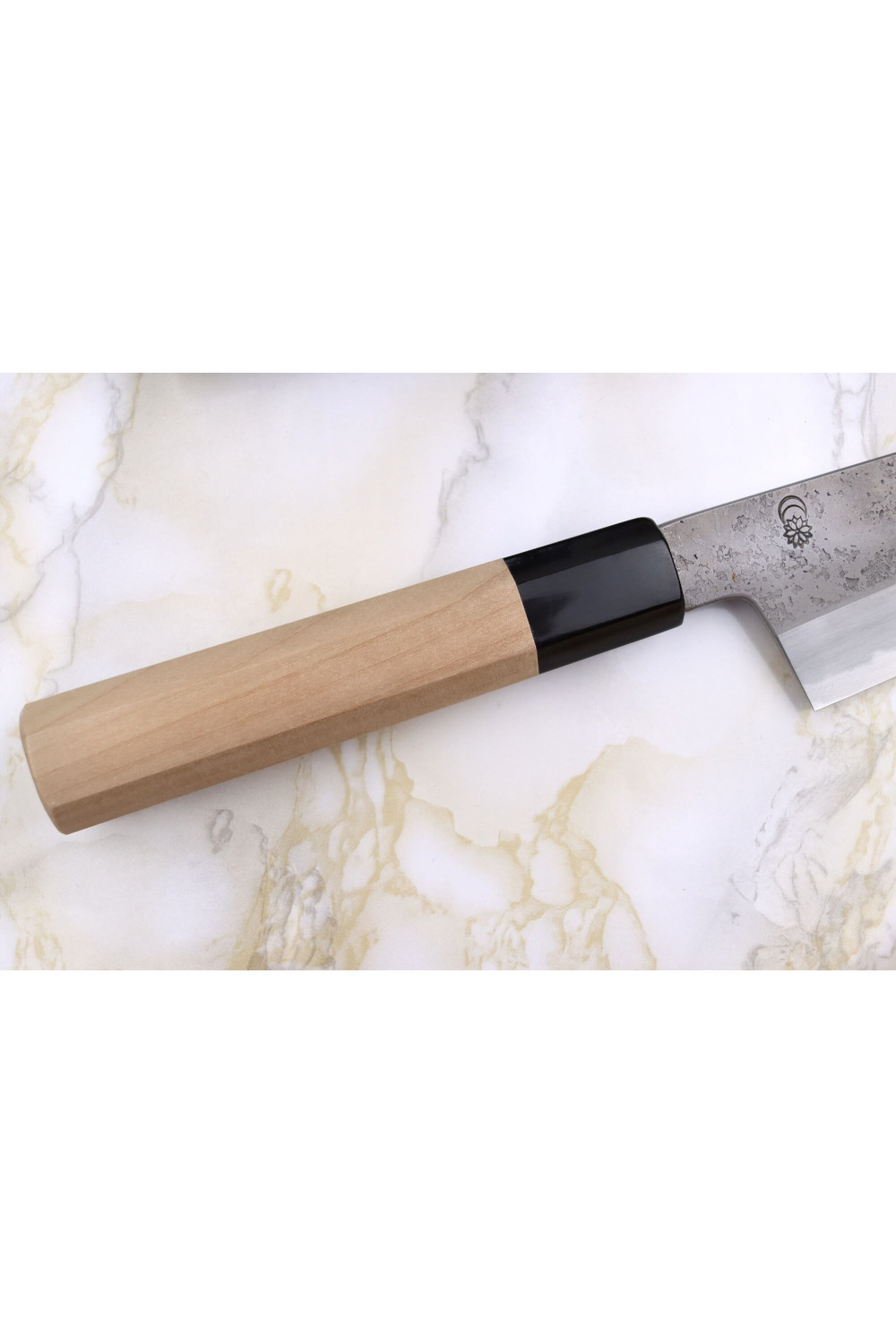
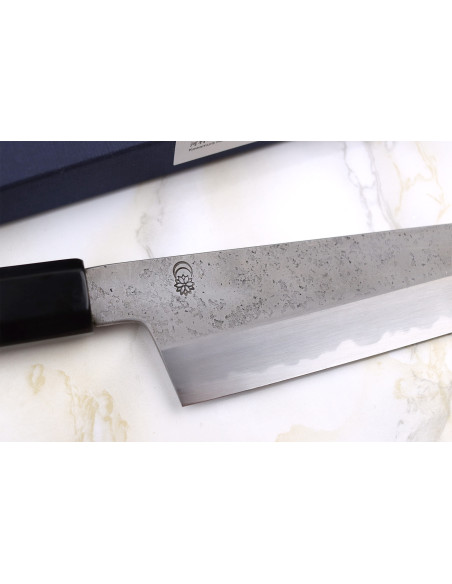
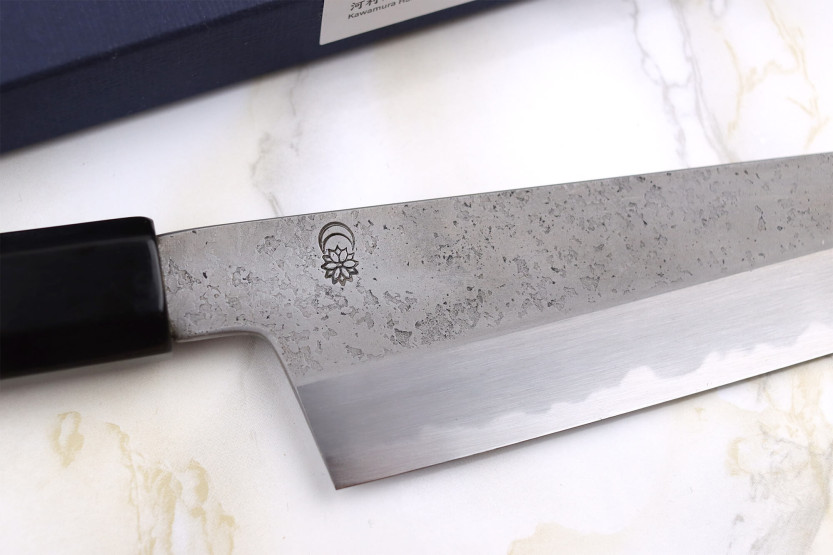
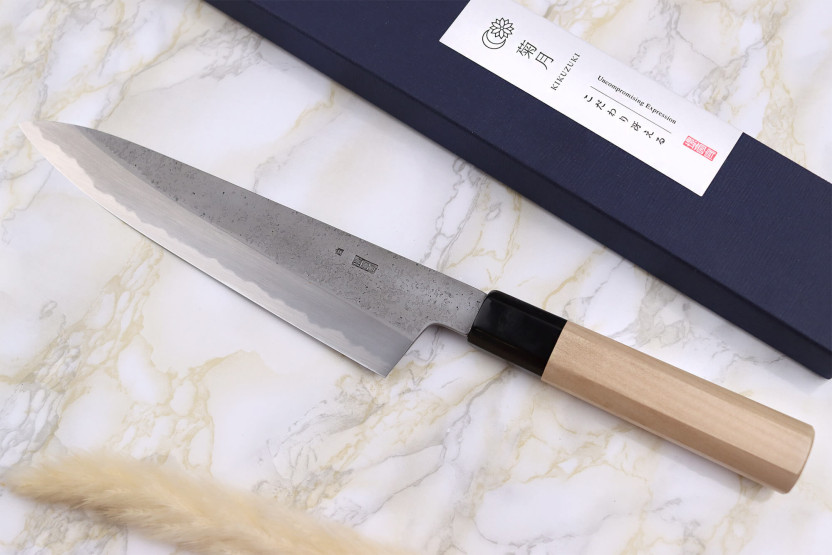
Last but not least, you can't miss its Nashiji finish! This is a Japanese technique that leaves a rustic matte finish on the blade. This gives it lots of character.
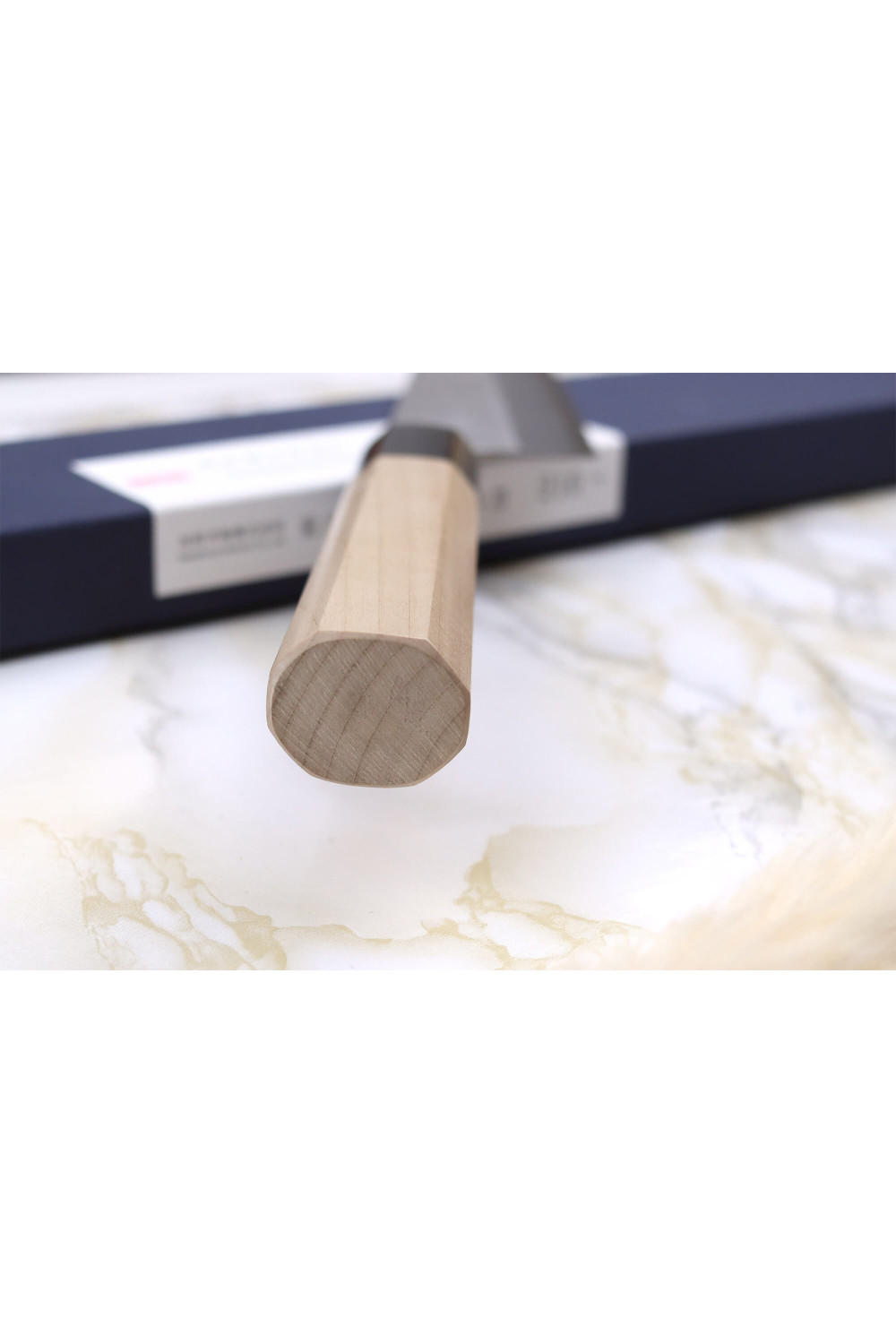
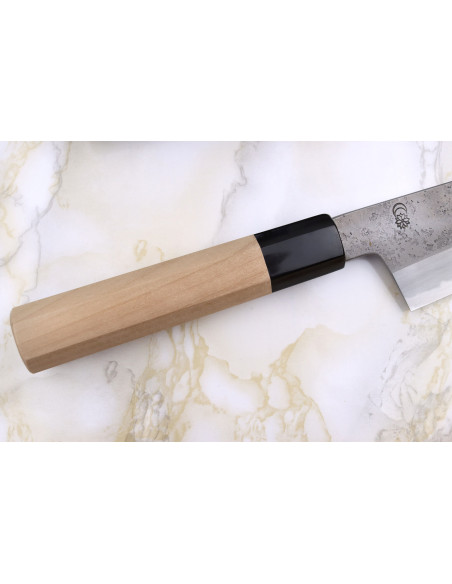
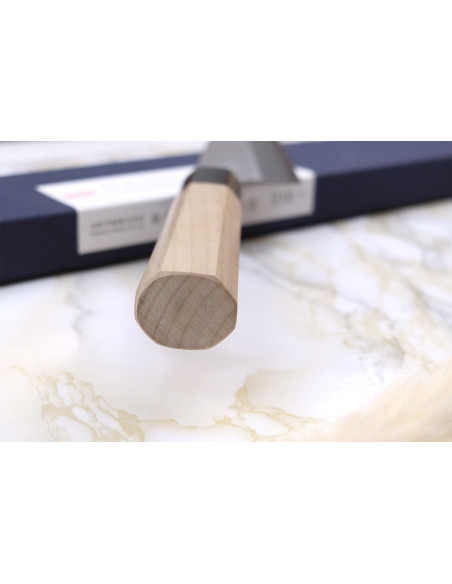
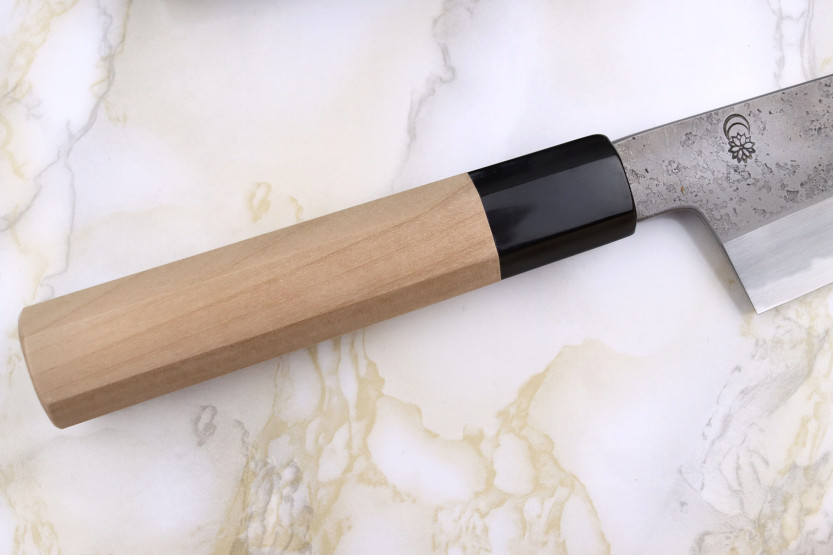
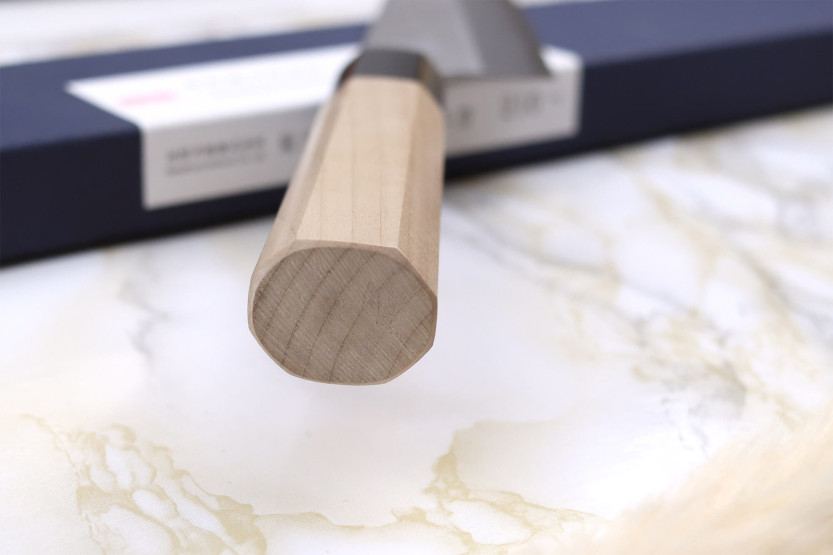
With its light magnolia handle, it retains a very traditional look, which goes well with the nashiji. This wood is as pleasant to work with for the craftsman as it is for the cook, thanks in particular to its lightness and soft touch. It is a moisture-resistant species, making it a material of choice for use in the kitchen. Octagonal in shape, it is suitable for all cooks (right- and left-handed).
The ferrule that extends the blade is made from black buffalo horn. This is a natural material, so it's quite normal for the color to vary, and fine white streaks may be visible from time to time, depending on the model.
Finally, wood putty fills the space where the blade fits into the handle. This makes it watertight and more hygienic, to prevent small cuttings from slipping inside.
Taking good care of my handcrafted Japanese knife
As the blade is highly enriched with carbon, it is sensitive to oxidation. You must therefore maintain your knife by hand, and not soak it in the sink or put it in the dishwasher. When you go to wash it, use a mild soap and a sponge that is not too abrasive. Don't get the handle too wet (it's still made of wood, even if magnolia is hard-wearing).
Once the knife has been washed, wipe it dry so that no traces of moisture remain on its surface. Then store it dry in a drawer, on a magnetic bar or in your cook's Bag.
Carbon makes the alloy reactive, and note that meticulous care will not prevent your blade from changing color over time. This is quite normal, and is due to the acidity of the foods encountered, or even simply due to the humidity in the air. To best protect your blade, you can oil it regularly.
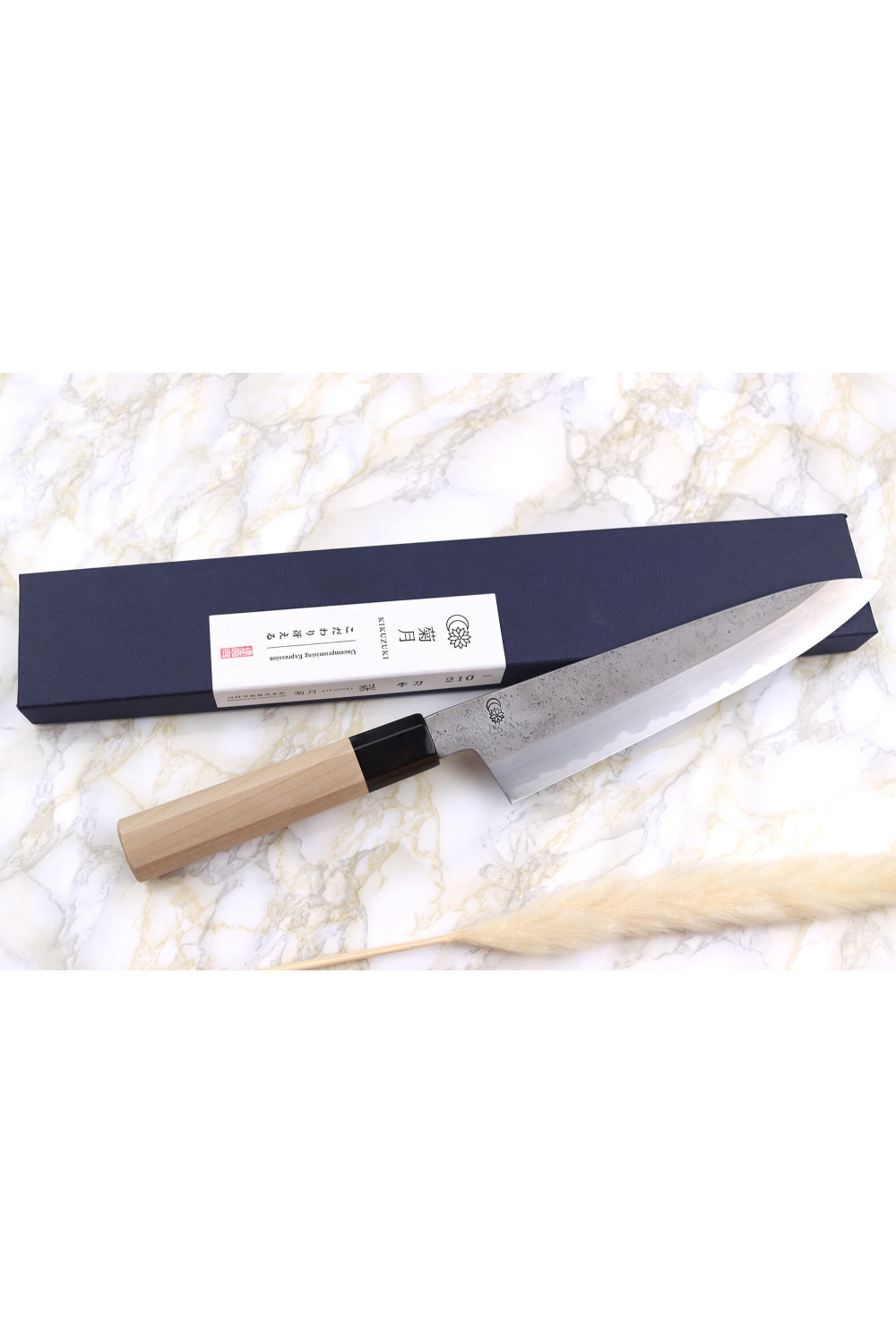
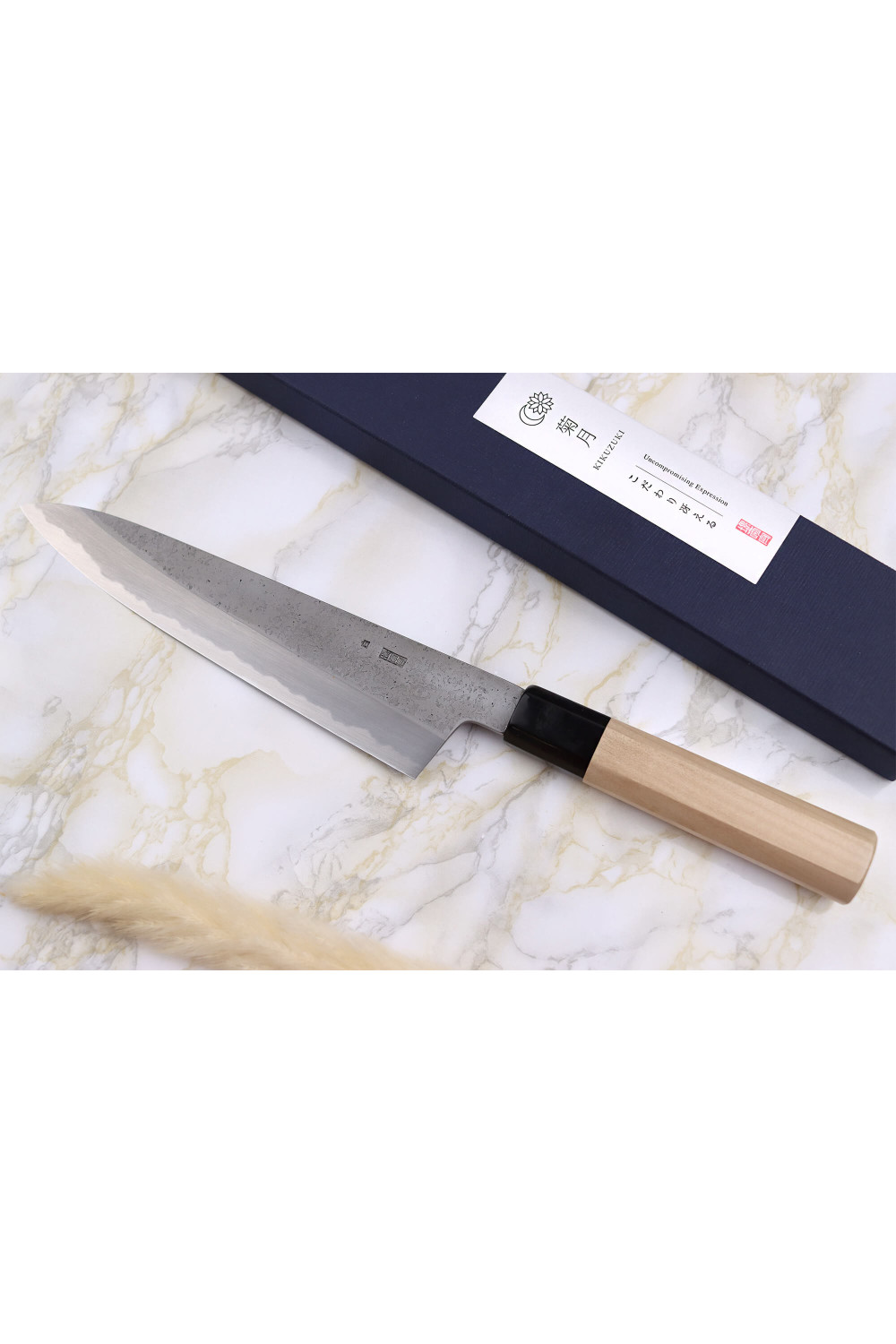
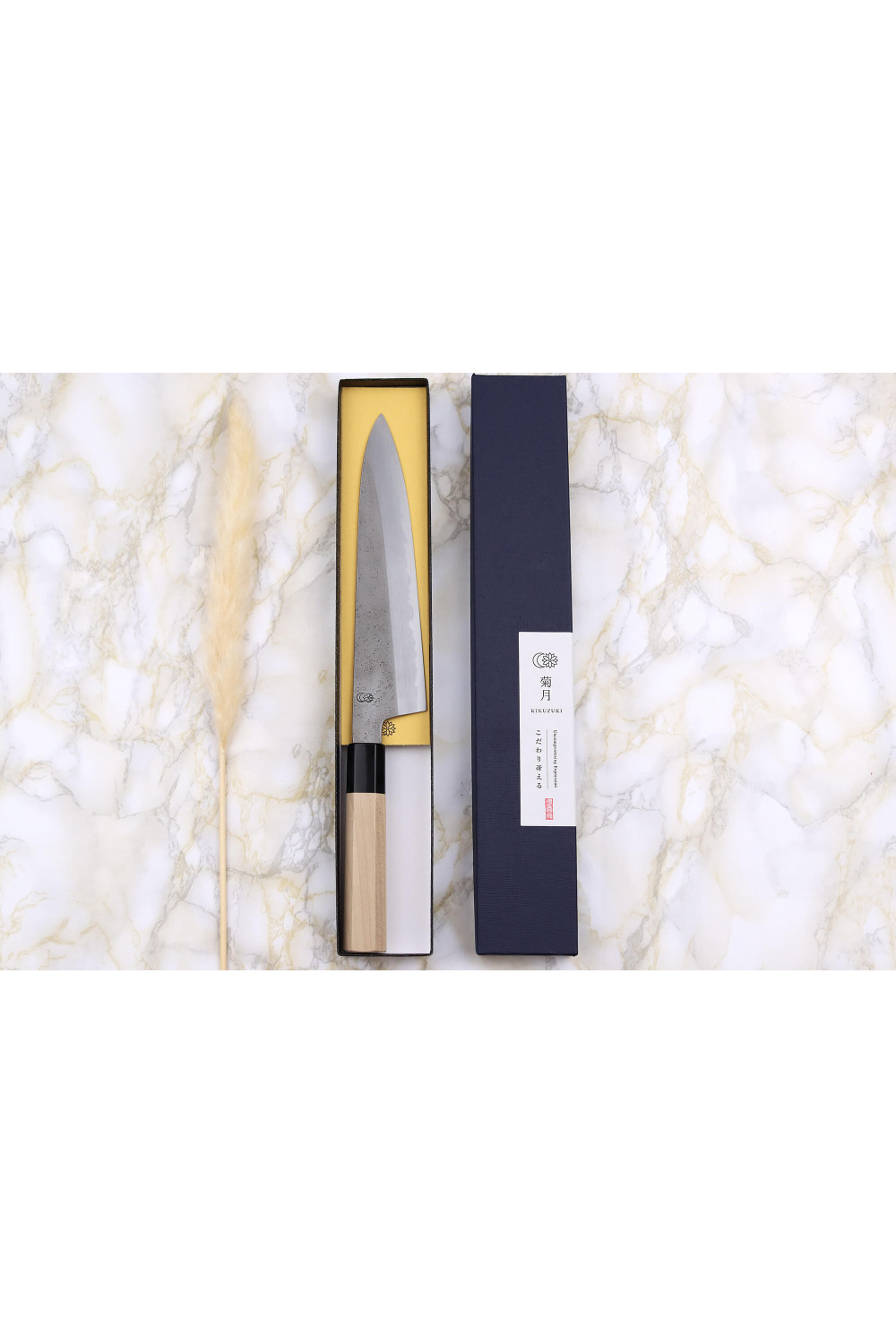
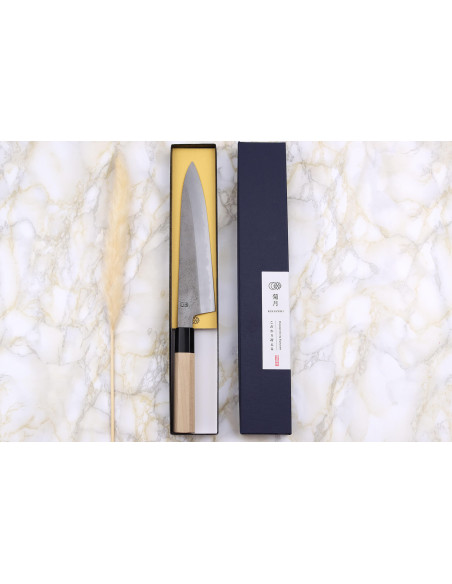
Your Japanese knife comes in a deep blue cardboard box.
See all the Sakai Kikumori knives we've selected for you!




 By buying this product you can collect up to