A versatile handmade Japanese knife for all your cutting needs
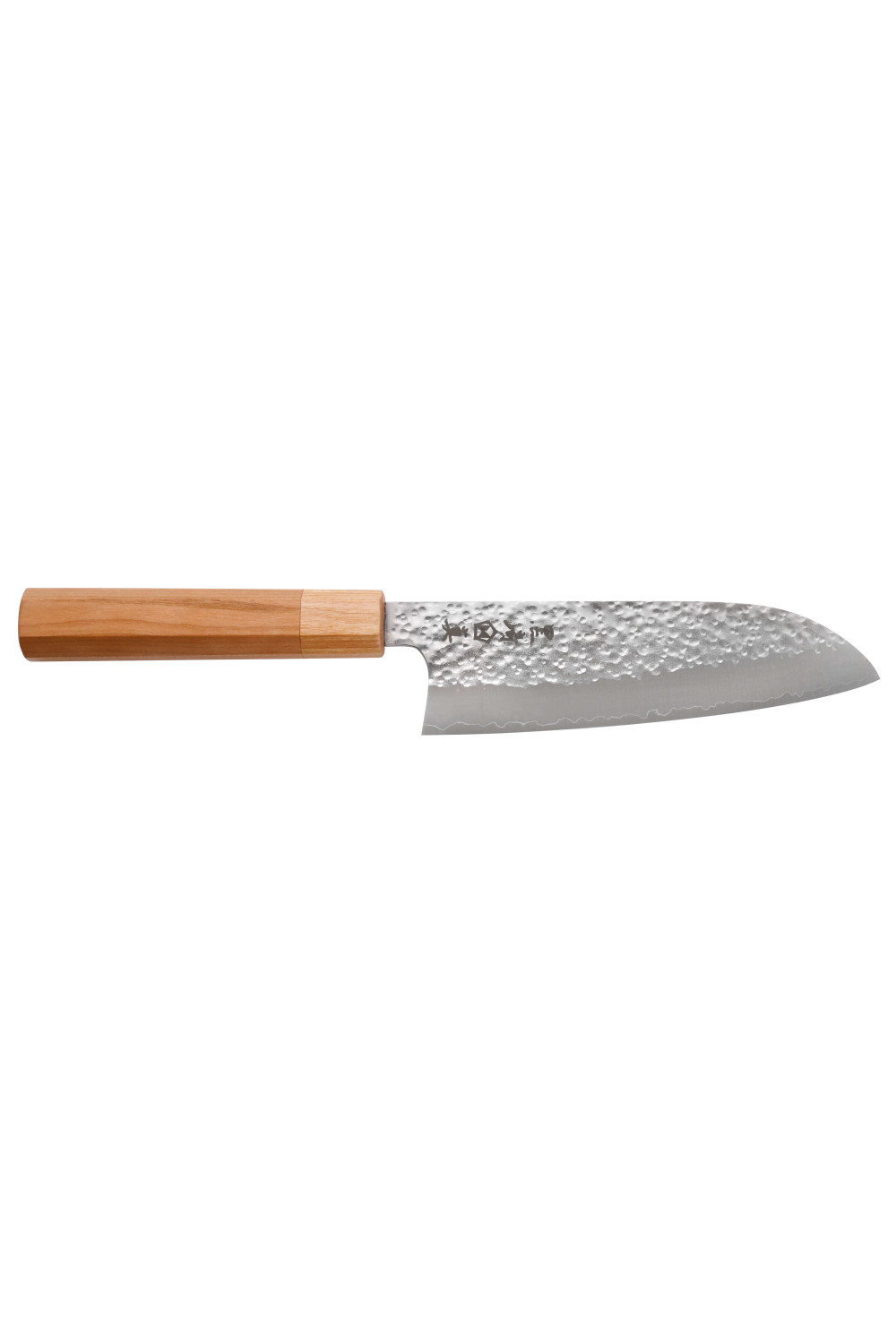
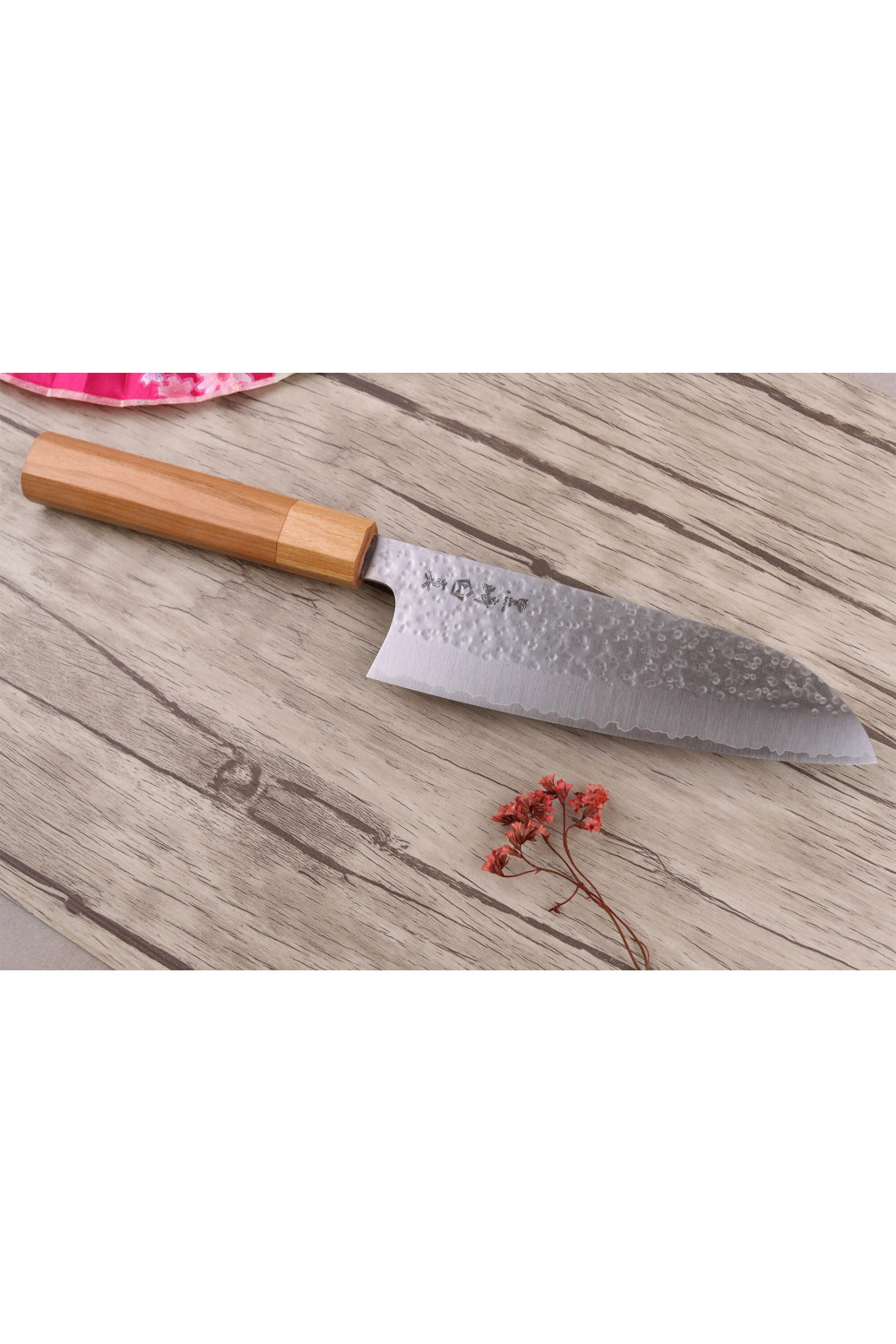
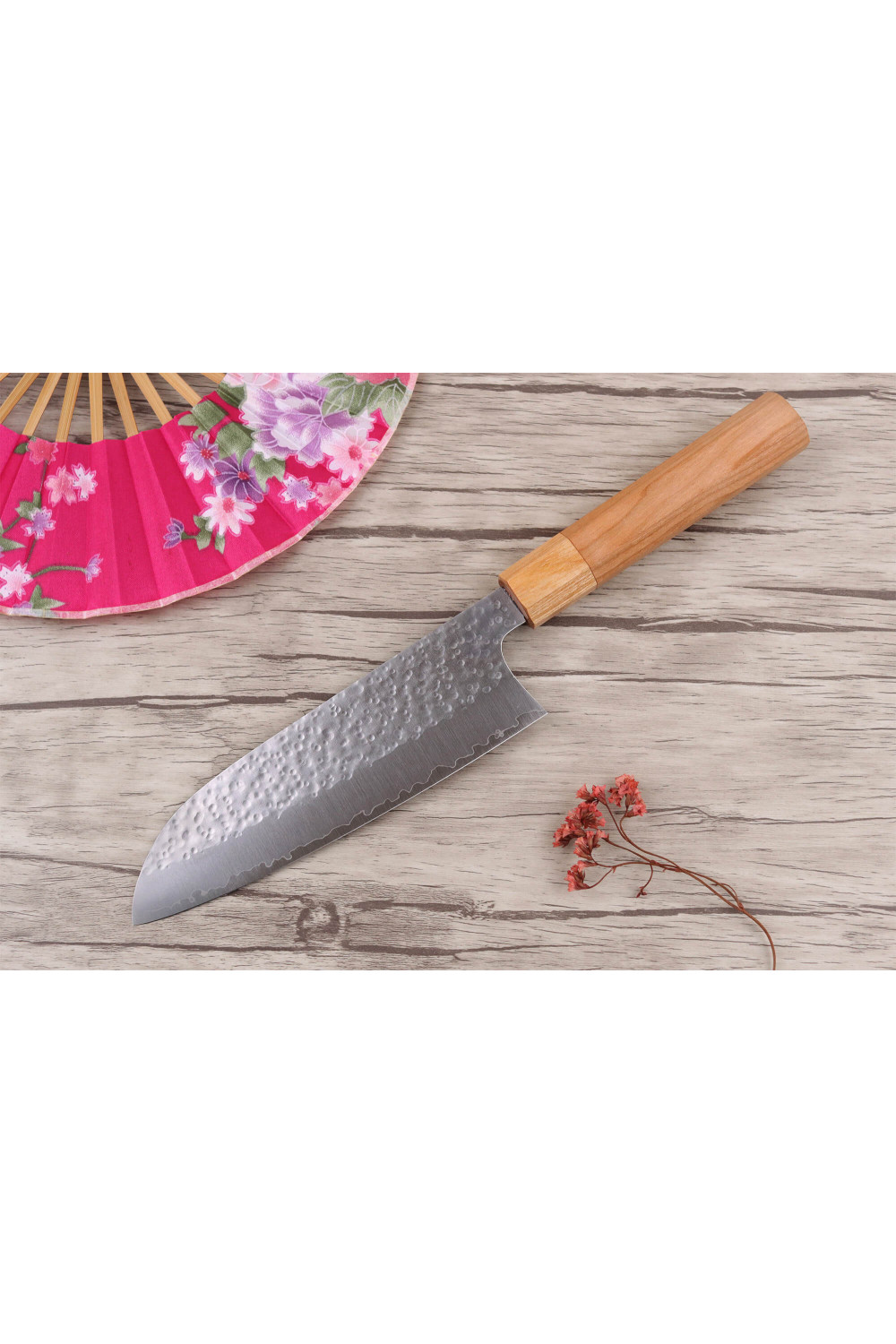
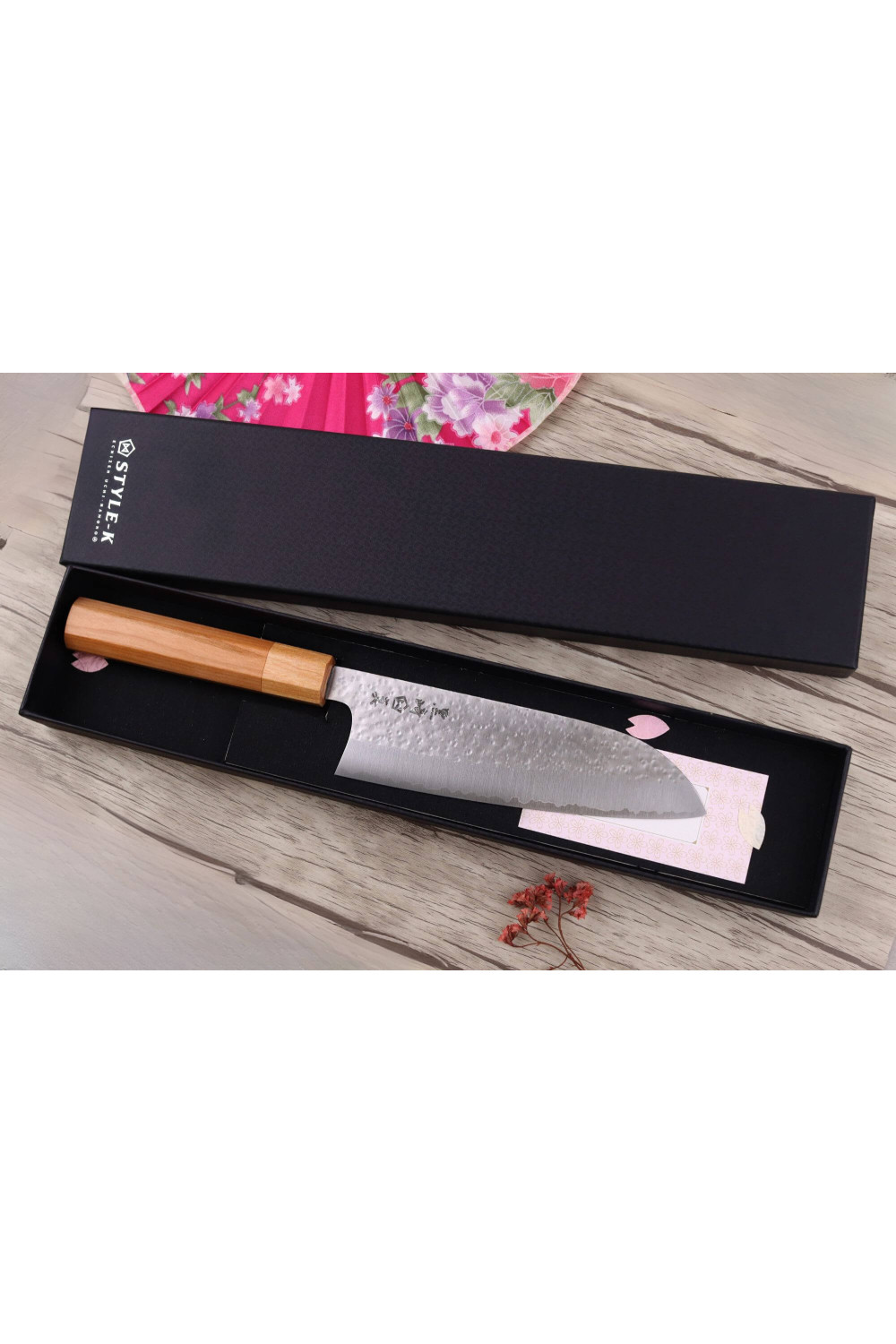
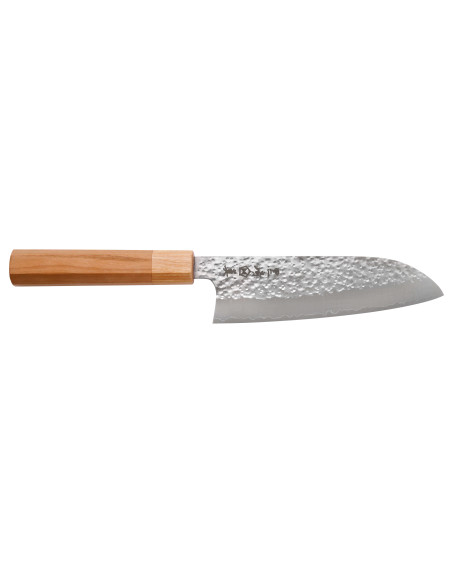
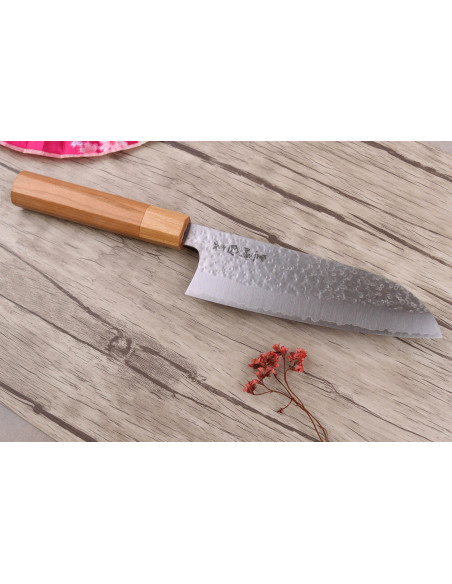
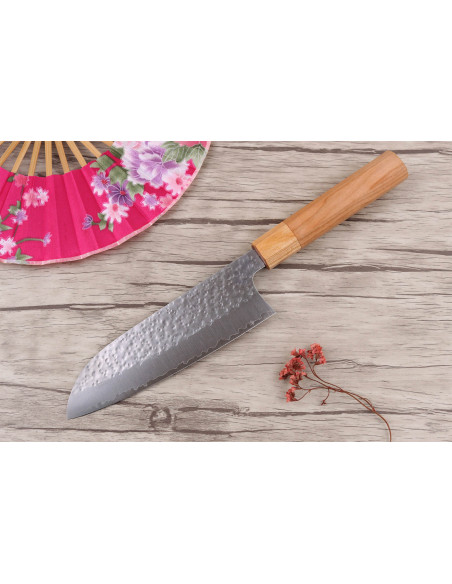
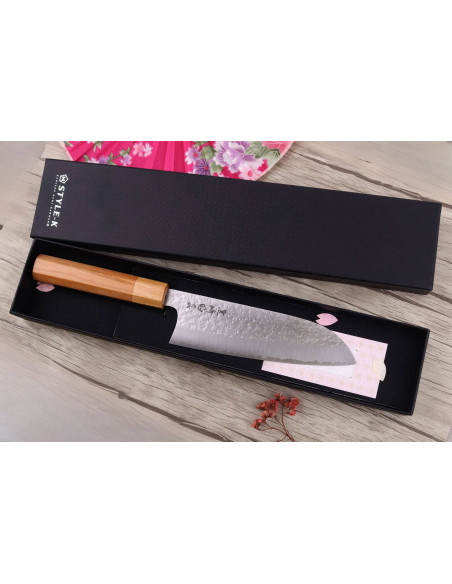
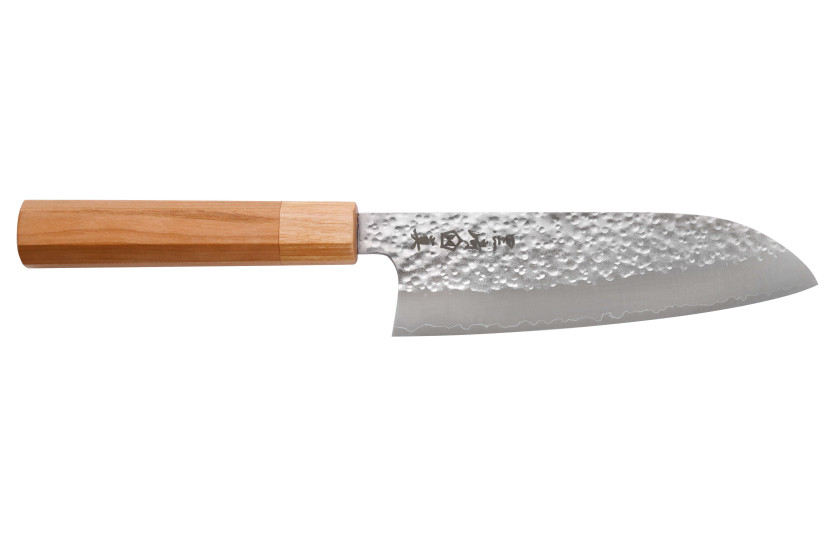
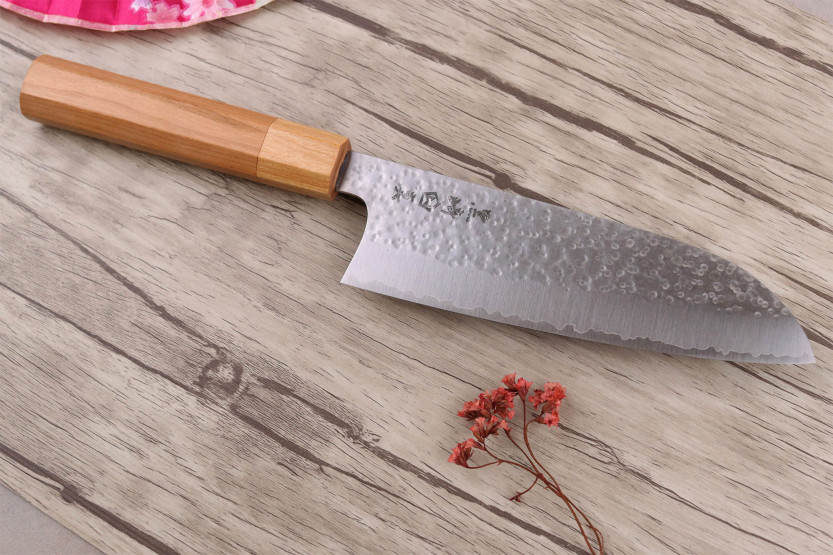
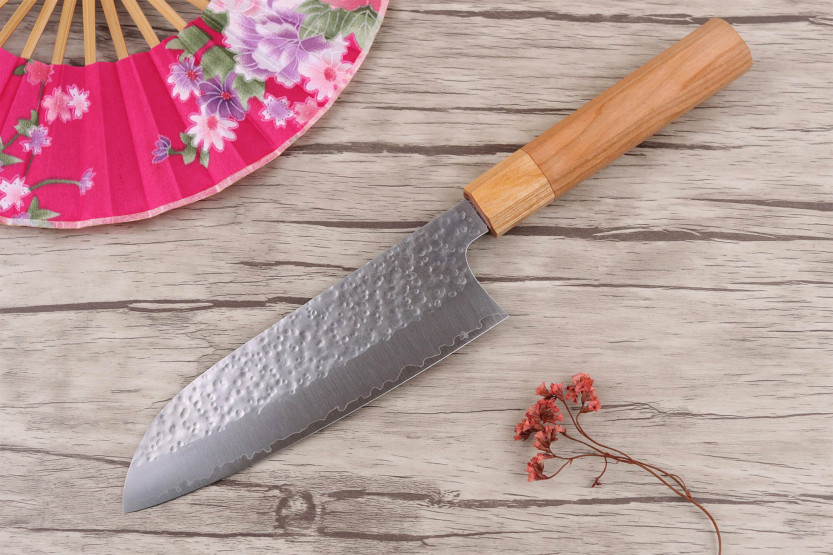
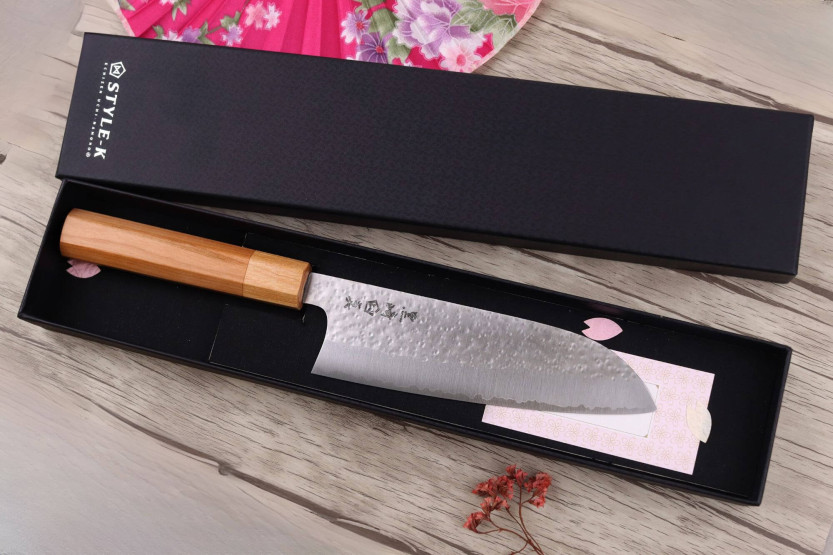
This 16. 5cm santoku artisan Japanese knife is a multifunctional model, highly appreciated in Japan and the West for its great versatility. It performs the same functions as a chef's knife, making it easy to chop, mince or chisel a wide variety of foods. Its blade is slightly more curved than a conventional chef's knife, making it particularly effective for chopping herbs with fluid, precise movements.
Hand-forged blade in high-performance SG2 steel
The Makoto Kurosaki Sakura santoku knife features a blade forged from a single piece of steel. Heated and then shaped under a mechanical press, the steel is worked step by step to produce a seamless blade. This traditional forging method increases the blade's overall strength.
The core is made of SG2 powder steel, a high-end alloy renowned for its exceptional performance. With a hardness of around 63 HRC on the Rockwell scale, it offers excellent edge retention, enabling longer sharpening sessions. Despite its high hardness, SG2 is relatively easy to maintain with a whetstone, and delivers a razor-sharp edge. Its highly homogeneous microscopic structure also improves blade strength and reduces the risk of chipping.
A typical San Maï structure, for greater durability
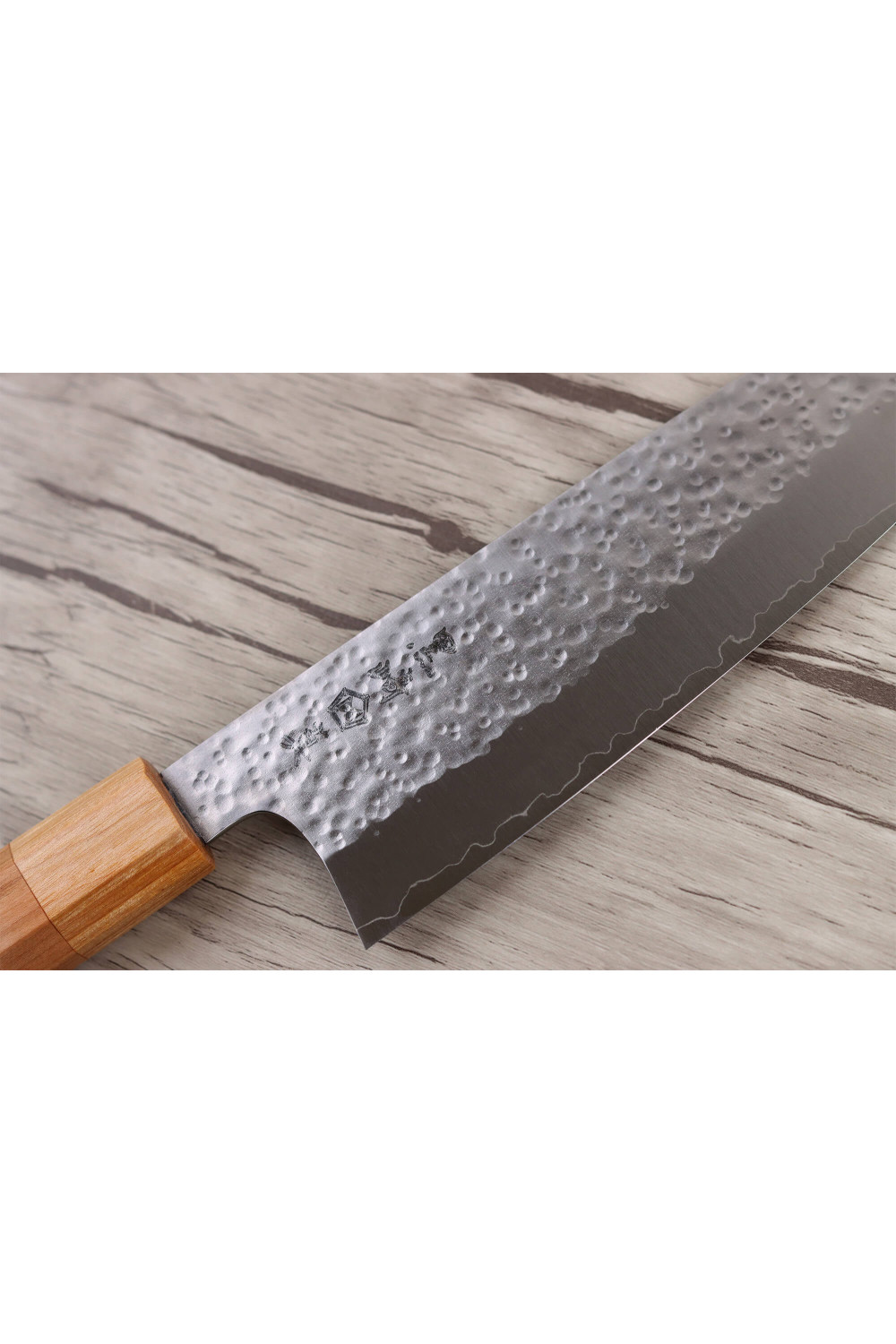
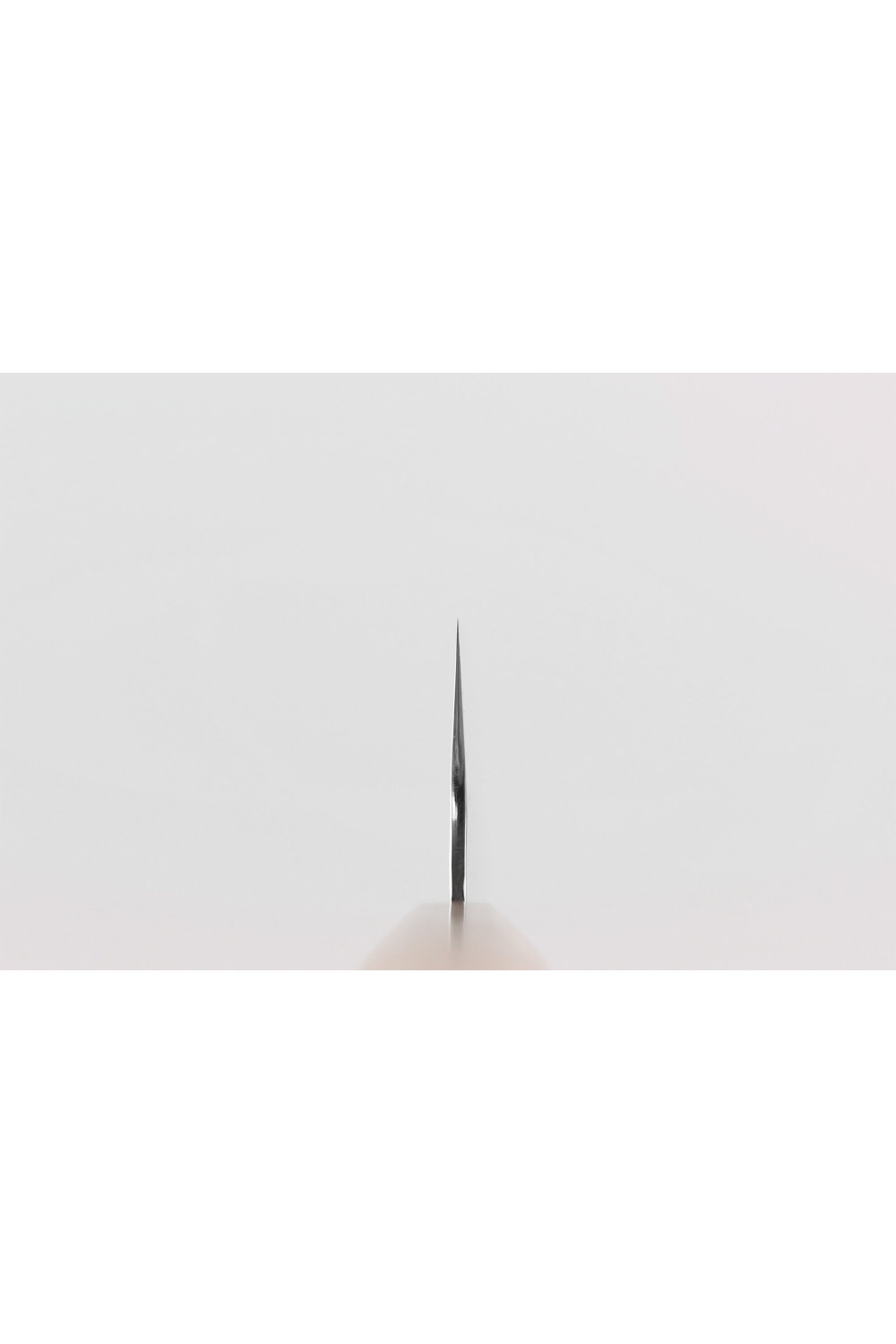
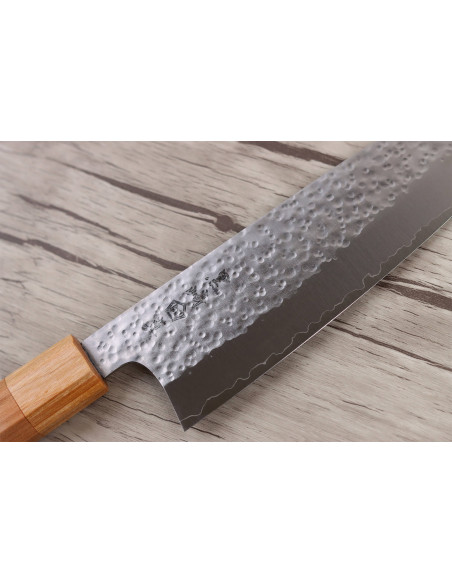
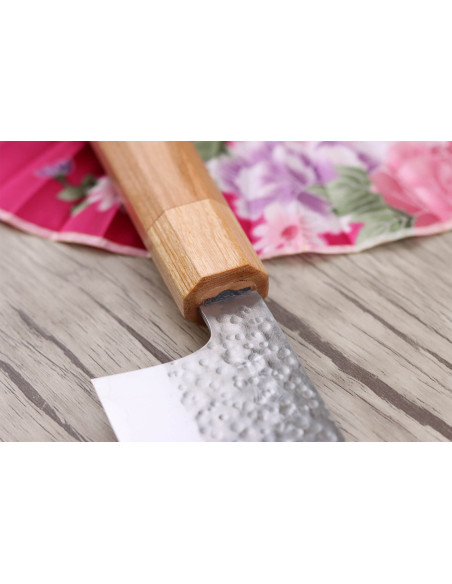
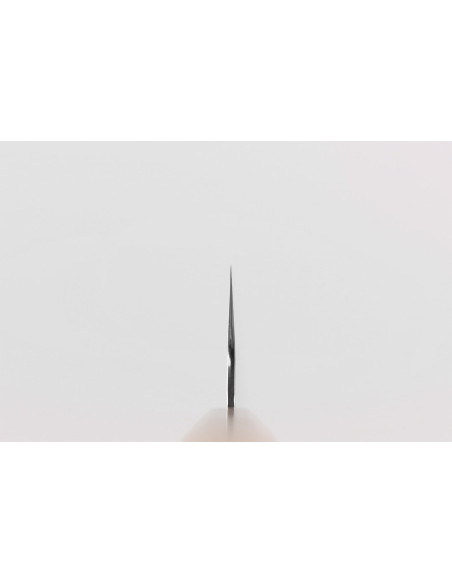
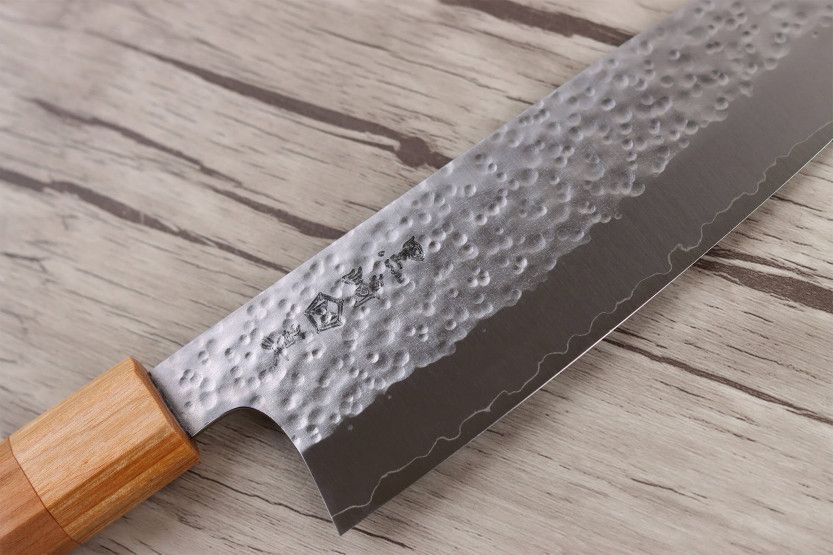
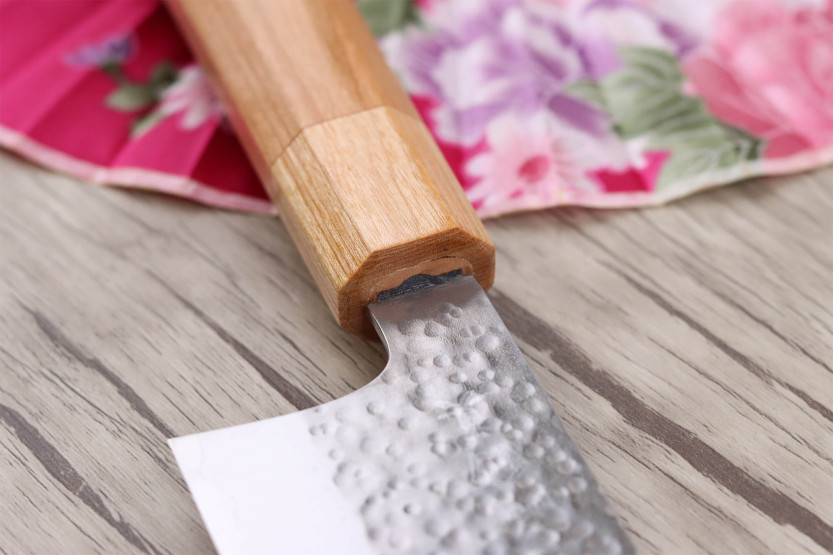
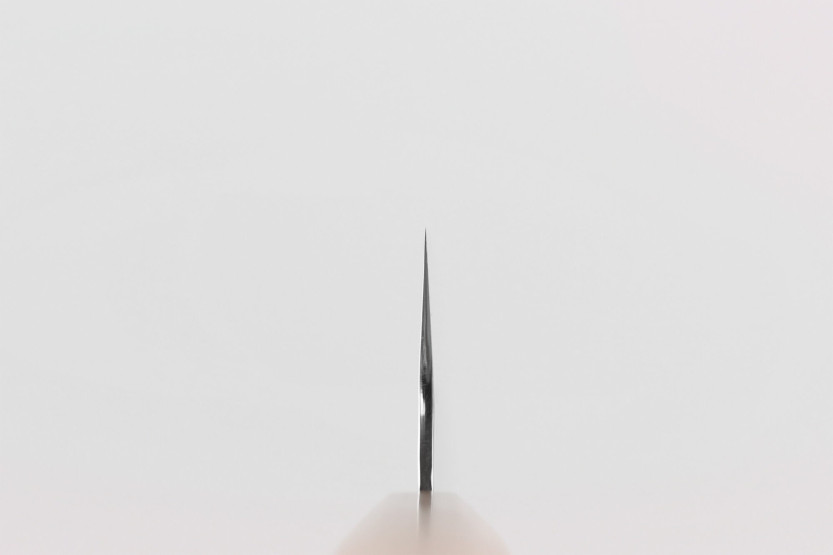
The SG2 steel core is surrounded by a layer of softer steel, forming the so-called San Maï structure (which translates as "3 layers"). This construction effectively protects the core while enhancing the blade's durability and flexibility. The superposition of steels is visible on the lower part of the cutting surface, a distinctive sign of craftsmanship. (Note that when we speak of suppleness, we are not referring to flexibility per se, but rather to resilience in the face of possible small shocks).
Kanjis are engraved on the cutting surface, reinforcing the authenticity and traditional identity of your Makoto Kurosaki knife.
A timeless, ergonomic cherrywood handle
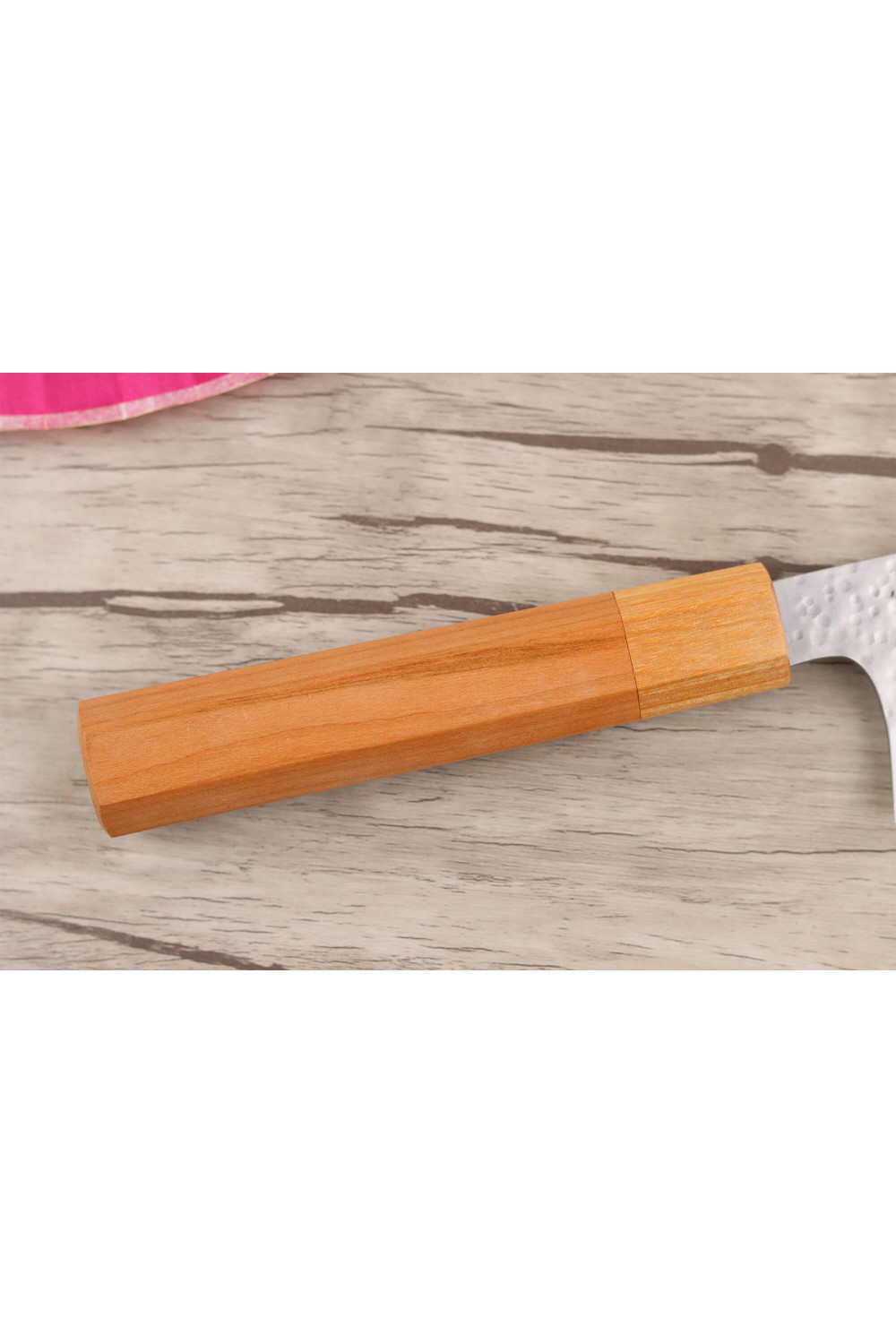
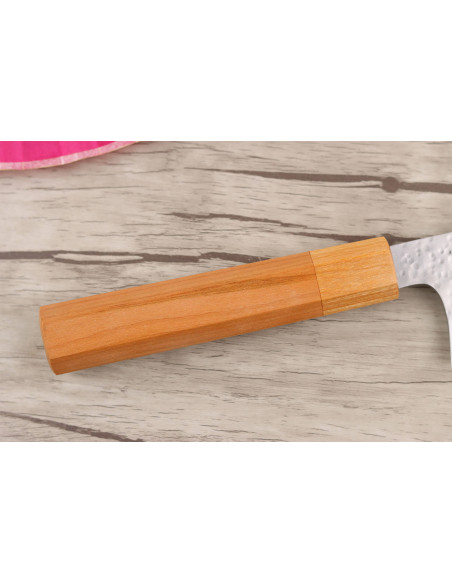
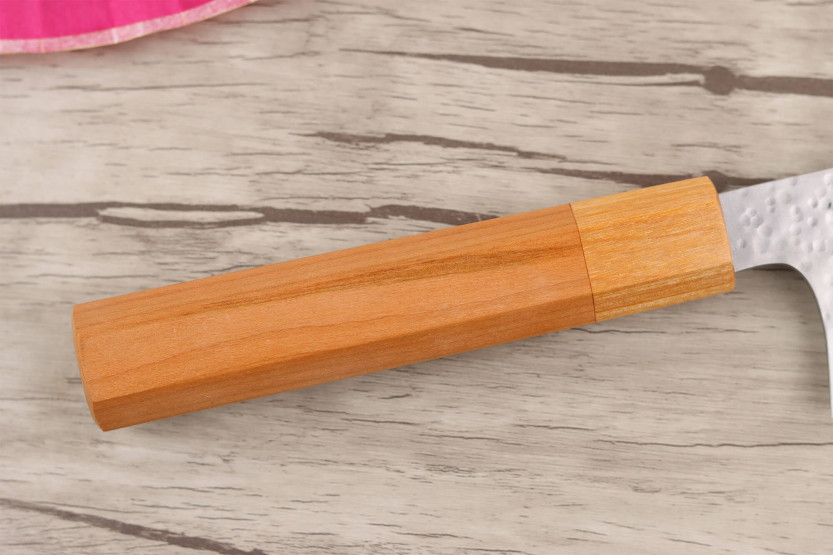
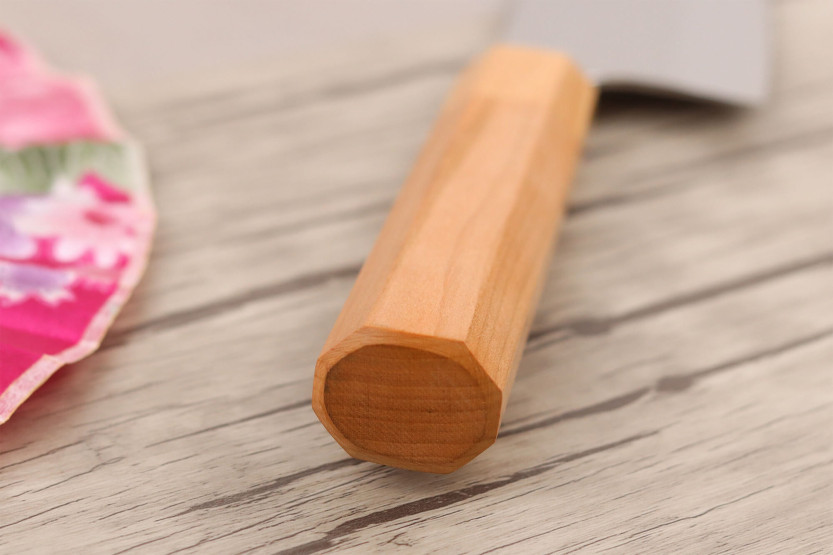
The handle of this Japanese knife is made from cherry wood, the material from which the Sakura range takes its name, since "sakura" means cherry tree in Japanese. This particular tree occupies an important symbolic place in Japanese culture, representing ephemeral beauty and the cycle of life.
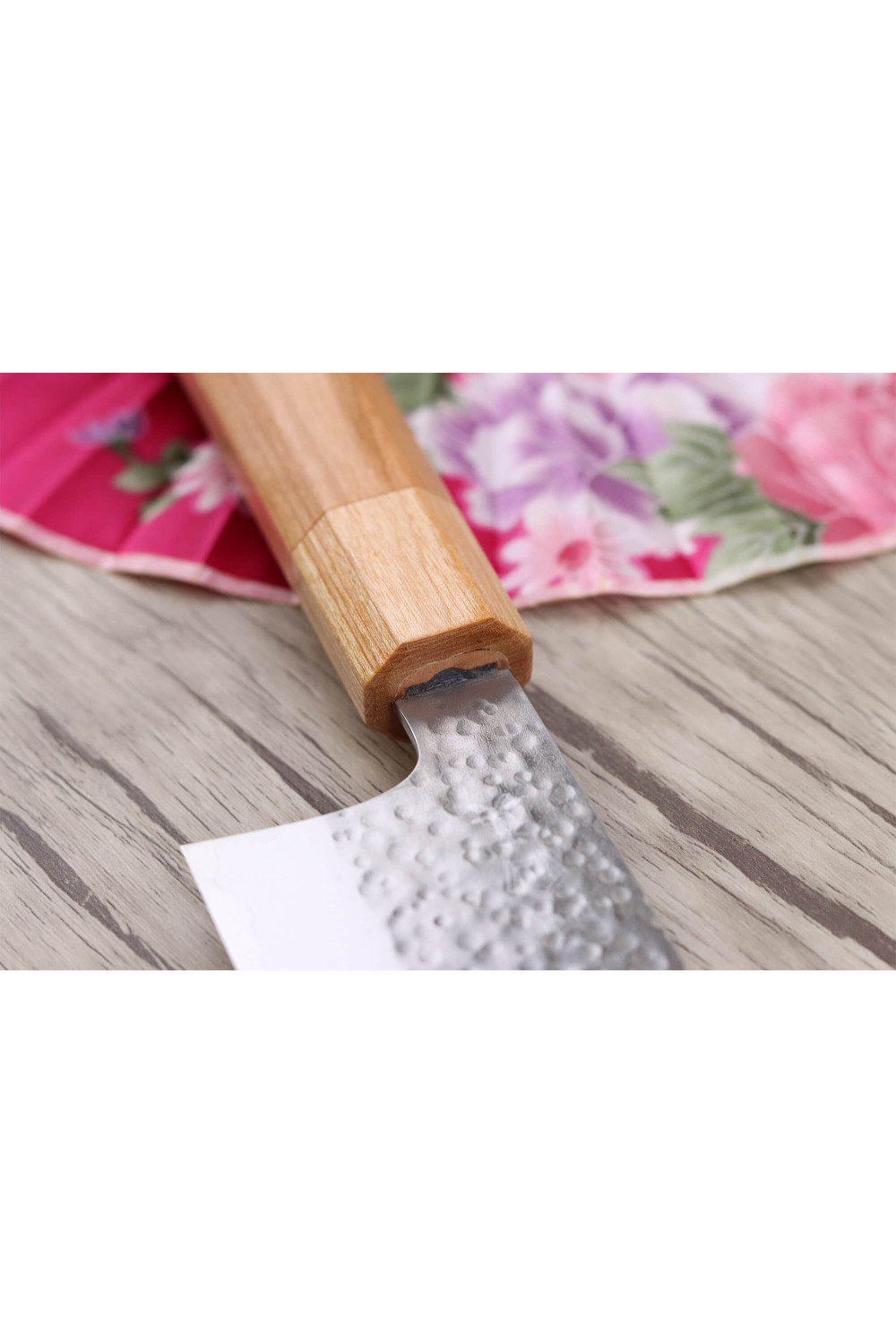
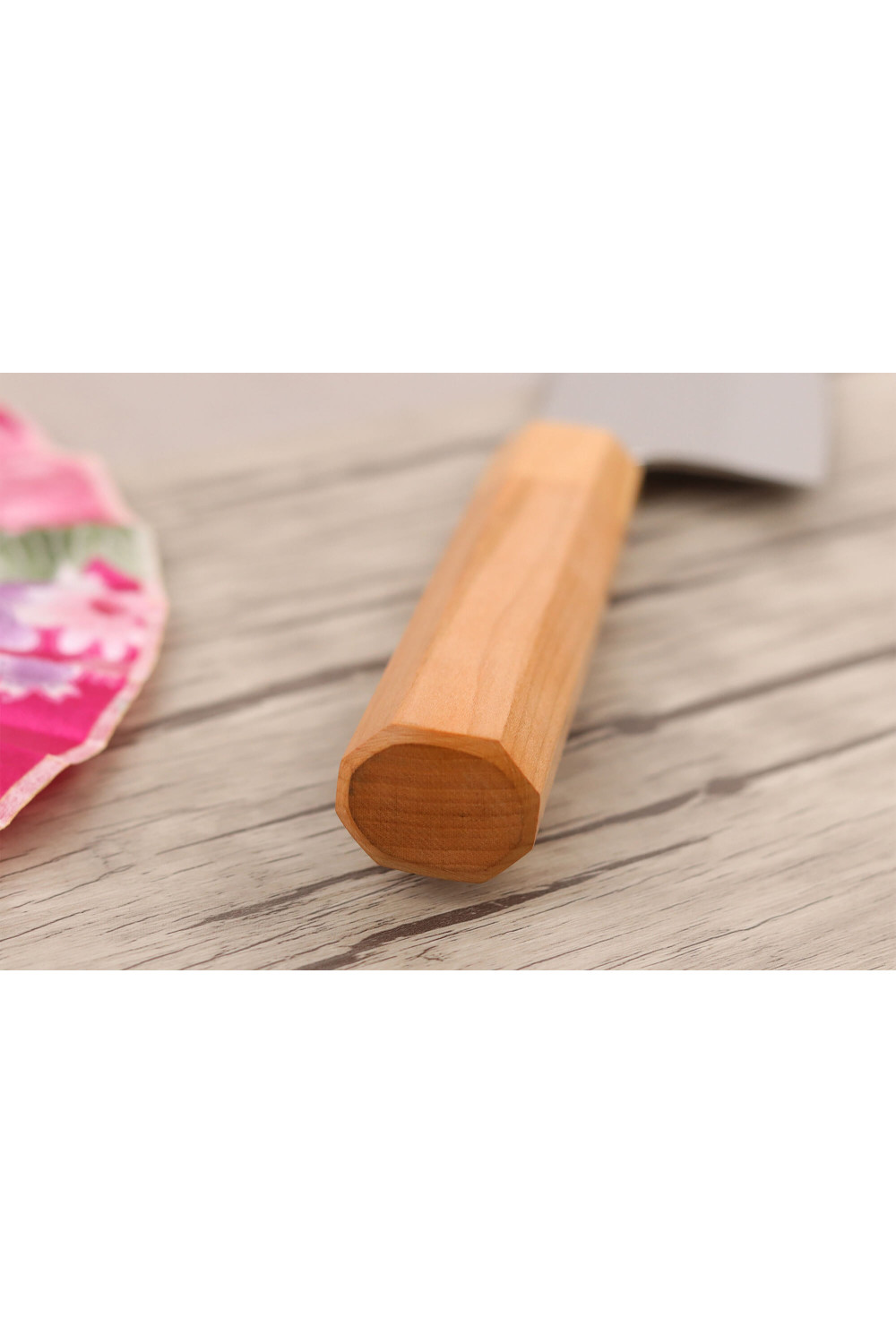
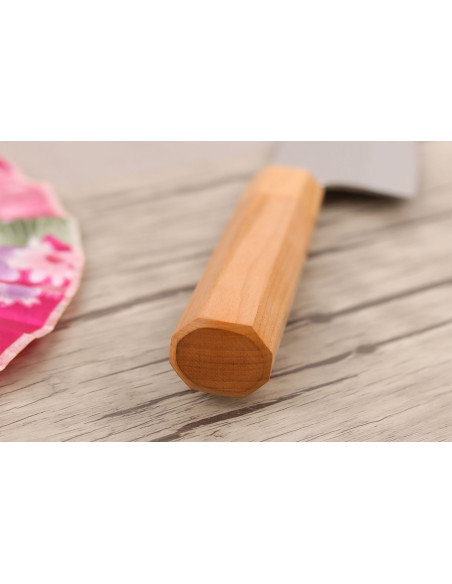
Octagonal in shape, it naturally hugs the palm of the hand, ensuring excellent control when cutting. A clear pakka wood bolster links the blade to the handle. This composite material is particularly resistant to humidity and temperature variations. The junction is filled with a wood paste, making the whole unit watertight and preventing water or food residues from entering the cherry wood.
Care instructions for your handcrafted Japanese knife
You'll need to wash it exclusively by hand, then dry it carefully with a soft cloth before storing it in a dry place. Forget the dishwasher, of course. Don't soak it in the sink either. Once washed, store it on a magnetic bar, or in a special knife block, for example.
Makoto Kurosaki's expertise at the heart of Takefu Knife Village
This knife is handmade in Japan by Makoto Kurosaki. This renowned blacksmith works in Echizen, in the famous Takefu Knife Village. This Mecca of Japanese cutlery brings together craftsmen who perpetuate an ancestral know-how recognized worldwide. Many of Japan's most influential blacksmiths can be found here.
Makoto Kurosaki was trained by master blacksmith Hiroshi Kato, one of the village's founders. An expert in the art of sharpening, he takes particular care in finishing the cutting edge of his superb pieces.
The advantages of this knife in a nutshell
- Versatile santoku format: ideal for everyday chopping, slicing and chiseling
- 16.5cm
blade- with SG2 powdered steelcore: excellent edge retention
- High
hardness- of approx. 63 HRC: longer sharpening intervals
- Three-layer San Maï structure:
- better core protection
- Hand-sharpened edge: clean cut from first use
- Engraved Japanese kanjis: enhanced authenticity
- Octagonal cherry wood handle: stable, comfortable grip
- Clear pakkawood
bolster- : resistant to humidity and temperature variations
Find out more about the Japanese knives of his brother, Yu Kurosaki!




 By buying this product you can collect up to