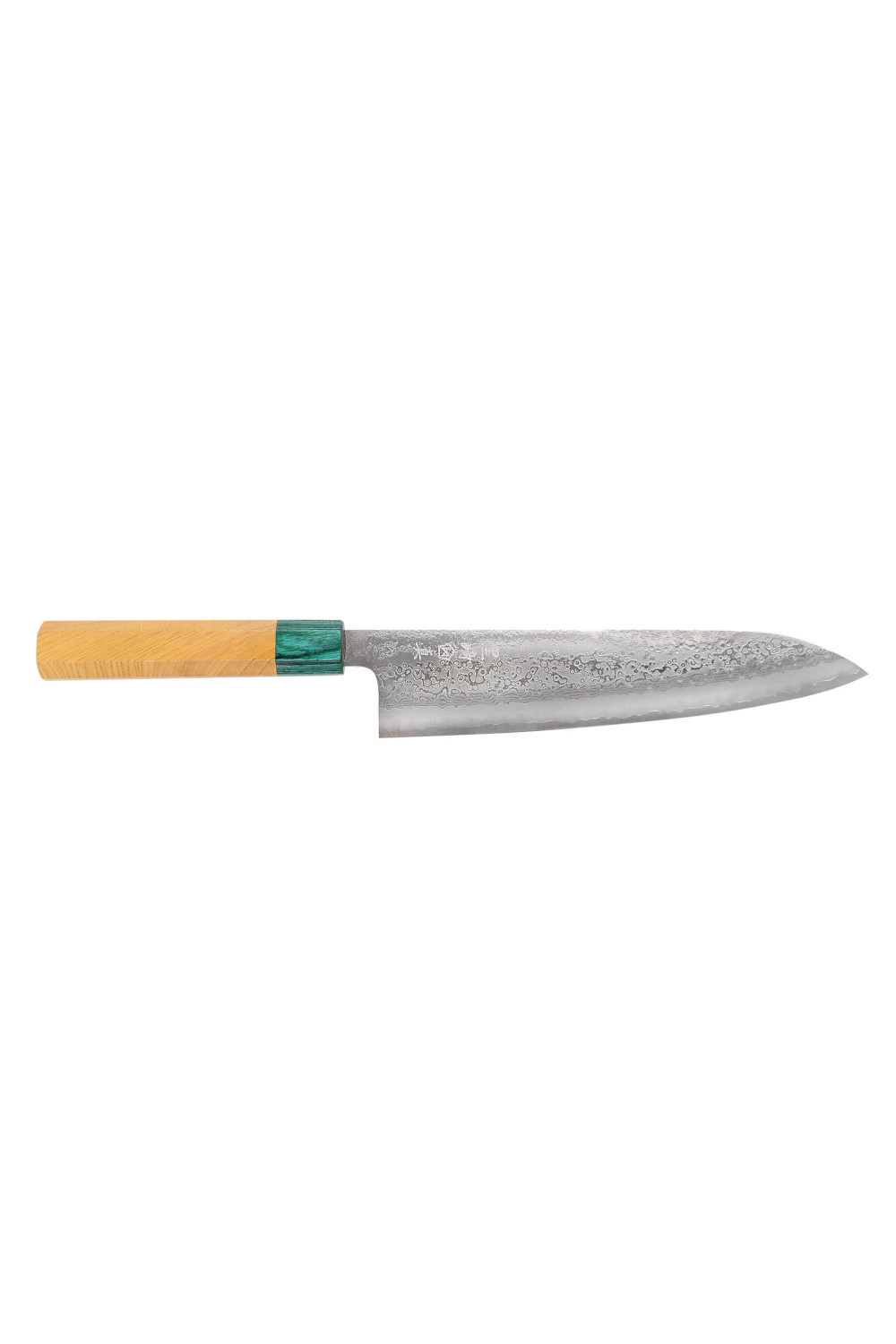
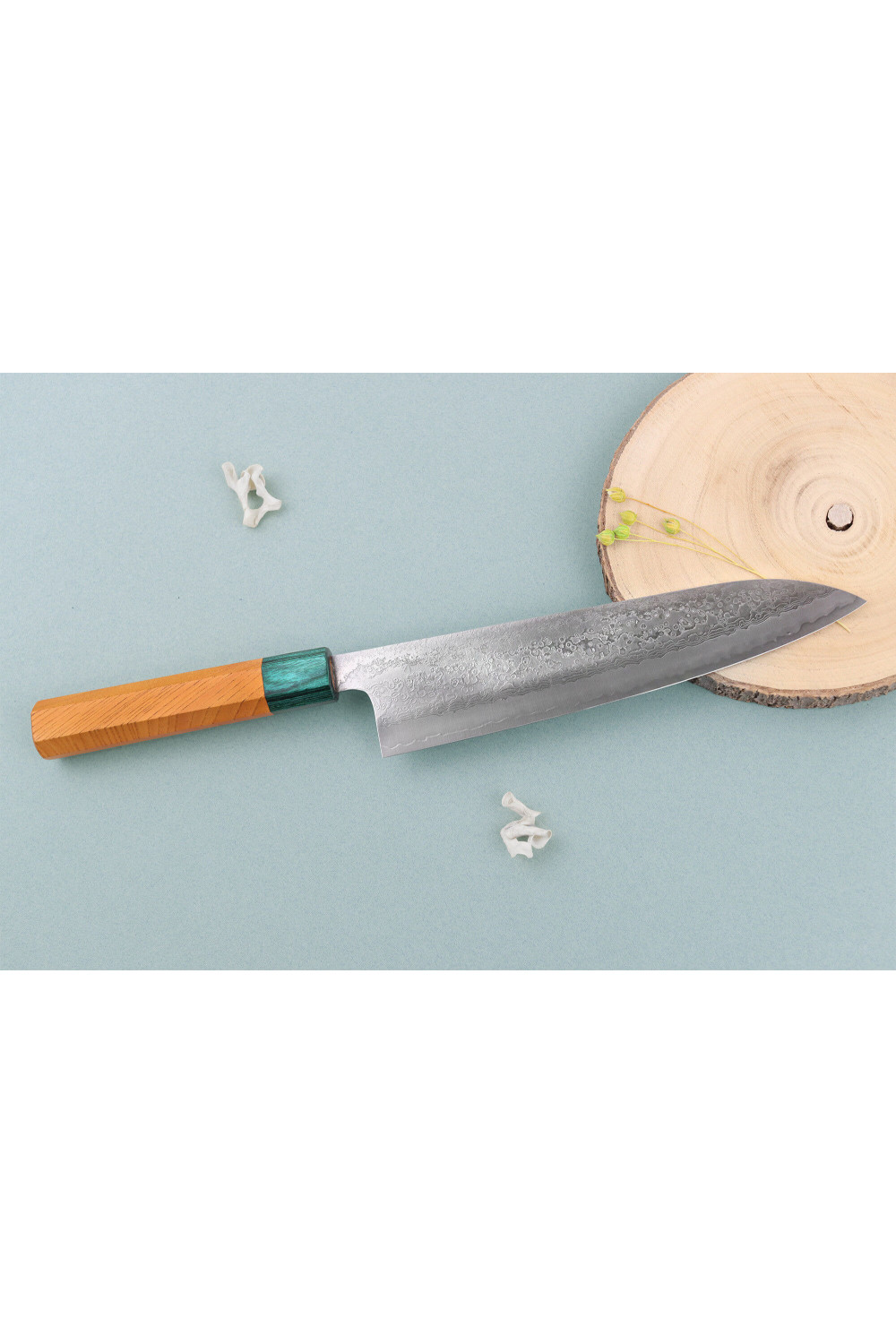
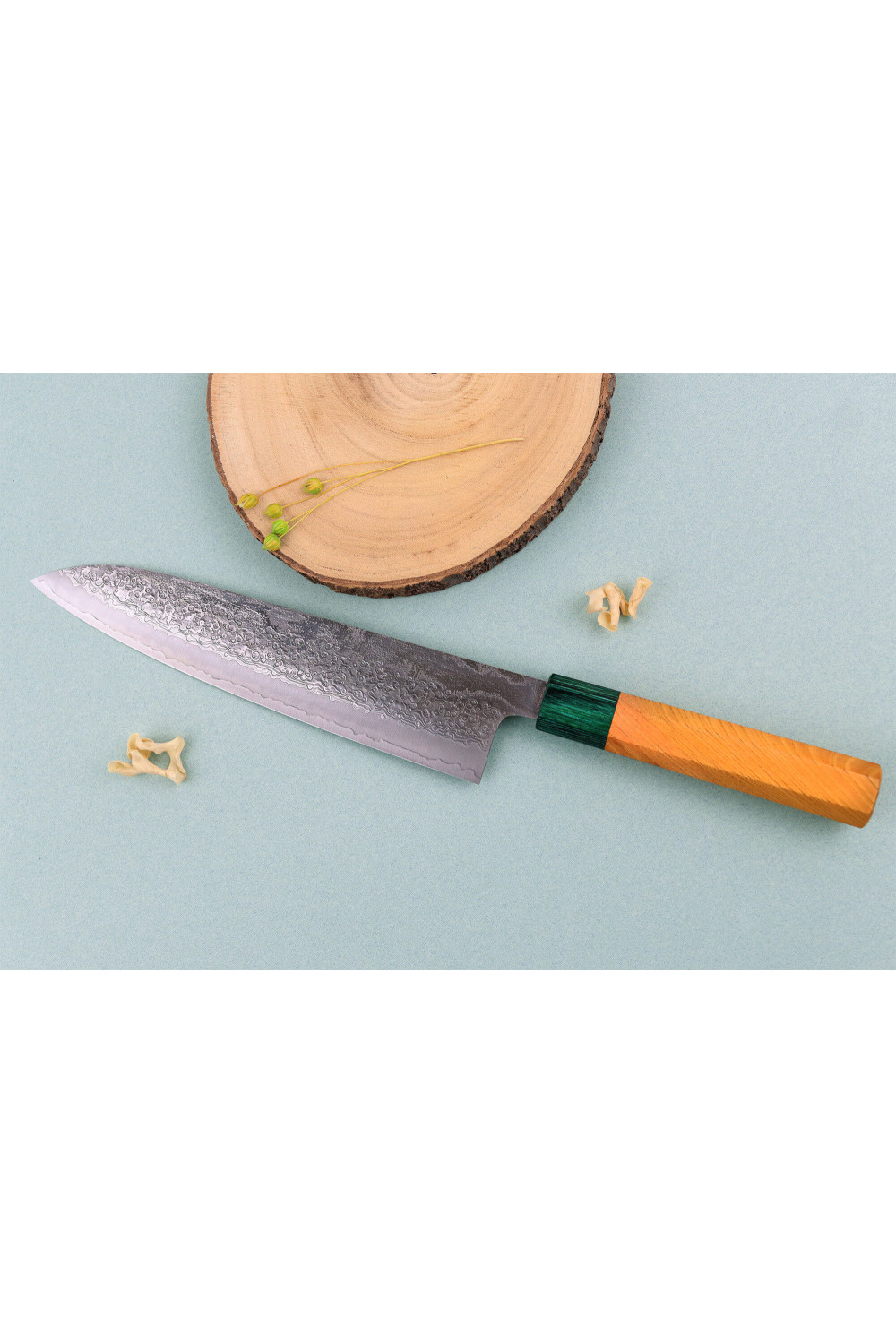
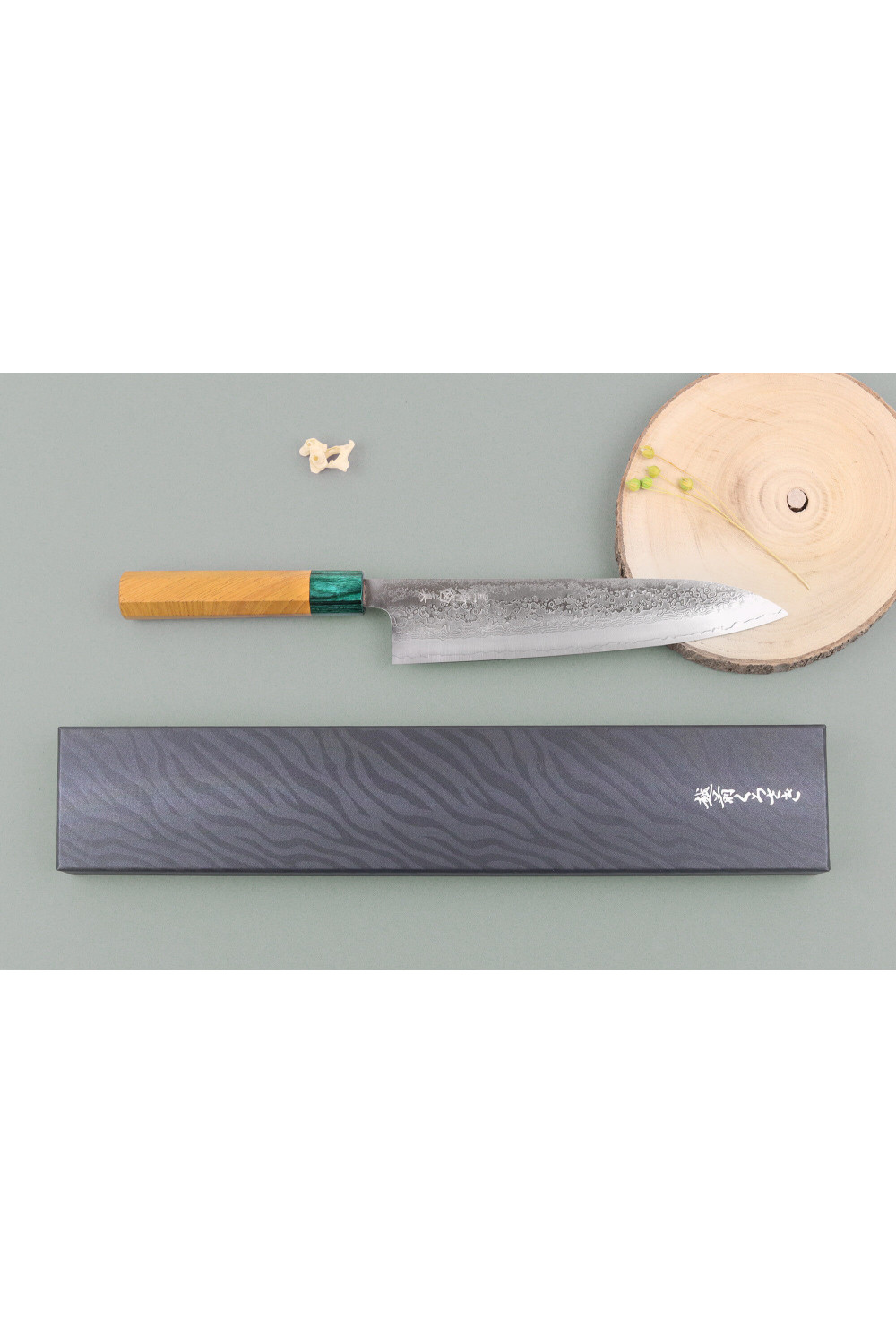
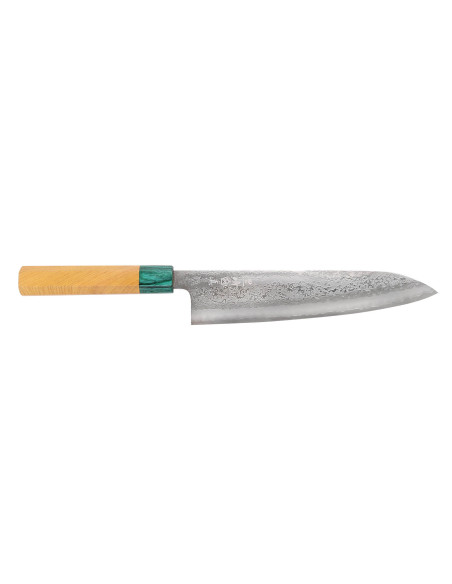
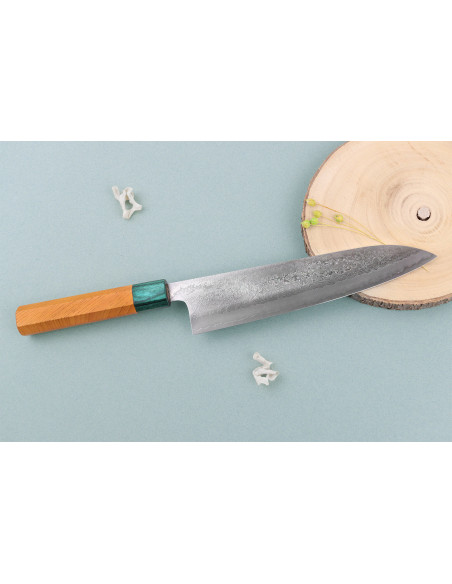
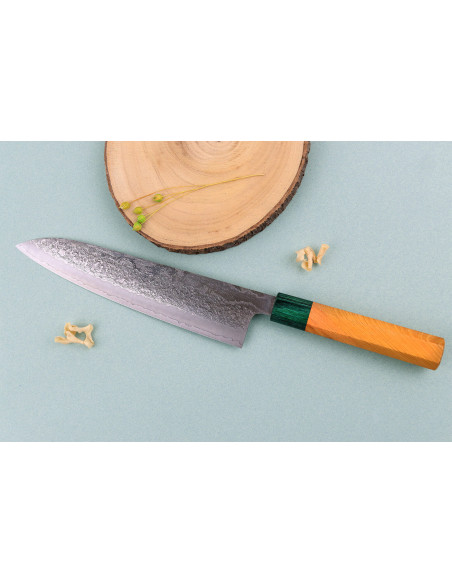
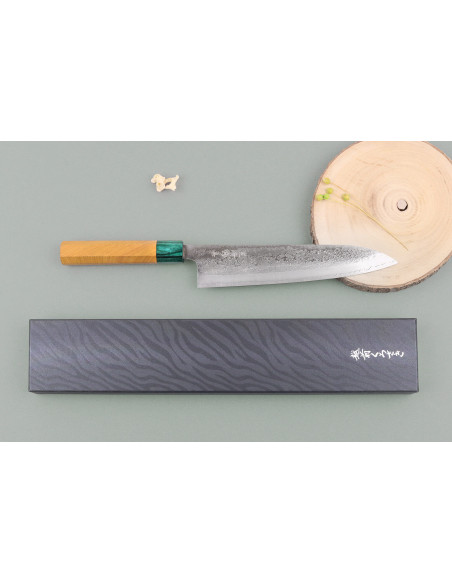
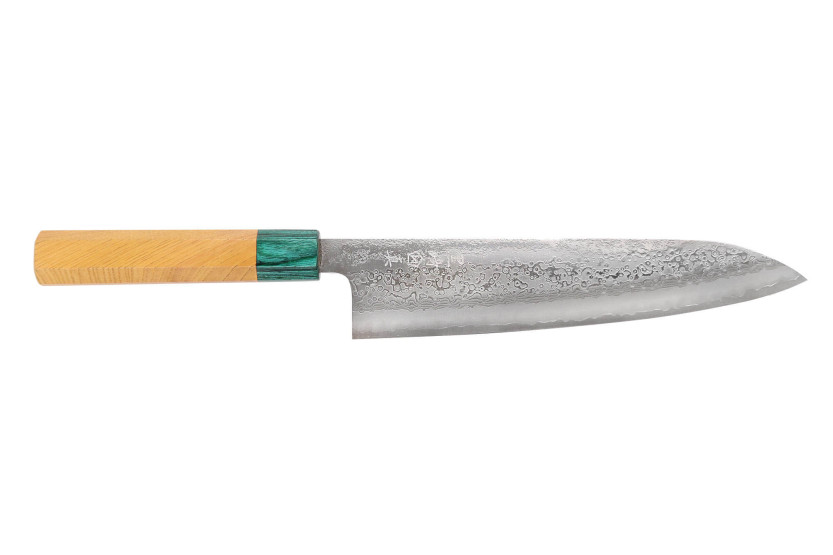
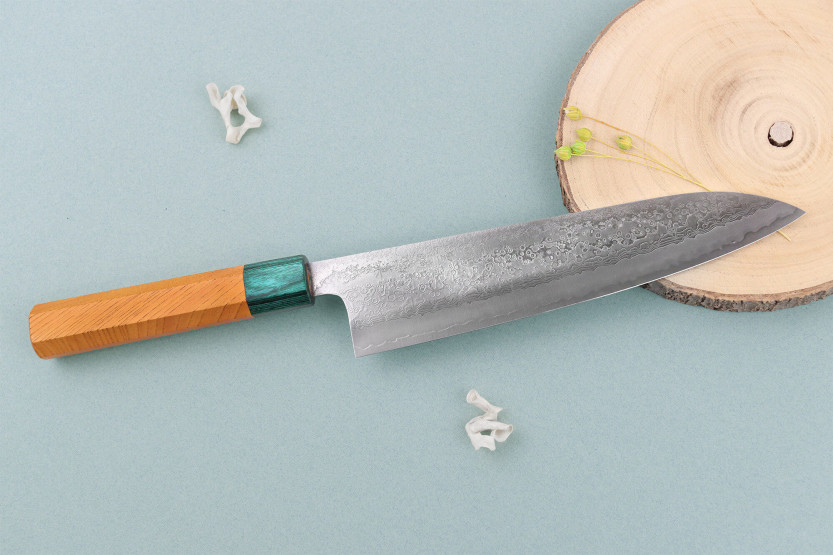
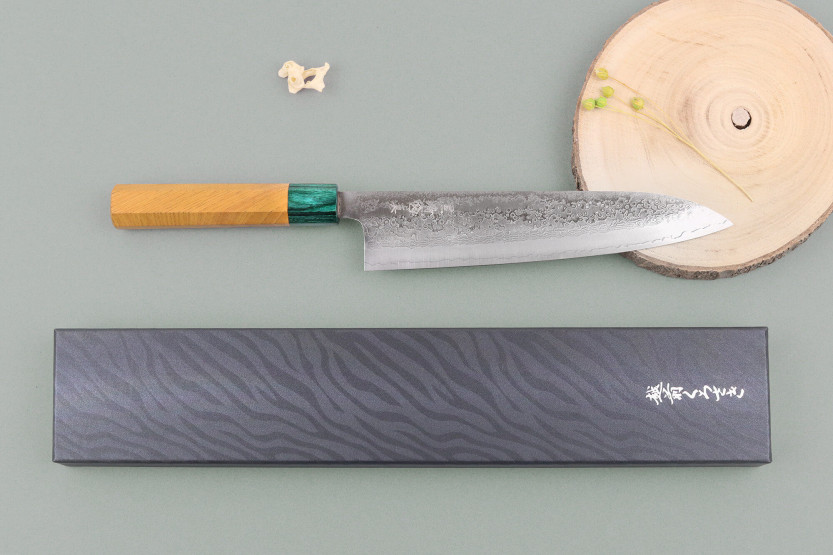
The 21cm Makoto Kurosaki Kodama VG10 handcrafted Japanese chef's knife combines versatility, precision, and refined aesthetics. Handcrafted in Echizen, within the Takefu Knife Village, it is equally suited for slicing vegetables and cutting boneless meats, fish, and herbs.
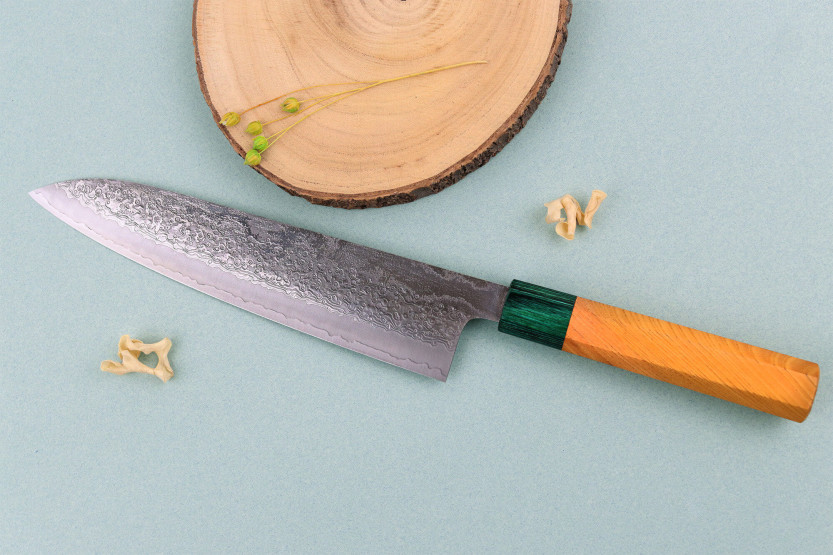
A precise and versatile damask blade
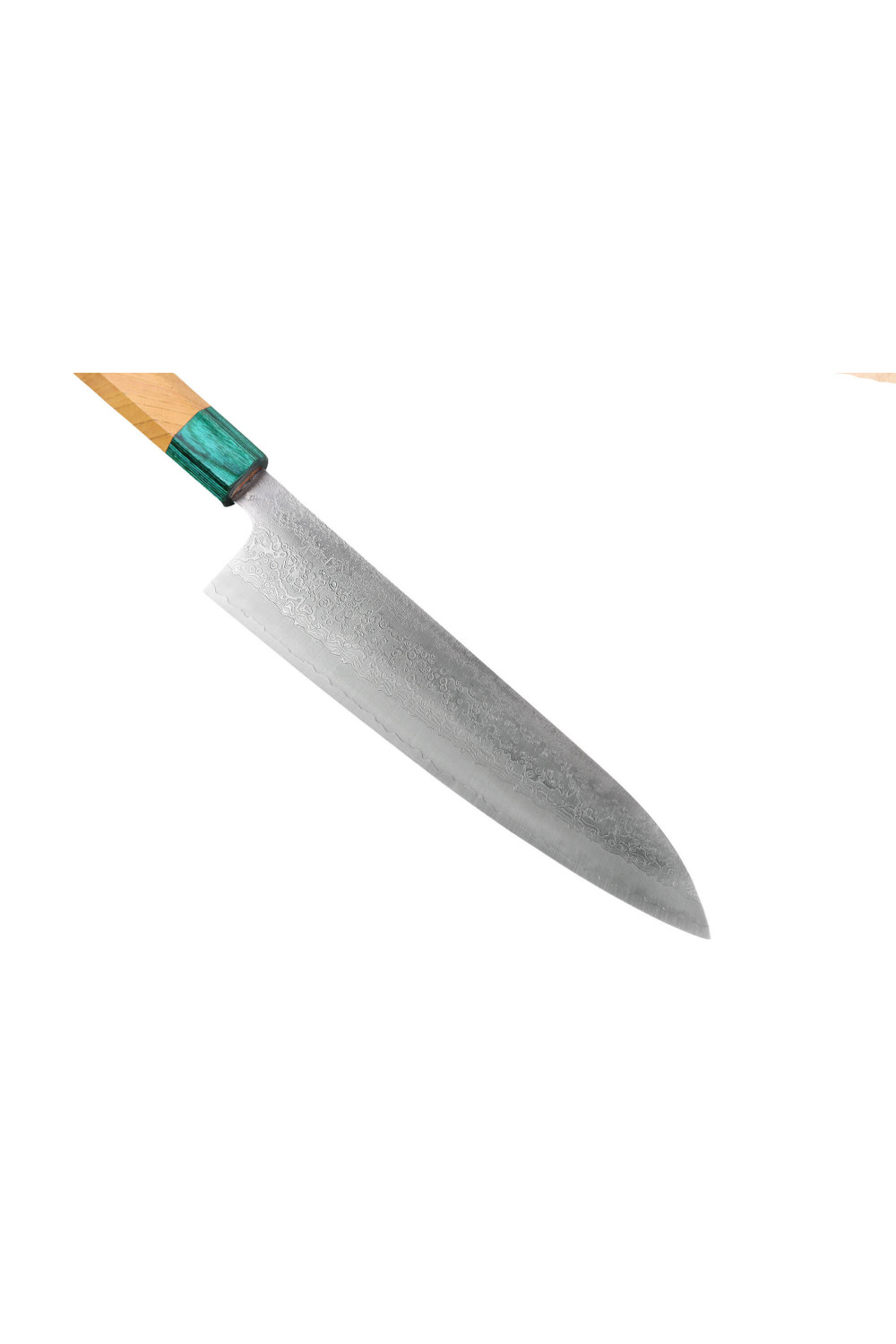
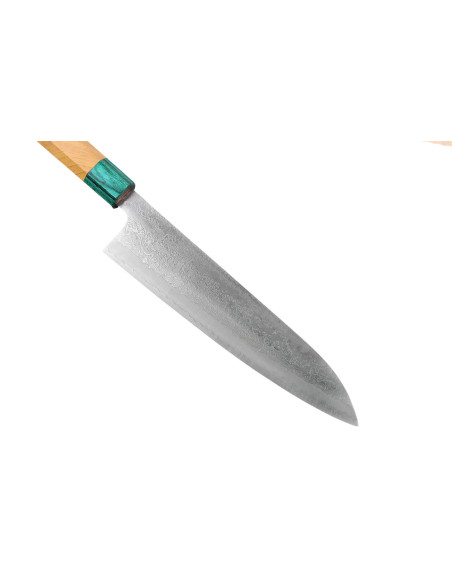
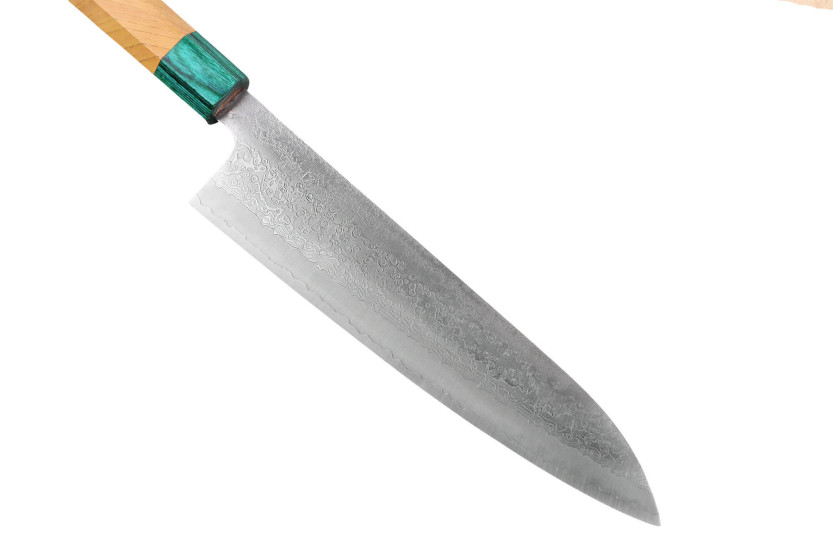
The 21cm blade features the versatile profile of a Japanese chef’s knife. Its length makes it easy to work with large pieces of food and make long, even cuts. It’s ideal for slicing vegetables, chopping herbs, filleting fish, or portioning boneless meat. Its smooth edge ensures a clean cut without crushing delicate ingredients.
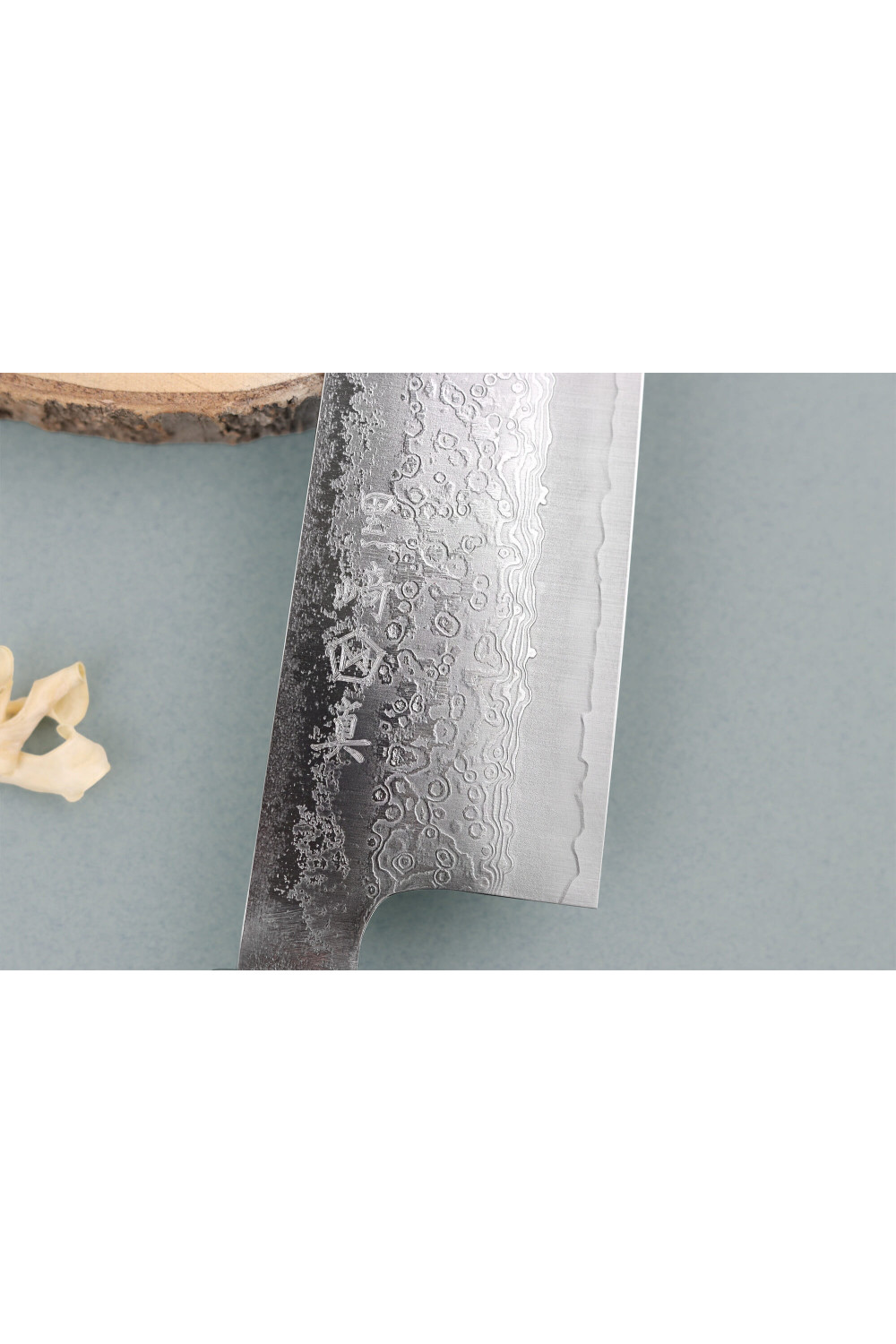
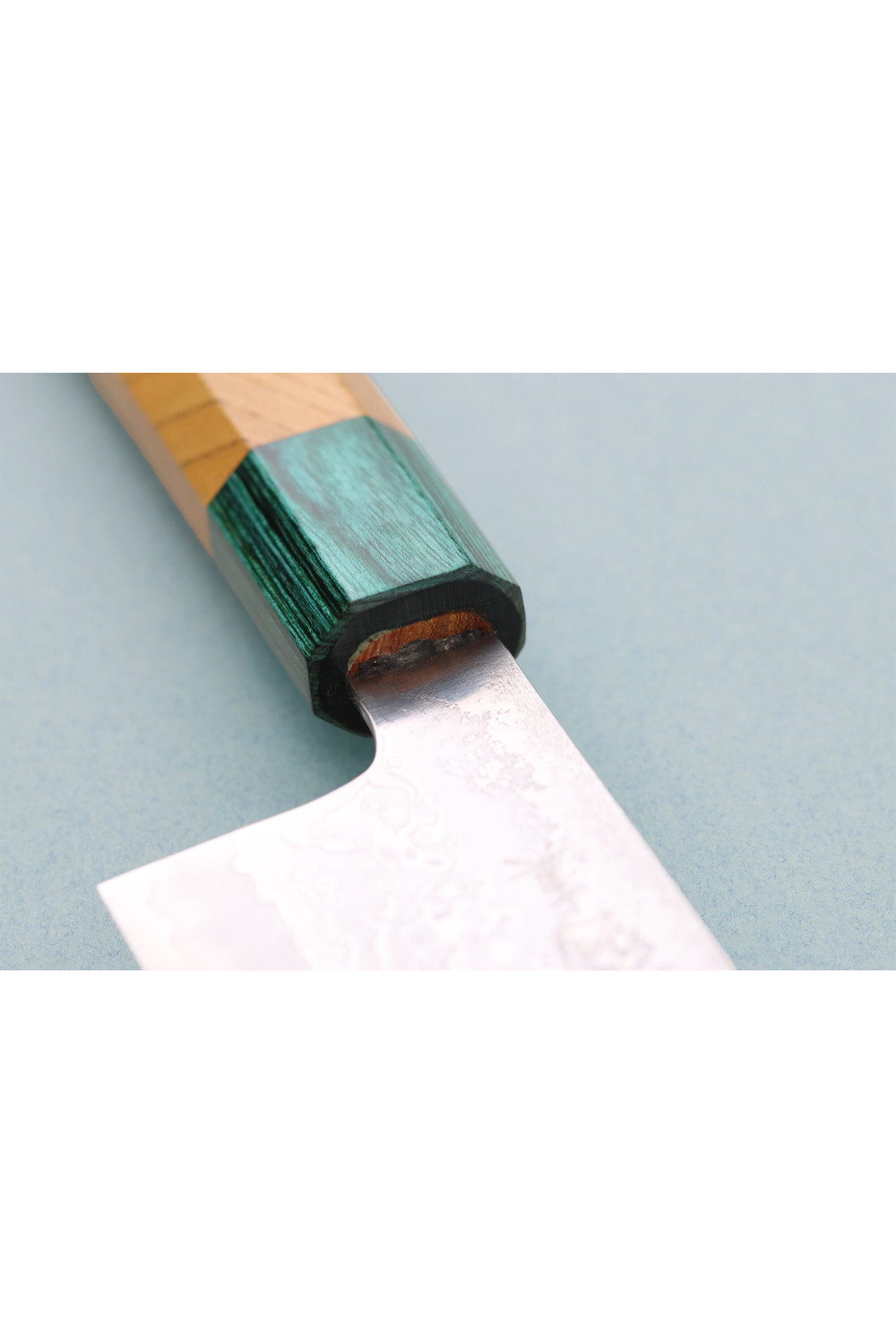
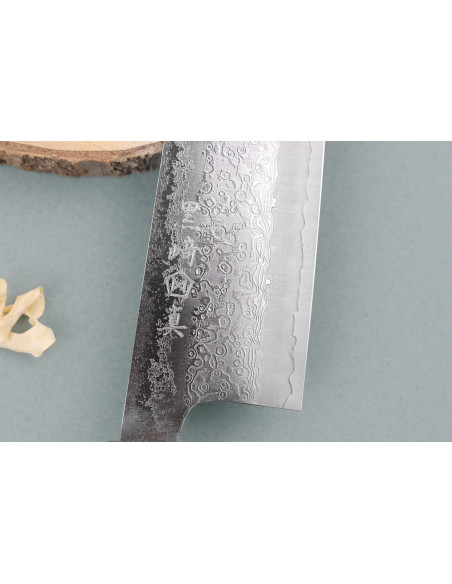
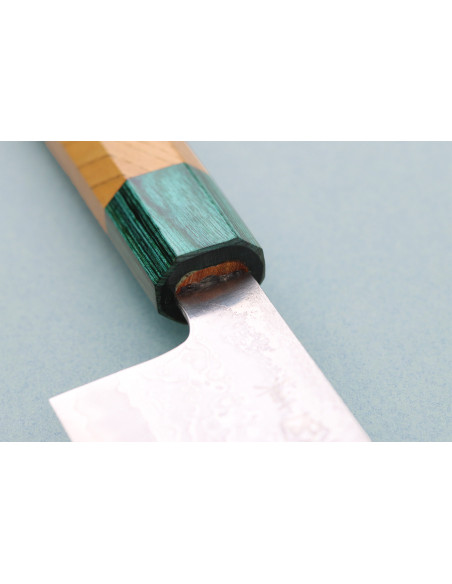
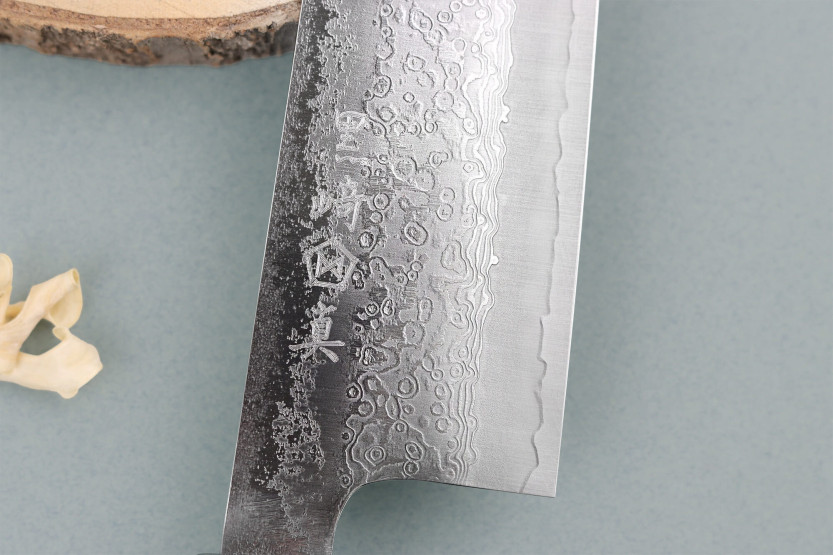
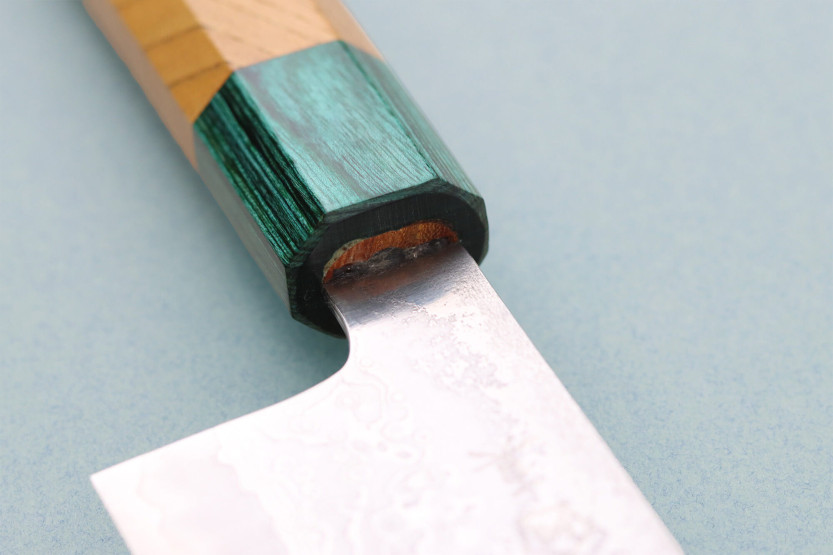
Its Damascus construction features a rigid core surrounded by several layers of softer steel. This design protects the cutting edge and helps the blade better absorb the stresses encountered during use. The layered construction also creates unique wavy patterns on each knife, giving the blade a distinctive appearance.
The core is made of Japanese VG10 steel, an alloy containing approximately 1% carbon. This composition results in a thin, high-performance edge that is resistant to wear. After heat treatment, the blade reaches a hardness of 60 HRC on the Rockwell scale. This balance ensures good edge retention.
A satin finish complements the Damascus pattern and softens its visual appearance. It creates an elegant contrast with the steel’s patterns and highlights the meticulous craftsmanship of the blade.
A handle inspired by nature
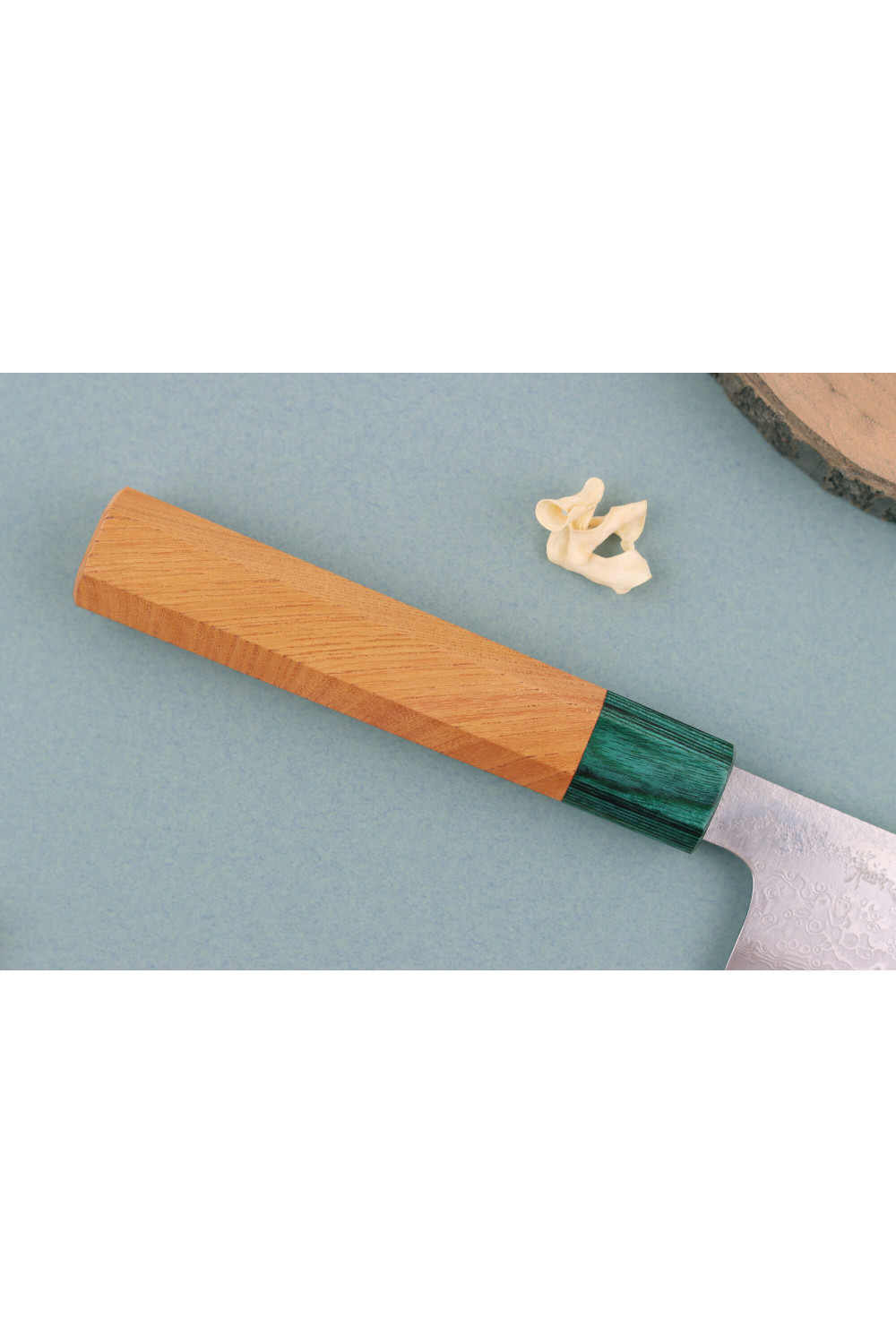
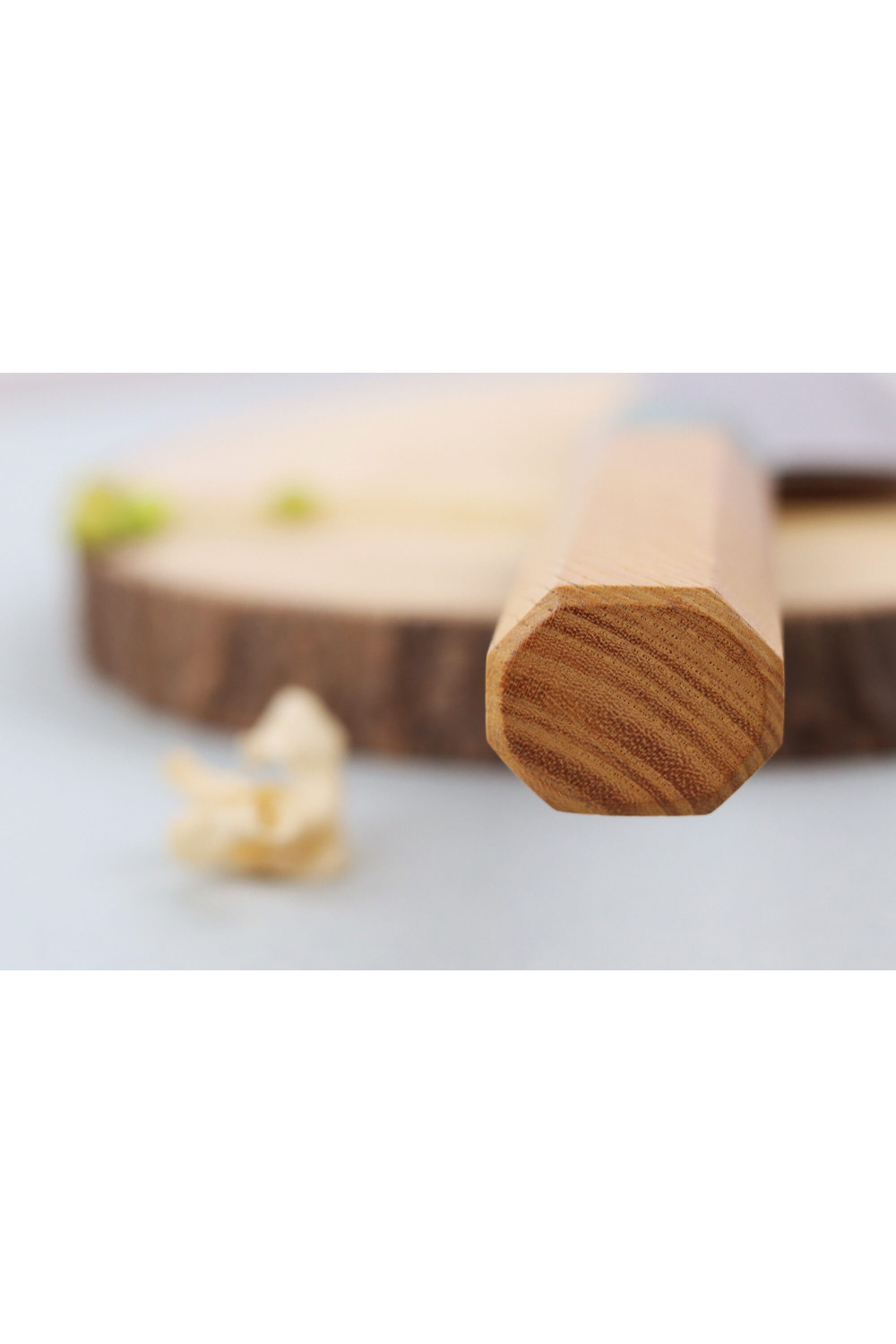
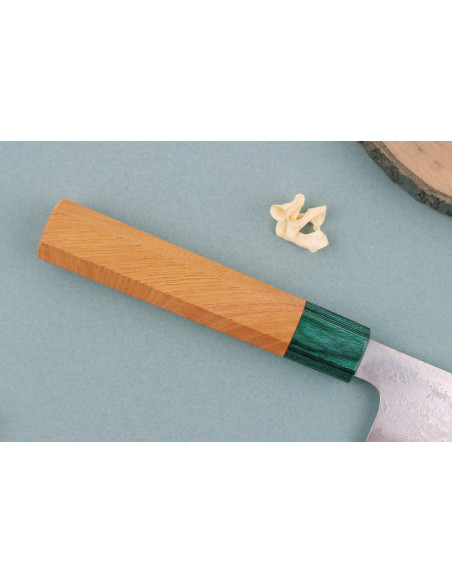
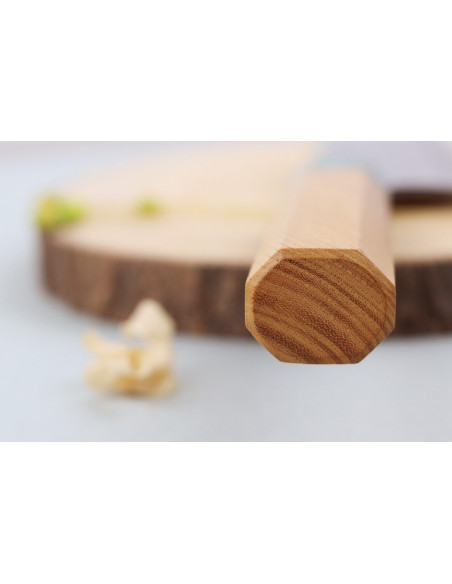
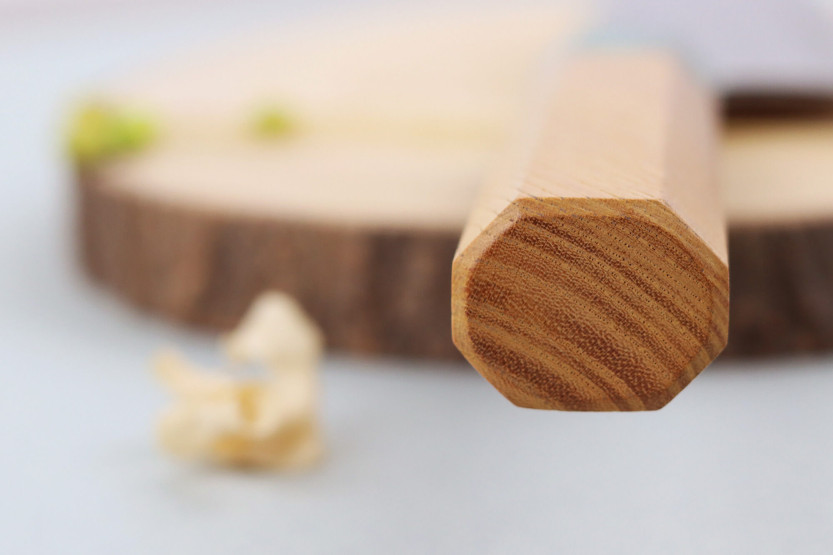
The handle is crafted from elm wood, a species chosen for its durability, natural feel, and warm tones. Its grain varies from piece to piece, reinforcing the unique identity of each handcrafted Japanese knife. This material harmonizes beautifully with the satin-finished blade and evokes the forest-inspired world associated with the name Kodama.
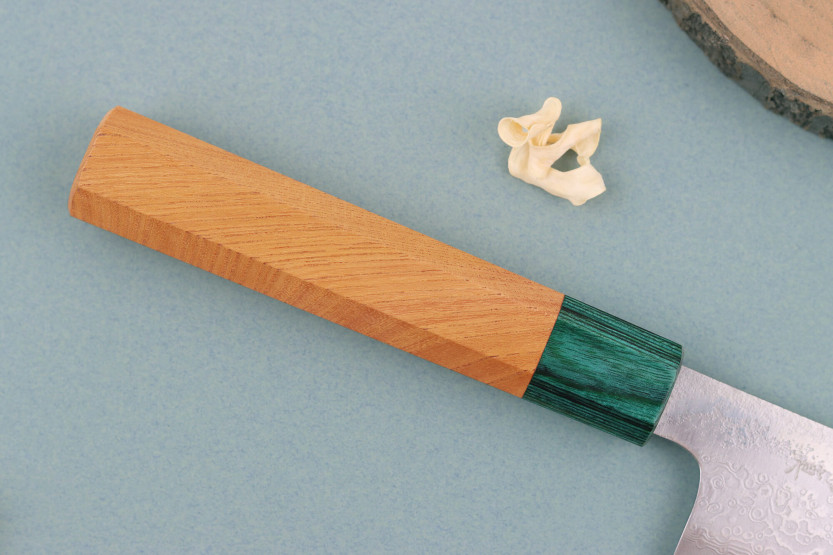
A turquoise pakkawood bolster marks the transition between the wood and the blade. Pakkawood is made of thin layers of wood impregnated with resin and then compressed. This construction provides greater stability and better resistance to moisture than untreated wood.
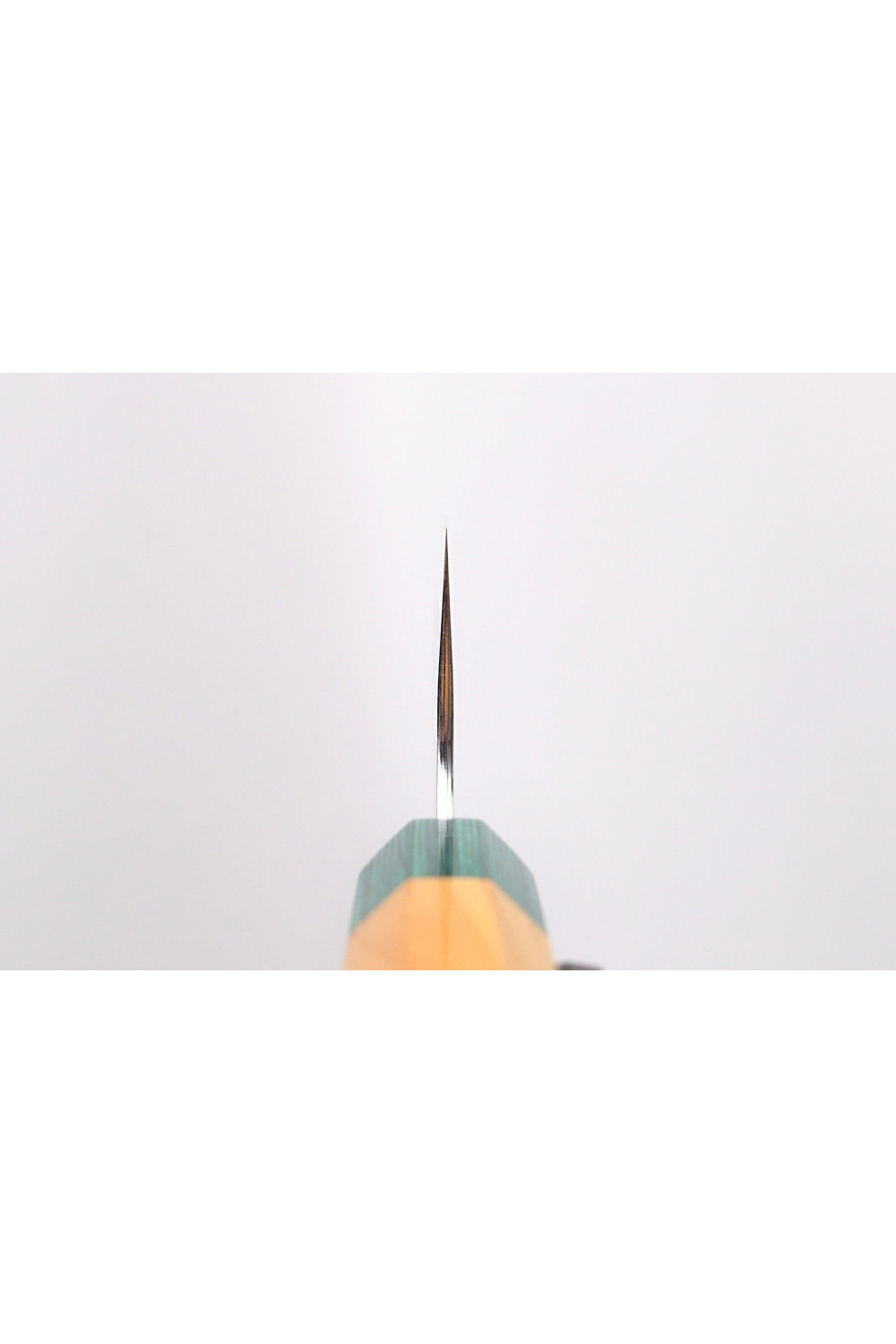
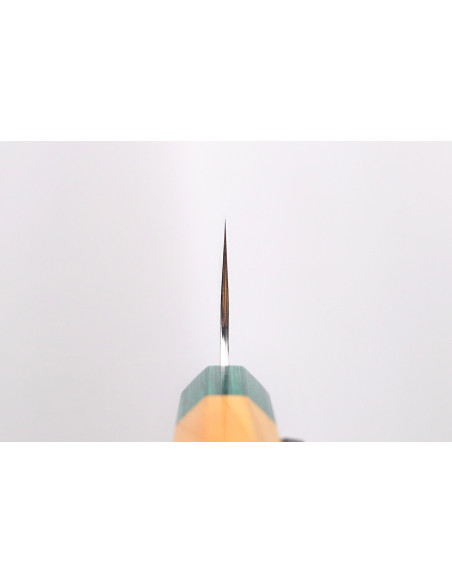
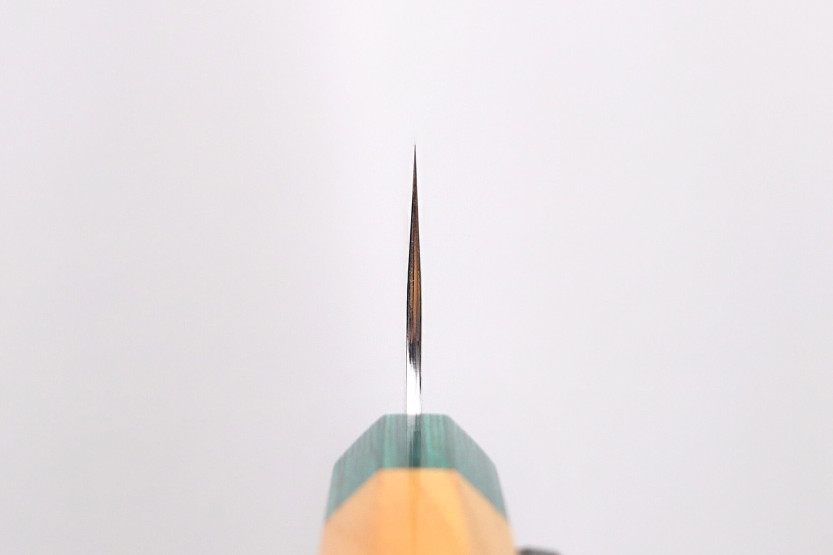
The handle features an octagonal shape, characteristic of many traditional Japanese handles. Its various facets limit rotation in the palm and provide precise reference points for aligning the cutting edge. This symmetrical geometry is suitable for both right- and left-handed users. It also facilitates the position changes needed for slicing, chopping, or making longer cuts.
Key Features
-
- 21 cm blade: facilitates long, even cuts
- Versatile chef’s profile: ideal for preparing vegetables, fish, and boneless meats
-
- Damascene structure: protects the blade’s rigid core
- Stainless steel outer layers: reduce susceptibility to corrosion
- VG10 core with approximately 1% carbon: maintains a high-performance edge
-
- Hardness of 60 HRC: extends the time between sharpening sessions
- Satin finish: provides a smooth and refined look
- Varied damascene patterns: make each blade visually unique
- Elm wood handle: provides a natural feel (color may vary)
-
- Pakkawood bolster: improves stability in humid conditions
- Octagonal shape: provides precise guidance while cutting
- Symmetrical design: suitable for both right- and left-handed users
- Handcrafted in Japan: showcases meticulous craftsmanship
Maintaining a sharp edge
Wash the blade by hand with a soft sponge, lukewarm water, and a mild detergent. Avoid getting the handle too wet, then immediately wipe the entire knife dry with a clean cloth. Do not put it in the dishwasher or let it soak.
Use a wooden cutting board or one made of a soft synthetic material. Glass, marble, or ceramic cutting boards accelerate blade wear. To restore the edge, use a whetstone suitable for Japanese blades. Store the knife on a magnetic strip, in a block, or with a blade guard.
Makoto Kurosaki, artisan from Echizen
Makoto Kurosaki practices his craft in Echizen, in Fukui Prefecture. His workshop is located in Takefu Knife Village, a community that brings together several artisans specializing in the manufacture of Japanese knives. This organization promotes the passing down of techniques and collaboration among the various trades within the cutlery industry.
The blacksmith pays particular attention to sharpening, steel treatment, and finishing. His creations combine functional designs with intricate surfaces, recognizable by their damascened, satin-finished, or hammered patterns. Each knife is produced in small batches and undergoes several manual steps before its final assembly.
The Kodama collection draws inspiration from nature and Japanese folklore. Its name can be translated as “spirit of the tree.” This theme is reflected in the combination of wavy damask, elm wood, and the colorful hues of the bolster. The Makoto Kurosaki Japanese knife thus embodies an approach where cutting performance and aesthetic expression go hand in hand.
Check out our selection of wooden cutting boards to complement your knife!


 By buying this product you can collect up to