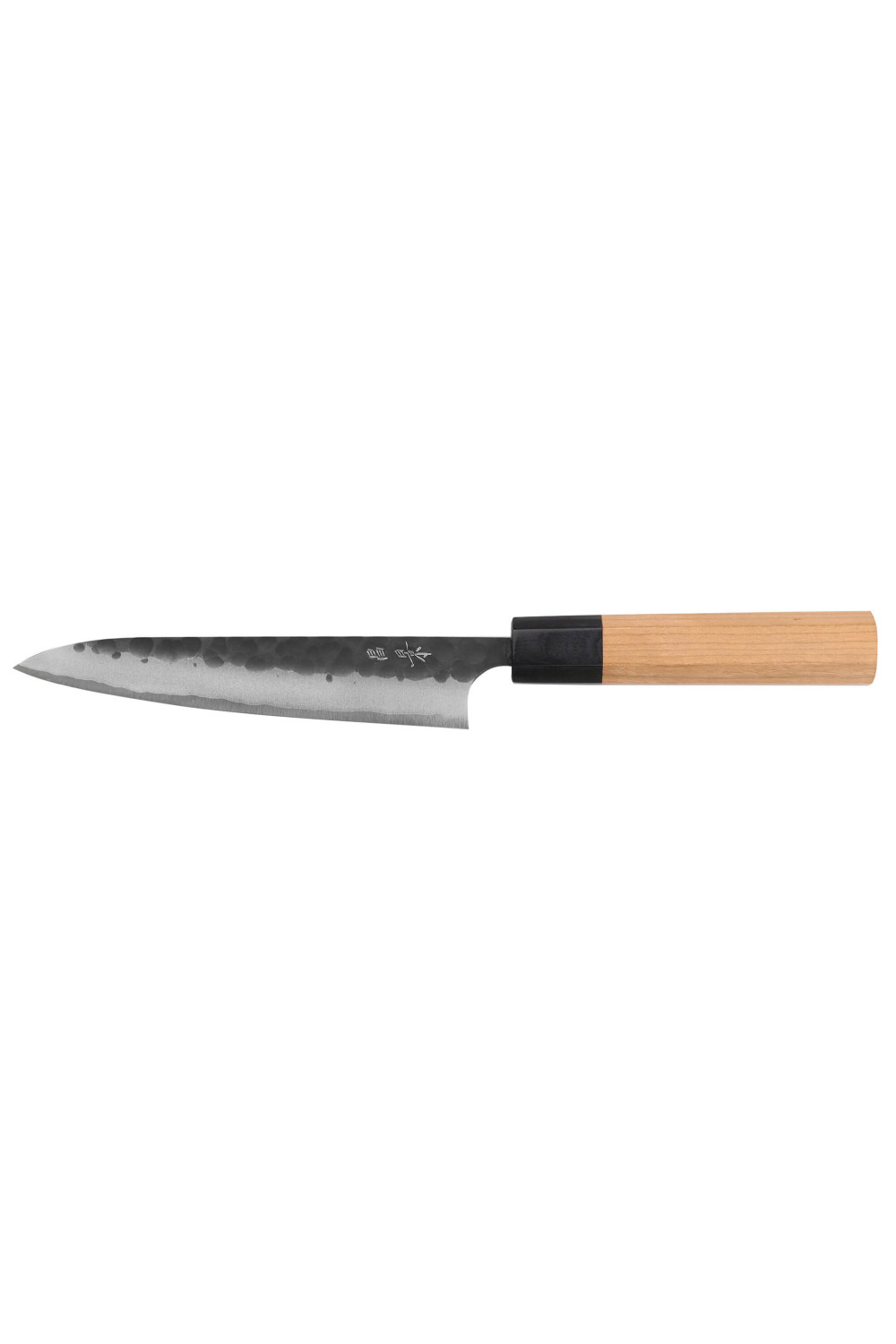
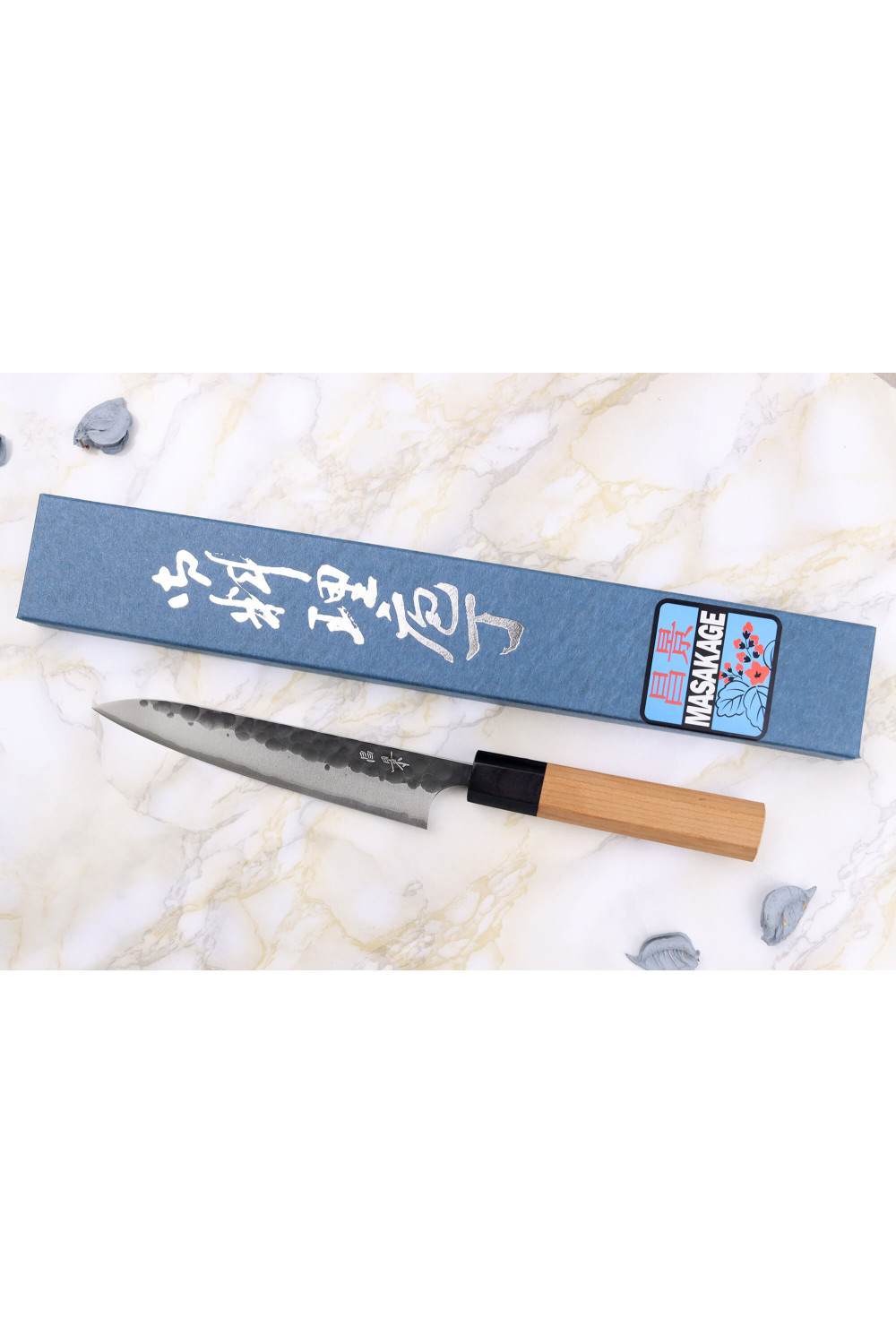
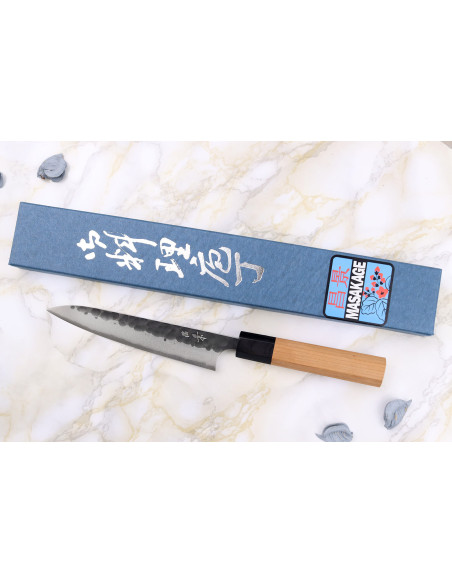
Masakage Koishi Japanese knives are handmade by craftsman Yoshimi Kato! This Japanese blacksmith enjoys a great reputation and offers you high-quality Japanese kitchen knives.
Yoshimi Kato studied under renowned masters such as Hiroshi Kato (his father-in-law), a cutler respected the world over. He is one of the founding members of the Takefu Cutlery Village, a place where blacksmiths share their skills, experience and equipment. On his retirement, Yoshimi Kato took over his workshop: he continues to produce his master's ranges, while making his own series of knives!
A Japanese kitchen knife with a forged blade
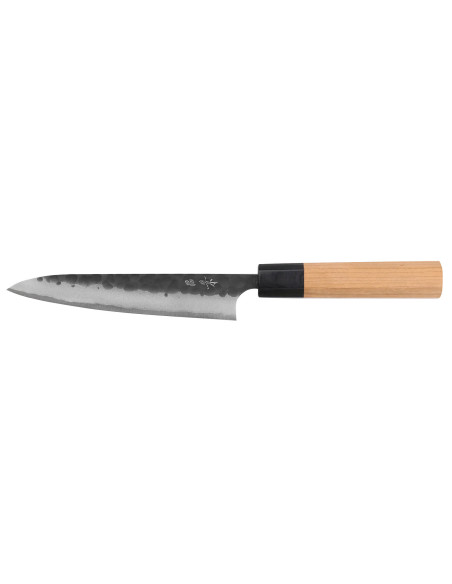
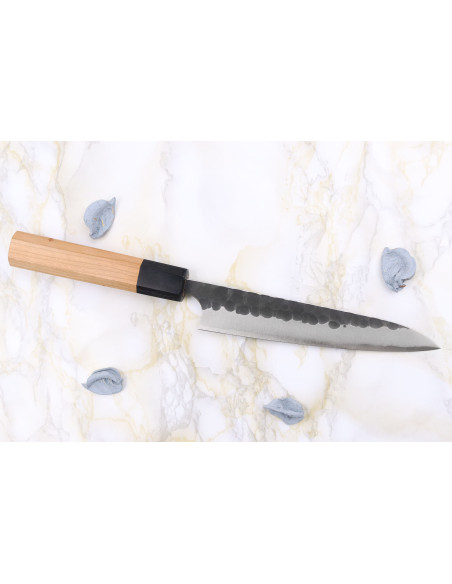
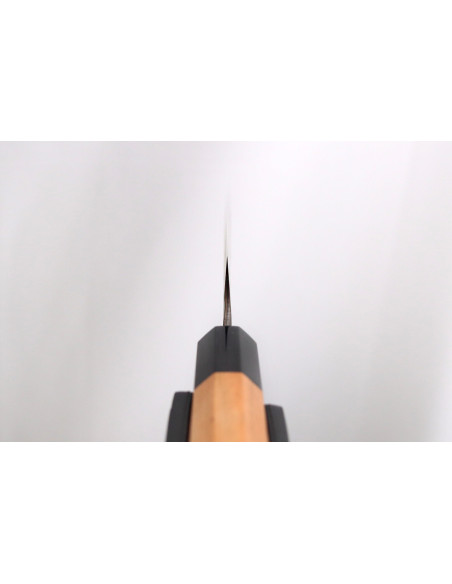
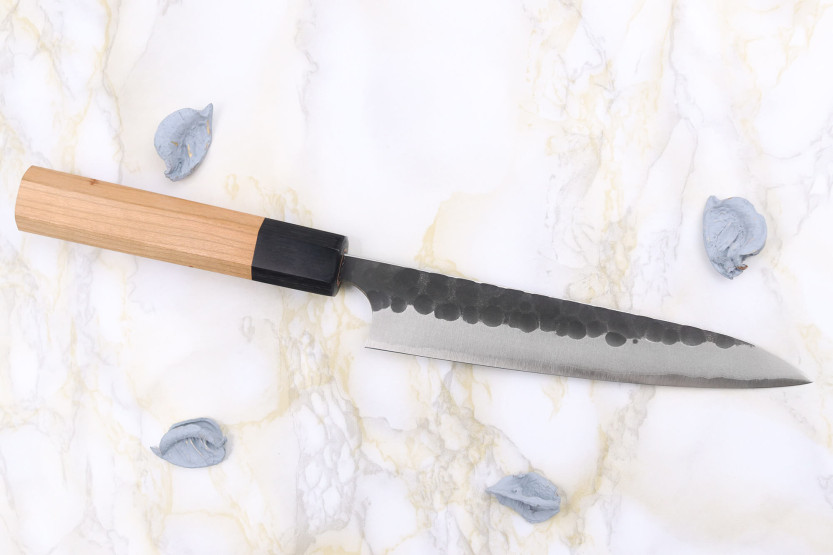
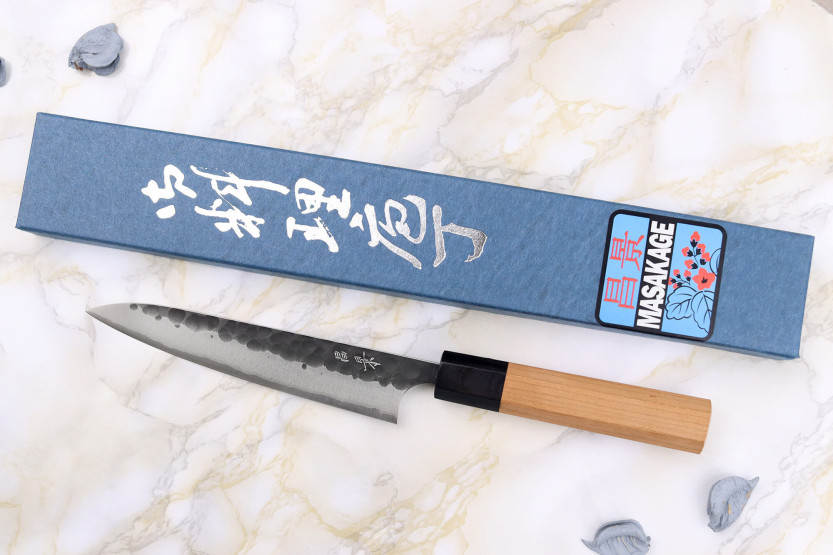
This all-purpose knife features a forged blade with a typically Japanese San Maï (meaning "3 layers") structure. This construction features a core of carbon-enriched Aogami Super steel (also known as Blue Super Steel), produced by steelmaker Hitachi. A layer of stainless steel then folds in on itself to surround the core and form the remaining 2 layers. It balances the hardness of the Aogami by adding softness, without making the blade flexible.
Blue Super Steel contains around 1.5% carbon. By comparison, the Western average for a good kitchen knife is 0.5%, so the alloy used here is remarkable! Carbon is the key element for increasing a steel's hardness. Here, the hardness of your blade reaches 65HRC on the Rockwell scale, guaranteeing excellent edge retention and cutting performance. Moreover, Aogami is renowned for being particularly effective on fibrous foods.
And despite its high rigidity, Aogami steel is easy to stone-sharpen when necessary! What's more, the flat grind is easy to reproduce. More generally, flat grinding is aesthetically pleasing and very robust.
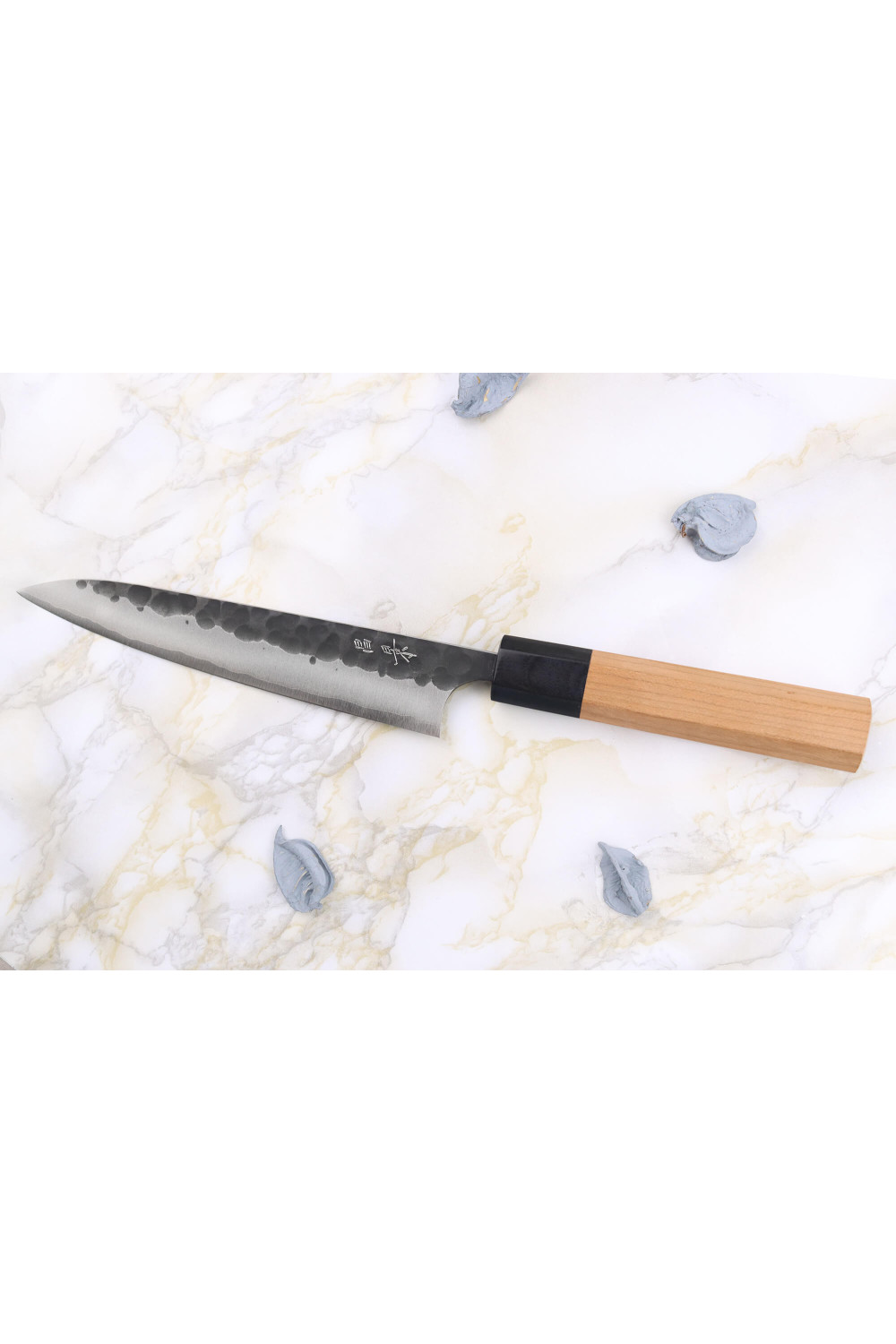
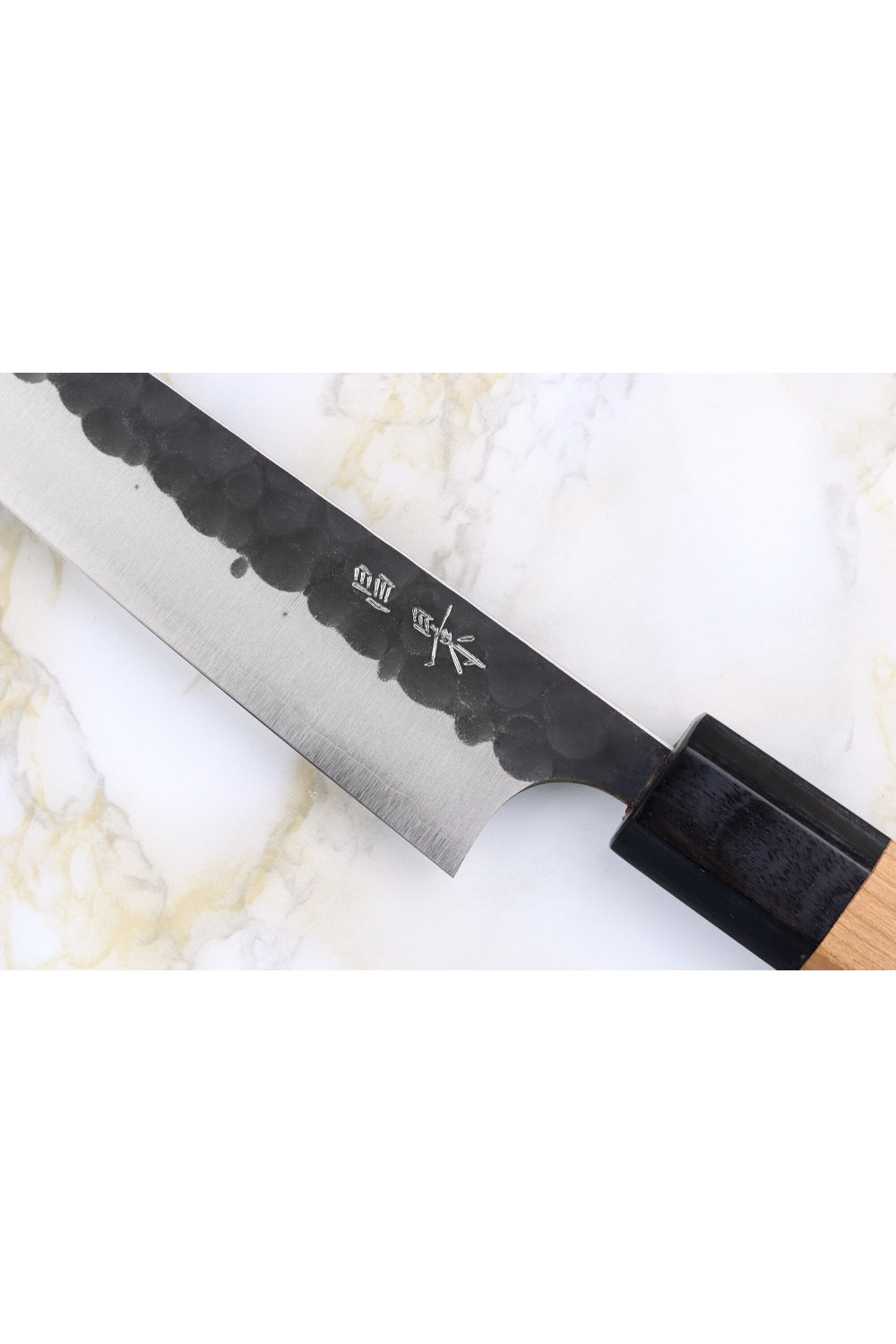
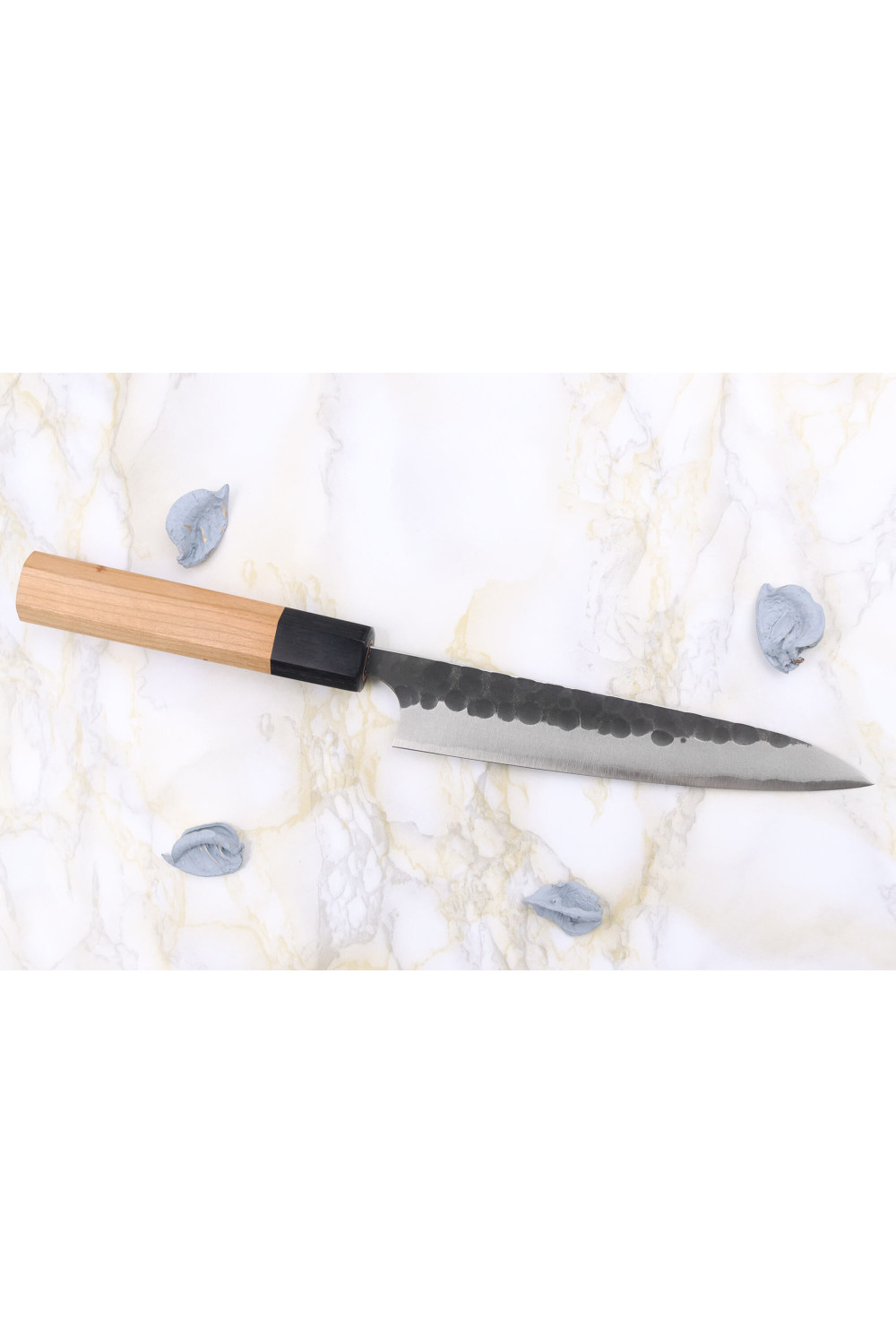
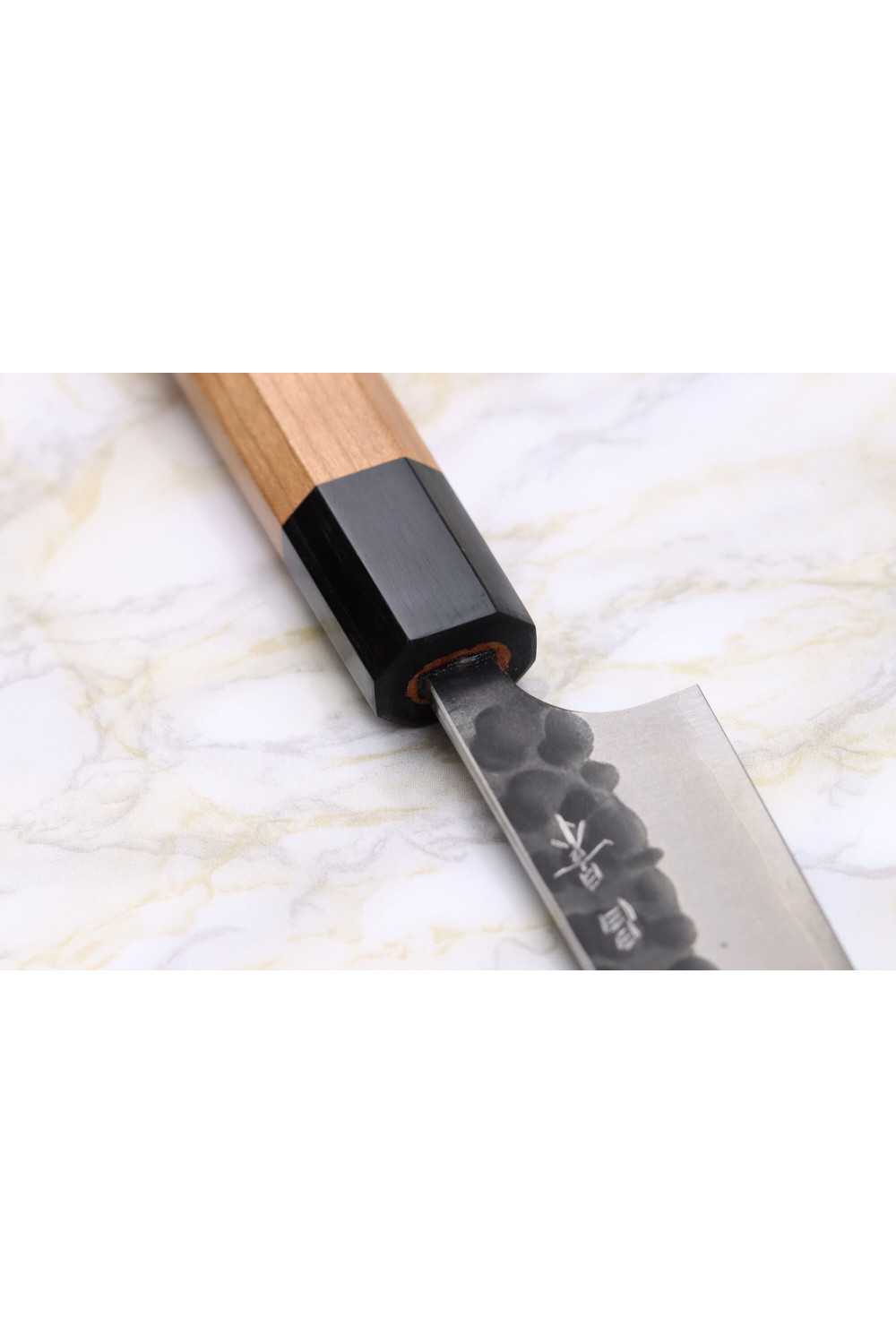
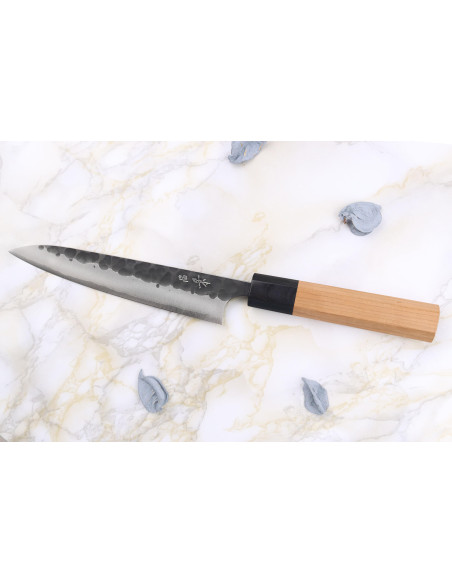
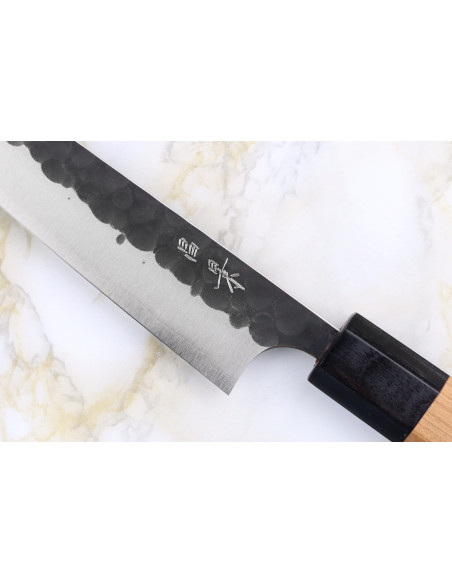
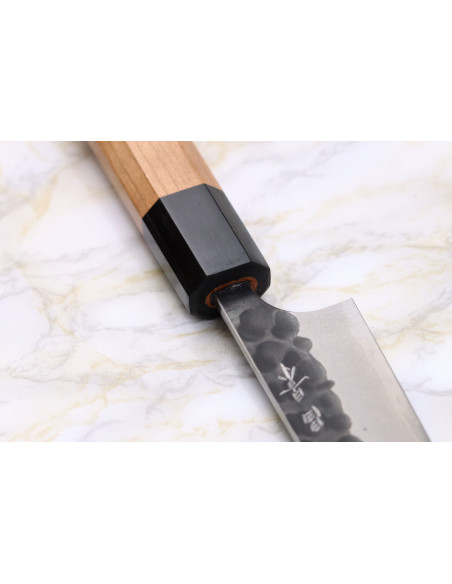
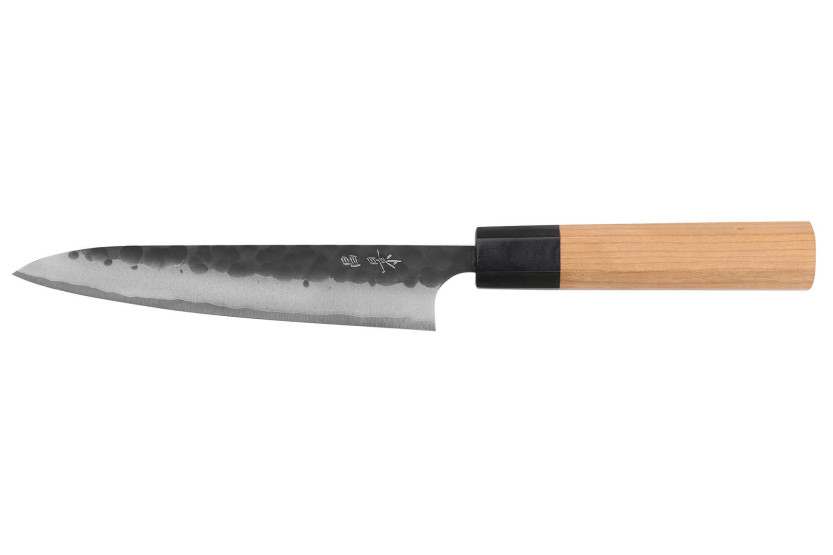
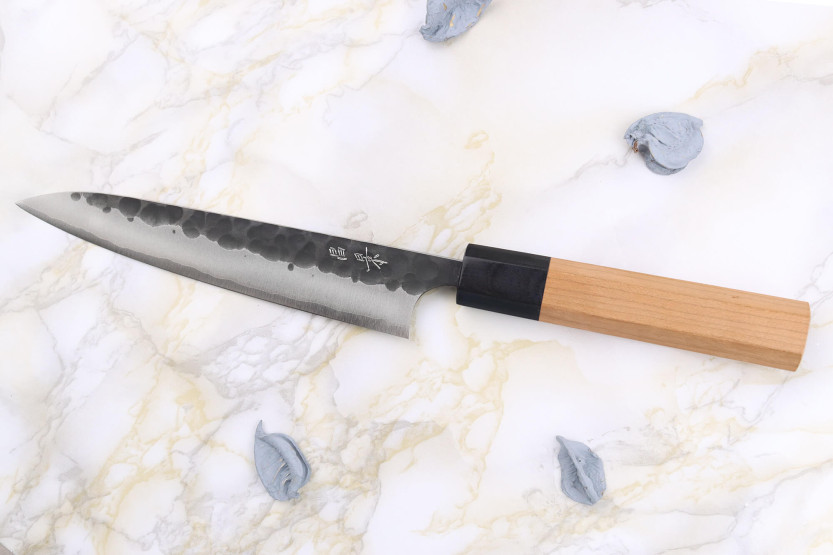
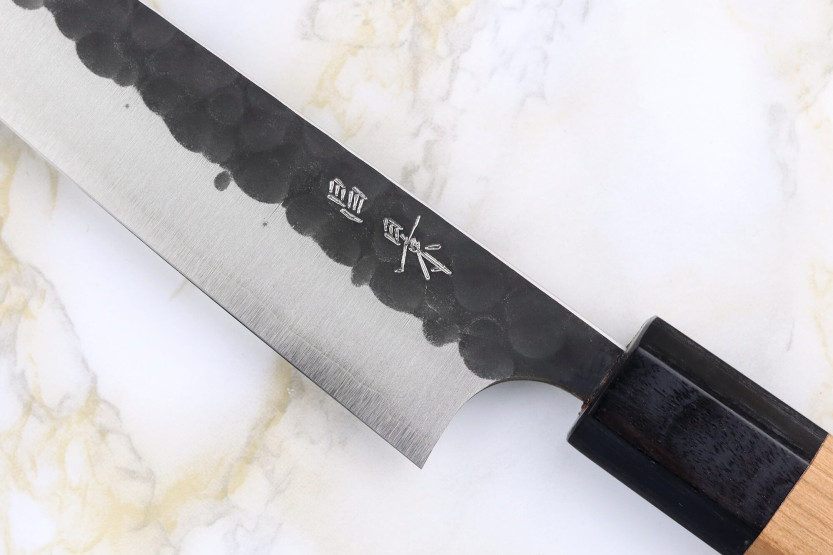
This handcrafted Japanese knife has an authentic rough forged finish that gives it character! This finish is much appreciated by Japanese chefs for its traditional look. What's more, the surface of this blade has been hammered. This distinctive hammering is the source of the range's name, Koishi meaning "pebble" in Japanese.
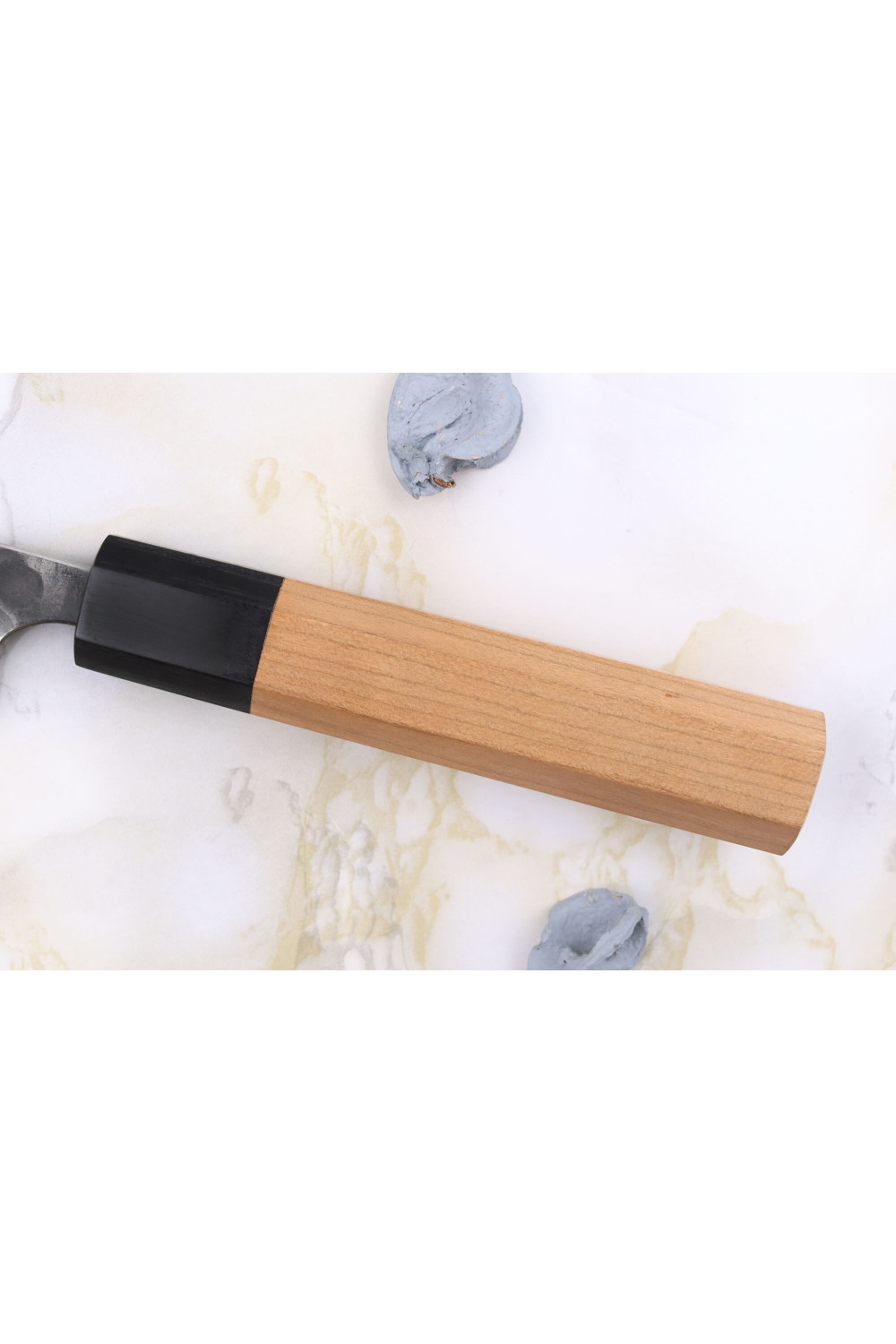
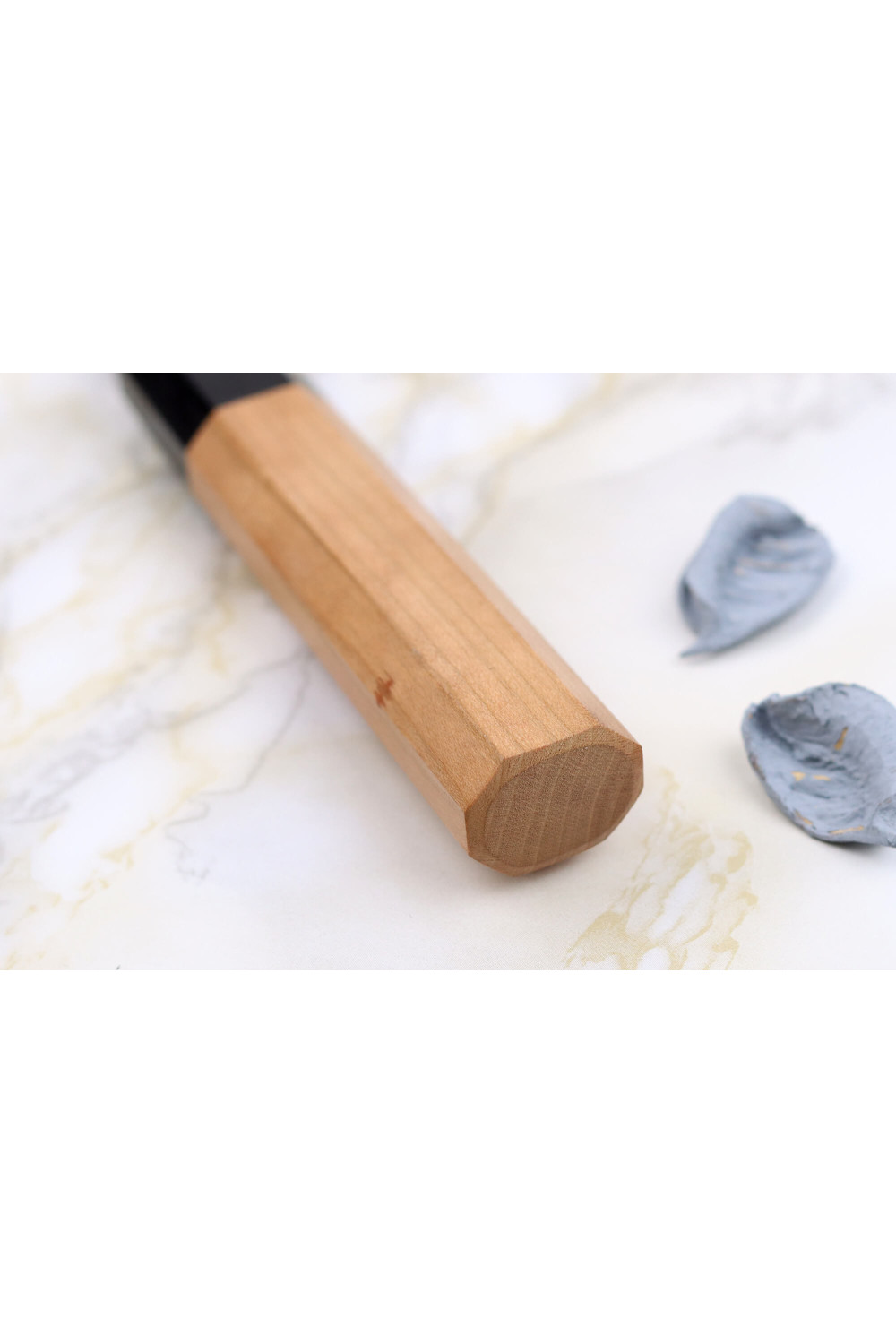
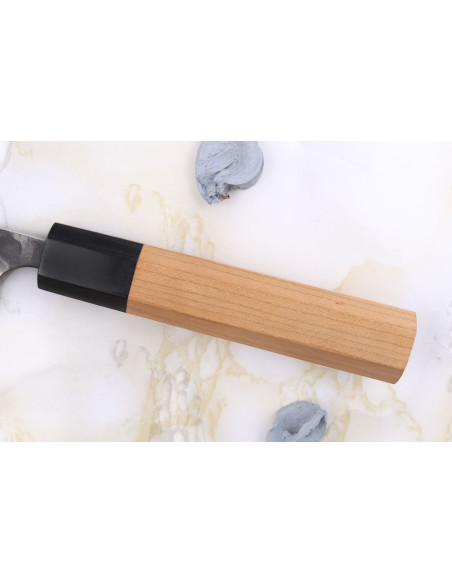
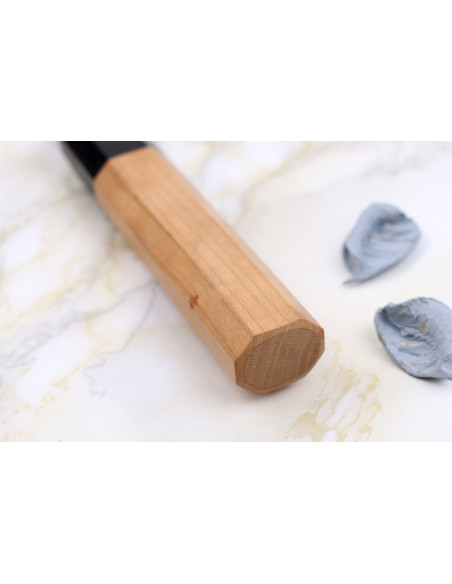
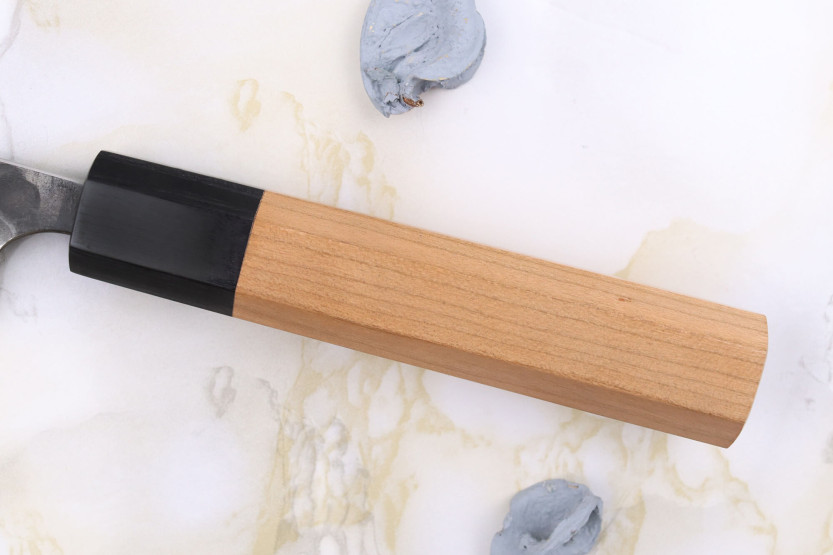
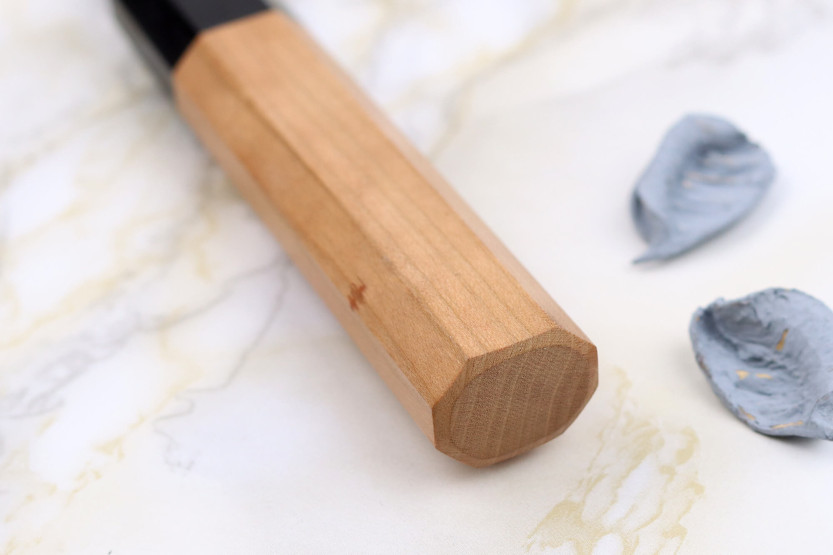
The handle of this Japanese kitchen knife is made from cherry wood, a durable and solid species typical of Japan. It is appreciated for its light color and discreet grain, making it a very elegant visual. This wood is accompanied by a black pakkawood bolster, a composite material made from resin and laminated wood that contrasts with the rest of the handle.
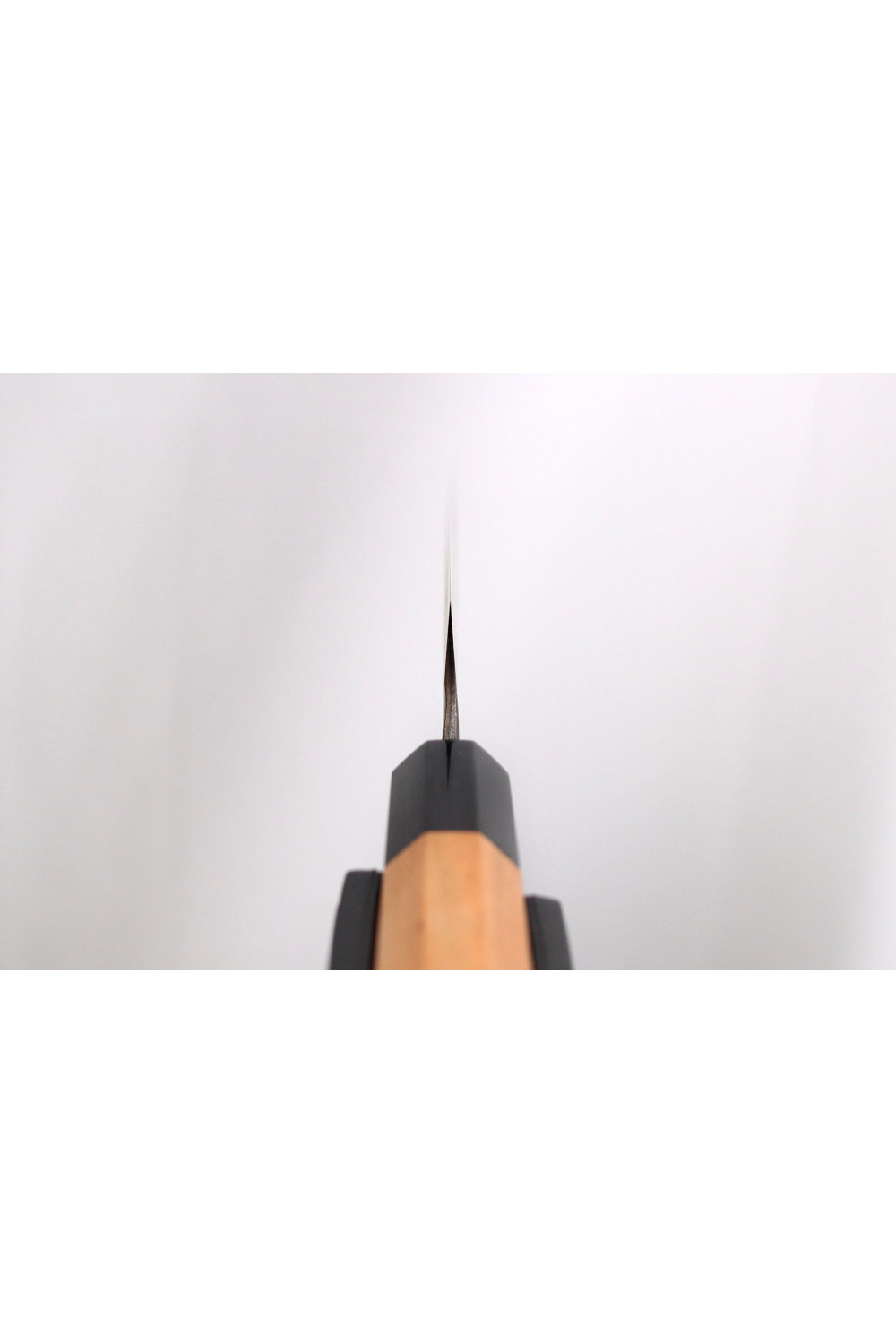
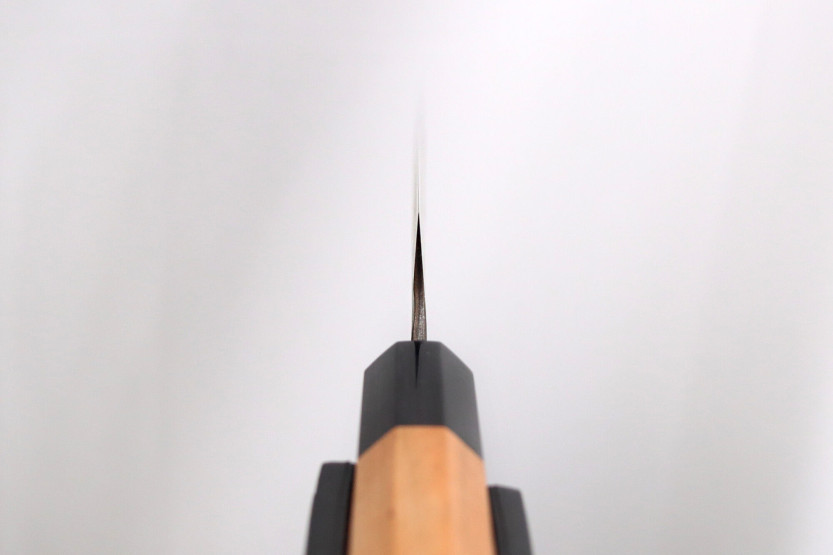
The handle is octagonal in shape to suit both left- and right-handed cooks! It offers an ergonomic grip for comfortable use, especially during prolonged cooking.
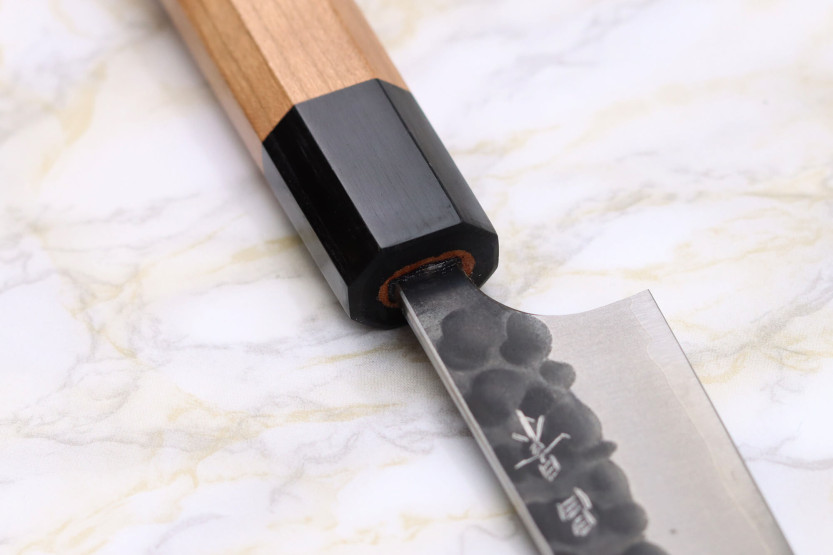
Finally, wood putty has been added where the blade joins the handle to fill in the small gaps and make the whole thing watertight. This prevents water or small food items from seeping inside.

(Hiroshi san on the left and Yoshimi san on the right)
Care and maintenance of a handcrafted Japanese knife
This Japanese utility knife is considered to be oxidizable (despite the stainless steel coating) and must therefore be carefully maintained. You should therefore only clean it by hand with a non-abrasive sponge and a mild detergent, avoiding wetting the handle. Once washed, dry immediately to remove all traces of moisture and store in a dry place. Do not use the dishwasher or leave it to soak in the sink.
Over time, the color of your blade may change slightly: this is normal! This is a natural carbon reaction caused by the acidity of the food you're cutting and the humidity in the air.
From time to time, you can apply a little mineral oil to the blade for more thorough maintenance.
Discover other Masakage Koishi knives on Knifeleader.eu!




 By buying this product you can collect up to