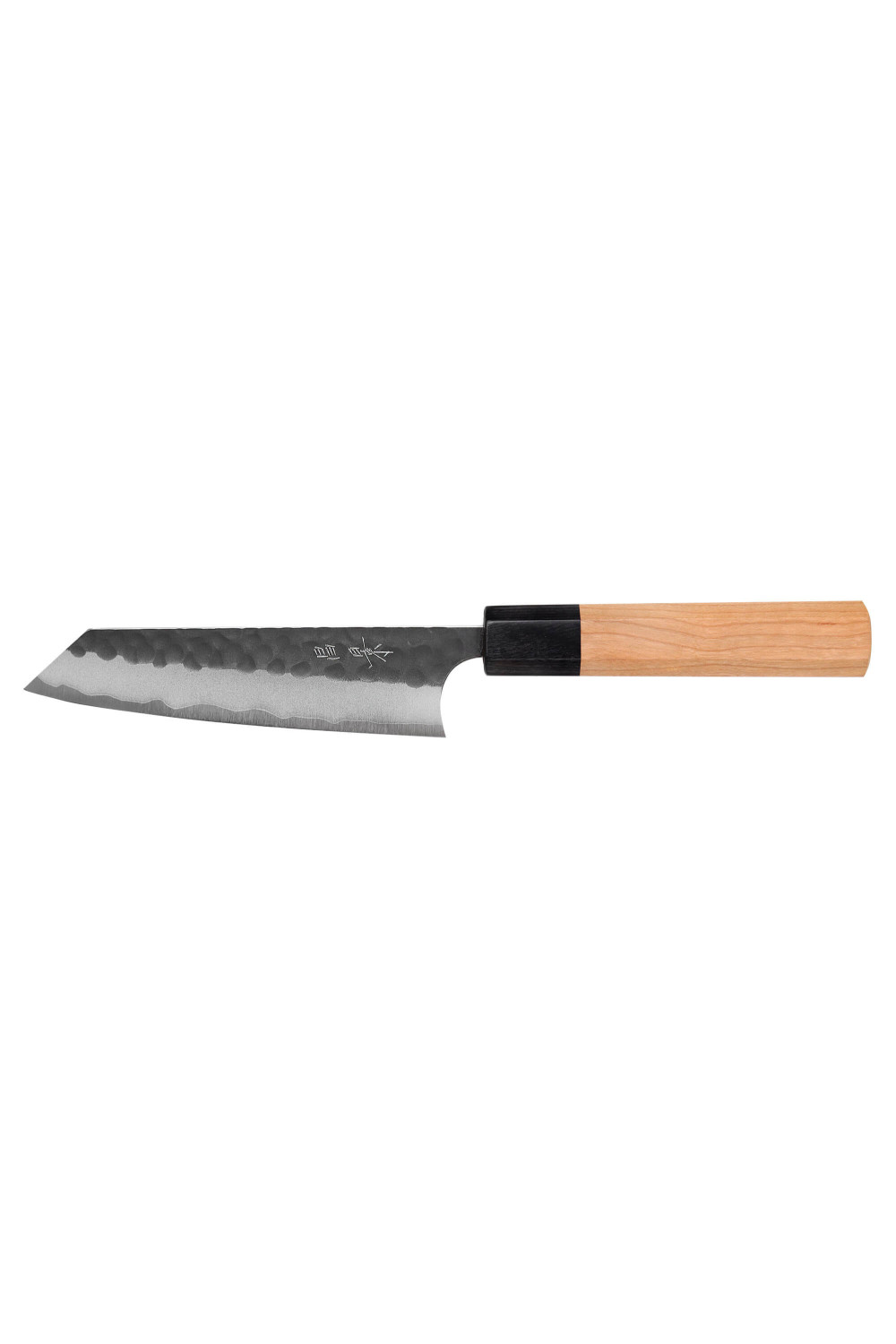
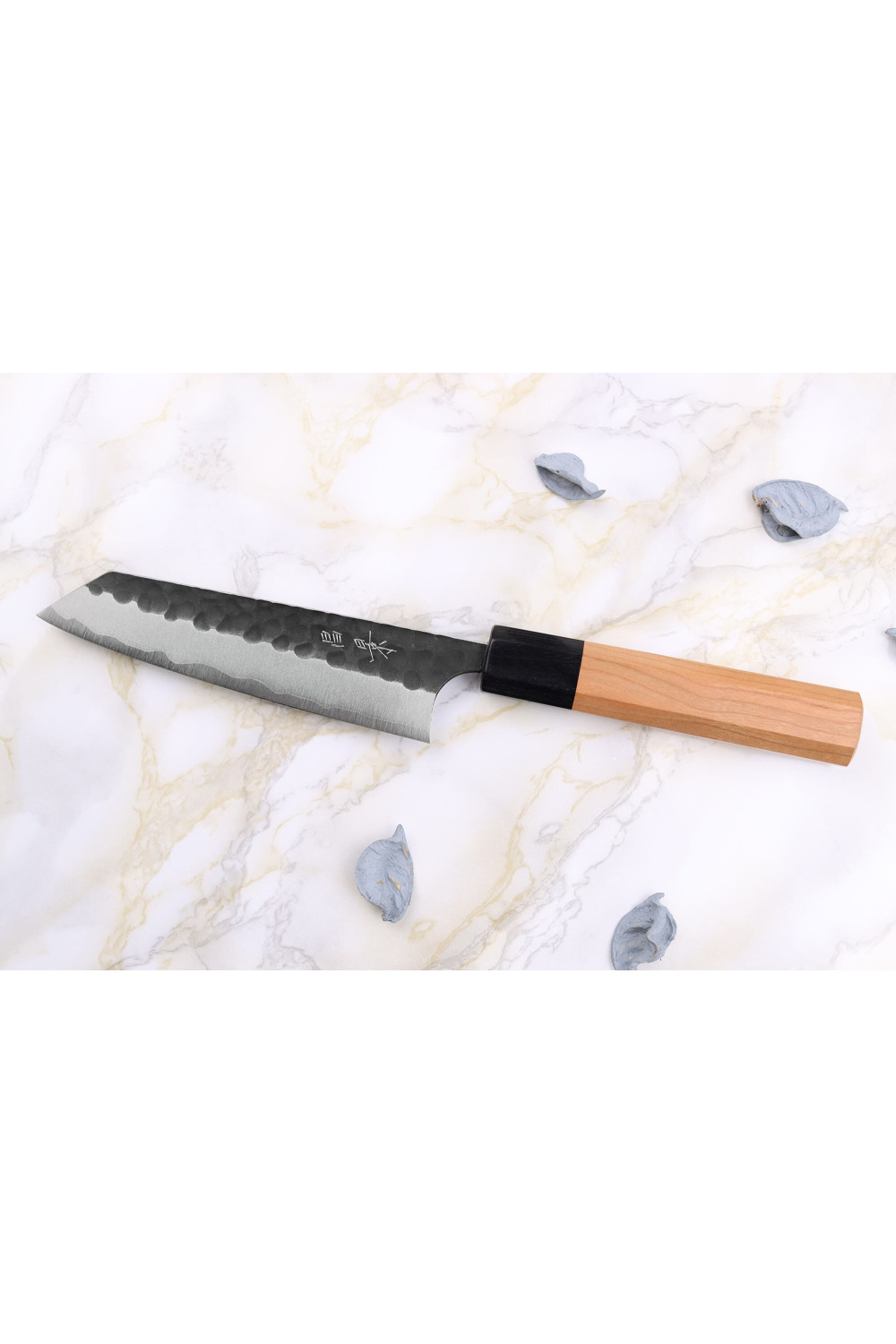
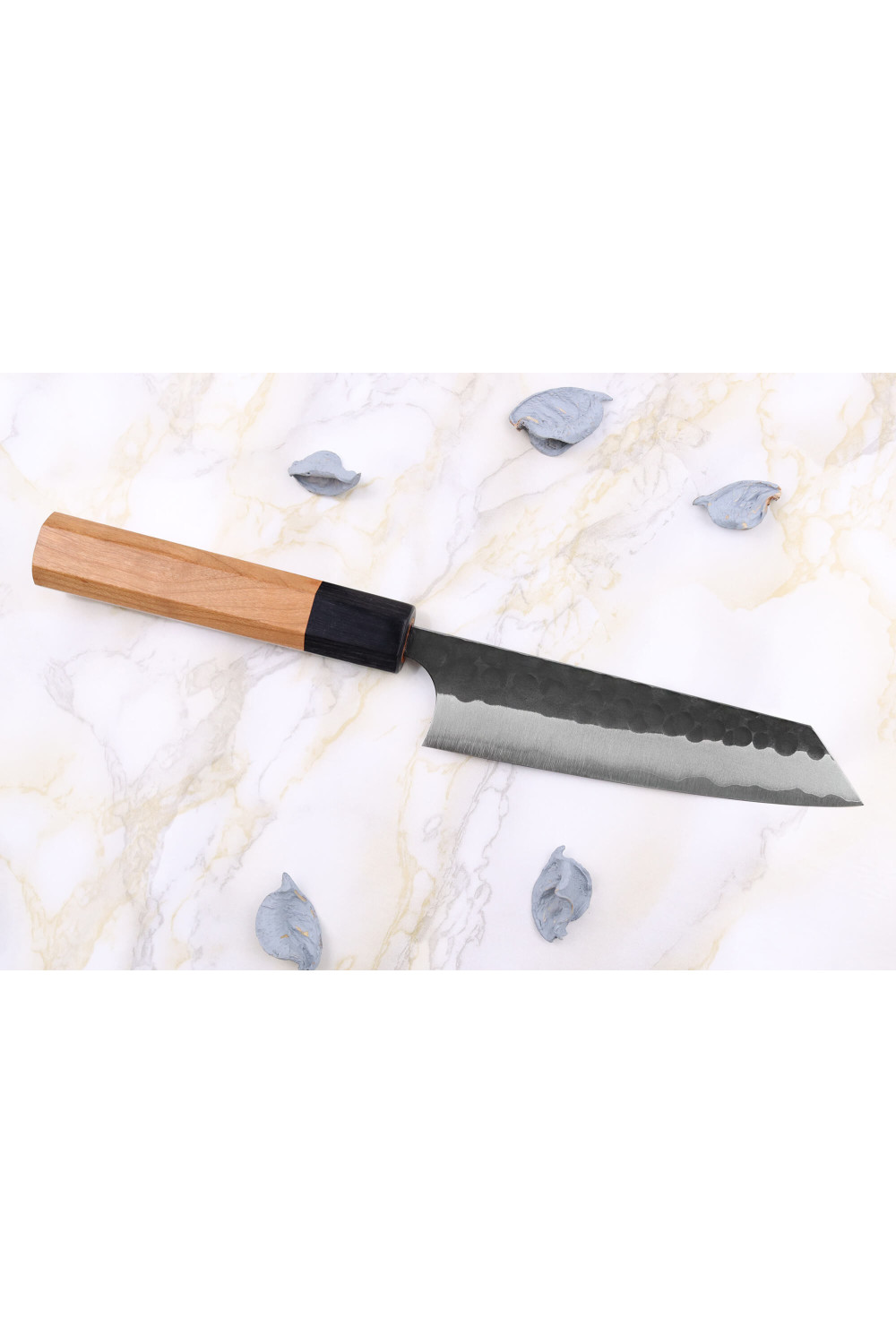
Masakage Koishi knives are handcrafted by Japanese blacksmith Yoshimo Kato san. This craftsman with an impeccable reputation offers you unique, top-of-the-range kitchen knives!
He is a pupil of renowned masters such as Hiroshi Kato San (his father-in-law), an internationally respected cutler. He is one of the founding members of the Takefu Cutlery Village , a place where blacksmiths can share their skills, equipment and experiences. Yoshimi Kato has taken over his workshop and continues to create his master's knives (now retired), while having launched his own models.
(Hiroshi san on the left and Yoshimi san on the right)
The Japanese knife with a high-performance blade
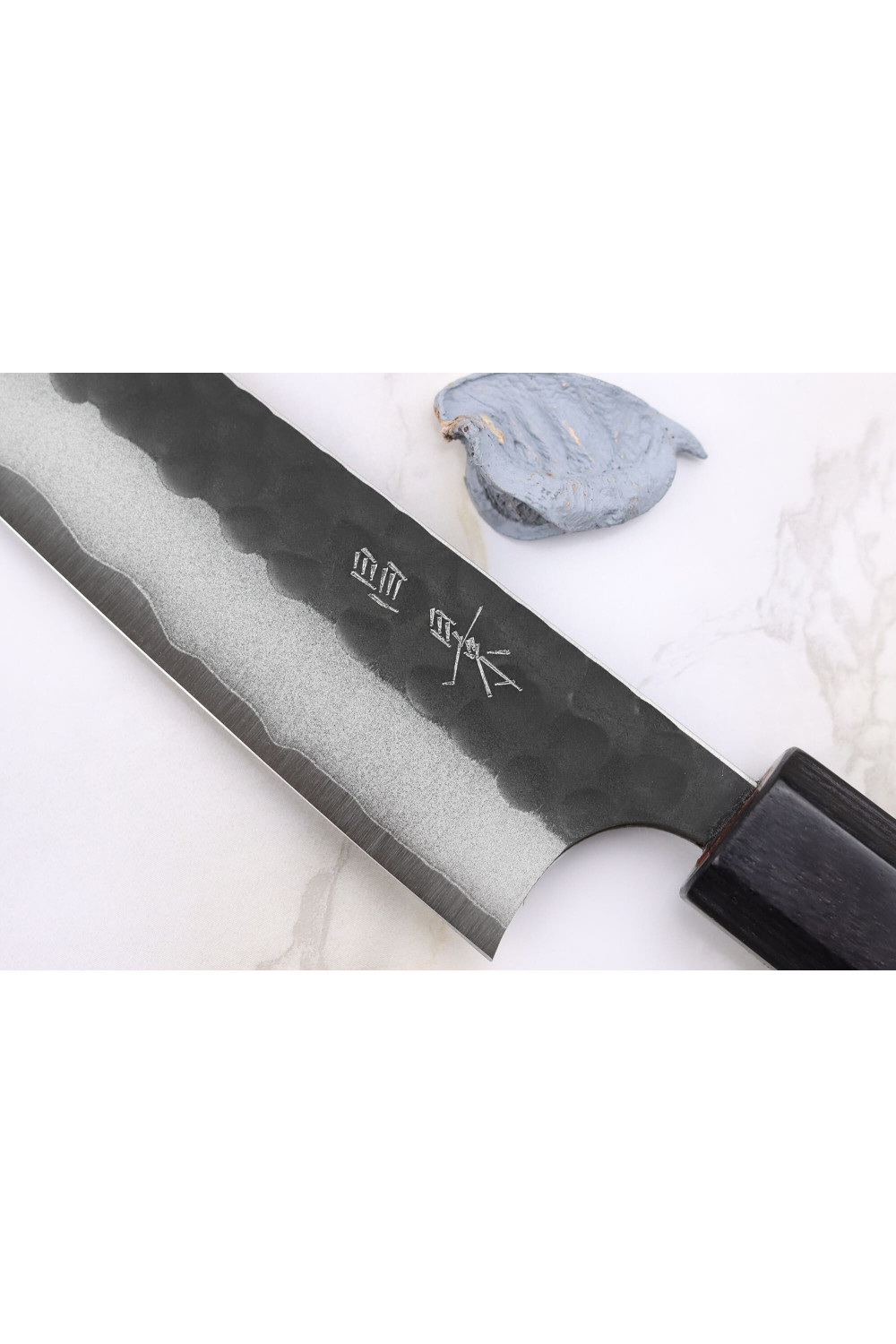
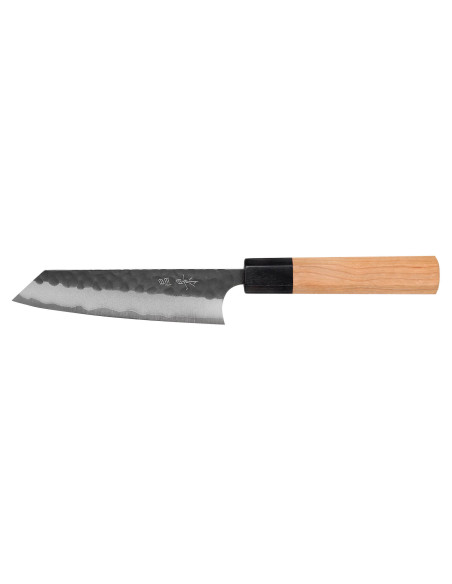
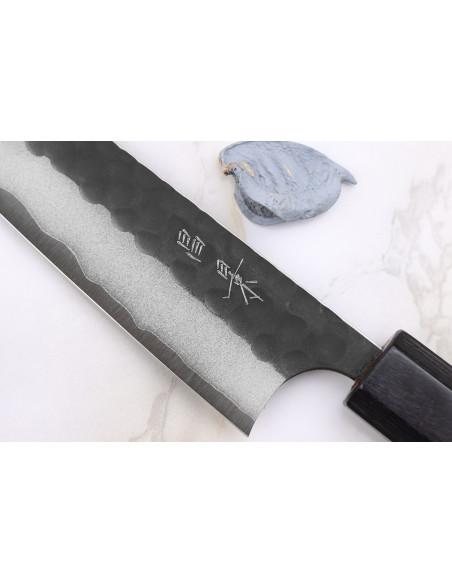
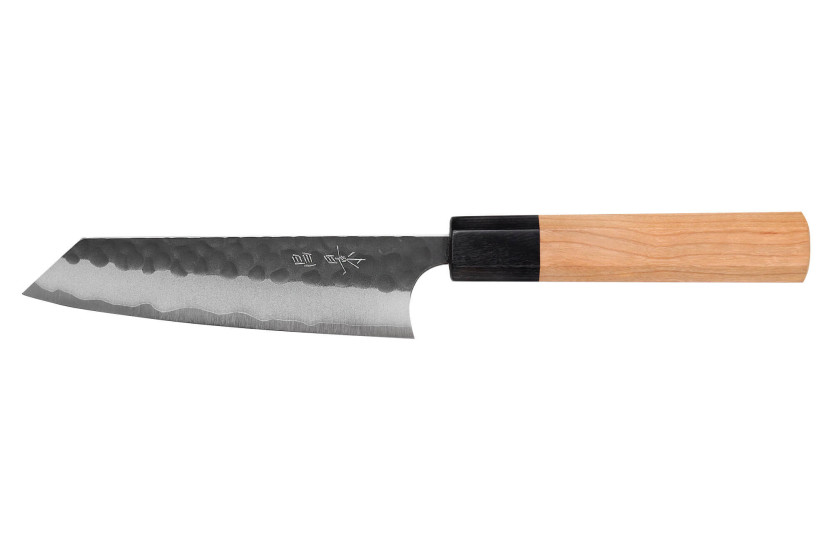
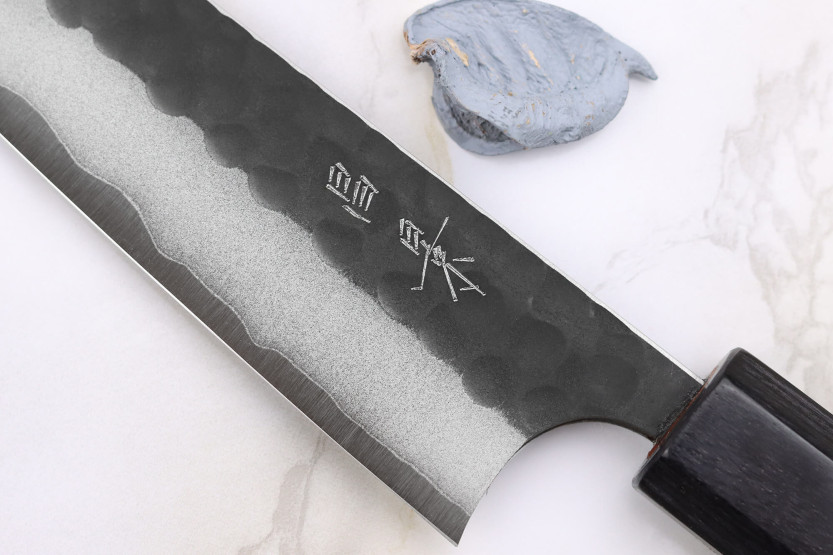
The Masakage Koishi ko-bunka knife features a forged blade based on a San Maï structure, composed of three superimposed layers of steel. At the heart of this structure is carbon-enriched Aogami Super steel (also known as Blue Super Steel), produced by Hitachi steelworks in Japan. Around this core, a layer of stainless steel is folded in half, forming the three layers of the structure. This top layer helps to balance Aogami's rigidity by giving it a slight suppleness, not in terms of flexibility, but rather by balancing the alloys.
The carbon content of Blue Super Steel is around 1.5%. By comparison, the Western average is around 0.5% for a good kitchen knife, so it's easy to see why the steel used here is remarkable! Carbon is a key element in reinforcing the rigidity of an alloy (in this case, 65HRC Rockwell hardness), guaranteeing a long-lasting cutting edge over many uses. Aogami steel is renowned for its effectiveness on fibrous foods.
It is also important to note that, despite its high rigidity, Aogami steel remains easy to sharpen when necessary.
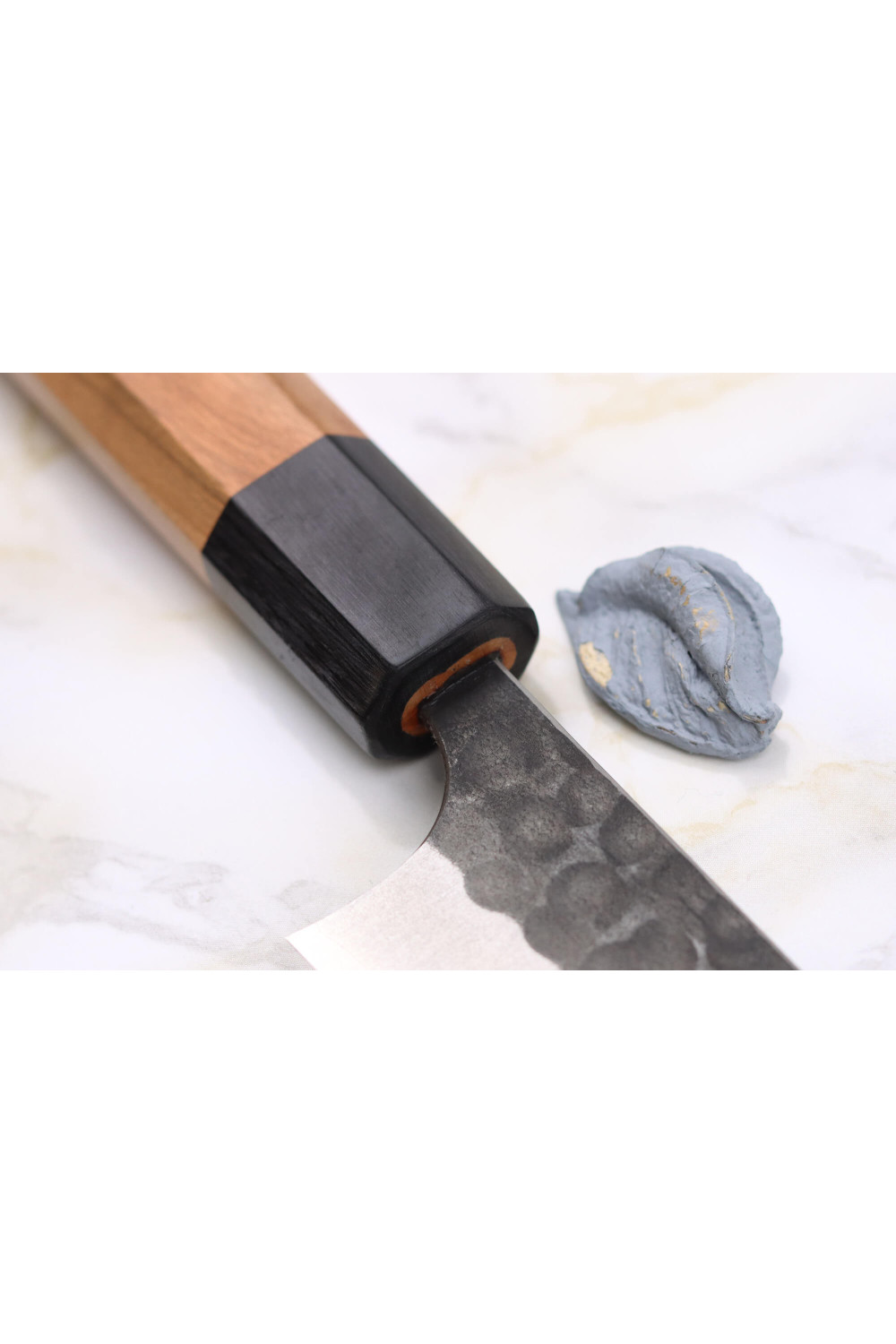
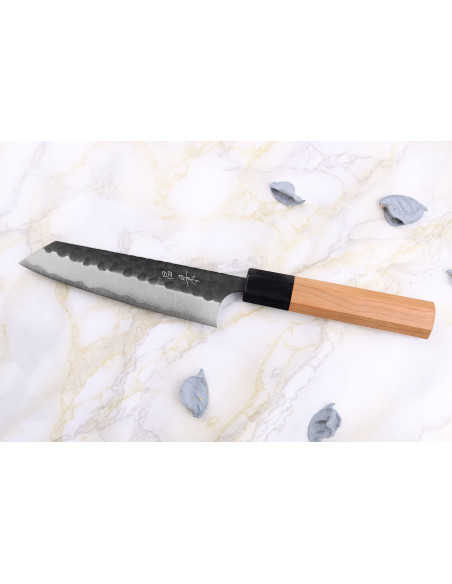
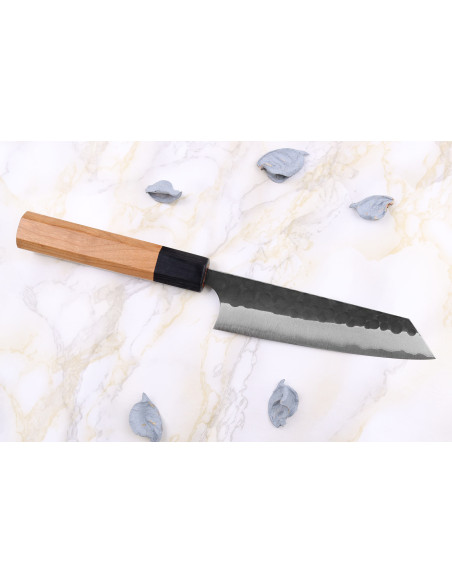
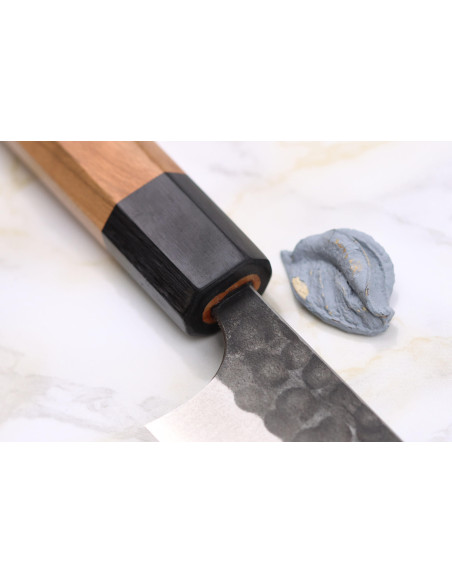
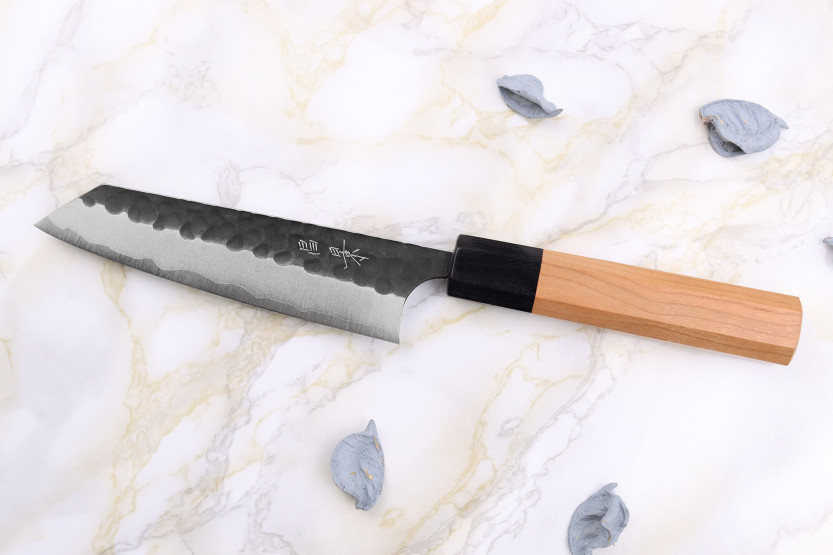
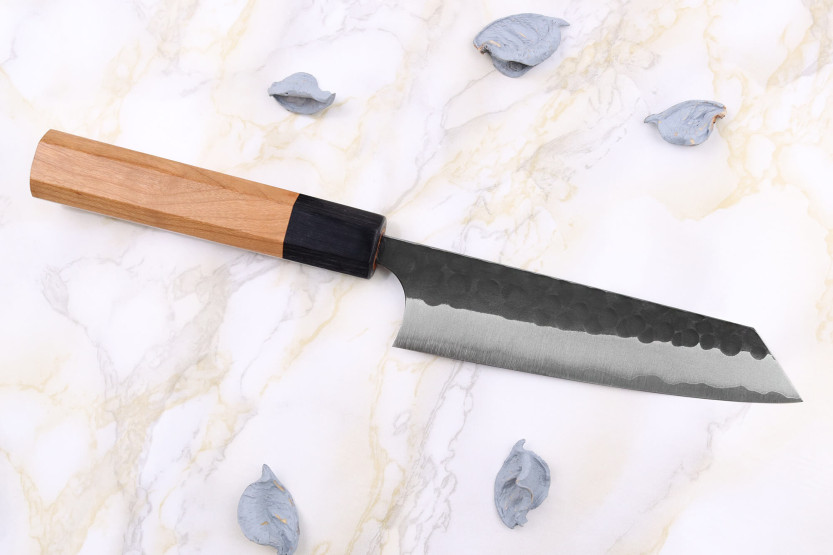
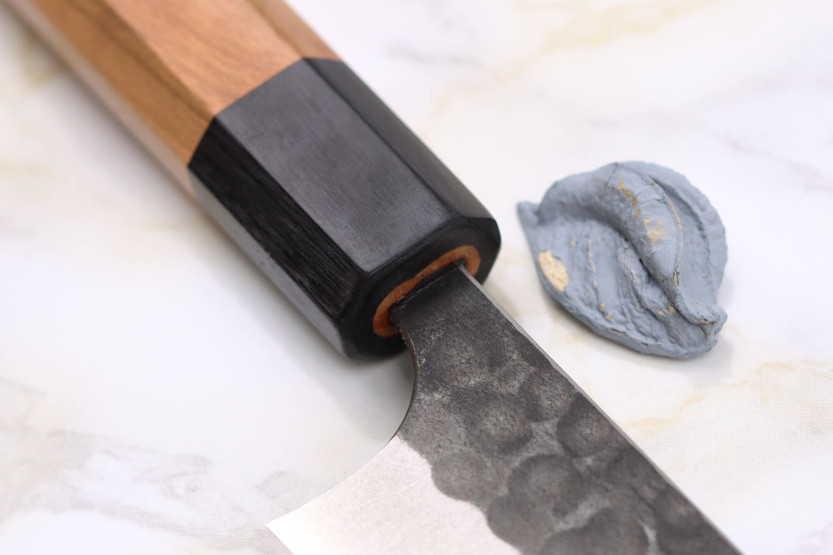
Surrounded by its layer of stainless steel, this handcrafted knife boasts a rough forged finish, giving it a traditional charm much appreciated by Japanese chefs. Its distinctive hammering adds character to this brut de forge knife. In fact, the name of the range, Koishi, which means "pebbles" in Japanese, is inspired by this knife's unique hammering!
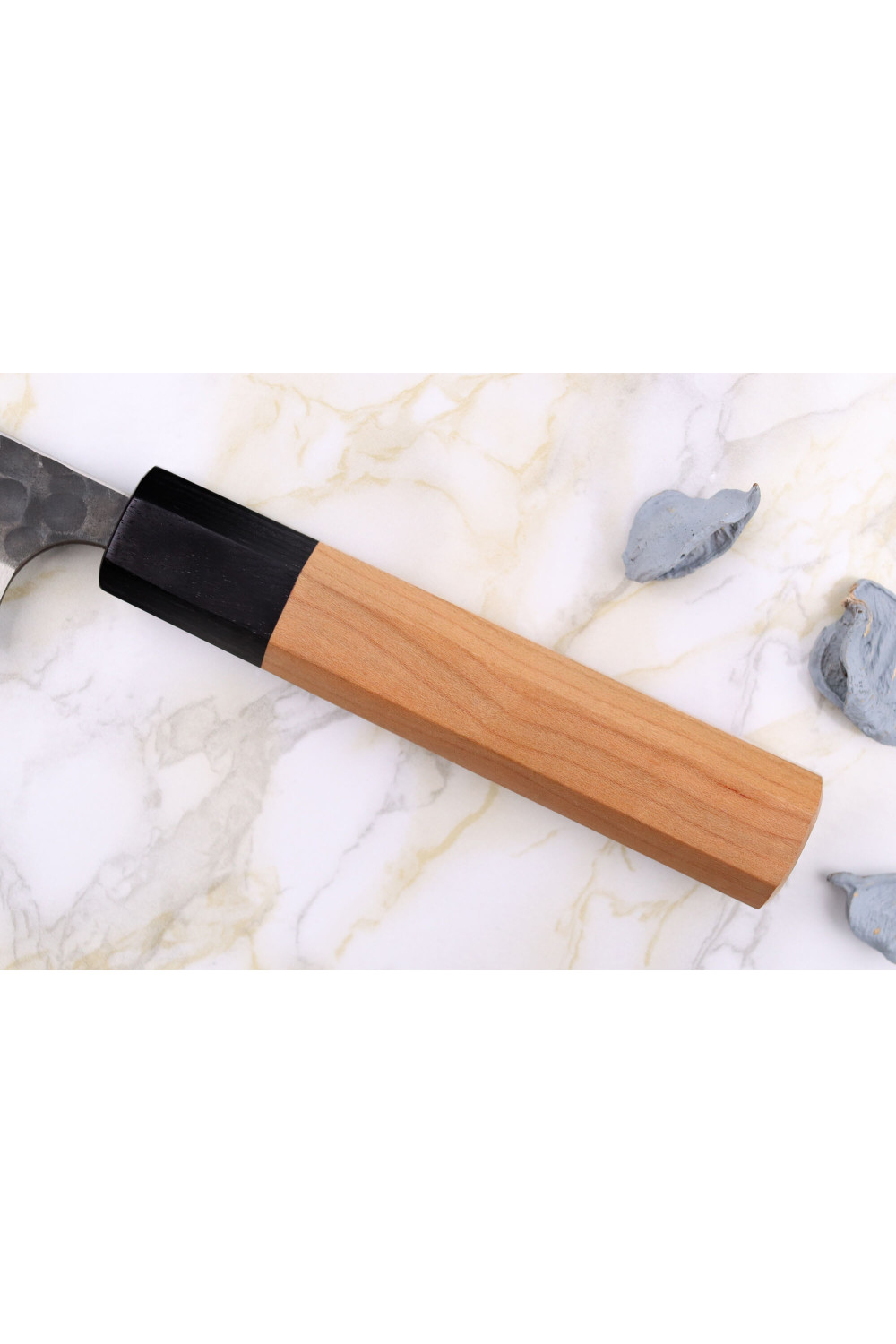
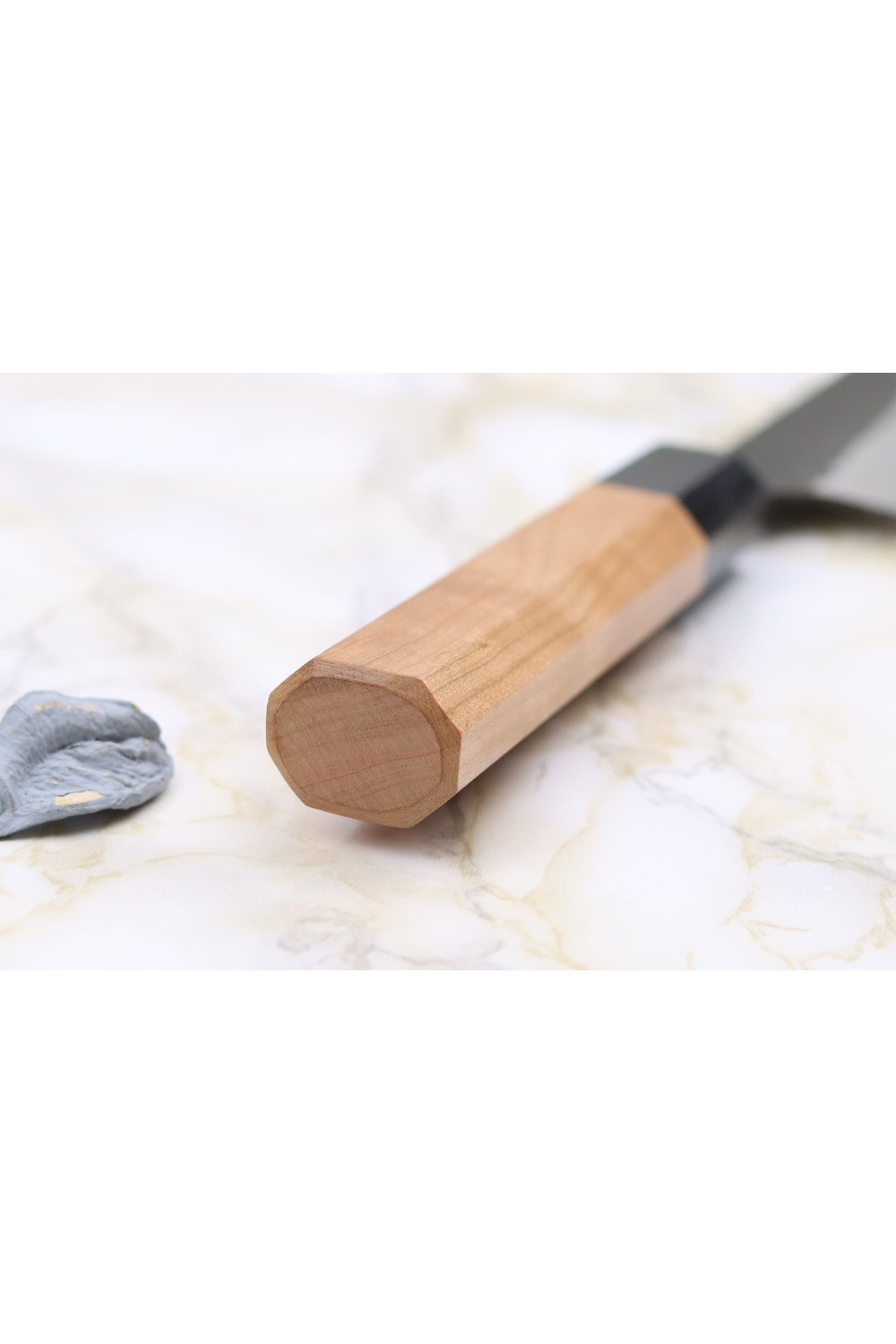
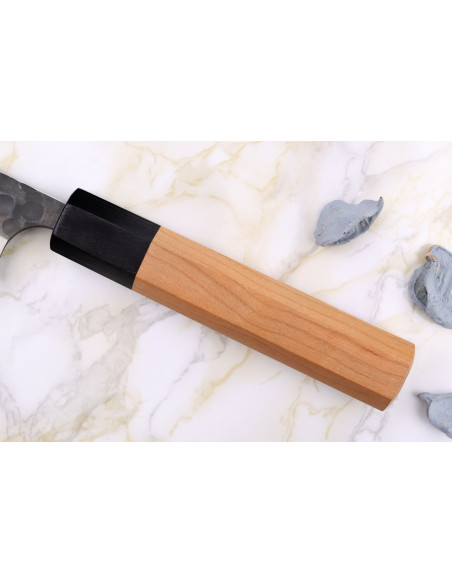
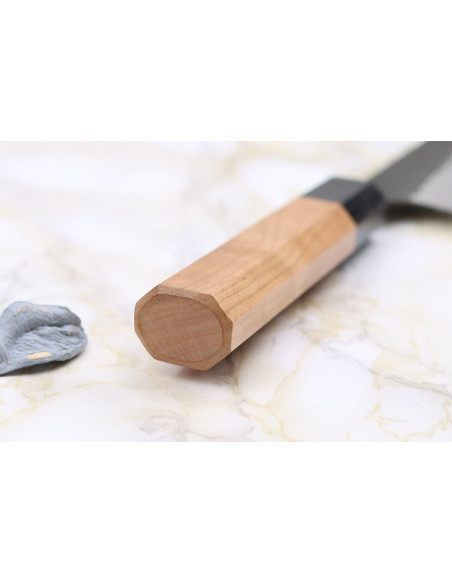
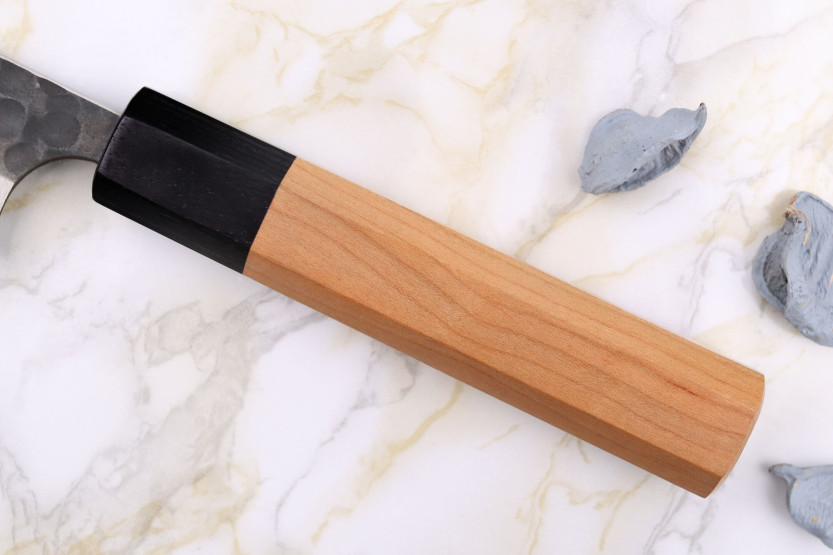
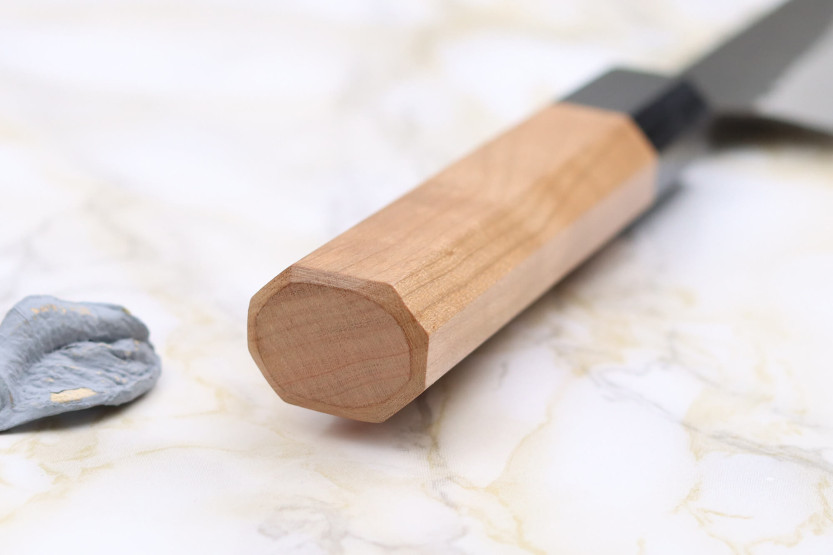
The handle of this Japanese kitchen knife is made from cherry wood, a species renowned for its durability and remarkable aesthetics. Its octagonal shape fits perfectly into the palm of the hand, providing a comfortable grip for right- and left-handed users alike!
A bolster made of black pakka wood, an antibacterial, moisture-resistant composite material, links the blade to the handle. The junction between the blade and the bolster is filled with wood putty to ensure a watertight seal and prevent water from penetrating the inside of the handle.
Caring for a carbon Japanese knife
Due to its high carbon content, this ko-bunka knife is considered oxidizable (despite the presence of a layer of stainless steel on the top). It is therefore essential to hand-wash and wipe regularly during use to prevent the acidity of food from damaging the blade. Use a mild soap and lukewarm water, avoiding abrasive sponges. Then dry with a soft cloth to remove any moisture from the blade and wooden handle.
Over time, the color of your blade may change slightly - this is normal! This is a natural carbon reaction caused by the acidity of the food you are cutting and the humidity in the air.
For more thorough maintenance, you can apply mineral oil to the blade from time to time.
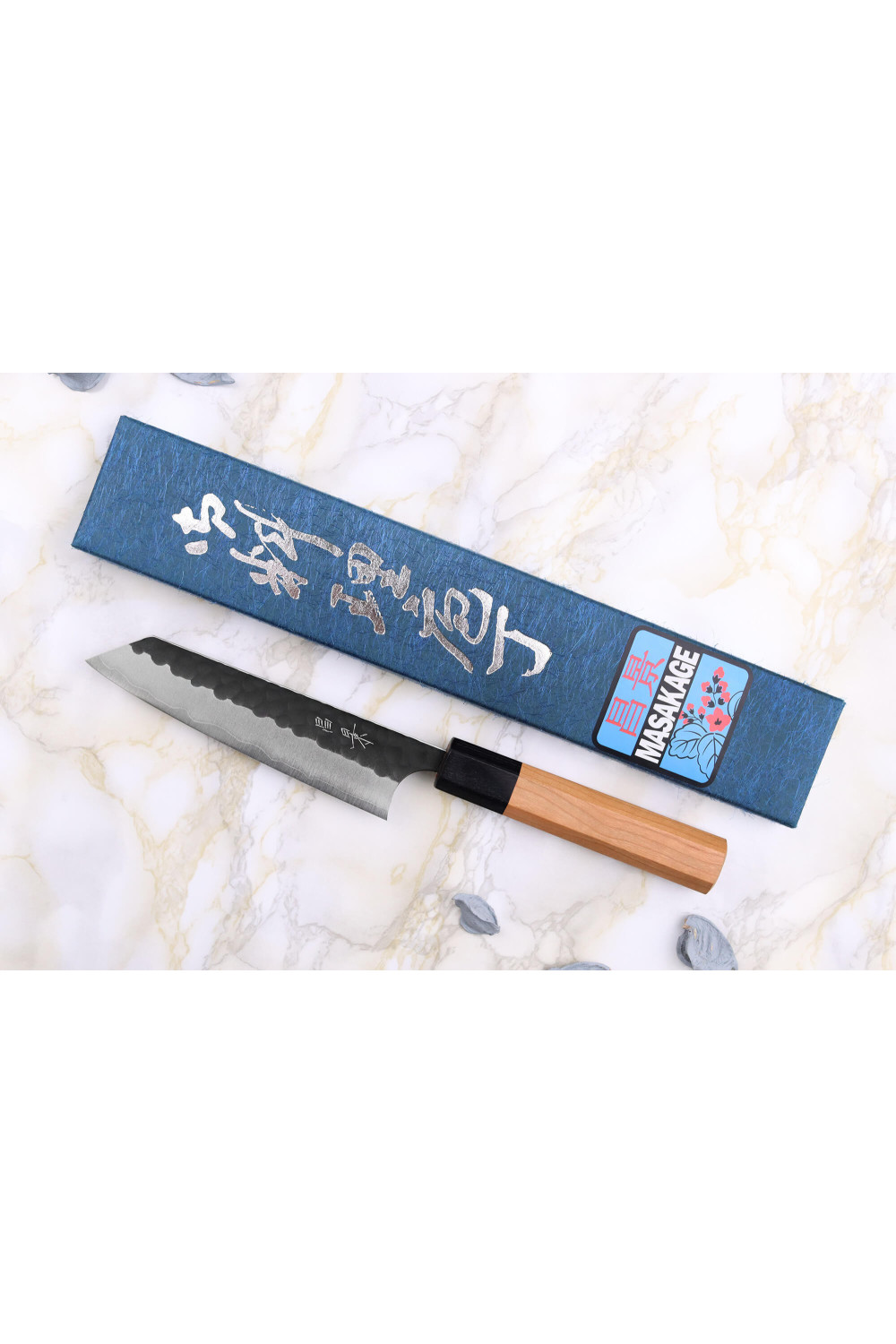
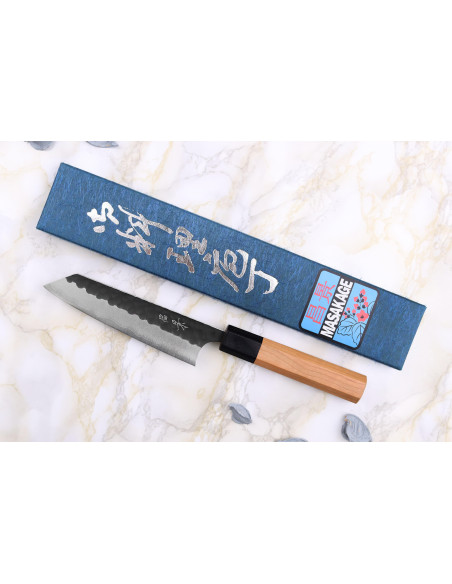
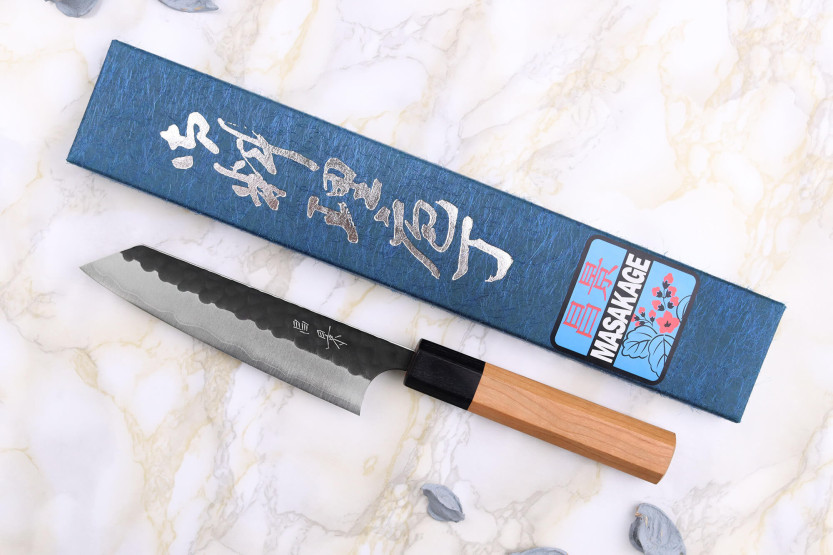
This knife comes in a sober, traditional blue box.
Find other Masakage Japanese knives on KnifeLeader.eu!




 By buying this product you can collect up to