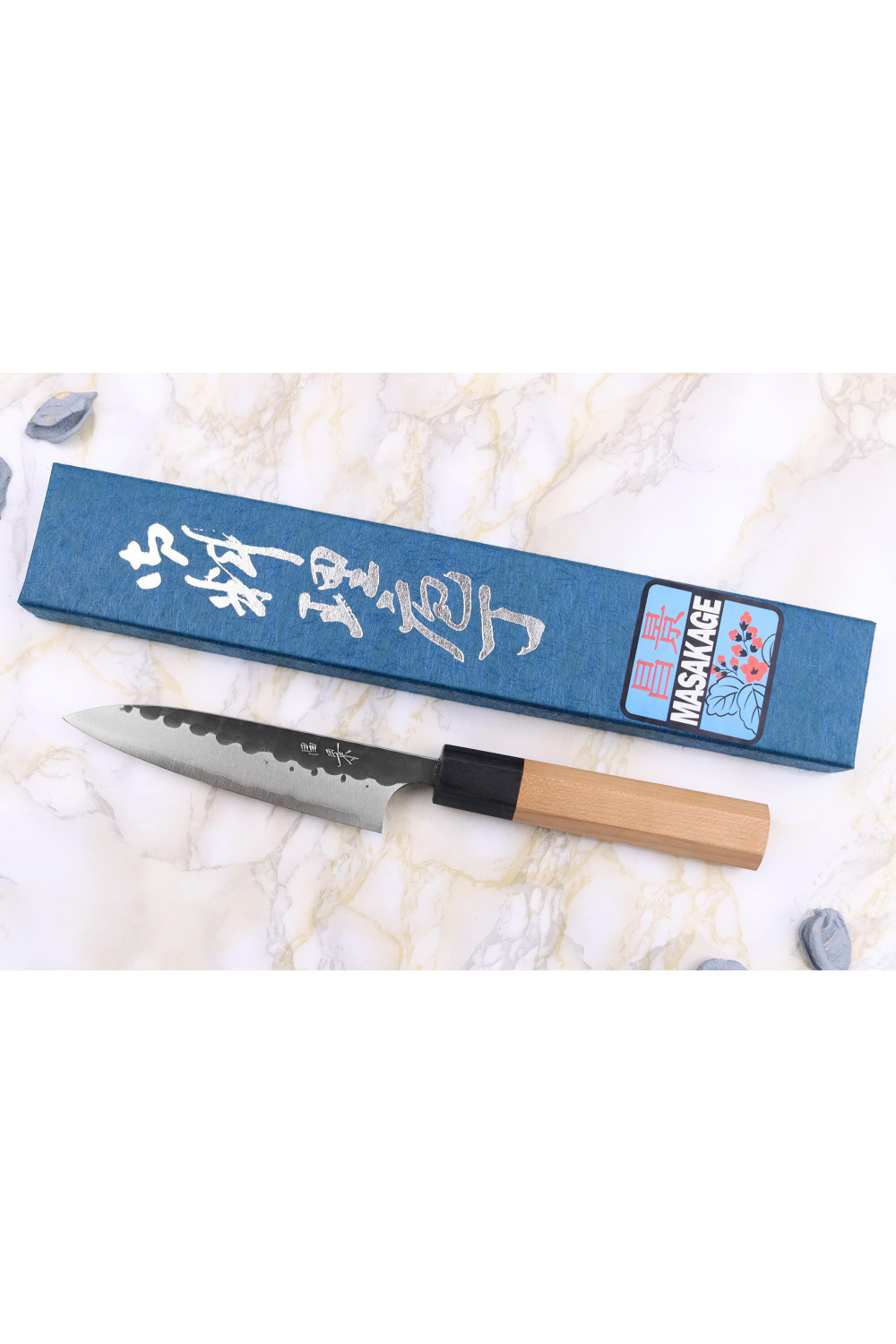
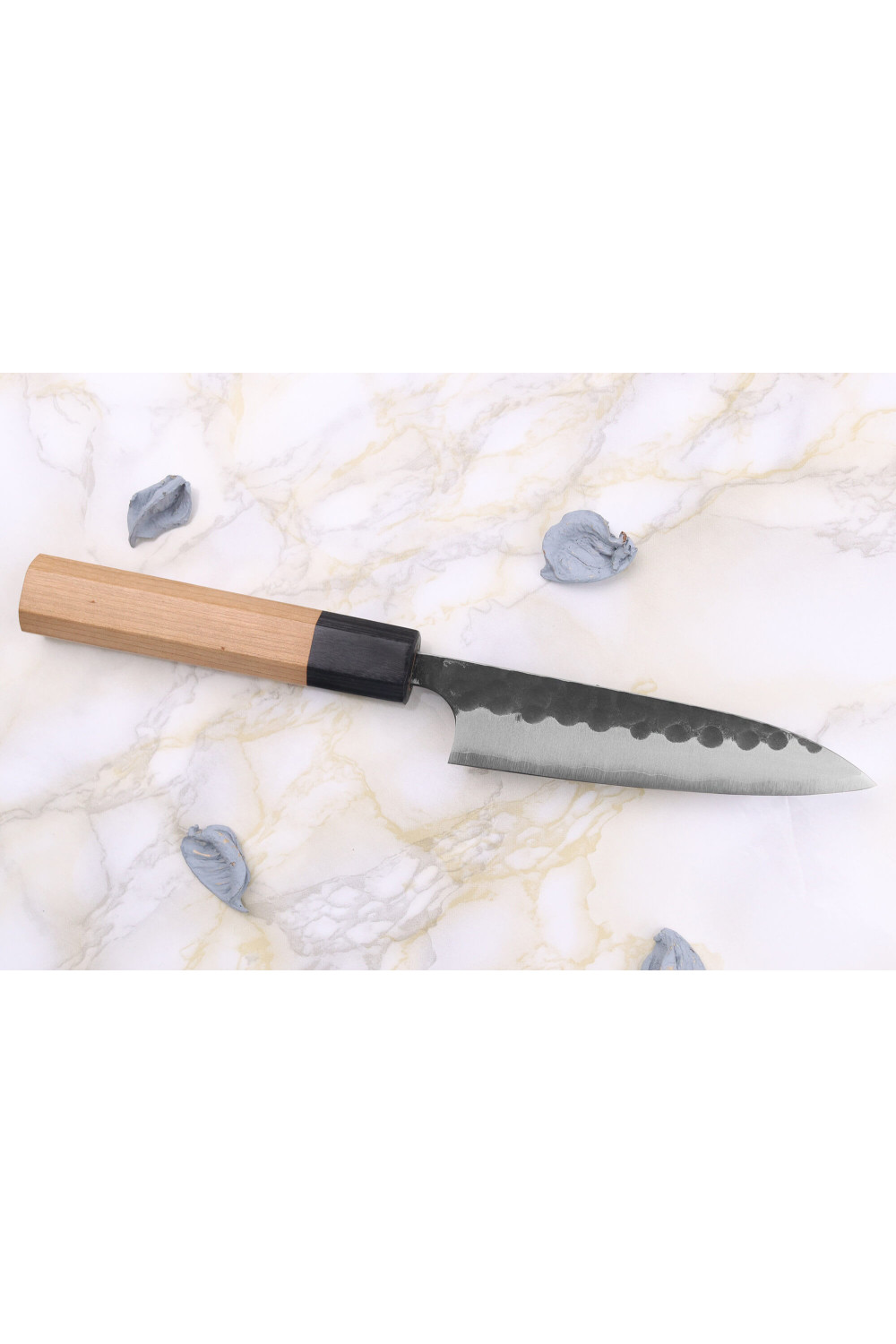
Masakage Koishi Japanese knives are handcrafted by Yoshimi Kato, a renowned Japanese blacksmith. Thanks to his excellent reputation, he offers top-quality Japanese kitchen knives!
Yoshimi Kato was trained by renowned master cutlers, including his father-in-law Hiroshi Kato, a respected figure worldwide. He is one of the founding members of the Takefu Cutlery Village, a place where blacksmiths share their skills, experience and equipment. On his master's retirement, Yoshimi Kato took over his workshop, continuing the production of his predecessor's ranges while creating his own collections.
The Japanese knife forged by an acknowledged master
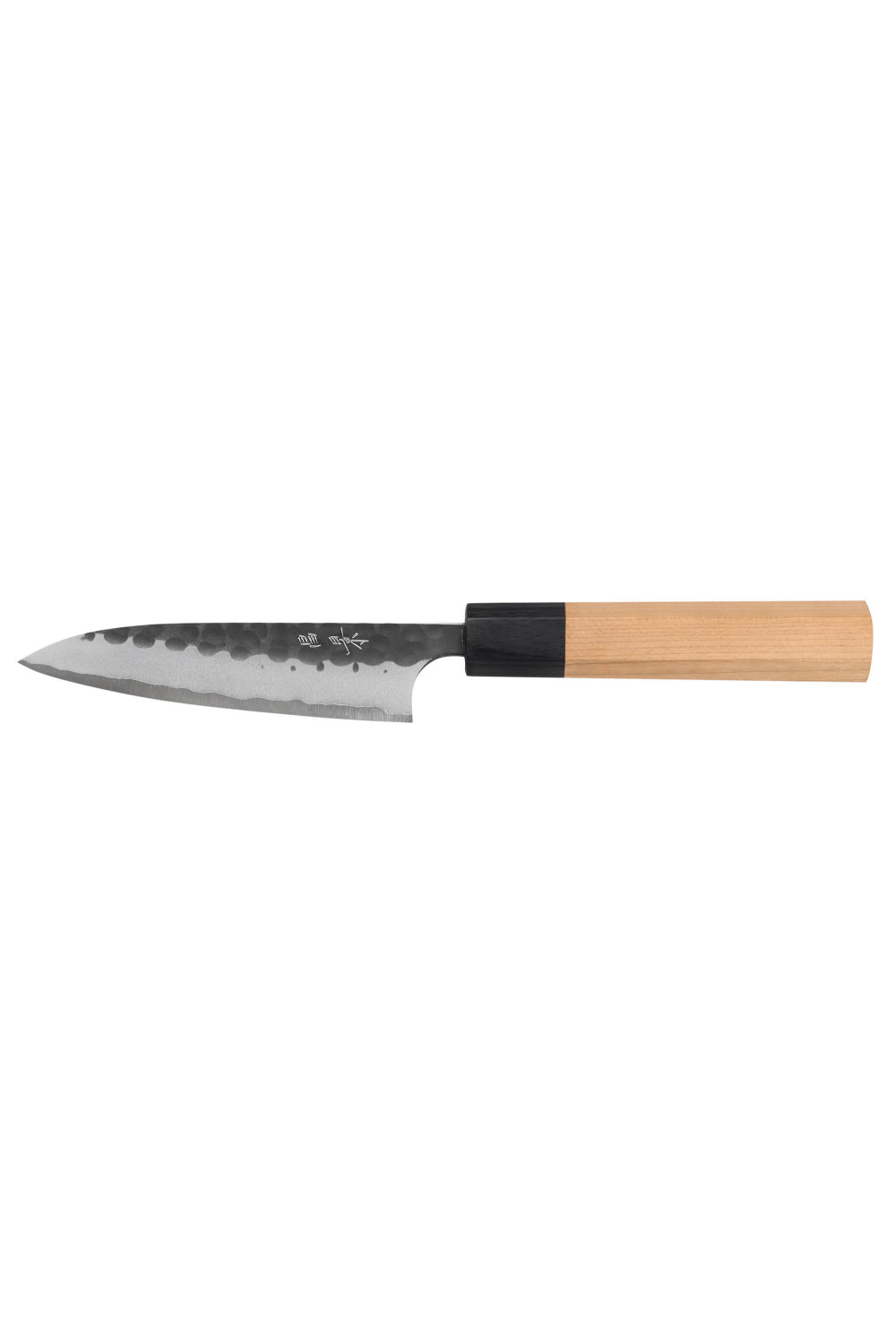
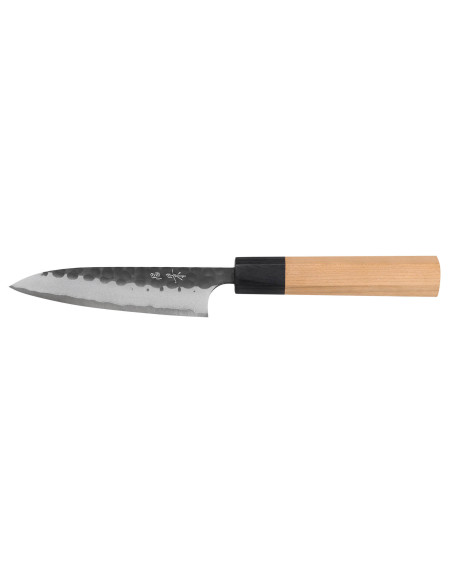
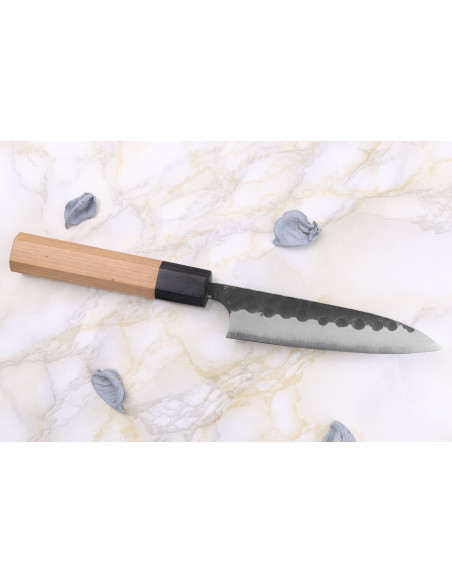
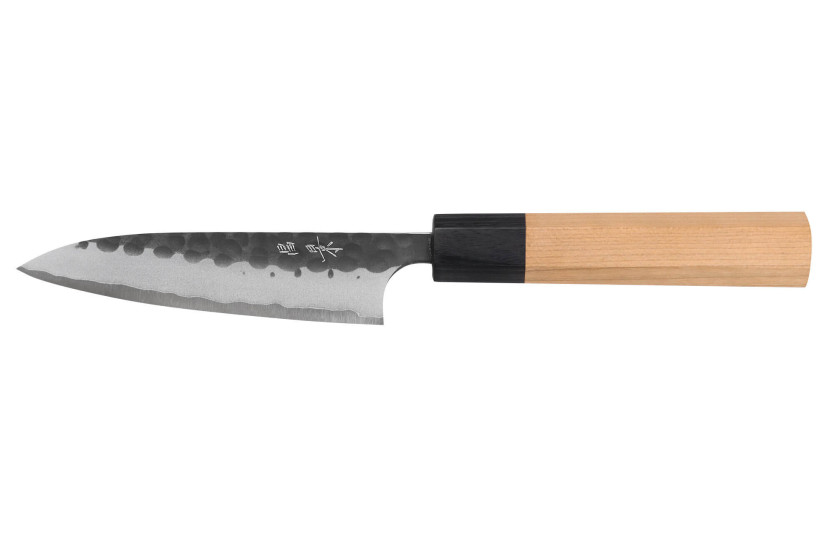
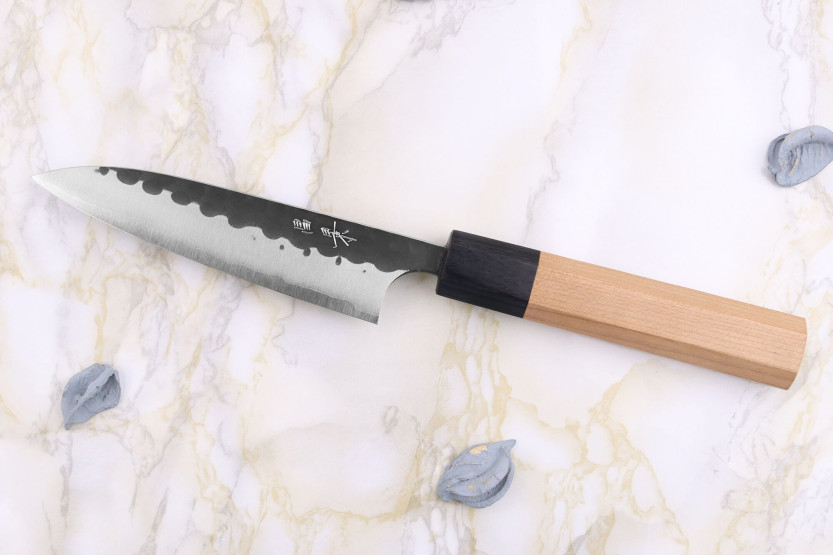
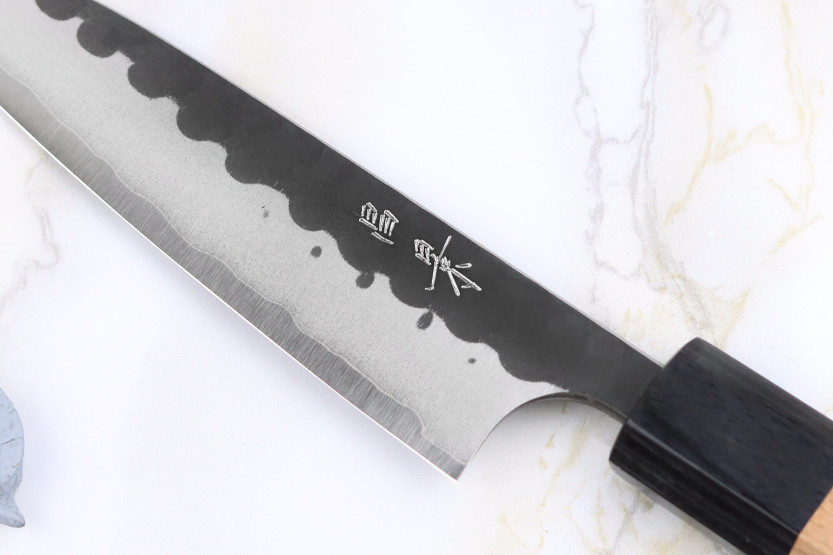
This all-purpose knife features a blade forged using the Japanese San Maï technique, which means "three layers". Its core is made of Aogami Super (or Blue Super Steel), a carbon-rich steel produced by Hitachi. This core is then enveloped by a folded-over layer of stainless steel, balancing the hardness of the Aogami by adding softness, without making the blade flexible.
Blue Super Steel contains around 1.5% carbon, well above the Western average of around 0.5% for a good kitchen knife. So this alloy is particularly remarkable! Carbon is essential for increasing the hardness of steel, and for this Masakage knife, the blade achieves a hardness of 65HRC on the Rockwell scale. This guarantees excellent edge retention and a high-performance cutting edge. Aogami steel is especially renowned for its effectiveness on fibrous foods.
Despite its high hardness, Aogami steel is easy to stone-sharpen when necessary. What's more, the blade'sflat cutting edge is easy to reproduce. Flat edging is also appreciated for its aesthetic appeal and sturdiness!
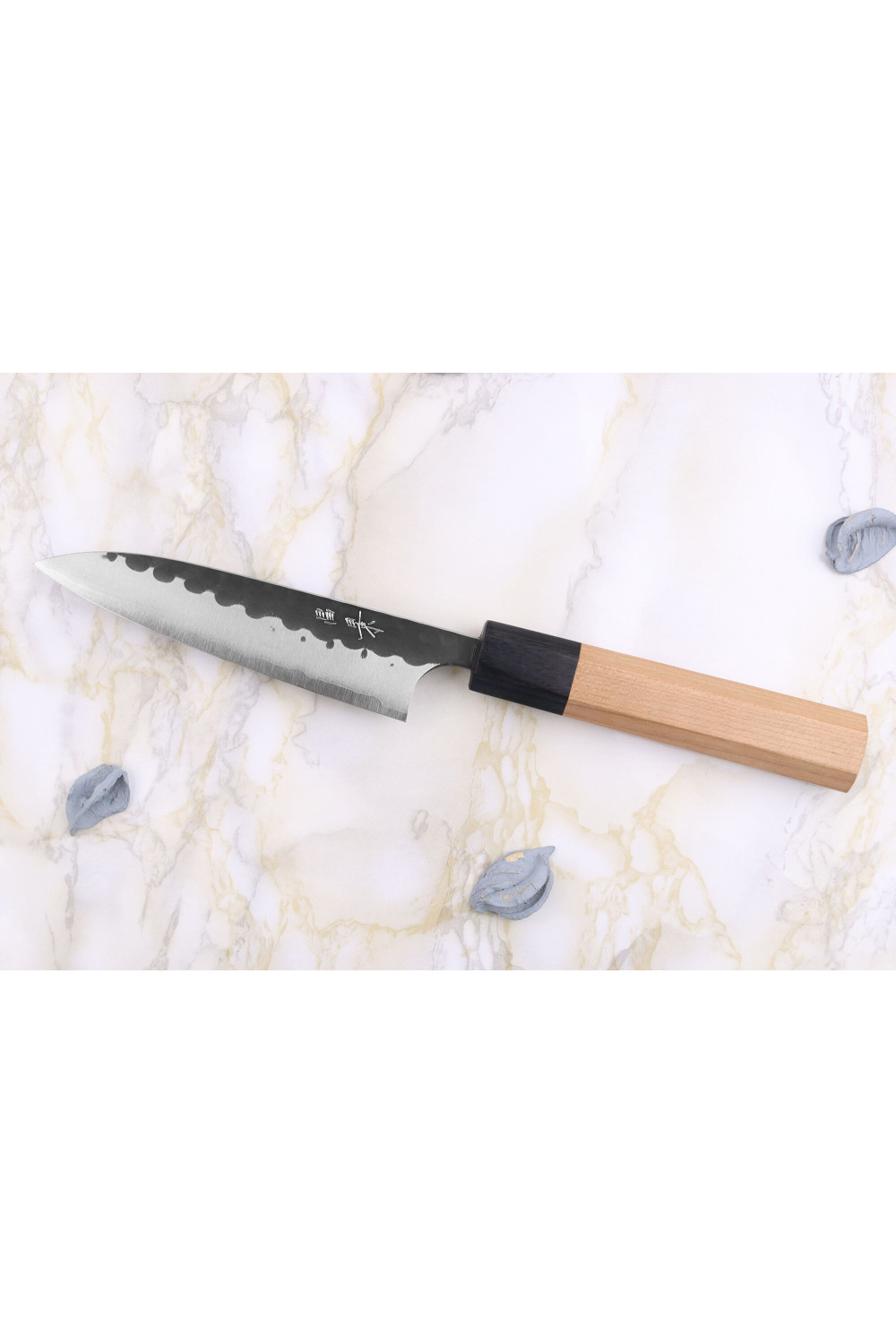
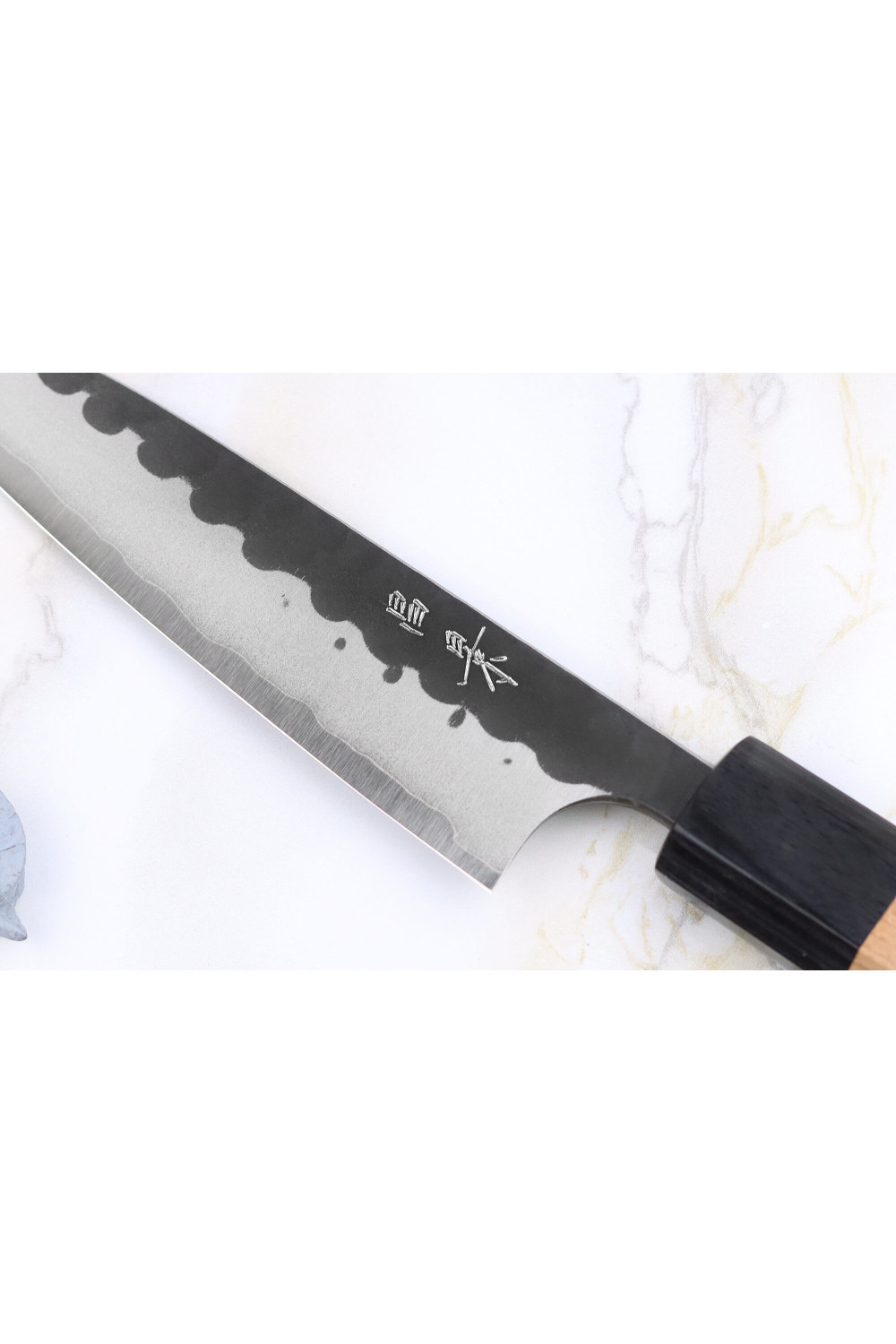
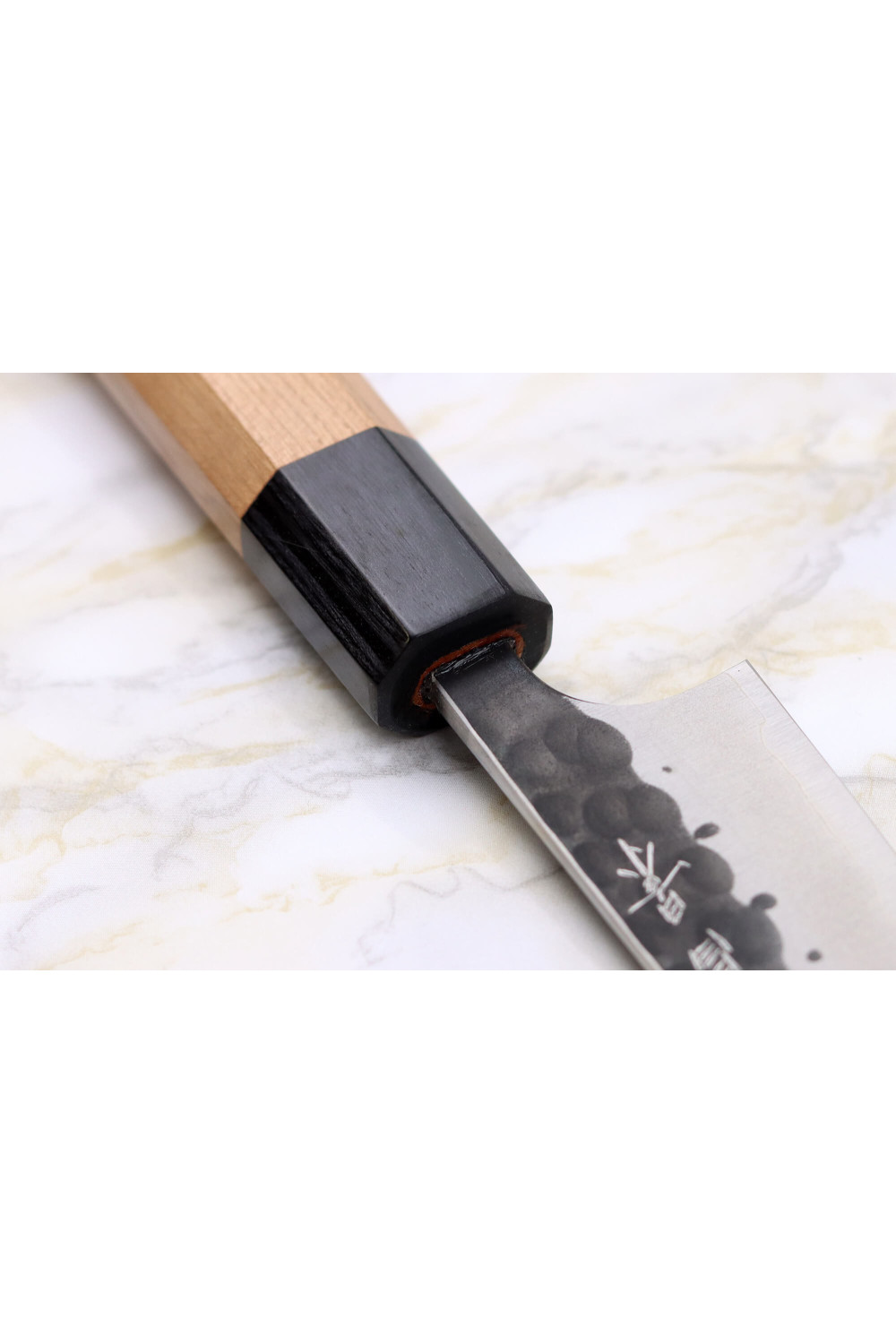
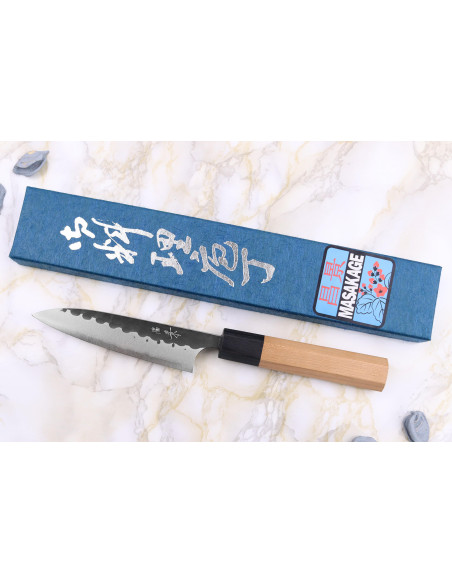
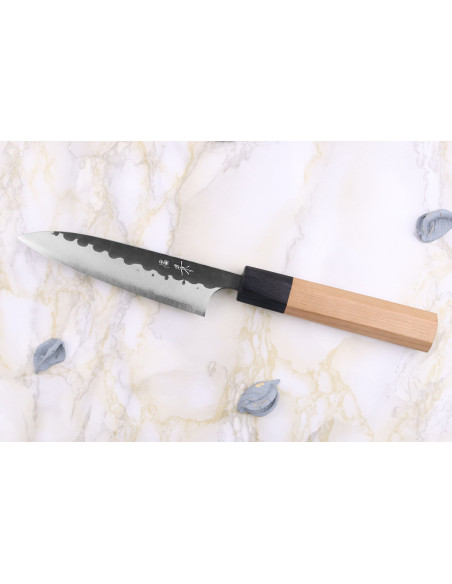
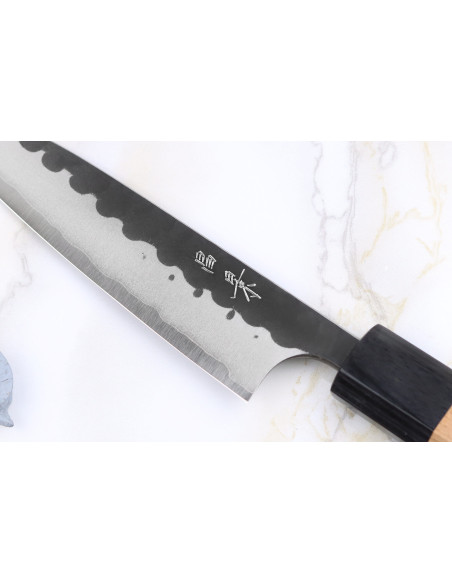
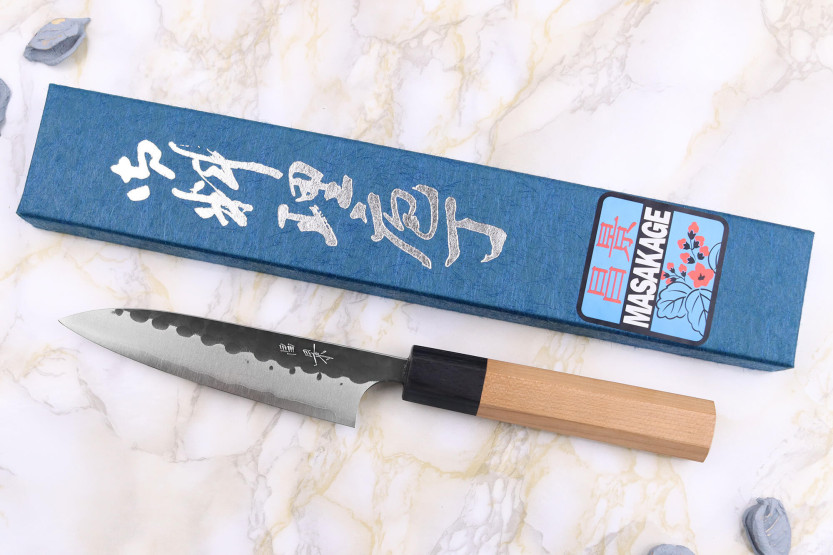
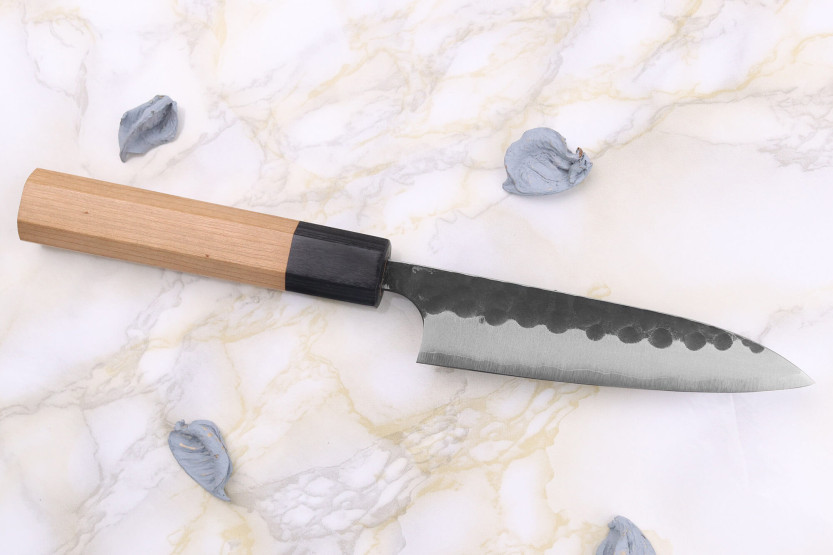
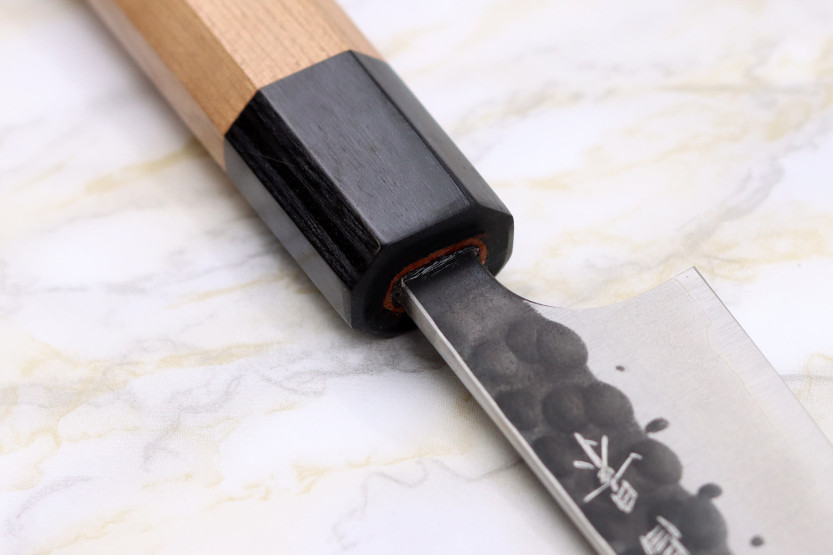
This handcrafted Japanese knife is distinguished by its rough forged finish, giving it an authentic, traditional character. Very popular with Japanese chefs, this finish adds a touch of rusticity. The blade is also hammered, a distinctive detail that gives the Koishi range its name, meaning "pebble" in Japanese.

(Hiroshi san on the left and Yoshimi san on the right)
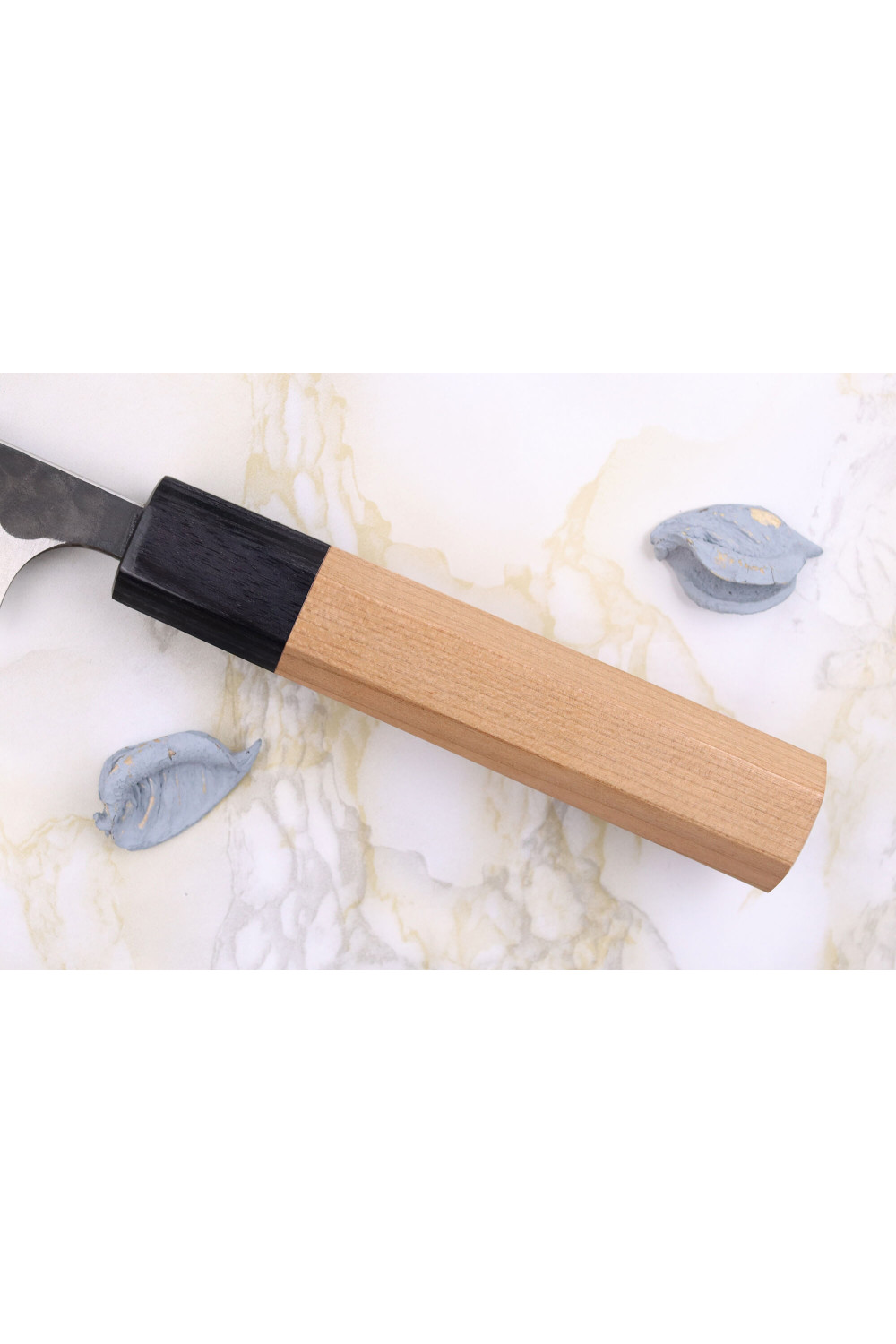
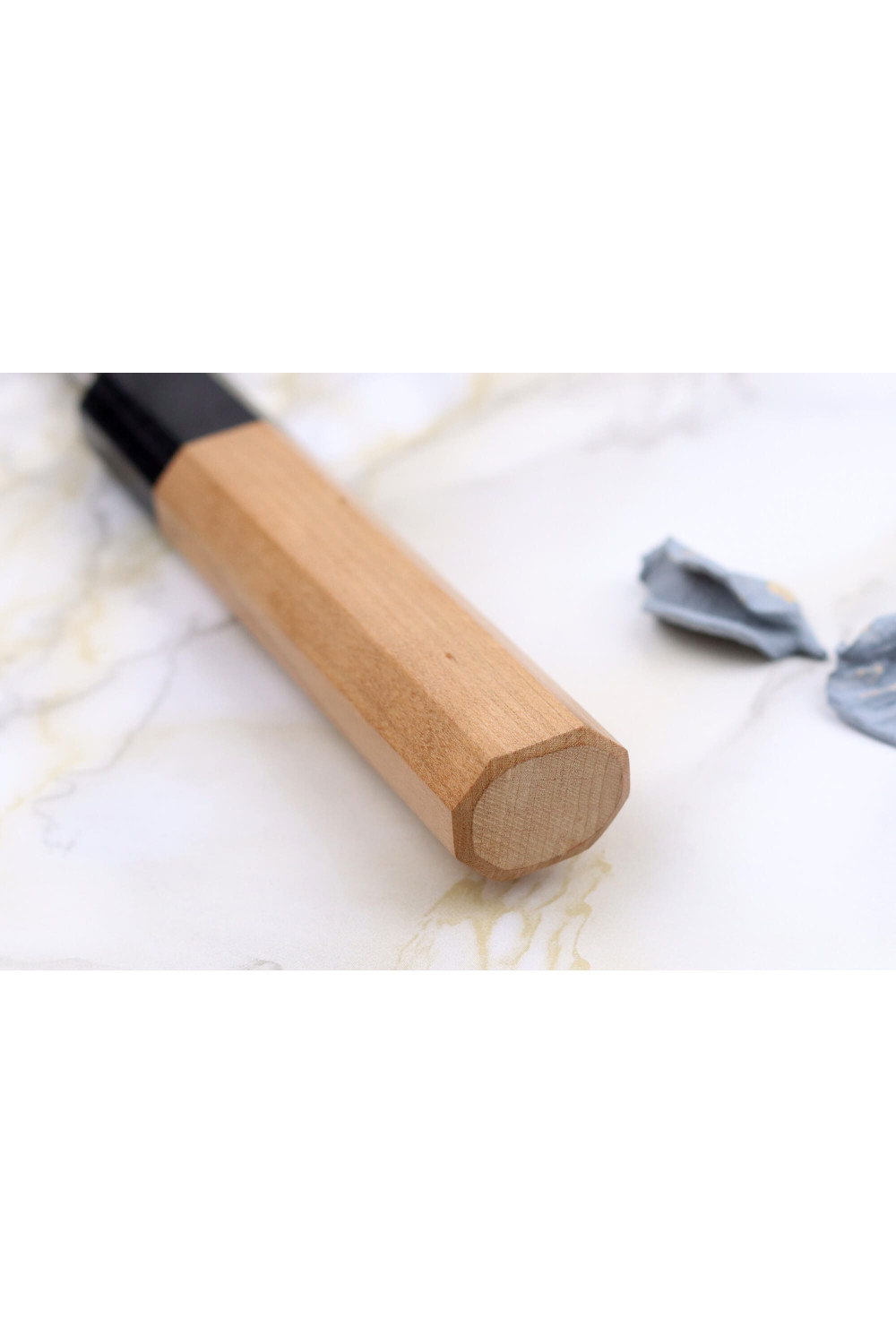
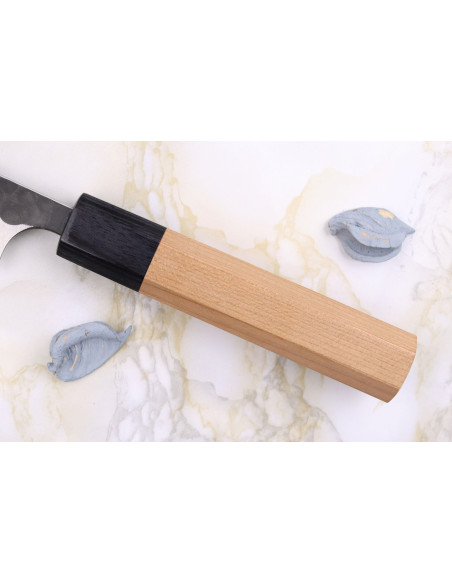
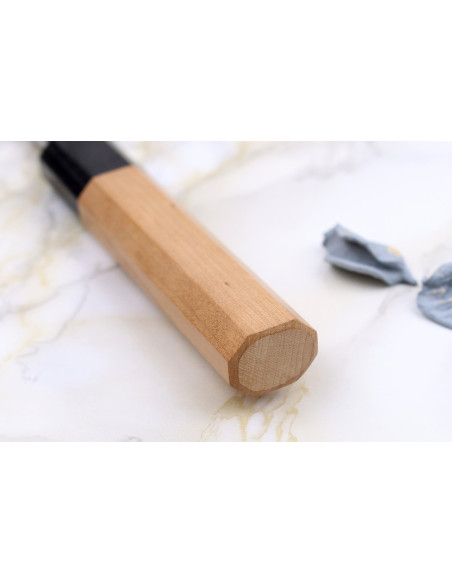
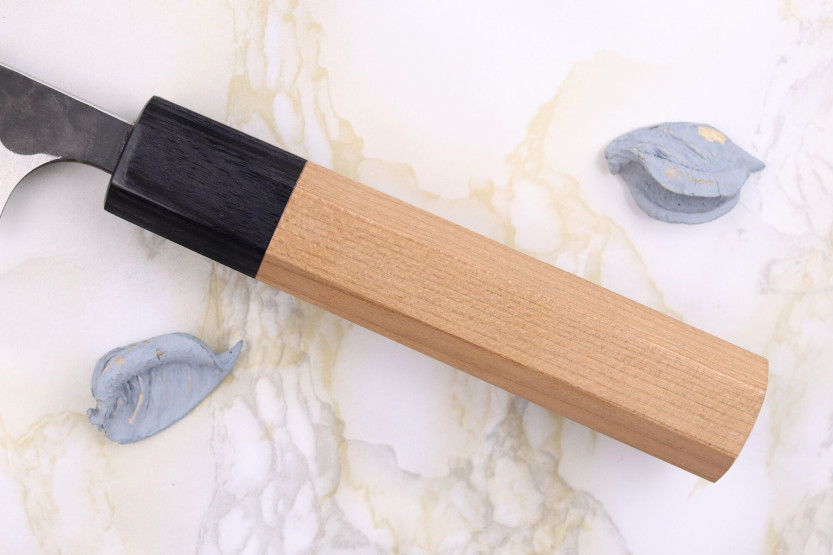
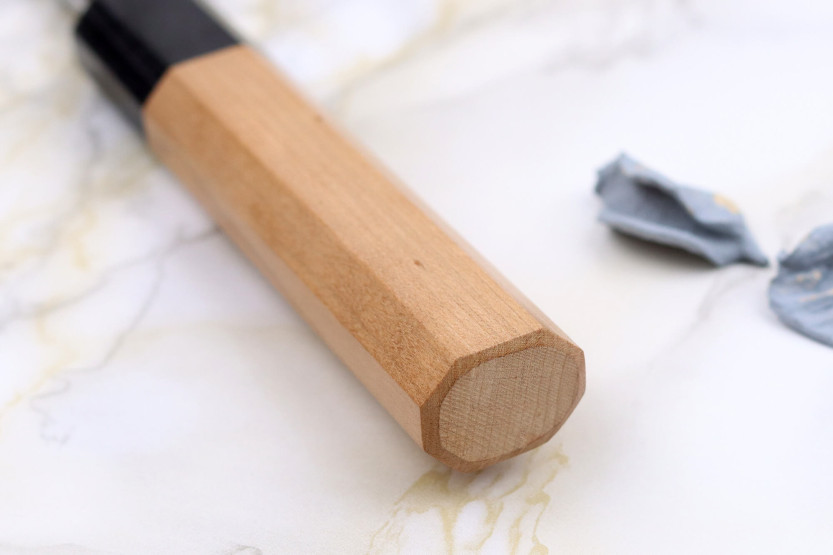
The handle of this knife is made from cherry wood, a strong, durable Japanese species renowned for its light color and discreet veining, offering a natural elegance. This wood is complemented by a bolster in black pakkawood, a composite material composed of resin and laminated wood, creating a contrast with the rest of the handle.
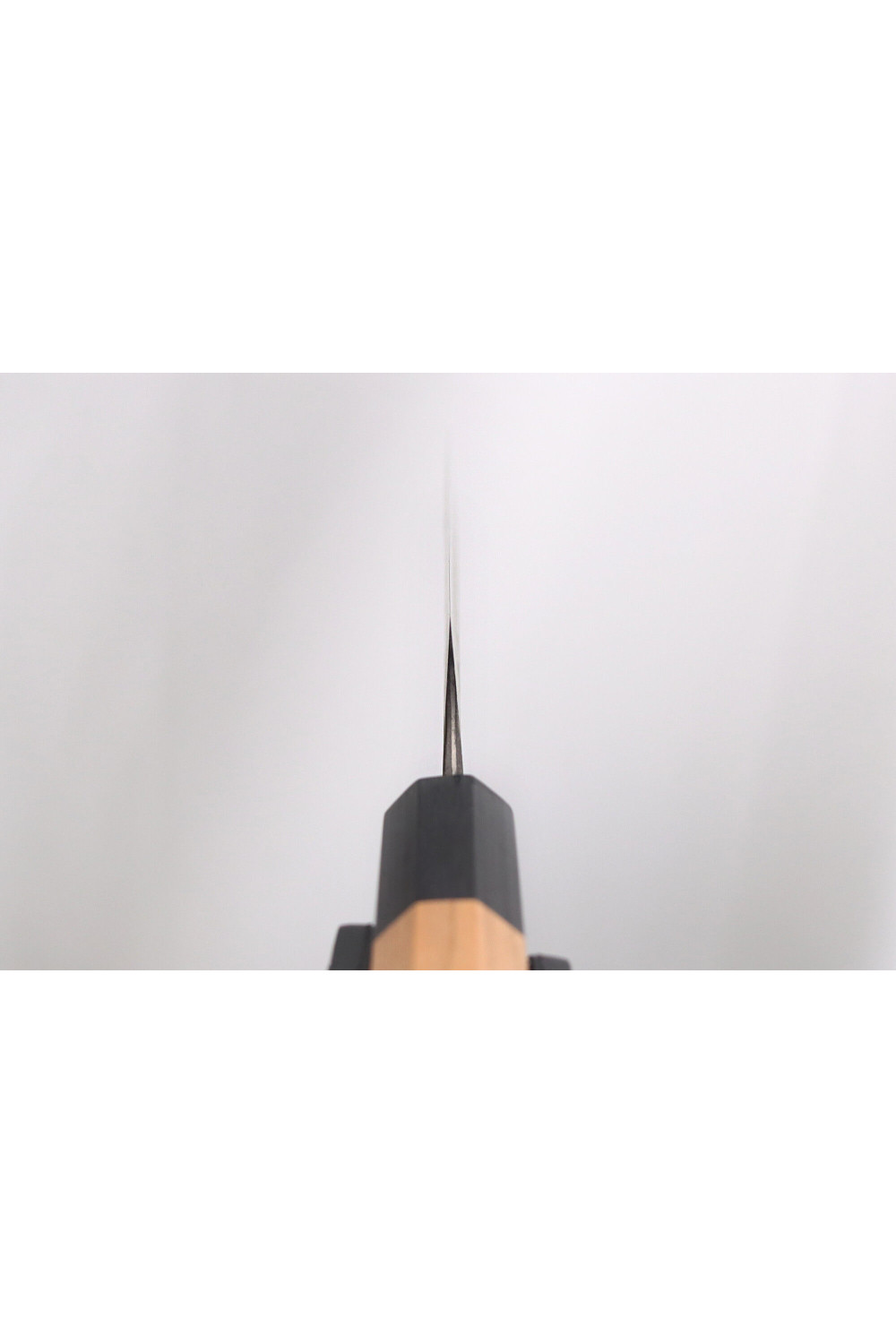
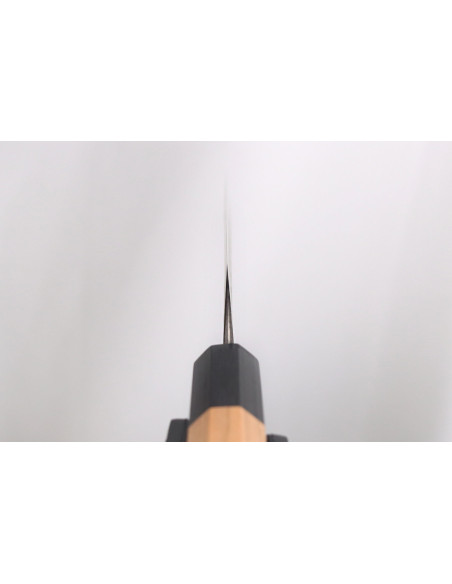
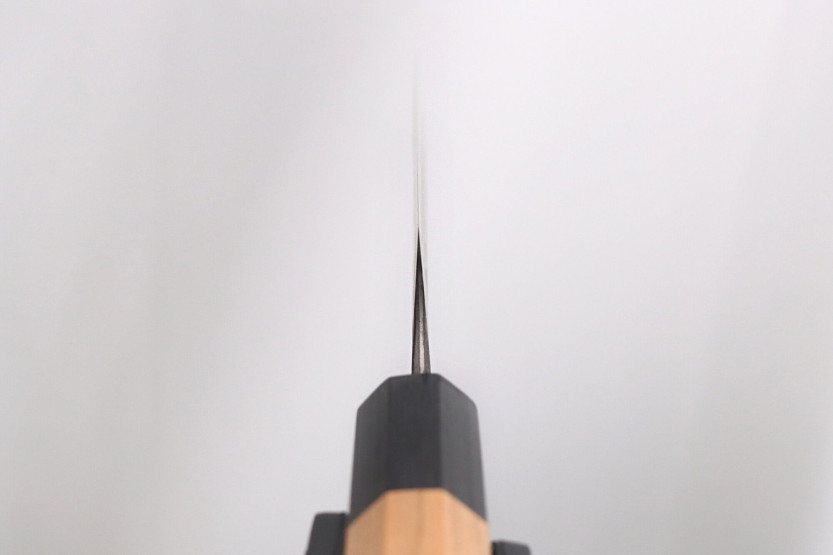
The handle of this handcrafted Japanese knife is octagonal in shape, making it perfectly suited to both left- and right-handed users. It ensures an ergonomic grip, offering optimum comfort, even during prolonged use in the kitchen!
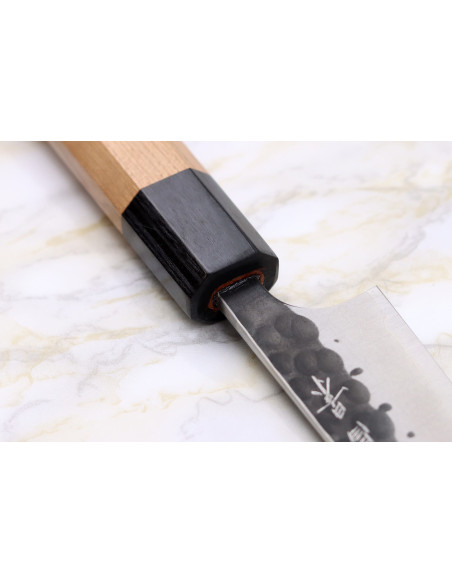
What's more, wood putty has been applied to the junction between blade and handle to fill any small gaps, guaranteeing a complete seal. This prevents water or food residues from seeping inside.
How do I care for a Japanese carbon kitchen knife?
Although this universal Japanese knife is coated with a layer of stainless steel, it remains sensitive to oxidation and requires meticulous care. It is therefore essential to wash it only by hand with a non-abrasive sponge and a mild detergent, while avoiding wetting the handle. After washing, it should be dried immediately to avoid any trace of moisture, and stored in a dry place. It must not be put in the dishwasher or left to soak in water.
Over time, the blade may change color slightly, a normal phenomenon linked to the reaction of carbon with the acidity of food and ambient humidity. This in no way prevents the use of your Japanese knife!
For more thorough maintenance, we recommend applying a little mineral oil to the blade from time to time.
Find a wide range of Masakage Japanese knives on Knifeleader.eu !




 By buying this product you can collect up to