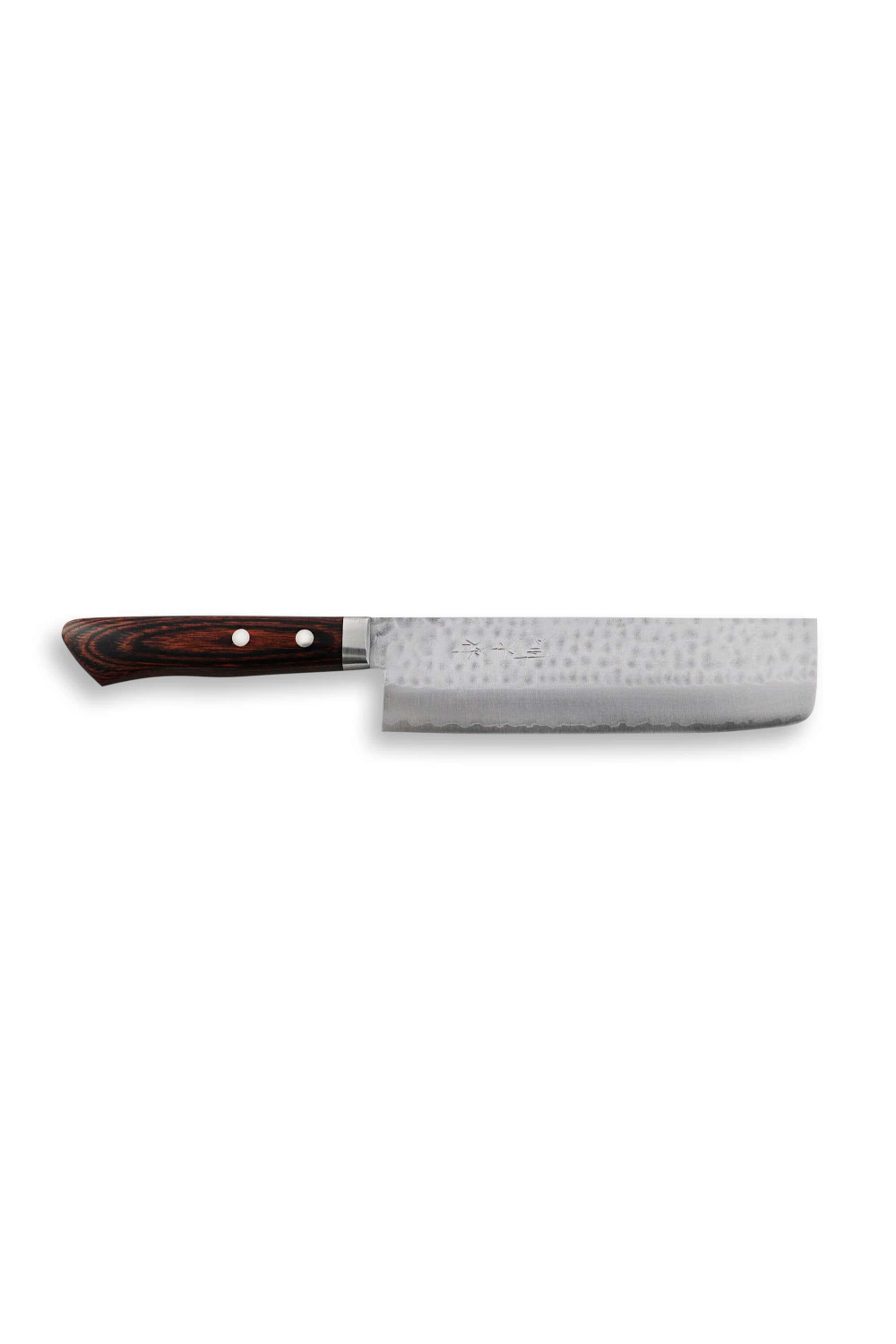
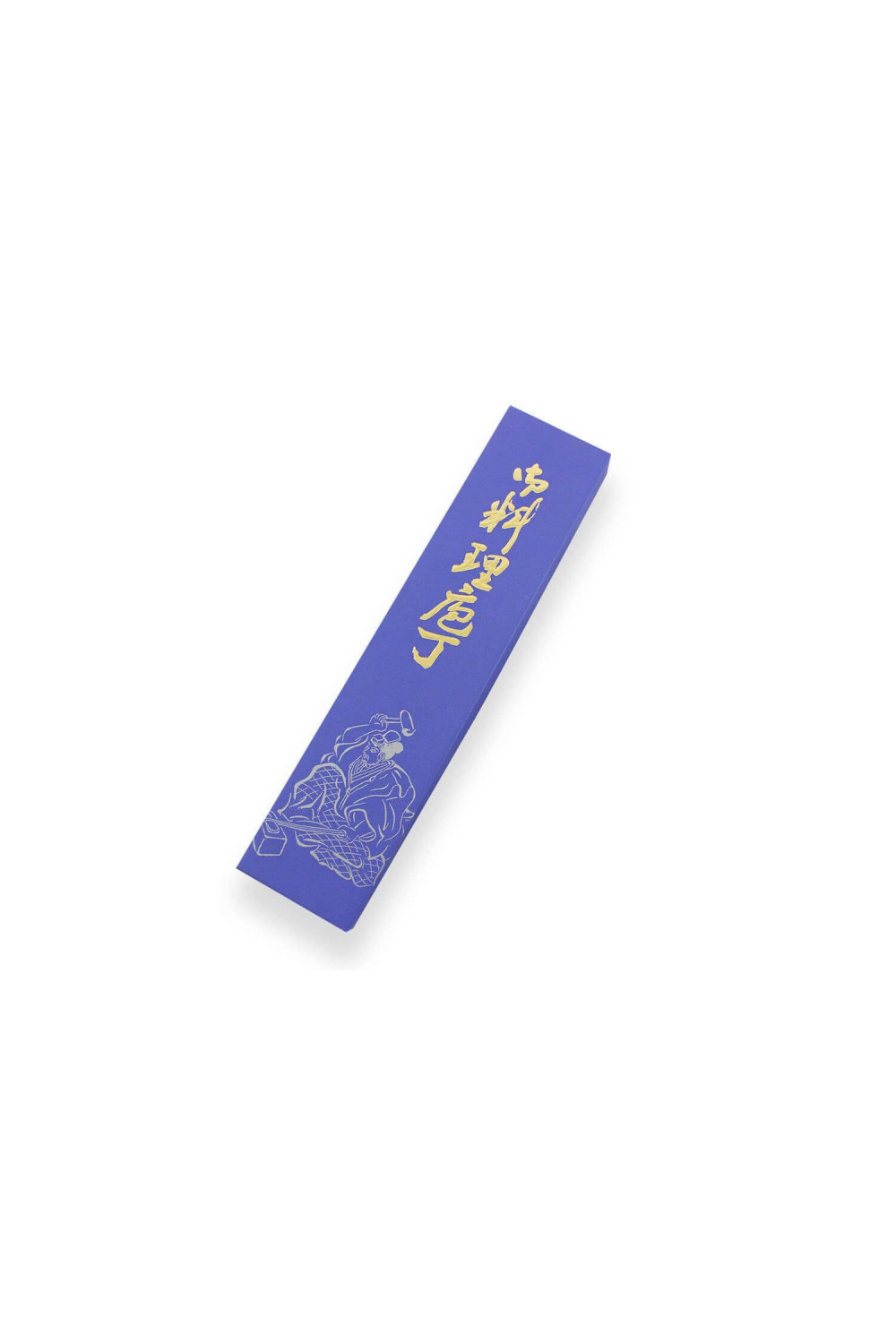
Masutani kitchen knives are handcrafted on Japan's Echizen coast. They are the bearers of incomparable know-how, handed down from ancient generations of Japanese blacksmiths, who made the swords of the Samurai. Japan is a land of cutlery tradition, and a Japanese knife is an investment that quickly pays for itself.
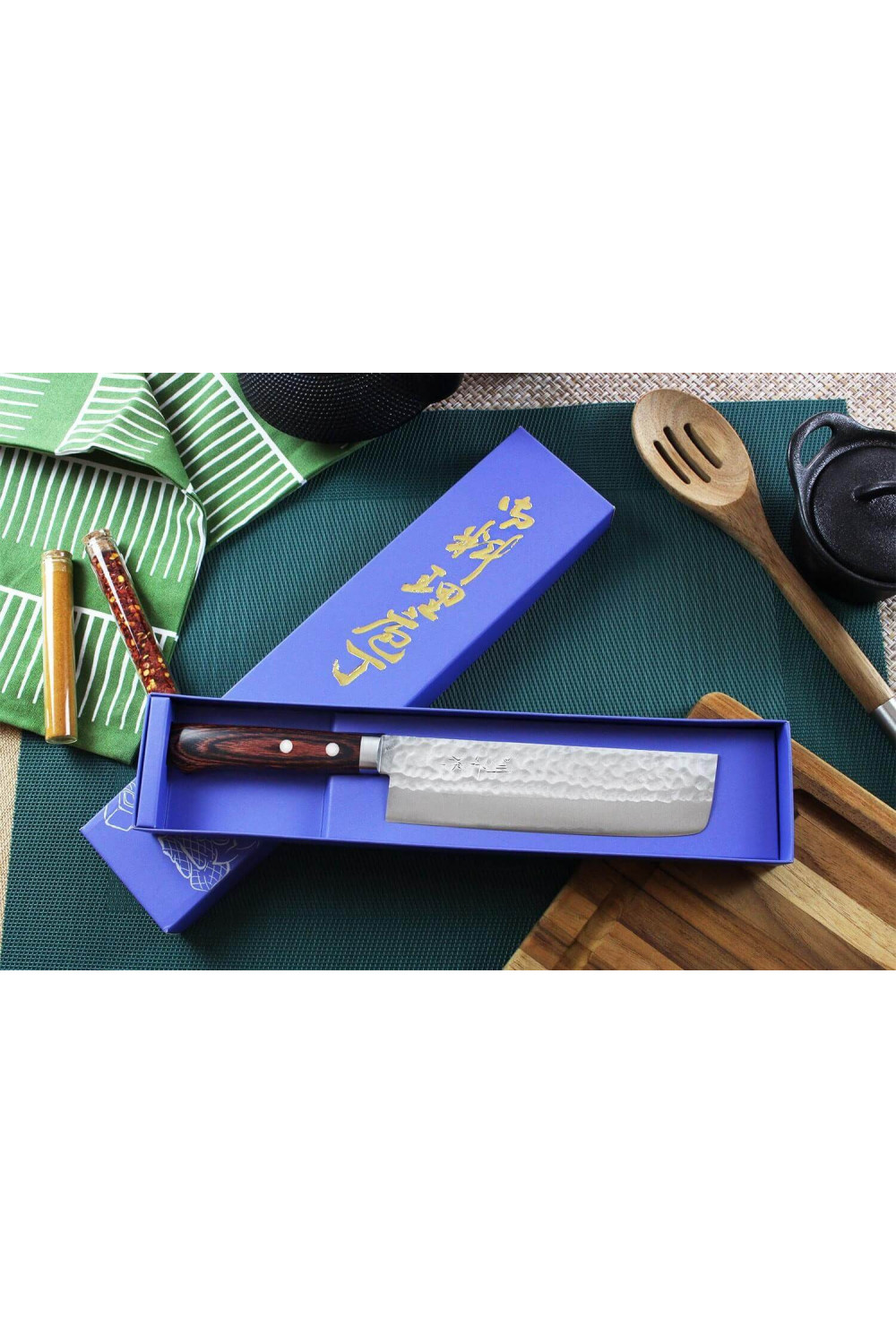
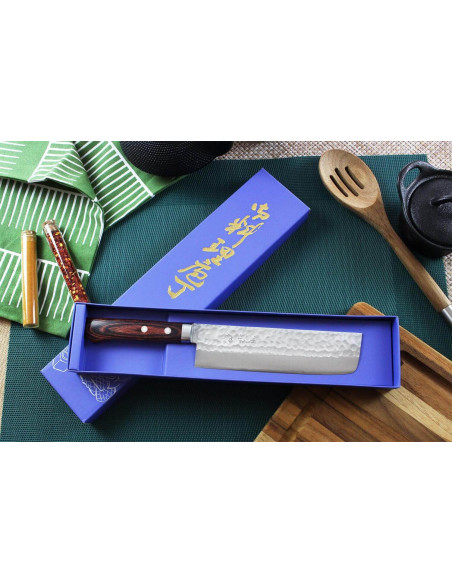
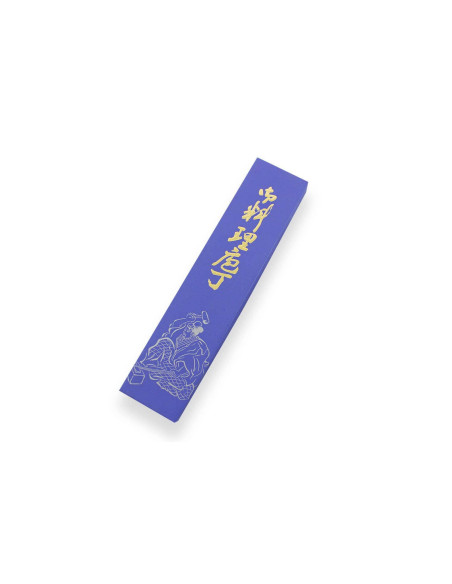
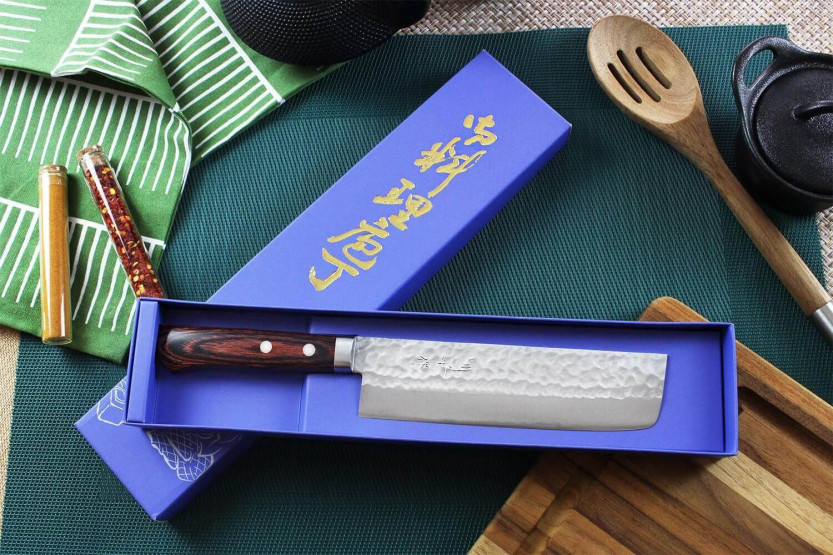
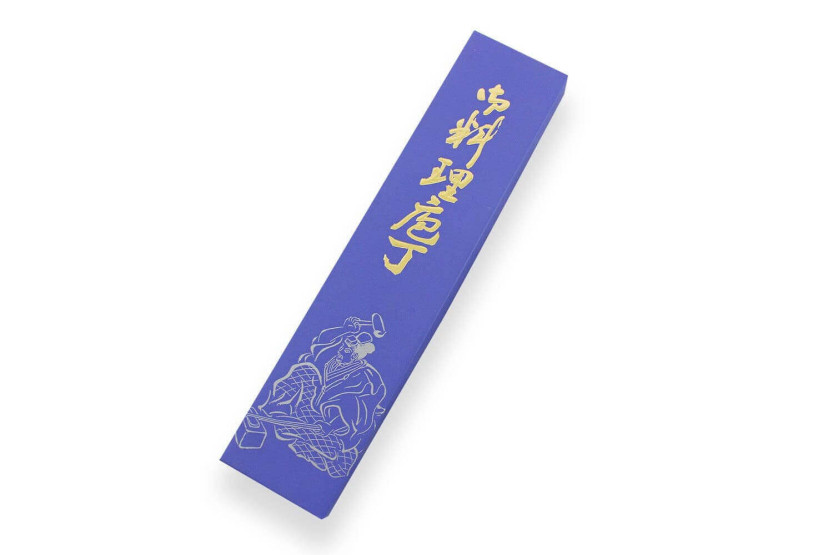
Masutani works in a workshop with his small team. The knives are handcrafted and supplied in colorful boxes, perfect for a gift to a passionate amateur or a chef.
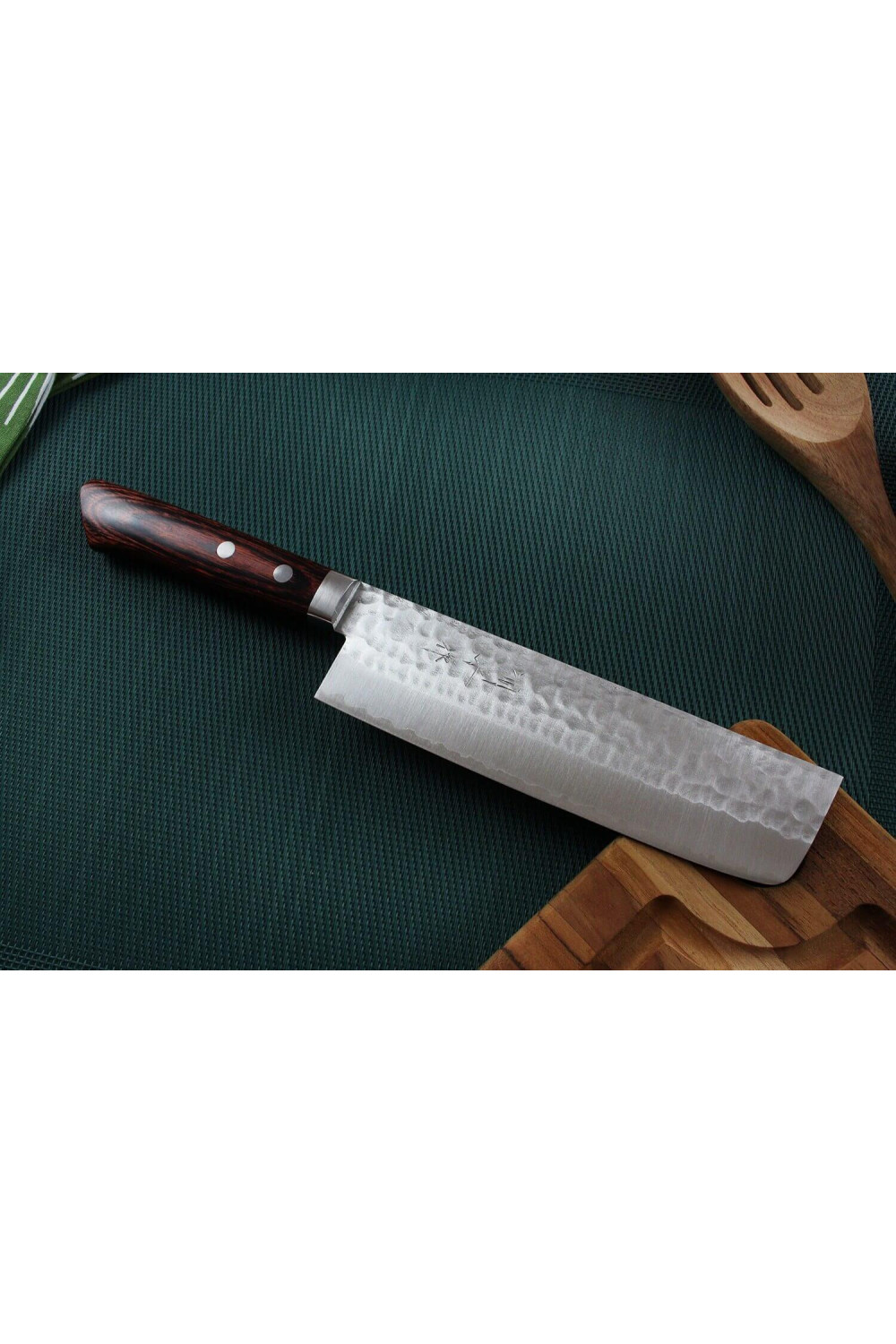
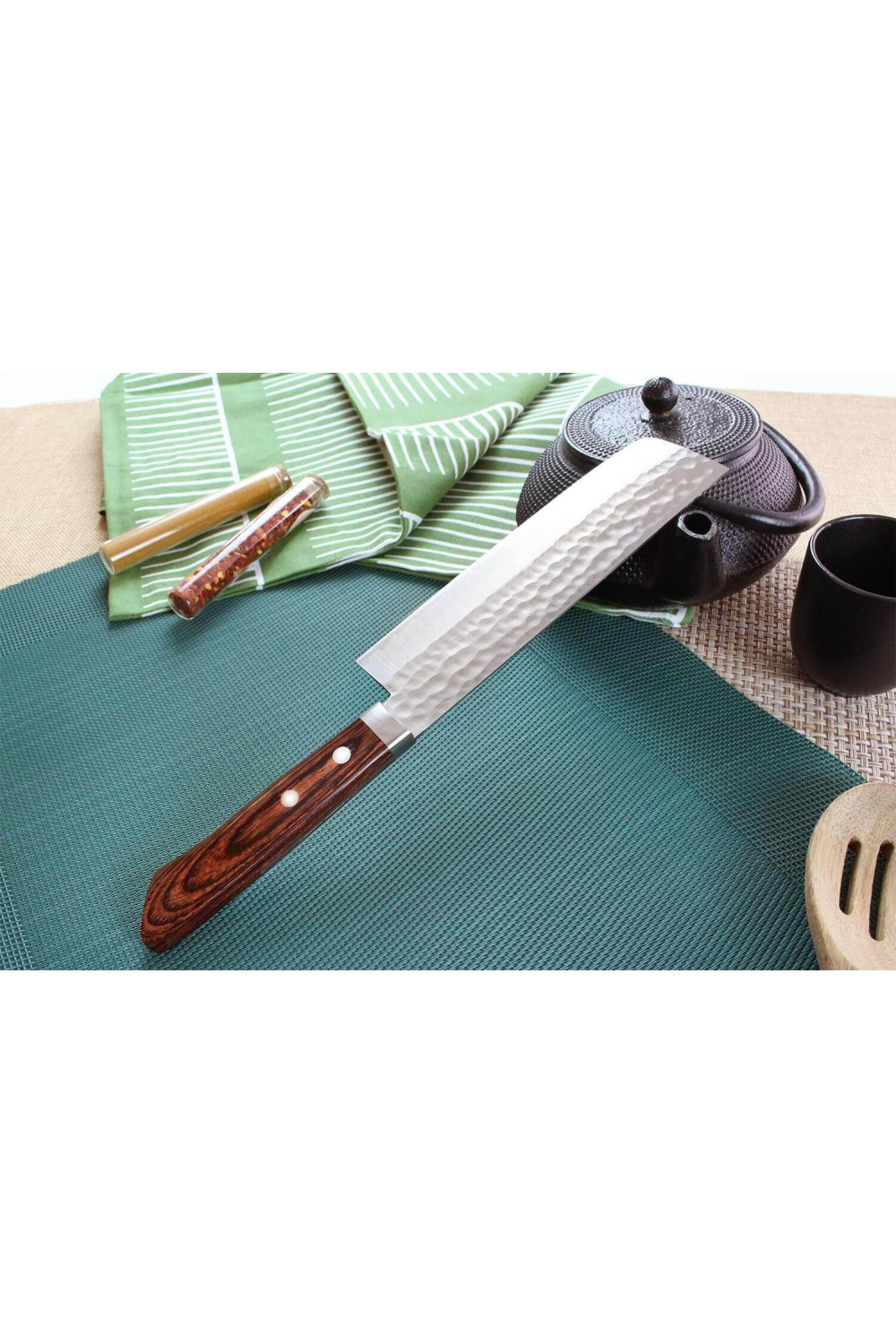
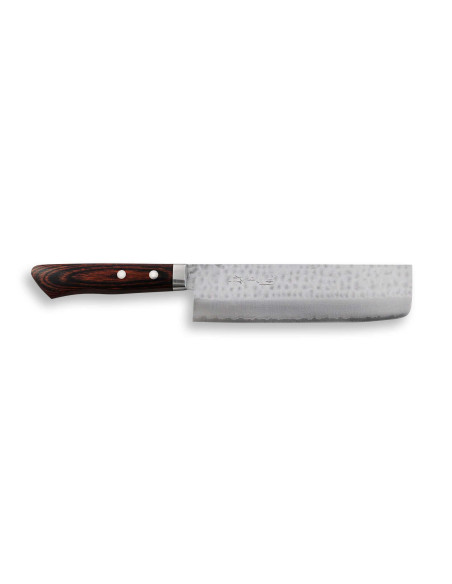
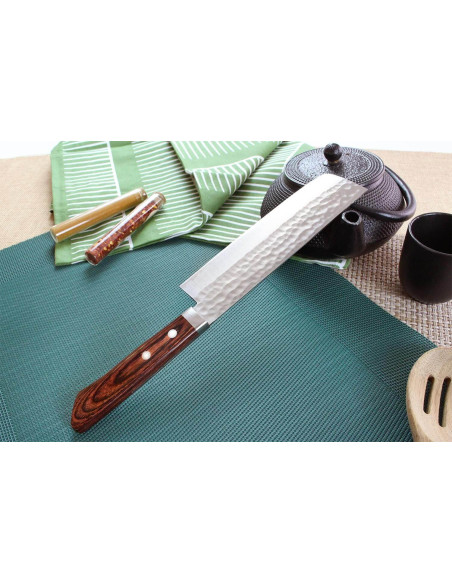
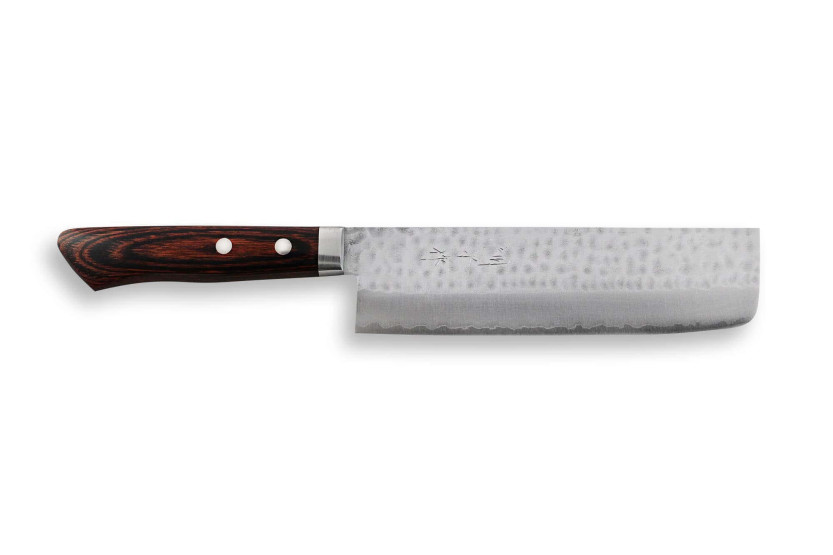
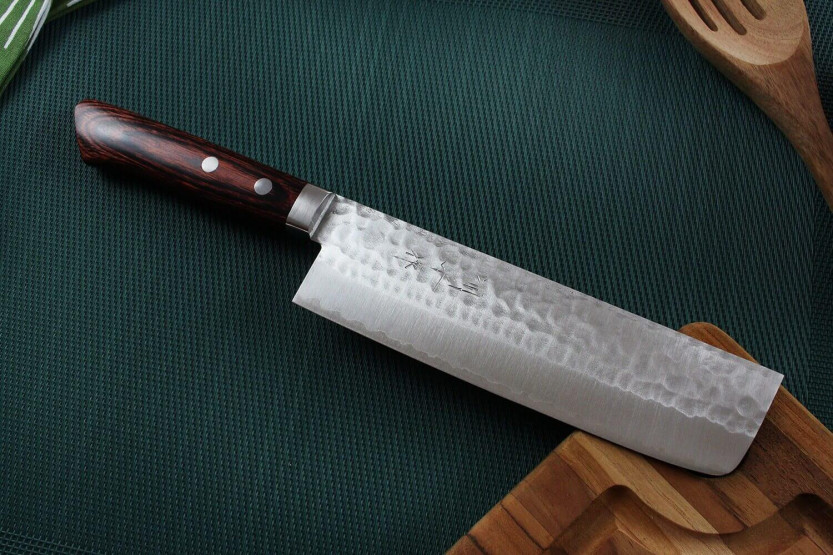
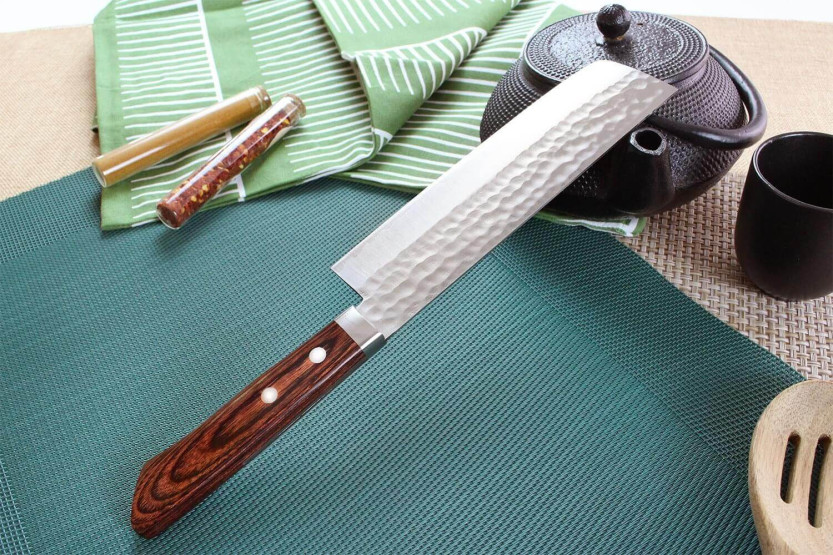
This Nakiri 16.5cm knife has a San Mai structure, i.e. its blade is made from 3 superimposed layers of steel (like a simplified damascus).
Firstly, the blade's core is made of carbon-enriched VG1 stainless steel. This increases the rigidity of the cutting edge and enables you to sharpen it to a razor-sharp, long-lasting edge. This core is then coated with a layer of softer stainless steel (hence the 3 layers, with the softer steel folded over the core counted).
The knife is also tempered, i.e. heated and then cooled to increase its mechanical strength over time. To achieve this, it is passed through a salt furnace at a temperature of 800°C, then cooled in suspension in front of a fan.
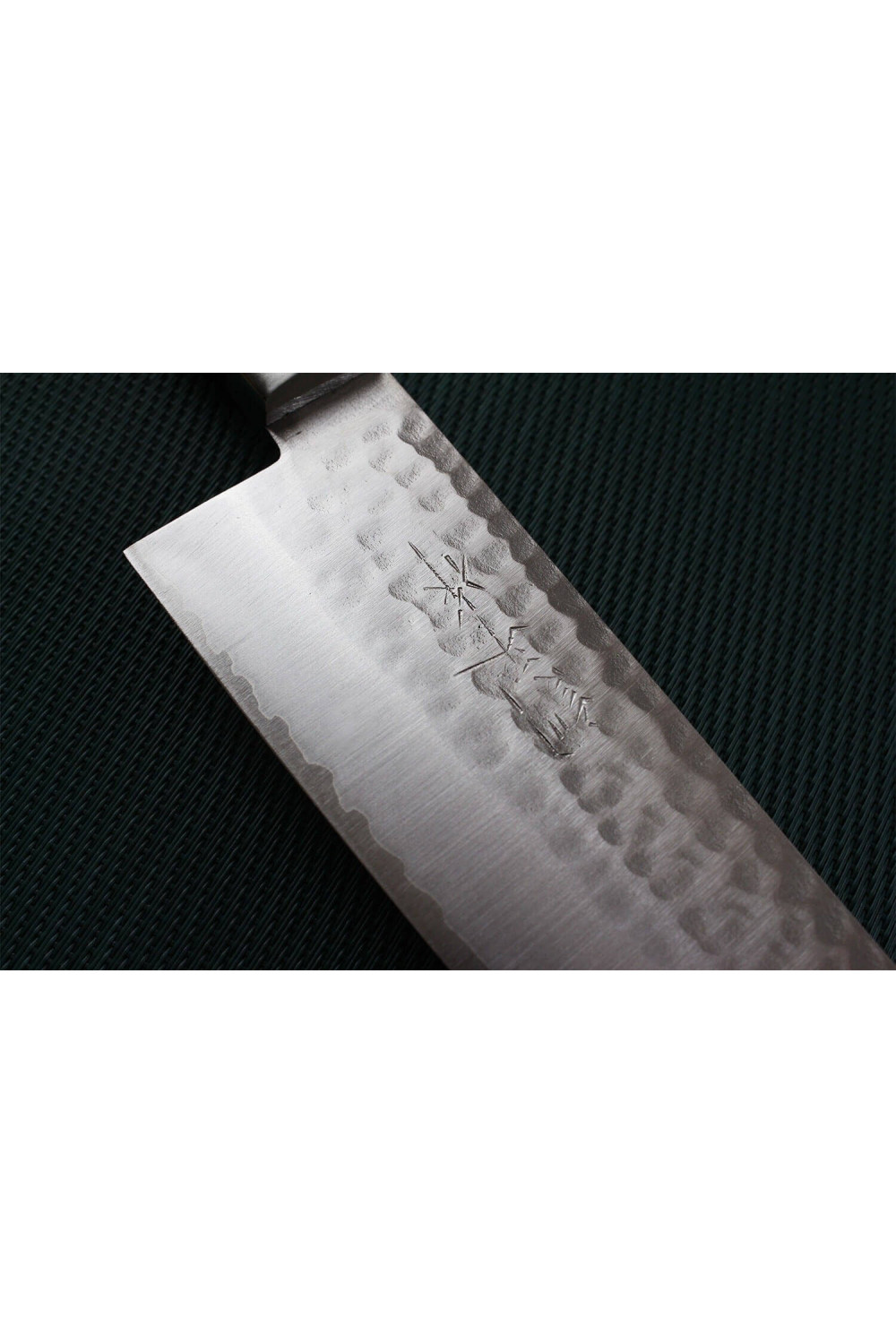
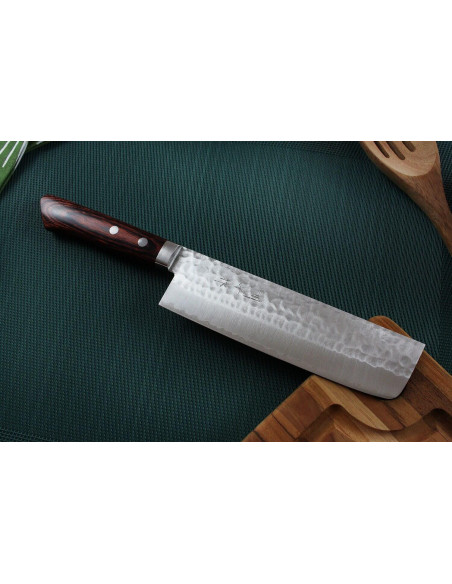
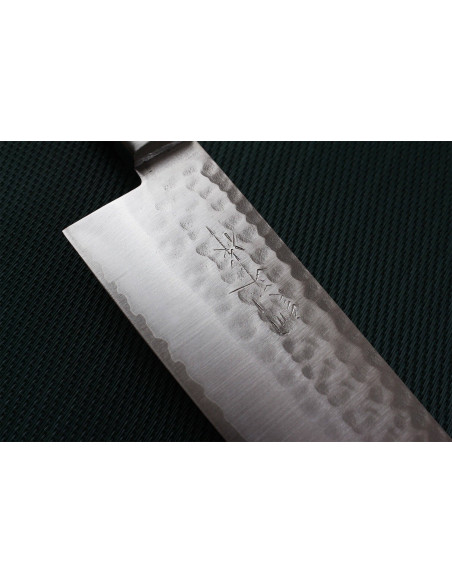
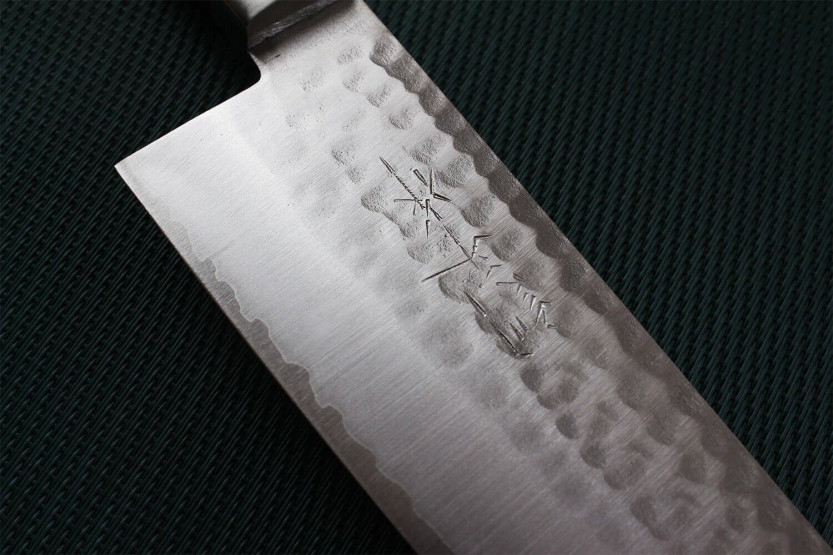
The blade is hammered. Hammering is a process carried out using a press and the expert hand of the blacksmith. It is the latter who steers the blade as it passes under the mechanical press, to integrate the hollows at the base of the hammering.
The knife is sharpened by hand, Masutani San being an expert in the field. Your knife is ready to use, but watch your fingers from the first use!
Last but not least, the Japanese characters on the cutting surface are hand-engraved for added authenticity.
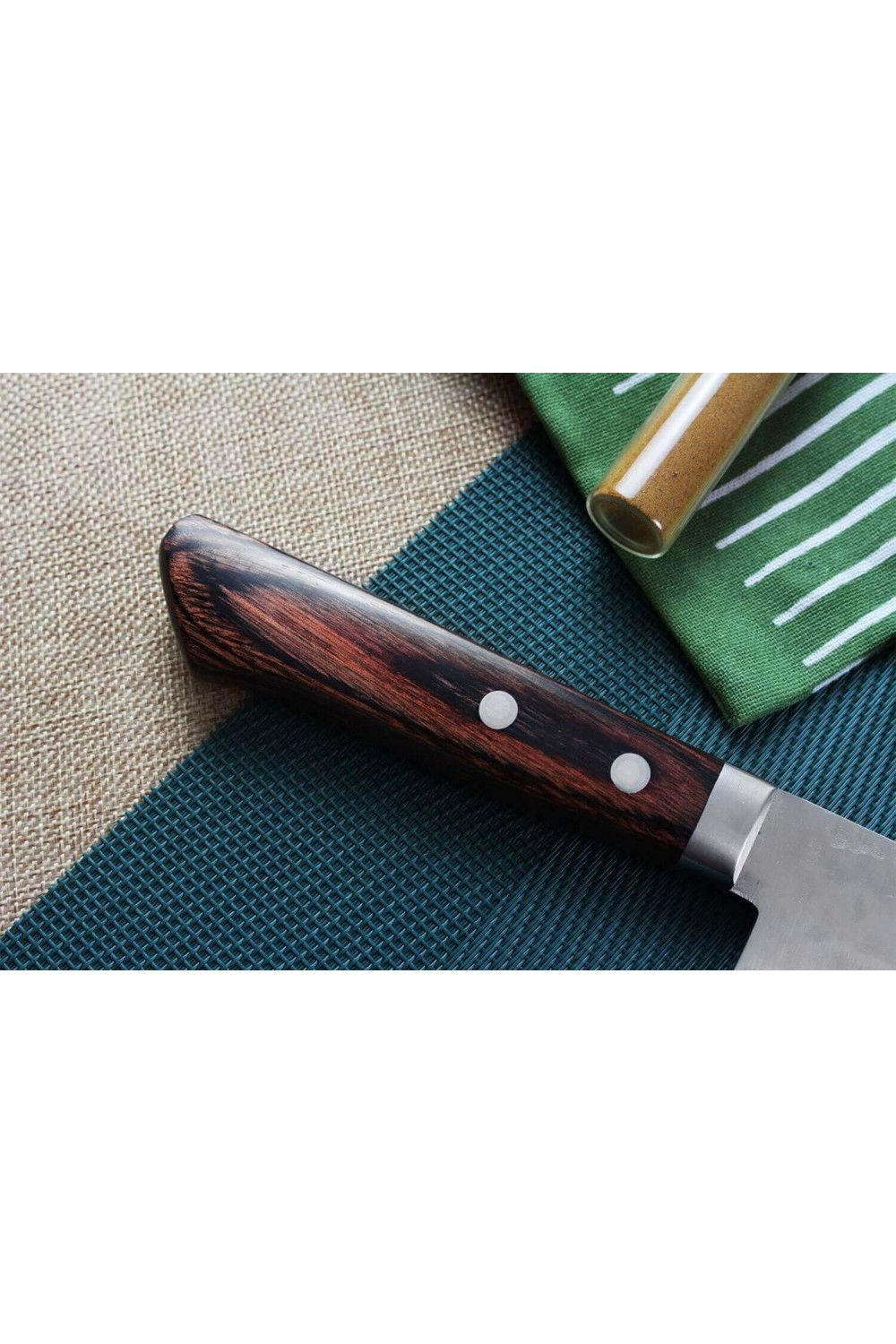
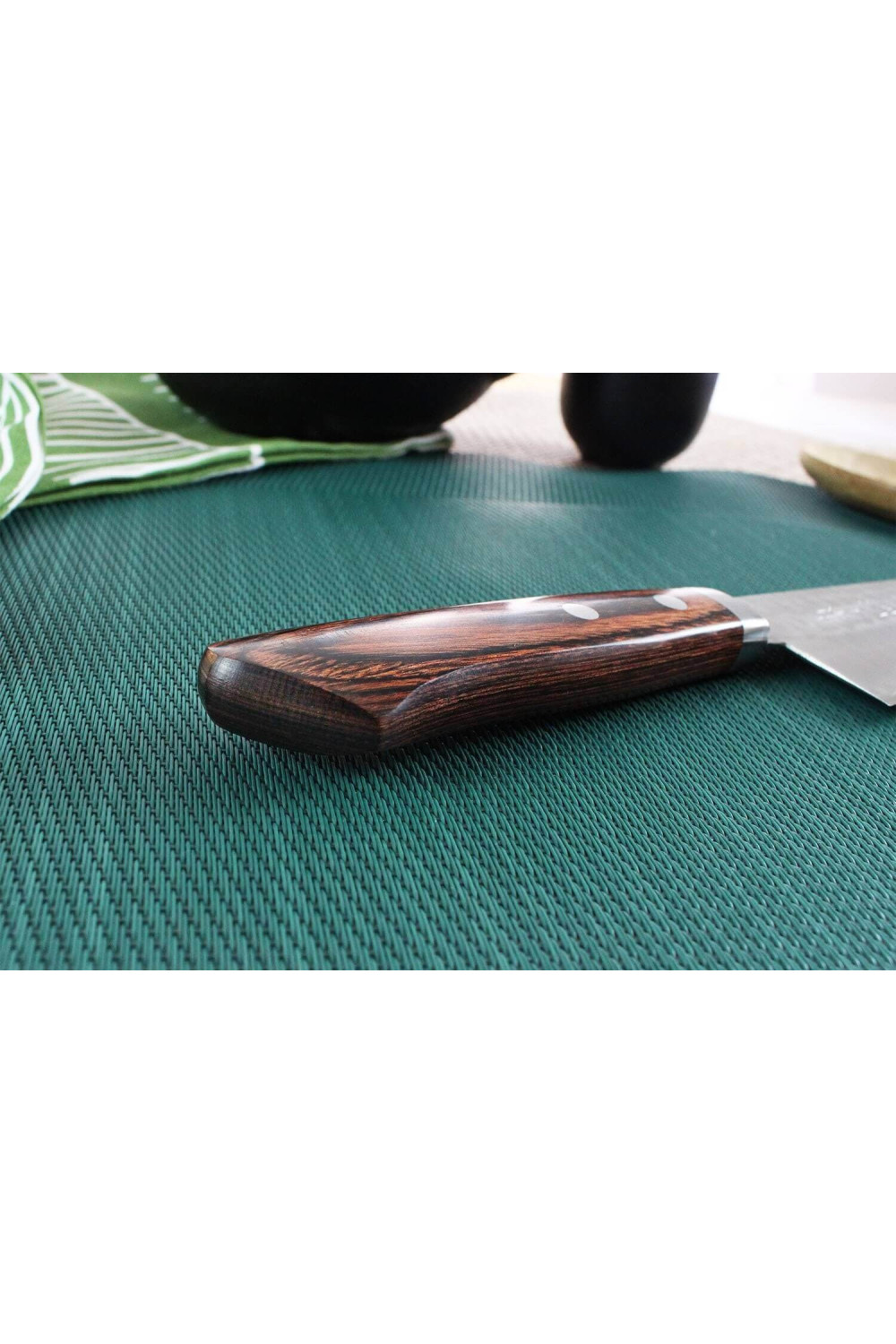
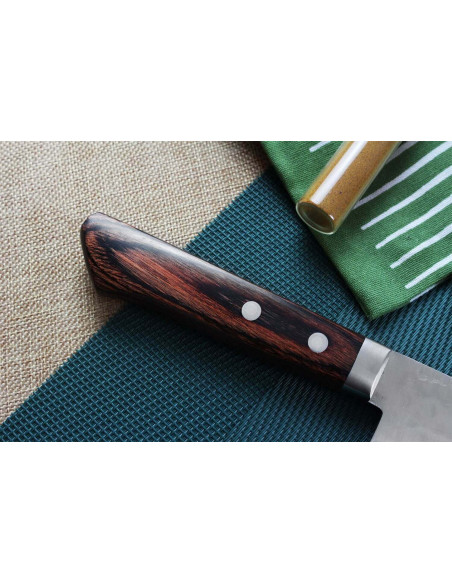
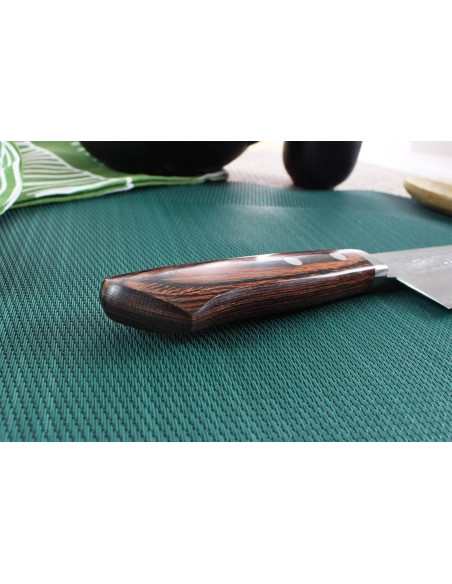
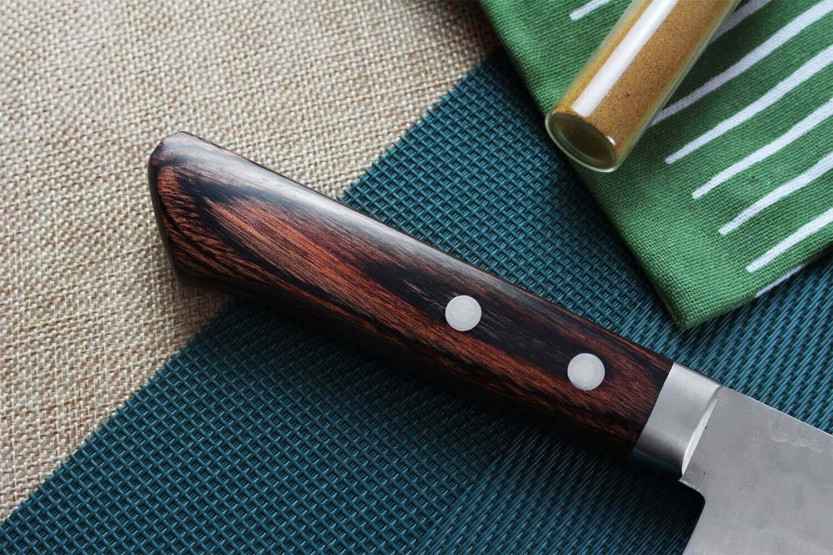
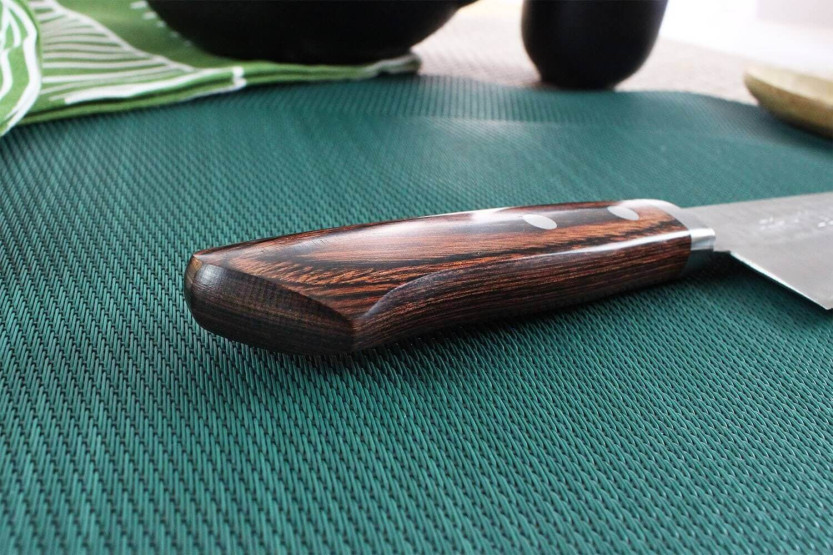
The handle is made of a composite material, Pakkawood. It is appreciated for its strength. It's made from laminated wood and resin, all hot-pressed together. This material, which has the appearance of wood thanks to its veined surface, is antibacterial and resistant to humidity and temperature variations. It is completed by a steel bolster and rivets.
The whole design is based on a "Western" shape, making it easy for both right- and left-handed cooks to hold.
Care and maintenance :
The knife should be washed by hand, to maintain its appearance and efficiency over time (forget the dishwasher). Then wipe dry with a soft cloth and store in a dry place. It should not be left in contact with moisture for too long.
When you choose Masutani, you're opting for Japanese quality without spending a fortune! We're delighted to offer them to you, as they're the perfect addition to your kitchen equipment.
Discover the Masutani models we have to offer!




 By buying this product you can collect up to


 (9)
 (0)
 (0)
 (0)
 (1)
 (0)