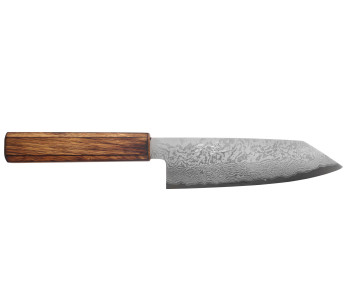
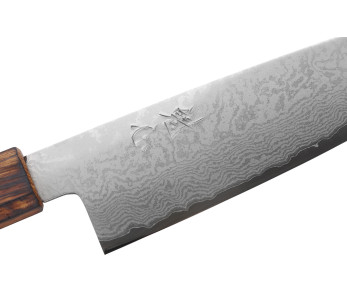
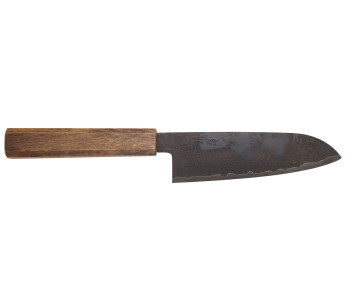
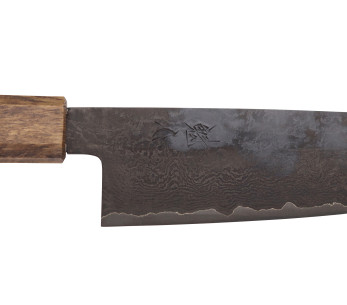
A Japanese tuna knife with an impressive design!
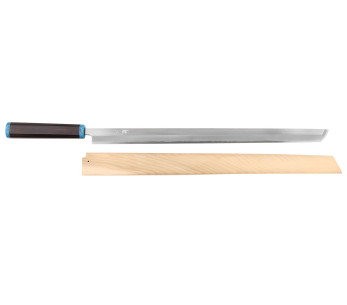
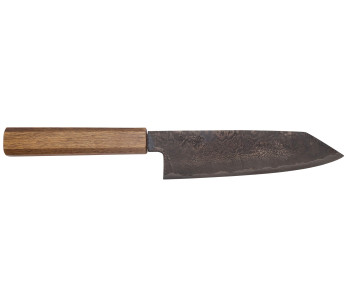
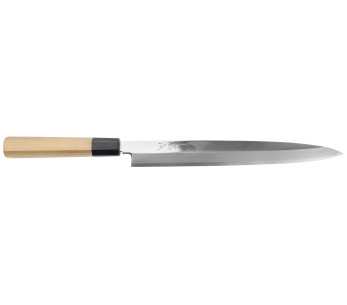
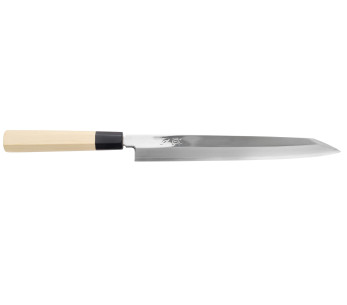
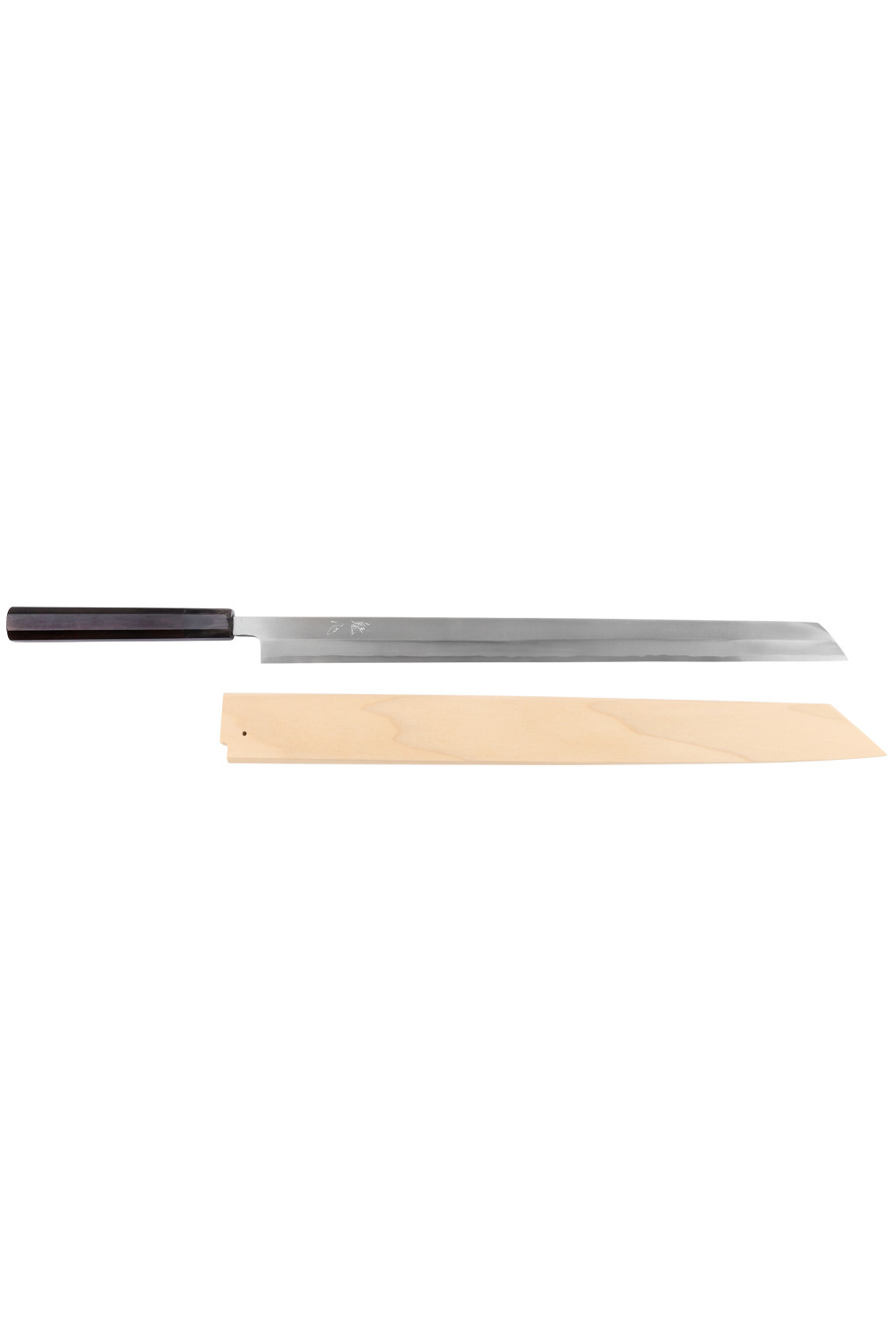
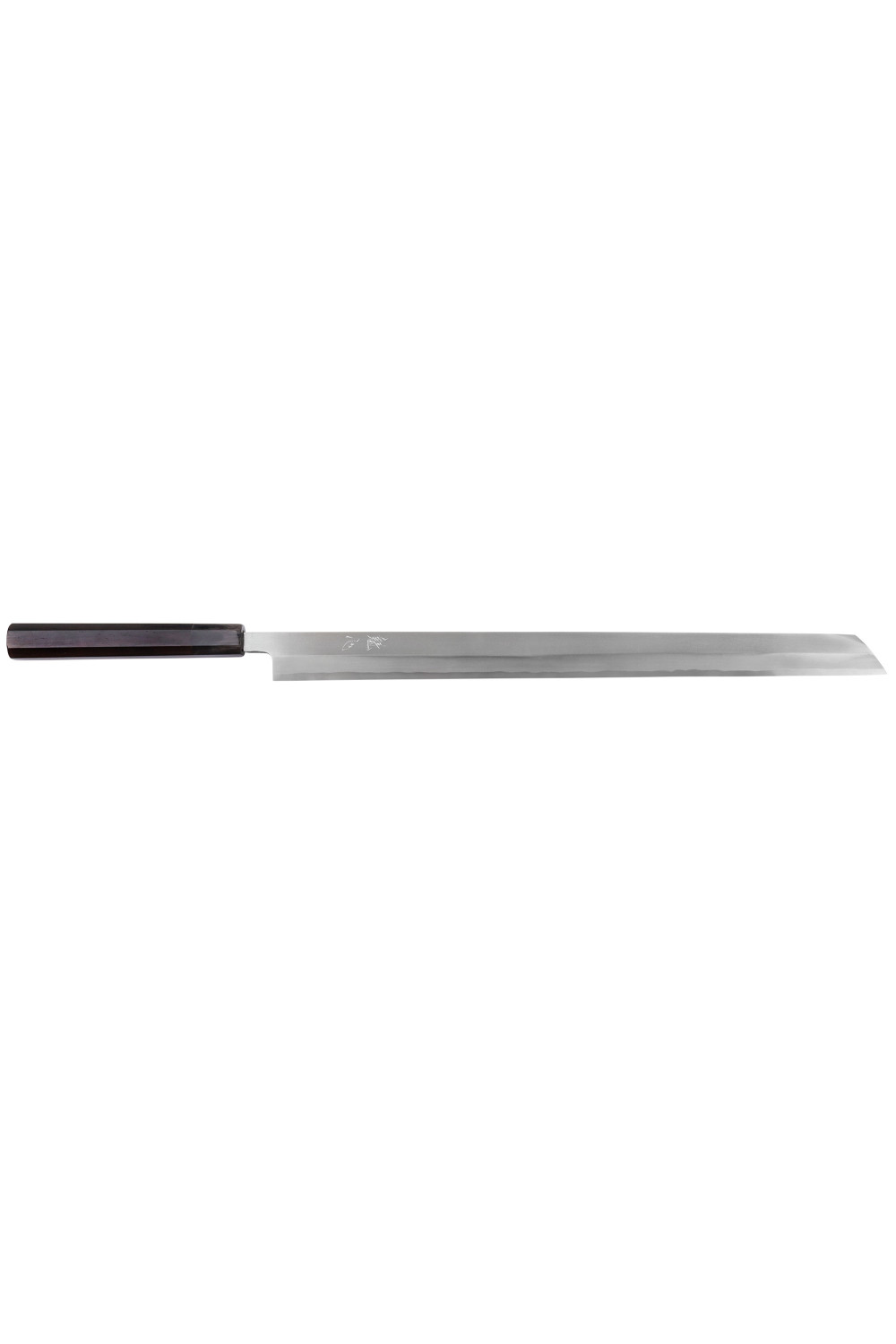
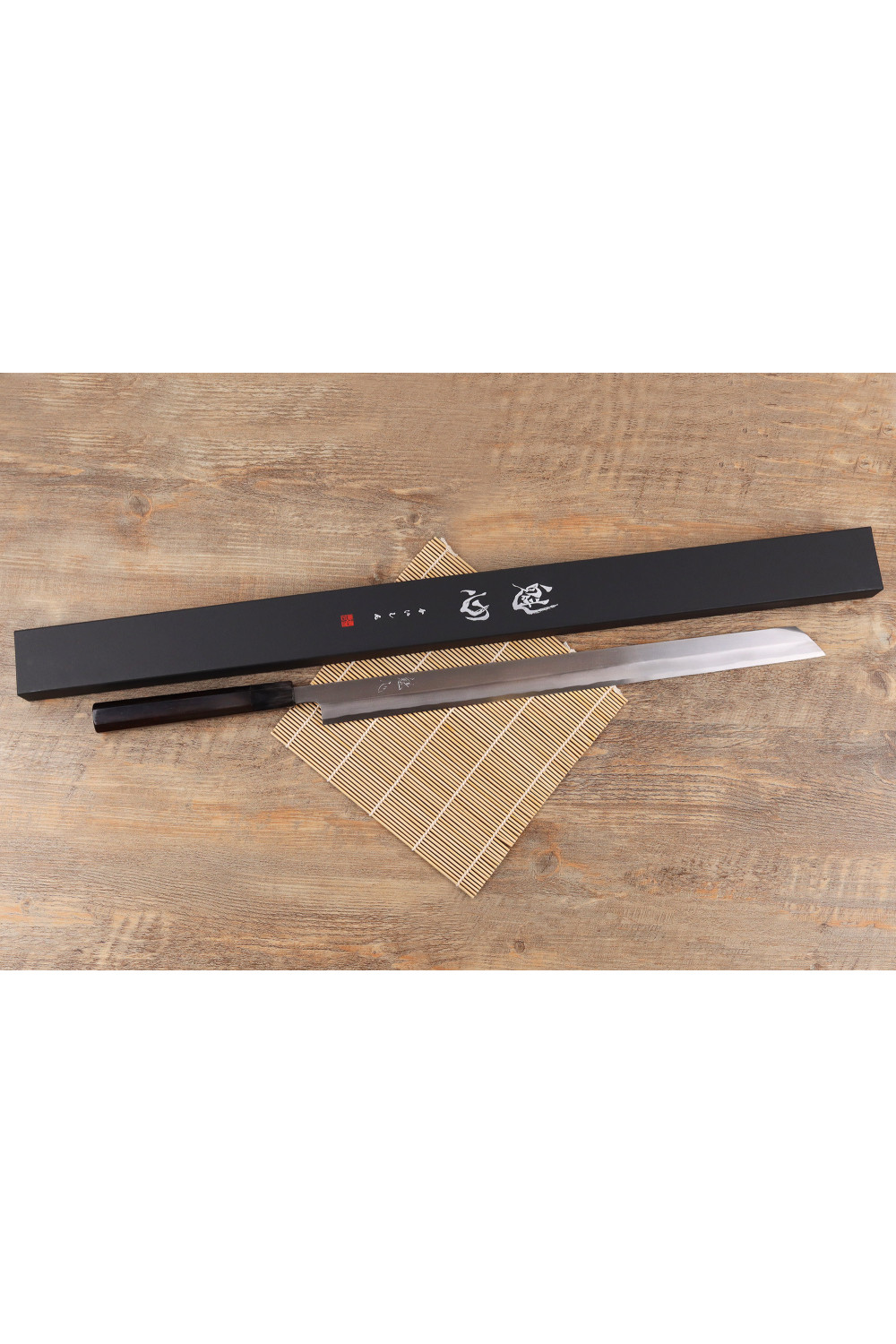
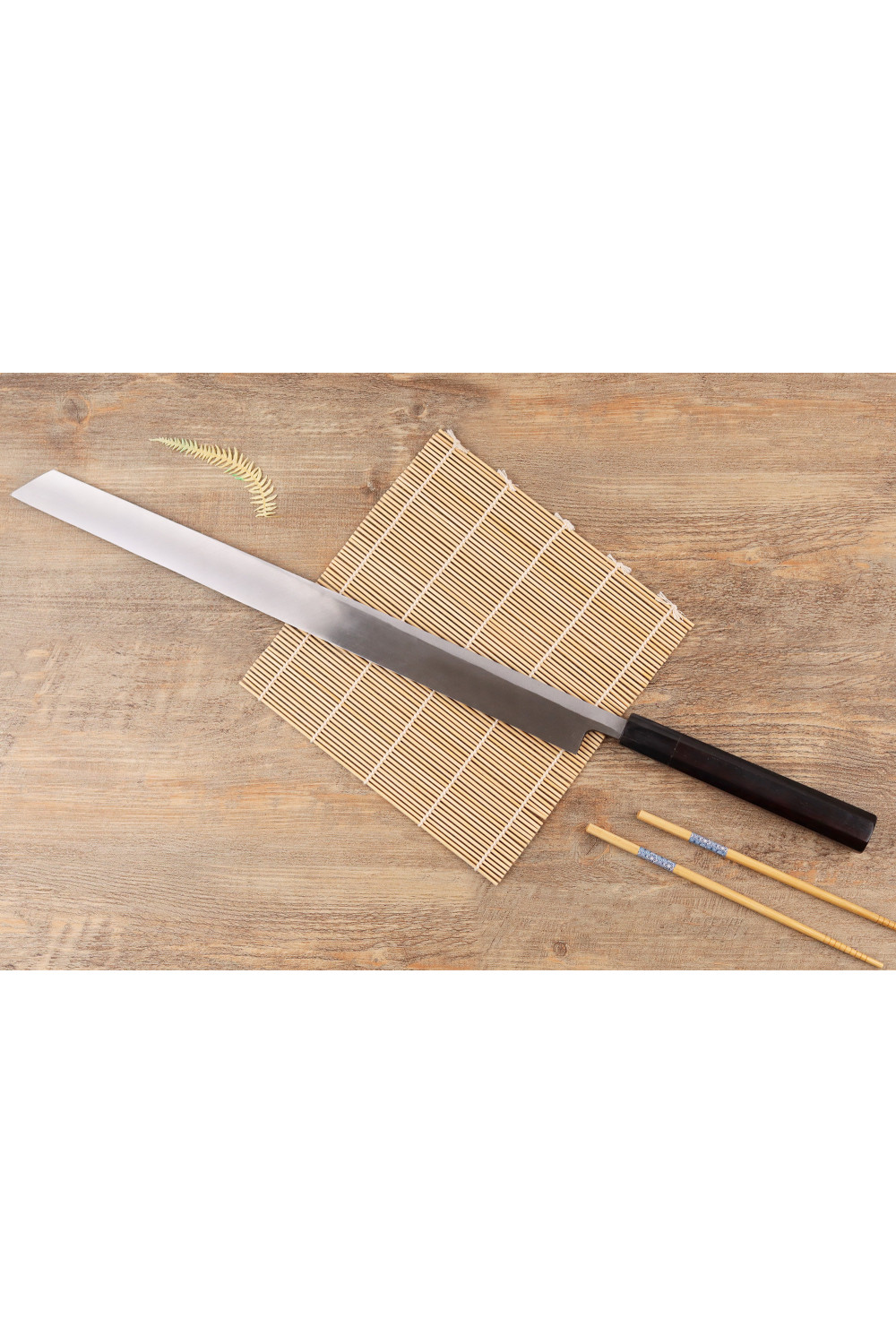
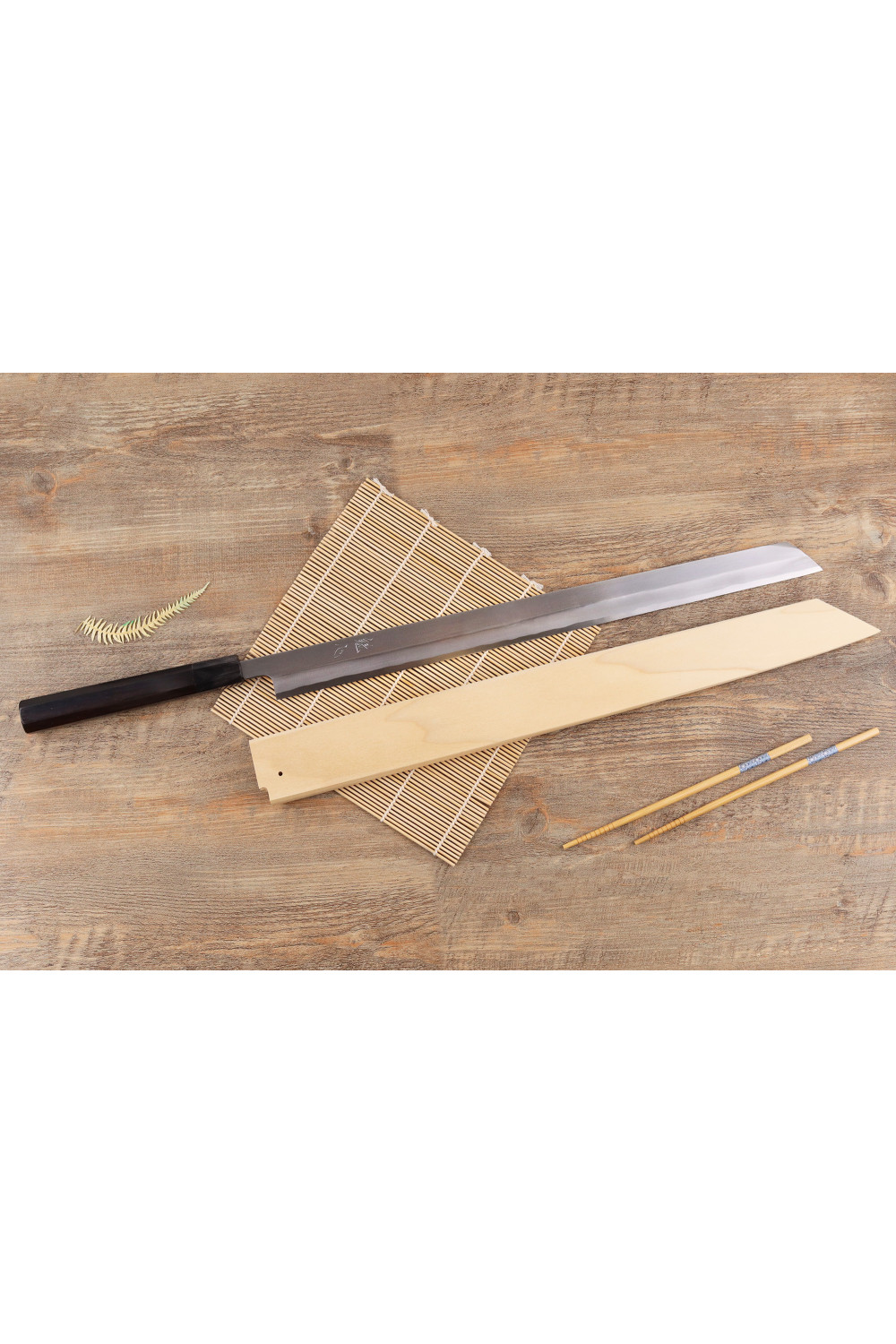
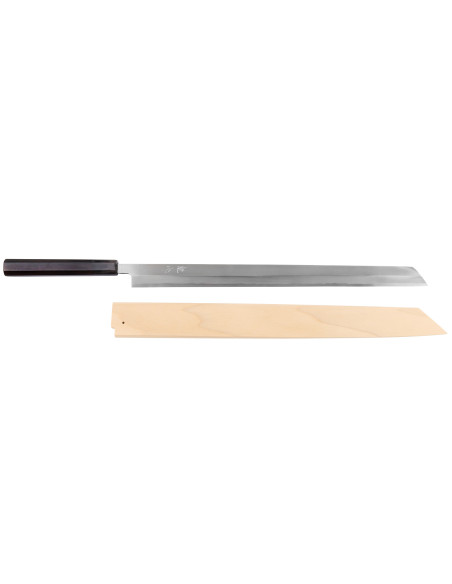
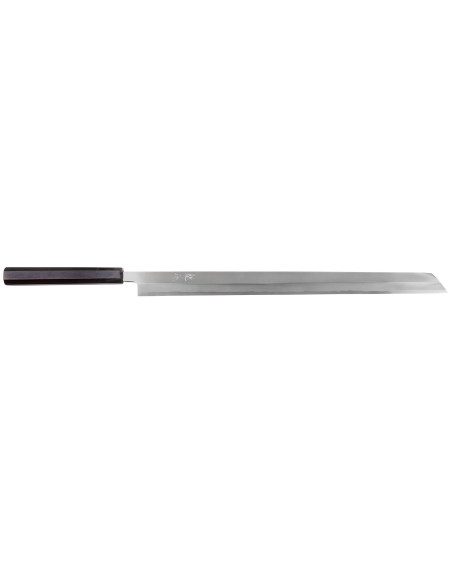
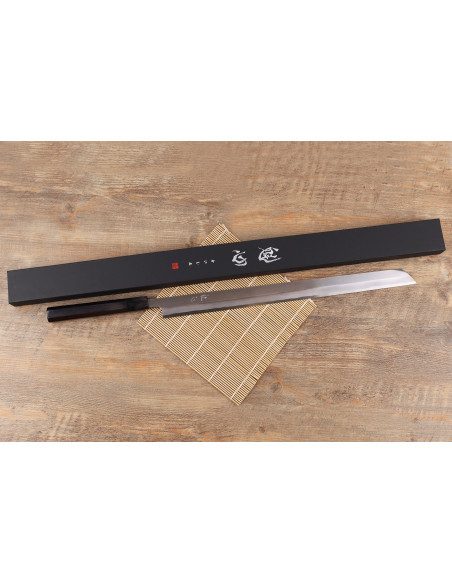
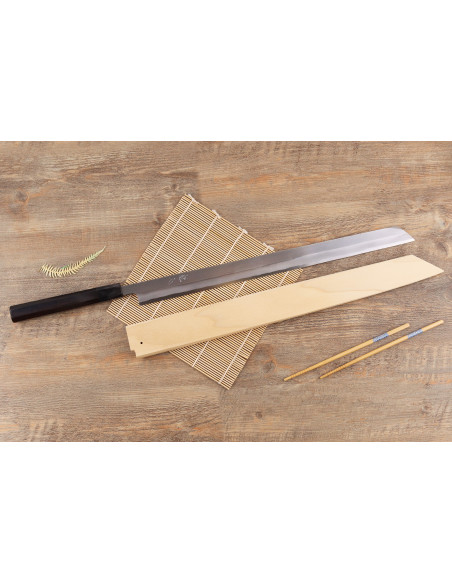
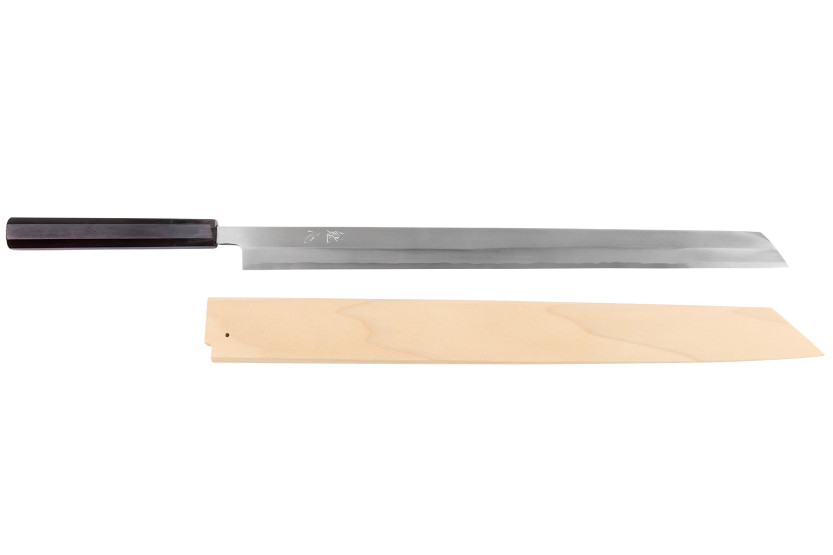
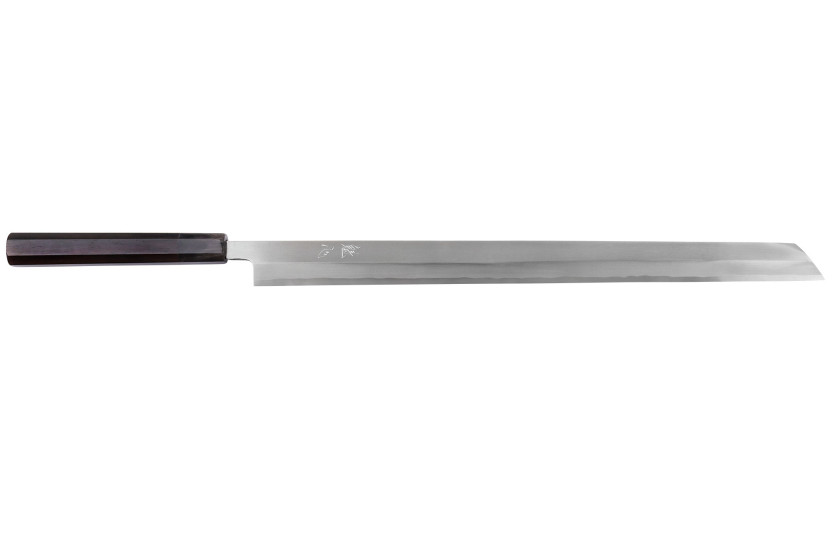
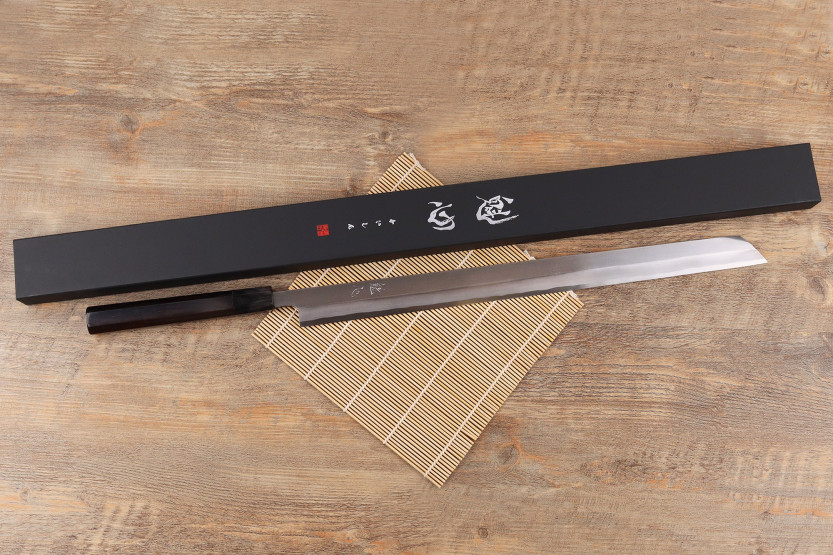
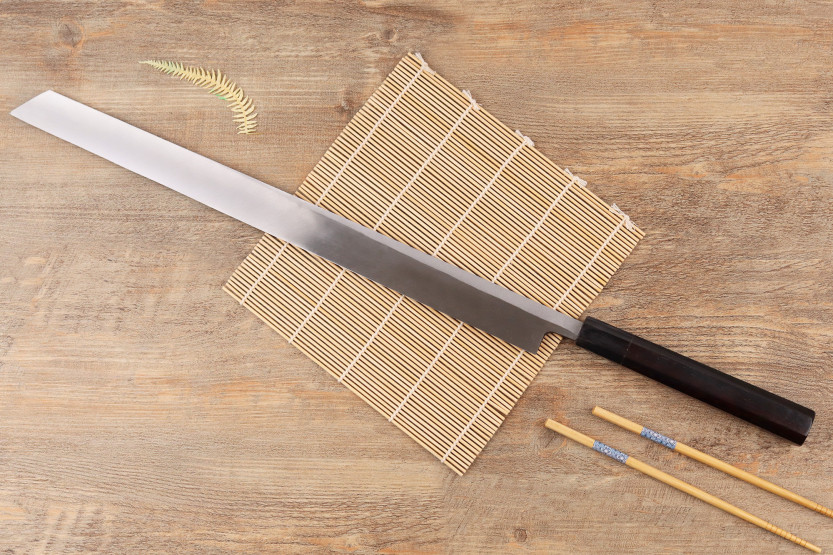
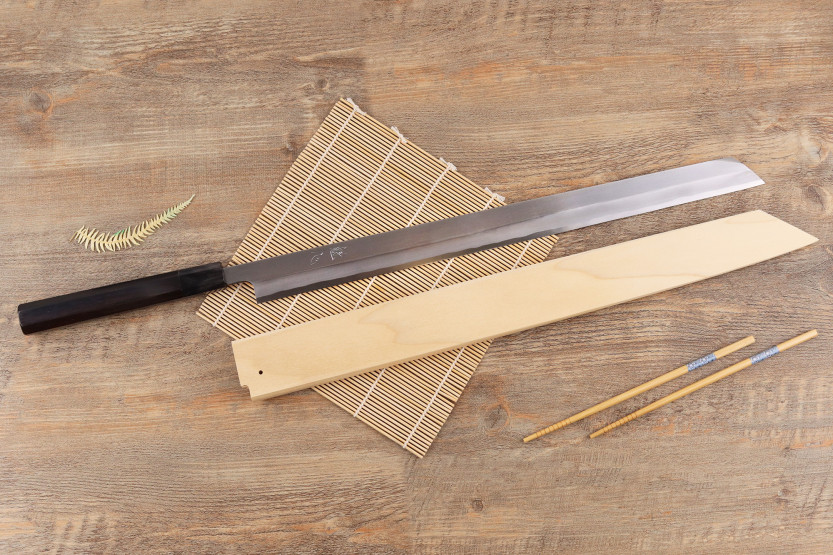
The Nakamura WS2 handcrafted 48 cm Japanese kiritsuke maguro tuna knifeis an extraordinary creation rooted in the tradition of large Japanese fish knives! Belonging to the maguro bōchō family, these long blades are designed to cut up whole tuna and handle their large portions, particularly in fish markets and specialty establishments. This modelhas a remarkable feature: its angular kiritsuke tip, which gives its silhouette an appearance almost like that of a sword. Handcrafted in Sakai, this 48 cm Nakamura WS2 artisanal Japanese maguro knife combines a Shirogami #2 blade, an ebony handle, and a traditional saya. A piece as fascinating for collectors as it is for enthusiasts of Japanese cutlery!
A Shirogami #2 steel blade with a kiritsuke tip
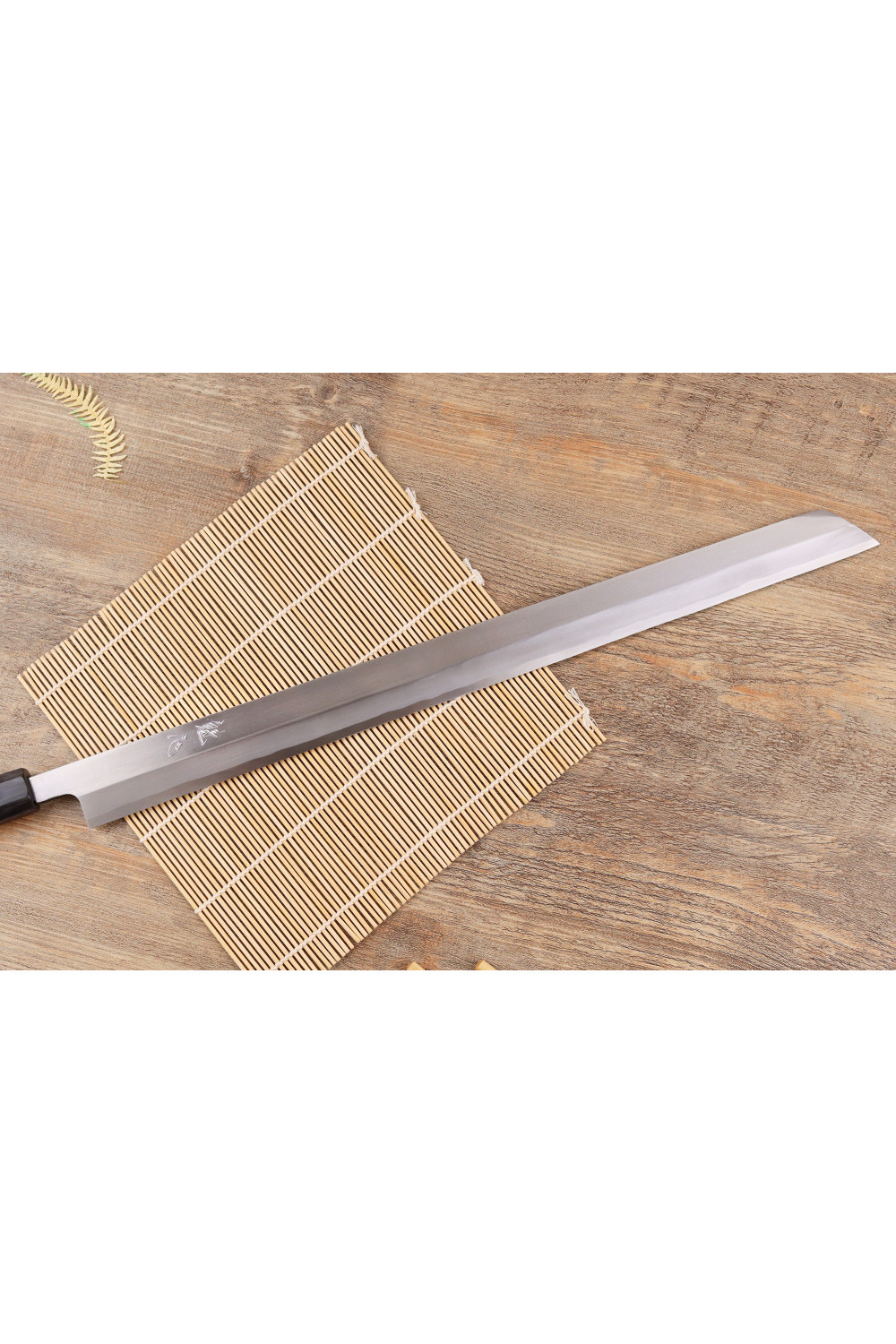
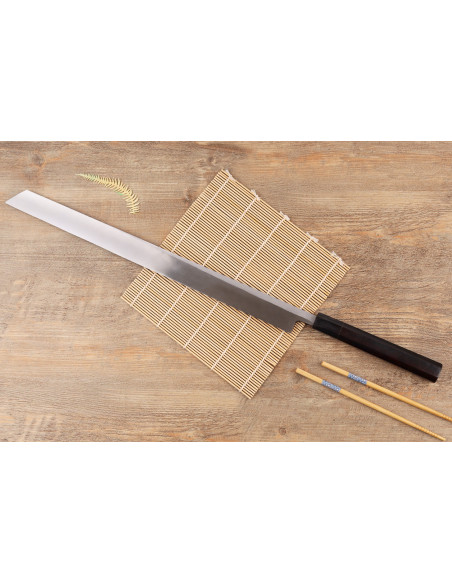
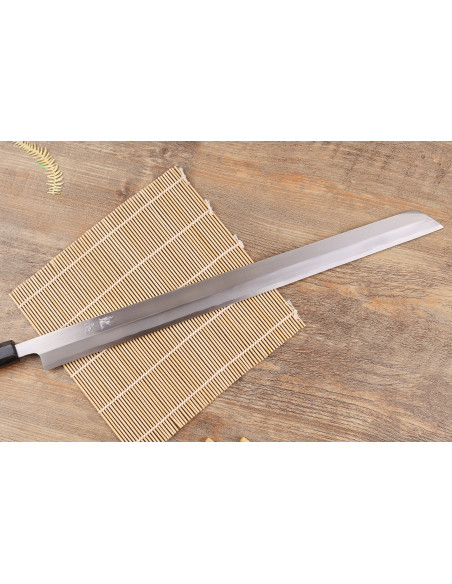
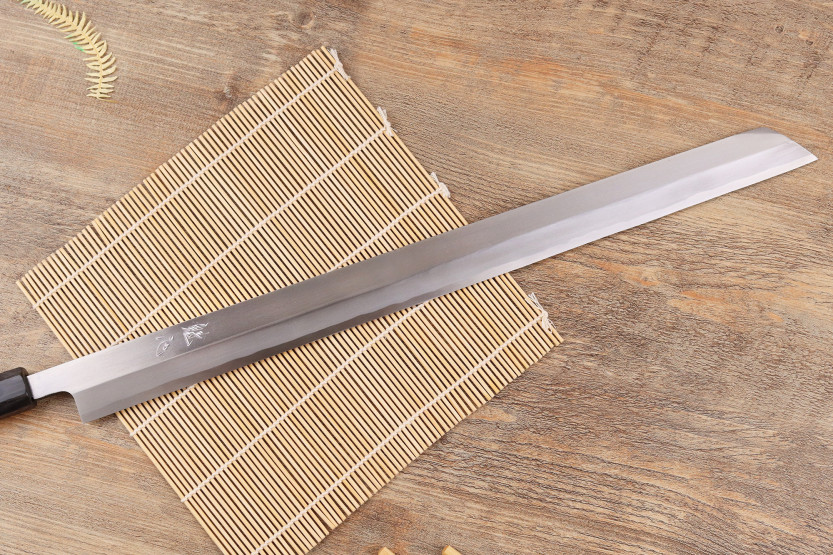
At 48 cm long, this maguro offers a large cutting surface for working with large cuts of tuna. Its blade allows for the sweeping motions needed to separate portions of fish, minimizing the need for repeated cuts. This length naturally requires ample space and good control over your movements, particularly when working with large fish.
The blade is constructed using a San Mai structure, consisting of three layers of steel. At its core is a Japanese Shirogami #2 steel core—also known as White Steel #2—which contains approximately 1.2% carbon. This traditional steel is renowned for its ability to achieve a particularly fine edge. It is flanked by two layers of softer steel, which support the core and contribute to the blade’s construction.
A hardness of 61 HRC on the Rockwell scale ensures excellent edge retention. This characteristic is particularly advantageous for long cuts, where a consistent edge allows for precise cutting through meat. Since Shirogami #2 is not stainless, it remains susceptible to moisture and requires careful maintenance.
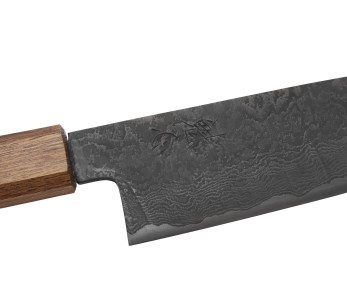
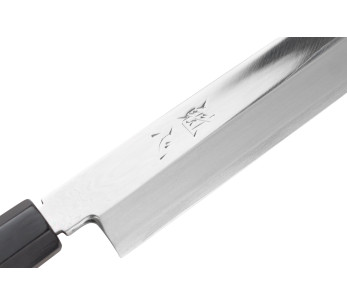
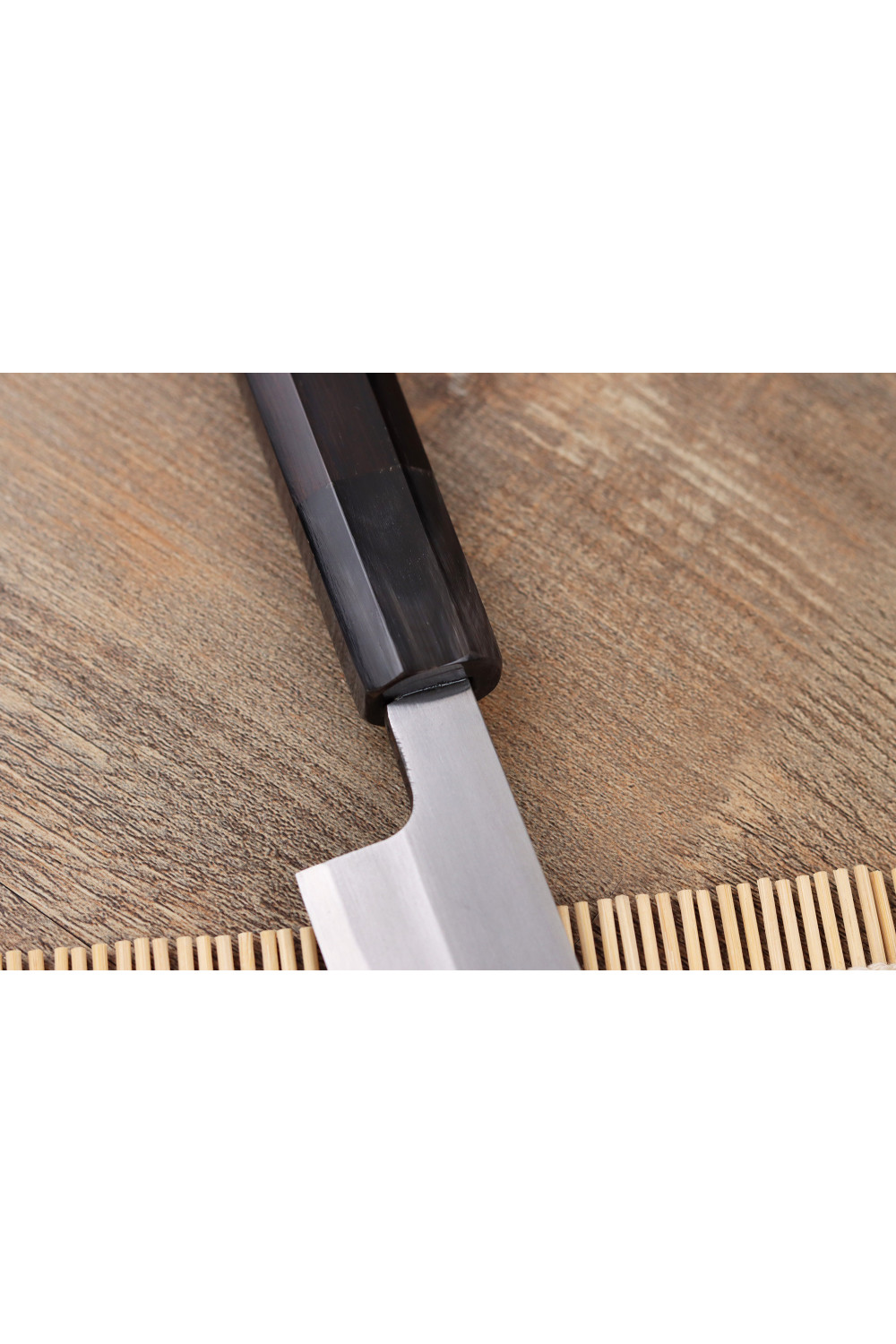
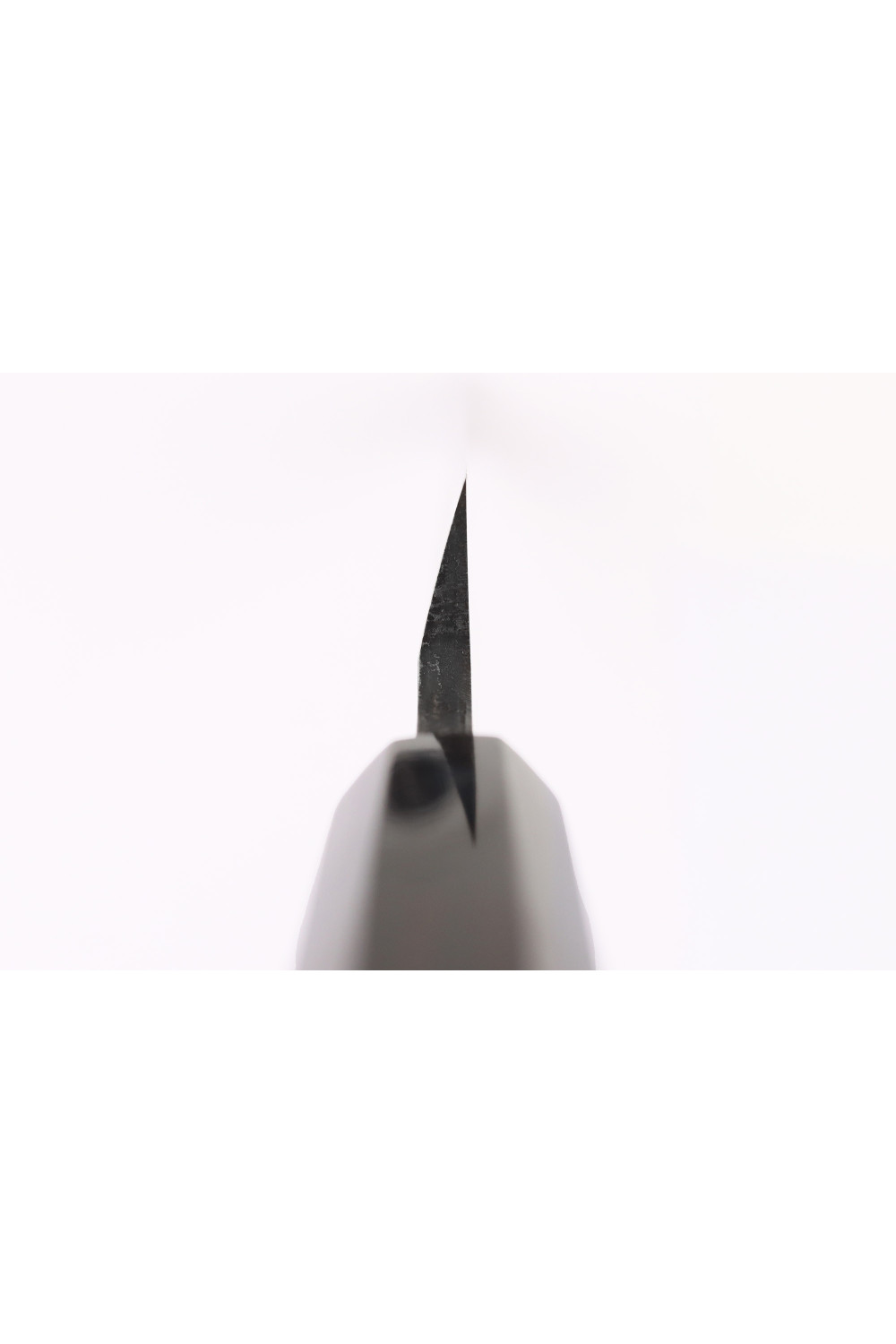
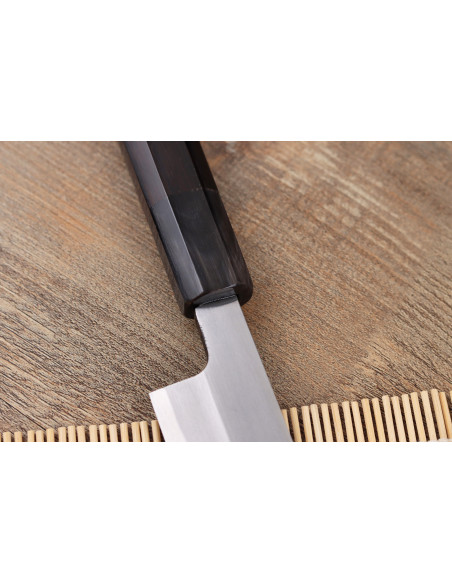
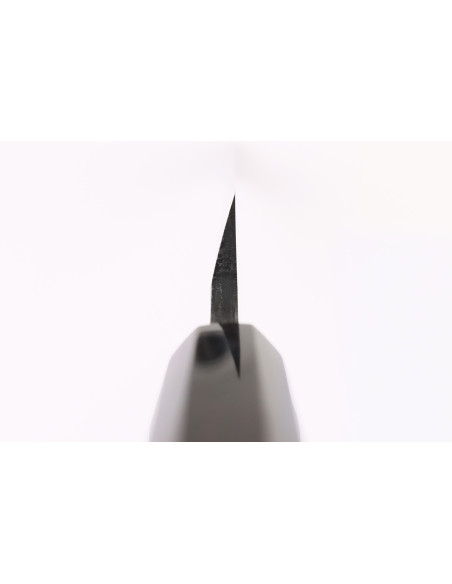
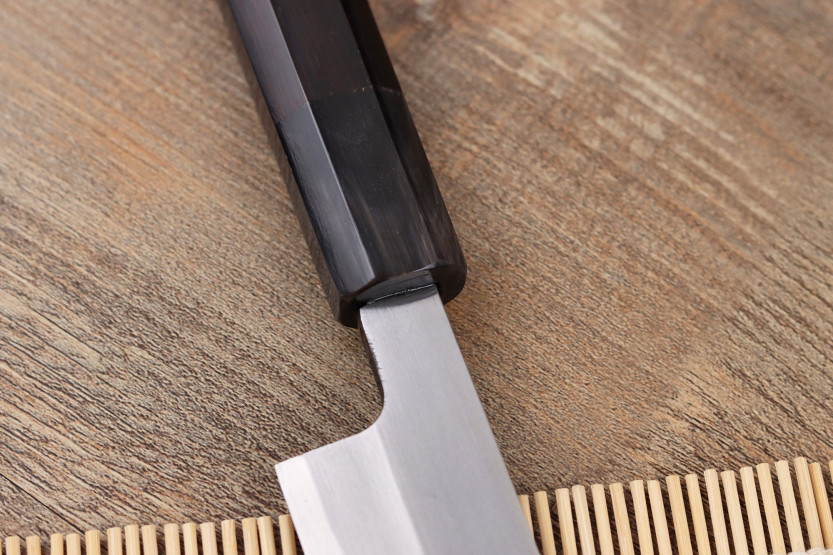
The kiritsuke tip is the most recognizable feature of this model. Its slanted spine meets the cutting edge to form an angular tip, differing from the more gradual tip found on some traditional maguro knives. This shape allows for precise, localized incisions and finishing work on portions of fish, while giving the knife a particularly distinctive visual identity. Its fine tip, however, requires careful handling.
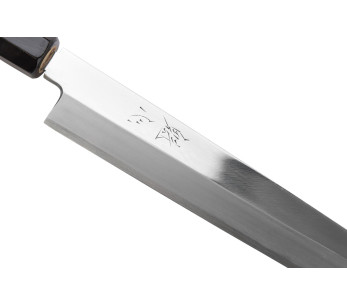
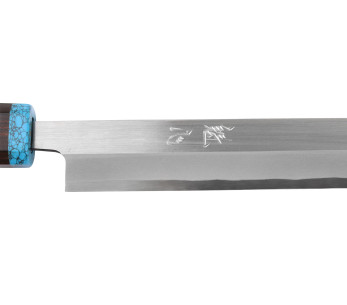
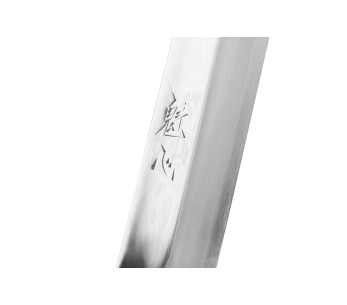
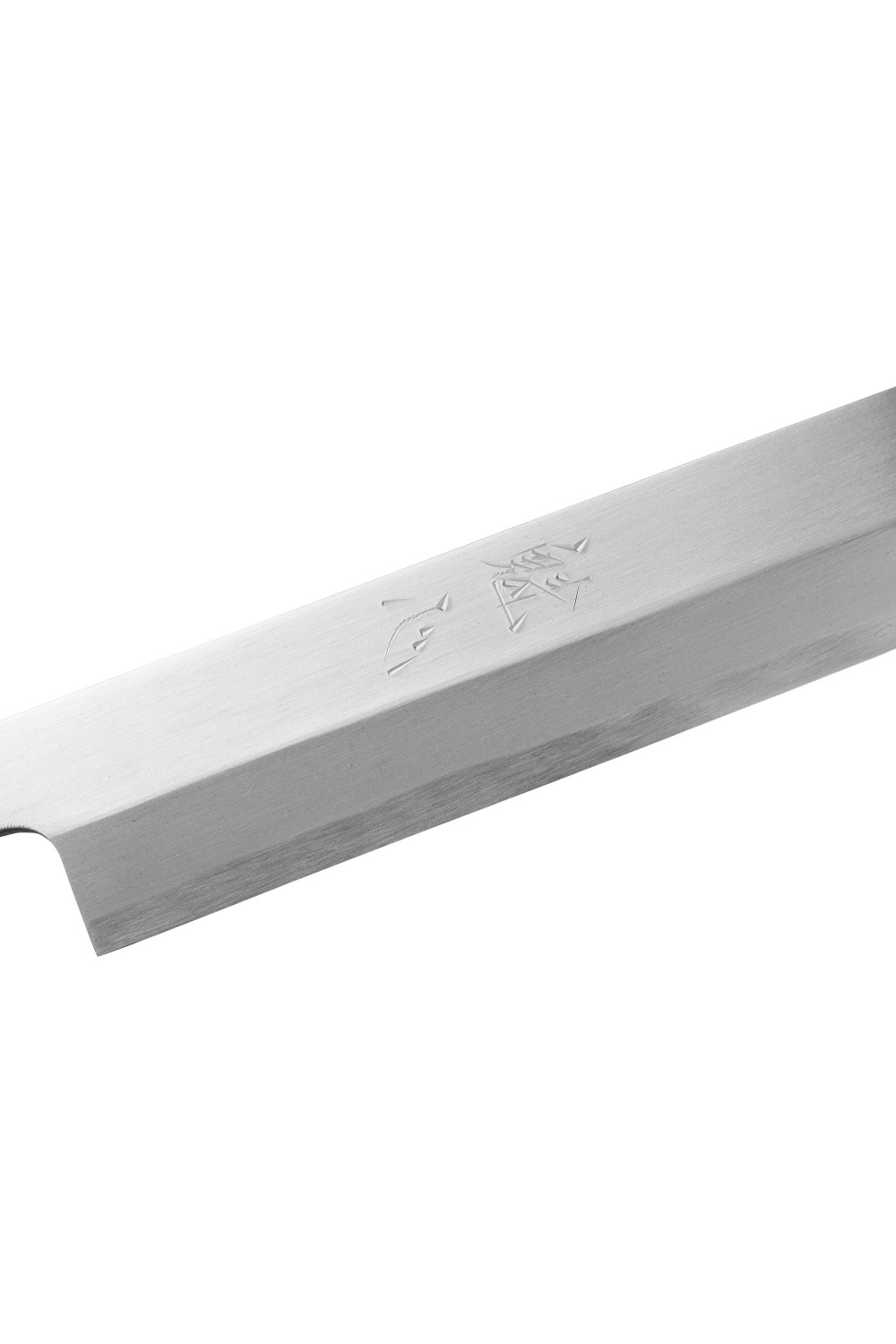
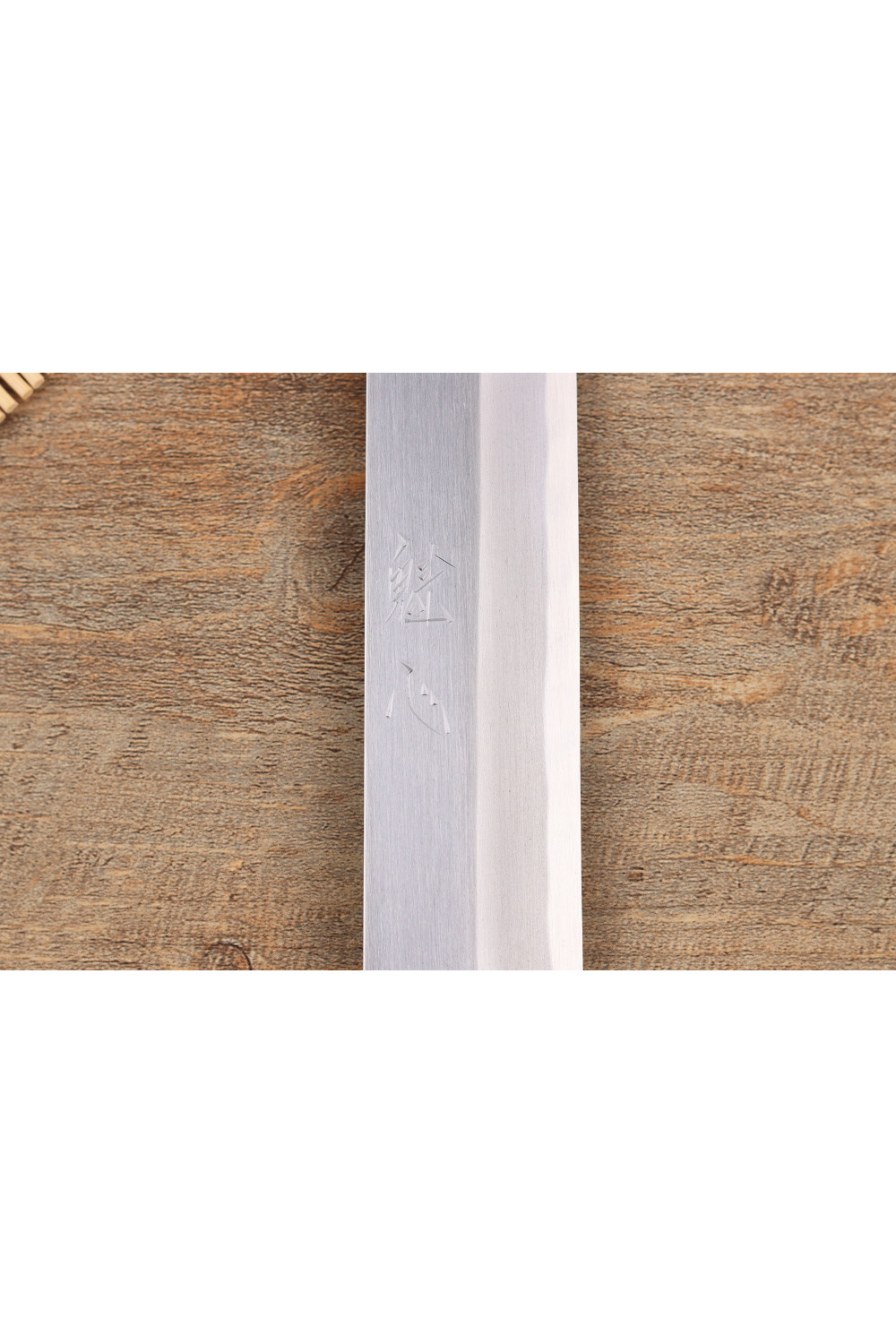
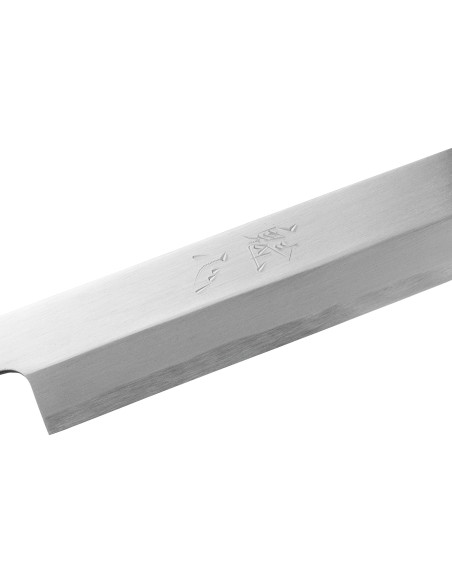
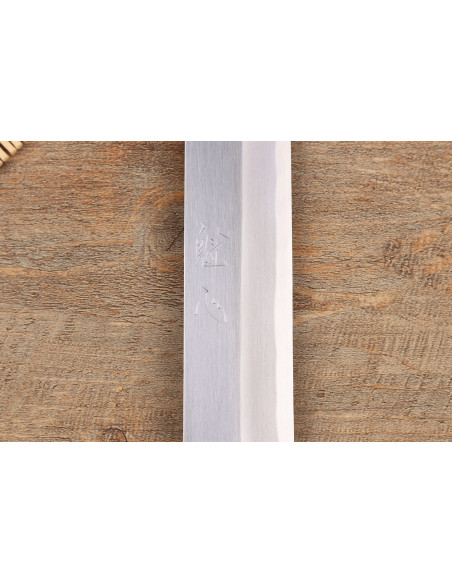
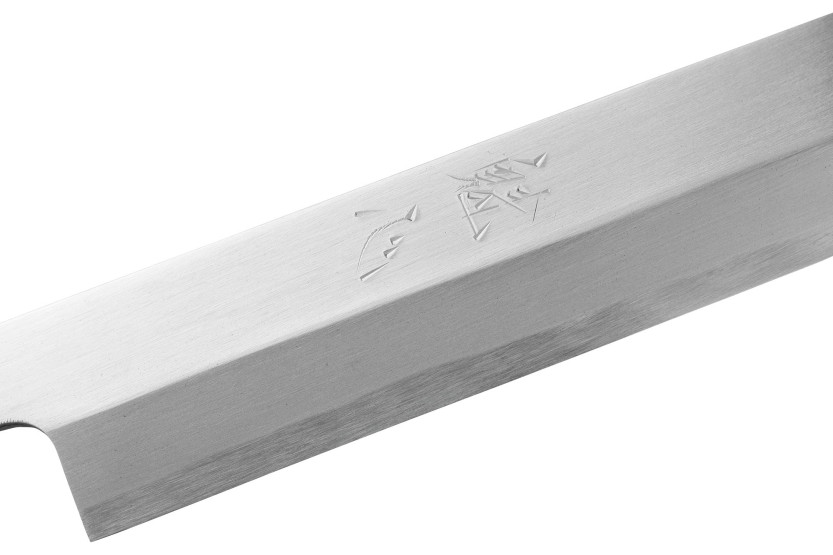
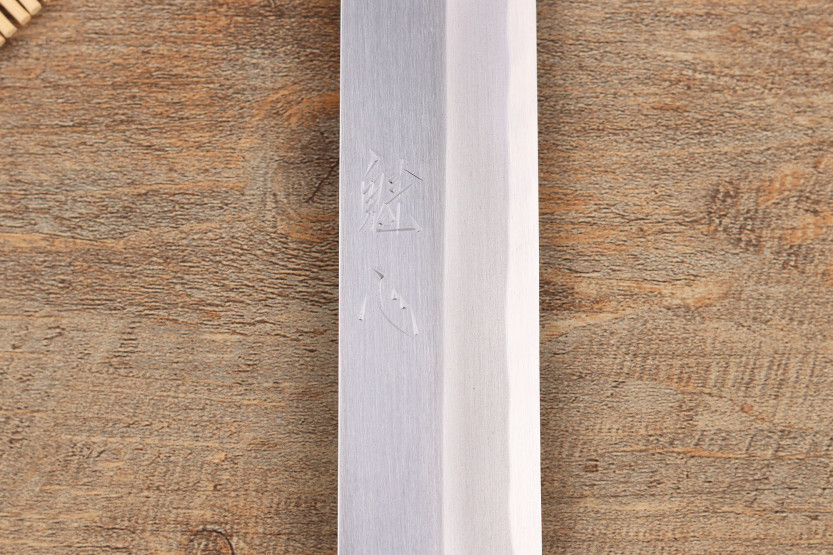
The blade’s surface features a satin Kasumi polish, whose slightly veiled appearance evokes mist—the meaning of the Japanese word “Kasumi.” This traditional polish creates subtle shades on the steel and highlights the lines of this slender blade, without seeking the brilliance of a mirror finish.
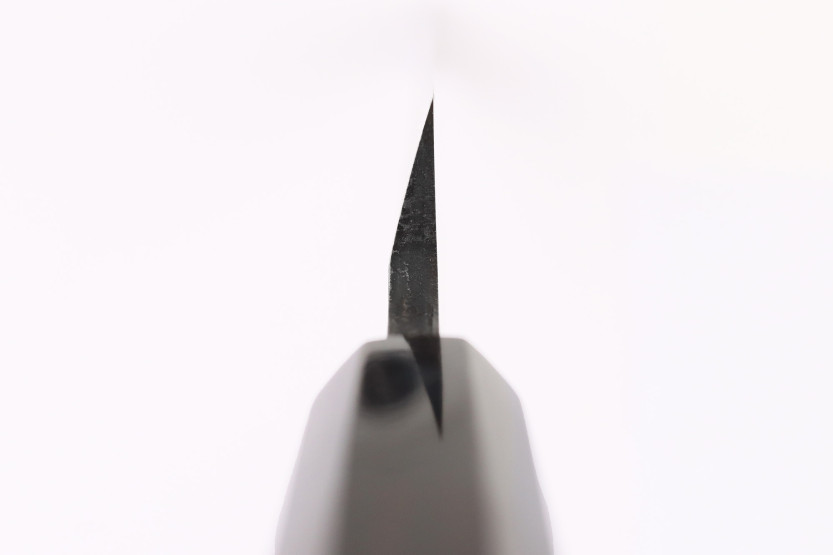
Finally, its asymmetrical grind for right-handed users meets the requirements of specialized Japanese cutting techniques. This geometry allows the blade to be guided during cutting motions and enables clean cuts through meat. It requires a specific technique and must be maintained during future sharpening sessions.
An ebony handle enhanced by black buffalo horn
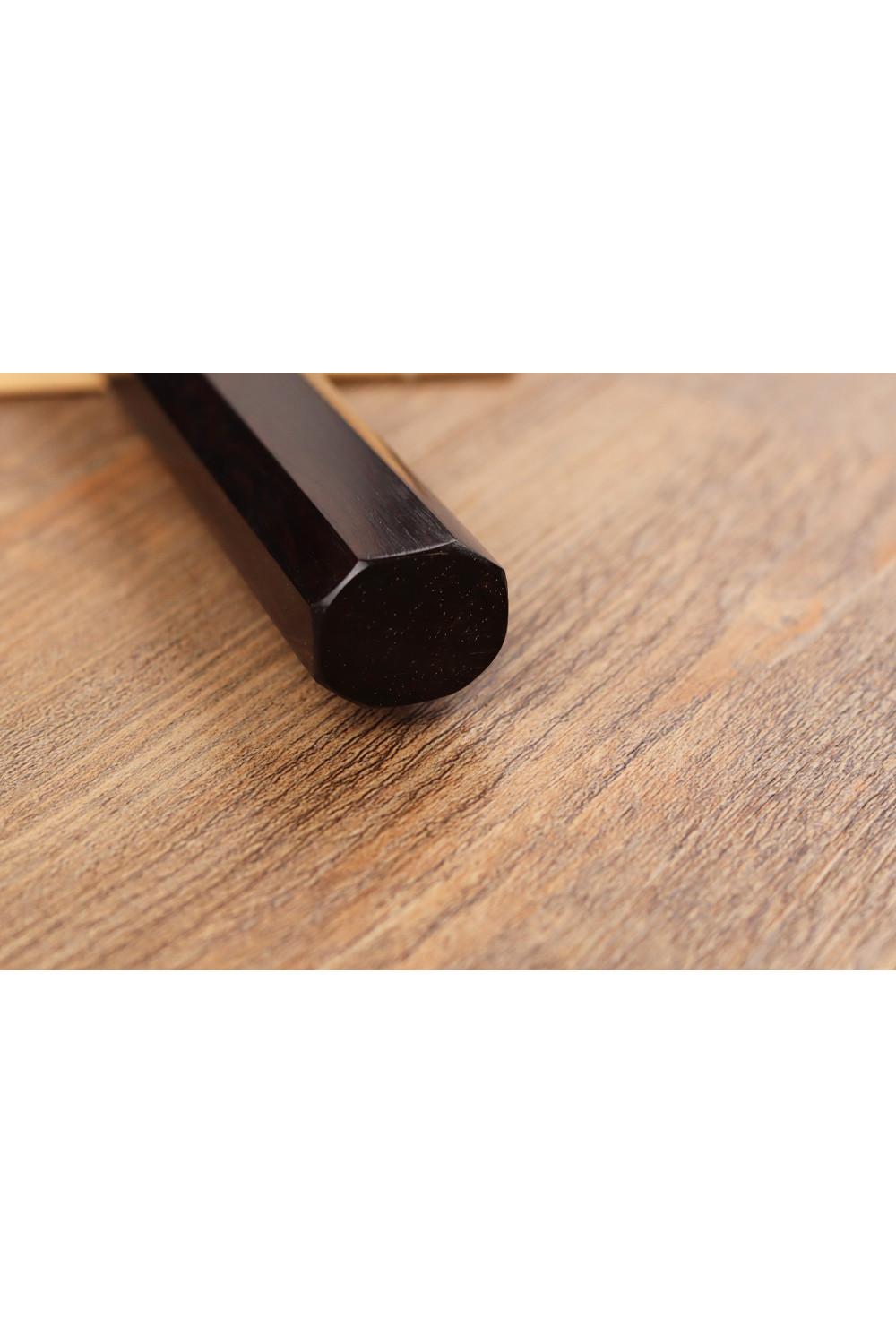
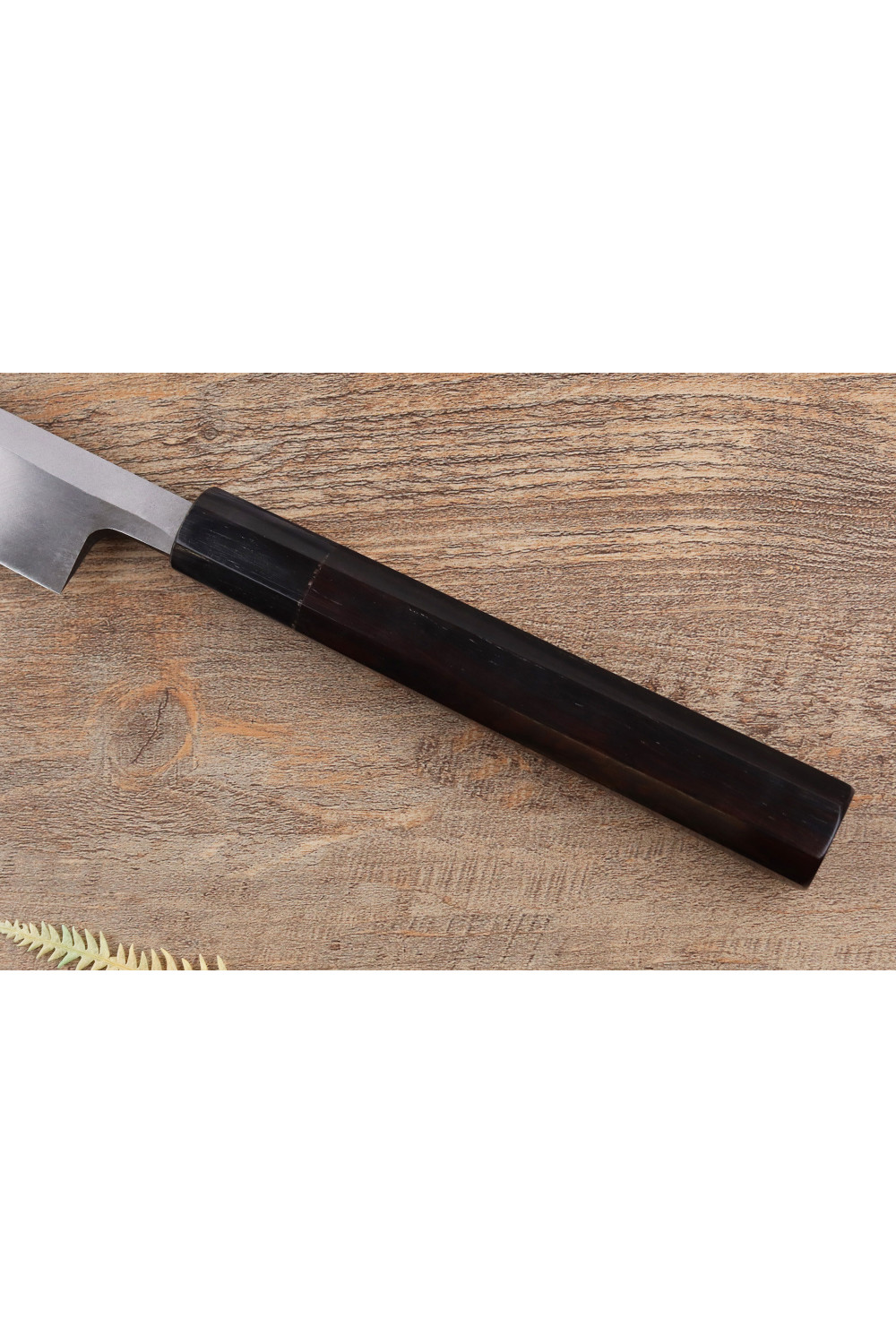
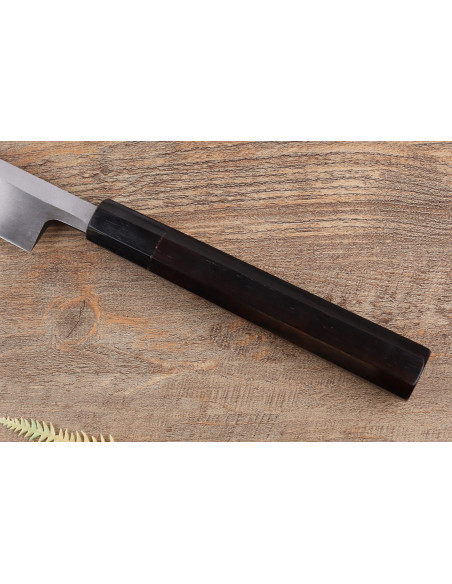
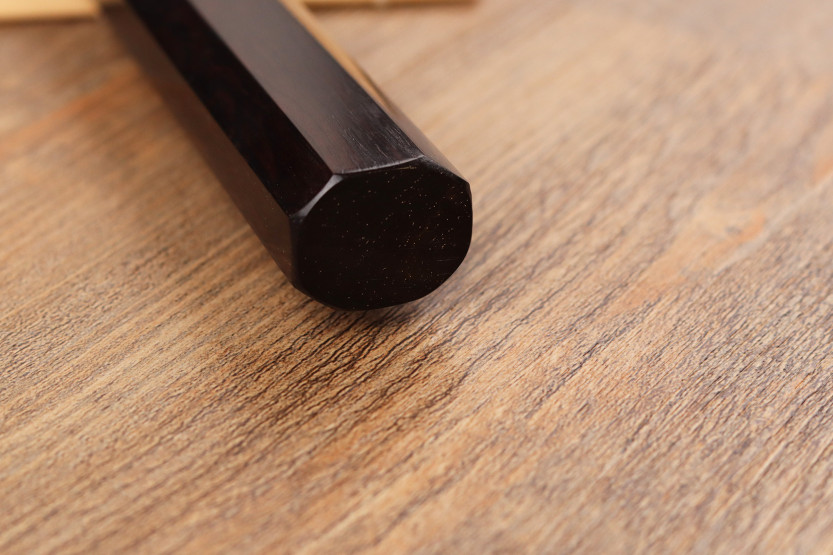
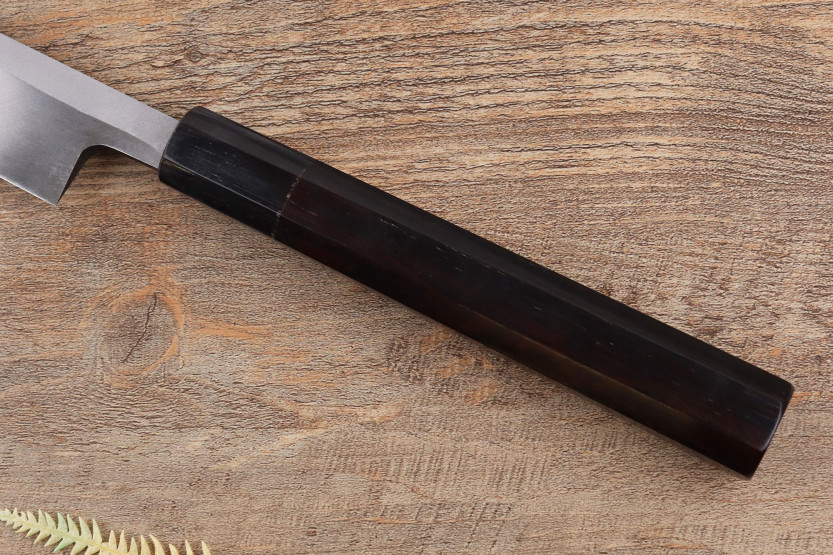
To complement this imposing blade, Nakamura has chosen an ebony handle, a dense wood whose dark hue and natural tones lend it a distinctive elegance. Its texture and subtle grain create an interesting contrast with the steel’s light, satin finish.
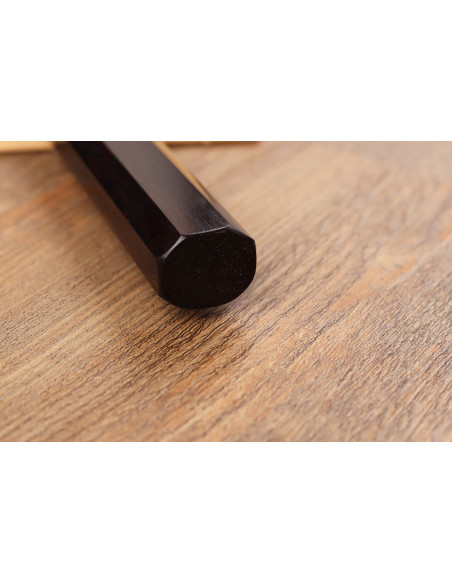
The handle features a traditional Japanese octagonal shape that allows for proper finger placement and control over the knife’s orientation. On a 48-cm maguro, this geometry supports cutting motions by facilitating a stable grip—essential for handling a blade of this size.
A black buffalo horn bolster completes the handle where it meets the blade. This natural material complements the deep tones of the ebony, creating a particularly elegant visual continuity. Its hues may vary slightly from one knife to another, a testament to its natural origin.
This knife comes with a wooden saya, a traditional Japanese sheath designed to protect the blade when stored. It minimizes accidental contact with the cutting edge and keeps the knife safe when not in use. Before returning it to its saya, always ensure that the blade is completely clean and dry.
The combination of dark ebony, black horn, and satin-finished Kasumi creates a bold, striking aesthetic. With its kiritsuke tip and unusual dimensions, this Japanese tuna knife also possesses all the visual qualities of a collector’s item!
Summary of Features and Benefits
-
- 48 cm blade: length ideal for cutting large portions of tuna
- 3-layer San Mai construction: a hard core surrounded by two layers of softer steel
- Shirogami #2 steel: precise cuts and holds a very fine edge
- Rockwell hardness of 61 HRC: excellent edge retention
- Kasumi satin finish: traditional polishing with a slightly misty appearance
- Asymmetrical grind for right-handed users: specialized geometry for working with fish
-
- Octagonal ebony handle: dense wood and a stable grip
- Black buffalo horn bolster: elegant natural finish
- Inlaid wood saya: protective sheath tailored to the blade
- Handcrafted in Sakai: a legacy of traditional Japanese cutlery
Precautions for caring for your knife
Shirogami #2 contains a high proportion of carbon, which allows it to achieve a very fine edge but also makes it susceptible to corrosion. When cutting fish, wipe the blade regularly to prevent moisture from remaining in contact with the steel for too long. A patina may develop naturally over time with use; this is part of the normal evolution of this steel.
After each use, wash the knife by hand only with a soft sponge, then immediately dry the entire blade. Do not use the dishwasher, abrasive cleaners, or leave the knife soaking for extended periods. For long-term storage, you can apply a thin layer of food-safe oil to the completely dry steel.
The kiritsuke tip and the 48-cm length require special care. Avoid twisting, impacts, and contact with bones or frozen foods. For sharpening, use a Japanese water stone and consult a specialist if you are not comfortable with asymmetrical sharpening techniques.
Nakamura Hamono: Sakai’s craftsmanship at the service of large blades
For several centuries, Sakai, in Osaka Prefecture, has been a center of Japanese cutlery craftsmanship. The city has developed a tradition of craftsmanship based on specialized trades: forging, sharpening, and handle-making may be carried out by different artisans. This organizational structure allows for meticulous attention to every stage of production.
Founded in 2015, Nakamura Hamono carries on this legacy by offering Japanese knives that honor traditional methods. The company collaborates with specialized artisans and develops a wide variety of knives, ranging from those designed for everyday food preparation to large blades intended for very specific uses.
Among these creations, the maguro bōchō holds a special place. Its history is closely tied to Japanese markets, where large tuna are cut up before being sold. The largest models can easily exceed one meter in length and require several people to handle them. Their elongated shape serves a very specific purpose: to allow for the precise, controlled handling of large sections of fish.
This 48-centimeter maguro kiritsuke draws on this heritage while featuring an angular tip that gives it a distinct character compared to classic models. A handcrafted masterpiece that showcases the rich variety of forms developed by Japanese cutlers!
Also check out our collection of Nakamura Hamono Japanese knives on Knifeleader.eu!




 By buying this product you can collect up to