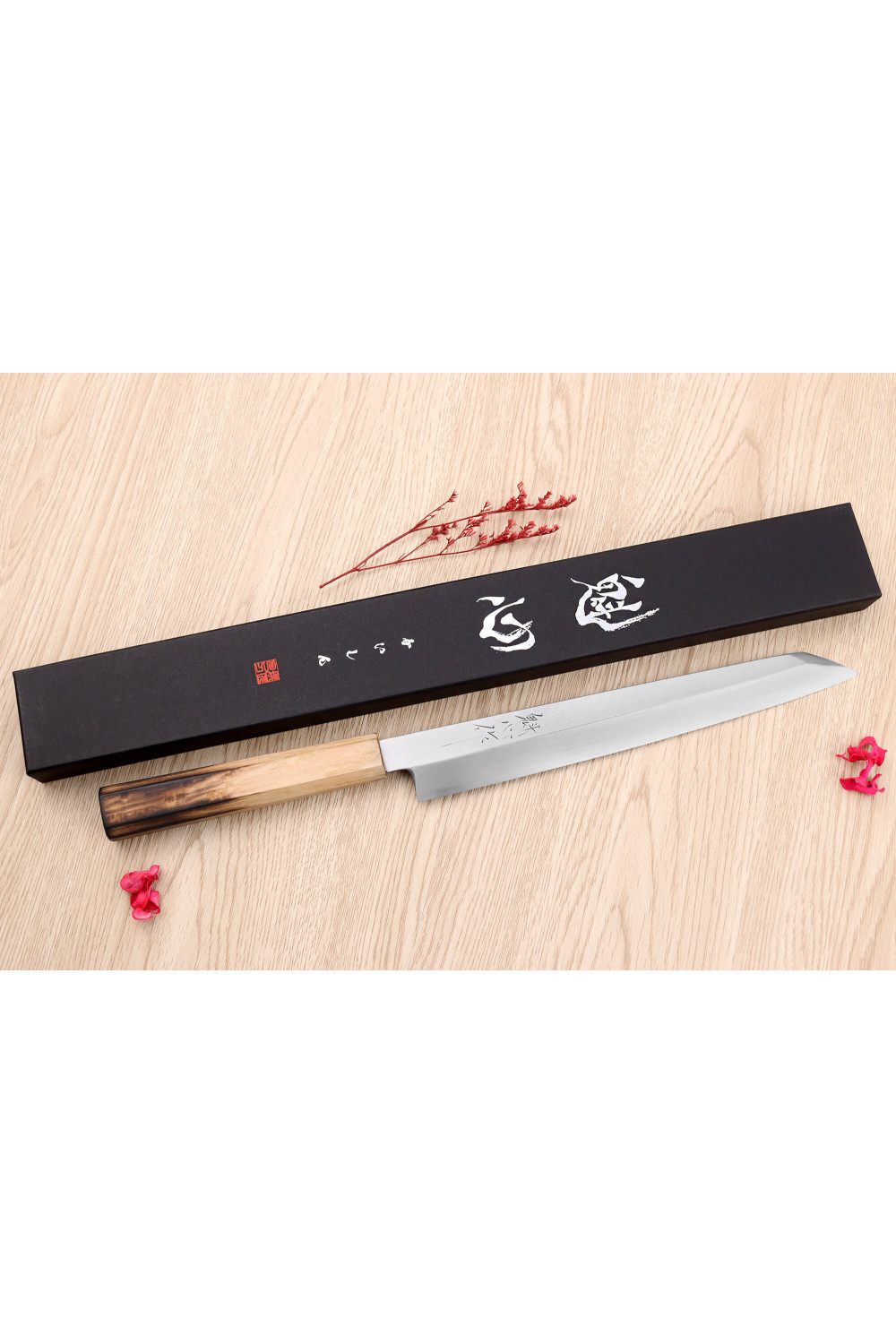
The Nakamura company was born in Japan in 2015, with the creation of a workshop dedicated to the artisanal manufacture of knives. Its aim is to collaborate with renowned Japanese sharpeners and blacksmiths to design exceptional blades. With this in mind, the Kaishin (魁心) brand was founded:"Kai" (魁) means "pioneer", while "Shin" (心) represents "spirit". A philosophy that is reflected in every Nakamura Kaishin knife, with the aim of offering exceptional Japanese knives to cooking enthusiasts!
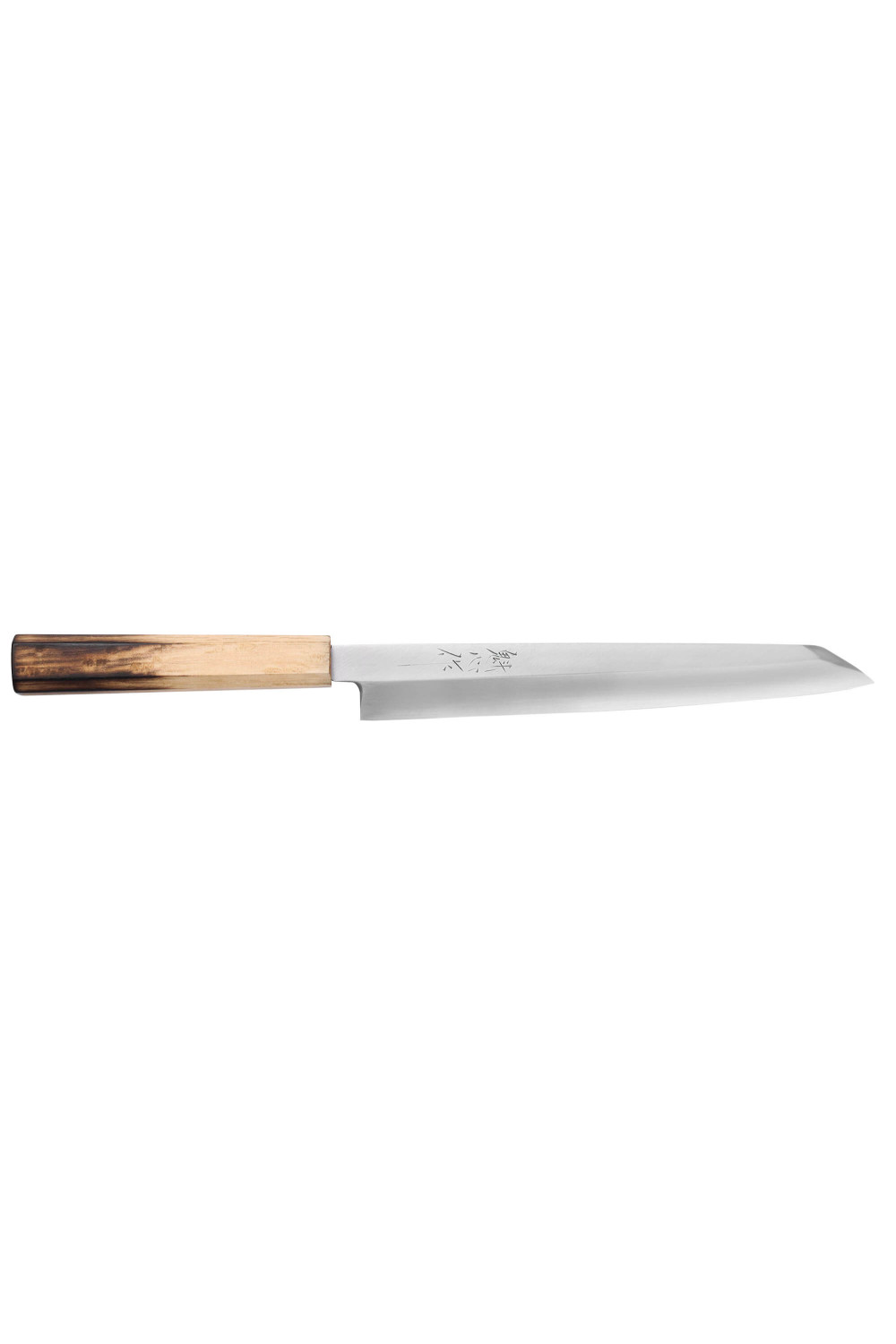
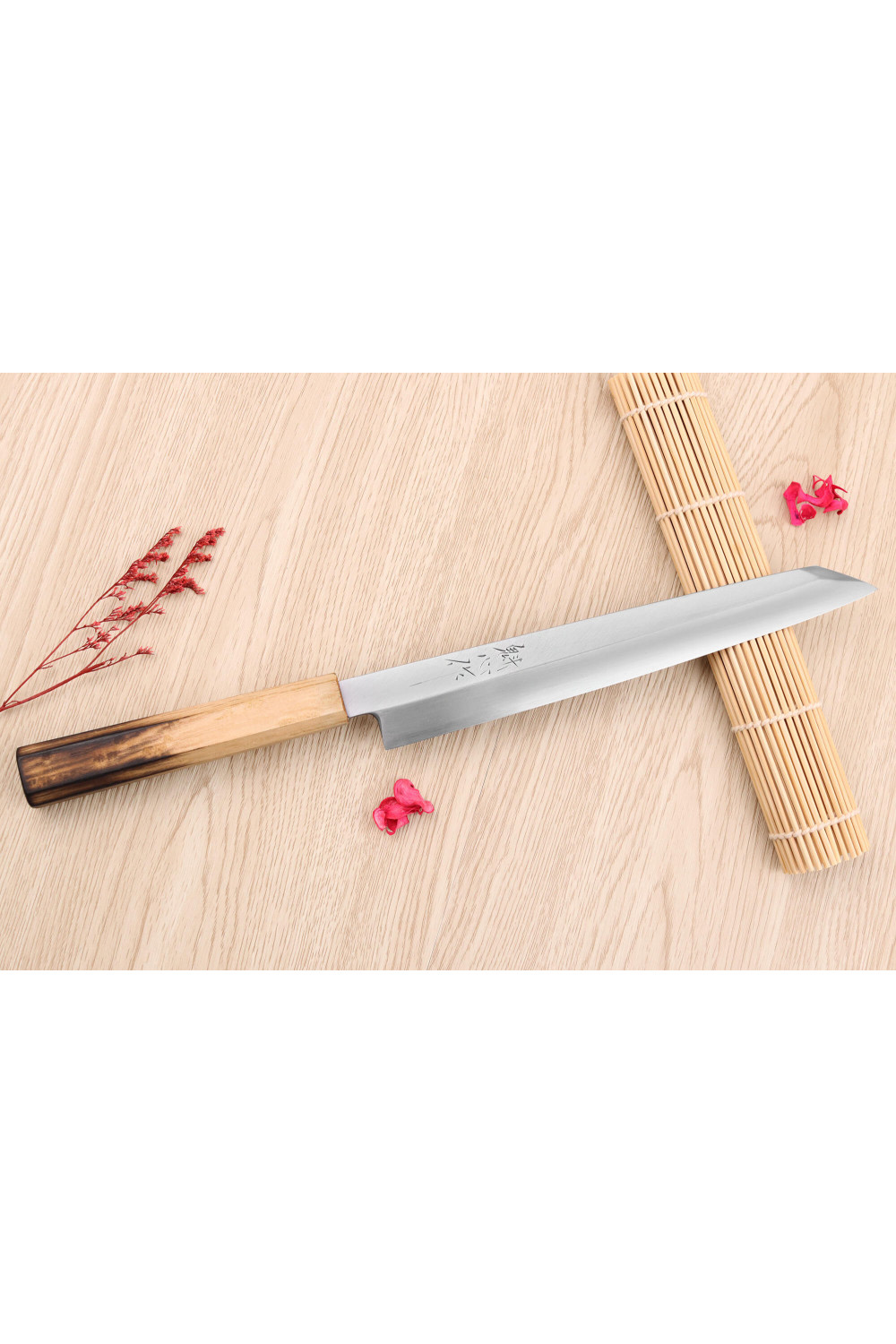
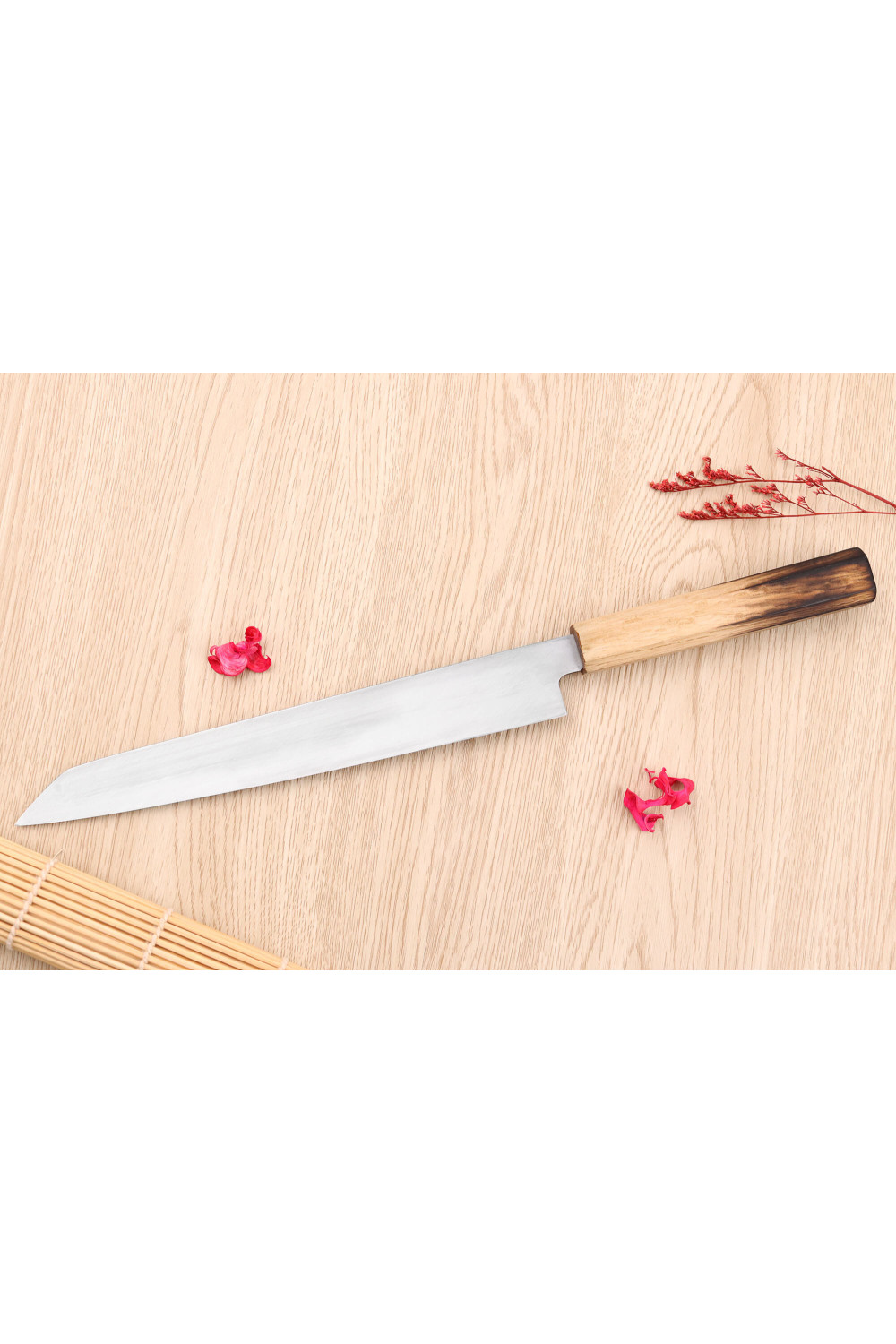
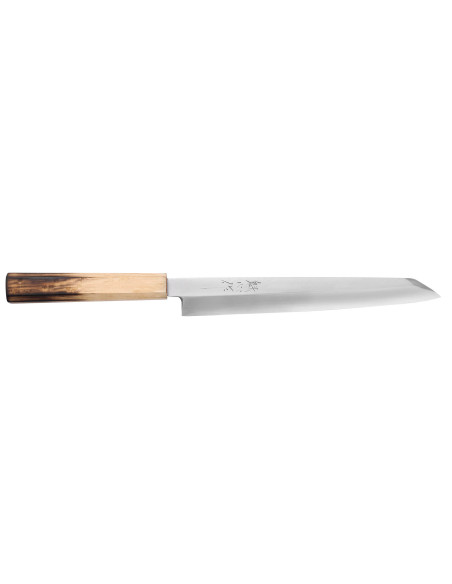
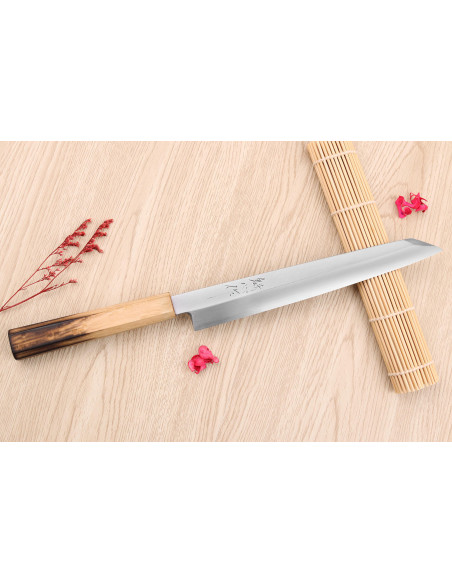
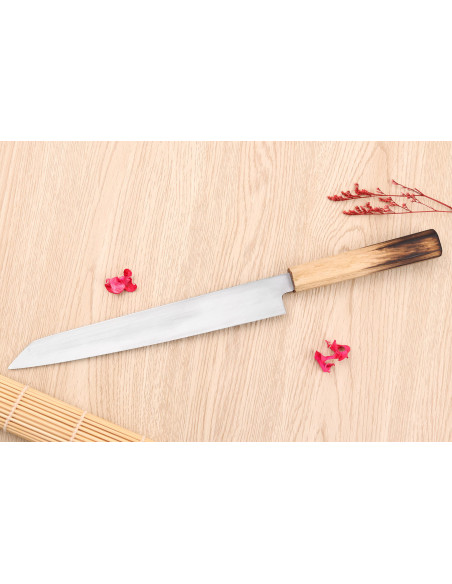
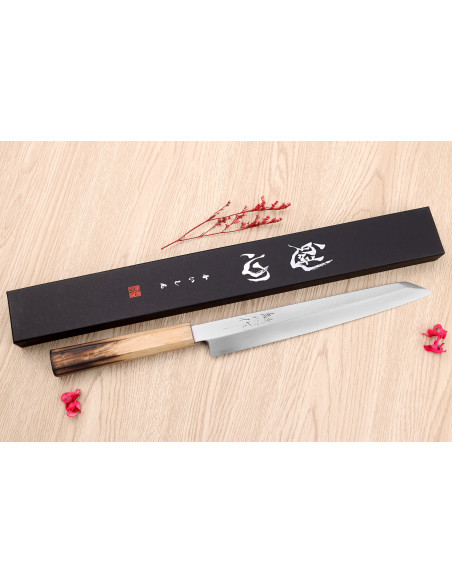
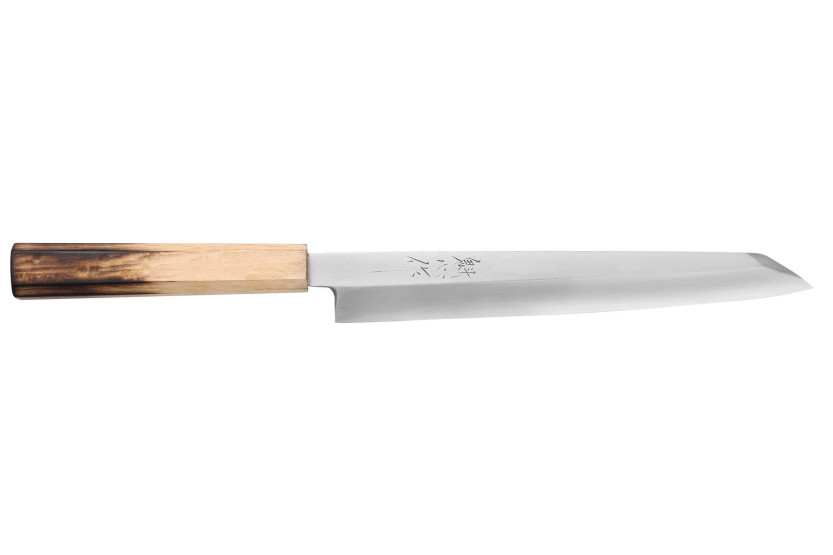
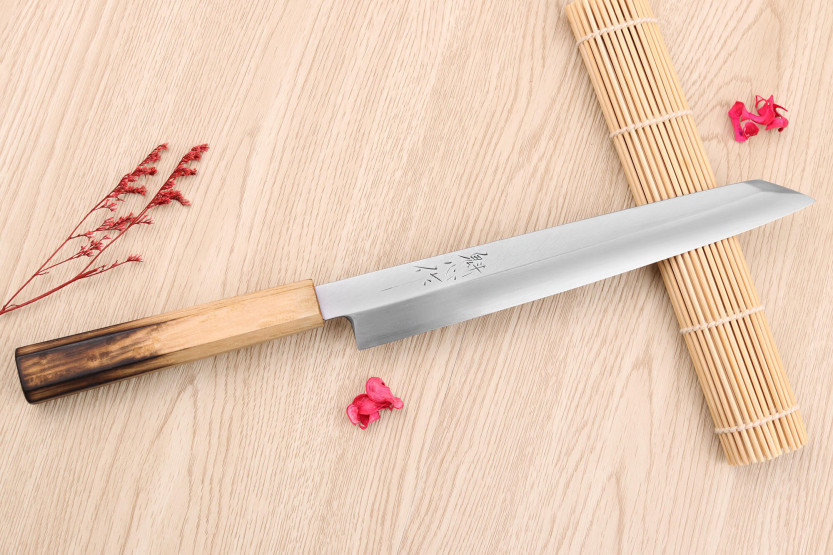
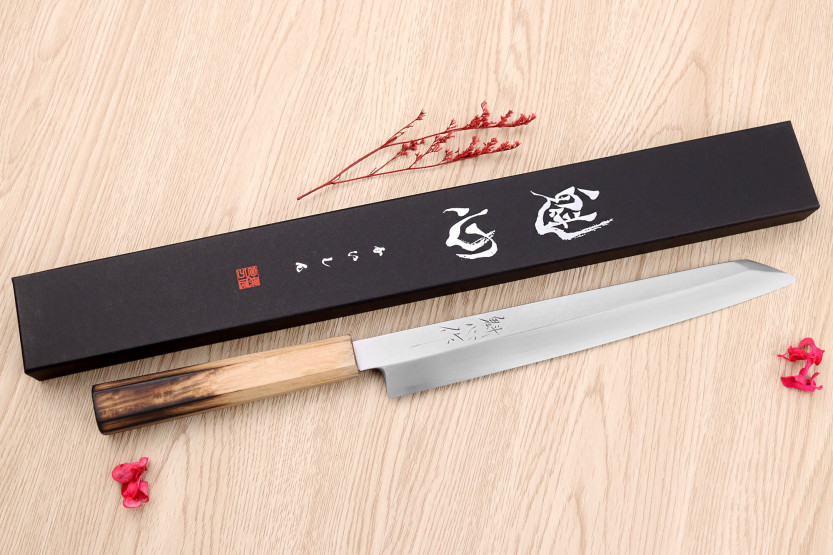
This yanagiba is expertly forged by a team of experienced blacksmiths, before being sharpened by Tomoyuki Ajioka, Sakai's traditional master sharpener. With over fifty years' experience, he has trained numerous apprentices to pass on the ancestral know-how of Japanese cutlery. His approach is to sharpen each blade by putting himself in the user's shoes, thus guaranteeing remarkable, effortless cutting quality to preserve the quality of your food!
A Nakamura knife with a refined blade
Your yanagiba kiritsuke knife features a blade made using the San Maï method, which means "three layers" in Japanese. This technique consists of creating a hard steel core surrounded by a layer of softer steel, folded in on itself. This process combines strength and flexibility, while protecting the core of your blade.
The core of this Japanese knife is made of Japanese Shirogami #2 steel, also known as White Paper Steel 2, an alloy developed by the renowned Hitachi steelworks. With a carbon concentration of around 1.2%, this steel gives your blade a hardness of 61HRC on the Rockwell scale. This hardness ensures excellent edge retention for smooth, precise cutting!
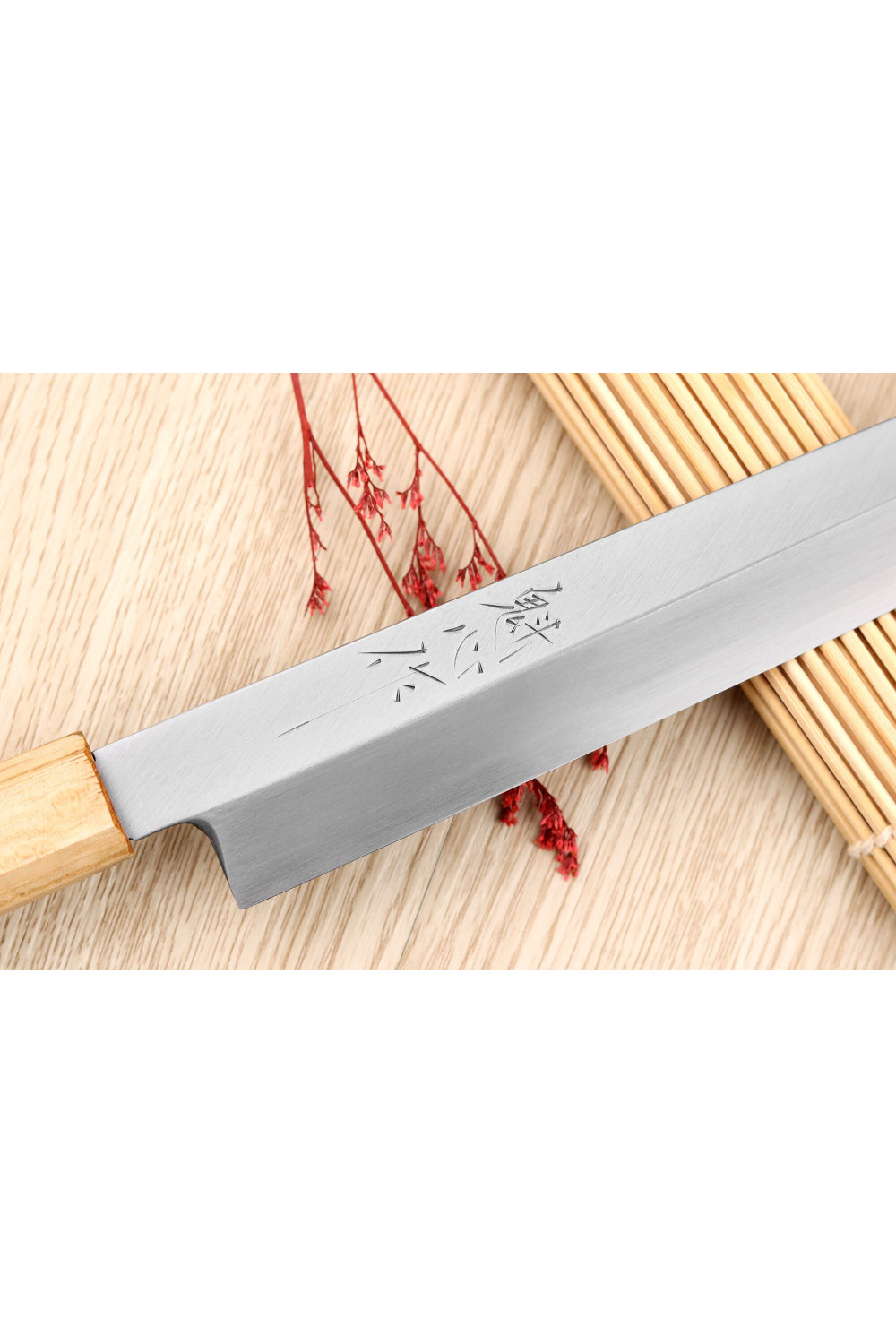
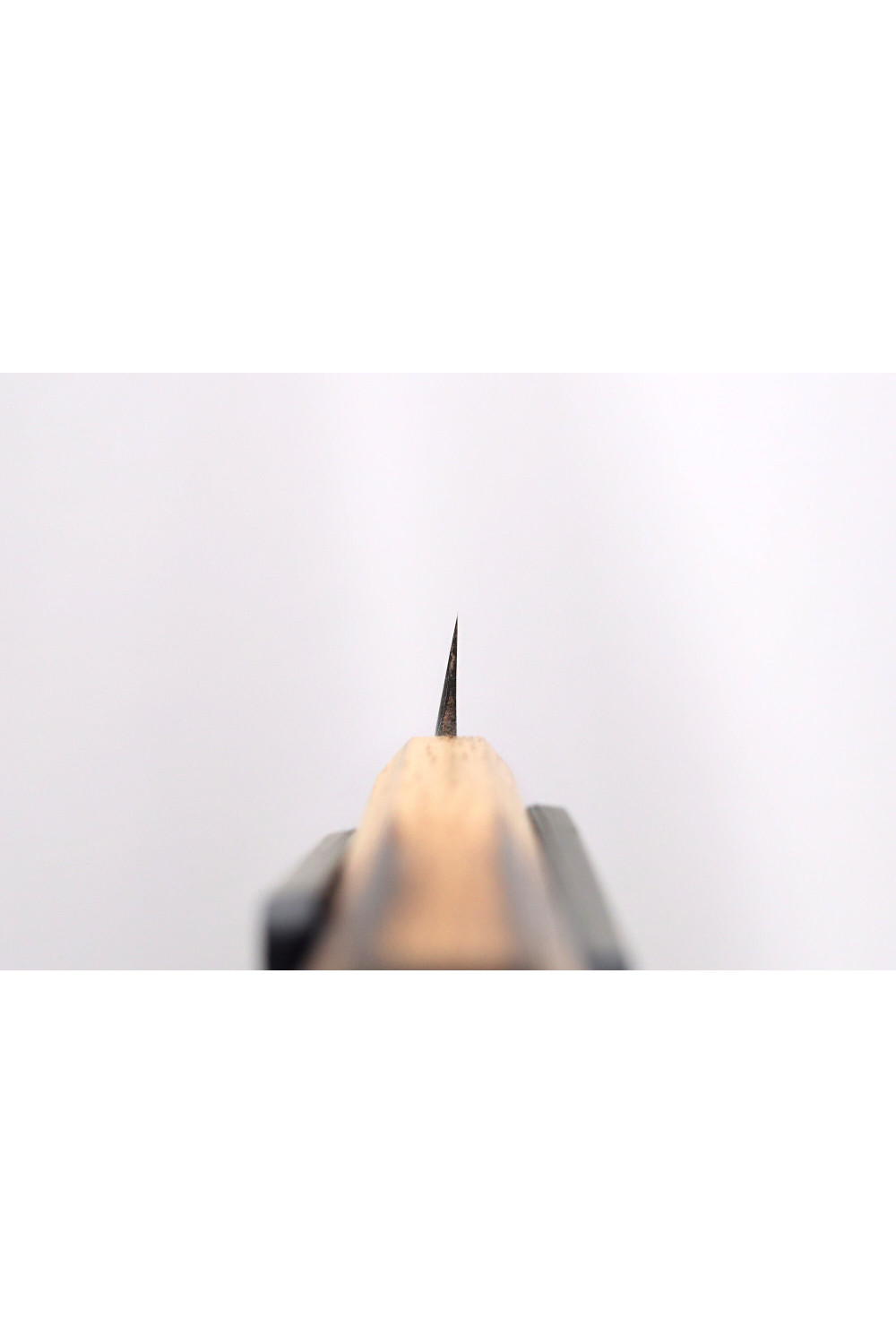
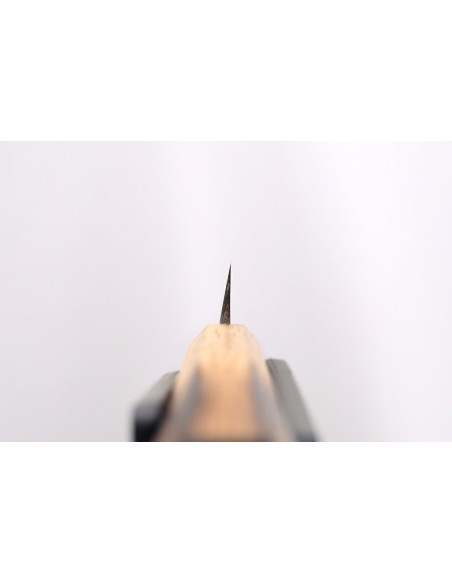
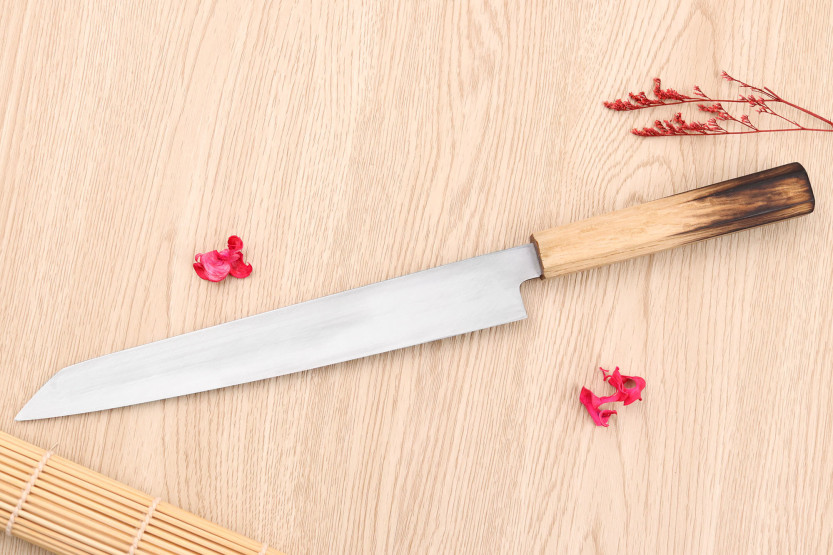
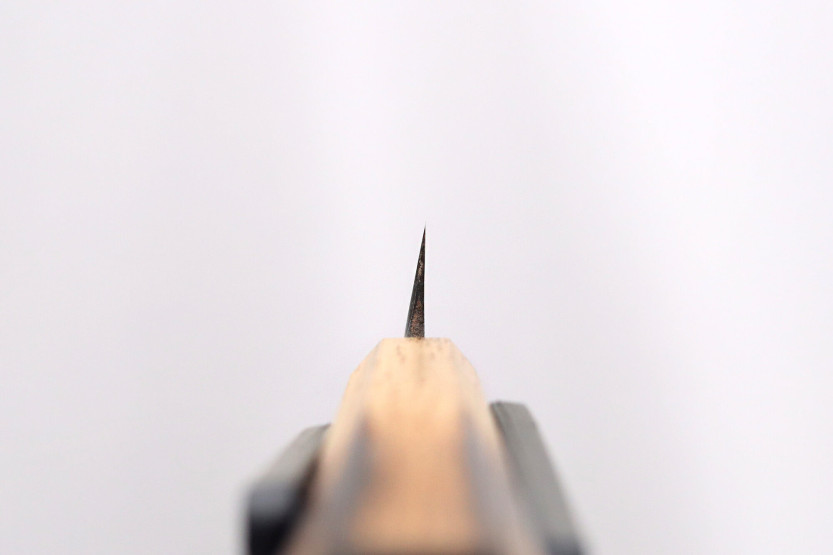
Its asymmetrical grinding, typical of Japanese yanagiba knives, creates a beveled edge that's ideal for right-handed cooks. This special sharpening ensures clean, even cuts in a single movement!
To complete the San Maï, the blade's core is coated with a layer of soft iron. This feature gives the blade a slight suppleness to improve its resistance to impact, thus reducing the risk of breakage during use. The junction between the different steels forms a subtle, undulating pattern along the entire cutting edge, the signature of the craftsmanship of this handcrafted Japanese knife!
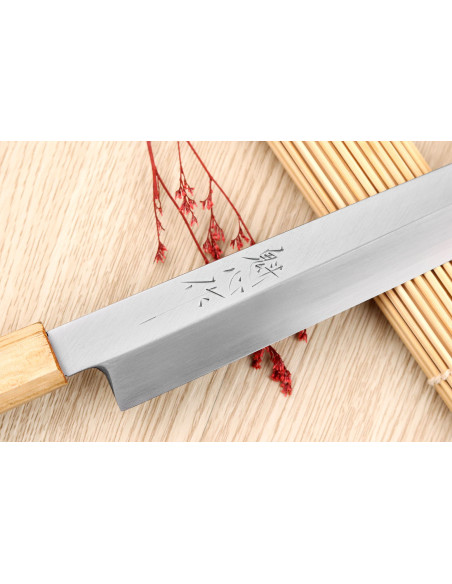
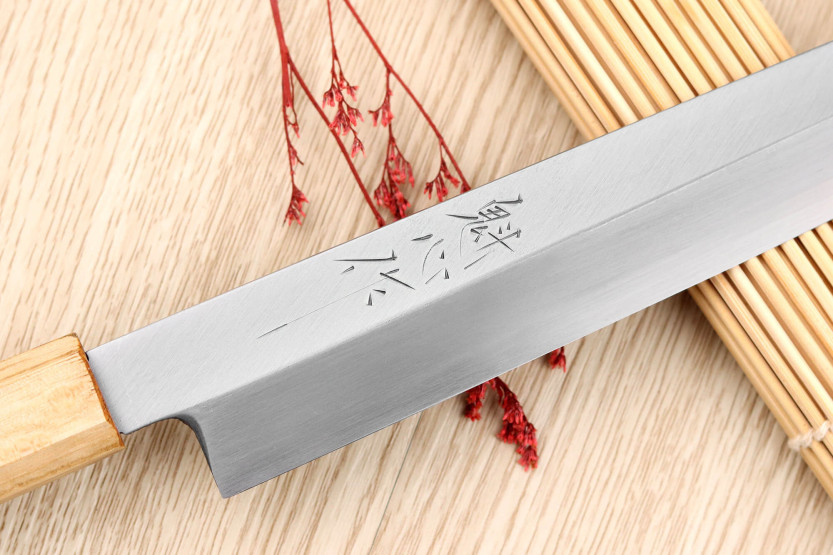
The traditional Kasumi finish, which means "misty" in Japanese, sublimates your blade thanks to a clay polish that gives it a satiny, refined appearance. Finally, hand-engraved kanjis complete the aesthetic of your Japanese kitchen knife, underlining its unique and authentic character.
A durable wooden handle for a comfortable grip
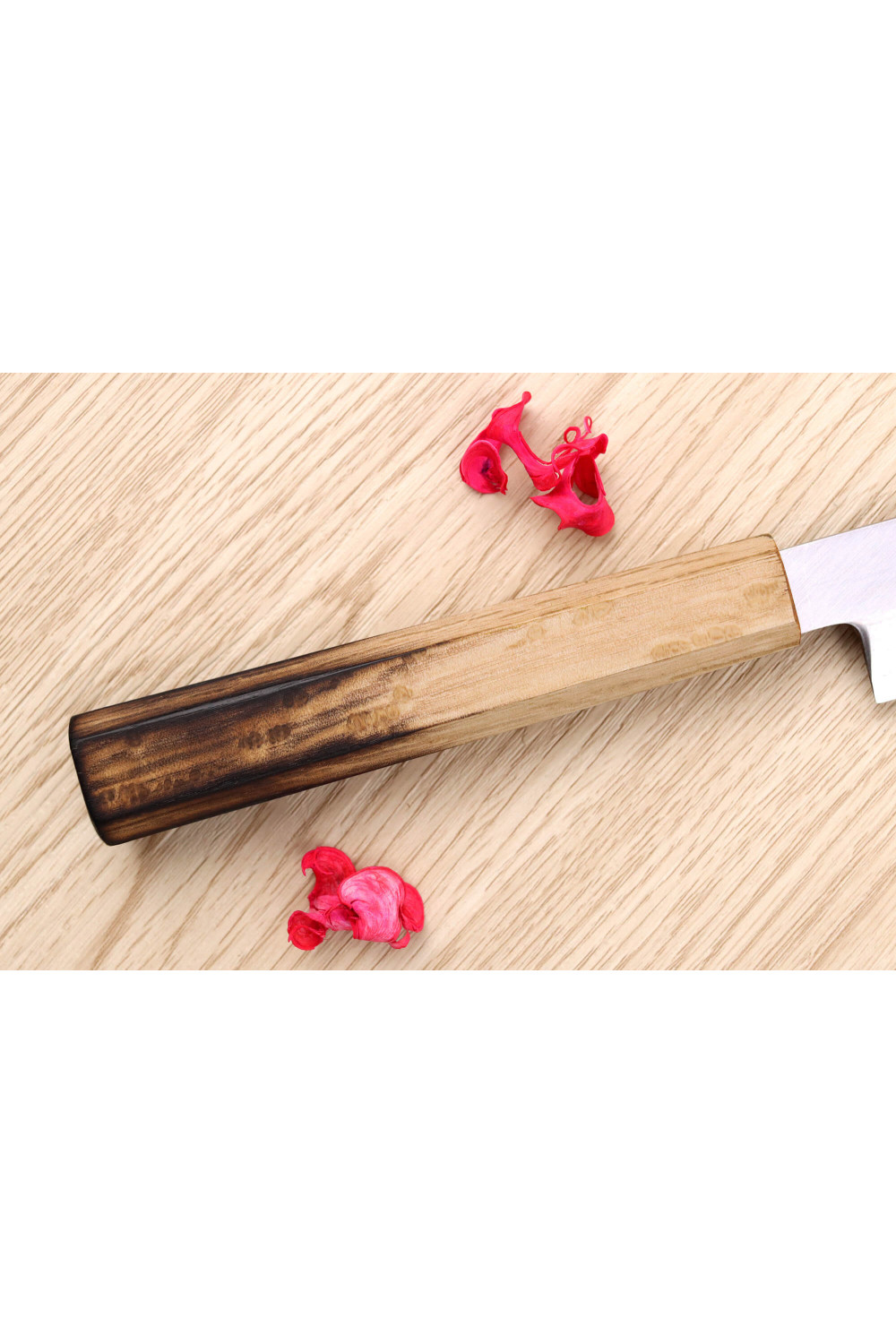
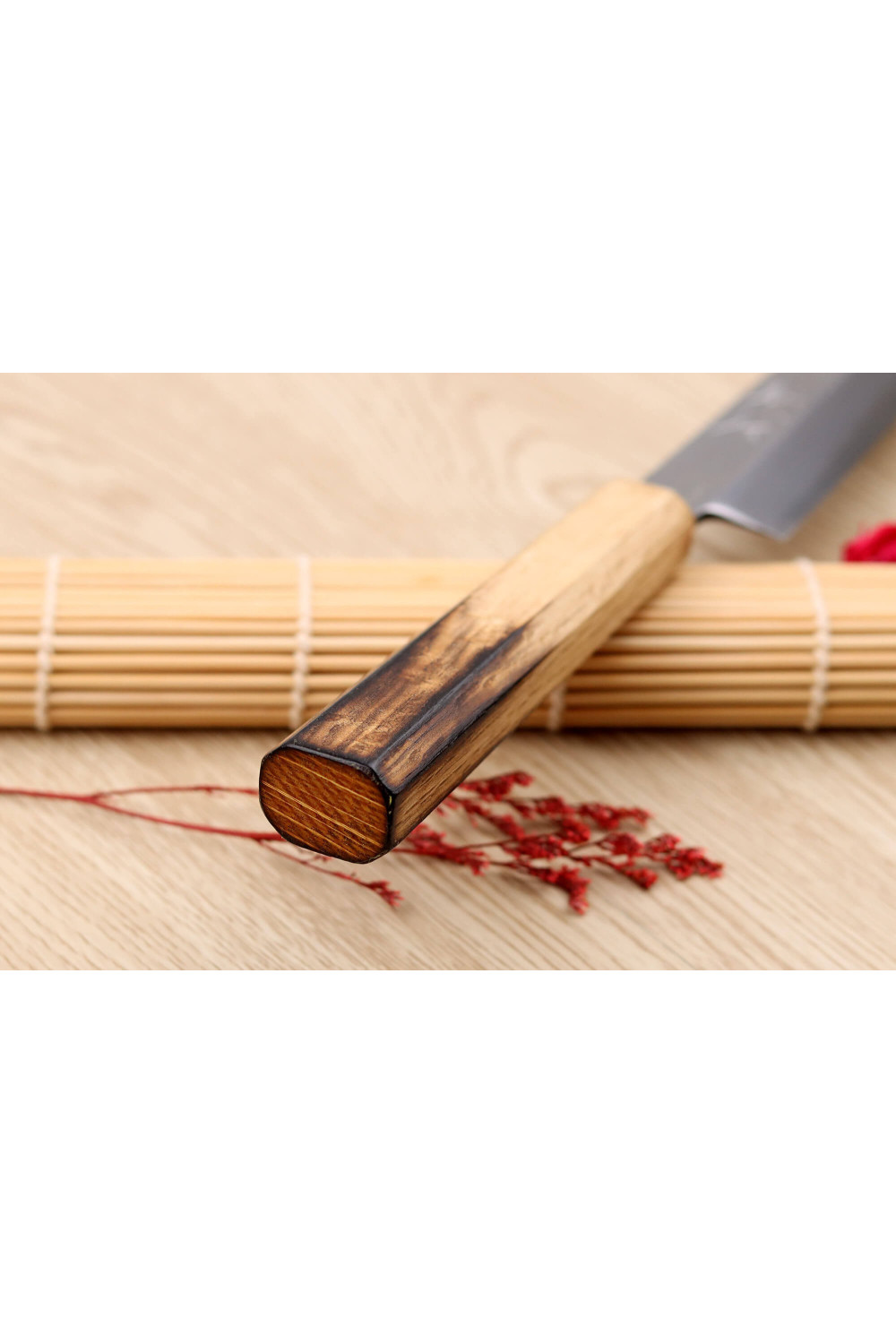
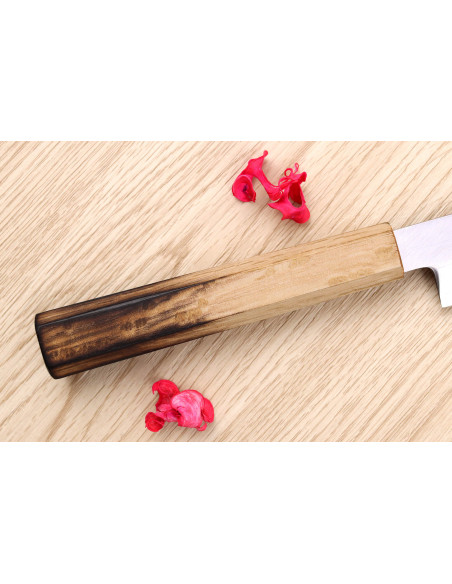
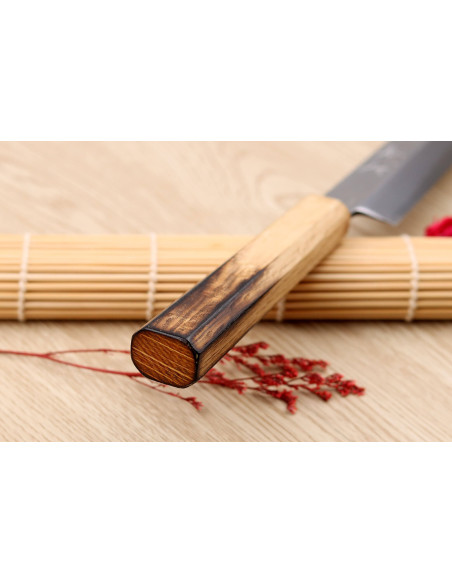
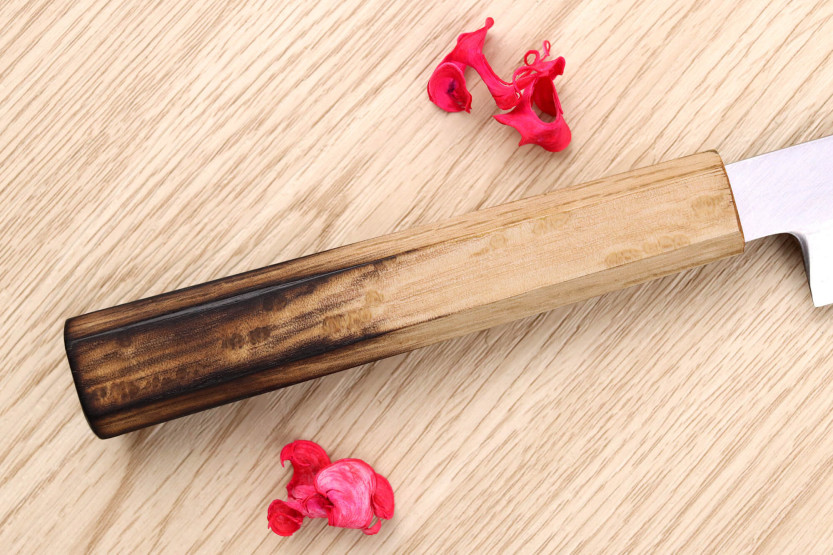
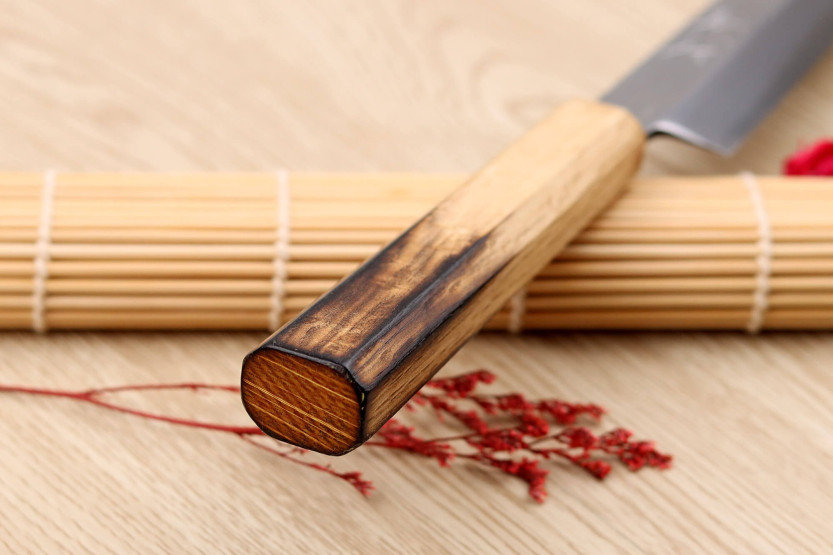
The handle of this Nakamura knife is made of oak wood, a species prized for its strength and longevity. Thanks to its high density, this wood effectively resists moisture, shock and deformation. The end has been lightly burned, a treatment that adds character and strength!
Its practical octagonal shape is designed to fit all hand morphologies! Its ergonomic, pleasant grip is ideal for prolonged use in the kitchen.
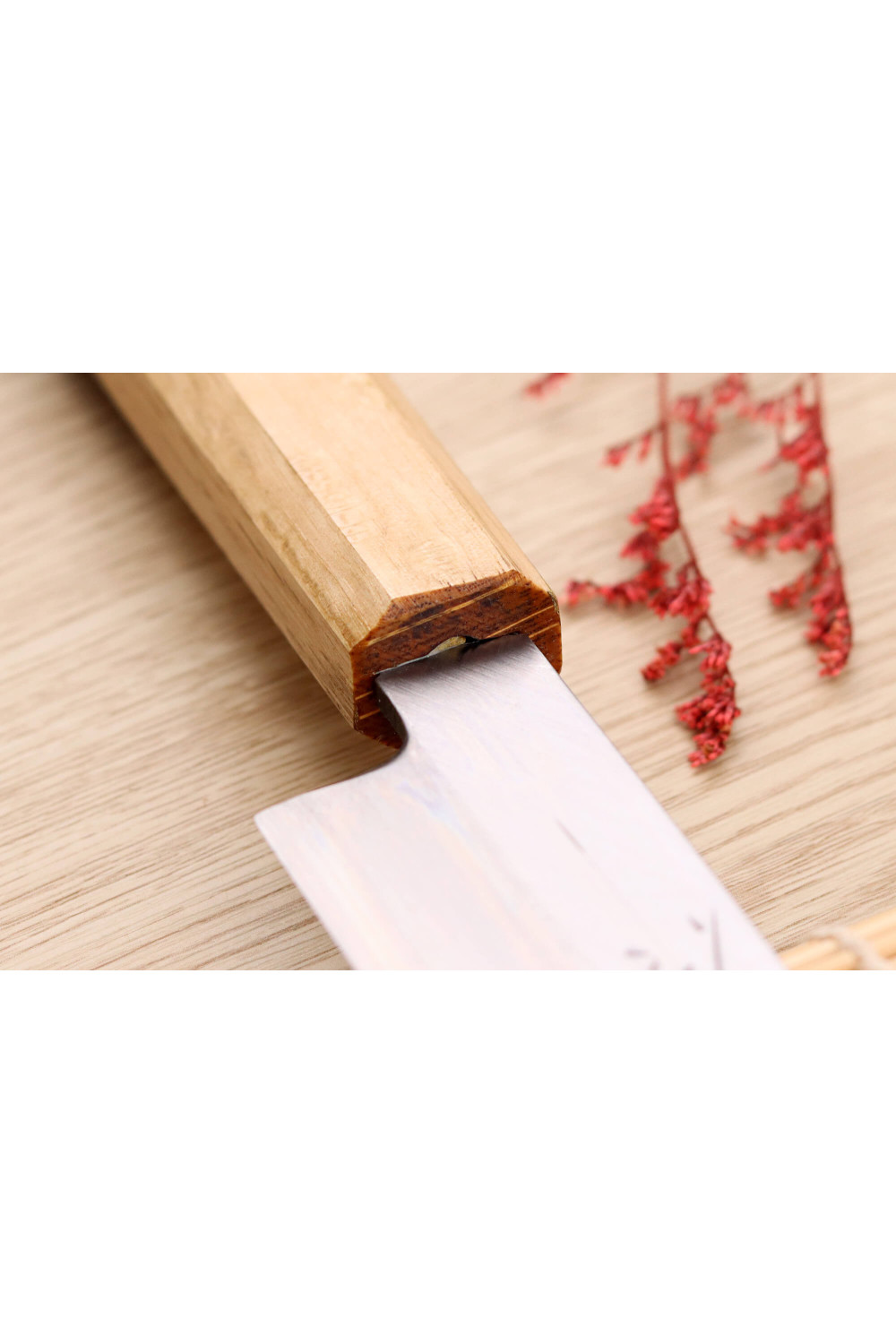
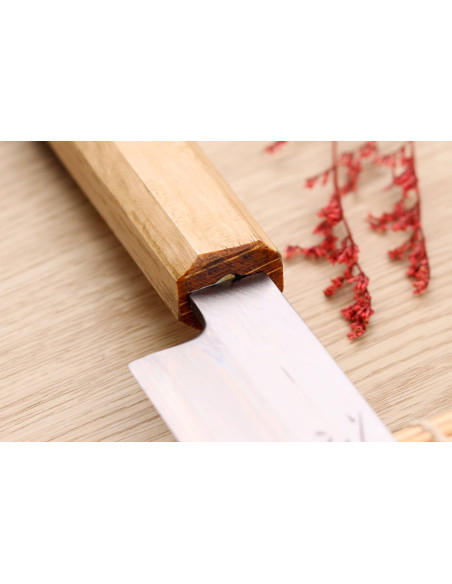
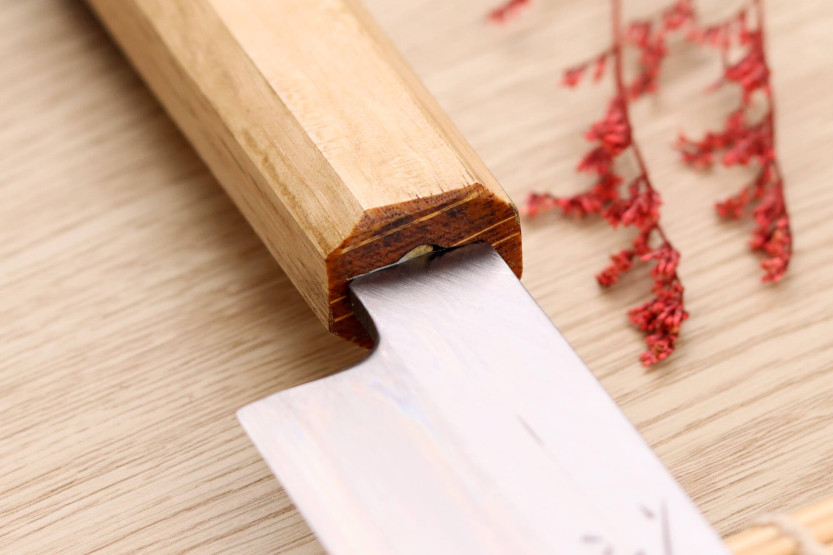
What's more, wood paste has been applied to the junction between blade and handle to fill any gaps. This detail guarantees a perfect seal and prevents any infiltration of water or food residues.
How do I care for a carbon Japanese knife?
To care for your carbon steel knife, we recommend washing it by hand only, with a soft sponge and a non-aggressive detergent, avoiding wetting the handle. After cleaning, it should be dried immediately and stored in a dry place. It is imperative to avoid the dishwasher and prolonged soaking in the sink.
Over time, the blade may develop a natural patina. This phenomenon is due to the reaction of carbon in contact with moisture and the acidity of food. This in no way affects the performance of your Japanese kitchen knife!
Find other handcrafted Japanese knives on Knifeleader.eu!




 By buying this product you can collect up to