The Nakamura company was founded in Japan in 2015, following the establishment of an artisanal manufacturing workshop. Its ambition? To collaborate with renowned Japanese sharpeners and master blacksmiths to design exceptional knives. With this in mind, the Kaishin (魁心) brand was created:"Kai" (魁) means "pioneer" and "Shin" (心) means "spirit". A philosophy that guides every Nakamura Kaishin creation to offer top-of-the-range Japanese kitchen knives!
Your yanagiba is first forged by a team of experienced blacksmiths, before being entrusted to Tomoyuki Ajioka, Sakai's renowned traditional master sharpener. With over fifty years' experience, he has trained numerous apprentices to ensure the transmission of Japanese knife-making know-how. Every time he sharpens, he puts himself in the user's shoes to guarantee a remarkably precise edge, for effortless, clean cuts!
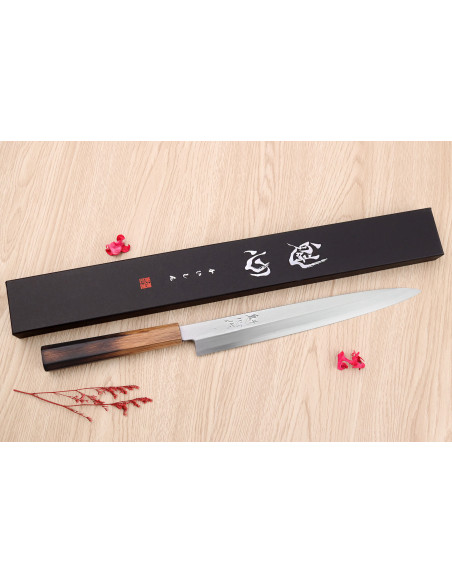
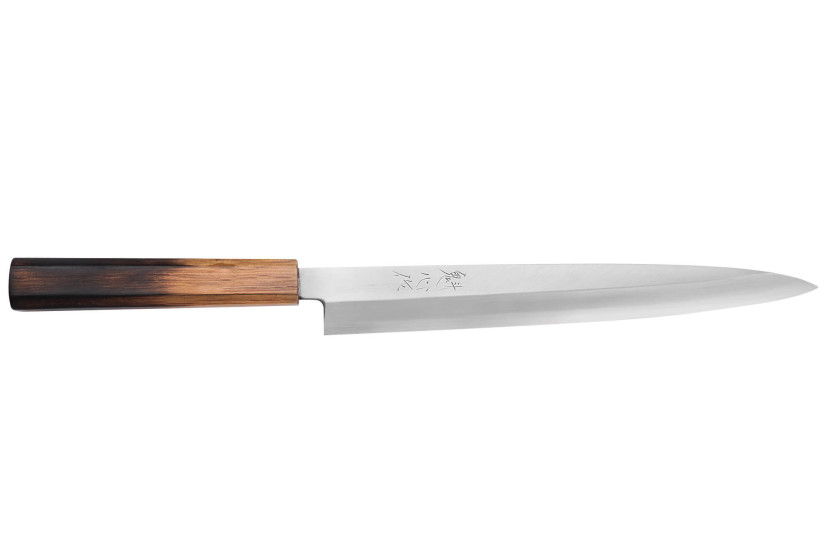
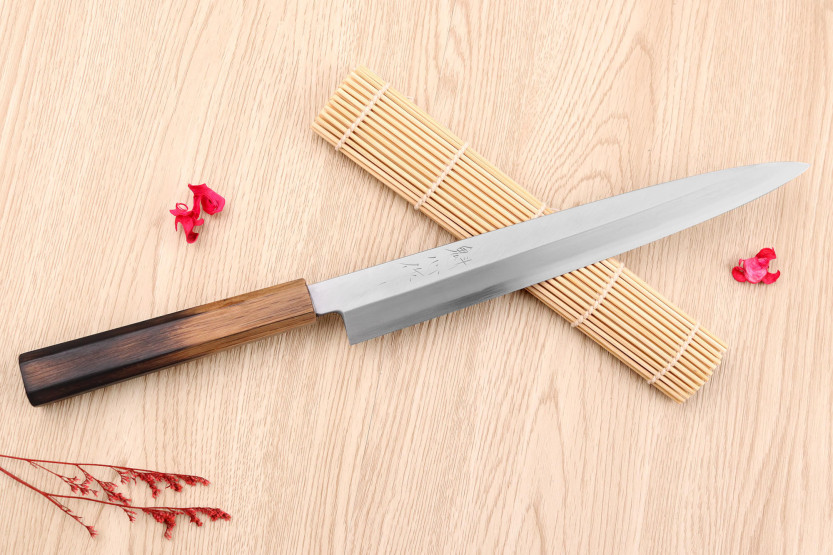
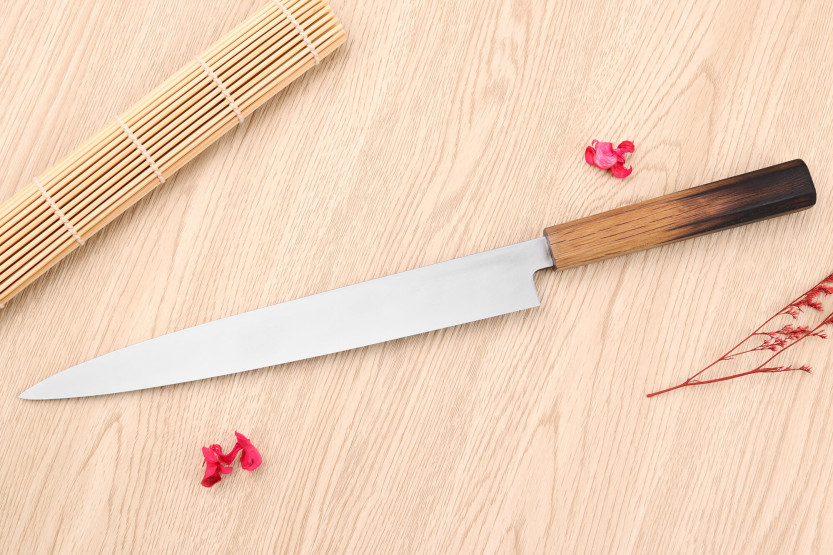
A top-quality handcrafted Japanese knife
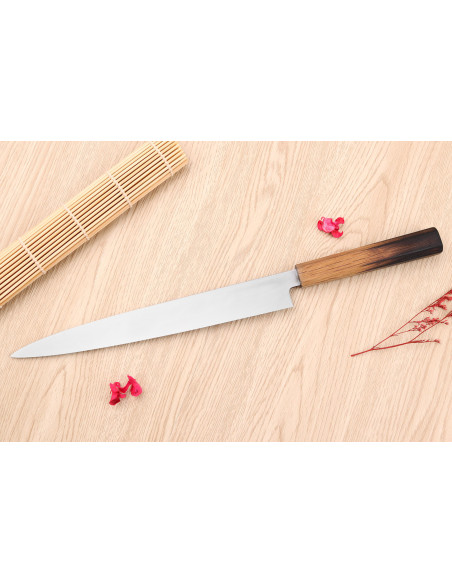
This yanagiba knife features a blade manufactured using the San Maï method, which means "three layers" in Japanese. This technique consists of forging a core of rigid steel wrapped around a layer of softer steel, folded in on itself to form the remaining 2 layers. This process gives the blade an ideal balance between hardness and flexibility, while protecting its core.
The core of this Japanese kitchen knife is made from Japanese Shirogami #2 steel, also known as White Paper Steel 2, an alloy produced by the renowned steelmaker Hitachi. Thanks to its high carbon content of around 1.2%, it offers a remarkable hardness of 61HRC on the Rockwell scale. This hardness ensures that the blade retains its cutting edge for a long time to come, and that it cuts efficiently!
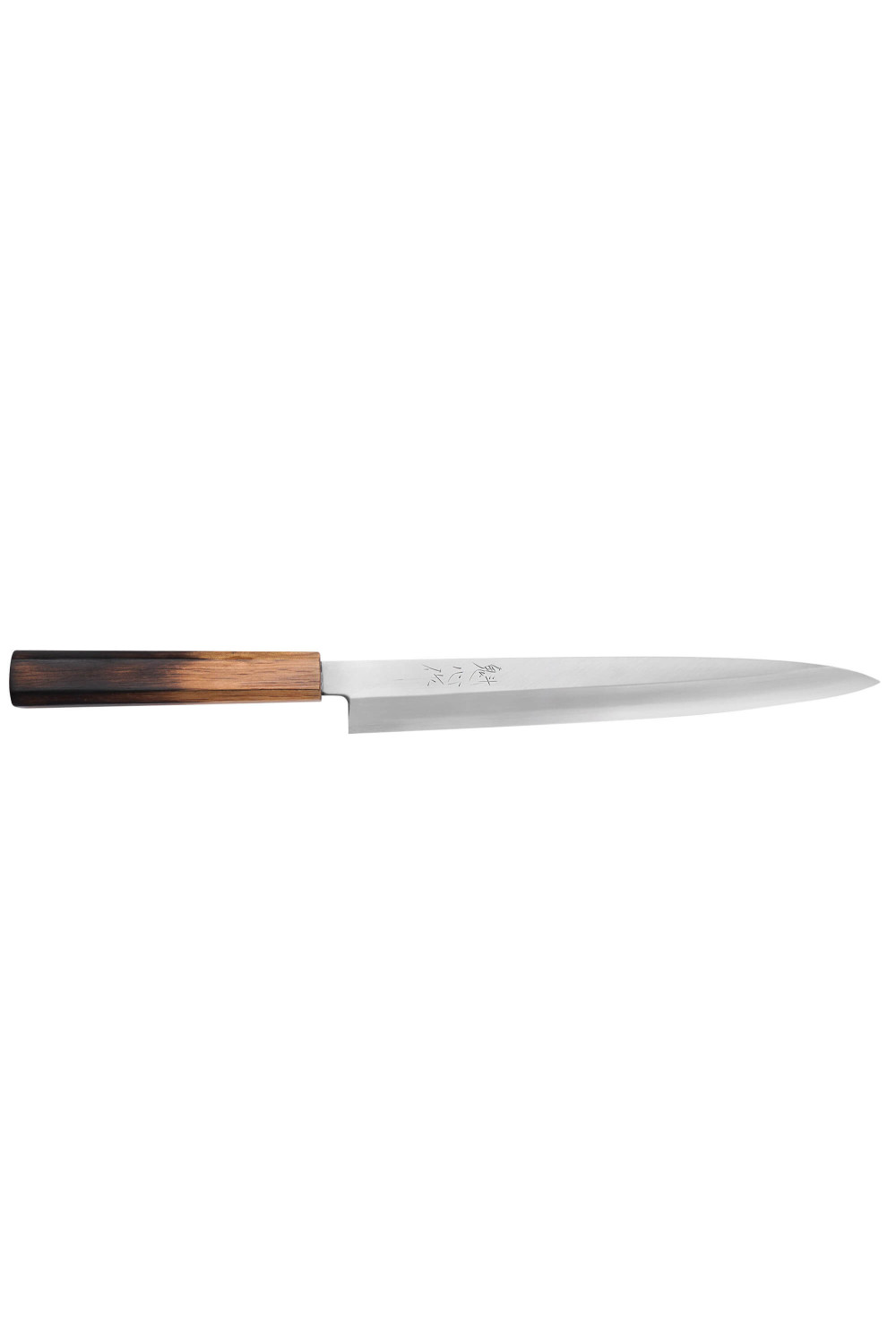
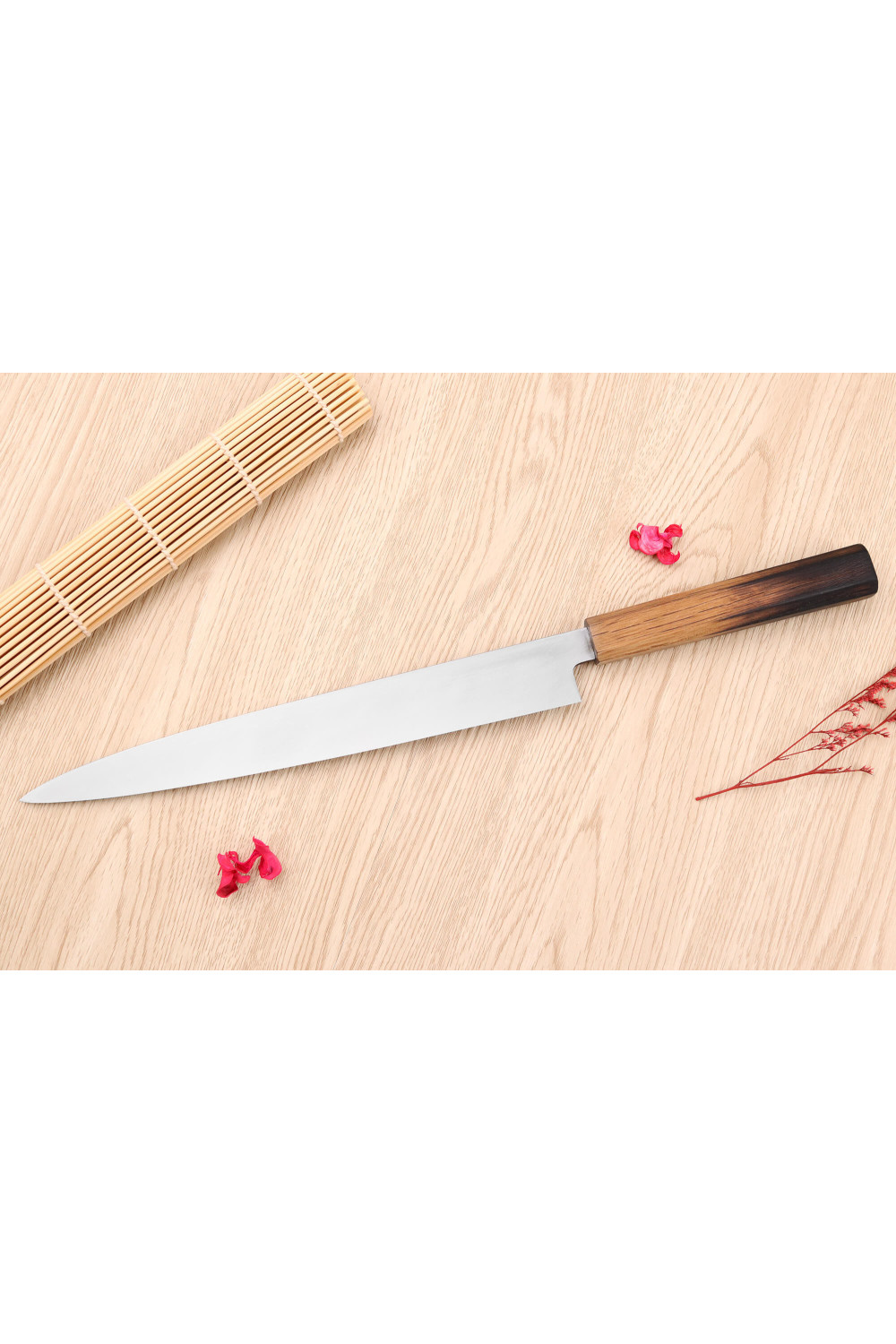
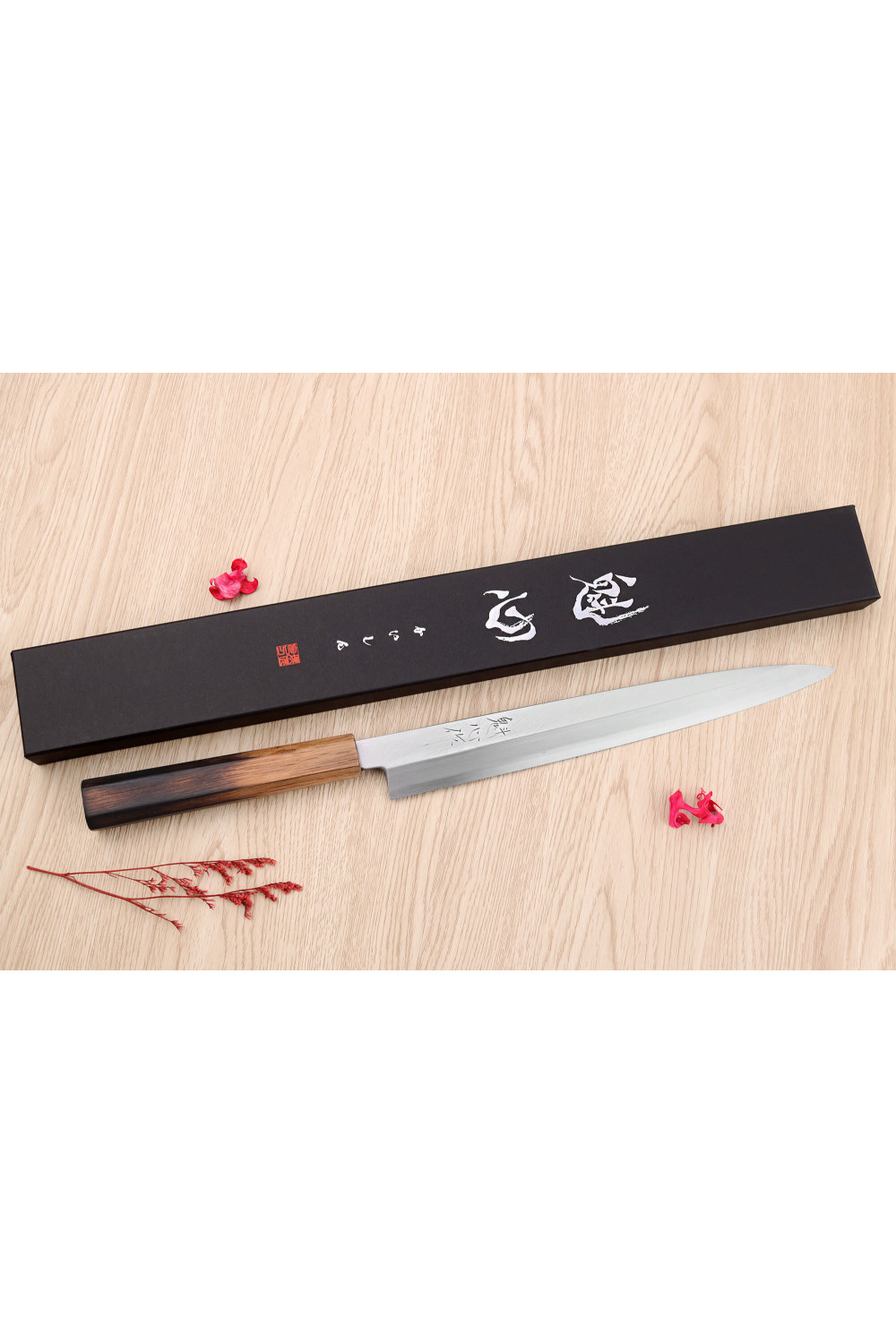
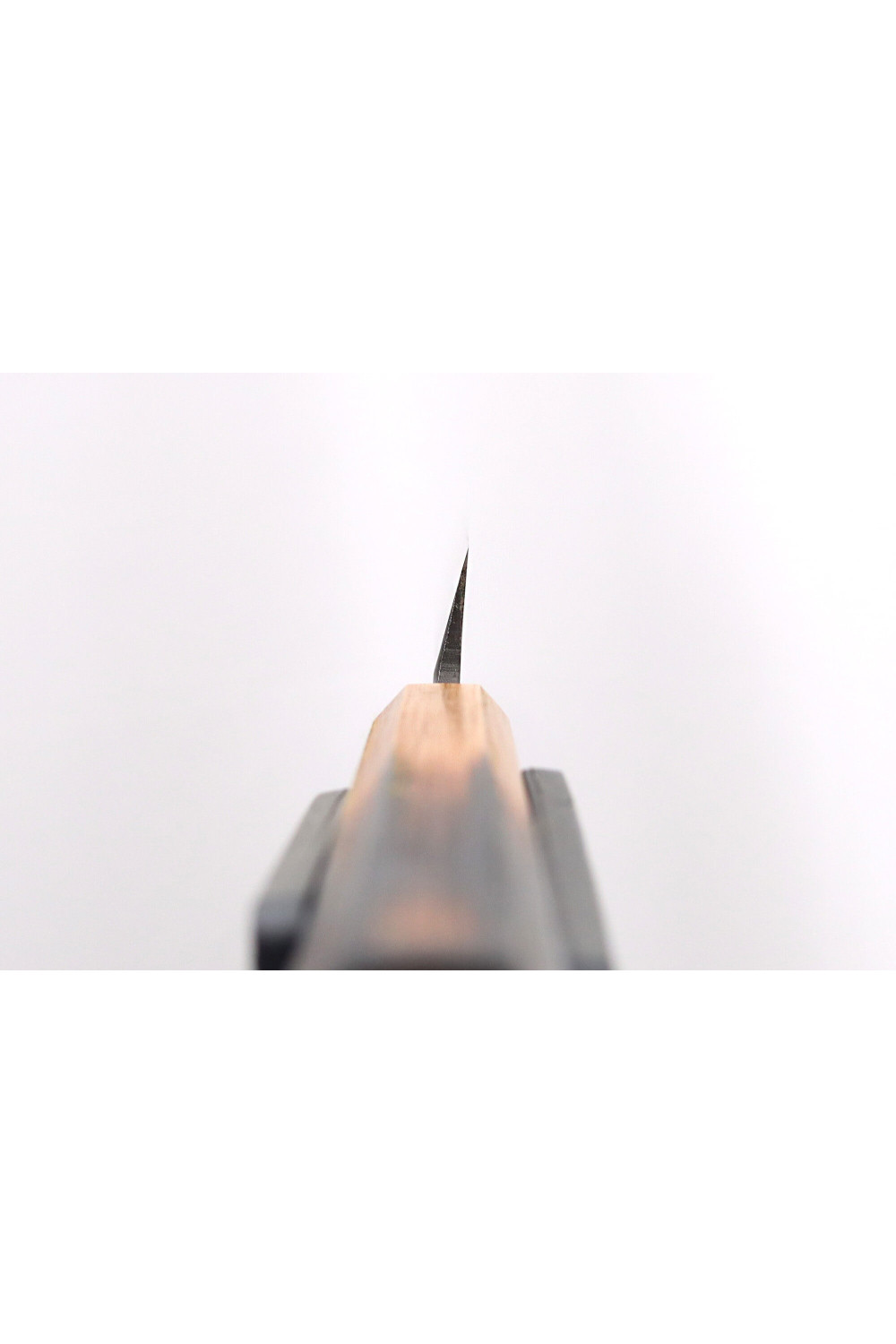
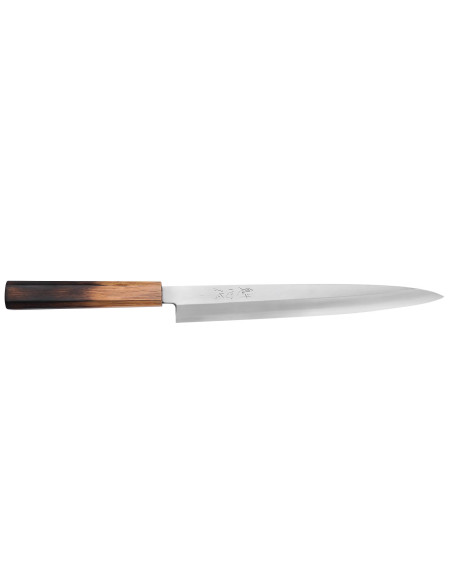
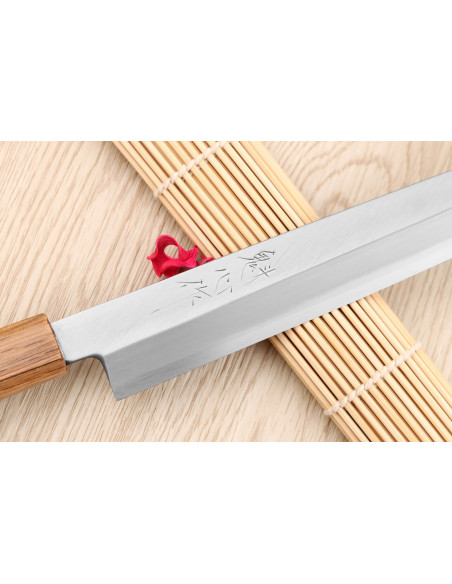
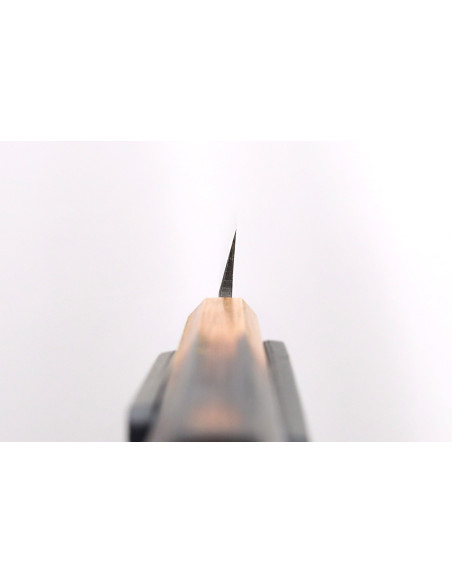
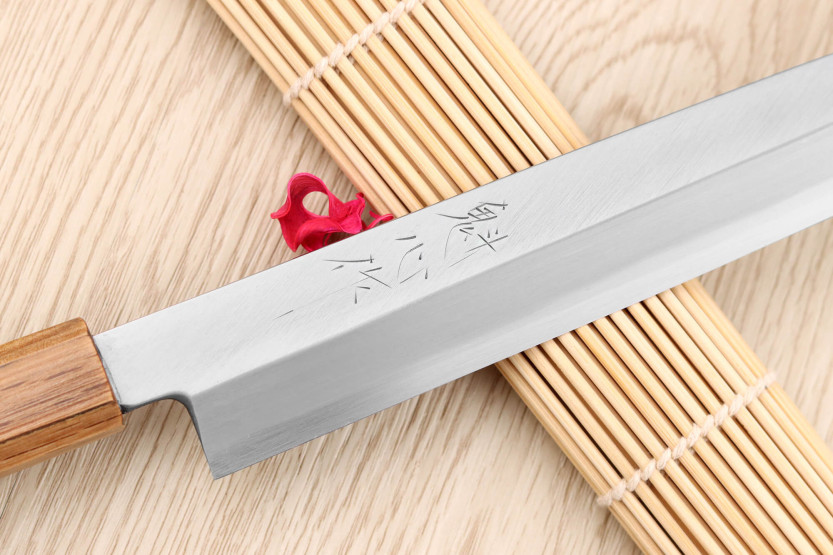
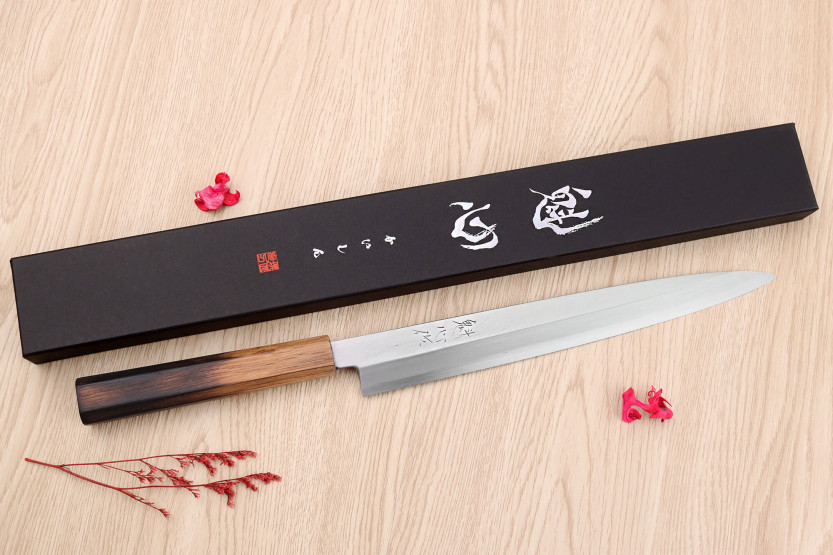
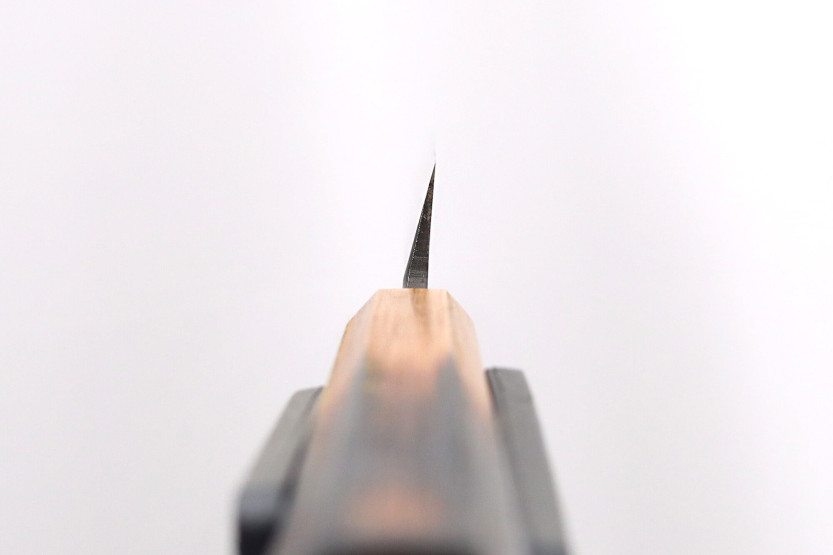
The cutting edge of this kitchen knife is asymmetrical, a characteristic of yanagiba knives. This type of sharpening produces a bevelled edge, making it particularly suitable for right-handed use. Perfect for clean, precise cuts in a single movement!
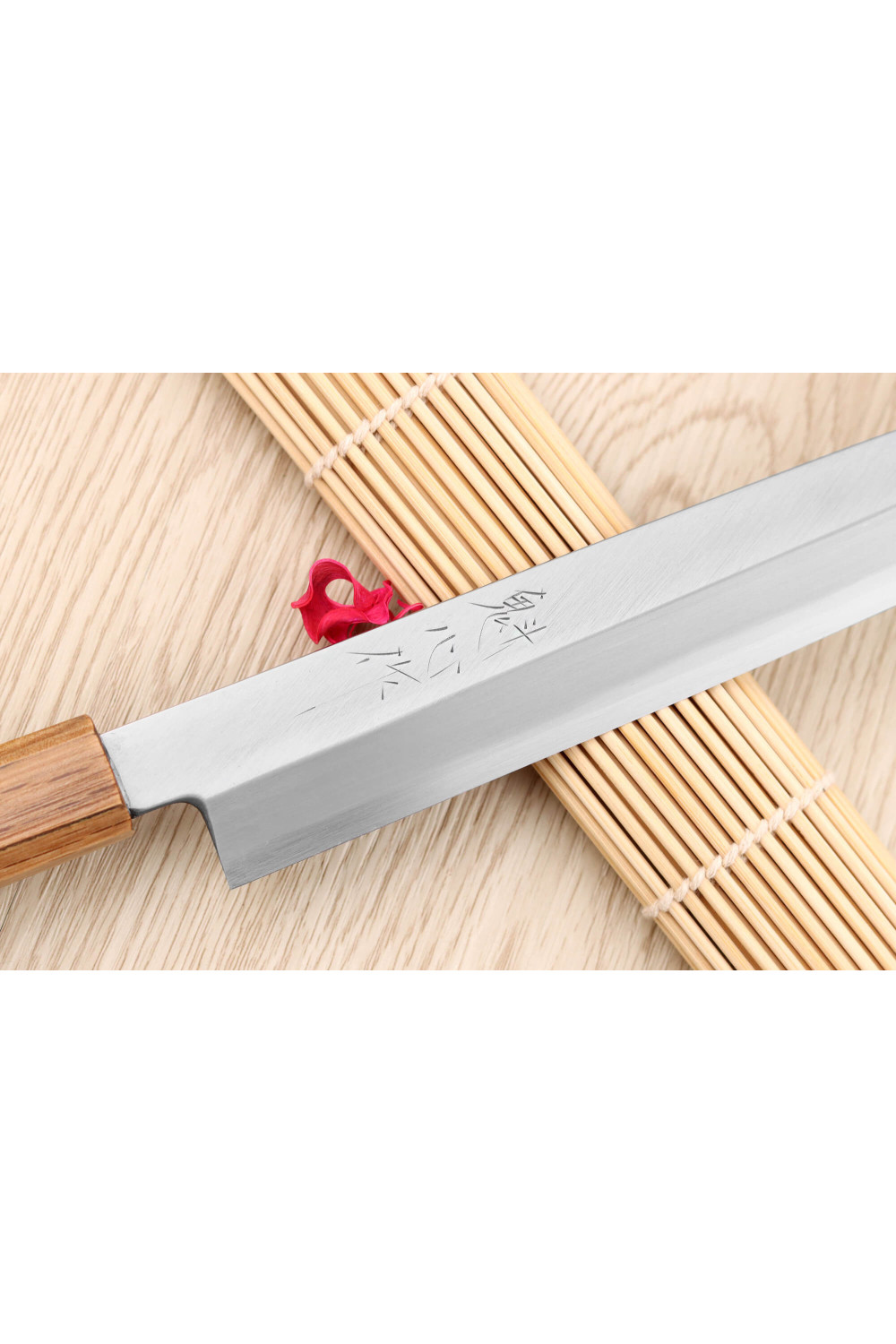
To complete the San Maï, a layer of soft iron covers the heart of your blade. This gives it a slight suppleness (without making it flexible) and reinforces its resistance to shocks, thus limiting the risk of breakage. You can also admire the junction between the different steels, where a fine, randomly patterned wave runs along the edge.
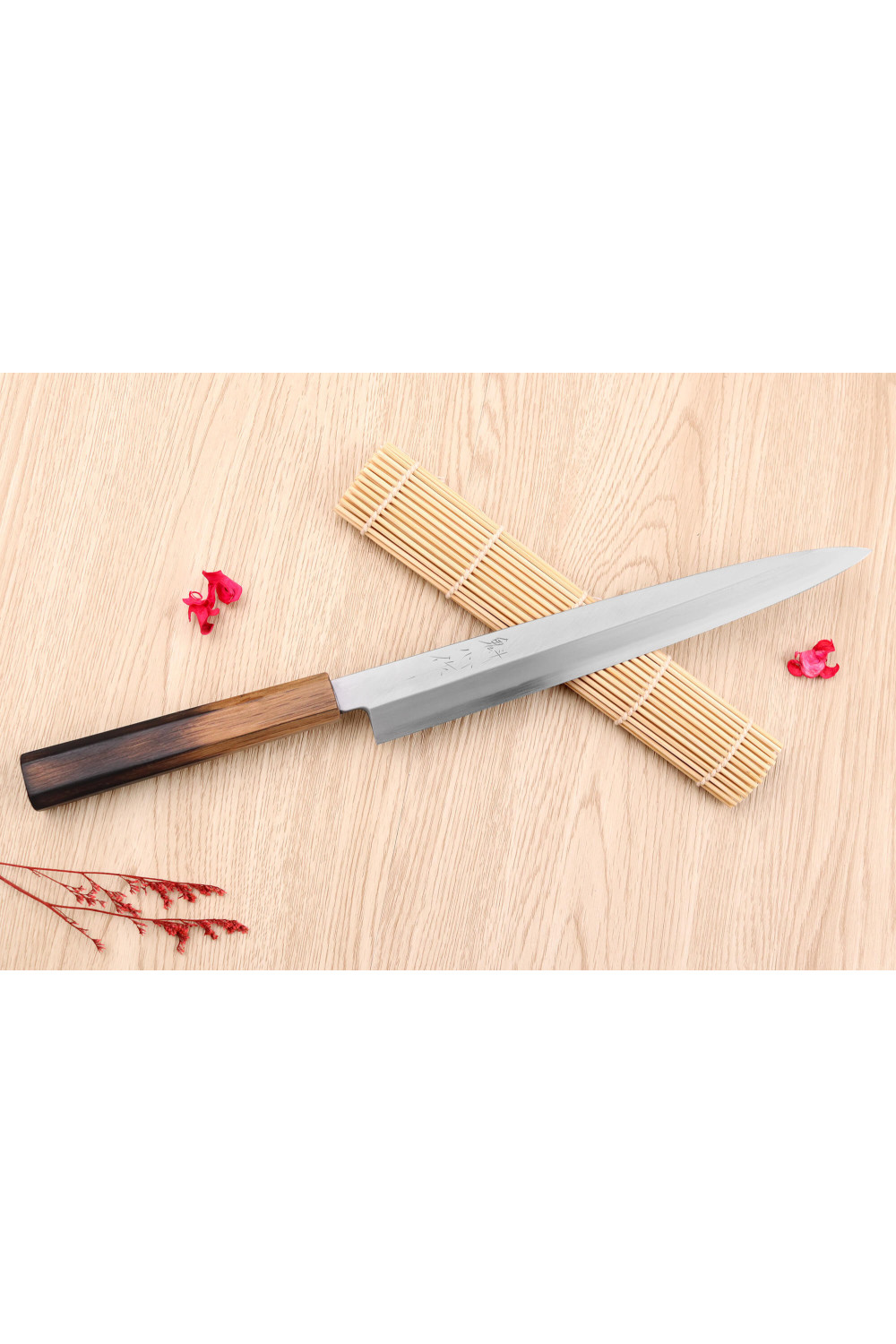
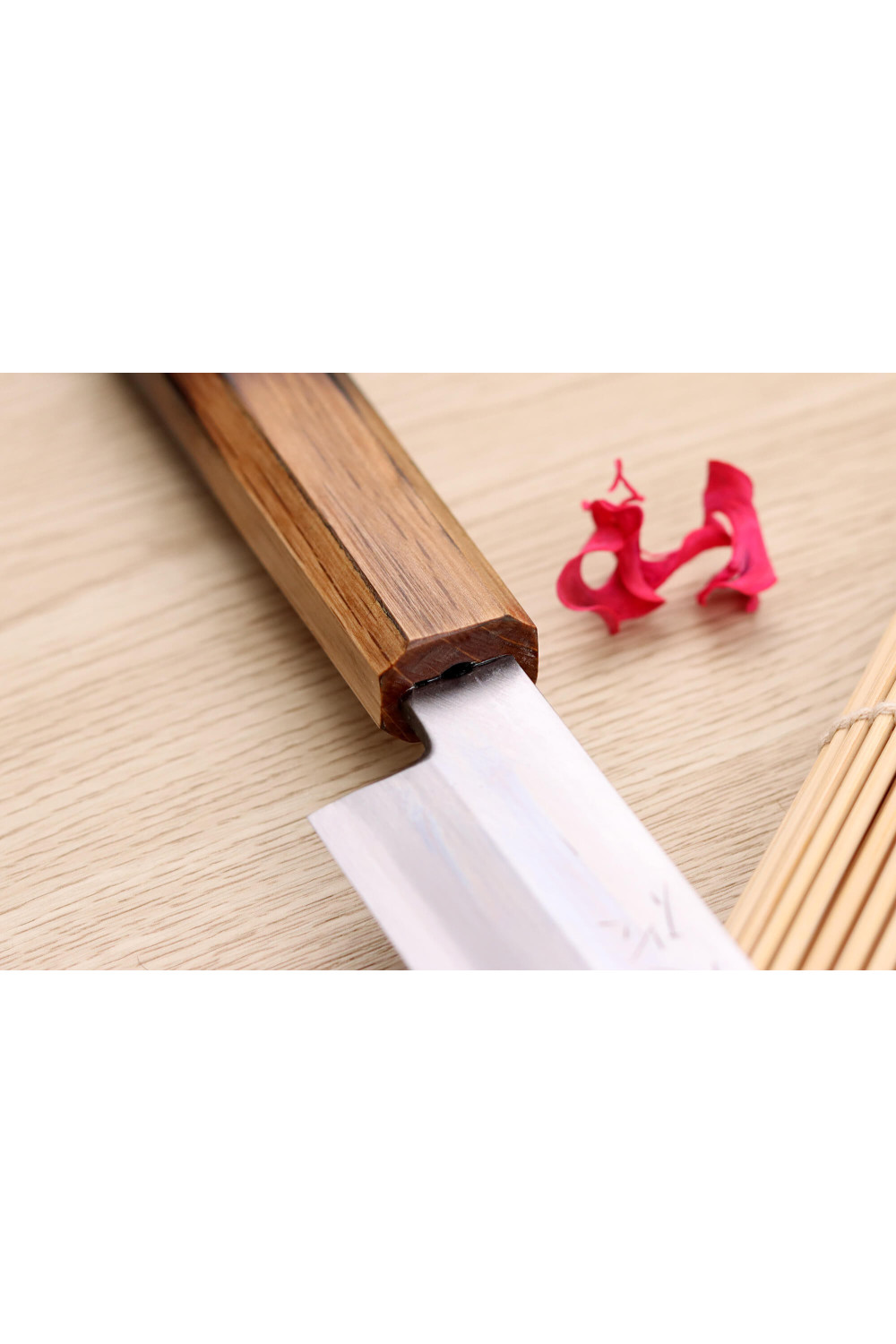
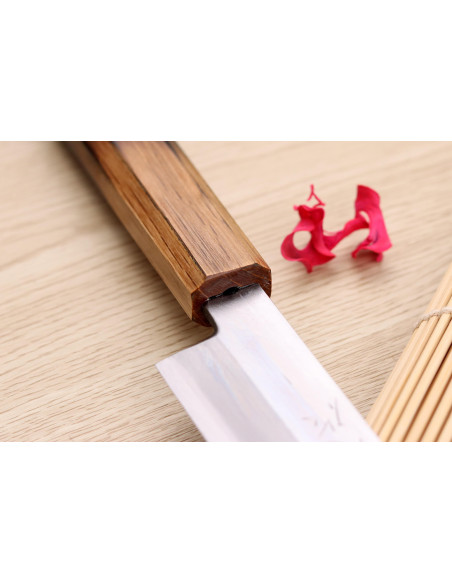
The blade features a traditional Kasumi finish, which means "misty" in Japanese. This satin-polished finish, obtained by clay polishing, gives it an elegant, authentic appearance. Finally, kanjis have been engraved by hand, adding a unique artisanal touch to this Japanese knife.
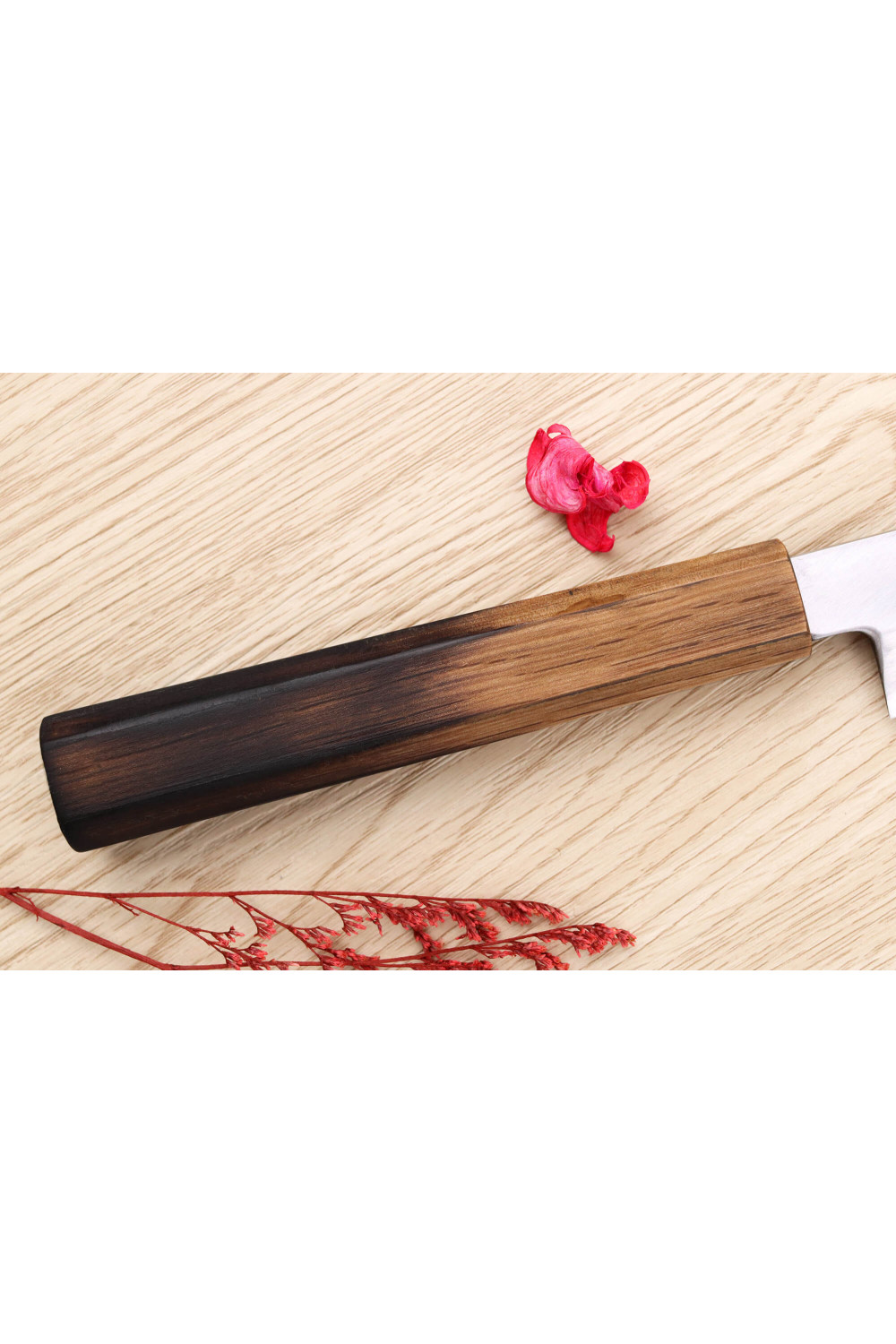
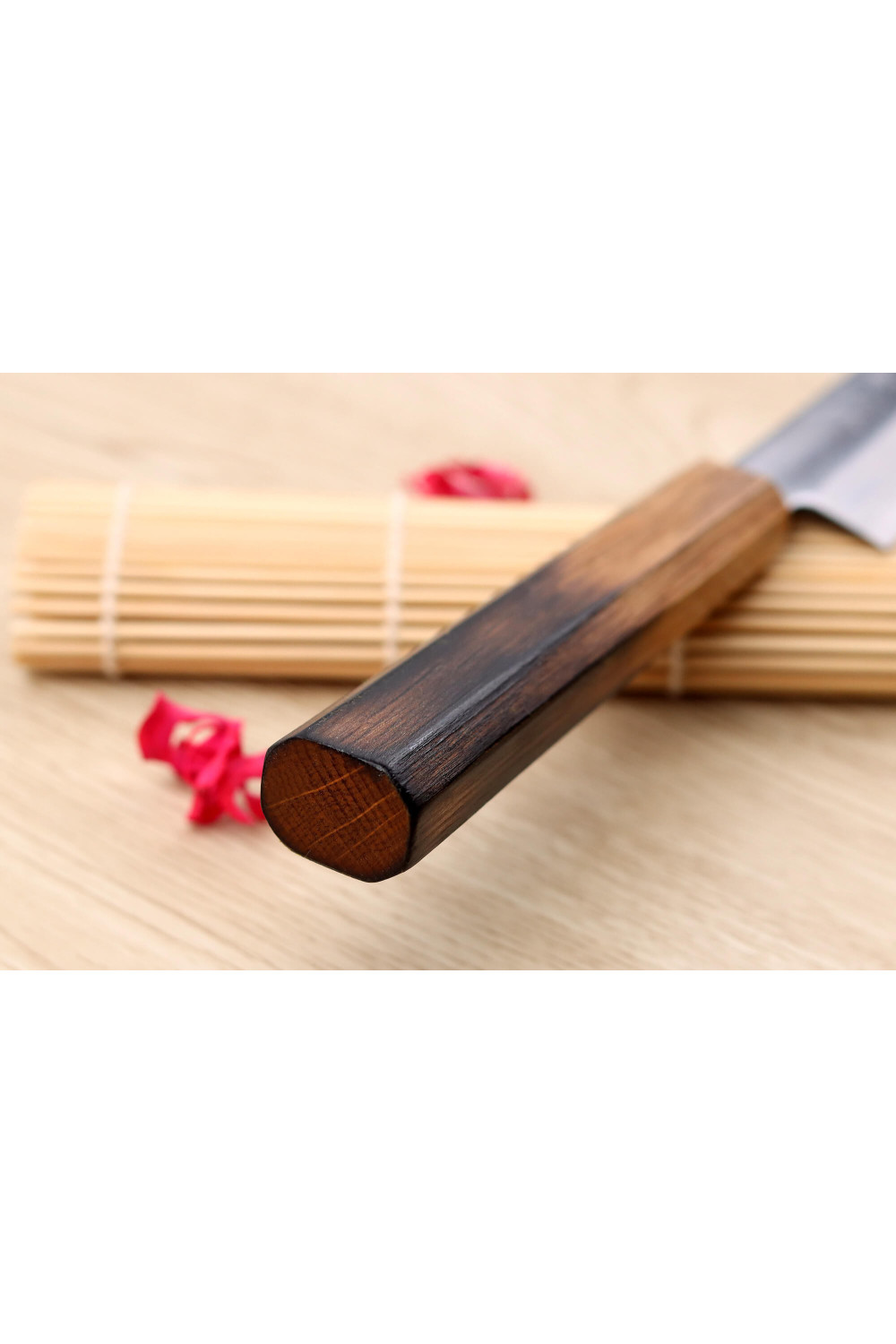
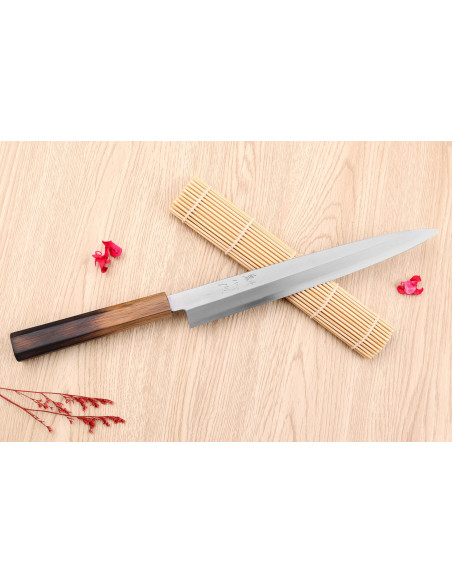
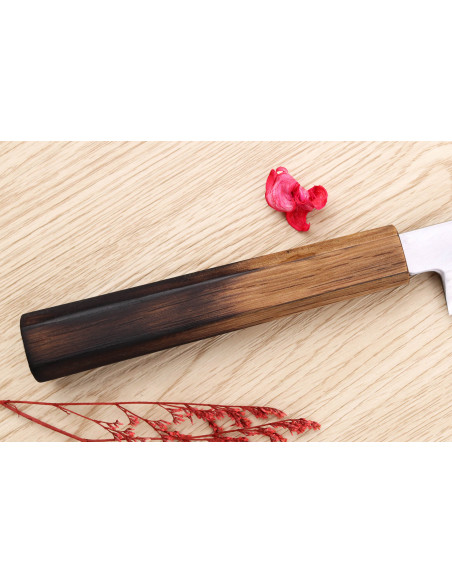
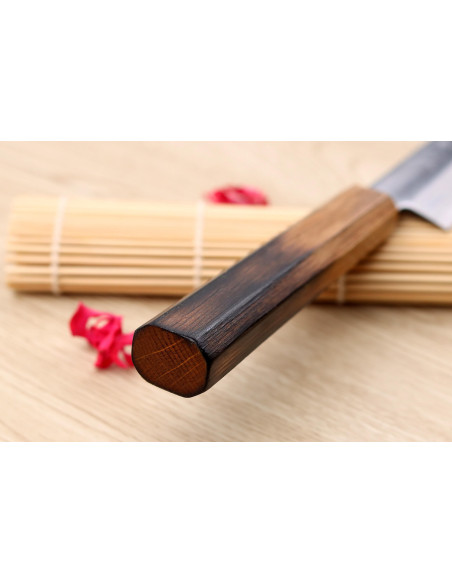
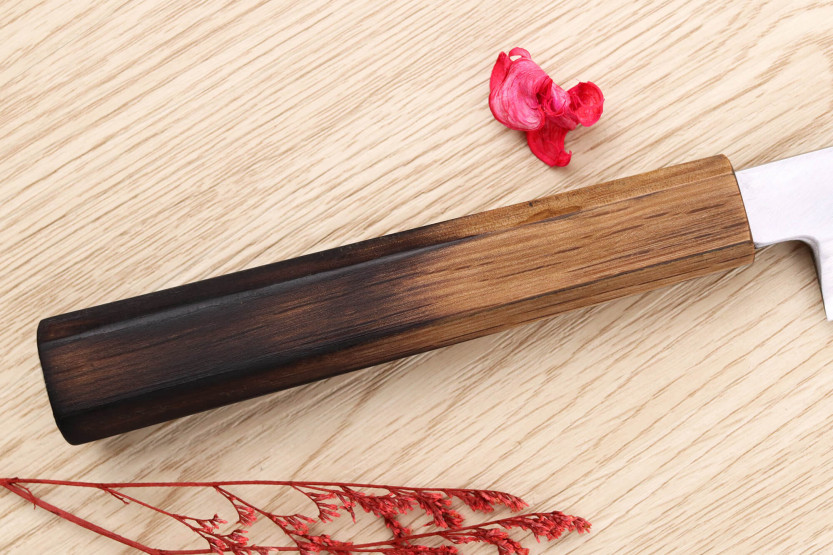
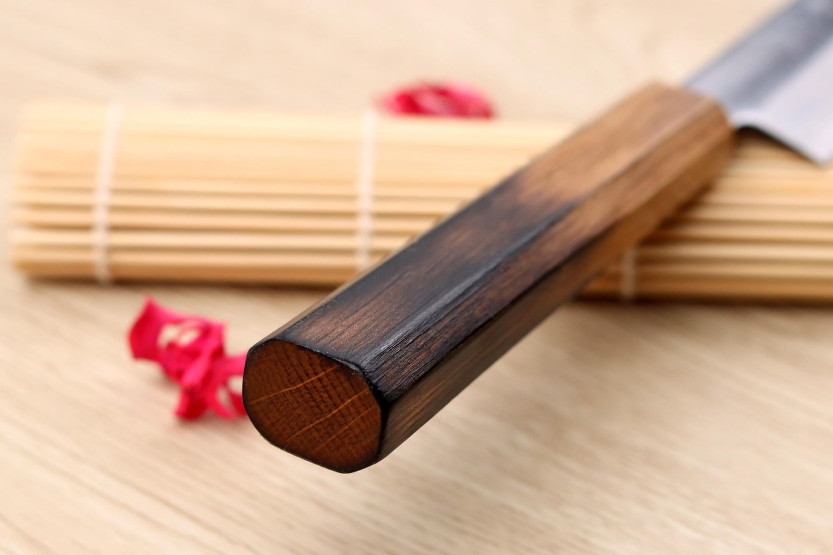
The handle of this Nakamura knife is made from oak wood, a species renowned for its strength and durability. Thanks to its high density, this wood is highly resistant to humidity, shock and deformation. The tip has been lightly burned, a treatment that adds character and strength!
With its octagonal shape, this handle has been designed to fit all cooks' hands! It guarantees an ergonomic and comfortable grip, ideal for long kitchen cutting sessions.
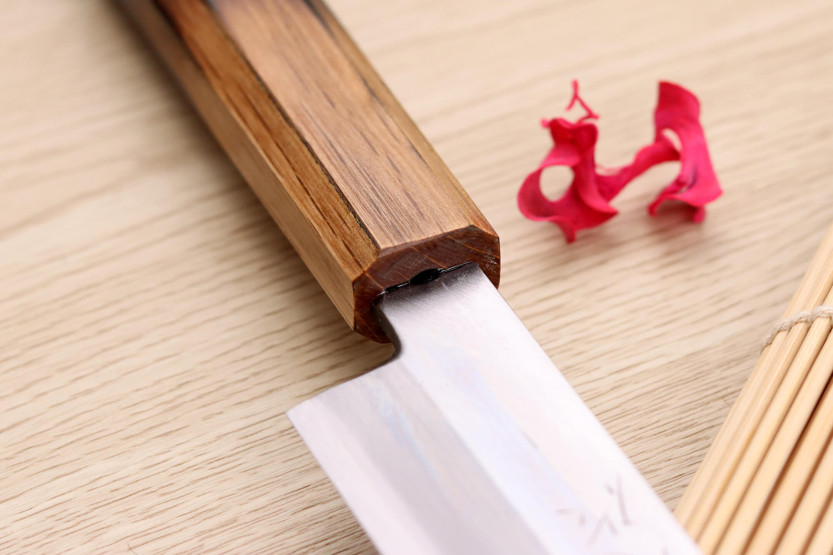
Finally, wood putty has been applied where the blade joins the handle to fill any gaps. This ensures optimum watertightness and prevents any infiltration of water or food residues.
Caring for a Japanese yanagiba knife
To ensure the longevity of your carbon steel knife, it should be washed exclusively by hand with a soft sponge and a non-aggressive detergent, taking care not to get the handle wet. After washing, it should be dried immediately and stored in a dry place. The dishwasher should be avoided at all costs, as should leaving your knife to soak in the sink.
Over time, the blade may take on a slight patina, which is perfectly normal! This natural reaction of carbon is due to the acidity of food and ambient humidity. This in no way affects the quality or efficiency of your Japanese knife!
Discover even more Nakamura Japanese knives on Knifeleader.eu!




 By buying this product you can collect up to