Takamura knives are hand-forged in Echizen, Japan. This town has been renowned for knife forging for 700 years, and has a solid reputation in this field throughout the world.
Takamura has been working for decades on the production of stainless steel knives on a par with the carbon steel knives for which Japan is renowned in kitchens the world over. Find out how by choosing to equip yourself with a Takamura knife, created by the third generation of the name!
For Toshiyuki Takamura (from the second generation of the family's blacksmiths), a good kitchen knife depends on 3 essential points: quality materials, a good forging process and an impeccable edge finish. Each of these points can be identified on the brand's knives.
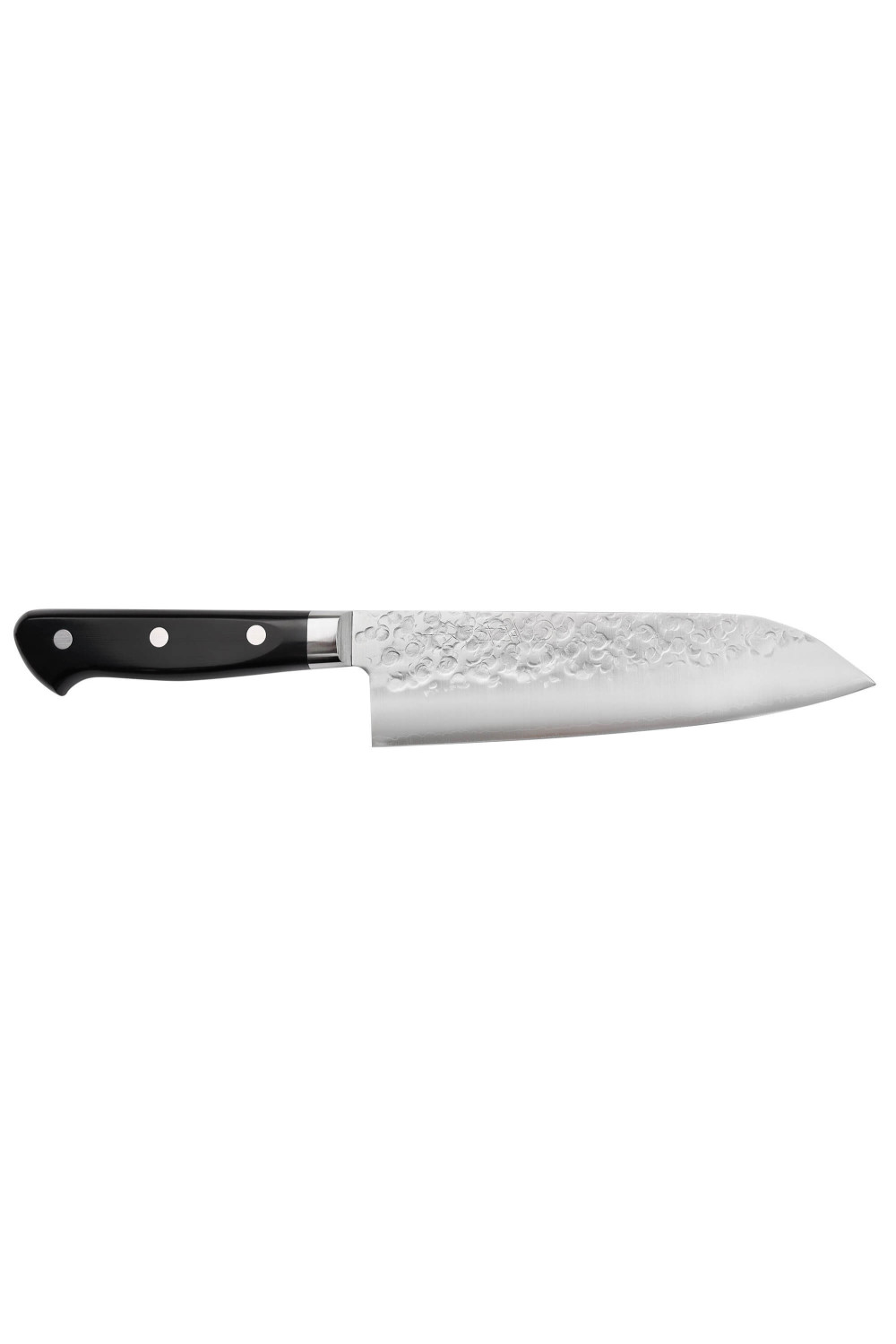
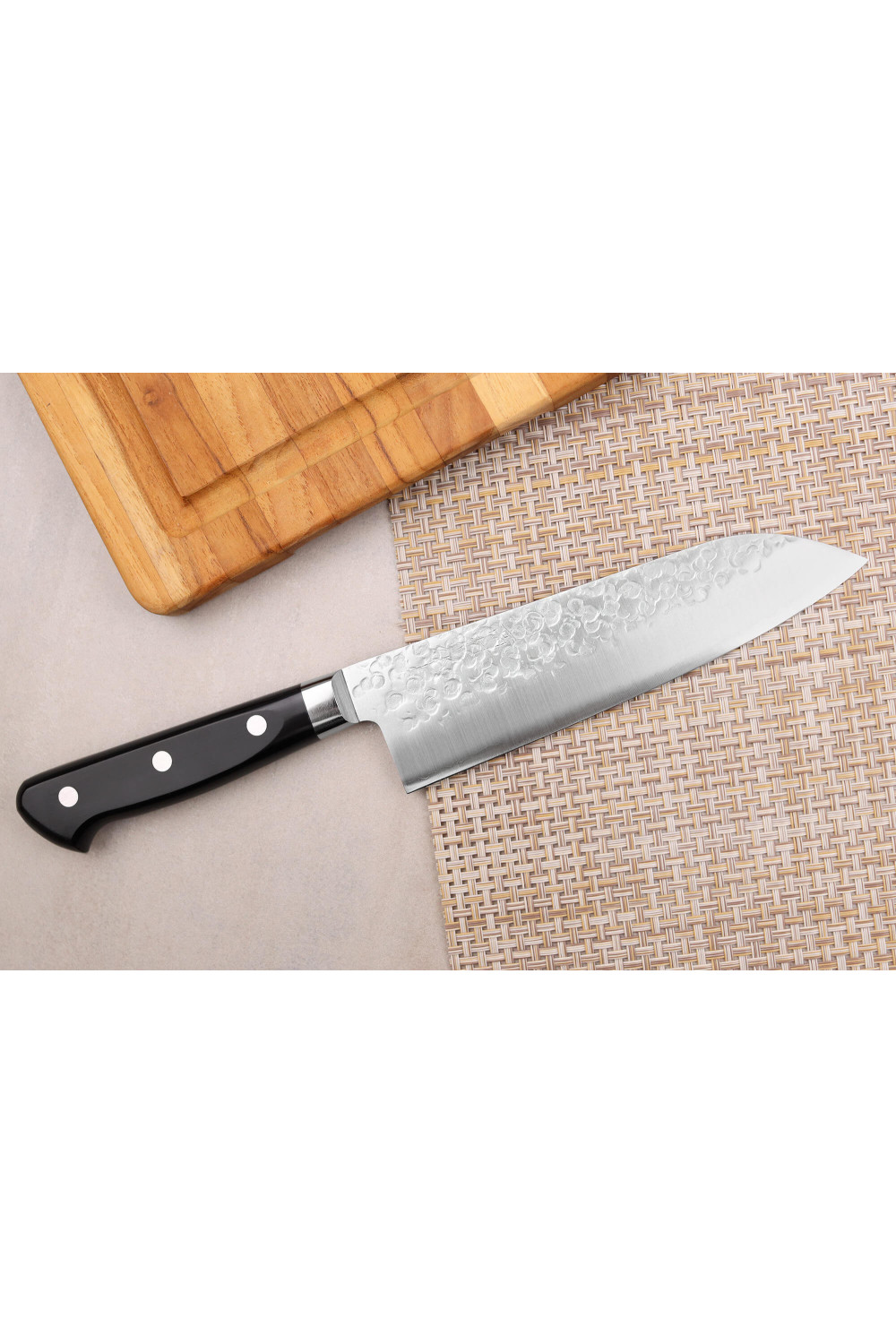
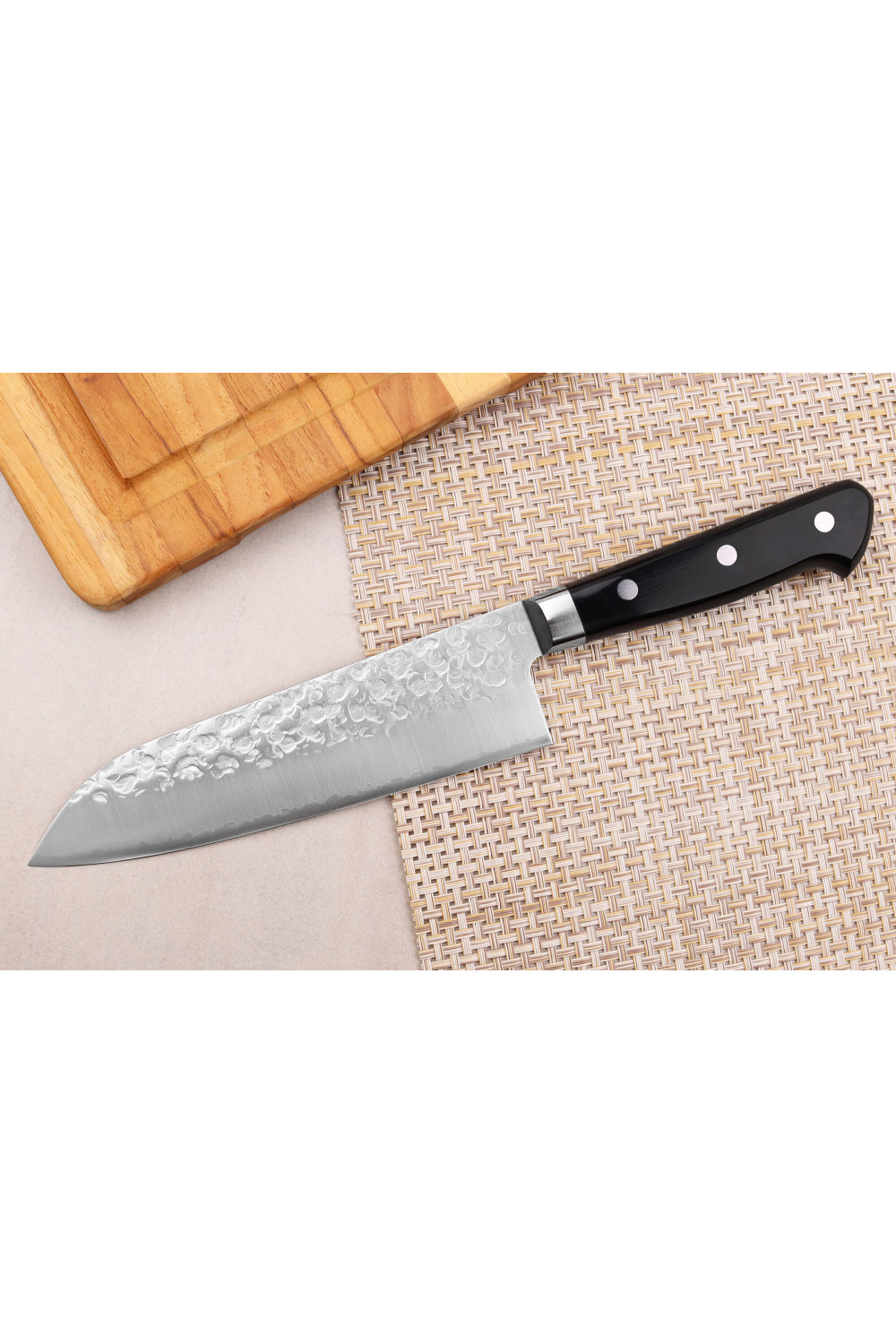
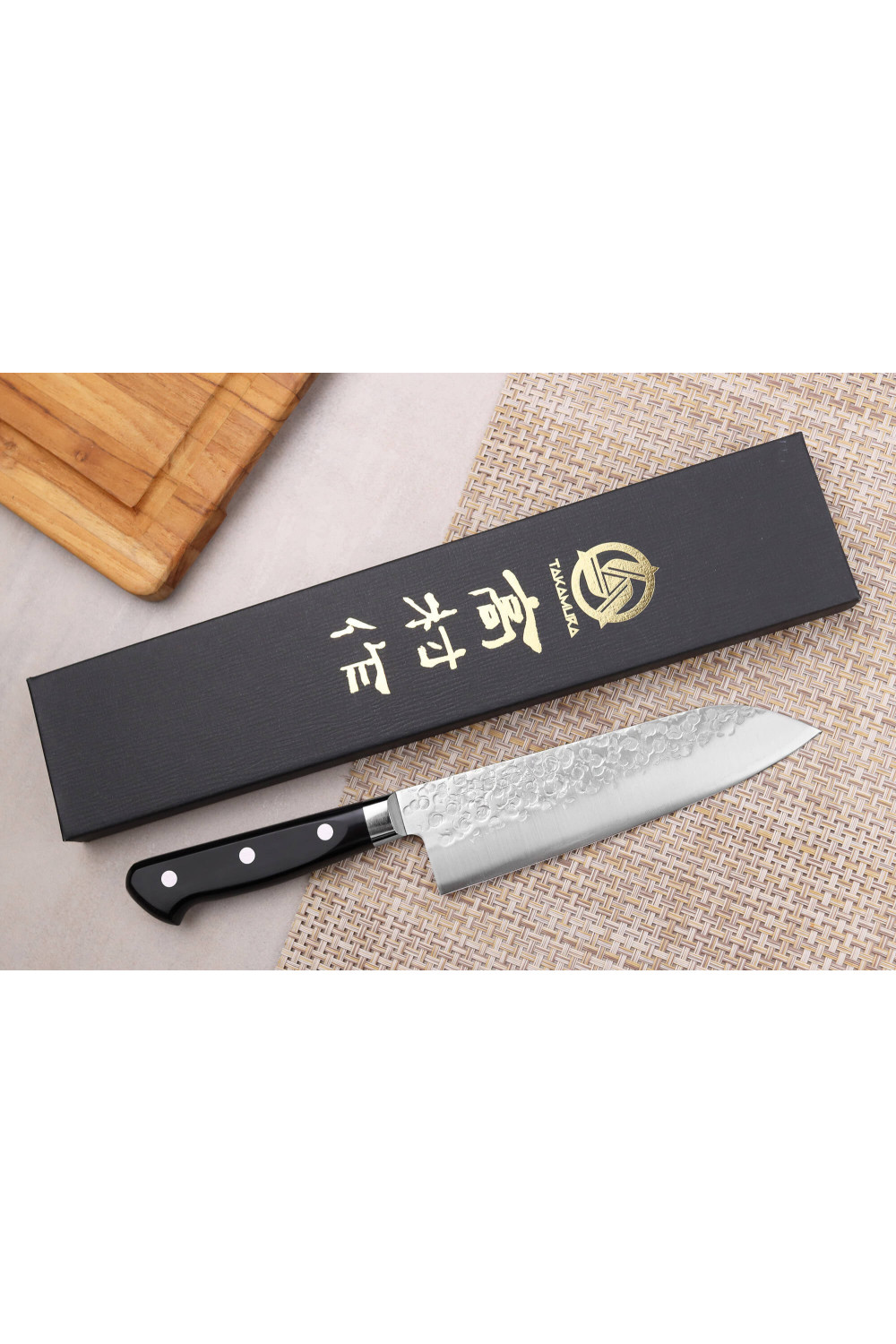
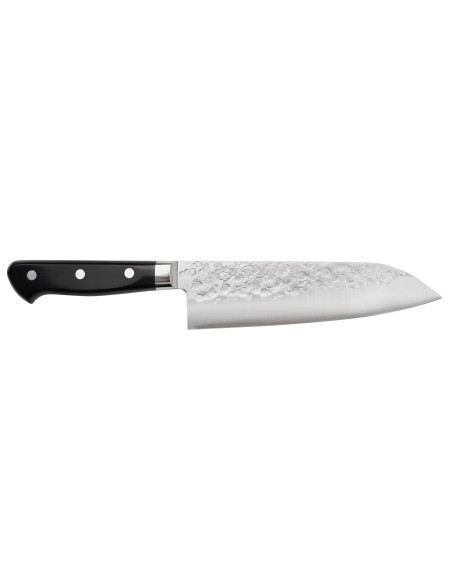
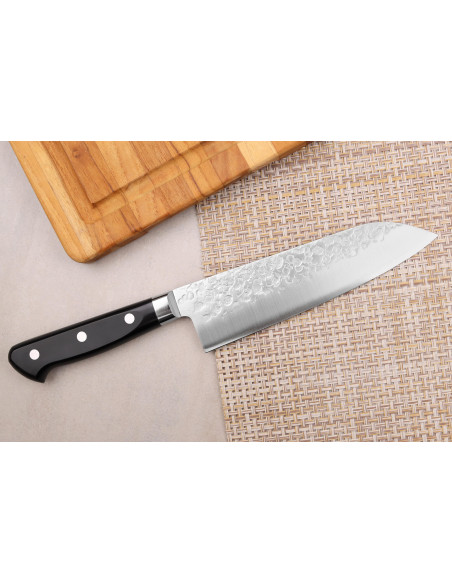
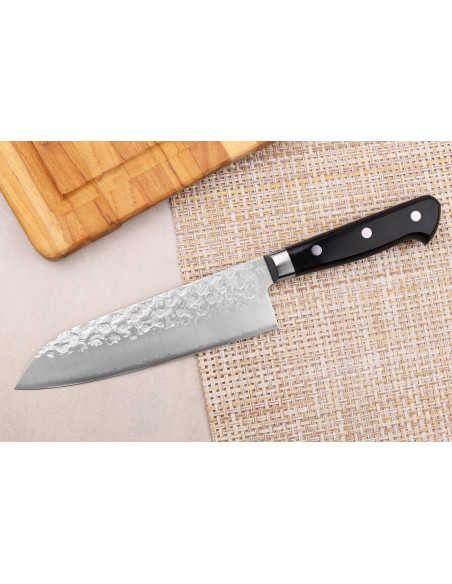
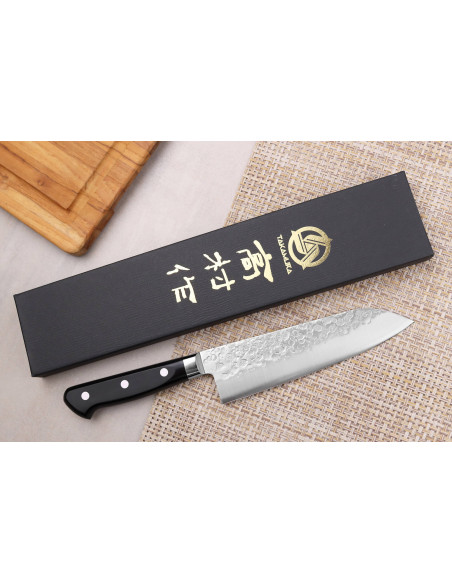
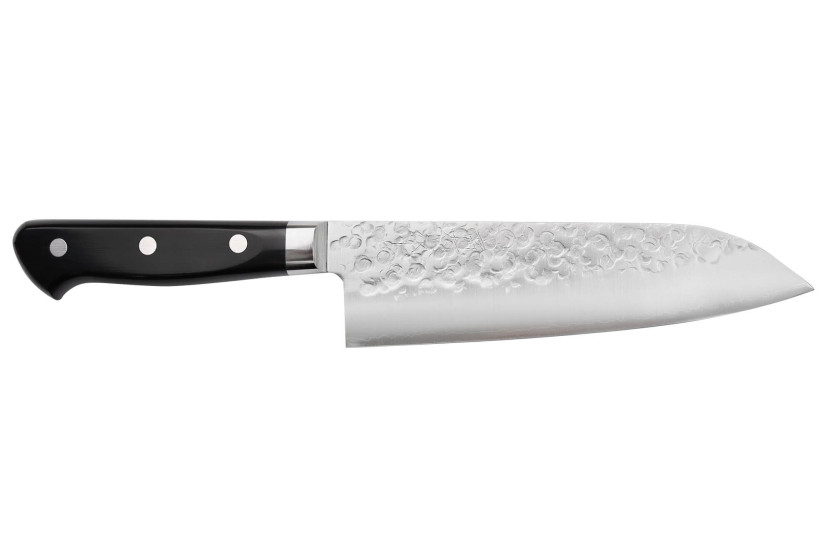
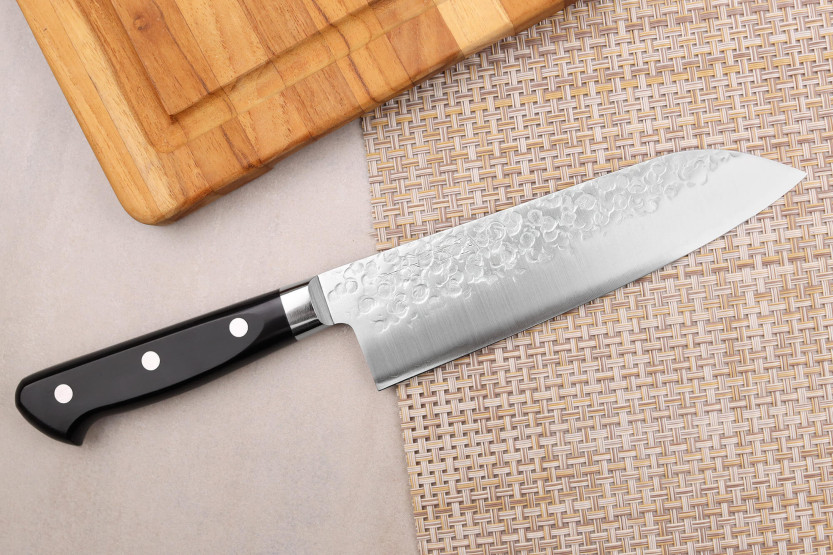
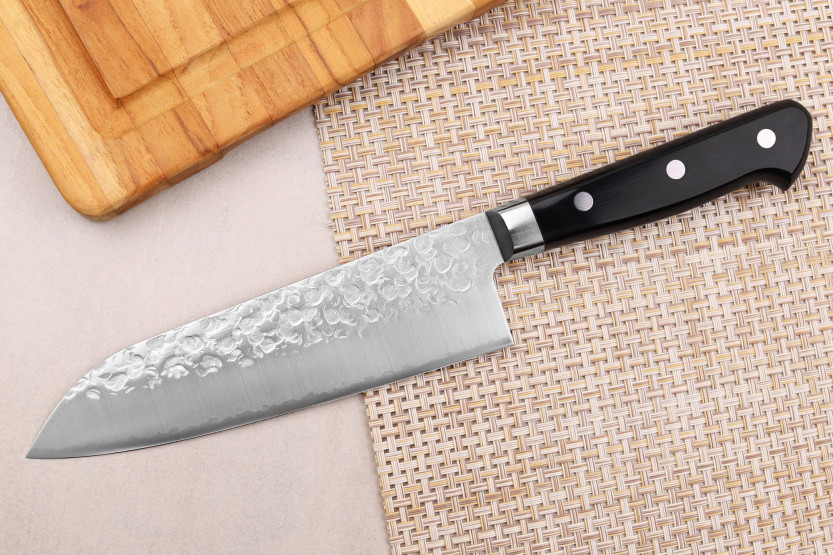
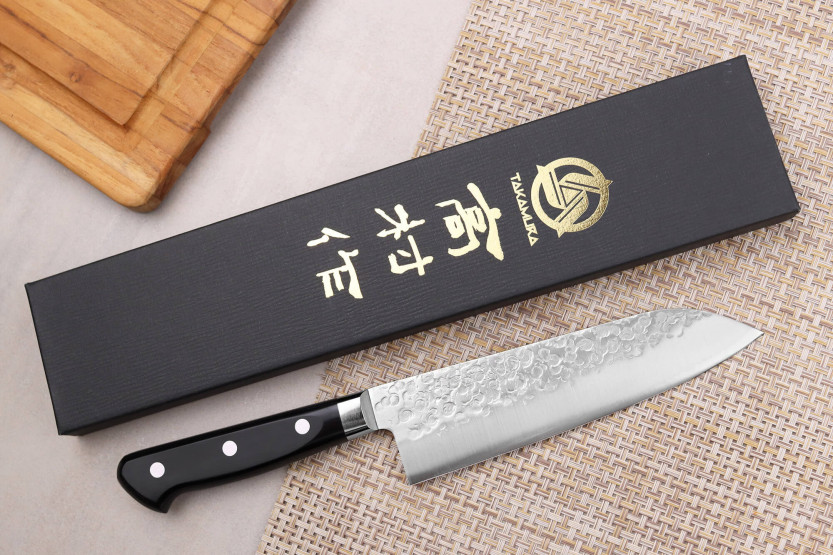
This 16.5cmsantoku knife knife is a multifunctional knife, in the style of the Western chef's knife. Its slightly curved blade makes it a pleasure to use for chopping herbs, as it will act as a natural balance and facilitate your movements. It can also be used on vegetables, boneless meat...
Part of the Takamura VG10 Tsuchime range.
Let's look at its composition in detail:
The blade :
It has a VG10 core, a Japanese steel renowned in the knife world. It is highly prized for its carbon content, which stands at 1% (compared with 0.5% for a Western knife). This high carbon content makes it very rigid, which in turn enables it to keep a "straight" edge longer.
In fact, it will hold its edge longer, allowing you to space out your sharpening sessions. Although it contains a high level of carbon (an oxidizable component), VG10 is also rich in chromium, making it more resistant to corrosion.
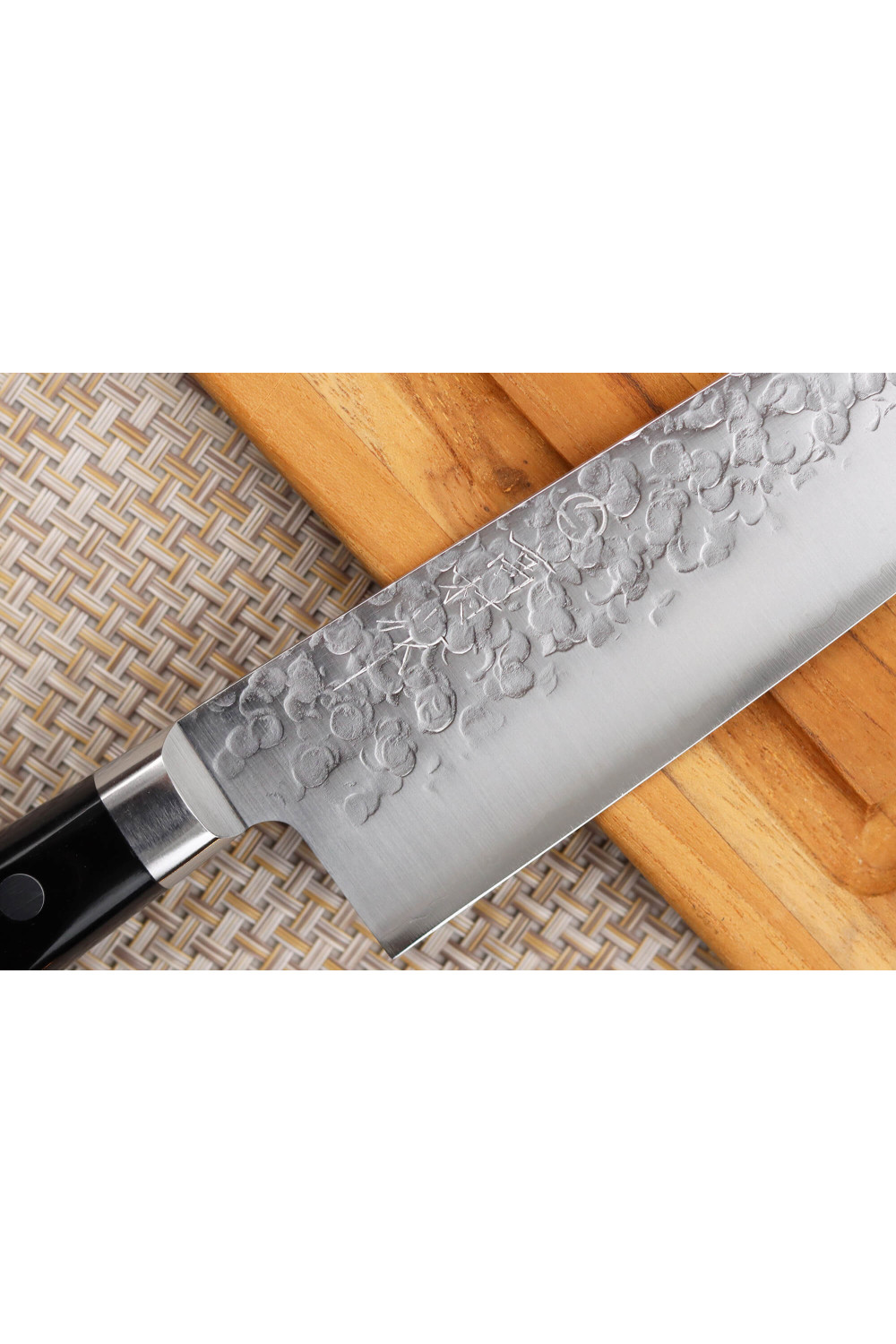
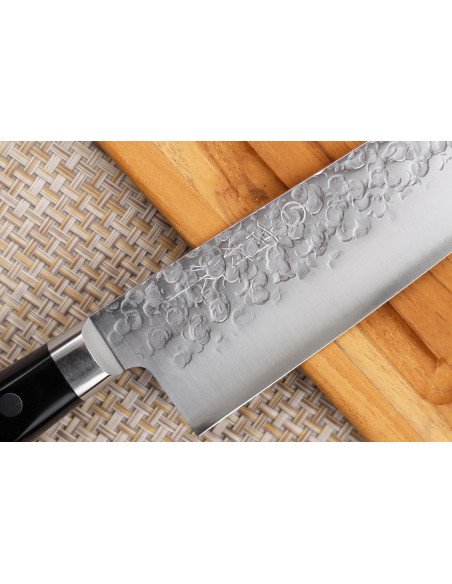
The core is then surrounded by a protective layer of stainless steel. As this steel is softer, it also adds a little elasticity to the knife (making it less brittle, without making it flexible). With these 3 layers, the blade is called San-Mai (simplified damascus). You can distinguish the different layers on the bottom of the blade, thanks to the fine metallic wave running along its surface.
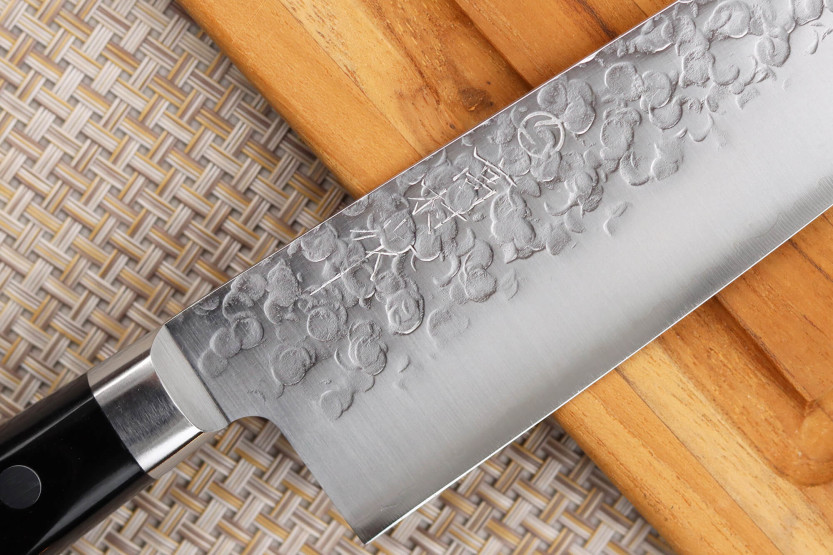
The upper surface of the blade is finely hammered, and this hammering is different on every knife. Hammering is an age-old process, and while it's visually appealing, it's also appreciated for its honeycomb-like effect, creating micro air bubbles between the blade and the cut food, to prevent it sticking to the steel.
Particular care is taken to finish the knife's razor-sharp edge, because according to Takamura's blacksmiths, if an ingredient breaks off before the blade has touched the cutting board, the knife has not done its job properly. In effect, the fibers of the food will be broken/damaged, not because of the knife's sharpness, but rather because of its thickness and weight. They want the cutting experience to be impeccable for their customers, and you can judge for yourself.
Handle:
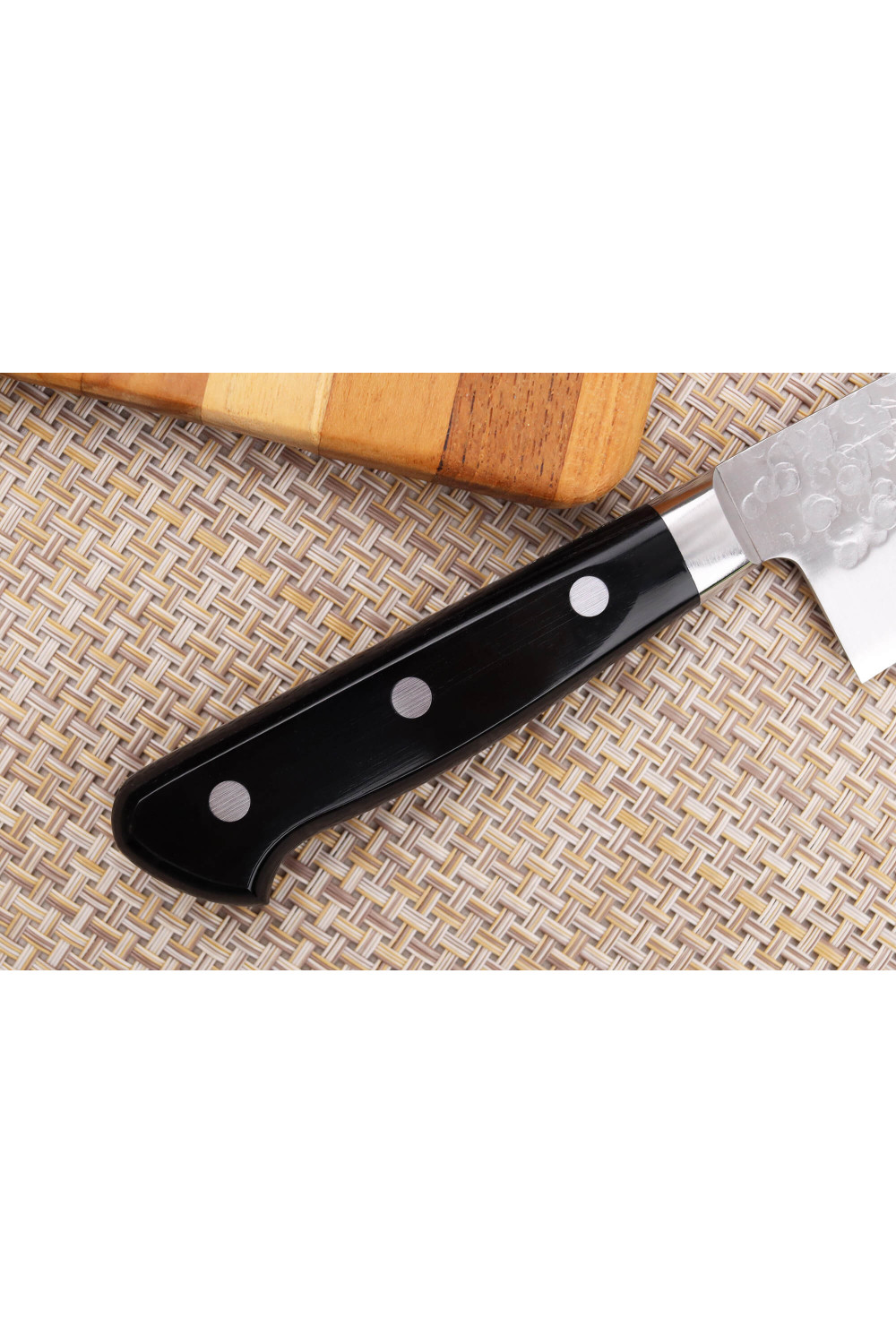
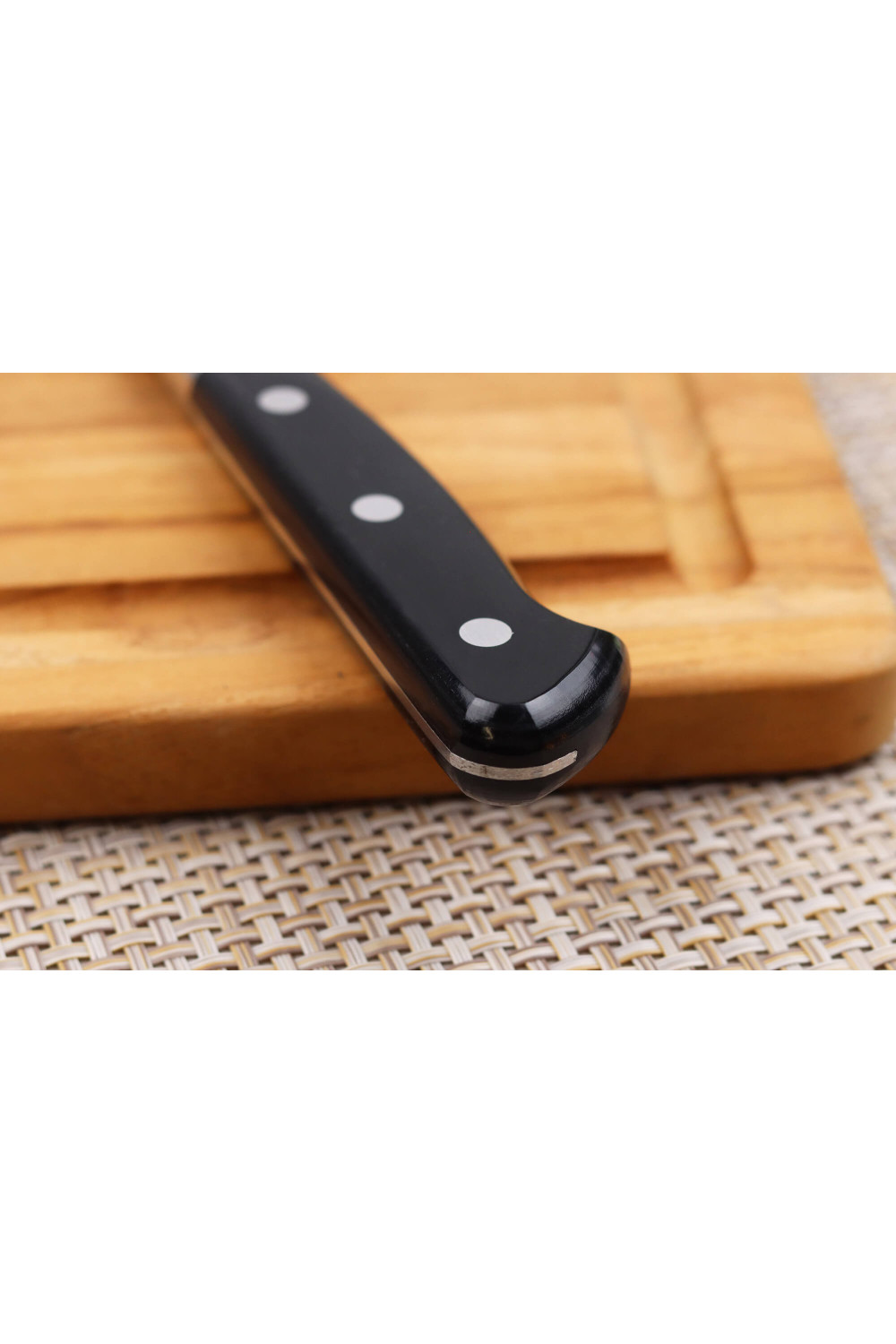
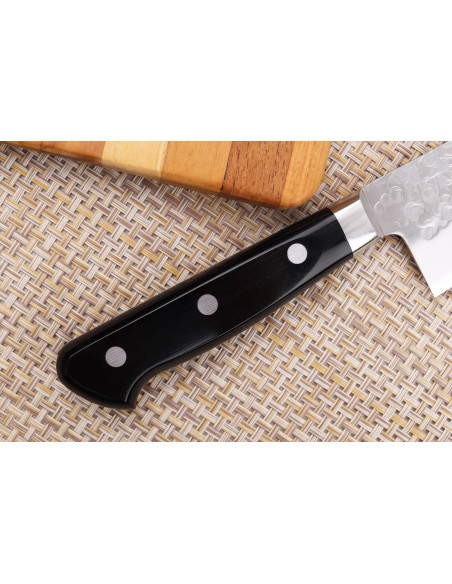
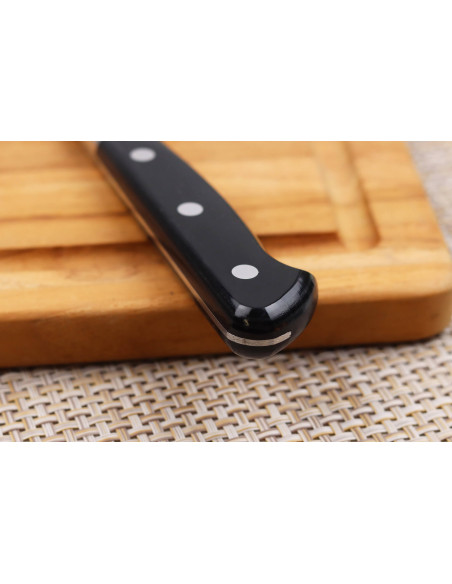
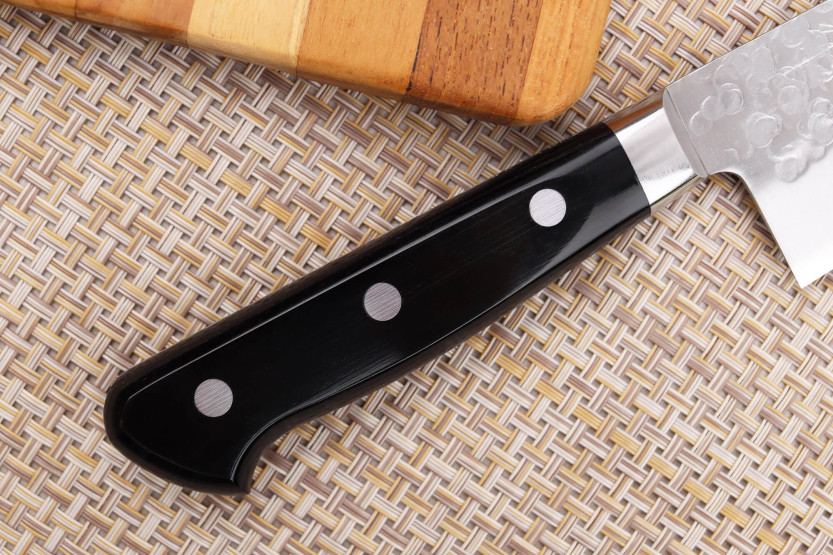
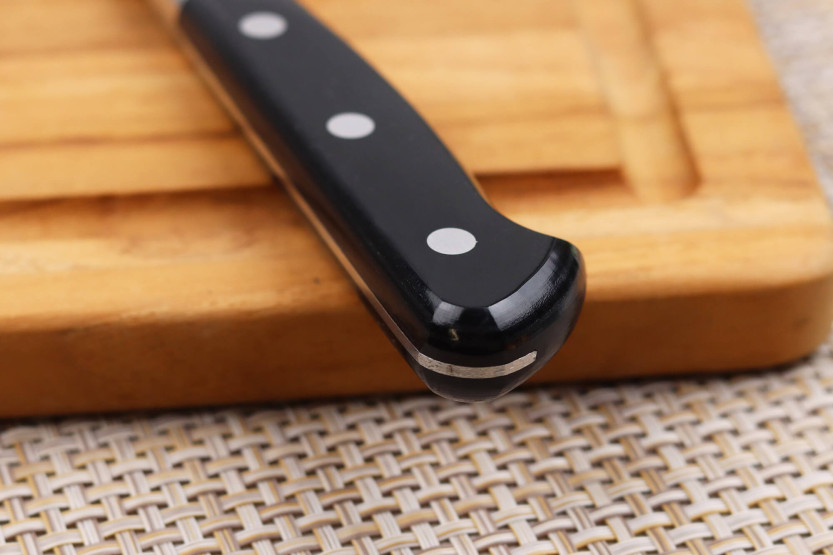
The handle is made of black Pakkawood, a composite material that combines compressed wood strips and resin. The whole thing is heat-assembled. It has the advantage of being antibacterial, resistant to temperature variations and humidity. It is completed by 3 rivets that hold it in position on the blade extending to the tip of the knife. Its polished appearance is pleasant in the hand, and it is suitable for both right-handed and left-handed users, thanks to its more "Western" shape.
Care and availability :
Takamura knives are one-of-a-kind pieces, made using authentic craftsmanship. Because of their handcrafted nature, Takamura knives are available in limited quantities. Thank you for your understanding.
Even if the blade is predominantly stainless, you should wash your knife by hand and wipe it immediately afterwards with a soft cloth, to avoid leaving it in contact with moisture, and to preserve it for a long time.
Discover other Takamura Japanese knives on KnifeLeader.eu!




 By buying this product you can collect up to