Fujiwara Teruyasu 's Japanese knives have a solid reputation both in Japan and internationally. Based in Tokyo prefecture, this craftsman creates handcrafted knives prized by professional chefs and cooking enthusiasts alike. He makes a point of manufacturing high-precision, high-performance knives. Fujiwara Teruyasu, as a perfectionist, aims to offer razor-sharp blades for impeccable cuts.
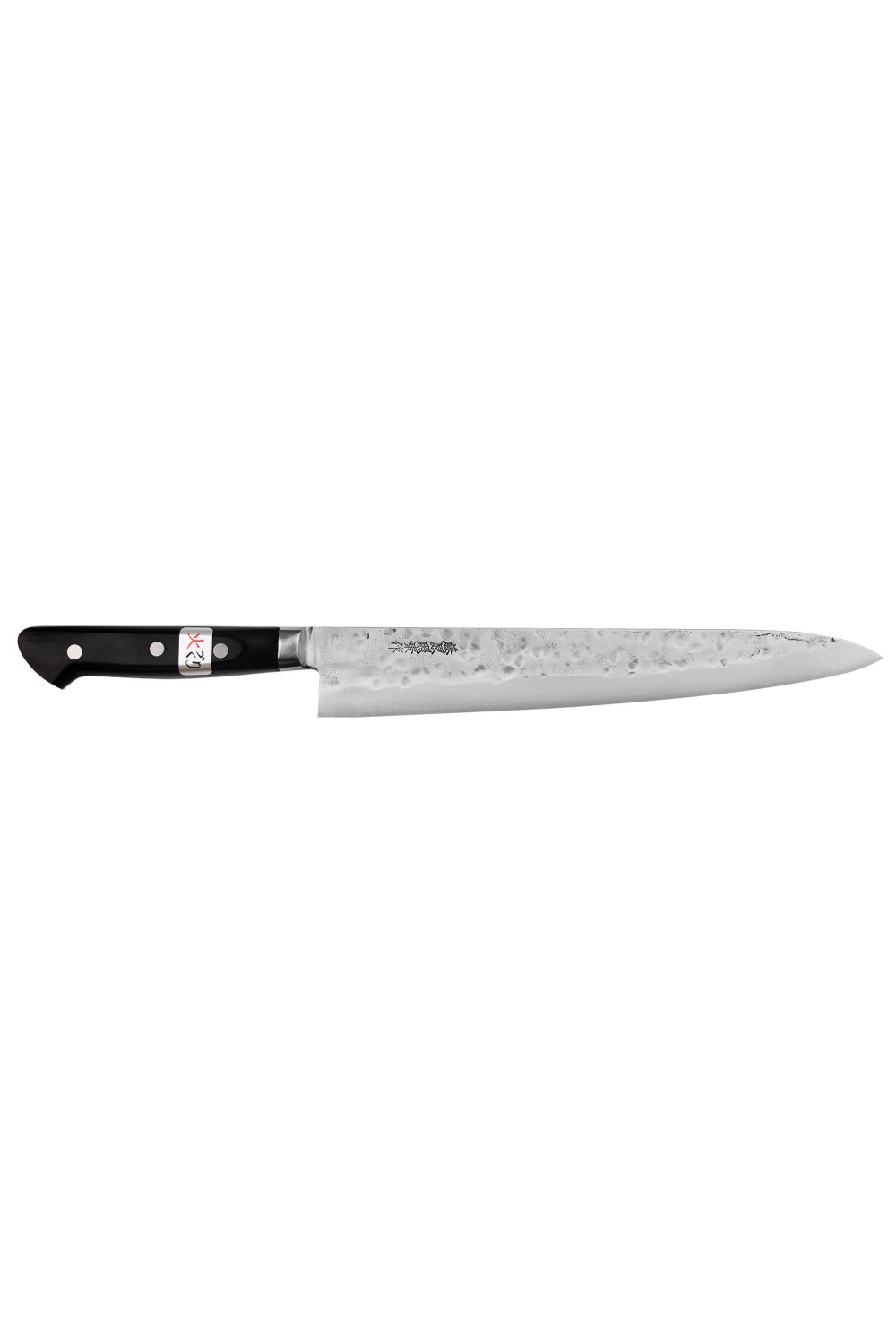
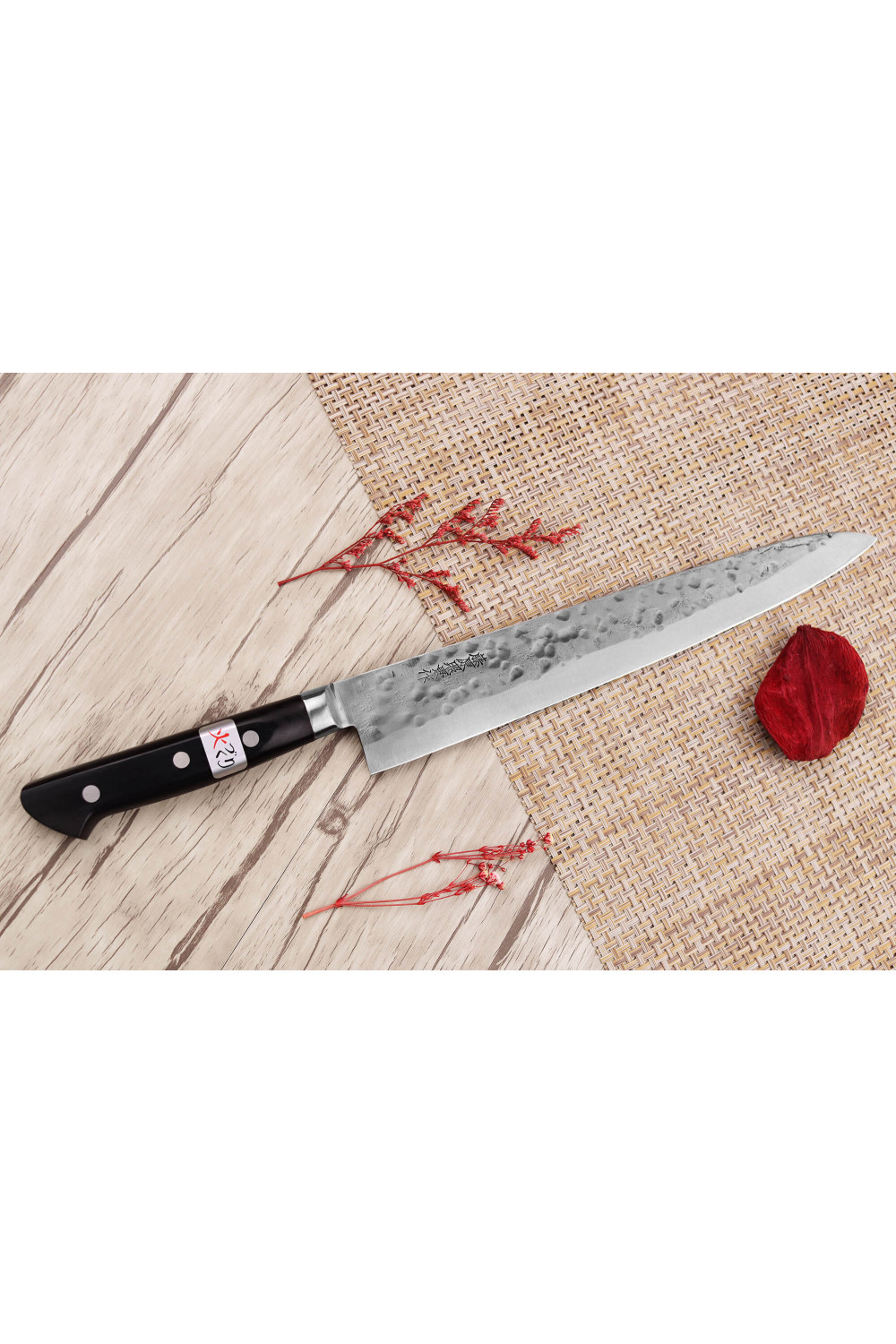
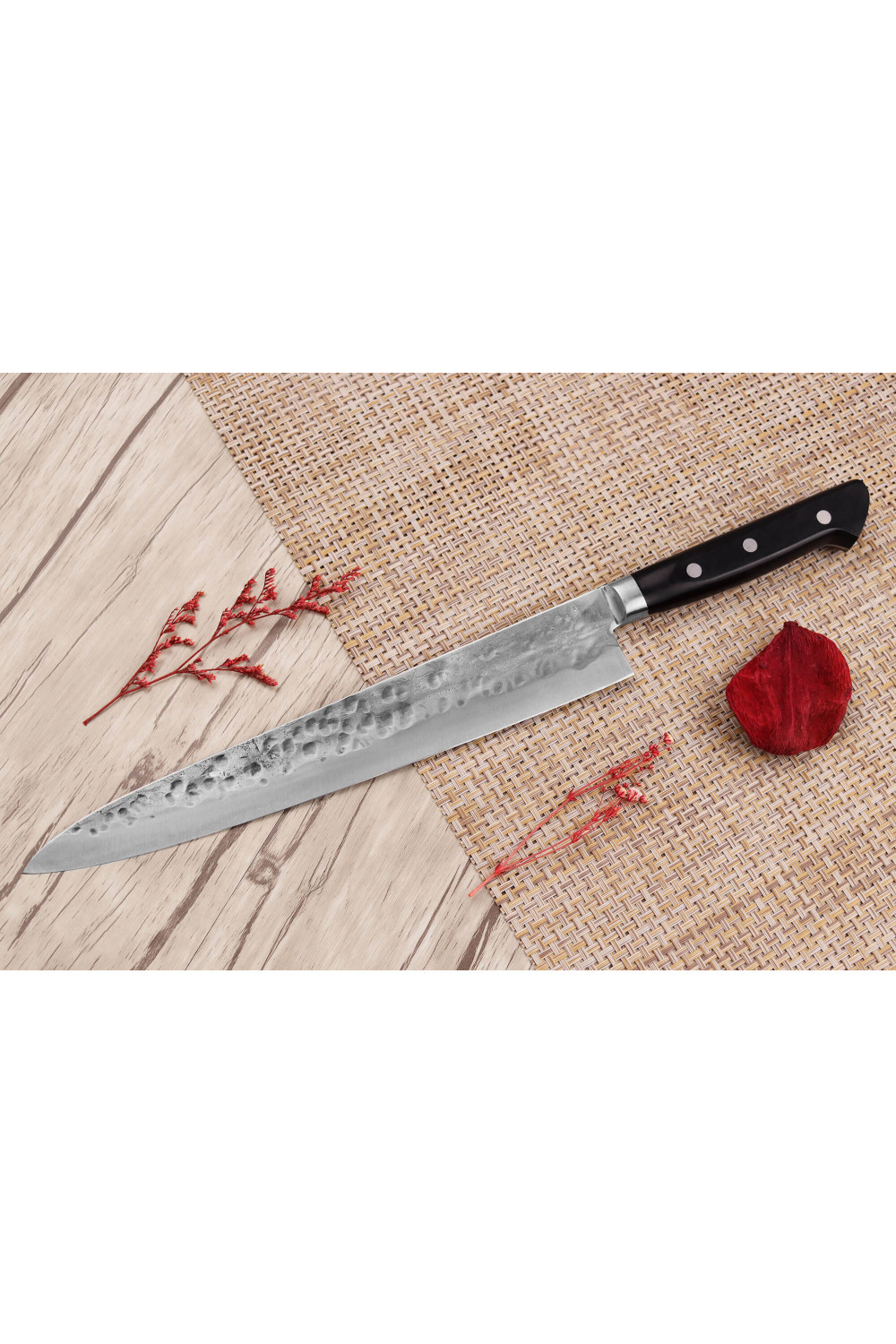
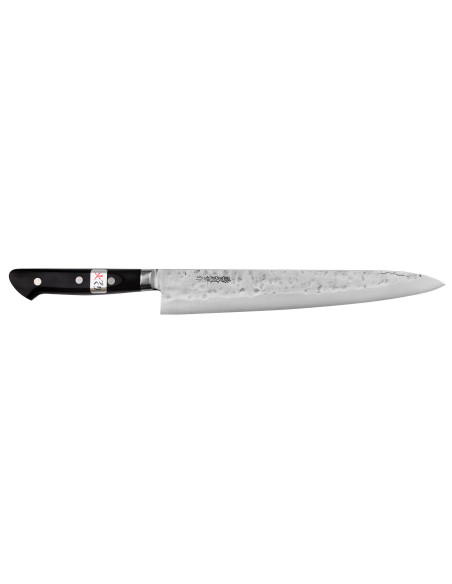
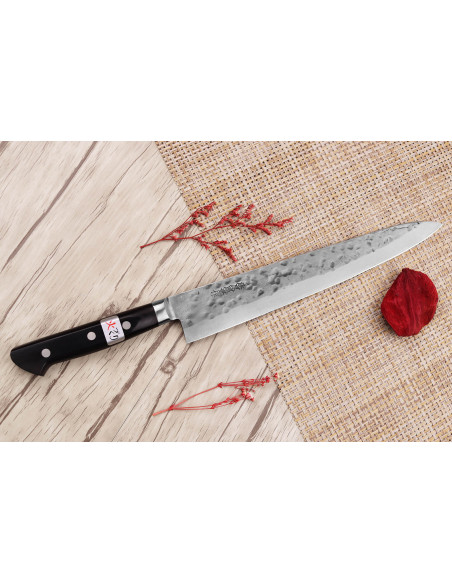
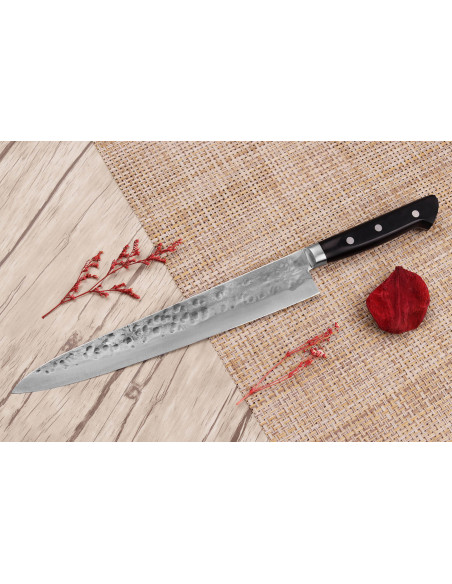
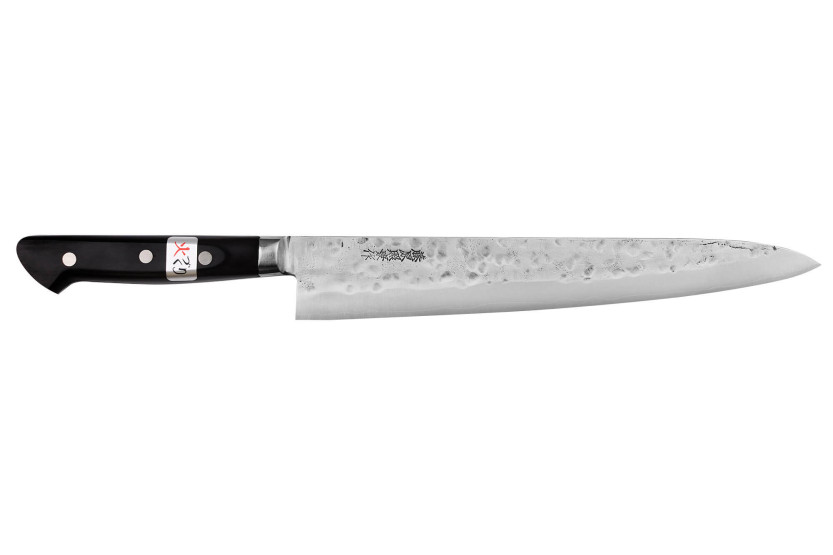
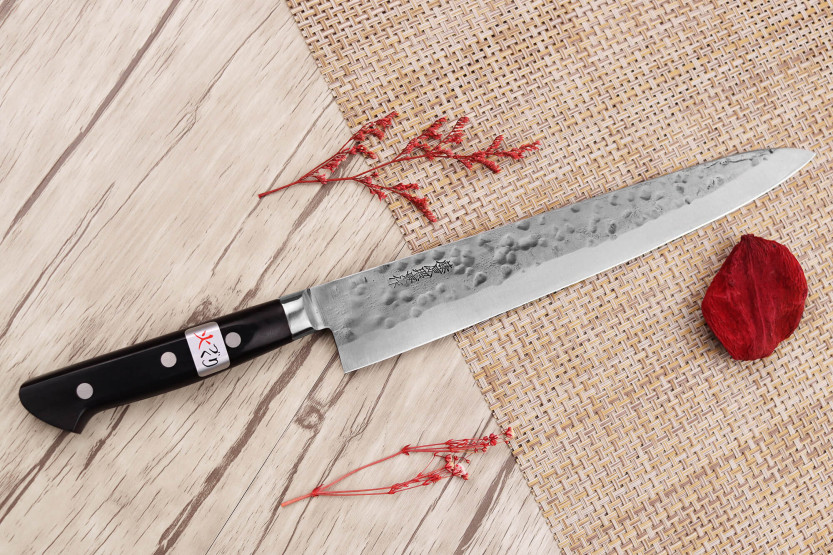
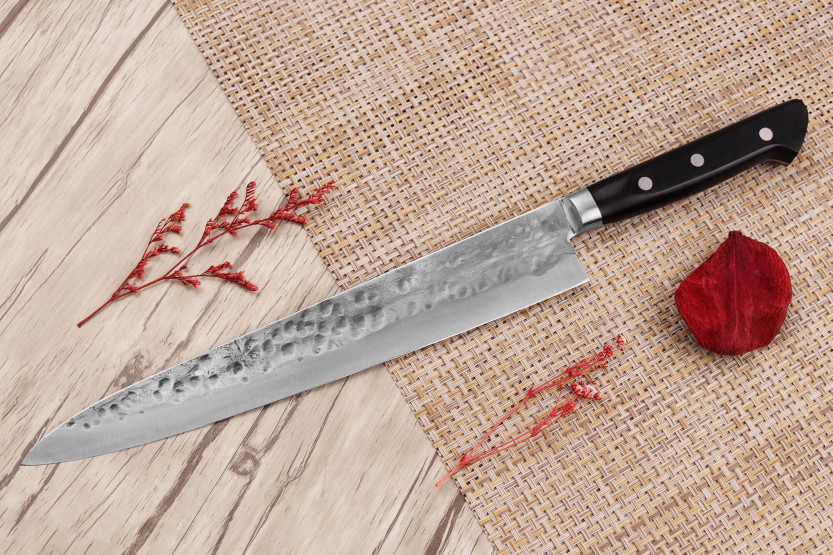
The sujihiki knife is a Japanese model designed for cutting raw fish. It produces thin, even slices in a single, effortless movement. A must-have in Japanese cuisine! However, it should not be used on excessively hard foods such as frozen foods or bones.
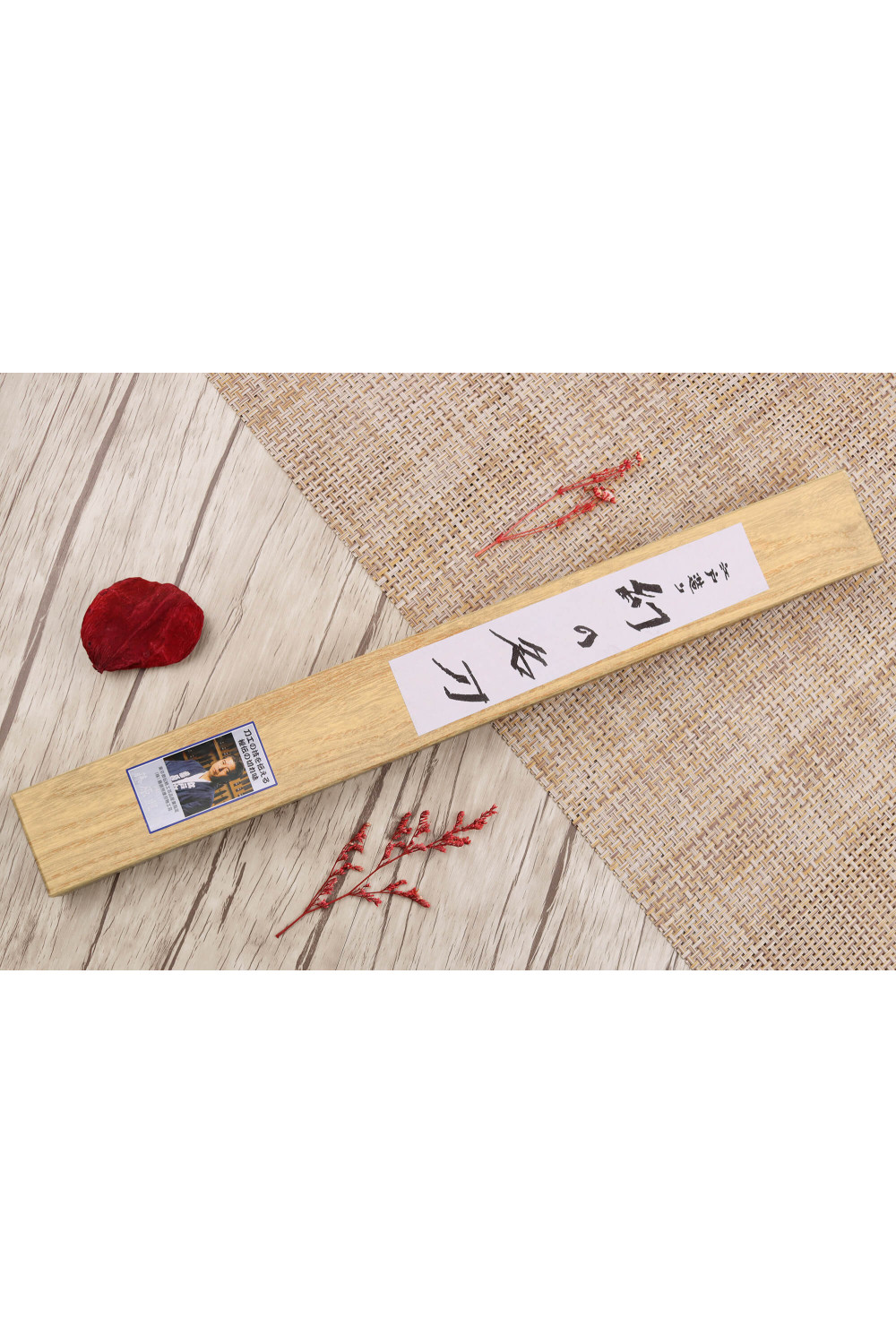
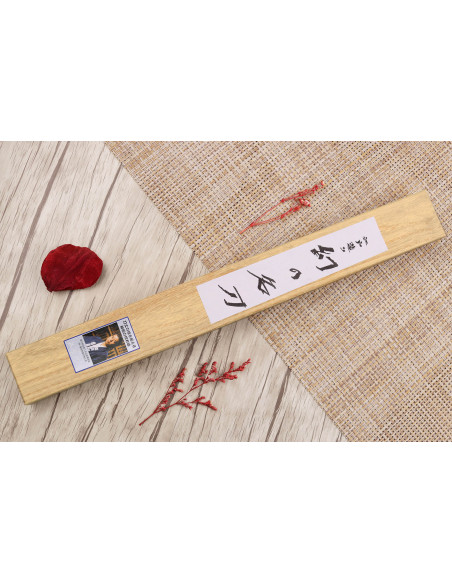
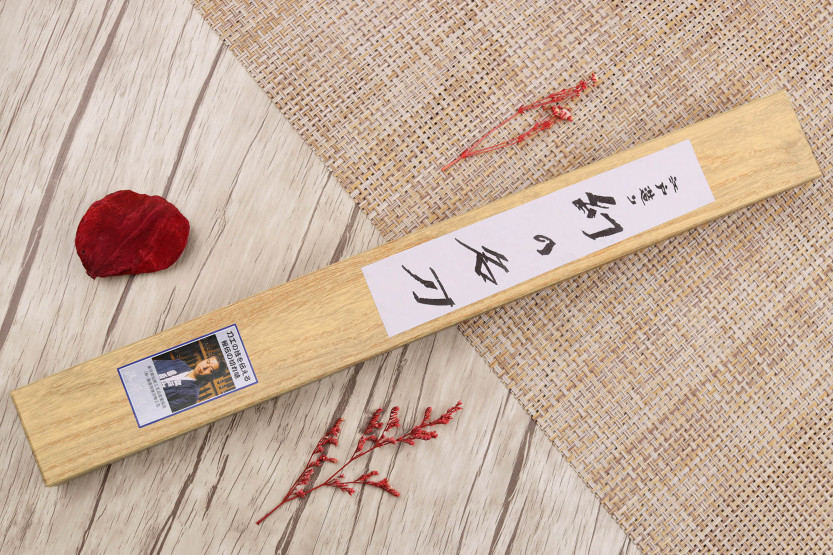
In full, the name of this range is Maboroshi no Meito, which means "The victorious visionary sword", reflecting great performance!
A Fujiwara knife with a quality blade
The blade of this handcrafted Japanese knife features a San Mai structure, a typically Japanese technique meaning "3 layers". It involves the forging of a rigid steel core, then enveloped by a softer layer of steel folded over itself to form the two outer layers. This process protects the core of your blade while giving it a certain flexibility to prevent breakage.
The blade core of this Japanese knife is made ofJapanese Shirogami steel, produced by the internationally renowned Hitachi steelmaker. This alloy (also known as White Paper Steel) takes its name from the paper used to package it during manufacture ("shiro" meaning "white"). With a high carbon content of around 1.3%, this blade achieves a hardness of 62HRC on the Rockwell scale. This gives it excellent edge retention and a high-performance cutting edge, even with frequent use.
Carbon is one of the main components that increase the hardness of an alloy. A rigid blade retains its edge longer than a more "flexible" one, which is a real advantage when it comes to spacing out sharpening sessions. It's important to note that a blade's increased rigidity doesn't make it unbreakable: on the contrary. A harder blade is more likely to break, as it has less flexibility to absorb shocks. For this reason, we advise against using this handcrafted knife on foods that are too hard, as mentioned above.
Shirogami alloy is a steel that can be easily sharpened with a stone if required. It is coated with a softer layer of stainless steel that protects it while adding softness to its hardness.
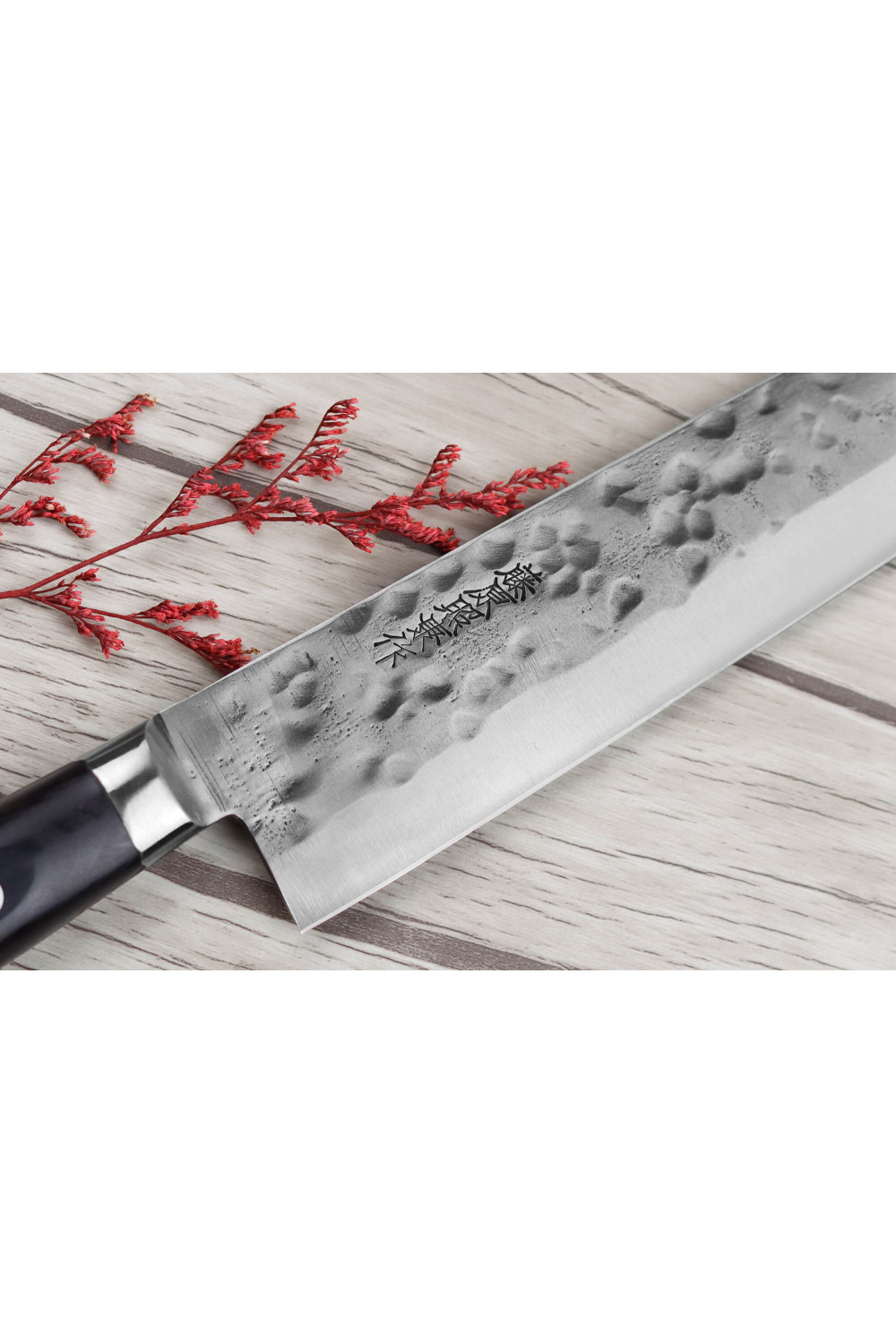
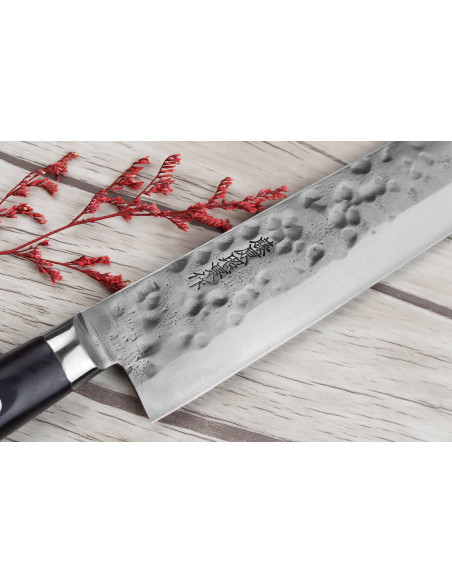
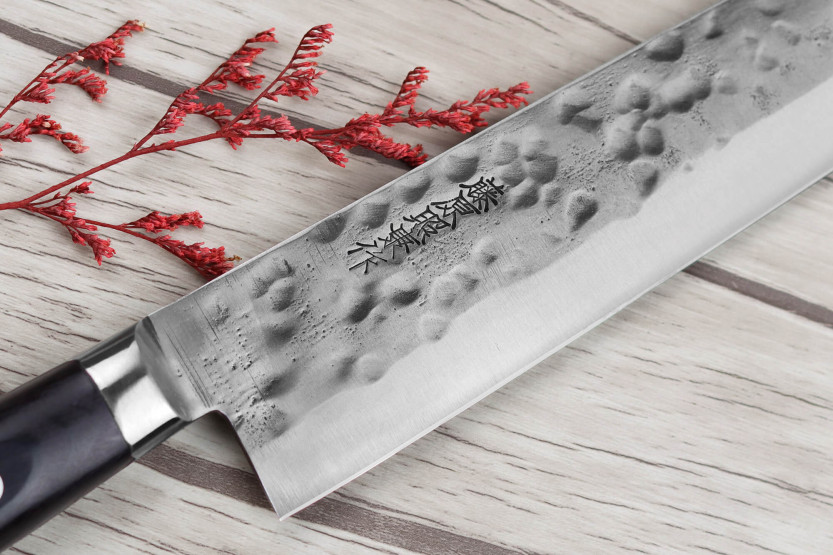
Your handcrafted Japanese knife has a Nashiji finish that gives it a rough, rustic look. What's more, the blade has been hammered to give it even more character!
The kanji are engraved on the surface with a hammer and chisel, directly by the blacksmith. They can be translated as "made by Teruyasu Fujiwara".
An ergonomic handle for all hands
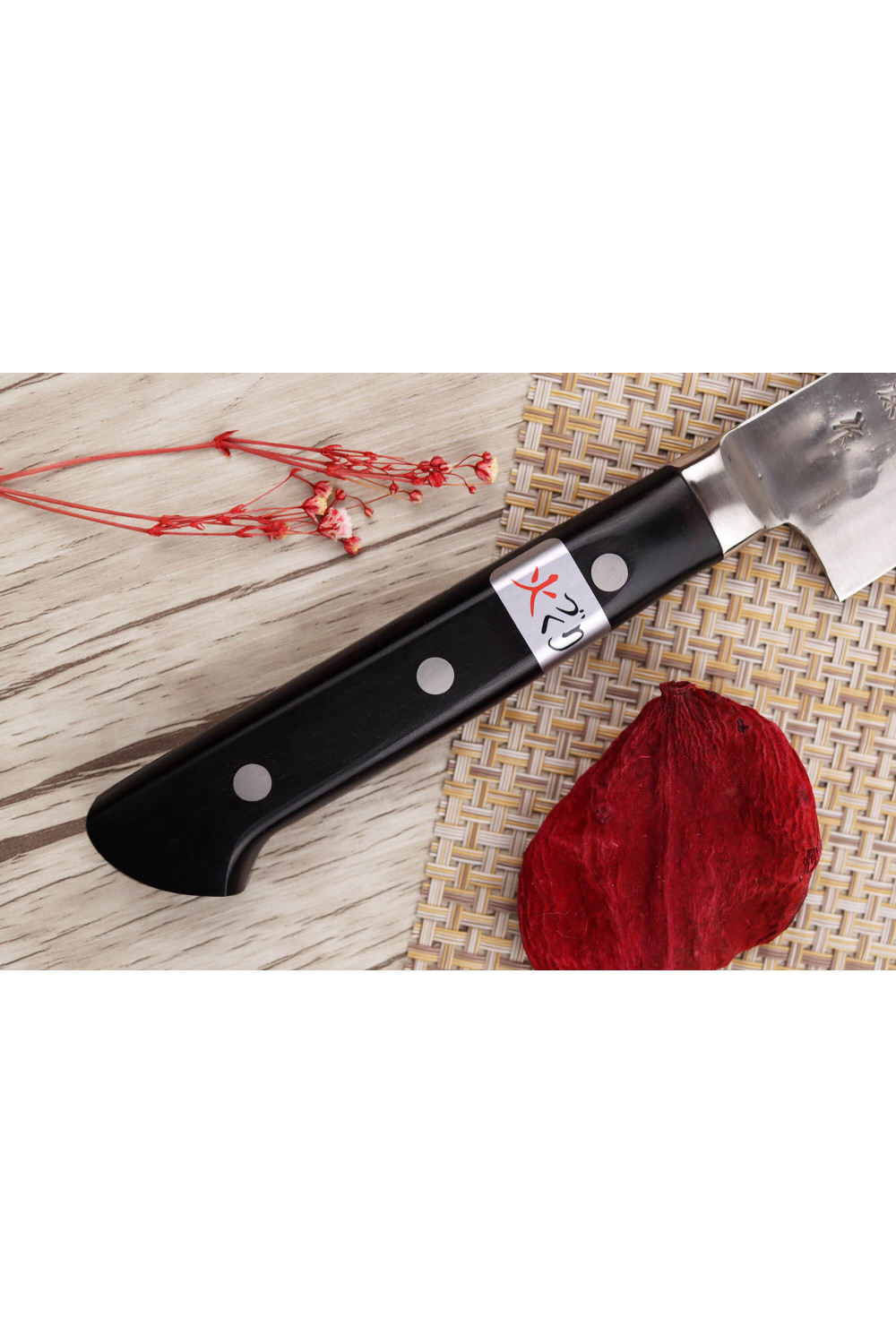
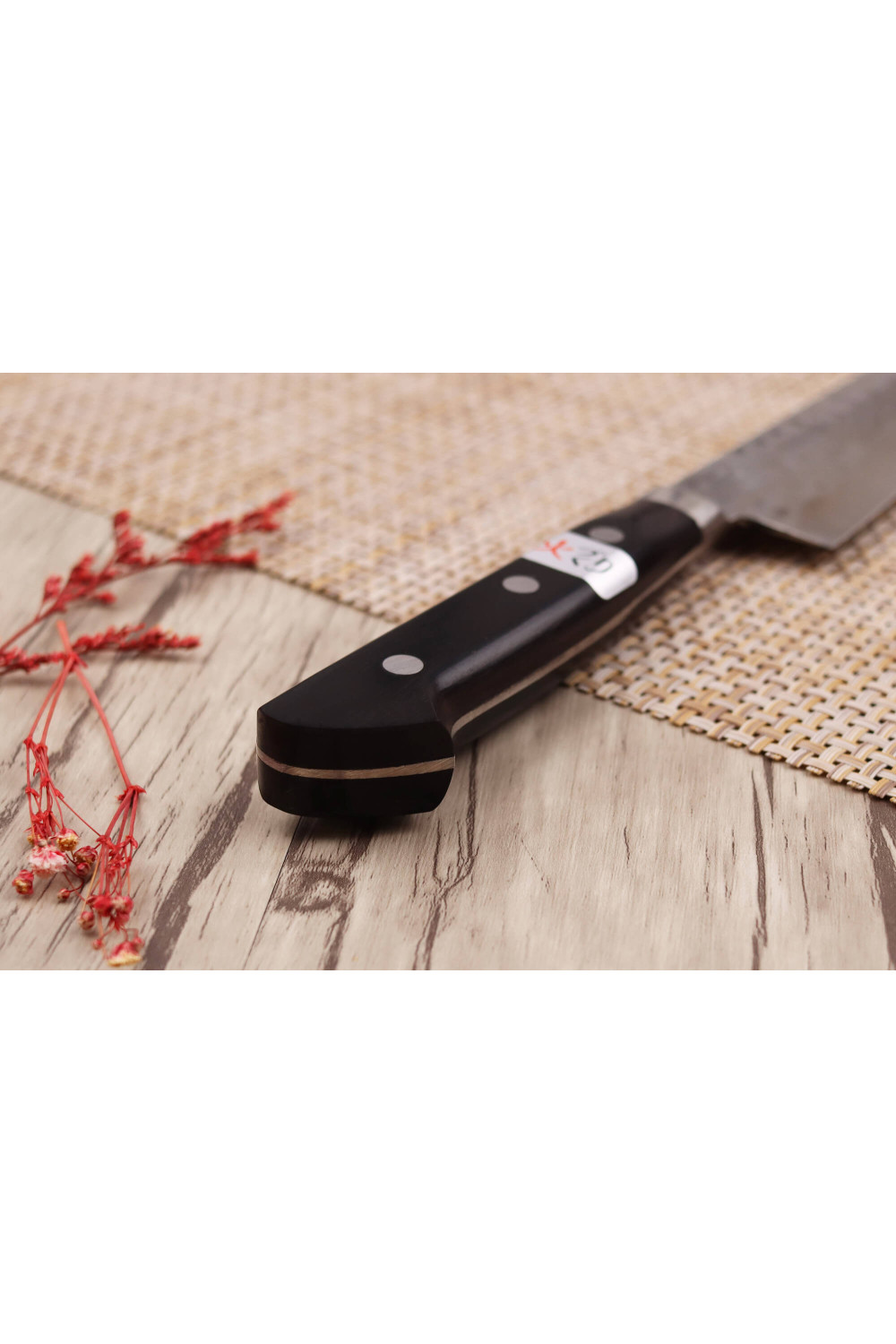
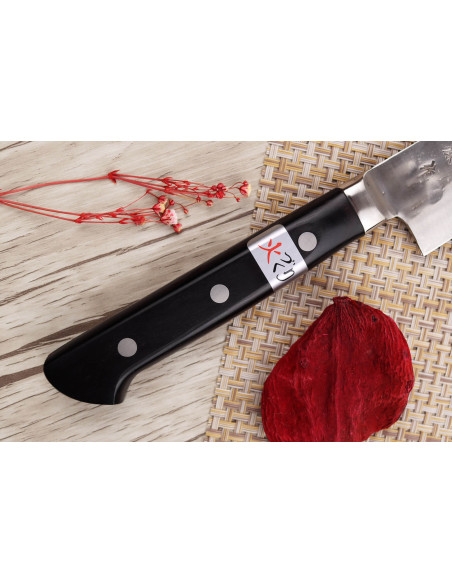
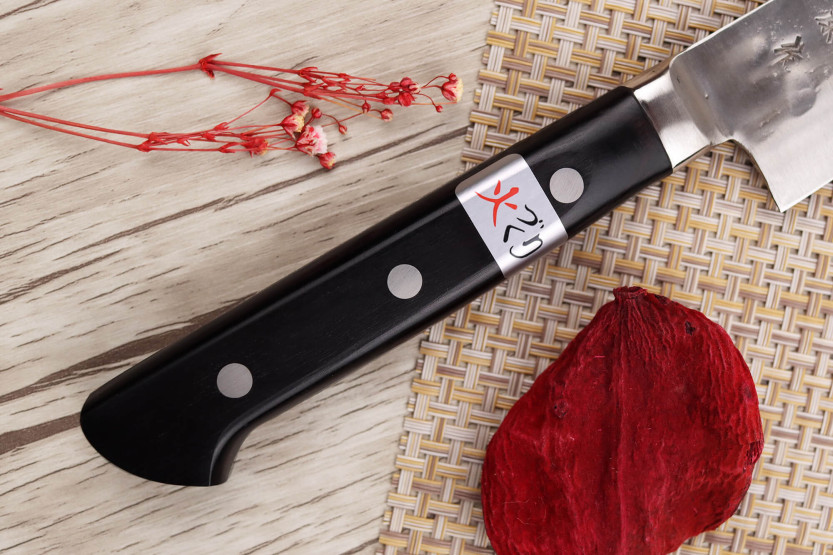
This Japanese knife features a handle made from pakka wood, a composite of laminated wood and resin, all hot-pressed together. As a result, it offers enhanced resistance to humidity and temperature variations.
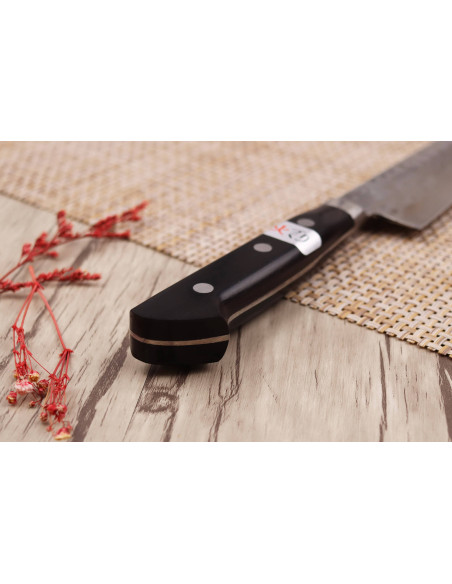
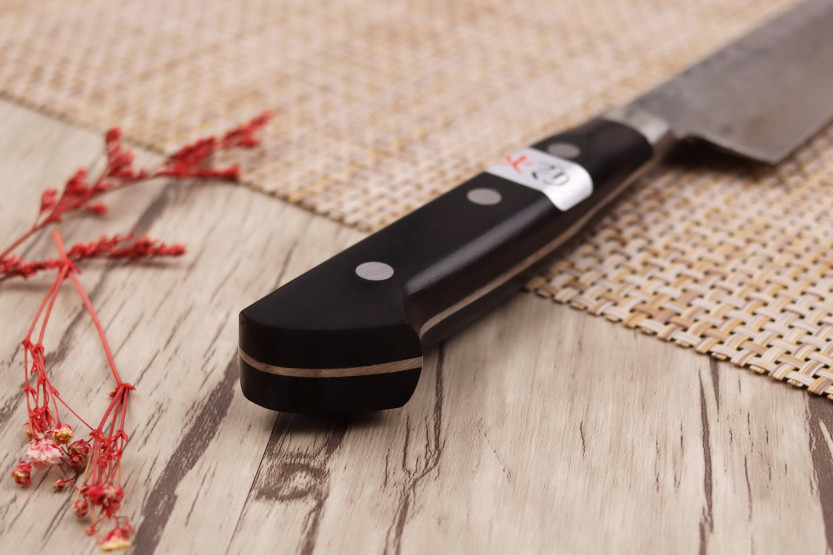
With its Western shape, this Fujiwara knife adapts perfectly to the hands of all cooks, whether right- or left-handed. Its pronounced base guarantees an ergonomic grip, particularly during prolonged use.
Finally, the handle features 3 stainless steel rivets that consolidate the materials and secure the full tang blade. Your Japanese kitchen knife is thus reliable and secure for optimum use.
Caring for your Maboroshi Fujiwara knife
To preserve the quality of your Fujiwara knife, wash it exclusively by hand with a non-abrasive sponge and mild detergent. After washing, be sure to dry it immediately to remove any moisture, and store it in a dry place. Do not put it in the dishwasher or leave it to soak in the sink.
Despite meticulous care, it is normal for the color of the blade to vary slightly over time. This is a natural reaction of the carbon to the acidity of the food you are cutting and the humidity in the air. During your cutting sessions, we recommend keeping a paper towel nearby to wipe the blade between cuts.
Discover the rest of the Teruyasu Fujiwara Maboroshi range on KnifeLeader.eu!




 By buying this product you can collect up to