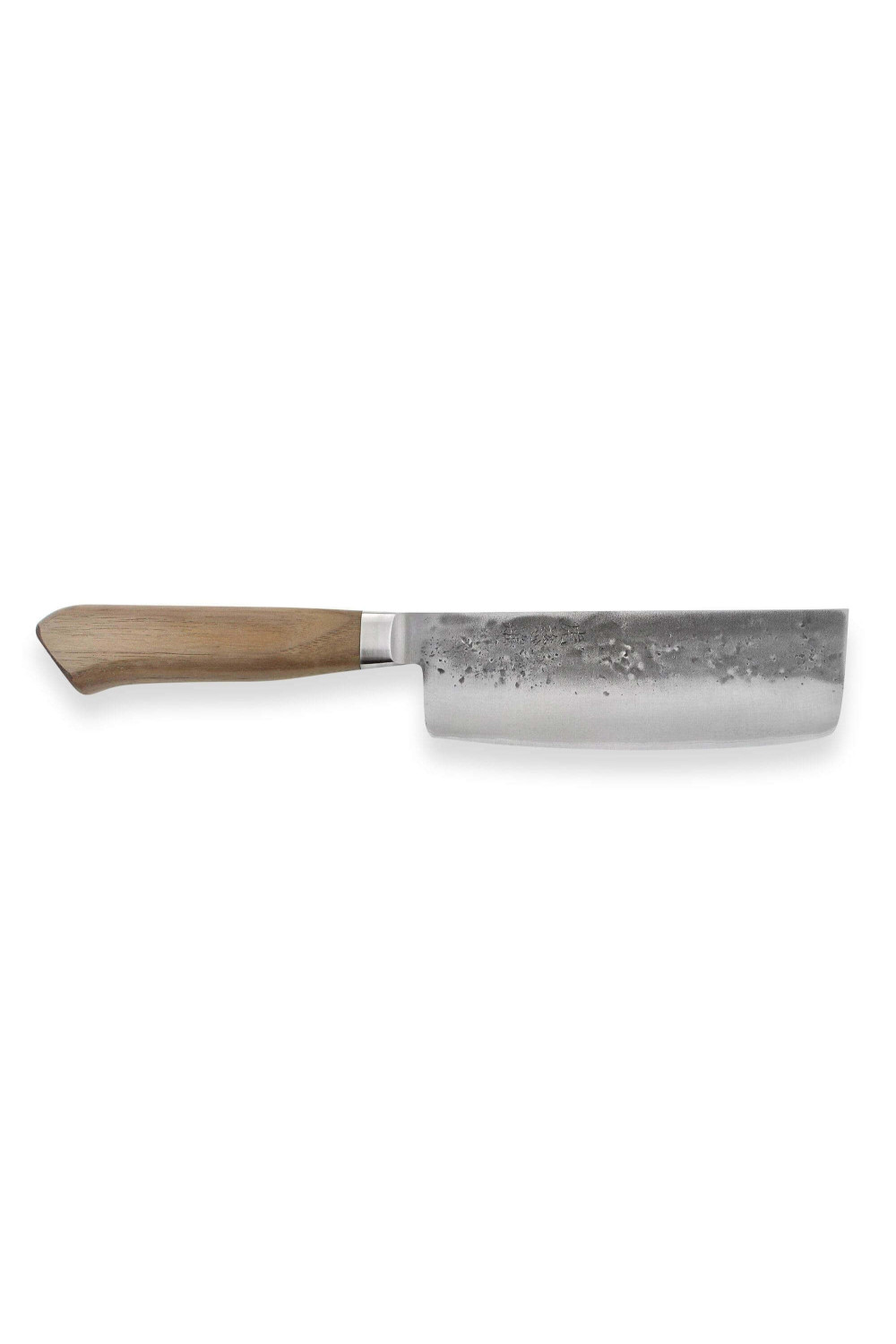
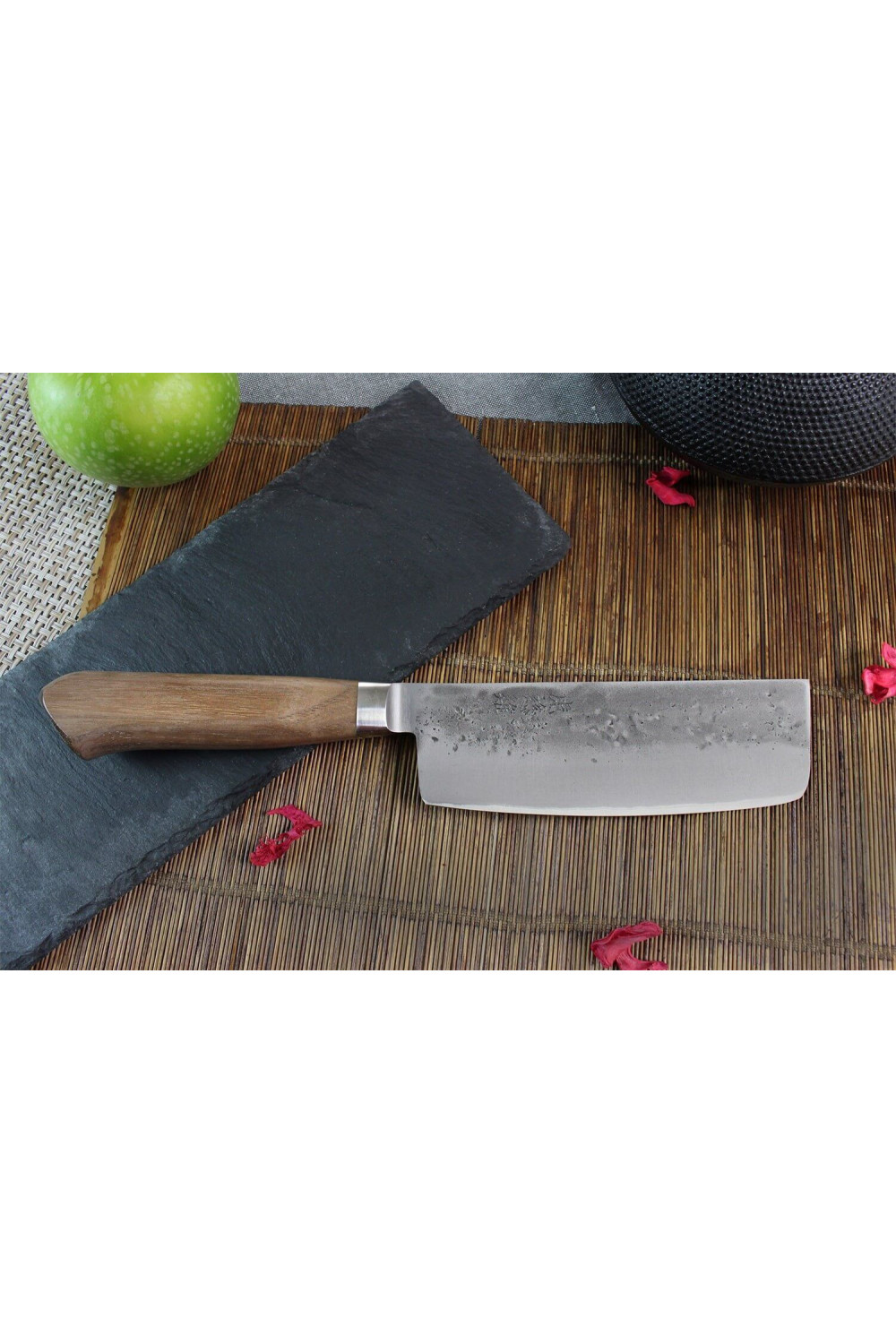
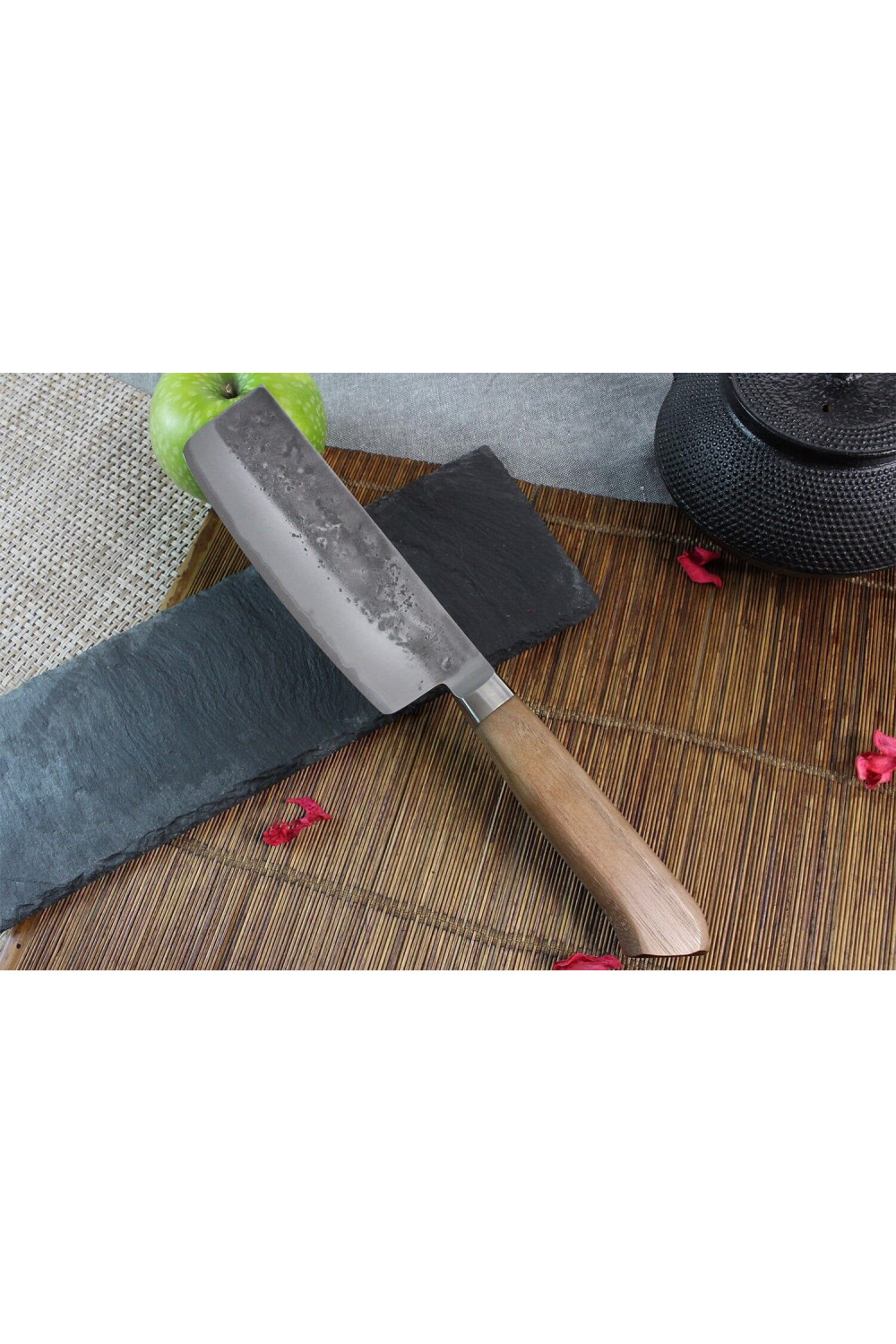
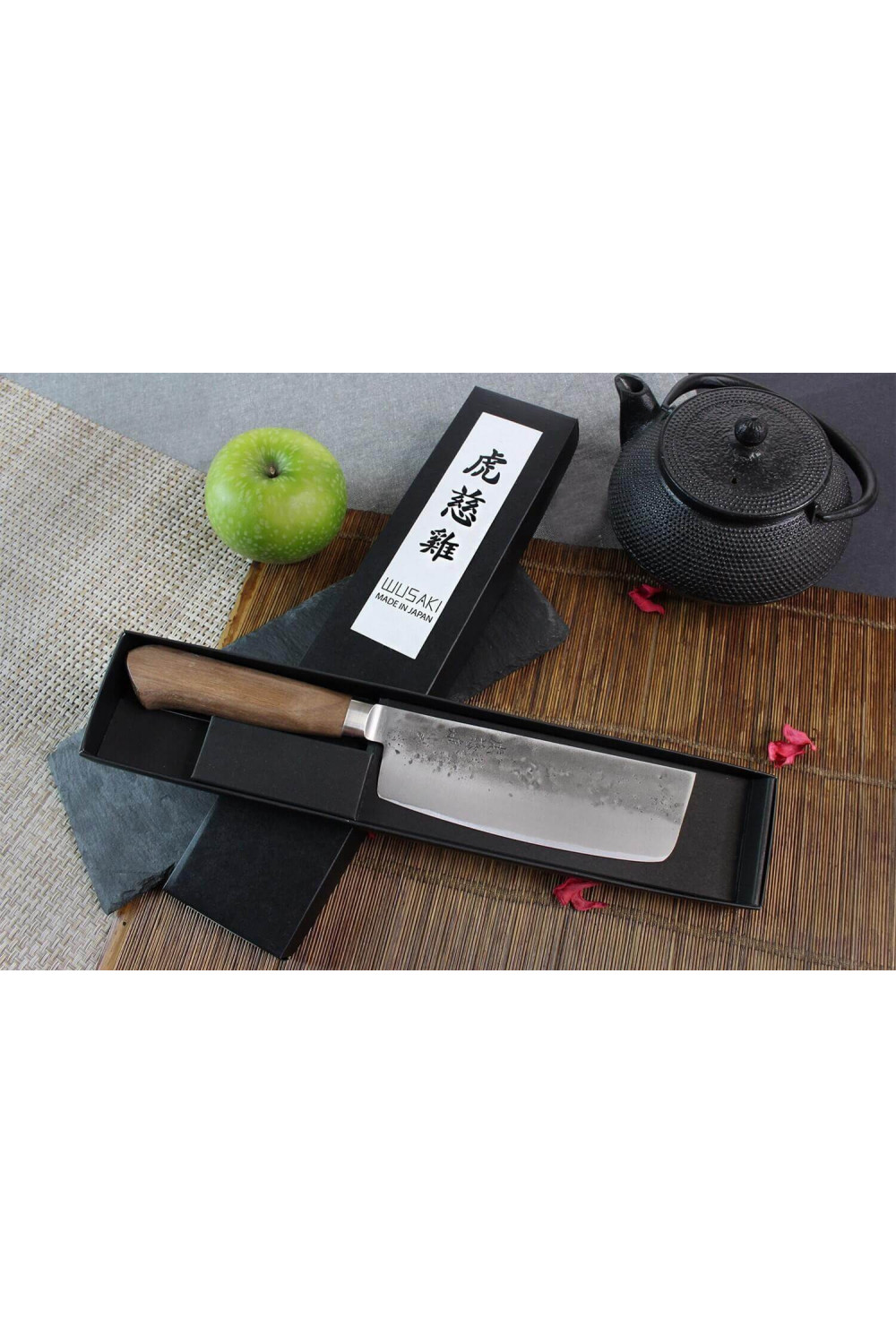
The Wusaki Nogami knife range will appeal to the most demanding cooks. High cutting performance, long-lasting cutting edge and authentic design are the main advantages of this range.
Wusaki Nogami kitchen knives are entirely hand-forged in Japan. From forging the blade to assembling, polishing the handle and sharpening the cutting surface, the renowned Tadafusa cutlery factory takes care of everything. The cutlery factory was founded in 1948, in the heart of the town of Sanjo (Niigata prefecture),known for its 350-year history of blacksmithing. The town is also known as "The City of Blacksmiths". Each knife is handcrafted by experts. Tadafusa has won several awards for its impeccable workmanship, in the worthy tradition of the blacksmiths of yesteryear.
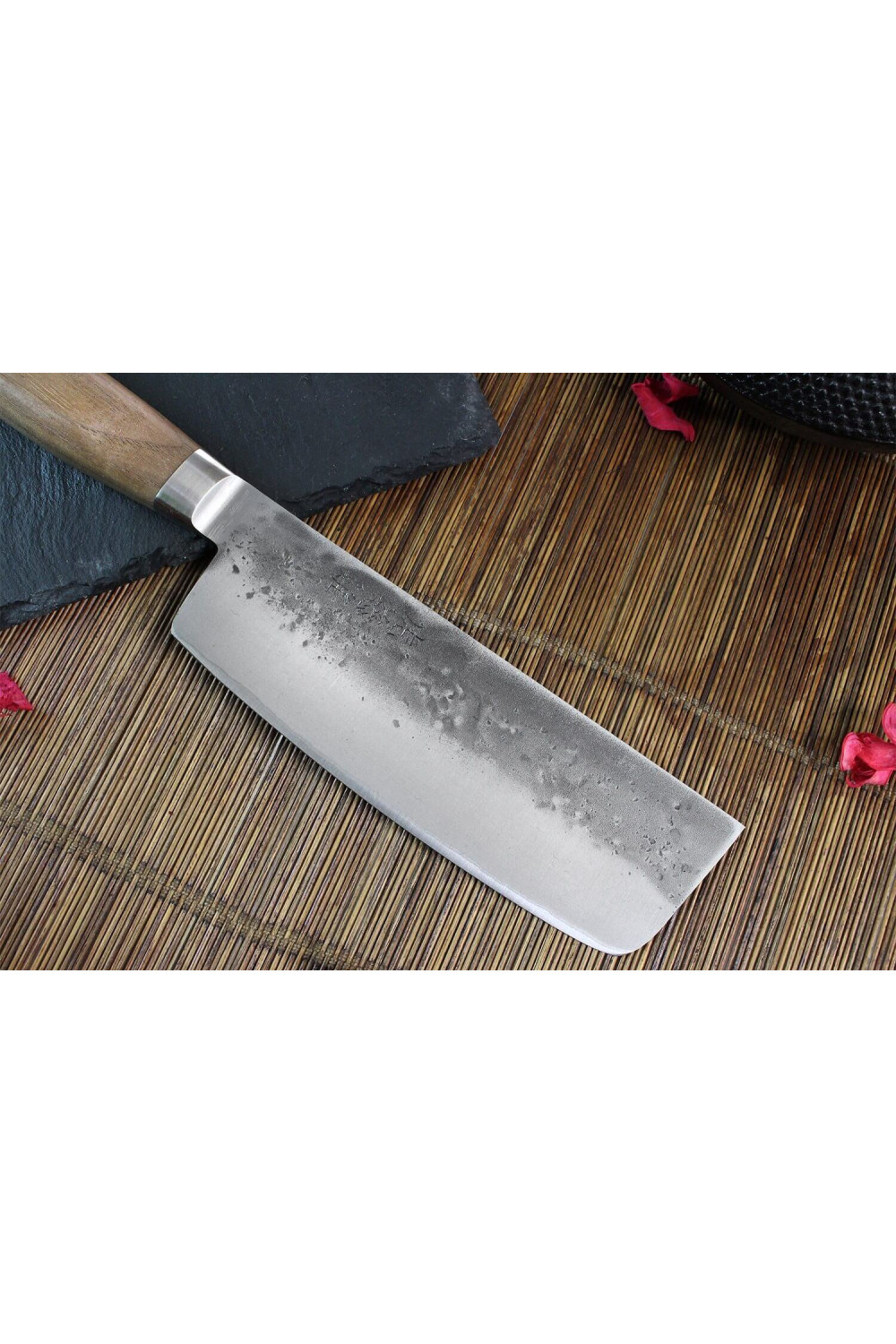
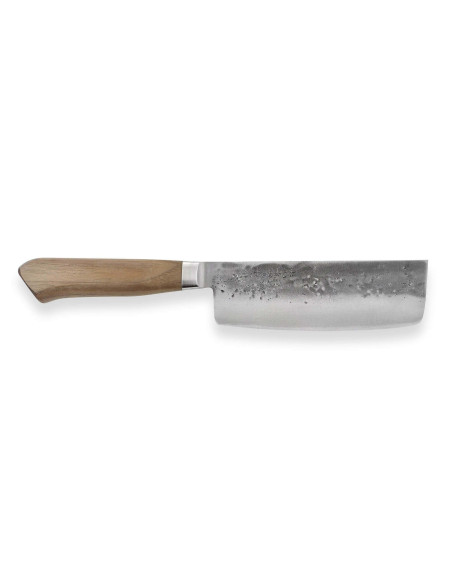
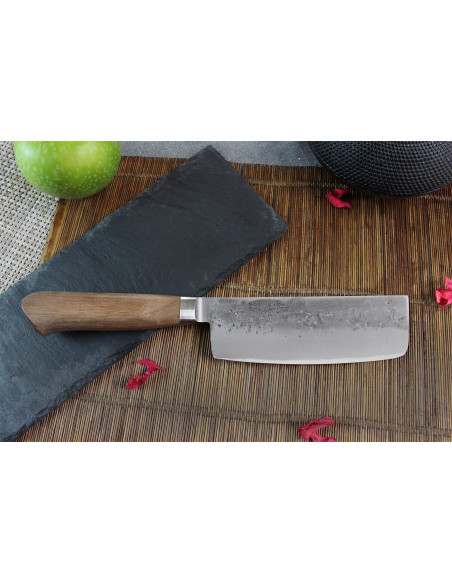
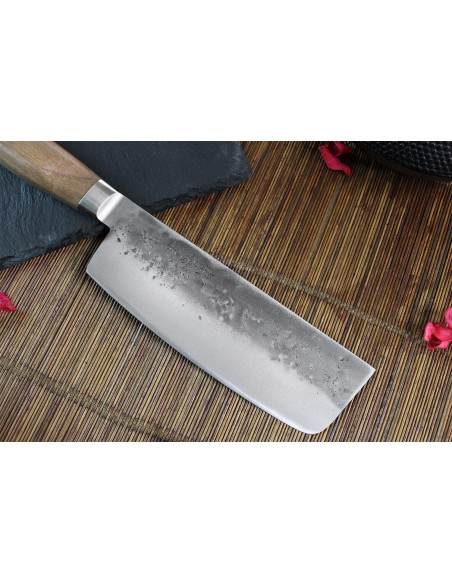
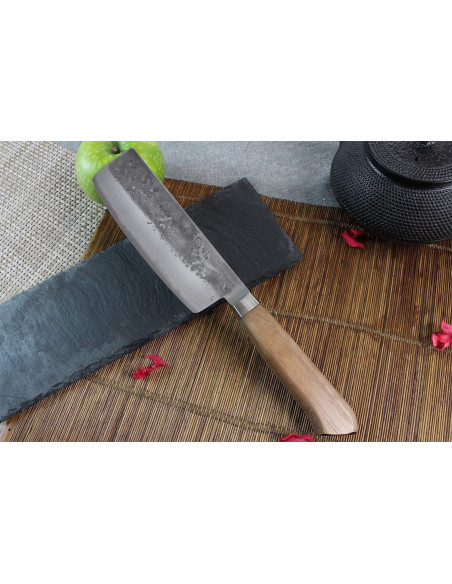
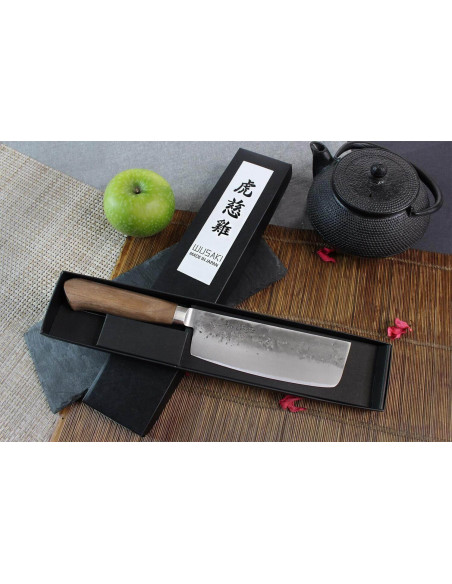
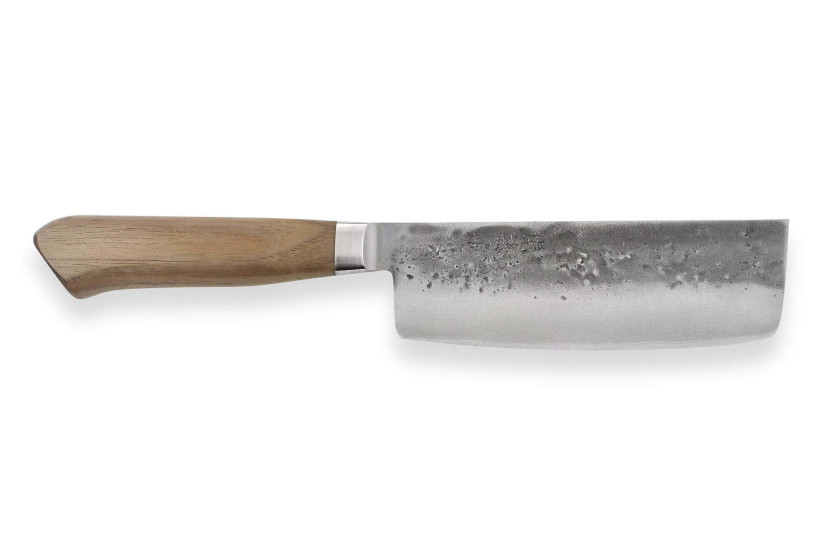
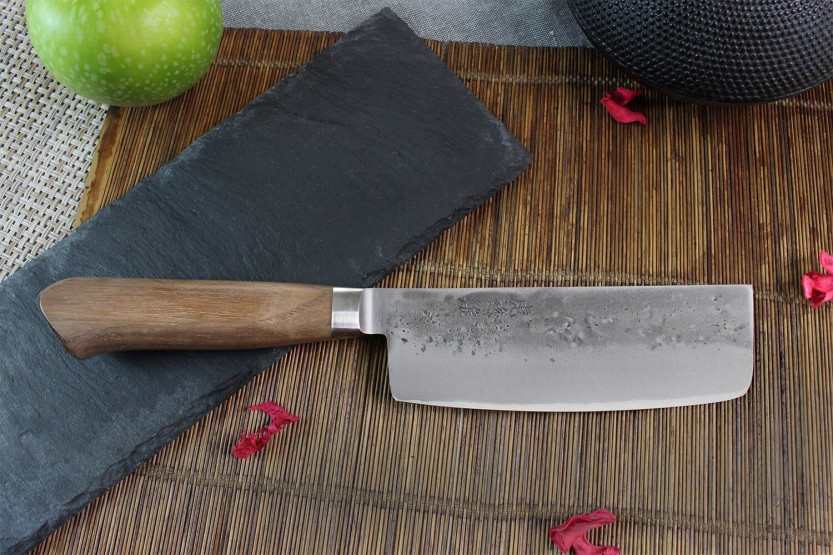
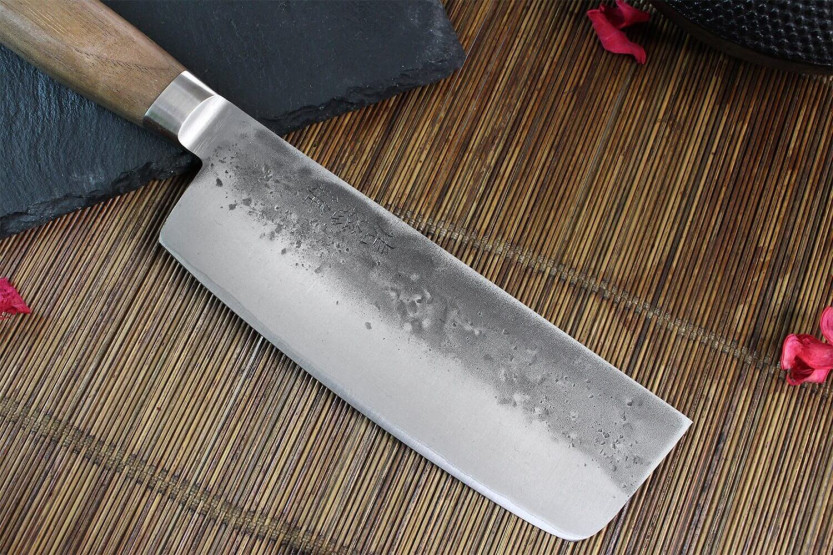
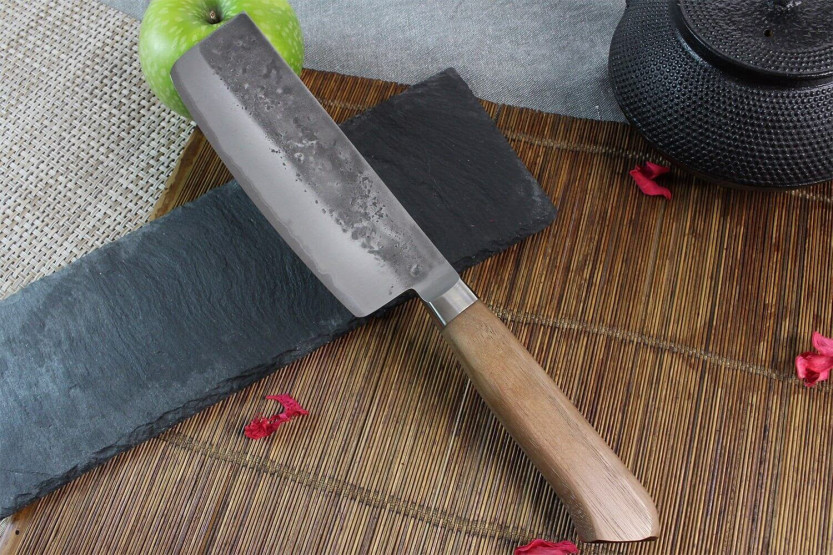
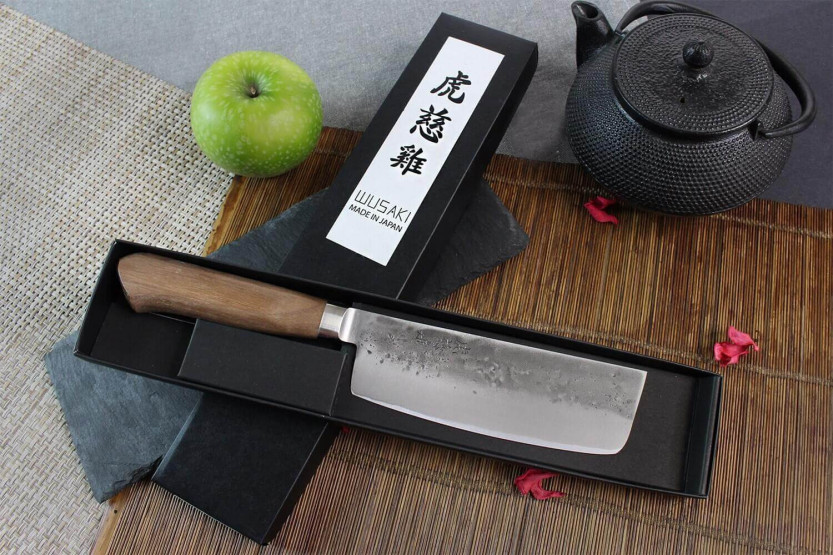
The Nakiri 15cm knife,with its straight, square blade, lets you slice and dice your vegetables the Asian way. Given its imposing size, you can turn to vegetables of various sizes.
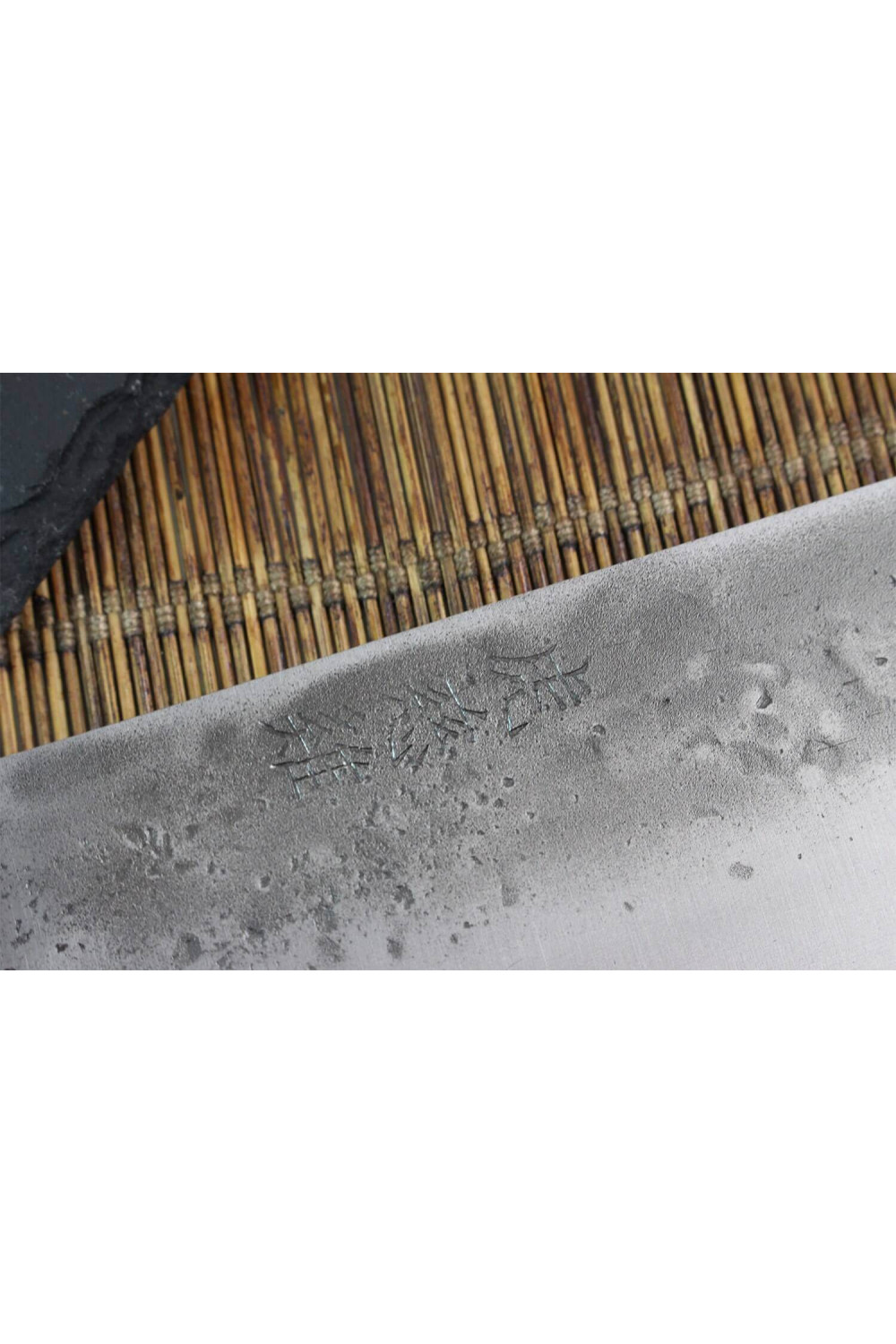
The San Maï Nashiji: an original design
The 2 steels used in the blade's composition have complementary characteristics. While Blue Steel is harder and less concentrated in chromium, mild stainless steel is softer and more resistant to corrosion. It's the perfect combination of strength and sharpness, and rust-resistance and flexibility (the blade isn't strictly speaking flexible, but this means it won't break at the slightest impact).
3 layers of steel make up the blade of this Wusaki knife. This Japanese technique is called San Maï(3 layers in Japanese).
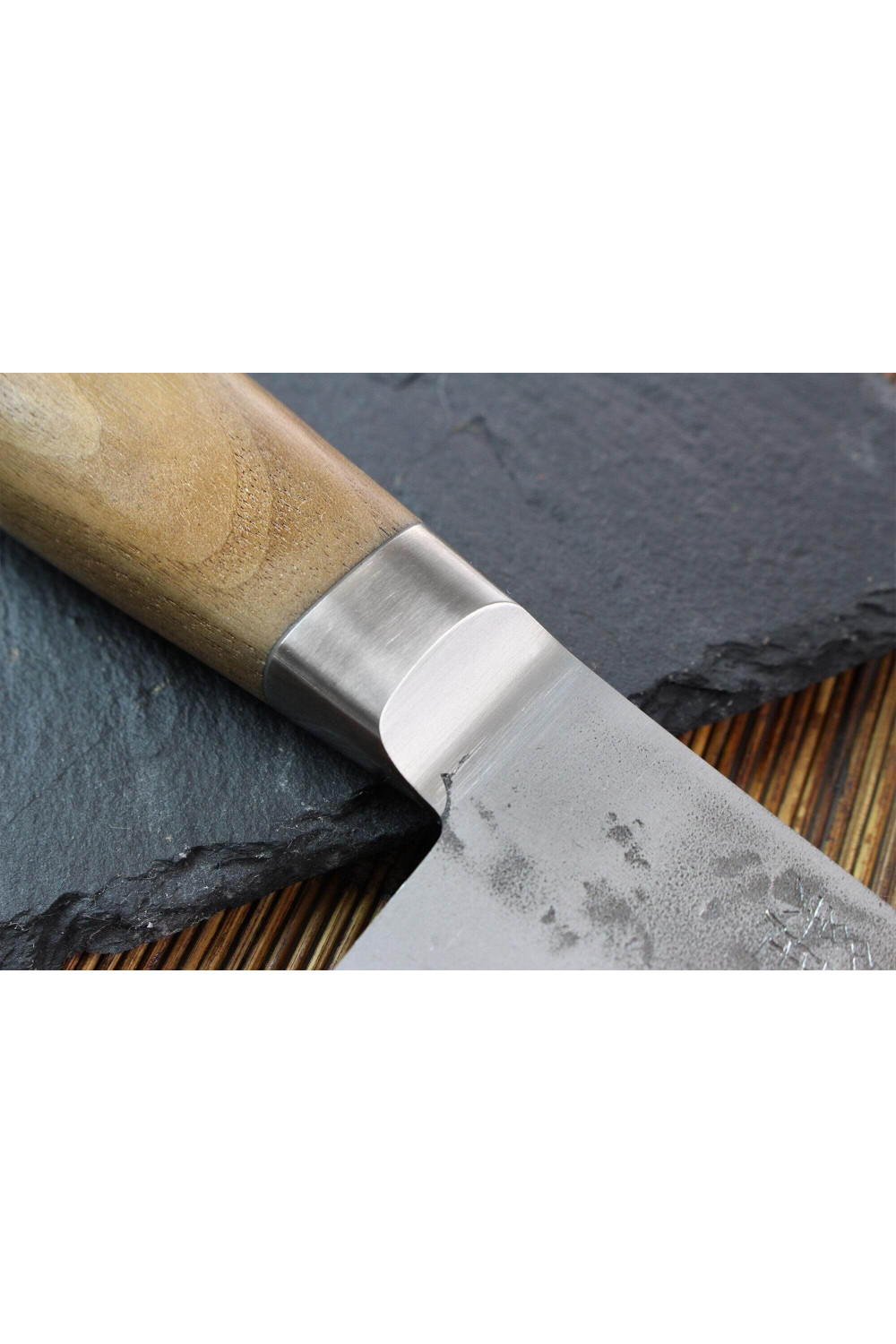
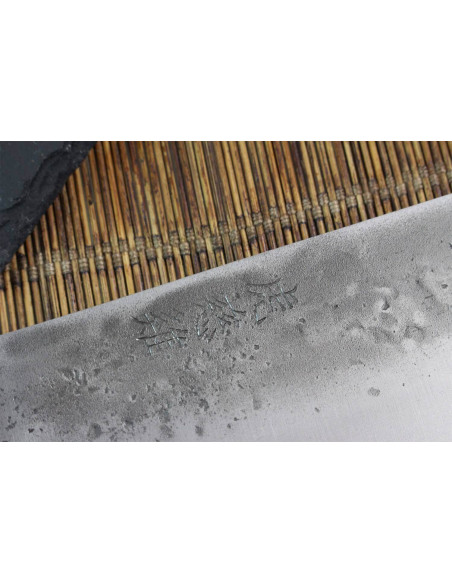
The core is made of Japanese Blue Steel n°2(Aogami #2 in Japanese). This steel takes its name from the blue paper in which Hitachi packages it. With a carbon content of around 1.2%, the blade becomes truly robust (given that the average is usually between 0.5 and 1% for Western and Japanese blades combined, that's saying a lot!). As a result of this strength, the blade's edge can be sharpened even further, for enhanced cutting quality. The Blue Steel core is then surrounded by a layer ofmild stainless steel, which protects the core. Produced by Hitachi steel mills, its special composition is enriched with carbon, chromium and tungsten. It is this layer of mild steel that gives the Nashiji raw finish across its entire surface. We really appreciate the rough-forged effect, which adds an authentic design touch.
Unbeatable sharpness
The blade reaches 62-63 HRC, one of the highest hardnesses in cutlery. Thanks to this strength, the edge of the blade can be incredibly fine, for extreme cutting quality. The blade is sharpened on both sides at a very acute angle, further minimizing cutting effort.
Another advantage of this level of hardness is its long-lasting cutting edge. The cutting edge remains sharp for a long time, making the need for sharpening much less frequent.
For normal home use, for example, the knife needs sharpening no more than 2-3 times a year.
Easier overall knife maintenance
A knife that is both stainless and carbon-enriched is generally difficult to sharpen, and requires a great deal of patience.Despite their long-lasting cutting edge,Japanese carbon steels such as the Aogami #2 used for this range are highly prized for their ease of sharpening.
Also, the blade has no awkward guard (a thick layer at the beginning of the blade to protect the fingers), so sharpening is easy along the entire length of the blade.
The blade is protected against oxidation by a layer of stainless steel surrounding the core. It is quite normal for the surface near the cutting edge to turn dark blue with use. Rest assured, this is not a health hazard.
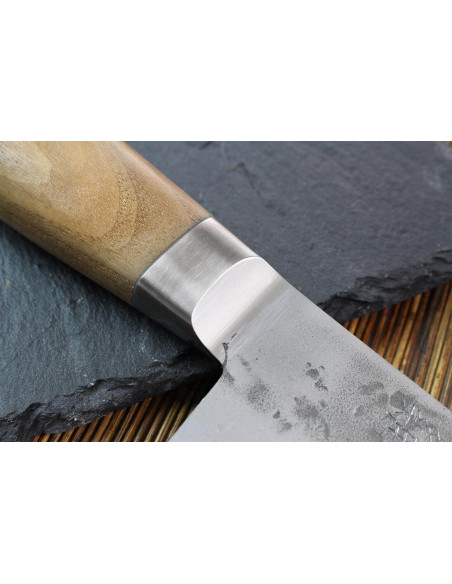
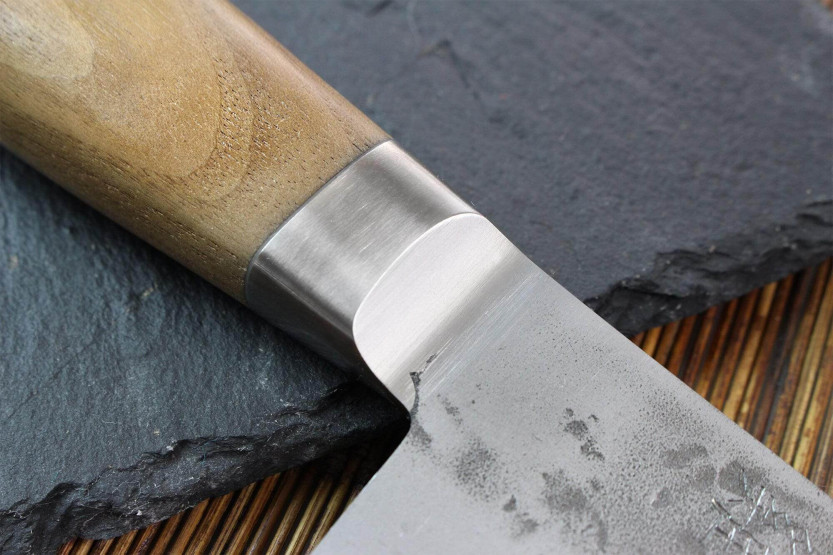
Unlike traditional Japanese knives, bacteria, residues and moisture cannot penetrate the handle. The stainless steel bolster acts as a barrier, making maintenance much easier. The stainless steel bolster acts as a barrier, making maintenance much easier.
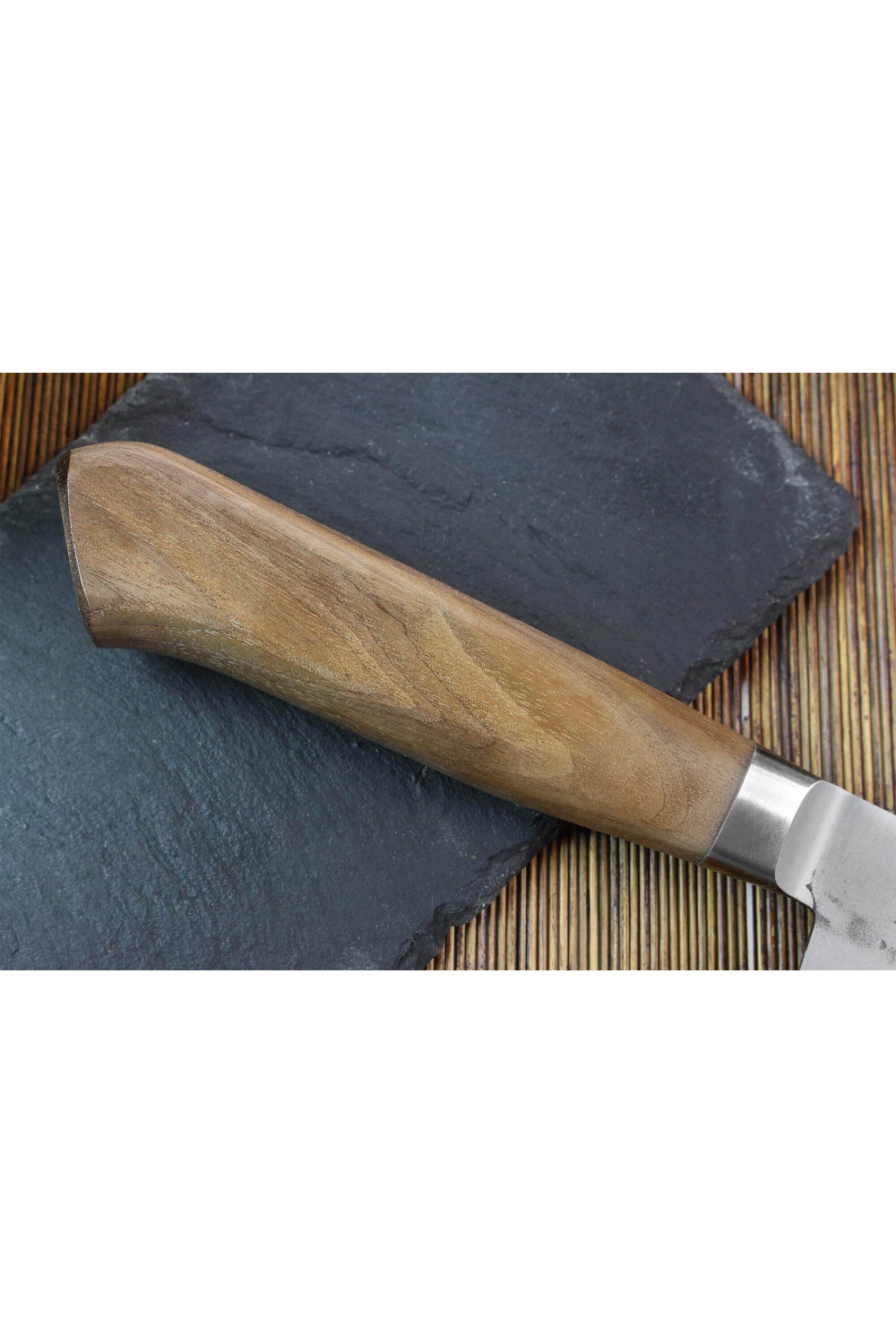
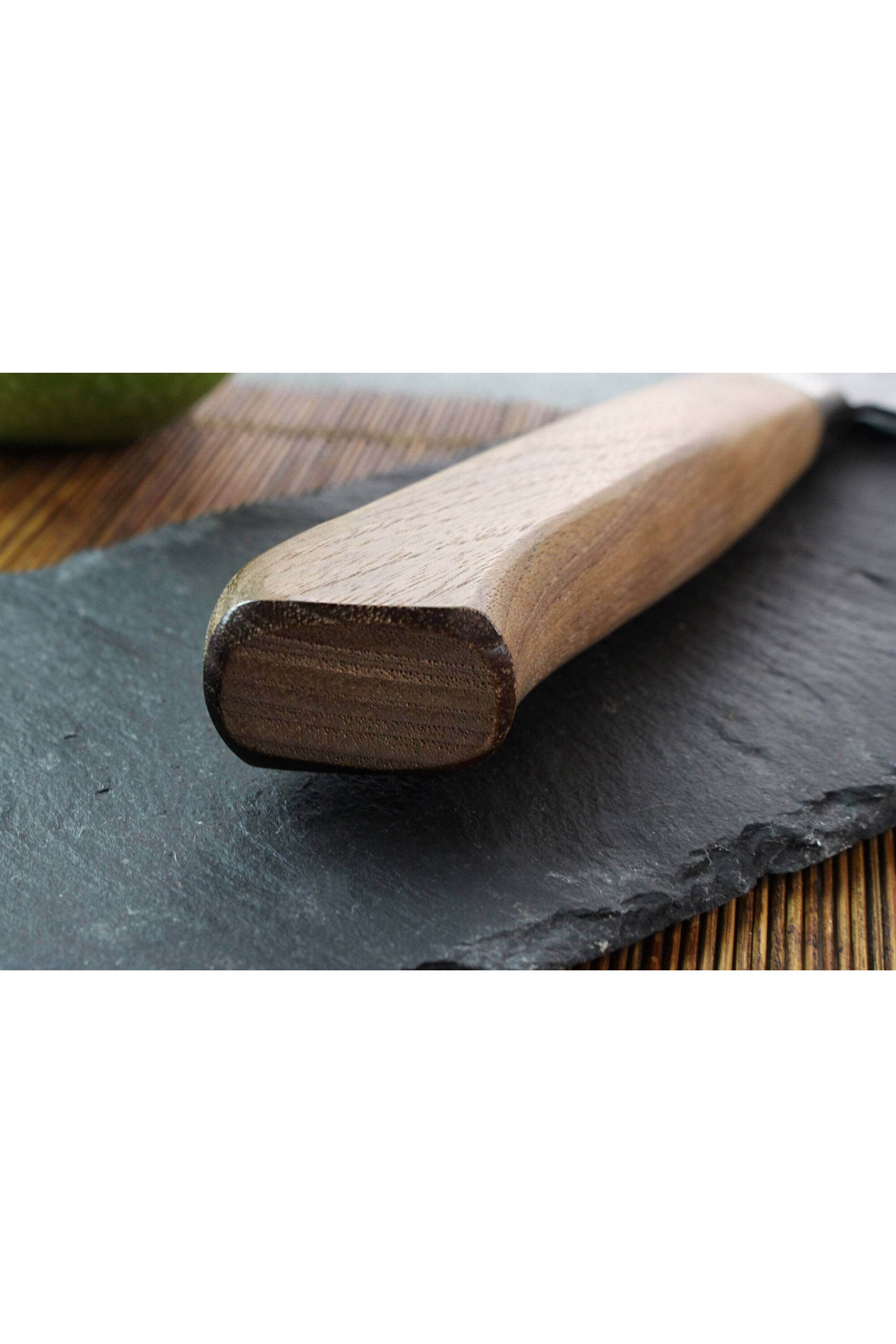
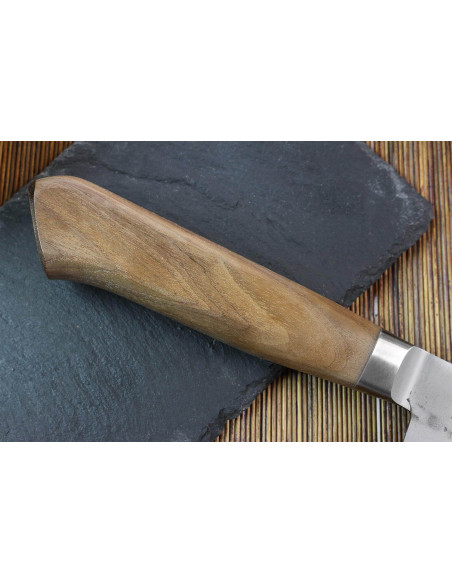
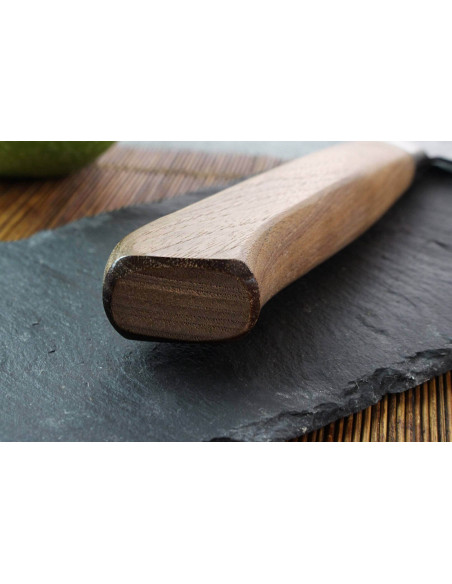
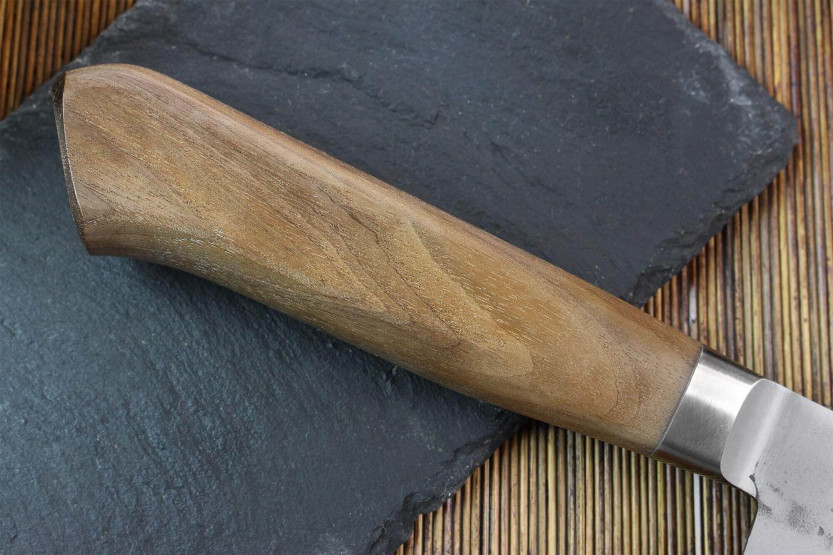
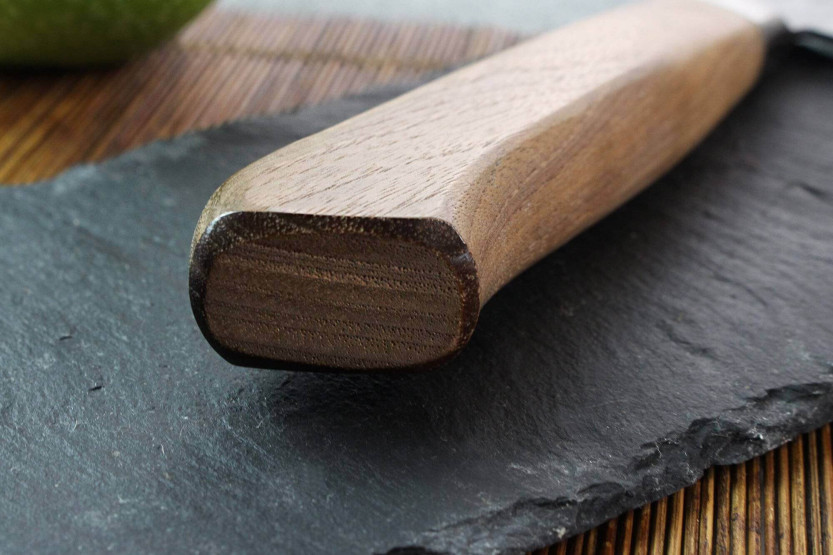
The handle is made of walnut, a solid wood with many advantages, including good resistance to moisture and heat. It's a high-end wood appreciated for its sturdiness. What's more, its ambidextrous shape is perfect for both left- and right-handed users.
The Wusaki Nogami range is a real eye-catcher, with its authentic rough-forged design and excellent cutting performance.
Choose a Sharpening stone to maintain your blade on our KnifeLeader site!
|
|
Hand-wash after each use with your dishwashing detergent and a soft sponge. Wipe dry immediately after washing to limit discoloration and prevent marks from appearing. :) |





 By buying this product you can collect up to


 (5)
 (0)
 (0)
 (0)
 (0)
 (0)