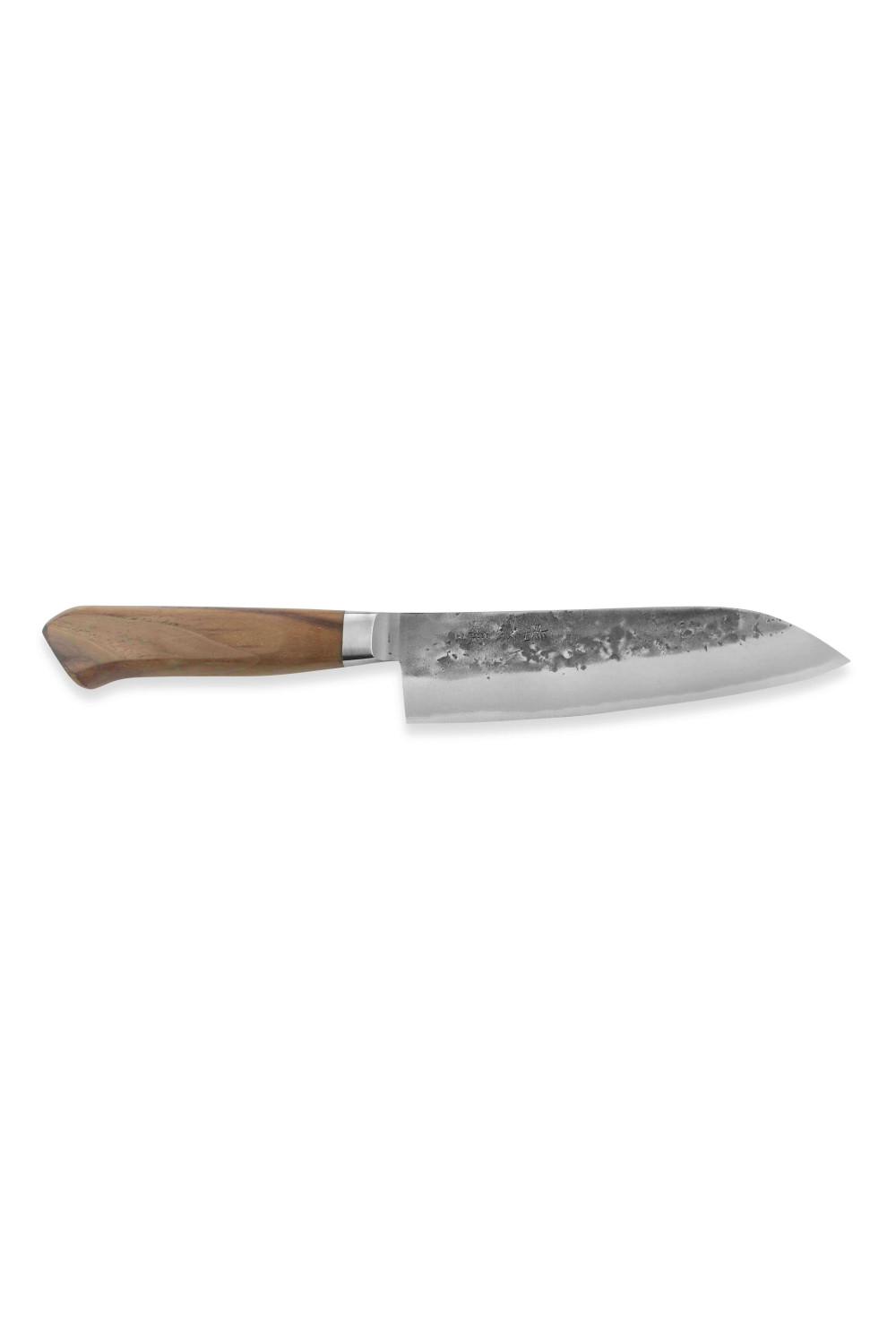
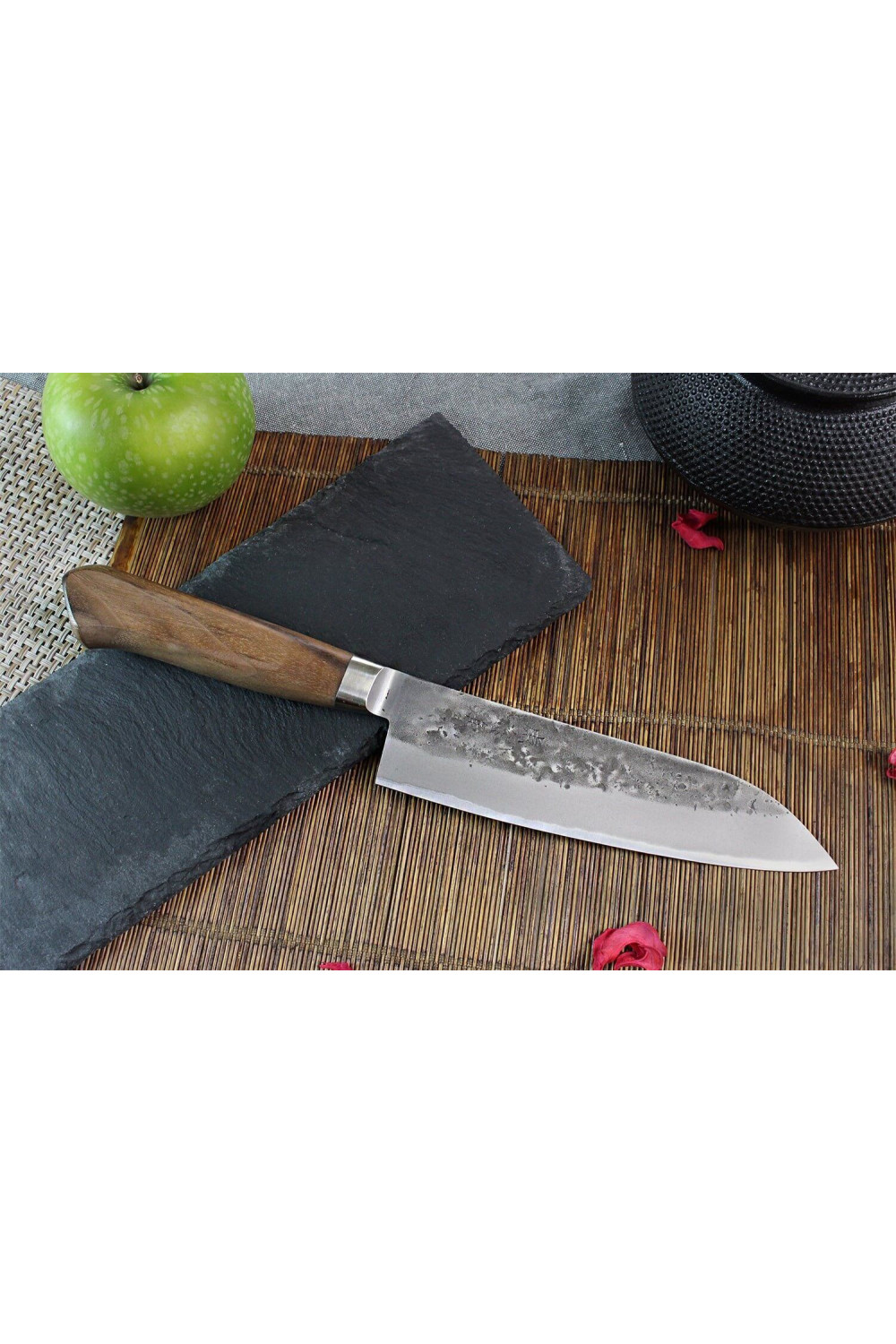
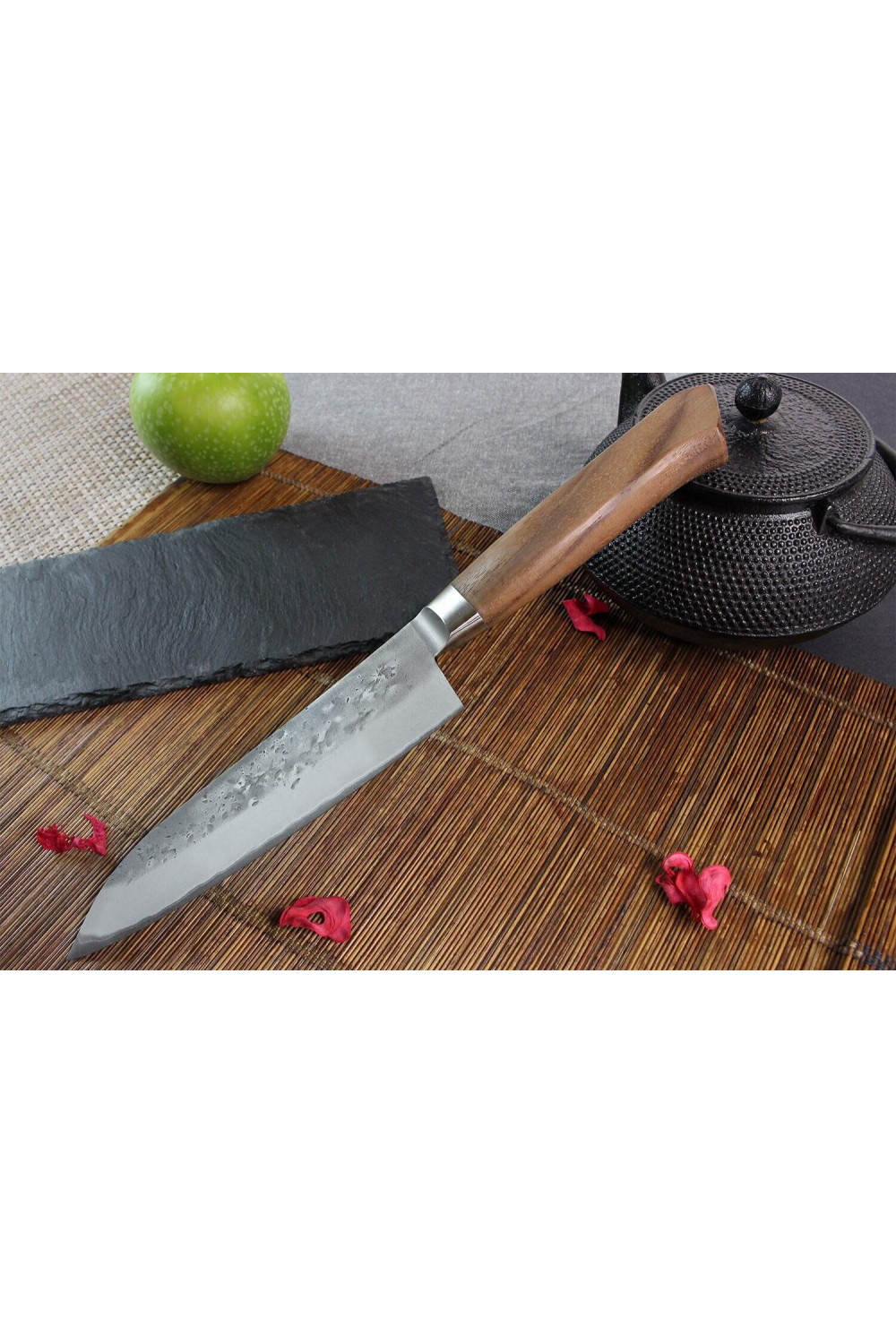
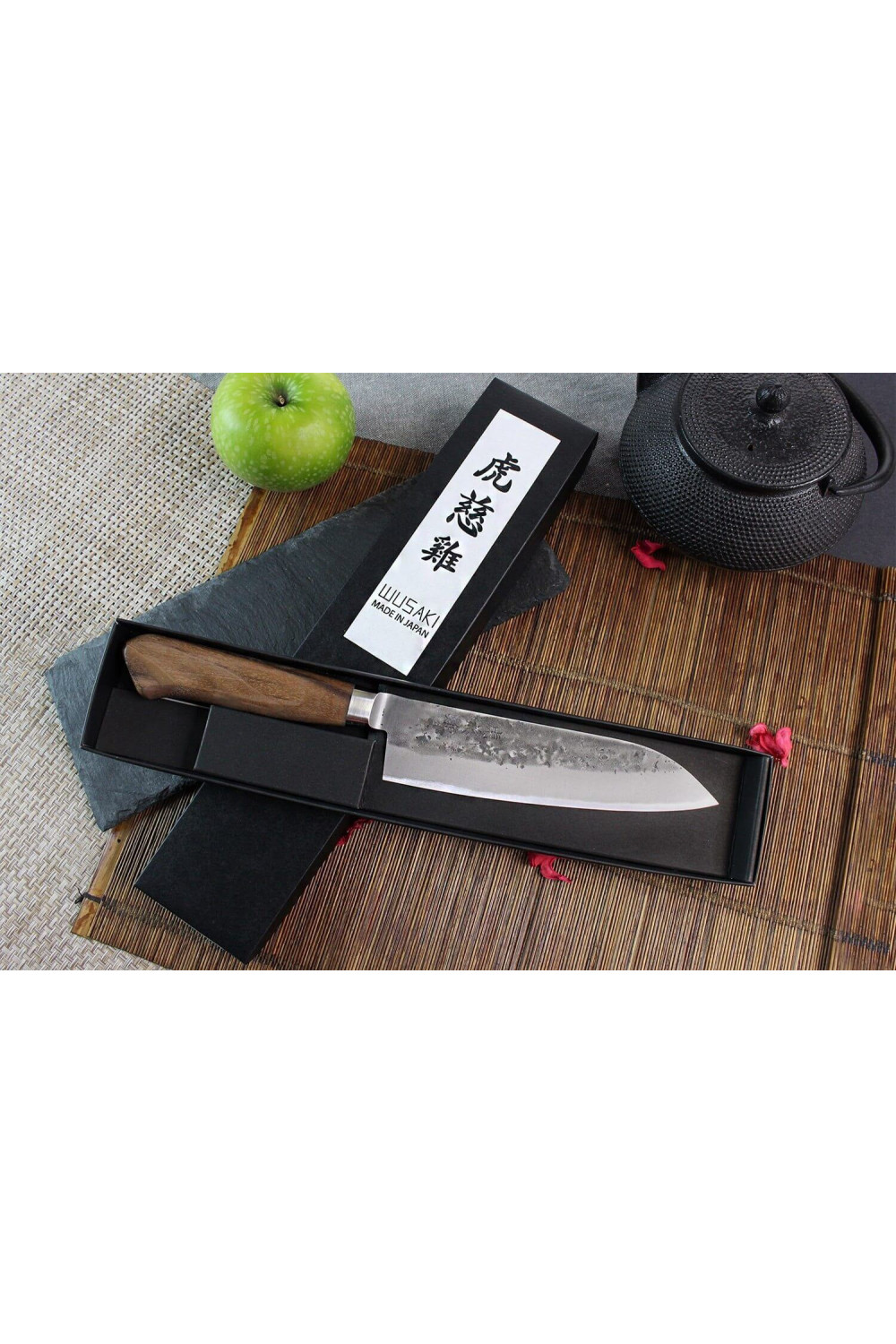
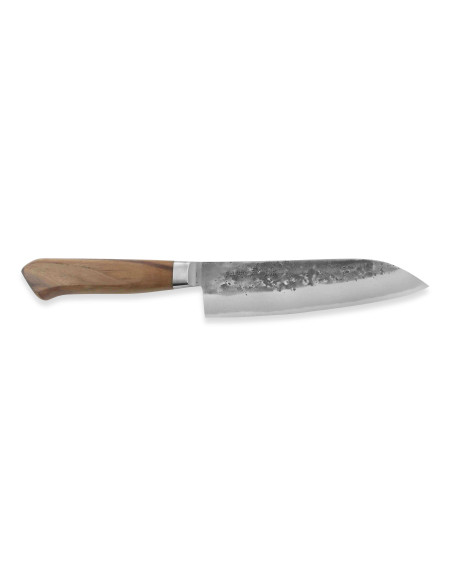
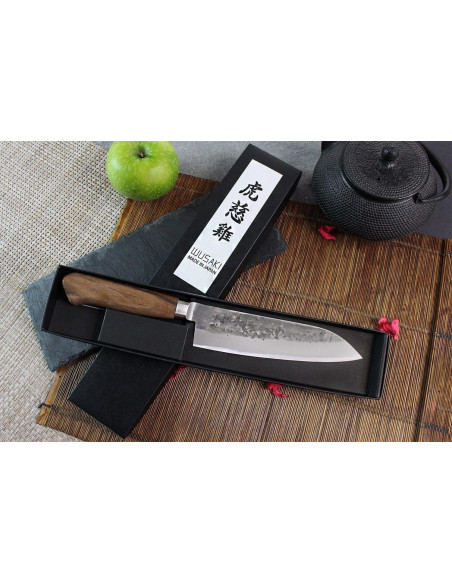
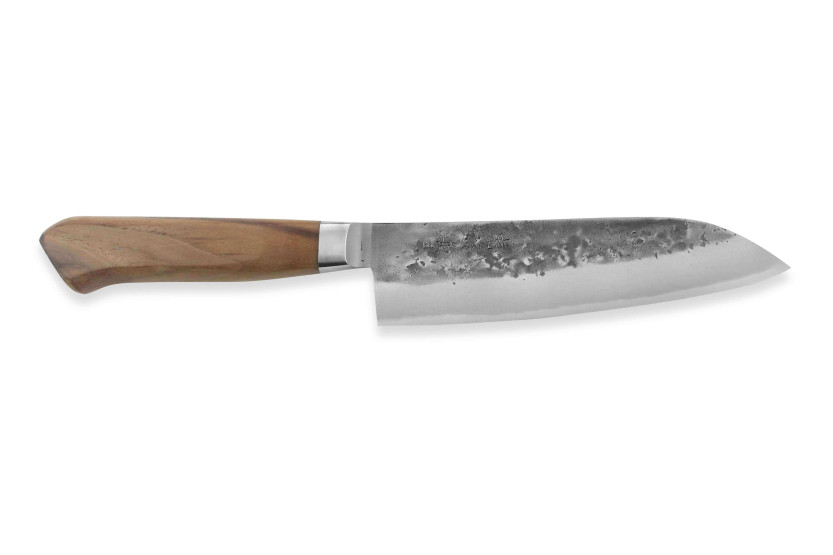
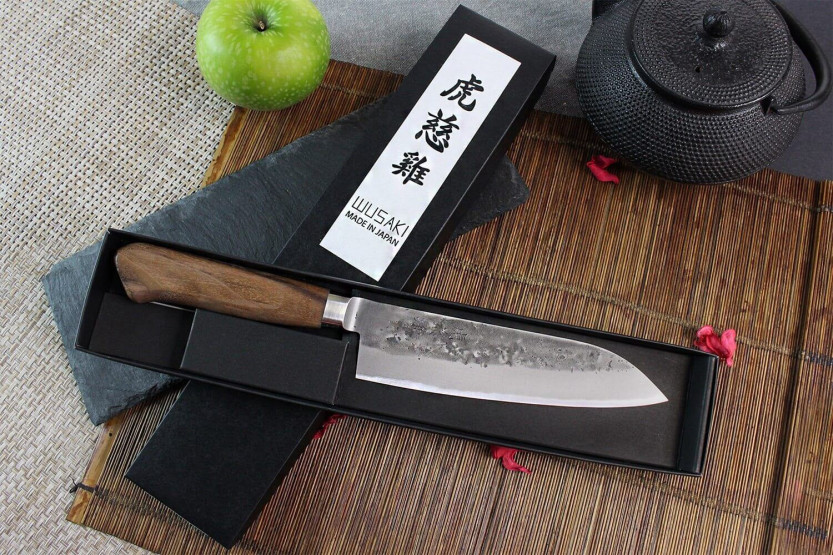
Opt for Japanese quality with this Wusaki Nogami santoku knife. This range brings together knives with undeniable advantages such as high cutting performance, excellent edge retention and authentic design.
Wusaki Nogami kitchen knives are entirely hand-forged in Japan. From the forging of the blade to the assembly, polishing of the handle and sharpening of the cutting surface, the renowned Tadafusa cutlery factory takes care of everything. The cutlery factory was founded in 1948, in the heart of the town of Sanjo (Niigata prefecture),known for its 350-year history of blacksmithing. The town is also known as "The City of Blacksmiths". Each knife is handcrafted by experts. Tadafusa has won several awards for its impeccable workmanship, in the worthy tradition of the blacksmiths of yesteryear.
A high-performance blade in the rough
This 17cmsantoku knife features a core made of Japanese Blue Steel n°2(Aogami in Japanese), from Hitachi steelworks. The paper in which Hitachi packages it is blue, which is why it's called Blue Steel. Its carbon content is around 1.2%, a very high level compared to the average of between 0.5 and 1% for Western and Japanese blades. The steel is also enriched with chromium and tungsten. The high level of carbon in the core makes the blade even harder, reaching 62-63 HRC, an extreme hardness rarely achieved in cutlery. Thanks to this strength, the blade's edge can be incredibly fine, for unrivalled cutting quality.
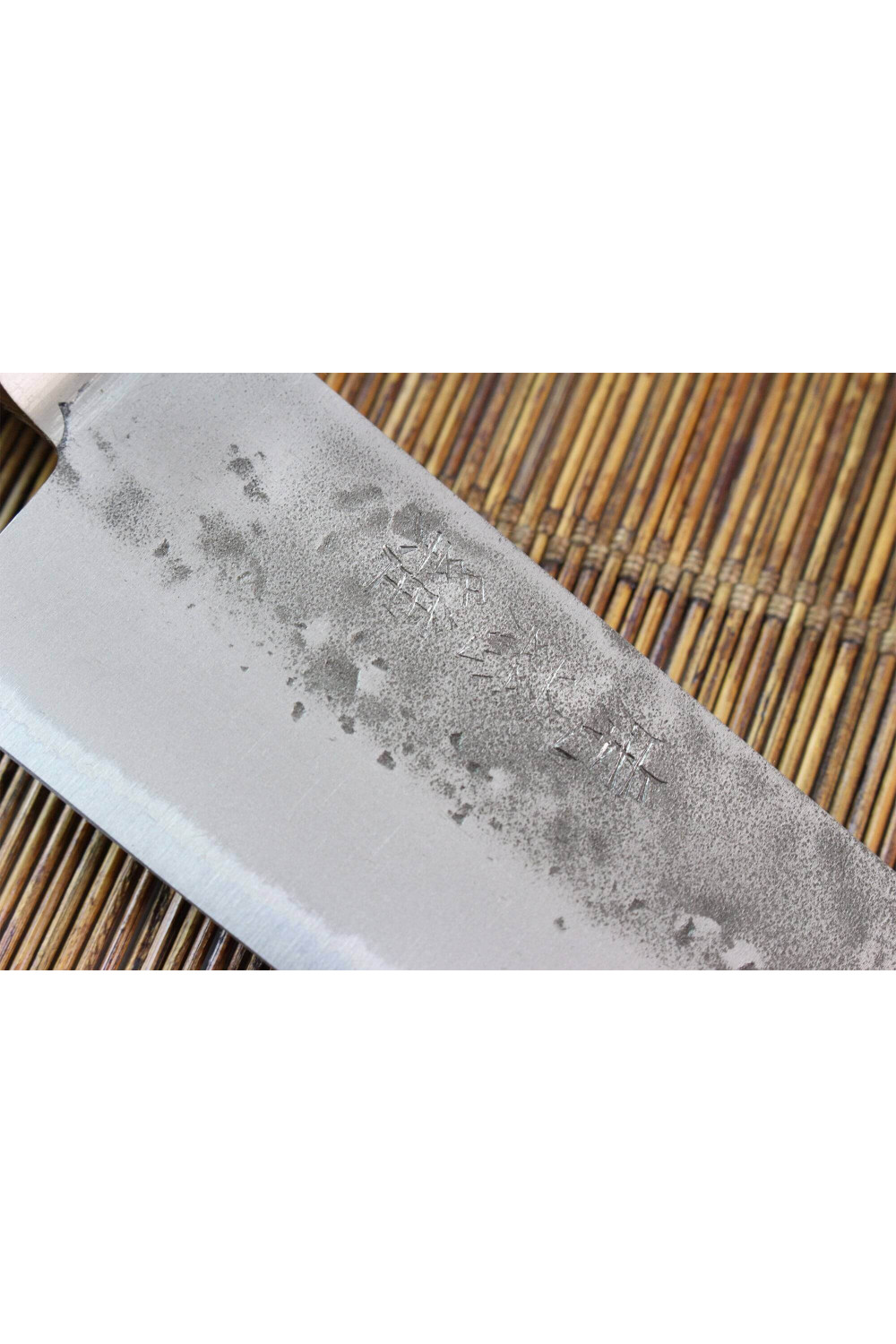
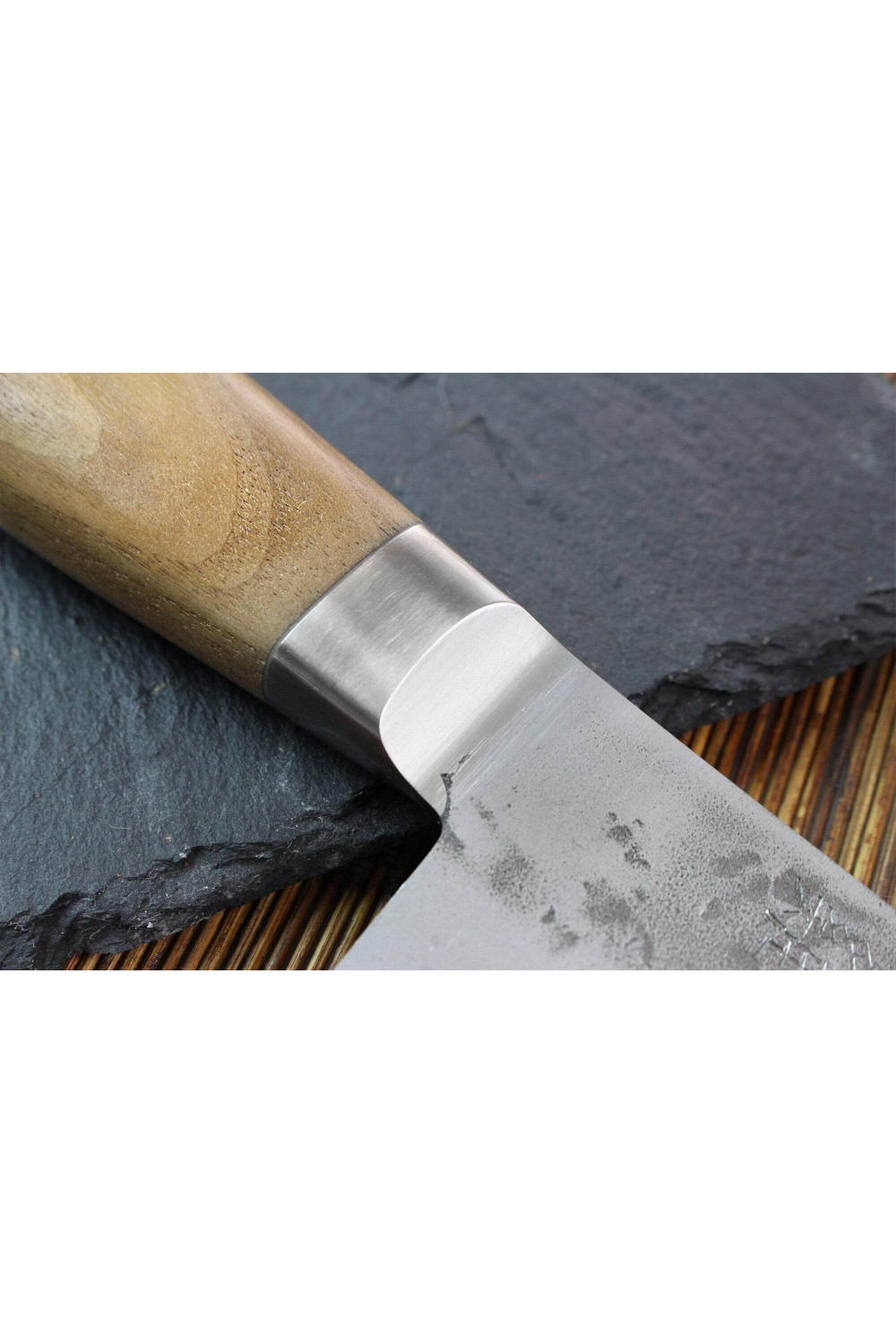
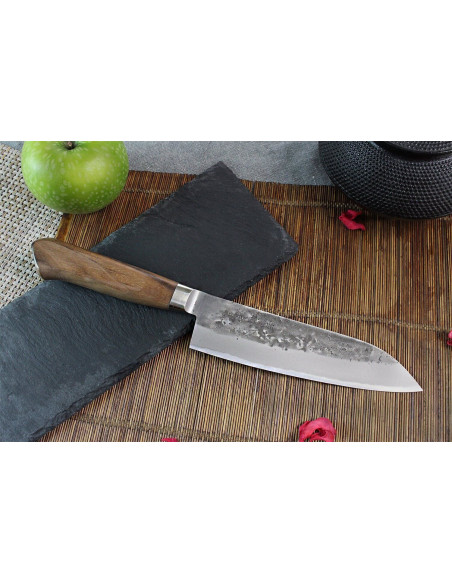
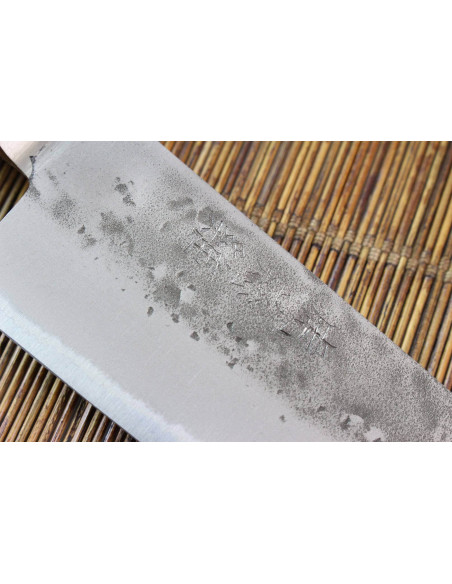
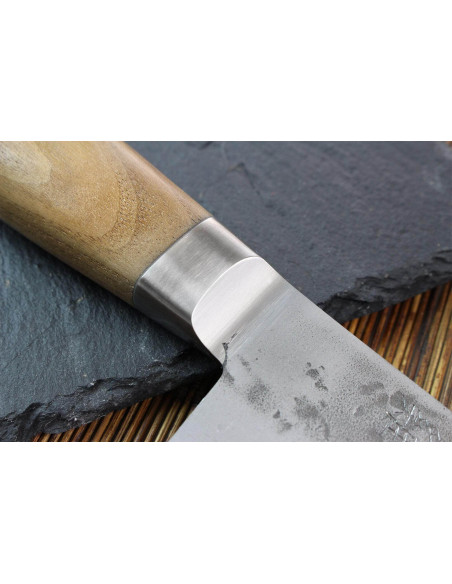
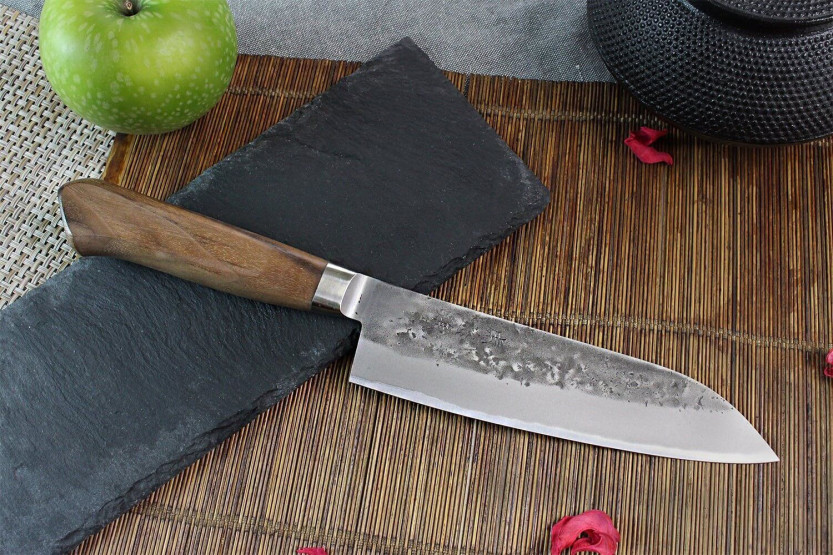
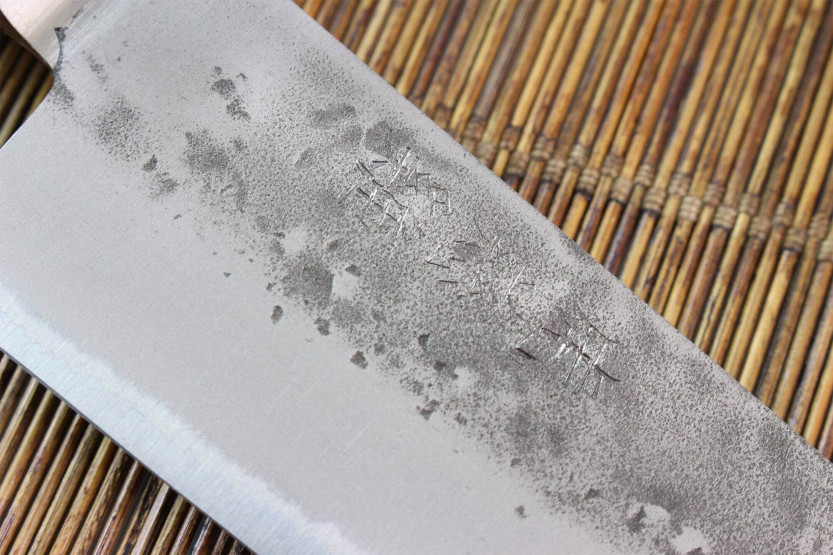
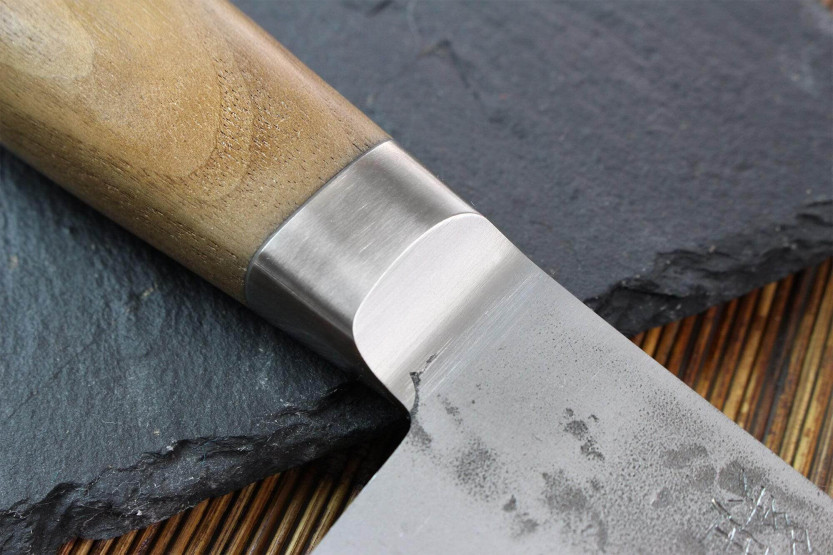
This core is enveloped by a layer ofmild stainless steel that protects it from oxidation and adds a very slight flexibility to make the blade less brittle. This layer of steel has a rough Nashiji forge finish, giving this range a unique, handcrafted look that is appreciated by all. This manufacturing technique produces a San Maï (meaning 3 layers) structure. The layers can be seen at the bottom of the blade (the little waves).
The blade is sharpened at a very acute angle on both sides (like all Japanese knives), further minimizing the effort required for cutting.
Hard steel wears less quickly, so the edge of your knife will stay sharp for a very long time, and the need for sharpening is infrequent. To give you an idea, for normal home use, you'll need to sharpen your knife (with a Sharpening stone) just 2 or 3 times a year.
High-carbon stainless steels are generally difficult to sharpen and require a lot of patience. However, the Aogami #2 steel used for this range is particularly easy to sharpen, and sharpening takes very little time. The absence of a guard also makes sharpening easier, since there's nothing to get in the way (a thick layer at the beginning of the blade to protect the fingers).
Easier maintenance than traditional Japanese knives
The layer of stainless steel enveloping the core protects the blade from oxidation. Only the cutting edge leaves the carbon steel exposed, with no protection against oxidation. By the way, don't worry if you see dark-blue stains appearing at this level: it's normal and poses no health hazard.
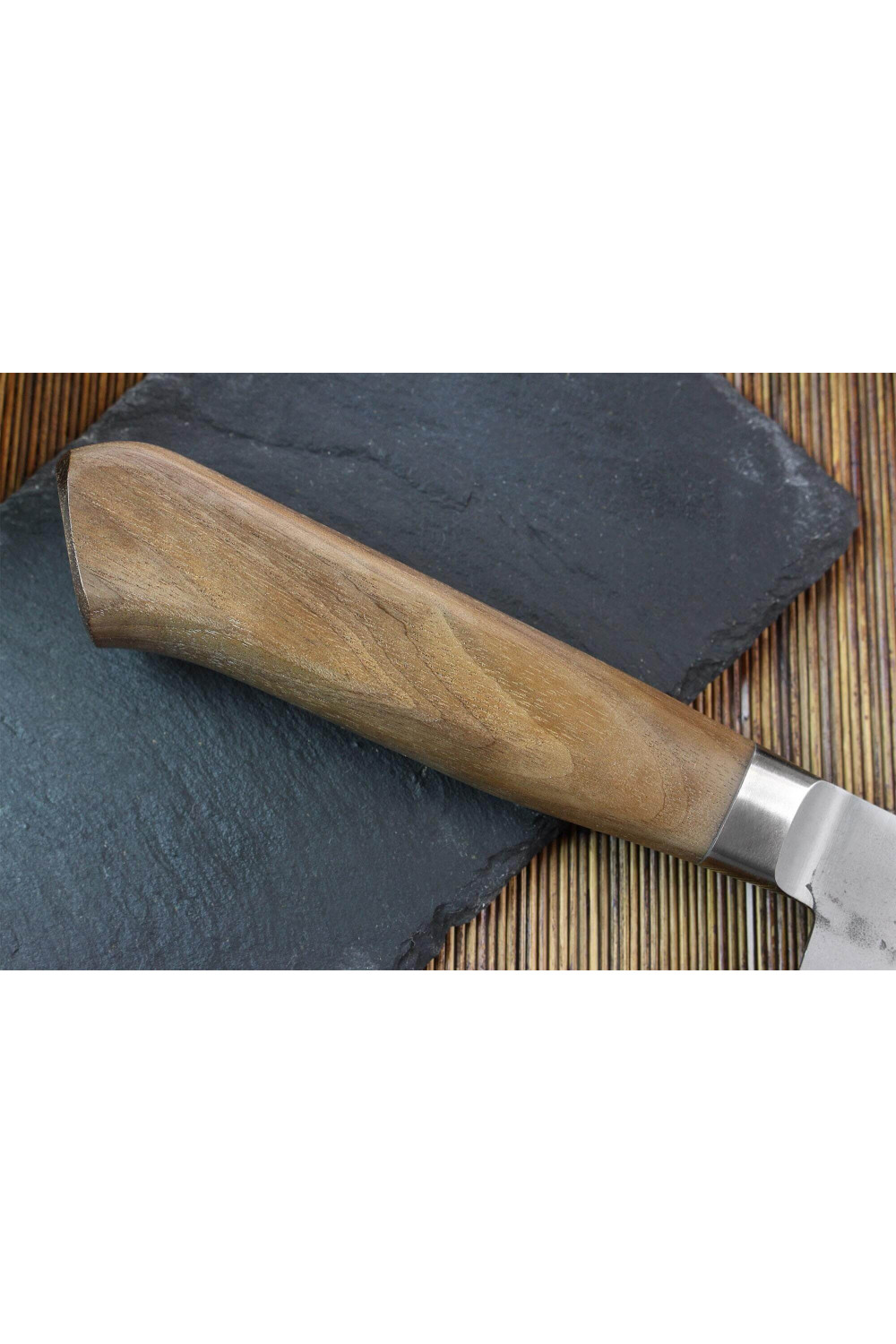
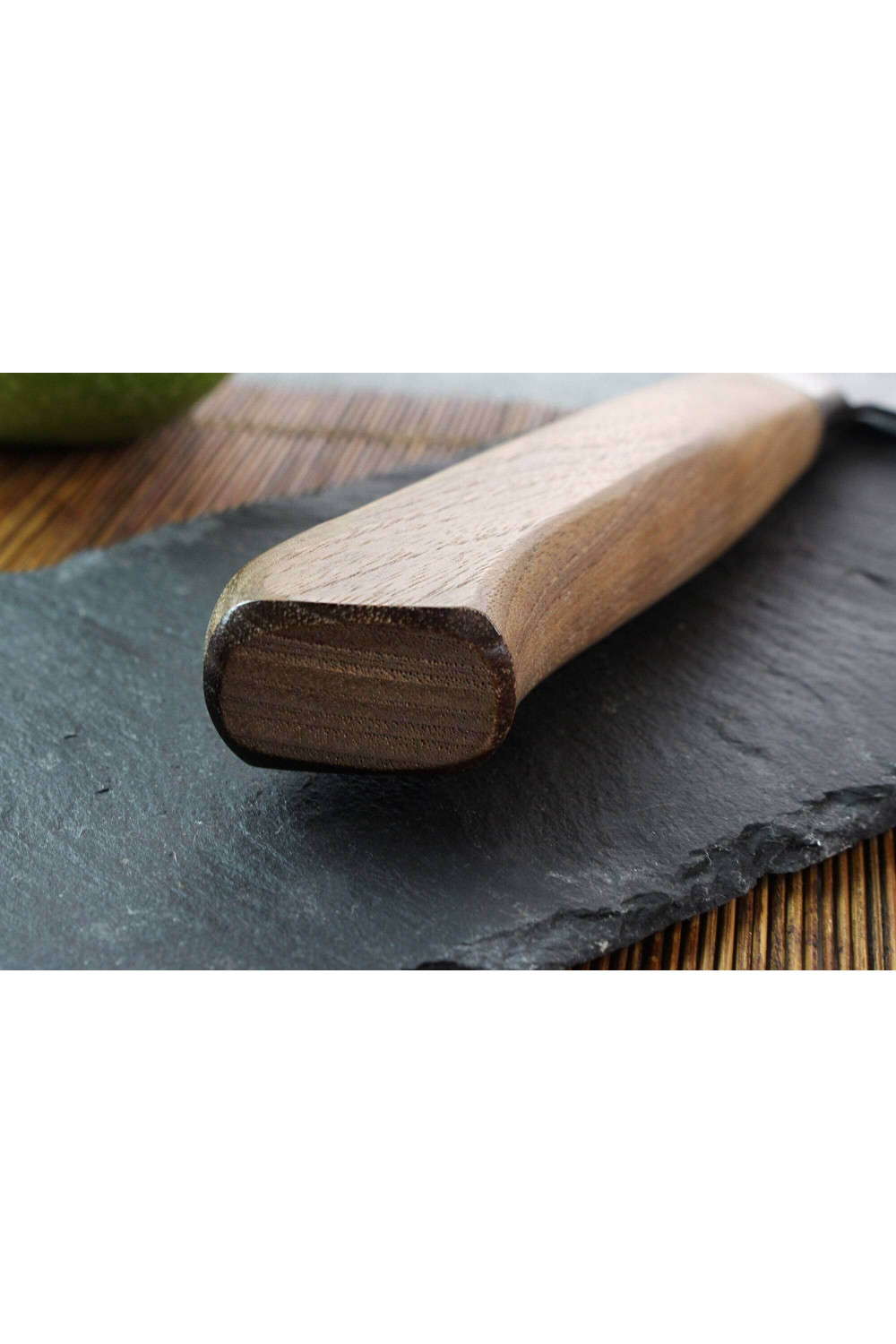
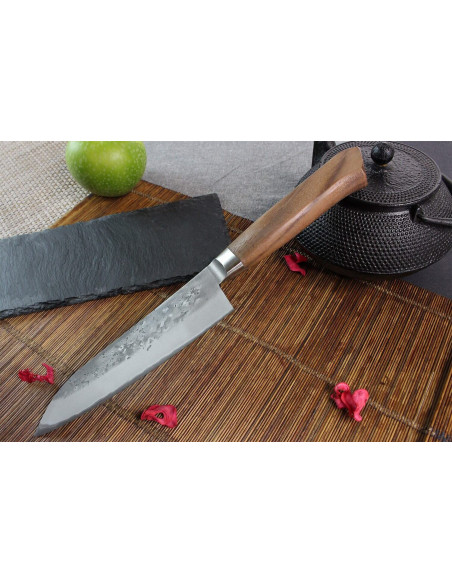
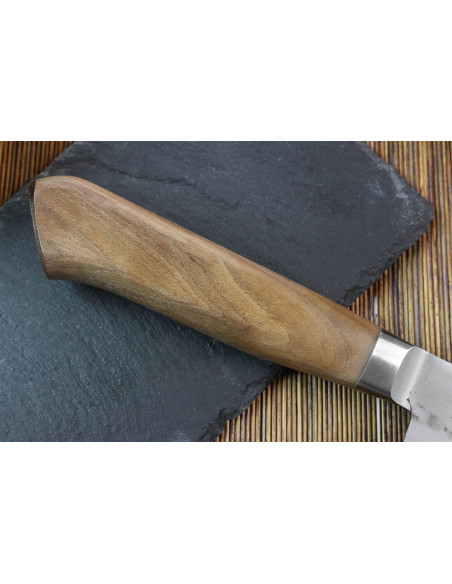
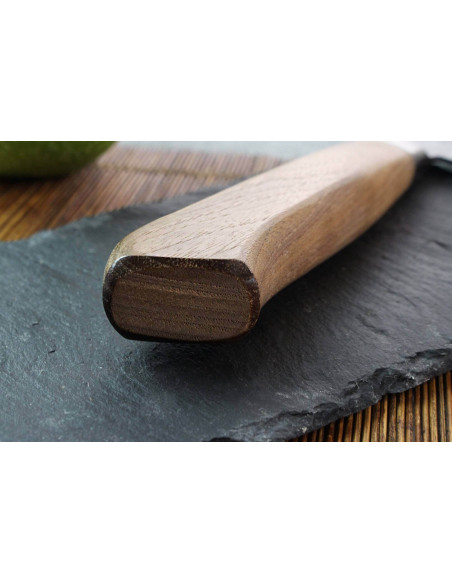
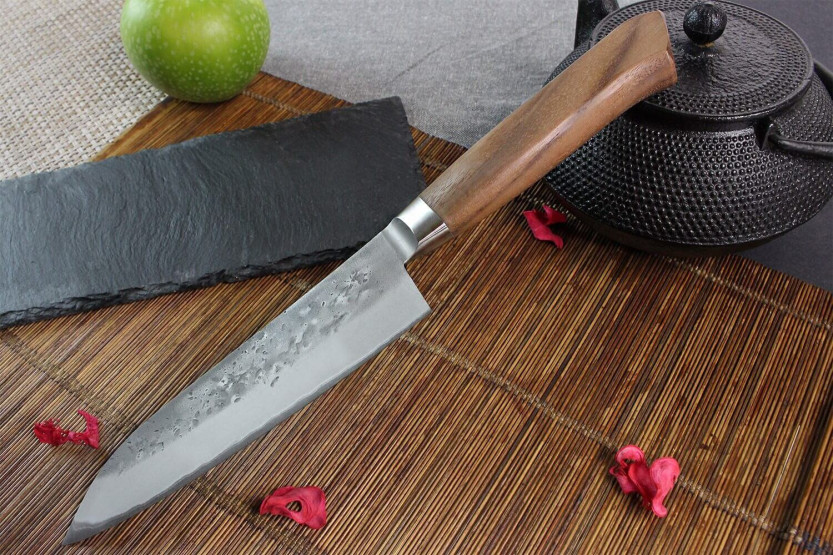
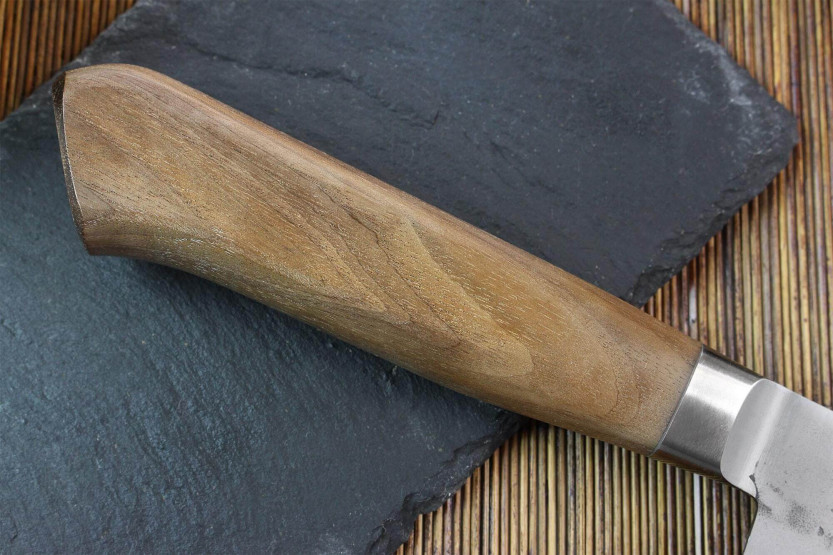
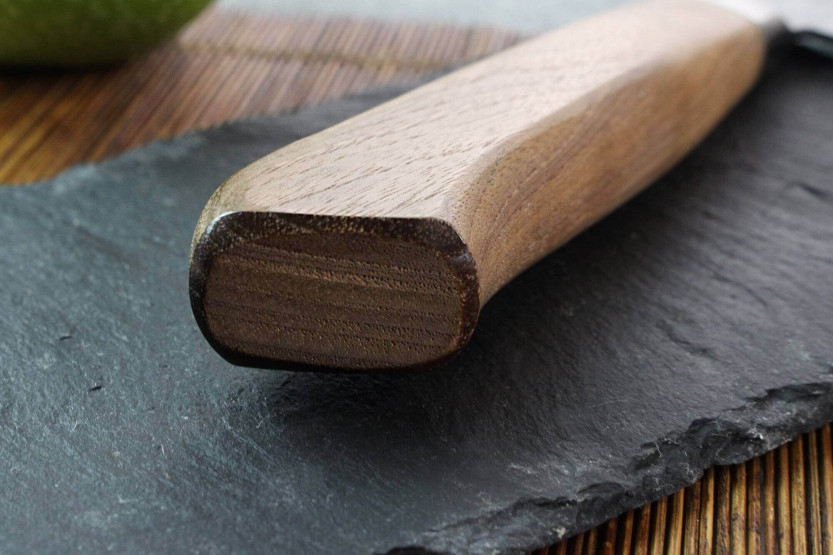
The handle is made of walnut, a high-end wood with dark shades that is resistant to humidity and heat. Its solidity is much appreciated in the kitchen. What's more, its ambidextrous shape is perfect for both left- and right-handed users. The rustic look of the wooden handle blends perfectly with the hammered, forged blade.
The bolster is made of stainless steel, which prevents any residue or moisture from penetrating the handle, making it easy to maintain. The grip is also improved, allowing you to get as close as possible to the blade.
The original design and excellent cutting power of this 17cm Wusaki Nogami santoku knife make it a great gift for any culinary enthusiast.
Complete your kitchen equipment by finding all Wusaki knives on our KnifeLeader site!
|
|
"To clean, wash by hand in lukewarm water and wipe immediately afterwards with a soft cloth! The knife must be kept away from humidity to keep all its splendor :) |




 By buying this product you can collect up to



 (16)
 (0)
 (1)
 (0)
 (0)
 (0)