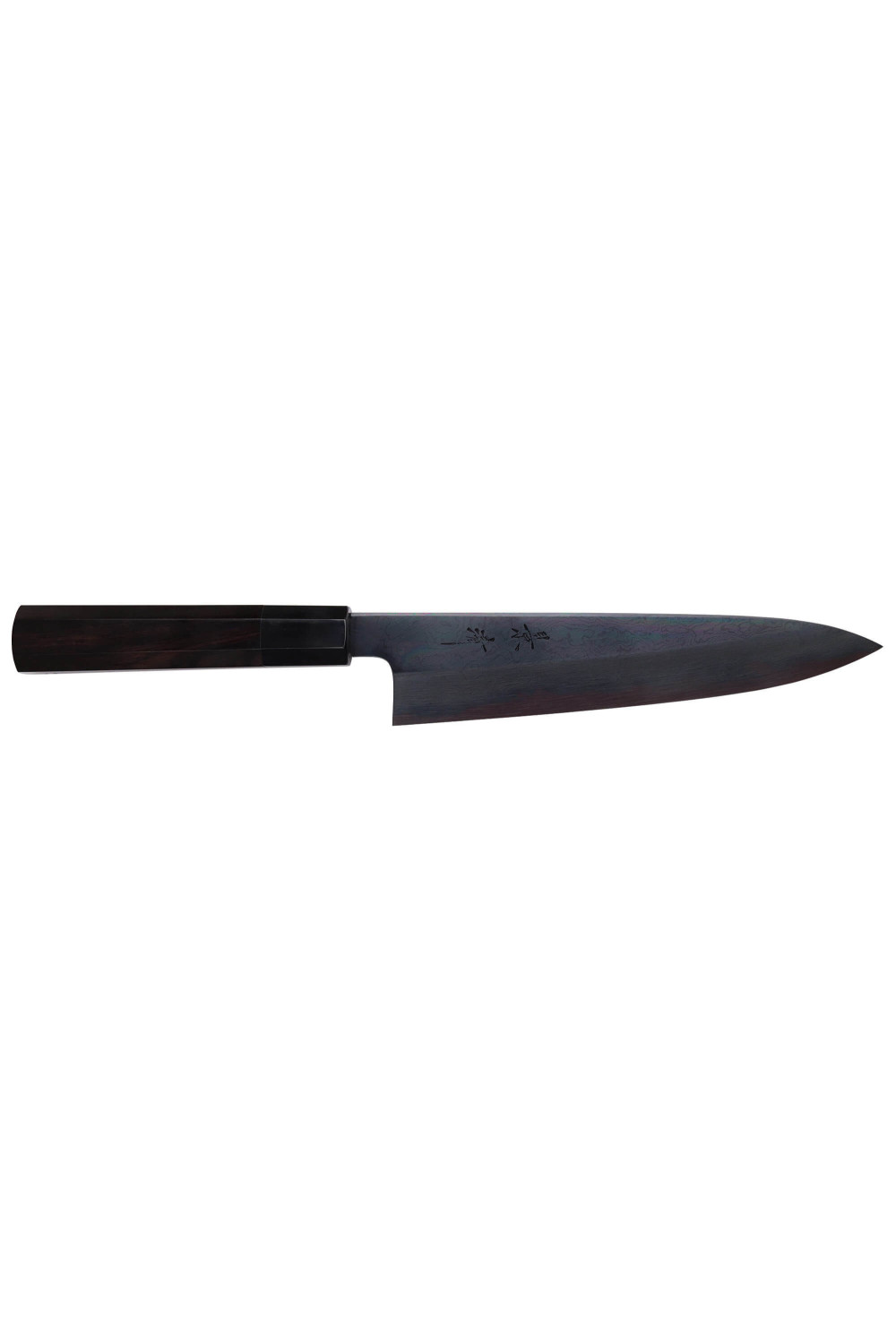
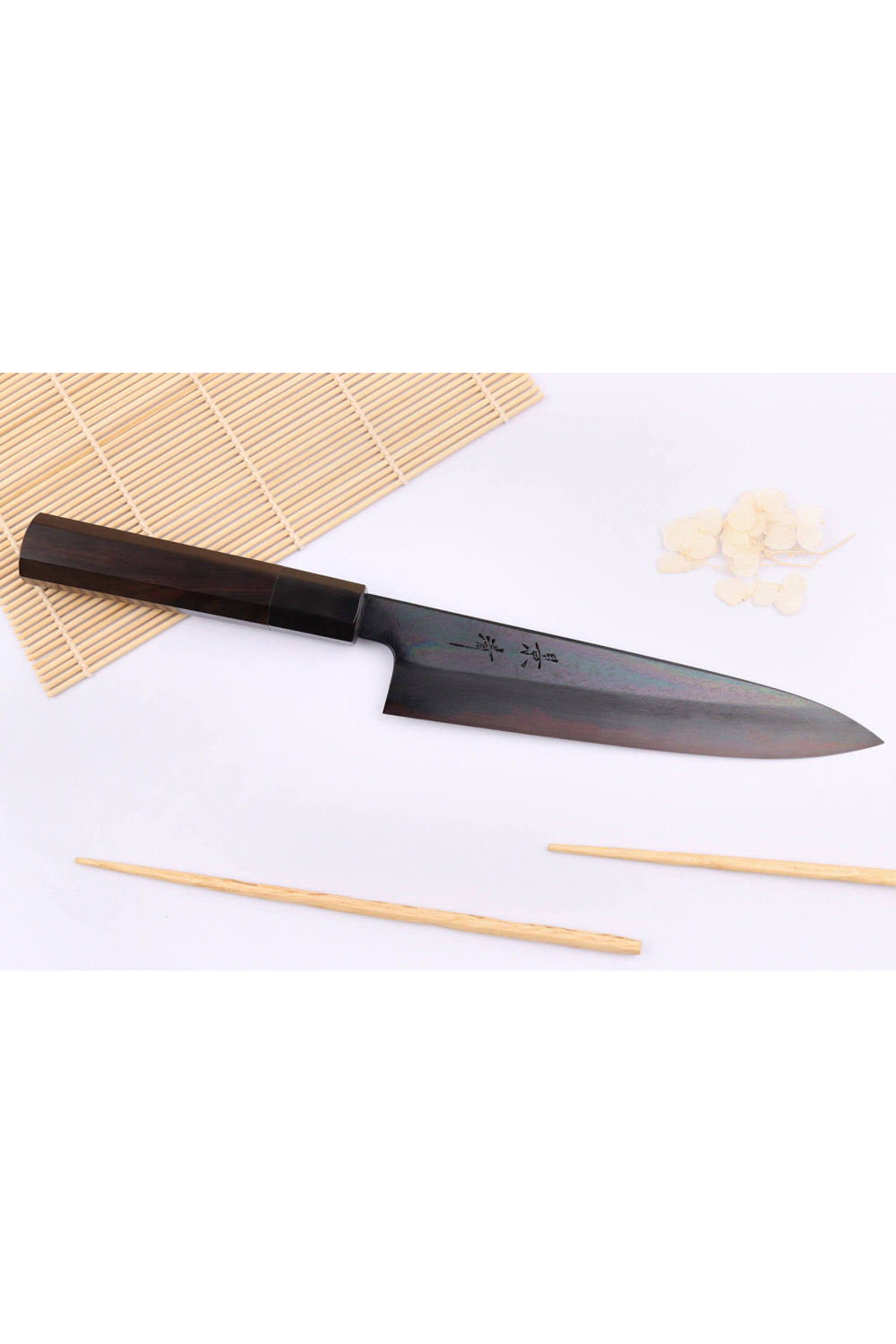
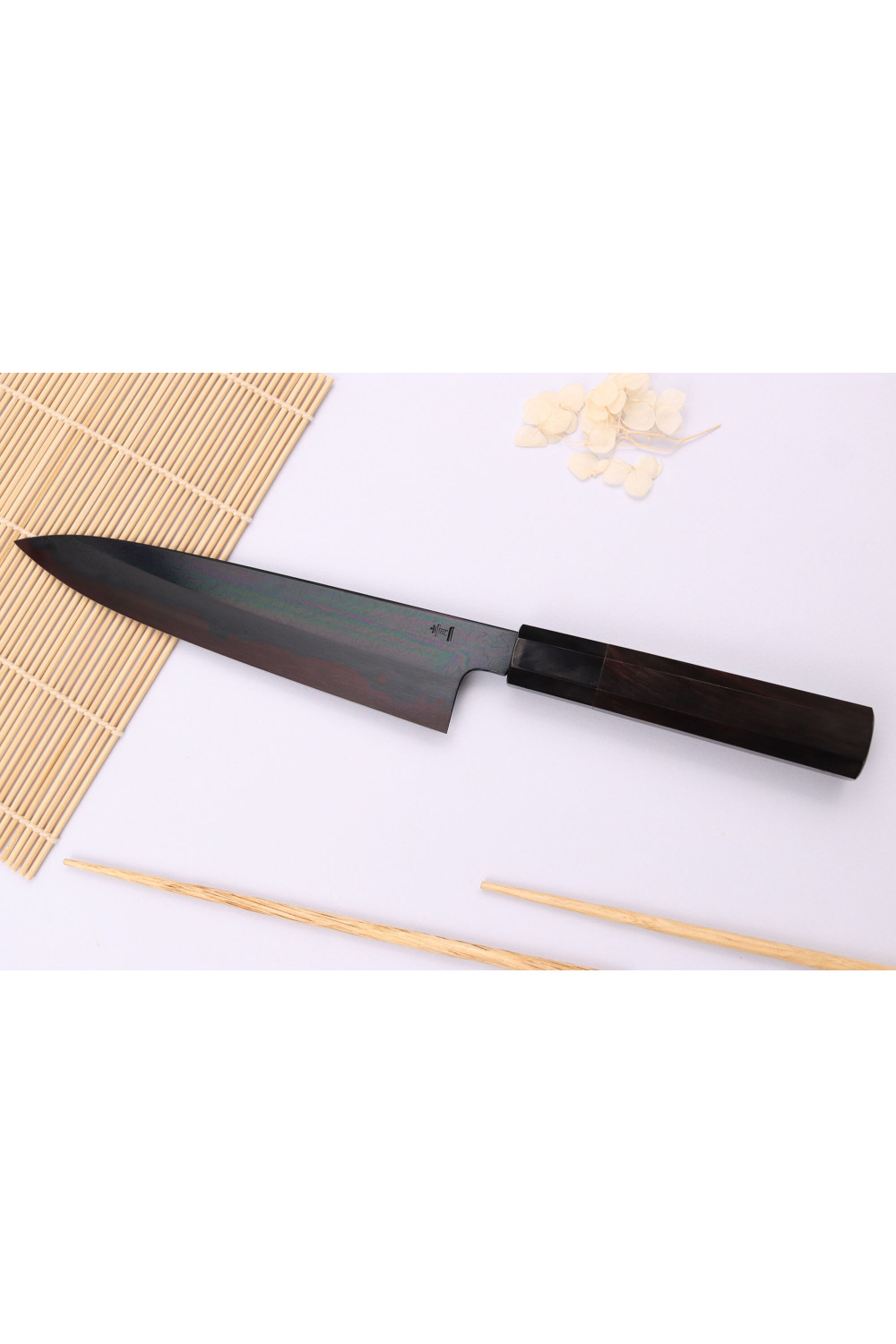
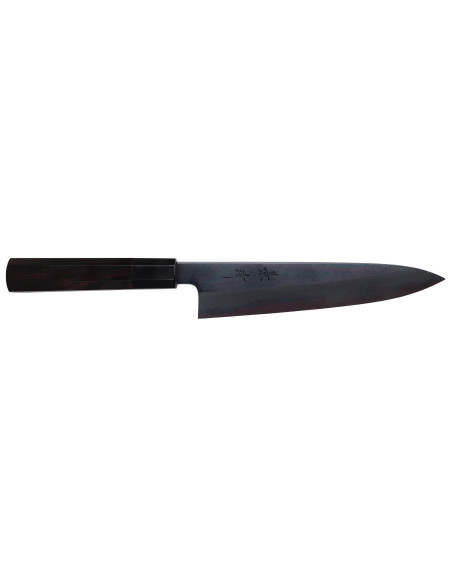
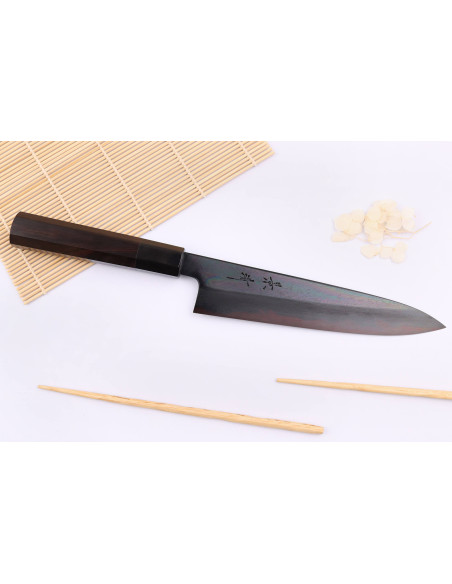
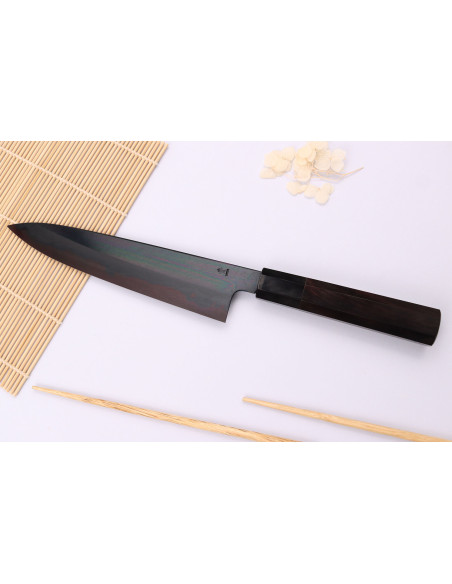
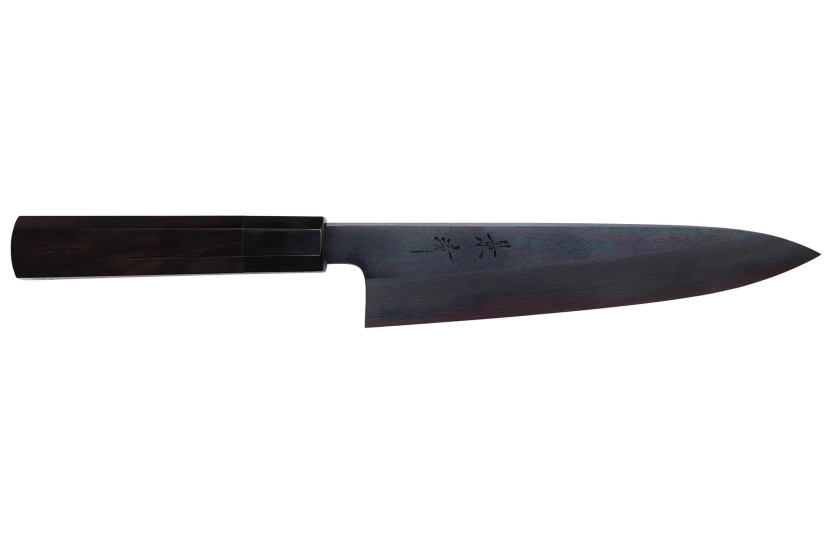
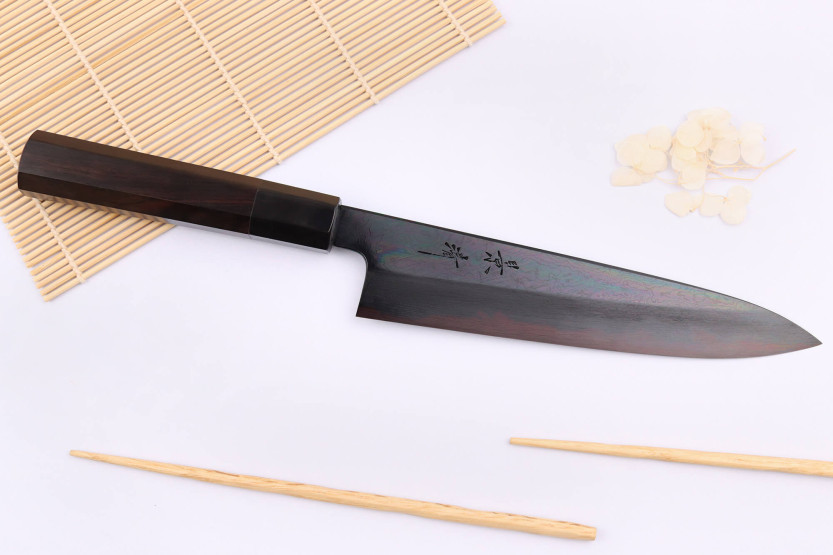
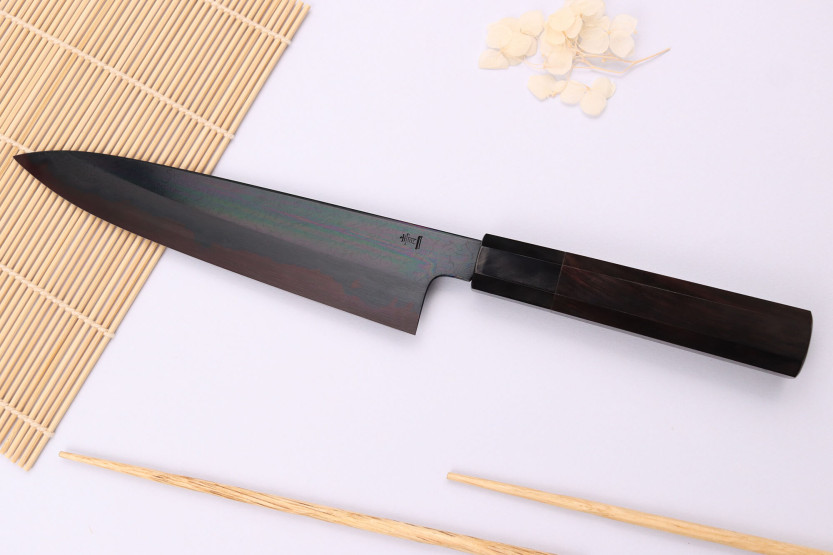
The Aogami Black Damas Japanese chef knife is hand-forged by Yoshikazu Tanaka in Sakai, Japan. One of the city's most renowned master blacksmiths, he creates high-quality, traditionally-styled knives that are much appreciated by chefs.
A high-end steel blade that's both efficient and aesthetically pleasing
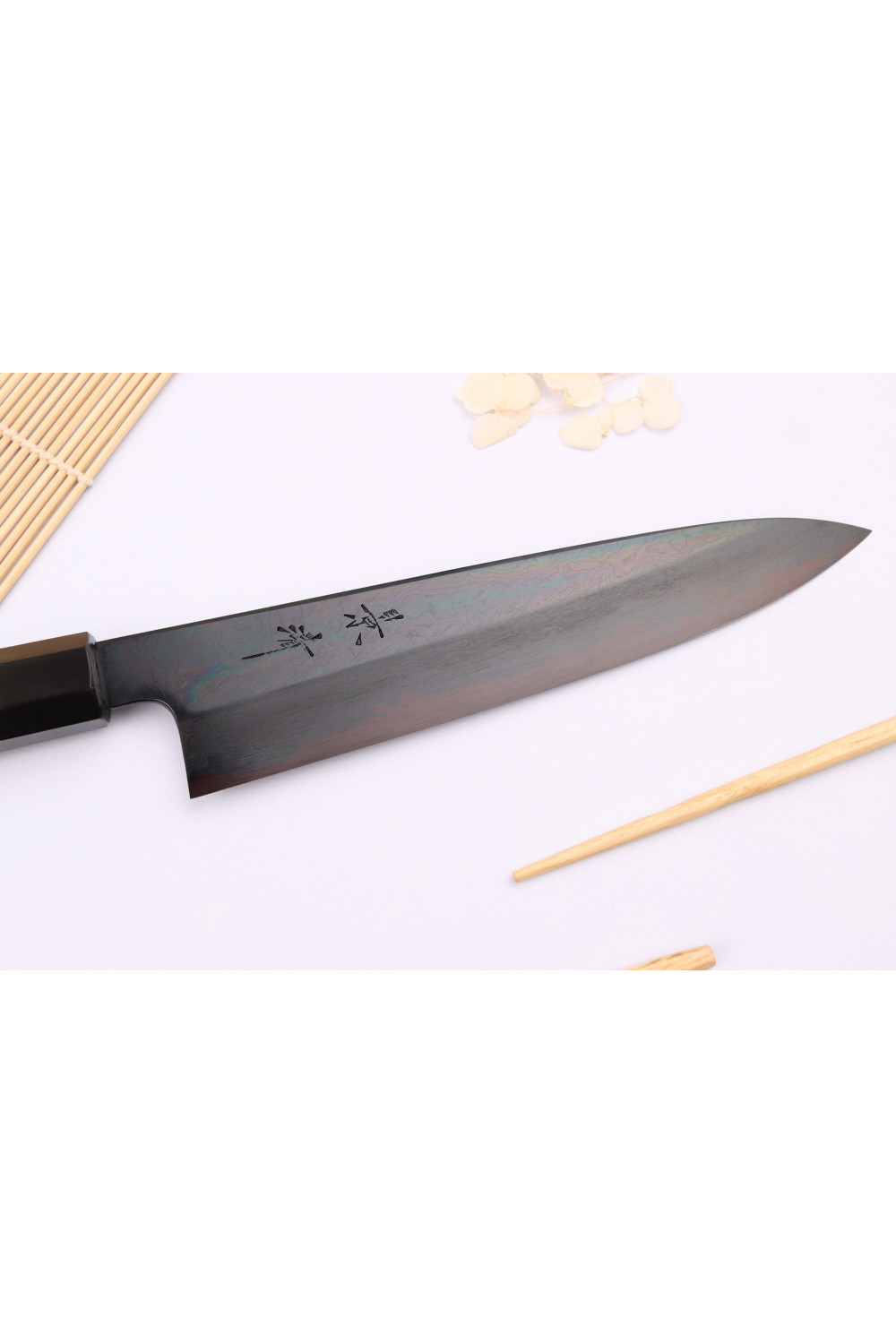
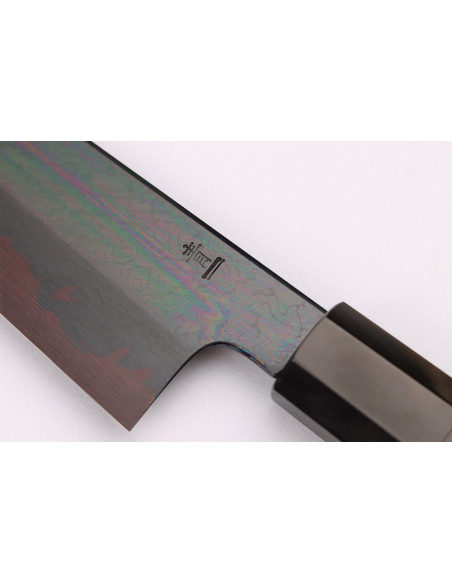
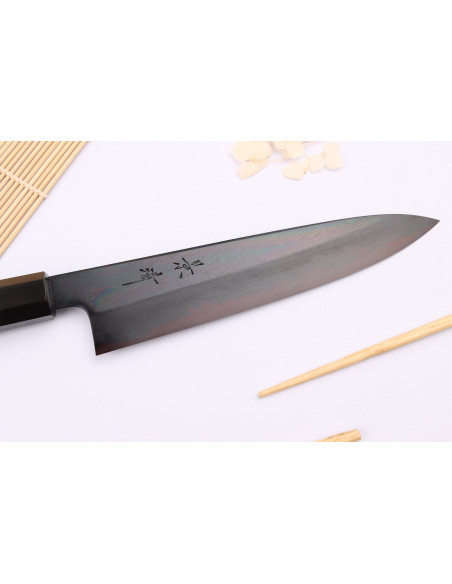
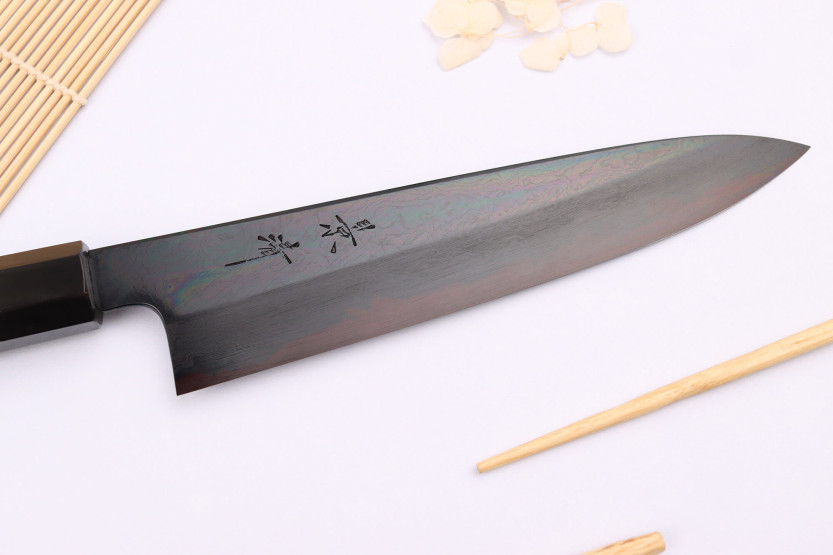
The knife's 21cm blade is made of damascus steel, which means it's composed of a rigid core surrounded by numerous layers of steel. With a damascus knife, you benefit from a blade with a rigid, durable cutting edge and a balanced cutting surface thanks to the various layers of steel surrounding it.
The purpose of the steel layers is tobalance the core while giving it a little "flexibility" so that it is less susceptible to breakage.
Here, the blade core is made from Japanese Aogami 1 steel, also known as Blue Steel 1, developed by the world-renowned Hitachi steelworks in Japan. Aogami 1 steel is enriched with carbon (approx. 1.4%), an element essential to the alloy's rigidity, achieving a hardness of 63 HRC, when the average for Western knives is around 55-58 HRC. The alloy also contains tungsten, which contributes to the blade's hardness.
This hardness is also of great interest when it comes to edge retention. Steel deforms much less quickly when cutting, meaning that hardness extends the life of the cutting edge.
Secondly, the Aogami 1 core is covered with layers of iron steel, enabling the knife to be effective over time by spacing out sharpening sessions. What's more, when it comes to sharpening, the knife remains easy to sharpen when necessary, contrary to what you might think.
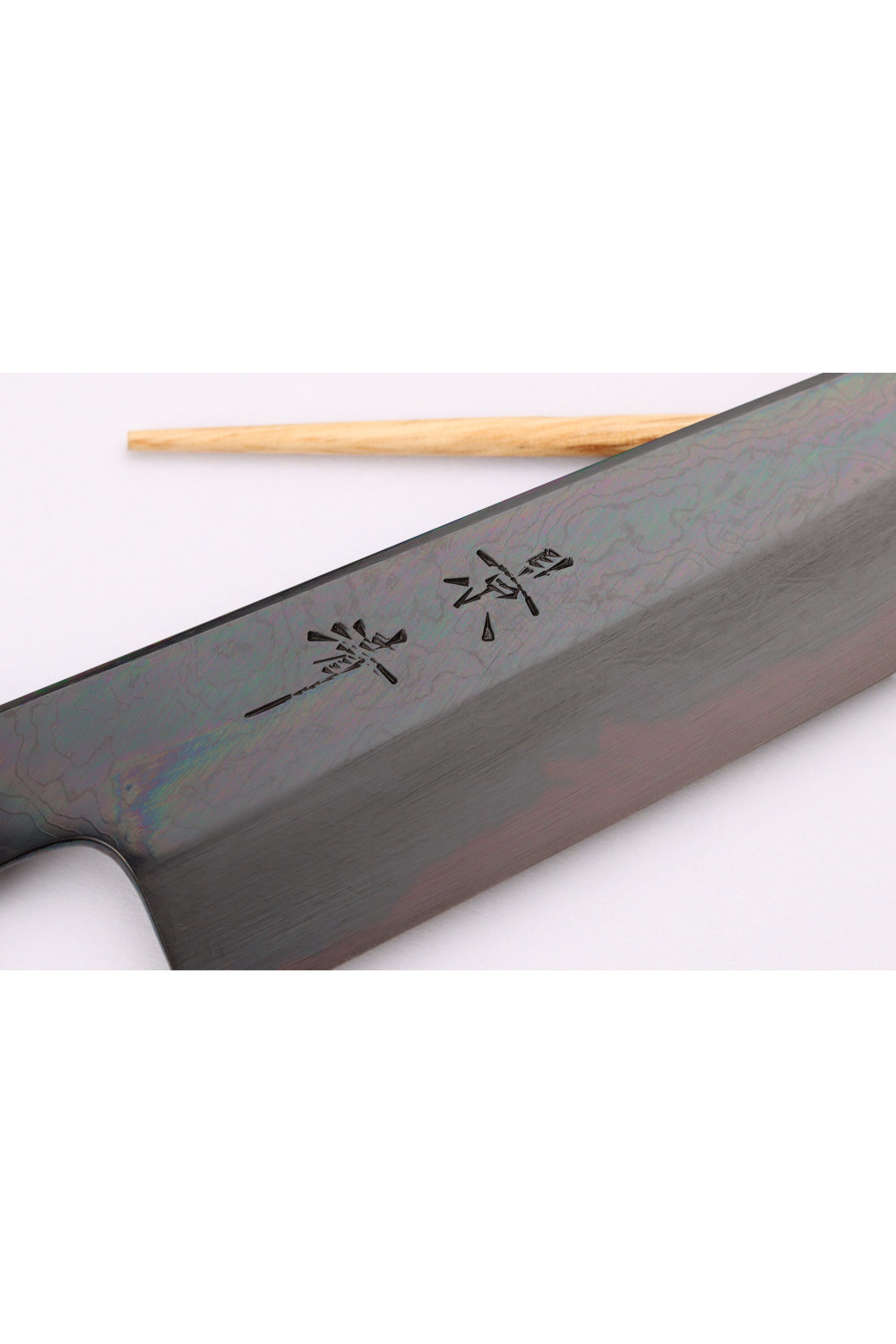
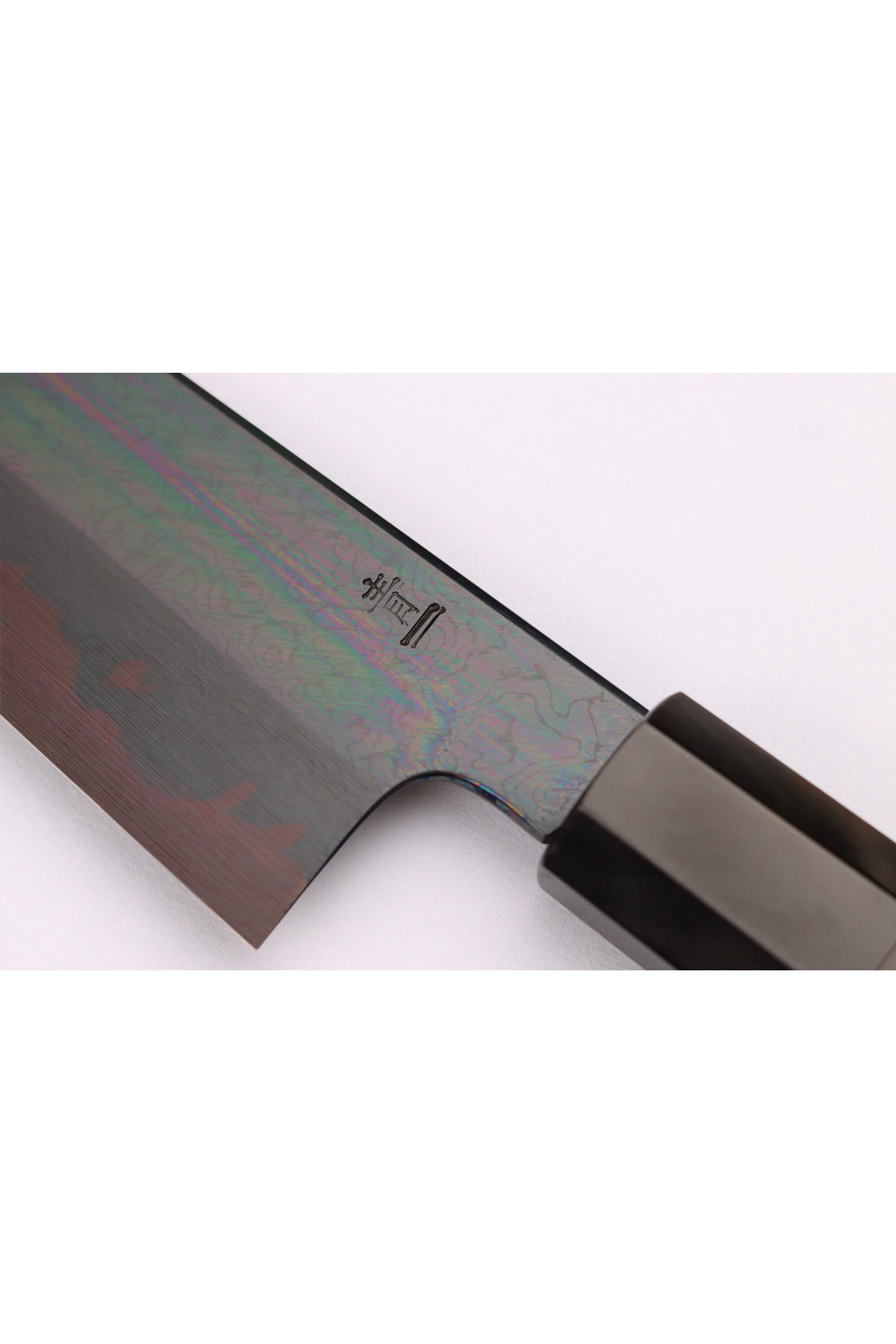
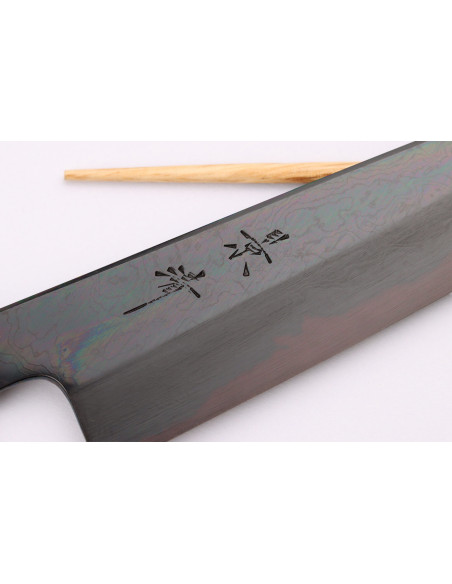
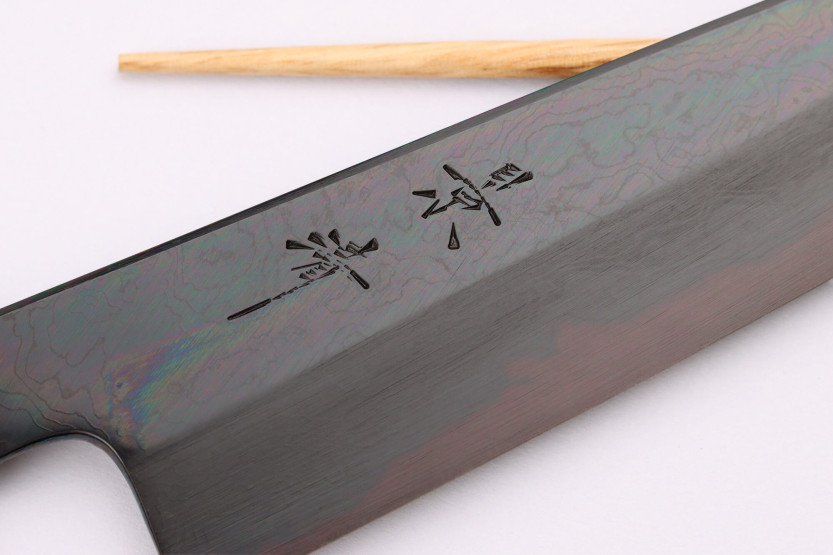
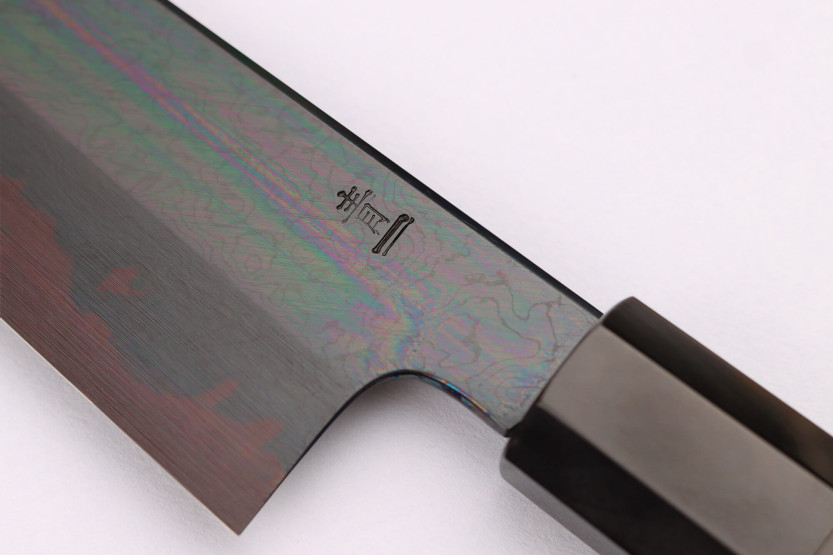
The top layers of steel have a coating called Black Dyed. They have been chemically oxidized to black to prevent rust from forming on the knife blade. This coating adds a highly aesthetic appeal to the blade. Its black tint gives the blade superb bluish reflections that are unique to each blade.
Important: as the knife is handcrafted, the depth of the black damask surface may vary from one model to another, and its appearance may also depend on the light in which you observe it.
A comfortable handle in precious wood
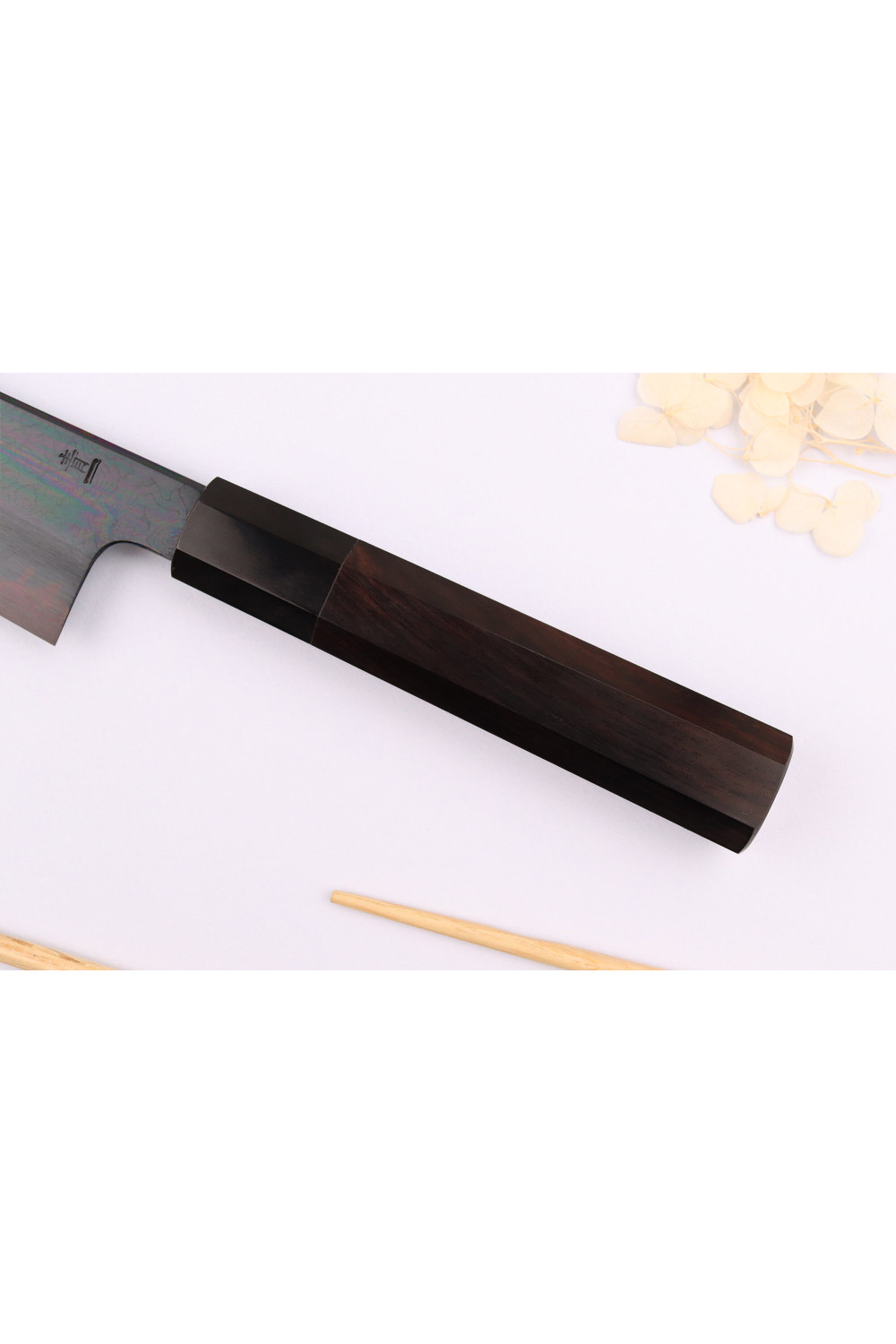
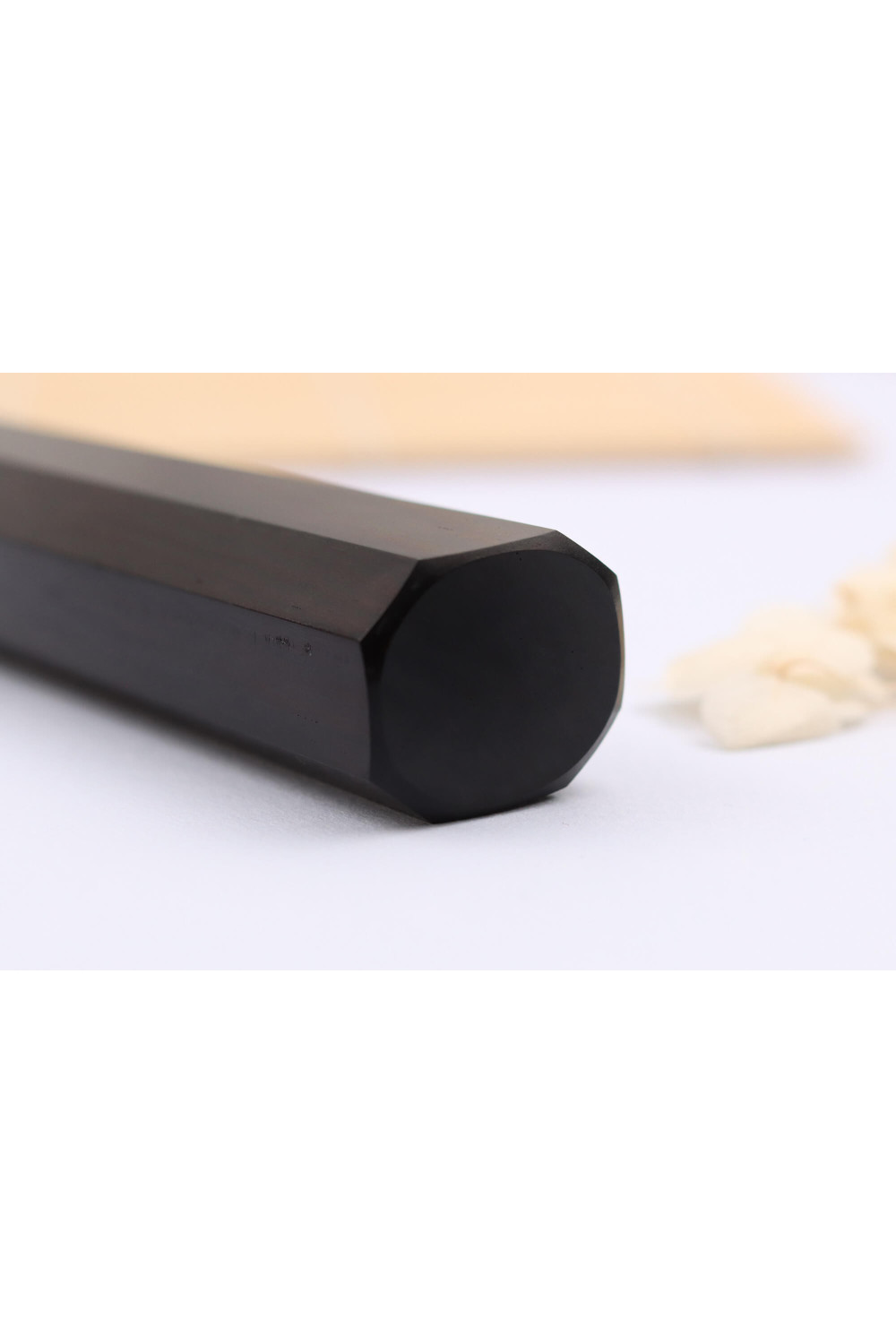
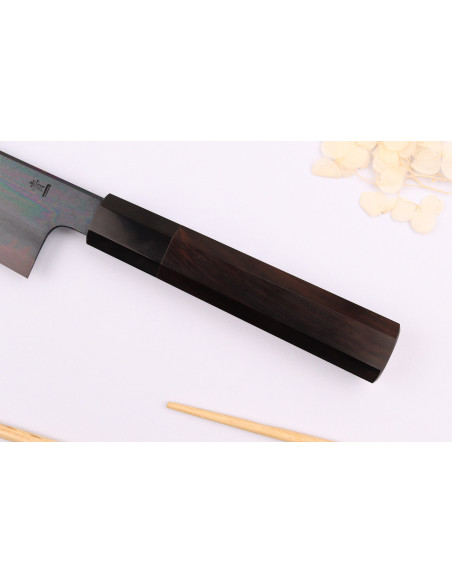
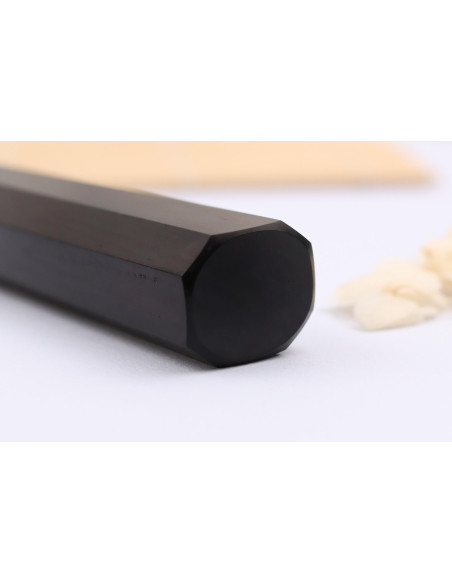
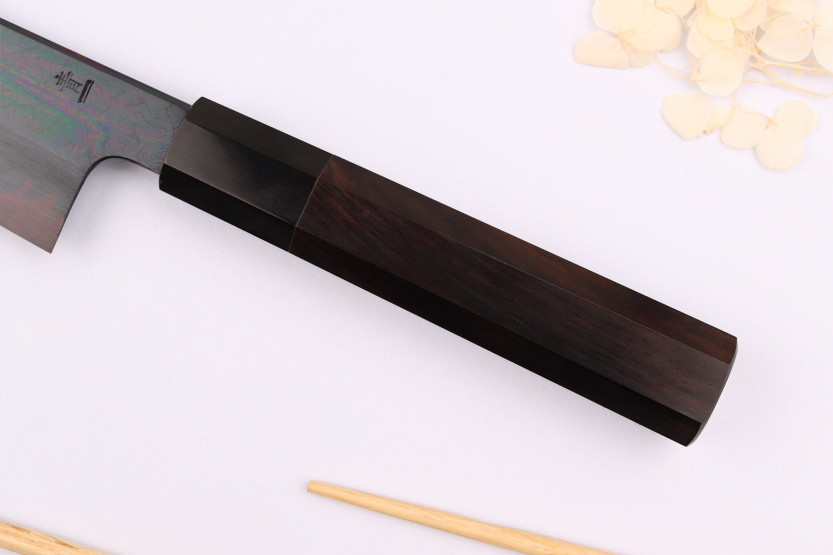
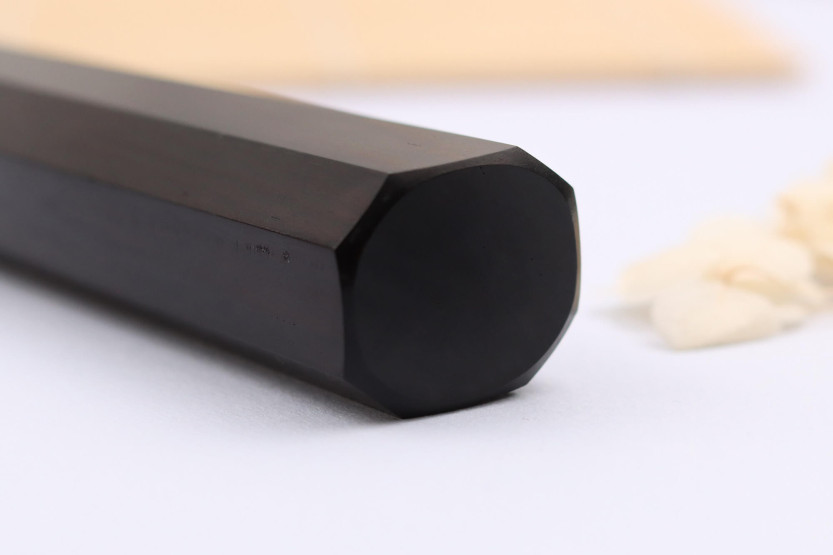
The handle of the gyuto knife is made of ebony, a precious wood recognizable by its almost black brown hue and slight lighter veining. Very dense and smooth, it is highly resistant to cracking. Please note that the visual appearance of the handle may vary from one knife to another.
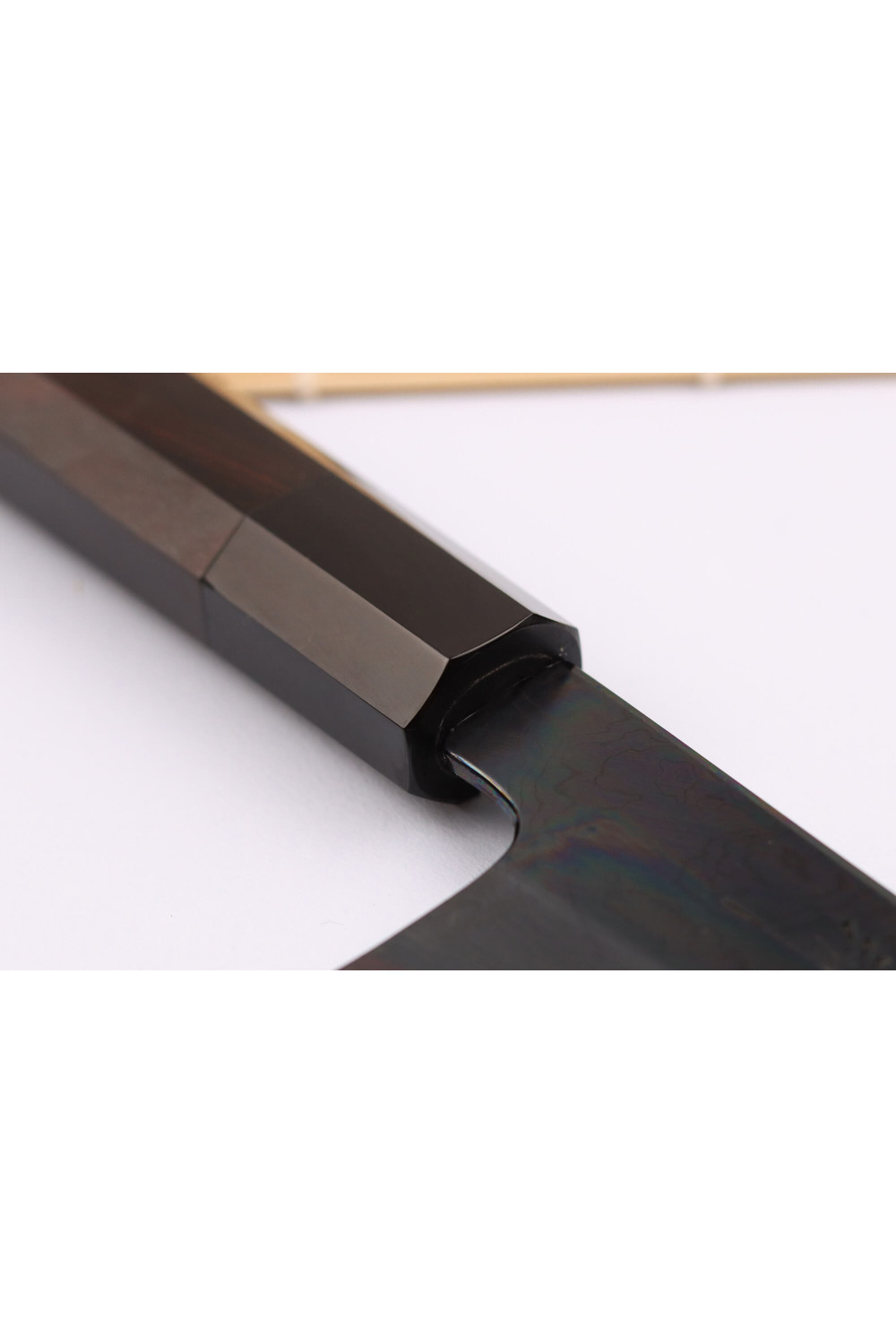
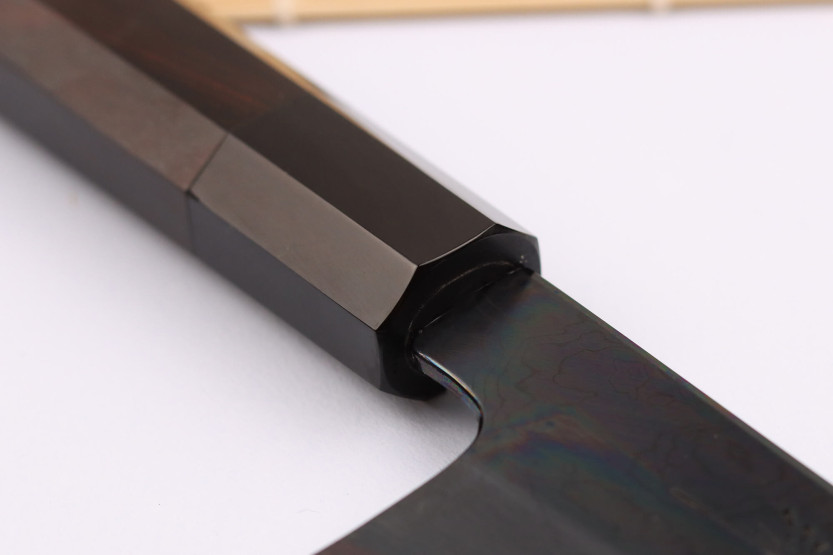
The wood has been carved into an octagonal shape, making the knife easy to use for both right- and left-handed cooks. It adapts perfectly to your palm and remains light enough for easy handling. What's more, it becomes slightly thinner at the bolster for an even better grip.
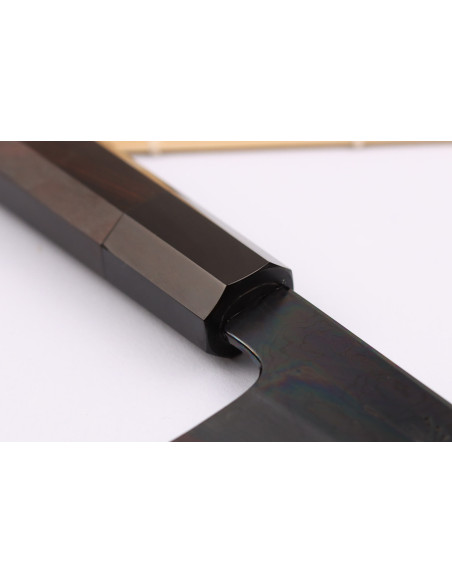
Speaking of the bolster, it's made from black buffalo horn and forms the link between the blade and the handle. It brings excellent balance to the knife. The spaces where the blade fits into the handle are filled with wood pulp to make the whole perfectly watertight.
How do I care for my handcrafted Japanese knife?
This knife must be cleaned exclusively by hand. Never leave it to soak in the sink, and never put it in the dishwasher.
Use a sponge with a mild cleaning product to gently wash the knife, then wipe it dry immediately after washing to store it without any trace of moisture. This is the best way to preserve your knife over the long term. It's also important to note that Aogami steel is subject to oxidation due to its high carbon content, even though the Black Dyed coating protects it. In fact, it's possible that the color of your knife will change over time, despite perfect care. This is a normal process that can be influenced by factors such as the acidity of the food being cut or the humidity in the air. This does not mean that your knife is damaged. The presence of iron in the upper layers can also contribute to this reaction.
We advise you to apply a littleblade oil from time to time to protect and nourish the blade, and to keep the knife dry in its case when not in use.
Find Kagekiyo knives on KnifeLeader.eu!




 By buying this product you can collect up to