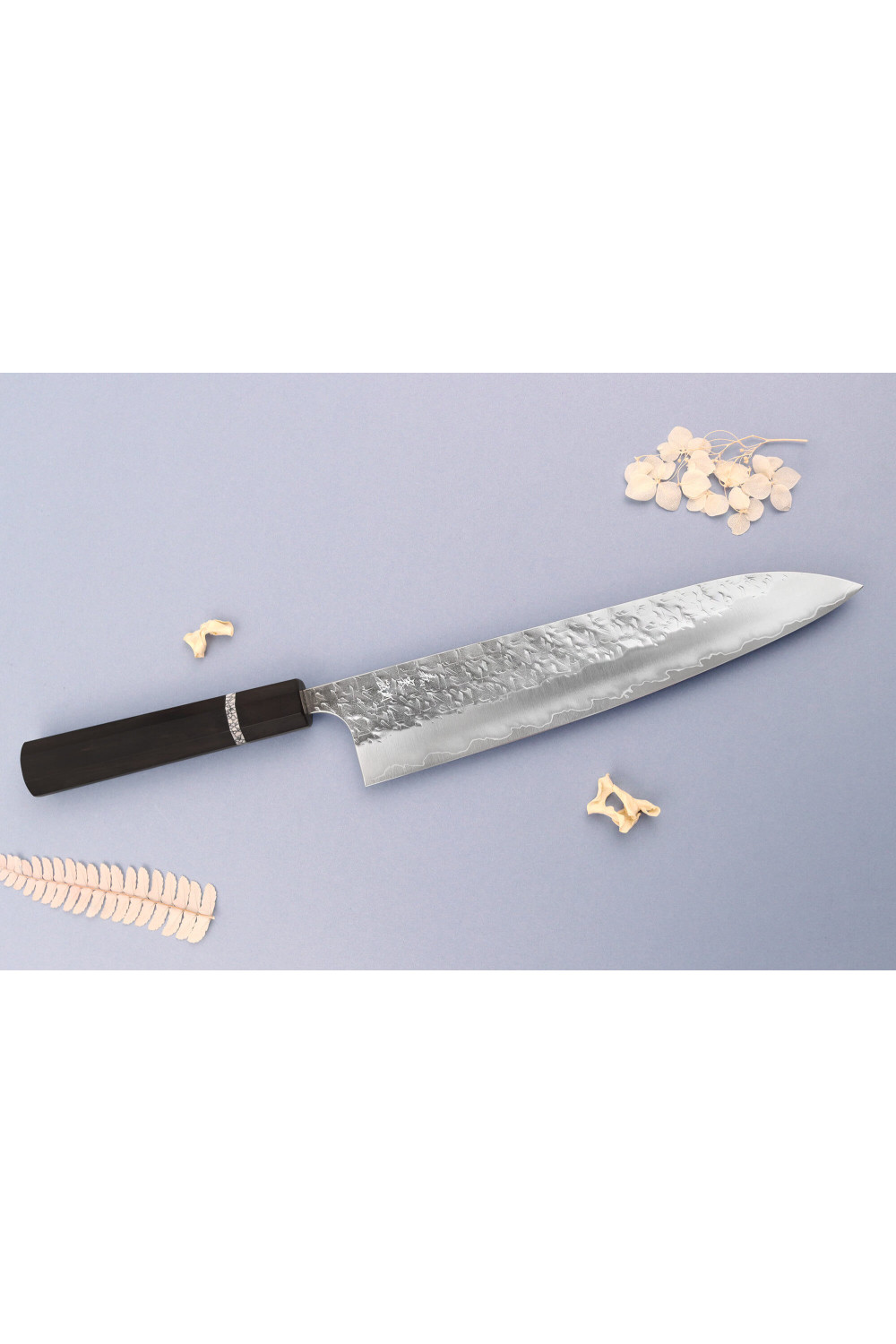
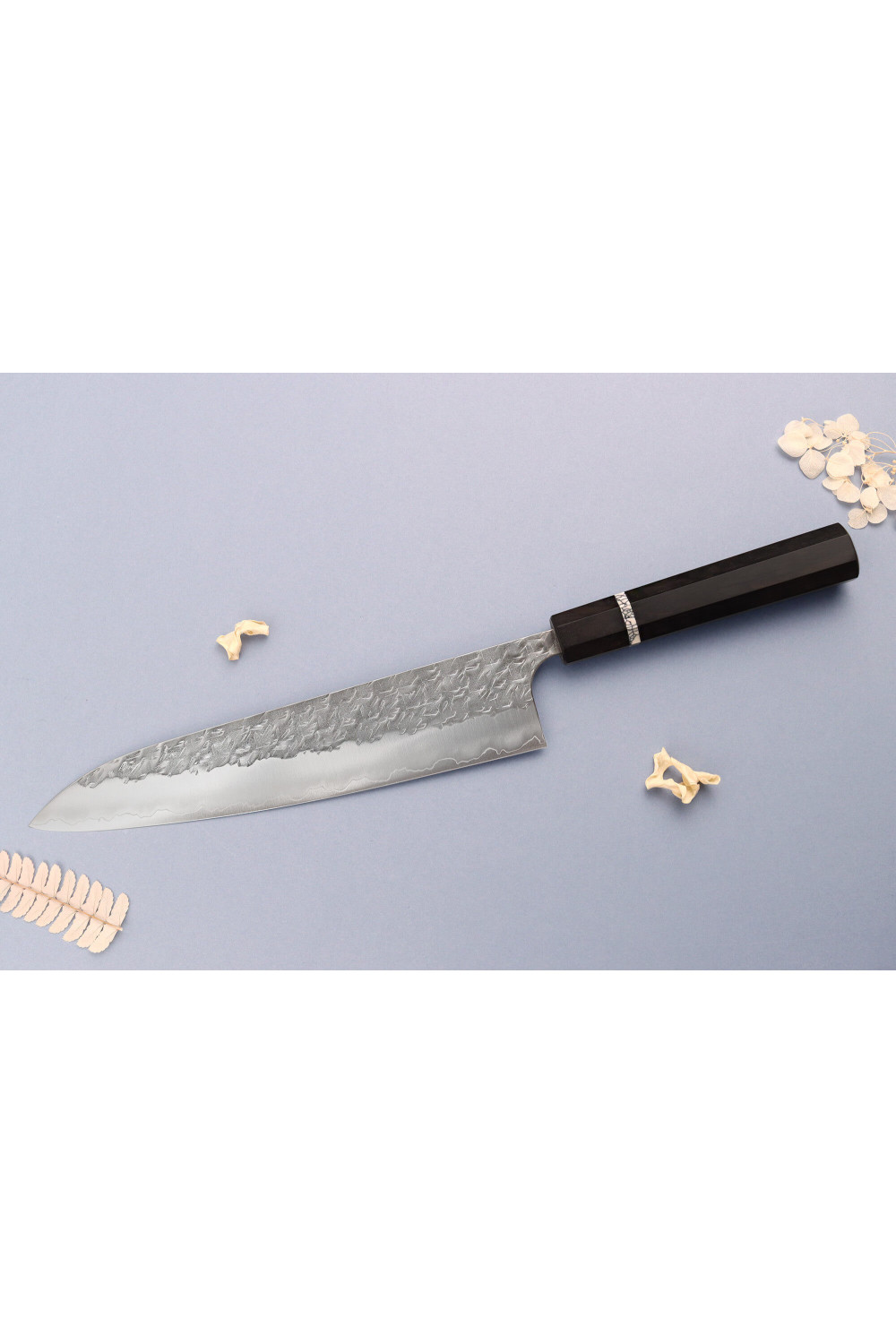
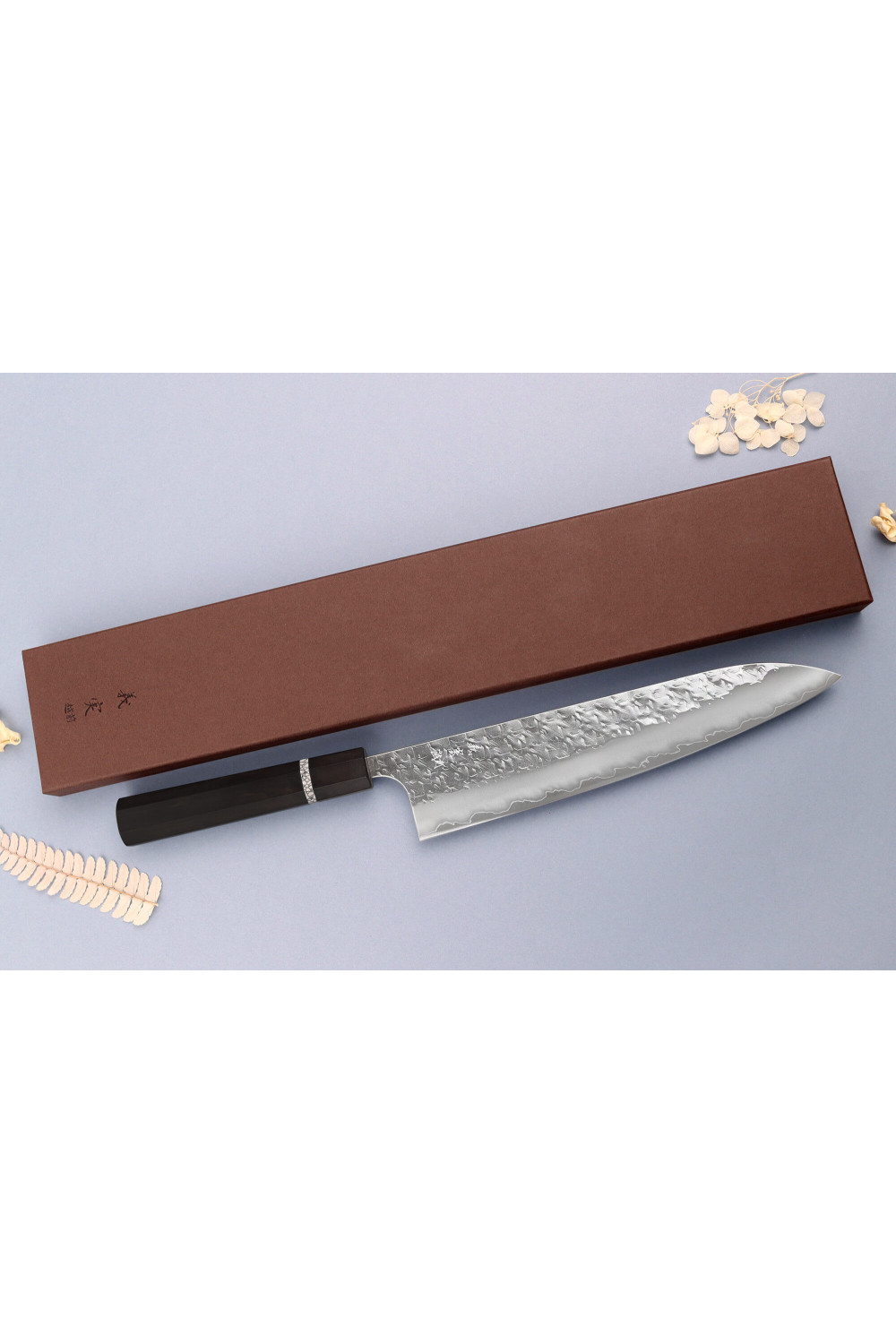
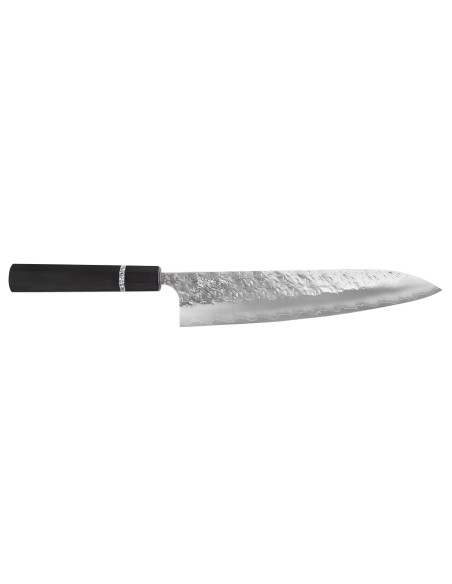
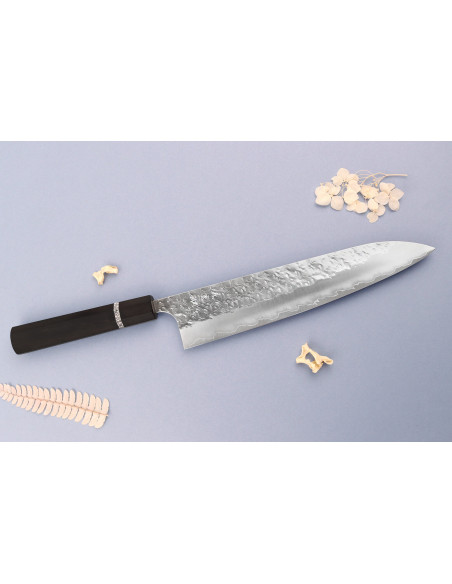
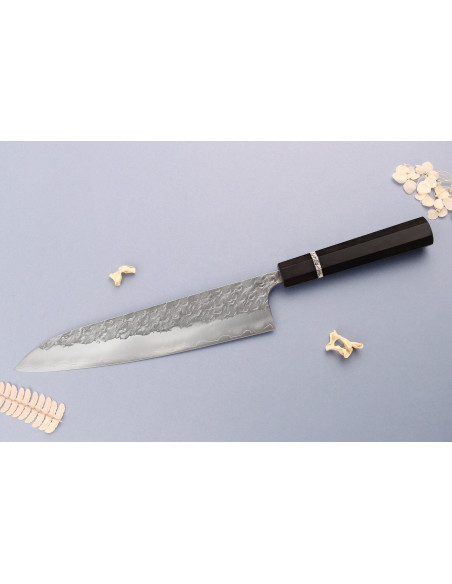
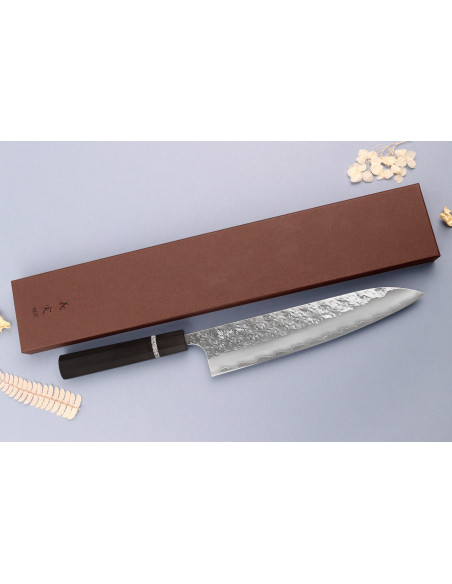
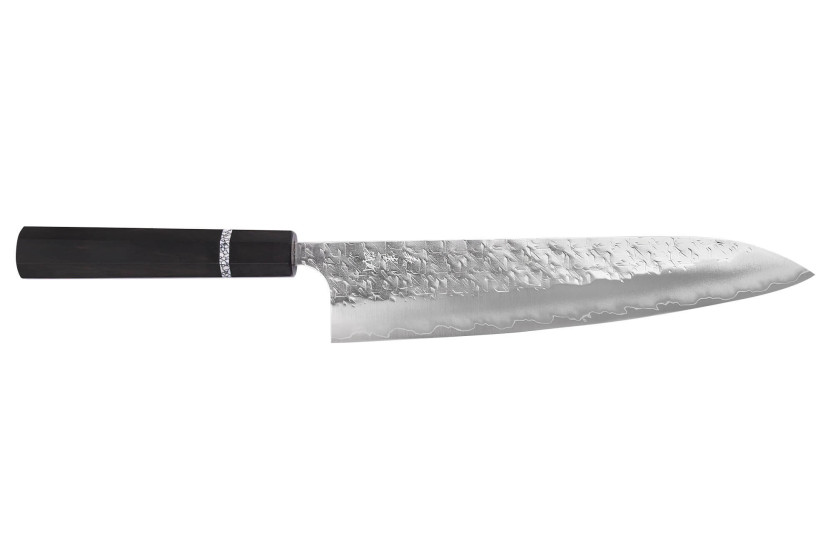
Immerse yourself in the world of Japanese cutlery excellence with this 24 cm chef's knife by Yoshimi Kato, forged in Takefu, the birthplace of master cutlers. A veritable concentrate of traditional know-how and technical performance, this Japanese kitchen knife offers unrivalled cutting quality to transform every preparation into a masterful and enjoyable experience!
Exceptional cutting performance
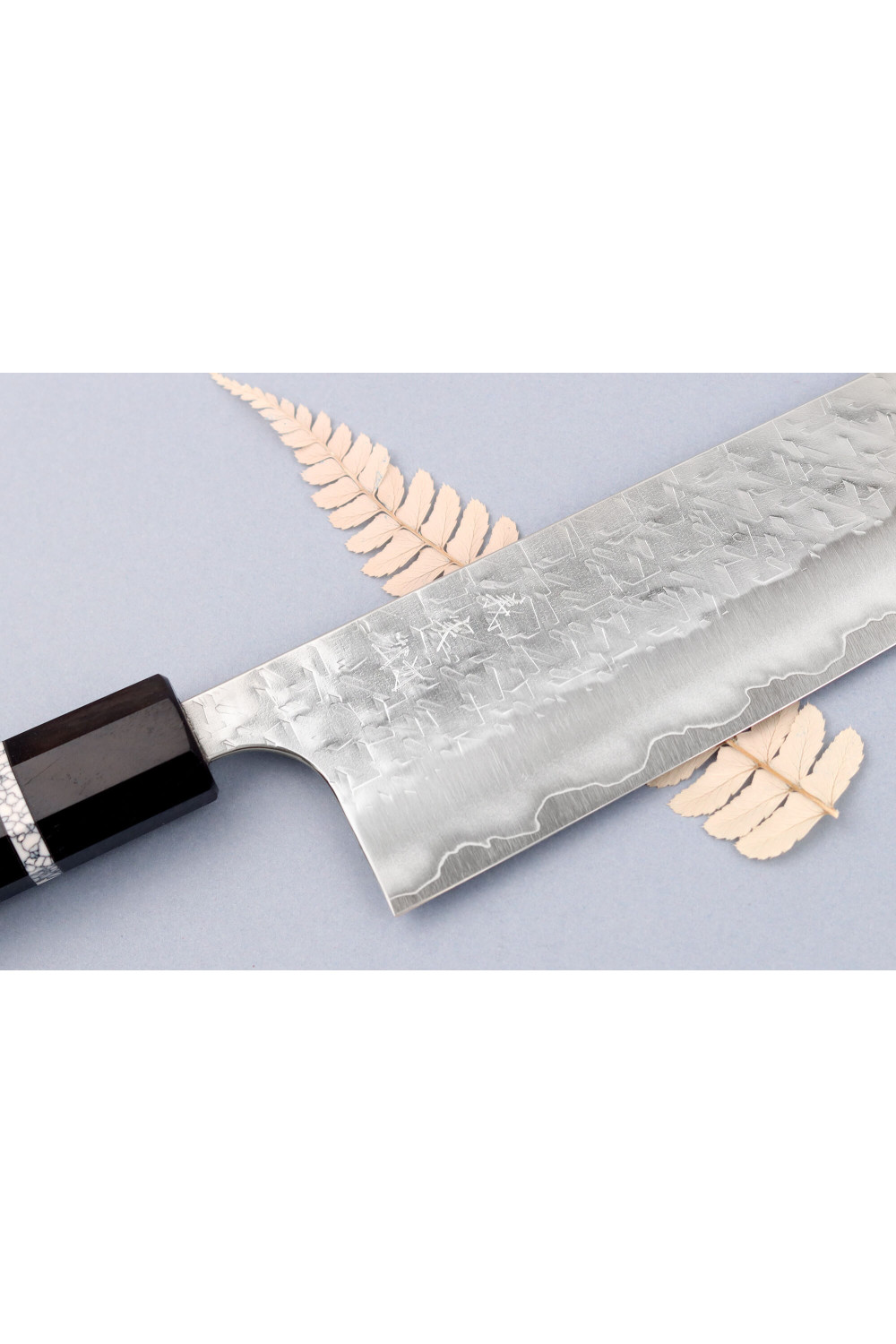
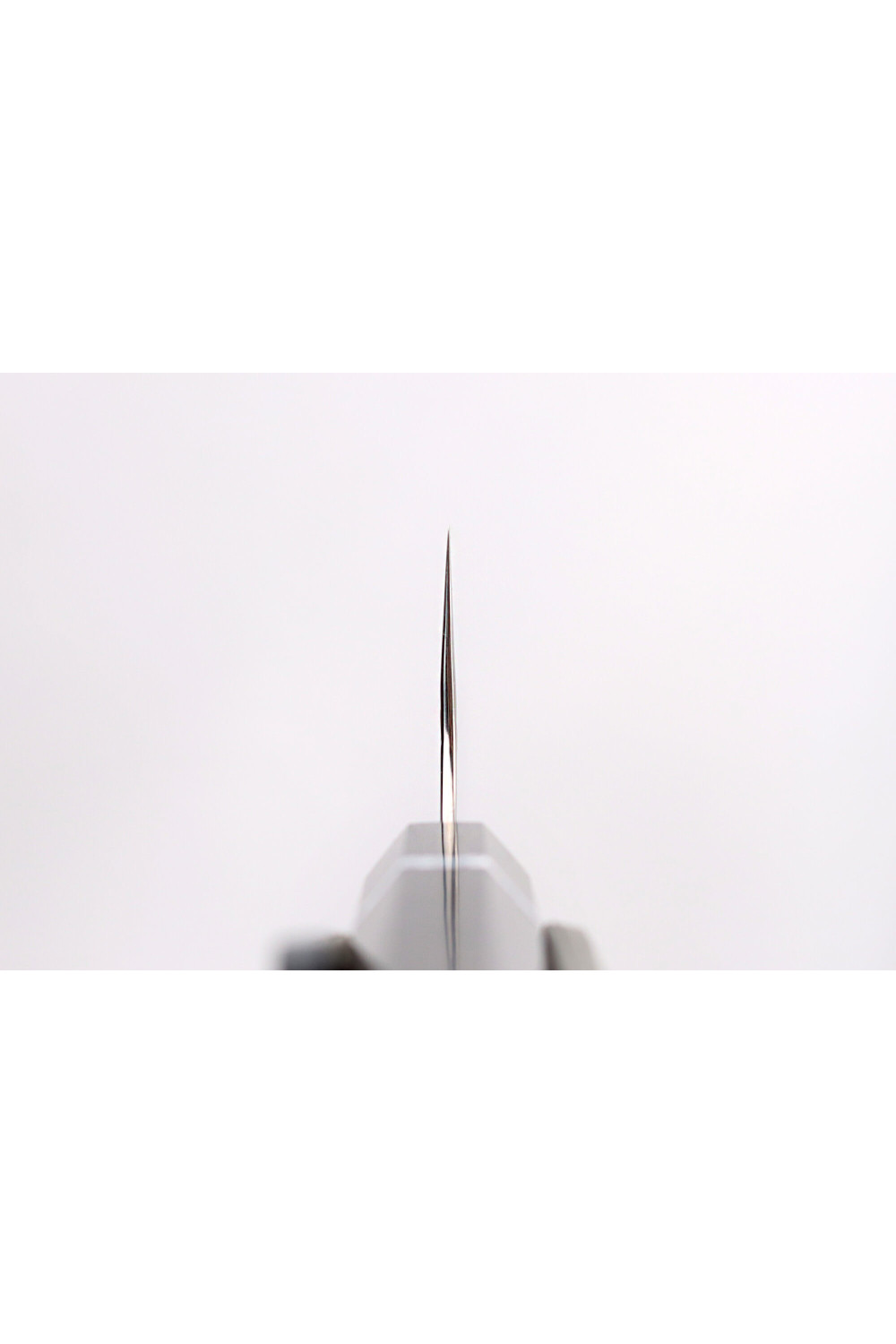
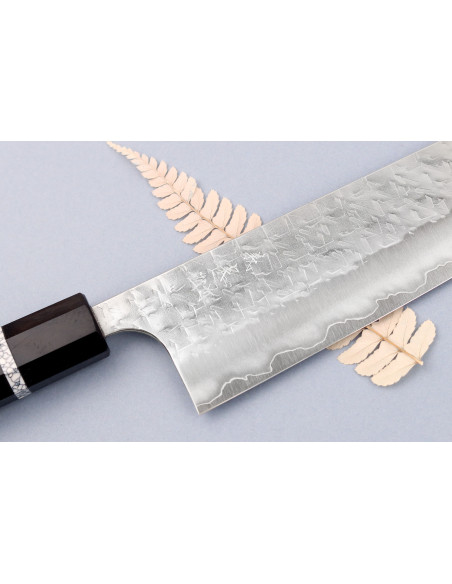
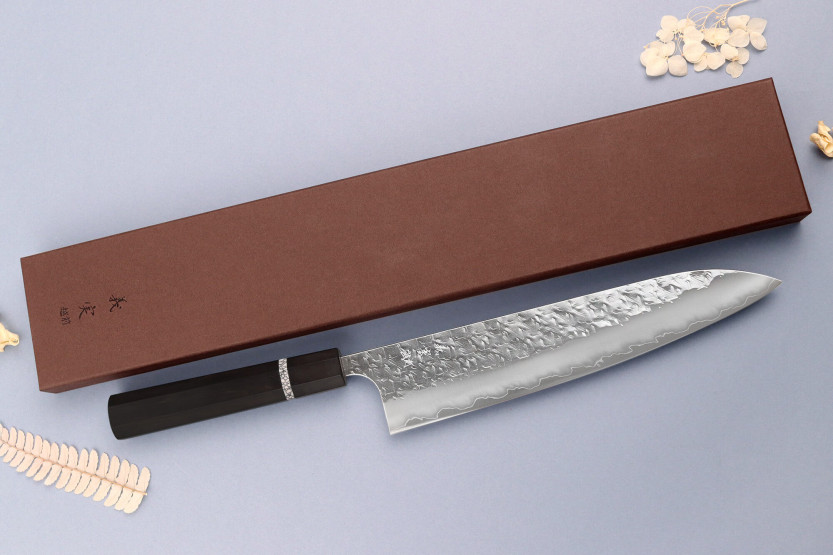
The 24 cm blade of this chef's knife is forged using the Japanese San Mai technique, which consists of assembling two layers of steel around a rigid steel core.
Here, the core is made of SG2 powder steel, renowned for its fine grain and structural stability. Enriched with 1.3% carbon, it achieves a hardness of 63 HRC on the Rockwell scale. This level of hardness offers significantly better edge retention than traditional steels, limiting the need for frequent sharpening while enabling effortless, clean cutting, even on firm foods!
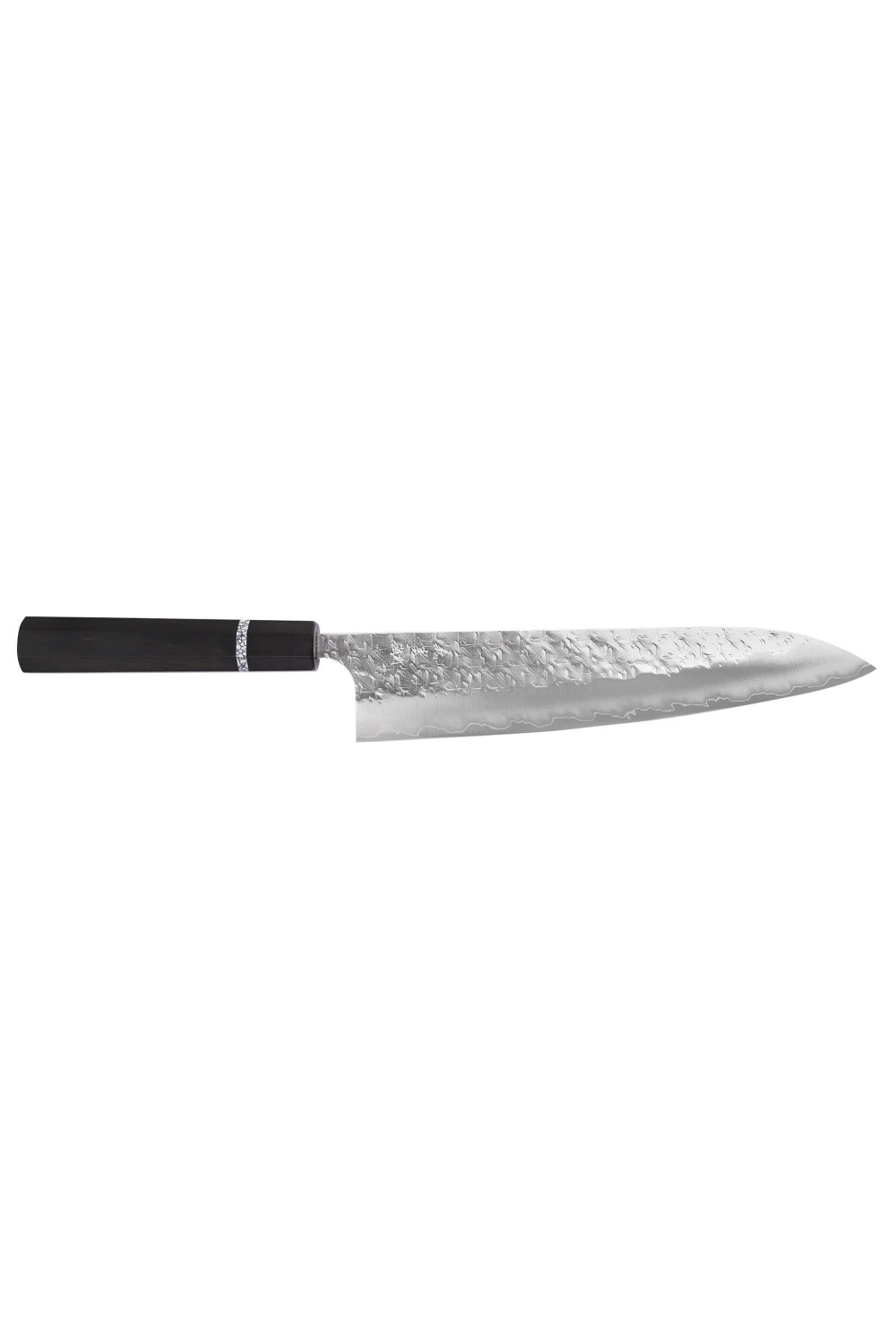
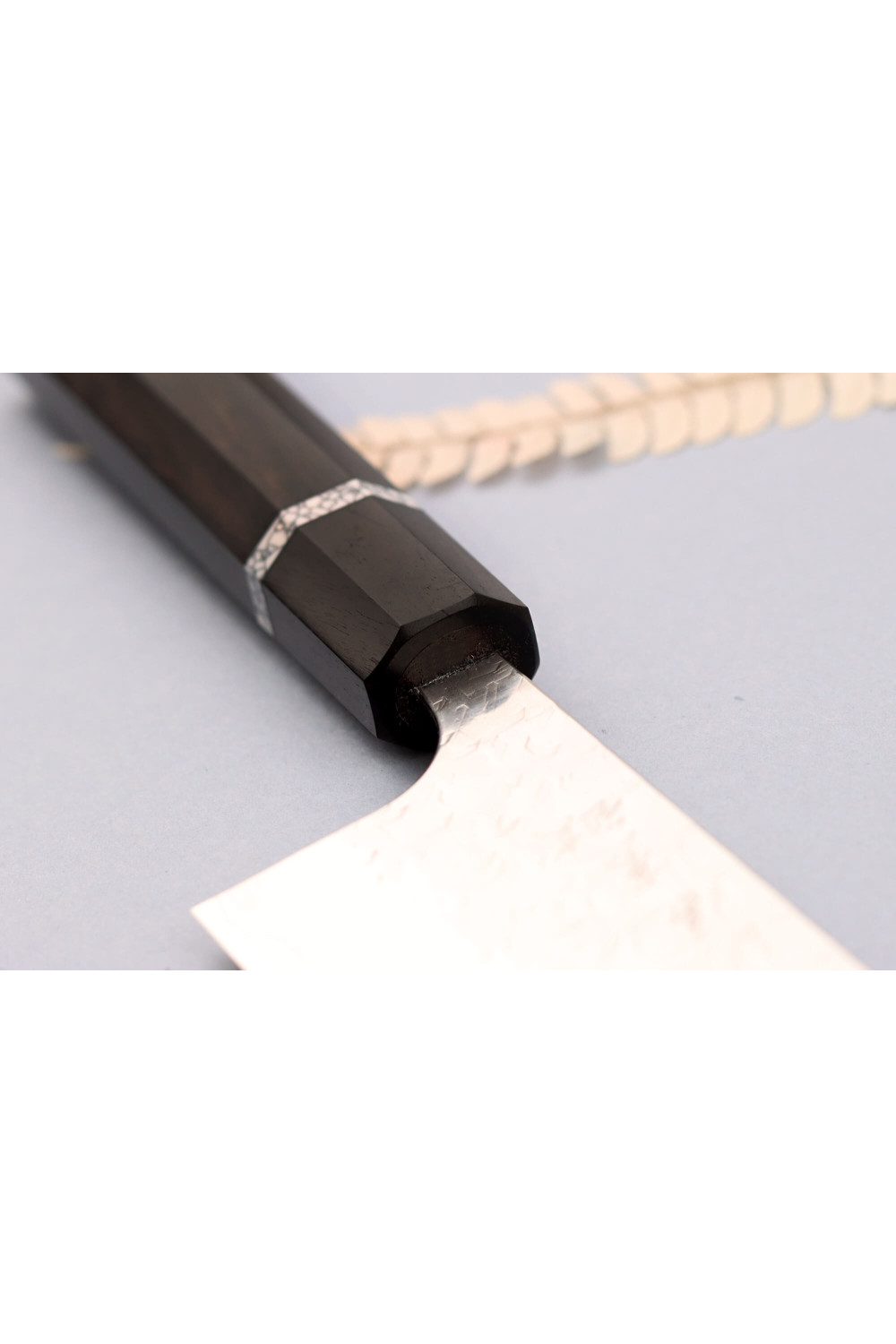
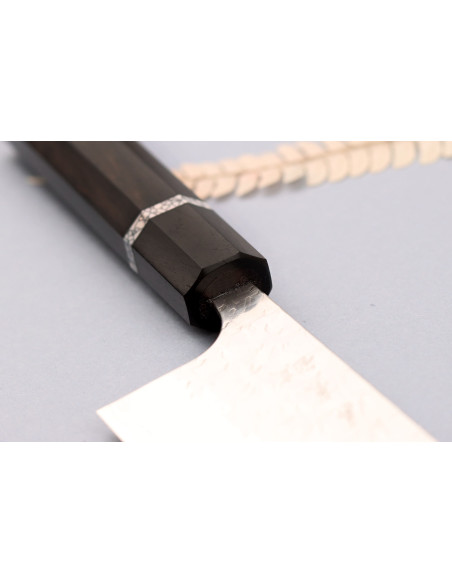
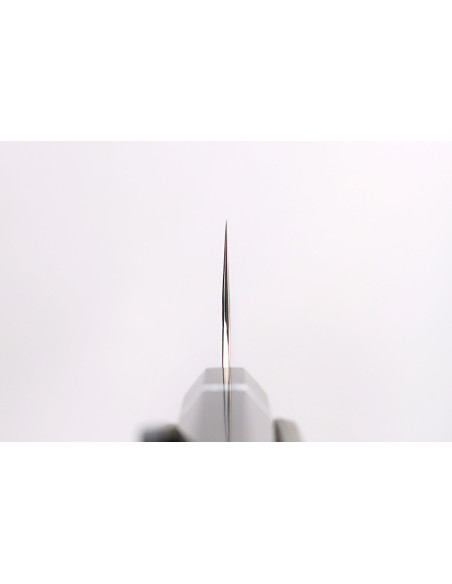
Hammering the blade is not just aesthetic: it also helps to reduce food sticking to the surface, by creating microscopic air pockets. Each blade is given a unique hammered pattern, reinforcing its artisanal character. The polished finish adds visual elegance, while facilitating maintenance.
Its 24 cm length offers great versatility, ideal for long cuts, balancing movements, and handling bulky pieces such as cabbage or whole meats.
Ergonomic and aesthetic handle for this Japanese kitchen knife
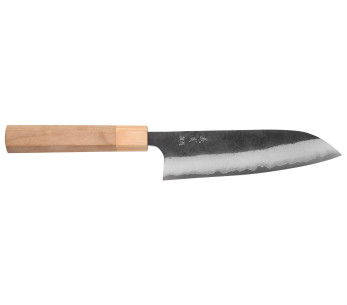
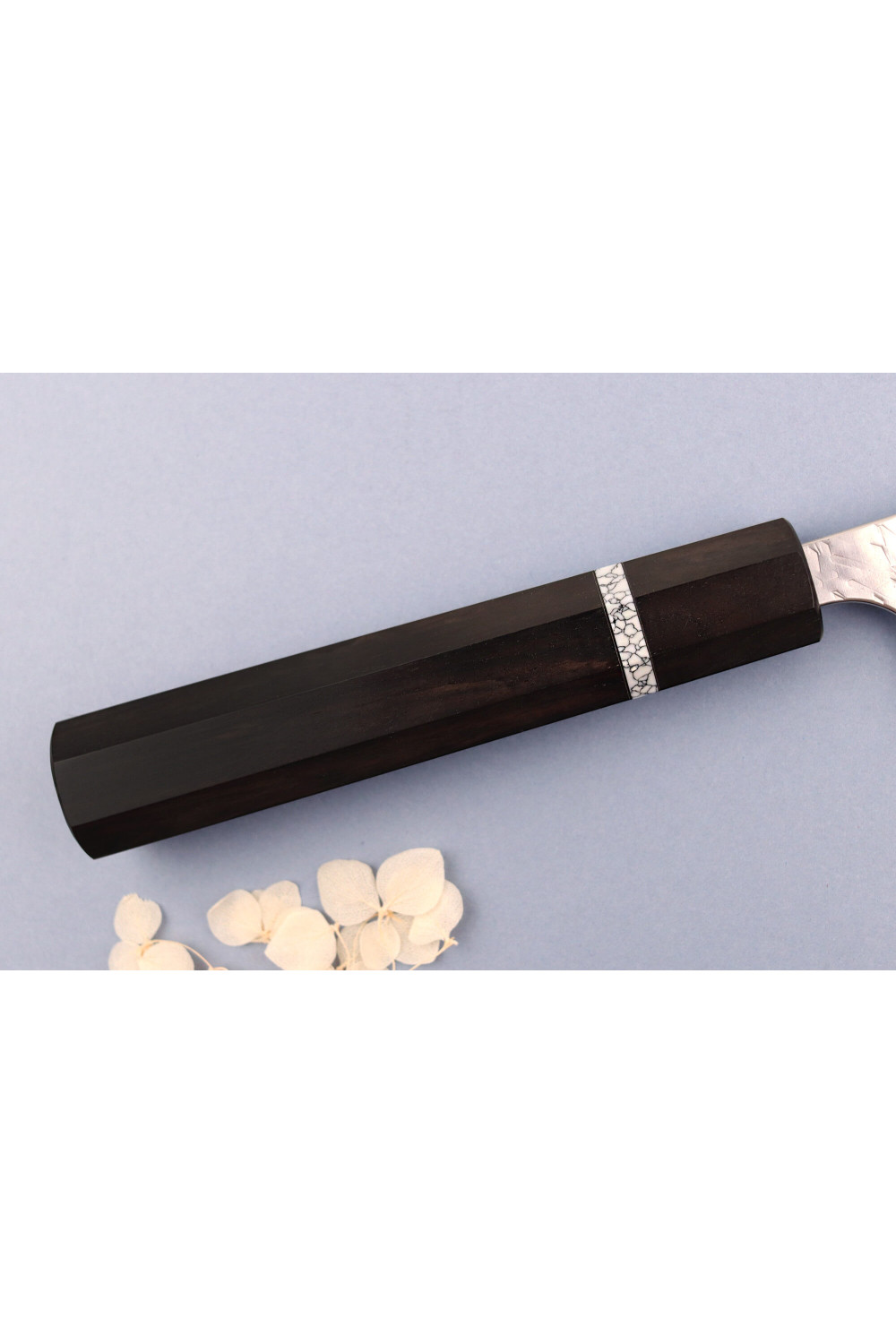
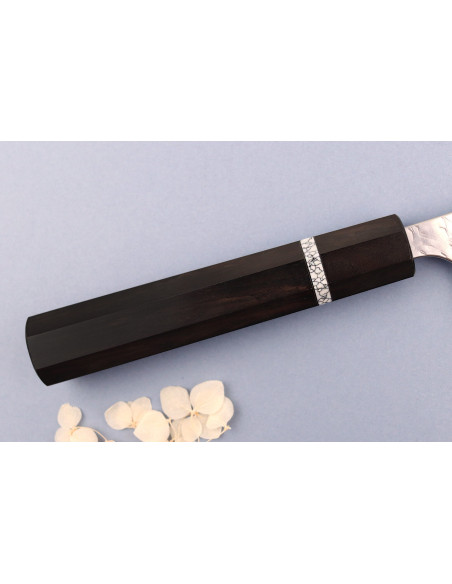
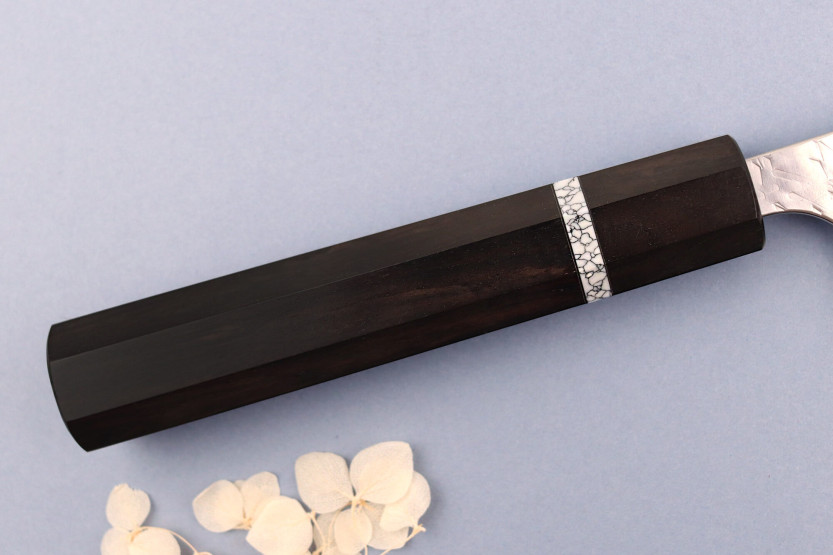
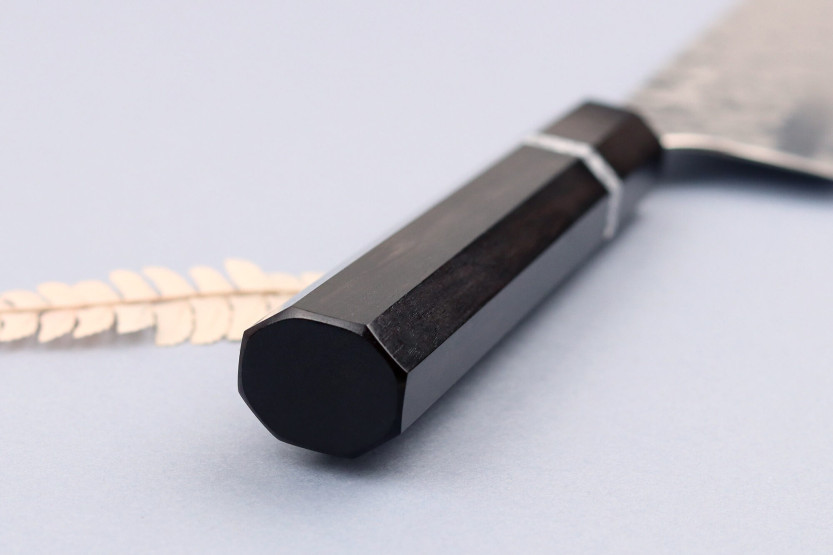
The handle of this Japanese kitchen knife is made of ebony wood, a dense, durable and highly moisture-resistant material. Ebony is prized in high-end Japanese cutlery for its naturally soft feel and ability to age elegantly without cracking. It brings excellent balance to the overall look of your gyuto knife, enhancing the feeling of control when cutting.
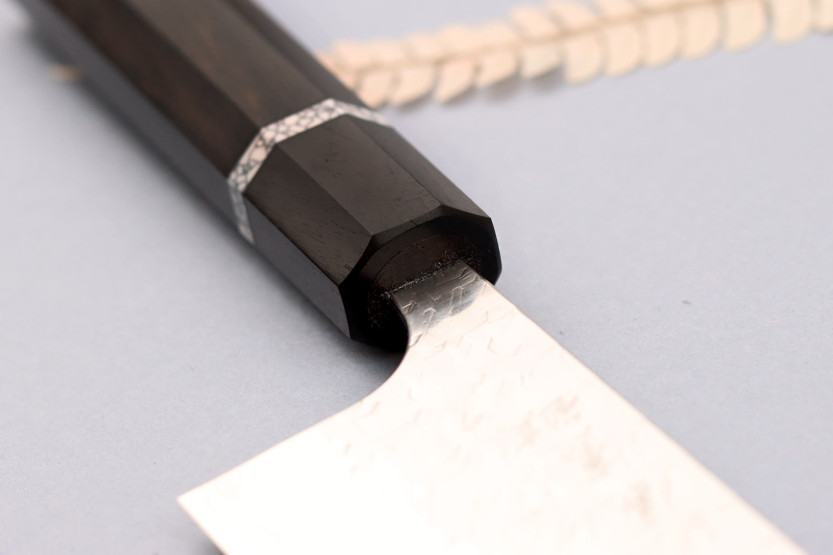
A remarkable detail: the integration of a gemstone ring between the bolster and the rest of the handle. This ring, unique to each piece, adds an artistic dimension and symbolic value to the tool, in the Japanese tradition of beautiful functional objects.
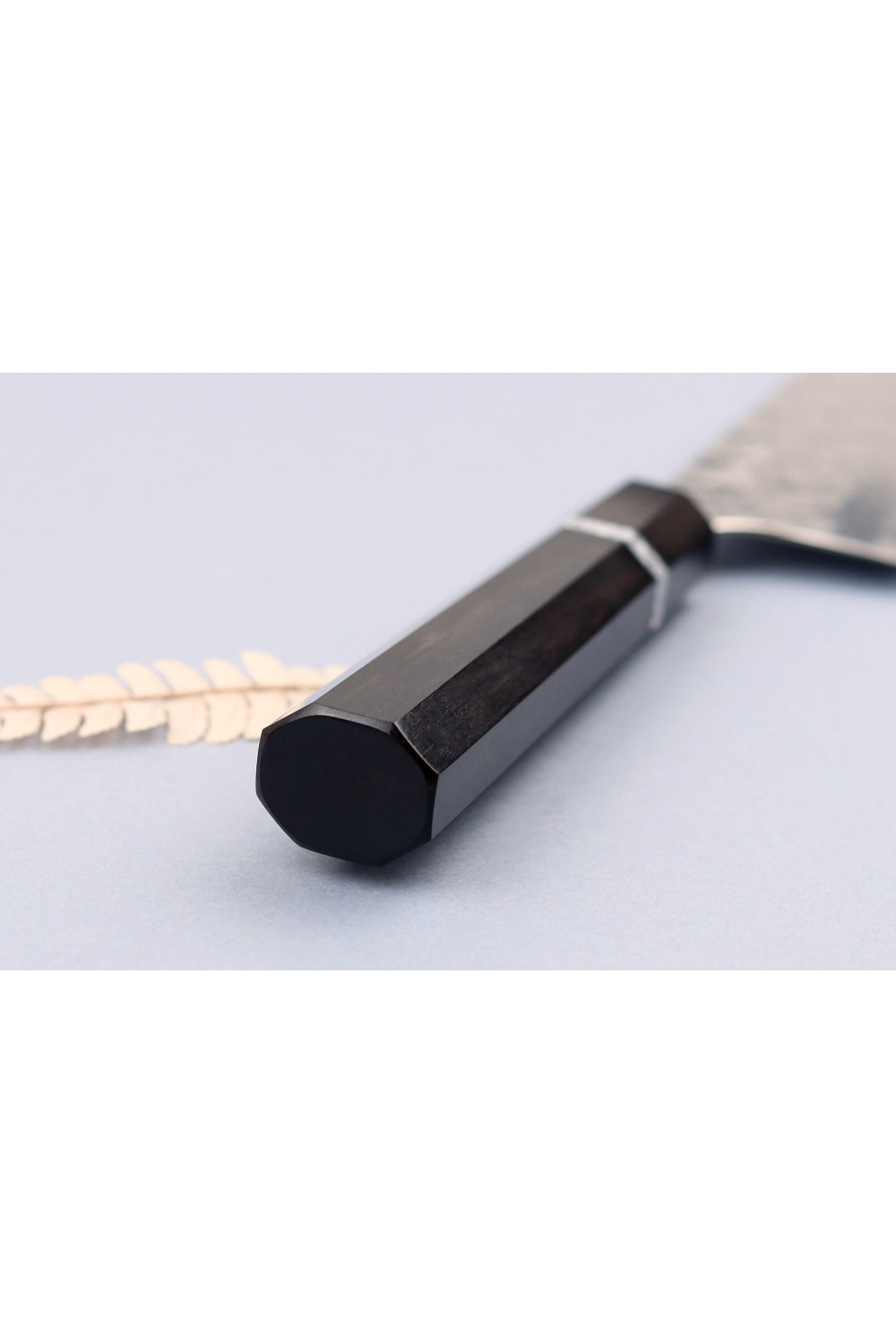
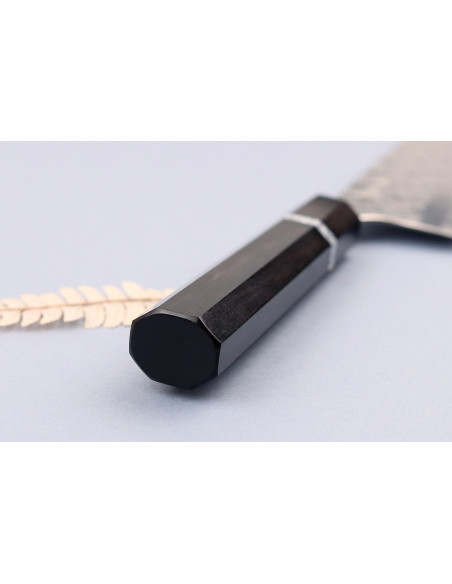
The handle is octagonal in shape, a standard feature of Japanese cutlery. This geometry makes for a comfortable and secure grip, whether right- or left-handed. It reduces fatigue during long cutting sessions, ensuring a stable, natural grip. The handle's careful assembly guarantees excellent durability, even under intensive use.
Summary of your Japanese knife's features
- San Maï blade: strength combined with flexibility
- SG2 powdered steel: high cutting performance
Hardness- 63 HRC: extended edge retention
- Hammered and polished surface: unique aesthetics and optimized glide
- Ebony handle: long-lasting comfort and noble feel
- Gemstone ring: refined elegance
- Octagonal shape: balanced ambidextrous grip
- Takefu craftsmanship by Yoshimi Kato: Japanese cutlery tradition
To care for your Yoshimi Kato knife, wash only by hand with a soft sponge, avoiding getting the handle wet. Once cleaned, you should dry it immediately to remove all moisture and store it in a dry place. Do not put in the dishwasher or leave to soak in the sink.
About Japanese blacksmith Yoshimi Kato, master cutler in Takefu
In Japanese culture, a kitchen knife is more than just a tool: it's a piece of work crafted with passion, combining technical precision and refined aesthetics. This model is hand-forged by Yoshimi Kato, an artisan cutler based in the heart of the Takefu Cutlery Village, a cooperative where several master blacksmiths come together to keep ancestral know-how alive. Each craftsman perpetuates traditional methods handed down for generations.
Yoshimi Kato was trained by several renowned masters, including his father-in-law Hiroshi Kato, an emblematic figure in Japanese blacksmithing and co-founder of Takefu Village. The latter dedicated almost 50 years to knife-making before handing over his workshop to Yoshimi san in 2013. Since then, the young blacksmith has made a name for himself with the quality of his creations and his attention to detail. He is now developing his own ranges, acclaimed for their balance between cutting performance and contemporary aesthetics.
Explore the rest of Yoshimi Kato's Japanese knives on Knifeleader.eu!






 By buying this product you can collect up to