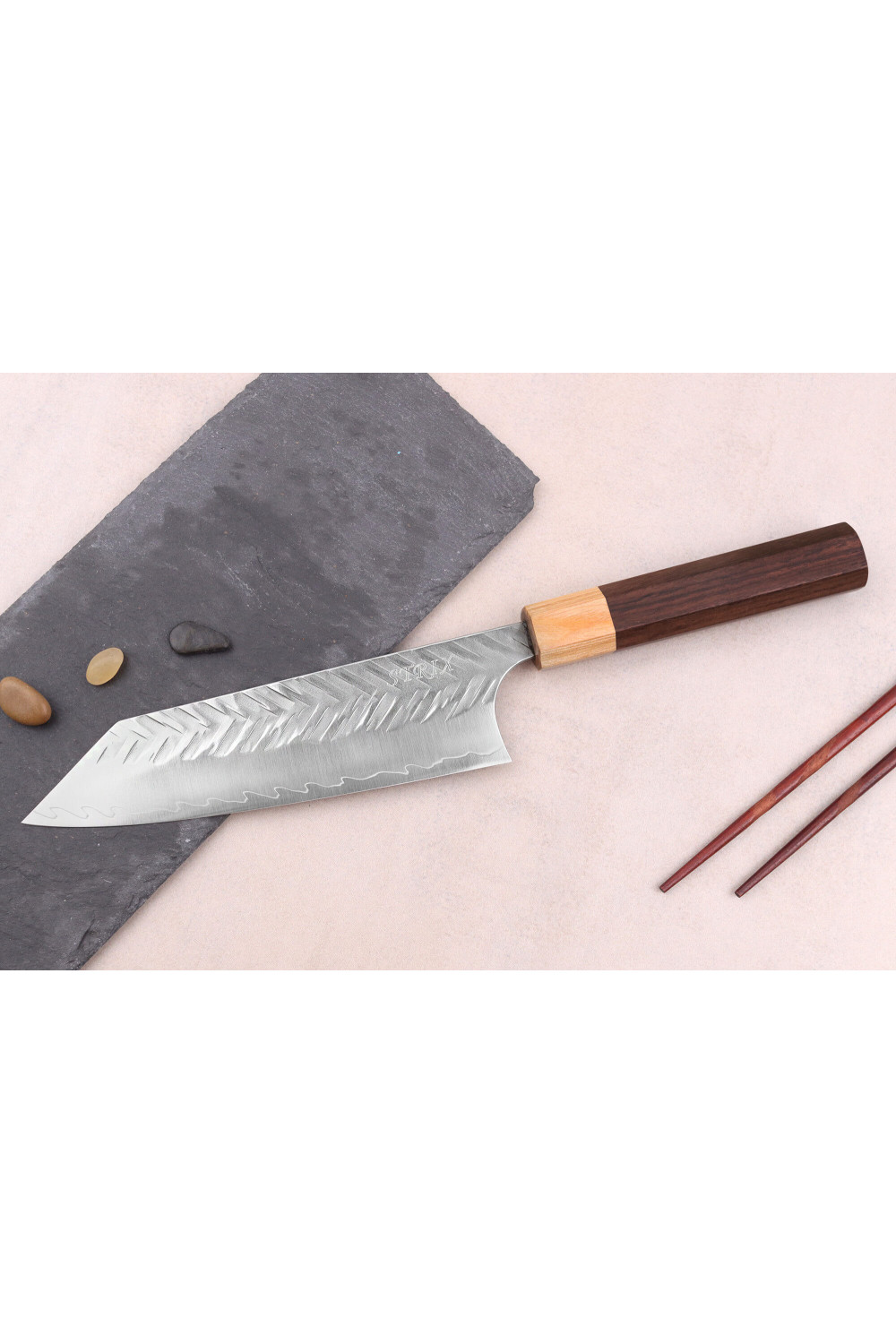
A high-performance Japanese kitchen knife
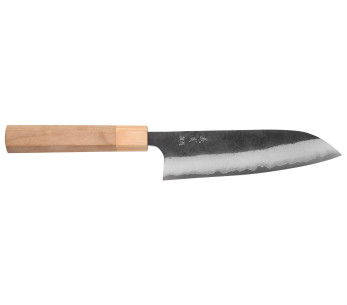
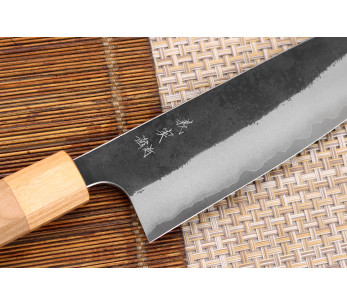
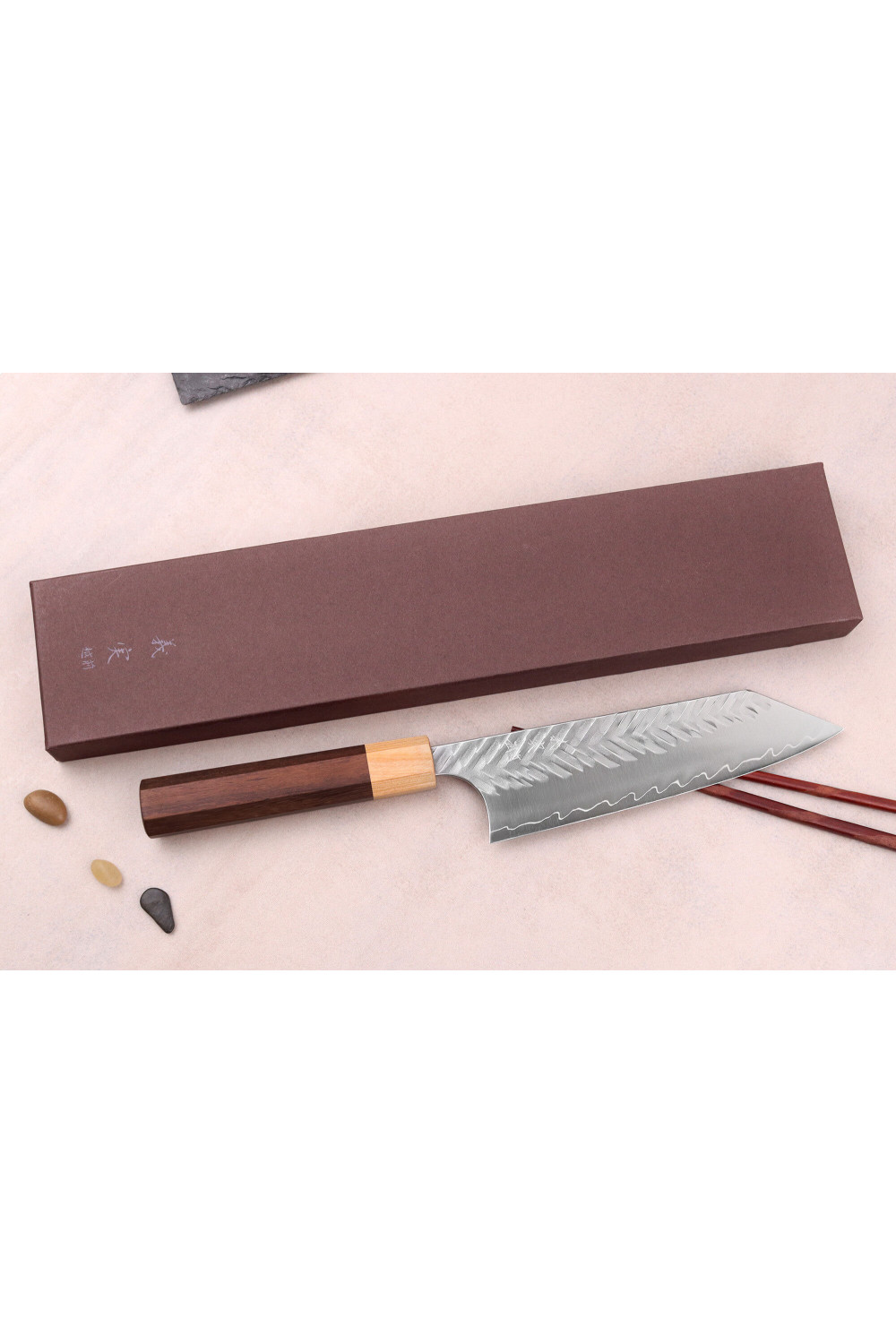
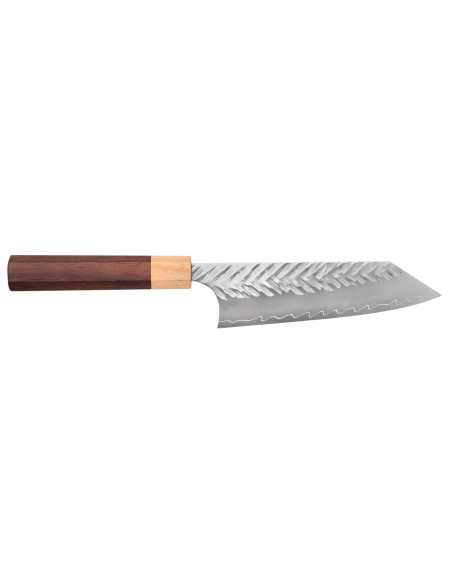
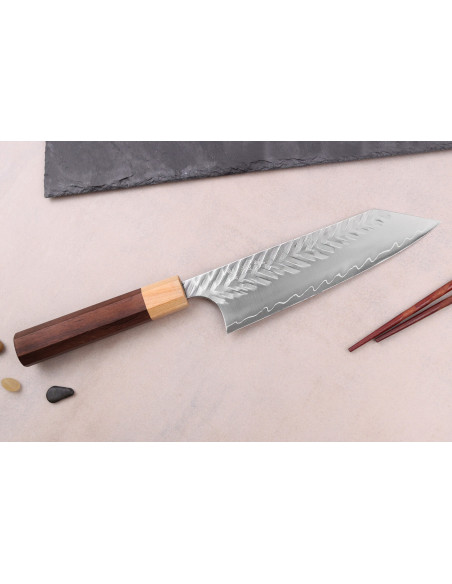
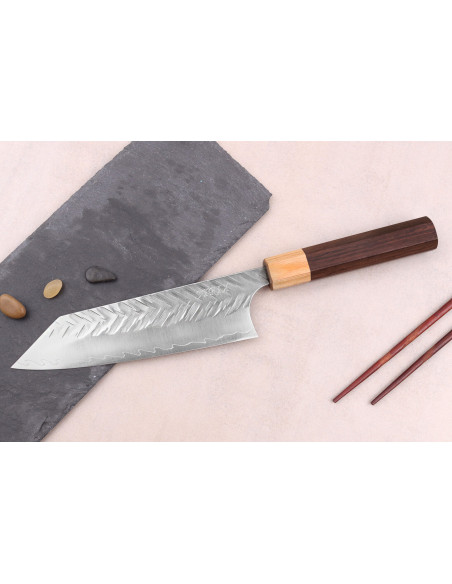
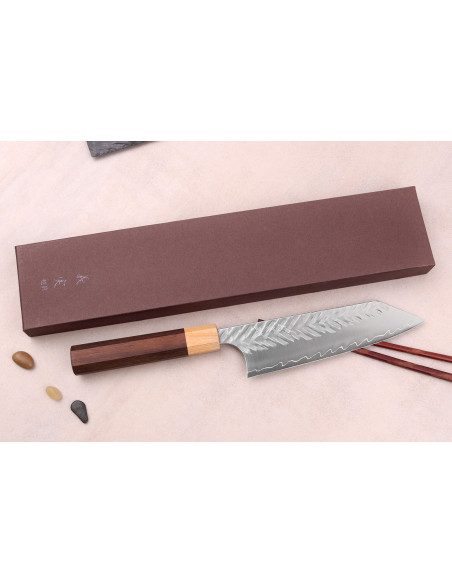
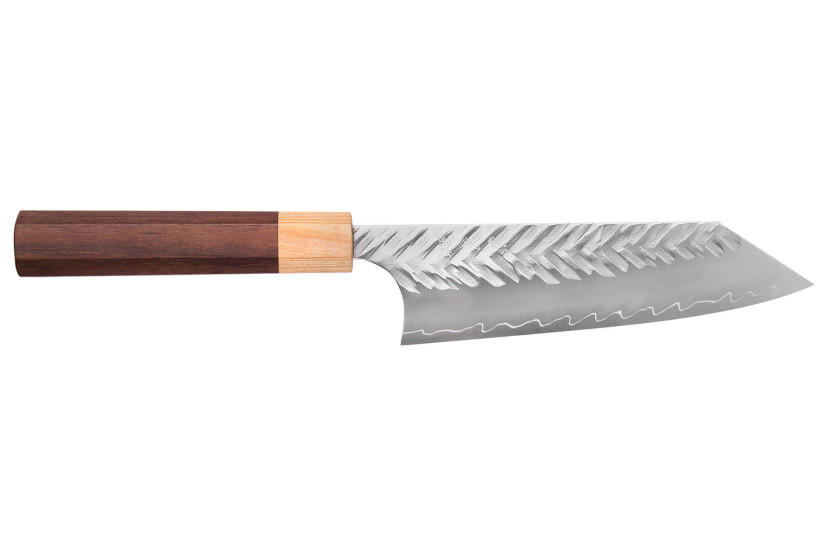
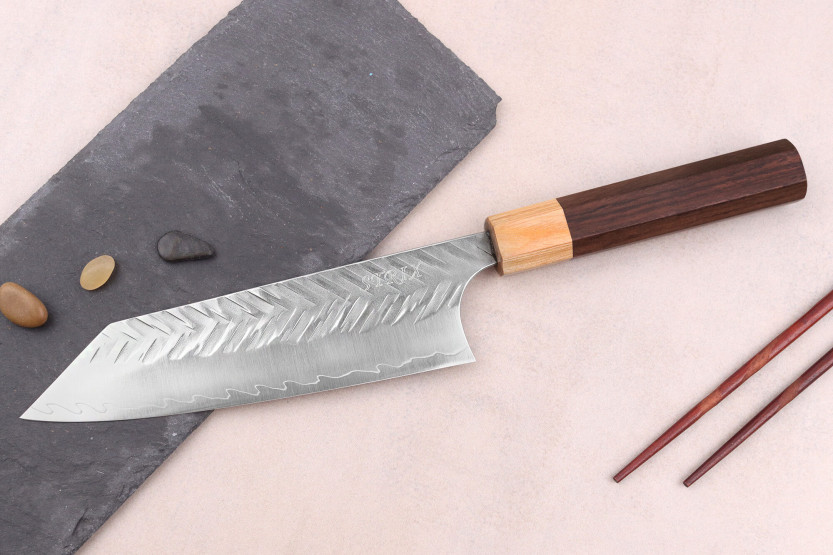
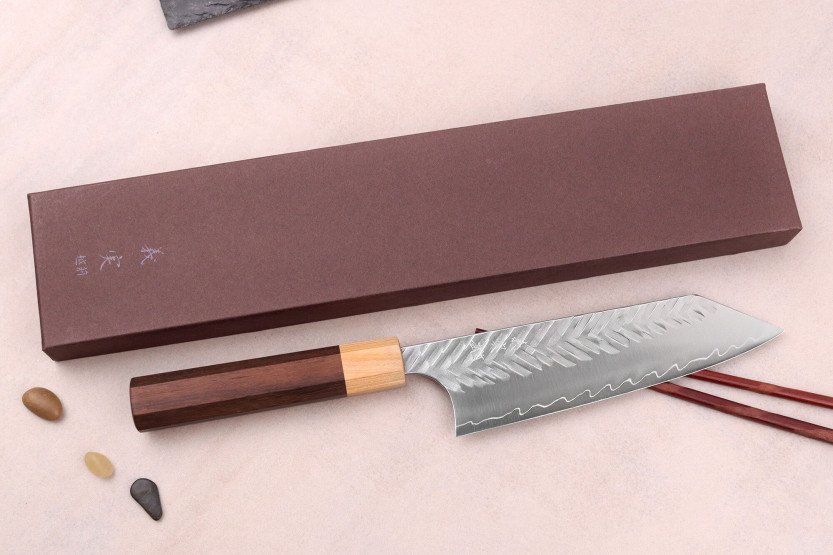
Discover the cutlery of Japan in this bunka knife, hand-forged by YoshimiKato in the heart of the Takefu cutlery village. This piece embodies the fusion of passionately forged traditions and top-of-the-range materials, for sharp, refined culinary performance!
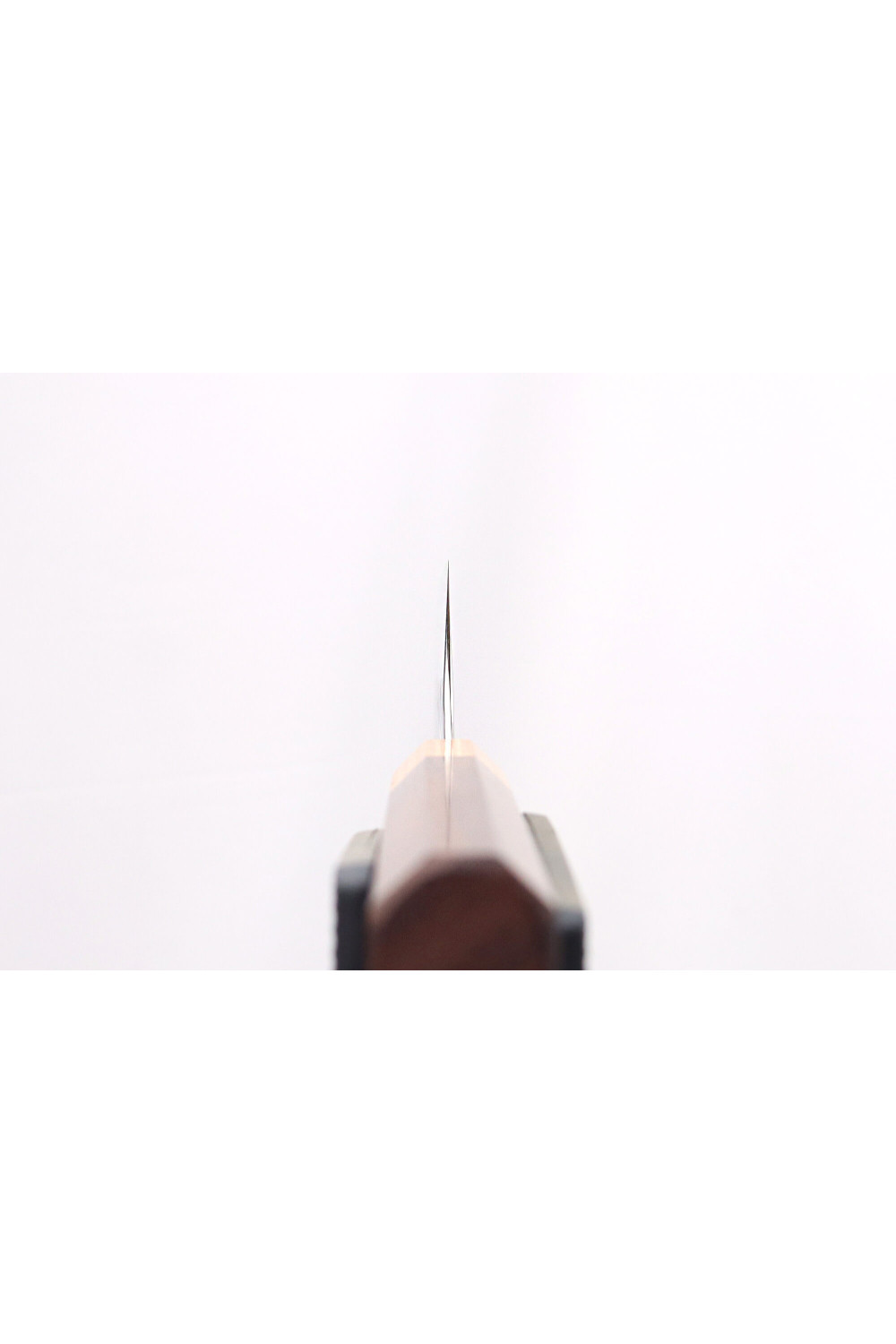
Sharp, technical blade for this bunka knife
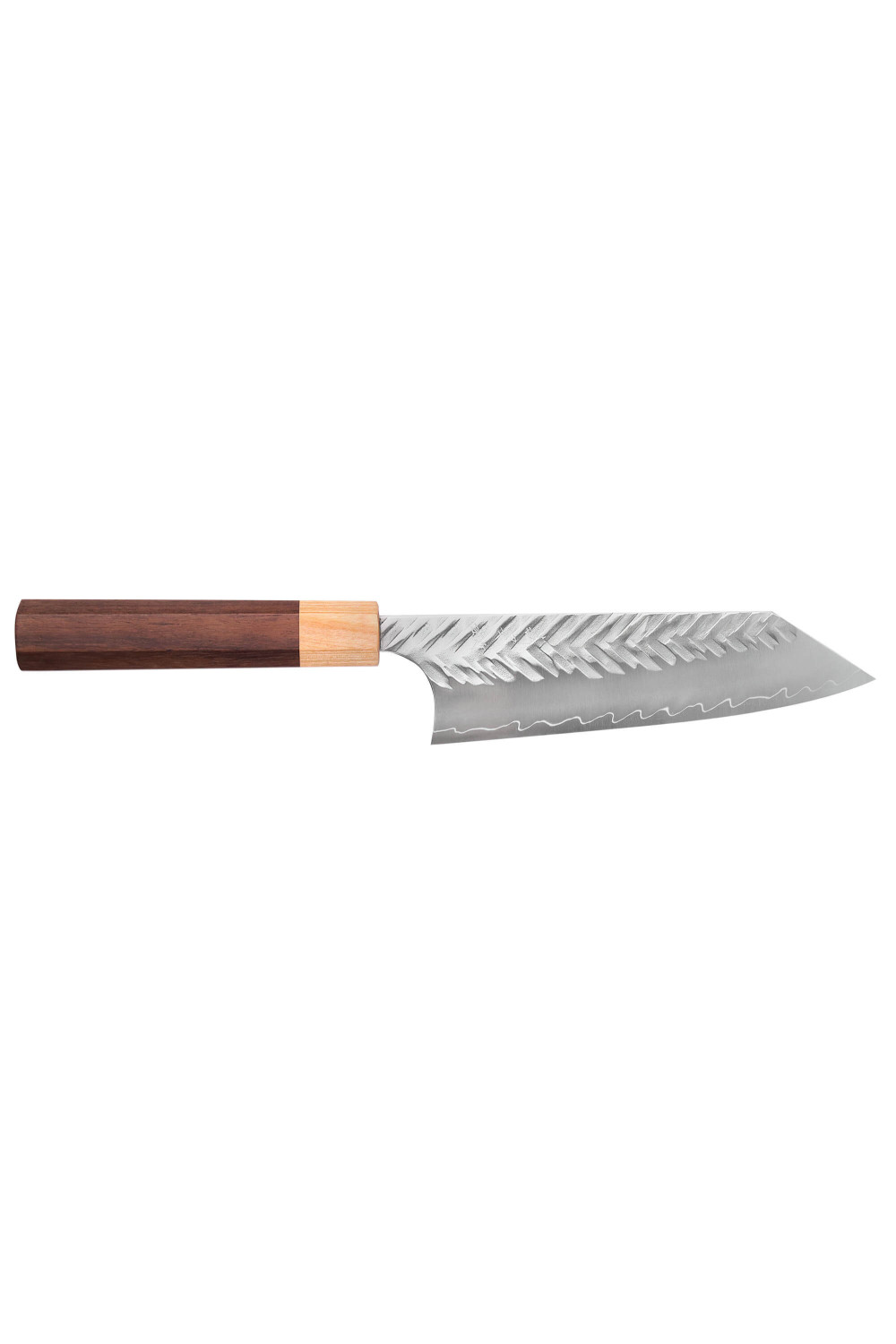
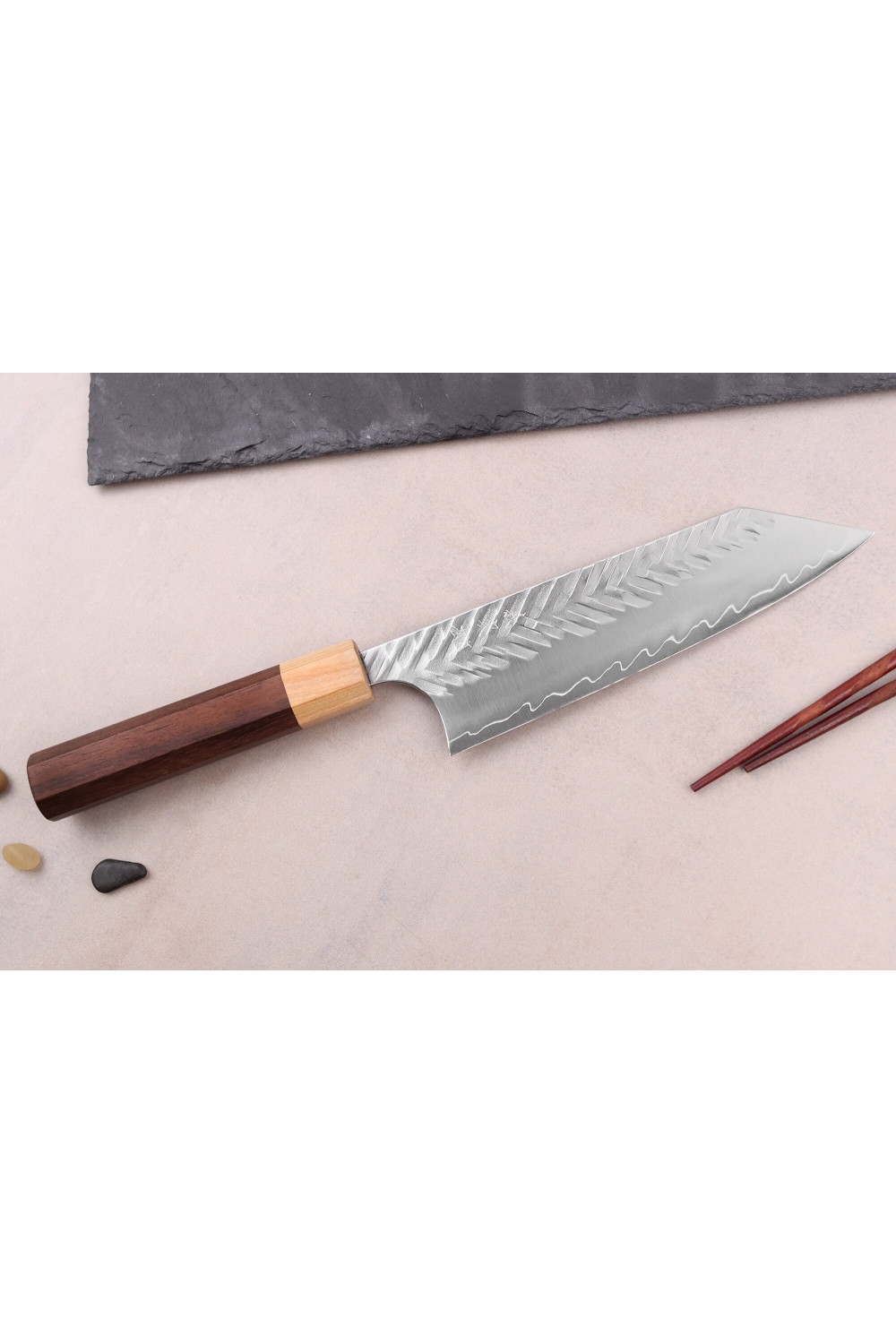
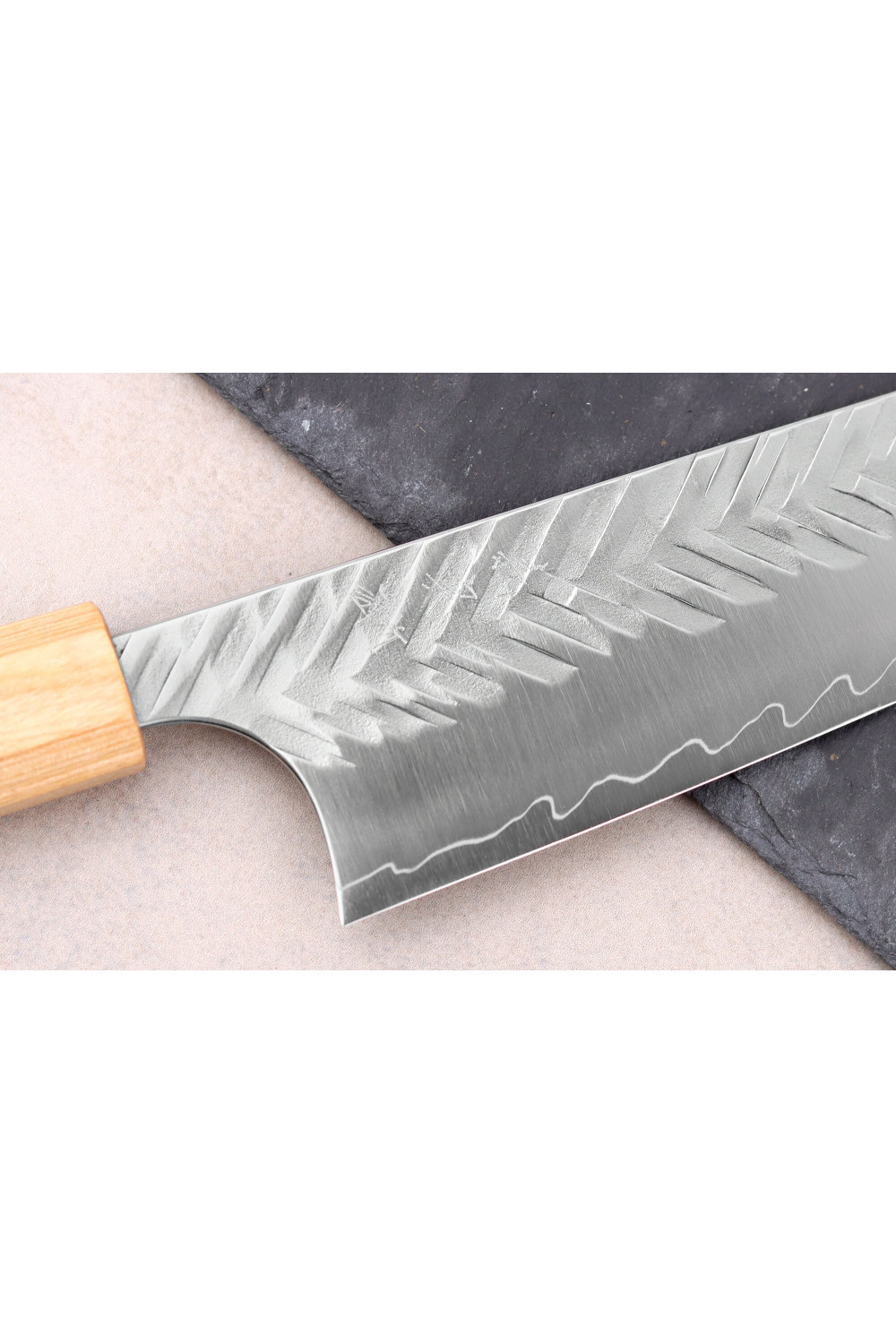
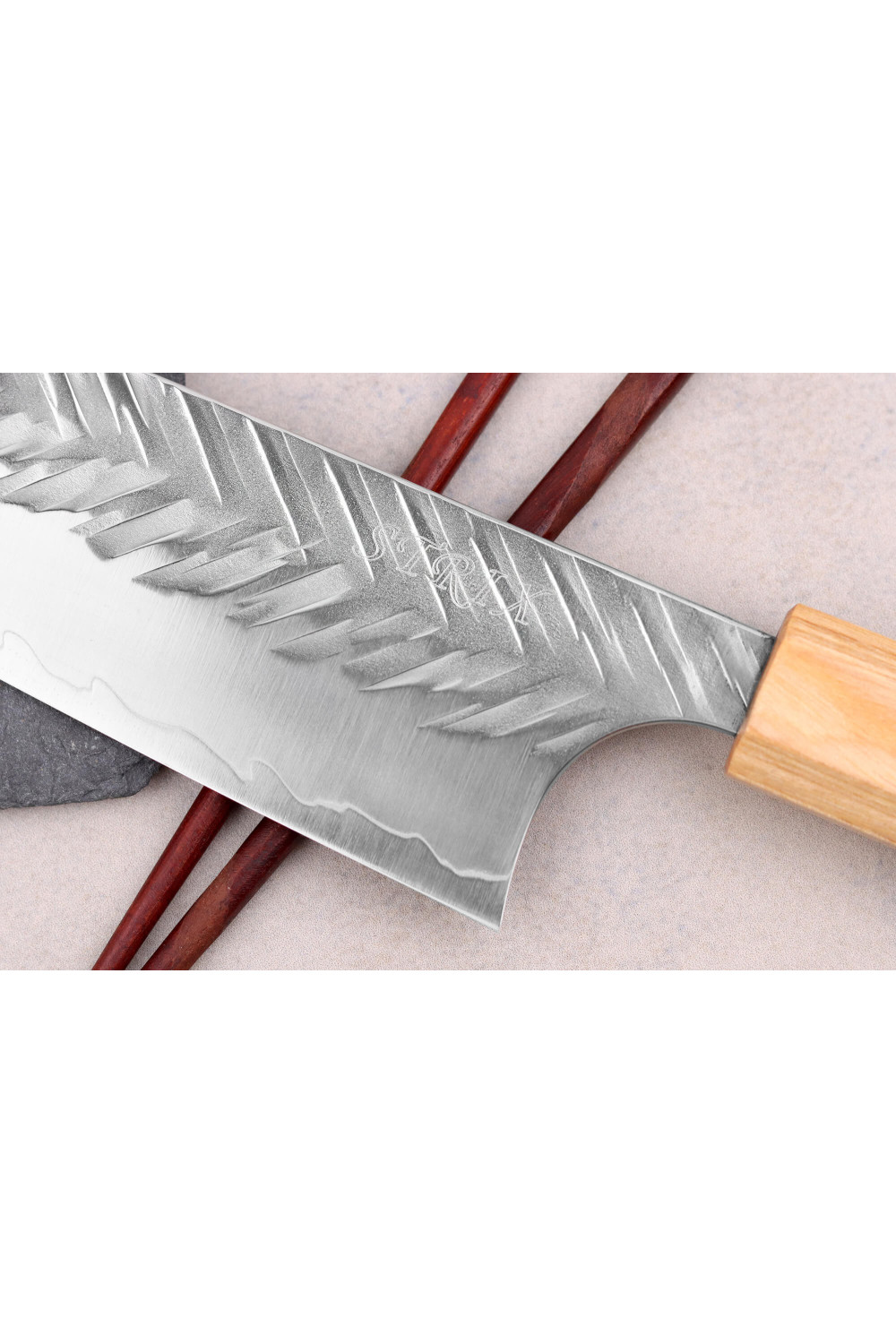
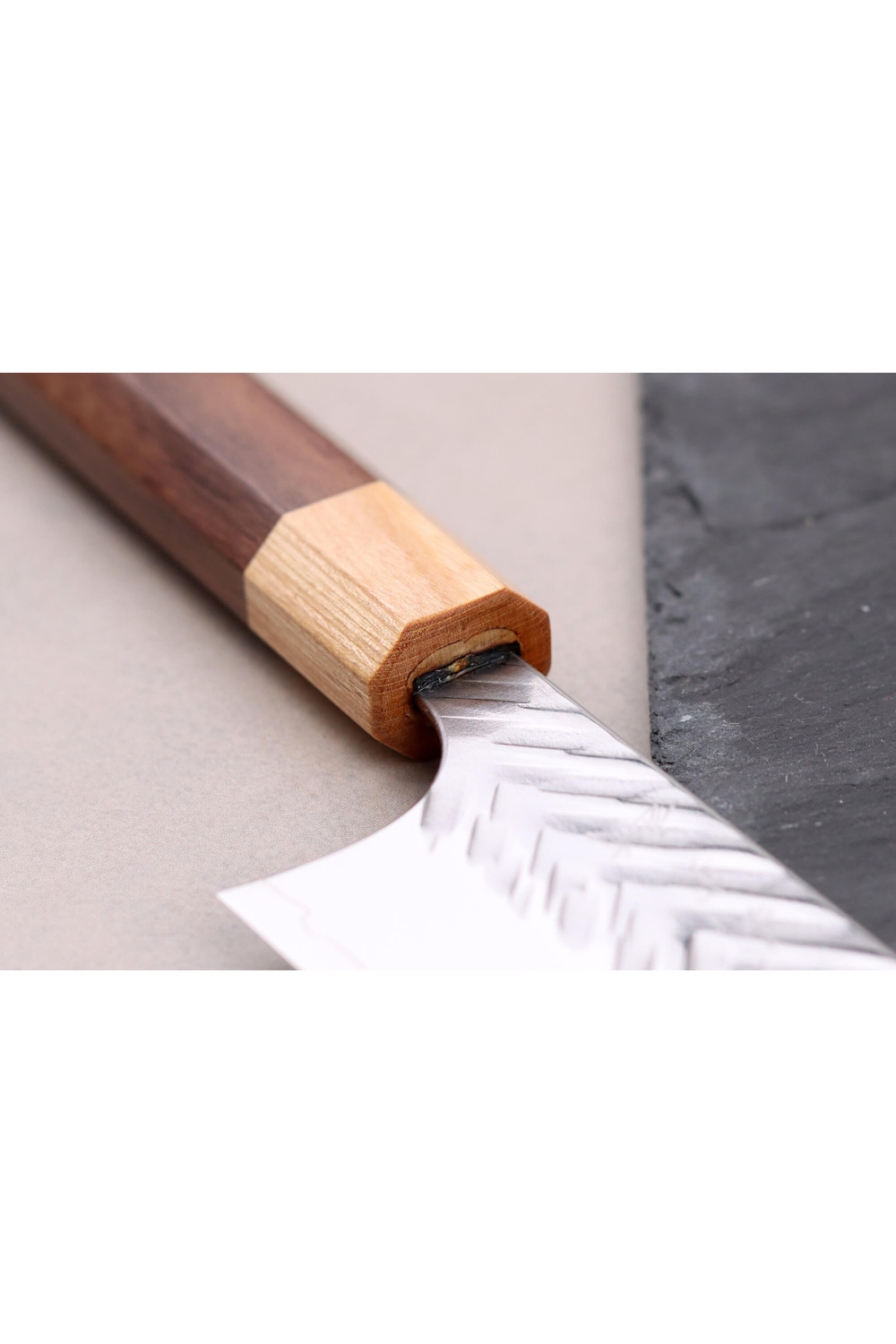
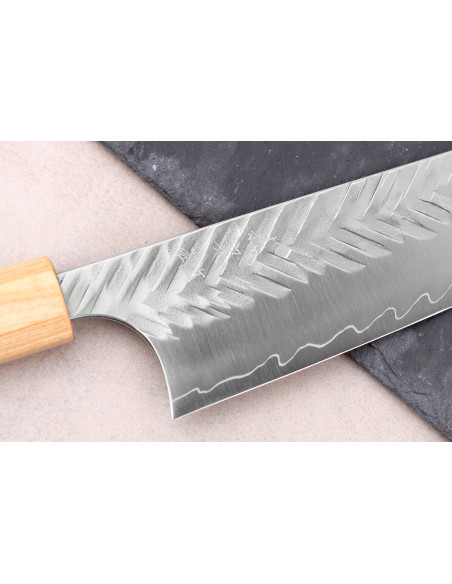
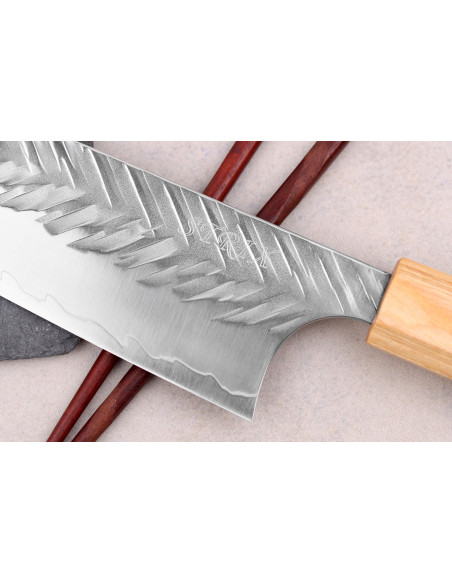
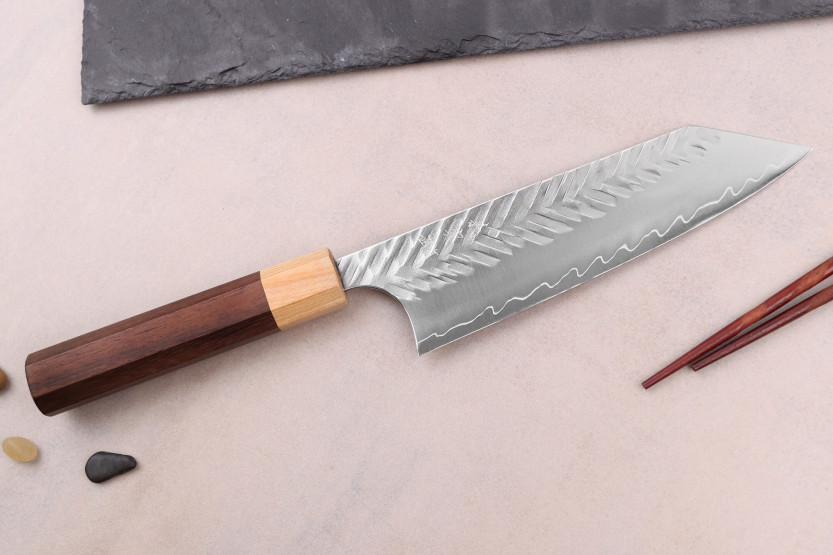
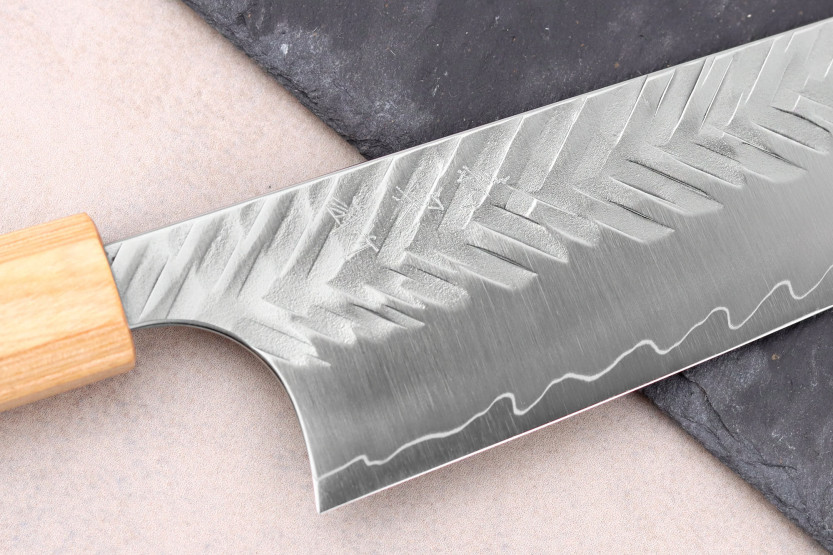
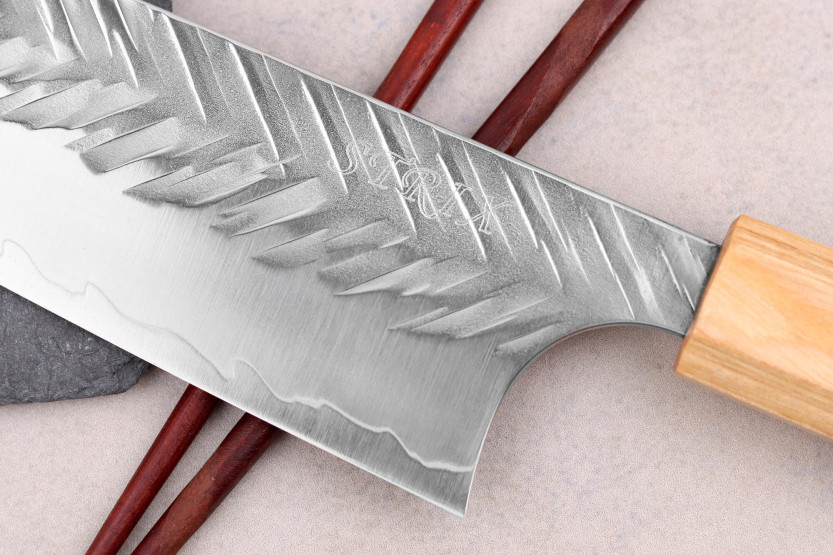
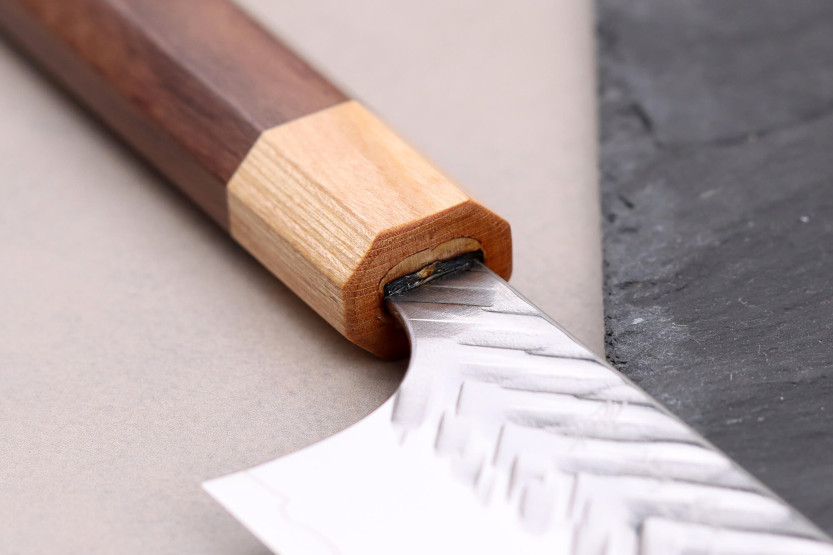
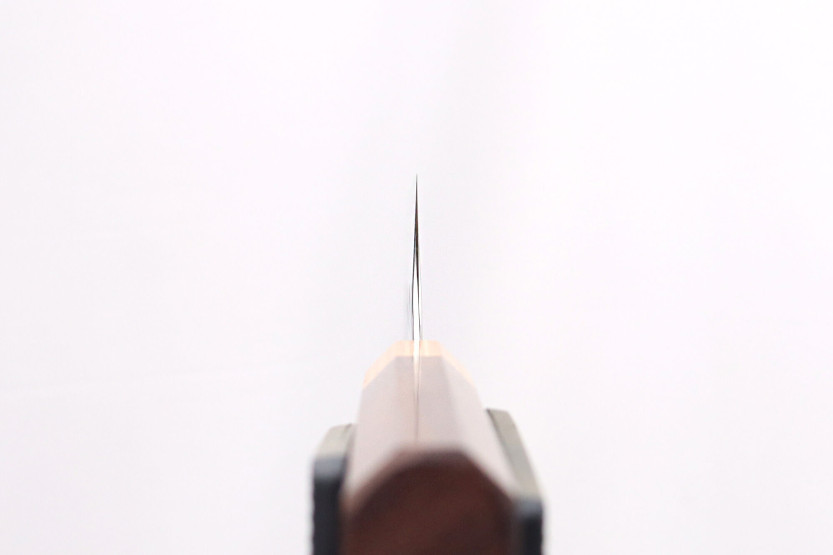
The San Maï structure assembles three layers of steel to combine flexibility and strength. Its core of carbon-enriched SPG Strix powdered steel provides a razor-sharp blade. Its high Rockwell hardness of 65 HRC ensures long-lasting edge retention, ideal for everyday cutting. The outer layer of stainless steel gives your Japanese kitchen knife added strength. The V-pattern has been hammered by hand, then the cutting surface polished to create an elegant yet functional finish.
Ergonomic handle and balanced design
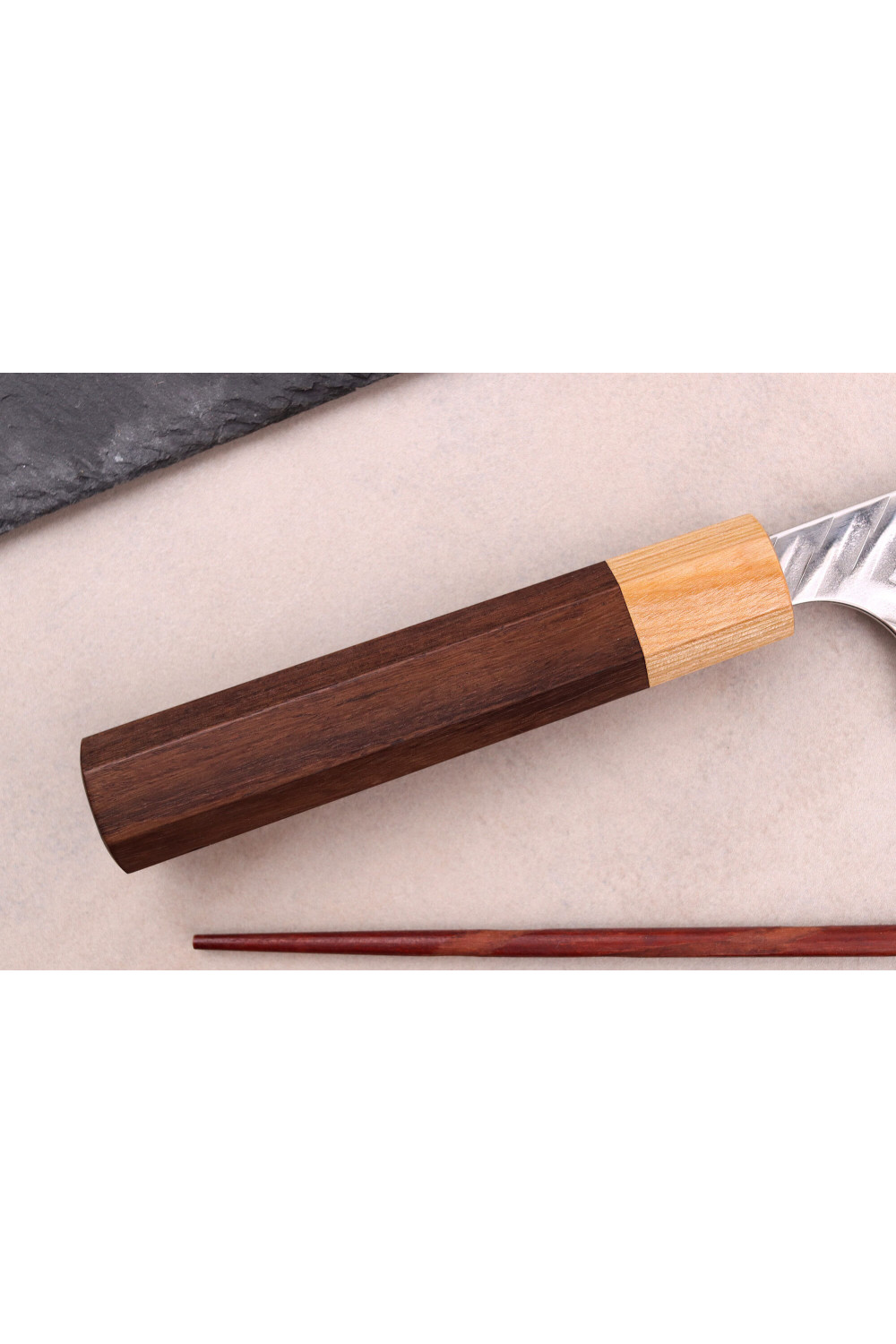
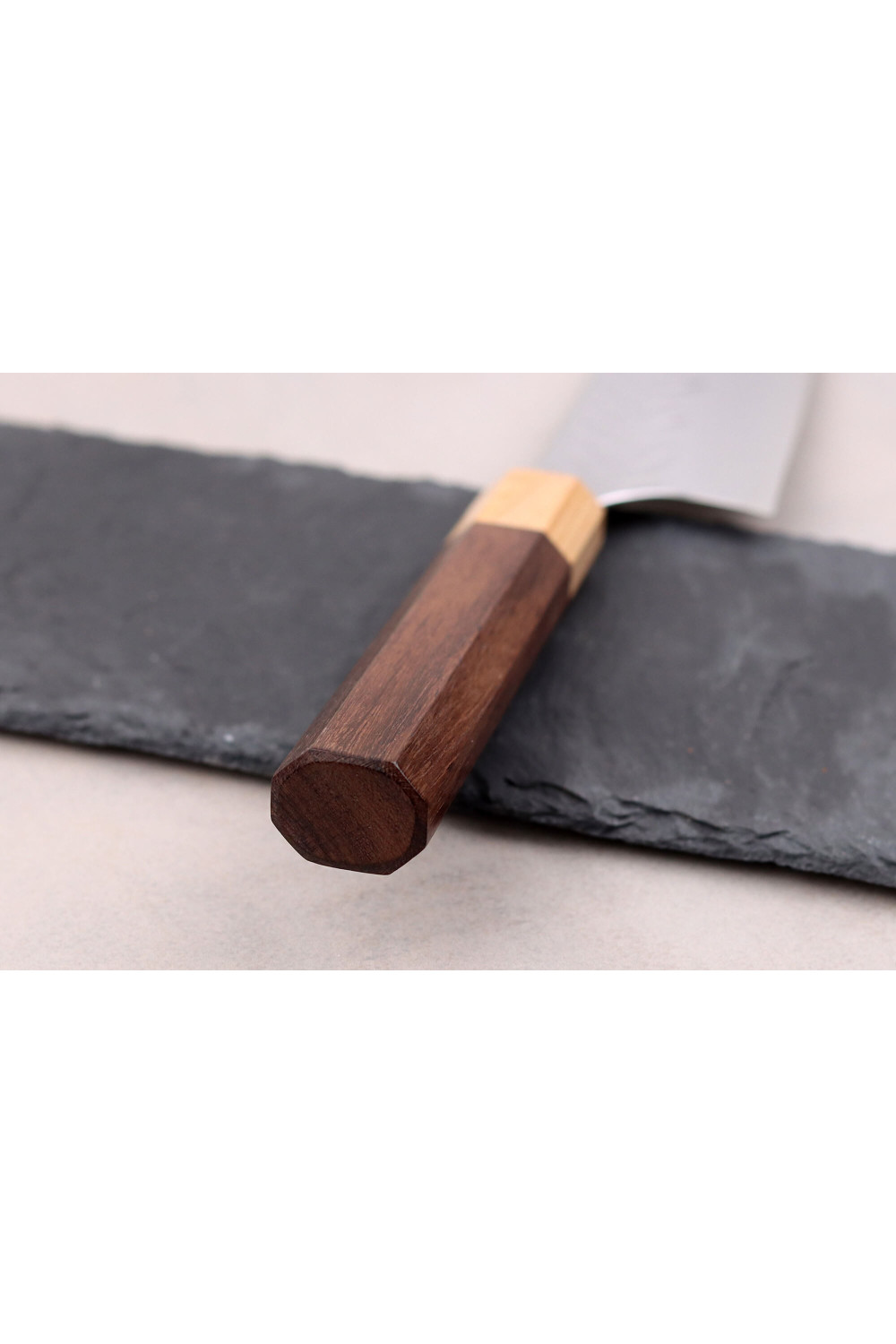
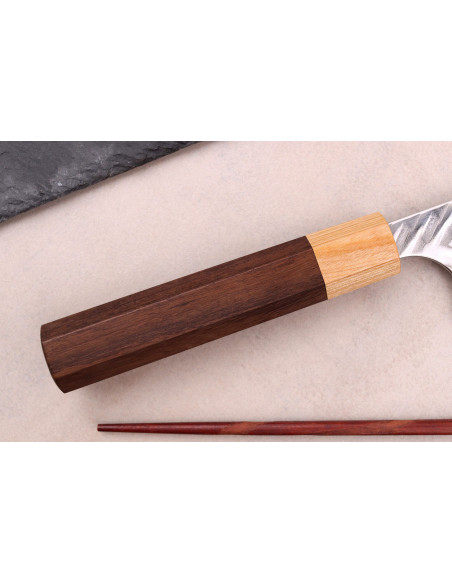
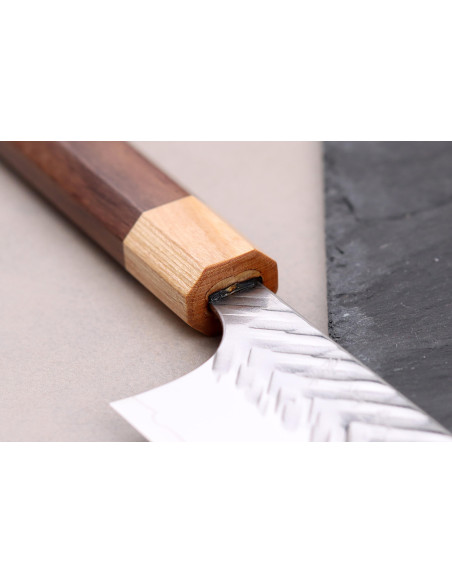
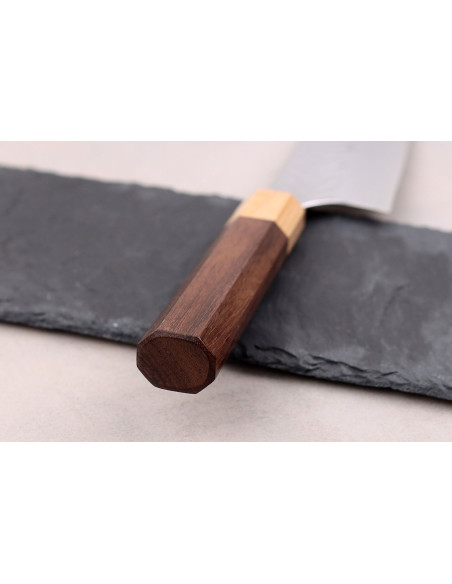
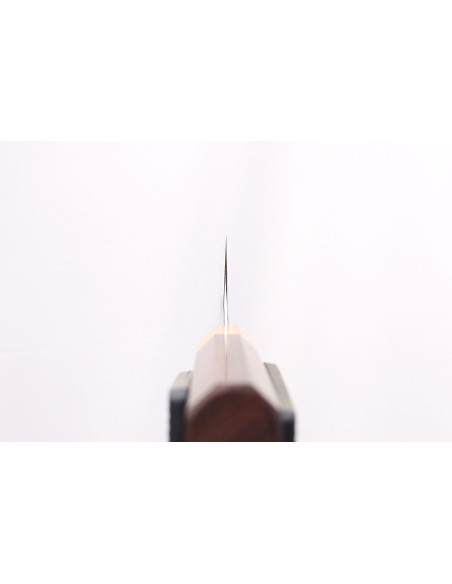
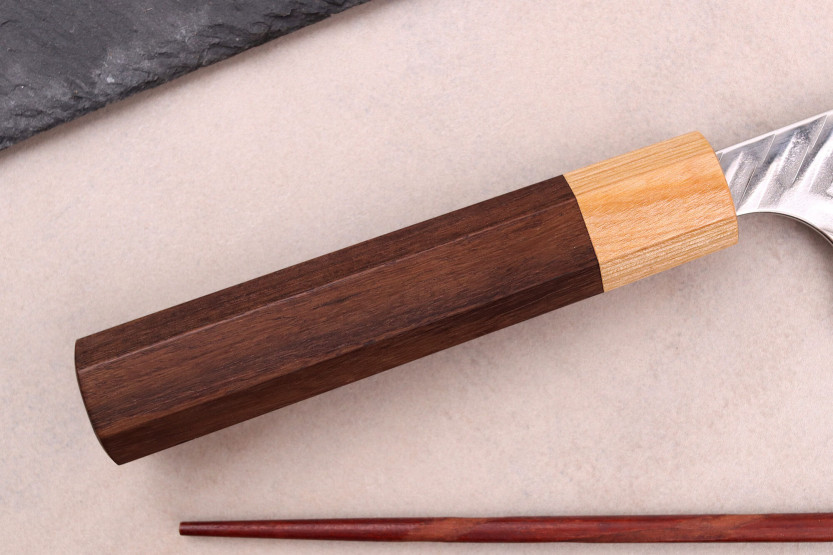
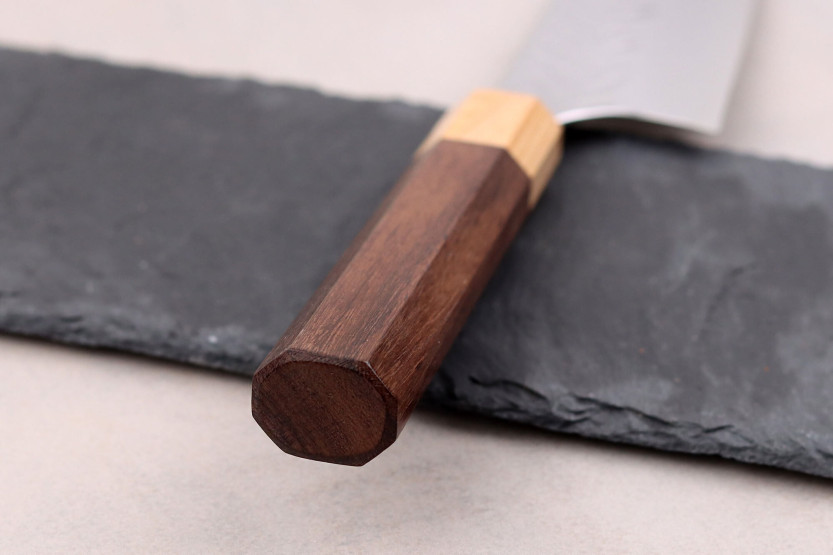
The octagonal handle, in rosewood combined with a clear pakkawood bolster, offers a secure, comfortable grip suitable for all cooks: left- and right-handed alike! Its design aims to maintain a natural grip, eliminating fatigue during prolonged use of your Japanese kitchen knife.
Summary of your handcrafted Japanese knife's features
- San Maï 3-layer structure: balance between durability and flexibility
- SPG Strix steel
core
- : precise, efficient cutting edge
- 65 HRC Rockwell: long cutting edge retention
- V-Tsuchime hammered finish: non-slip and visual
- Rosewood handle and pakkawood bolster: stability and elegance
- Octagonal shape: ambidextrous comfort
- Handcrafted in Japan: authenticity and expertise
Always wash your Japanese kitchen knife by hand in lukewarm water, without aggressive products, then dry it immediately. Use a medium (1000) to fine (6000) grit whetstone, depending on use. Never put your knife in the dishwasher or leave it to soak in the sink.
Portrait of Japanese blacksmith: Yoshimi Kato
Yoshimi Kato, a master cutler based in Takefu (Fukui, Japan), is renowned for his meticulous craftsmanship. He applies a tradition handed down for generations, using ancestral techniques such as hand-hammering. Each blade is signed, a guarantee of exacting control and a unique finish. His signature guarantees a rare product, forged with rigor and passion. His workshop is located in the Takefu Knife Village, a place where many craftsmen gather to exchange know-how and experiences: a place where the tradition of Japanese cutlery is passed on.
Discover Japanese damascus knives on Knifeleader.eu!




 By buying this product you can collect up to