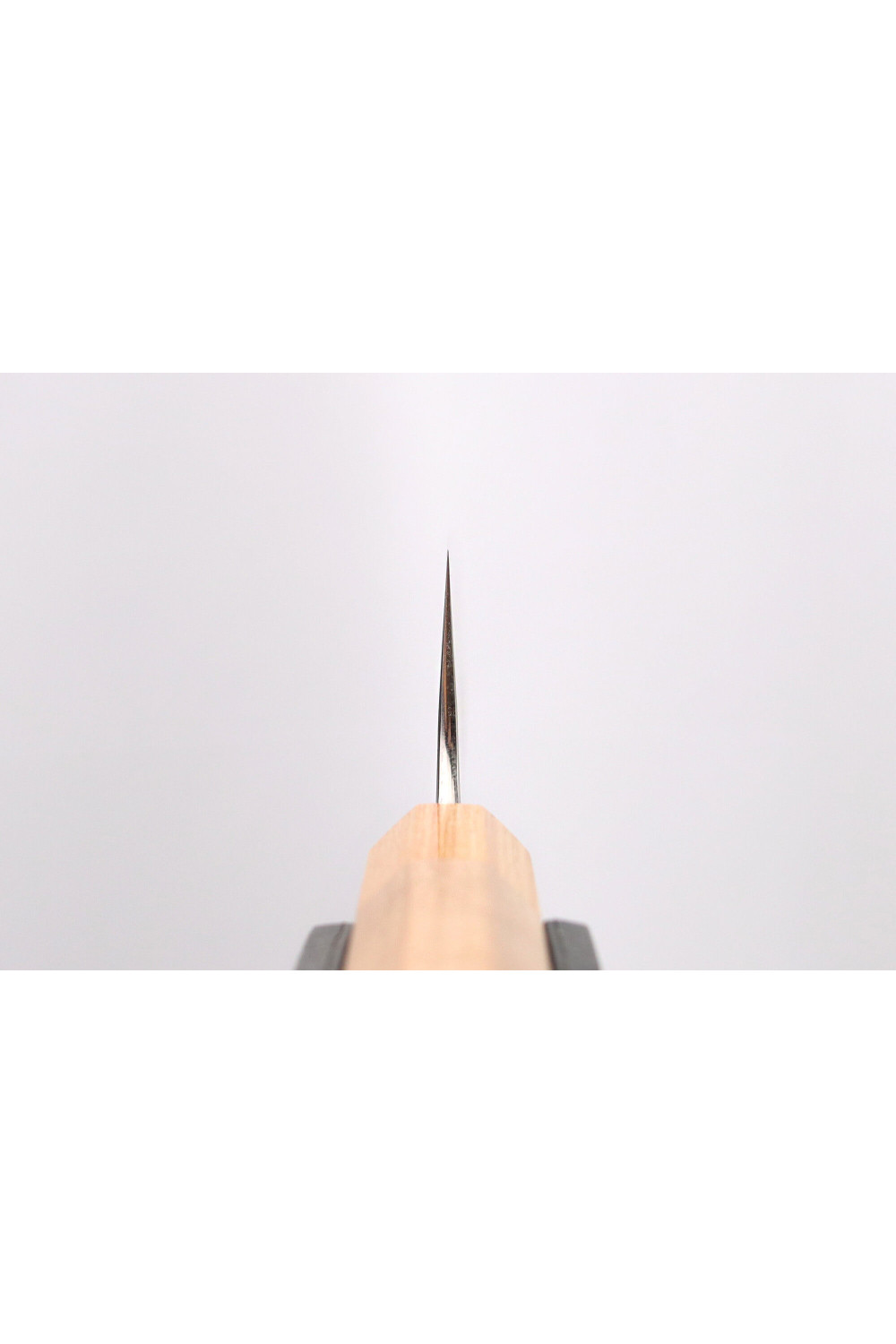
Yoshimi Kato: a Japanese master blacksmith
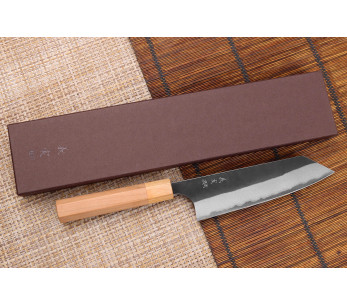
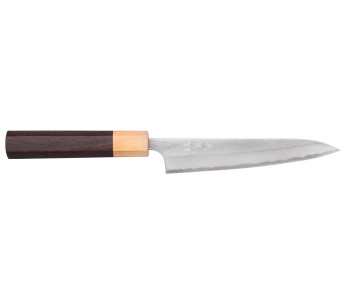
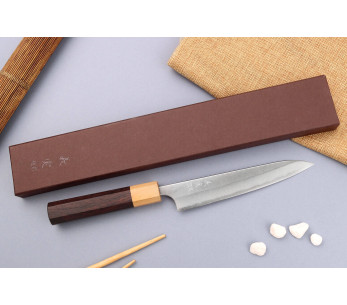
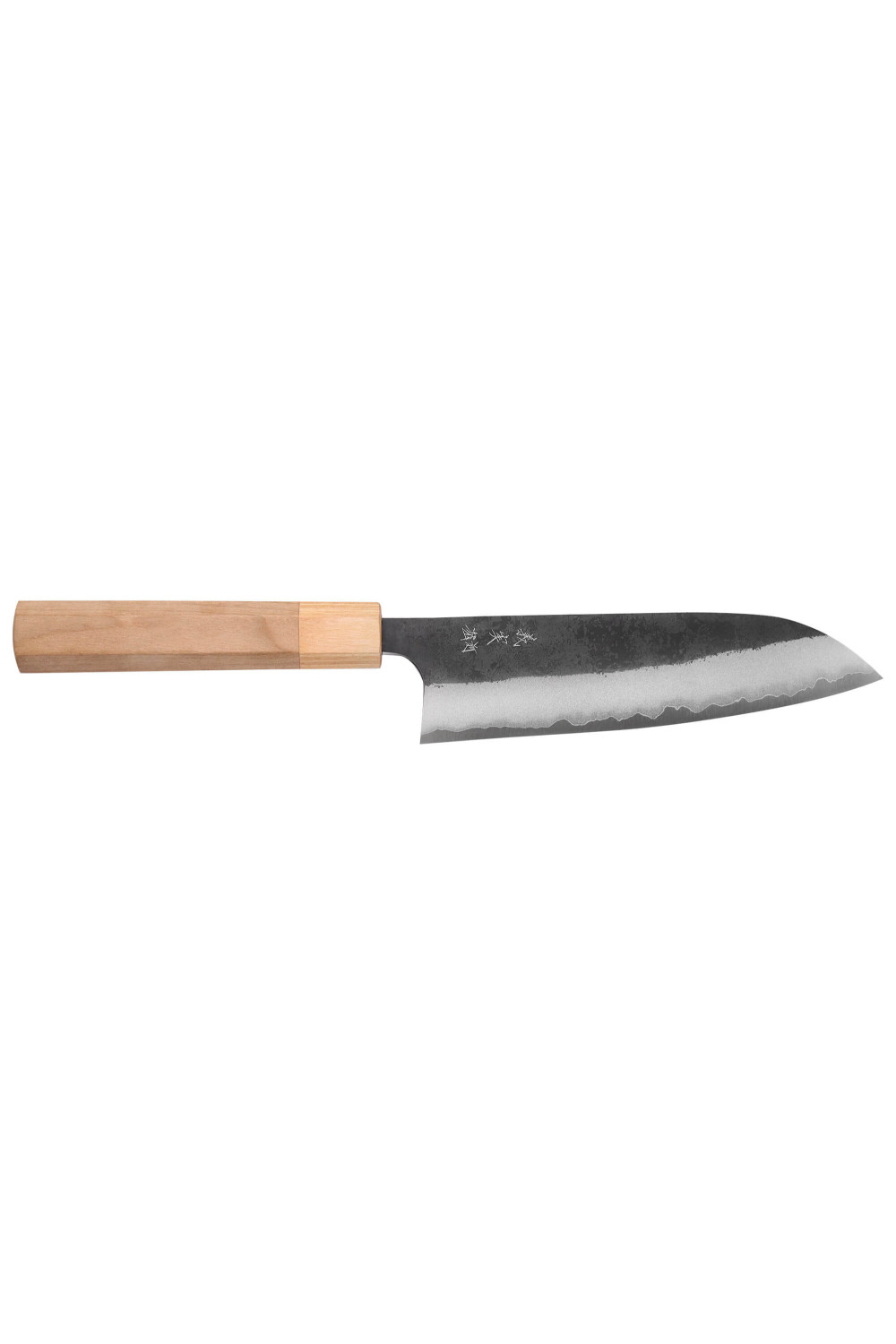
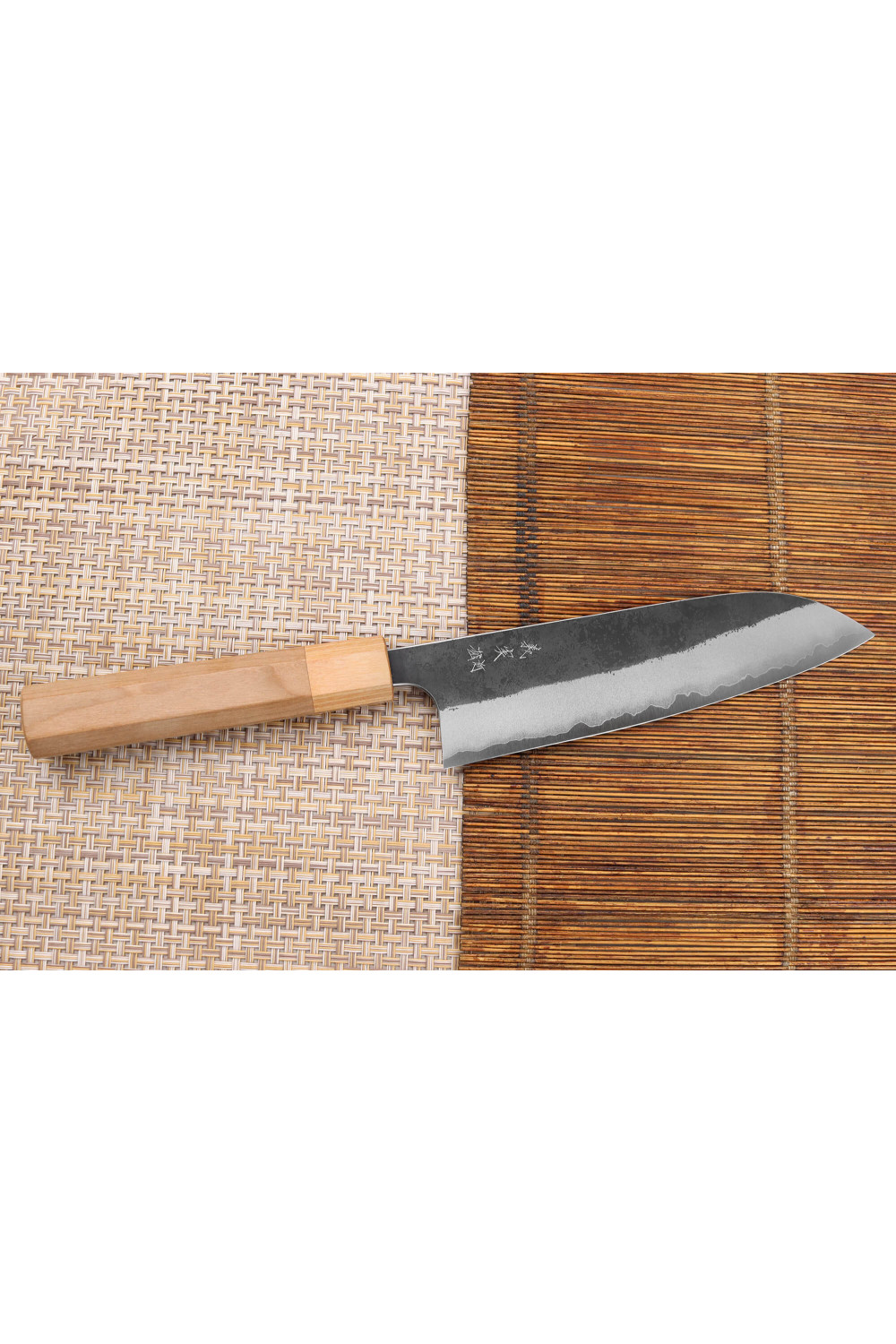
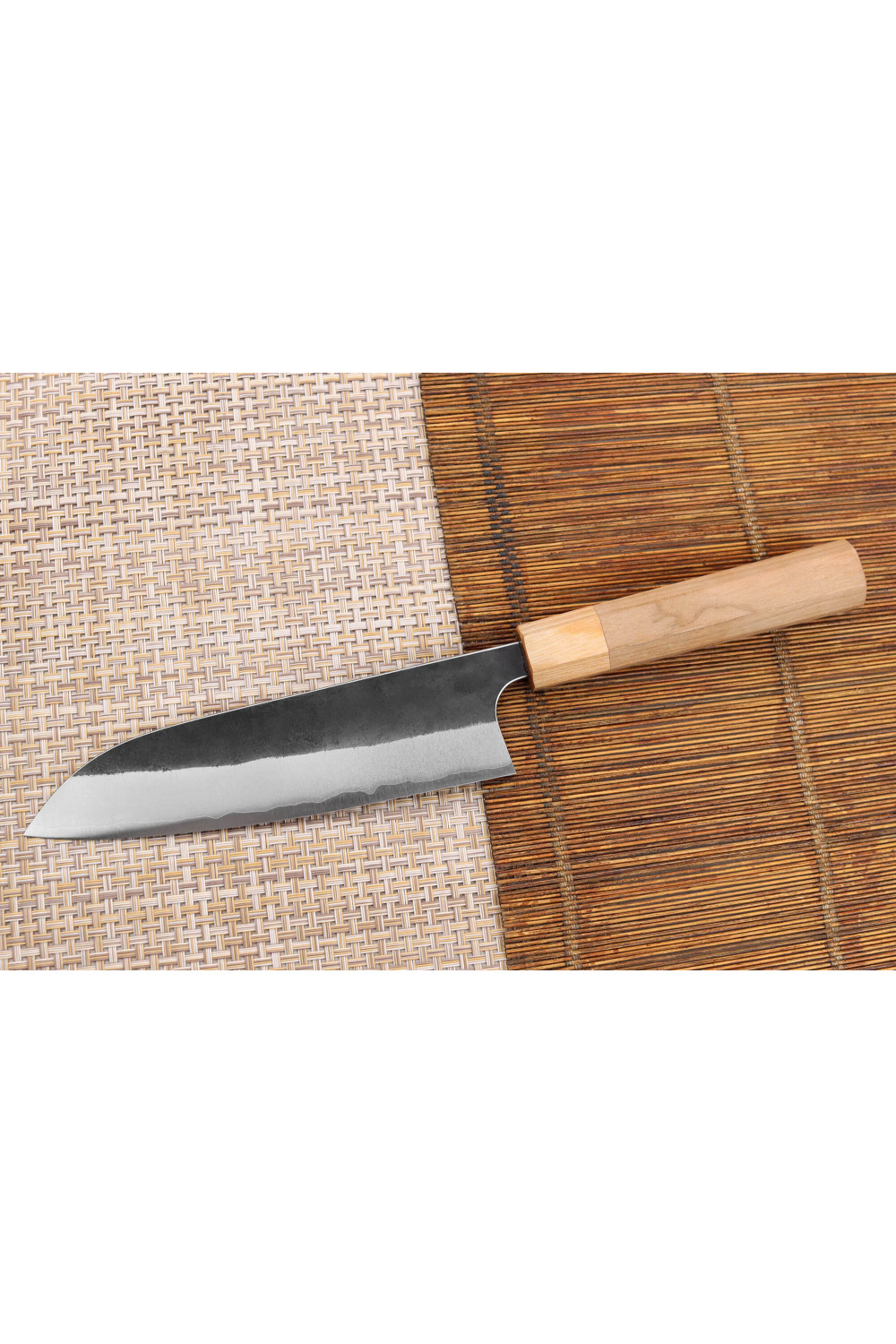
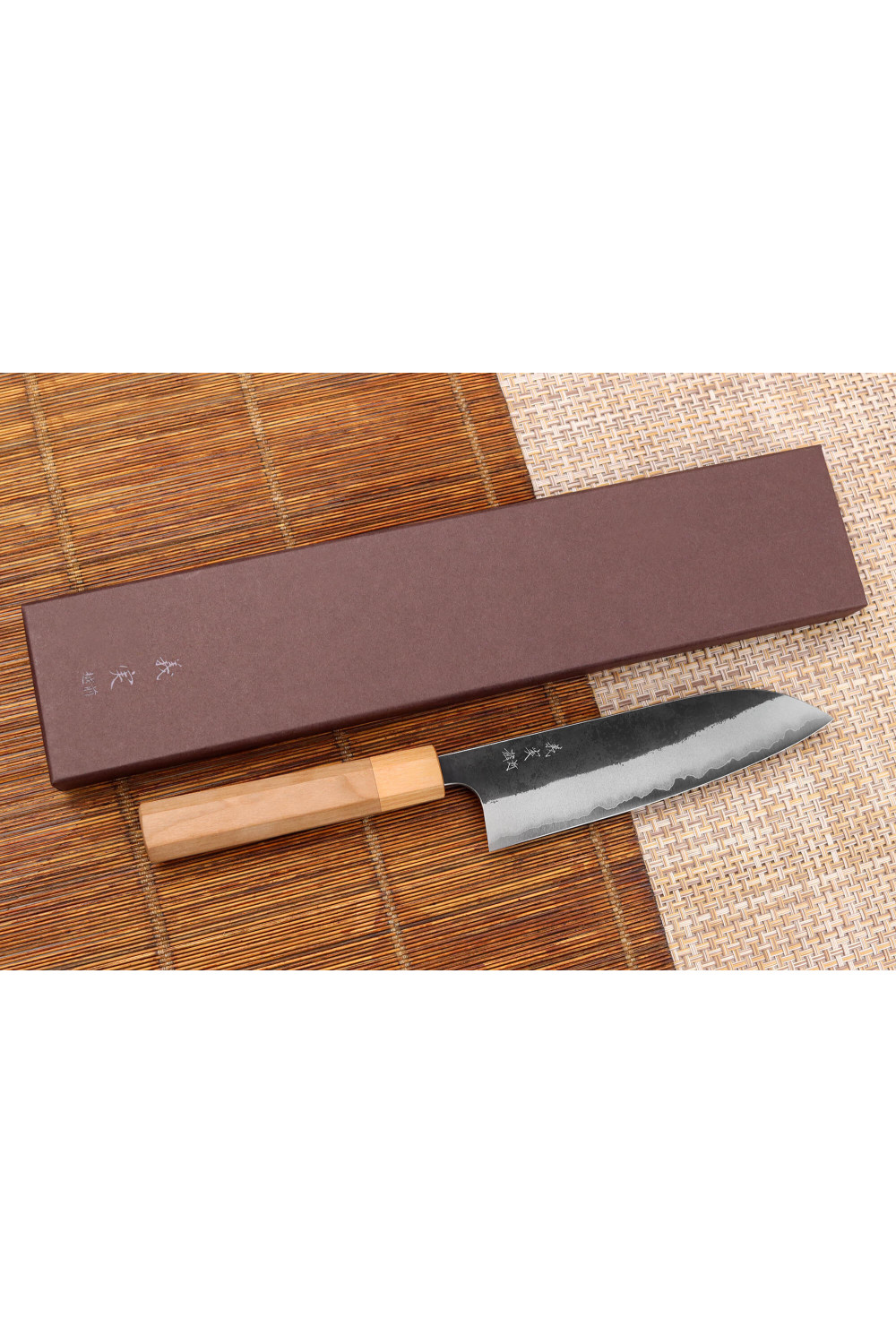
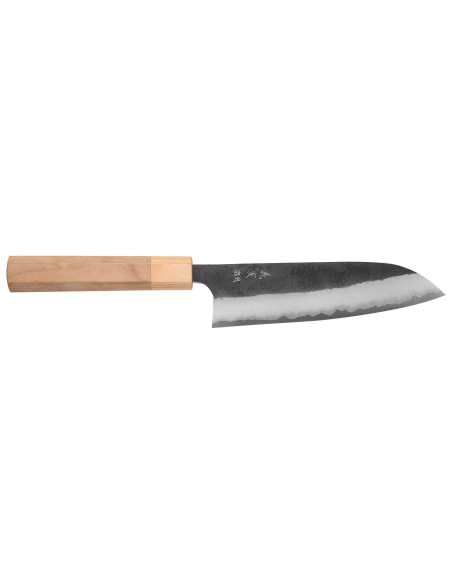
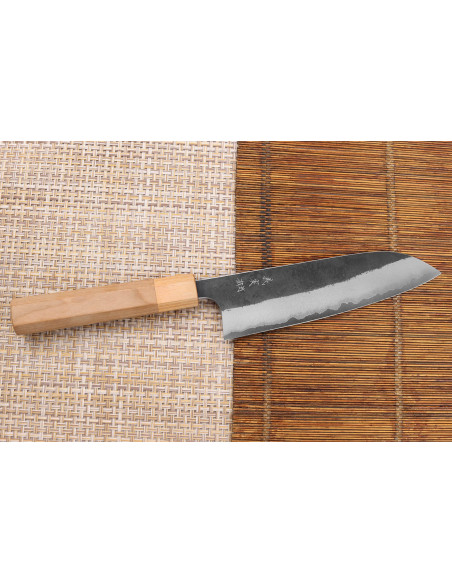
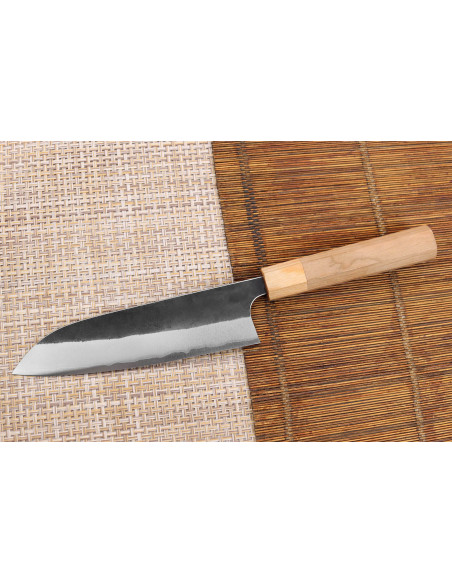
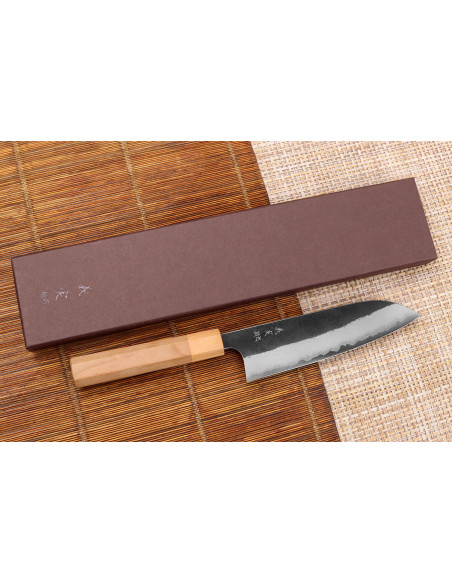
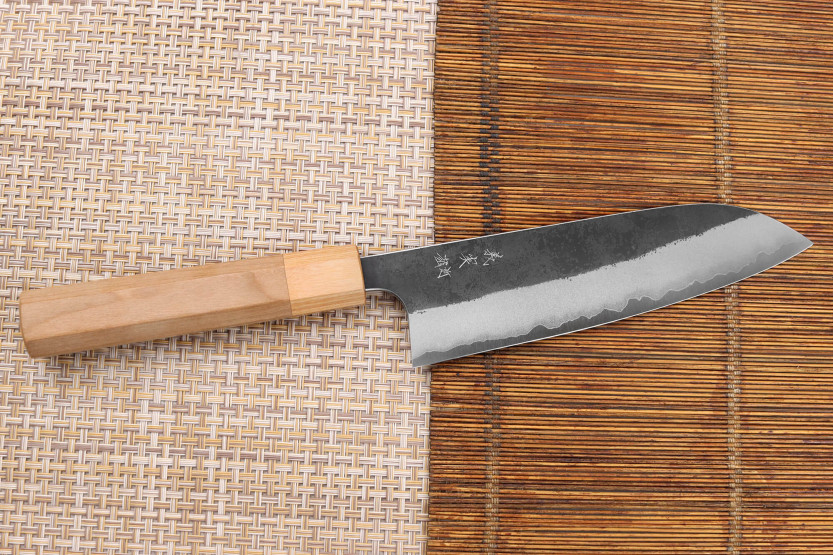
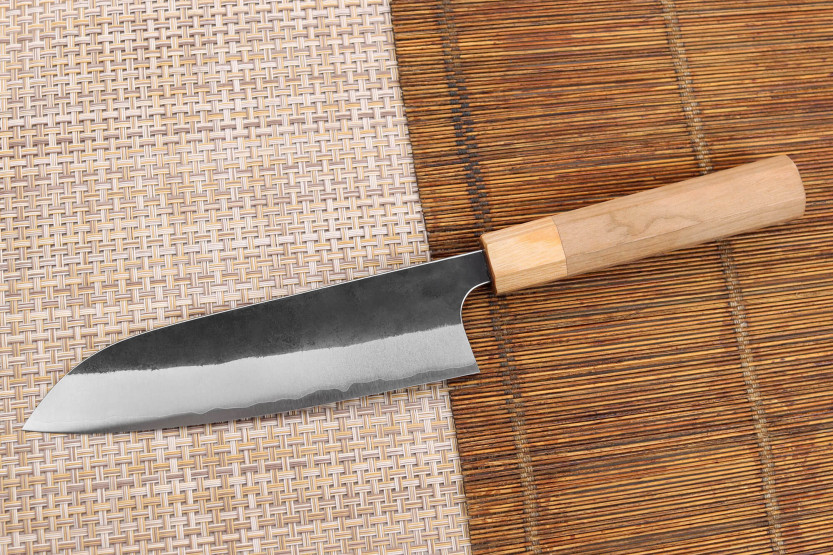
This santoku knife is the work of Yoshimi Kato, a talented Japanese craftsman from Takefu. Trained by renowned masters, including his father-in-law Hiroshi Kato San, he perpetuates an ancestral know-how recognized the world over.
Hiroshi Kato, one of the greatest blacksmiths of his generation, has devoted decades to making Japanese knives. Co-founder of the Takefu Knife Village, he helped bring together numerous craftsmen, promoting the exchange of knowledge and the preservation of traditional techniques. Today, he passes on his expertise to new generations of blacksmiths.
(Hiroshi san on the left and Yoshimi San on the right)
Yoshimi Kato has taken over his master's workshop, continuing the production of Hiroshi Kato's designs while developing his own kitchen knives. His apprenticeship, which began in 2013, has enabled him to demonstrate exceptional talent. Combining tradition and innovation, he designs Japanese knives prized by chefs and cutlery enthusiasts the world over.
Yoshimi Kato knives are crafted according to traditional Japanese methods, combining precision and exacting standards. Each piece is unique and will appeal to professionals and collectors alike!
Aogami Super steel blade for a clean cut
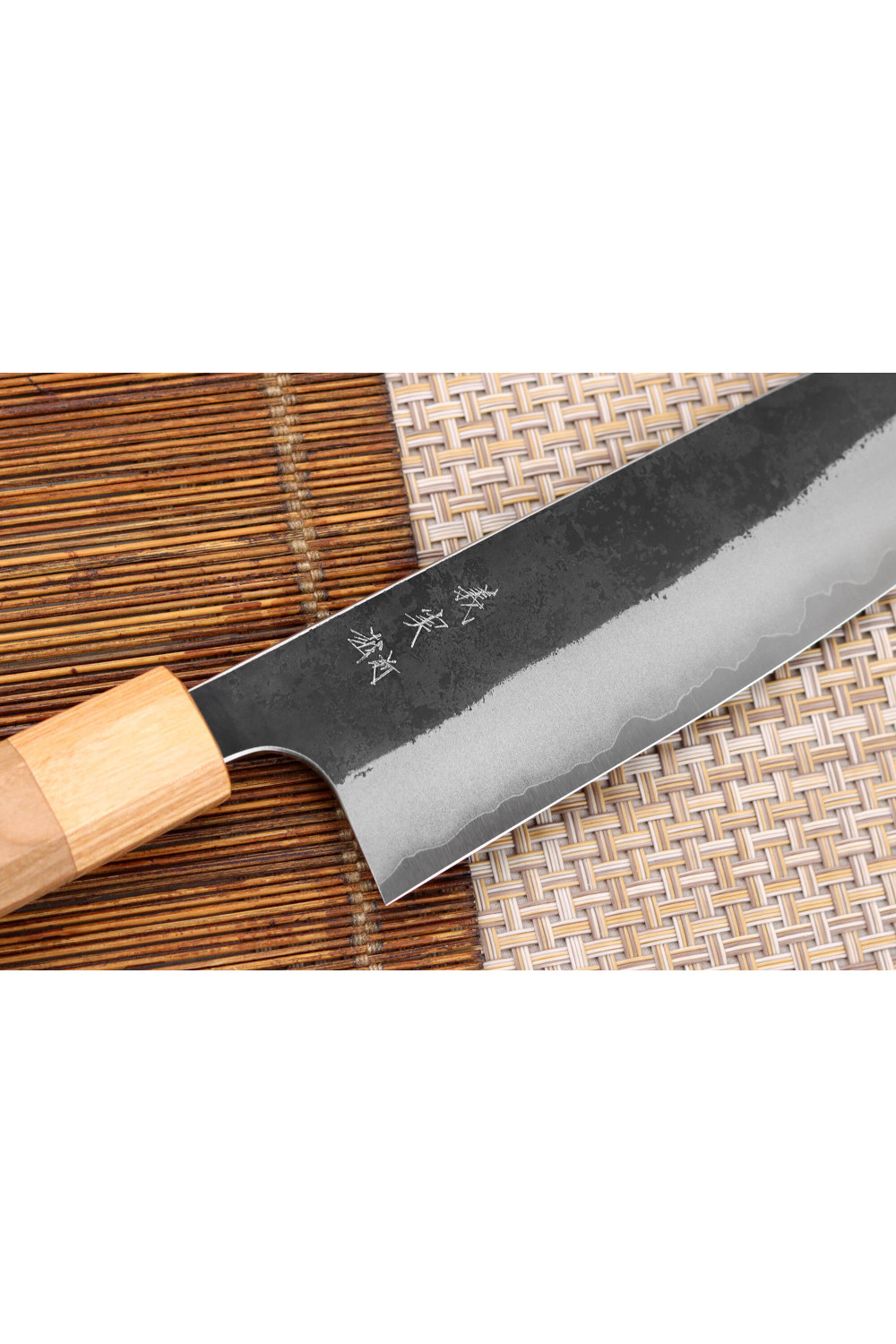
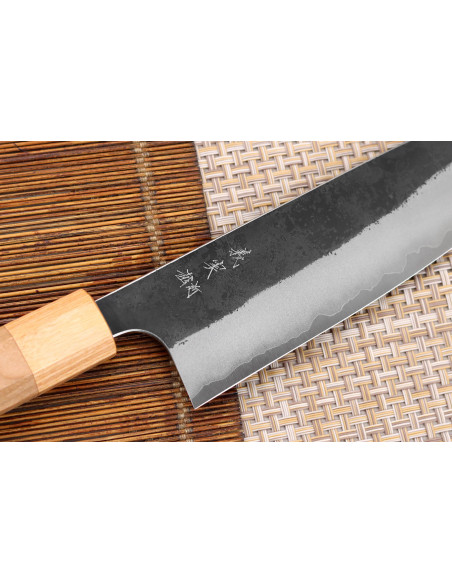
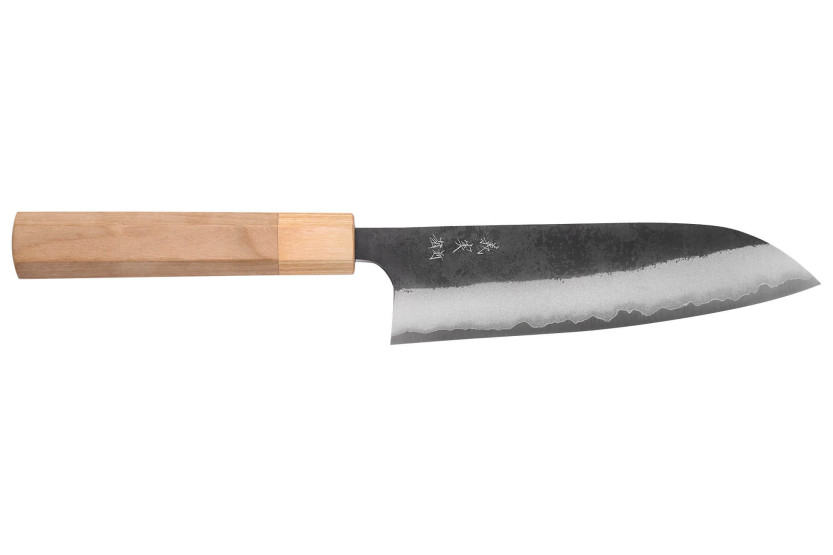
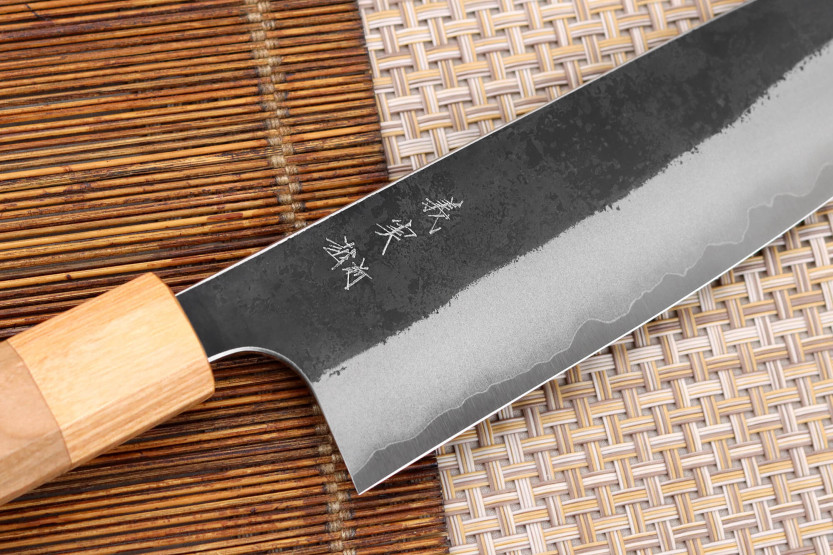
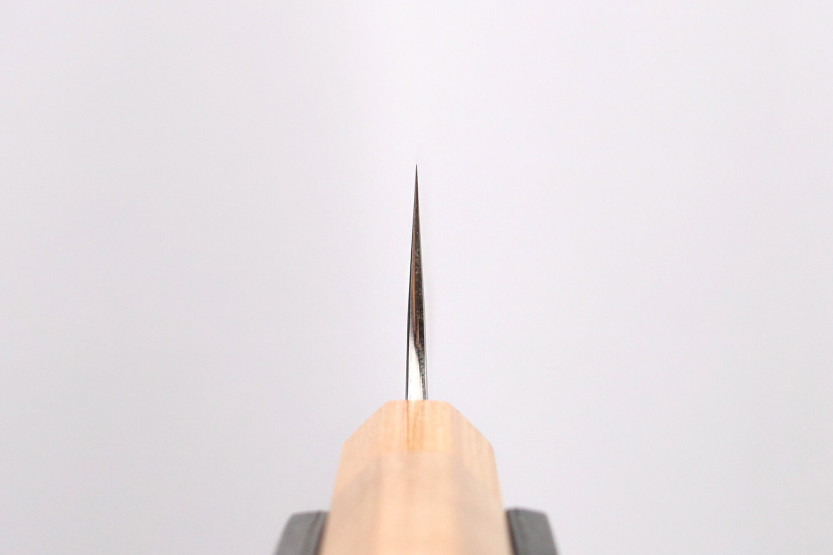
The blade of this Japanese santoku knife is manufactured using the San Maï technique, which means "three layers" in Japanese. This traditional process consists of forging a core of rigid steel, then wrapping it in a layer of softer, folded-over steel. This technique optimizes the balance and strength of your blade.
The core of this blade is made of Japanese Aogami Super steel, also known as Blue Super Steel or AS. This top-of-the-range alloy, manufactured by steelmaker Hitachi, contains chromium, tungsten and a high carbon content (around 1.5%). Compared with Western knives, which have a carbon content of between 0.5 and 1%, this steel is much harder.
With a hardness of 65HRC on the Rockwell scale, this blade offers an exceptionally fine cutting edge. It retains its cutting edge for a long time and wears very slowly, requiring less frequent sharpening (around two to three times a year for domestic use). What's more, this steel is particularly appreciated by Japanese craftsmen for its ease of sharpening.
The Aogami Super core is protected by a softer layer of stainless steel, which improves the blade's strength while reducing the risk of breakage in the event of light impacts during use.
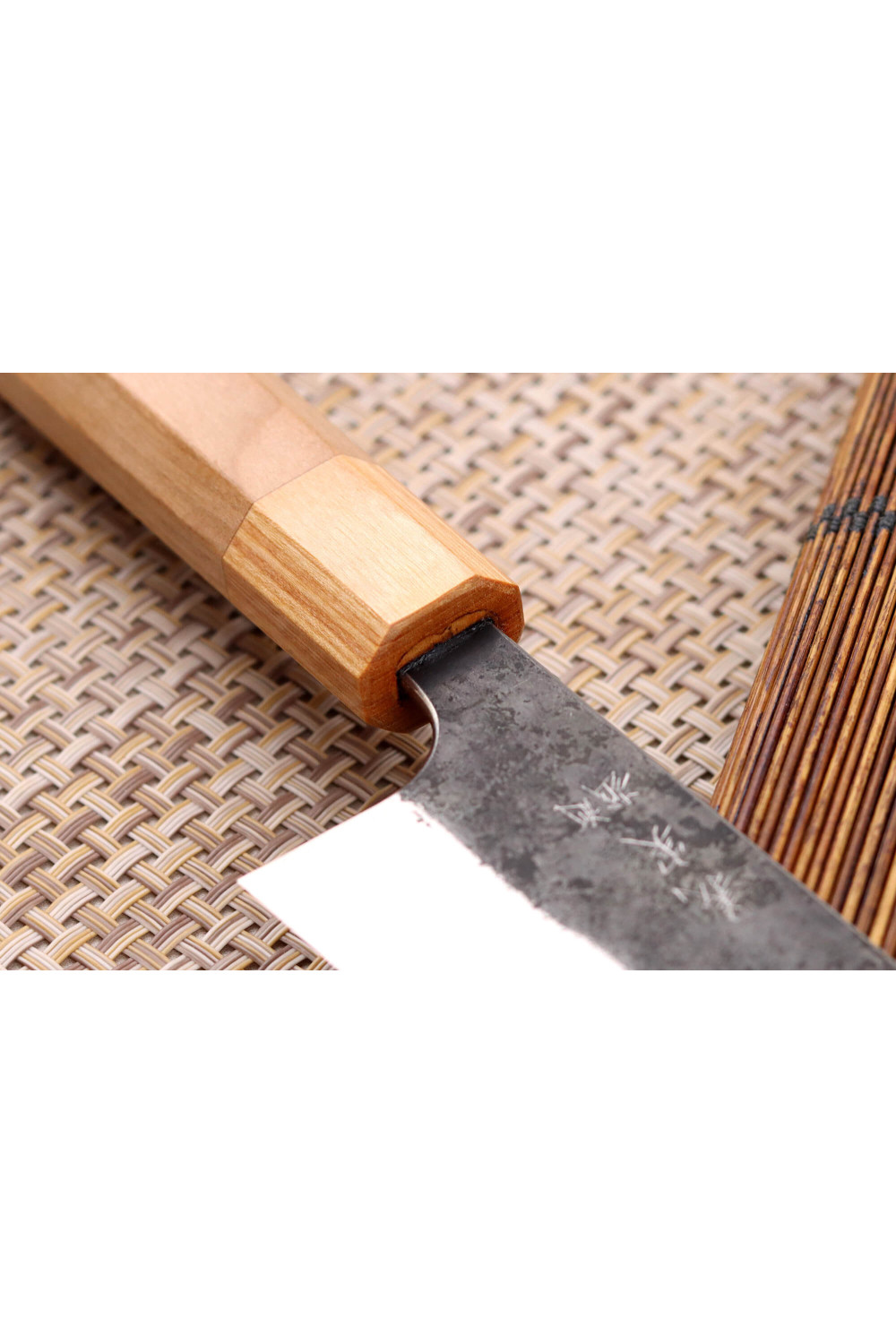
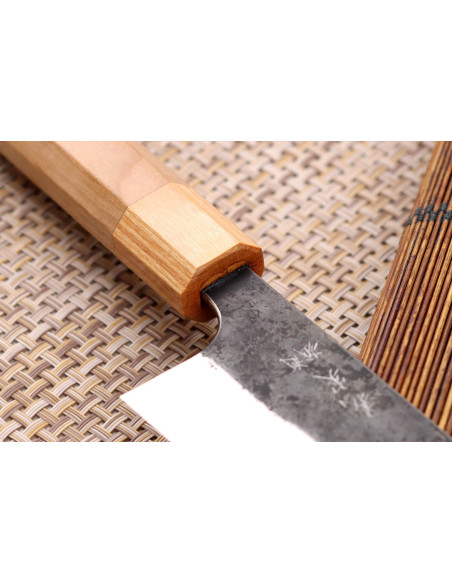
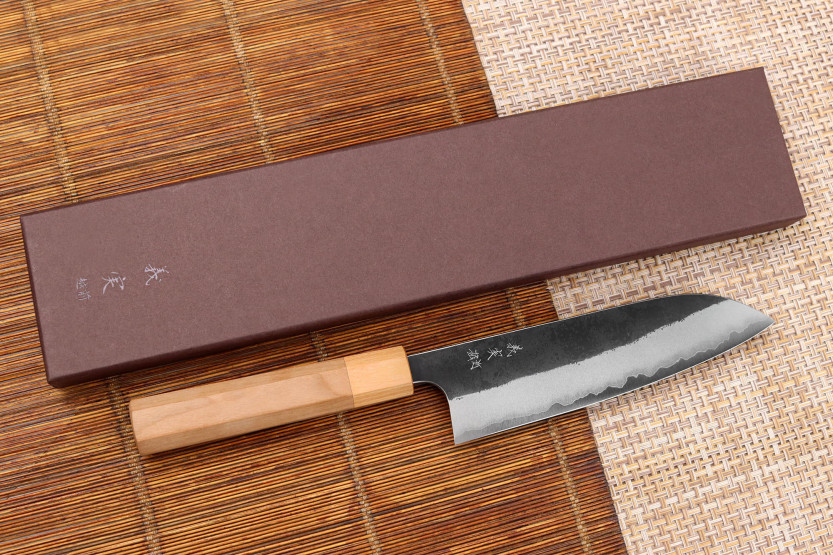
Finally, the rough forged finish gives your Japanese kitchen knife a traditional, authentic look, much appreciated by Japanese cooks. The blade is hand-sharpened for optimum performance, and engraved kanji add a unique touch of authenticity.
A refined cherry wood handle for this handcrafted Japanese knife.
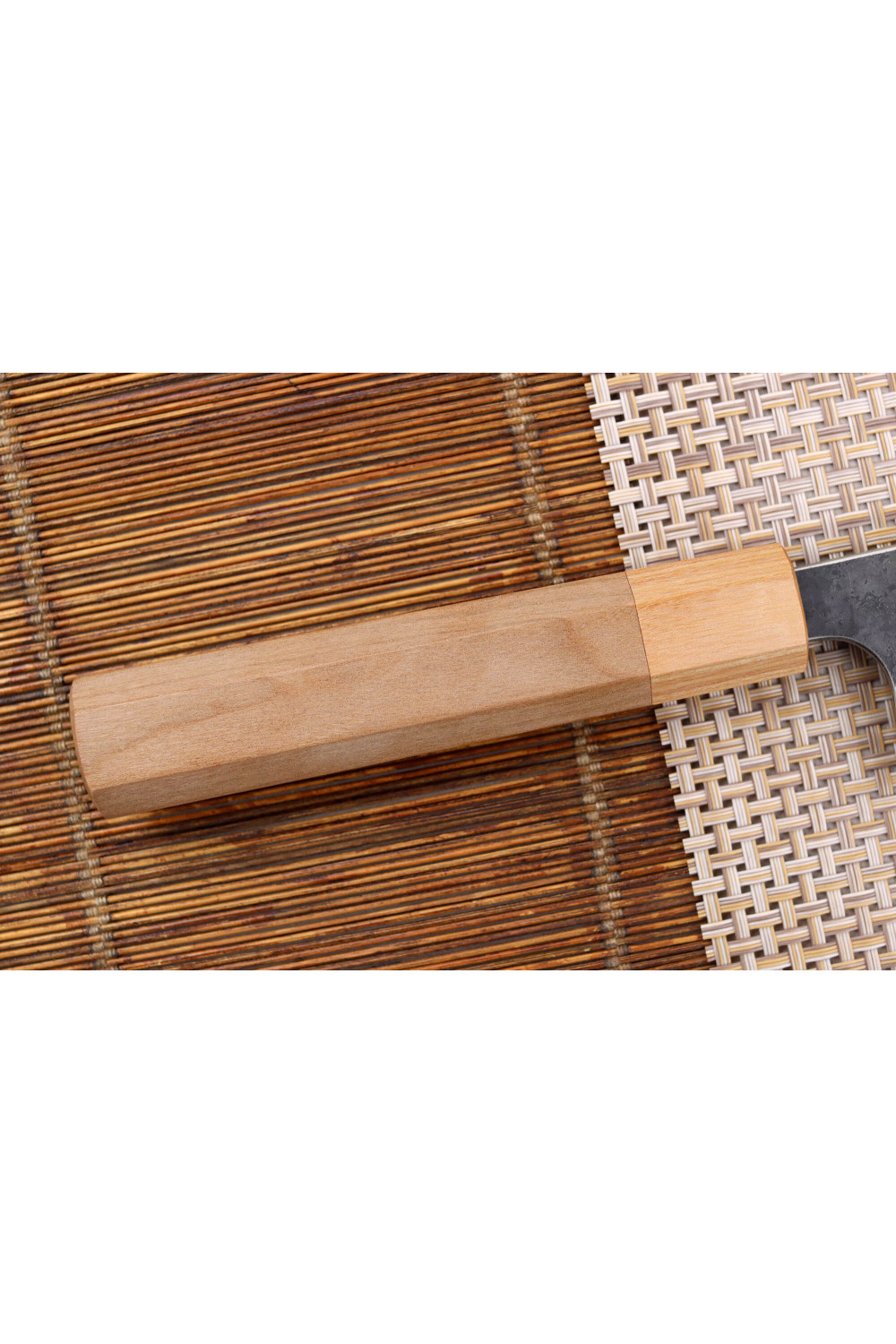
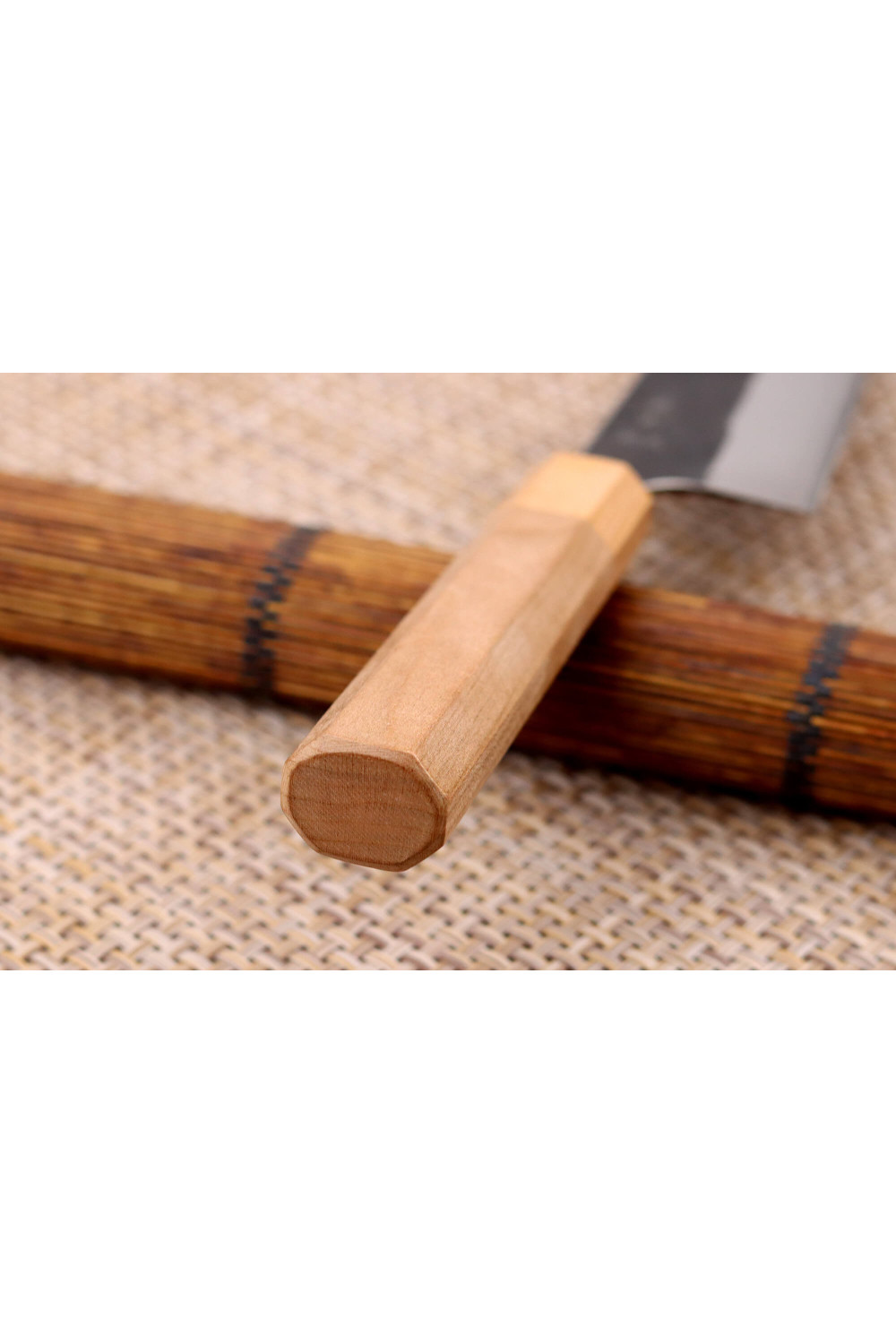
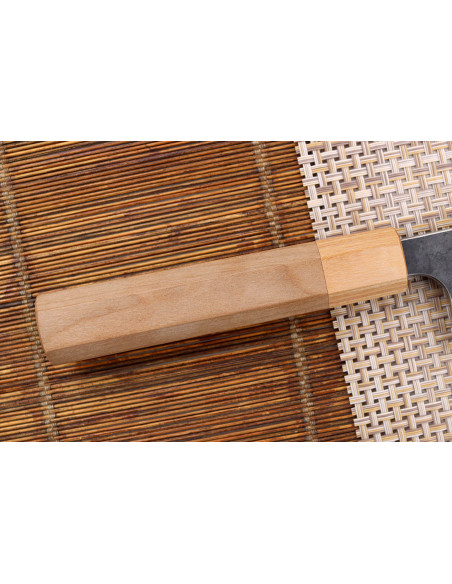
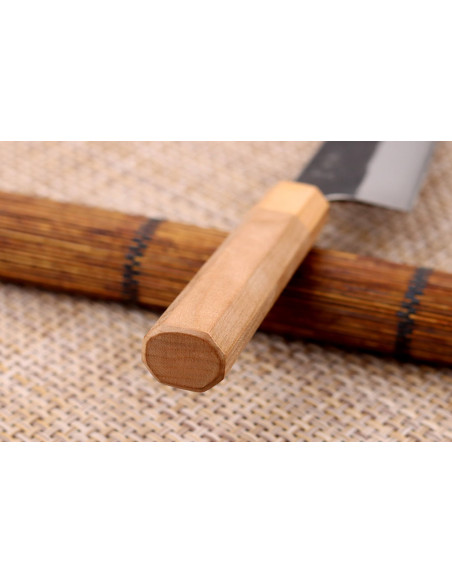
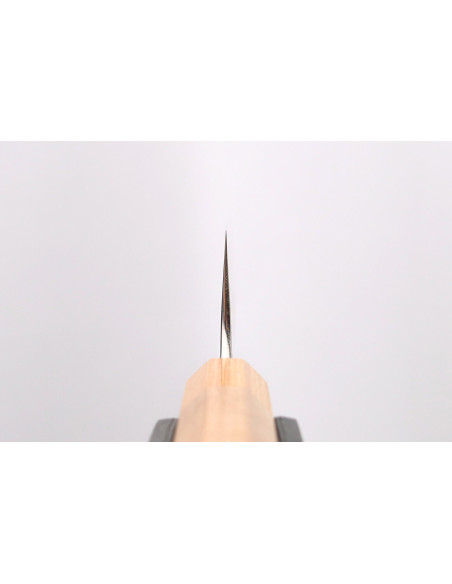
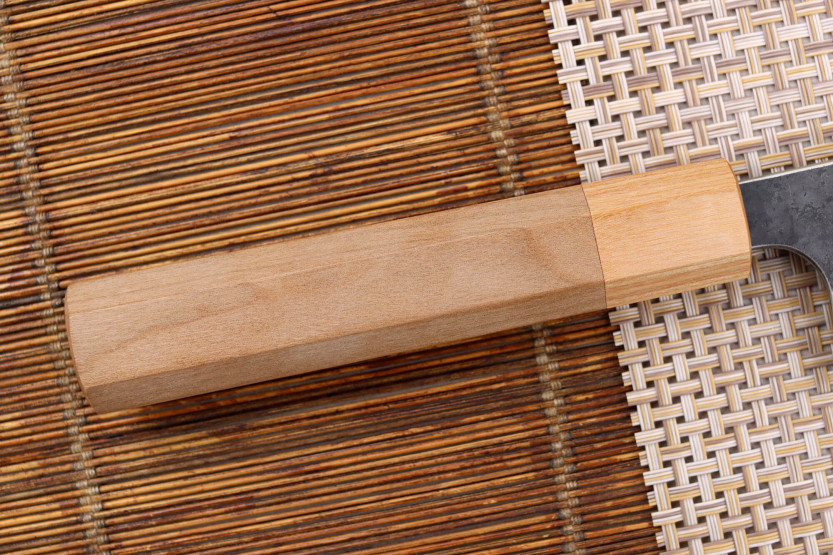
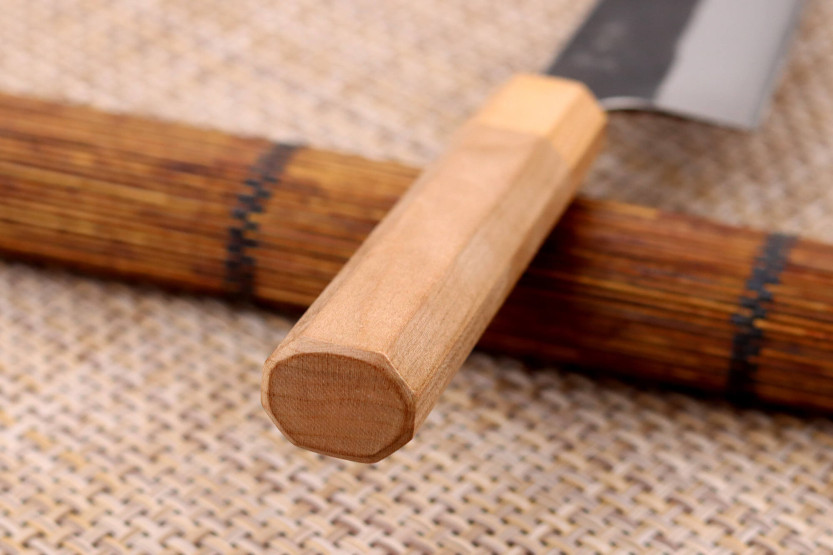
The handle of this handcrafted knife is made from cherry wood, a species renowned for its strength and durability. Its octagonal shape ensures an ergonomic grip, suitable for both right-handed and left-handed users, guaranteeing optimum comfort when making long cuts in the kitchen!
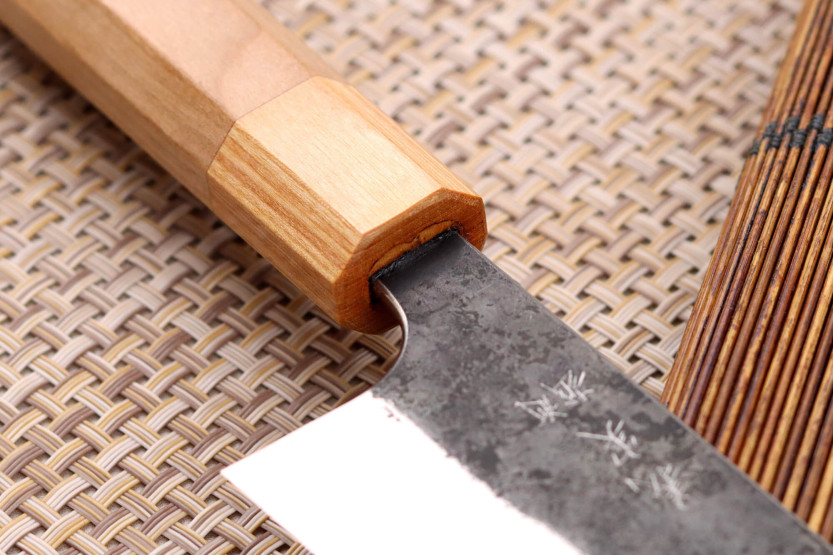
A clear pakkawood bolster completes the handle's design. This composite material, composed of laminated wood and resin, is resistant to temperature variations and offers an elegant aesthetic contrast with the lighter shade of cherry wood.
To ensure a perfect seal, wood paste is applied between the blade and the handle. This finish prevents the infiltration of water or food residues, guaranteeing the long life of your Japanese knife.
Care instructions for your Japanese knife
To preserve the quality and efficiency of your Japanese kitchen knife, we recommend washing it exclusively by hand with a soft sponge and a non-abrasive detergent. After each cleaning, immediately dry the blade and handle with a clean cloth before storing in a dry place. Do not use in a dishwasher, or soak in water for long periods.
Over time, the carbon steel blade may change color slightly, which is normal! This is a natural reaction of the carbon caused by the humidity and acidity of food. This phenomenon in no way alters its performance, and in fact adds character to your handcrafted Japanese knife.
Find other Japanese knives forged by Yoshimi Kato on Knifeleader.eu!




 By buying this product you can collect up to