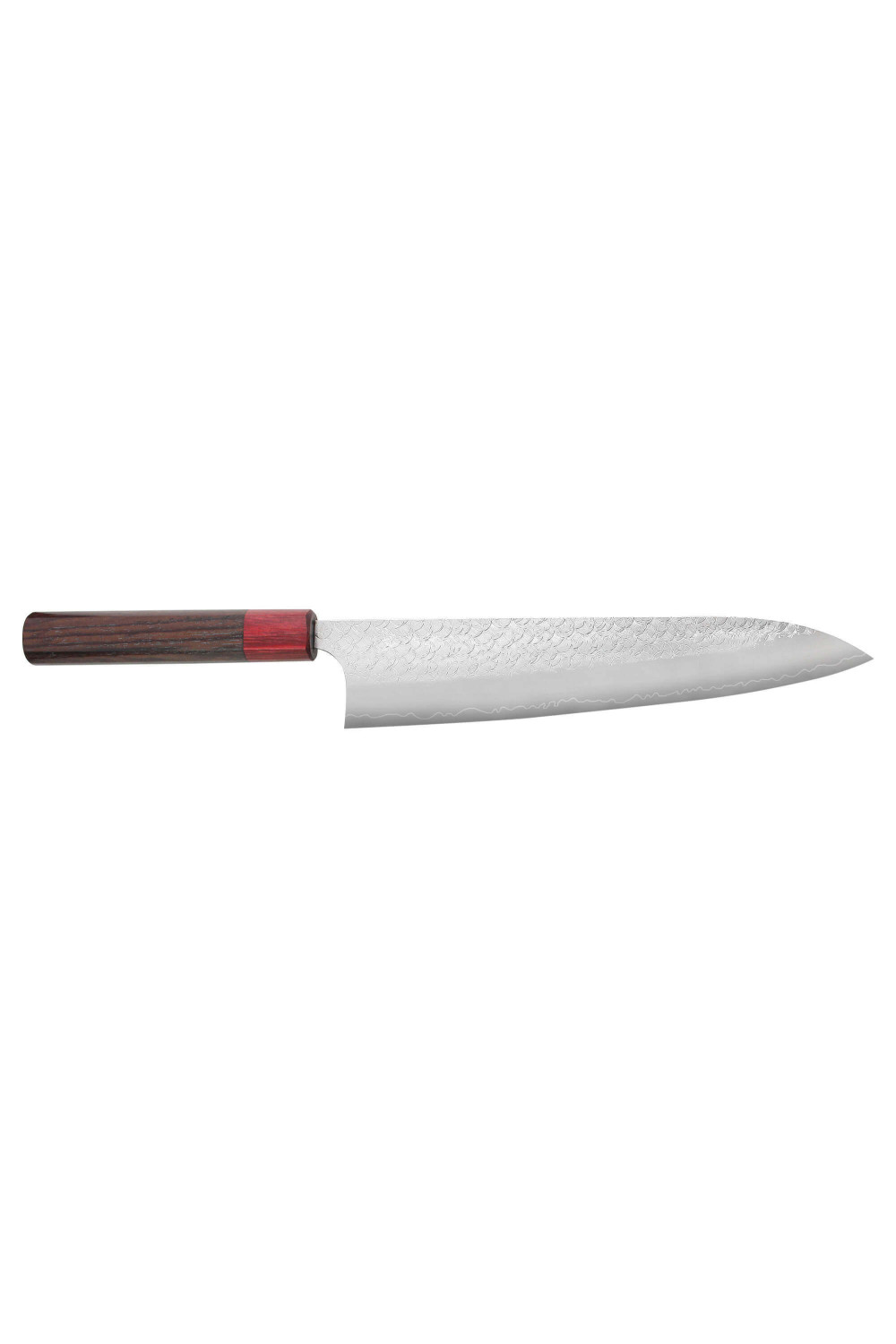
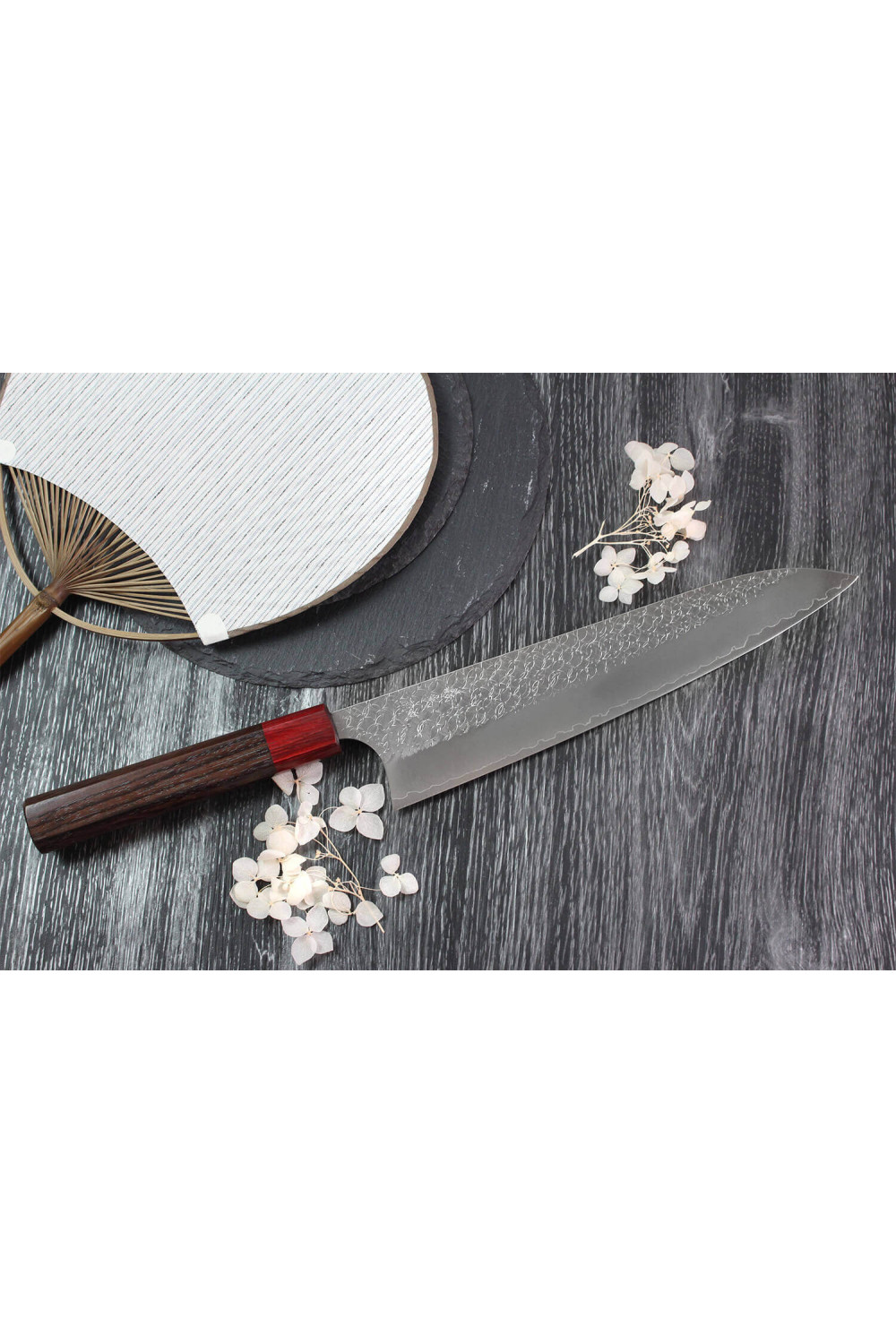
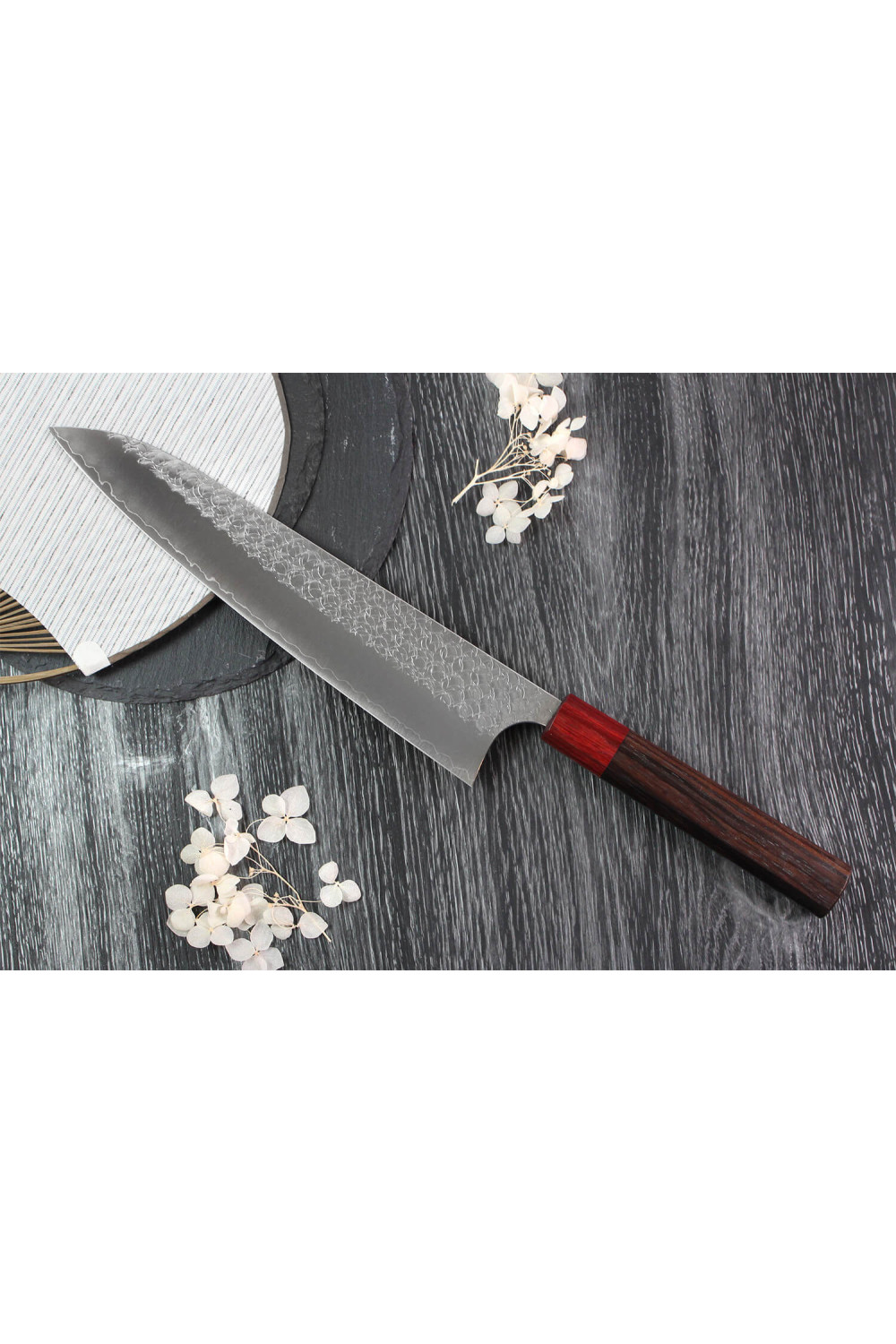
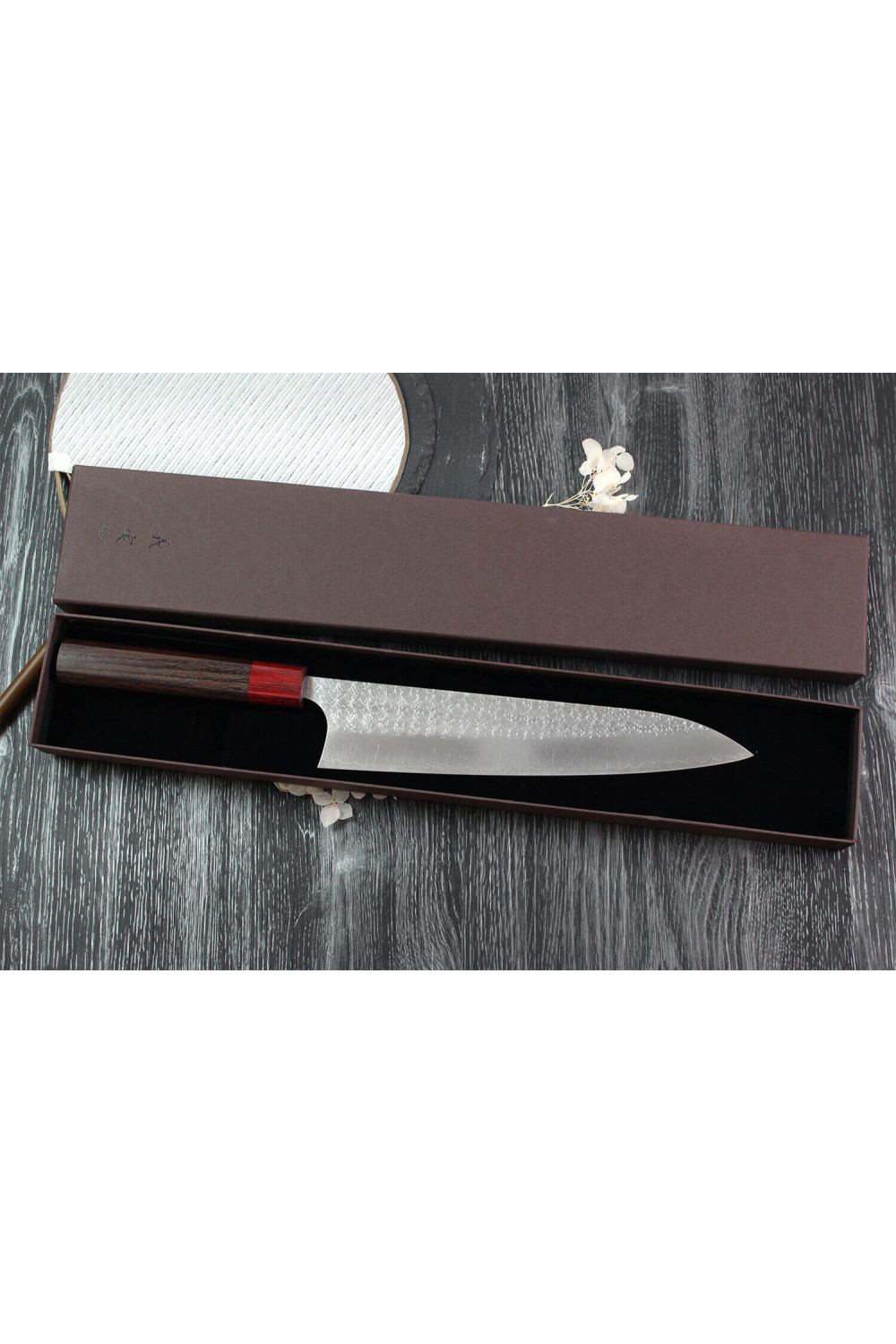
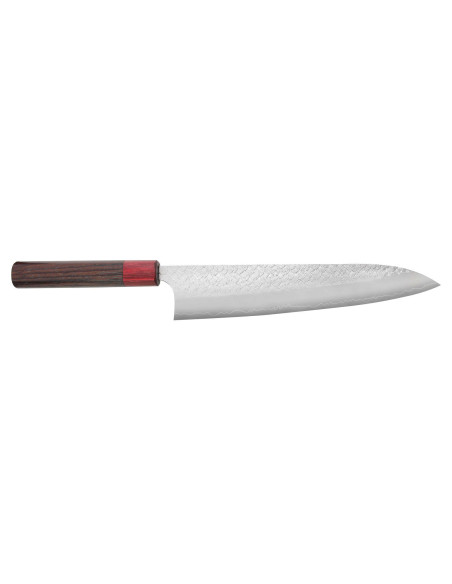
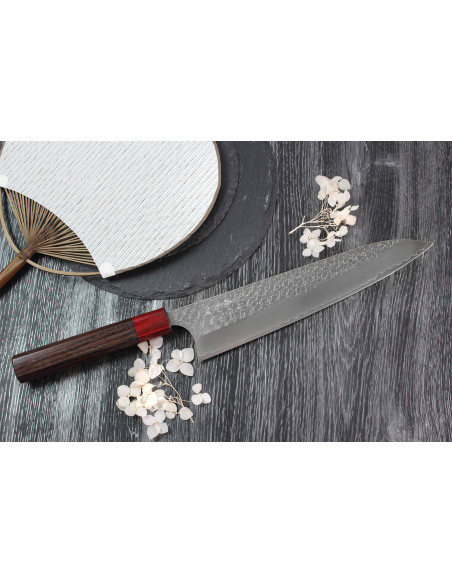
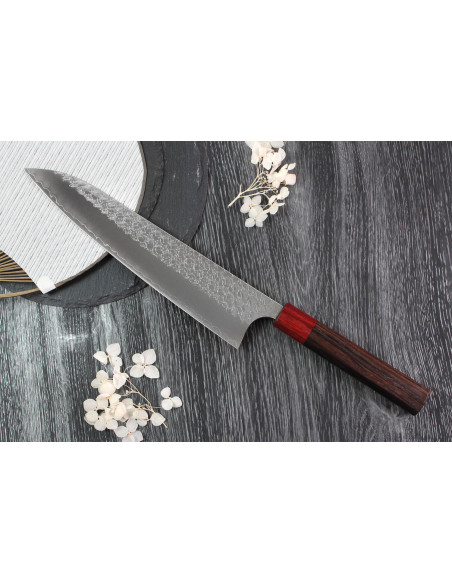
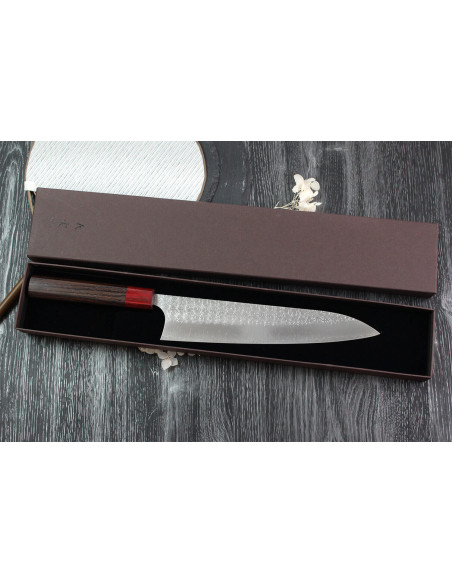
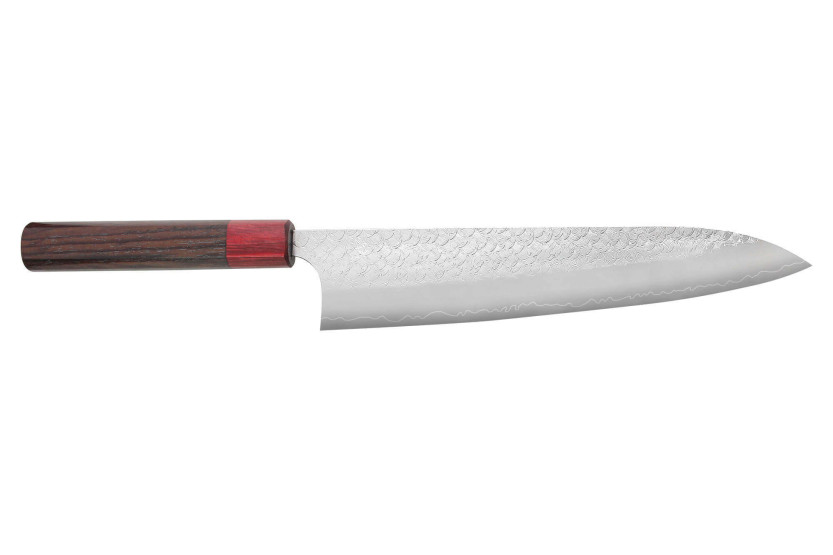
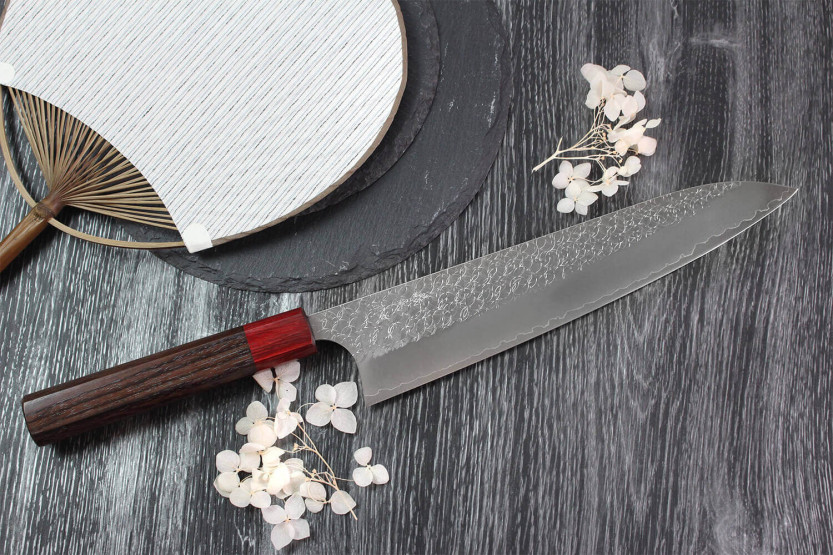
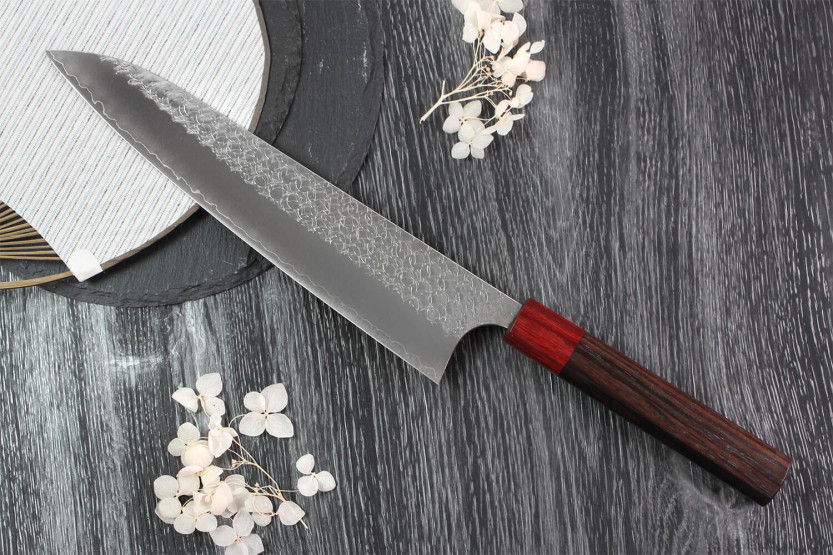
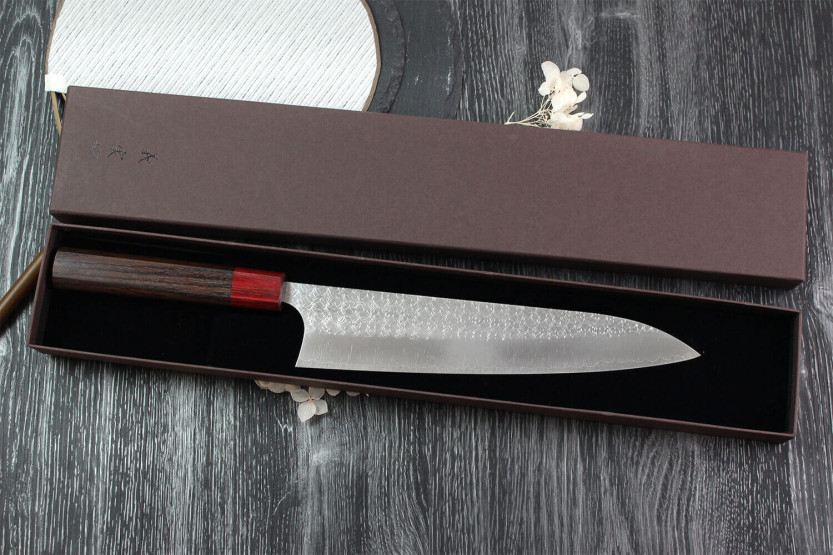
This superb Yoshimi Kato Minamo SG2 Tsuchime 24cm chef knife lets you vary the cuts you make. It's a versatile knife, suitable for chopping, chiseling, slicing... Its size allows you to tackle larger pieces than the 21cm knife. We recommend it for experienced users!
Japanese knives are true works of art, as well as being high-performance pieces. Here, the knife is forged at the Takefu Cutlery Village by Yoshimi Kato san. This is further proof of its efficiency, as the area is known as a stronghold of cutlery tradition. In fact, it is home to many blacksmiths who still work in the traditional way, using the methods employed by blacksmiths of yesteryear.
Here, Yoshimo san has apprenticed with several renowned blacksmiths, including Hiroshi Kato San (his father-in-law), a highly respected cutler. In fact, Hiroshi san is one of the area's greatest master blacksmiths. He created knives almost every day for almost 50 years and is now retired. He is also one of the founding members of the Takefu Cutlery Village!
Our young blacksmith began his training in 2013 and quickly learned the trade! He took over Hiroshi san's workshop and developed his own ranges.
This knife features a San Mai structure, i.e. it's built from 3 interlocking layers of steel, just like the beginning of a damascus blade.SG2 powdered steel is used in the center of the knife. It's an expensive, top-of-the-range alloy with many advantages! First of all, its hardness of around 63 HRC means that it will retain the razor-sharp edge of its early days for a very long time.
This SG2 steel is easy to sharpen - a real asset for such a rigid alloy! To maintain its edge, use a Sharpening stone. Note also that if we look at the microscopic level, this alloy is considered very pure. In fact, its structure is homogeneous, which makes it more resistant (for example, there's less risk of chipping when you use it).
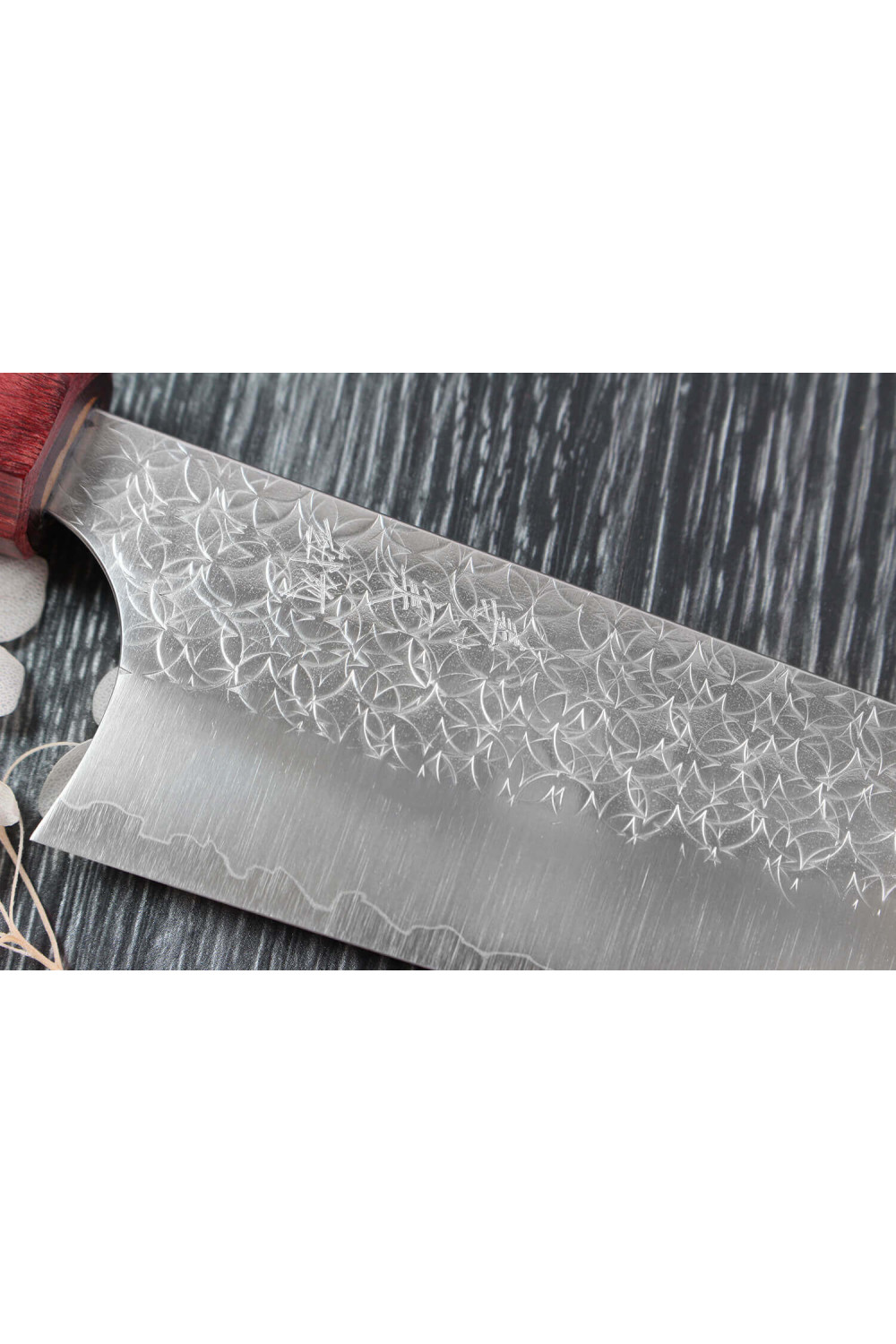
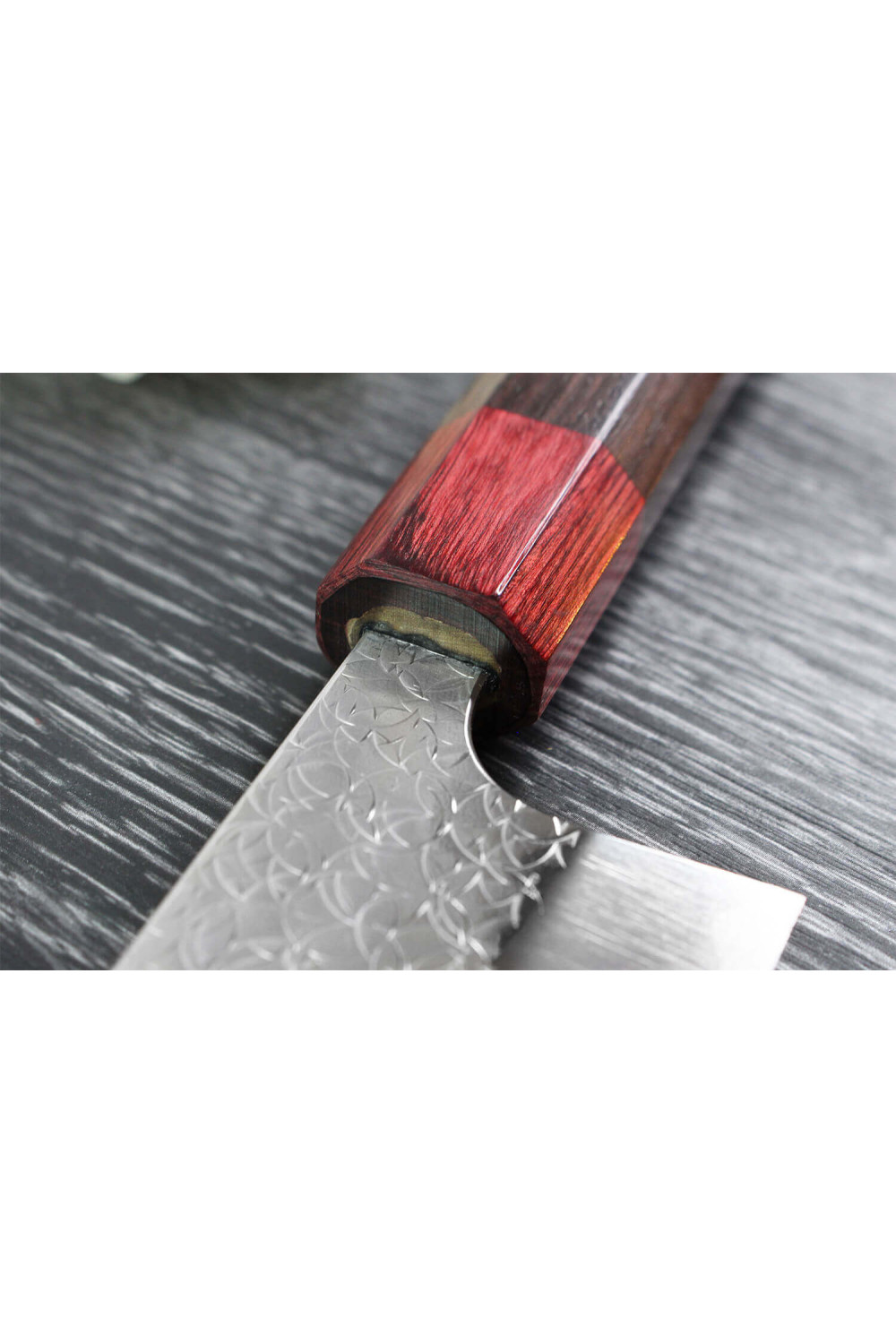
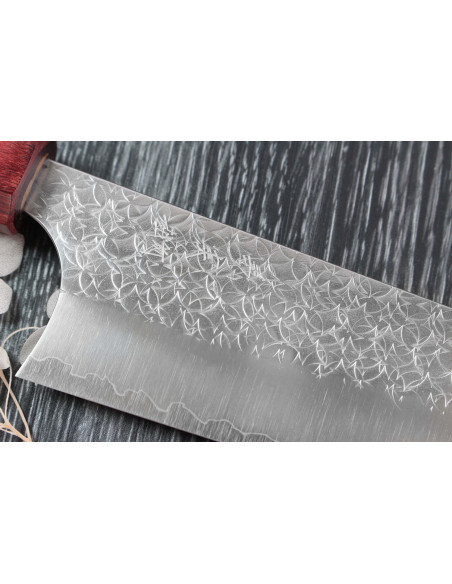
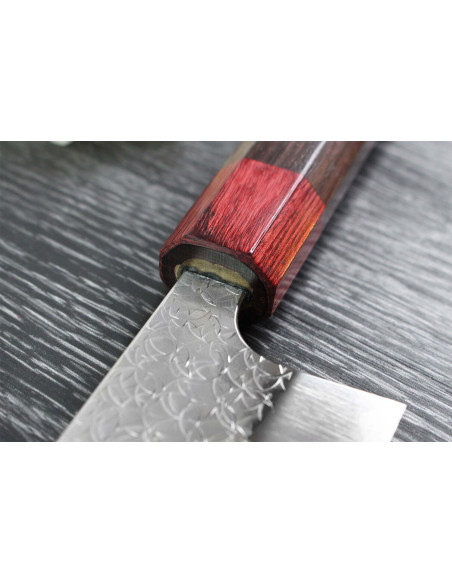
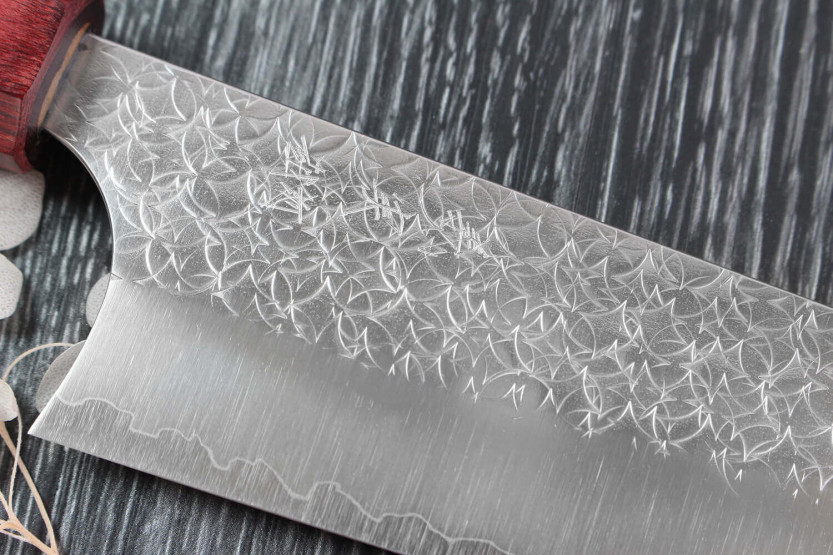
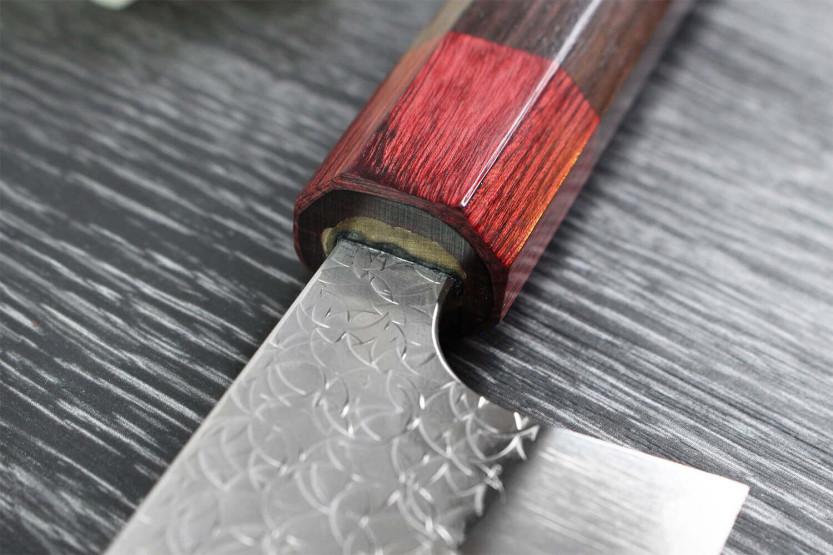
For protection, SG2 is surrounded by a layer of softer stainless steel. This difference in steel can be seen at the base of the blade: an irregular thread runs across the cutting surface.
Appreciate at first glance the magnificent rosette hammering on the top of the cutting surface: the rosettes intersect with refined, delicate lines. This gives the knife great character and inevitably attracts the eye.
To guarantee excellent cuts, the blade is hand-sharpened. The kanji on its surface are engraved by hand.
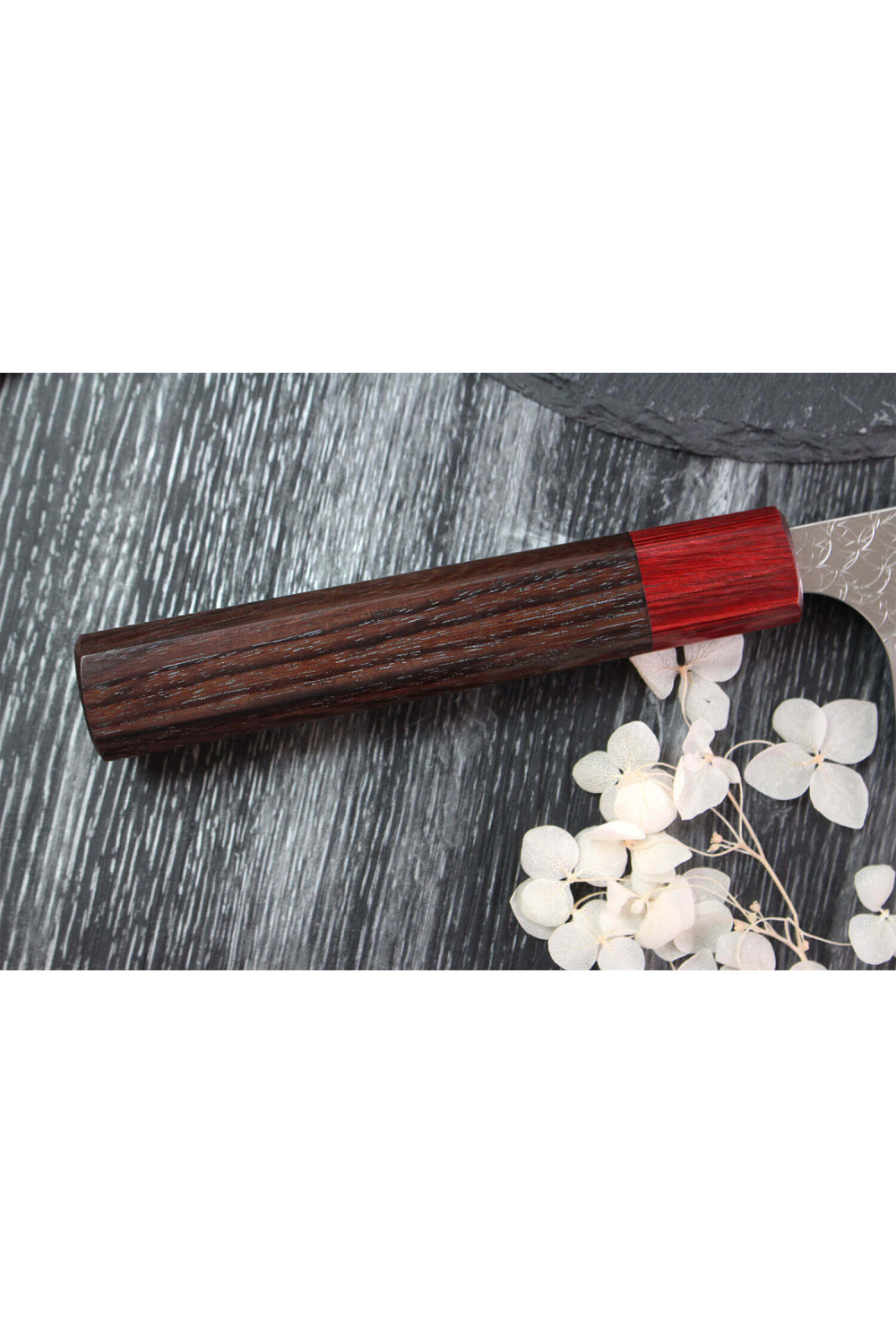
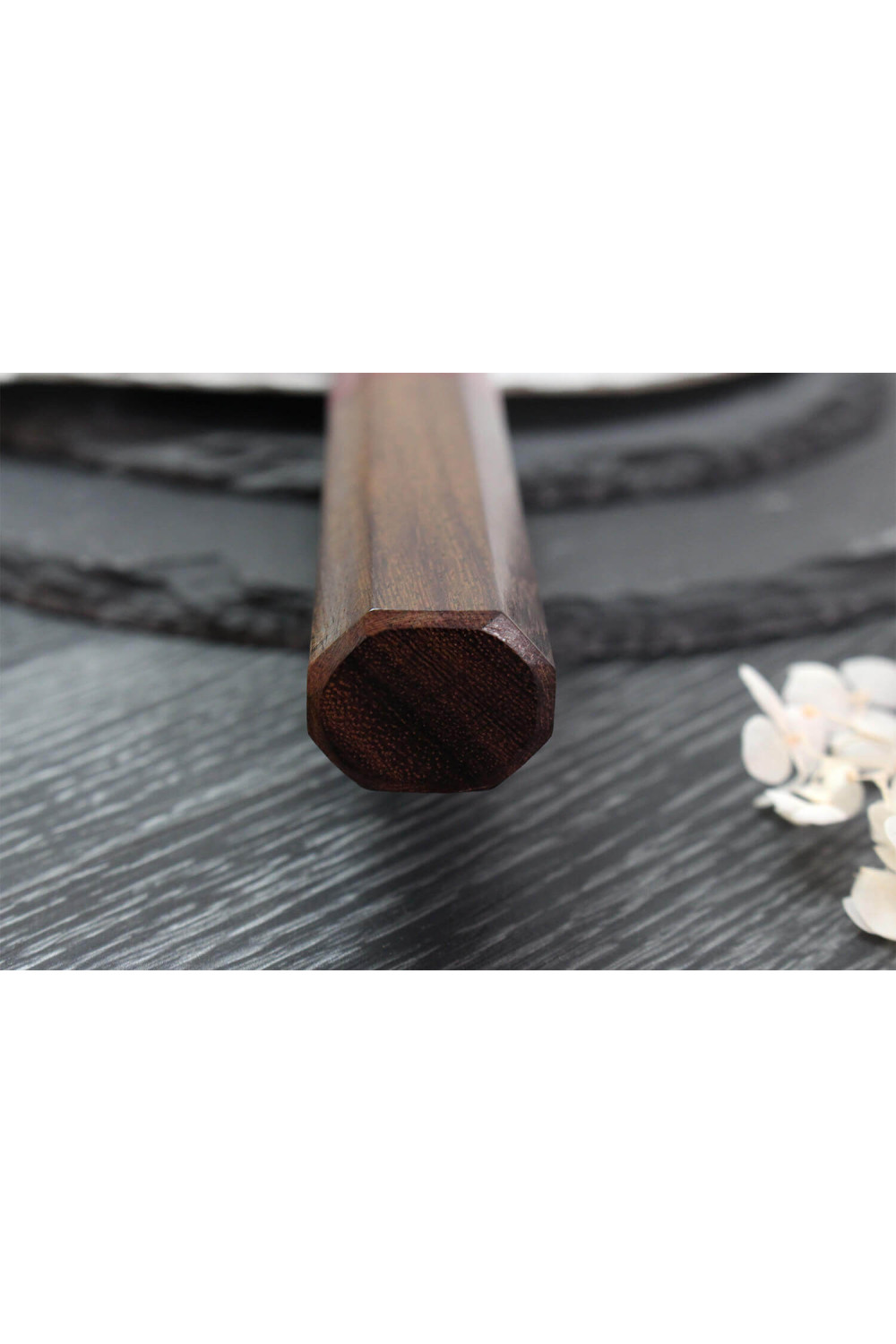
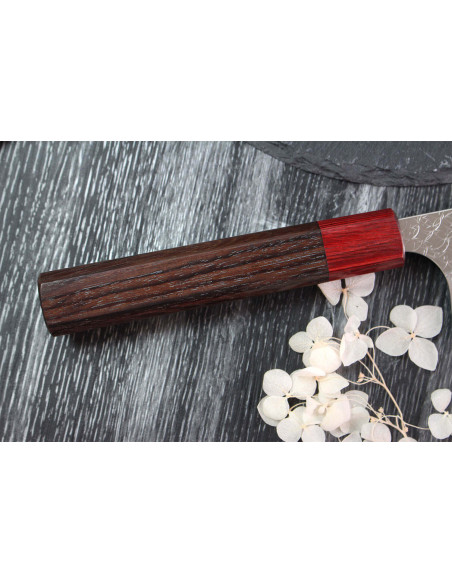
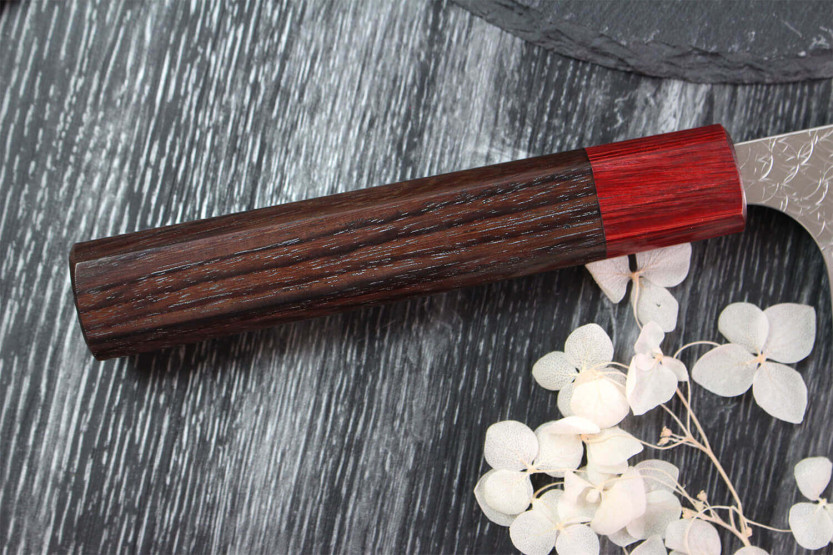
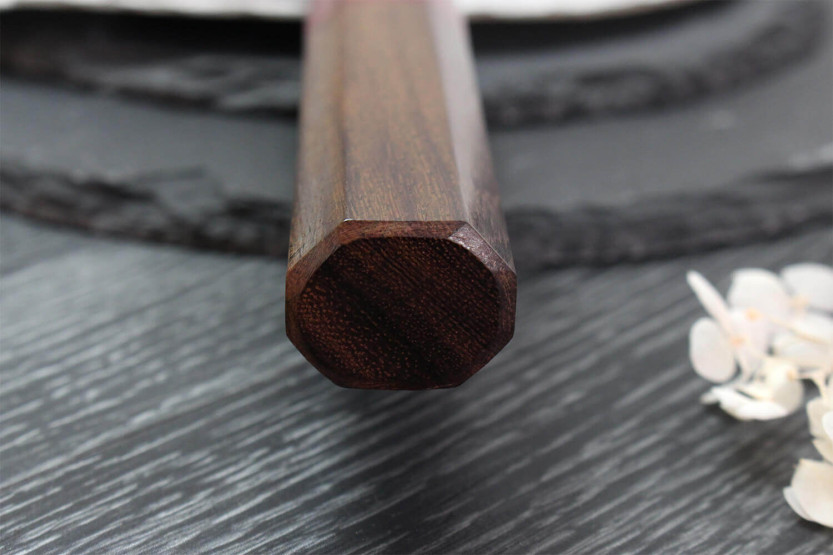
Rosewood was chosen for the handle, a beautiful wood with warm, deep tones. The wood is dense, but its grit remains fine and pleasant. It is resistant to humidity and its color can vary from one model to another, as it is a natural material! The veins on its surface are unique to each model.
A pakka wood bolster joins the rosewood to the superb blade. Pakka wood (or Pakkawood) is a composite material that blends laminated wood with resin. The result is hard and resistant to knocks and humidity. What's more, the grain gives the impression of real wood.
The blade is fixed into the handle with wood pulp, which protects the interior from water or cut food pieces.
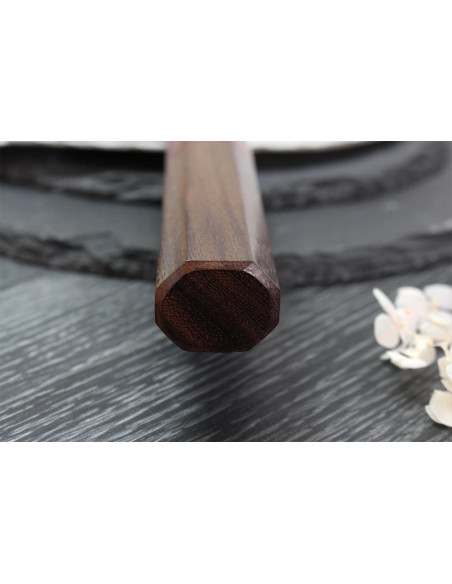
The octagonal shape of the handle conforms to the shape of your palm, making it a pleasure to use. Both right-handed and left-handed users can use it.
Care: the knife should be washed by hand to maintain its appearance and efficiency (no dishwasher). You can then wipe it with a soft cloth and store it in a dry place. It should not be left in contact with moisture for any length of time.
Find all our knives here!




 By buying this product you can collect up to